
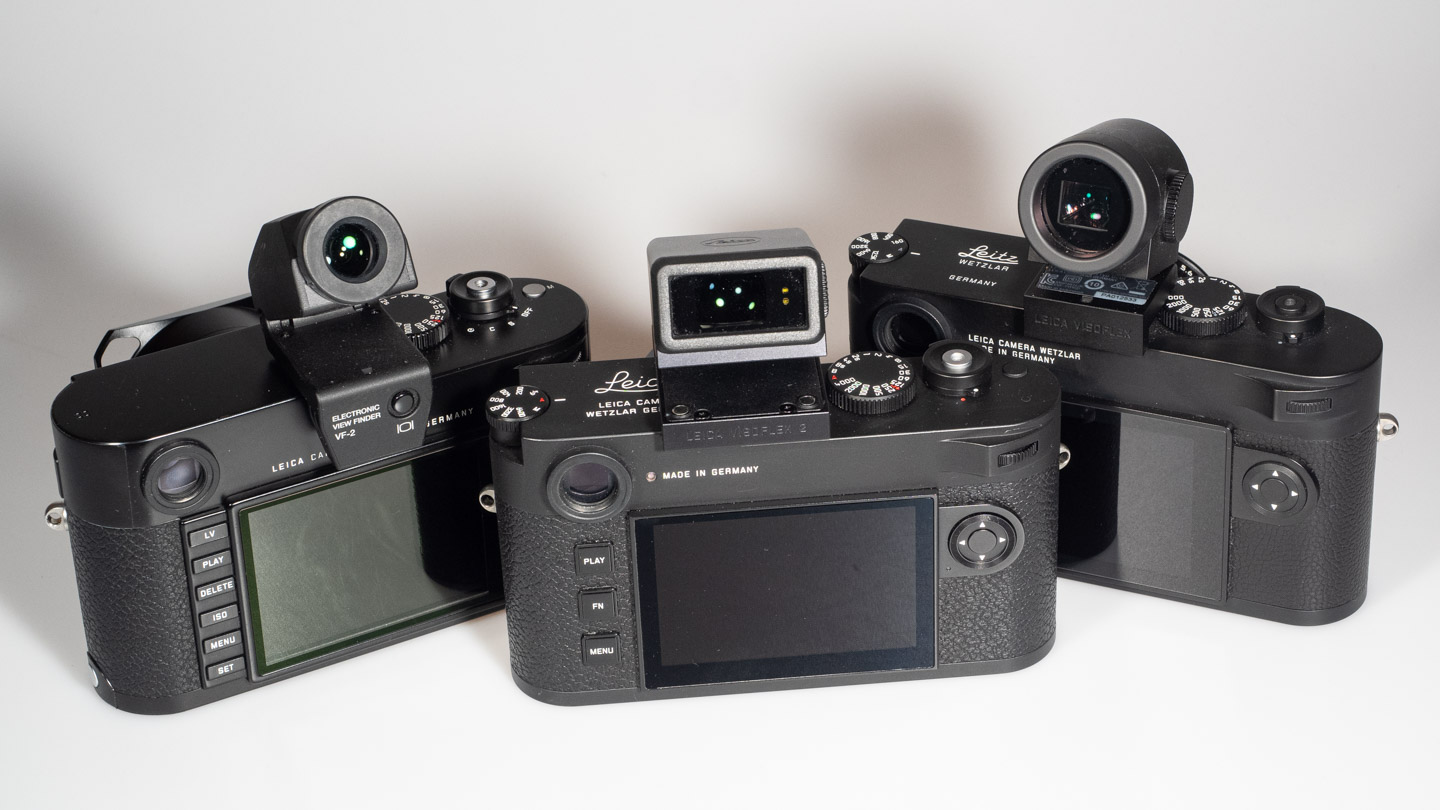
The launch of the Leica M EV1, which has a built-in electronic viewfinder instead of an optical rangefinder, has brought an interesting question back into focus. How can M cameras be augmented with accessory Leica electronic viewfinders? There have been different approaches to this over the years. Here comes an overview. It covers Leica’s electronic viewfinders from 2010 to the present.
Electronic viewfinders in use
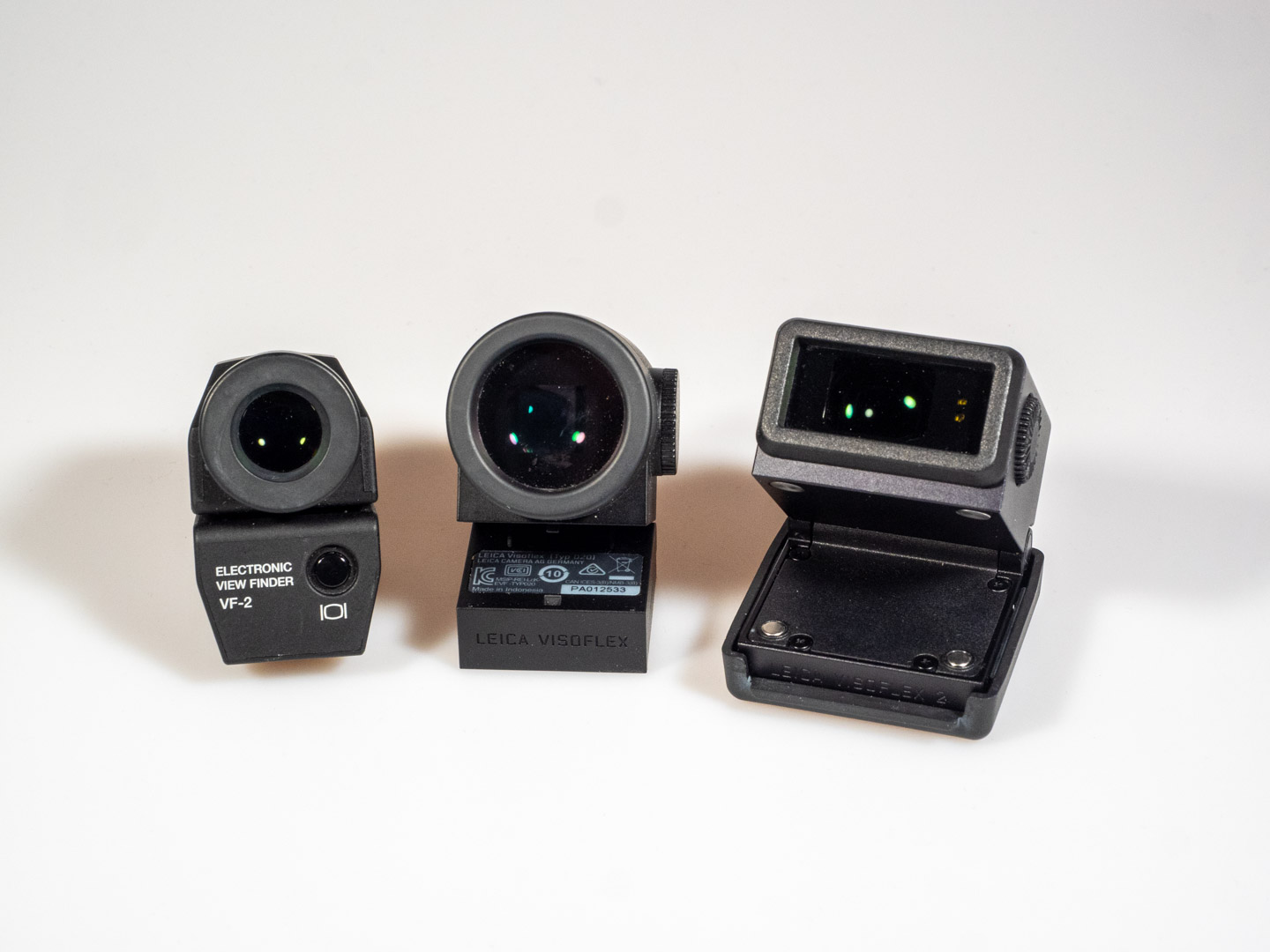
Just to recap, electronic viewfinders can be useful for various reasons. I discussed some use cases in my recent article on the M EV1. Among them are: Using focal lengths under 28 millimetres or over 90 millimetres, which are difficult or impossible to handle, given the limitations of the typical Leica optical viewfinder.
A further use case is the need for “what you see is what you get” when working with extremely fast lenses wide open, when the depth of field is very shallow. Another is macrophotography (remember the rangefinder’s limit to 0.7 metres). Yet another is poor eyesight. In all cases, a Leica electronic viewfinder will not be the perfect solution. But occasionally, it is a great aid.
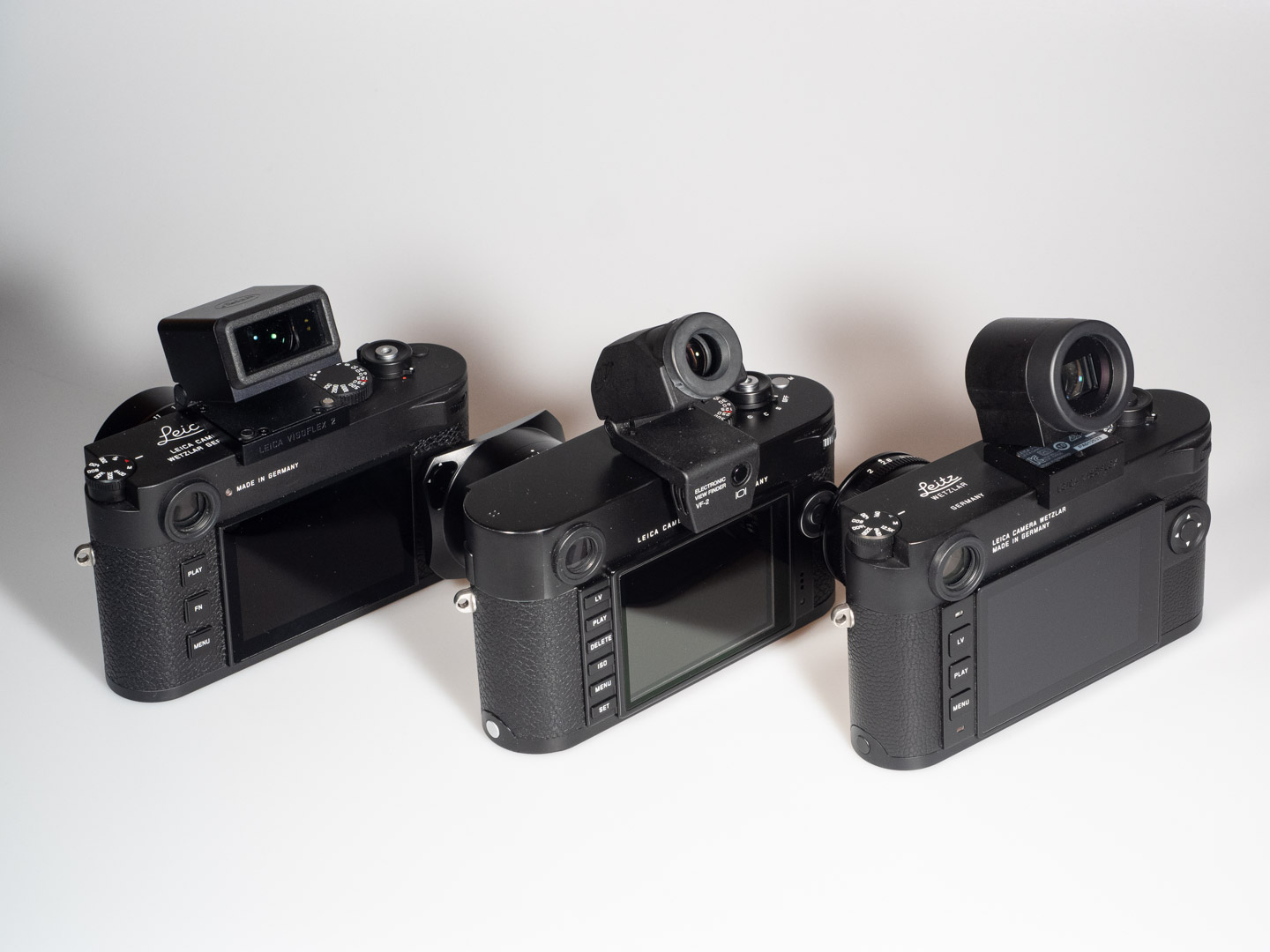
Looking at the evolution of Leica electronic viewfinders, another use case comes to mind. It is when you want to use a very low camera viewpoint. Users can flip up all models by 90 degrees, and this is for good reason. This makes up for the limitations of a fixed rear screen, a feature on all APS-C and M cameras that possess them.
Another advantage of an electronic viewfinder is that you can see the image you have just taken without removing the camera from your eye. This is something that only an electronic viewfinder can offer, whether it is built-in or attachable.
Steady demand
And there must always have been a certain demand for a Leica electronic viewfinder, since they wouldn’t have produced them otherwise.
Since the Leica M Typ 262 (“Typ” is pronounced approximately like “toep”) which did not offer live view, all digital Leica cameras have either had a built-in electronic viewfinder (the M-EVF, all SL models, all Q models, all D-Lux models, and the CL), or have been able to adapt an attached EVF (the M240 and its Monochrome version 246, the T/TL/TL2, all M10 models, and all M11 models).
Despite the rather hefty prices, I hear that there is a small but steady market for this kind of accessory. Remember that Sony also offered an additional electronic viewfinder (the FDA-EV1MK) for the original RX1 (yes, the wannabe Q); later generations had a built-in pop-up EVF.
Now, let’s have a look at the evolution of Leica electronic viewfinders.
Leica Electronic Viewfinder EVF1
The EVF1, released in 2010 (see also a product image in this link), is perhaps the least well-known model, designed exclusively for the D-Lux 5 and its sister model, the Panasonic LX5. It connects via a proprietary interface under the hot shoe, a design principle that continued into the next generation.
With just 202,000 pixels, the resolution is modest, so the EVF was certainly not designed to support manual focusing. There were also no fancy angles of view with the camera’s 24–90 mm (equivalent) zoom; the most important use case might have been in bright sunlight or when holding the camera close to your body instead of using an outstretched arm.
Leica Electronic Viewfinder EVF2
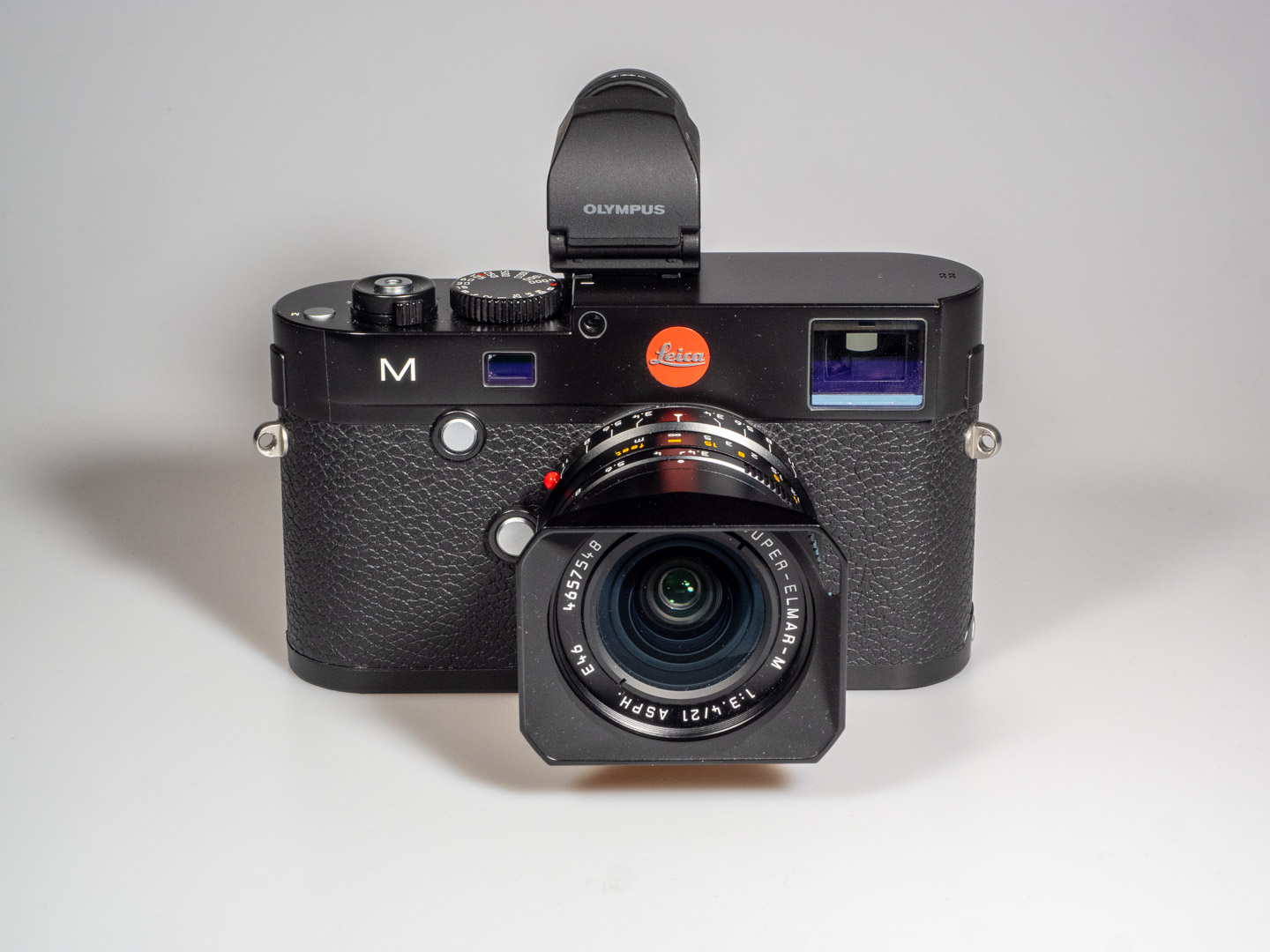
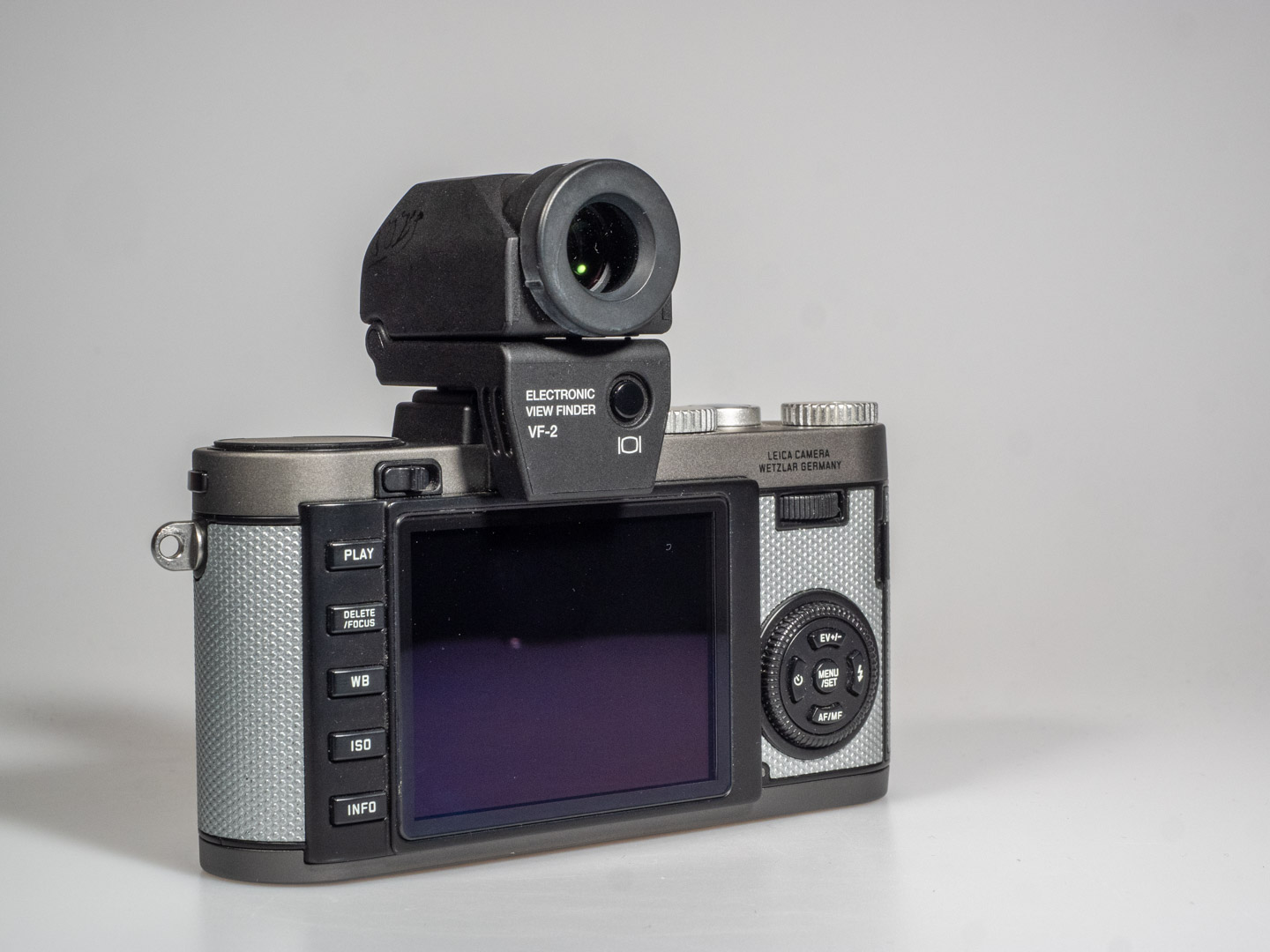
The EVF2 was launched just three years later, and it marked a significant advance. Its 1.3 MP resolution was decent at the time. On the M240, it enabled close-up and wide-angle photography, as well as other practices that were difficult to perform with the optical rangefinder.
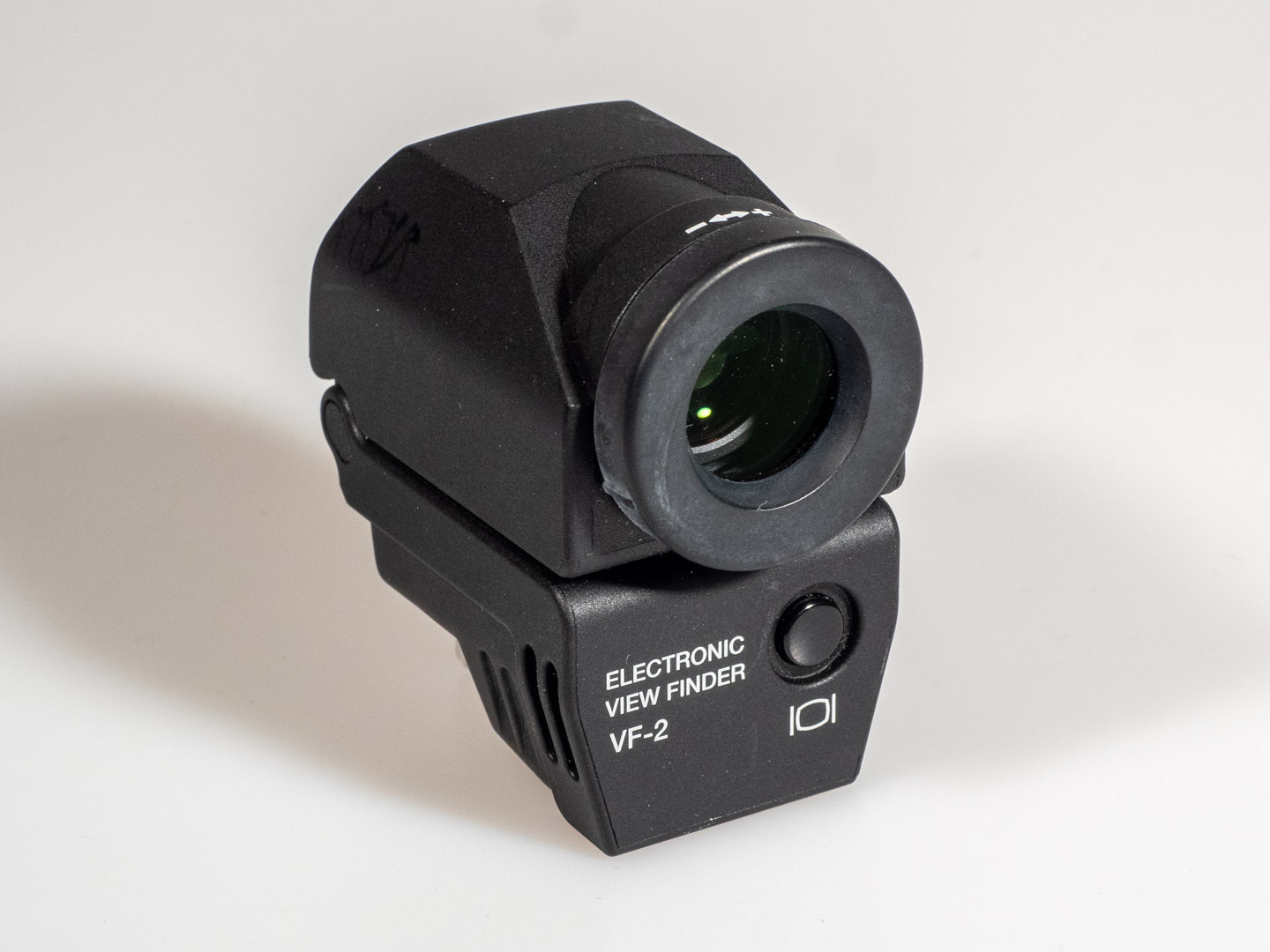
Although it was not suitable for very precise focusing with a wide-open Noctilux or Summilux, it was and still is a helpful tool that you can also attach to several X cameras (rest in peace, dear friends). Leica did not produce the EVF2 itself, and there is a sibling produced by Olympus. I heard that the electronic viewfinder was actually built by Epson, but I’m not sure if this is true.
Leica Visoflex 020
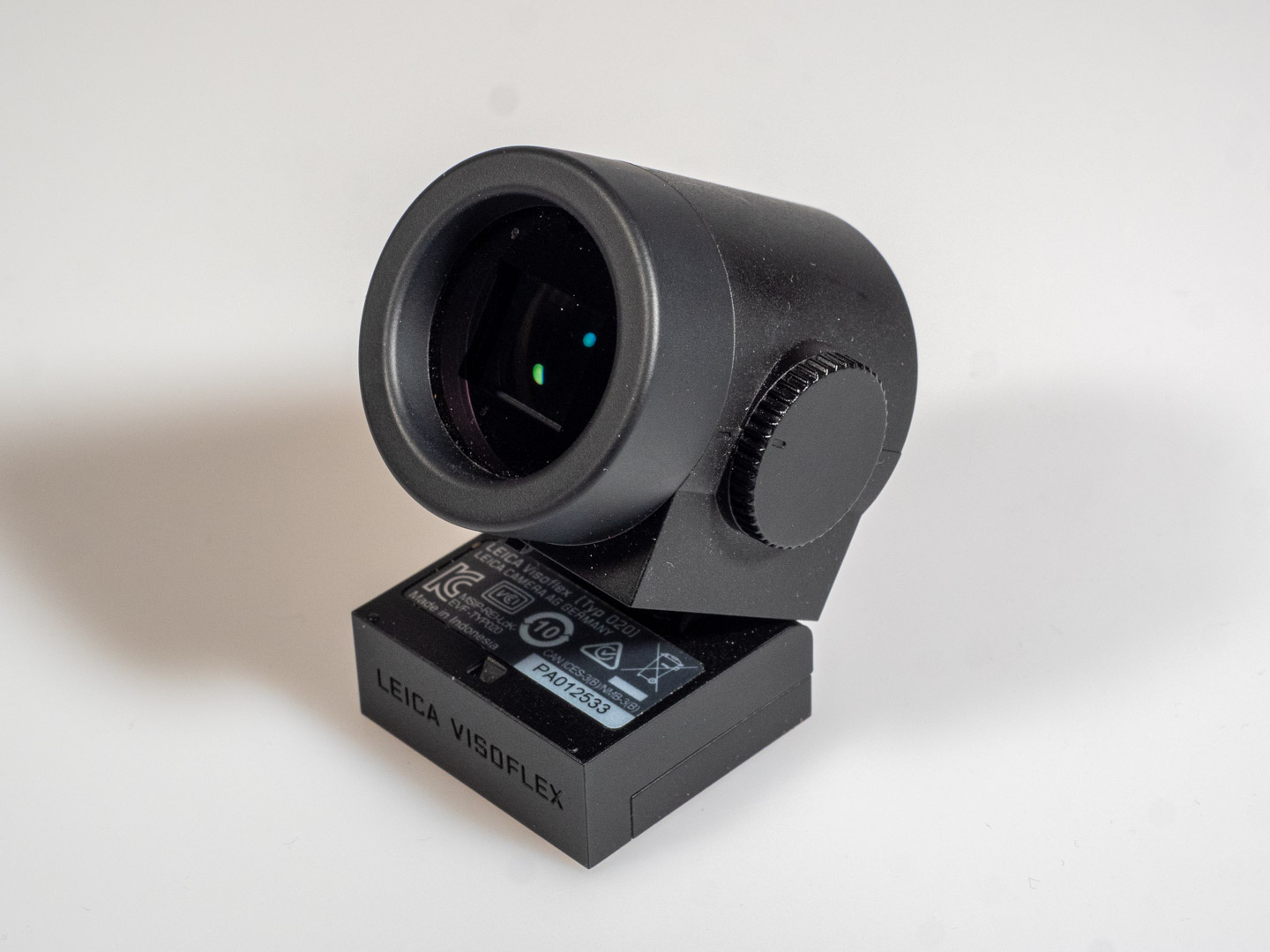
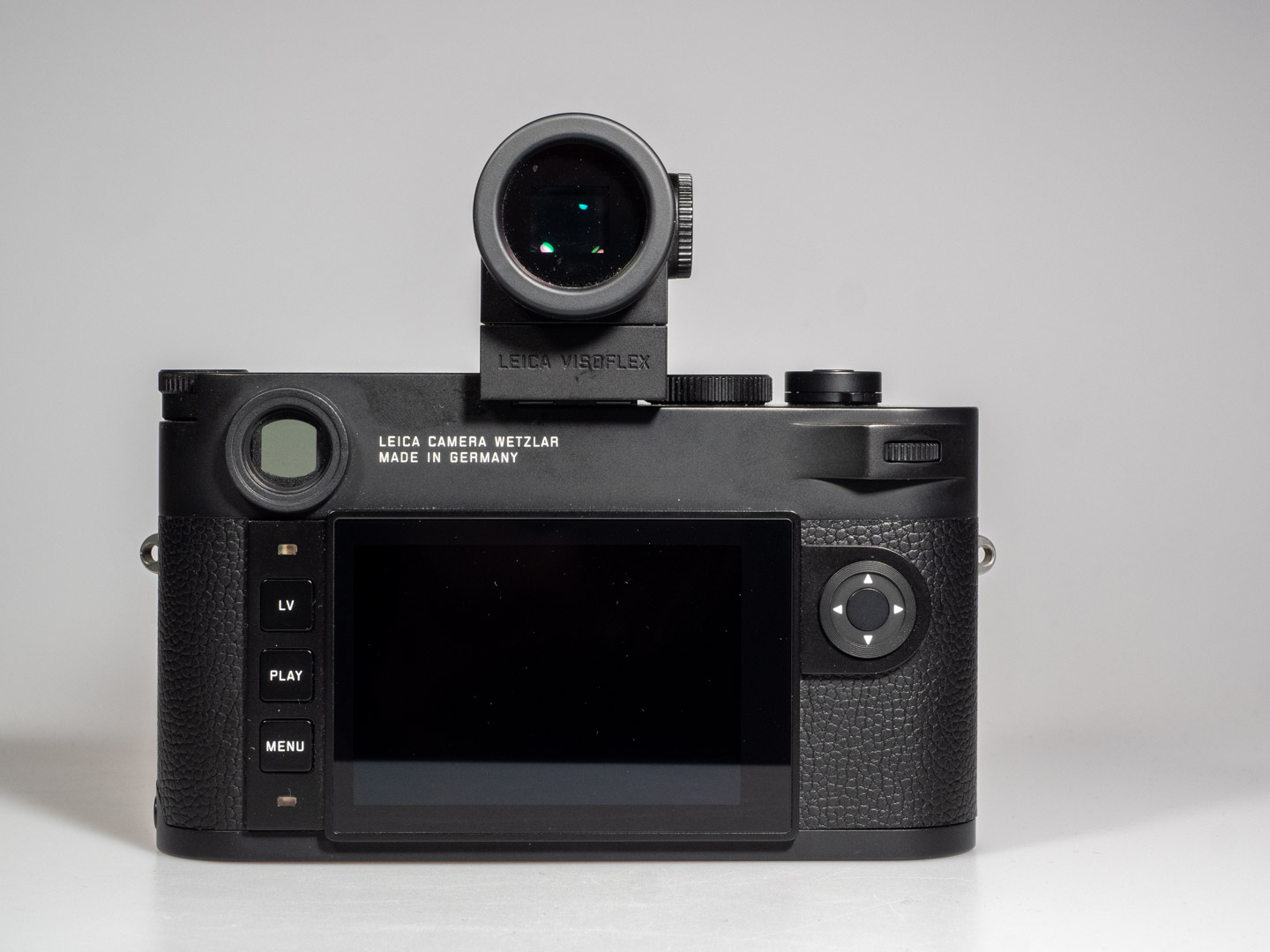
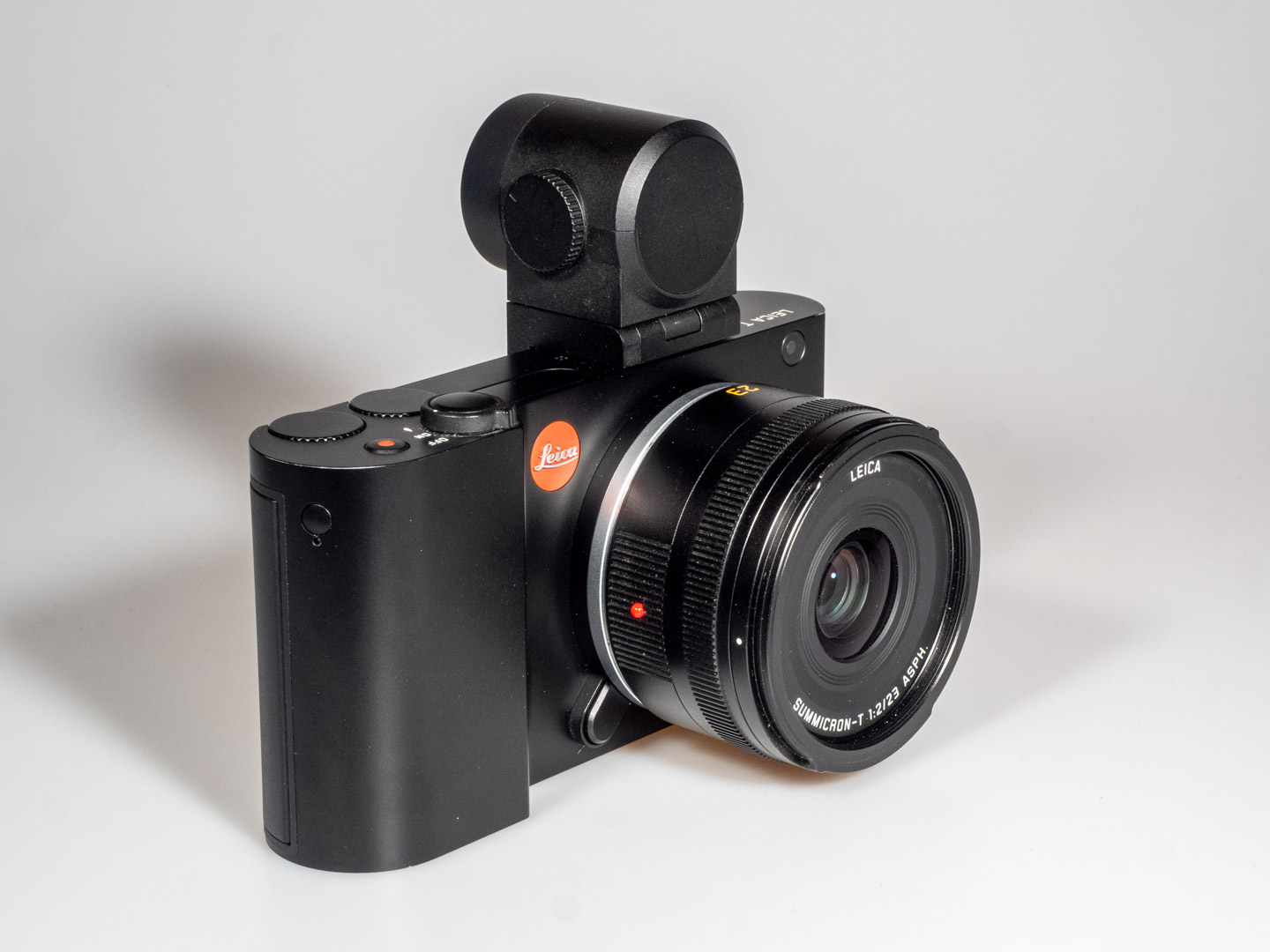
If the M9 is not followed by an M10, the successor to the EVF2 will not be named EVF3 either, right? We can rely on Leica: the third generation is named the Visoflex 020. This name alludes to the historical Visoflex, of course — a device that transformed an M camera into a kind of SLR when used with special telephoto lenses. This reference is quite self-conscious, and the Visoflex 020 might, in fact, be considered the first Leica electronic viewfinder to meet serious needs.
With a resolution of 2.4 MP, the Visoflex 020 was on par with most built-in EVFs in cameras at that time. However, in 2015, the SL Typ 601 surprised us with its magnificent 4.4 MP integrated EVF. As a result, the 020 became a slightly inferior relation.
Even the latest X camera at the time, the X Typ 113, with its impressive f/1.7 lens, had an interface for the Visoflex 020. The accessory also served as a viewfinder for the APS-C T, TL and TL2 cameras, as well as the entire M10 range. And it is still the only Leica electronic viewfinder with an integrated GPS module.
Leica Electronic Viewfinder Visoflex 2
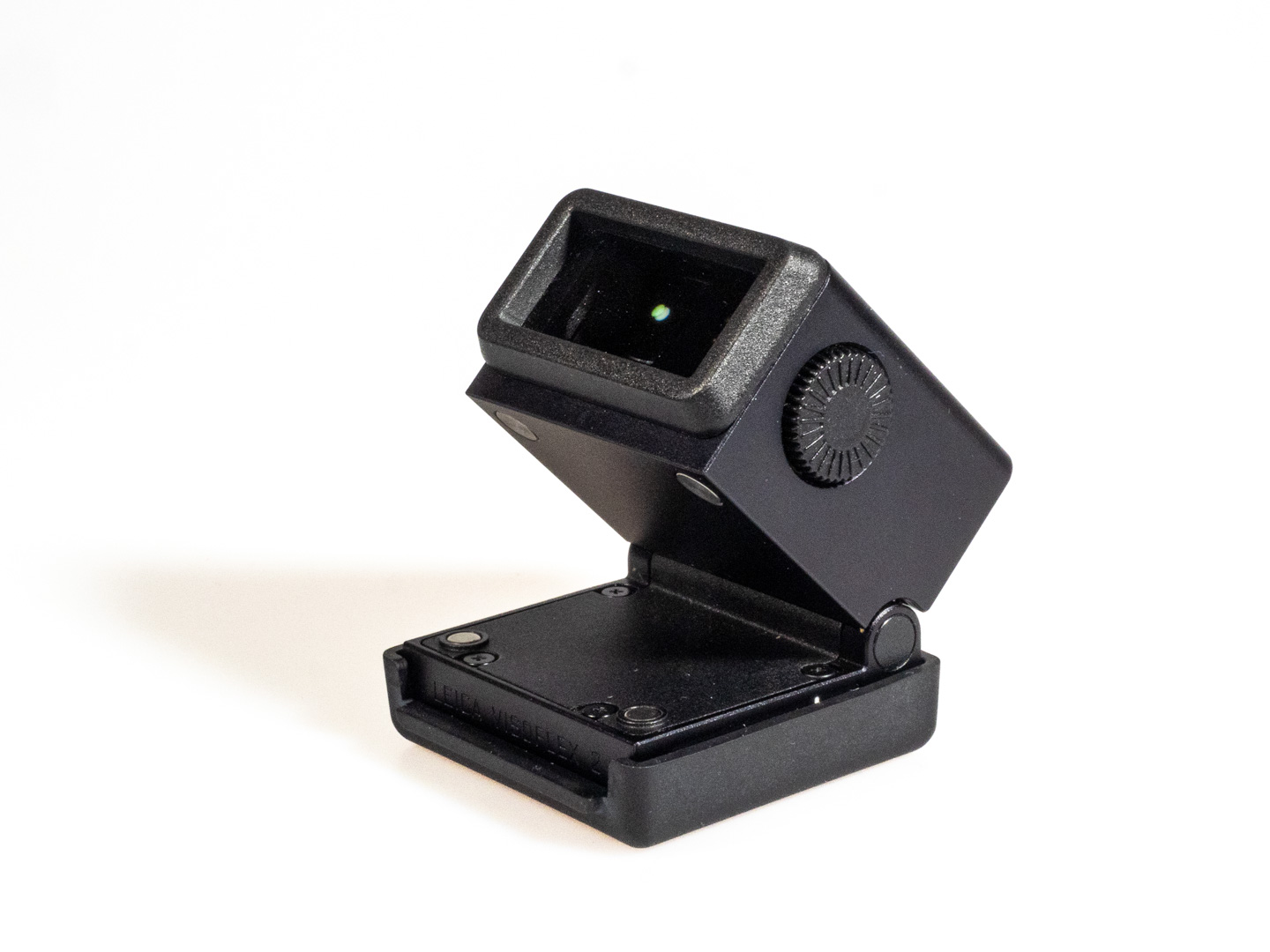
After 020 comes 2. It’s not 030 or so. It’s just 2. The second modern digital Visoflex establishes a new nomenclature. It also introduces a new design principle.
Resembling a mini Frankenfinder (the 16-28 mm universal wide-angle finder, which is huge but unrivalled in terms of quality and precision), it finally provides a resolution that enables even tricky focusing. Although it was well below high-end industry standards at launch in 2002 with 3.7 MP, it remains a feasible tool to this day.
I guess Leica didn’t opt for a higher resolution as this would have required greater processing speed and capacity inside the camera, resulting in increased power consumption, heat generation and other drawbacks.
While the Visoflex 2 can be mounted on the Leica M10, it is restricted to a resolution of only 2.4MP, which means that it is on par with the resolution of the 020. In this case, if you own an M10, buying the latest Visoflex 2 makes sense only if you intend at some stage to trade up to an M11 when you can enjoy the greater resolution.
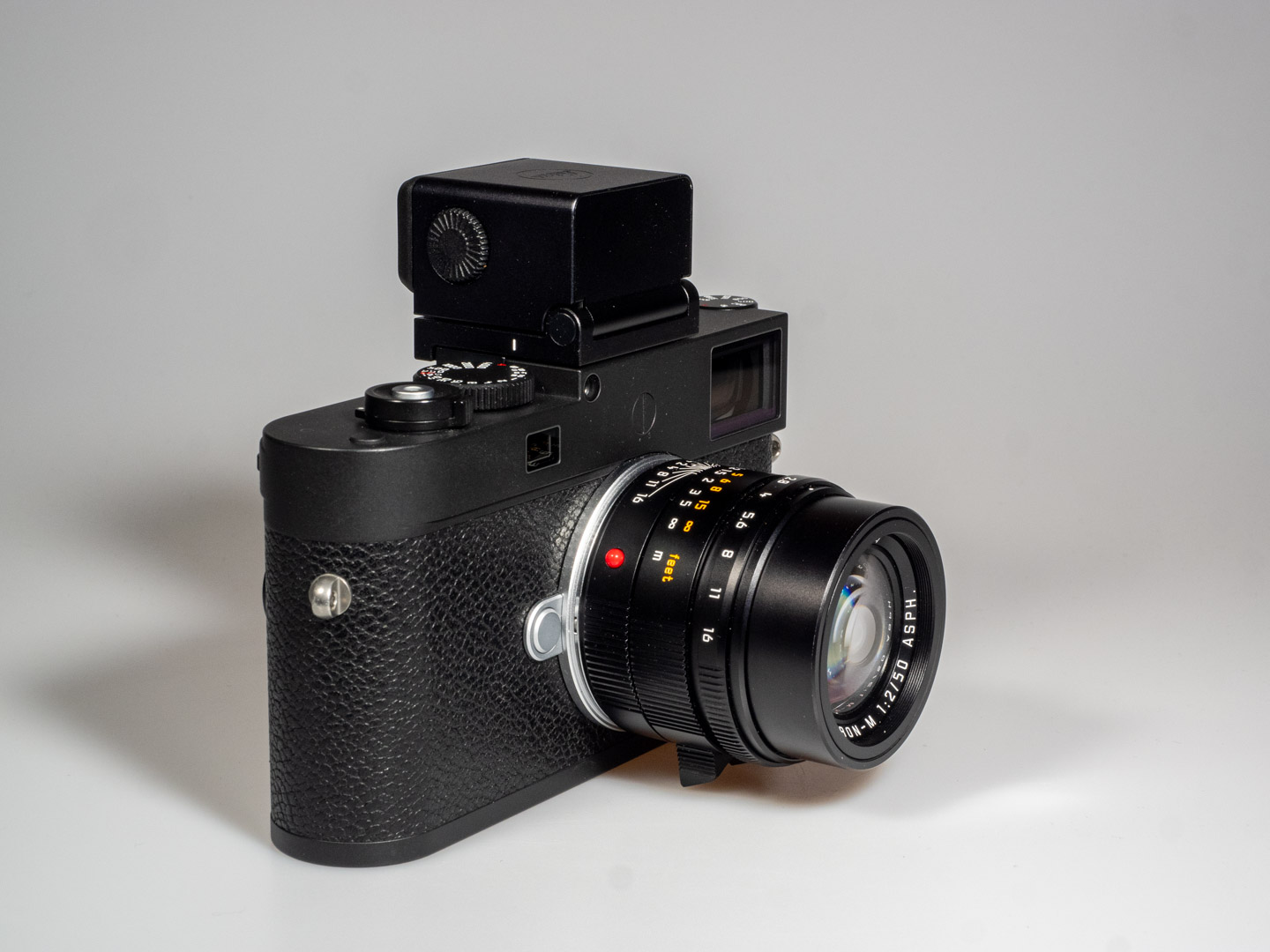
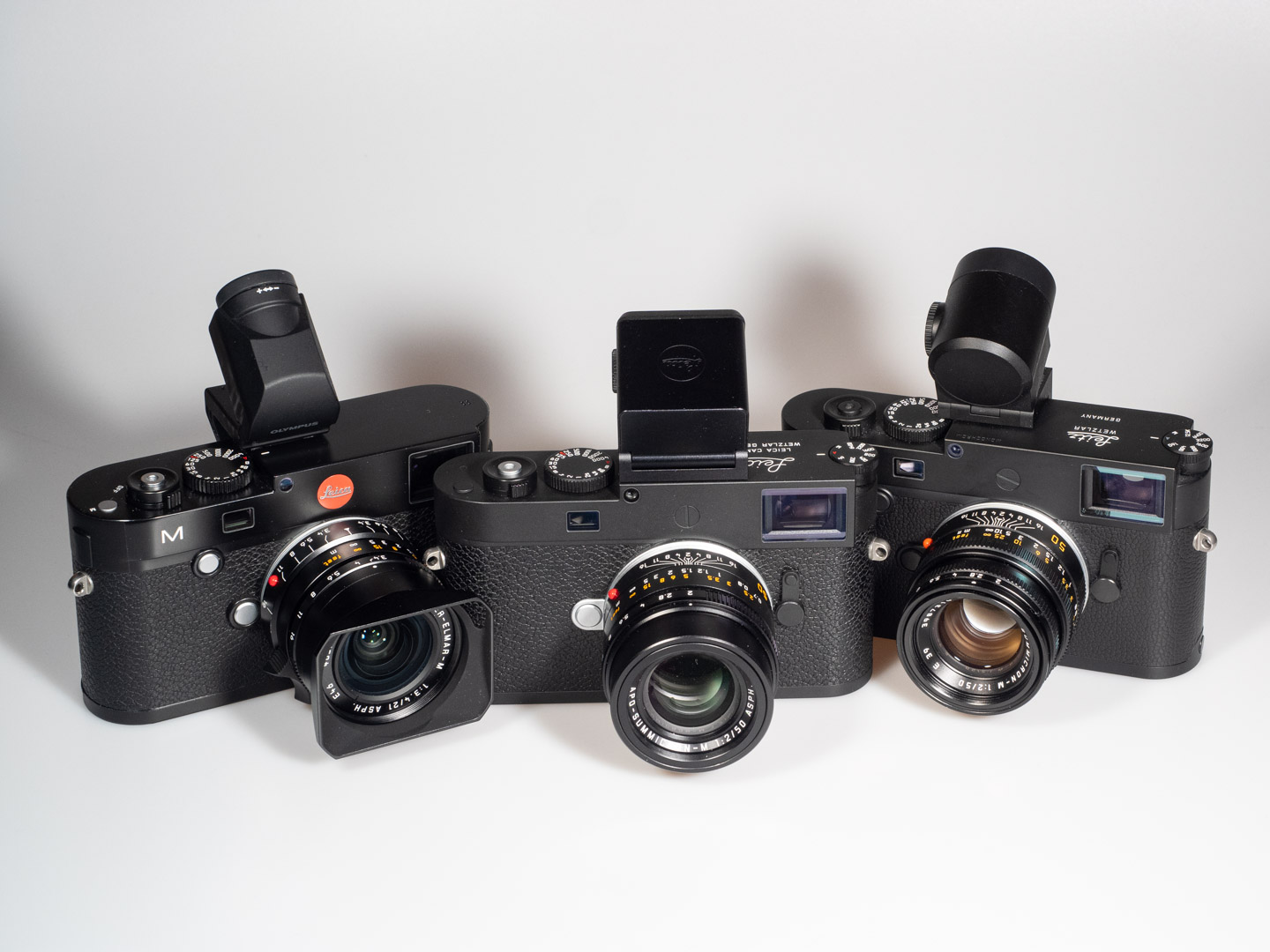
I created a small chart. It summarises the most important technical data of the Leica electronic viewfinders produced from 2010 to the present day. Keep in mind that all models mount to the hot shoe, so you can’t normally use it simultaneously with a flash.
There is a workaround for the M240 by using its SCA adapter 14498, though. In other words: If you want a state of the art M-Mount camera and need flash and EVF at the same time — go for the new M EV1!
Leica EVFs since 2010
| EVF1 | EVF2 | Visoflex 020 | Visoflex 2 | |
|---|---|---|---|---|
| Leica catalogue No. | 18716 | 18753 | 18767 | 24028 |
| Resolution | 0.2 MP | 1.3 MP | 2.4 MP | 3.7 MP |
| Launch year | 2010 | 2013 | 2014 | 2022 |
| Launch price | €299 | €400 | €520 | €755 |
| For camera | D-Lux 5, Lumix LX5 | M (Typ 240), X2, X-E, X Vario Olympus PEN | All M10 models, T, TL, TL2, X (Typ 113) | All M11 models, M10 from firmware 2.7.5 |
| Good to know | Identical to Panasonic DMW-LVF1 | Identical to Olympus VF-2 | Doesn’t work with M11 cameras at all | Does work with M10 models, but at 2.4 MP only |
What comes next?
Will there be a fifth generation? I would be hard-pressed to give an educated guess. Perhaps Leica will follow the approach started with the M EV1 by offering a model with a built-in electronic viewfinder to complement the upcoming “optical” M12. In this case, the new “real M” (that is, a rangefinder or Messsucher camera) would not require an interface for an accessory EVF.
On the other hand, the experiment with the M EV1 might prove unsuccessful. In this case, the M12 would use either the Visoflex 2 or an improved version, maybe a Visoflex 3. Another possibility is that Leica manages to convince customers that the SL is the best option for using M lenses on a thoroughly modern camera body with image stabilisation, a large and precise electronic viewfinder, and state-of-the-art video functions.
This would be a particularly interesting solution if Leica were to introduce a smaller, lighter mirrorless camera, which would make even more sense as a basis for M-lens use.
Conclusion
Looking back over 15 years of Leica electronic viewfinder history, we can see constant improvements in resolution and overall usability. However, we can also understand that these accessories are always slightly behind current progress if we compare them to cameras with built-in electronic viewfinders.
We have now reached a point where the accessory costs almost as much as a whole camera from another manufacturer (with built-in EVF!). But then, we are talking about Leica and their price levels. This may not deter many rangefinder users.
The benefits of an electronic viewfinder considerably broaden the range of uses for an M camera. At the same time, they retain the advantages of an optical rangefinder. So, we should be thankful for having the choice!

| Jono Slack reviews the M EV1 | Hands-On with the new M EV1 |
| Alternatives to the M EV1 | External viewfinders: Love ’em or hate ’em |
| More about external viewfinders | More from Jörg-Peter Rau |
Make a donation to help with our running costs
Did you know that Macfilos is run by five photography enthusiasts based in the UK, USA and Europe? We cover all the substantial costs of running the site, and we do not carry advertising because it spoils readers’ enjoyment. Any amount, however small, will be appreciated, and we will write to acknowledge your generosity.
You’ve made no mention of the Leica EVF-3, which I use with great success on my D-Lux6. Expensive, yes, but well worth the investment.
Another benefit of the Visoflex 020 Is the built in GPS module. The Visoflex 2 does not appear to have this function. I have used the Visoflex 020 sparingly with the Leica M10. The limited resolution is a bit distracting compared to the pristine rangefinder view. Even so, it’s nice to have when needed.
Be well,
Richard Clompus
I found the EVF2 invaluable on my M240 for landscape photography. It was quick and easy to snap onto the camera, and allowed me to be very precise with compositions when using my 24 Summilux (an amazing lens). Eventually I switched to the Q and then Q3 for my landscape photography which has everything built-in. If I did go down the M route again (it is always so tempting isn’t it), then I’d get a “proper” M with an external viewfinder to add on when I needed it, rather than painting myself into a corner with the EV1.
Thank you, Andrew,
for this insight. I agree that the EVF2 is very helpful for precise framing especially (but not only!) with lenses wider than 28mm. Did you manage to assess exact focus at f/1.4 at, say, 1.5m? That’s where I was not really successful with the 1.3 MP resolution. But knowing your work, I guess you simply had more talent (and/or patience). At any rate, as much as I admire your work with the Q, I would be most interested to see what you can get out of an M. Maybe, just maybe…
Best wishes! Jörg-Peter
Back when I had my M cameras, I found focus at f/1.4 was far more accurate with the rangefinder than focus peaking. The 24 lux is obviously more forgiving at f/1.4 than, for example, the 50 lux. However, for landscape photography I would usually be at f/8 or smaller so I wasn’t that worried about razor-thin depth of field when using the EVF2.
Oddly, putting M lenses or other manual focus lenses like a Canon 85 1.2 FD on a Sony A7 body works very nicely with the manual focus assistance on the A7xxx. It is very easy to zoom in very close and confirm focus, with focus peaking not even needed.
Thank you for the interesting article on EVFs. It might be worth mentioning that not only does the Visoflex 020 (18767) not work at all on a Leica M11, it can be a lot worse than not working according to the Leica M11 instruction book: –
“Use of the older ‘Leica Visoflex’ model can – as a worst case scenario – result in irreparable damage to the camera and/or the Visoflex”. Scary.
Thank you, Patrick, for providing this information. So, M11 owners, be warned!
According to Stefan Daniel on our LSI Zoom last week, there is another Leica EVF on the way. Personally I find EVFs fine for use with autofocus, but for manual focus I generally prefer optical focus apart from a few specialised tasks, such as macro work.
William
I think I’m with you on this, William. I’ve never really experienced problems with rangefinder focus, except perhaps on very fast lenses. And now I’ve majored on M Summicron rather than Summilux or Noctilux, there is even less to worry about. I actually prefer to focus a manual lens with the rangefinder. Most of the time, these days, I am using AF cameras and lenses, so the discussion is pretty academic. Mike
Hi Mike. I am interested in your shift to Summicron lenses and wonder whether it might merit an article perhaps? I am currently using the ‘classic’ new 50 and 35 1.4’s and finding the fifty heavy and a long focus throw whereas the 35 is a wonderful size whilst its characteristics make using it at 1.4 an artistic choice. With a new “glossy black” as an early Christmas present to self the wonderful folk at Leica Mayfair have been tempting me with the siren call of Summicrons… though I am ‘heavily invested’ as they say in the two 1.4’s I already have. Love to hear your logic behind the Summicron shift. Happy Christmas. Des
Des,
That’s a good idea. I came to the conclusion that the latest Summicrons, such as the 50 and 35 APOs, are the sweet spot for rangefinder photography. Summilux and Noctilux lenses are heavier and need to be used wide open as much as possibly to justify the investment.
But that’s just my opinion and I am sure others will make a convincing case for the faster lenses.
That’s interesting, William. Thanks for adding this. If they find a smarter solution for focus control than focus peaking at the level of 2015, it could be a great addition to the M line. So. let’s keep the fingers crossed! All the best for you, Jörg-Peter