

I am the son of a foundry man and a core winder, the nephew of a burler and mender. The grandson of a munitions’ worker, the great-grandson of a cordwainer. The great, great-grandson of a tatler, and the great, great, great, grandson of an itinerant farm labourer. Four generations of my family have toiled in the mills and foundries of the North of England. But my role changed: to capturing life with a Leica M6.
I left school in 1972 and worked in a mill, a foundry before working at Bradford Council’s Esholt Sewage works. I worked on the railway; it had one of the last working steam engines, “Elizabeth”, in the country. It was at Esholt where I was encouraged by my fellow workers to find a passion, engage in higher education, find a profession, don’t get stuck in a cycle of unskilled labour.
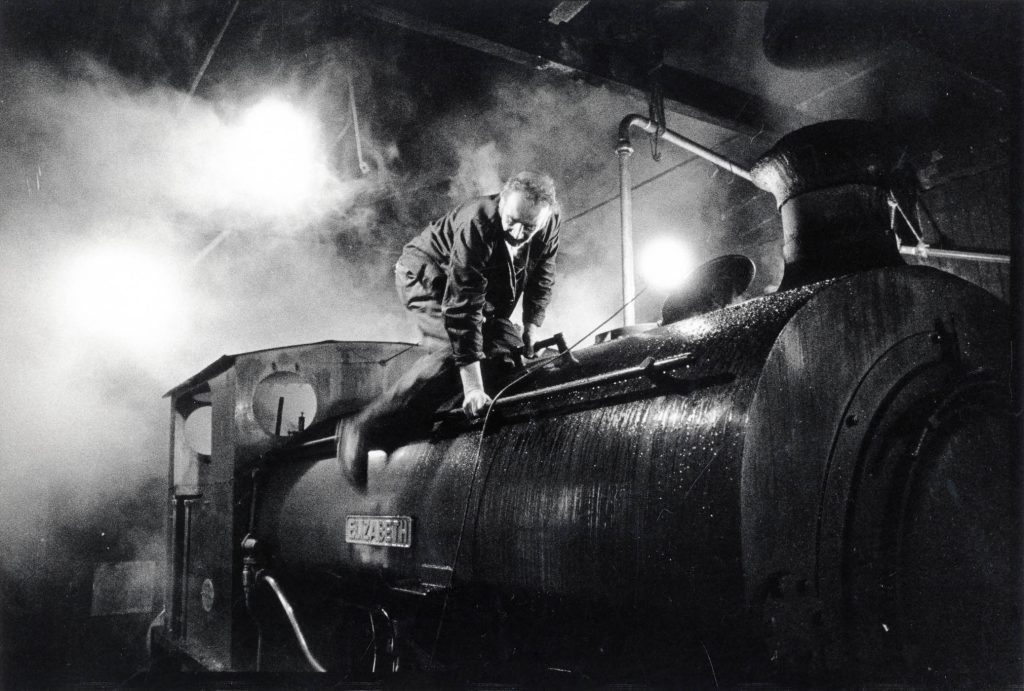
Finding your calling
With their encouragement, I found photography. After a few months of working at Esholt I had saved enough money to buy a decent camera and I started photographing my working colleagues. I realised quickly that there was a “gap” between the photographs of industry and workers I saw exhibited and published, and what I experienced and saw as an industrial worker. I have spent my career trying to film this gap. In 1973, I was accepted at Bradford Art College.
Documenting the decline of a community
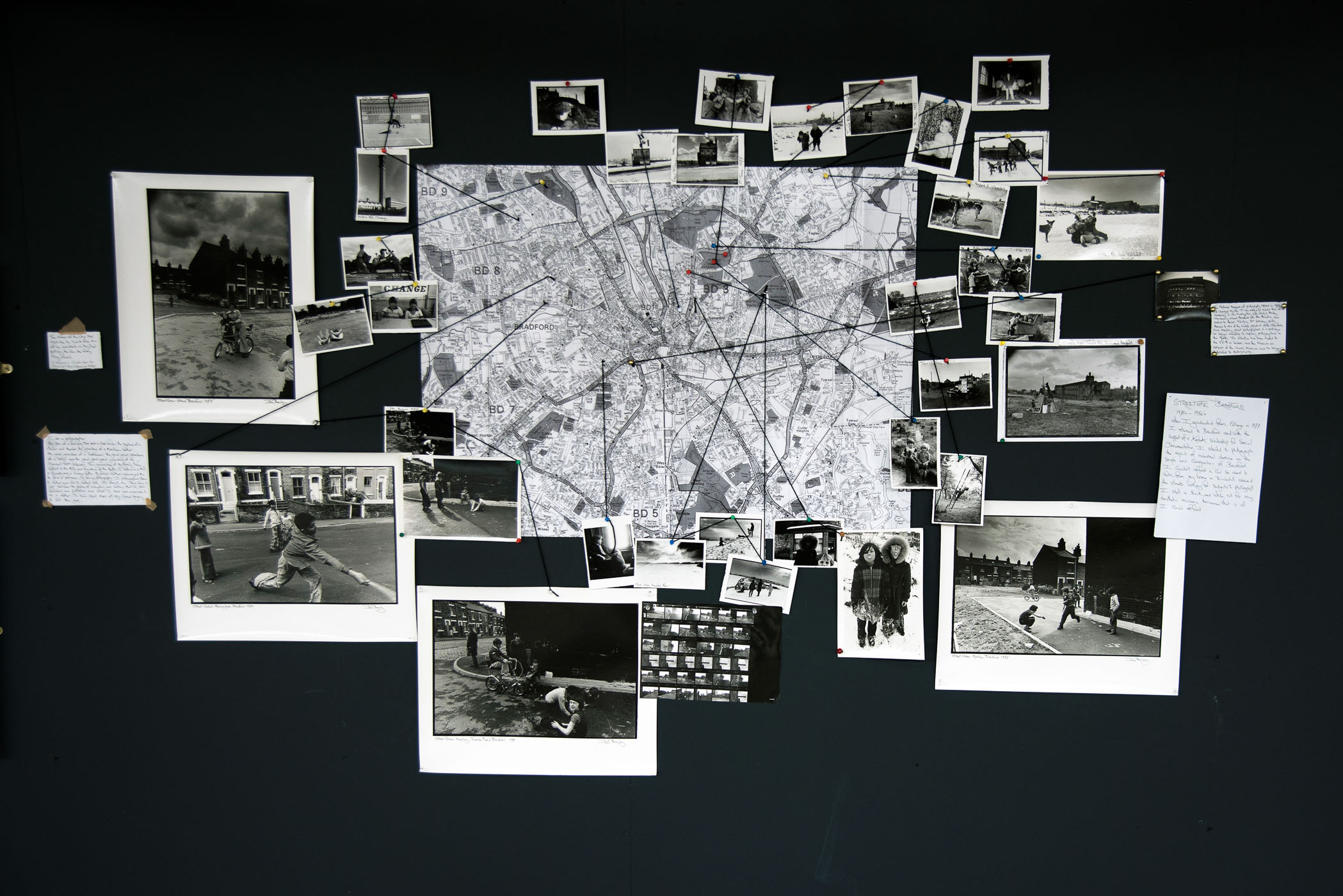
After I had graduated from Bournemouth and Poole College of Art in 1977, I returned to my hometown of Bradford. The late 70s and 80s were a period of brutal deindustrialisation and re-development of the inner city. With the support of a Kodak Scholarship for Social Documentation, I began to document the industrial demise and its impact on the people and communities of Bradford.
Furthermore, I could not afford a car, so used to walk from my home in Eccleshill, Bradford, around the streets and across the city looking for subjects to photograph. I would wander the streets for hours looking for subjects to photograph. My regular routes were well established, so I became quite well known and trusted. I also returned to where I had worked and photographed many places before they were closed.
Capturing disappearing moments
I took this pic on the 7 June 1977 (the Queen’s Silver Jubilee). I had walked past this chipshop loads of time. My dad had died, and I was left some money. Rather than buying a car, I decided to buy a 5×4 plate camera and tripod (a Sinar F Monorail).
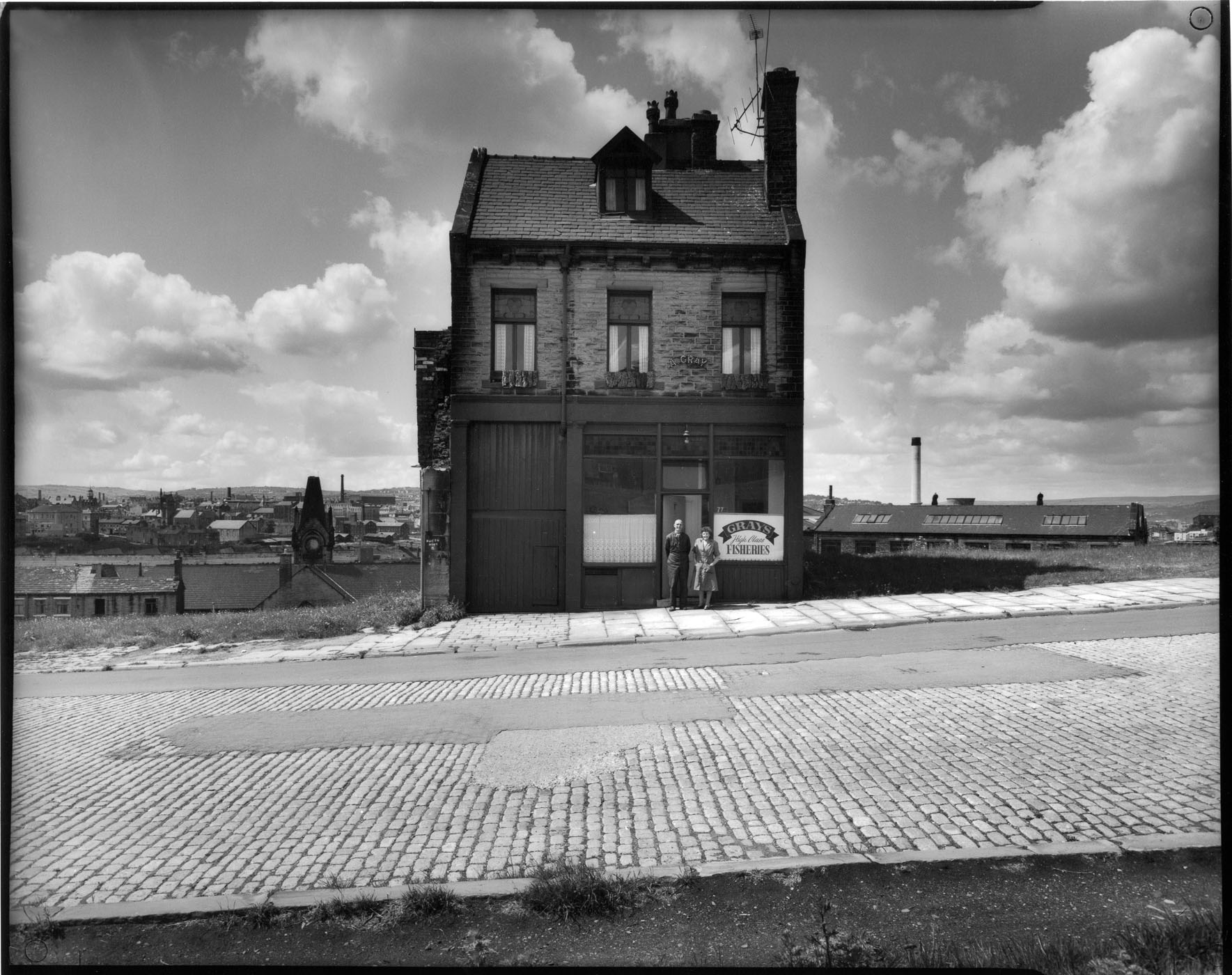
I realised that on the Bank Holiday the streets of Bradford would be quiet, and not a lot of traffic, so a great opportunity to wander about setting up my camera and tripod without the hindrance of cars. It was a lovely day and I knew when the light would be good on the chipshop. I set up directly in front of the building, when I saw somebody looking out of the windows. I knocked on the door to explain what I was doing and asked them if they would like to be in the photograph.
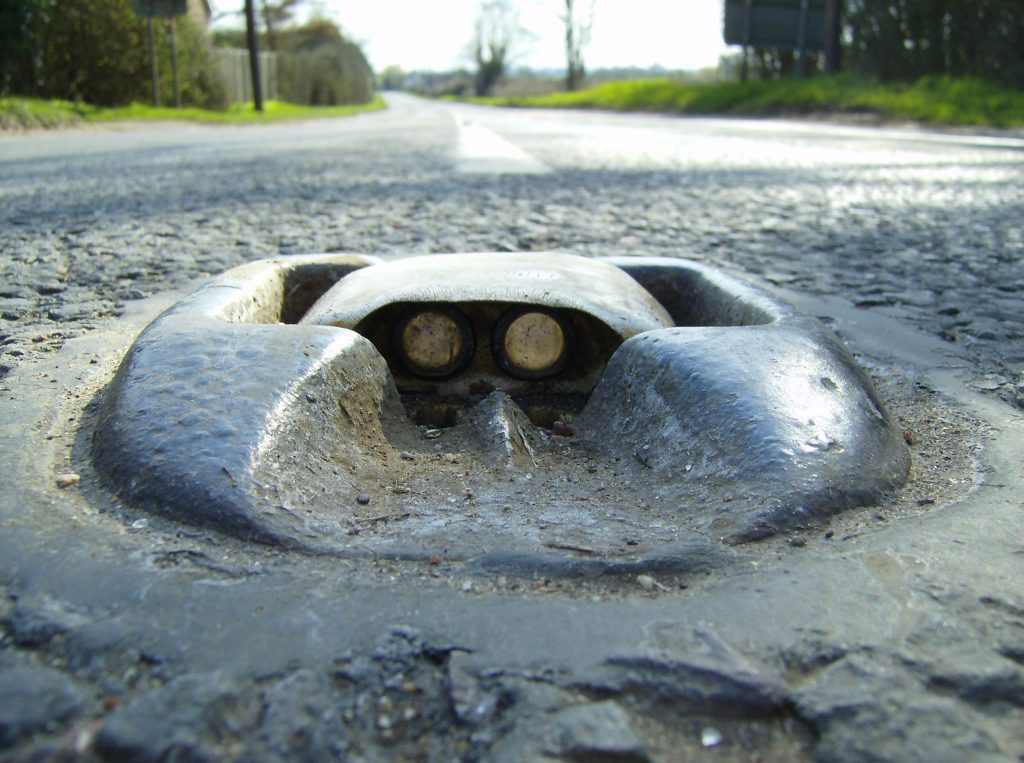
Mr and Mrs Gray who owned the chipshop were pleased to be asked; they were retiring later that month, and they would love a photo. Mr Gary then pointed out the sign above the door “A.GRAY” that was made from “cats’ eyes”. Percy Shaw OBE, who invented cats’ eyes, the reflective road stud, in 1934, was Mr Gray’s best friend.
When he opened his chipshop, Percy said he should get a neon sign. Mr Gray couldn’t afford one, so his friend made him one from cats’ eyes. When cars drove down the street at night, their headlights would make the cats’ eyes twinkle. Better than any neon sign! The Grays retired, and the shop was demolished shortly after.
When economics prevail
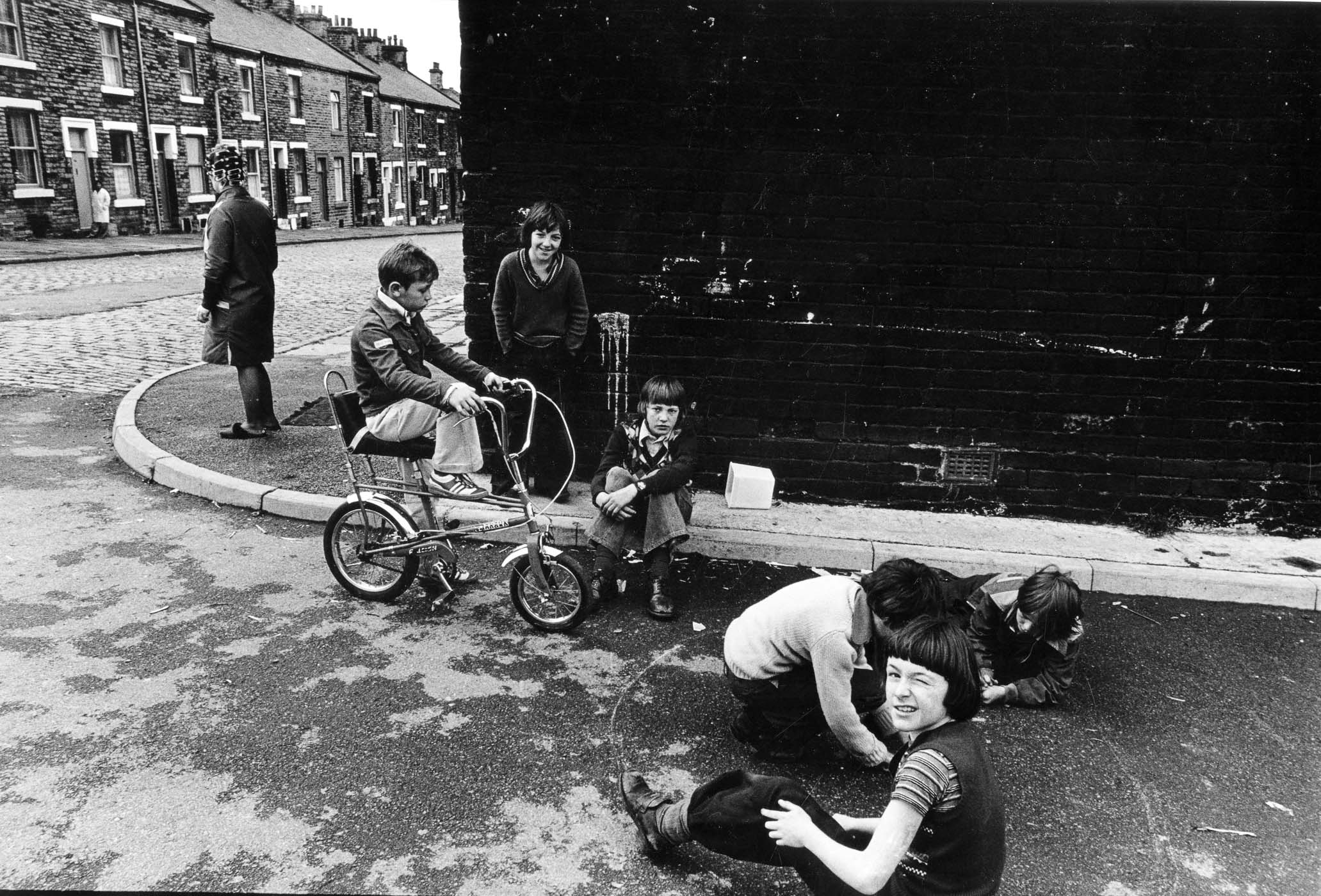
When I graduated from college in 1977 I received a Kodak Scholarship for Social Documentation and returned to Bradford to photograph the impact of industrial demise on the people and communities of the North of England. Street corners were always good locations where people would gather or children would play. Here, I came across some kids playing marbles whilst two women chat across the street.
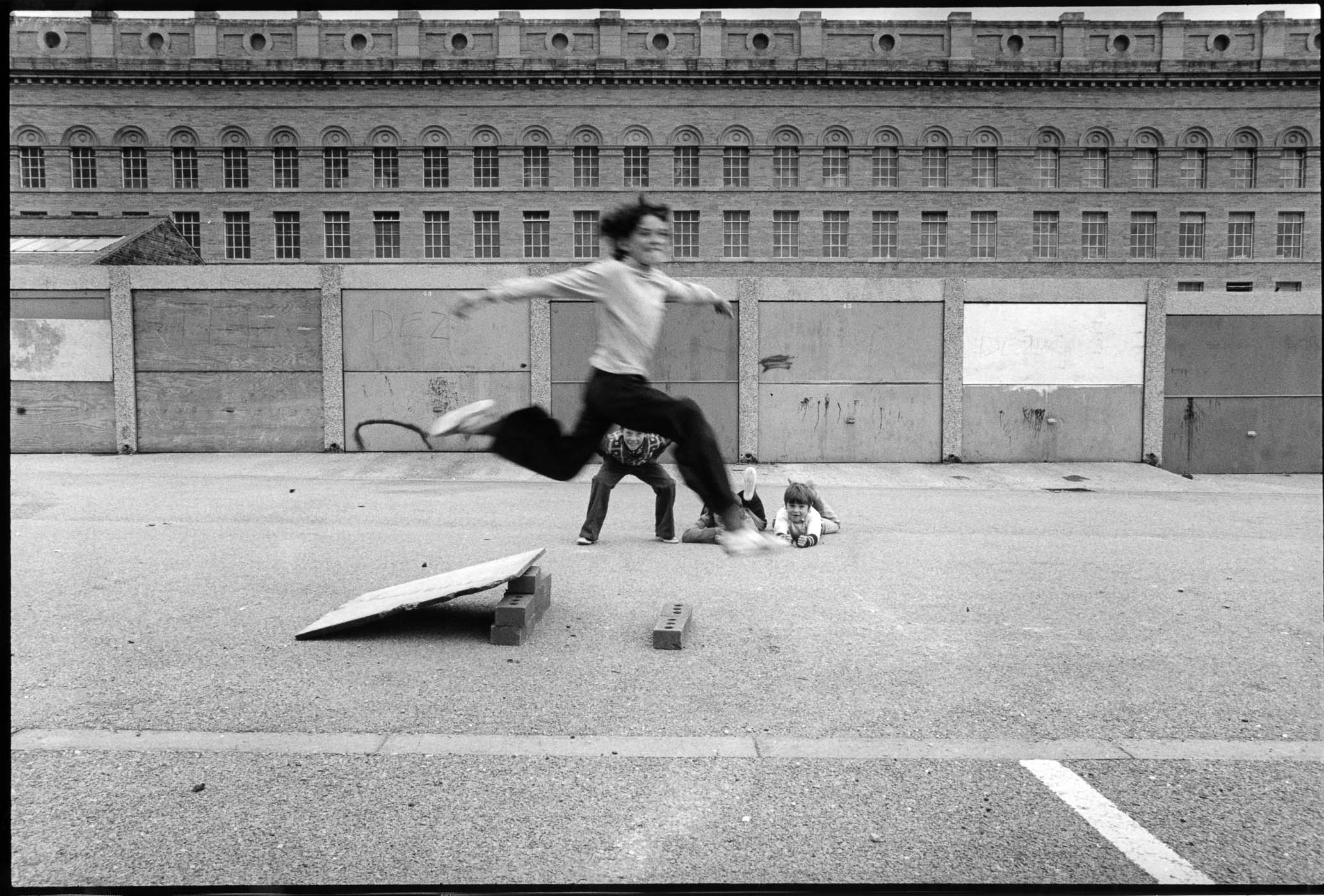
I shot in black and white not because of any aesthetic reason, but because that’s all I could afford. I bought 5-metre lengths of ex-military (slightly out of date black and white film), cut it into one meter lengths and loaded re-useable film cassettes.
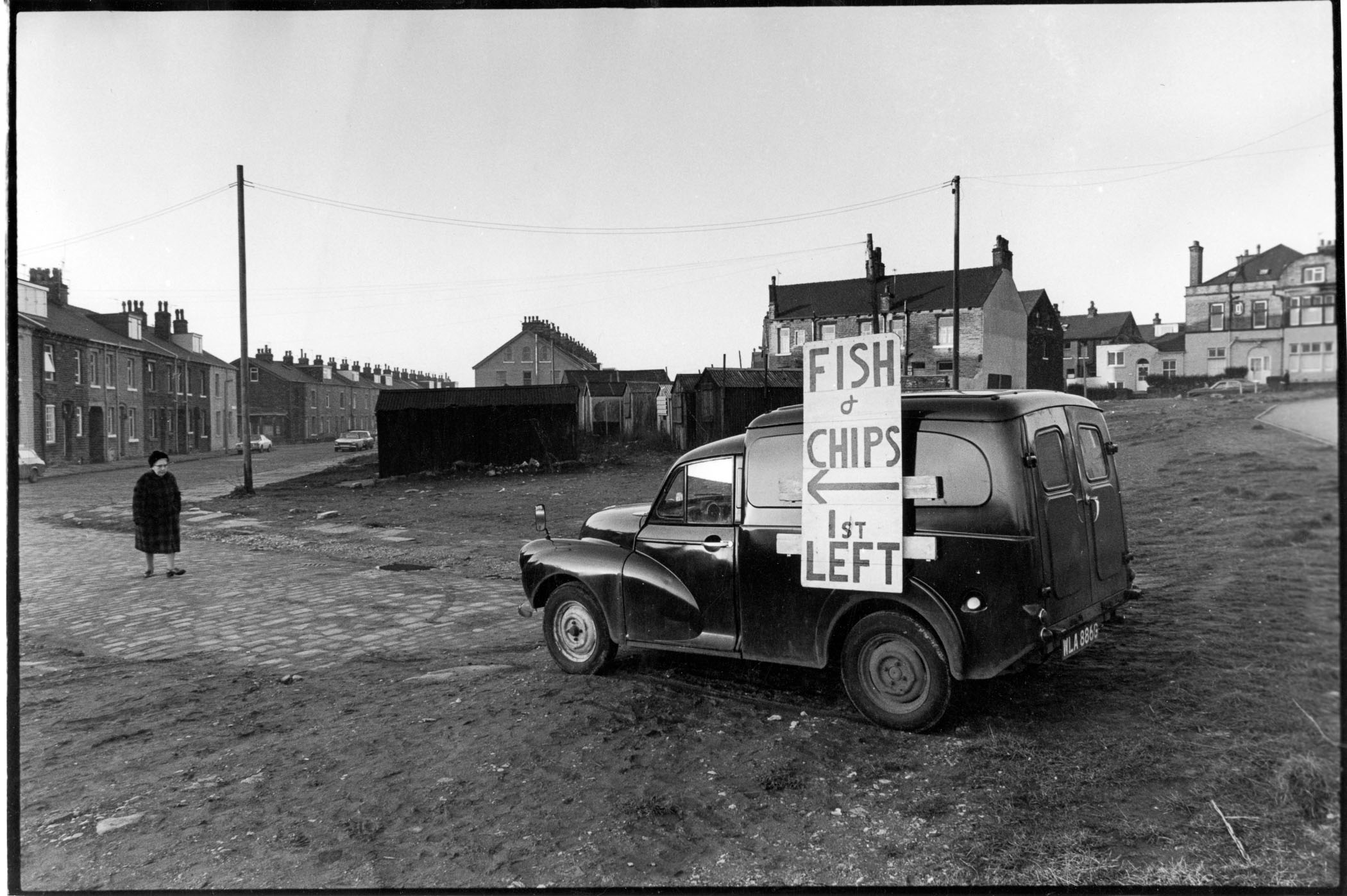
The chipshop owner told me he had to fire one of his assistants because he kept parking the van the wrong way round.
The “unimposing” look of a Leica
Not only that, but I never liked 35mm SLR cameras — too big, too shiny and too noisy with the clunk of the mirror and shutter. I wanted something discreet, quiet and small.
I convinced my bank manager to give me a loan to buy a Leica M6 with a 35mm Summicron-M lens. He took some persuading. He found it difficult to understand how a camera that looked, in his words, “so unprofessional and unimposing” could be so expensive; he would rather have lent me the money to buy a car or a decent business suit.
In the early 80s, Leicas were hard to come by in England and I had to travel to Luton in the south near London to buy the body and then to Manchester to buy the lens.
A forty-five-year companion
I am still capturing life with the same Leica M6 and lens today, after over 45 years of hard work. It has been down coal mines, through blizzards, in the heat of foundries, battered and dropped numerous times, but has never once let me down.
It wears its patina well
Now, in 2025, the Leica Store Manchester staff love to see that I’m still capturing life with my Leica M6, and hold it up to customers as an example of the strength and reliability of Leica cameras. I am credited, by them, as one of the few photographers in the area, who uses a Leica as it should be used, not as a status symbol, a piece of expensive photographic jewellery.
Apart from its sturdiness and reliability, the other thing I love about it, is how modest it looks. I found this attribute to be one of its most useful features.
A changing landscape
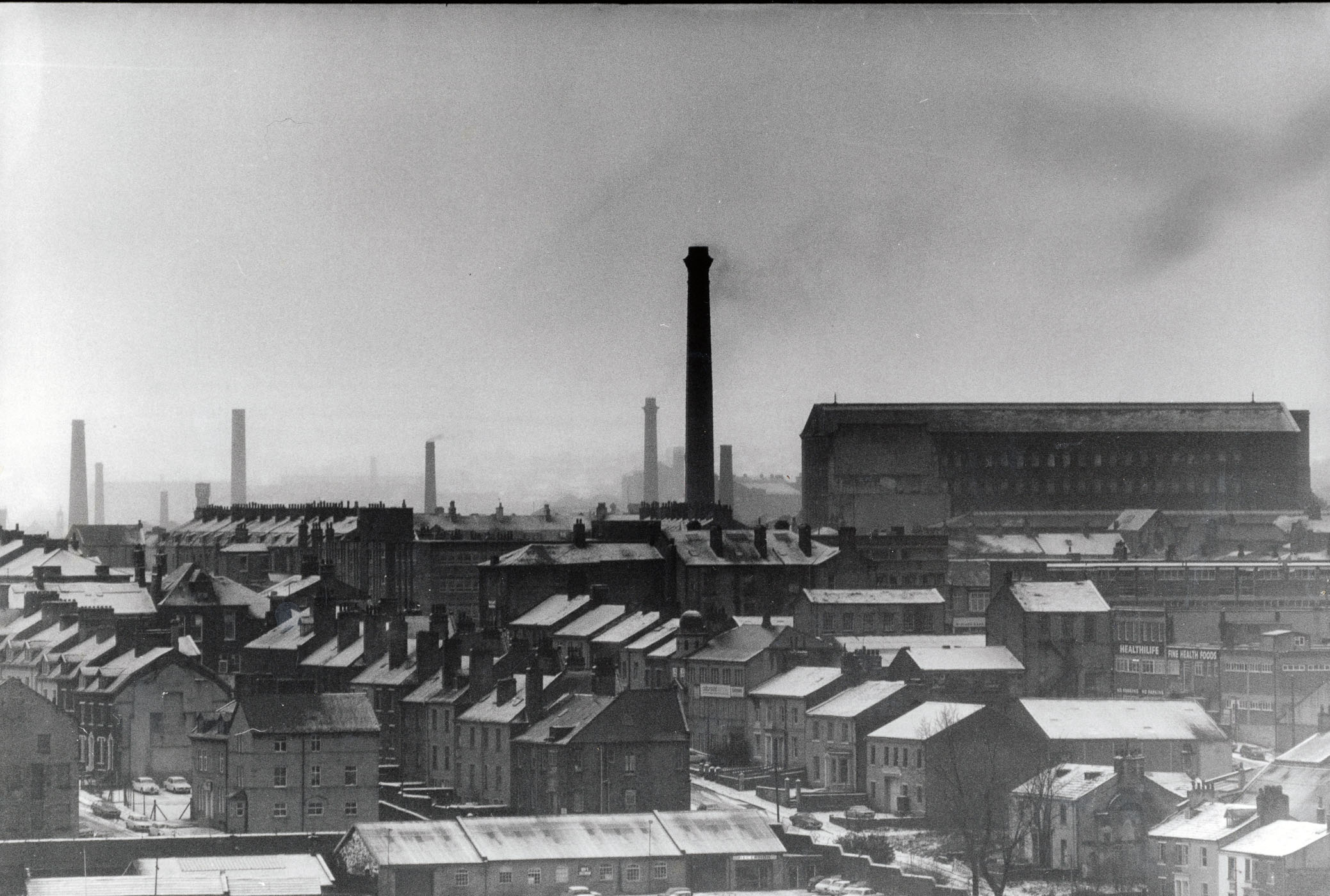
If you stand in the same spot now (2025) you can see just the one chimney left, Drummonds mill chimney, the one in the middle. The mill to the right burnt down a few years ago.
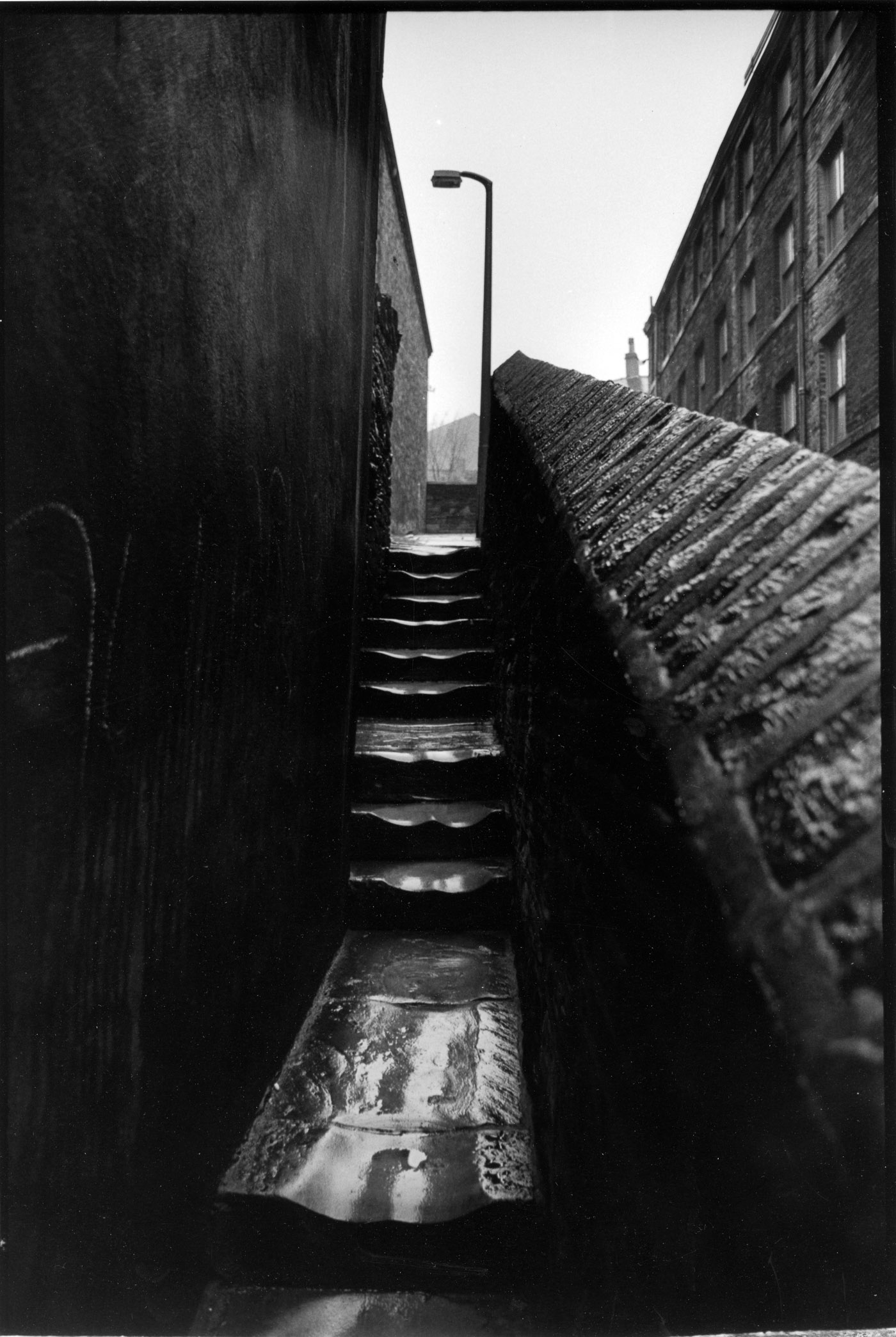
The decline of industries and communities
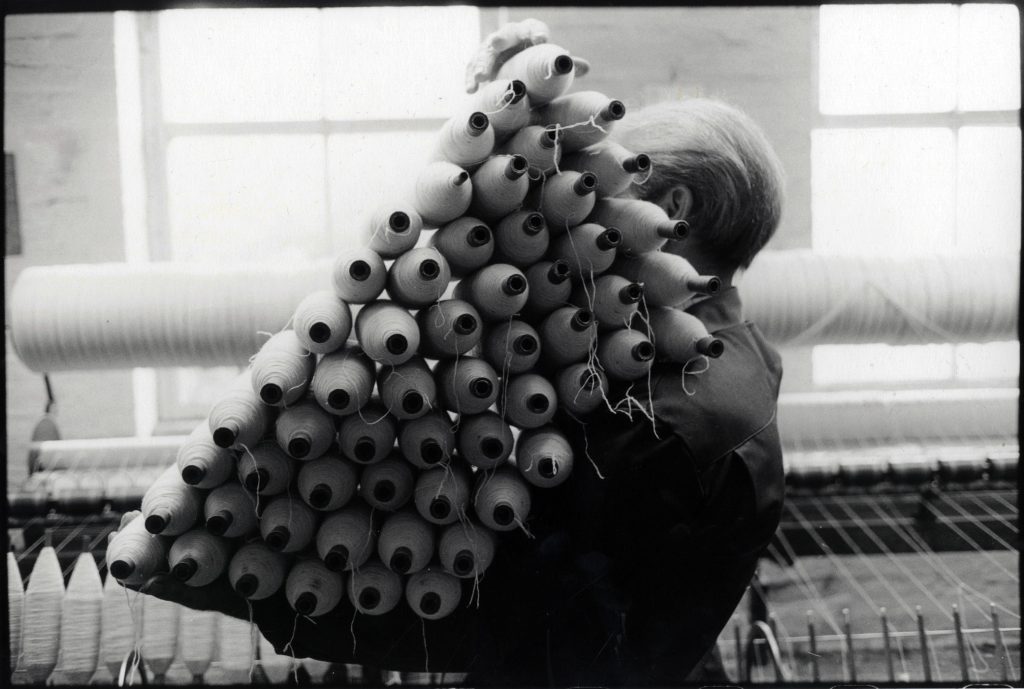
A Bobbin Doffer would take the bobbins off the spinning frames and a bobbin ligger would put them on. With the demise of traditional industry, many of the dialect words peculiar to specific trades and industries have sadly going out of common usage.
My friend the poet Ian McMillan wrote:
Look at this man, how he carries the bobbins
So carefully, each hand just so. Here, and here.
He’s carrying the jokes and he’s carrying the stories
The Bobbin Doffers told each other in the brief rests
They took, when the sun from the windows lit the wool in the air.
Look at this man, how he carries the bobbins
In a kind of practised geometry of balancing.
He’s carrying the structure of a lost language,
A lost way of thinking, a set of skills and solutions
That hung in the air for a while like wool in light,
Then faded.
Look at this man, how he carries the bobbins
Like he’s carrying history.
And he can’t see where he’s going, can’t see which way History’s heading. But we can see him.
The last threads of the textile industry
In 1984, the then newly opened National Museum of Photography commissioned me to undertake a major project photographing what remained of the textile industry in the North, in particular West Yorkshire.
The industry was in steep decline; often I found myself a few steps in front of the bulldozer as dozens of mills were swept away. Many times I was present to capture what was left of life with my Leica M6, as the mills ceased production and were emptied.
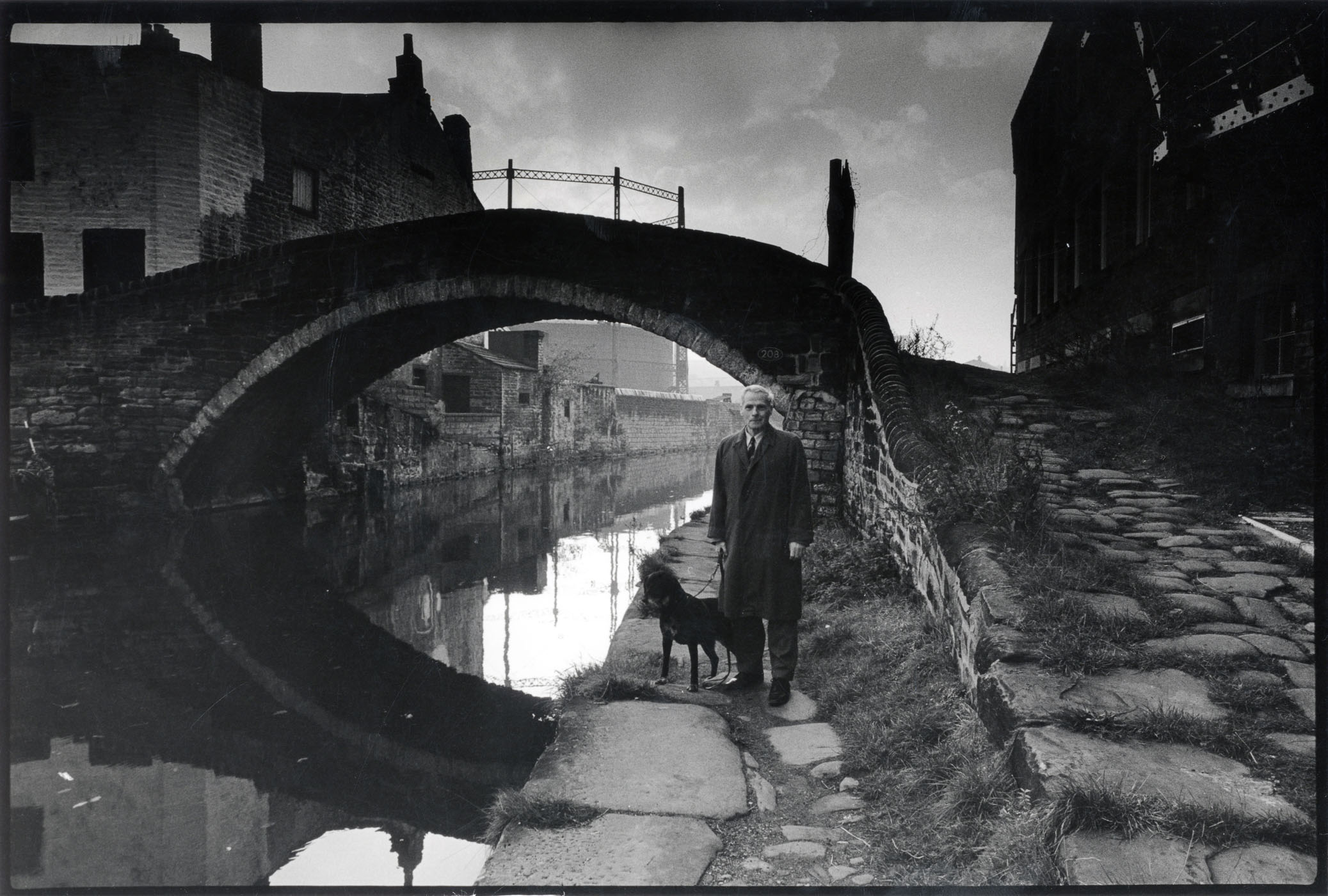
The man in the photograph told me that he had recently been made redundant, but hadn’t yet told his wife. He was so ashamed of losing his job, he was pretending to still go to work. He had worked as a warehouseman and his dog always went with him.
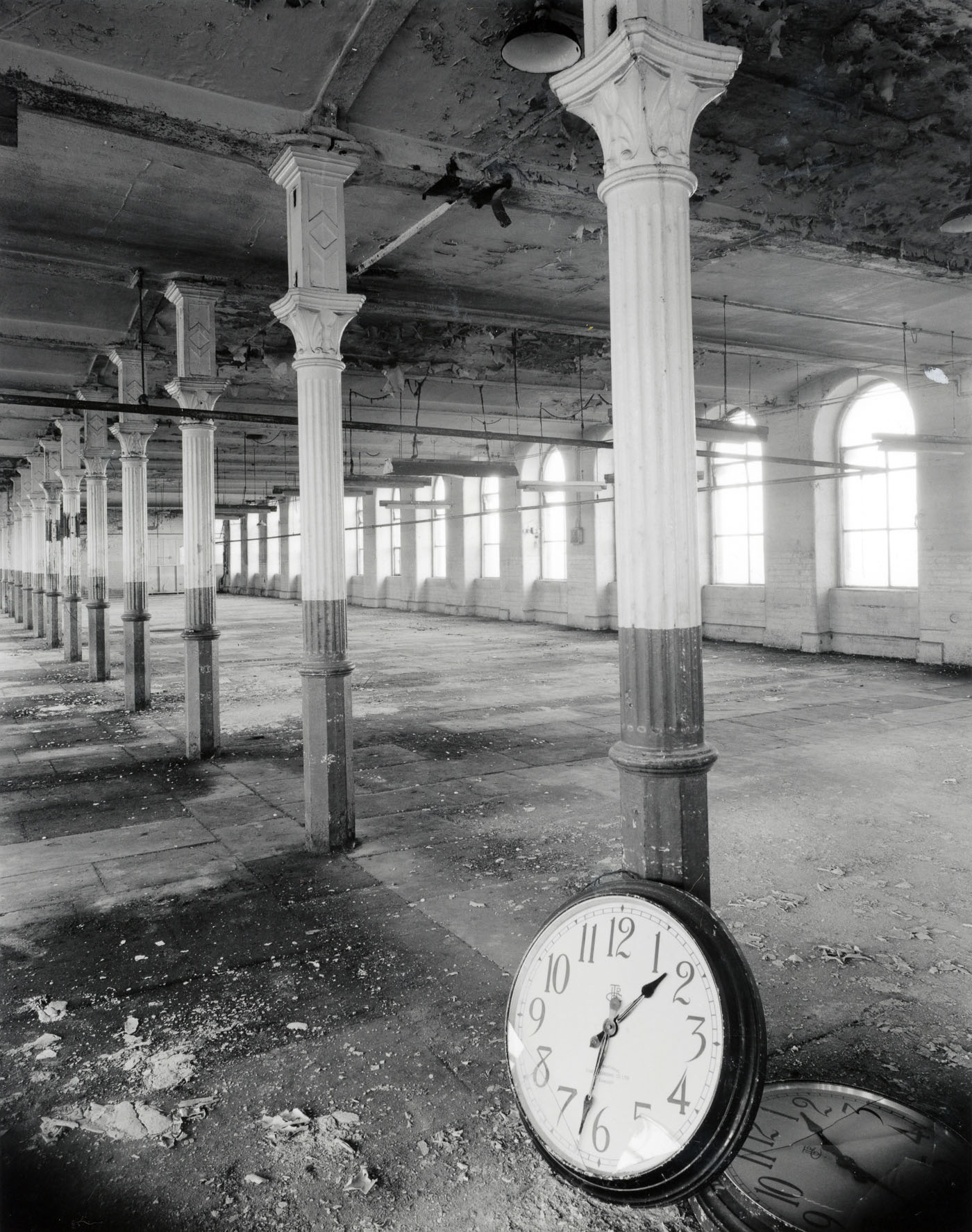
I wandered through the empty floors of Listers mill trying to capture what life remained with my Leica M6 until I found this abandoned clock: a sad metaphor for the end of a once thriving industry.
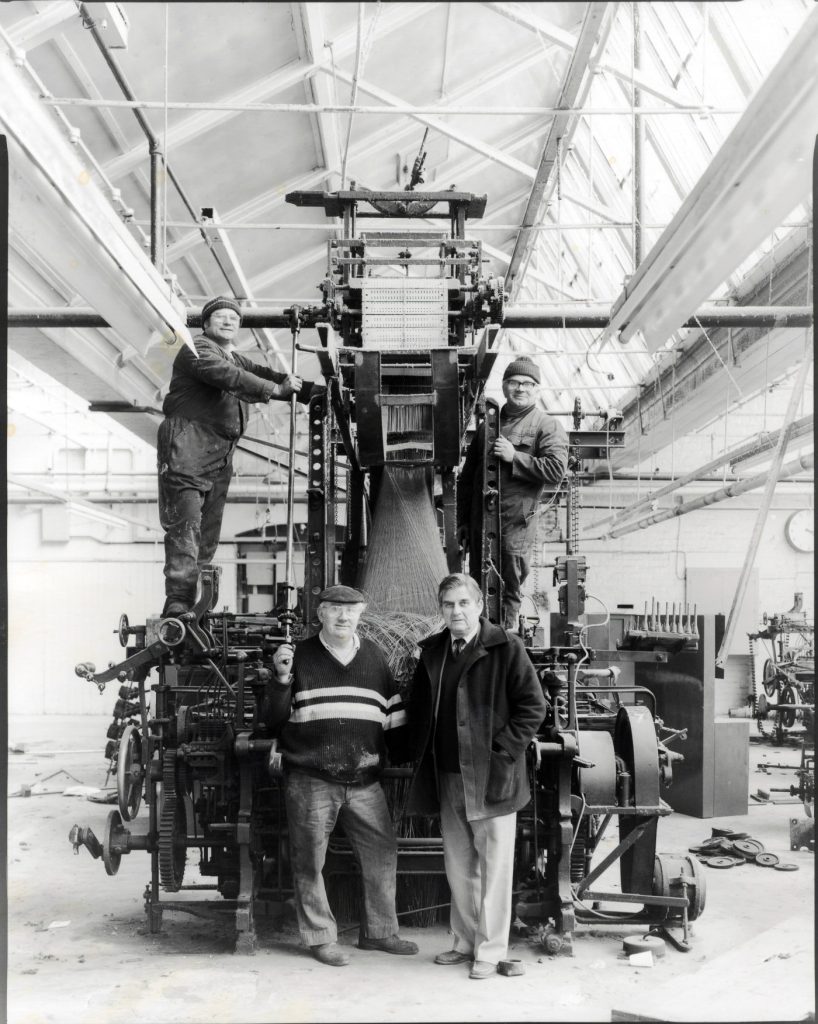
In 1986, after 133 years of production at Salts Mill, scrap merchants were preparing to dismantle a pattern loom.
Babe
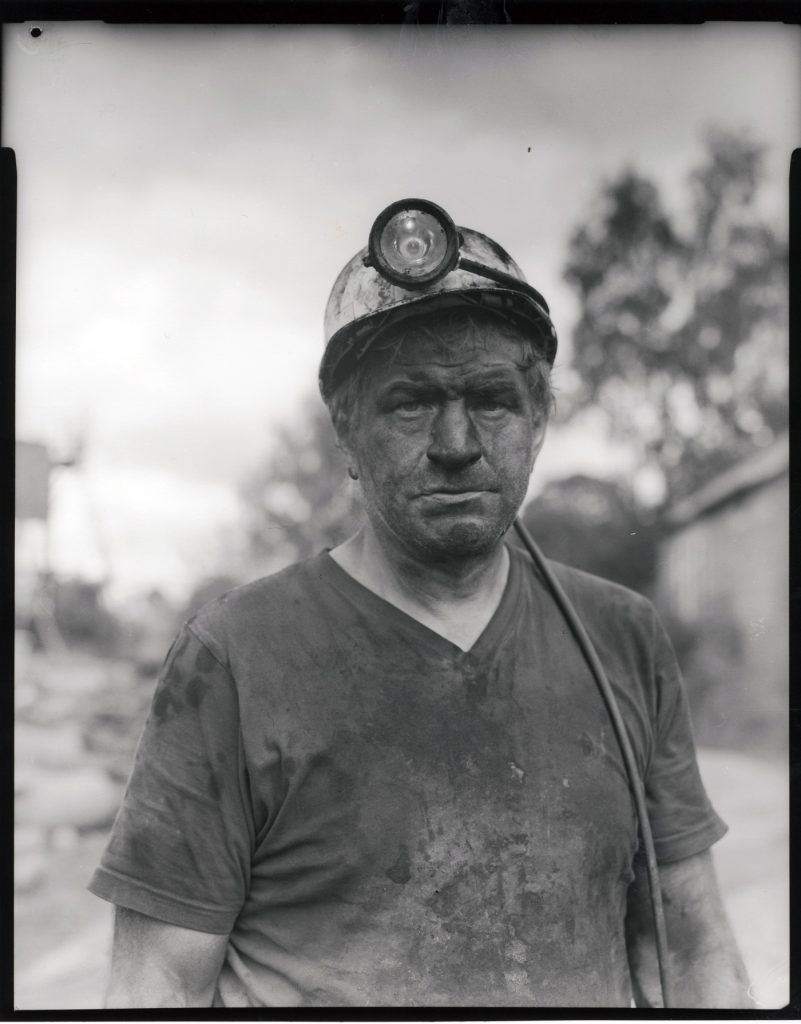
I spent years photographing life with my Leica M6 at Hayroyd’s Pit, Clayton West, Yorkshire. One day, Babe, who was a face worker, asked me to take a formal pic with my plate camera after he had finished his shift and was still in pit dirt.
He wanted the photograph for his grandchildren and their children. “We are the last of the miners, and soon we will all be gone, I want my grandkids, their kids and their grandkids to know I was a miner and this is what I looked like.”
Dolly
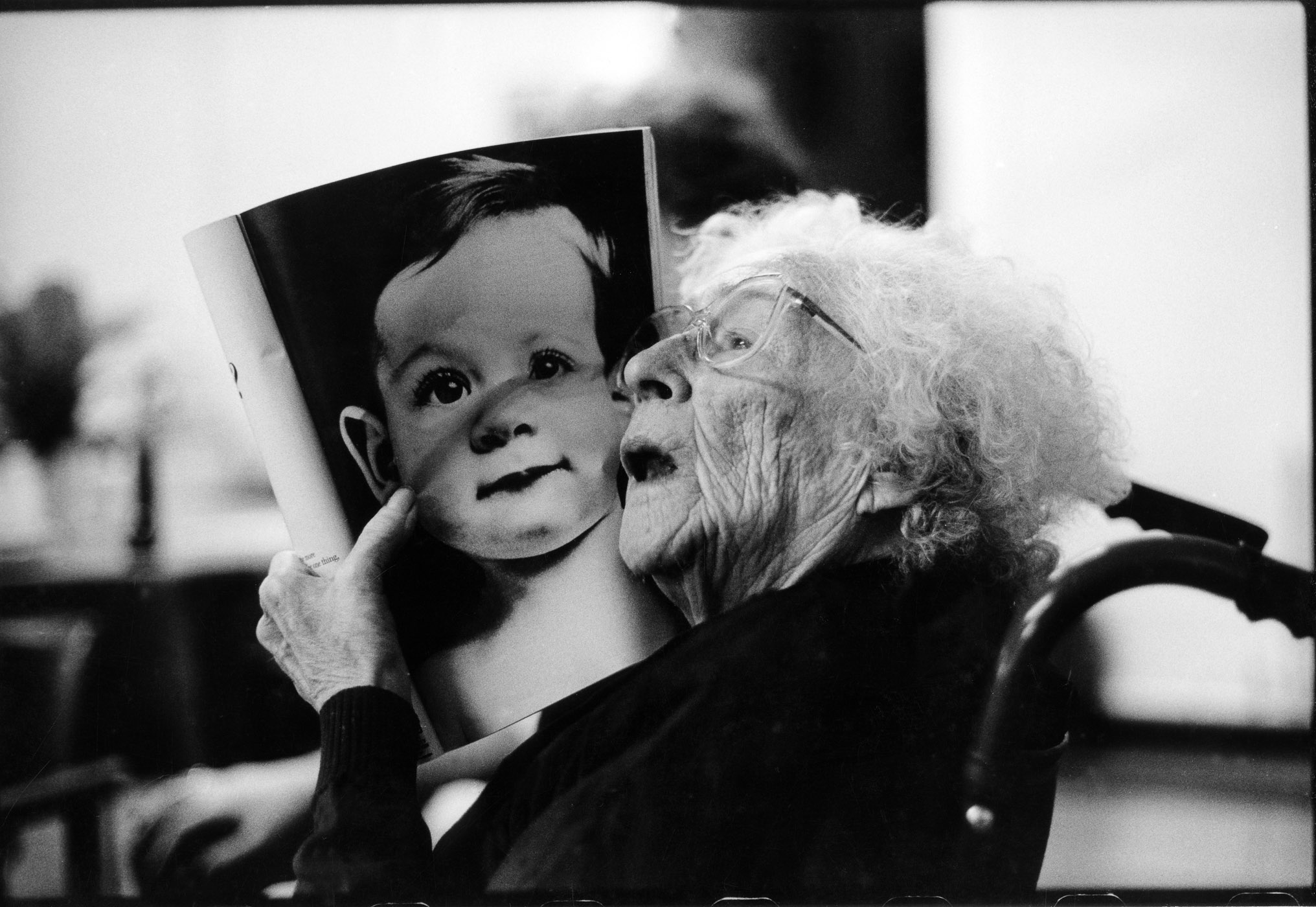
In the 1996 I was artist in residence for the City of Lancaster, and I was invited to work with the long-term institutionalised patients in the Moor hospital. The hospital was in the process of closure, and it was only the very elderly, with no surviving relatives, that were still there. I worked with them, looking at old photographs of Lancaster, and so forth, as reminiscence therapy.
One day, I was looking through a magazine with Dolly, when on seeing this photo of a young child she held the pic to her face and became quite distressed, crying and kissing it. The ward manager informed me that Dolly was one of those very unfortunate women who had been incarcerated in the hospital when very young. At 15 or 16 she had an illegitimate child and was locked away. She was in a late 80s or 90s when I photographed her. She never left the Moor, she died about a year after this photograph.
“You’re not singing any more”

On the 9 May 1999 Bradford City were promoted to the Premier League; in July I was appointed the artist in residence for the 1999-2000 season.
I found the transition from fan to photographer, from spectator to observer very difficult. I confess I missed numerous photo opportunities by becoming too involved in the game. But so what: I am a fan first, a photographer second.
Documenting the lives of the vulnerable
A lot of my work has been in sensitive areas; in vulnerable communities, where people were dealing with difficult situations and challenges. Many people would be wary of photographers with a load of expensive looking equipment; many might also feel intimidated and others distrustful. But I just used to turn up with the one camera, the one lens and a pocketful of film.
For my style of work, it works well, I spend more time talking to people than photographing them. Many people comment on my lack of equipment and question whether I really am the social documentary photographer that I claim to be, or a fake? I take all these as compliments.
New generations discovering film
In the last ten or so years, younger generations have become fascinated with shooting film. The fact that I still shoot film and the act of reloading my Leica has become a great point of interest, discussion, and a performance to be recorded by some on their mobile phones.
I take photos on my iPhone, but I believe that digital photography is fundamentally a different medium from photography, I dislike the phrase analogue photography, in my opinion one medium is digital imaging and the other is photography.
The differences between film and digital
The important difference between the two is the photographer’s relationship with materials and light. In photography, the light that creates the photograph can also destroy the image at any number of stages in the process, when loading and unloading film, and in the development of the negative and then the print. The process is tactile and skilful; every print is unique.
A connection to the past
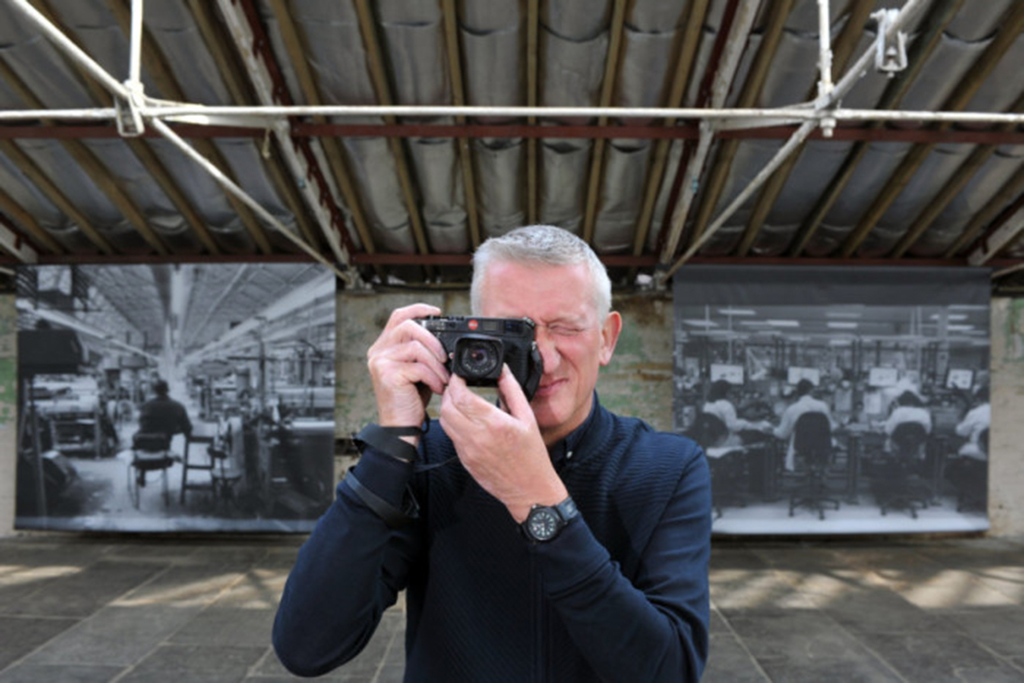

At my recent career retrospective exhibition “Life” at Salt’s Mill, Saltaire (a world heritage centre near Bradford, West Yorkshire, England), a man came to talk to me. He said, “You won’t remember me, but I remember you. I worked in a camera shop in Bradford, and you were always coming in to buy rolls of black and white film. It makes me so proud to think that the film I sold you created some of these wonderful photographs.”
I take this as a great compliment and a very moving one.
It is one of the reasons why I decided to donate my entire archive of negatives, prints, notebooks (over 200,000 items) to Bradford City Art Galleries and Museums.
I am hanging on to my Leica M6 for a bit longer, but at some point, it will be re-united with all the negatives it created.
And those cats’ eyes on the chipshop…
This documentary from 1968 outlines the life and invention of the remarkable Percy Shaw
| Where to see Ian Beesley’s work | |
| “Life goes on” Gallery 2 Salts Mill, Saltaire, Bradford, West Yorkshire, open Weds to Sunday 10am to 5pm until January 2026 | “Many hands” Sunnybank Mills, Farsley, Leeds, West Yorkshire. |
| “Woven in time” Bradford Industrial Museum, Moorside Mills Bradford West Yorkshire | Ian Beesley in The Guardian |
| Ian Beesley on the BBC | Ian Beesley in the Bluecoat Press |
Make a donation to help with our running costs
Did you know that Macfilos is run by six photography enthusiasts based in the UK, USA and Europe? We cover all the substantial costs of running the site, and we do not carry advertising because it spoils readers’ enjoyment. Any amount, however small, will be appreciated, and we will write to acknowledge your generosity.
Ian
As a Yorkshireman, I really appreciated your article and your stunning images brought back vivid memories of a time of great social change.
The Percy Shaw video was well worth seeing again. It is worth noting the interviewer, Alan Wicker, was himself an accomplished photographer. He served in the Army Film and Photographer Unit of the British army and covered the Italian Campaign from the invasion of Sicily (1943) to the surrender to him personally of the German forces in Milan in 1945. His published wartime images of General Mark Clark (US Fifth Army) liberating Rome in June 1944 are but one example of his work.
The two, 20 year old videos (recorded for British television), available now on YouTube, are really worth watching and to me, as an ex-soldier, they are very moving. Like my father, he too was in the “hell hole which was the Anzio beachhead”
Beginners Luck (2005) Whicker’s War
The Survivor (2005) Whicker’s War
To me your canal side photograph of an unemployed man (1977) is the stand out image of the article as it really does encapsulate the desperation of unemployment and the fading industrial grandeur of Bradford.
Chris
What a wonderful story and stunning images! Thanks for sharing. You can see the power of photography in this work: it preserves the past when executed with such passion and precision. I’m deeply impressed. Jörg-Peter
Fascinating article and incredible photos. Thank you so much for the wonderful read.
Hi Ian,
A great article. I must try to get down to Salts before the exhibition ends. Pleased to hear that you are still active. Is the ‘Born in Bradford’ project still going?
Best wishes, Bob
Hi There Ian
I’ve seen lots of your work in the past, but this is a great story – and the photographs are wonderful. I particularly love the redundant worker and his dog – thank you so much!
Thank you
Hi
Thank you for your kind comments
Sadly much of Bradfords inner city streets were demolished in the 60s,70s, when the rather misguided council with the notorious architect Poulson decided on a brutal redesign of the city, but some of the finer mills have survived such as Listers Mill and Salts Mill
cheers
Ian
Wonderful images that, thanks to that M6 camera and your decision to capture those moments on film, allow all of us to enjoy moments from the past in the present. Long may your negatives survive and long may people take an interest in and reflect on them.
These days many of us often waste much time trying to create technically perfect images or artily composed masterpieces when all we really need to do is photograph life around us before it disappears. Thanks Ian, for reminding me of this.The unemployed man walking his dog and the miner are so evocative of the time especially when you explain the story behind them.
To comment on this would be “To gild refined gold; to paint the lily.”
Canadian here. We visited the “old country” for the first time in 2014. About three weeks before leaving home to find my family in the Leeds area, we found out my wife’s father Jim was actually born in Bradford and determined the street address. We made an effort to visit Bradford and find the place of Jim’s birth. We found the little street and sure enough there was nothing there. Someone stopped and asked what we were looking for. When we told them, the response was that the row housing was torn down before the war and that the factory that replaced them was torn down in the late 1970’s or early ‘80’s. Based on Google maps (or whatever was in vogue in 2014), we finally found the street number and took a “digital image” of the wall that stood there currently. We understood then that even historic places like England were always transitory. Beautiful work, Ian.
Hi
Thank you for your kind comments
Sadly much of Bradfords inner city streets were demolished in the 60s,70s, when the rather misguided council with the notorious architect Poulson decided on a brutal redesign of the city, but some of the finer mills have survived such as Listers Mill and Salts Mill
cheers
Ian
Lovely work, Ian. I have heard your name before. This is the sort of documentary work we love at Photo Museum Ireland which I chair. We usually exhibit photos with an Irish connection, but we have shown the work of Chris Killip and others from Northern England from time to time. As time goes by, work such as yours will accumulate even more value, as it shows a world that has changed a lot in recent decades. I am thinking here of the photos of the miner and the last loom at Salts Mill, Saltaire.
I am also delighted to hear that your wonderful archive is now in ‘safe hands’ for present and future generations to enjoy and be enriched by its content.
William
Hi
thank you for your kind comments
Yes my archive is now going to safe hands. Orginally I was donating my archive to what was the National Museum of Photography Film and Television in Bradford, but a few years ago it was decided that the national collection of photography should be in held in the Victoria & Albert Museum in London ( if they havent got enough stuff), this was against much public opposition. Unfortunately some of my work has ended up there, which even I cannot get access to !!! Hey Ho.
But on a lighter note my family on my mothers side are from Ireland- Waterford- I visited last year to see where my mother was brought up.
Very best wishes
Thanks Ian. My own mother’s people were from a town called Youghal in East Cork just across the River Blackwater from Waterford. Sir Walter Raleigh lived on the same street some hundreds of years earlier. Let me know if you are planning any further trips to Ireland.
Photo archives can cause major headaches, not least by virtue of their sheer size. I recently gave a talk in our National Library on my personal choice of about 55 photographs out of the 5.5 million images in the Irish National Photographic Archive which is kept by the National Library of Ireland. Only 70,000 of those images are scanned and available online. I can only imagine what the situation is like in Britain where there must be many more millions of photos in various archives.
William
Thank you for sharing – wonderful.
Thank you
Thanks for sharing an incredible journey and evocative image. I am blown away by this article. You used the M6 to its full potential. That you are still using the M6 is a tribute to Leica craftsman – it is not a luxury toy! I should have stuck with my lovely M4P for a lot longer!
Thank you
Yes the M6 has proved to a very trusty companion for decades
Words fail me, I will have to settle for simply saying. FANTASTIC, and thank you Ian. (Don Morley, formerly of The Guardian etc)
Don
Thank you I occasionally worked for the Guardian when the late great Eamonn McCabe was picture editor