
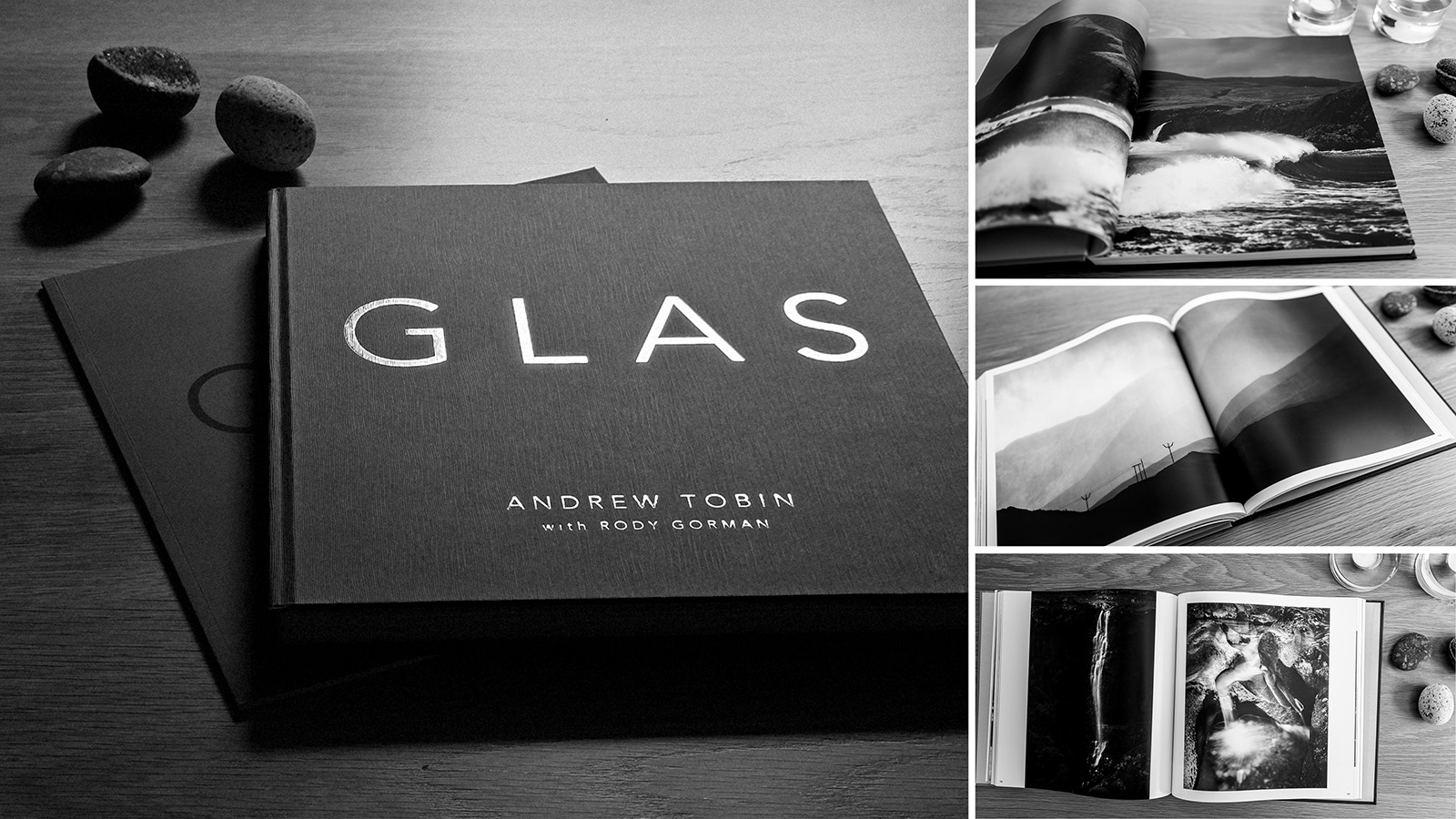
We have been tracking Andy Tobin’s work since 2018. He wrote articles that Macfilos published about testing L-mount lenses for the CL against M-mount lenses. He also wrote a three-part series about using the CL in the western highlands of Scotland, which we also published. What followed were two books, the Skye at Night, and Glas which we cover here.
Andy has contributed further articles to Macfilos including Skye at Night which continues to ride the Macfilos views hit parade. More recently, he casually mentioned that he was writing a book about the Isle of Skye that would be called “Glas”, which means “Grey” in Scottish Gaelic.
You can find links to the two articles about Glas, and one about Skye at Night, at the end of this article.
A 17-year journey
In summary, Andy has been developing the idea of Glas for roughly 17 years. It contains the aggregate of those 17 years. And reveals determined patience to create beautiful black and white images that use Ansel Adams Zone System.
It also reminds me of a record called Dis by a Norwegian jazz musician called Jan Garbarek. The album is on ECM if you are interested, and it features wind harp and saxophones. Both Glas and Dis have a stark sensory beauty to them. You can feel, hear and smell what’s there in the landscape, not just see it. The distinction is that it conveys beauty, but not chocolate-box prettiness.
Twelve smaller books within one
As a precursor, here are some numbers that reveal the effort involved:
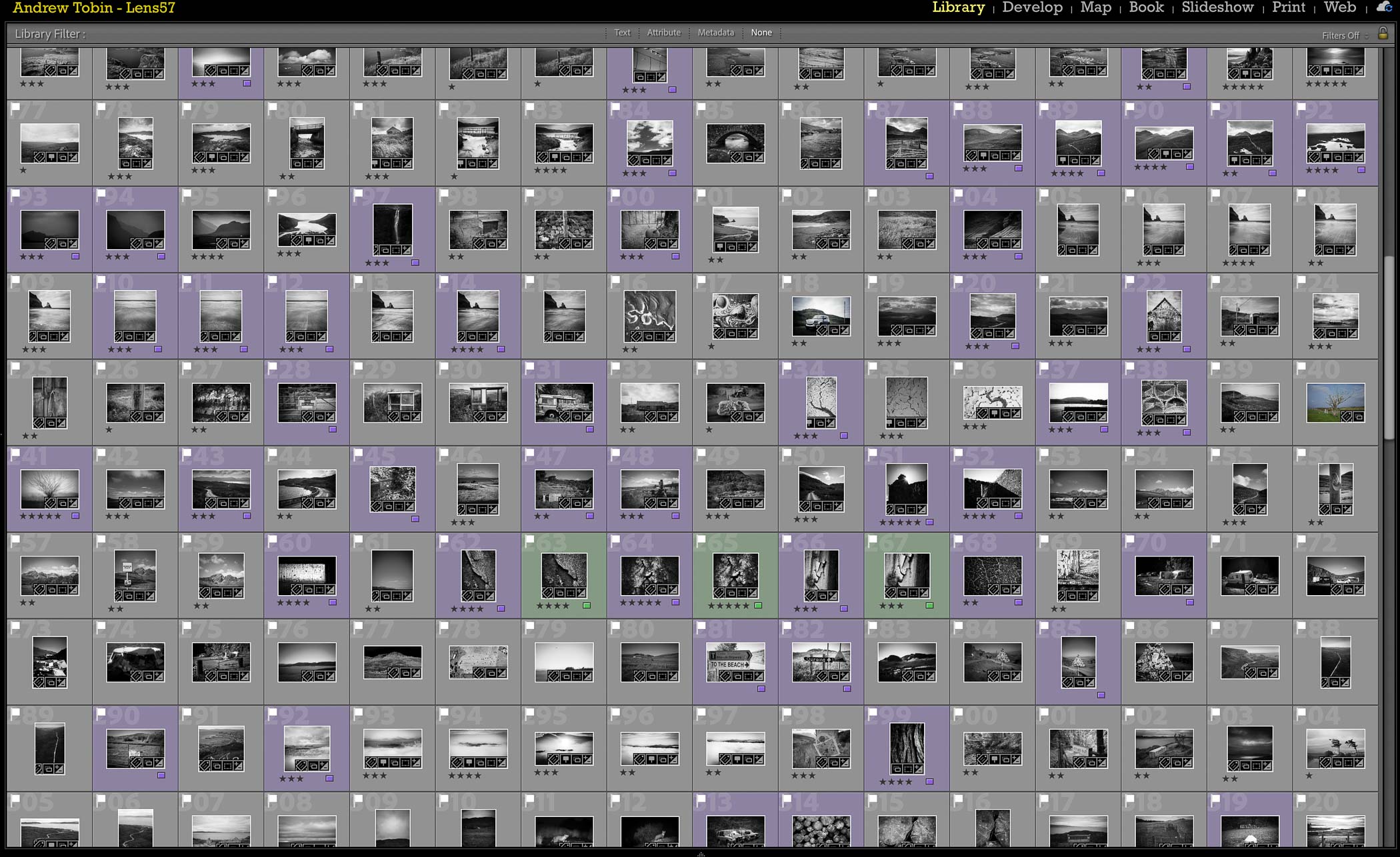
- About 70,000 frames shot in total
- 3,500 made it through the initial pick/reject cut
- 611 were considered for inclusion in Glas
- 194 made it into the book.
The book is divided into twelve themes that bring sets of complementary images together. In essence, each section is a book in its own right. For each section Rody Gorman, who is a Gaelic poet of renown, crafted words to match the images. It’s a beautiful combination.
The sections are:
| Small Houses | Sea Views | Signs |
| Trees and Beasties | Benches | Decay |
| Fences | Water Features | Poles |
| Observations | Weather | Roads |
In each of the twelve sections, you imbibe a strong sense of what it takes to live on Skye, and that’s a commitment to bending with nature’s whims and not fighting them. Even when you see signs of life in the images, they may be far apart.
On Skye, not everyone, however determined, can make a life of it. Still, those who stay are resourceful. Almost everything abandoned has a use for someone who stays. Old vehicles and boats in various stages of cannibalisation. Buildings, whose stone and woodwork can be moved, live on for another day in some other structure.
Wind and rain are ever-present
Water on Skye is ever present. With prevailing westerly winds scooping up moisture, it must land somewhere. Skye gets a powerful preview of what the mainland will receive shortly after. Water carves through the landscape and softens it, and the sea batters it into new shapes and submission.
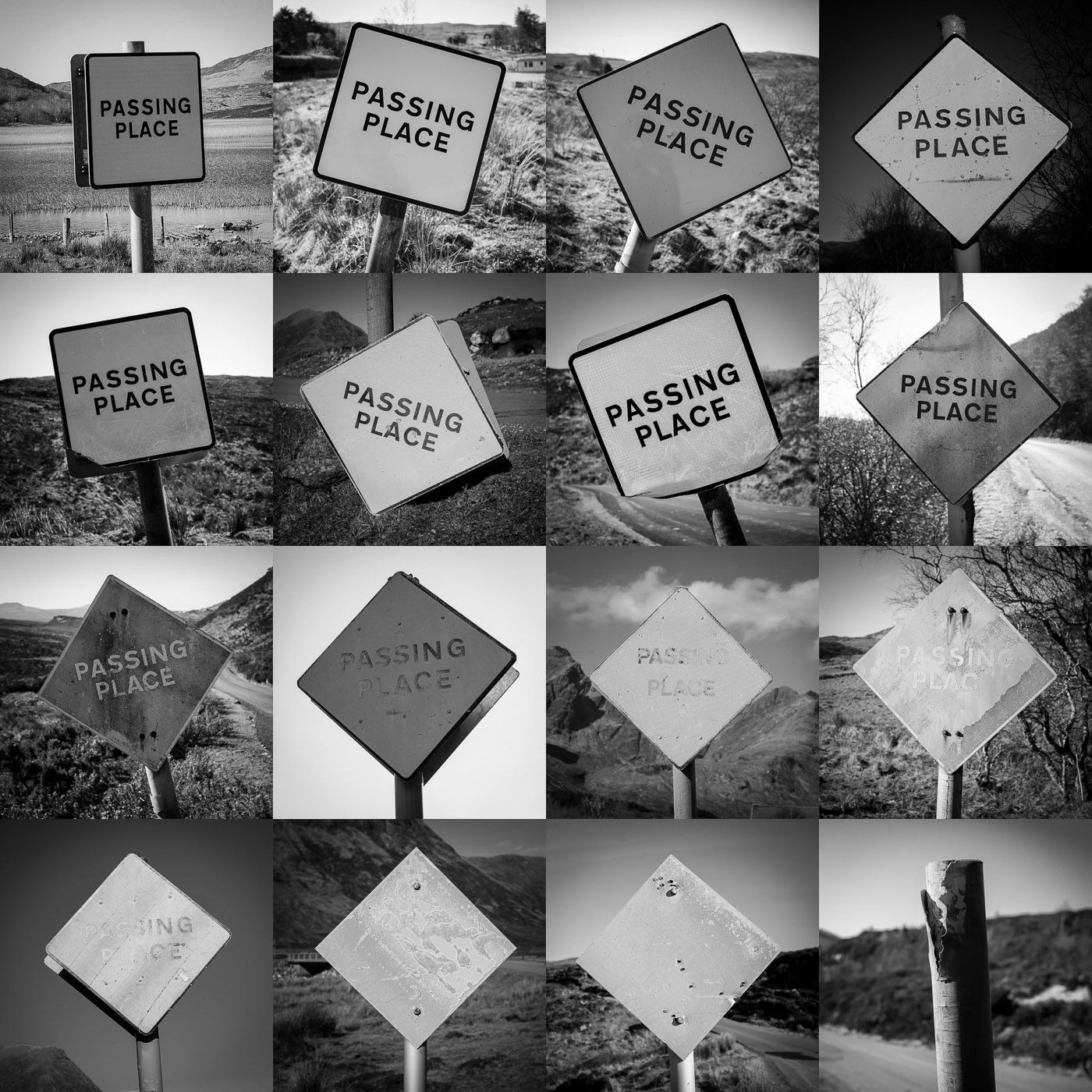
Even in signage, you get examples of starkly functional language: say what you mean and mean what you say. One small callout in “Trees and Beasties” section of Glas where Andy gives us a preview of his latest technique which is called “compositing.”
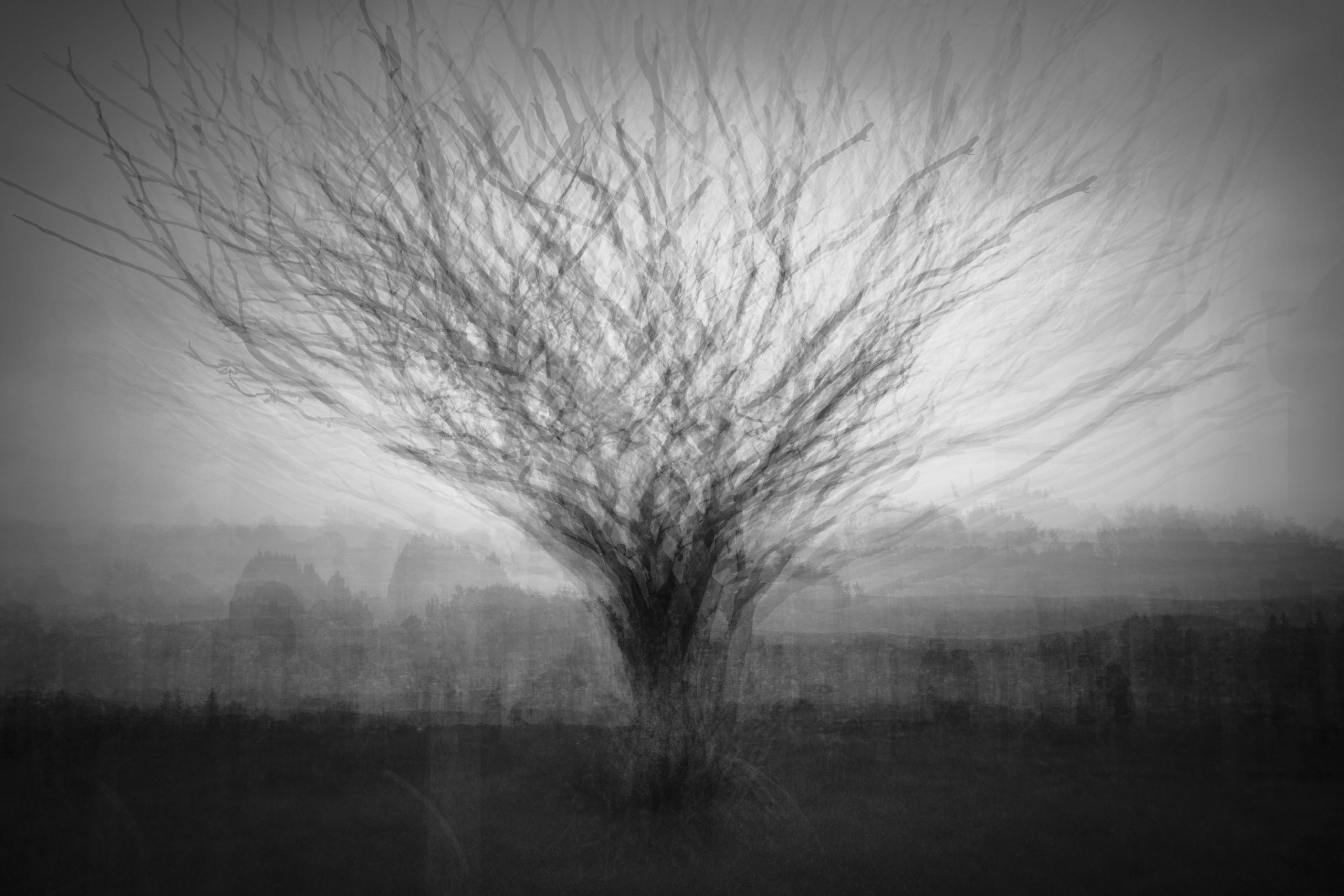
It requires you to take the same scene from slightly different perspectives. Combine them into one, which then creates a sense of movement. In the case of Skye, that can mean the wind blowing a snowstorm across the landscape.
You can find out more on this by following the link “And now for something completely different” in the table at the end of this article.
Short reviews of images that caught my eye
To do a “best of” list would be unfair and presumptuous to Glas and to Andy. I set myself a target of picking ten images that stood out to me. I also cheated in Spinal Tap fashion and went to eleven, so here goes:
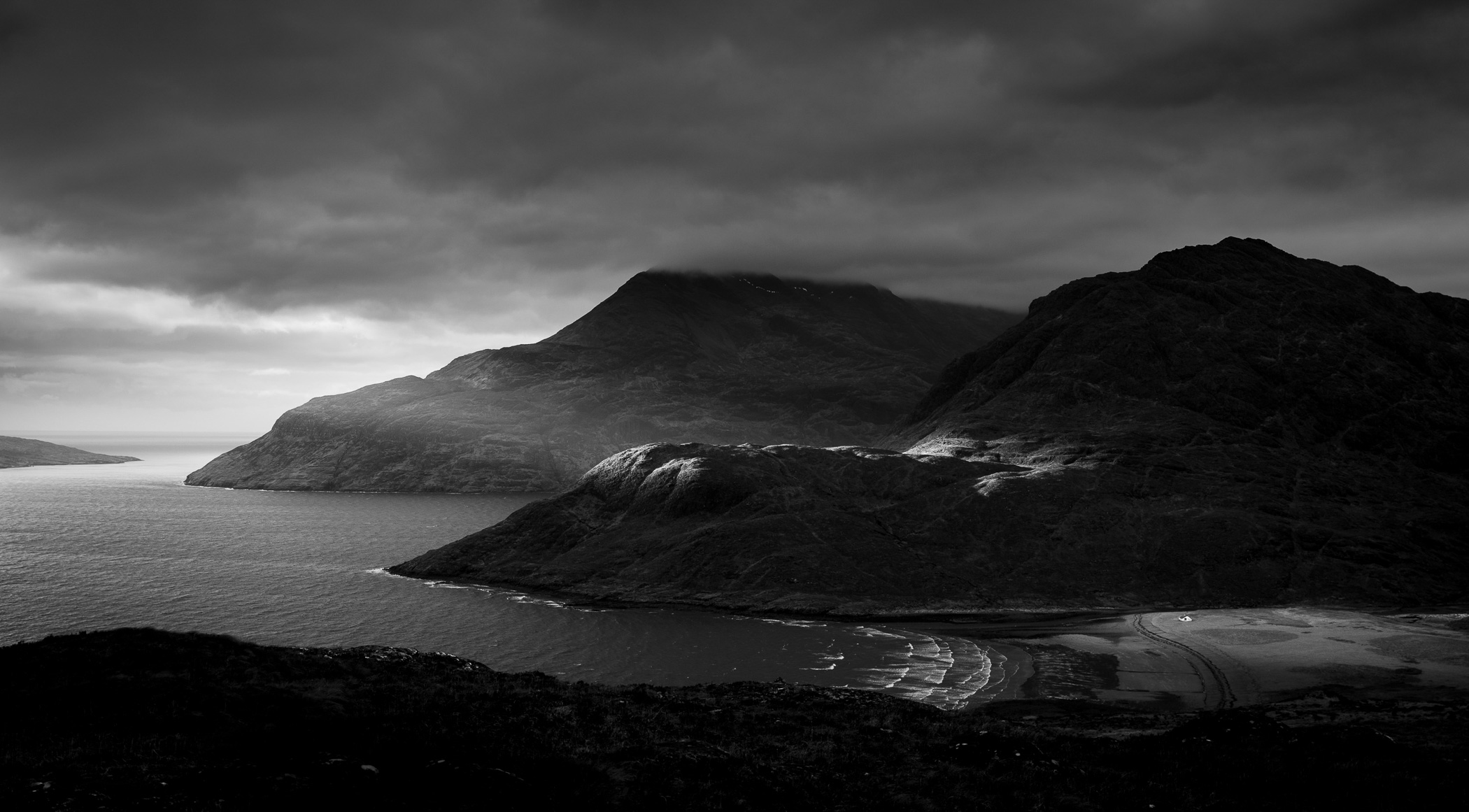
“Camasunary” captures a fleeting moment when the light is just right. You see the wave tops set against a dark sky, and then you notice a small, vulnerable white house, maybe 100 metres from the shoreline. There’s movement, contrast, and tension in one shot.
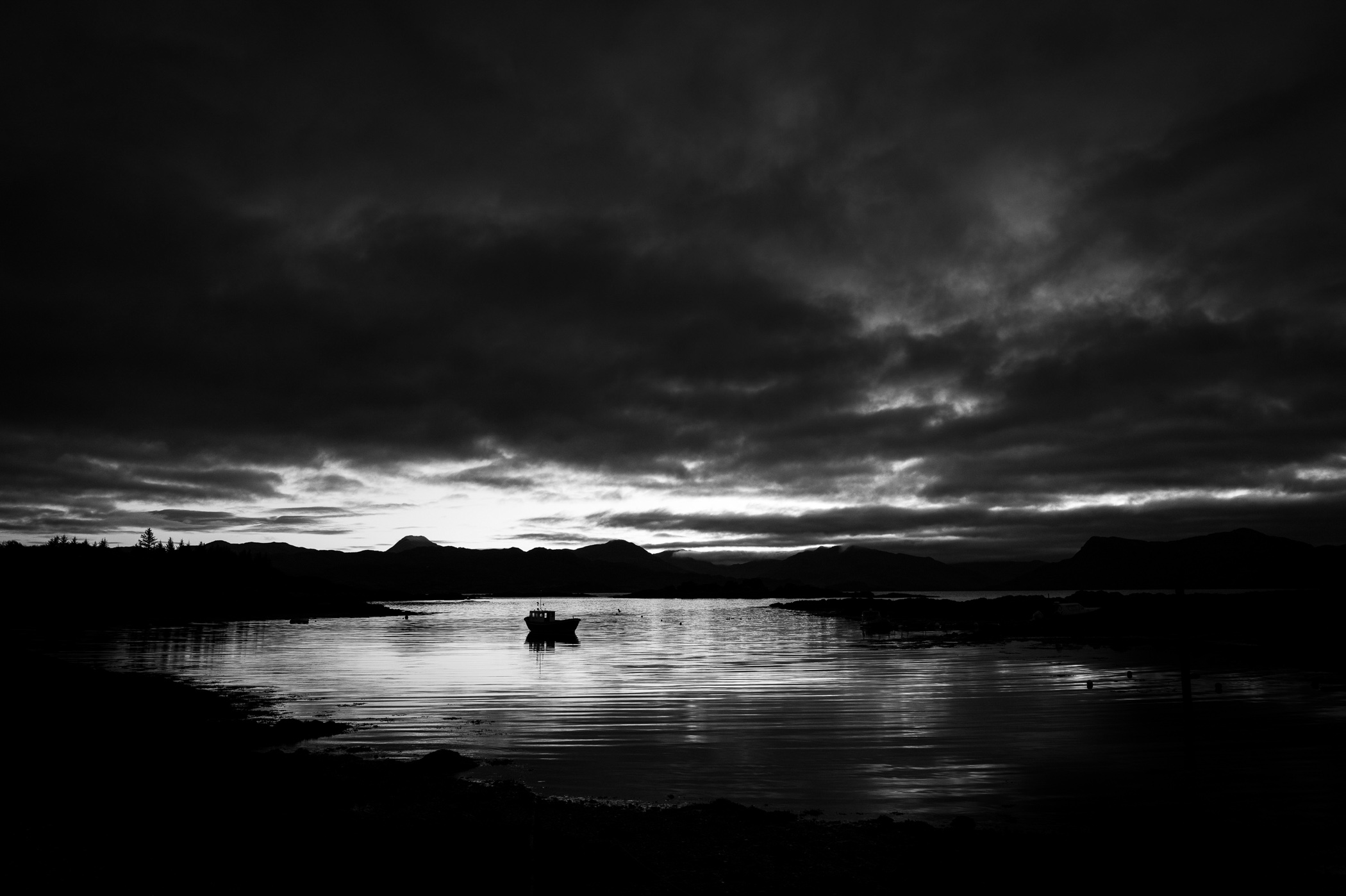
“Ardvasar”: it’s barely dawn. The clouds look ominous and grumpy at being disturbed. And in the middle of the bay is a boat sitting in just-lit calm water. It’s the tension between threatening dark and peaceful light that draws you in and keeps you there.
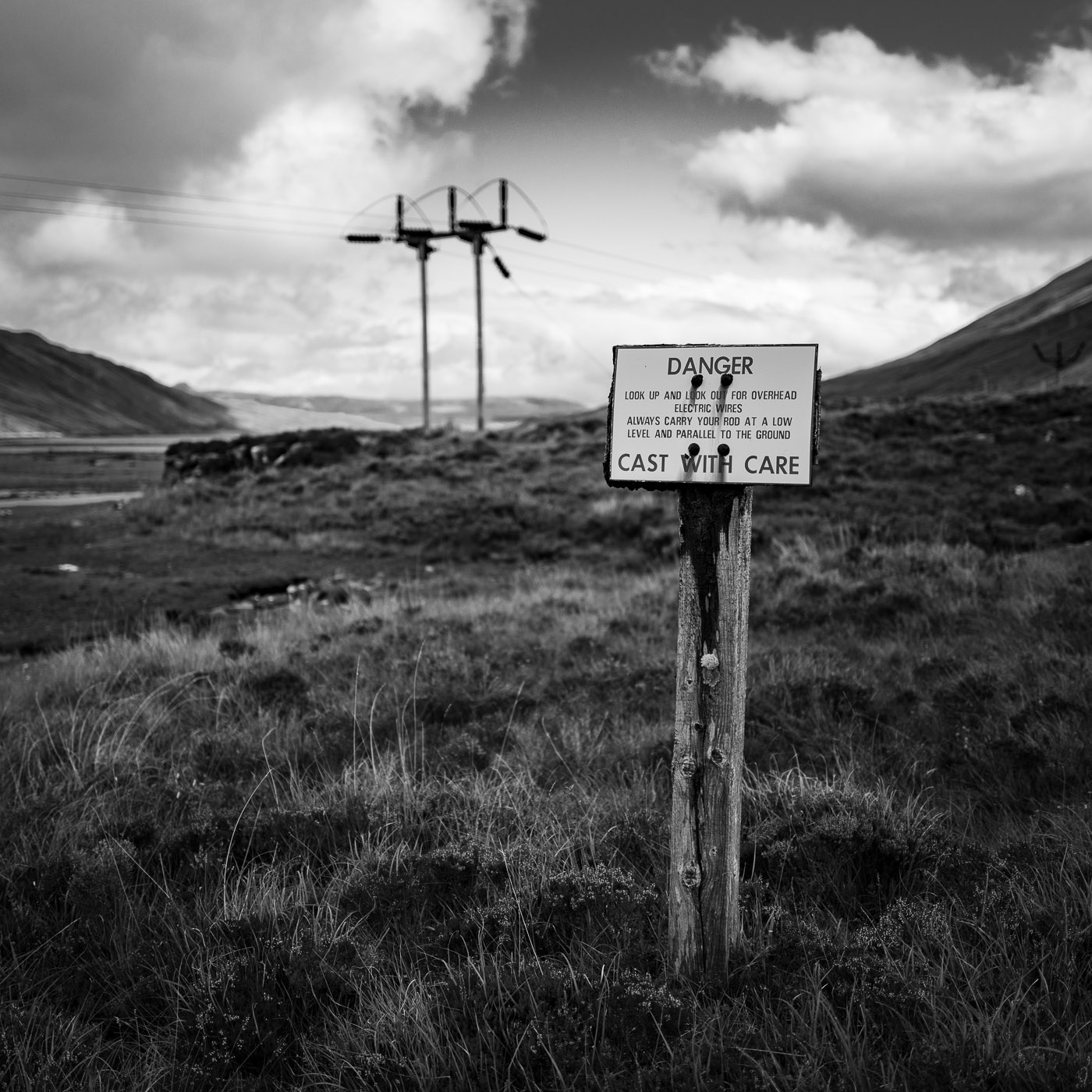
“Cast with care” appeals to my sense of humour. It’s neither a big dramatic sign nor a big dramatic picture, but when you juxtapose the words with a power line behind it, it brings a smile.
Seeing details
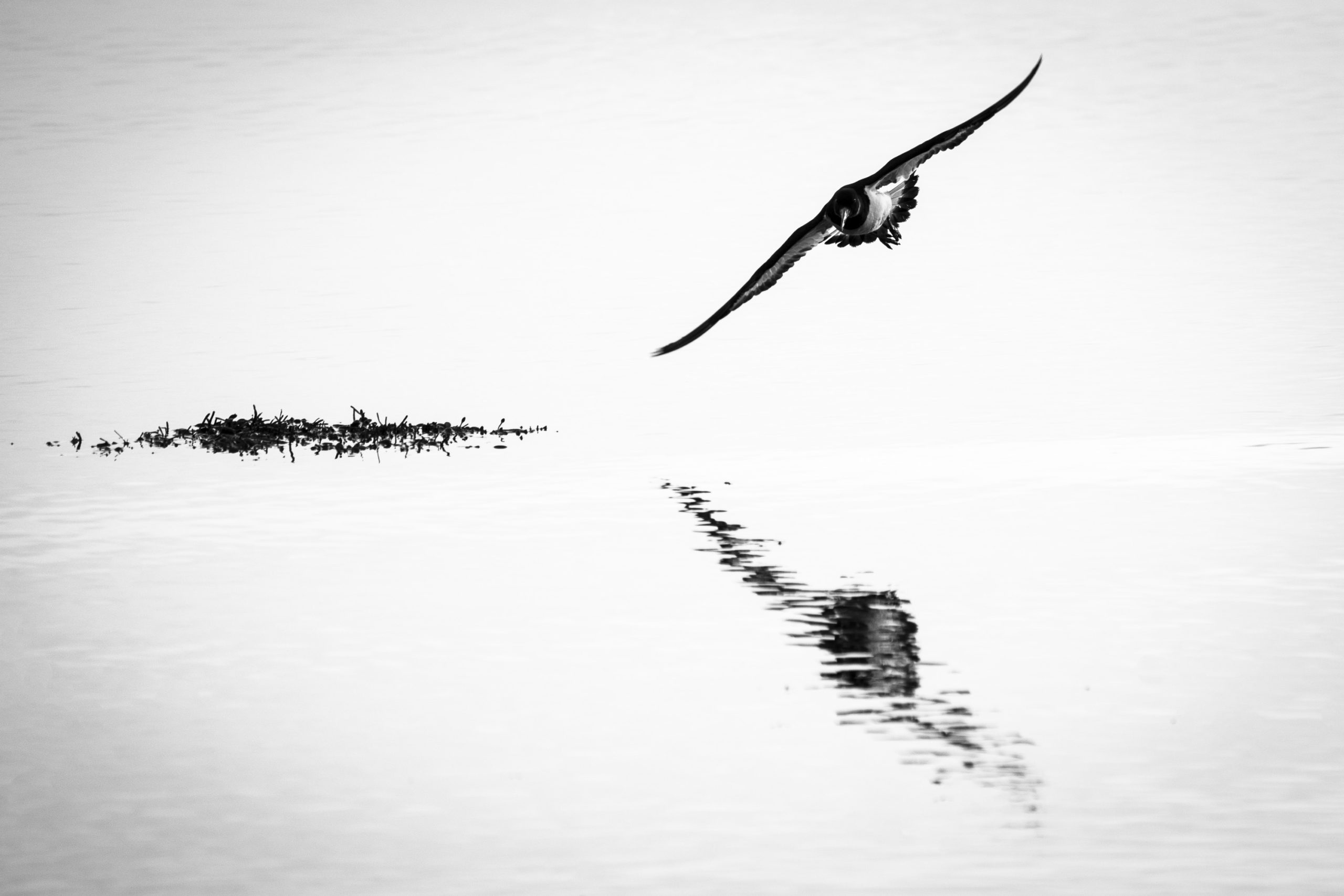
“Oystercatcher”: Looks like a simple shot of a bird in flight, but it’s not. Capturing the bird in flight over relatively calm water to produce a reflection, and to create further symmetry with floating seaweed, makes it standout. And what may be post-production work in almost overexposing the water allows you to really focus on the oystercatcher.
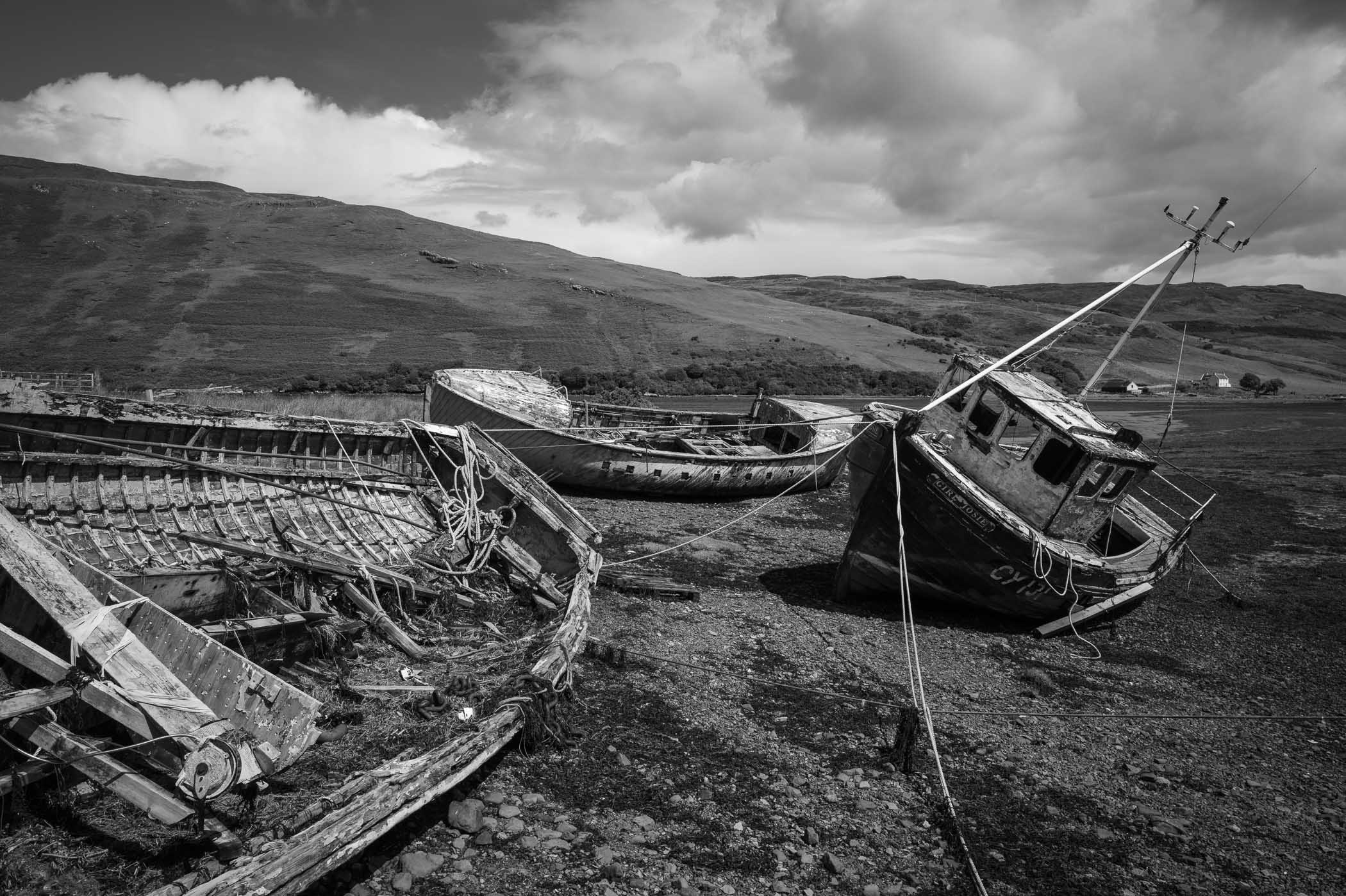
Decay is a part of almost every landscape, whether rural, urban, or desert. On an island with a sparse population, limited modern-day resources and few opportunities for advancement, it is no surprise that people move away to the mainland and leave behind what cannot be carried.
“Old boats”: This image fits with the pragmatic attitude of people who make a living the hard way. When something is beyond its useful lifespan and nothing of value or practical use can be extracted from it, it’s simply “parked” out the way. There’s no sentimentality.
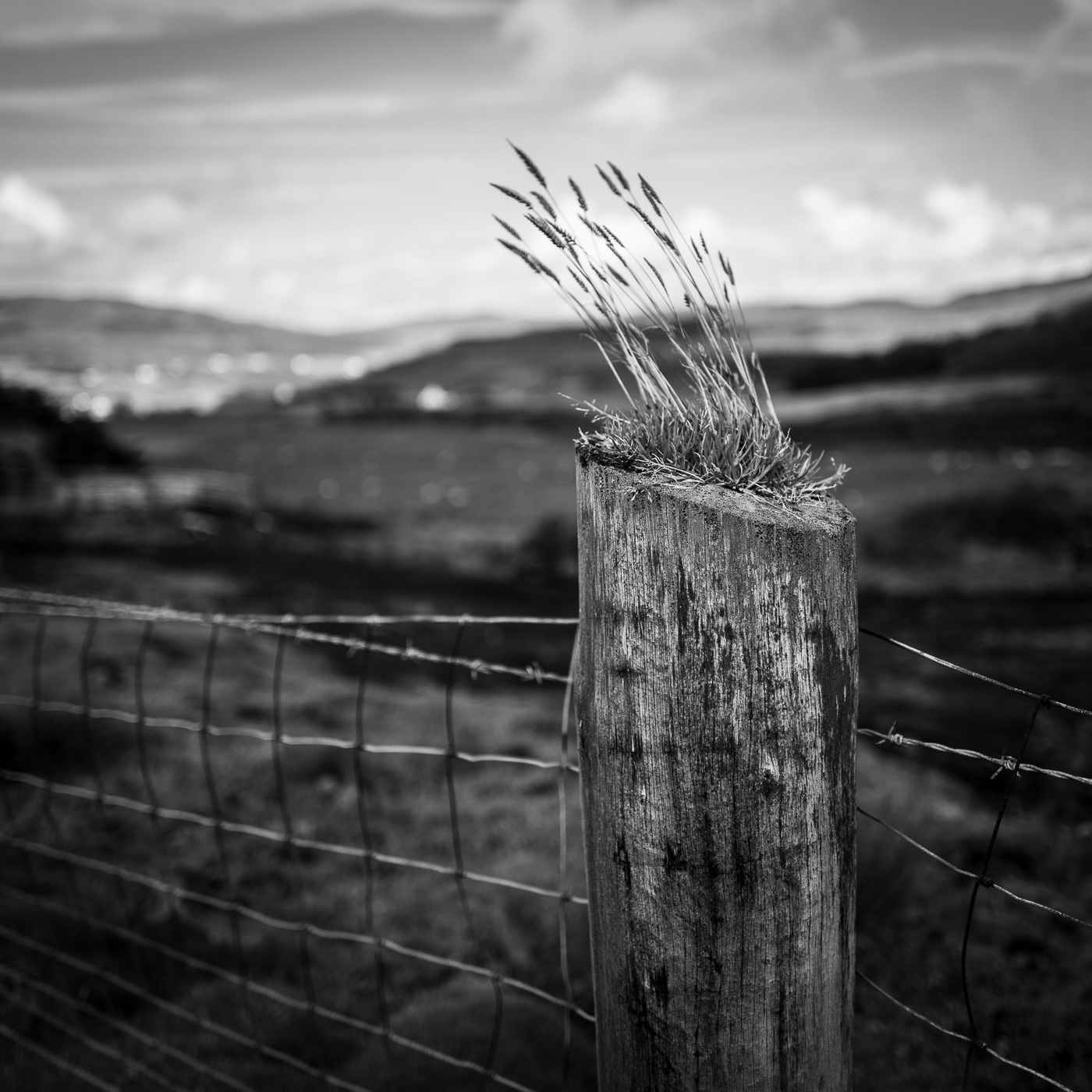
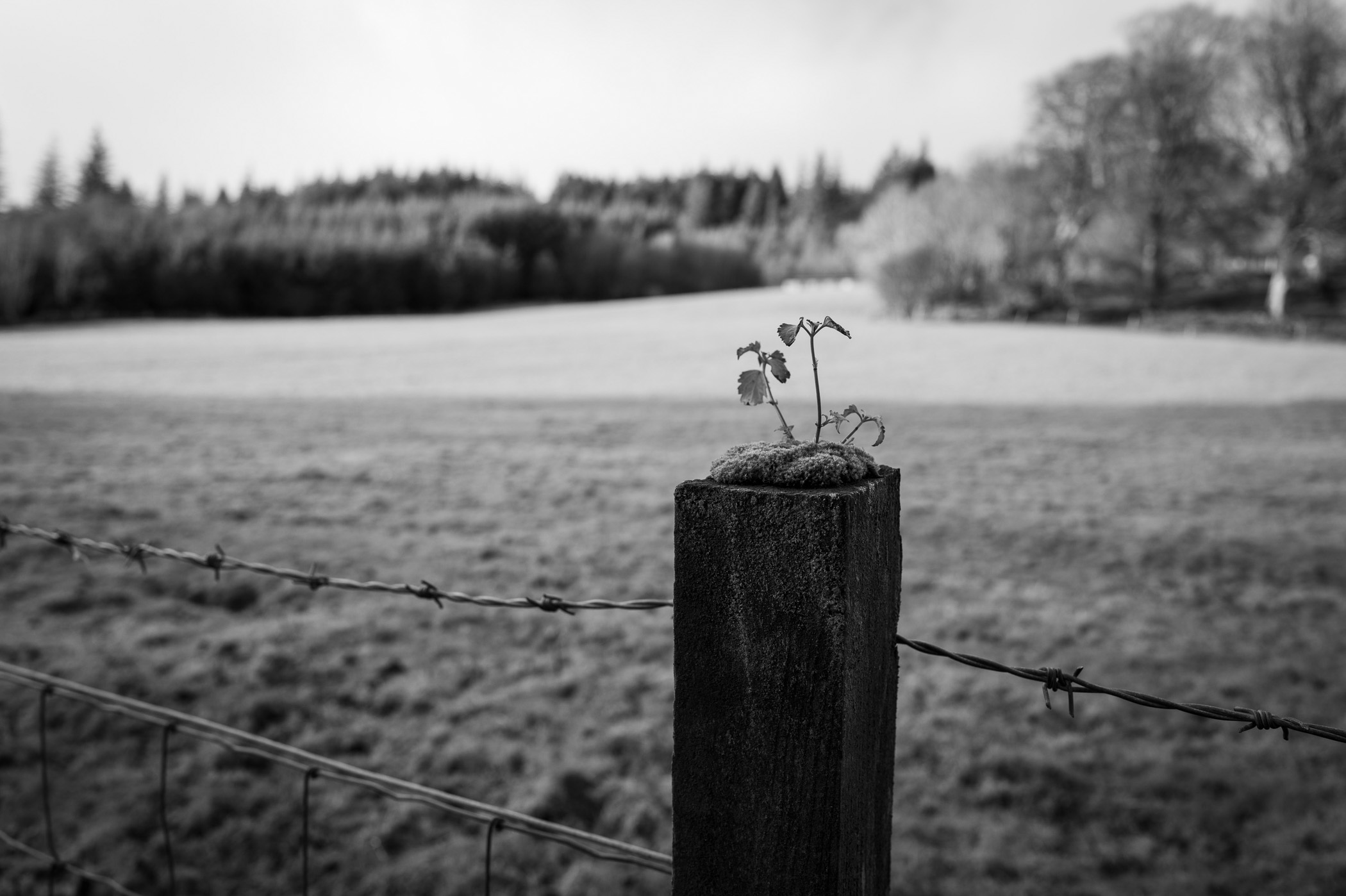
“Fence posts”: Nature never stops trying to exert herself when given even the smallest opportunity. Her nature has begun to take over the tops of fence posts with new sproutings that almost look like they’ve been artistically arranged.
Capturing the effects of weather
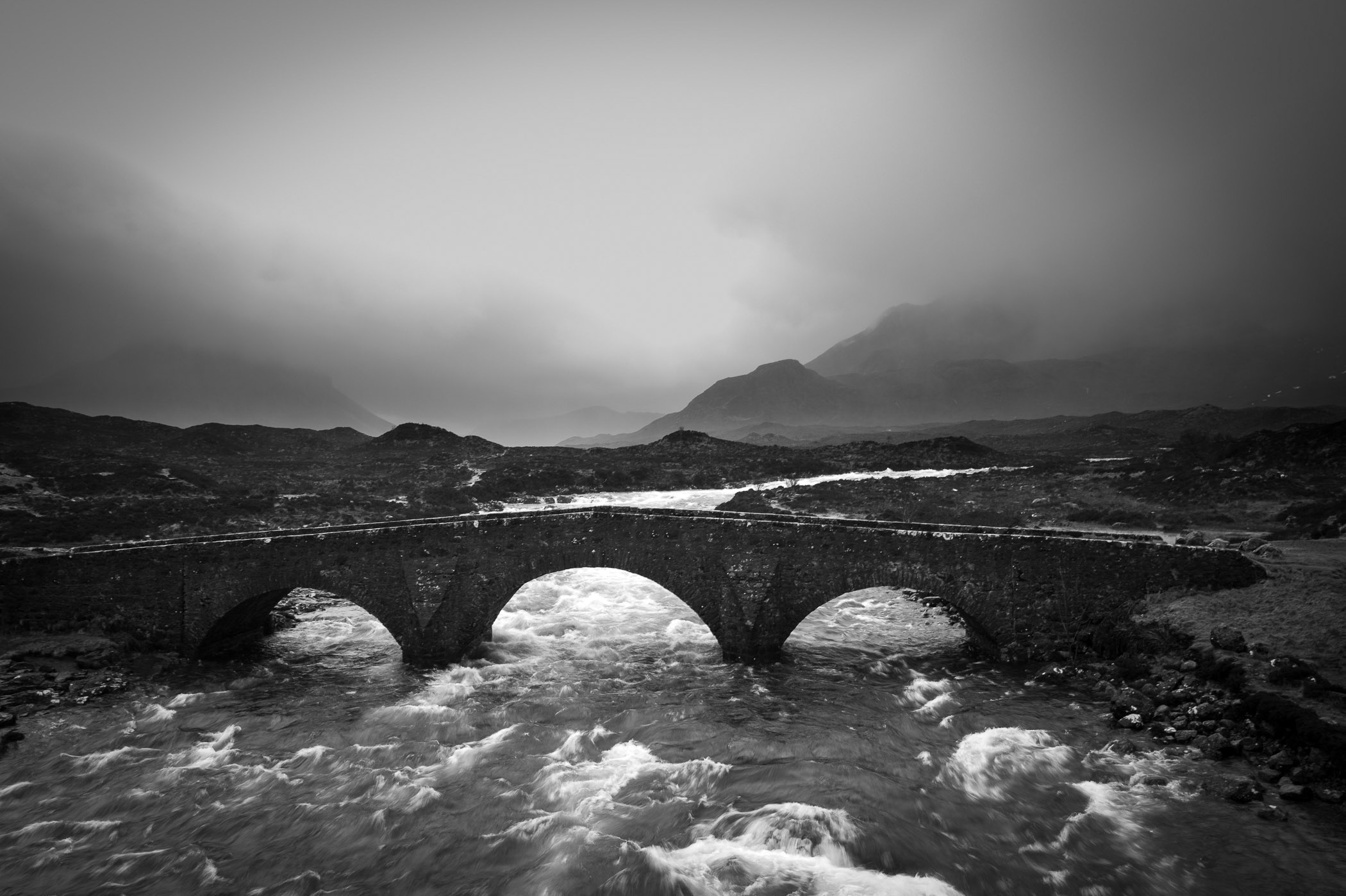
“Sligachan Old Bridge”: My wife and I were close to this spot on a very blustery and showery day last autumn. Andy has captured the sense of brooding from the clouds, sending more water your way, and the angry boiling river as it makes its way down to the sea.
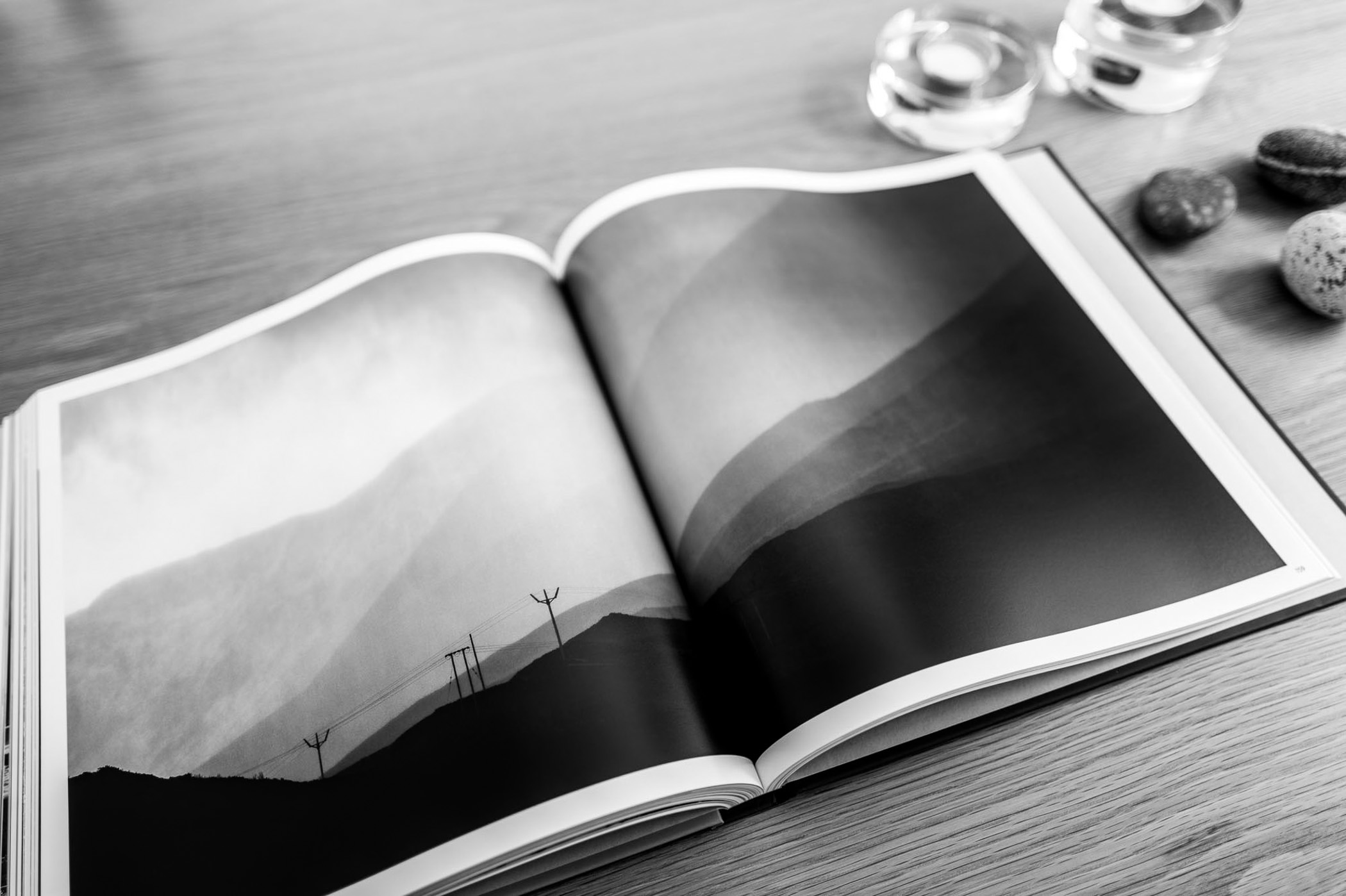
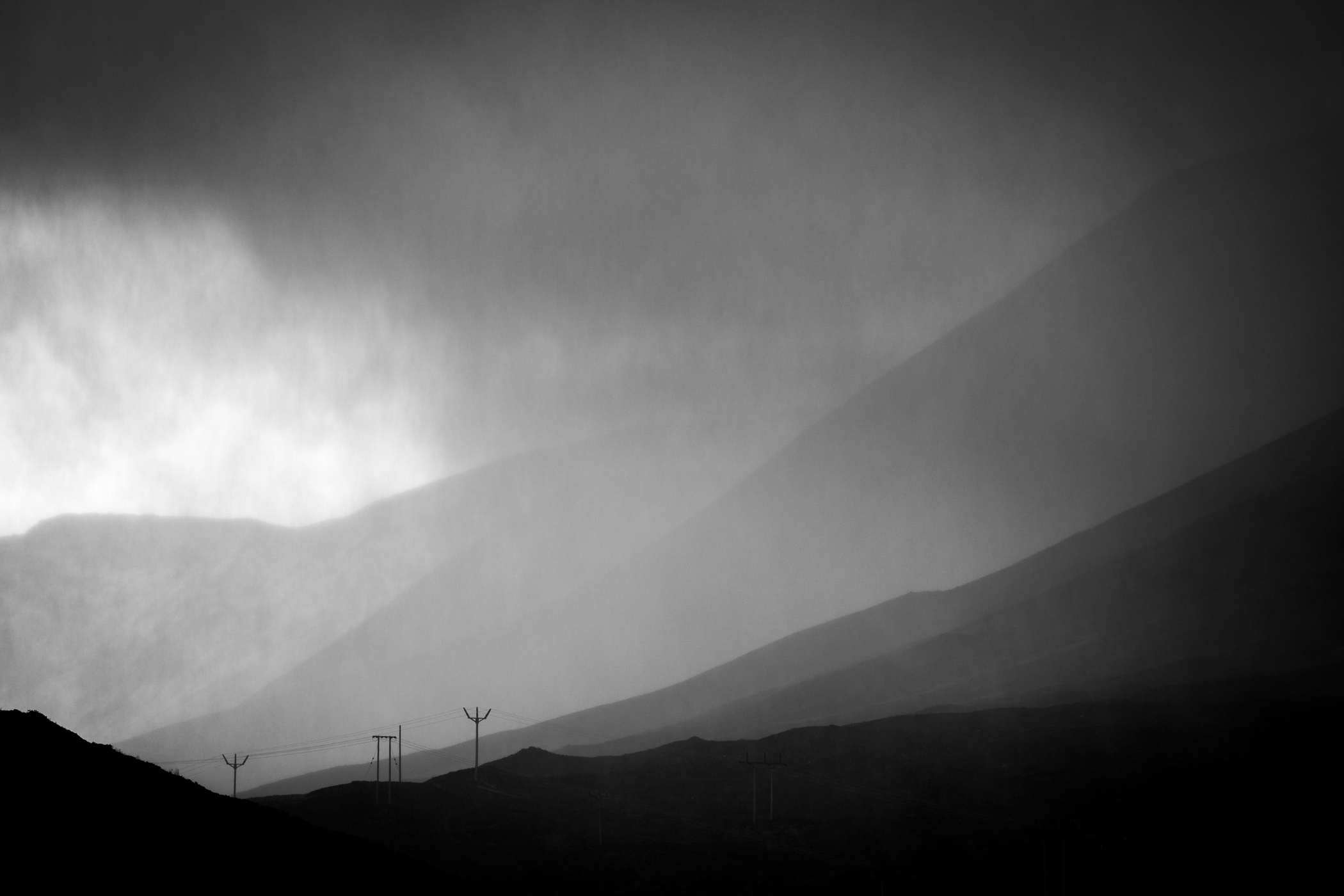
“A Biblical Storm”: You could also call this “nature’s tone poem” in which the layering of the mountains and sky blends from light to dark. The impending storm and the power lines give you a sense of the battle between man and nature.
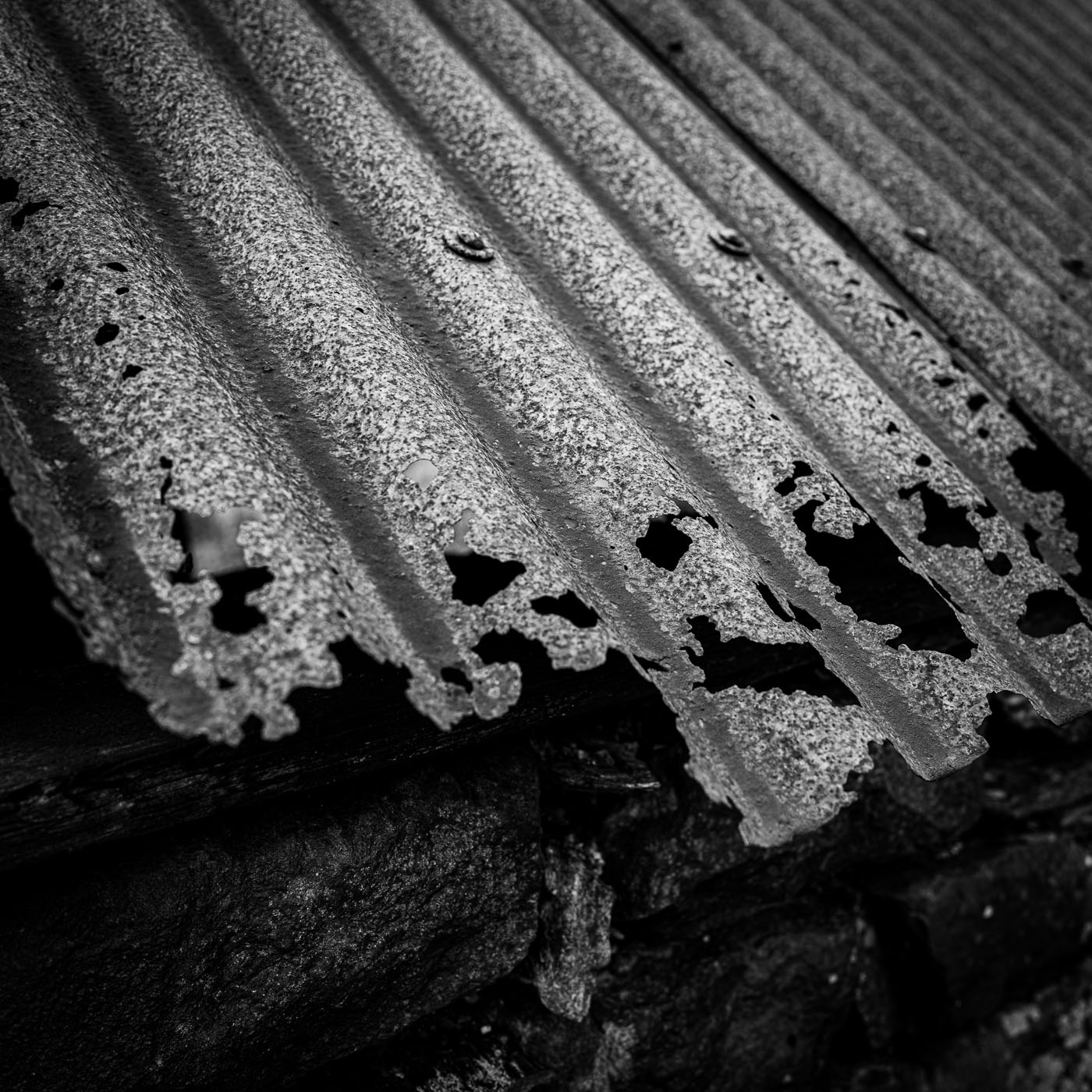
“Rust”: This appeals again, as it’s another example of decay and man versus nature. In time, almost everything succumbs to nature. It would be interesting to do a time-lapse shot of this and also the old boats earlier in the book.
Fleeting moments
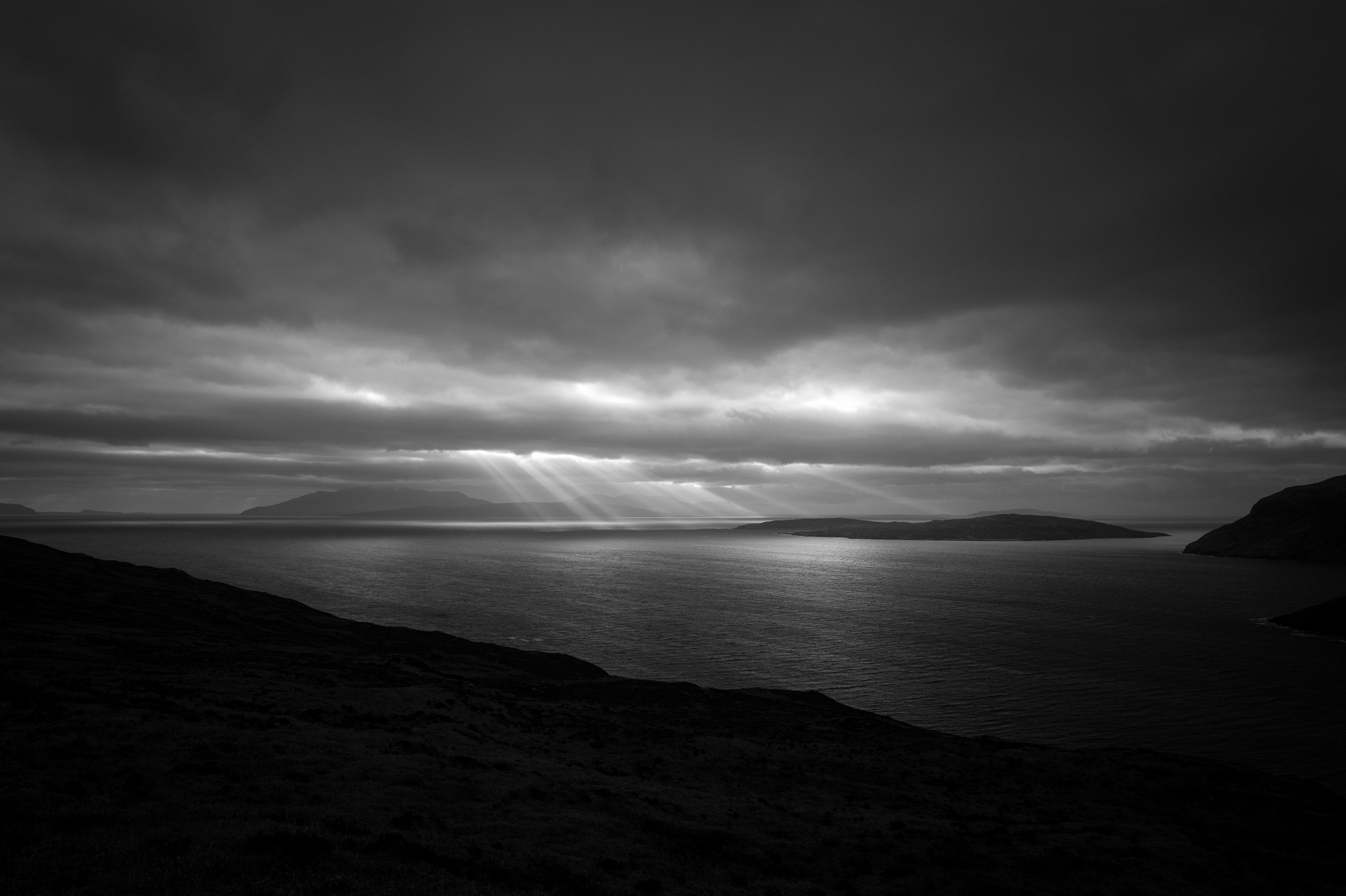
“Soay, Rum, and Canna”: Anyone who has attempted to capture nature in landscape photography knows it requires endless patience and a healthy dose of good luck. The bright rays of light, fleetingly penetrating the darkness of the clouds, and casting a small spotlight on the water here, is one of those shots. Five minutes later, if that, and it would have been gone.
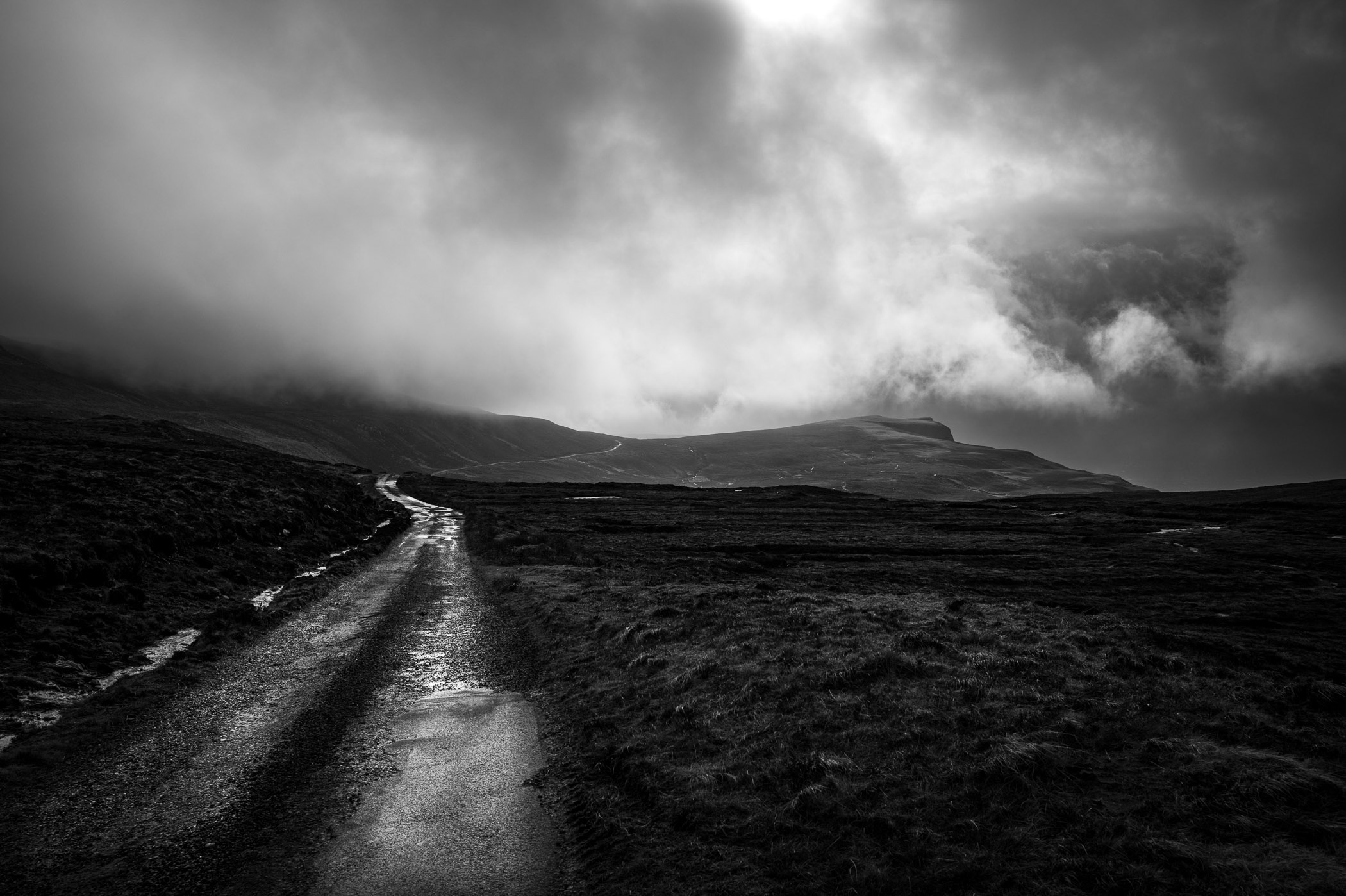
“Heading into the Storm”: The Isle of Skye is laced with small single-track roads that traverse the landscape, often with no directional signs. If you don’t know where you are, you are lost, as phones often won’t work out there.
In this shot, you are hemmed in by the mountains and storm directly ahead and by a rain-soaked single-track road leading you forward. And that track like many others had never heard of the expression “billiard table smooth.” It’s one for Jack Bruce, who wrote a song of the same name.
I could go on about textures and shapes, and markers that dot the landscape, but you can read much more from Andy on all this by following the links at the end of this article. As I said, this is my snapshot of the images that stood out for me, and they may not be yours.
What struck me with both books is that Andy, like many Macfilos readers, typically photographs with small, and highly portable cameras like the Leica Q and Ricoh GR series. It is fascinating to see the results in print form, after mostly viewing images on social media platforms. While social media is useful, it does not come close to matching what these cameras are capable of in the right hands.
A book design that embraces the images with care
I want to briefly talk about the packaging of Glas. That too is a work of art. Let’s talk about printing. Most people will not think about it, but if you produce a book like this, you have to. Start with paper samples from the printer along with inks and the right printing process to deliver the quality you want. The variables make this a difficult process to align.
And the proper combination of paper and ink is important if you want to preserve the book without a collection of fingerprints. My wife half-jokingly suggested that a pair of white cotton gloves used in museums and expensive watch shops might not be a bad accessory. Even thinking about what goes into digital artwork and how you make corrections is a major inducer of anxiety.
Details, details, details
The cover of a book is a critical component. When you open a book that has binding that has been painstakingly stitched and sewn, you want it to open without breaking its spine or tearing pages.
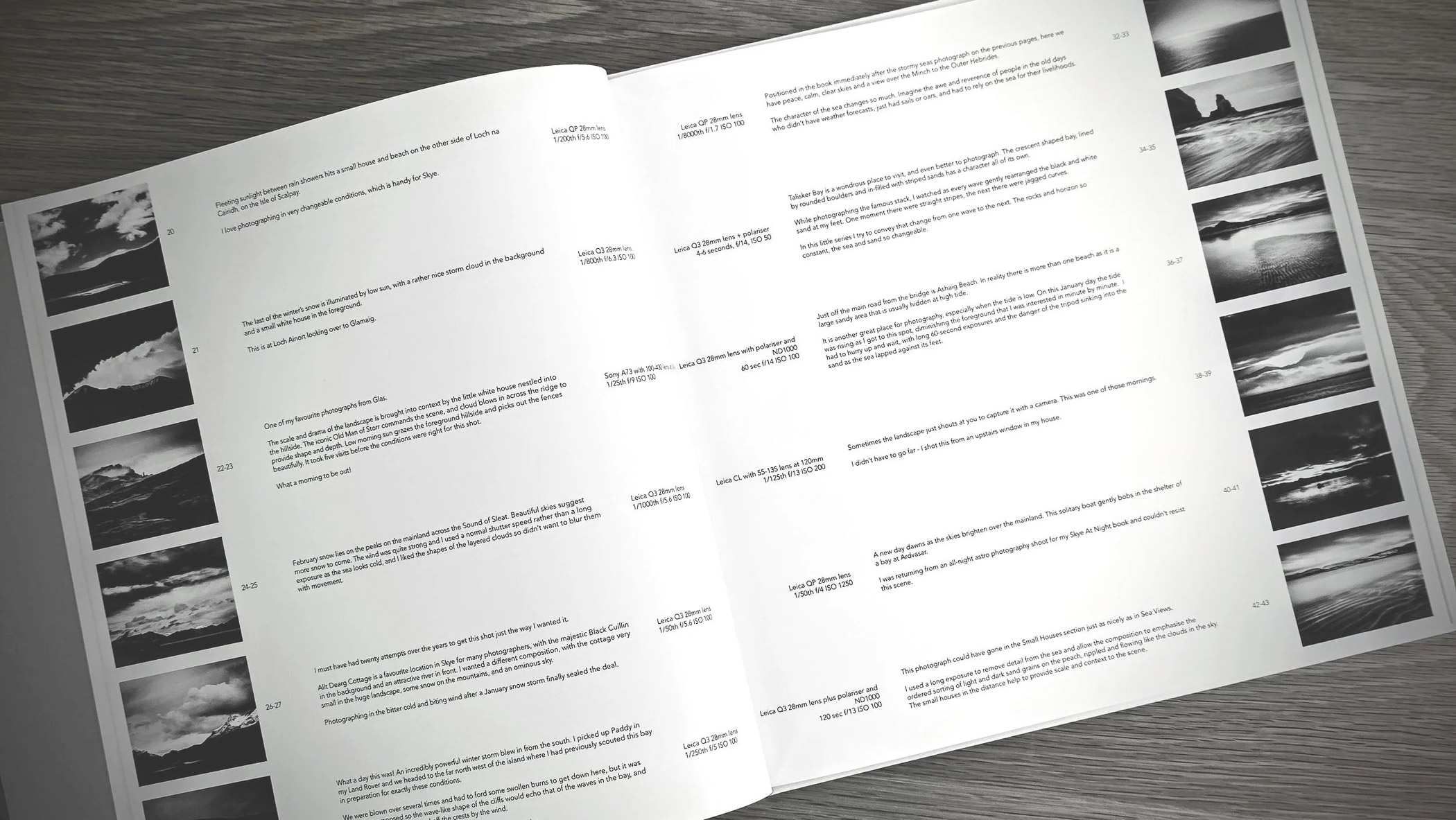
The cover type also has to fit with the cover thickness if you are going to have debossed (recessed) lettering. The book, and the separate Photograph Index (a slim book in its own right), then need to fit snugly into a slip case designed to protect it for the future. The details are painstakingly resolved by Andy, his wife and a collection of people who have been assembled to bring Glas to fruition.
Arriving — journey’s end
And neatly skipping through the agonising proofing stages, we return to the start of this article. Once we got the package home, we could begin to disassemble it. The box it travelled in is substantial, the book in its slipcase has robust foam corners to protect it further. And in a moment of joy, it’s all wrapped in Scottish sheep wool.
Once deep inside the packaging, you find the book and a personal note and a number written on the page which tells you which numbered book you are receiving out of only 75 copies. Yes, that’s it. There are no more to be had. You might dismissively call it a coffee table book. But that would be a serious injustice. I have a set of photography books that I look at frequently for inspiration. Glas will be part of that inspiration. Seventeen years, and a fraught few days waiting for the local post office to find it, were all worth it.
Skye at Night
Let’s not forget Skye at Night, which I had intended to buy last year when we were visiting the Isle of Skye. I had hoped to meet Andy, but he had craftily avoided being on the island, so it took a while for me to order the book.
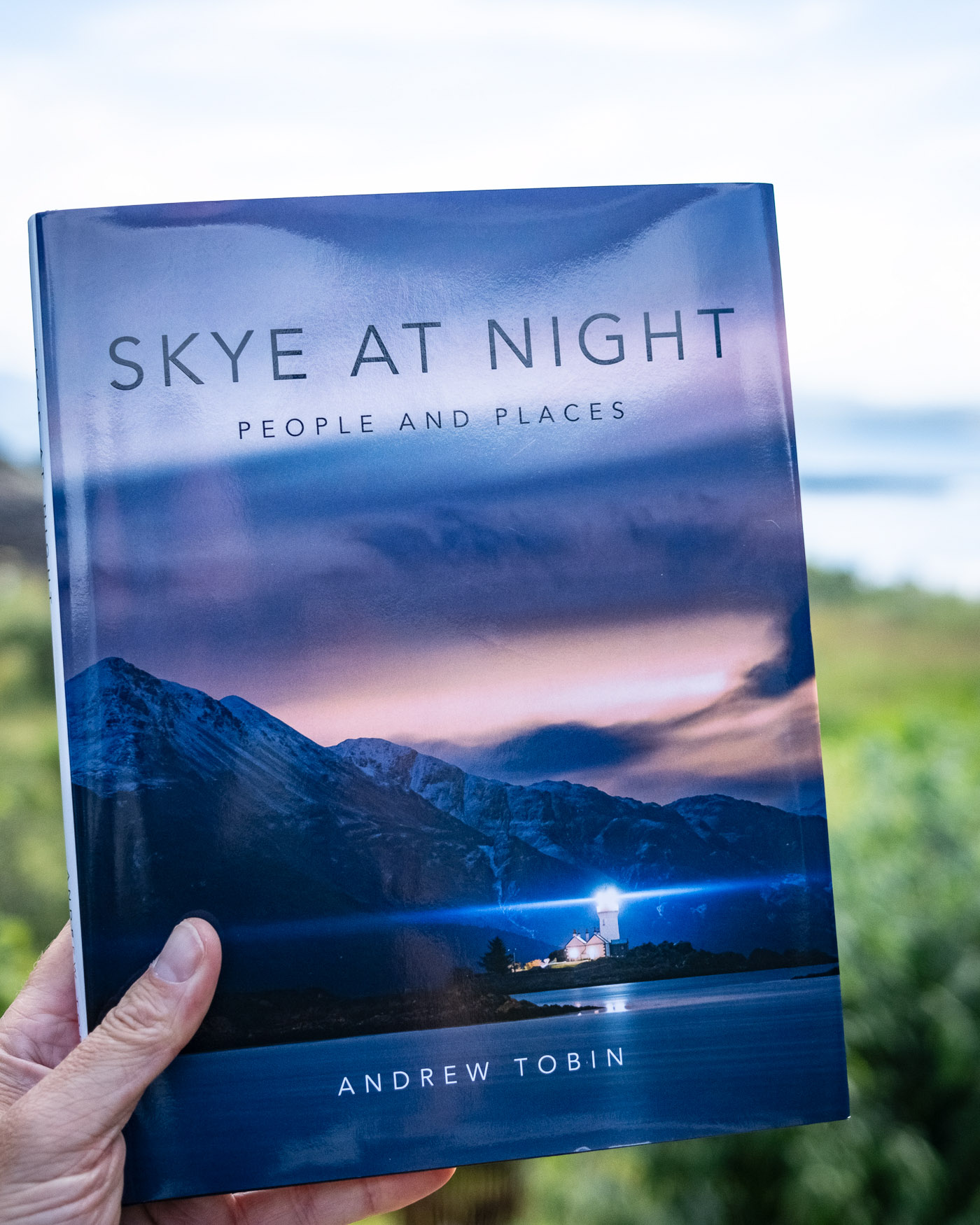
It is really quite different from Glas in that it focuses on the people you don’t always notice but who keep the islanders, communities, and the economy alive on the Isle of Skye. You could argue that Glas gives you context and Skye at Night gives you an insight into the dedication of the people who live there.
You can find the link at the end of this article to “One year photographing the people of Skye by night.” Not an easy task to live here at the best of times.
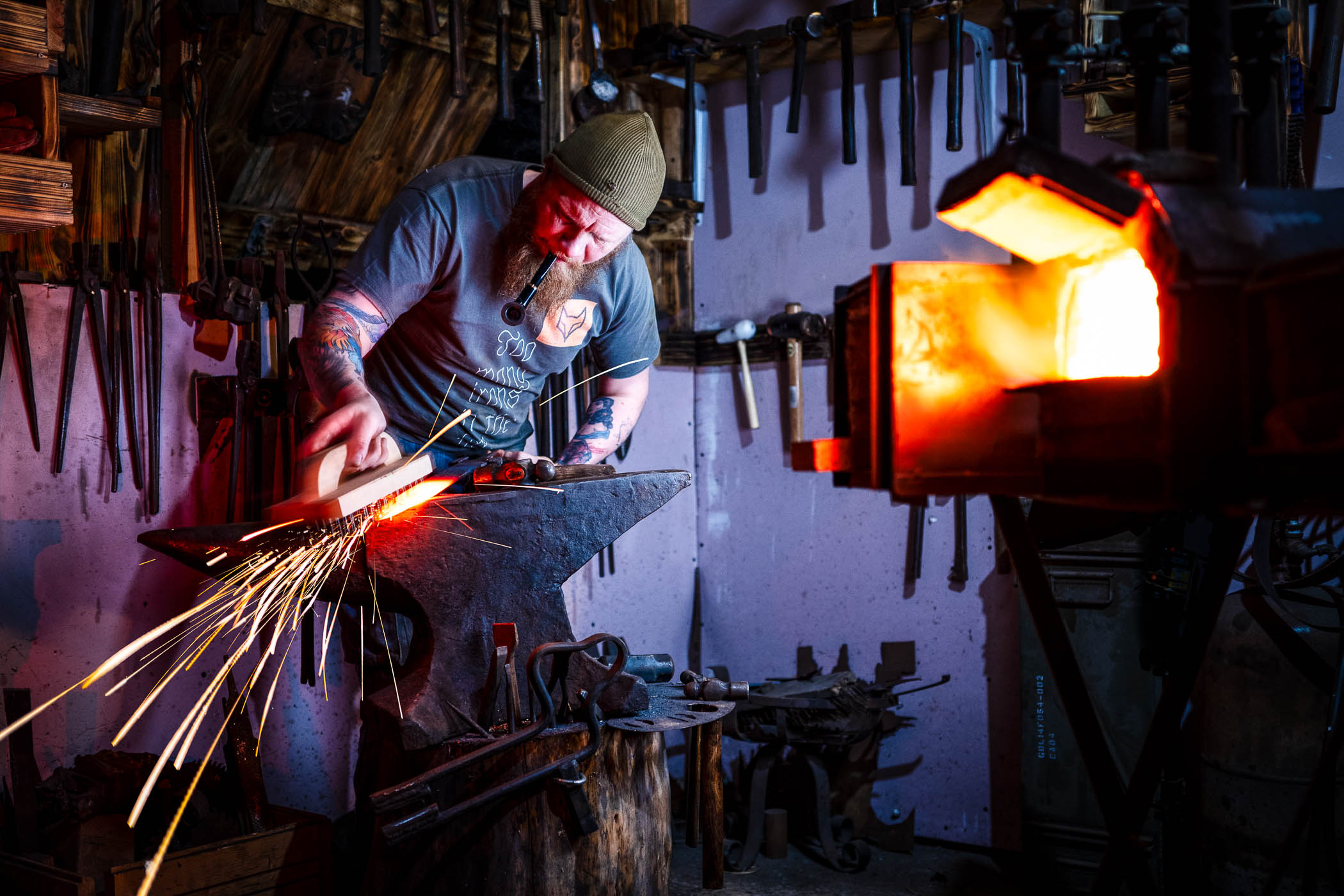
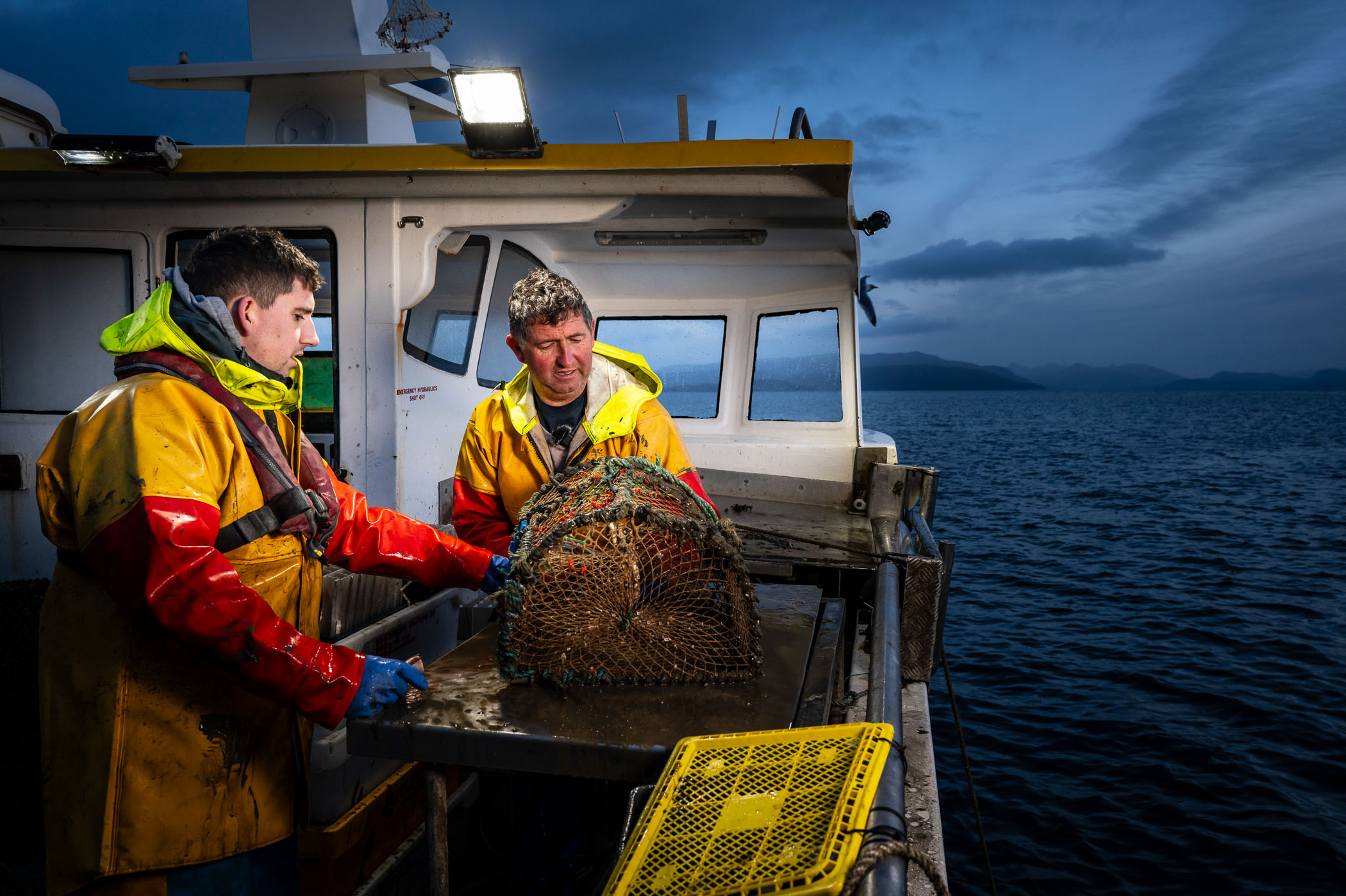
You get to see the wonderment of the landscape, lit by the moon and the stars, and you really appreciate the warmth of the people who live there. It’s inspiring and makes me want to return.
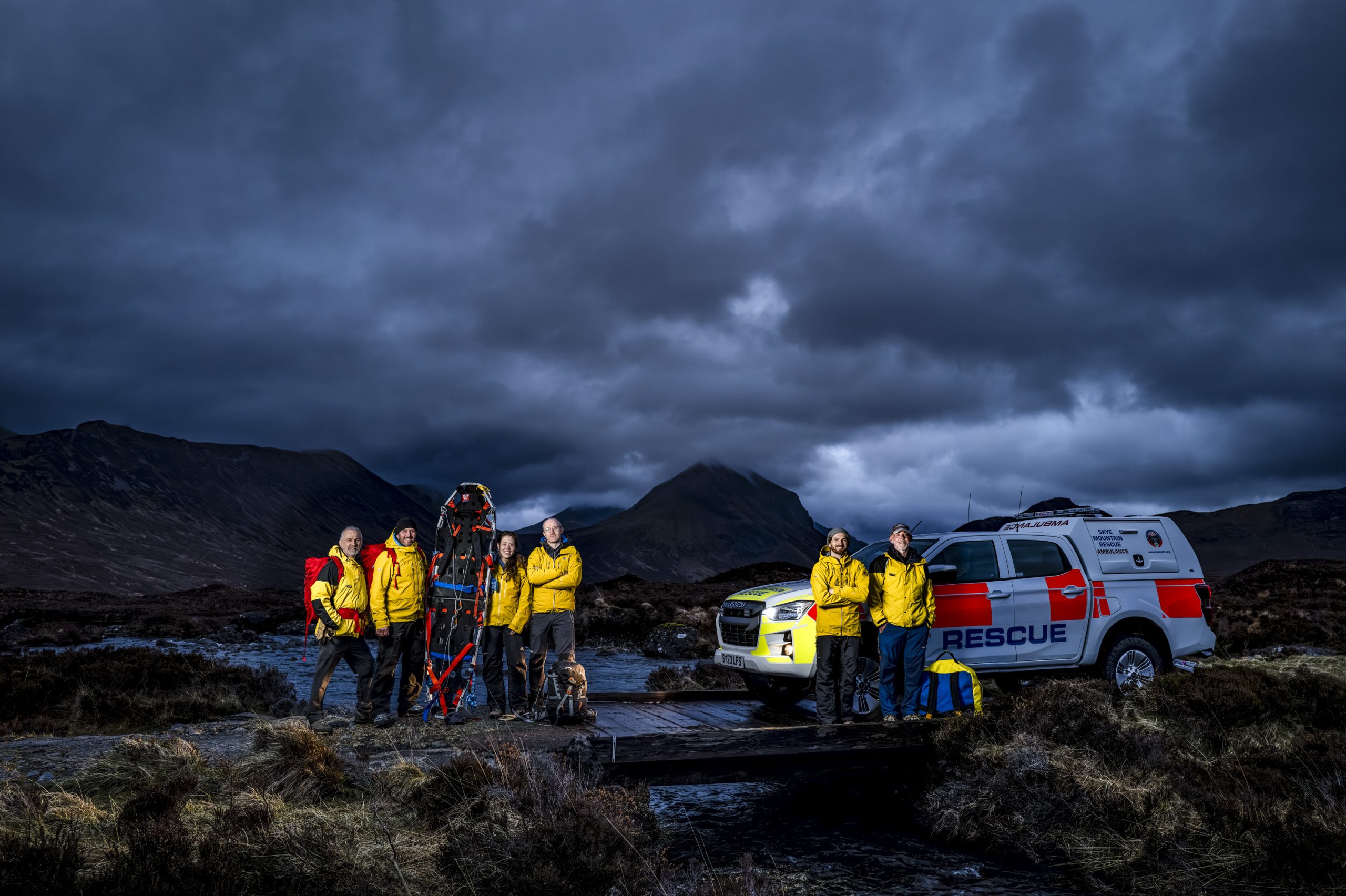

And in the spirit of communities helping each other, Andy has donated all the proceeds from the book to the Skye Mountain Rescue Team. Follow the link in the table below, be inspired by the book, and donate to a good cause in the process.
Make a donation to help with our running costs
Did you know that Macfilos is run by five photography enthusiasts based in the UK, USA and Europe? We cover all the substantial costs of running the site, and we do not carry advertising because it spoils readers’ enjoyment. Any amount, however small, will be appreciated, and we will write to acknowledge your generosity.
Thanks for the lovely review Jon. I’m delighted you are enjoying Glas (and Skye At Night). The philosophy of Glas is very much one of slow, gentle absorption of the character, atmosphere and drama of Skye – hopefully it will provide years of quiet enjoyment.
Thanks Andy,
It’s a terrific example of persistence to delivery truly excellent work and the dedication to get the details right.
I’m hoping that others can take a look at your past articles and see that in detail. Or hopefully that you can have exhibitions that photography enthusiasts can visit.