

Since its launch in 2018, the L-Mount Alliance (LMA) has exceeded expectations in the quantity and quality of lenses added to the range by Leica, Panasonic, Sigma and others. Viltrox has now joined the band, and L-Mount users enjoy one of the most extensive and varied choice of any system. But there is one disappointment in the eight-year-old alliance, and that is the absence of a real system-mover camera.
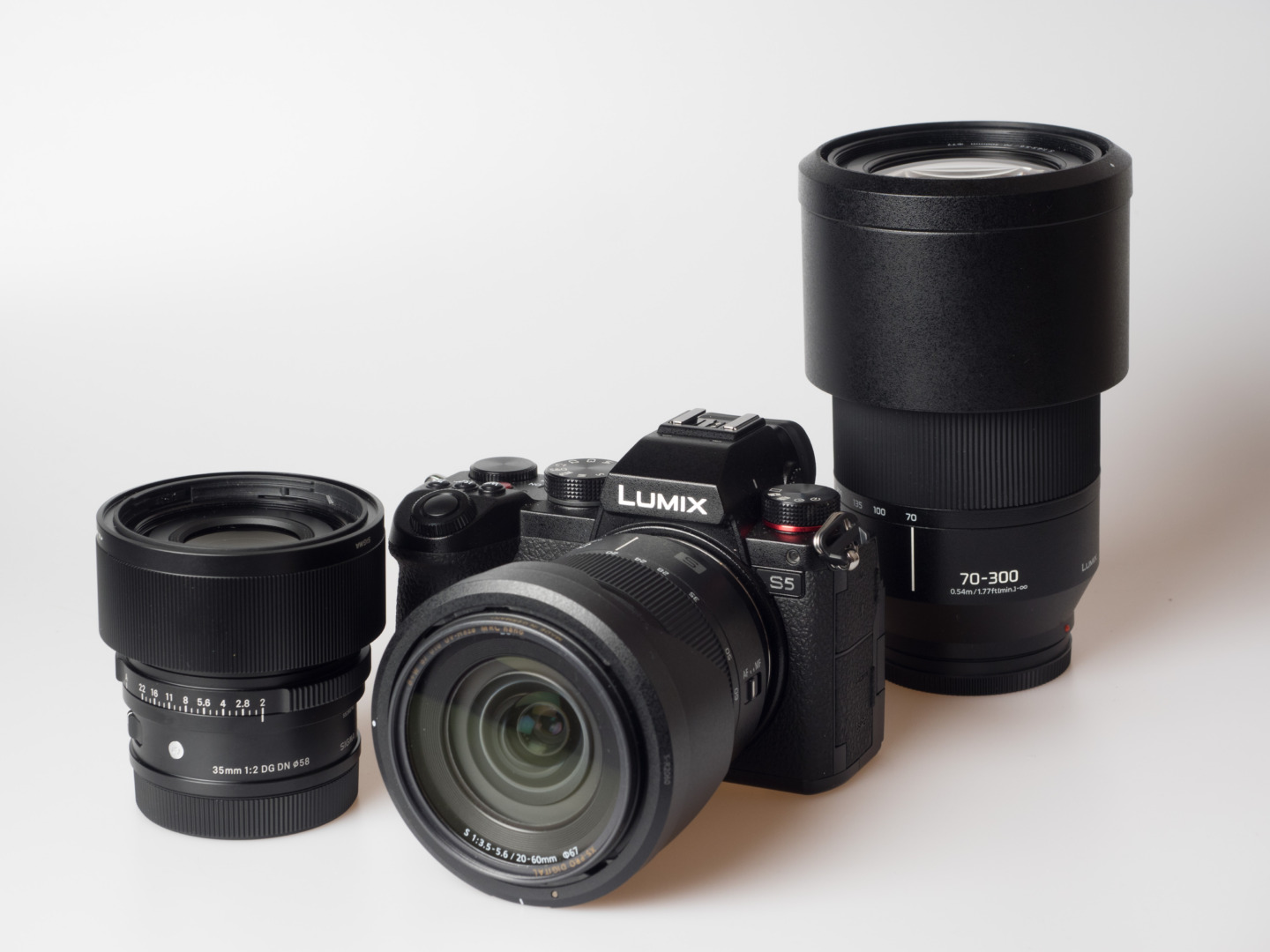
According to Jaron Schneider, writing in PetaPixel, the L-Mount Alliance “doesn’t offer a compelling solution for the average photographer”. The Alliance is weighted heavily in the direction of optics.
Despite the contributions of Panasonic and Leica, Jaron believes that the alliance lacks an effective “system-mover” camera. He identifies system-movers as desirable mid-range cameras such as the Canon R6 III, the Sony a7 V-type cameras or, even, the Nikon Z8.
Brave attempts
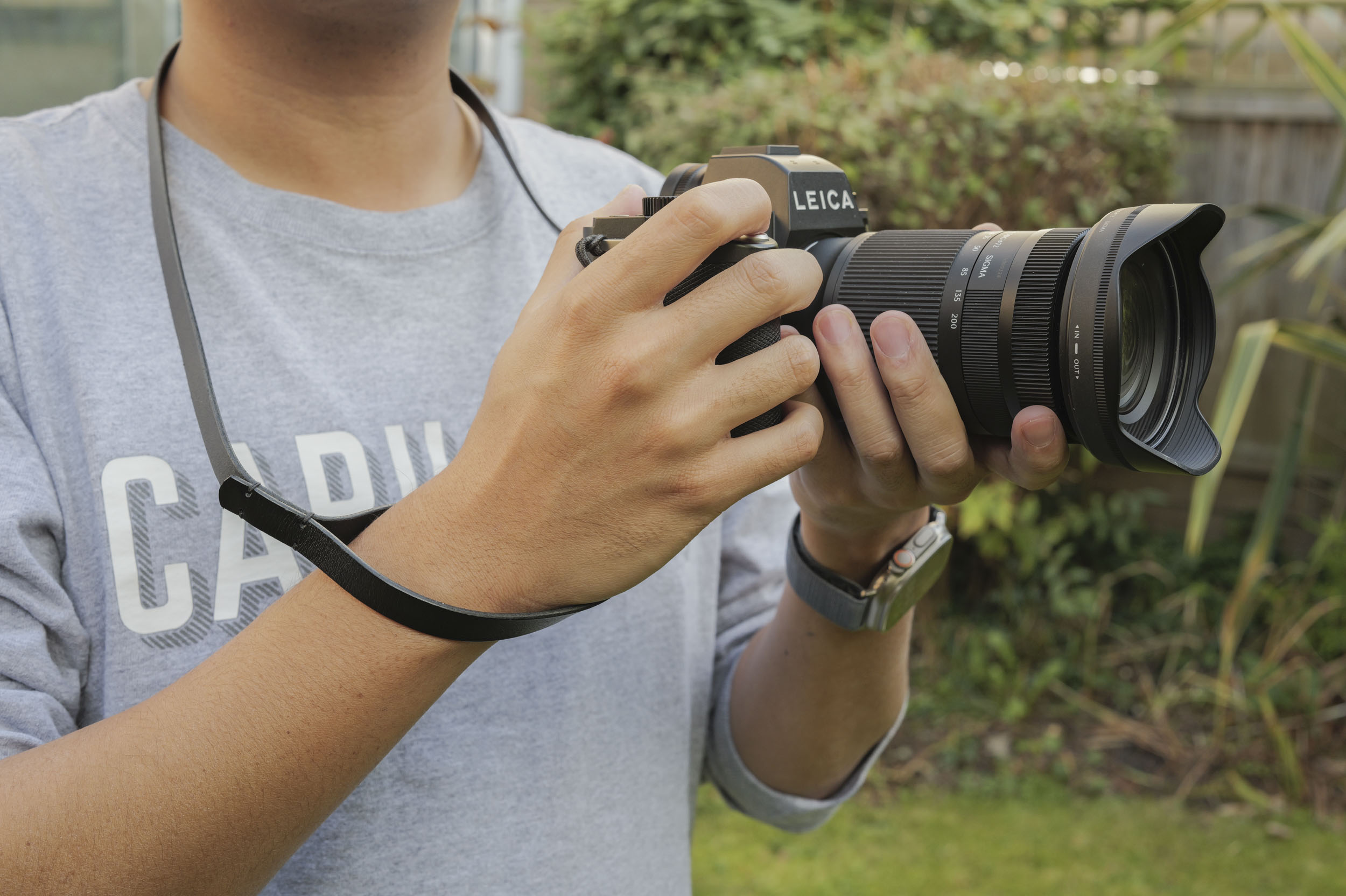
With the possible exception of the Panasonic S5 II, there is no such camera in the current range. Leica occupies rarified territory, while Panasonic’s S1R II is also a high-end pro device that is out of the reach of the average enthusiast. Sigma has made two brave attempts with the fp and the BF, but they are marginal at best, too niche to fit the role of a system mover.
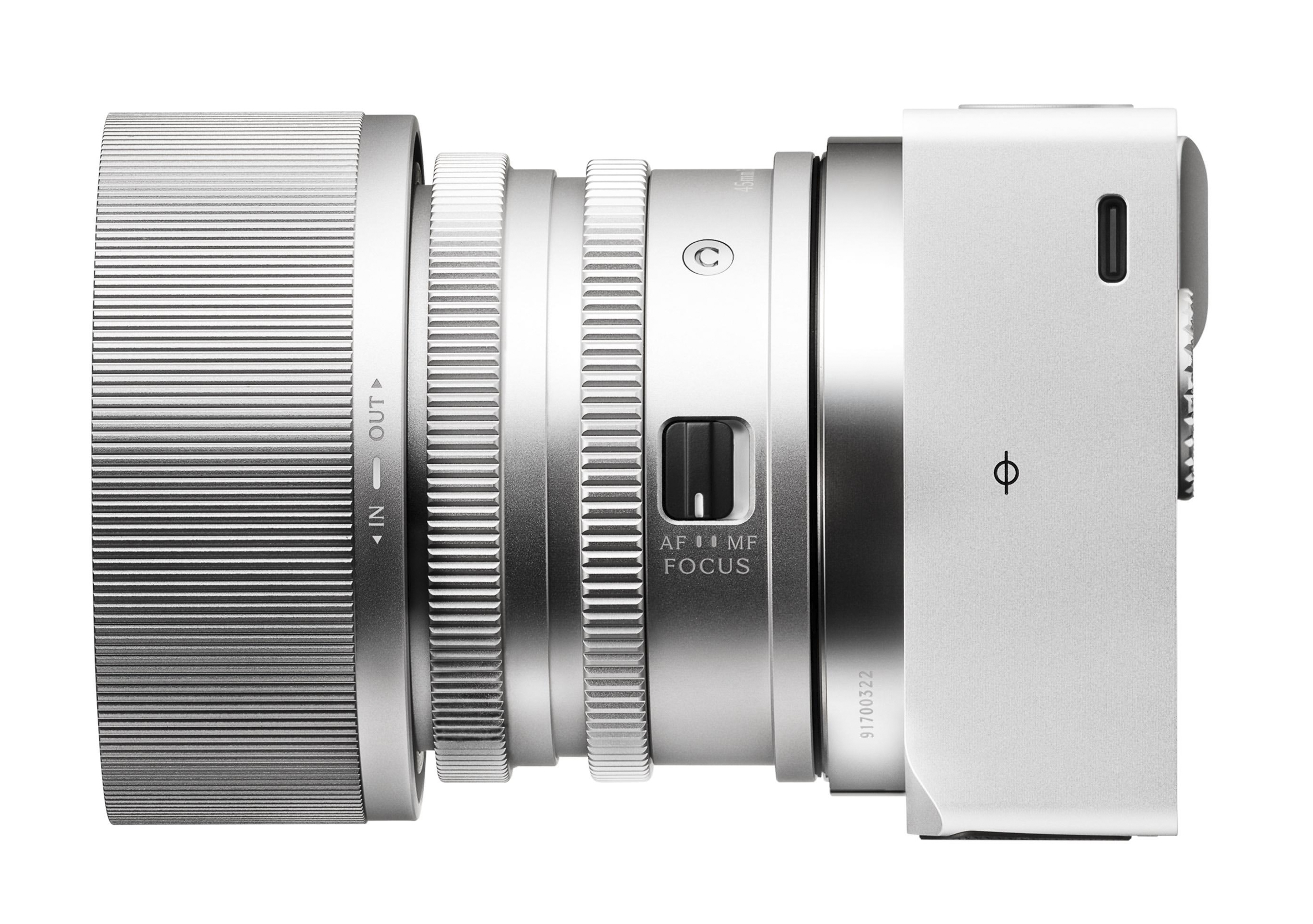
The advantages for LMA members of broadening the base and attracting a flock of enthusiasts are abundant. There would be more opportunities to move upstream through more sophisticated cameras, without having to sell off all their kit. A vast and growing, diverse range of lenses is already available to match their needs.
Once in the system, users can keep building up their collection of lenses and can become committed to the L-Mount system. That pathway would certainly broaden the appeal of the LMA and boost brand loyalty. It could even lead towards Leica if that appealed.
Creating the System Mover
Jaron believes that it’s time for the LMA members to focus on creating that “system-mover” camera. He even suggests that a design and manufacturing cooperation between Panasonic and Sigma could open the way to a camera that would bring in more dedicated users.
Jaron doesn’t mention a specific price point or concrete features he believes the “system mover” should have. Here at Macfilos, we would propose a more photography-oriented camera (rather different from Panasonic’s video-centric approach) with capable IBIS, a fast mechanical shutter, a sensor resolution above 24 megapixels, and fast autofocus. And a form factor that offers both compact size and good ergonomics. Ideally, such a camera would cost well under £2,600 | €3,000 | $3,200.

Tell us what you think
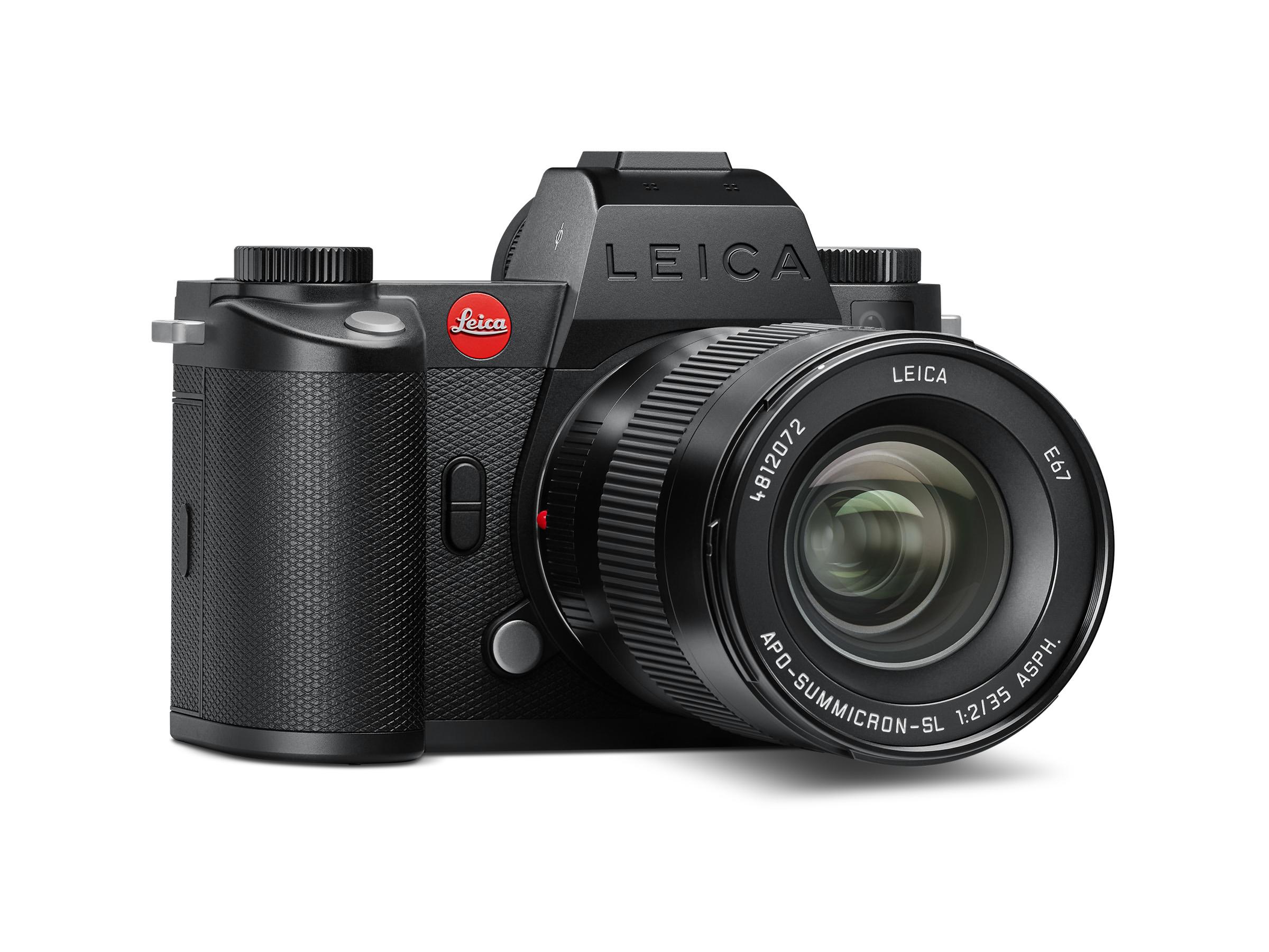
After all, the L-Mount represents the only major multi-brand system. All it needs is a camera for the average camera enthusiast. Read Jaron’s full article here, and let us know what you think. Is there a need for a real blockbuster middle-of-the-road enthusiast camera that would turn the L-Mount Alliance into a winner?
Make a donation to help with our running costs
Did you know that Macfilos is run by five photography enthusiasts based in the UK, USA and Europe? We cover all the substantial costs of running the site, and we do not carry advertising because it spoils readers’ enjoyment. Any amount, however small, will be appreciated, and we will write to acknowledge your generosity.
Maybe they need a £500-700 APSC option? Bizarre that the mount launched with APSC cameras that were all discontinued and stricken from the record. An S10 could basically be an S9 with a smaller sensor and lower price. If they go halves with leica on development we could even get a repackaged version as a CL2.
As an owner of many camera over the years, I’d have to be given a very good reason to buy into the L-mount alliance. A camera with a particular USP that is not offered by any other manufacturers. Currently I am not seeing any such thing in the current L-mount lineup (aside from that odd but intriguing Sigma thingy).
Having had my fingers burned with the Leica CL (USP small extremely high quality with small high-end lenses), I’m reluctant to go anywhere near it again.
So my thoughts are that I’d like to see something that makes me go “ooh, yes, I’d like that”, but that will also be long-lived and not abandoned after one or two generations (I’m looking at you Leica T). The USP could be amazing coolness (Fuji X100), tiny capability (Ricoh GR), or user experience (Leica M). But it needs something unique.
Please allow me to present a differing opinion. I currently own, or have owned, the Leica SL2, Lumix S5, Sigma BF, and the Lumix G9II, (which was the first Lumix camera to have PDAF). Plus, I have used the SL3 for a short time. While I generally find PetaPixel’s commentary humorous, I do agree that Panasonic, as the tech leader of the LMA, needs to improve both focus performance and dynamic range performance to keep me in the LMA world; I am looking in my neighbor’s yard and admiring the green hues I see.
Concerning auto focus, I want better accuracy, selection, and tracking. In good light with good subject contrast my cameras have acceptable focus speed for a single image. Though, in low light and low contrast situations, focus is more miss than hit; it is my understanding that final focus is still contrast based. Plus, focus tracking can shift from your intended subject to something else, if that something has a better face or more contrast than your subject. Based on my experience, Peta Pixel’s observation that the S1RII’s focus tracking could not keep up with a fat man running really reduced my interest in the camera.
Concerning dynamic range (DR), I want better control and processing of the DR without the need to override the camera; I find Leica’s highlight weighted metering to be inadequate for the task. All of my cameras have too much sensor gain which requires under exposure to prevent highlights from being blown out. The Sigma BF performs the best in this regard by only needing 1 stop of under exposure for consistently good images. The others require between 2/3 – 3 stops of under exposure depending on the scene.
In the end, while there is a lot to recommend the Lumix cameras, the S5II/X in particular, they just seem to be lagging the options from Canikony.
PaulB
I think I’ll chip in again.
Over the last couple of years I’ve shot with a Sony A1ii a Sony A7rv and an Olympus OM-1ii – The A1 and Olympus have fully stacked sensors and the AF is wonderful.
I’ve also shot with the SL3 and the SL3S, and with the latest firmware update their AF is pretty good to – easily good enough to catch an 8 year old zigzagging towards the camera or a young agility focused dog at high speed – the SL3 only does 5 fps (clearly rubbish) the SL3-S does 30 fps (still nothing compared to the OM1 at 60 fps) . . . . . . . . . . . I haven’t done the same with the Lumix bodies, but I’m sure they are just as crap as the Leica ones.
On the other hand the dynamic range and colour is better with the non stacked sensors (there is a Sony video about this somewhere).
I’m being sarcastic – in this case Petapixel (and they are not alone) are focusing on AF performance, because it is something which really does change with normal / semi stacked / stacked / global shutter cameras. but the non stacked sensors of the Lumix SR1ii and the SL cameras have phase detect and actually focus very well – even for moderate sports use.
It’s like saying that an Audi A6 is rubbish because its top speed is only 136 mph – you have to get a Ferrari . . . without any reference to fuel consumption, practicality etc.
These days Websites are after clicks (not truth) and writing an article like the Petapixel article gets clicks – even if it’s really not relevant to any real person’s photography needs.
Maybe they think of a “do all can all” camera for a reasonable price or a really innovative camera, say with an organic sensor, which Panasonic seems to have, or a Sigma camera with its Foveon sensor. If it is not clear what is meant or intended by Petapixel, nothing will be good enough. In the meantime I will keep on taking pictures with my outdated and worthless SL2.
Cheers!
Donald
How about a CL2 with IBIS and a more modern sensor?
Or Panasonic could make a full frame GX8 type body. I would buy either
The LMA is not a monolith, I therefore assume that what they are really saying is that Panasonic needs a system-mover camera… As far as the Leica SL is concerned, the pain points have been well documented since over a decade: too big, too heavy, too expensive, not enough innovation, pace of development too slow, etc. Note to Leica: a rebadged Panasonic S1Rii won’t cut it…
Well, maybe too big, too heavy, too expensive – but actually with the best lenses, the best menu system, the best ergonomics. You wouldn’t chose one for sports of course, but for weddings / events / travel/ just bumming about with the dogs on a walk they are magic – and the AF after the last updates is quite man enough for anything a normal person might want.
I guess it depends on what you compare the Leica to. As somebody who switched from the original Leica SL to Hasselblad, I can tell you that I prefer the user interface and the ergonomics of the Hasselblad. The build quality goes to Leica but it comes with a weight penalty. As far as lenses goes, the APO lenses are very good, pretty much aberration and vignetting free, but as far as rendering goes, as most other modern lenses, a bit on the clinical side, and repeating myself too big, too heavy and too expensive for me personally. If Leica delivers an SL4 with an APO 35mm Mk II that is in total 400-500g lighter I will certainly reconsider the SL system, but as long as that does not happen it remains a closed chapter for me personally.
DJI has now entered the LMA so perhaps they will be the manufacturer to introduce a camera that broadly appeals with their latest Lidar focusing system and other features DJI can easily implement.
Perhaps, but as DJI already has the photography side of things covered with Hasselblad I would probably expect such a camera also to be more video-focused.
if there is to be such a ‘system-mover’ camera, can we please ask that the menu system is designed by Leica.
Good thought!
I would have thought that the LUMIX S5ii would fit the definition. It, along with Nikon’s Z5ii, offer the most capable cameras available now at a decent price point. I would argue the lens ecosystem of the L Mount is more diverse than Nikon’s, thus tipping the balance in favor of the LUMIX.
I read earlier today that compact cameras are making a comeback…Maybe Panasonic can give us a small, rangefinder-styled camera body. The S9 is great – I’ve been using one for the past two weeks and it is a very capable stills camera – but the lack of a VF and it’s shutterless design do turn some people off. But whatever they do, I cannot image it being cheaper than the S5ii.
I agree on the S5ii. For my use that consists of landscape, travel, walk around, family and kids, but no sports, it is pretty perfect. Especially if I takes the price into consideration. It is competitively priced where I live, cheaper than the Nikon Z5ii. On top of that there are campaigns every now and then.
Maybe a more competitively priced S1ii would fit the bill of system mover or attractive mid range offer. But if you already are in a Canon, Sony or Nikon system you have the R6iii, Z6iii, or A7V that are similar.
For me L-mount offered access to the Sigma lenses I like, but with better ergonomics, which is personal and subjective thinga , than with a Sony A7.
You have to provide a reason for people to choose the system over others. For me, the future of the L mount alliance is an inherently niche one, and they should lean into that. Sigma’s i-series lenses are the pointer. Old school, metallic build, aperture rings. Build around that ethos and handling mantra. Panasonic are close with the S9 in the style and feel , but it needs an evf (or ovf) for photocentric use. If they can build a full frame version of the Gx-8 , give it the tactile feel and manual controls, market it to the retro crowd with suitably built lenses , even lean into older optical designs ( sonnar etc) and go for a unique experience rather than try to outdo sony etc at a tech level.
The answer was there, but it was discontinued by Leica; and everyone know what it is 🙂 T cameras would be amazing with a viewfinder as well. Other than that, Leica doesn’t seem interested in investing ‘enthusiast’ cameras except the D-Lux series; they probably continue to develop it. Or we can say what they understand from ‘enthusiast’ is quite different from other players, so none of their products will be a good fit (under £2,000 as new) for L-mount lenses.
Leica had a less expensive introductory camera with the T-series and CL. (Look at the TL2 and explain how the Sigma BF is “so innovative”?) What was the reason to discontinue the TL2 and CL? Did it distract buyers from the more expensive SL and M cameras? The Q cameras fill a niche (and are less expensive considering the included lens), as does the anticipated (and likely much more expensive) new S, while the recycled D-Lux 8 is the camera most in need of an upgrade (the end of the D-Lux line?). I don’t anticipate anything additional when Panasonic and Sigma can provide the less expensive alternatives.
I would buy a TL3 or a CL2 right now if it were available.
The analigue Leica CL was discontinued very quickly for it was ‘eati ng’ the bigger and much more expensive M’s.
Leica had produced a little, but very attractive cannibal.
Indeed Rick, I loved my Leica CL. It was one of the cameras that went into the mix when I traded a pile of accumulated cameras for the Q2, which I still like a lot.
The problem with the Q2 is that it is not pocketable, a CL(2) with a newer sensor would be the perfect choice for a great L mount system camera.
I regularly listen to Jaron and company’s Petapixel podcast. They provide a good podcast but frequently bash Panasonic for being too video centric. It may be true that Panasonic leads in mirrorless video capable cameras but the Petapixel guys are missing all the upsides of the photo side of the Lumix cameras. As Jono says here, they are a bit grumpy.
Having used my S5IIx quite a bit, I think it’s a great photography camera. Ergonomics are great, controls are intuitive, and even according to Petapixel, Lumix’ latest offerings are extremely rugged. I haven’t yet used an S1RII but by all counts the handling is quite similar, but with 44MP. Sure the autofocus is not on the tip-top of the heap but not everyone shoots birds in flight or sports as their mainstay. I shot sports for years on film cameras with no AF, no motor, …you get the idea.
Petapixel wields some influence. I think it would be more fair to readers/listeners of Petapixel if they tried a more balanced approach to all photography users, not just those that “need” the AF speed of the costlier big 3.
I can only speak for the SL2-s which I sold. It is beautifully built but just too expensive for its capabilities. Leica should perhaps work on a R-E version to attract a younger public.
The SL3-S was listed by Petapixel as one of the 3 worst cameras of 2025. It is not that it is a bad camera but it does not do anything that other cameras don’t do better and at a much lower price point.
Well, maybe it should cost less than £2,600, but none of the other cameras mentioned do!
I would have thought the Lumix S1Rii at £2,900 was something of a bargain, and very capable. it’s 44mp and although it isn’t stacked like the Nikon Z8 it’s also nearly a grand cheaper!
I don’t disagree that something else would be good, but it sounds like petapixel being grumpy again!
best
Jono
Ditto!
Cheers,
Joel
Maybe Petapixel’s not grumpy, just looking for easy topics to stir up controversy! Once he had coined the term “system mover,” Jaron didn’t spell out what that meant; I had a lot of trouble understanding exactly what he was bothered about. People seem to like the Lumix cameras’ handling, feature sets, and price points, and of course lens availability is a huge advantage. The only specific criticism I could see in his article is that overall, Lumix models’ AF performance (mostly tracking) is perceived as inferior to the midrange and top Sony, Canon, and Nikon models, so “system shoppers” are more likely to choose one of those (unless they’re discerning enough to decide in advance whether AF tracking is important to them or not.) But “Lumix Cameras Need Better AF” wouldn’t be a very click-grabbing headline, would it?
Ha! I had pointed out to. editor Mike, the wooly aspects of who “an average photographer” might be, based on whose definition, and what might “compelling” look like in terms of actual specification and features. And the idea of “system mover” clearly needs to be looked at in the context of your current kit.
So many loose threads and unanswered questions…
Maybe Macfilos readers would like to have a go at answering those questions?
Perfect JL
really, how many people really need continuous AF at 50 fps (you can have it at 30fps with an SL3-S if it turns you on). This is about clicks, not reality!