
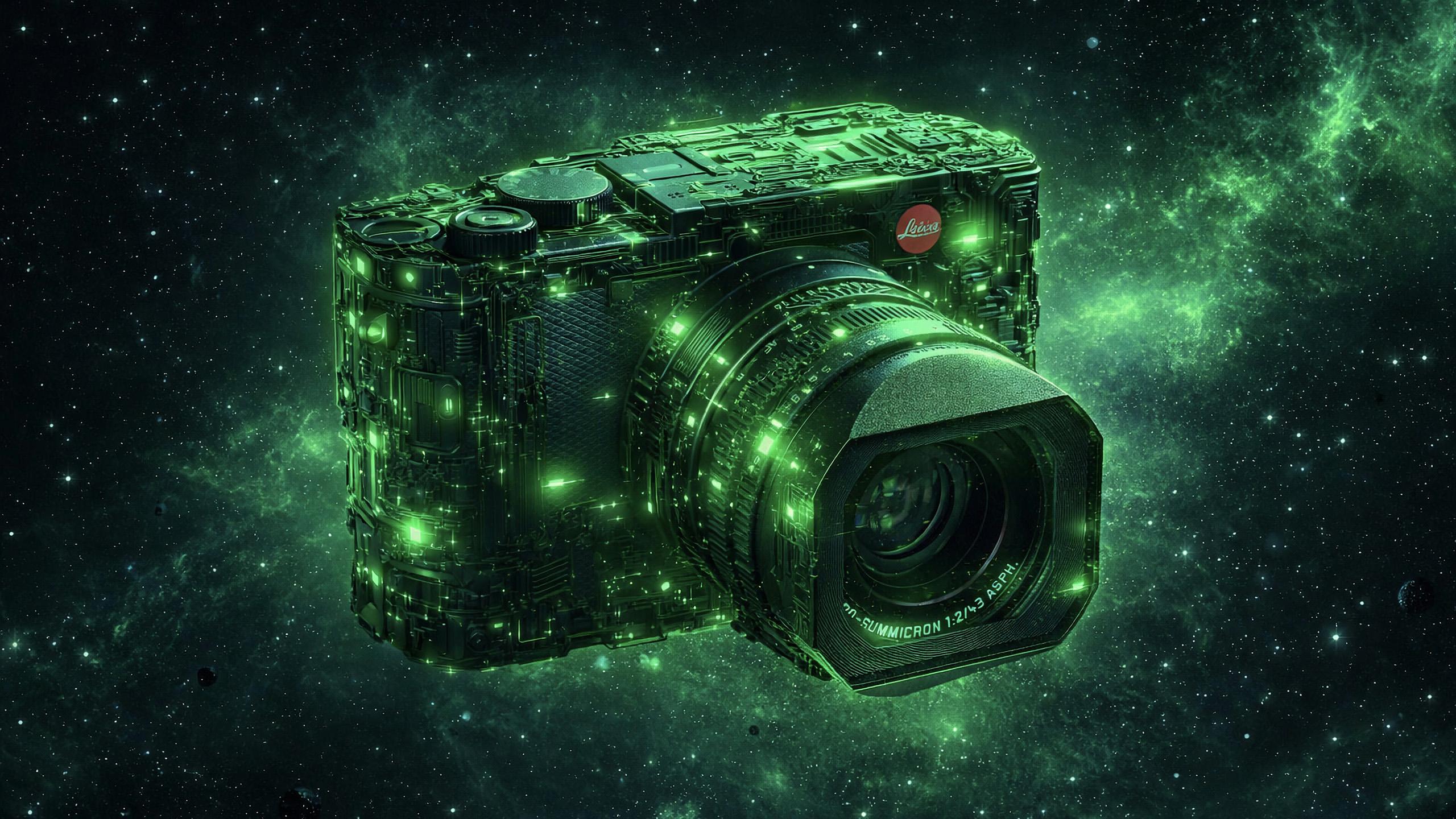
Only the other day, I noticed a copy of “The Hitchhiker’s Guide to the Galaxy” which had apparently found its way into my bookcase through a wormhole. It was sitting there, next to my Leica Q3 43. Flipping through the pages, I came across the following rather surprising insight into my favourite camera brand, Leica:
LEICA (Entry No. 7,432.991-b)
See also: Cameras, Aliens in Wetzlar, Time travel, Borg technology, Fault in the space-time continuum
Leica is a traditional manufacturer of cameras, which is located on the planet Earth and is generally considered the epitome of precision, understatement and very serious-looking people with round glasses. However, this explanation is false. Entirely wrong. With considerable bureaucratic effort and bypassing various intergalactic confidentiality regulations, the truth came to light.
According to findings that Hitchhiker’s Guide to the Galaxy only unwillingly publishes (mainly because its legal department was briefly taken over by an aggressive species of intelligent paper clips), the majority of Leica employees actually consist of aliens.
They disguise themselves as engineers from Wetzlar, which is considered in the universe as a particularly sophisticated form of invisibility, since no one ever voluntarily thinks about a dull place somewhere in the state of Hesse for more than five minutes when there are so many other fascinating places (see, eg, entry No. 42.864.a-o: Planet Preliumtarn, Quentulus Quazgar Mountains, God’s last words to creation in huge, flaming letters: “WE APOLOGISE FOR THE INCONVENIENCE”).
These aliens come from a distant future, in which cameras have long developed their own consciousness and photographers are only carried as decorative accessories. Through an unintentional but extremely elegant distortion in the space-time continuum — caused by the simultaneous actuation of shutter release, aperture ring, an existential crisis and the collision of the Earth’s gravity field with a cluster of dark matter — part of this technology came into the present.
The most visible result of this cosmic breakdown is the Leica Q3 and the Leica Q3 43.
Officially, these are compact cameras. Unofficially — and far more accurately — they are largely based on Borg technology. This was stolen from a future in which individuality was abolished, but surprisingly the retro look was maintained. The Borgs themselves deny any participation, which they always do when they were obviously involved. Any similarities to actual persons are purely coincidental, of course.
Typical indications of Borg origin are:
- The eerie ability of the camera to adapt,
- The feeling of being discreetly taken over by a foreign intelligence when switched on, and…
- The user’s subtle desire to become “part of the system”, including optional leather half case and other accessories.
The Q3 and Q3 43 do not assimilate a species in the classical sense, but gently integrate photographers into a collective of firmware updates, forum discussions and the firm belief that 28 or 43mm are the only morally justifiable focal lengths.
Why all this happens is unclear. Possibly, it is about the observation of humanity, but probably also about something much more important: perfect DNG’s!
The guide advises travellers who use a Leica Q3 or Q3 43 to remain calm (don’t panic!). The camera doesn’t mean it. It just wants you to take pictures. And become part of it.
Prologue
After reading that, a few things became clearer to me. Both about Leica and why I had titled my first hands-on article about the Leica Q3 43 ‘Resistance is futile’. Apparently a posthypnotic command. I have been using the camera for a year now, and it has proven its flexibility in many totally different environments and requirements… once you have learned to avoid certain settings.
There are contemporaries who think they know everything. Whether this can be attributed to the now proverbial testosterone poisoning or is perhaps a form of intolerance to microplastics that are slowly accumulating in our brains is unclear. The web is teeming with reviews based on data sheets or, at best, reflecting a few hours with a camera.
A professional reviewer can certainly give a valid opinion after a few days, but the longer the period and the more varied the requirements, the more reliable the judgement should be. However, even the Pope has abandoned the dogma of infallibility, and opinions can always be divided on some issues, so I do not claim that my view of things is always the correct one.
Actually, I have only good things to report about the Leica Q3 43. That is why it is psychologically inconvenient to start with what did not go so well. But that’s precisely why there is currently an extremely extensive firmware update, which I have to talk about first.

Firmware 4.0

The camera has autofocus with phase detection (which the Q3 monochrome does not have) and this basically ensures lightning-fast focusing. But the special functions such as tracking, and person or animal recognition, were at best suitable for pathologists whose subjects are normally in rigor mortis.
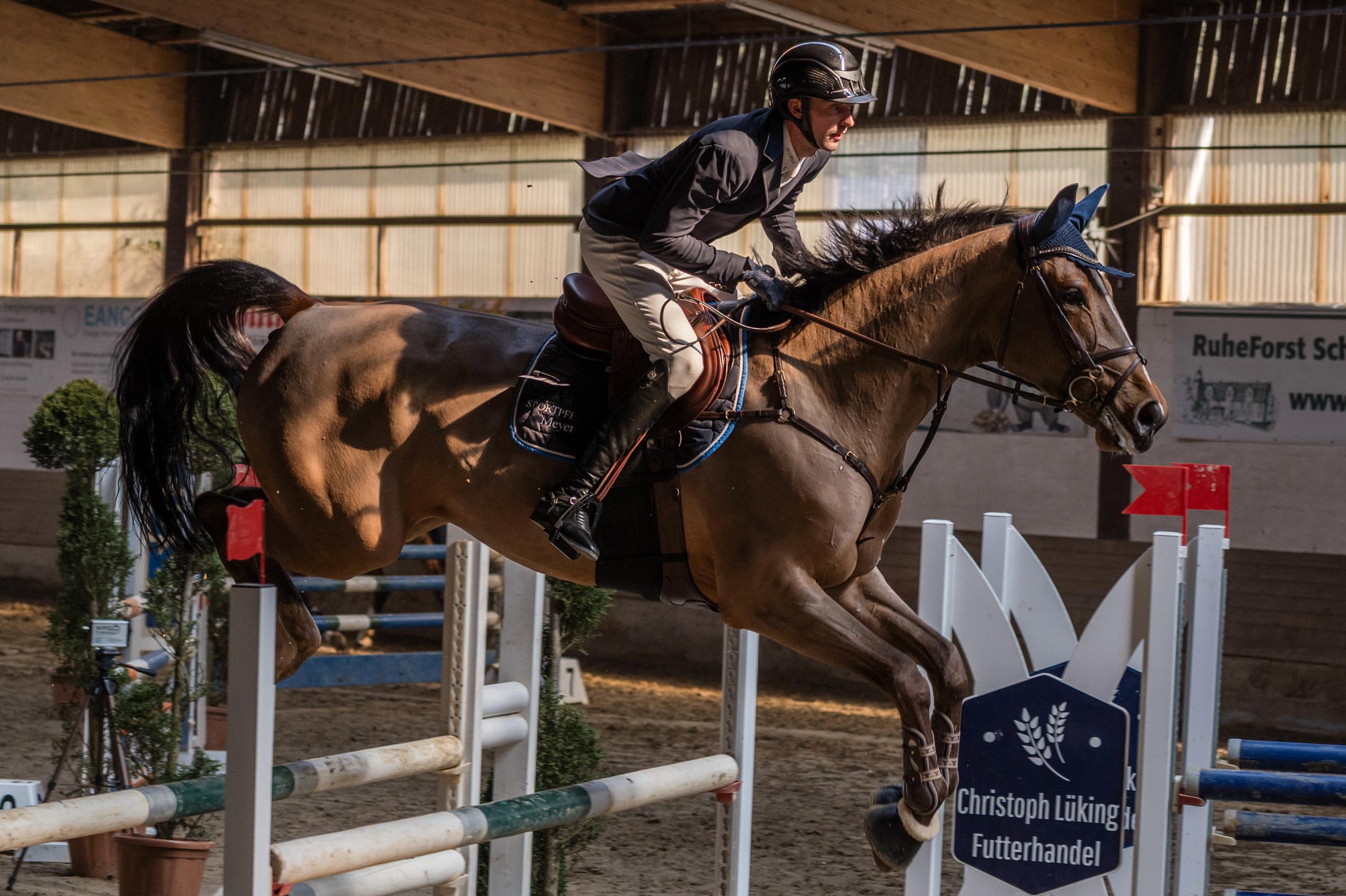
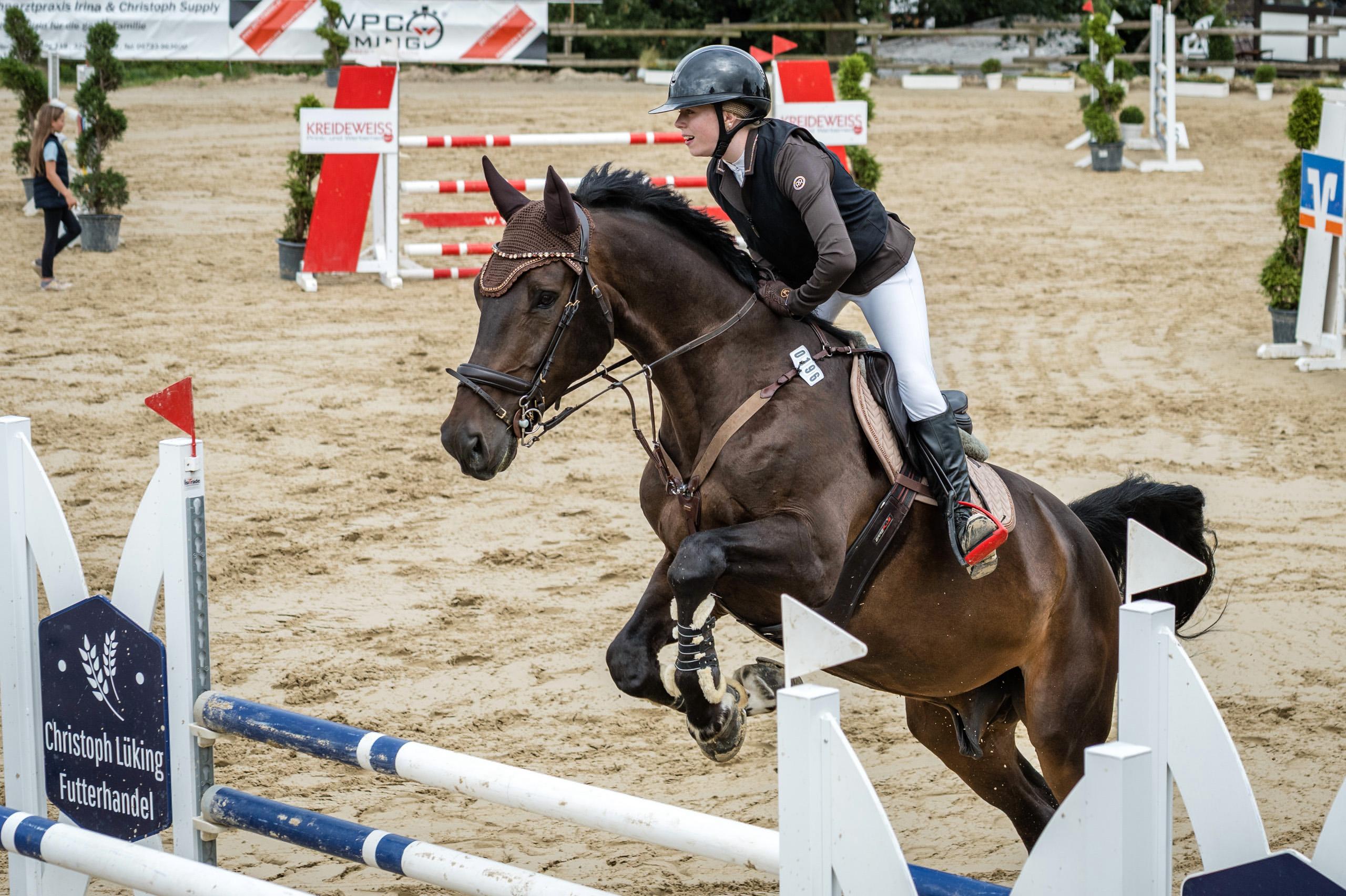
For example, the attempt to photograph my lively great-nephews and nieces with person recognition had to be aborted; far too slow. Or chasing a jumping horse in the course: frustrating when you always get stuck on the obstacles and the horse is gone.
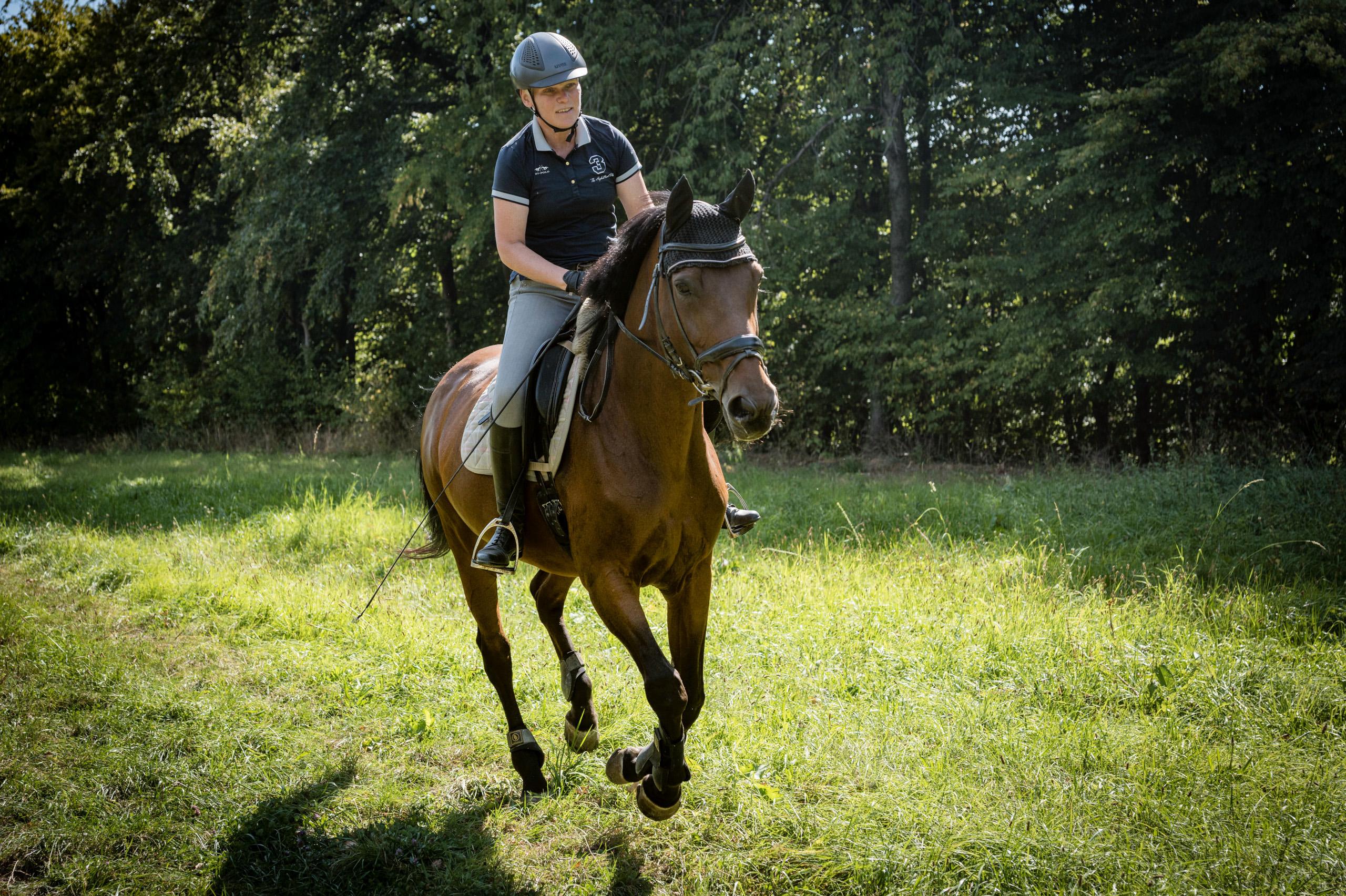
The fact is, the camera was actually fast enough, you just had to do without the “fancy” focus settings. Field or spot, eventually also with continuous autofocus (AFc) or with continuous shooting function (4 frames/second) nailed everything fast moving (nephew, nieces, or horses) frame by image frame, in best sharpness. I avoid iAF because this makes my preferred method of “aim at the subject, press the shutter button halfway, swivel to the image composition, trigger”, pretty useless.
Faster autofocus
With the new firmware, Leica promises a significant improvement in these special autofocus functions. We can indeed be curious. In any case, the first tests over Christmas and New Year’s Eve were promising.
Above all, however, the icons (now also called “Leicons”) are greatly improved. The touch functions and parts of the menu structure have been completely revised and adapted in line with the SL precedent. I find the changes very successful and got used to it quickly.
I won’t go through everything in detail here, but if you wish, you can look at the release notes here. It can still be helpful to consult the operating instructions of the new Q3 Monochrome, as the new menu structure is already described there.
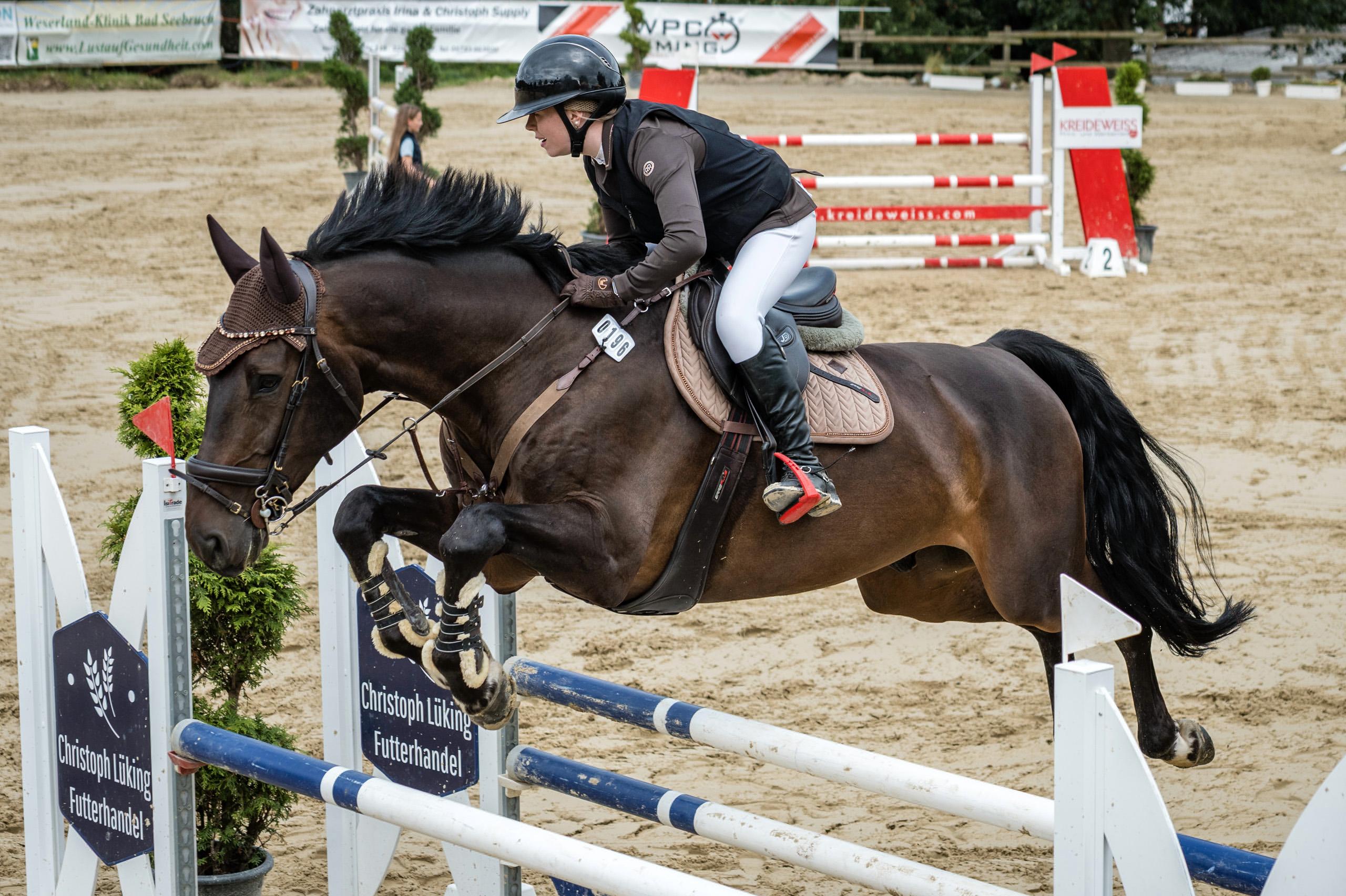
Some irritations remain
But a Leica without bugs would be like Snow White without the seven dwarfs. Entertainment for the forum denizens must be provided, so the software department has come up with something hilarious: If focus peaking is activated (in the menu for Info Profiles), it is also shown irritatingly in the normal Auto-Focus mode (instead of just when the focus ring is moved away from the autofocus position).
Furthermore, images taken in portrait orientation (vertical) are suddenly no longer displayed in full screen (vertically), but horizontally. This wastes screen space to the left and the right. There is no setting for this in the playback menu. Moreover, there is something about the camera crashing when switching between user profiles if the Photos app is enabled in one profile but not the other.
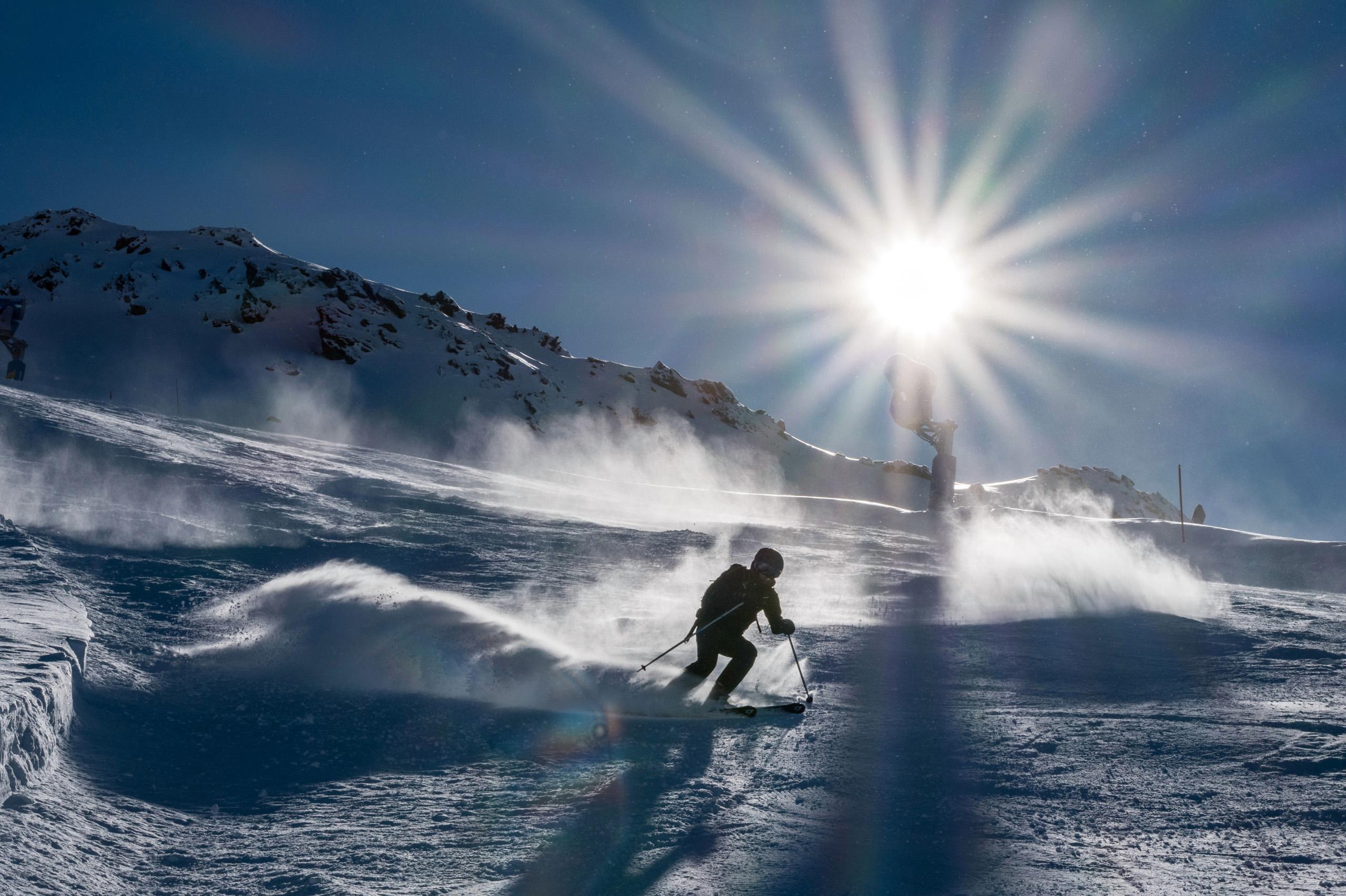
Get used to the new “logic”
So, especially the one with the focus peak peaking in AF mode is once again a typical Leica absurdity. Has anyone in the software team ever looked through the viewfinder? Reminds me of when the D-Lux 7 was new: The DNGs could only be edited in black and white in Lightroom. This is similar to delivering a new car without wheels. “Oops, we didn’t even notice.” You can’t believe it.
Overall, these are still harmless bugs (I have focus peaking “off” anyway, then there is no problem), no reason to skip this really useful update and wait for 4.1. The autofocus function seems to be significantly improved in real life, and you just have to detach yourself from old thought structures and assimilate the new “logic”.
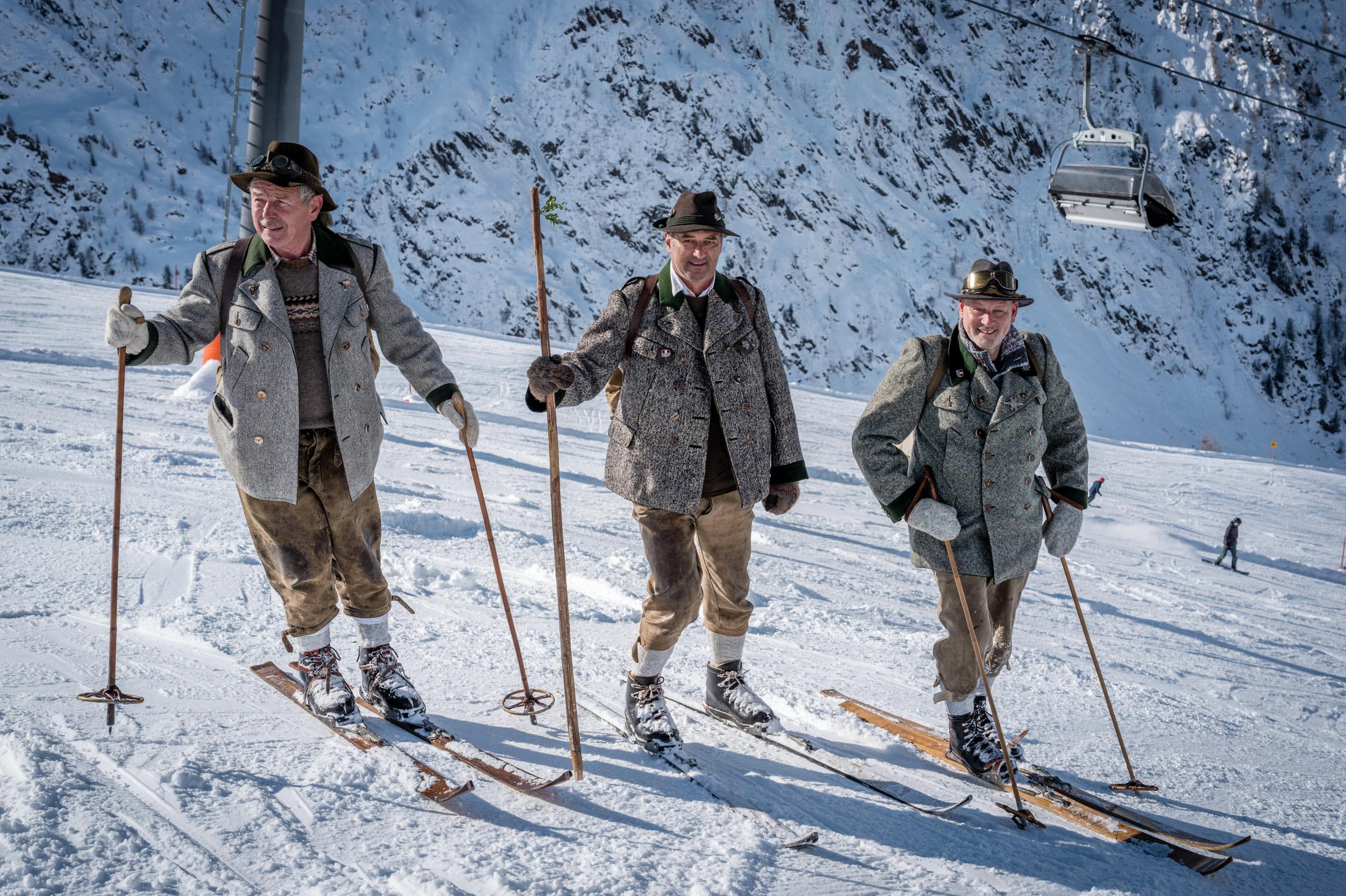
The new touch features are even less a reason to ever go to the menu if you want to change something quickly. That’s why I saved only my own standard profile. I change it if necessary and simply put it back when the “special” recording situation is over.
Updates via the Photos app
All updates (also with the M cameras) I now do via the Photos app, which runs quickly and conveniently. The Q3 has to be re-paired with the app after the 4.0 update, which was completely unproblematic for me. If necessary, remember to also delete the “old” Bluetooth pairing (was not necessary for me).
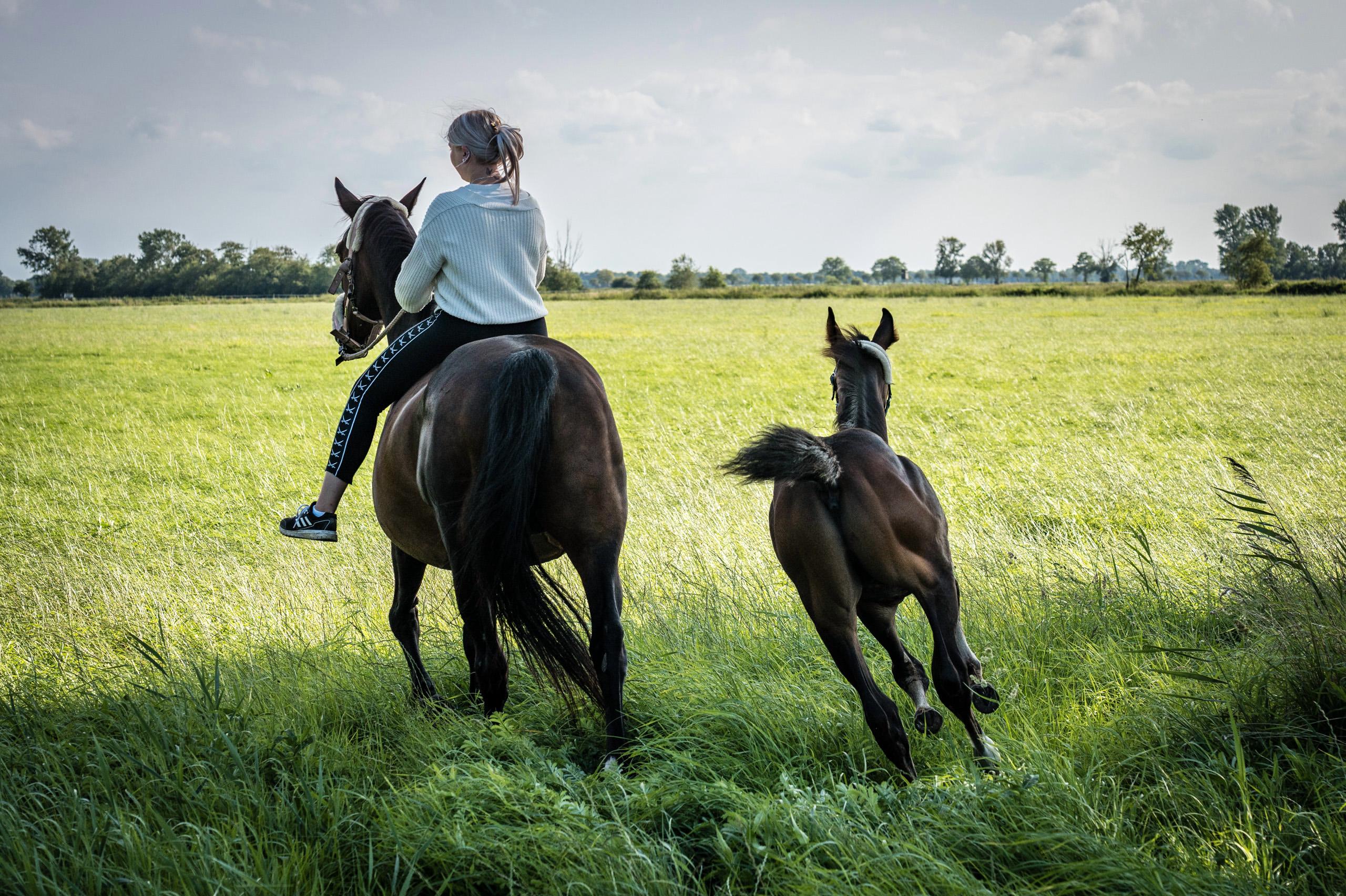
One year with Leica Q3 43
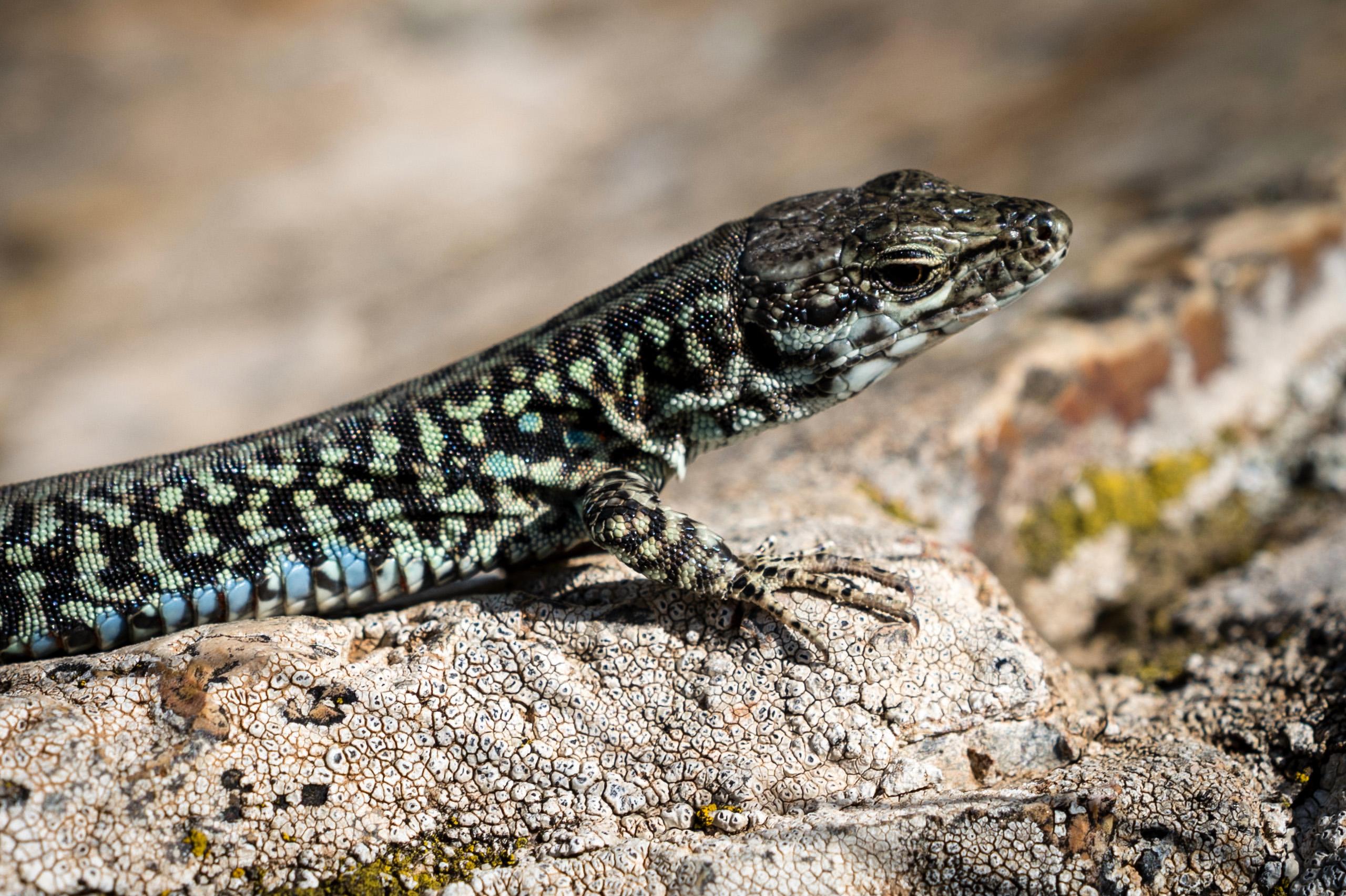
Of course, the Leica Q3 43 seamlessly connects to my experiences with the Q3, but for me, it has been became obvious in everyday life that 43mm is much better suited to my photographic needs than was 28mm (although I never complained about it, you can get used to everything).
There is no question that the optical properties of the 43 Apo-Summicron are stellar. This time, I shall refrain from publishing MTF curves; just take my word for it.
The lens is super sharp even fully open; it is backlight resistant, offers beautiful bokeh, with hardly any distortion, chromatic aberration or flare. If you consider Leica’s price structure, the equivalent 35mm M-Apo-Summicron — without a camera — already costs more than the entire Q3 43.

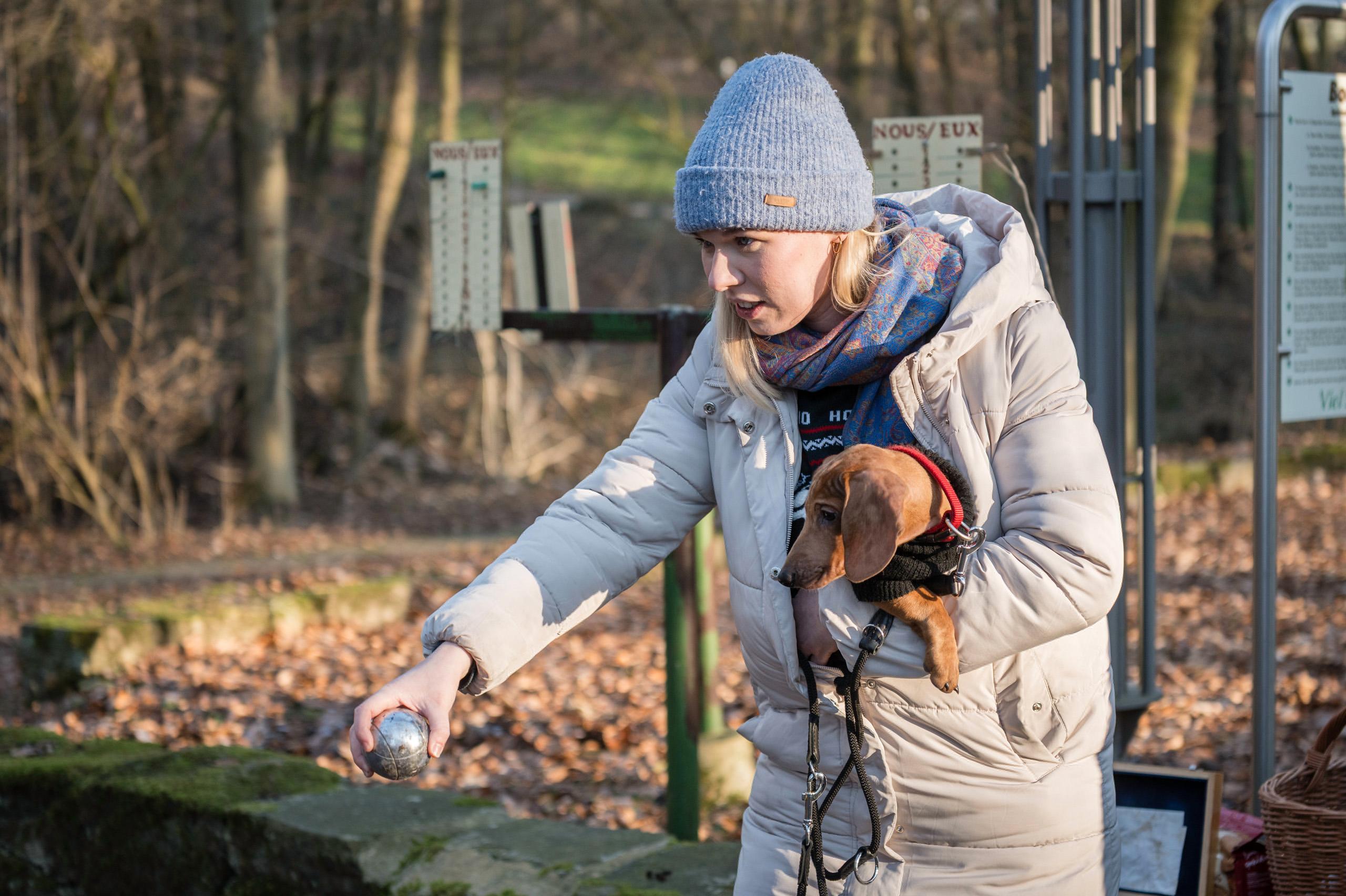
A broad footprint of abilities
There were some events during the year that I reported in respective articles that already show how flexibly the camera can be used. But apart from holidays and larger events, the Q3 43 is my constant companion to document the course of the year for the family.
Birthdays or other celebrations, hikes, concert or city visits, sports activities: in short, for shooting everything that is done with family and friends, I prefer the Q3 43.
In the rare occasions when I am without a camera, the iPhone (I have had the 16 for some time) is there. However, you have to use very low criteria if you really want to claim that the image quality was even remotely comparable, apart from the editing possibilities of a full-frame DNG.
Do I need something besides the Q3 43?
The year is now over, and I must admit that I don’t really need a camera besides the Leica Q3 43 for ninety percent of my photographic projects. On the other hand, I have so much fun working with the Leica M11-P or my film Ms (especially the “new” M6) that I didn’t want to do without it.
Furthermore, the output of the M10 monochrome (the monochrome in general, be it M or Q) is so special that I would rather not do without this camera when black-and-white photography is the order of the day.

Apochromatic lens systems
When the technical data of the Leica Q3 43 “leaked”, many were disappointed by the supposedly mediocre lens speed/aperture. “Only” f/2? One would have expected better from Leica. And why not at a focal length of at least 50mm?
By now, word should have spread about the masterpiece of engineering that sits in front of the camera. It is an ingenious compromise of size, apochromatic properties and speed. If you wonder why most apochromatic lenses (not only from Leica) have a maximum aperture of f/2, you need to bear the following in mind:
The f/2 aperture is not a physical, but a practical, boundary in the design of apochromatic lens systems. With even larger apertures, the optical aberrations increase exponentially because the marginal rays are increasingly steep.
Not only the axial and lateral chromatic aberrations become increasingly complex to correct, but also the spherical aberration, astigmatism, coma, and field curvature. The problems are literally exploding. The lenses must have larger diameters, they must be super-ED, fluorite or abnormal dispersing. I won’t go into more detail. Suffice to say that these optics are getting pricier and harder to work with.
In short, an f/1.4 apochromatic lens is technically possible, but it would be a whopper and expensive, even beyond Leica prices.
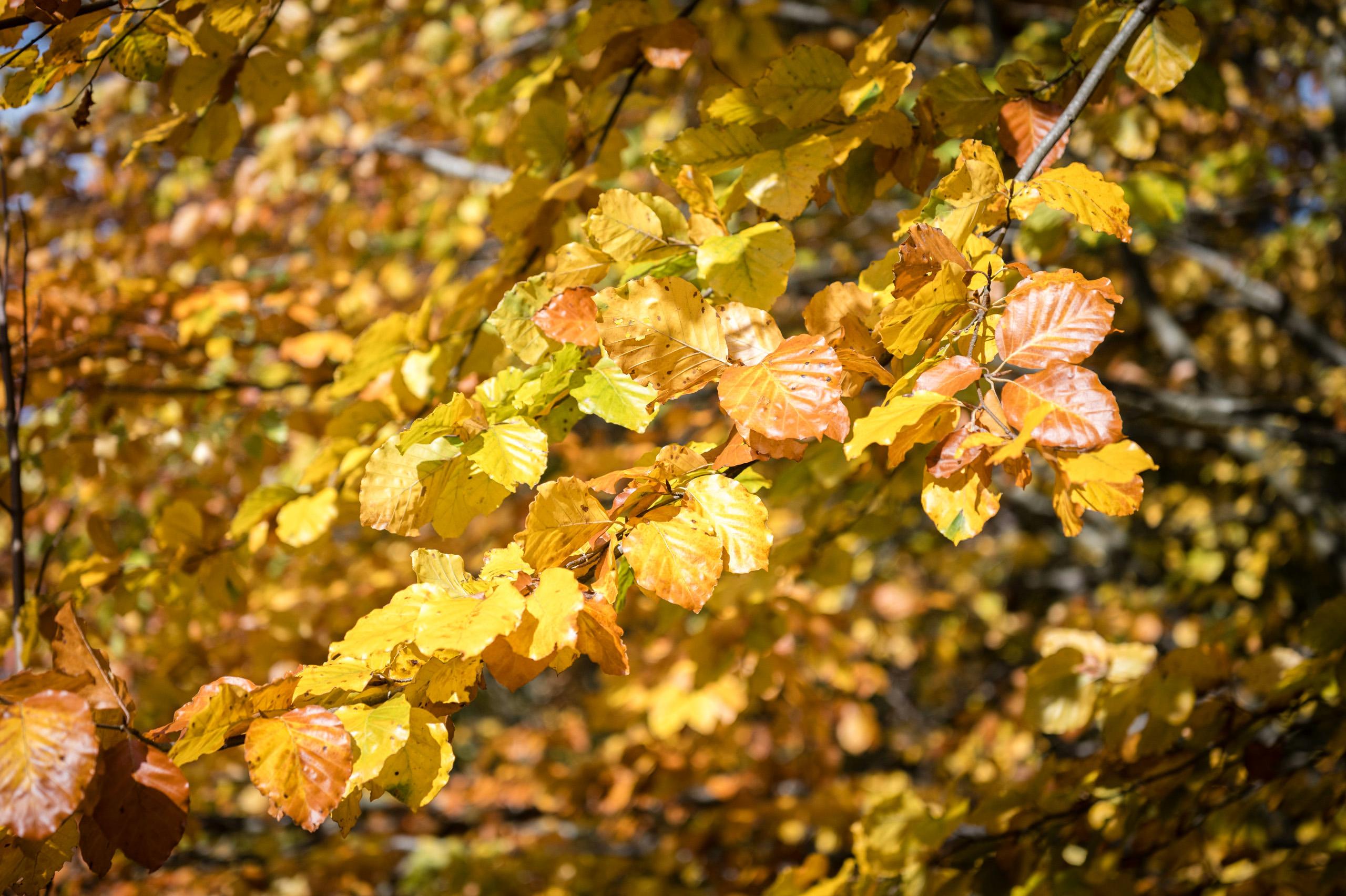
Subject isolation, fall off and bokeh
The whole point of the apochromatic correction is that all light rays of every colour congregate amicably again at the same point; thus the resolution is superior to a conventional design. With the 43mm Apo-Summicron, everything in focus is extremely sharp, but drops quickly outside this level.
This creates a maximum sharpness of the isolated, in-focus subject that can be compared with that of the Summilux lenses. Everything that turns into bokeh in the background is very “quiet” and pleasant, with an impressionist image effect, especially from specular lights. No trace of donuts, onion rings, or bubble bokeh (although all this can be very attractive with vintage lenses).
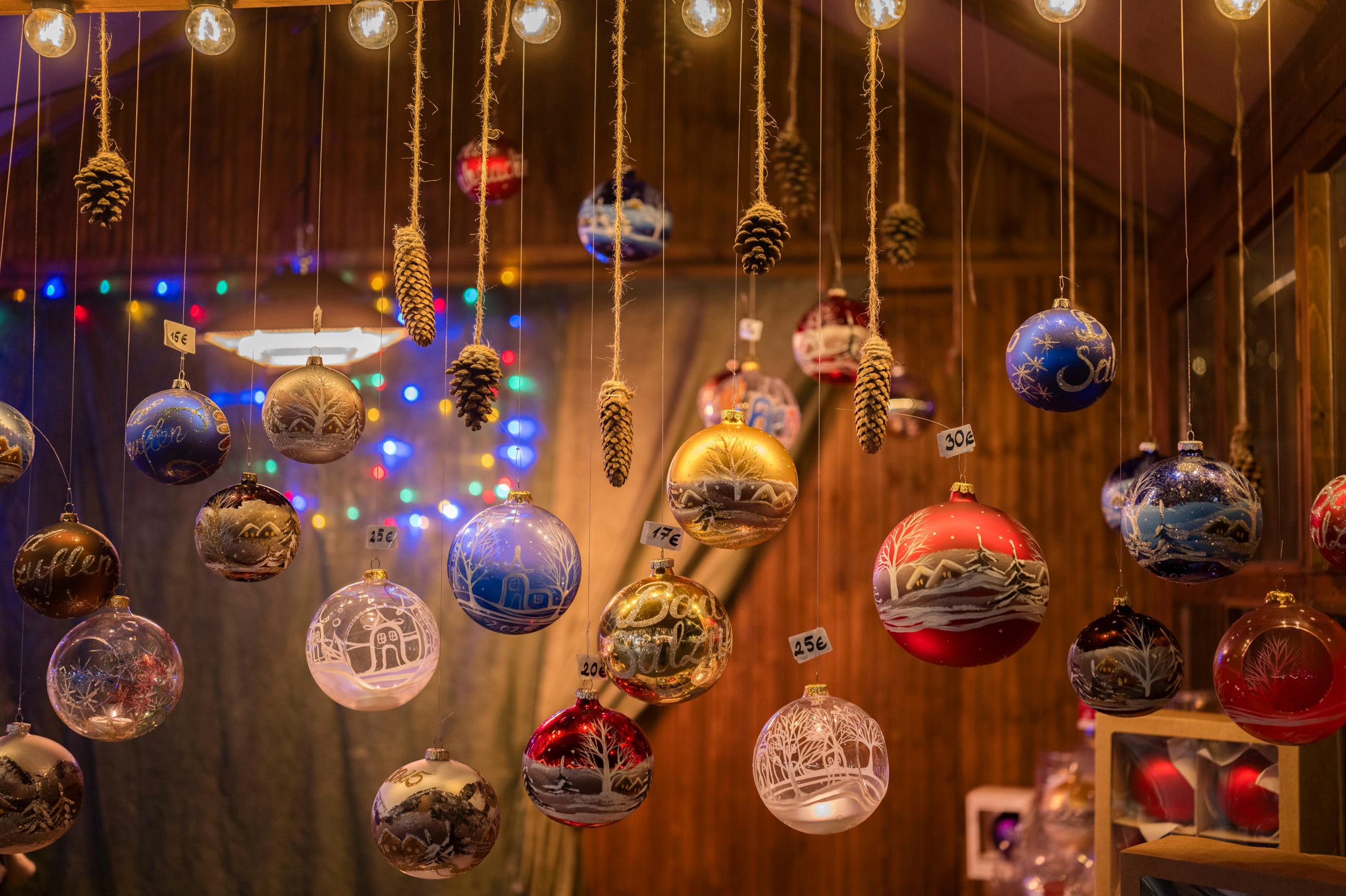
I already discussed the 3D effect above, which can occur when the aperture is wide open. The 43mm Apo-Summicron can deliver it, but that is not only reserved for this lens or only for Leica. Good optics paired with a correspondingly large sensor can do this.
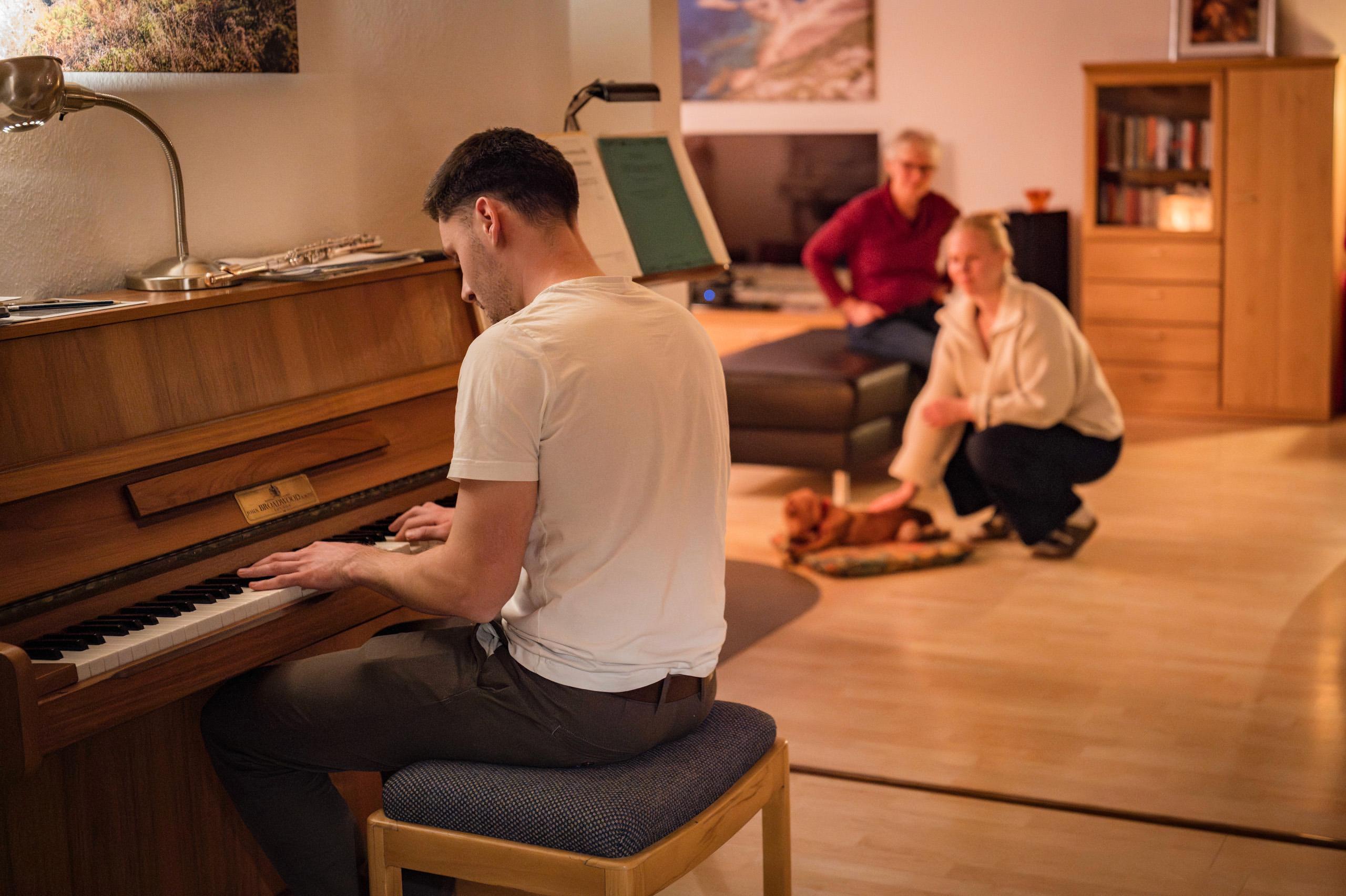
The ratio between sensor size and aperture setting is crucial. APS-C and MFT can also do this, but it is getting more difficult wth smaller sensors. With medium format, on the other hand, f/3.5 suffices.
Unfortunately, the miniature mobile phone sensors, good as they are, cannot rewrite the laws of geometry. That’s why the software must provide the illusion of bokeh.
However, the depth effect does not depend on the fact that the background consists of an even mush, like the calculated bokeh of an app (which also sometimes does not properly recognise the subject, which looks stupid), but the falloff gradually increases depending on how far away things are from the focal plane.
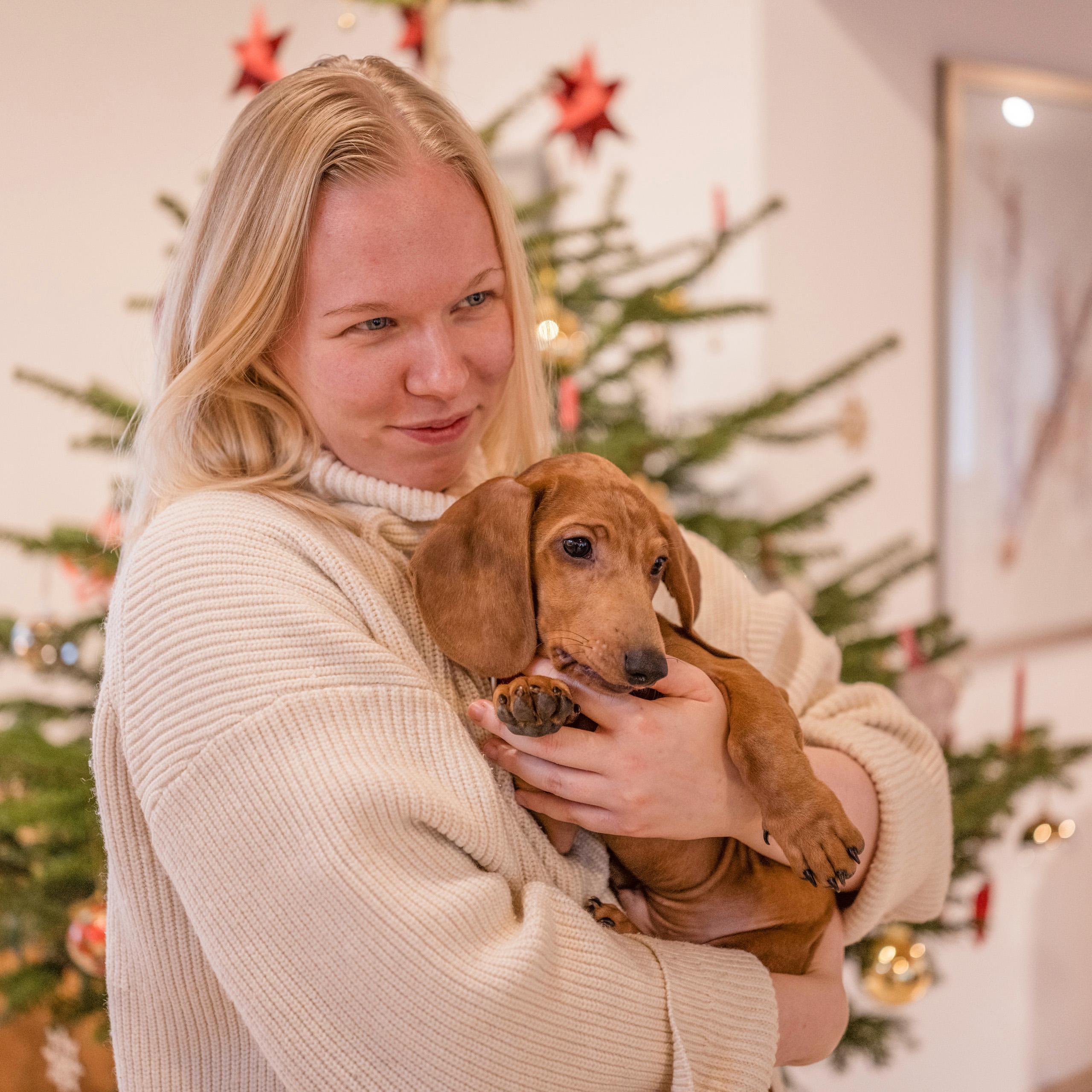
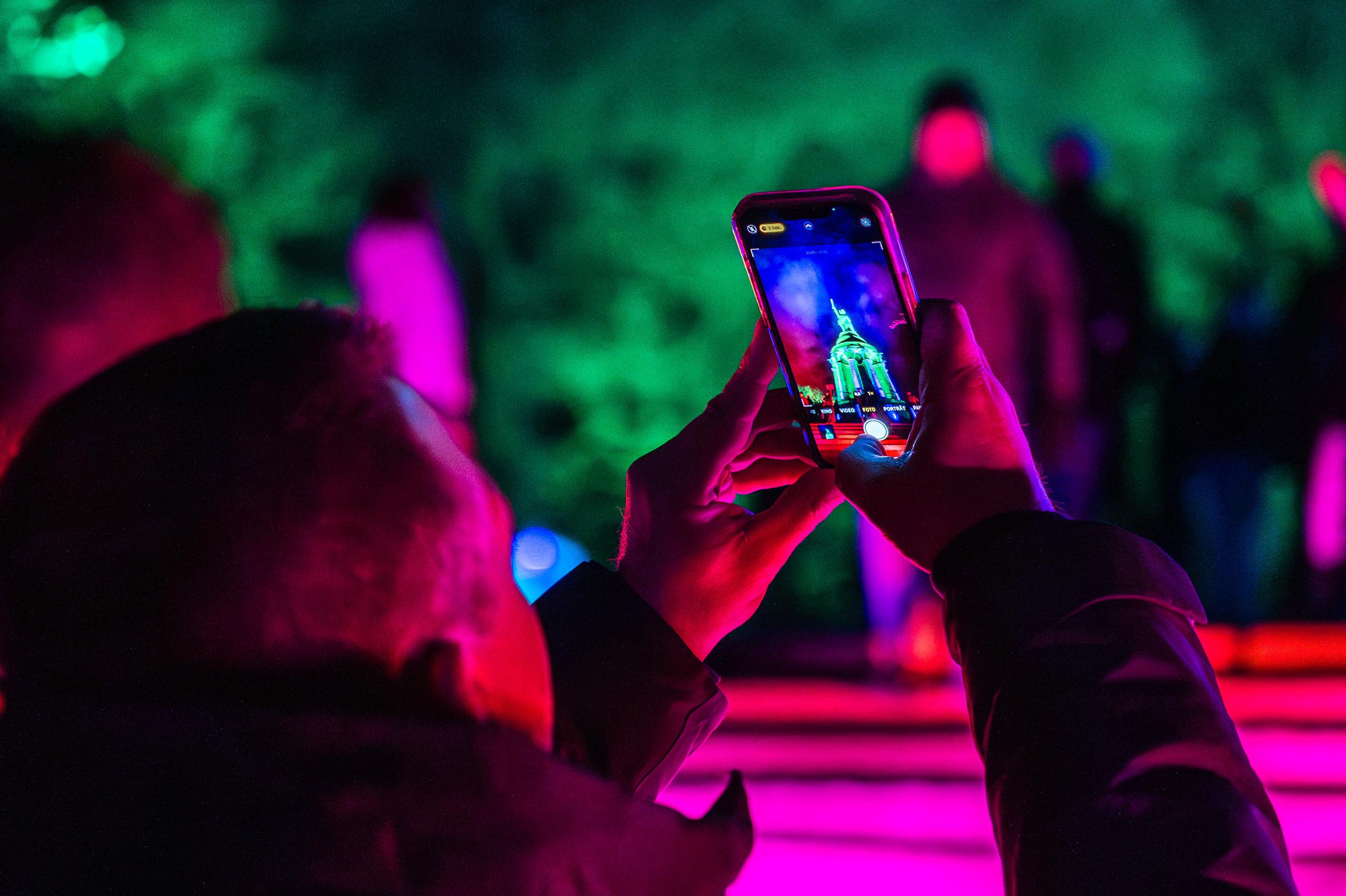
I don’t mean to denigrate anyone’s iPhone or the Leica Lux app. I use them myself: “The best camera is the one you have in your pocket”, but there is a reason why I usually try to have the Leica Q3 43 with me when I expect worthwhile subjects.
Physical hardships
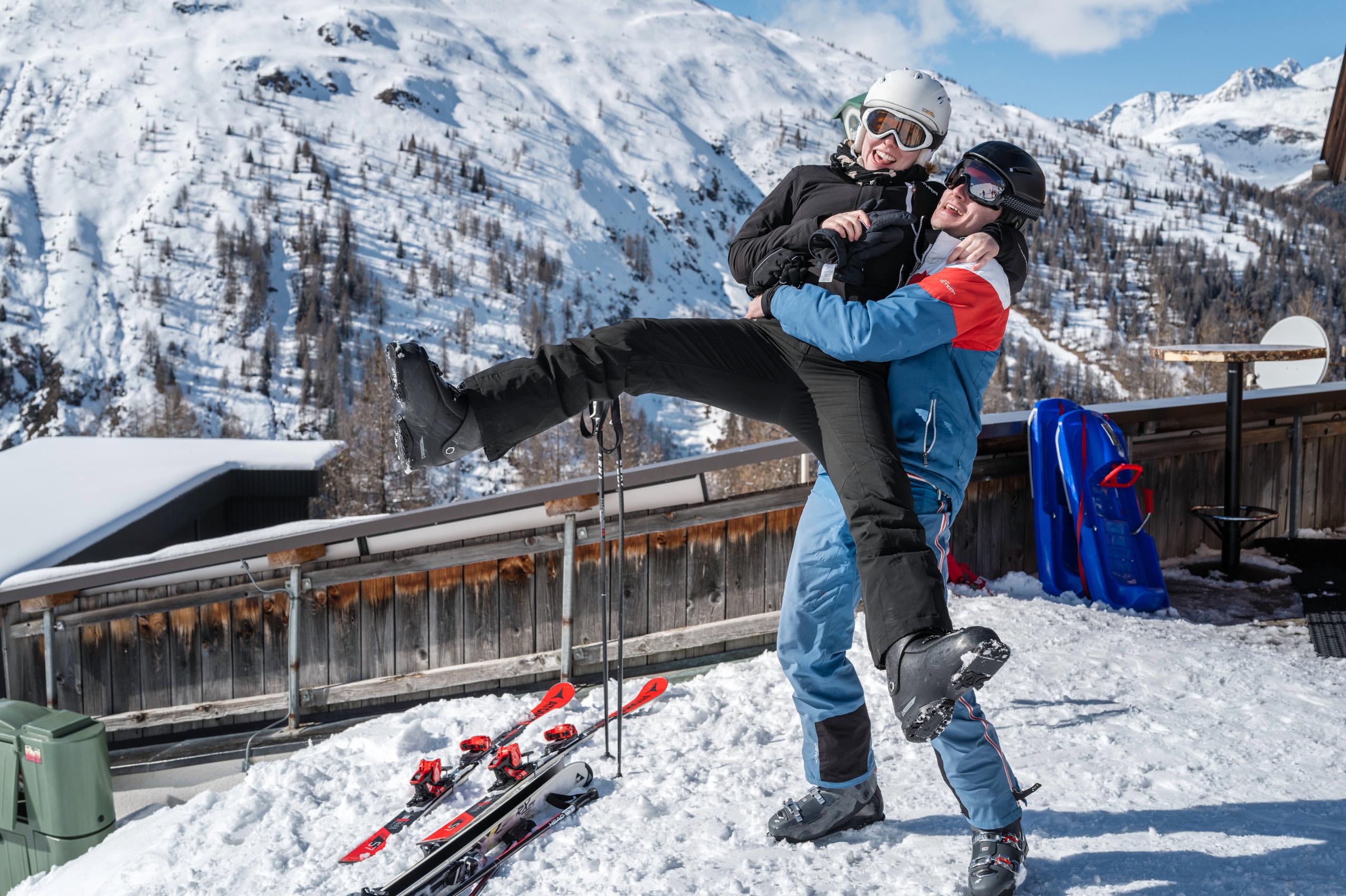
The first photos were taken a year ago around Christmas, and I reported on my experiences accordingly. Subsequently, over the year, the camera had to endure a lot. When skiing, cycling, mountaineering, in a whitewater canoe, in wet, cold or hot: If there were a camera protection association, I would be number one on the blacklist.
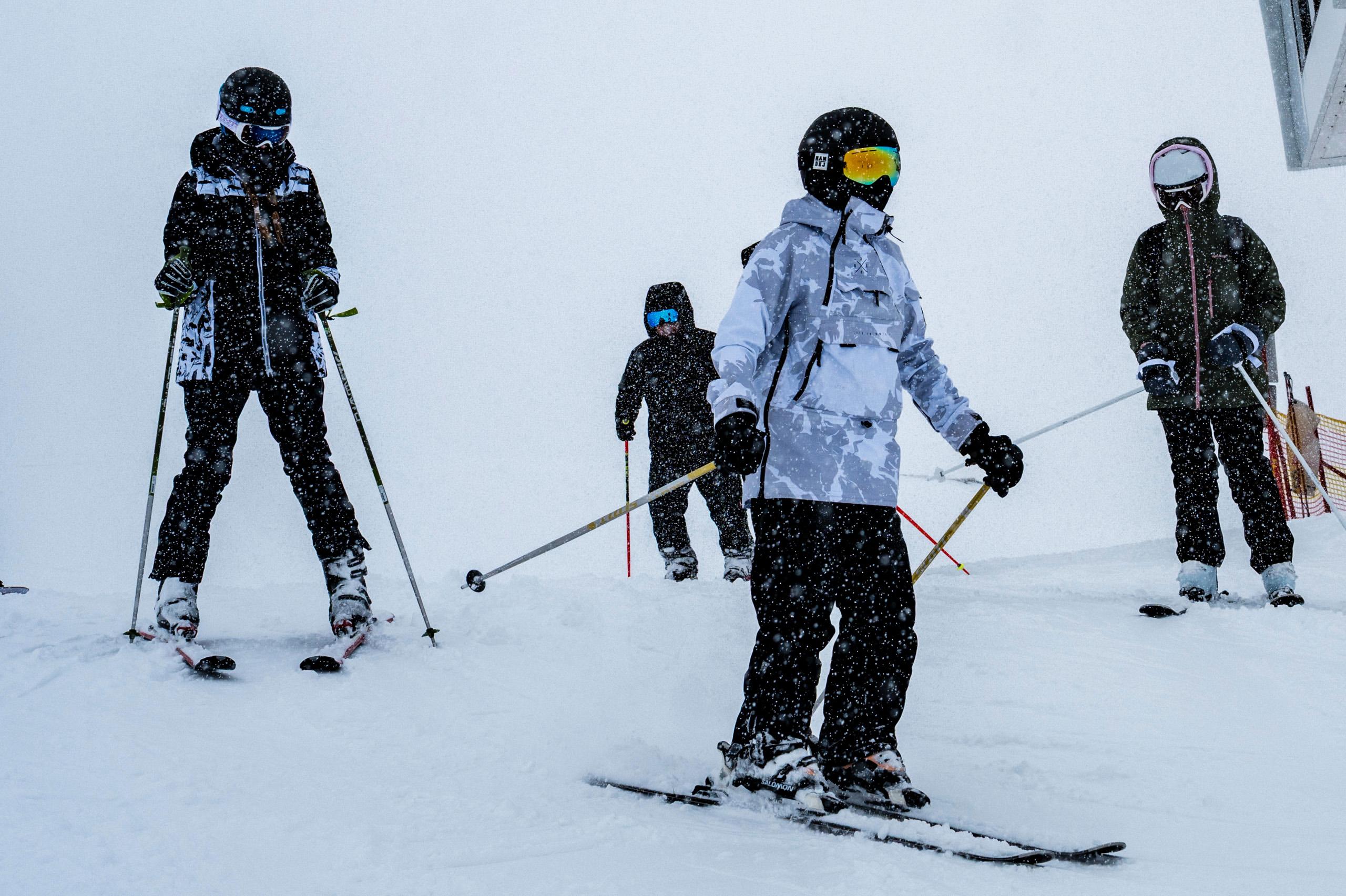
On the ski slope, the G-forces were so high during jumping that the battery flew out. I noticed this only at the top of the lift (“why doesn’t the camera turn on? Oops, a large, gaping hole in the bottom of the camera…”).
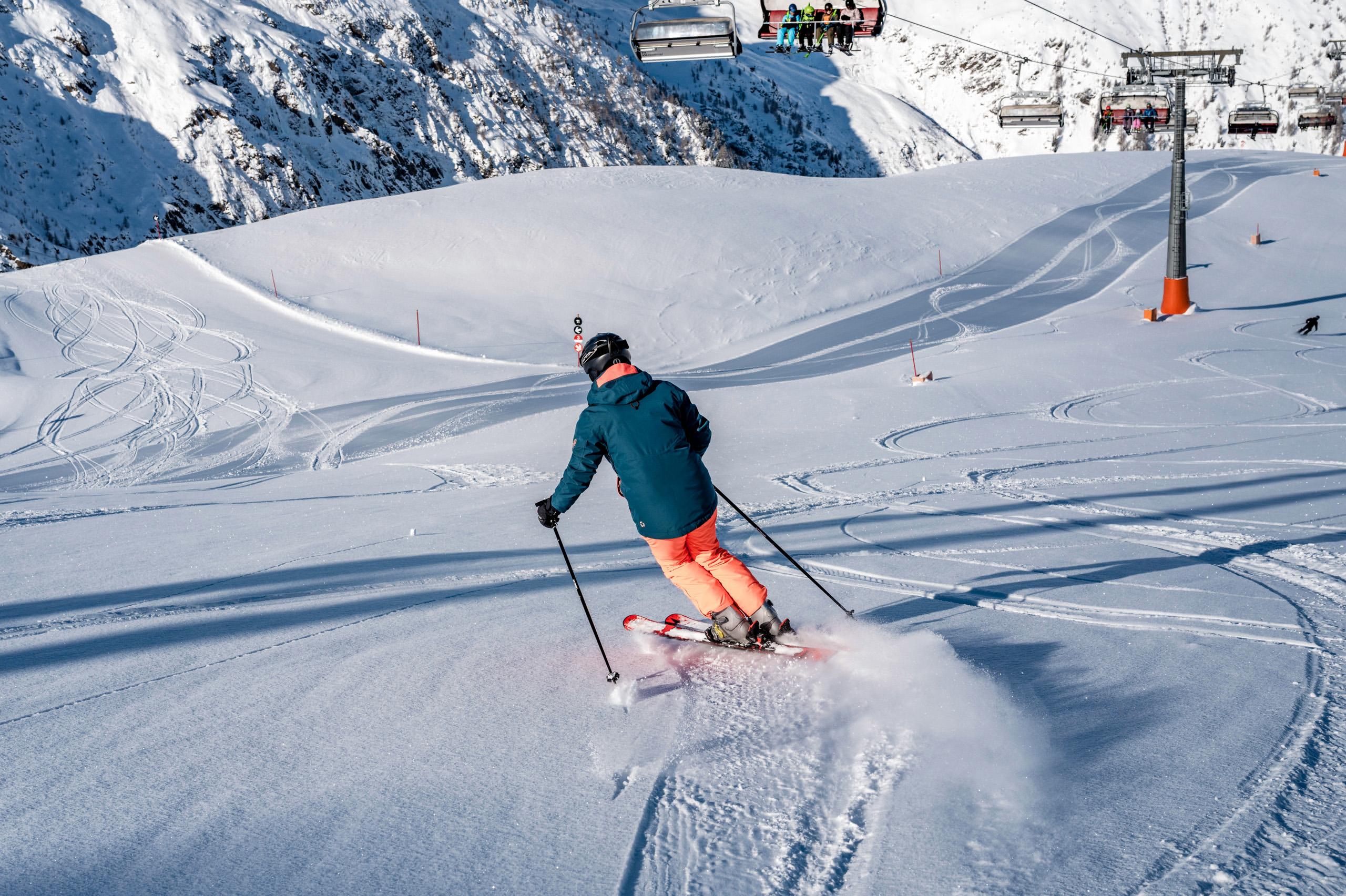
I repeated the descent and found the recalcitrant battery in the snow below a ramp. The mechanism was undamaged; I put in the battery back in and everything was running. A whole day of fresh snow fell (hurray!), but despite arctic temperatures and snowstorms, the Q3 43 did its job without complaint. It also landed with me in the snow, as can sometimes happen. Tap off snow, wipe front lens (filter in front) and off you go.
The risks of going filter-free
Speaking of filters: Leica has designed the original lens hood so tightly that they have left no room for normally dimensioned filters. However, there are super thin filters from B+W or NiSi. Or you can choose an alternative hood to use with a conventional B+W filter.
But one thing is certain: If you think you can do without the filter to protect the front lens, you play a dangerous game of poker. At least if you put your camera through the same boot camp as I do. Of course, a photographic poseur may not need such protection.
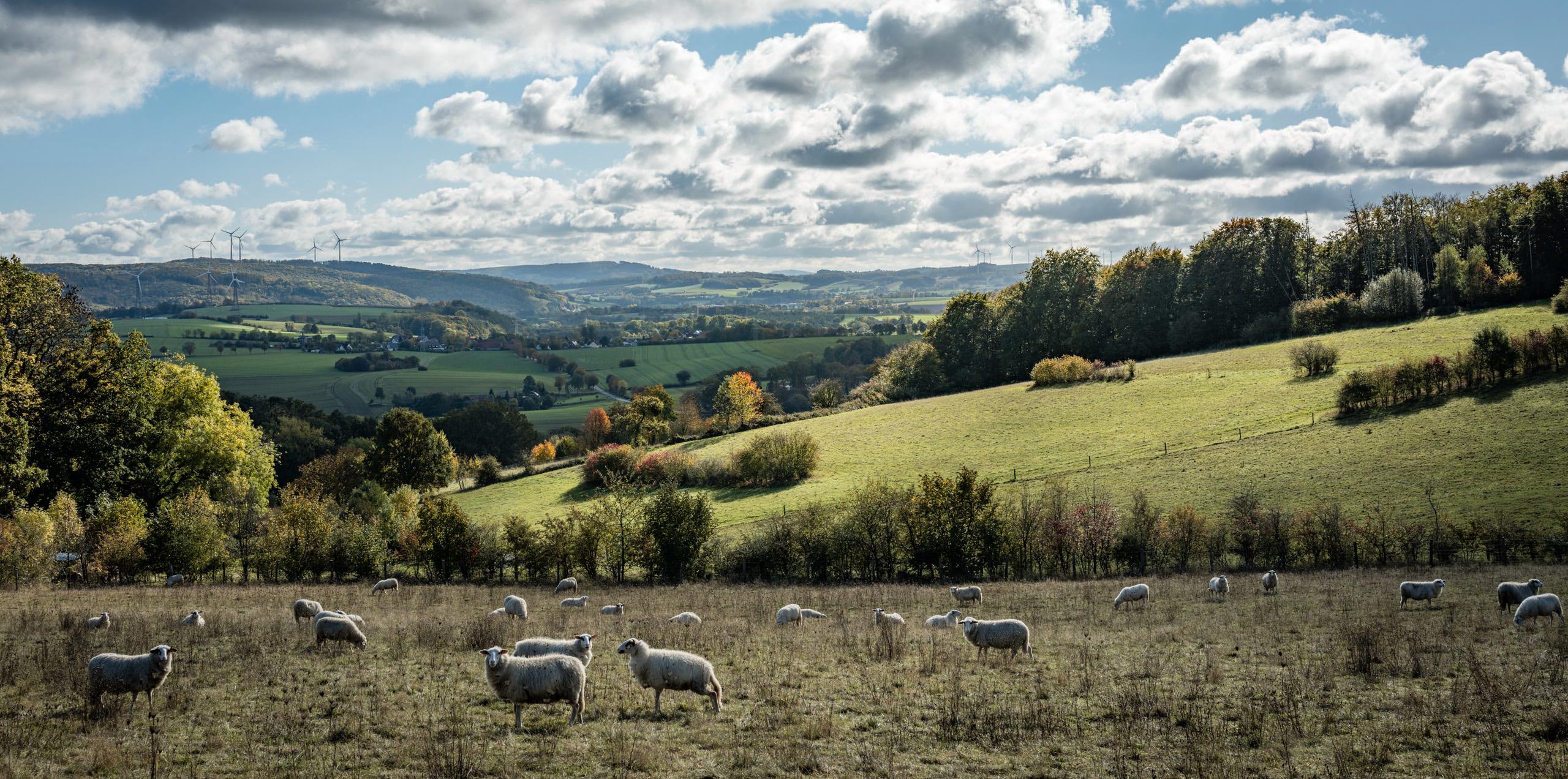
When trekking or road cycling, even on the 300cc scooter (as on the island of Elba), I simply hang the camera with a neck strap around (over the shoulder, one arm through the loop) to have it ready at all times. This way, worn directly on the body, the camera is best dampened against shocks, better than in a bag attached to the bike. So far, all my Leicas (including the Ms) coped well.
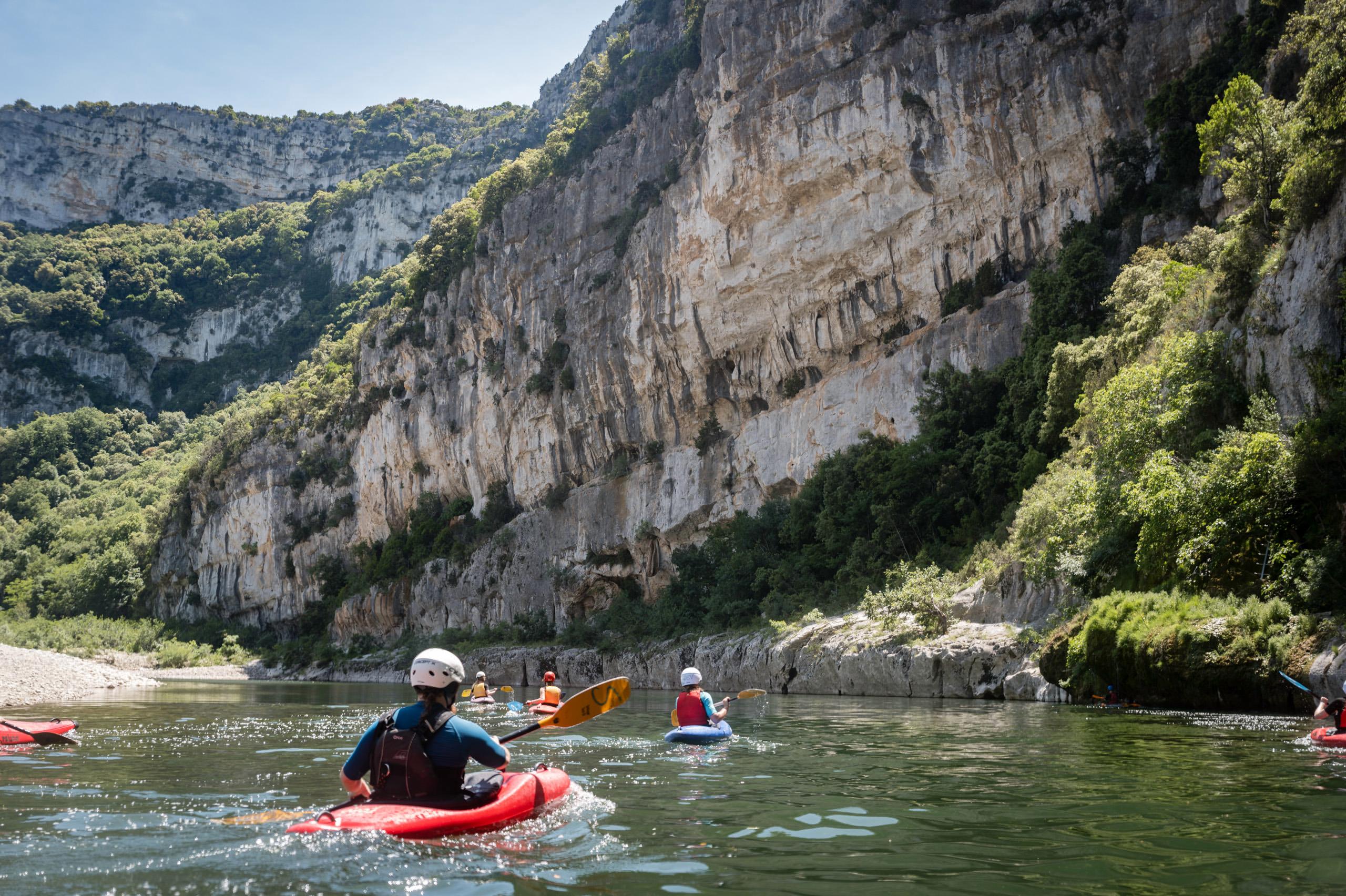
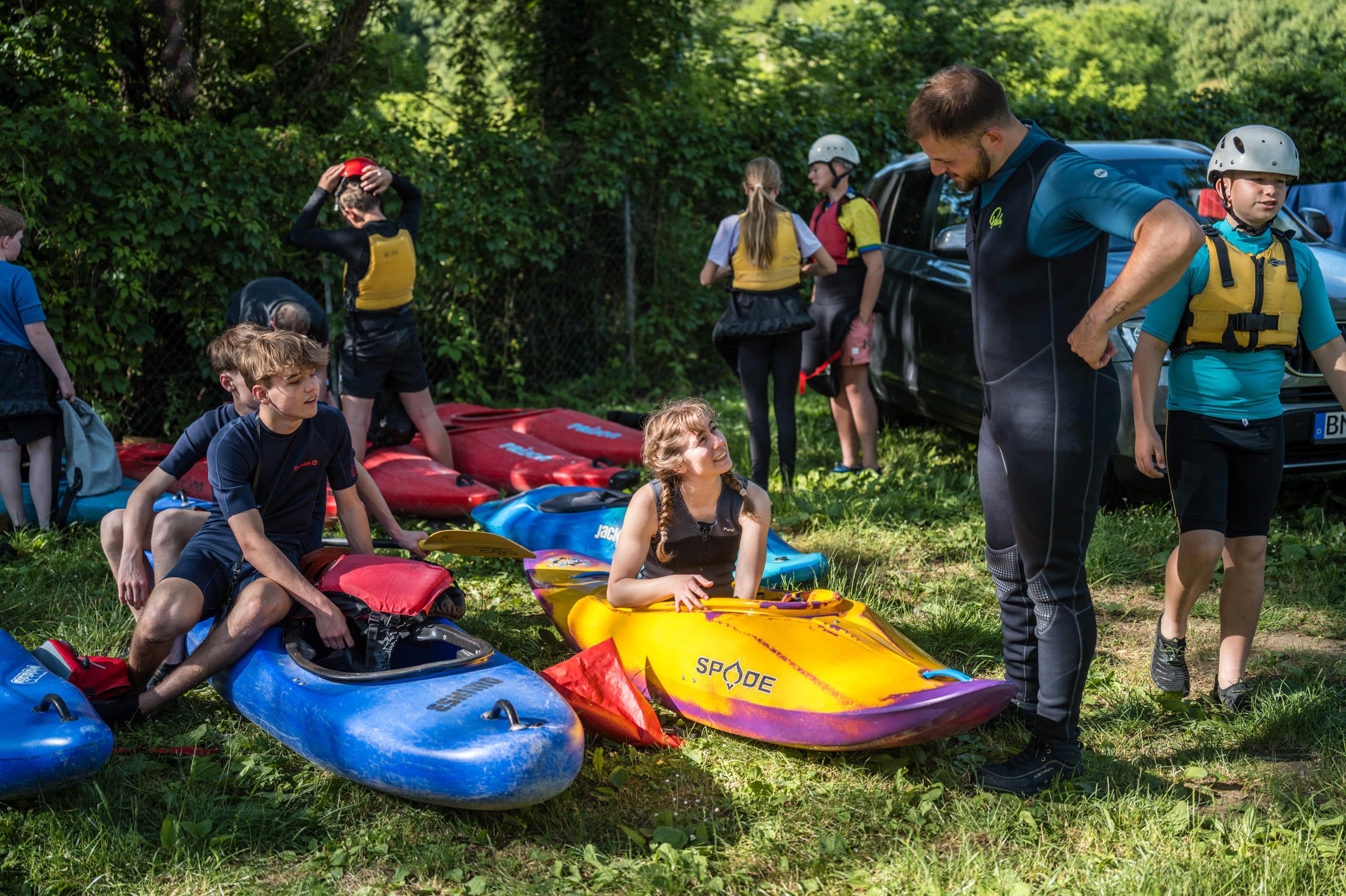
Another challenge came on the Ardèche when I packed the camera in an underwater case to document the ride on the river. I just hung the camera around my body while paddling through the whitewater. This action has enabled shots that would not have been otherwise possible.

Dead pixels society
In the middle of the year, I discovered a cluster of dead pixels on the sensor. Only a minimal area was affected (and if you didn’t know where it was, you could hardly find it), but was not to be fixed by pixel mapping.
Leica’s Customer Care replaced the sensor (within two weeks!) without grumbling and under warranty. In retrospect, I wonder if it was my fault, maybe I focused on the sun for too long. However, I could not properly trace the phenomenon back to a special image. It gave more of the impression that this had developed slowly.
One advantage of compact cameras with fixed lenses shouldn’t be overlooked: The nemesis of interchangeable lens (ICL) cameras — sensor dust and other contaminants — can’t harm the weather-protected Q models. If any of that were to appear, the camera would be defective.
Low light
Even ten years ago, when the “classic” Q came out, you couldn’t complain about the low-light abilities. The fast f/1.7 Summilux and the image stabilisation compensated for the fact that one still had to be relatively economical with ISO values. It was necessary to take care to stay below ISO 6400 if possible, and then you had to master the post-processing; otherwise there would be chic strip patterns, also called banding.
And today, with the Q3 models? I have limited Auto ISO to ISO 25,000 by default, but would have no scruples to go even higher. But ISO 25,000 at aperture f/2? Here, a tea light would be sufficient to illuminate the room, and who needs more and for what? A firefly instead?
Dynamic range and flexibility
The Leica Q3 43 shares the same sensor with the Q3 and offers the same “triple resolution” technology. As with the sensor in the M11, I have never experienced such fantastic dynamic range and flexibility in DNG files.

These sensors are “invariant” or “ISO-less” (see this article in German), resulting in extremely low noise even at high ISO settings. However, the ability to brighten under-exposed images by up to five stops, or brighten the shadows, sometimes produces results which are almost beyond good taste and resemble HDR. But it is nice to have.
During the past year, it has become clear to me that I don’t use the triple-resolution feature. I keep the resolution at 60MP; there is no reason to forego the advantages of a high-resolution photo (crop capability options), for example because a marginally besser noise behaviour could be expected with 36 or 18MP DNGs. And now that have AI-assisted noise reduction in post-production, it plays nor more role anyway.
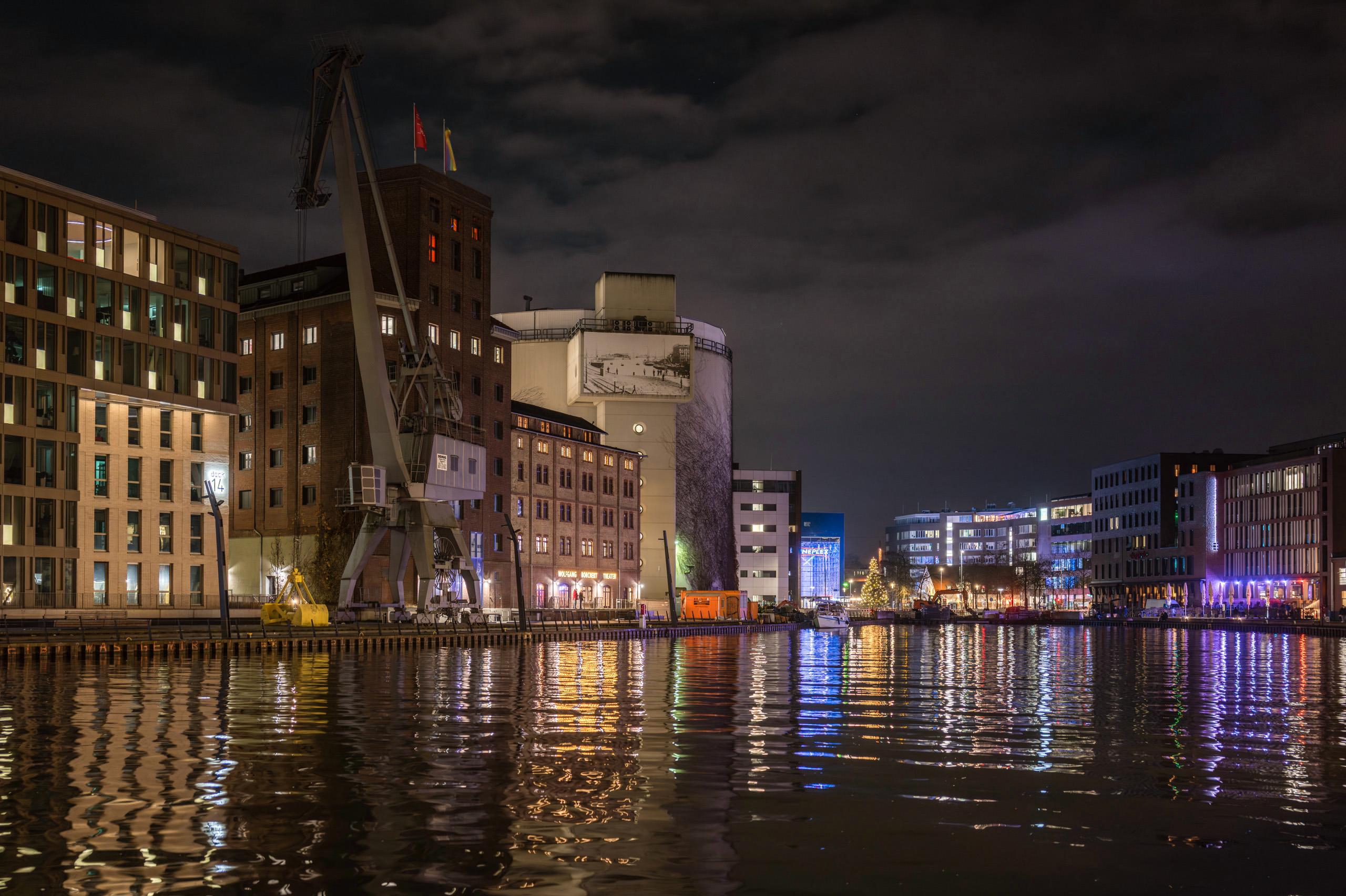
It’s astonishing to me that despite the high resolution and longer focal length, the image stabilisation still works effortlessly with handheld photos taken at 1/8s, and even slower if you can physically support the camera.
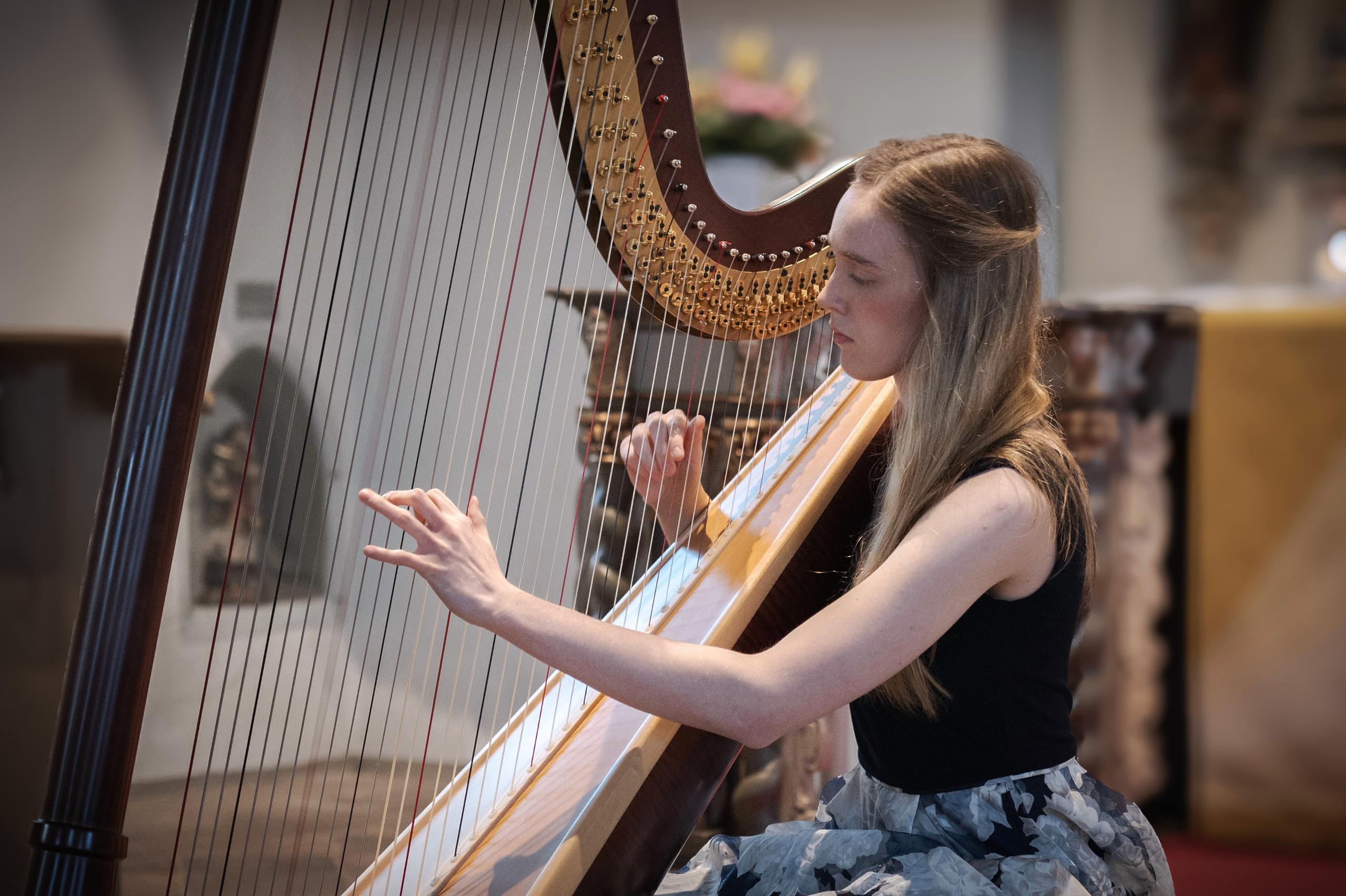
The charm of silence…
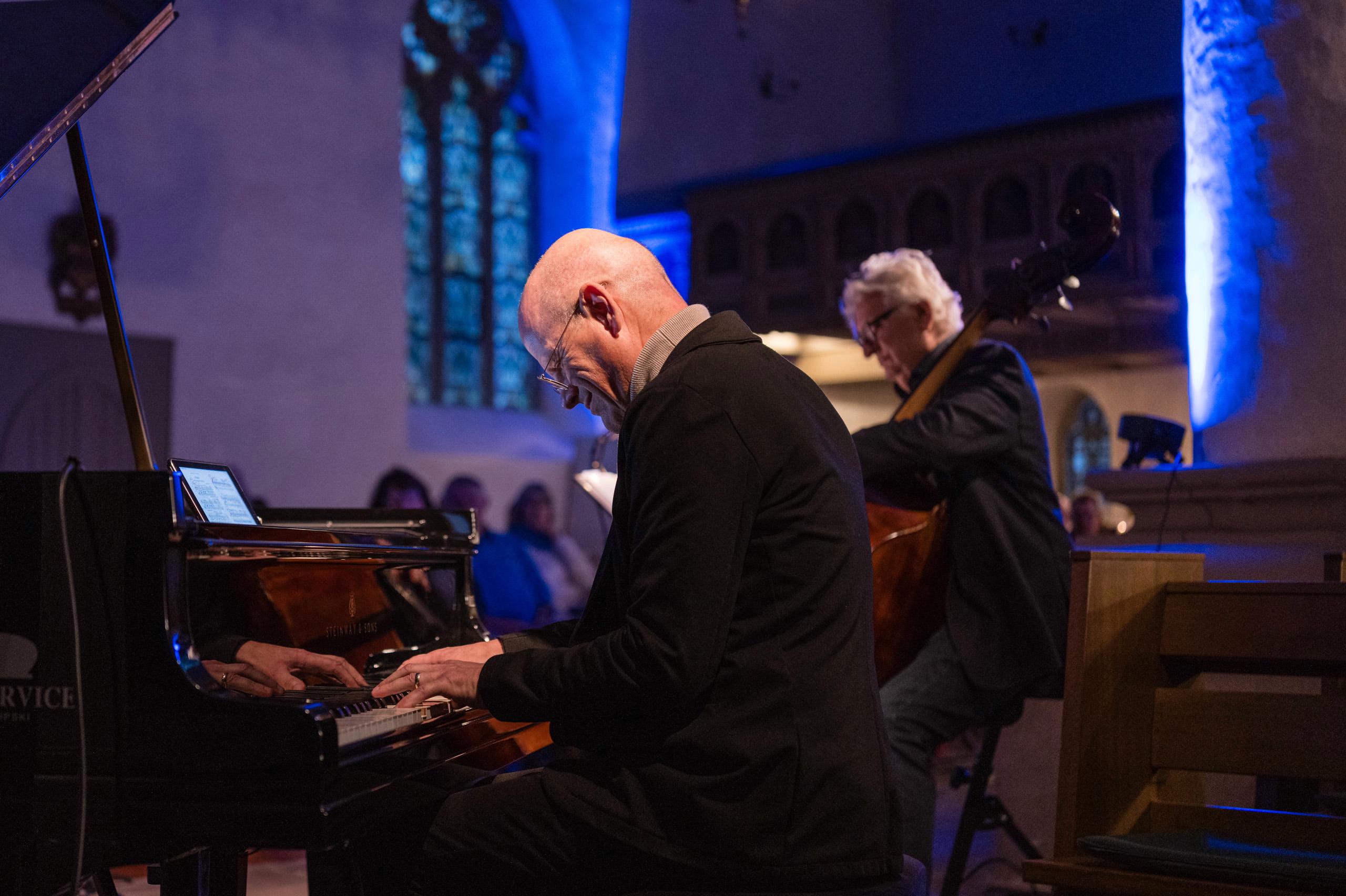
…and by that, I mean the leaf shutter which is built into the lens. It works mechanically up to 1/2000s, but is still so quiet that even the photographing of soloists in pianissimo passages does not make anyone bat an eyelid.

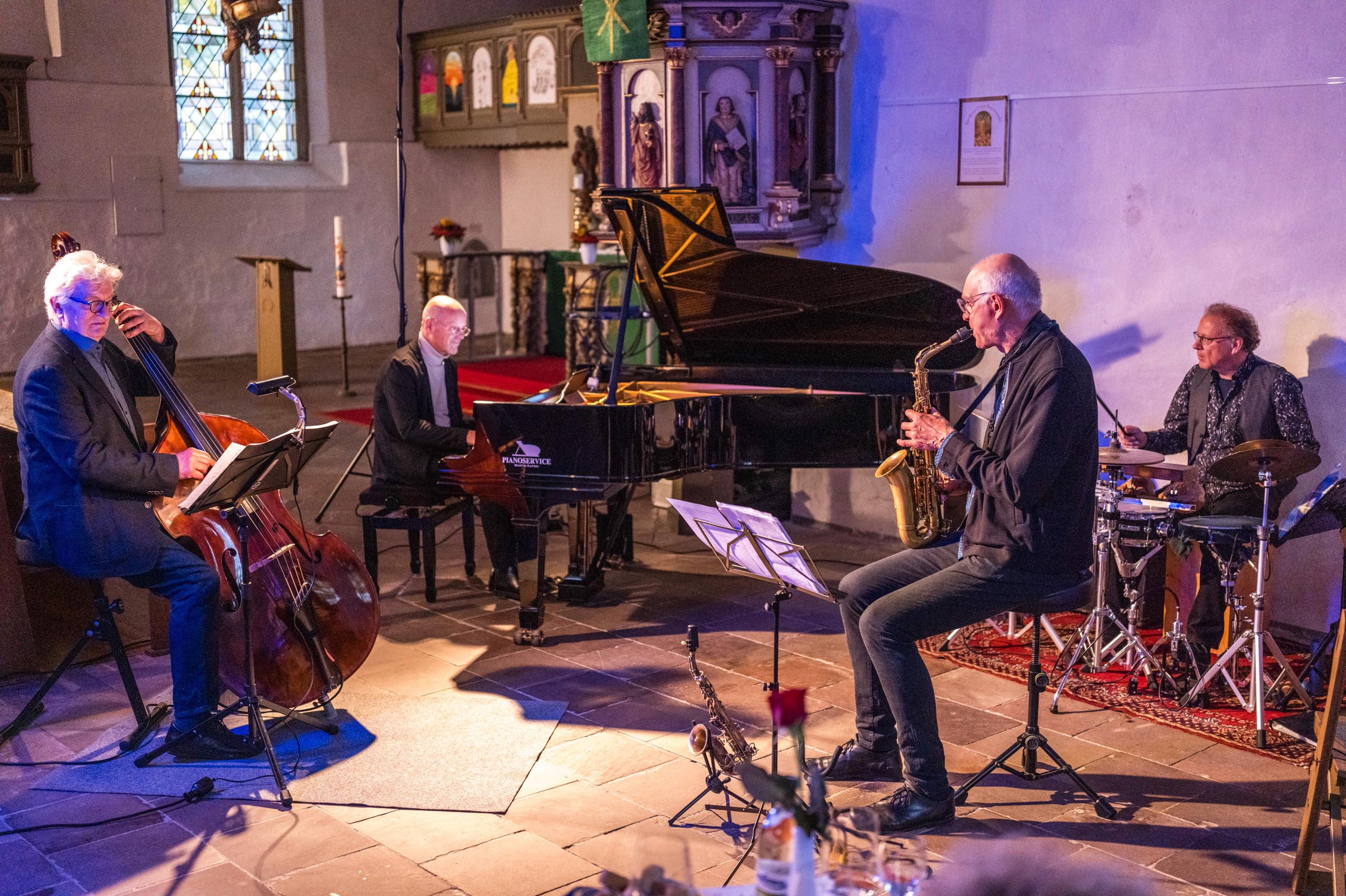
In my home town, there is a lively music scene (in which I am sometimes involved). Musicians in action are always rewarding subjects and, since they are always delighted with good photos, the Q3 43 is used at many concerts. The M11, on the other hand, isn’t a no-go either with its subdued shutter noise.
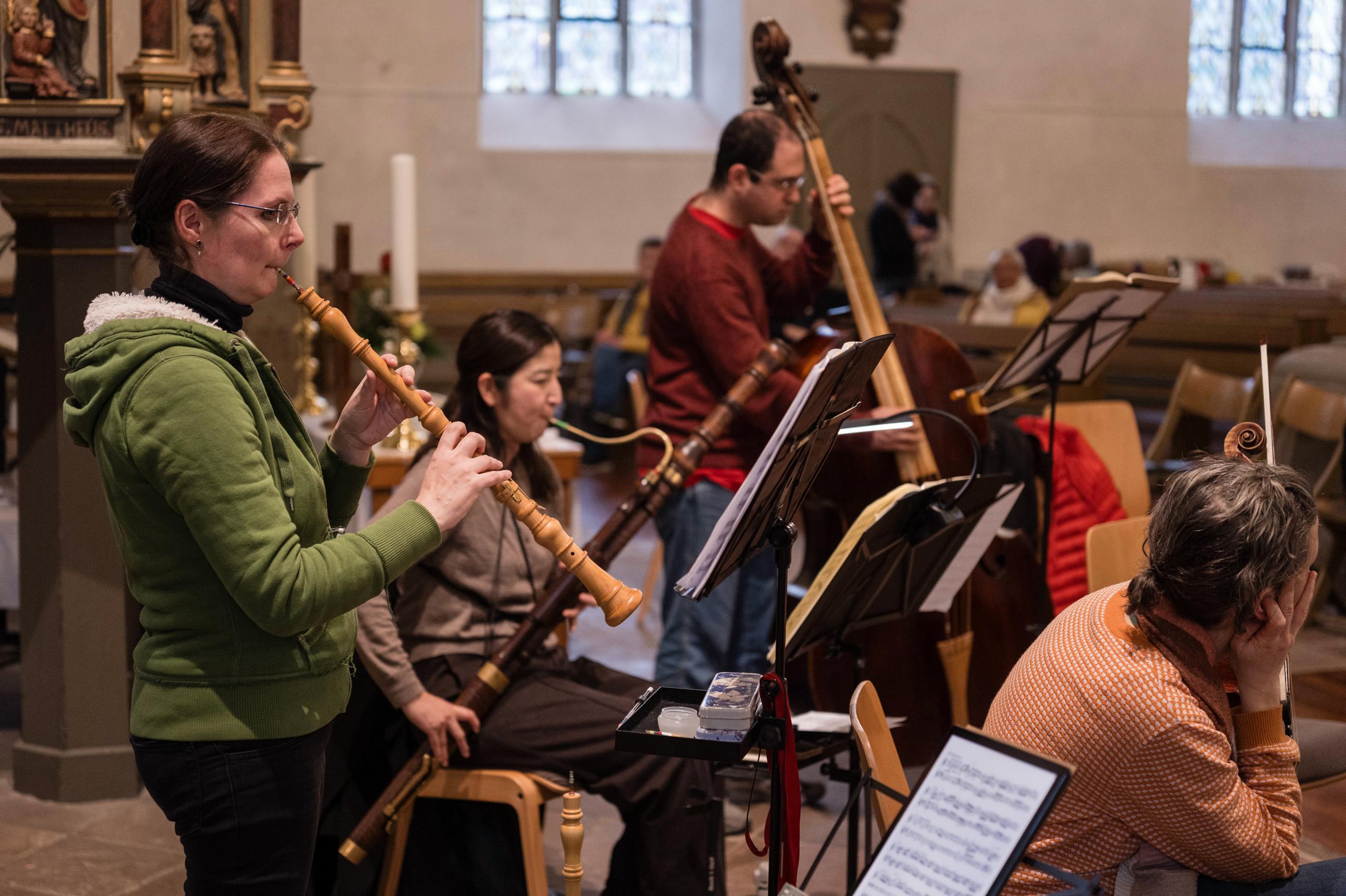
And there’s another advantage of a leaf shutter, even if I never need it — the flash synchronisation time can be set up to 1/2000s as desired. That isn’t the case with focal plane shutters.
Of course, the ultimate silence prevails when you use the electronic shutter or the exposure time is shorter than 1/2000s. If you want to photograph in the sun at full aperture, you don’t have to juggle grey filters.
The trade-offs of a large sensor vs readout time
On the other hand, the subjects must not move too fast because the read-out time of the large sensor is probably significantly below 1/100s, so it is useless if the nominal exposure time is 1/16,000s. The members of the M11 and Q3 family are unfortunately very prone to the “rolling shutter” effect.
To avoid the possibility of such distortion, I either set the shutter to “mechanical”, or (easier because I don’t have to go to the menu) the fix speed dial to 1/2000s or something slower. To avoid overexposure in very bright environments (for instance, snow) the aperture is set to automatic, instead of the usual aperture priority.
Connectivity
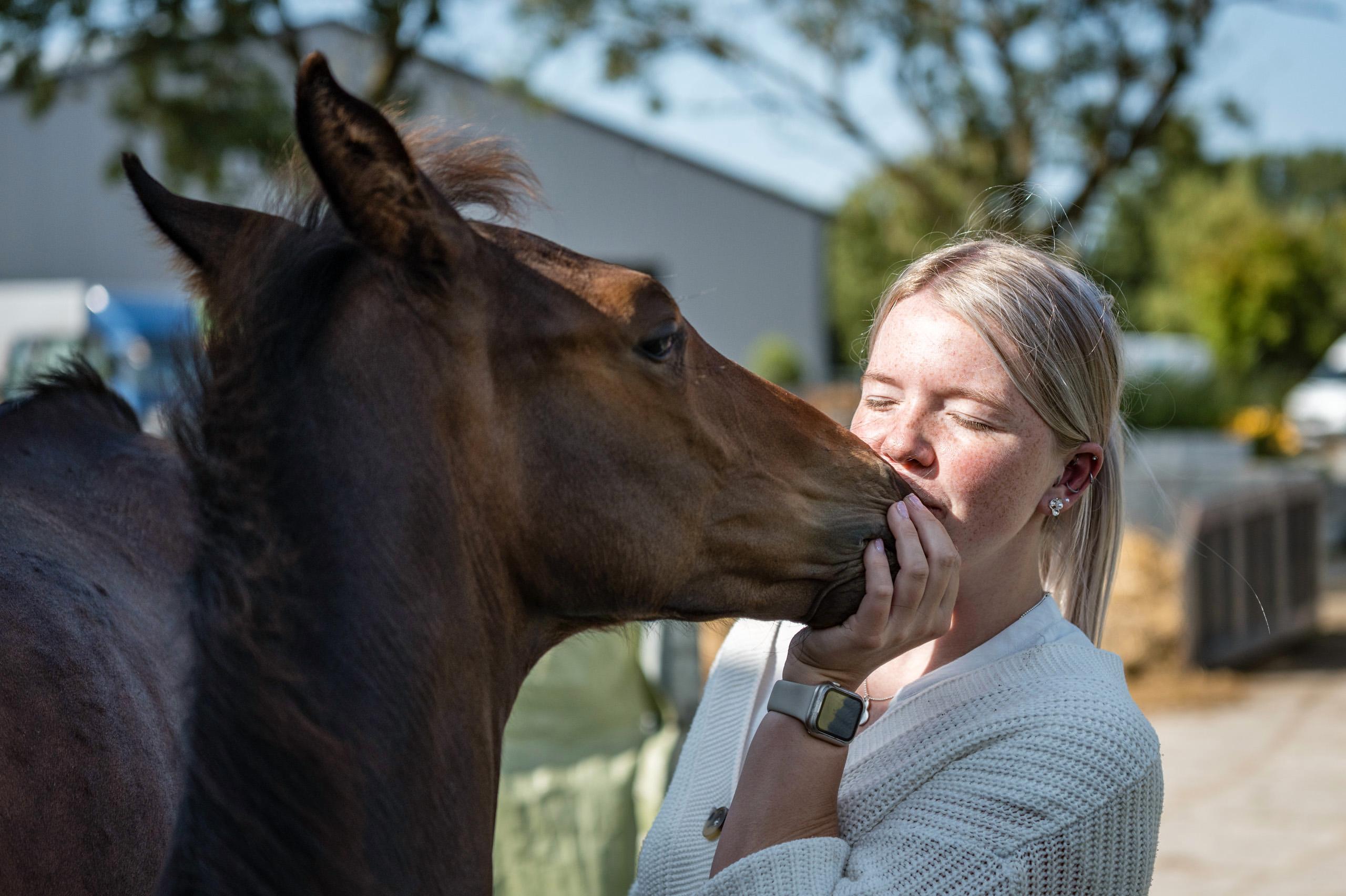
As mentioned above, I now carry out all updates much more conveniently with the Photos app. The connection is now said to have been further improved, but I found it excellent before (and much better than the Ms). If I need a picture right away, I have it quickly on the iPhone, but that’s a rare case for me.
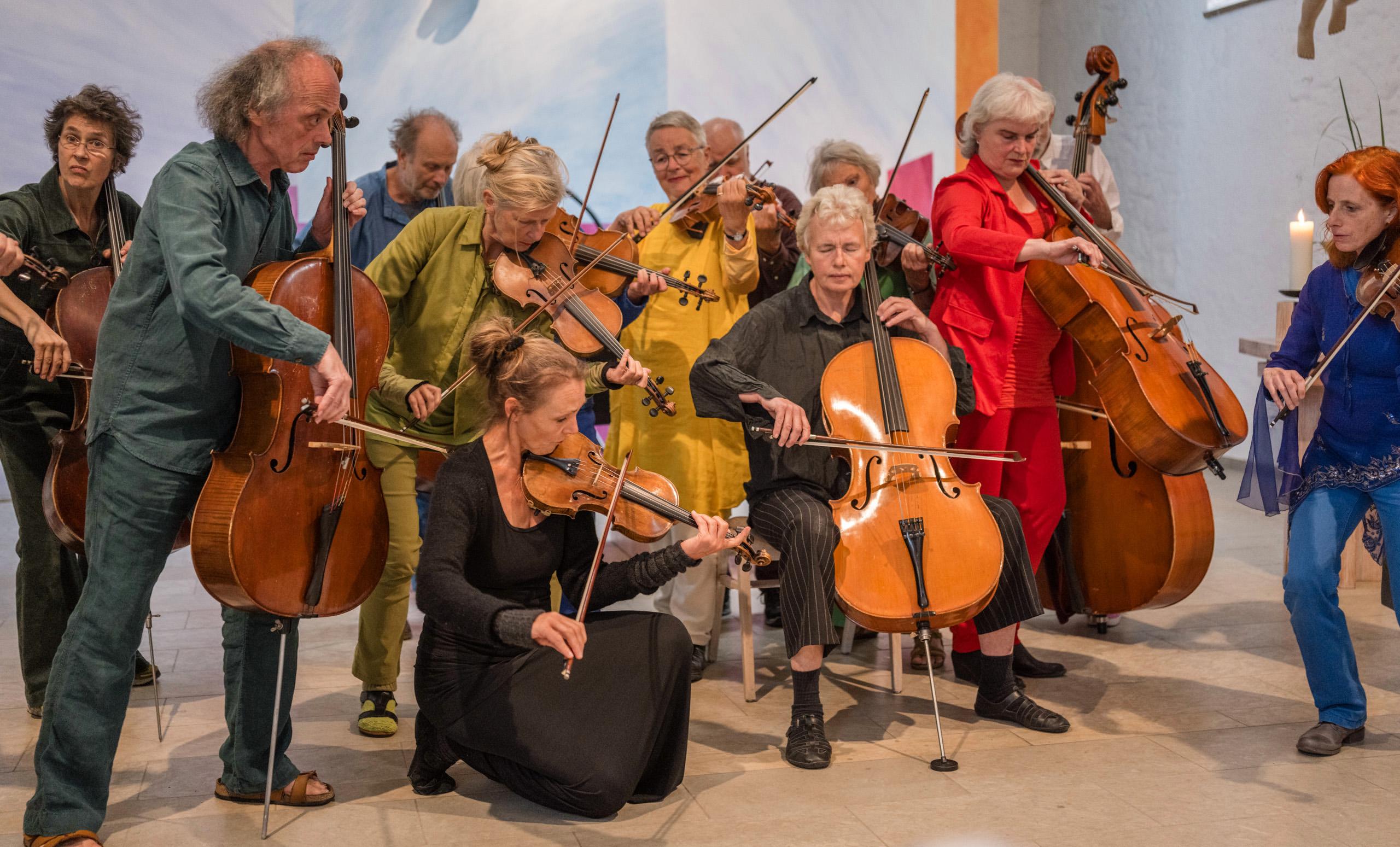
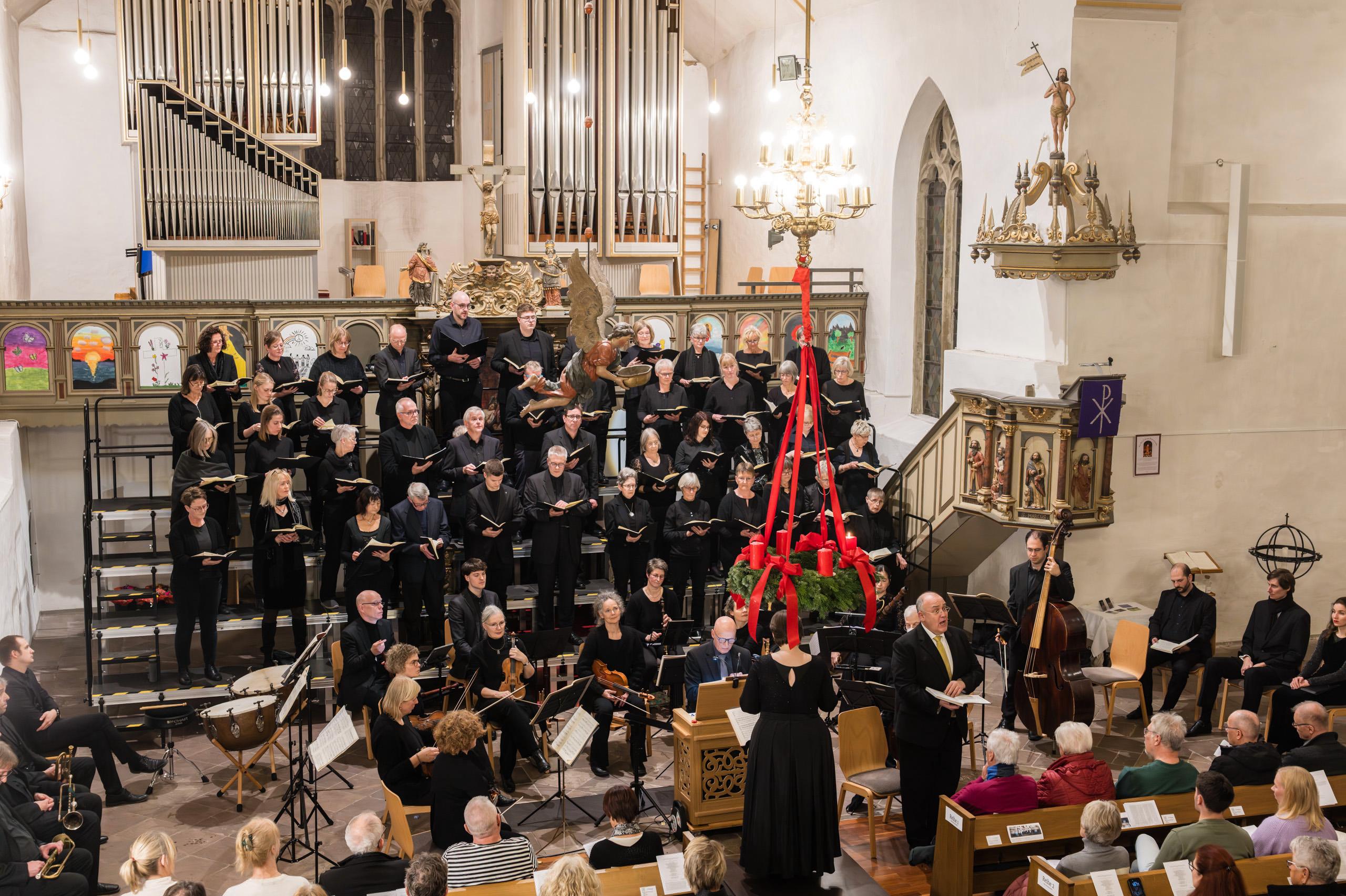
What I have already used several times is the option of controlling the camera remotely. At the Christmas concert of our choir, I placed the camera on a tripod in the gallery of the church, opposite the altar area, where musicians and choir are located.
From a distance of about 25m I could reliably “wake up” the camera from the choir, choose aperture, exposure time and focus point and take photos. Remote controlled video recording is also possible, and I experimented with that. However, if video had been my priority, I would have used a decent microphone. After all, this is now possible thranks to the USB-C connection.
The convenience of USB-C
And this USB-C slot is also very convenient for charging. It doesn’t even have to be the charging cable included, every Apple cable and many third-party cables work as well. I always take the power supply and cable from my iPad, which is also practical when travelling.
In the past (with the classic Q, M10, M240, M9) I invariably carried a second battery, but with the Q3 or Q3 43 I always get along, even when photographing longer events. When I’m in doubt, I can plug in the small power bank that I carry, but I’ve never really needed it.
I also installed some Leica Looks on the Q3 43 via the Photos app, but I hardly use them. I’m just too much a DNG shooter and would rather use the colour profiles and presets in LR for special image effect, or something like DxO Filmpack.
By the way: Even if you avoid JPGs and stick to DNGs, some settings in the JPG menu play a role (which is not necessarily logical). Automatic exposure, for example, behaves differently if you have activated “iDR” in JPG settings.
If you switch the exposure options “bright areas emphasised” on, you have activated two automatic settings in parallel, which should do the same. I would rather avoid that, although the camera will probably not explode because of that.
43mm and digital zoom
I have heard the opinion occasionally that focal lengths in the “normal” range are boring: Those from 35mm to about 50mm. As if the absence of distortion would diminish the entertainment value…
Certainly 21mm (or wider) optics can create interesting perspectives and function as a stylistic device, but if you are exclusivley using such a lens, it rapidly becomes a one-trick pony. However, before I start the full-length discussion about what makes a good photo or picture composition, I should emphasise that the focal length is hardly the first criterion.
The practical value that I see in the “most normal of normal” focal lengths is, in addition to the fairly natural viewing angle, the greater range (than at 28mm) with the digital zoom, thanks to the camera’s resolution.
After all, even with a simulated 150mm focal length, the image still has a useful 5MP. When you realise how sharp the Apo-Summicron is at the pixel level, you can simply activate “Super Resolution” in LR and have twice as much.
Just a few years ago, “digital zoom” as a serious feature triggered wry amusement among reviewers. Now, there is hardly anyone who does not mention this positively.
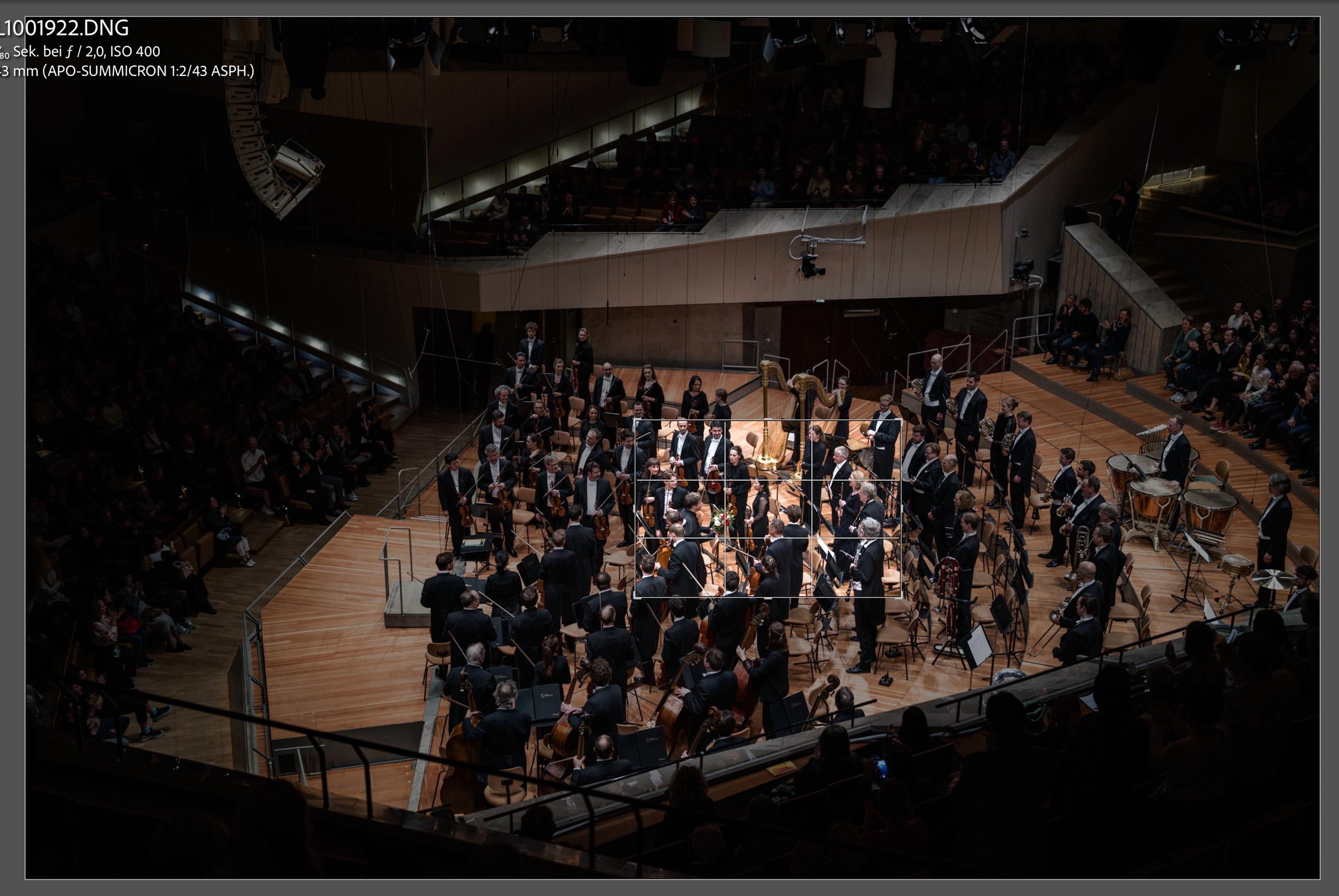
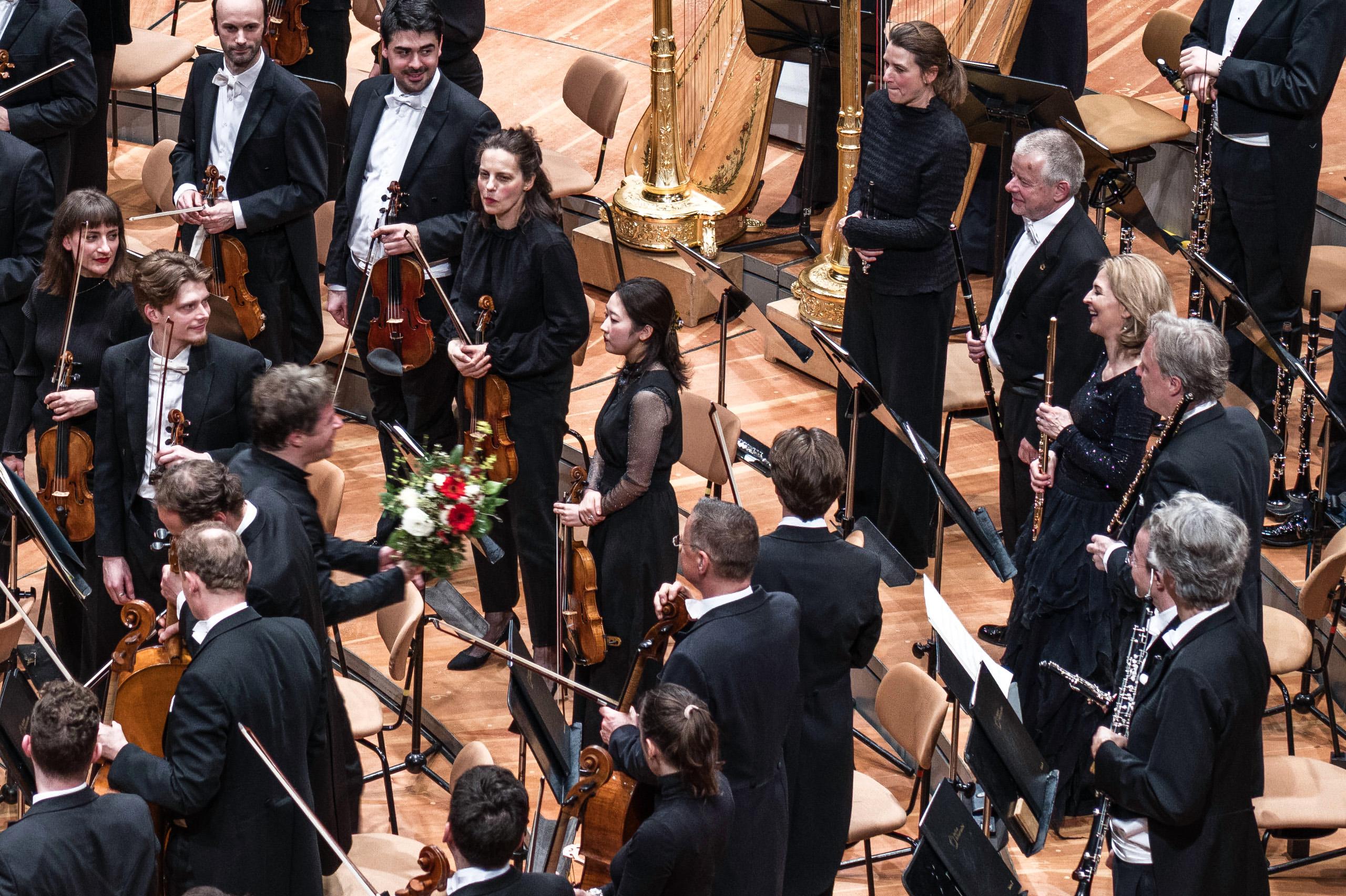
To zoom or not to zoom
I seldom use the corresponding zoom frames, although they can probably be helpful if you are after a particular composition. Perhaps it would be even better if you did not have the frame “viewfinder style”, but instead had the option to show the image full-screen, according to the zoom setting. Anyway, I usually crop the DNG in LR more by intuition and generally quite fearlessly.
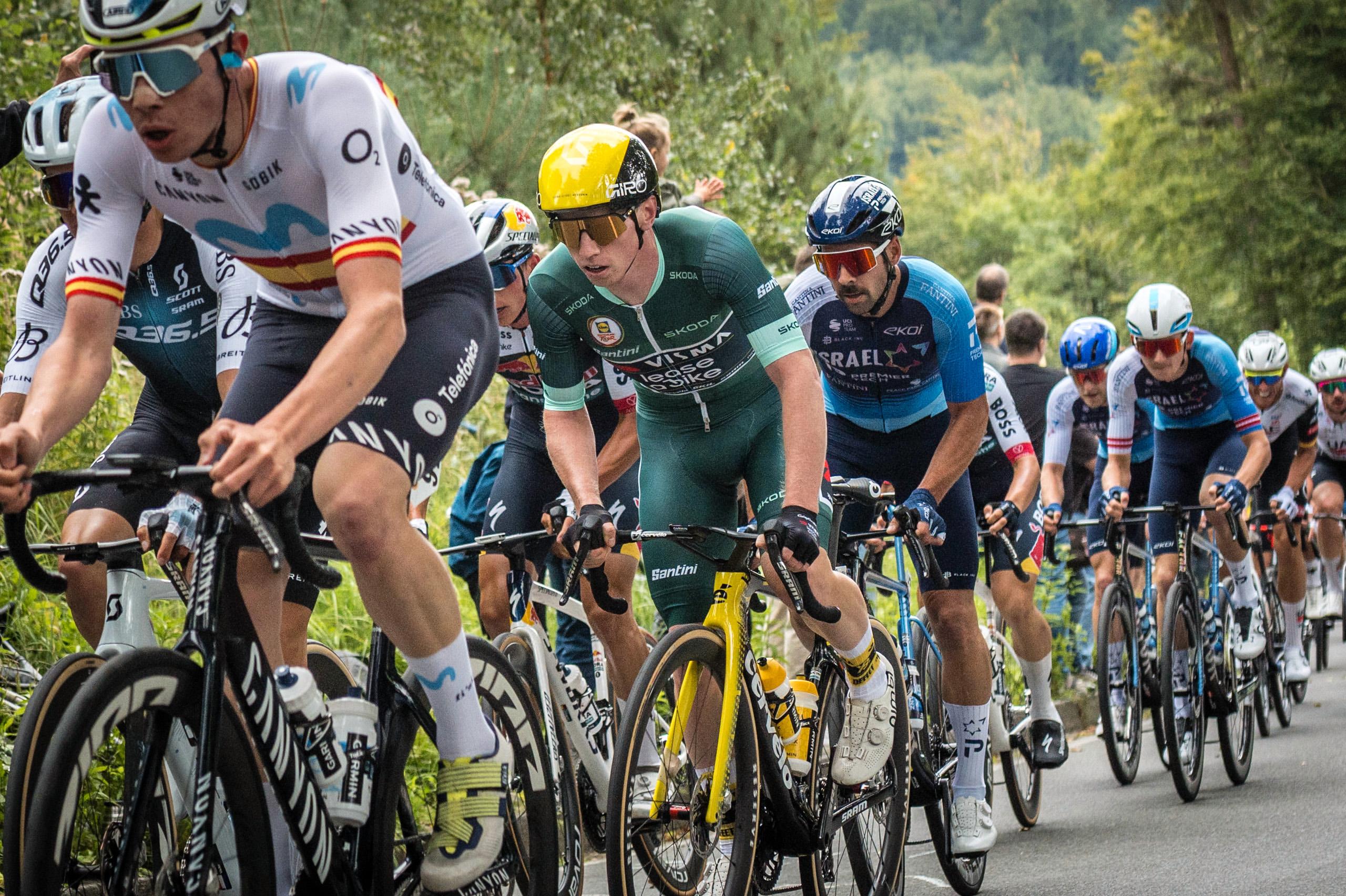
The 43mm lens of the Apo-Summicron ensures the camera is ideal for the genres of reportage, travel, or event photography (and this also applies to the Q3 28). But the longer lens is even more suited to portraiture and, in a limited fashion, also to sports — provided you can get close enough to the action.
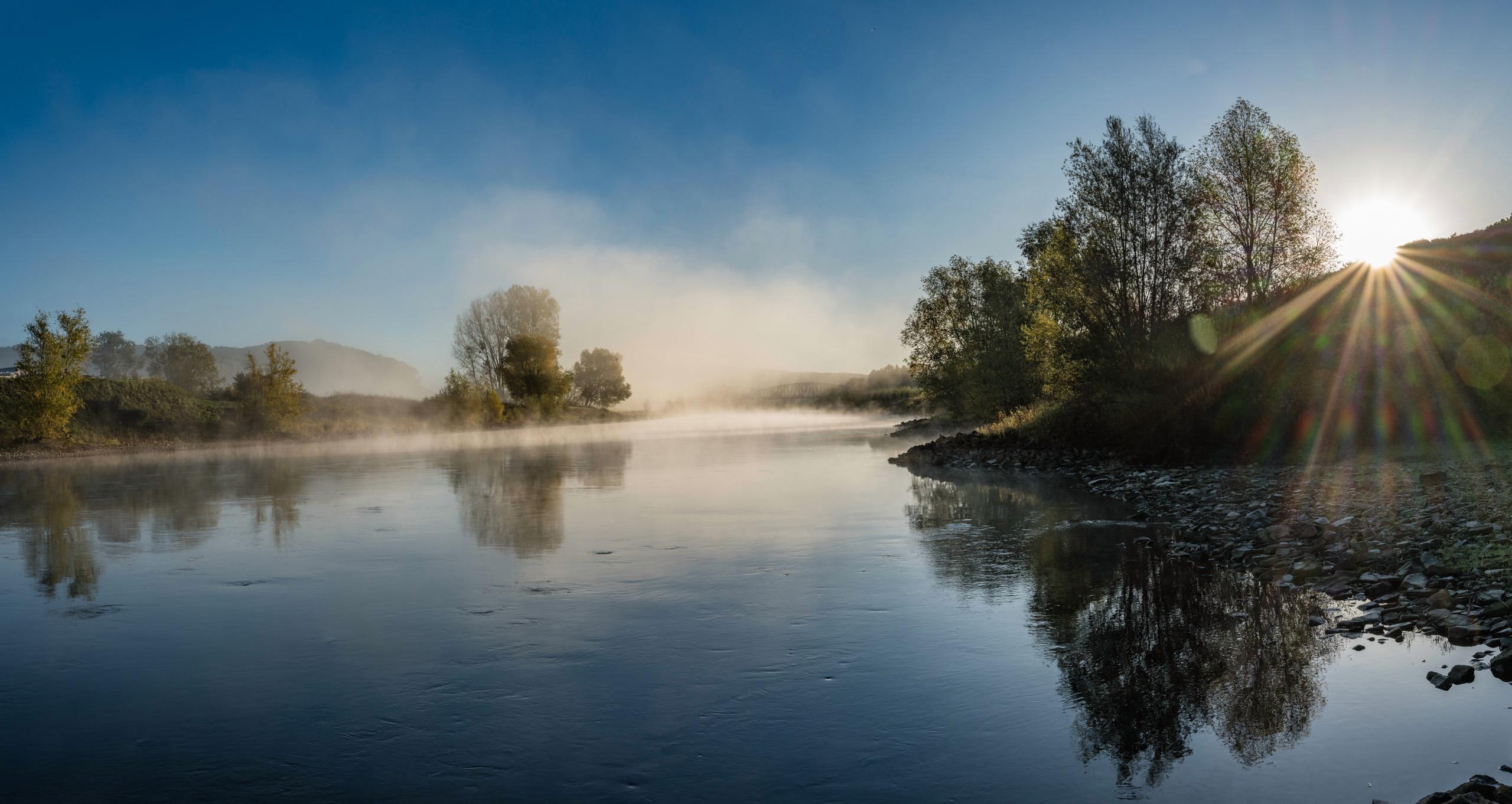
Landscape photography is also absolutely no problem. You definitely don’t need a wide angle for that. Even architecture doesn’t have to be a no-go. The workaround for possibly missing angles is the use of the panorama function in LR. Focal lengths of 28, 21mm or less are simulated, assuming the subject is static.
Summary
“The whole is more than the sum of its parts”, according to Aristotle. And Leica Q3 models provide a wonderful example of the veracity of this aphorism. They are a combination of design elements of analogue controls; touch functions; high-resolution sensor with corresponding processor power; high-end lens with image stabilisation and macro function; an excellent viewfinder; folding display; simple menu navigation; connectivity plus USB-C connection; long battery life… I have to catch my breath….

The whole creates an extremely versatile camera, which is pure joy to use. I will not expand on some characteristics just listed here because this was already discussed in my one-year Q3 report (sorry, in German only).
Are any of my wishes still unfulfilled? The only thing I really miss would be an internal memory, which I appreciate having with the Leica M11-P. The Q3 Monochrome already has content credentials, but we will probably only see these things and other “miracles” with a Leica Q4.
When I occasionally browse YouTube, there are always posts which use the phrase “my honest opinion”. But doesn’t that imply being extremely sceptical about what these YouTubers give as a normal “opinion”? Is the reviewer normally “not honest” or what?
As you know, nowhere is there so much misinformation as on the Internet, and an allegedly “honest opinion” certainly raises suspicions. Anyway: I can say without equivocation that my views on the Leica Q3 43 stem entirely from my personal experience. Everyone can form an opinion of their own.
Hier gibt es diesen Artikel auf Deutsch.
Translated from the German by Mike Evans and checked by Jörg-Peter Rau
Make a donation to help with our running costs
Did you know that Macfilos is run by five photography enthusiasts based in the UK, USA and Europe? We cover all the substantial costs of running the site, and we do not carry advertising because it spoils readers’ enjoyment. Any amount, however small, will be appreciated, and we will write to acknowledge your generosity.
Great article with useful insights!
I really love my Q3. If I were to get rid of my M11 which has a 50 Summilux attached most of the time, then I would seriously consider also selling off my Q3 in favor of a Q3 43 for a single-camera all rounder. But I love using a rangefinder and I don’t really want to have two Q3s. I have thought about replacing my Q3 for the 43 version and count on my M11 for wider shots and to scratch my rangefinder itch. In my case, overriding all this, is that my highest priority is to keep size and weight down to a minimum. All the options might give me cognitive dissonance, but the upside is, well, lots of options.
I ended up with a Q3 28 and Q3 43, and that combination covers most of what I shoot and makes shooting seamless between 28 and 75mm. I like the idea of returning to a more deliberative way of shooting with an M, but I still have not been convinced enough to put my flexible friend to the test. Though an M10-P keeps calling my name out there.
When it comes to compactness of equipment and maximum flexibility, the combination of Q3 and Q3 43 is very useful.
I have a reader of my German website who swears by it.
I myself am perfectly happy with the Q3 43 alone for my private purposes (as mentioned in the article), but for “special” occasions I keep the M11-P (and because I enjoy photographing with it).
I hope you continue to enjoy your cameras, Claus
The Q3 43 is hard to beat! I gave up my M11 and now shoot only with the Q3 43 for color and M11M for monochrome images. I have no problem cropping a Q3 43 image to an equivalent of 200mm focal length. The lens is amazing.
In fact, for my needs, there aren’t many situations where I need a camera other than the Q3 43. I only keep the M11-P because I like working with it. I do black and white with the M10-M.
I hope you continue to enjoy your cameras!
A great article with great photos, Claus. I bought a Q3 43 in December 2024 and, being a traditional photographer who always wants to ignore tech on cameras, it took me some time to get used to it. My photos are not as good as yours, which I would put down to your great skills as a photographer. I enjoyed reading translations of the discussions about the camera on Messsucherwelt. The usual things arise about autofocus, menus, firmware and I empathise with those points. I don’t really like most of the excessive tech in cameras these days which can get in the way of photography. It has taken me over a year, but now I have probably found the things that work and the things that don’t and I can get the results that I want just as I can with a film camera. The lens is very fine. Jono said it was better than a 50 Summilux, but I have found them to be about the same, which is good enough for me.
William
I originally ended up with Leica because the ever-increasing number of features offered by competitors in the Far East were getting on my nerves.
At least with a camera like the Q3, you can simply ignore what you don’t need and make your life easier.
The 43mm Apo-Summicron is probably optically better than the 50mm Summilux, but the character of the lens is different, so each has its own merits.
I hope you continue to enjoy your Q3 43!