
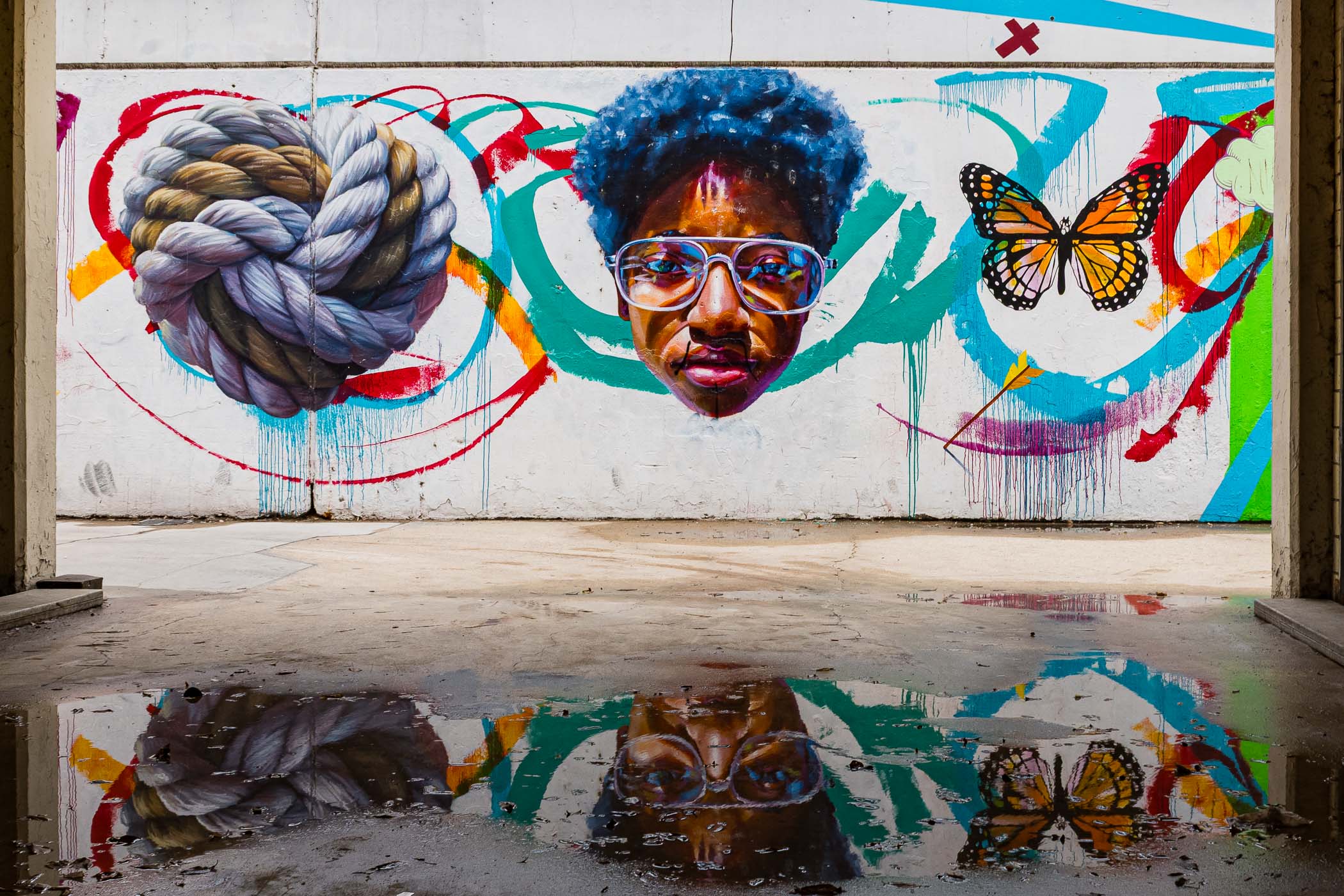
“Stop, hey what’s that sound, everybody look what’s going down” is a line by Stephen Stills from a Buffalo Springfield song called “For what it’s worth.” I’m hijacking it to apply to searching for and finding street art wherever you happen to live or be visiting, whether it’s a village, small town or megacity. You just have to use your eyes, look up, see what’s going down, and take it all in.
So what is street art? Most street art is not about aesthetics or beauty: it’s about remembering cultural heritage in pictorial form. It’s about glorifying legendary heroes and remembering what they did for their culture.
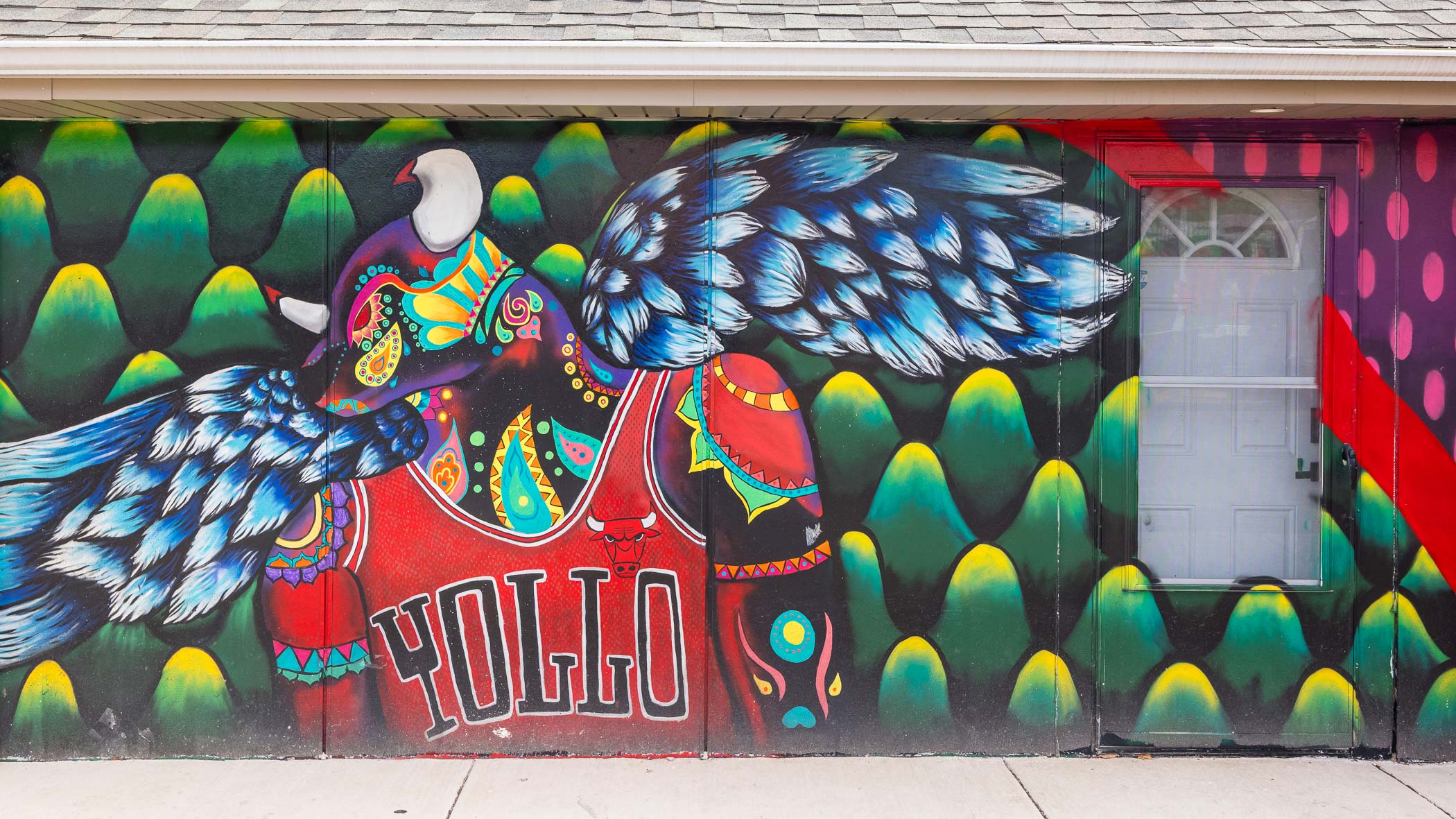
If you never look up, you are missing free art shows wherever you walk. I’m not talking about graffiti and tags because they usually didn’t come with permission to spray-paint or draw. But the street art I’m referring to, these days, has permission to be there.
When old walls speak
Wall art or street art, murals or whatever you prefer to call it — can be used interchangeably. It has been around since about 6500 BCE and is rumoured to have started in a city called Çatalhöyük in Turkey. Egyptians, Greeks, and Romans began to decorate external walls of homes and shops somewhere around 100 BCE. Skip to the 20th century and to Mexico for the growth of street art that was used to communicate social and political messages. A blank canvas can be used in many ways.
Tagging has evolved from gangs marking territory to an art form. Think how Arabic script became an art form in places like the Alhambra in Granada, or in Persian calligraphy. Not all tagging is beautiful, but some of it reaches a higher art form. And in the world of Islam calligraphy is considered a high art form as idolatry, figurative art and sculpture are frowned upon.
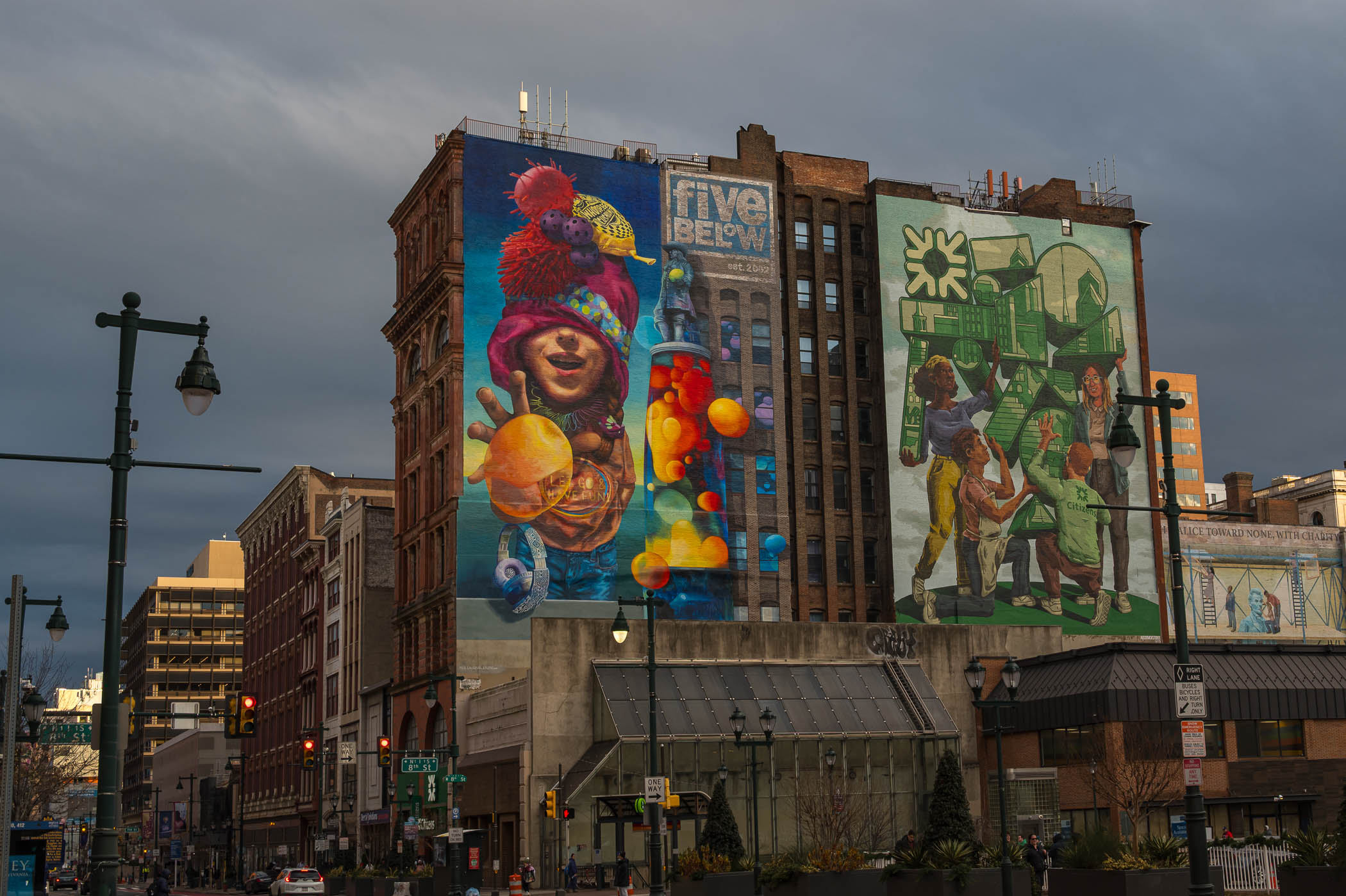
By the 1960s and early 70s, graffiti in public spaces and on public transport in cities like New York and Philadelphia gradually became more sophisticated and more like the contemporary street art we see today. Artists such as Jean-Michel Basquiat helped turn this from street art to high art. My wife and I took a recent trip to Philadelphia, and there’s plenty of street art to see there and enjoy.
An emerging art form
Cities like Amsterdam, Berlin, Paris, LA, London, Miami, and NYC all have very impressive and dynamic street art that is constantly evolving, to fill out a global canvas full of diverse styles. Clearly, artists like Banksy, Keith Haring, and Shepard Fairey have helped enormously in creating credibility for this art form. After all, why waste a blank canvas if you have something valuable to say?
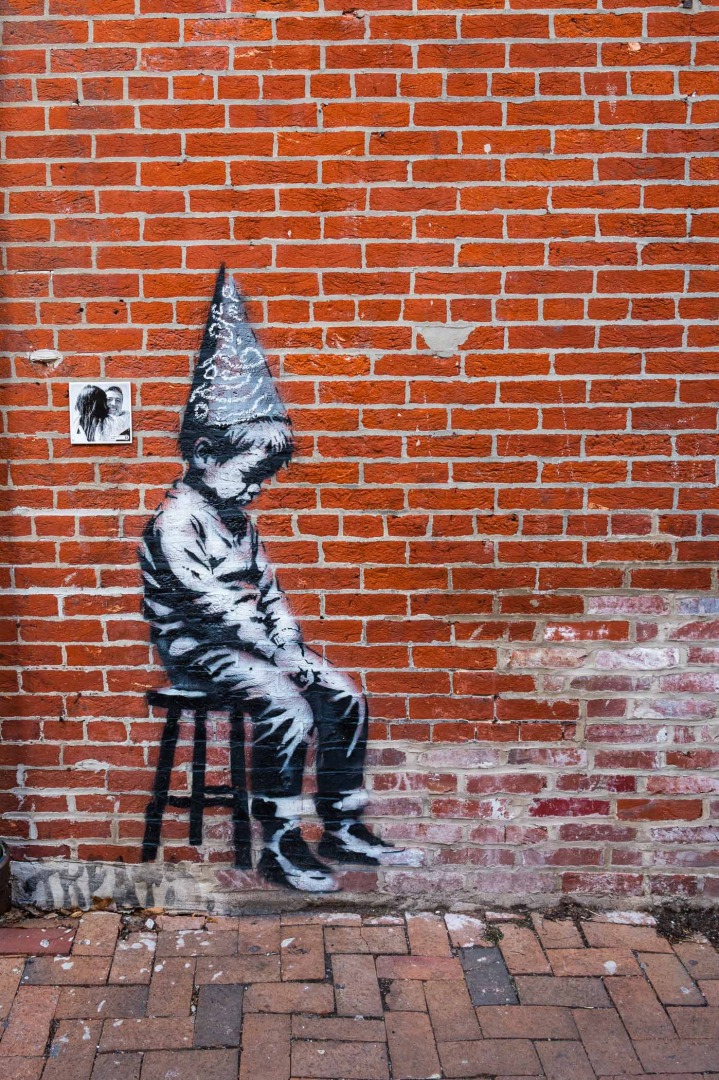
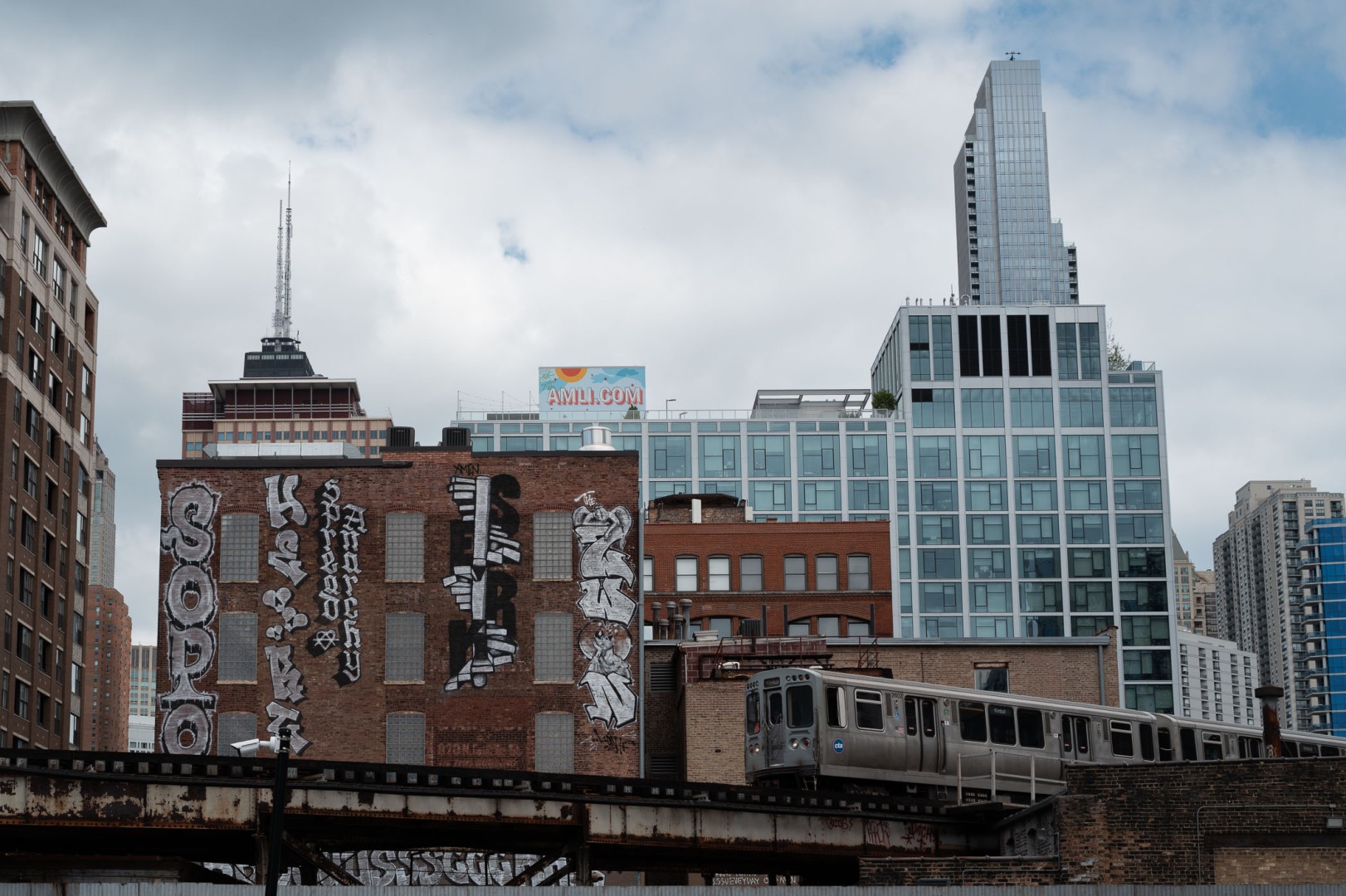
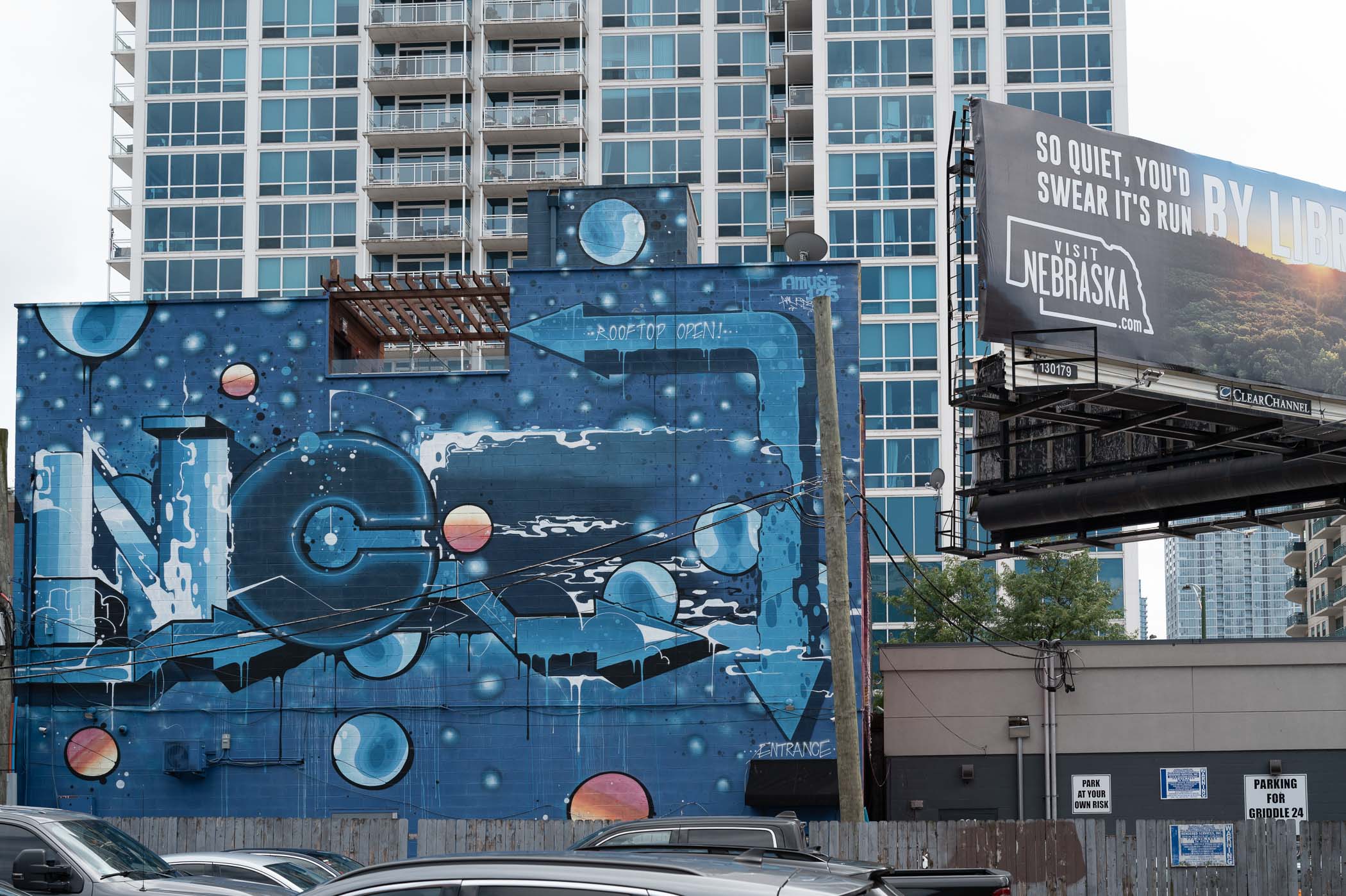
Chicago is another city with a history of graffiti on buildings and public transport. That graffiti has grown more sophisticated over time. Initially, the city painted over that street art, but then begrudgingly began to accept it. And now it’s most definitely here to stay as a form of free public art.
Neighbourhood street art
The city has moved on to embrace street art as a bona fide movement, with annual neighbourhood art walks and exhibitions. Street art can often be beautiful: it may be celebrating historical cultural events and heroes, sometimes it’s funny, sometimes political, and other times just plain quirky.
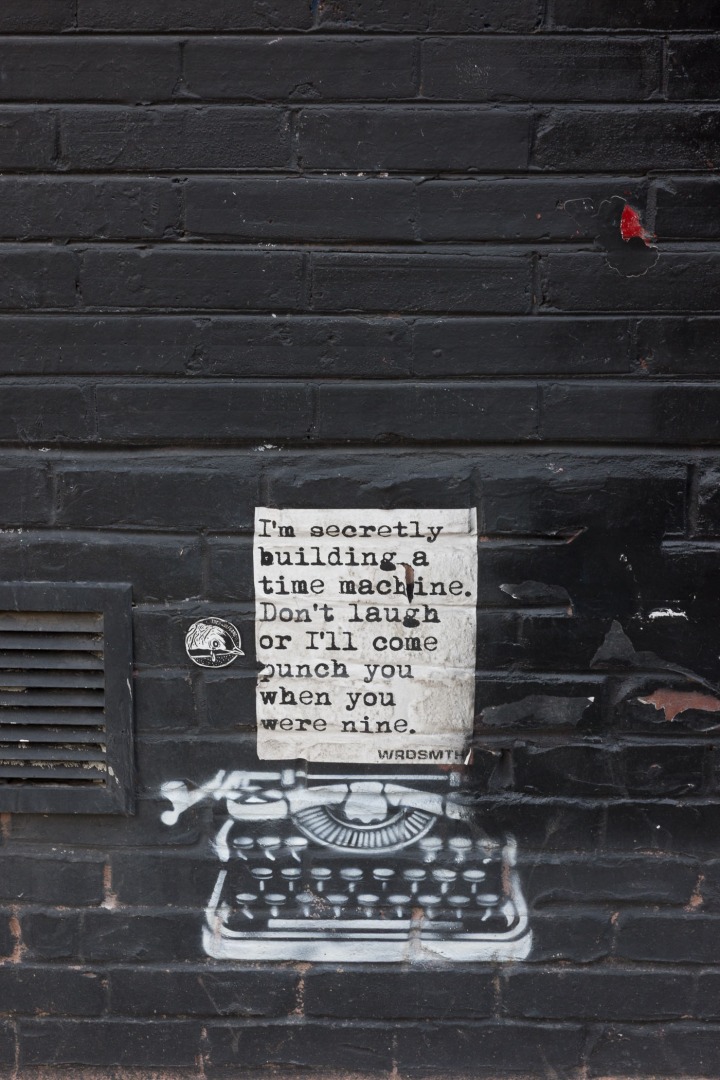
I wander around various neighbourhoods in Chicago and keep finding street art I had missed earlier. If you miss an interesting piece because it’s no longer in the right light, that’s another excuse to revisit at a different time of day. You might go more than once and capture a different feeling from multiple perspectives. There are places I have yet to visit where the street art is apparently spectacular and well worth a trip.
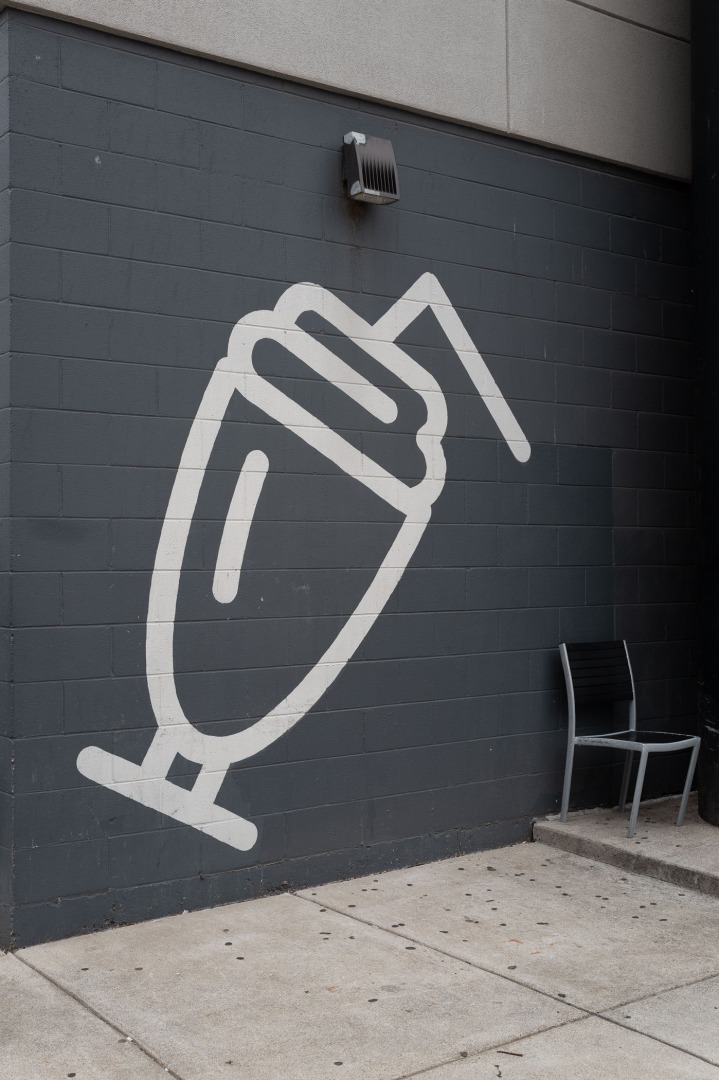
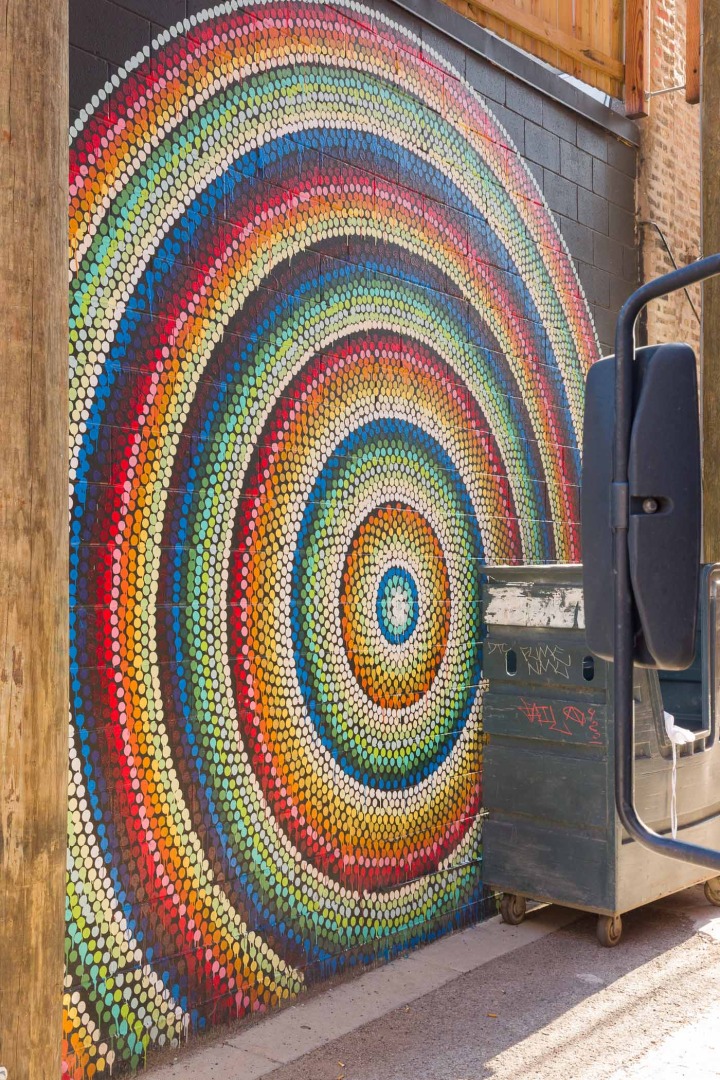
I’m not very organised when it comes to street art. If I haven’t intended to go to a neighbourhood to see the latest crop, I probably should have, for the simple reason that time of day is critical to capturing the street art in “a good light”. I might also add that different neighbourhoods need different lenses.
Chicago has some 77 recognised neighbourhoods, many with quite distinct personalities. I have chosen six that I have visited.
Albany Park
I wrote a short piece for some friends who live in this neighbourhood, titled “A walk around a continent in 60 minutes.” It attempted to capture the sights, sounds and smells, in a walk along Lawrence Avenue. In the time it took to take that walk, the world had turned through 15 degrees, but I had seen snapshots of countries from Argentina to Mexico and everything in between.
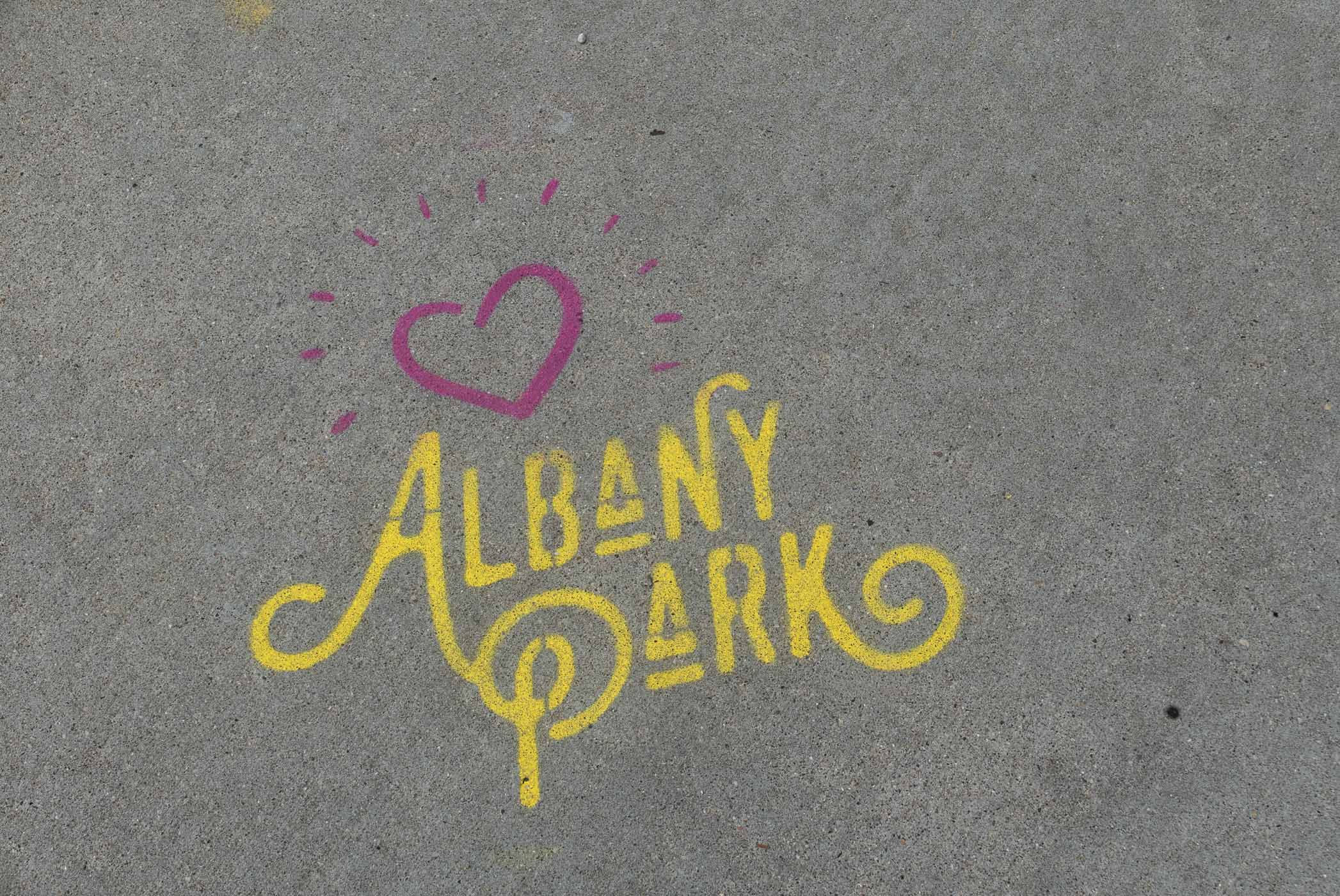
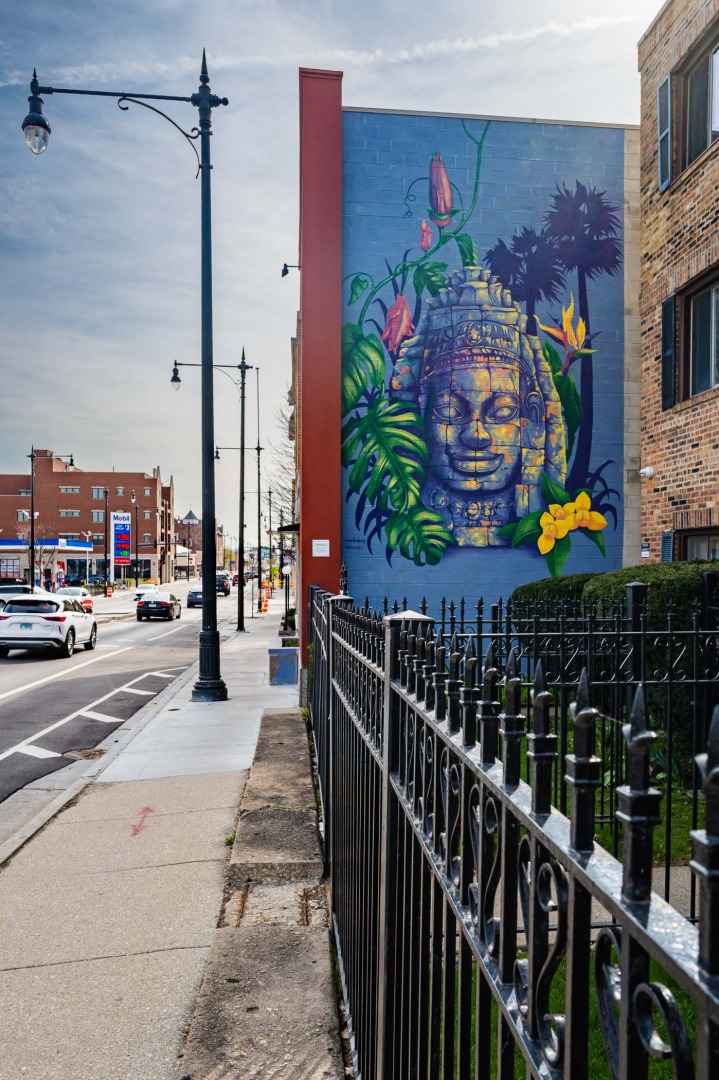
I only have two images from Albany Park: A pavement/sidewalk logo in a neighbourhood that is emphasising its family credentials, and a piece of wall art that highlights the origins of some of its inhabitants.
Bucktown & Wicker Park
Traditionally, this was a German and Norwegian neighbourhood that gradually transformed into a Polish area. Chicago’s reputation for being a good food town starts with all these distinct neighbourhoods with deep culinary roots.
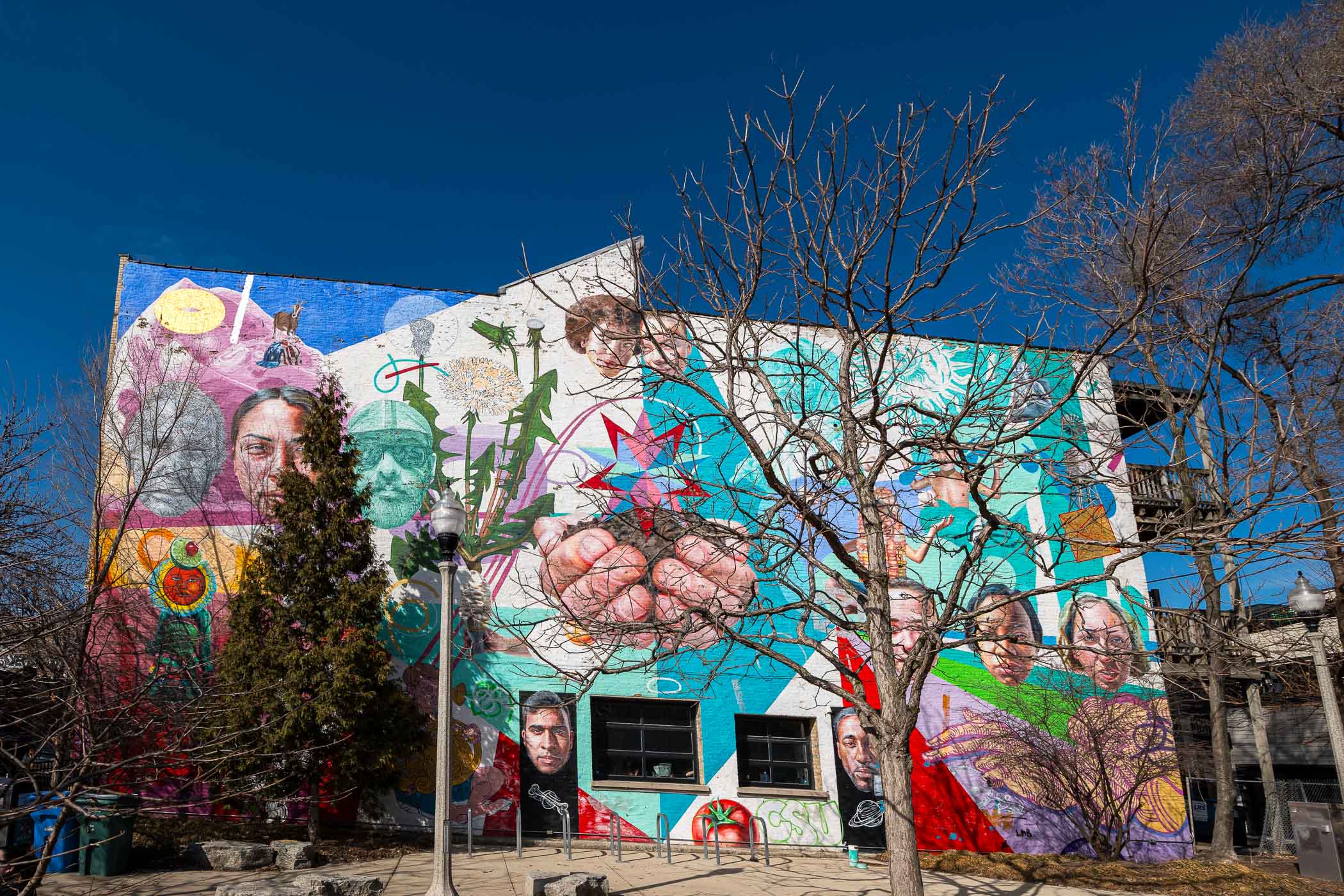
By the 70s, displaced Latinos had moved in. Through a century of upheaval and turmoil, the area became home to artists who commandeered loft spaces in older factory and workshop buildings. I had a friend who owned one with rooftop views over the city. Today, gentrification’s march continues in this area with new housing and reconstruction.
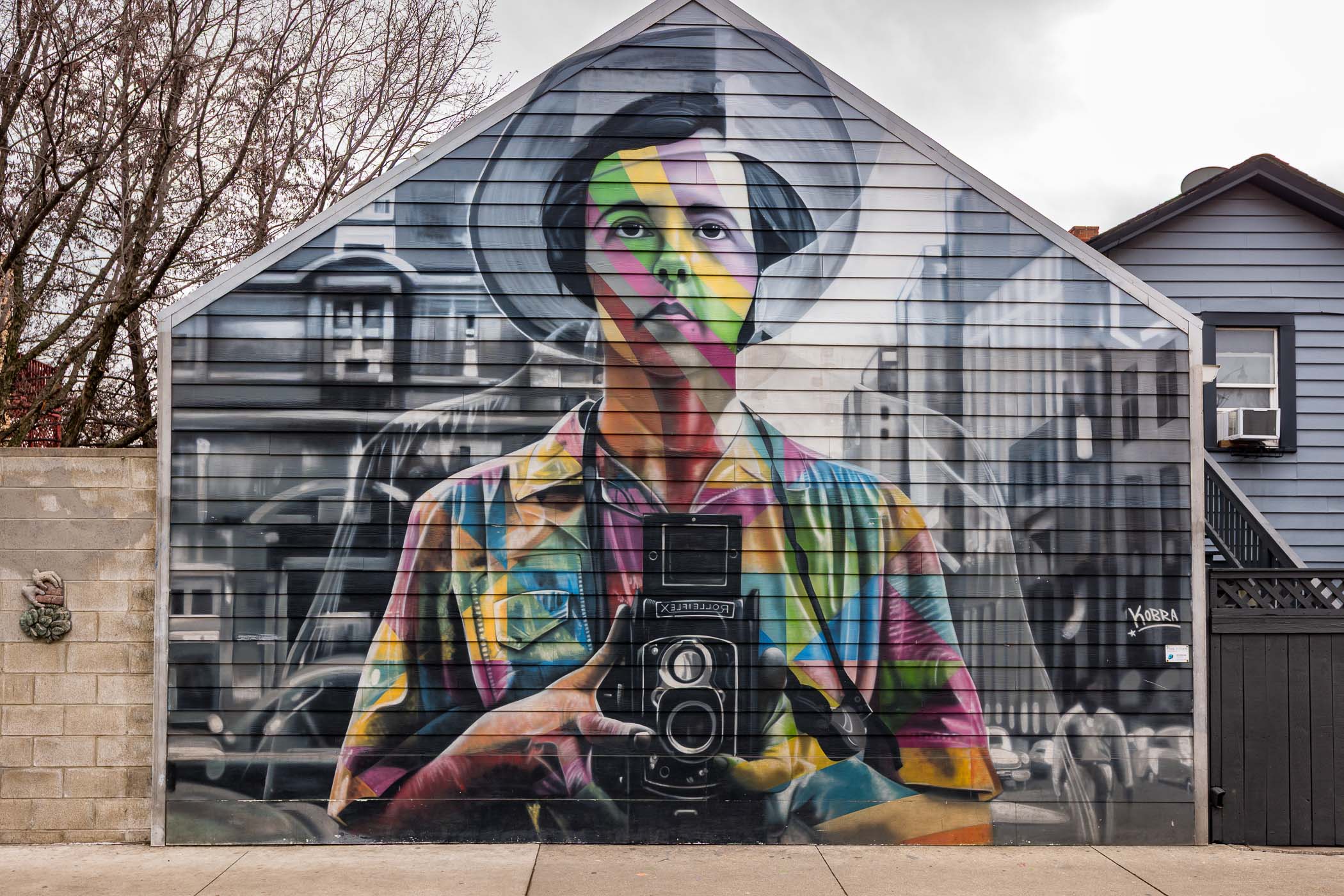
One of my favourite pieces is a homage to the Chicago photographer Vivian Maier, whose work remained undiscovered for decades.
City and Loop
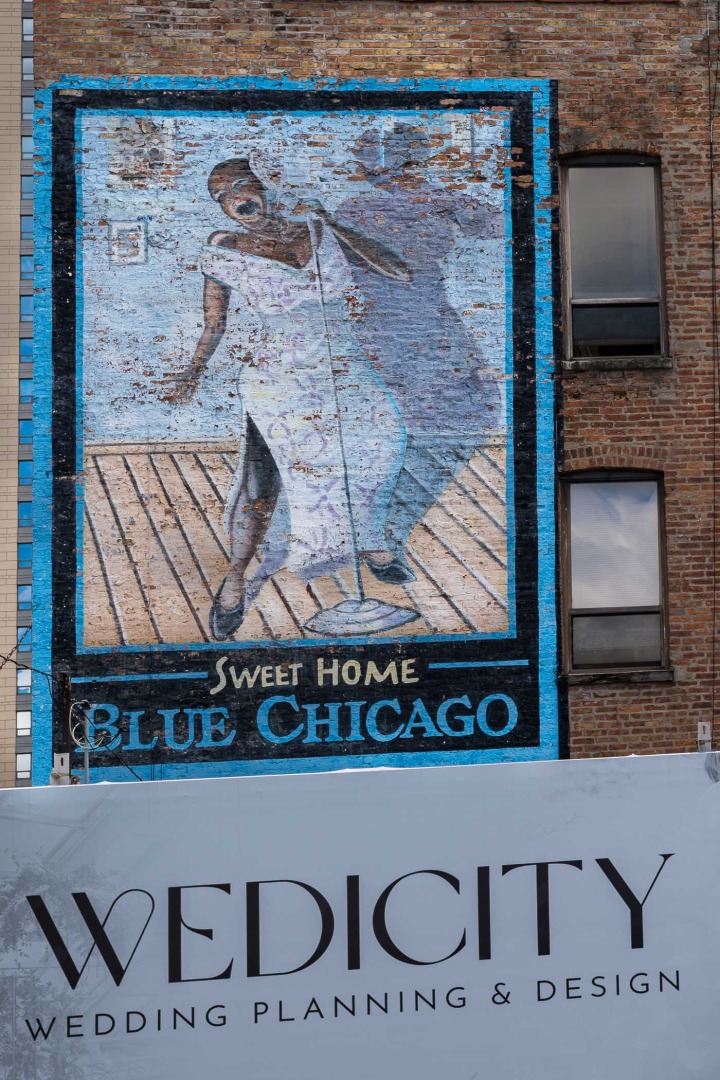
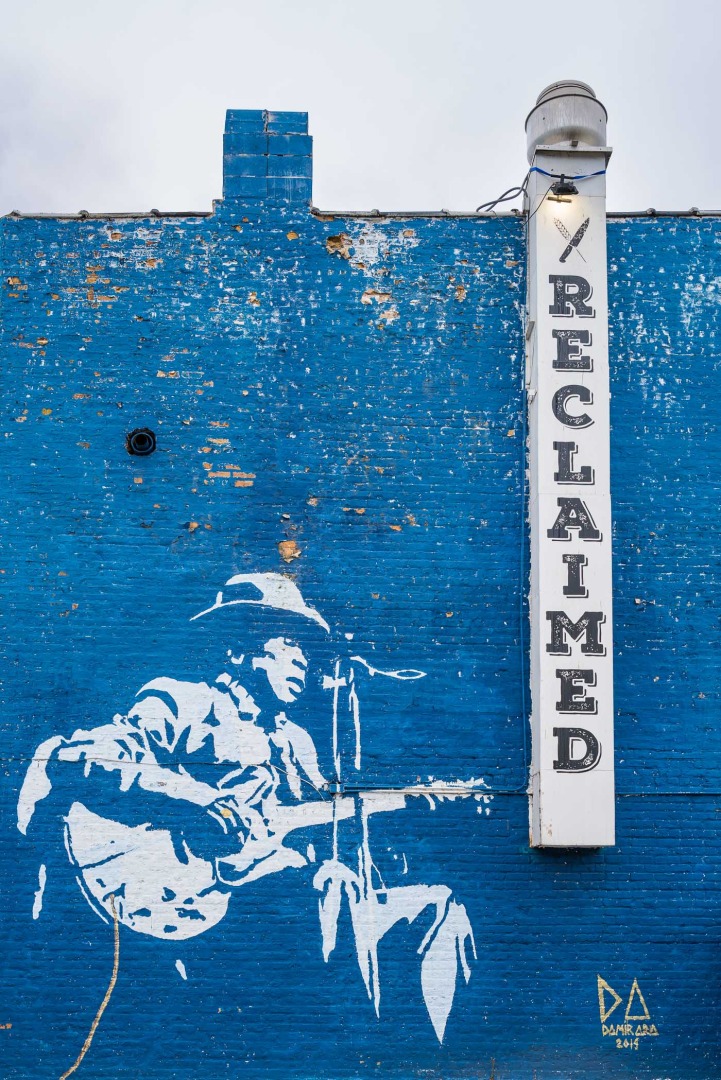
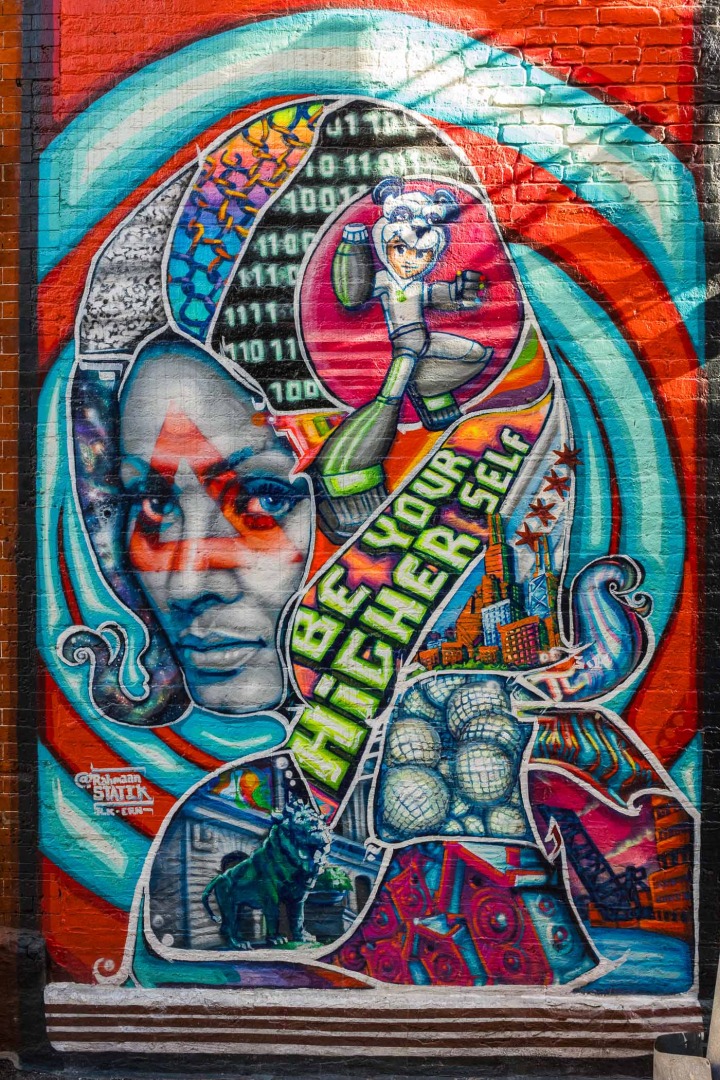
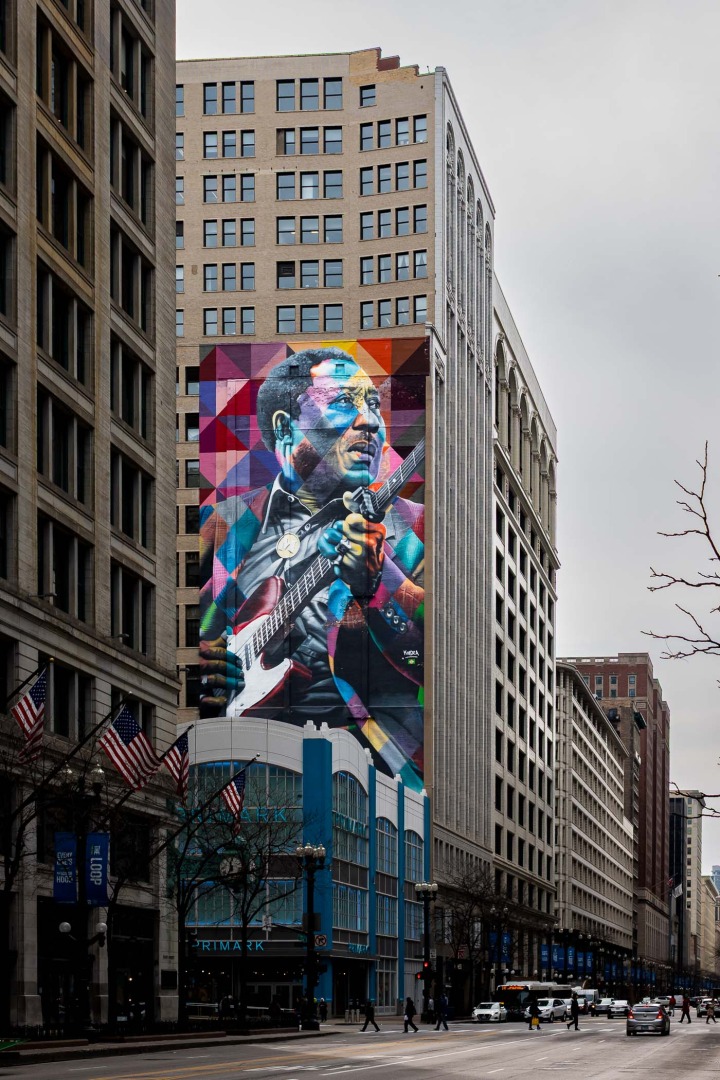
Art still makes it here. There are homages to blues musicians like Muddy Waters to Buddy Guy, to an oddball juxtaposition of a blues club and a new wedding service. But art is everywhere and is quirky in that it follows no obvious theme. But it’s a good reminder to look up when you’re out in this area.
Humboldt Park
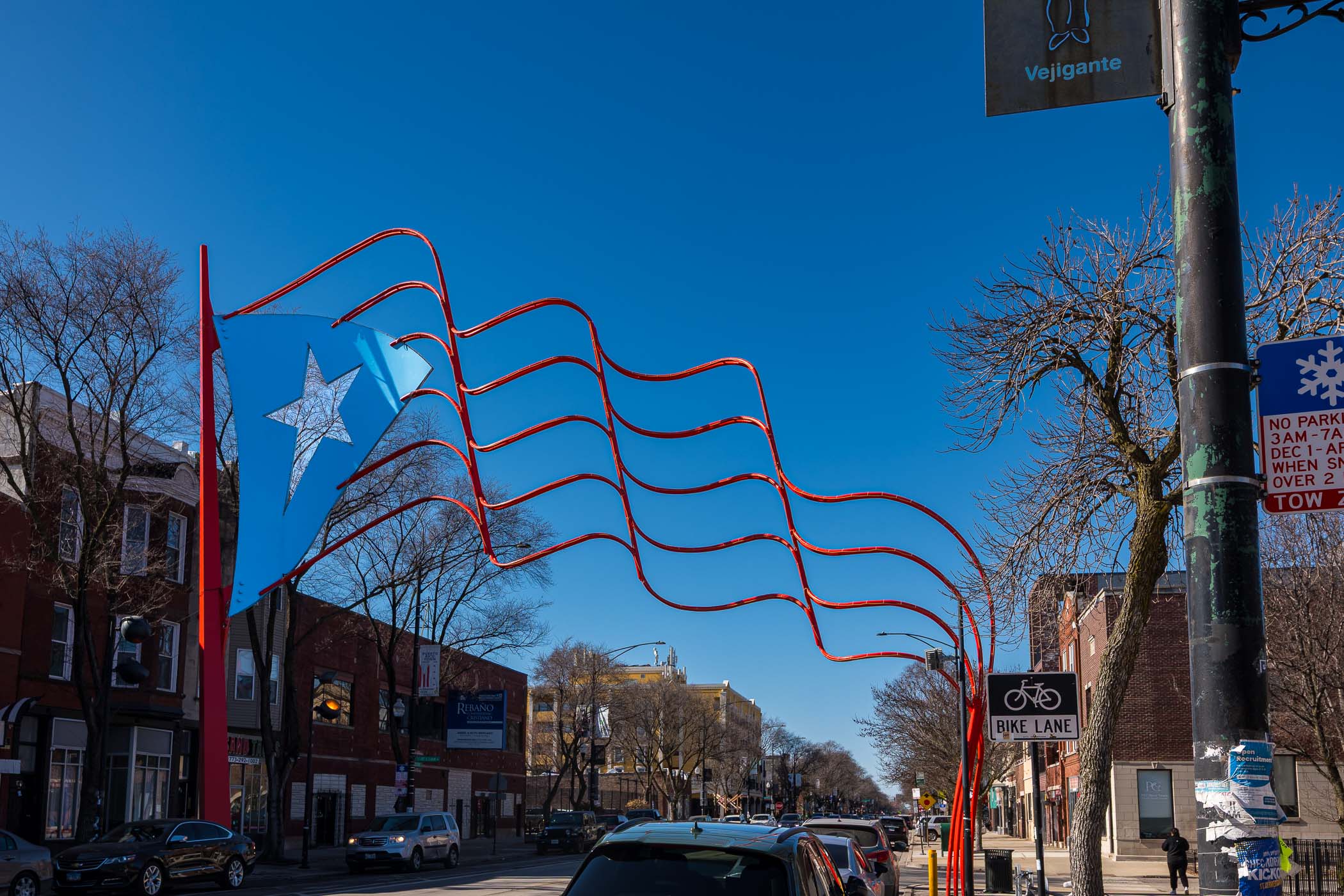
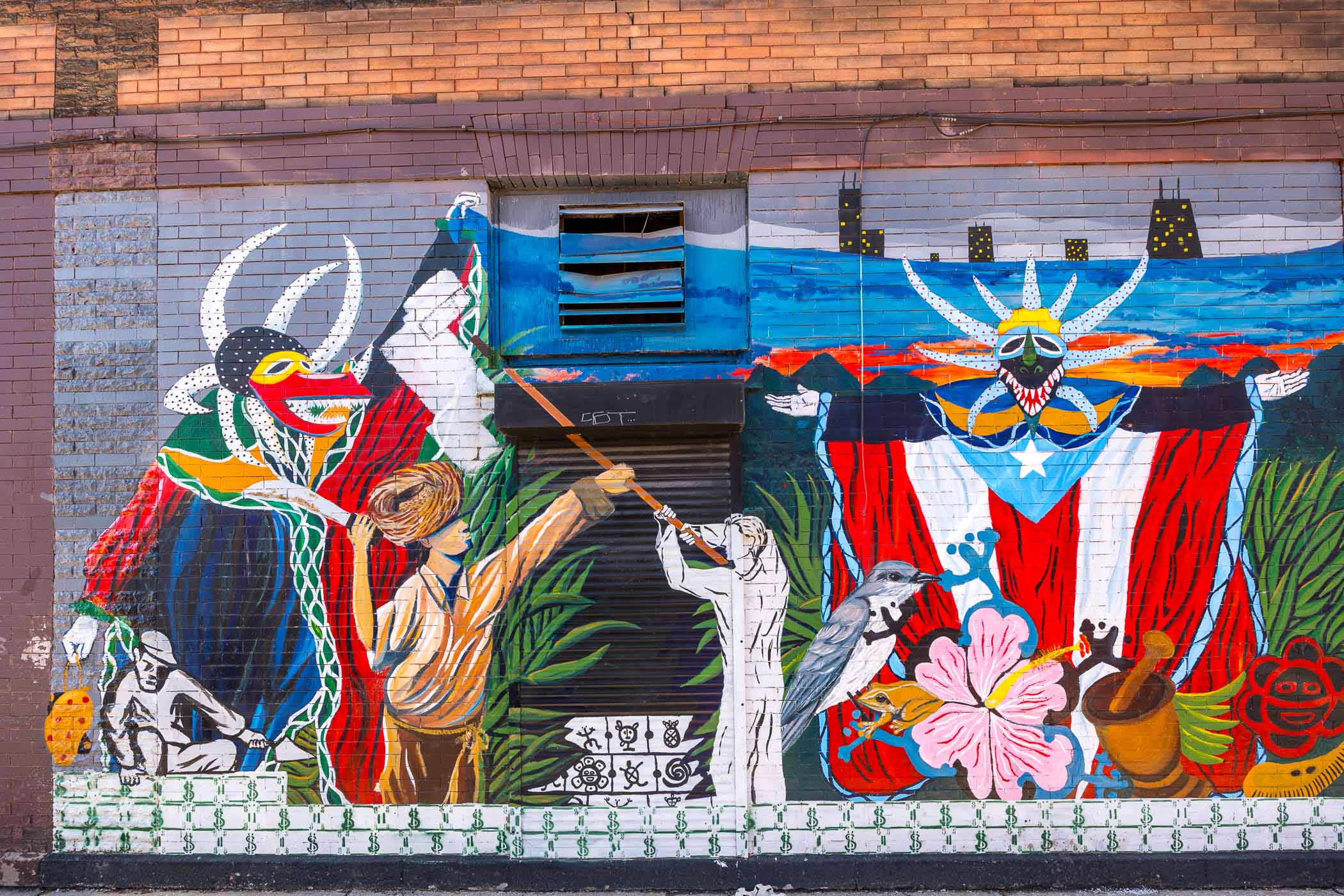
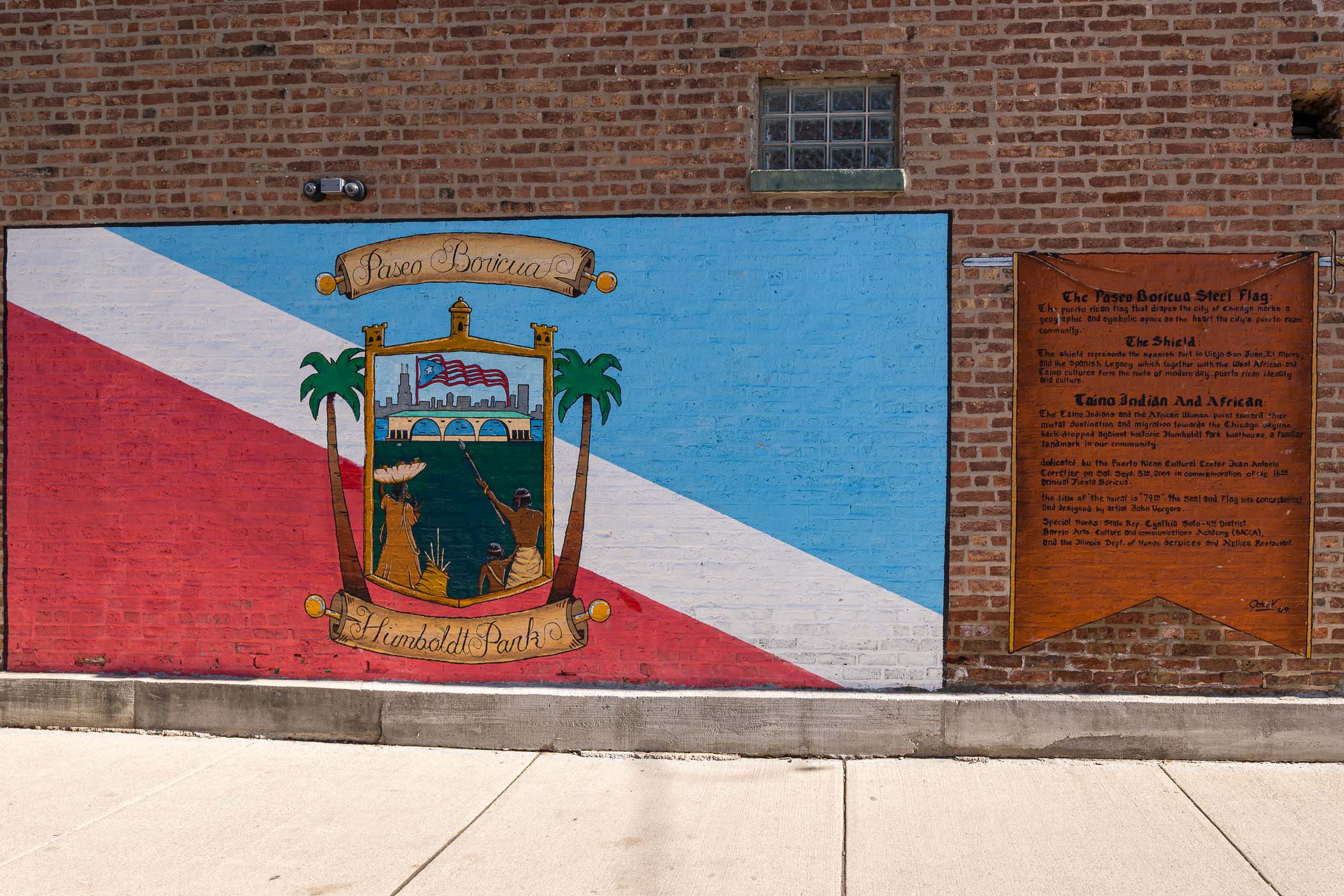
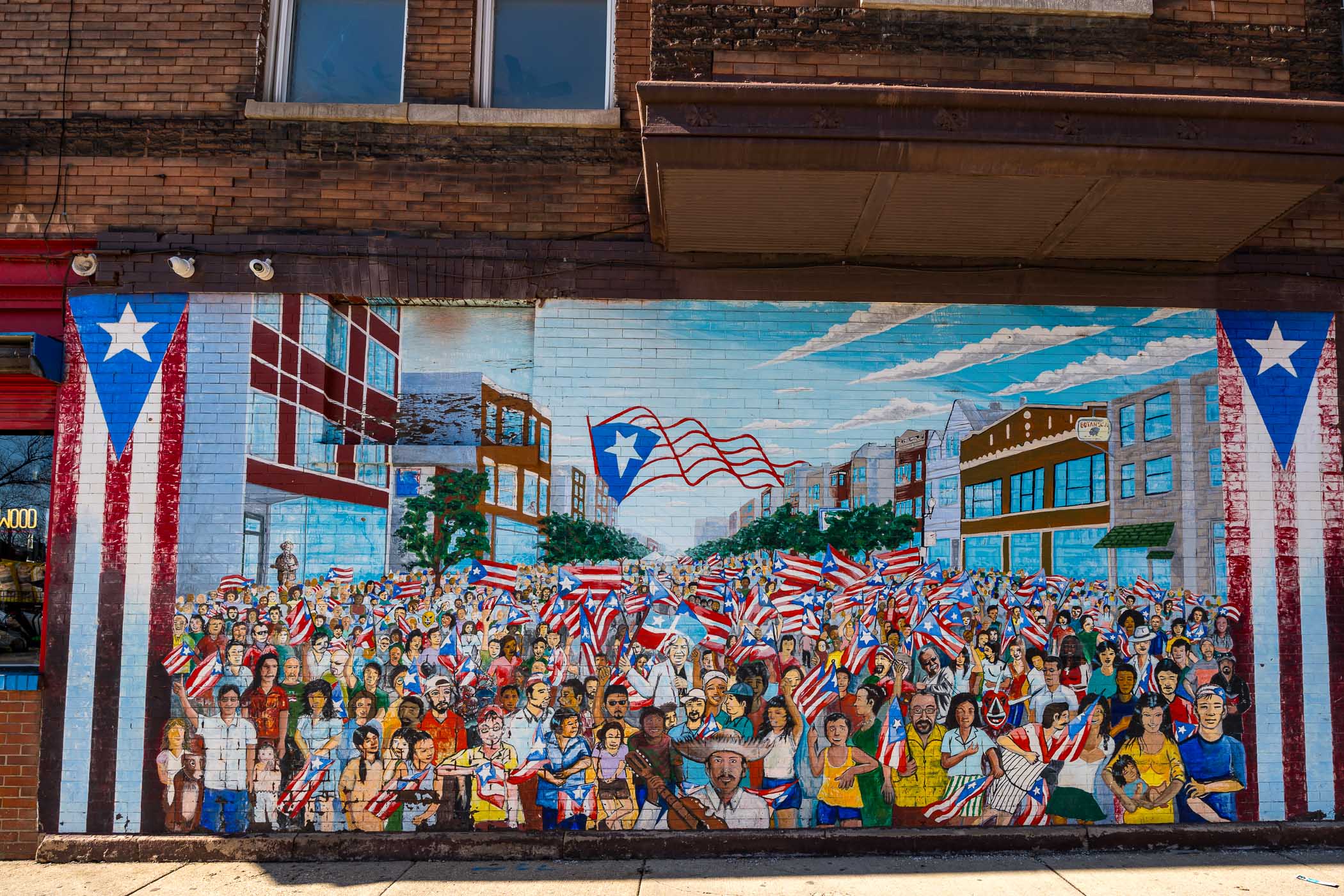
Humboldt Park gets a blue ribbon for being one of the most notable and cohesive neighbourhoods in Chicago. It was created in the mid-1800s and built around three public parks. People who had been displaced by the Great Fire moved there to live in less congested surroundings. By the 1950s, large-scale migration from the island of Puerto Rico began to accelerate. The Humboldt Park area was their chosen destination. Since then, it has become the centre of Puerto Rican culture in Chicago.
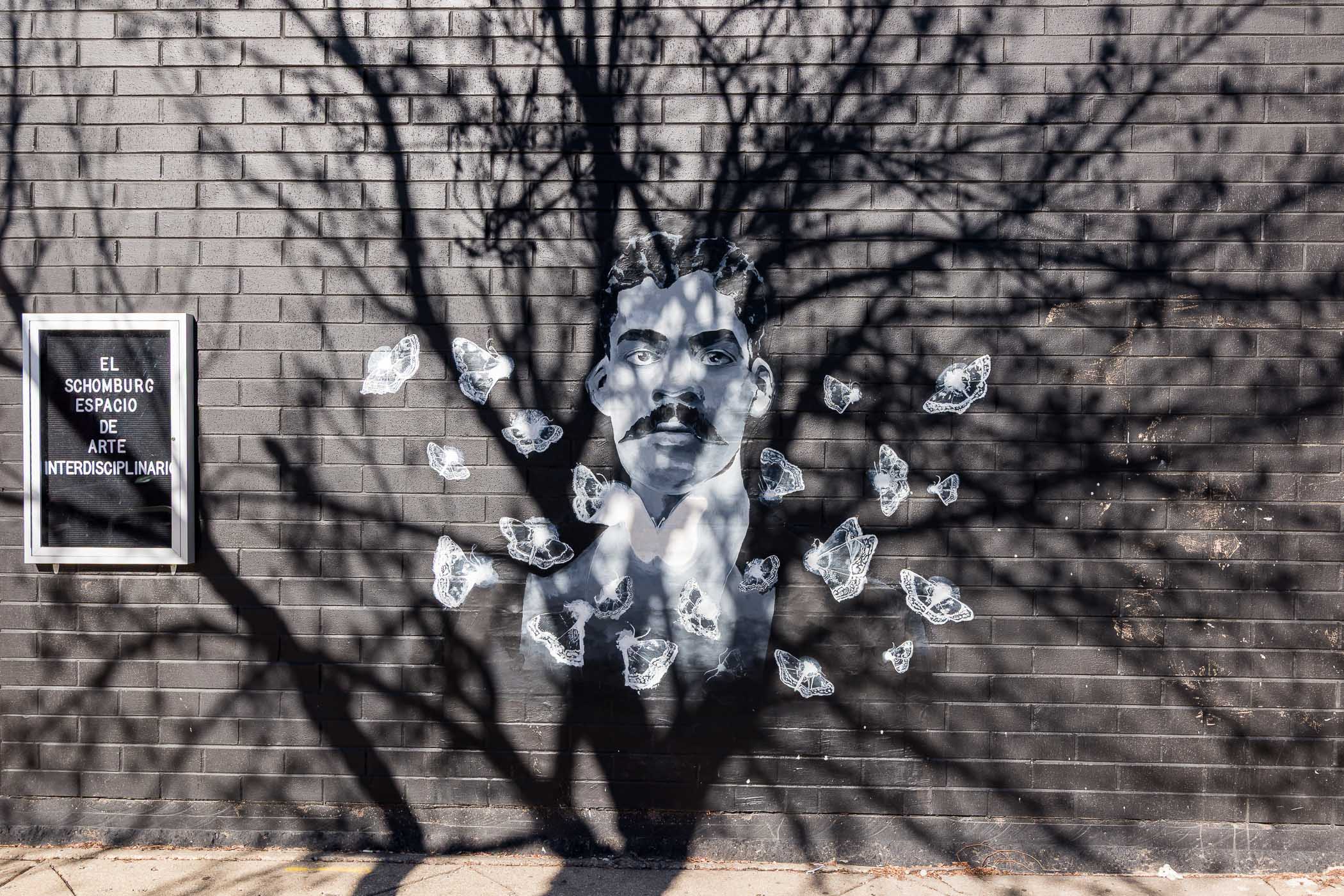
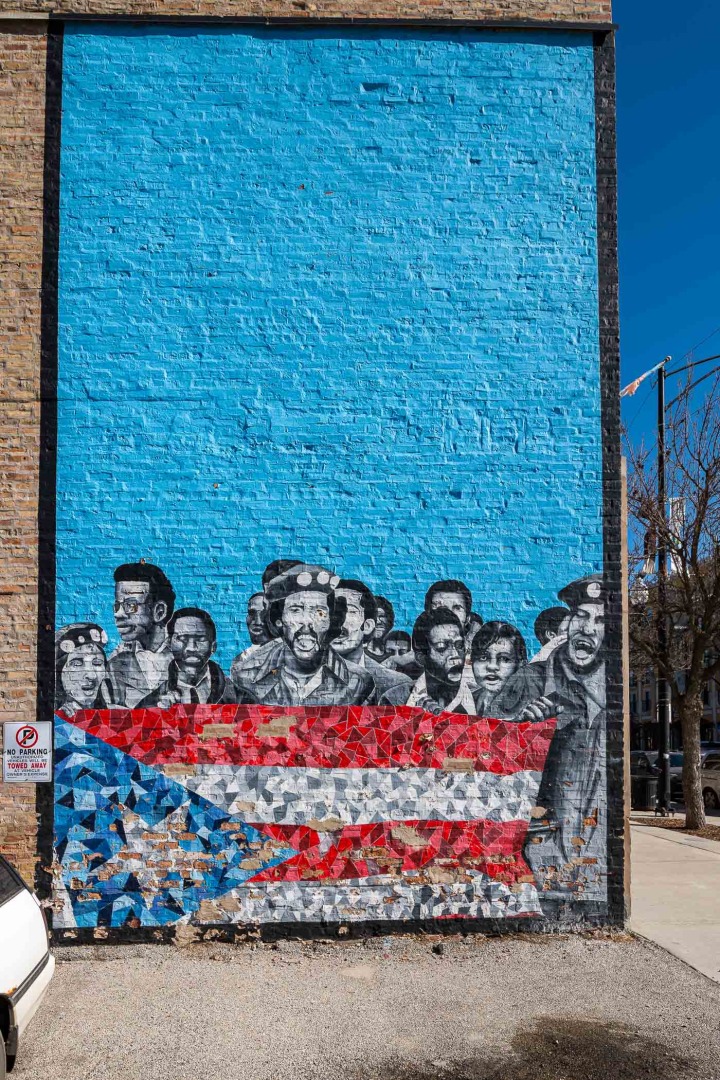
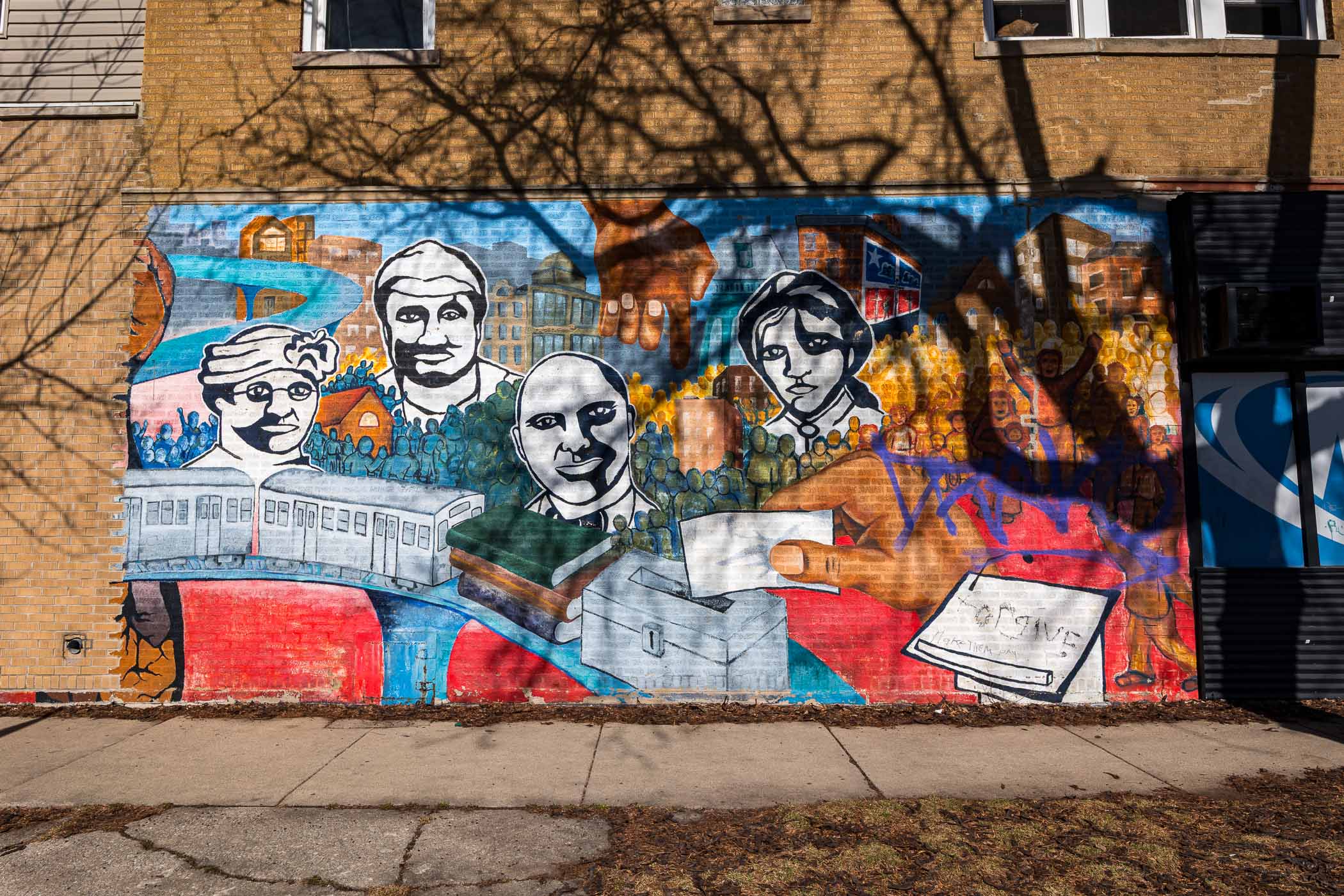
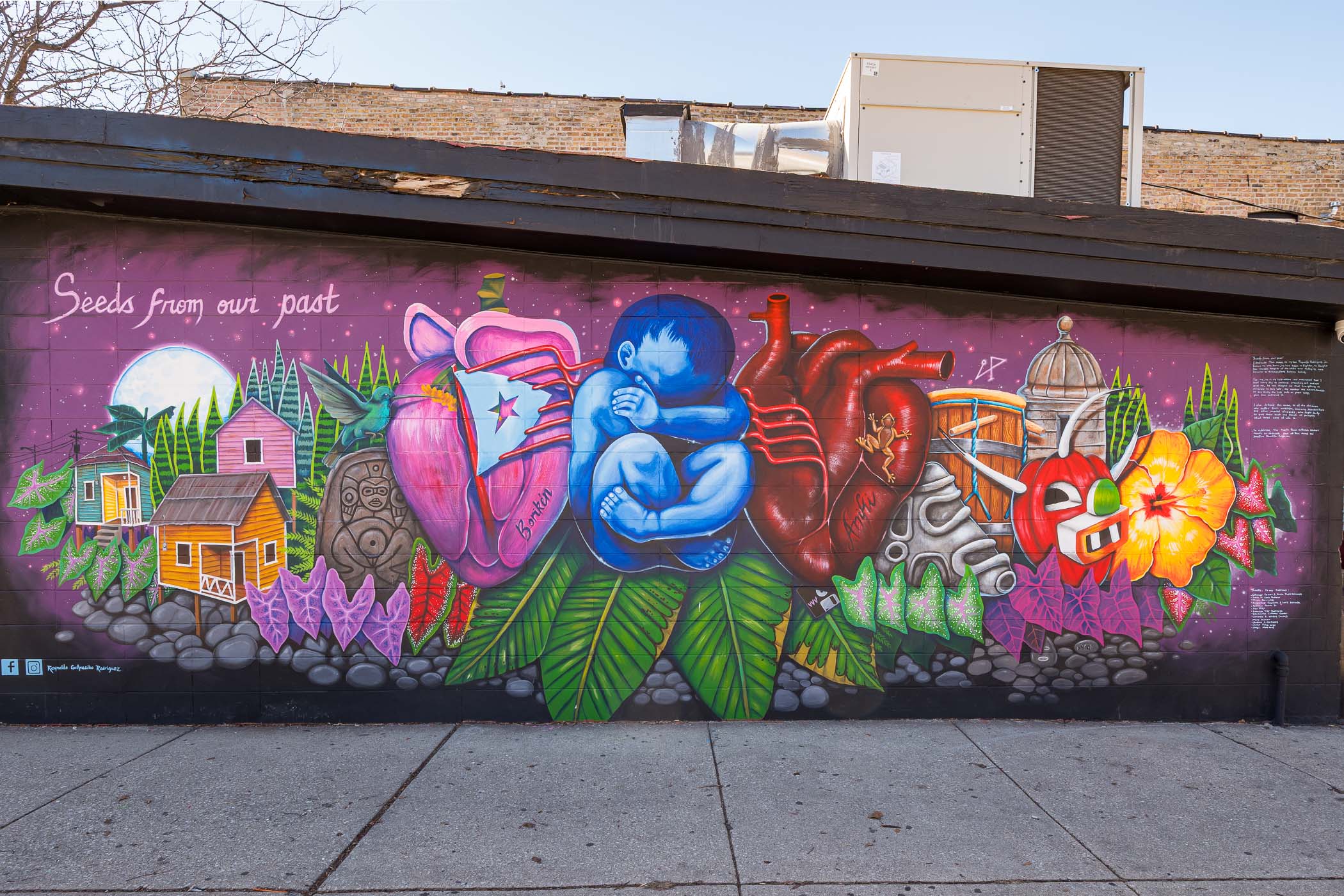
Defeated. Escuelita Tropical. Leica CL + TL 11-23mm. ©Jon Cheffings
Street riots occurred in the Sixties, when systematic oppression made life difficult for many residents. Much of the street art represents this struggle and glorifies Puerto Rican heroes. Today it’s peaceful, with Puerto Rican restaurants and shops, and a strong cultural vibrancy.
The neighbourhood enthusiastically celebrates, the Puerto Rican Festival every year in June. The fight against gentrification continues, with the objective to avoid displacing more residents and replacing them with “Mac Mansions” as they are known in the Chicago metro area.
Lakefront
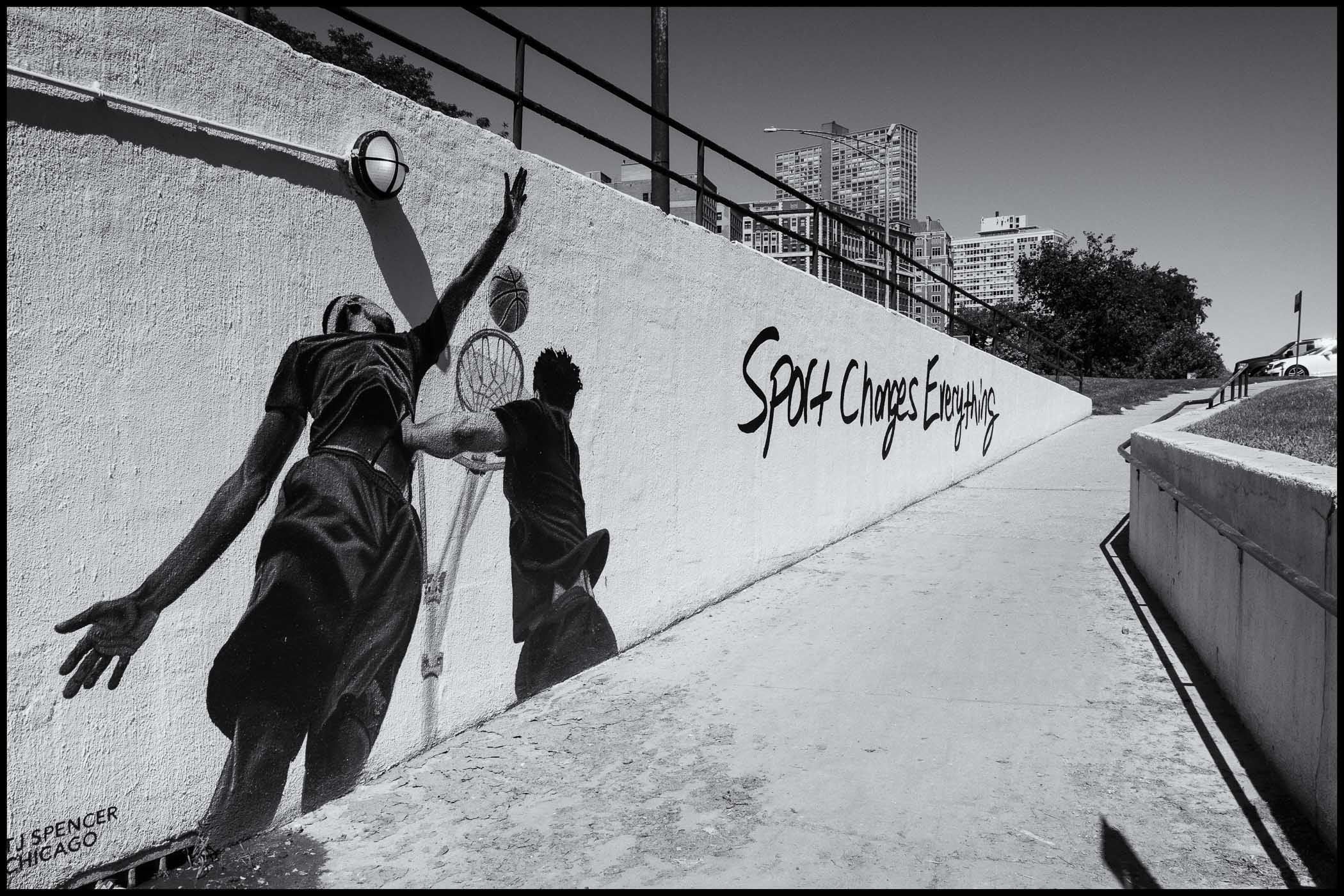
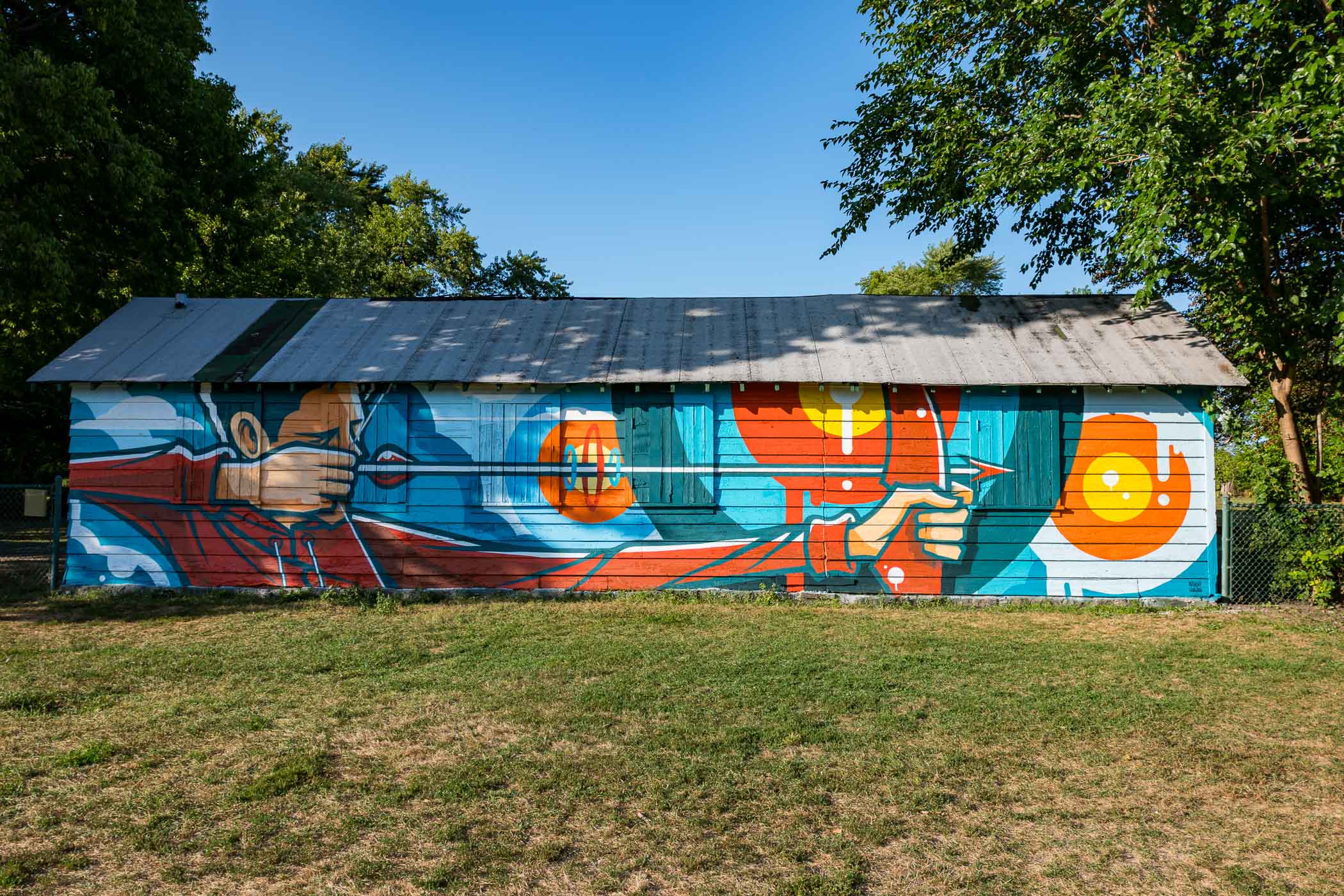
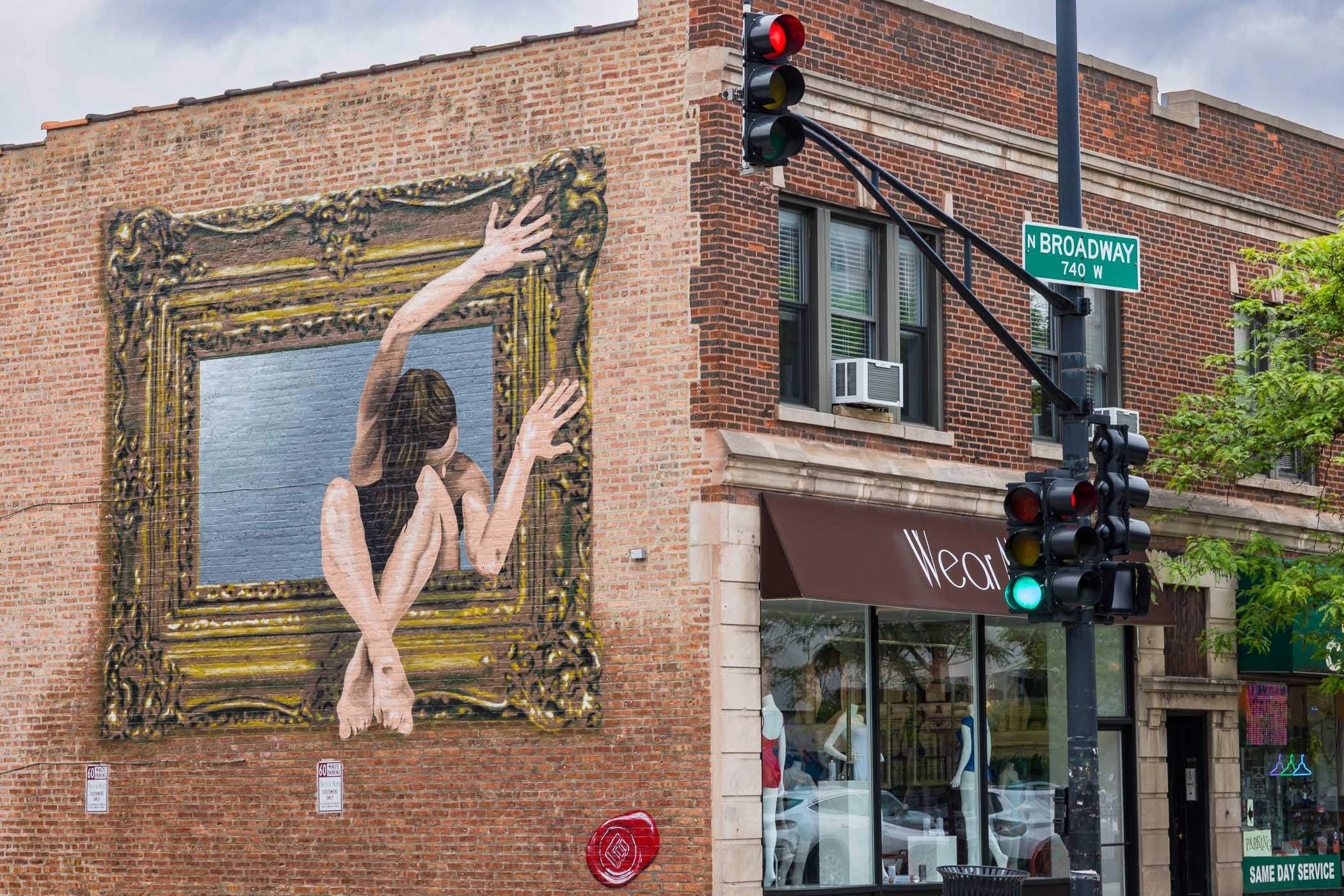
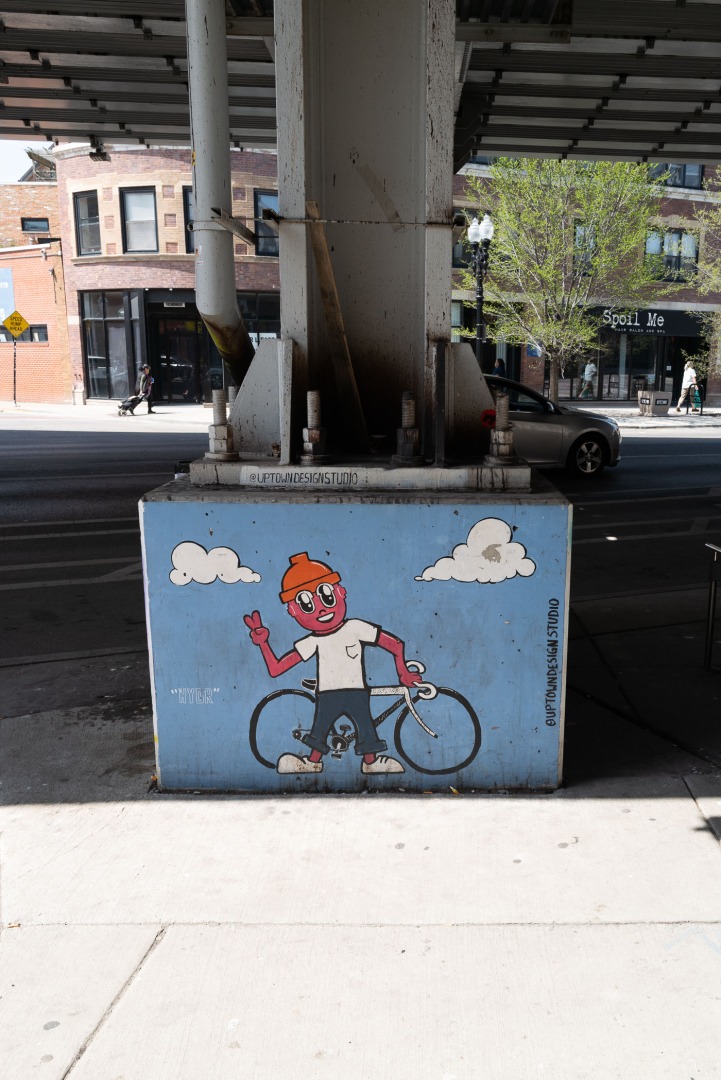
This is a broad swath of the city that covers large “brownstone” houses to swanky high-rises, the working blocks of the Loop, and the lakefront. Neighbourhoods that run along or close to the lake have their fair share of street art, on high walls and on underpasses.
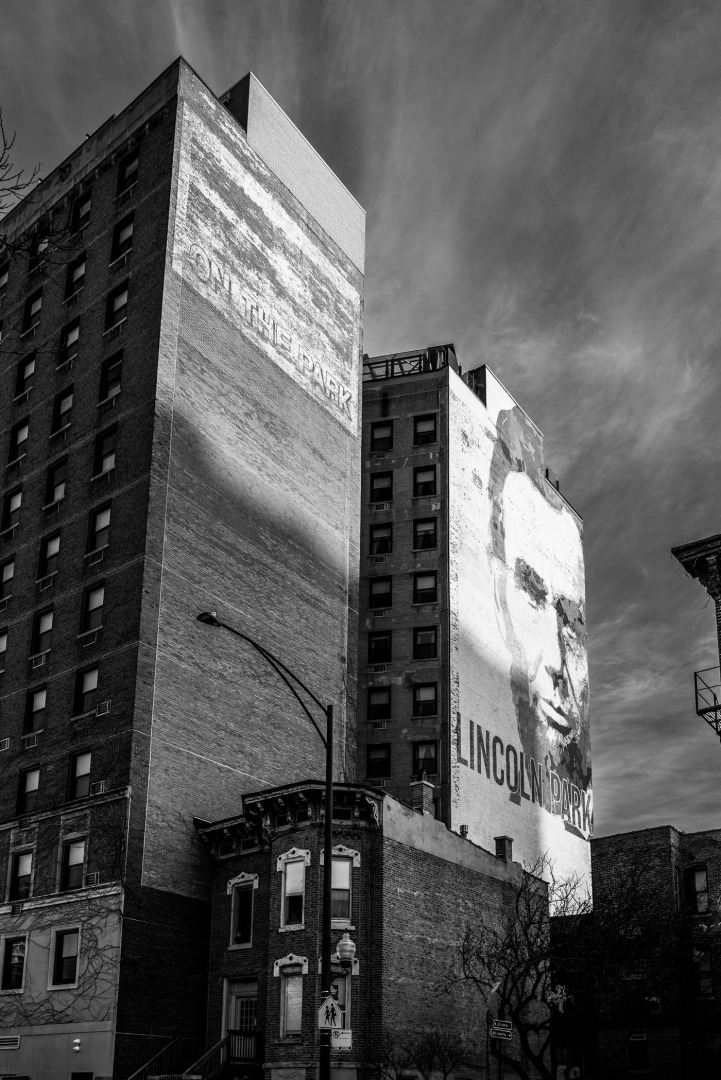
Pilsen
Pilsen is another neighbourhood with a strong ethnic identity. Originally inhabited by Czech immigrants, its name derived from the city of Plzeň in the Czech Republic. By the 1950s, the population was shifting to Mexican Americans.
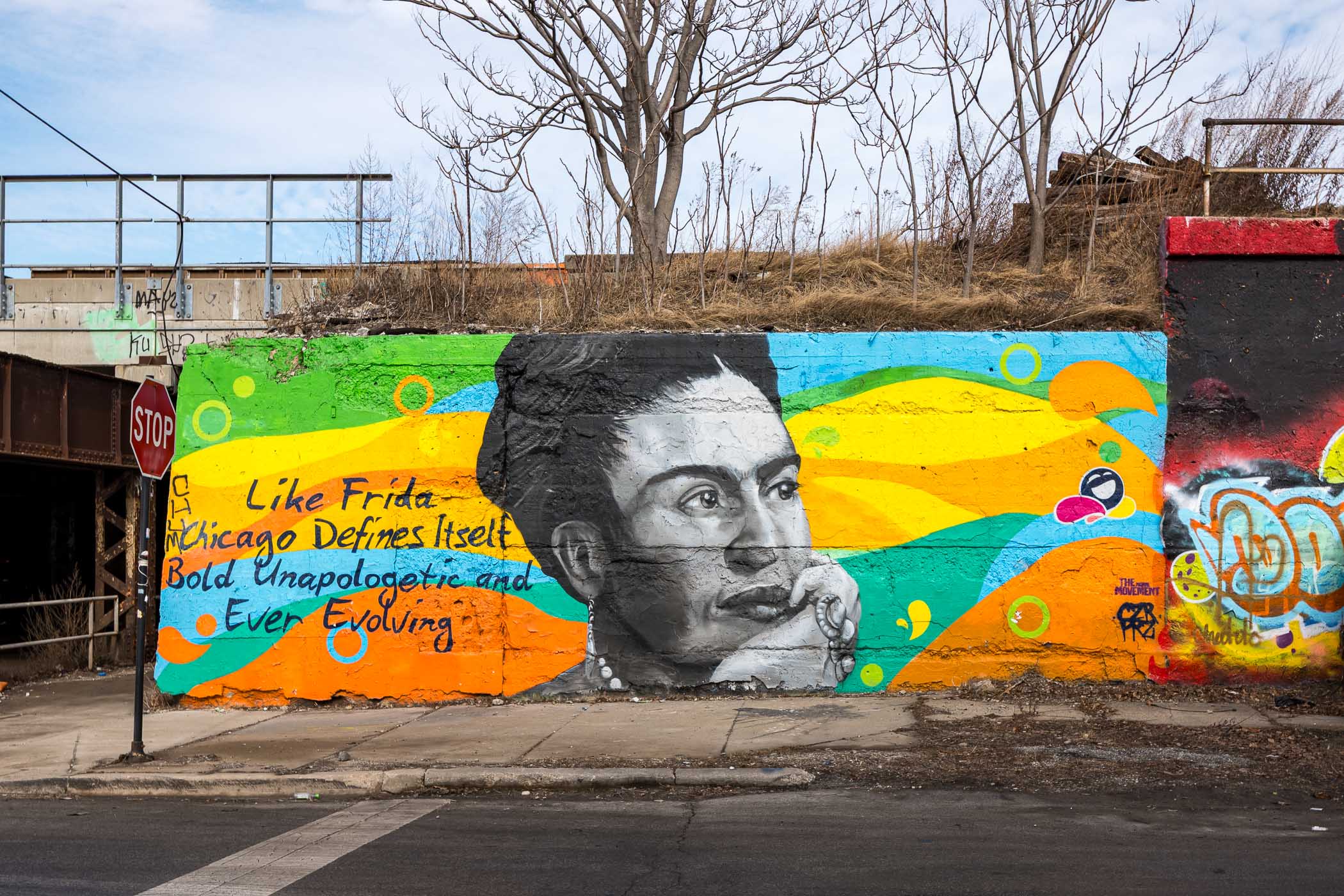

The neighbourhood is still one of the best places to eat authentic Mexican food, but the drumbeat of gentrification is closing in. Much of the housing remains low cost, but the signs of new housing and renovation are everywhere.
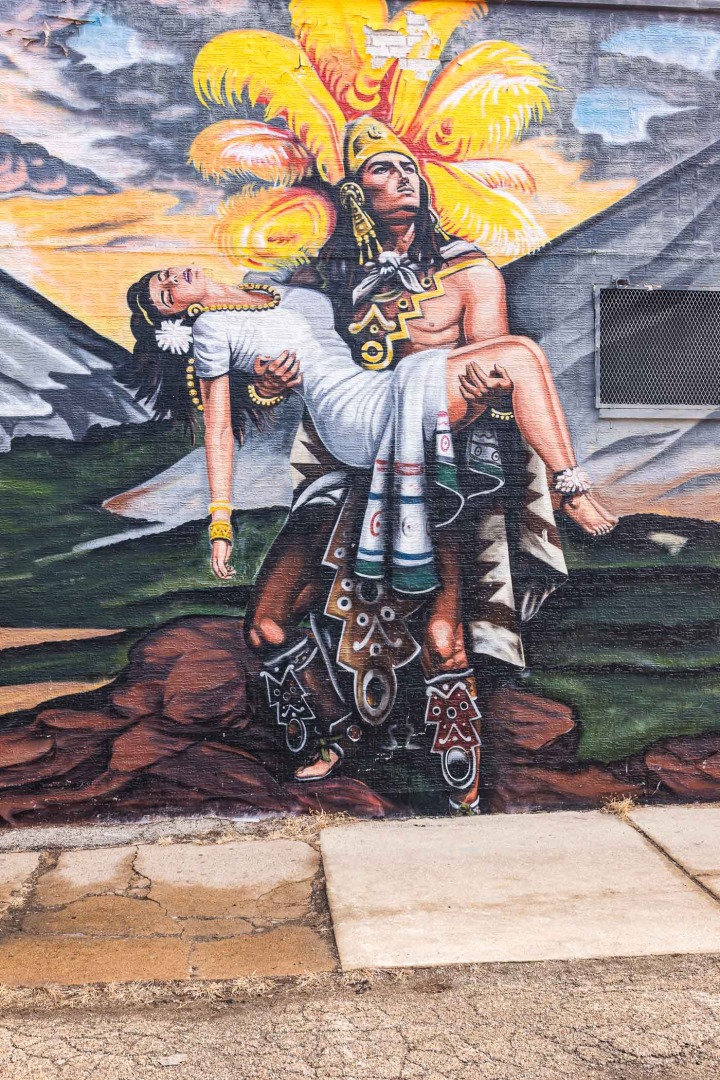
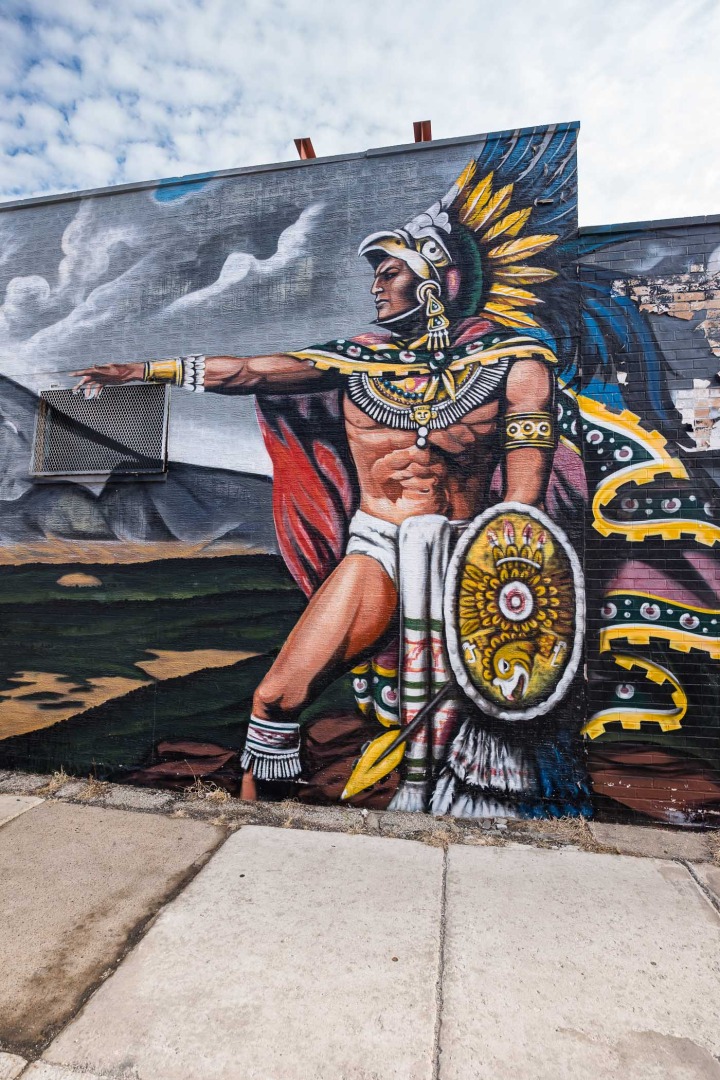
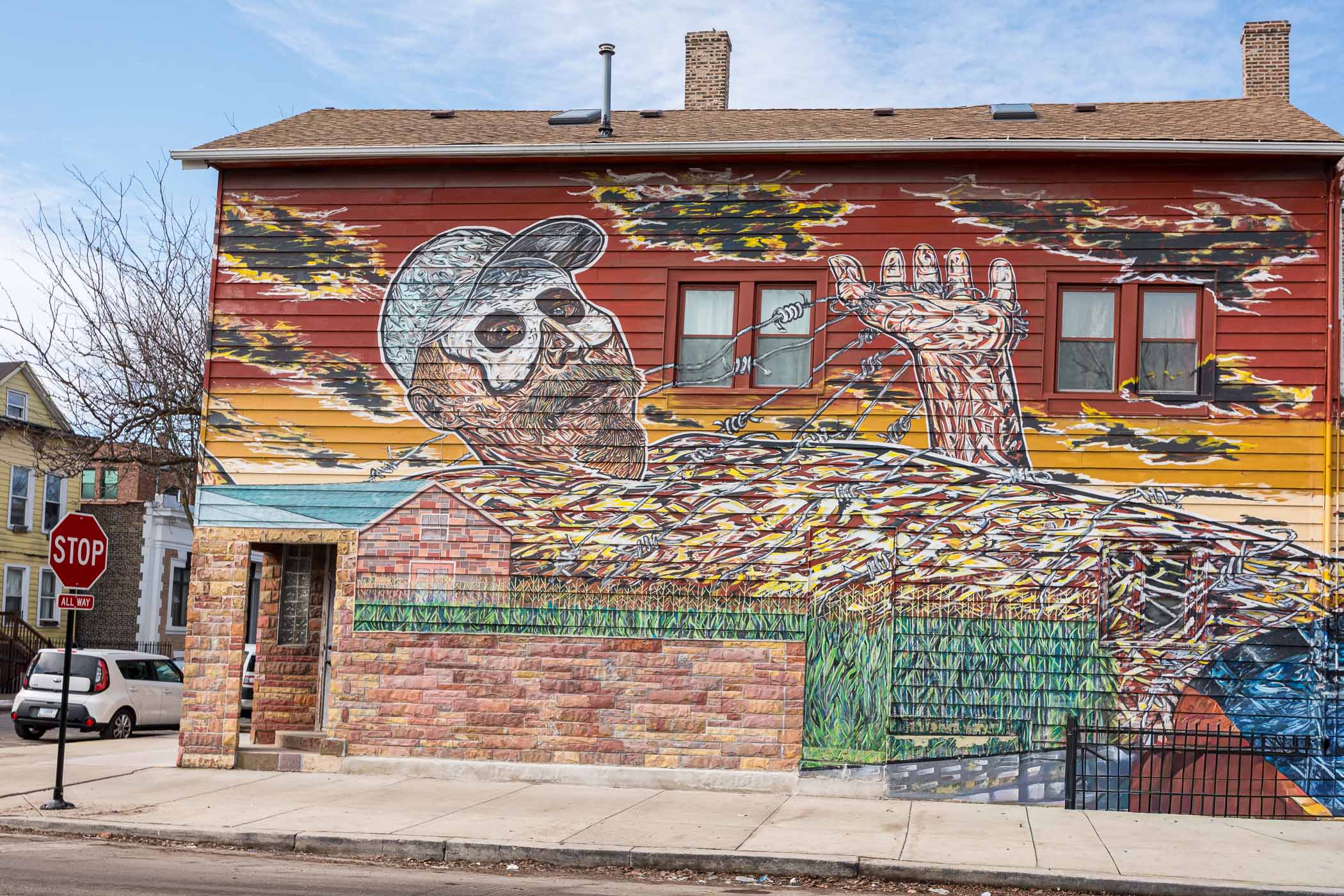
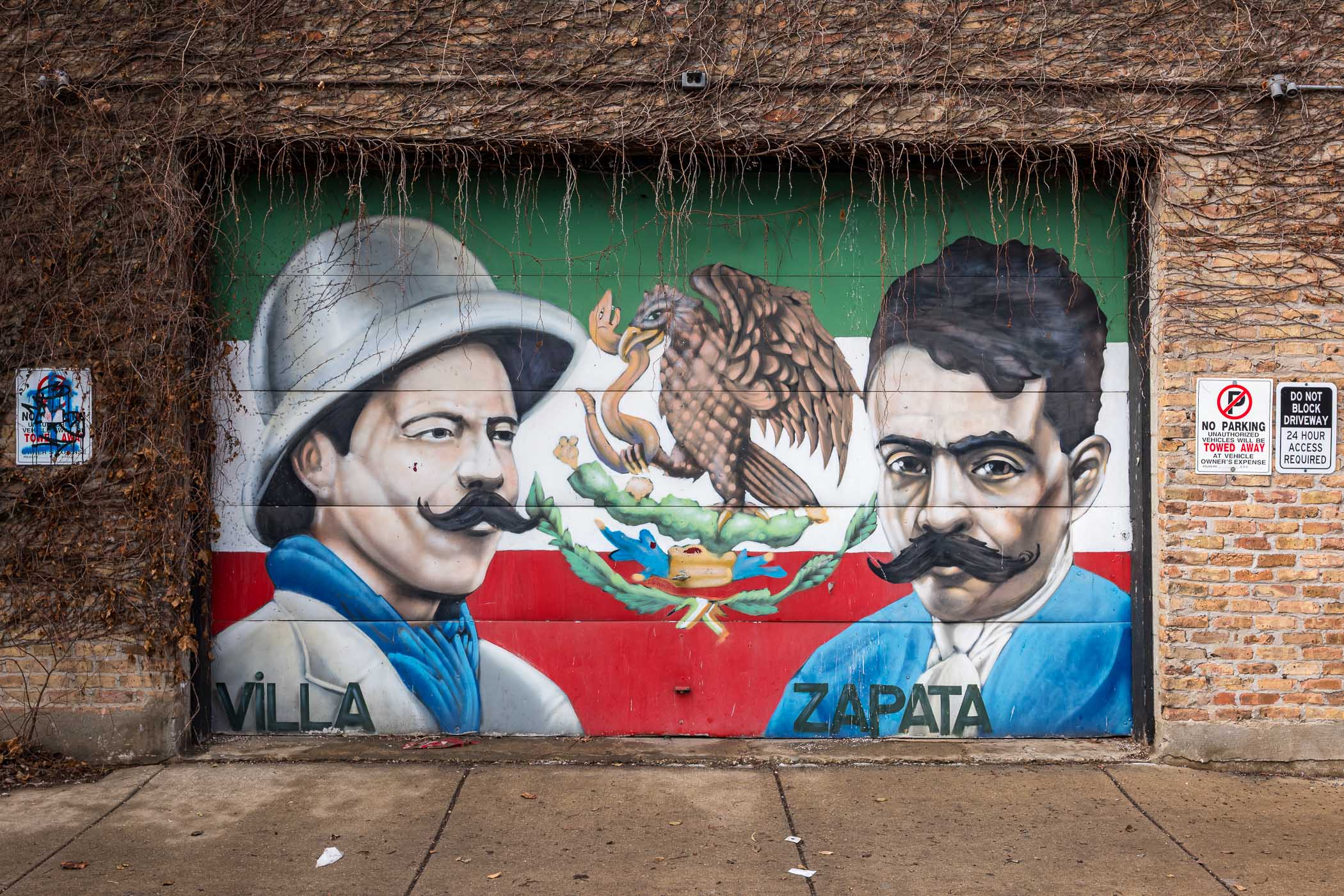
The street art is spectacular and celebrates Mexican history and heritage. I would suggest this is one of those “visit the street art soon before it disappears” neighbourhoods.
Rogers Park
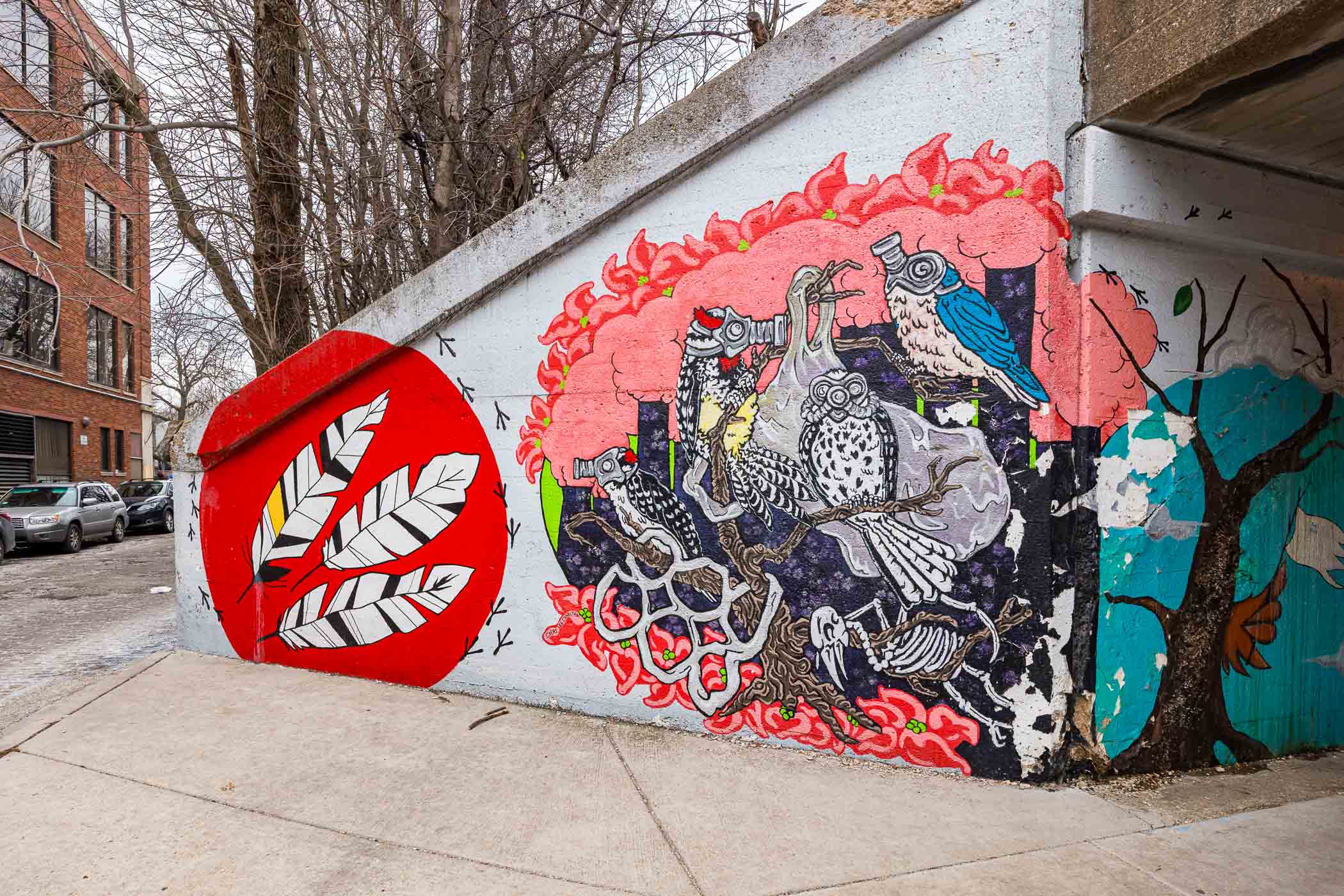
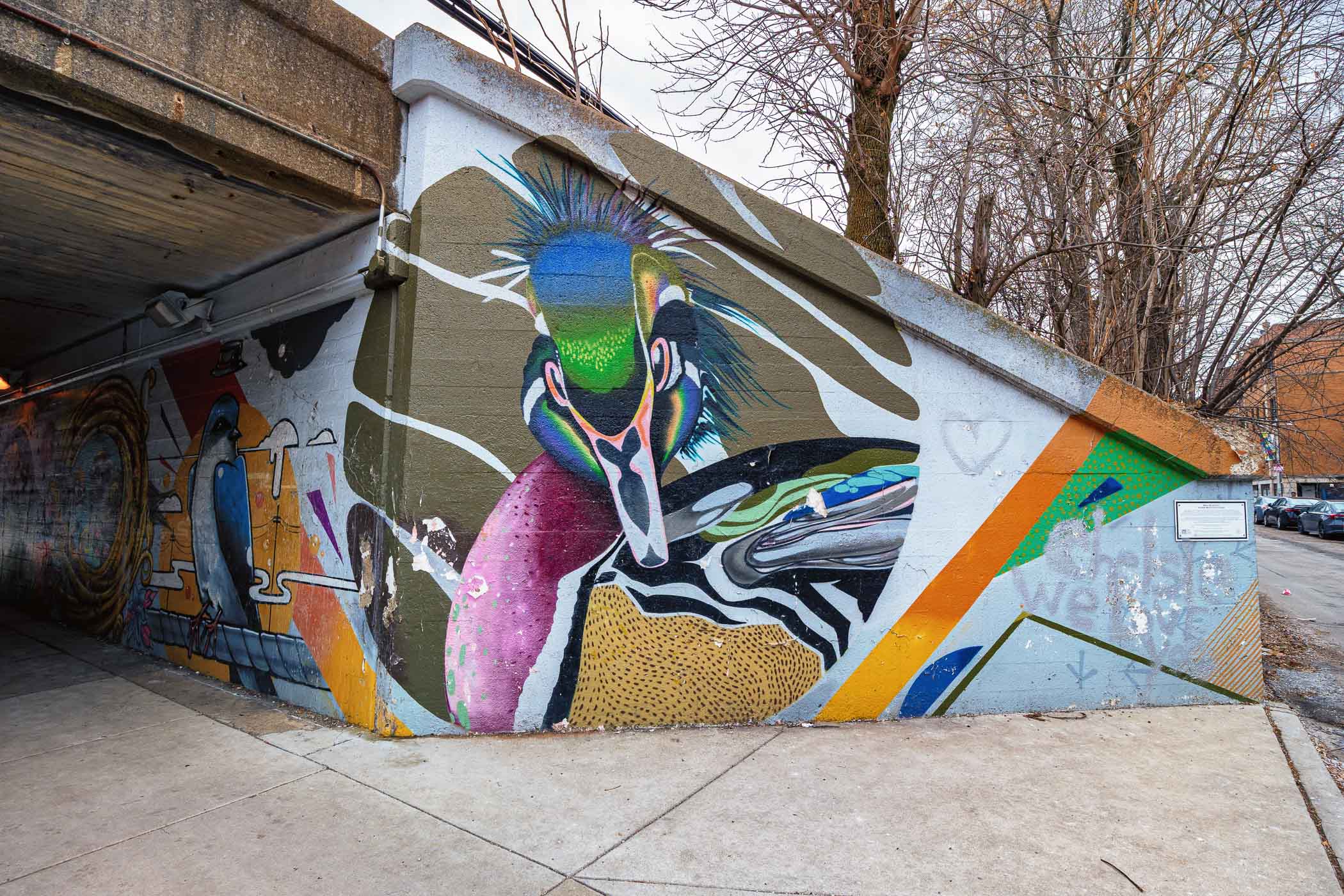
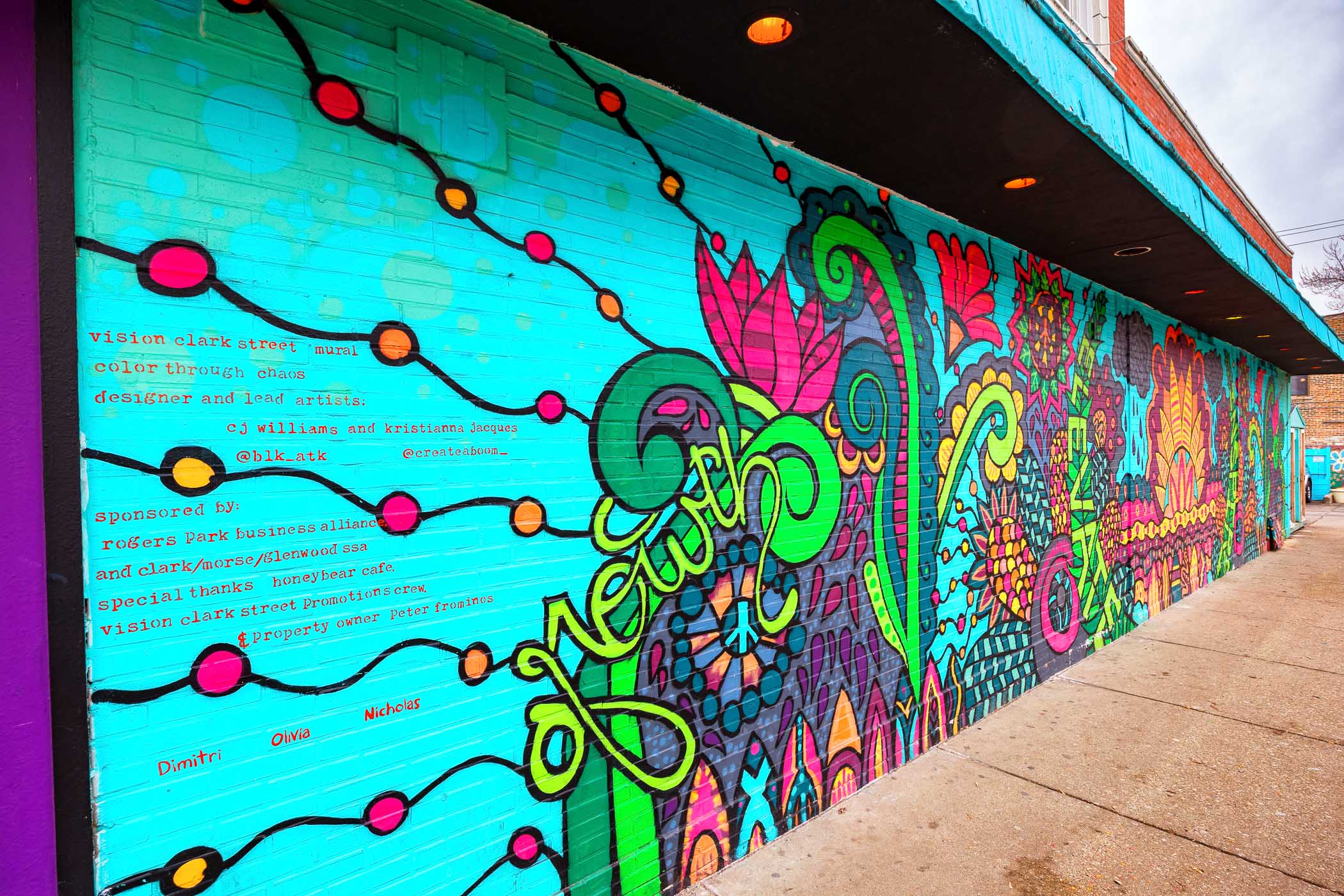
Rogers Park is one of the neighbourhoods that flies under the radar and seems to defy gentrification. It includes Loyola University and has Evanston with Northwestern University to the north, and Edgewater and Lakeview to the south. All of which are in various stages of gentrification. Rogers Park has a more mixed ethnic profile, and this is reflected in its diverse street art.
What kit? (Someone will ask!)
The most important point is to visit neighbourhoods that perhaps you wouldn’t normally visit. Then look up to see what’s there, hiding in plain sight. You will likely be looking at cultural history and heroes, whether new or old. Catch it before the building becomes gentrified and turned into luxury homes or chi-chi restaurants and hotels.
There’s no “ideal” lens or camera. You just have to have patience to find the right light and the right camera angle. I might add you can correct perspective in post if you wish or leave it and exaggerate it. For one wall, a 28-75mm lens might be best. Another requires a 16-35mm lens (full frame equivalent). And another towards dusk might work well with a Q3 28, at f/1.7. Horses for courses.
For a number of the shots included here, I used my old CL + TL 11-23mm lens. This allowed me to shoot on busy streets (like the Vivian Maier image) without being flattened by a 16-wheeler. But regardless of what you shoot with, always remember to look at where you’re standing, and avoid stepping into traffic!
Questions for you:
- Do any of you photograph street art, and if yes, where do you shoot it?
- What do you like about it, or dislike about it? Note the distinction between street art and tagging.
- What time of day do you shoot it?
- What kit do you use and why?
| More: | |
| Street photography in East London’s Brick Lane | Canvas City: Street Art in Berlin |
| Street Art | More from Jon Cheffings |
Make a donation to help with our running costs
Did you know that Macfilos is run by five photography enthusiasts based in the UK, USA and Europe? We cover all the substantial costs of running the site, and we do not carry advertising because it spoils readers’ enjoyment. Any amount, however small, will be appreciated, and we will write to acknowledge your generosity.
Not to be a killjoy, but if somebody walked up to a snapper, took their camera bounced it off of the ground and then dipped it into a bucket of paint that they happened to have handy. Would anyone commenting here be entirely happy?
Graffiti in my view is little different to vandalism and theft.
Of course it would be somewhat different if the owner of a particular surface, like a wall, actually commissioned a painter to make a mural, and that sometimes happens, but those folk are a significant minority.
Just sayin’.
Thanks Stephen,
All these images have been sanctioned by the City of Chicago, and by neighborhood committees. They are an inherent part of the city’s culture.
Most of the wall art has been done by highly regarded artists who also exhibit their work.
You will still find “tagging” but city cleaning crews clean that off when it’s accessible.
Hi Jon,
I have just yesterday heard from a friend who was waxing lyrical about a new laser beam cleaning system that has just been made available.
He showed me a number of video ads and it cleans anything without causing damage.
So perhaps armed with such a device locals could sort the wheat from the chaff.
The city already does that.
Great images Jon, I’d like to ‘return the compliment’ by showing you street art from here in North Wales, but, I regret, I’d mostly be sending you pictures of brick walls. 🙁
Thanks Andrew,
But the bricks are weathered and interesting, no doubt with good stories to tell. And the street names tell stories that today people don’t remember. Worth exploring maybe?
You must have put in an enormous amount of walking, curating all these art works! Chicago is not a small city, and it has so many ethnic neighborhoods.
Incredile collection. Though ..I suppose the old Polish areas are gone. Would have been interesting to see art from there…
Thanks Kathy
The Polish and Ukrainian Villages are gradually getting eaten away by gentrification. As Dire Straits sang on Telegraph Road. “Then came the churches, then came the schools, Then came the lawyers, then came the rules” you can make up your own 21st century lyrics to that.
Thank you for your ability to beautifully articulate and photograph the power and meaning of street art. I thoroughly enjoyed your article and photos. To answer your questions:
I do photograph street art. I photograph it mostly in San Diego County, from Carlsbad, to La Jolla, to Coronado, to Barrio Logan. Other places when I travel. There is a ton of spectacular street art in New Orleans which is my favorite place for street art.
What I like most about it is the beauty and creativity of the art, and as you wrote, seeing the “cultural heritage in pictorial form.”
I typically shoot in the morning, both out of convenience and because there are fewer people, cars, etc. blocking part of the shot.
I typically use a 24mm-70mm lens.
Thank you for asking and for your wonderful article.
Thanks Gary,
And Rick Steves says “Keep on travelling”. There’s lots more still to see out there! Now I need to get to New Orleans!