
I have never stopped shooting film. I still shoot massive amounts of large and medium format film. But ever since I started using the M9, then M10, and ultimately, my M10R camera, I have been an advocate of walking away from shooting 35mm film. It just made no sense to me. Here, I look at a new development in film photography, Leica Monopan 50.
Artifice
Digital imaging had improved to a point where the dynamic range, light sensitivity, and high resolution of imaging sensors had rendered 35mm film moot. Couple that with an idea that was put forth in a Japanese fine art magazine that digital removes the “artifice” from the process of photography, and it became harder and harder for me to support shooting (smaller format) film.
A quick explanation: film is fraught with numerous hurdles and hoops that you have to navigate to achieve the desired result successfully. Every batch of film has different inherent characteristics. Every time you process film, the results are a little different. The film gets scratched. Film gets “eaten” by the processors. Film gets “lost.”
Back in the day, we all had densitometers, test strips, and real-time access to a wealth of technical information about the “nuts and bolts” of film processing, which we no longer have today. Many of the tools we used to have access to, to control processes, are no longer available. Bottom line, I concluded about ten years ago that for the most part, the results of shooting film of a smaller format were no longer justified. It was time to move on!
As you might imagine, over the past decade or so, I have inadvertently hurt the feelings of many a younger film enthusiast who has tried their hardest to convince me that film was special and has its own “special” look. On the other hand, I still believe in the power of film for larger formats.
And yes, I can tell the imaging difference between a bare glass Zeiss Dagor, a coated Goerz American Optical Dagor, and a Multi-Coated Schneider Dagor with glass made by Kern. The only way I can use these lenses is with film. Hence, I still have a temperature-controlled sink and film processing room at home.
My post-production is handled with high-end scanners and SilverFast software. But until Leica introduced the Monopan 50 earlier this year, shooting 35mm film (for me) was a hard “pass”. Here is what’s changed.


Panchromatic range
The Leica Monopan 50 film is designed to have a broader and more evenly balanced colour/panchromatic range than any 35mm black-and-white film I have previously used. Leica also claims it is sensitive to the Infrared (IR) Spectrum.
Many photographers don’t quite understand the inherent differences in how most black and white films (and Monochrome cameras) perceive colour. Originally, all films (wet plate or dry plate) were predominantly orthochromatic.
This means that the films were only sensitive to blue and green light and would not be affected by exposure to red light. Most silver-based printing papers were orthochromatic. That is why you can use a red safe light without fogging your print.
Along the way, scientists discovered that by adding various compounds and chemicals to the black and white film emulsions, they could create films that saw all three primary colours (red, green & blue) more evenly.
Realistic
Kodak Tri-X Pan, Plus-X Pan, Super XX Pan, and so forth, were their way of advertising in the name of their film that their product would produce images of a more “realistic” nature. The films were designed to capture the world in Panchromatic black and white.
Nonetheless, not all black-and-white films perceive colour in the same way. Most films have inherent biases or partial colour blindness. Creating an extremely fine-grained black and white film that has well-balanced sensitivity to all colours, and is not too contrasty, is a challenging task. It’s physics: the more sensitive you make a film to light, the larger the grain structure.
Silver halides and how they affect contrast
A large clump of silver halide will tag (or trip) when exposed to less light than a fine or small particle of silver halide. The way photography works is that the light tags the silver halides. When exposed to the proper alkaline (developing agent), the tagged silver salts will be converted to metallic silver of various densities.
Finish the process off with a fixing agent to remove the undeveloped (non-exposed) silver salts, and you have a photographic negative. Simple! By the way, the smaller you make the clumps of silver halides (fine grain), the greater the inherent contrast will be in the finished negative.
The concept of a film with fine-grain, panchromatic sensitivity, and normal contrast is quite challenging to execute. When making this film, Leica did an impressive job of executing a difficult task.
Colour sensitivity
Online reviews of the Leica Monopan 50 by individuals who have conducted spectral testing on the film indicate that the Leica product exhibits a distinct colour sensitivity compared to other films on the market. I cannot confirm those statements, but my initial testing has shown that the Leica Monopan 50 is undoubtedly an excellent film to shoot.
The Leica Technical sheet for Monopan 50 (Download the tech data) claims the film is sensitive to infrared light. But they also claim the film has sensitivity only to about 780 nm. Most books claim the IR spectrum starts at about 800 nm. Kodak High-Speed Infrared (discontinued in 2007) was sensitive through the entire visible spectrum and up to 900 nm in the IR spectrum.
Kodak High-Speed IR
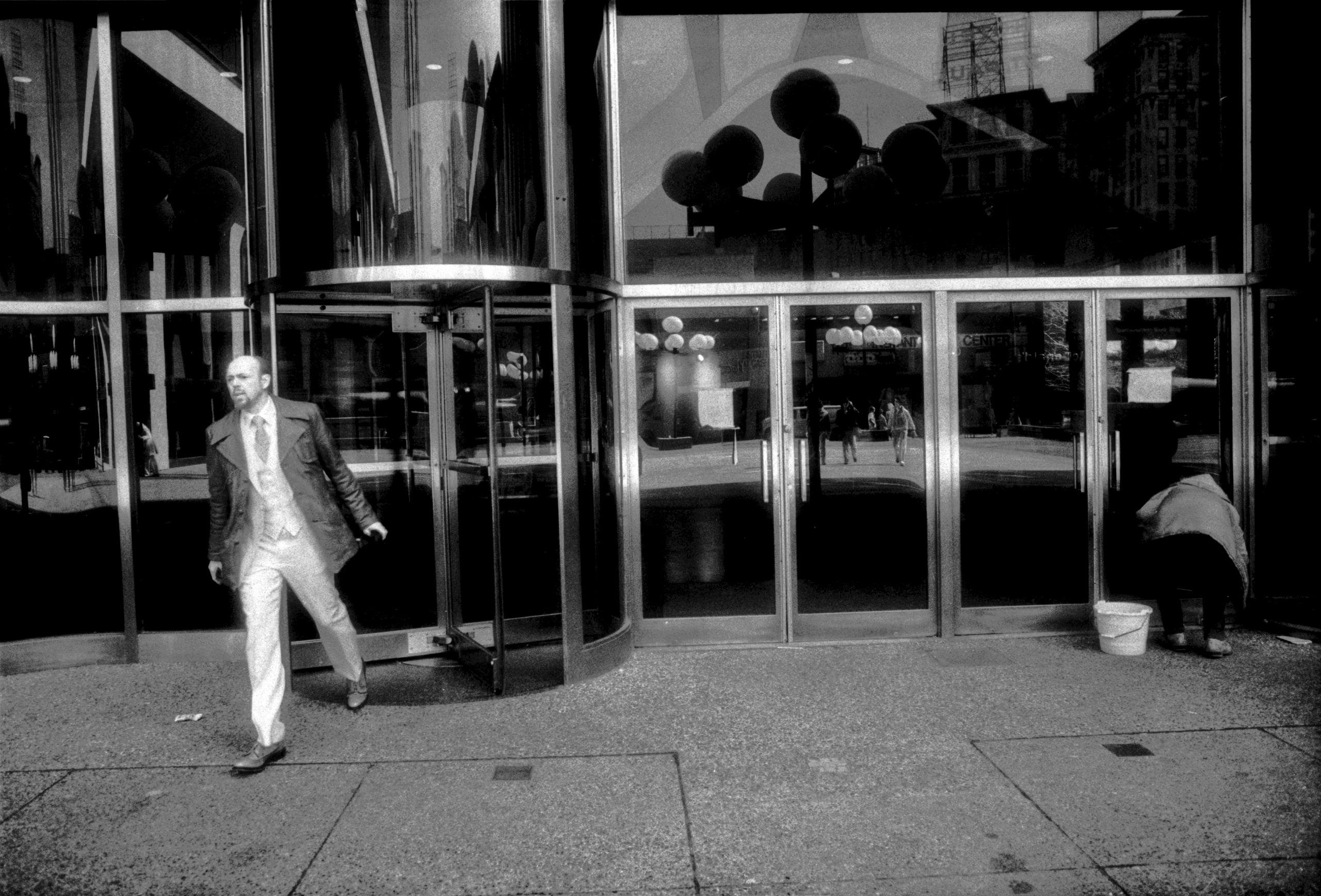
When I was younger, I used to buy Kodak High-Speed IR film in bulk, typically in multiple bricks (20 rolls) at a time. In the early 1980s, my first image purchased by a museum was shot with 35mm Kodak black-and-white infrared film. (The Illinois State Museum purchased the image below as part of a statewide juried photo competition around 1981)
Testing Leicas IR Claim
When I read about the new Leica film and its claims to be IR-sensitive, I decided to acquire a 35mm camera so I could evaluate the new film. It was serendipitous that a very close friend was liquidating a collection that had been in storage for decades. Three of the items were a clean, essentially new old stock Leica M4-P, a nice clean MR meter, and a 5cm f/1.5 Summarit lens (with hood).
I figured if I was going to shoot film, I might as well do it “old school.” However, purchasing the film turned out to be a little more of a problem than acquiring a camera/lens kit. I have had Monopan 50 on order at multiple retailers since August.
Back order
Leica had originally stated that Monopan 50 deliveries were going to start in July 2025. I am writing this review in the first week of November, and my back-ordered film still has not arrived. I attended the Leica 100 Celebration in June, and by August, I had begun to regret not pursuing the opportunity to acquire a stock of Monopan 50 at that event.
In early October, I travelled to Amsterdam to visit my kids, and much to my delight, the Local store was able to sell me four rolls. The following week, I travelled to Vienna to visit the folks at Leica Classic, and they, too, were able to sell me a small quantity.
One more shout-out to the folks at Leica Classic in Vienna: they went through their vast inventory of vintage Leica filters and found a visually opaque Leica filter for me to use for shooting Infrared.
Leica Classic
The folks at Leica Classic were wonderful. I had just loaded my M4-P with Monopan and was getting ready to start shooting when the technicians in the repair shop offered to test the shutter speeds on my camera body. I gladly accepted, after all, this particular body had spent the last 40 years in storage.
It turns out that all the speeds up to 1/250 were still quite accurate. Subsequently, the shutter curtain was faster towards the second half of the exposure. The shutter testing indicates that the body could use a light overhaul and lubrication. No surprise! They offered to “tweak” the shutter for me, but I declined. I am using it “as-is.”
Fragile
Sometime in the future, I will drop it off there for proper service. The reason I am discussing this incident is that there is a chance that the unloading of the camera and the subsequent retrieval of the film leader might have been the source of some “cinching” marks on the film. After it was processed.
Some thin base, fine-grain films can be more fragile than other films. My first roll had a multitude of minor marks in the emulsion parallel to the length of the roll that could only have been caused during transport or rewinding.
Cinch marks are caused by the friction of the film rubbing against itself. It is possible that the staff over-wound the film when retrieving the film leader. I have slowed down the advancement and rewinding of my film on subsequent rolls, and the cinch marks have disappeared.
Cautionary tale

Take this as a cautionary tale. Monopan 50 is a thin-base, very high-resolution film. Handle it with care. Furthermore, because it is more IR sensitive than most Black and White films, follow the instructions and load/unload the camera in subdued light.
First things first, on the inside of the box (See insert), it says, “LOAD IN SUBDUED LIGHT”. IR light can bend and twist far more than light in the visible spectrum. Back in the day, when shooting Kodak IR film, you had to travel with a changing bag.
Any attempt to load or unload a roll of film without one would result in light “piping” through the entire roll of film and partially fogging the entire roll. My first roll of film, with all the aforementioned extra handling, did have a little fogging on the first couple of frames.
Subsequent rolls have been loaded and unloaded in dim light/shade, and I have seen no extra fogging. The other instructions on the inside of the film box are also slightly different.
Shooting instructions
The usual way of giving shooting instructions is to show a picture of a sunny day at f/16 with the shutter speed being equivalent to the film speed/ASA. Leica shows a sunny day at 1/1000 and f/2.8, partially cloudy to use 1/1000 at f/2, cloudy to use 1/1000 at f/1.4, and shady to use 1/1000 at f/0.95. Putting f/0.95 on the shooting instructions?
I guess Leica knows its target audience fairly well. I think I am not it. My regular shooting lenses are a 50mm f/2.8 Elmar and a 35mm f/2.0 ASPH Summicron. I shot with the f/0.95 for a while, but I found it heavy to travel with.
Pictorialism
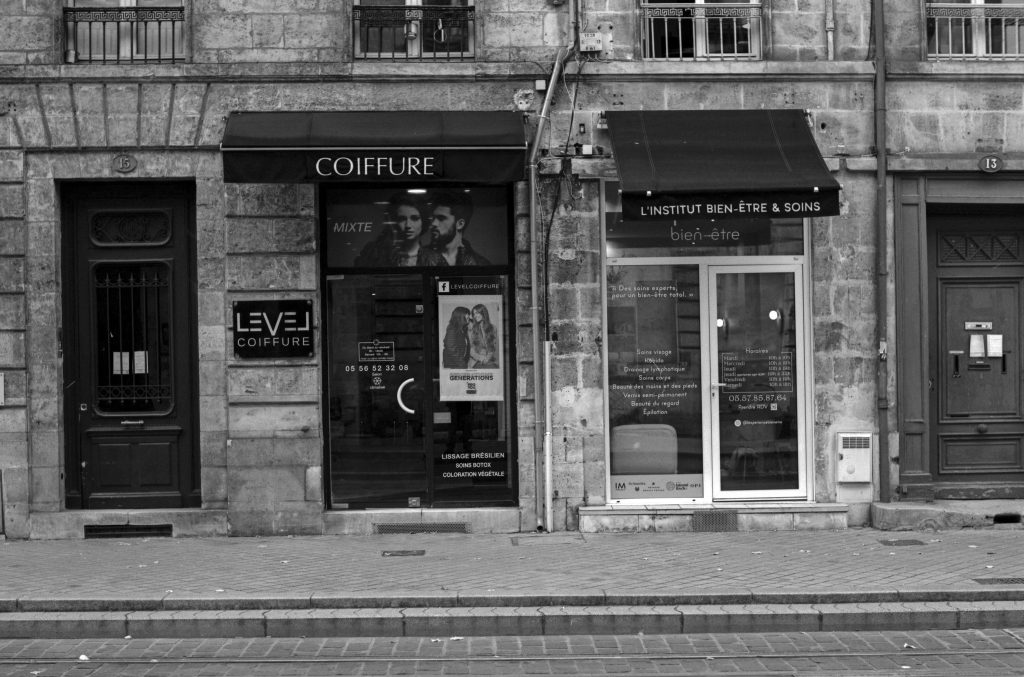
My photography tends to focus on pictorialism and tonality. Extra shallow depth of field and extreme sharpness/resolution are usually not part of my visual playbook. That being said, as I get to the end of this article, I will discuss the dual personality of this film. The tonalities rendered as a “normal” monochrome experience, and the film shot with a visually opaque red filter as an IR film.
However, before I discuss the results, I need to discuss the processing requirements of Monopan 50.
Different film developers work in significantly different ways. A fine-grain developer (such as Microdol-X) actually dissolves the sharp edges off the clumps of silver halides during processing to present a finished product that has the “appearance” of less grain.
Unfortunately, you also lose some actual resolution, as you lose the appearance of grain. Other developers (such as Rodinal) are designed to be gentle on the edges of halide grains.
Graininess
You may notice a slight graininess, but you have maximum resolution. My go-to developer for the past 40 years (D76/ID-11 diluted 1:1) is a nice compromise between the two extremes. Unfortunately, it is NOT recommended for use with Leica Monopan 50 film. The technical data sheet lists a few Adox developers, an Ilford Developer, and Kodak Xtol.
I chose to use the ADOX HR-Dev. Diluted 1:49. This was the only choice that seemed to indicate a contrast value of N instead of a value of 0.65. The HR developer also is a little of a “compensating” developer when used as instructed.

Processing refresh
A brief refresher for those who have not processed film in a while: the three variables that control the contrast and development of your film are time, temperature, and agitation. All the other recommended developers use a more common agitation cycle of the first 30 seconds and then two agitation cycles per minute. (Note: nowhere in the literature do I see any reference to rotary/continuous agitation processing).
I suggest that this film might be too agitation-sensitive, and rotary processing (like Jobo) might yield inconsistent results. The HR Developer uses regular agitation for the first 30 seconds, followed by one agitation cycle per minute, but for a slightly longer duration.
The reason this is called a “compensating developer” is that it allows the shadow values (thinner portion) of the negative to yield acceptable results without “blowing” out the highlights. By giving it more time and cutting down on agitation, you “compensate.”
The bottom line is that every roll of Leica Monopan 50 film I have processed has yielded extremely useful negatives, which, when scanned, have produced compelling images with a nice (sometimes a little nostalgic) range of tones. For a deeper dive into film developers and how they affect images, see this article.

Shooting
When shooting with the visually opaque IR filter, it was necessary to open up about 2½ stops. Some reviews that I read online suggested that the film had an effective ASA of about 5-8 when using the IR filter.
My experience is that the film is, in fact, a little more sensitive than that. If you use an extra 2½ stops as a starting point, I think you will have usable exposure. I have been missing the Kodak High-Speed IR since it was discontinued.
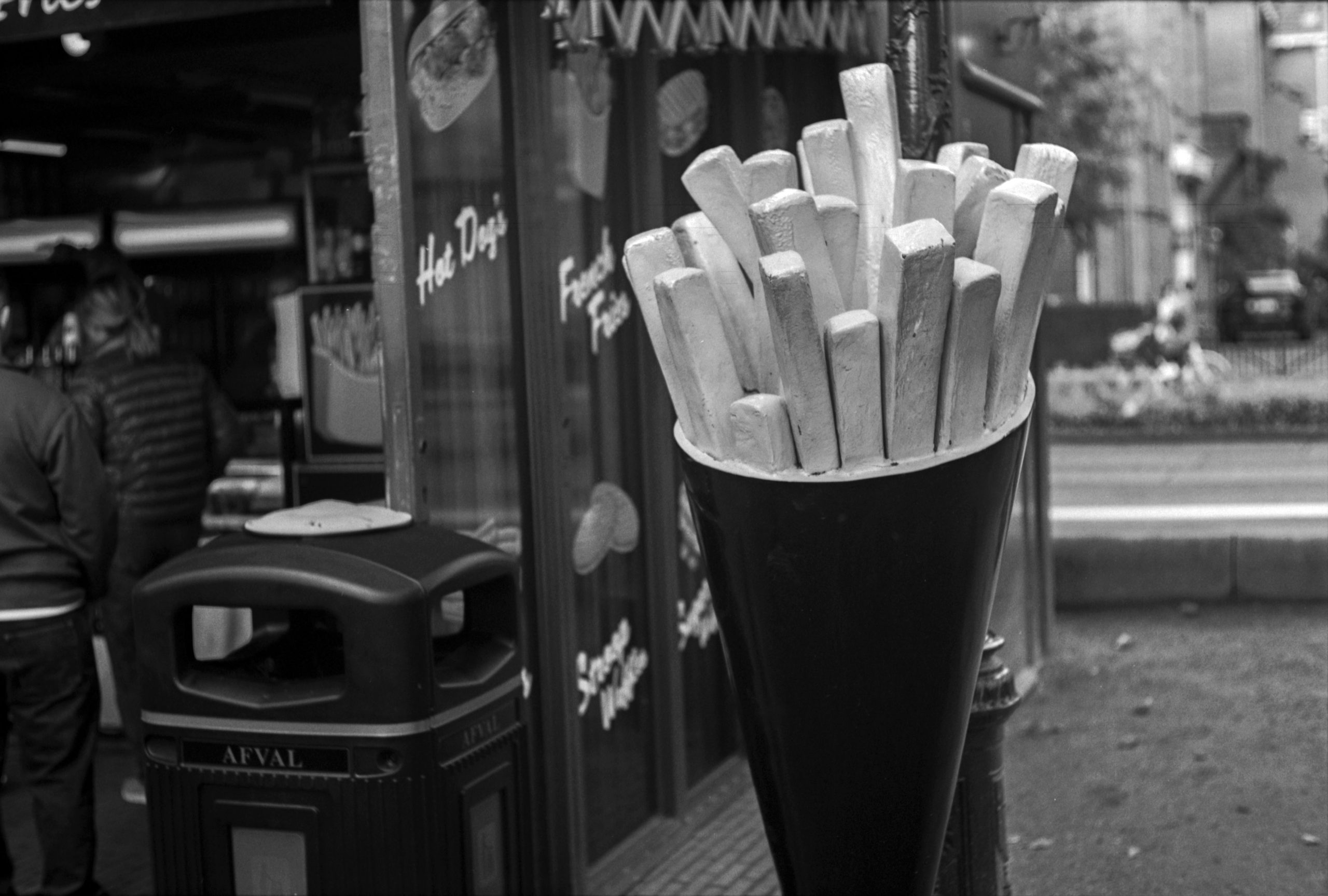
Even if the new Monopan 50 is not as IR sensitive as the discontinued Kodak product, it is close enough in its image-making qualities that those who desire to shoot Infrared will be happy with the results.

Conclusion
Hopefully, this film will be more readily available soon. Meanwhile, I hope the write-up served its purpose. Leica Monopan 50 is a film that makes a compelling argument for shooting in a 35mm format with black and white (again)
I hope that it demonstrates the wide range of capabilities that the new Leica Monopan 50 film is capable of. It is my goal that this write-up be used as a tool in helping those who read it, prepare for shooting with this new film.
Technical data
About the author
Jeffery D. Trilling is an ex-U.S. Navy Photographers Mate. He has a BS in Photography from Southern Illinois University Carbondale and an MA in Photography from Columbia College, Chicago. He is retired after having owned and managed various photographic retail establishments. Currently, he is actively making images using many formats, from 8×10 Film to 35mm digital. His photographs, have been included in many exhibits and are in the permanent collections of numerous institutions.
Visit the author’s website here
Make a donation to help with our running costs
Did you know that Macfilos is run by five photography enthusiasts based in the UK, USA and Europe? We cover all the substantial costs of running the site, and we do not carry advertising because it spoils readers’ enjoyment. Any amount, however small, will be appreciated, and we will write to acknowledge your generosity.
I was actually a bit surprised that Monopan reviews are hardly available so I am glad to see one now. By no means I can call myself an expert of this film as I shot only one roll so far as a test. However, I managed to build a small stock of five rolls which I’ll probably use when the winter is over and there is more light.
In general I concur with the results of your review. I liked the results of the one roll I shot and the level of detail impressed me. However, I’d like to warn readers of this article: you can very easily blow up the highlights. In this regard the film behaves more like slide film than like negative film.
Highlights are predominantly controlled by development. Development is controlled by time, temperature, AND agitation.
As I suspect by the choice of recommended developers and agitation cycles, this film, just like most fine grain high contrast films might be a little sensitive to over development and, or over agitation.
Pull it back a little like I have and you will keep your highlight detail.
JT
Really great article! I have shot a few rolls of the film myself and loved it. Its been an interesting film with some quirks to explore and tame as you have suggested too, but wonderful results once you do.
Excellent article! Many thanks!
I’m in Canada and still waiting for my orders of this film placed several months ago. 🤦🏻♂️
What troubles me is whether there are enough quality processing labs around to handle the job properly? 😎
A simple daylight tank, a dark room to load it and just a little bit of chemistry is all that you need.
Even if you are not an “expert”, I would have as much confidence in you as I would have sending my film out.
Feel to reach out if you want any tips.
JT
Hi Jeff. This article has taken my breath away with its depth that, while academic, comes across as sound and practical advice, borne out from decades of personal experience. For this, I applaud you. I hope we can get you to do a talk for LSI one of these days. Best, Chats
Hi There – what an interesting article.
I rather understood that this was actually (at least based on) Adox HR-50 – what do you think?
all the best
Jono
Yes indeed. I got the Leica branded Monopan 50 and the Adox HR 50. Materials are identical. Printing ink. Plastic caps (though Leica Red vs Orange). They certainly share the same DNA!
If you scale and overlay the sensitivity graphs, they are identical between the two films. I haven’t shot any yet so can’t speak to the rest of it. The infrared aspect certainly interests me. I may have to shoot some for that reason alone. I will probably use the Adox or the also similar (spectral sensitivity that is) Ilford SFX 200 as those are both more readily available.
Great article! It has motivated me to shoot some film.
You are right about the sensitivity graphs being the same. But yet, Leica claims a slightly different sensitivity than the Adox product. I have thought about that myself..
I visited Wetzlar during the 100 celebration. While there, I had a chance run in with a PHD who works in Leica’s imaging labs. I was amazed at the concern and care that goes into all Leica products when deciding colour balance and spectral sensitivity.
Perhaps as more film becomes available I will do an actual side-by-side with colour charts to compare the two films.
In the meantime I am going to continue to shoot the film that I have and enjoy the results.
JT
I am beginning to realize with Leica, it is not where the product might originate from.
What matters is the specifications of the product that has Leica’s name on it.
Recently I came across a brochure from the 1954 Photokina. One of the articles was about Leica being the sole distributer of Adox film. It also talked about the film being in short supply and backordered. I did not realize that the two companies have a history that goes back that far!
JT