
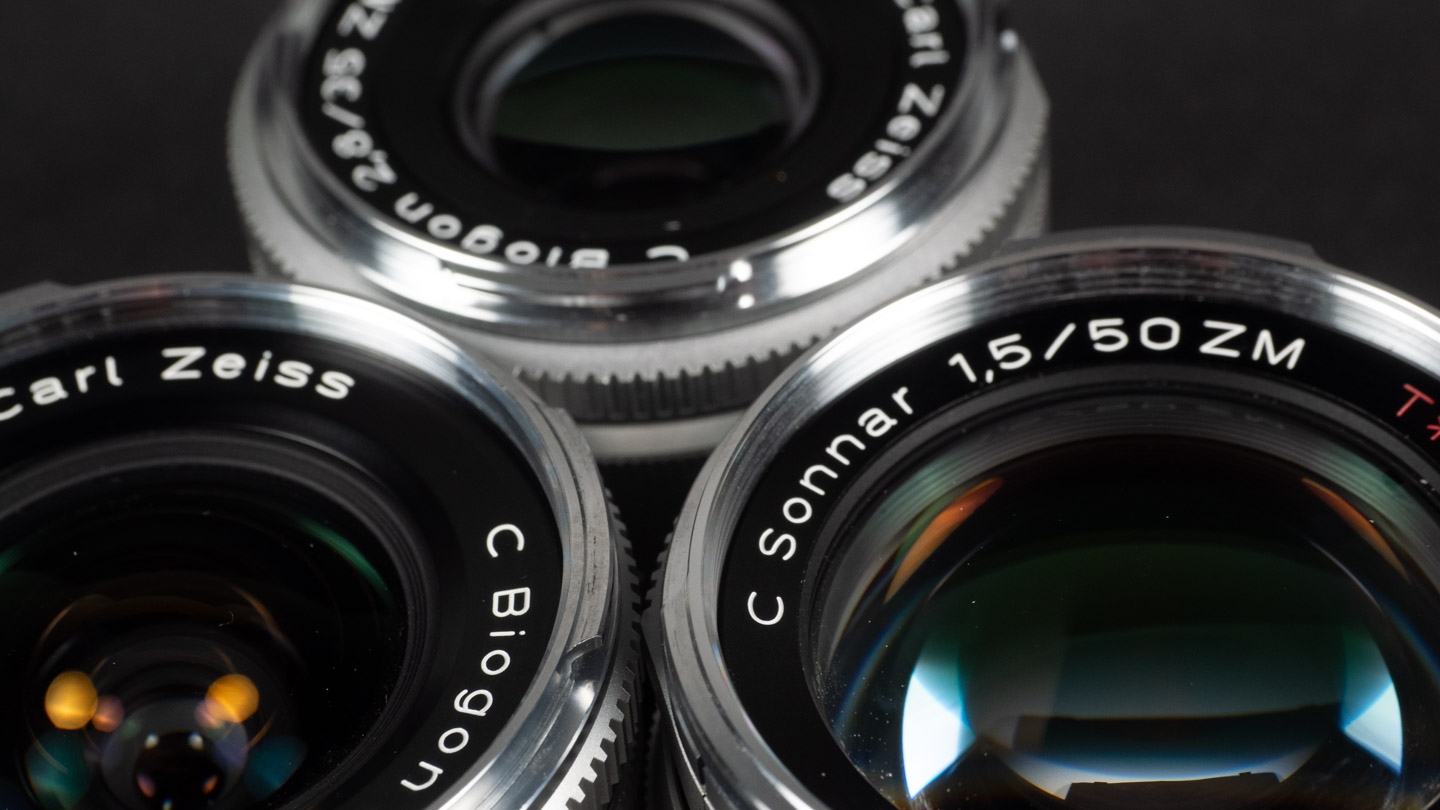
Within the Zeiss ZM line-up, three lenses carry the letter C in their names. What makes the C Biogon 21/4.5, the C Biogon 35/2.8 and the C Sonnar 50/1.5 so special? Here comes the big review of the three M-Mount rangefinder optics that constitute the Zeiss ZM C lenses range.
Zeiss, Voigtländer, Zeiss: Ménage à trois
The Zeiss ZM lenses were launched in 2004 together with the Zeiss Ikon film rangefinder camera. While the camera was discontinued many years ago (only to become a much sought-after collector’s item), most of the ZM lens line-up is still available new.
For some strange reason, sales are low, despite the Zeiss lenses offering excellent value for money. They are somewhat in the shadow of the Voigtländer VM lenses. These are also produced in the Cosina factory in Japan. Maybe it’s because Voigtländer continues to develop new lenses and surprises its customers with often interesting and sometimes even daring novelties.
ZM lenses: more an echo from the past
Zeiss, in contrast, has virtually stopped its engagement in the M-Mount market. The Distagon 35/1.4 from 2014 is most likely the last-ever M-Mount lens from Zeiss. Whether new ZM lenses are still in production or if Zeiss is just selling what’s left in stock, nobody can tell. Needless to say that this would be a pity for the entire M-Mount firmament, not just for the ZM lens line.
This review has a closer look at a sub-set within the ZM range: The Zeiss ZM C lenses. Three of the total of 13 ZM lenses carrying the C in their names. These are the C Biogon 4.5/21; C Biogon 2.8/15; C Sonnar 50/1.5.
There are different explanations, even from Zeiss themselves, of what the C is supposed to mean. What occurs frequently is “classic” and “compact”. I would add “characterful”, as the following text and images hopefully will show.
Conventional designs and excellent coating
Do you want to know more about the ZM programme? You will find a lot of information in other episodes of the M Files. Part 5 covers the Zeiss Ikon camera and the lenses Biogon 25/2.8 ZM, Biogon 35/2.8 ZM and Planar 50/2.0 ZM.
In Part 11 we have a review of the Zeiss Distagon 18/4.0 ZM and the Zeiss 35/1.4 ZM. Part 12 is all about the Zeiss Biogon 21/2.8 ZM, Biogon 28/2.8 ZM and Tele-Tessar 85/4.0 ZM. And in episode 21, the second modern ZM camera by Zeiss, the Ikon SW, is the topic. And do not miss the many knowledgeable comments from our great Macfilos readers below the articles.
Here, it’s sufficient to say that most ZM lenses are fairly conventional designs that get by with spherical lenses. Their design goal is not necessarily the reduction of elements but more a good cost-benefit ratio. The increased number of elements and the resulting risk of contrast loss and flare are well compensated with Zeiss’ excellent T* coating. This applies to all three Zeiss ZM C lenses in this review.
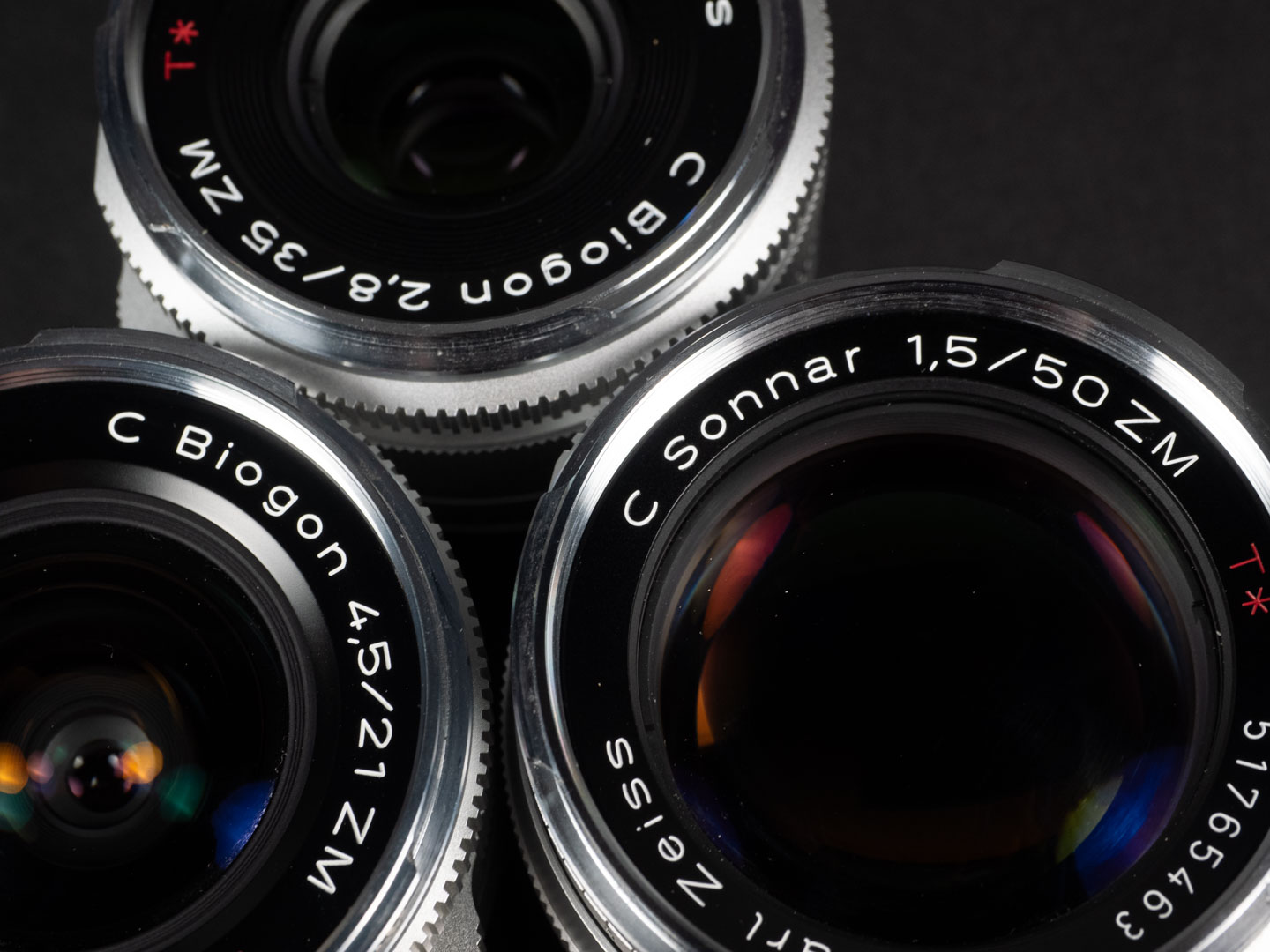
Zeiss ZM C lenses
In this review, we will see how well the roughly 20-year-old designs from the film age work on a modern digital rangefinder camera. I mainly used the M10 for these tests with the Zeiss ZM C lenses.
The older digital rangefinders are generally more complicated when it comes to colour drift. More on this in the chapters about the individual lenses. I carried out no systematic test on film. But the results with the 21/4.5 leave no doubt that all three lenses are excellent performers in analogue use. Read about availability, prices, and scope of delivery for each lens in its respective chapter.
The C Biogon 21/4.5
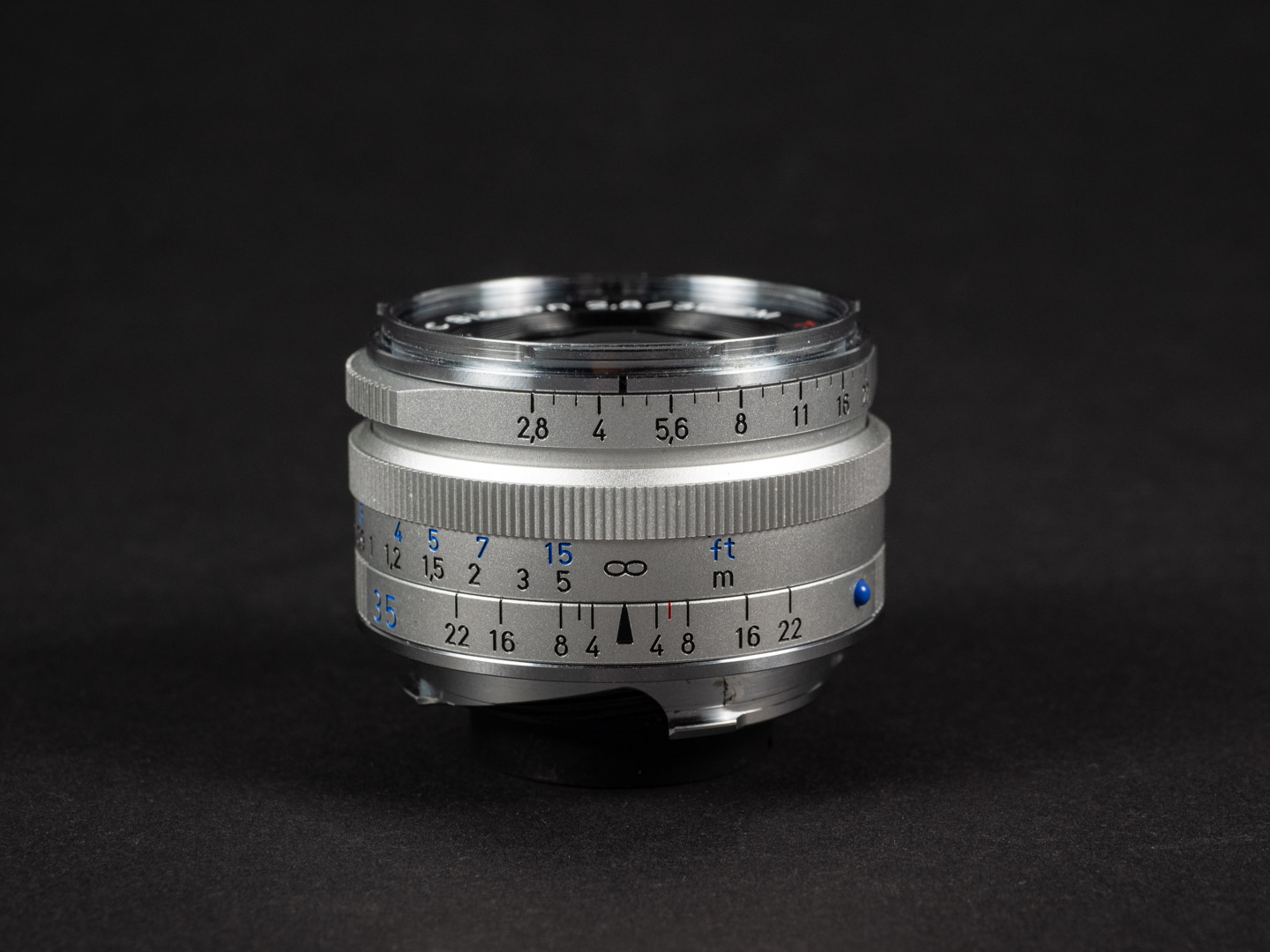
Technical data, scope of delivery, price, and availability
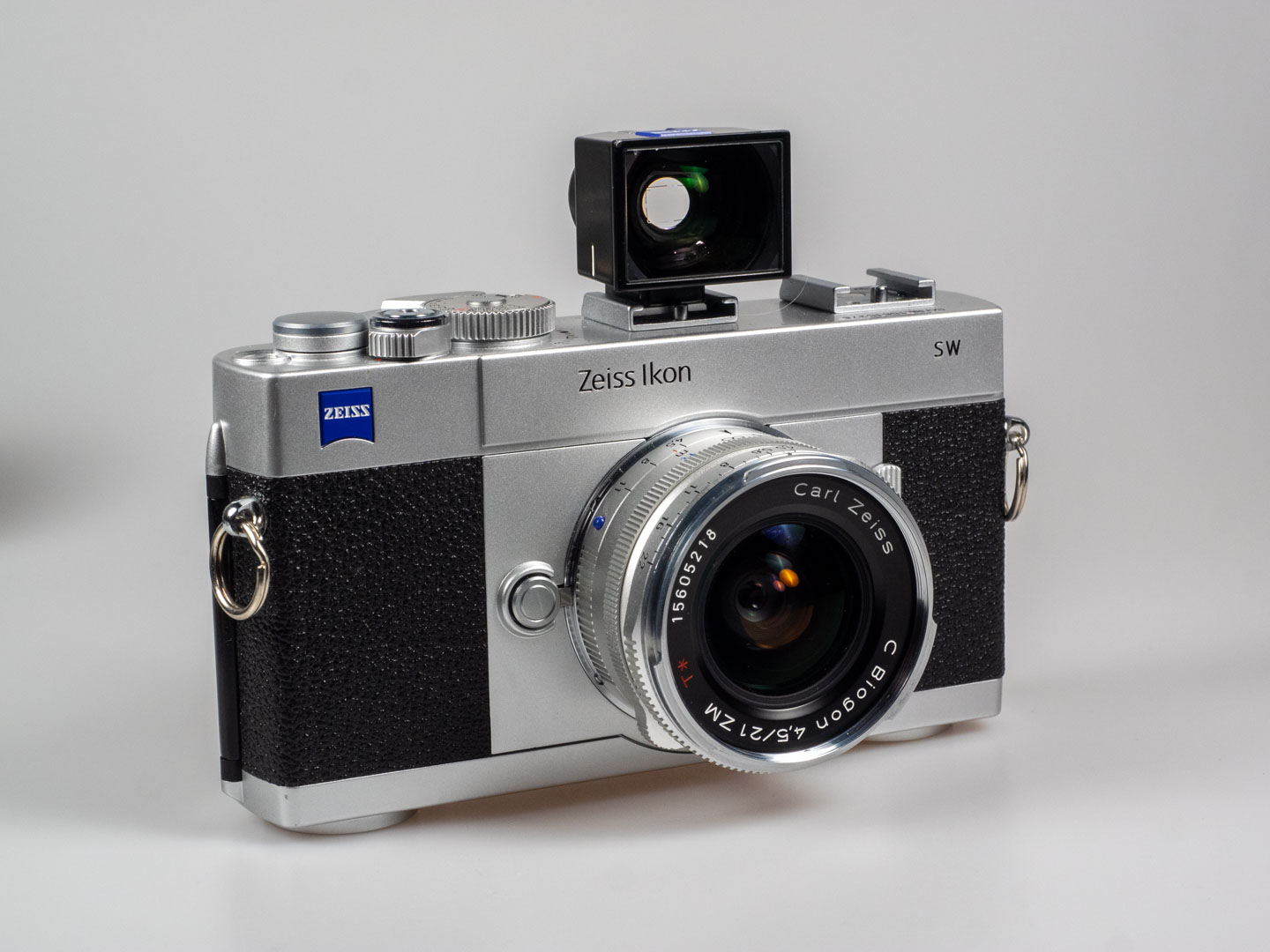
Our first candidate of the Zeiss ZM C lenses trio is the Carl Zeiss C Biogon 4,5/21 ZM T* (as the engraving on the front says). It is the shortest focal length in the Zeiss ZM C lenses line. Zeiss launched it in 2006. This was about two years after the Zeiss ZM system.
This encompassed, at its best times, two cameras (the Zeiss Ikon with rangefinder and the Zeiss Ikon SW without rangefinder, especially for super-wide lenses that would require an external viewfinder anyway) and 13 lenses.
According to Zeiss, it is a modern version of their 1952 lens with the same focal length and aperture. It had a short life span, however; news about its discontinuation dates back to 2016.
2006-2016
At the launch of the lens at the Photokina trade exhibition in Cologne (RIP), Zeiss emphasized the compact size of the C Biogon 21/4.5 and “image quality that is better than the best colour films of our time, and that shows practically no distortion.”
As it turns out, its use with a digital camera was not in focus back then. The lens came only with front and rear caps: The squared hood (item 1365-665) had to be bought separately at a hefty price.
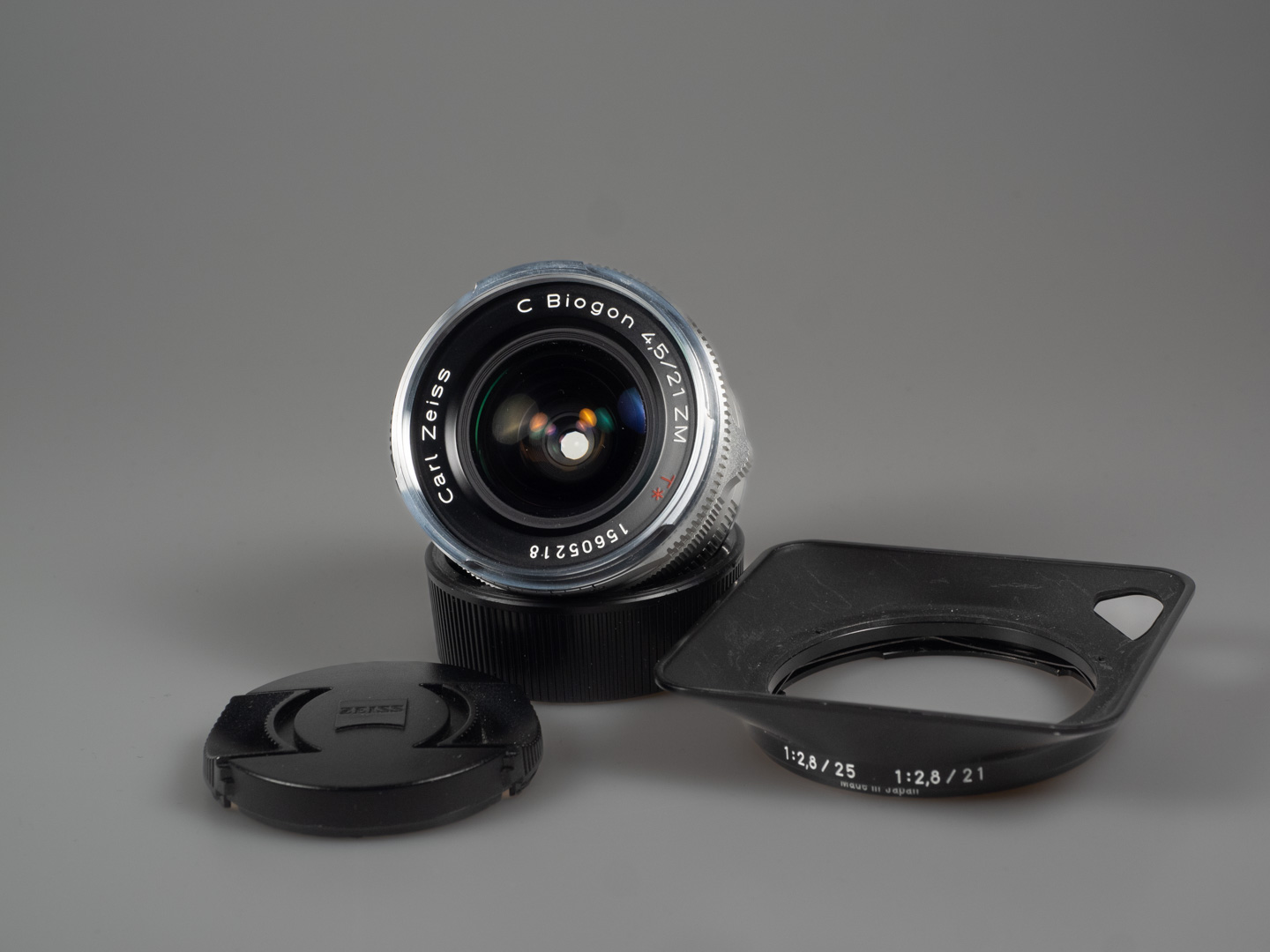
The C Biogon 21/4.5 is remarkably small indeed. It is just 31mm long (when mounted, overall length is 45mm) and has a diameter of 53mm. It weighs only 233g (as-in-my-bag, with both covers and hood, lens alone 196g).
Speaking of lens covers: The ones from Zeiss for their M-Mount lenses (and thus also for the Zeiss ZM C lenses) are the worst I have ever come across. For attaching, you have to laboriously fiddle with them, and then they don’t stay in place. This is truly unworthy of the brand.
I bought a replacement from a third-party manufacturer first. The filter screw mount is 46mm, as with many other Zeiss and Leica rangefinder lenses. Price at launch was €1,049 (in Germany, RRP incl. VAT), and if today a used copy in good order turns up, you can hope to get one for €700.
Optics and rendering
Lens design
The shortest lens in the Zeiss ZM C lenses range is both compact (one possible meaning of the C) and uses a classical design approach (the other explanation for the C). According to Zeiss, it is a 1952 design, brought back to life with modern glass materials and up-to-date T* coating technology.
It consists of eight elements in six groups and is a fairly symmetrical setup. Its rear nodal point is rather close to the film/sensor plane. This enables this design with remarkable sharpness and flatness of field – but with the effect of light rays reaching the sensor at a very shallow angle on the margins of the image and even more so in the corners.
Colour drift
Anyone who attaches a C Biogon 21/4.5 to a digital camera and sees the first images might initially experience a mild shock. This lens demonstrates the problem of colour drift like no other.
On the right-hand edge of the image (in landscape format), there is a distinct magenta cast that extends across almost ten percent of the image width. And it becomes increasingly stronger towards the outside.
Unlike the ‘Italian flag’ effect, however, there is no green colour cast on the opposite side, but rather a magenta tint, albeit much less pronounced, very narrow and often not immediately noticeable. The cause of this is the short distance between the rear lens and the sensor. This causes the rays of light to hit the sensor at a very shallow angle.
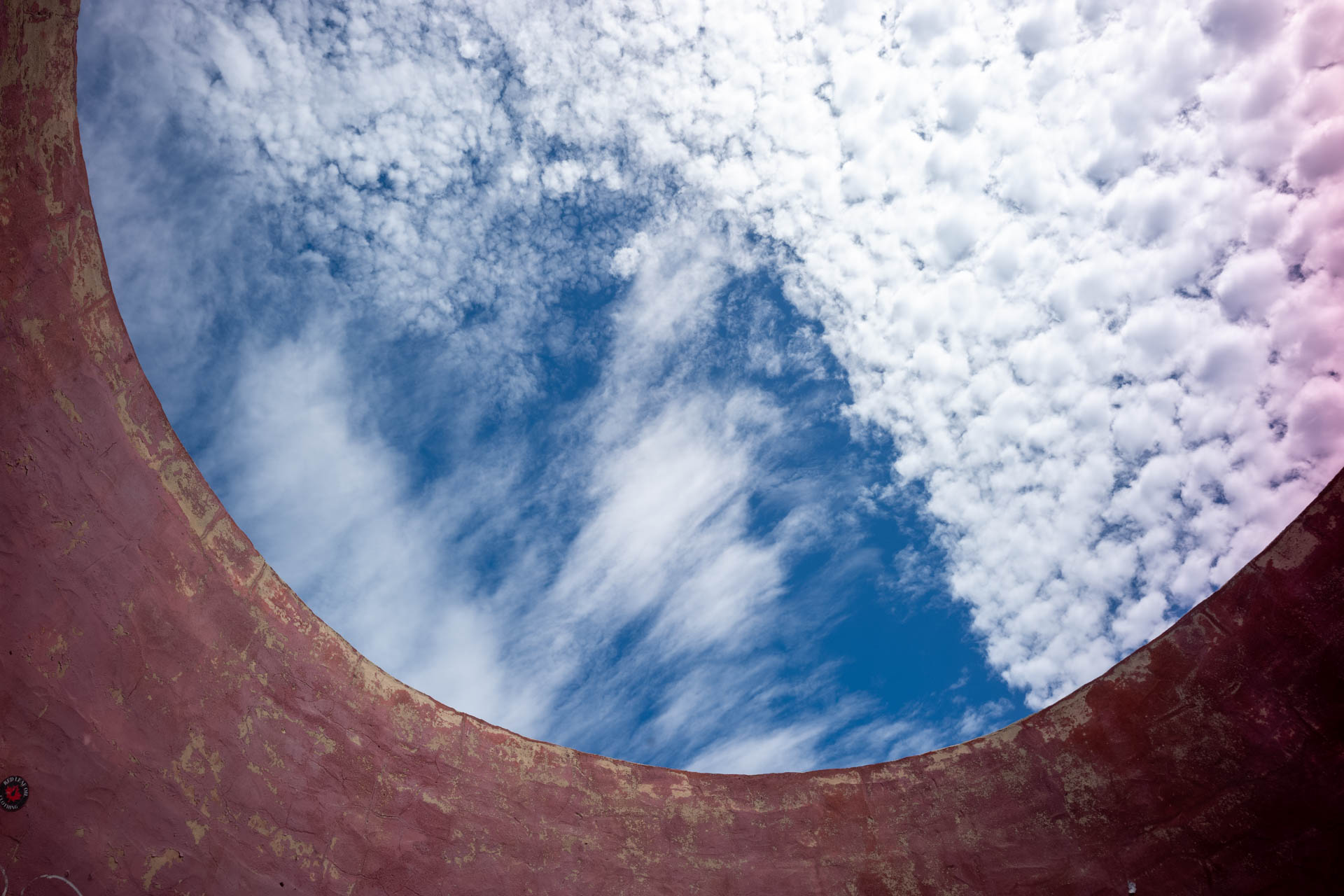
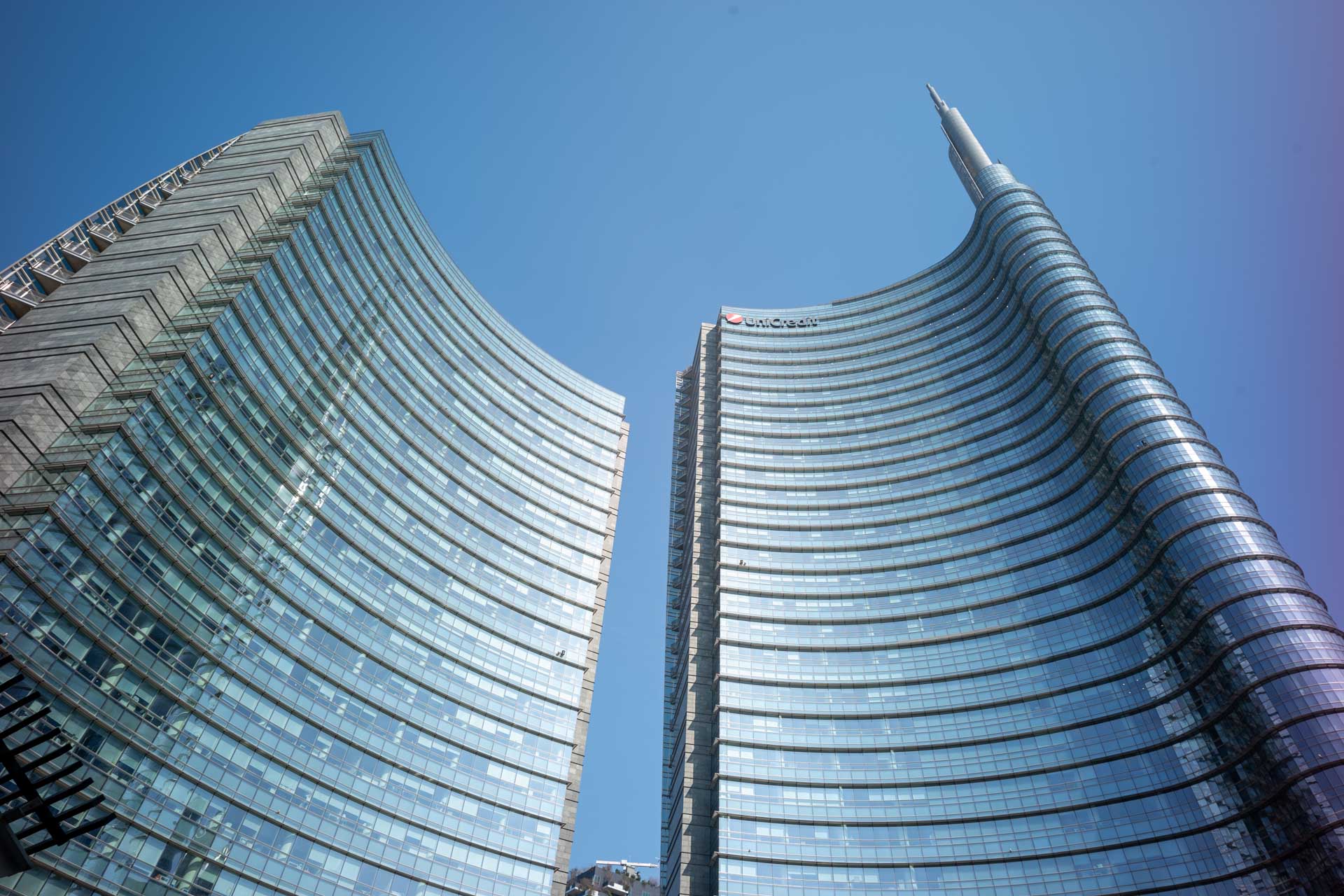

This imaging error makes photos taken with the C Biogon 21/4.5 on a digital M (tested up to and including M10) sometimes unusable, and even in-camera correction profiles cannot really solve the problem.
On film and in black-and-white photography, however, colour drift is not a significant issue. In digital photography, post-production can correct colour cast. A very helpful and recommended article on philipreeve.com presents three options for doing this.
I decided to try the method with a linear gradient mask. The mask can neutralize the magenta colour cast quite nicely by using the ‘temp’ and ‘tint’ parameters. In this review, you see uncorrected images.
Vignetting
Vignetting of the C Biogon 21/4.5 is heavy. There is a correction profile for this lens in Lightroom. It flattens the image (a bit, just because there is not much to do) and removes vignetting. The latter overshoots the target for my taste. That’s why the images here are processed without profile correction and with completely unchanged vignetting.
Chromatic aberration
The C Biogon 21/4.5 shows no significant lateral or axial chromatic aberration. This is not entirely surprising for a slow wide-angle lens, but it’s still proof that both design and glass materials used are good. In this respect, the Zeiss ZM C lenses show what the design goals were back then.
Sharpness
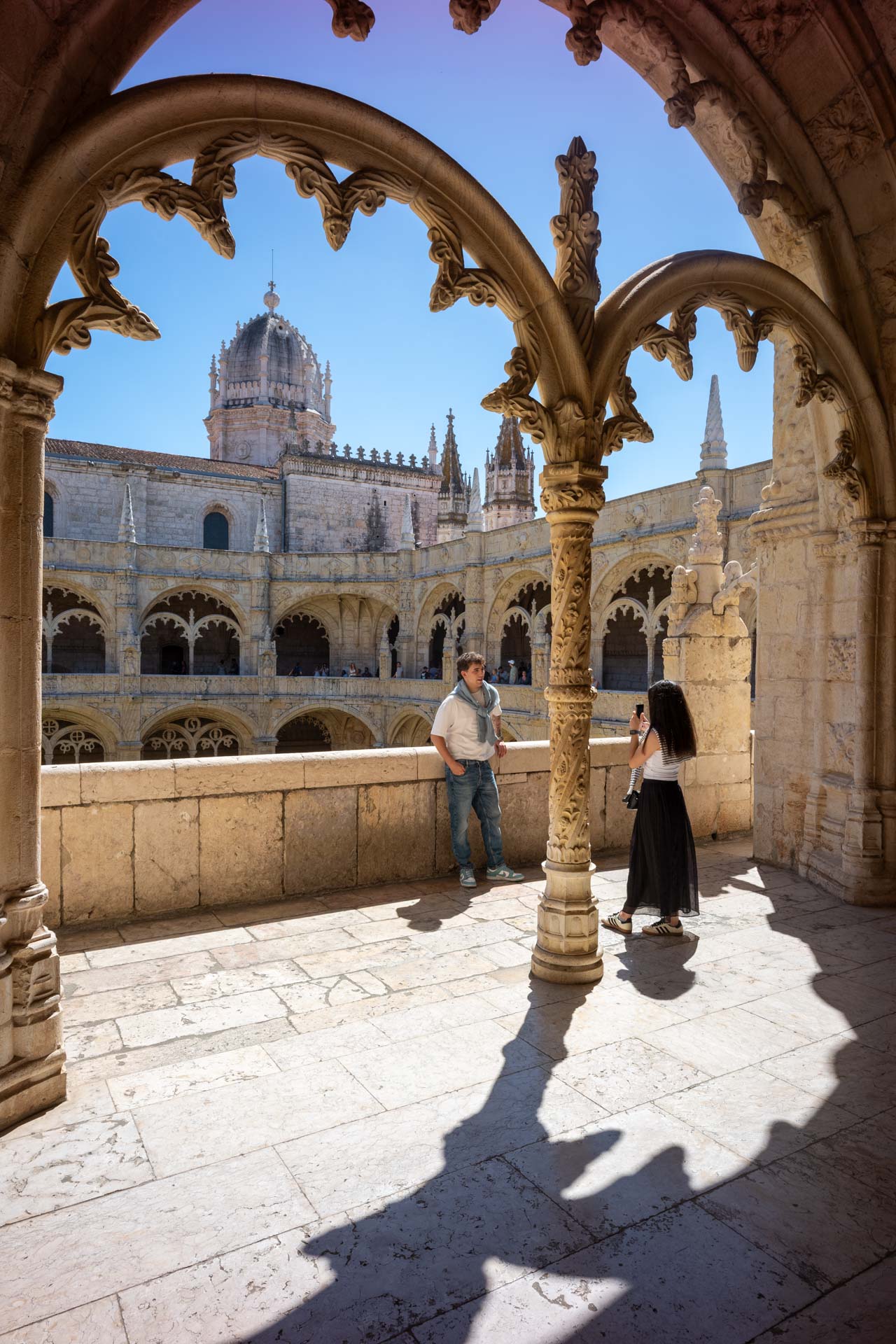
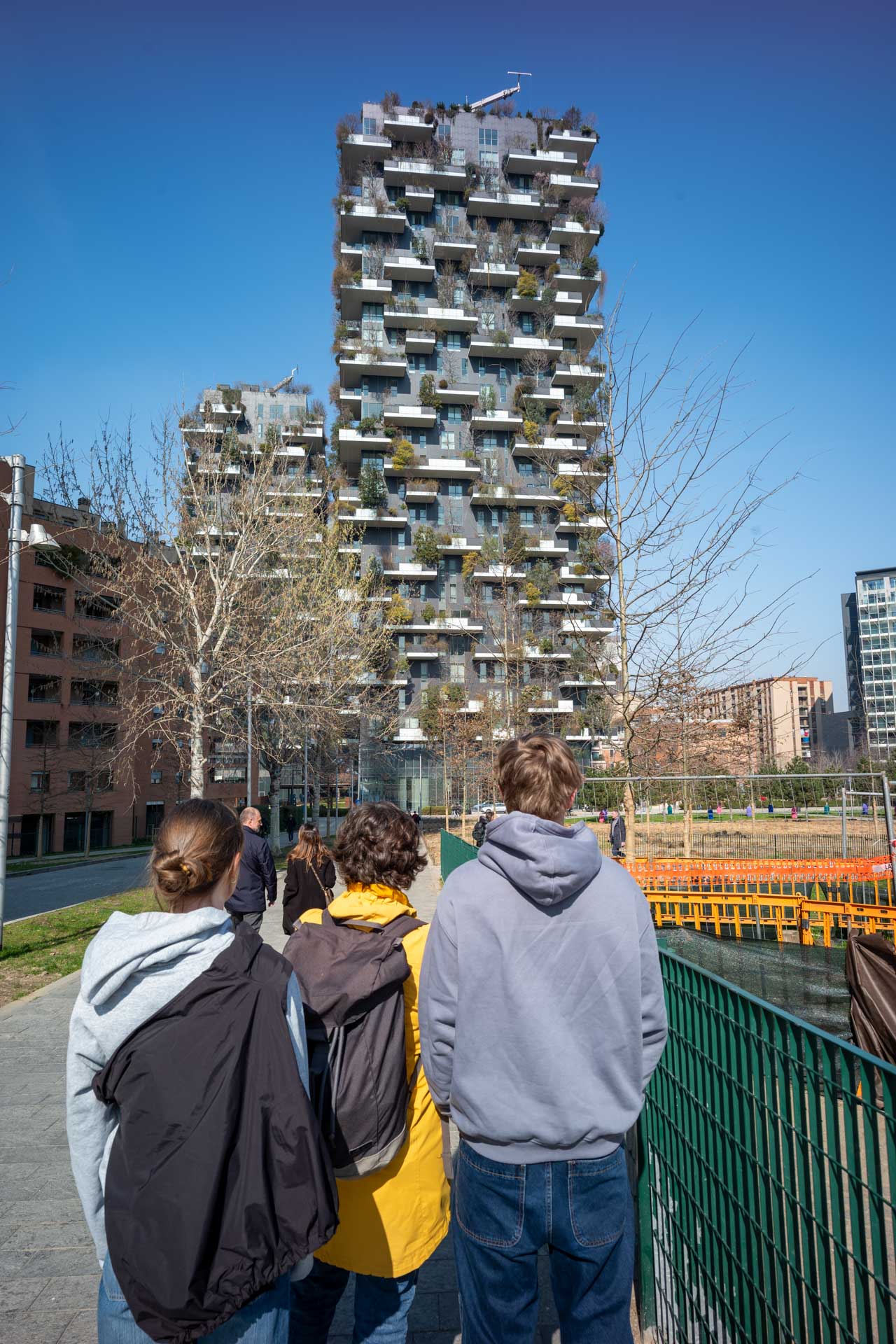
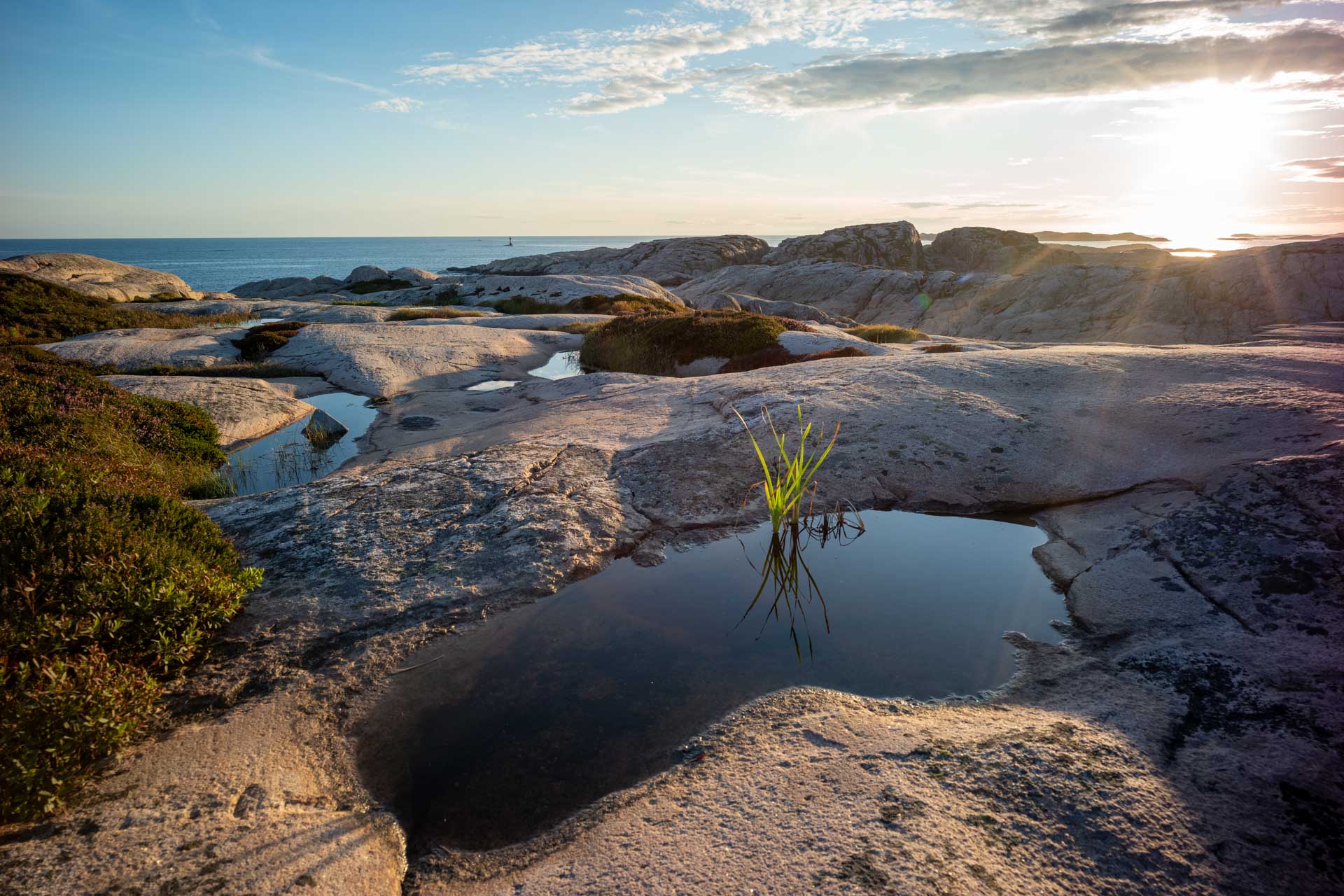
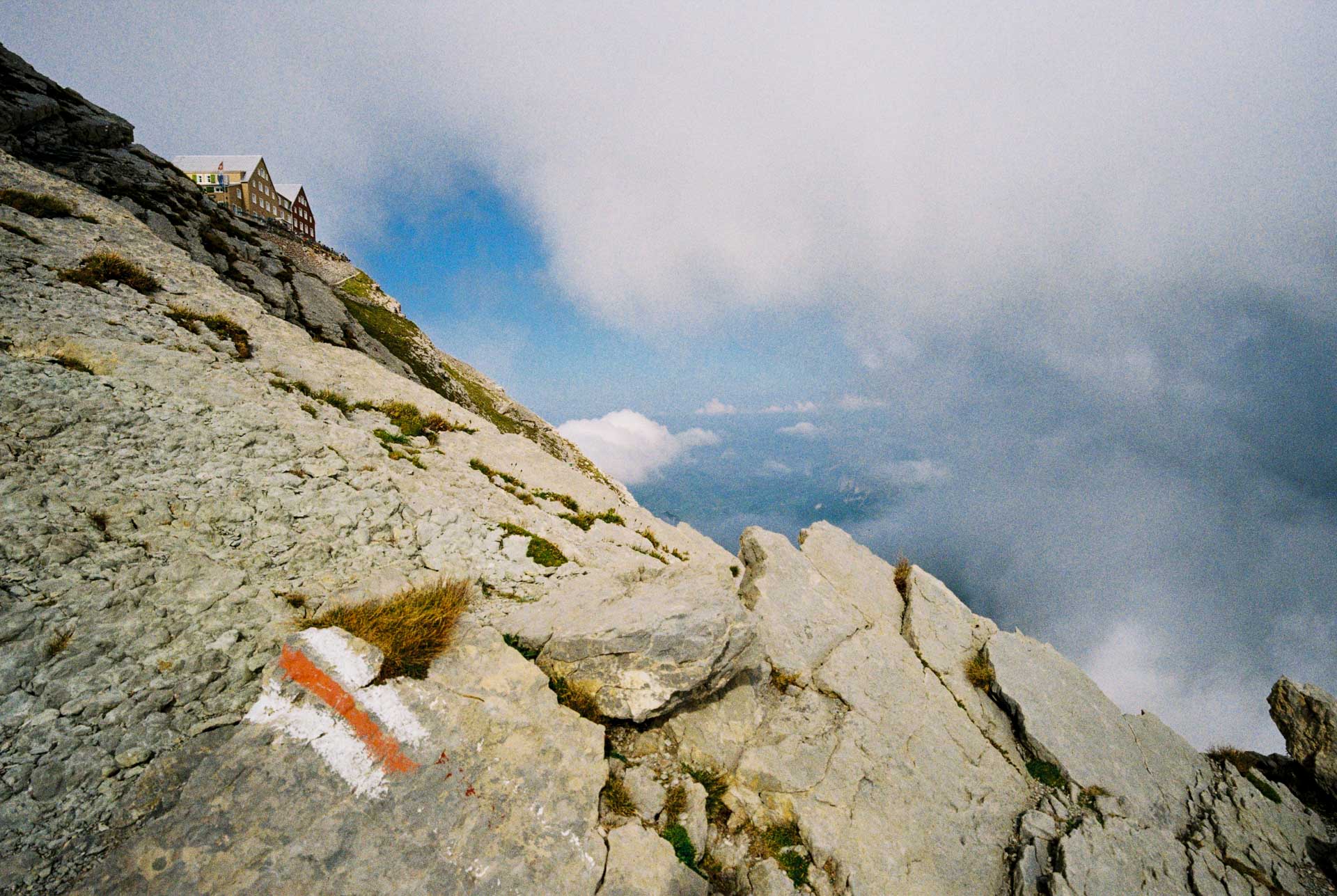
This is where the C Biogon 21/4.5 really excels. At infinity, this super wide-angle lens is sharp already at full aperture and right to the margins. In the extreme corners, stopping down seems to help. But there is no reason not to use this lens at full aperture in all situations.
At close focus, it is still a solid performer, and keep in mind that it allows for focusing down to 0.5 metres. Add to this the very nice contrast and absence of distortion, and you see what a good lens the shortest of the Zeiss ZM C lenses is.
Bokeh and flare
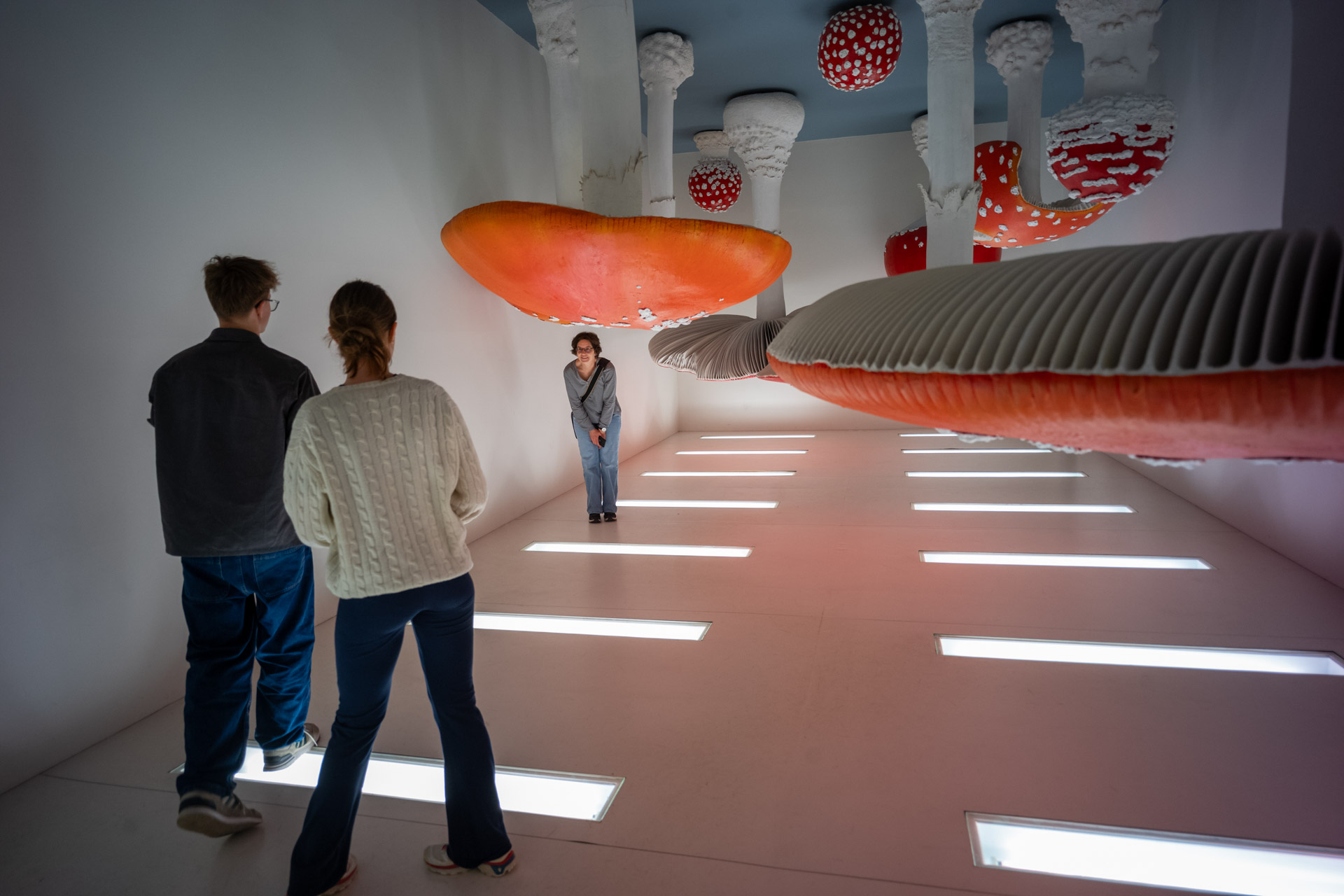
In most cases, you will get an image that is sharp from the closest object to infinity when you use this lens — it’s a 21mm after all, and f/4.5 already provides generous depth of field. But at close distance, you can play a bit with sharpness and unsharpness. What I was able to produce looked good, but I have to say, bokeh was certainly not the focus of this review.
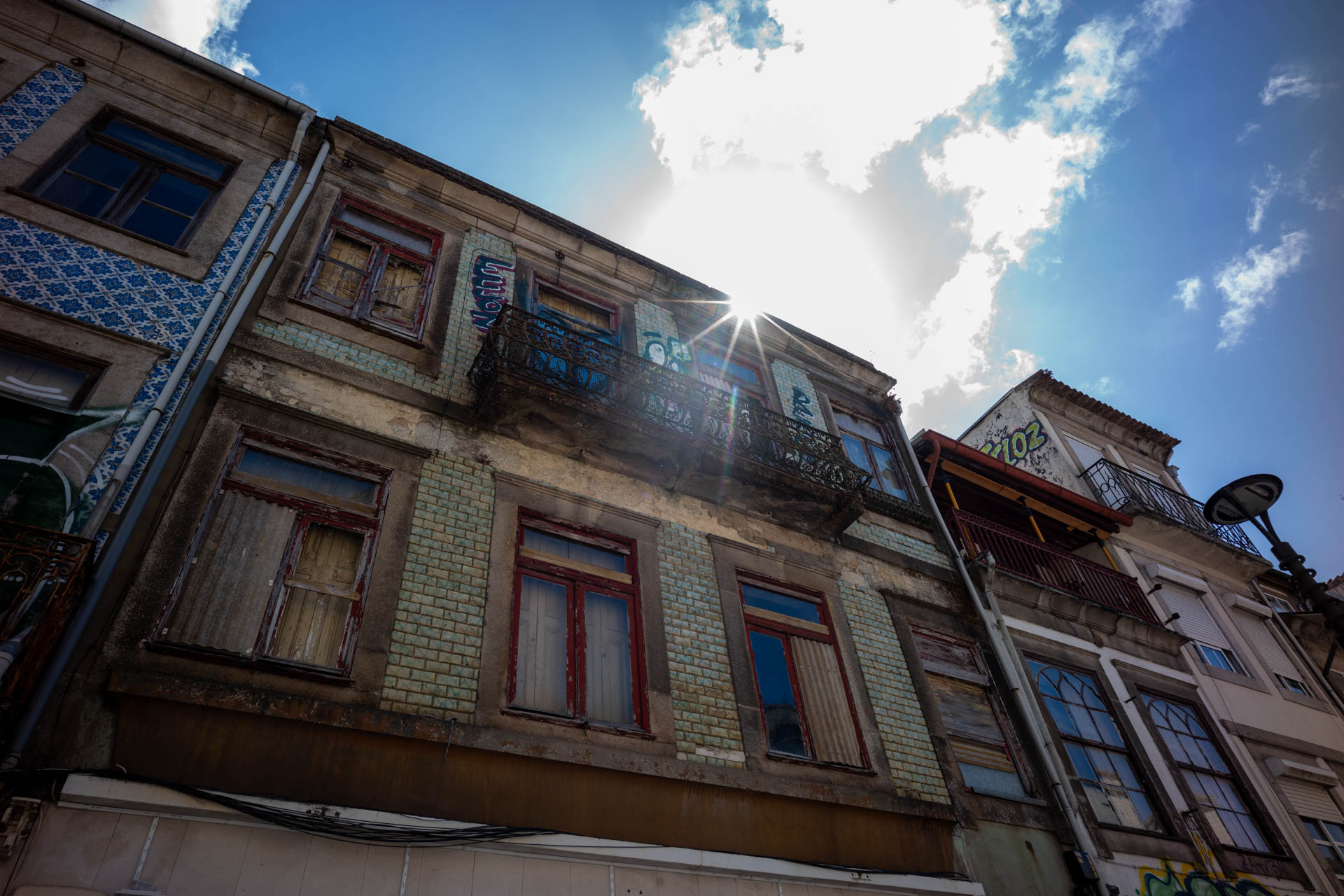
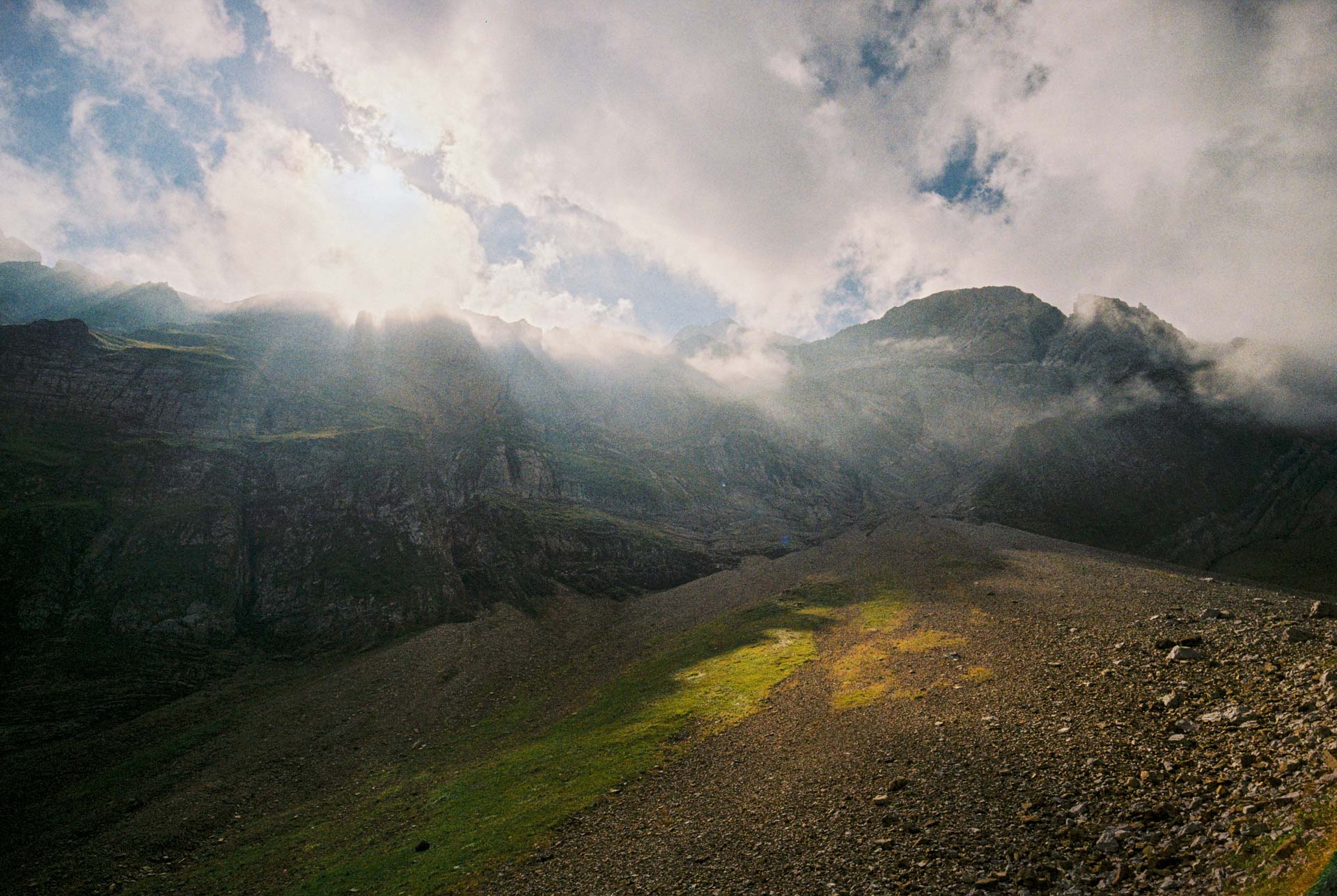
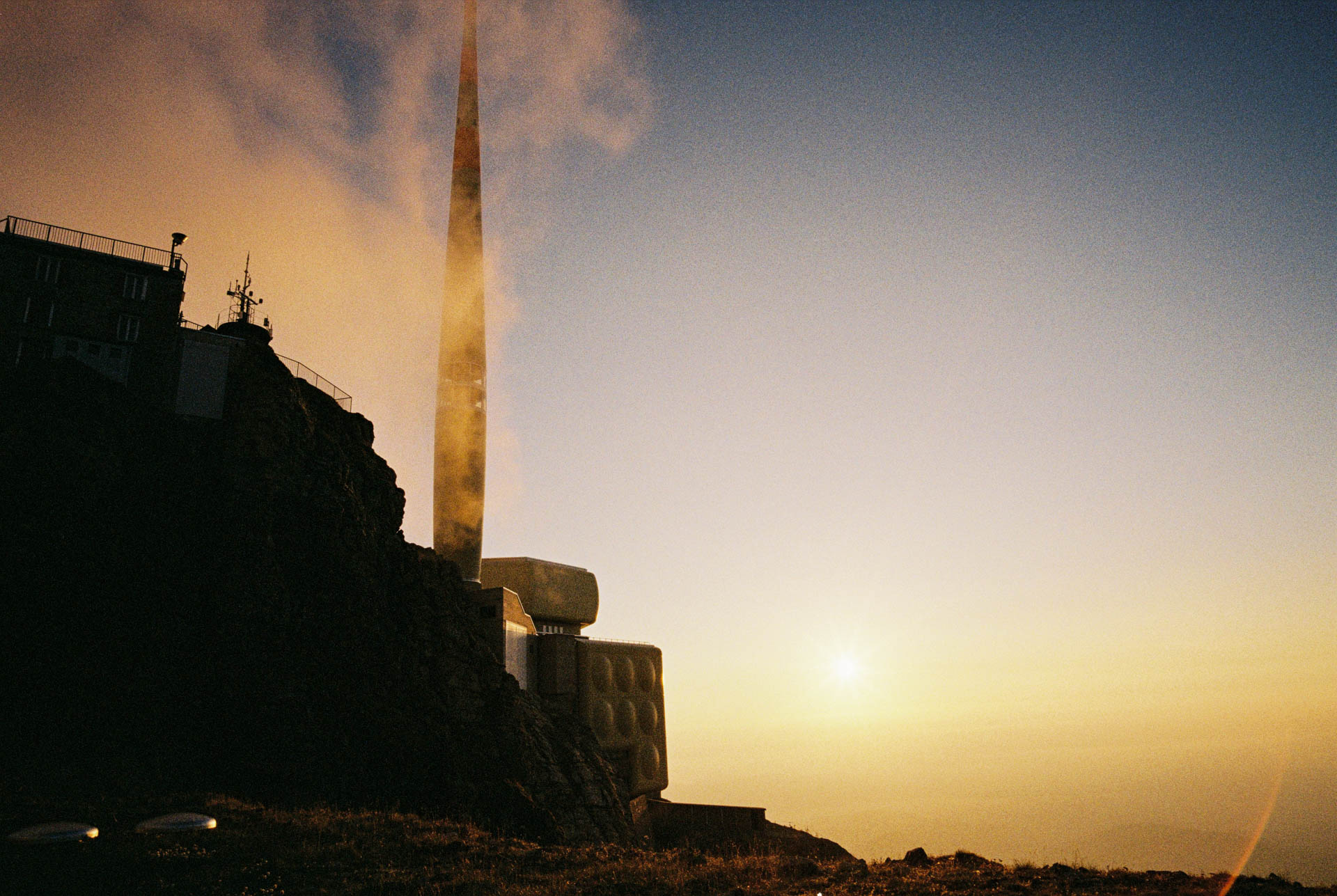
On the other hand, flare was an important subject for me. With wide-angle lenses in particular, there is always a high risk of getting a light source in the picture. With a lot of effort, I was able to create some flare, but in almost all situations, the C Biogon 21/4.5 performed extremely well and delivered very high-contrast images even in backlighting.
My verdict, optics
I have seldom seen a lens that was so good and so bad at the same time as the Zeiss C Biogon 21/4.5. It excels in sharpness, contrast, and absence of distortion.
Yet, at the same time, it is a catastrophe when it comes to colour cast, at least if used on a digital Leica M up to the M10 (can’t say if it is better with an M11 – if you have firsthand experience, please do share your knowledge in the comments section).
It is not surprising that this C Biogon 21/4.5 was one of the first ZM lenses to be discontinued. The analogue/black-and-white niche within the small market of rangefinder photography is or has become just too small. So, it was the first of the Zeiss ZM C lenses that had to go.
Mechanics and handling
Overall appearance
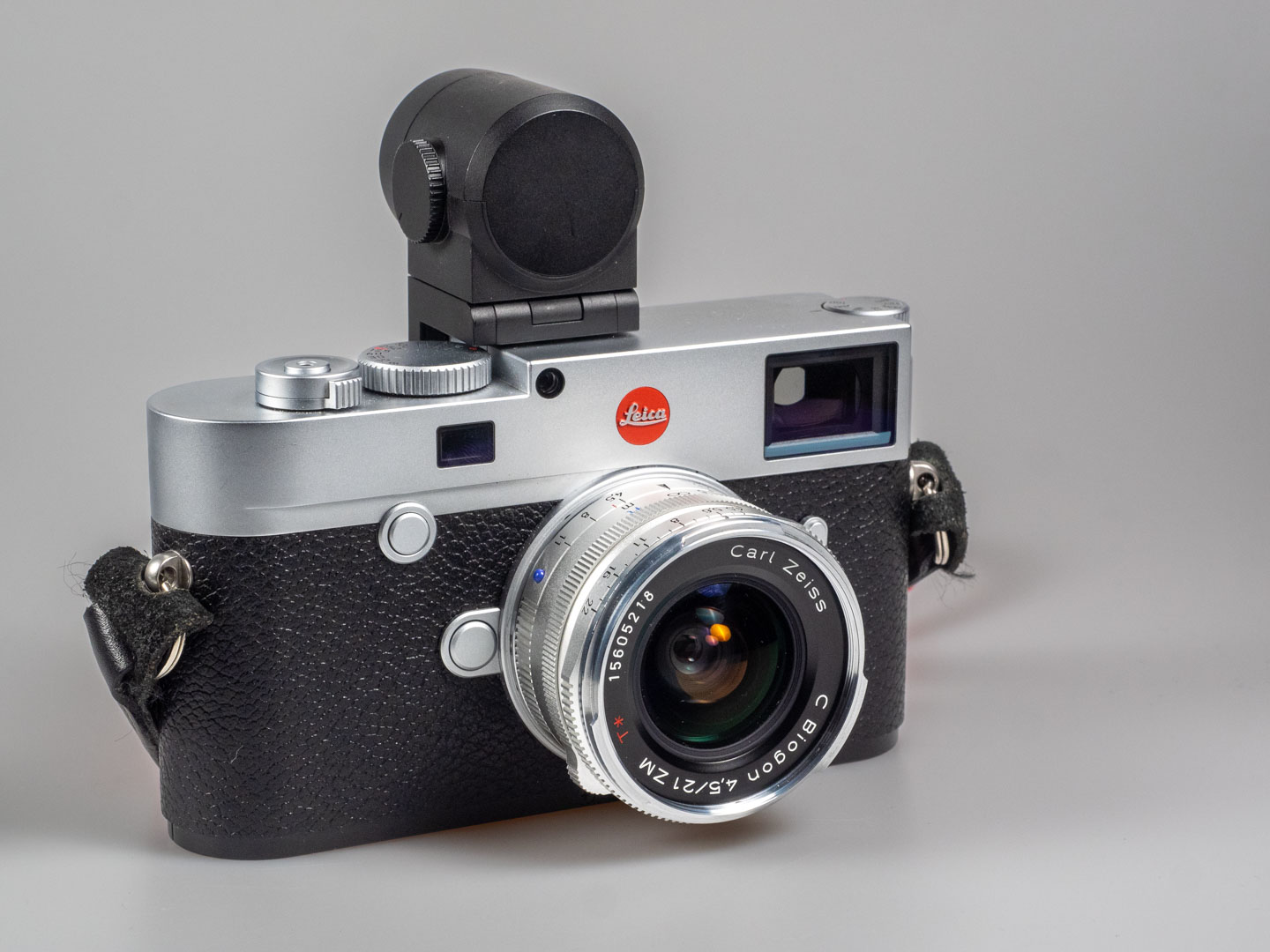
The shortest (in terms of focal length) lens in the Zeiss ZM C lenses range is the Biogon 21/4.5, and it is a compact lens indeed. It is about the size of a 35mm Leica Summicron and has all the usual Zeiss characteristics. That is, a nub on the focusing ring instead of a tab, a front bayonet for attaching a lens hood and a rather elegant design.
Aperture stops are as usual in one third increments with ZM lenses (a bit over the top for my taste). The lettering is beautiful, easy to read, and the aperture ring clicks beautifully.
Build quality
The C Biogon 21/4.5 is made of all metal and glass. I think the Zeiss blue (instead of Leica red) dot that indicates how to attach the lens to the camera is the only part made of plastic.
The lens appears to be very well-made, and opposed to what you can read repeatedly on the internet, I never came across the notorious Zeiss wobble (well explained here) on any of my own Zeiss ZM lenses.
If you do, try to get it sorted out because you could end up with a lens that can no longer be focused, and it becomes worthless. I know the problem from borrowed lenses, and it is serious.
Keep in mind that, unlike with Leica, the time span to get a Zeiss ZM lens repaired with the necessary spare parts must be considered limited, looking at the next ten years or so.
Focusing
The C Biogon 21/4.5 is rangefinder coupled, and the focus travel from 0.5m to infinity is about 120 degrees. That means you can focus it with a Leica M or other M-Mount camera the usual way and very precisely, while the rangefinder won’t show you the entire image.
So you need an additional optical (or, maybe preferably, electronic) viewfinder. For focusing, my experiences with the rangefinder are excellent. And you have enough depth of field anyway with a 21/4.5.
Speaking of this, the minimal focal distance of the Biogon is 0.5m — you will need live view or an EVF to make use of this. In my practical experience, the Voigtländer Bessa R4M turned out to be the ideal platform for this lens, being the only rangefinder camera ever made with 21mm frame lines.
Perhaps the Leica M EV1 with its built-in electronic viewfinder could match very well with the C Biogon 21/4.5 (depending on how the colour-cast problem is solved).
Viewfinder
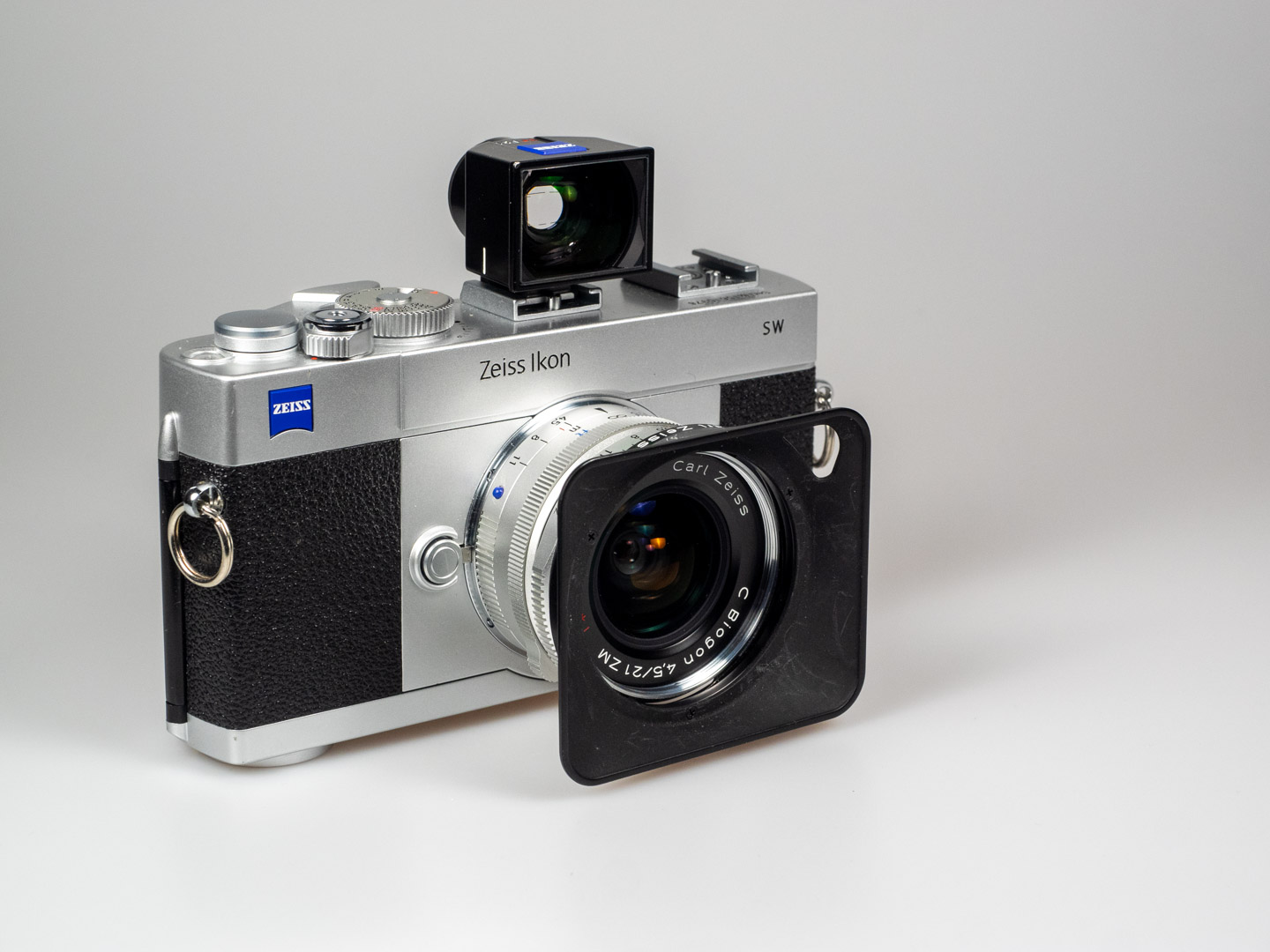
Viewfinder obstruction is no issue with this lens, as you can’t really use the built-in optical viewfinder of your digital or analogue camera for framing your images at all (with the Voigtländer Bessa R4A or R4M as the only exception).
With the Zeiss ZM optical viewfinder, the small C Biogon will not get in the way. And… there are photographers who are so used to the 21mm focal length that they can frame their images with astonishing precision without any viewfinder at all. I know at least two of them personally, it’s no myth.
My verdict, handling
The C Biogon 21/4.5 is, within the limitation of a focal length that is not supported by almost all rangefinder cameras, easy to use and will not get into your way when you are working with it. It is a very well-made tool, and it can easily grow on you. From the handling perspective, it is a very good lens.
Alternatives
What is recommendable as a 21mm lens if you don’t want to go for the Biogon 21/4.5 in the Zeiss ZM C lenses range? For this focal length and aperture, there are several options in the M-Mount universe.
Think of all the historical lenses, but also of the recent Voigtländer line-up. Voigtländer has the 21/3.5, called Color Skopar, in their recent programme. This is a very capable lens (see the review in episode 16 of the M Files), steering well off the colour-cast issues of the Zeiss Biogon 21/4.5 – and it is a bit faster as well. For anyone seeking a universal 21 for digital use, this could be the way to go.
But let’s not forget that Voigtländer has another 21, for whatever reason also called Color Skopar, a design that dates back into the analogue era. That’s where this tiny lens really excels, read the full story in part 2 of the M Files.
On the other hand, we should think of the Leica Super-Elmar 21/3.4, an outstanding lens, or as some reviewers have it, a “super wide-angle on steroids”. This one is much pricier than the similarly specced Voigtländer 21/3.5. But having used both, I have to say that in this case, the extra money for the Leica lens is well invested. Compared to the Biogon 21/4.5 of the Zeiss ZM C lenses, it plays in an entirely different league.
Voigtländer, Leica, Zeiss
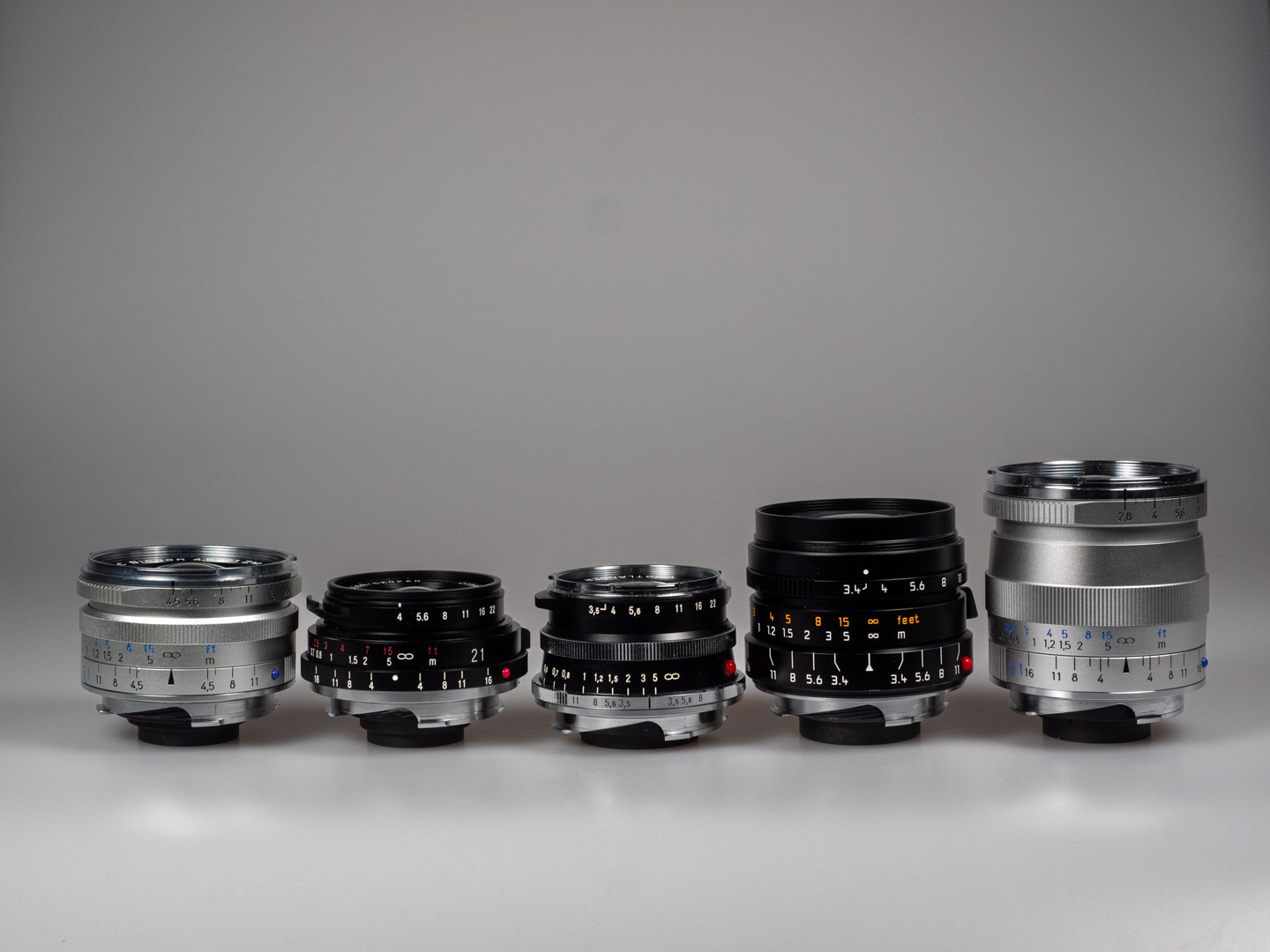
Finally, Zeiss has an alternative in the line-up. The Biogon 21/2.8 is an excellent lens and certainly worth a thought (review in part 12 of the M Files). It is not so much more expensive than the 21/4.5 and more than a full f-stop faster. So, the only really negative thing is its bigger size.
Worth a consideration might also be the discontinued Leica 21/2.8 which is much loved by its owners to this day. And may I remind you of the Konica 21/35 dual range lens (get the details here in episode 13 of the M Files)? I would say it performs almost as well as the Zeiss 21/4.5, has little to no colour cast issues, and doubles as a capable 35. I do wish that a modern-day manufacturer would take up the idea of exactly such a lens again.
Zeiss ZM C lens 21/4.5: the bottom line
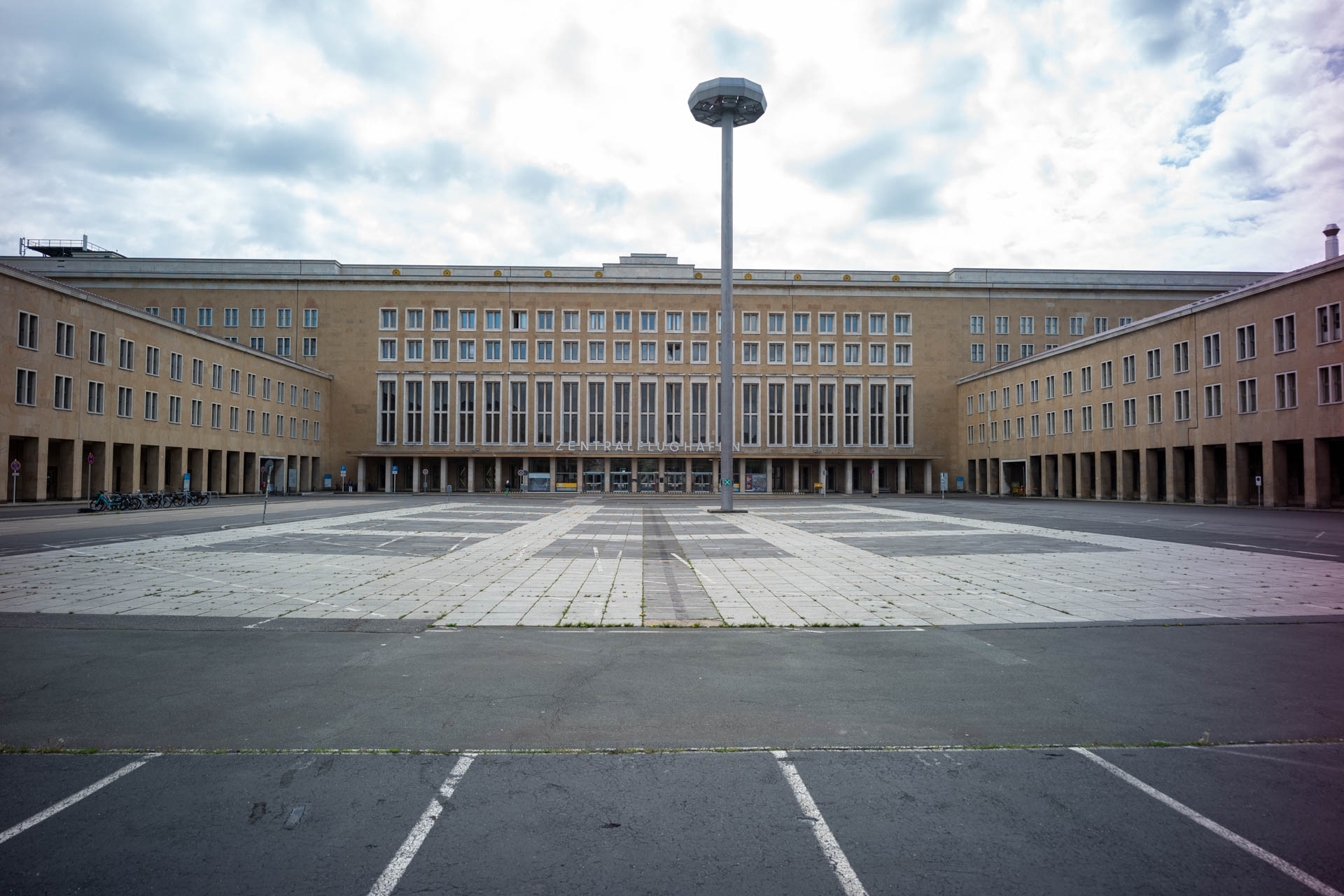
Within the Zeiss ZM C lenses range, the C Biogon 21/4.5 has a special place. It excels in resolution, sharpness, and lack of distortion, making it an excellent choice for architecture or landscape photography.
However, the colour shift towards the right margin of the image makes this lens more or less incompatible for colour photography with digital rangefinder cameras up to the Leica M10 (if any reader has experience with this lens on an M11, please let us know in the comments section). So, I can only recommend this lens for analogue or digital black and white photography.
The C Biogon 35/2.8
Technical data, scope of delivery, price, and availability
One preliminary comment: The Carl Zeiss C Biogon 2,8/35 ZM T* (to quote the full name) has already been reviewed briefly in part 5 of the M Files. This is an update with the recent M Files methodology, and it is based on use with the Leica M10. This is important as we saw some issues with the lens on the older M Typ 262.
The C Biogon 35/2.8 is one of the youngest of the Zeiss ZM C lenses — it was introduced only in 2008, four years after the launch of the system. It appears to be still available new, even though it seems that Zeiss is somehow slipping out of the ZM business.
In any case, the C Biogon 35/2.8 is no longer available in several online shops. I found it offered new for around $1,000 in the US. In Germany, the last price I could find was €749. But I know that at times it was considerably cheaper.
Frugal package
The lens comes with front and rear caps (I won’t repeat myself on Zeiss’ appalling front caps). A hood must be bought separately. However, it seems the Zeiss lens shade (item 1365-667) is no longer available.
Nevertheless, the Voigtländer LH-6 (€79) appears to be identical, and this one is still on sale. It is the standard hood for several Voigtländer VM lenses, and would also fit the Zeiss Biogon 35/2 (not yet reviewed) and the Planar 50/2 (see episode 5 of the M Files).
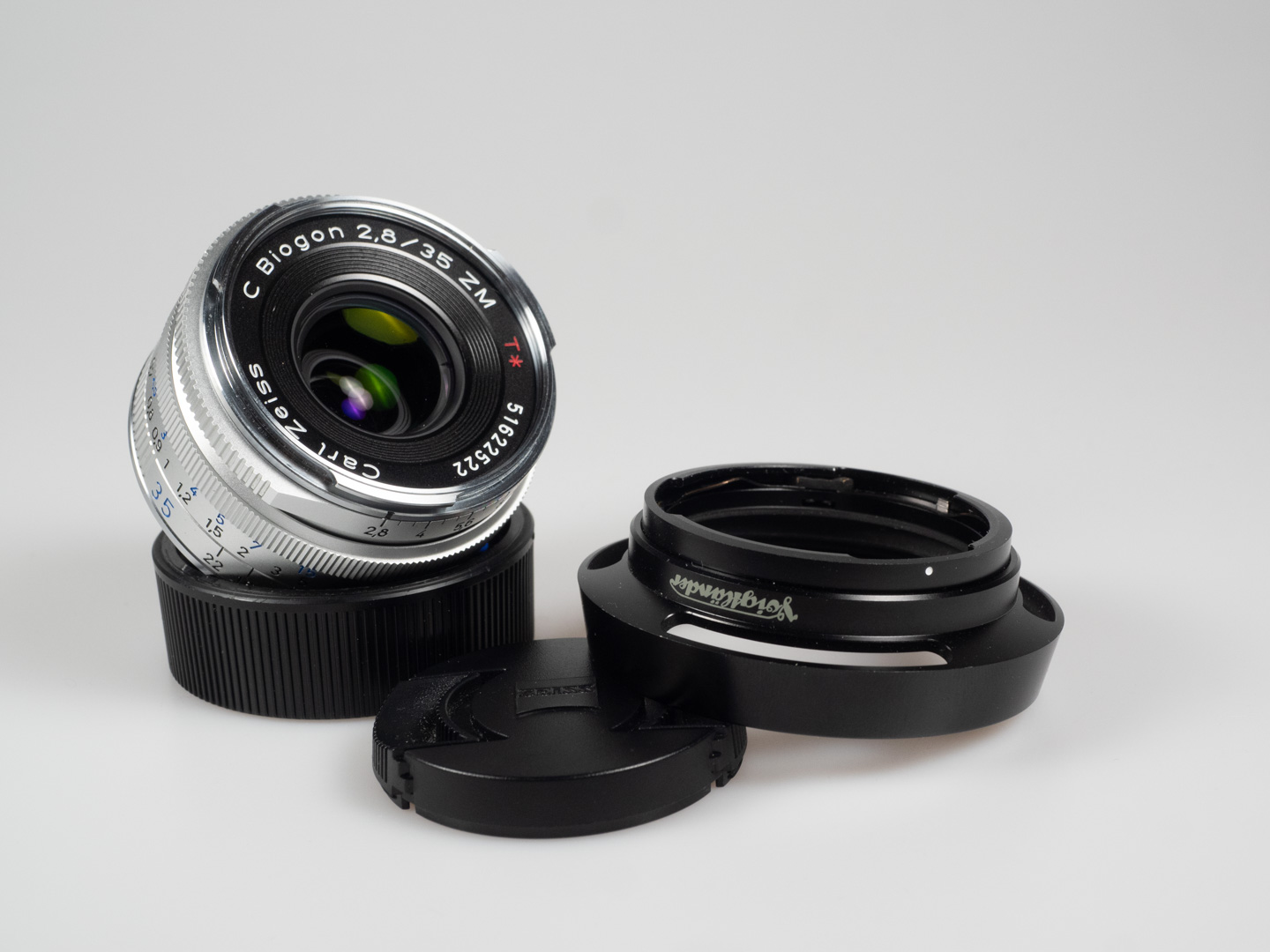
In terms of size and weight, the C Biogon 35/2.8 is almost identical to the C Biogon 21/4.5: Mounted, it has a length of 30mm (43mm overall) and a diameter of 52mm. It weighs 216g as I have it in my bag (this is, with caps and hood) or 178g naked.
The filter size is 43mm, a somewhat uncommon size for Leica but quite frequent in the Zeiss and Voigtländer worlds. If you would rather not buy rarely used filters for this one lens, you can use a stepping ring from 46 to 43. But be aware that in this case it might be impossible to attach a lens hood.
Optics and rendering
Lens design
The 35/2.8 is another Biogon — a more or less symmetrical lens design that will forever remind us of the Zeiss lens designer Ludwig Bertele. In the slowest of the 35mm ZM lenses, it comes across as fairly conventional, without aspheres or floating elements — certainly nothing you would need in an f/2.8 lens.
Maybe the only tribute to modern lens design is the rear element of glass with anomalous partial dispersion. Zeiss claims that this reduces chromatic aberration. The C Biogon 35/2.8 has seven lenses in five groups, while many other 35s get by with fewer elements.
Colour drift and vignetting
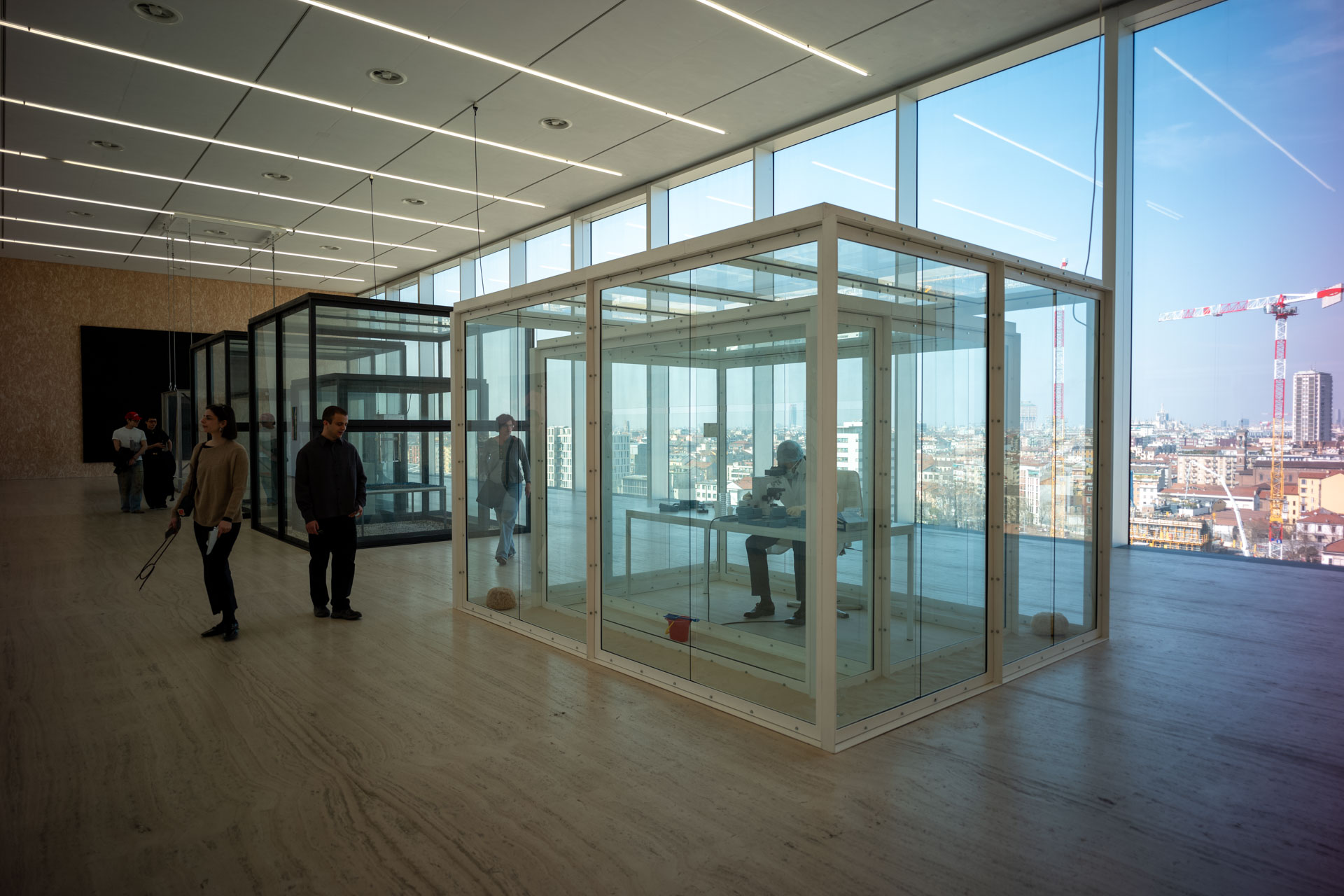
The C Biogon 35/2.8 shows only a small amount of vignetting, not surprising for such a slow lens. More significant is colour drift. When I reviewed this lens for the first time on a Leica M (Typ 240/262), I noticed a prominent magenta colour cast at the right (or top, in portrait mode) margin of the image.
The effect was stronger in certain lighting situations and sometimes really nasty. The good news is that the sensor of the M10 can handle light rays reaching the sensor at a shallow angle better than its predecessor. In some situations, however, I could see some remaining colour drift.

Chromatic aberration
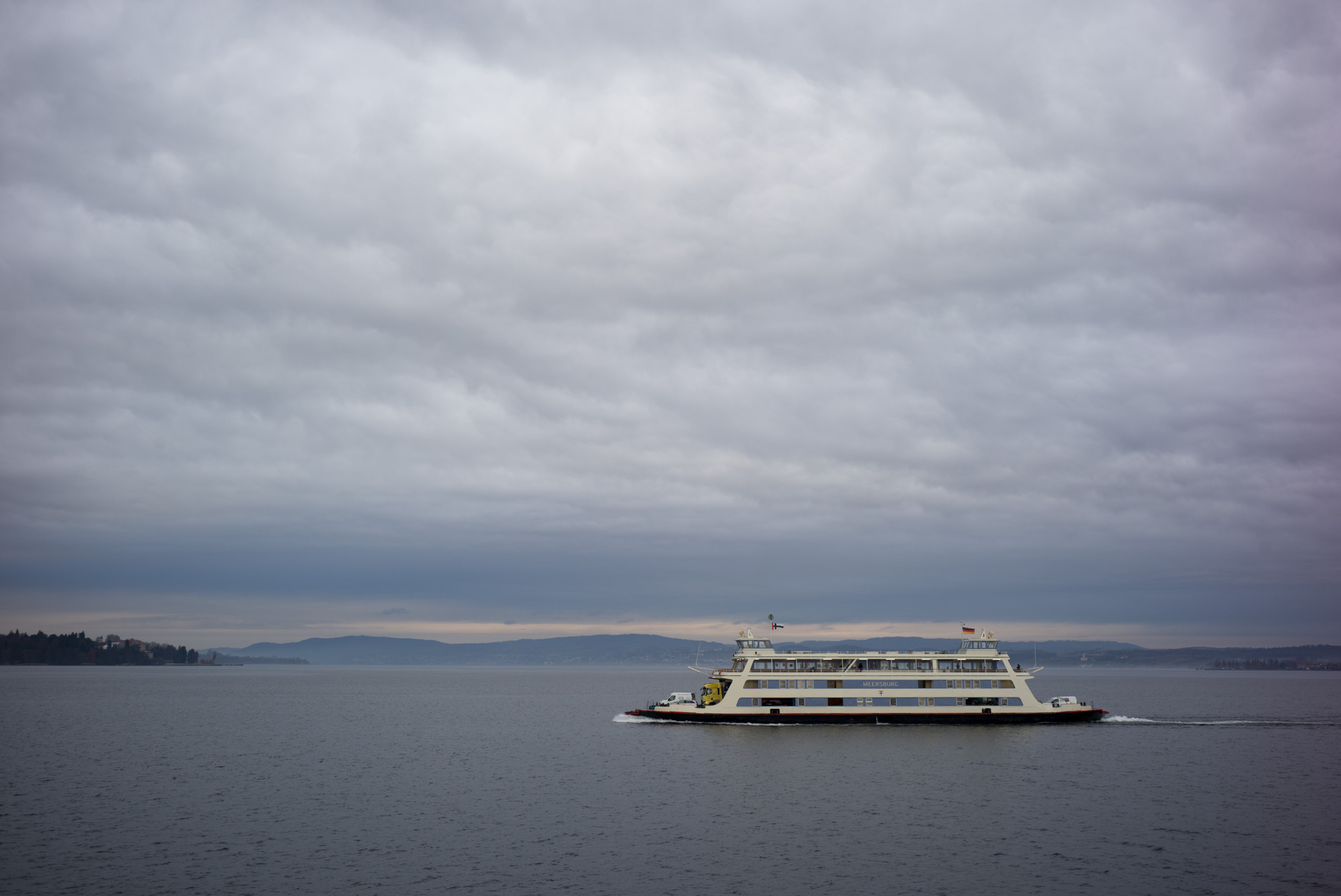
Both axial and lateral chromatic aberration is well corrected in the C Biogon 35/2.8. Green colour cast in the area closer to the focus plane and red behind it hardly occurs, so no issues with axial CA.
The same goes for the rendering of points of maximum contrast, where you will hardly find any ugly fringes. This is certainly one reason for the excellent rendering quality of this lens. It produces such crispy images!
Sharpness
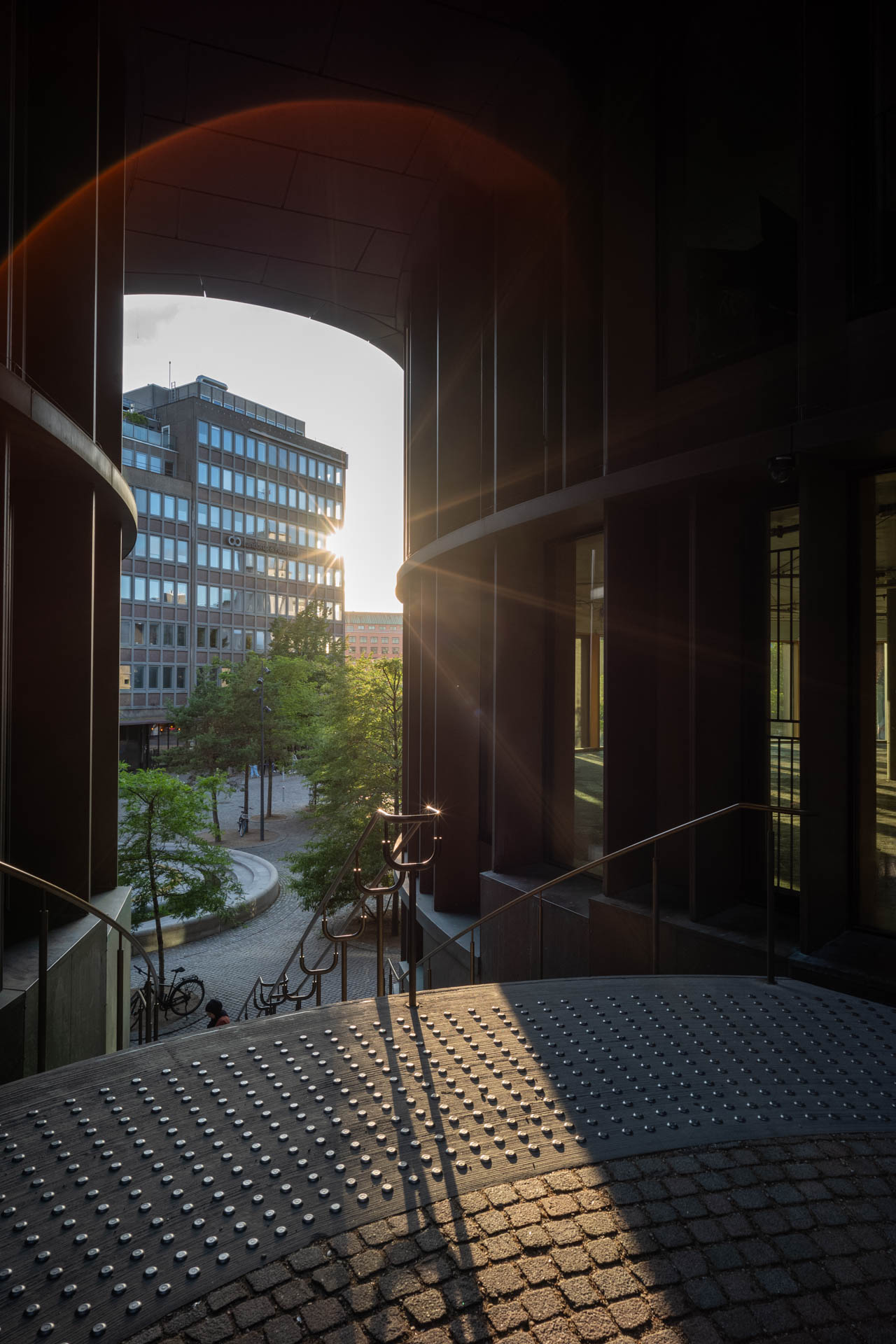
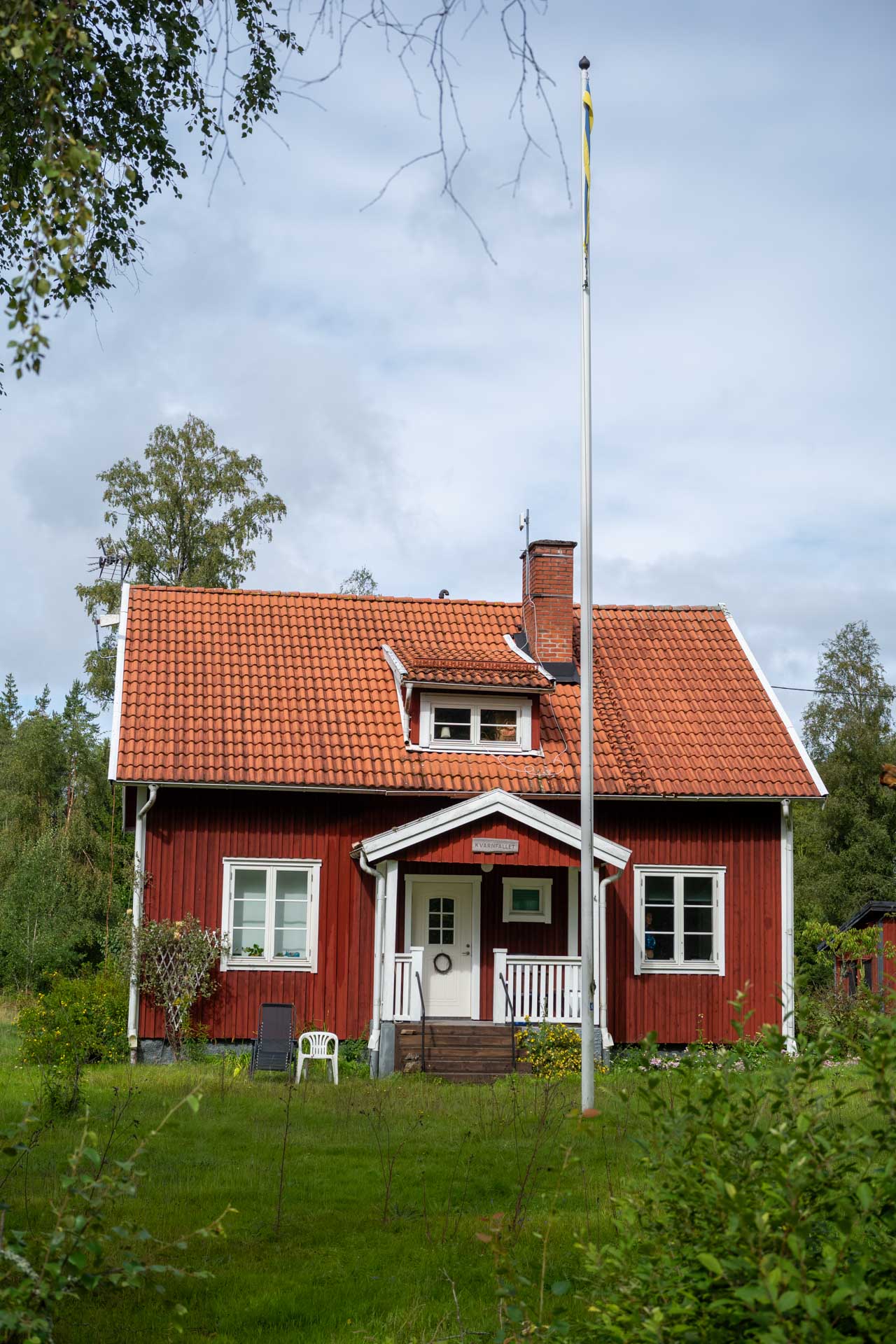
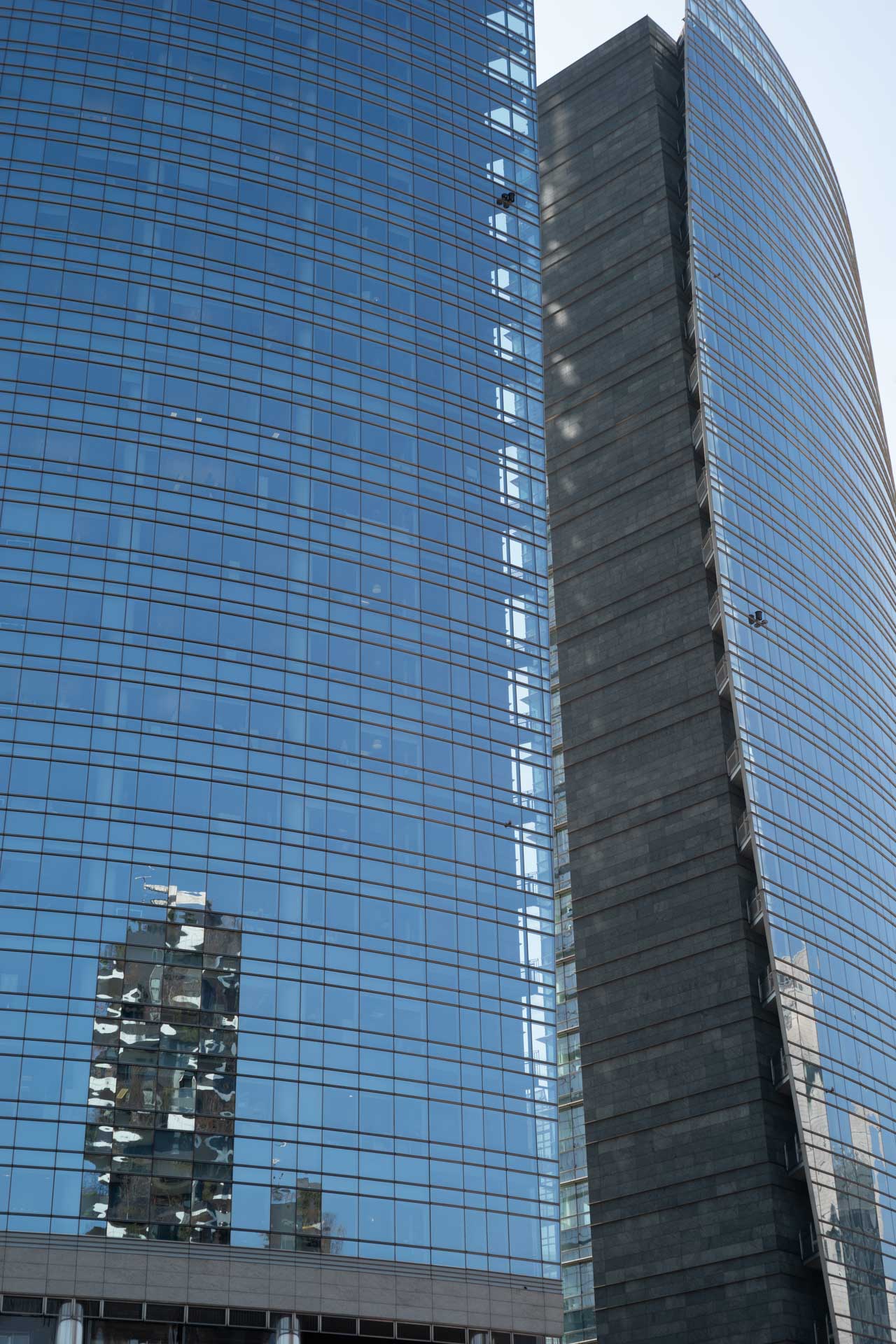
Sharpness and contrast are further strongholds of the C Biogon 35/2.8. This lens is sharp at close distance as well as at infinity, wide open or stopped down. It produces images with high contrast and a striking degree of detail.
This makes the small Biogon an excellent choice for landscape photography, but the great rendering comes equally handy for reportage work, environmental portraits, architecture, or whatever else you might want to shoot with a 35mm lens.
Bokeh and flare
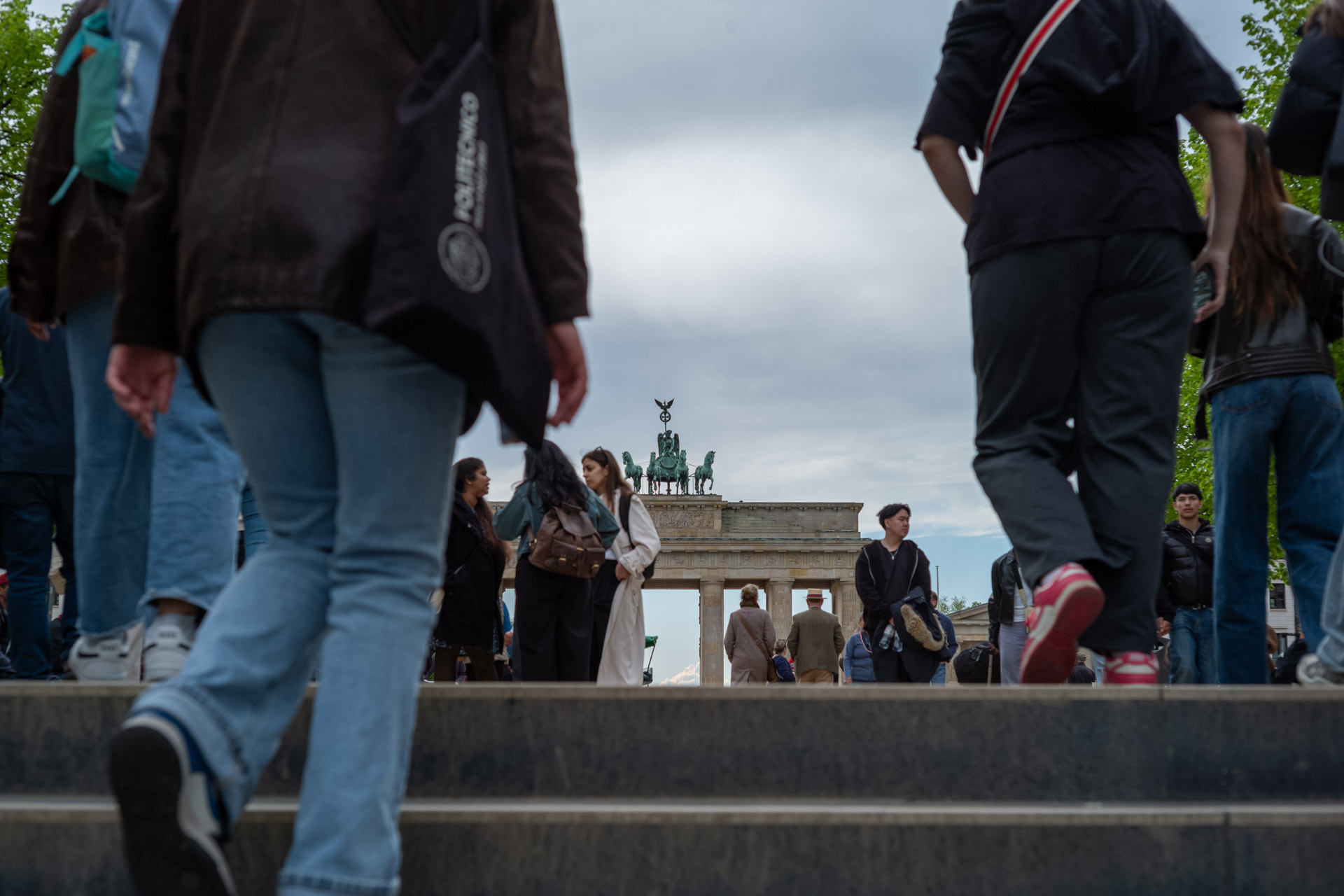
The C Biogon 35/2.8 is wider than a standard lens and slower than many other rangefinder lenses as well, so bokeh may not be what matters most here. But if you manage to get close enough, nice effects are possible.
I wouldn’t call the bokeh creamy or whatever other words common for a pleasing rendering of out-of-focus areas, but for such a high contrast lens, it is very good. Flare is almost impossible to induce; you can shoot this lens with confidence in the most challenging lighting situations.


My verdict, optics
Within the Zeiss ZM C lenses line up, the 35/2.8 is certainly the easiest lens to use. It delivers, and the colour cast issues of the M (Type 240) are mostly overcome with the M10. All the rest was always good about this lens — it shows excellent performance in all important parameters.
Of course, this comes at a price, and that is the aperture of only f/2.8. But then, improved high ISO performance of modern cameras can replace this shortcoming. And bokeh lovers would buy a faster and/or longer lens anyway, giving them shallower depth of field.
Mechanics and handling
Overall appearance
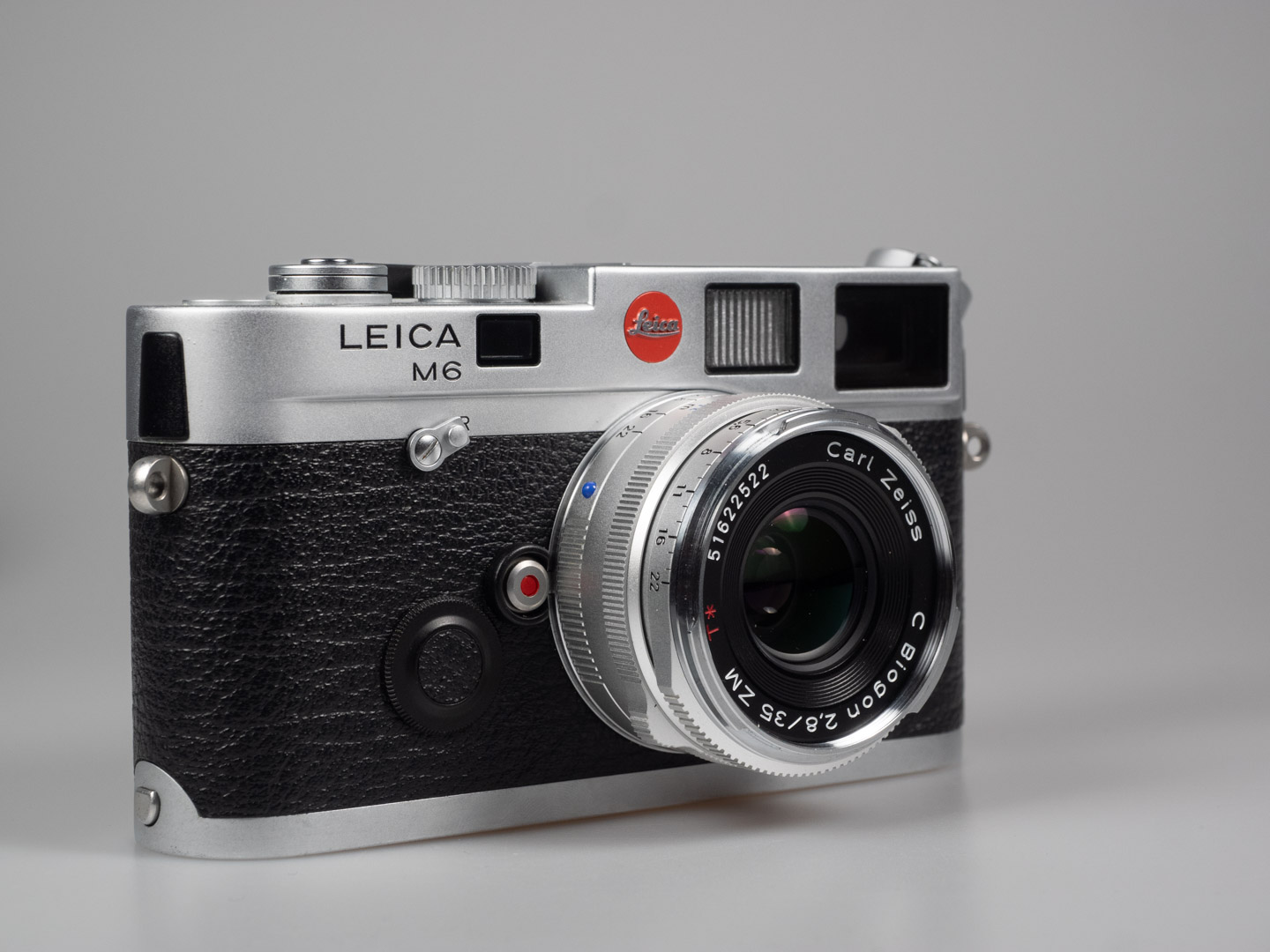
The C Biogon 35/2.8 is a compact lens and makes a good fit with any rangefinder camera. However, it is certainly no pancake lens, as you would expect if the strategy is to trade in speed for maximum compactness.
However, as we have seen, the idea was to make a slower lens to achieve the best resolution and sharpness. At any rate, you will like this small lens immediately, also for the simple and pragmatic, yet somewhat elegant exterior design of the Zeiss ZM C lenses (and the rest of their M-Mount line up as well).
Build quality
Same as with the other two lenses in this review — the C Biogon 35/2.8 is well-made, all metal and glass. The internal focusing mechanism is prone to developing the notorious Zeiss wobble.
There are articles on the internet that explain the phenomenon with the use of special Teflon rollers in the focusing helicoid. By the way: The Voigtländer VM lenses are made in the same manufacturing plant by Cosina but are designed differently than the Zeiss ZM lenses and don’t get the wobble.
Focusing
Again, the usual Zeiss ZM focus nob is helpful. At the six o’clock, position, the ZM lenses are focused to about 1.5 metres. The focus travel is just over 90 degrees from the rangefinder-typical 0.7m minimal distance to infinity.
This allows for both speedy and precise focusing. I didn’t find significant problems with front or back focus or focus shift at any distance or aperture setting. All in all, the C Biogon 35/2.8 is a very reliable lens in terms of focusing.
Viewfinder
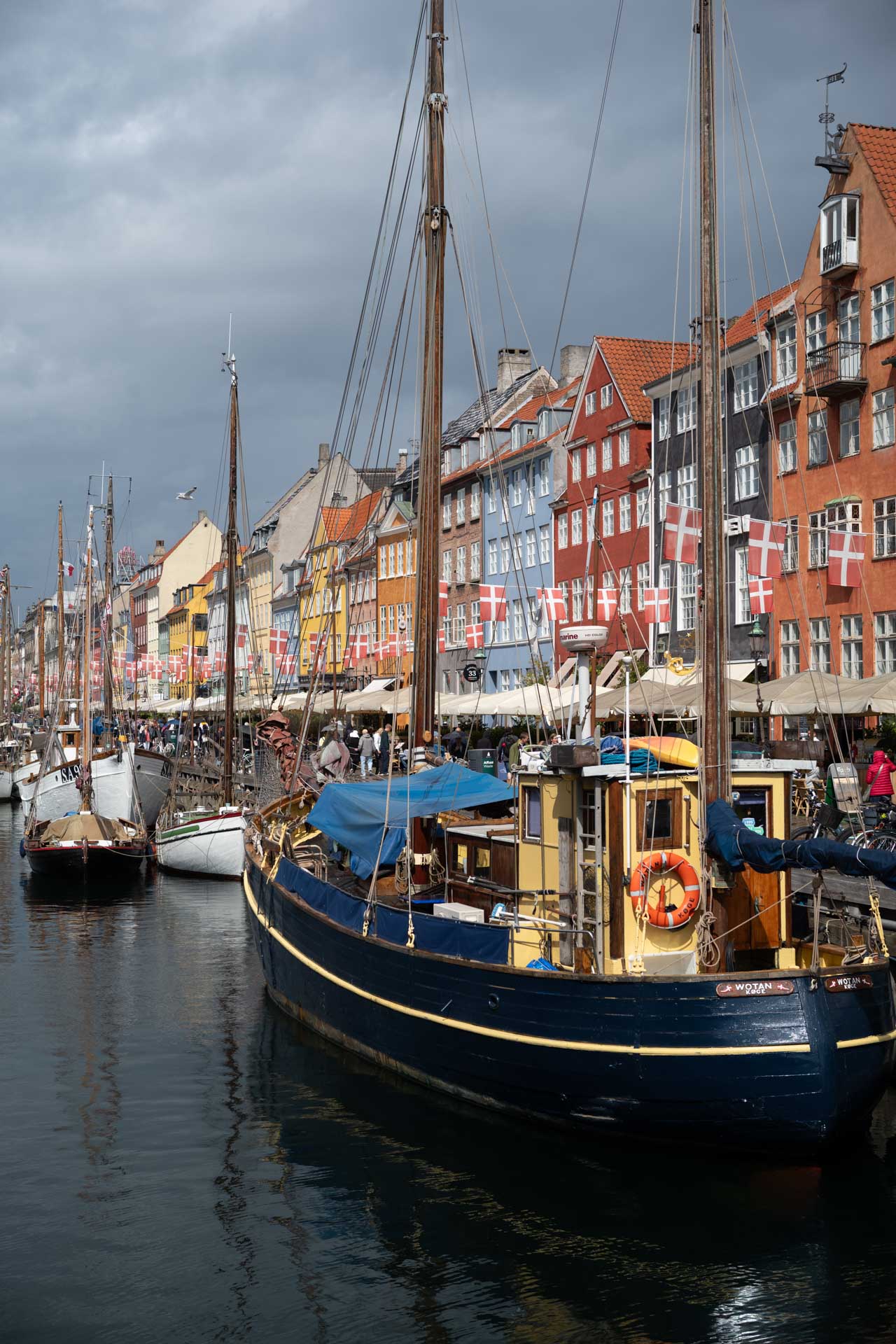
One of the main reasons why rangefinder lenses have to be small is the need to avoid viewfinder obstruction. This gets ever more important as the focal lengths become shorter.
The 35mm frame lines in a typical 0.72 rangefinder encompass the biggest part of the window, so a big 35mm lens would block a significant part of what you actually want to see. Luckily, the C Biogon 35/2.8 is a small lens.
There is a minimal amount of blockage without the lens hood attached. With the hood, a significant part of your future image’s lower right quadrant is not visible. But all in all, a solid performance.
My verdict, handling
The Zeiss C Biogon 35/2.8 is, in terms of handling, a great rangefinder lens. Its focus and aperture rings operate smoothly and will never get in the photographer’s way. This small lens handles very well in all respects. Almost identical in size to the 21/4.5, it makes working with this particular duo in fact seamless.
Alternatives
35mm is another classic of the focal lengths of rangefinder lenses. So, if the Biogon 35/2.8 from the Zeiss ZM C lenses range doesn’t convince you (or you can’t find a copy), there are many other options.
If you follow the idea of trading in some speed for compactness, the Voigtländer 35/2.5 Color Skopar comes to mind, a true pancake lens and a solid performer (see episode 6 of the M Files), but optically inferior to the Zeiss, especially on today’s high-resolution sensors.
Similar to the Biogon 35/2.8 is, in terms of aperture, the Leica Summarit 35. But this one is unfortunately discontinued. It was/is a little gem of a lens, no matter if you go for the older f/2.5 or the newer f/2.4 version. They seem to be identical in optical design.
The “ASPH.” in the second version solely appears to reveal something that was present from the start. Read here why it is such a pity that Leica discontinued the Summarit line.
Maybe an f/2 lens?
If you can’t find a reasonably priced Summarit and the Color Skopar isn’t right for you, a faster 35mm f/2 lens might be an option. Particularly recommendable is the Voigtländer 35/2.0 Ultron (see review in part 16 of the M Files), an excellent lens and maybe the only 35 you ever need. It has been shown that it outperforms Leica‘s own Summicron 35 (the non-APO, of course).
Outside the Zeiss ZM C lenses line, Zeiss also has a 35/2.0, again a Biogon, about which I can’t say anything yet apart from the fact that it is less compact than the 35/2.8.
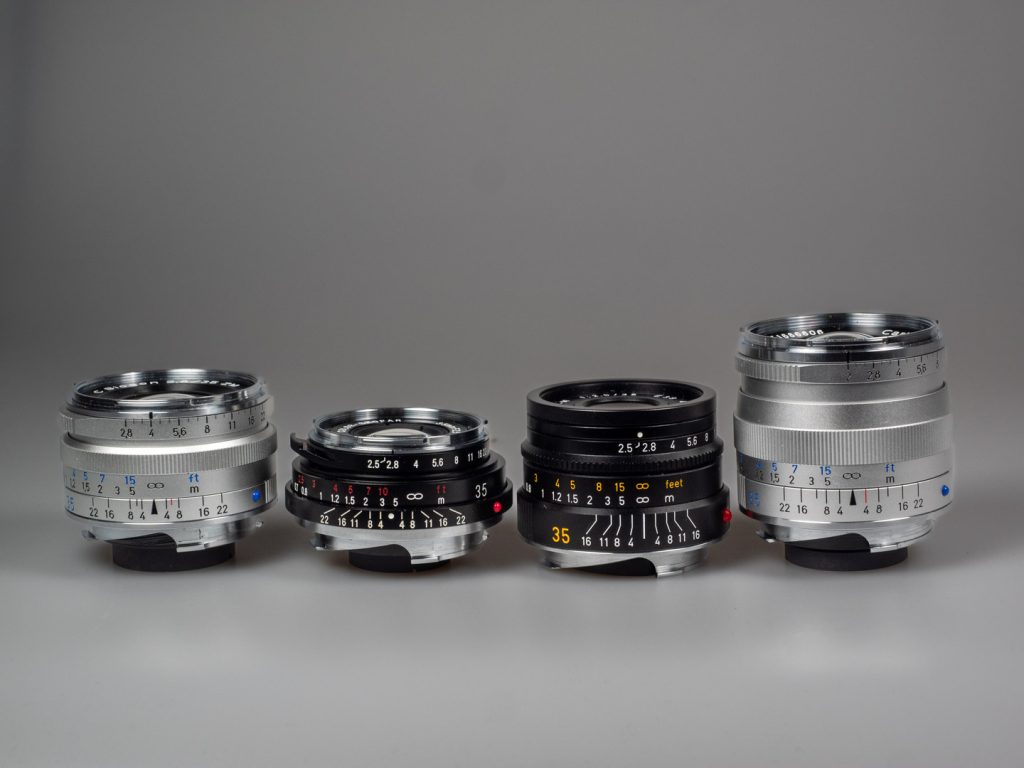
Of course, there are many, many other non-Leica options for an M-Mount 35mm lens. Some of them can be found in the M Files Navigator, where all reviewed lenses are sorted by focal length. Ultimately, only you can decide how to balance the equation of speed, compactness, price, and image quality. Pick any three…
Zeiss ZM C lens 35/2.8: the bottom line
The Zeiss ZM C lenses line stands for both compact and classic lenses, the “C” is moderately ambiguous here. The C Biogon 35/2.8 excels in compactness, while its rendering is decidedly modern with excellent resolution, sharpness, and contrast.
Issues with colour cast at the margins of digital images seem to be overcome with the M10. So this small Zeiss lens is a great choice for all film-loading and newer digital rangefinder cameras if you can live with f/2.8. But this is no longer a secret — good used copies are difficult to find, and there are certainly no more bargains.

The C Sonnar 50/1.5
Technical data, scope of delivery, price, and availability
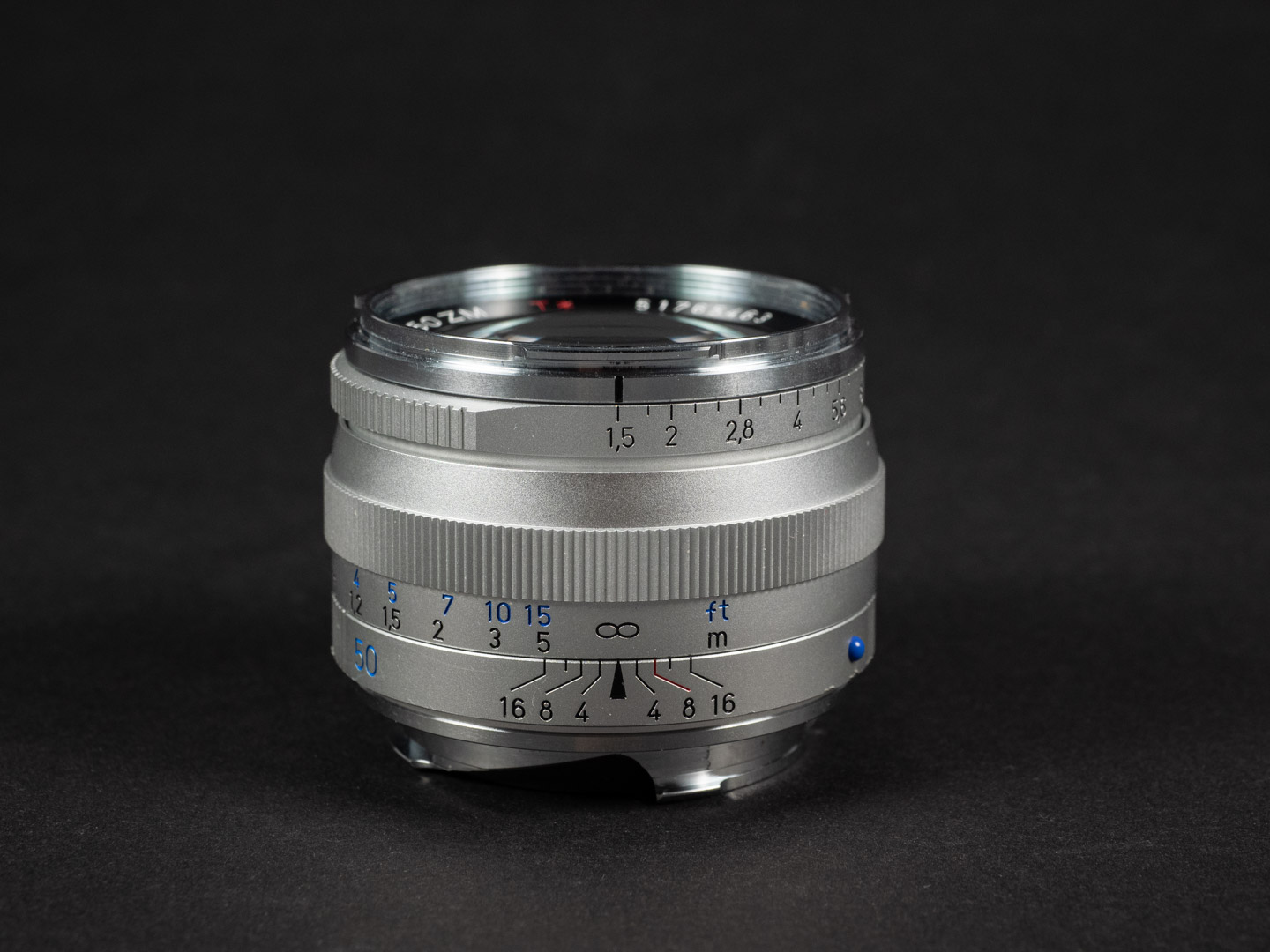
Within the Zeiss ZM C lenses line, the Sonnar 50/1.5 is the veteran for several reasons. First, it’s the re-issue of a groundbreaking 1930s lens design, which has helped establish Zeiss’s worldwide reputation.
And it is the only C lens that was already on offer at the launch of the Zeiss Ikon range. That means it has been available since 2004, and it still is, as several online shops prove. It sells for €1,099 new as of late 2025. Used, it’s cheaper.
The C Sonnar 50/1.5 comes with just the two caps. It needs a designated lens hood (Zeiss item 1428-461) which is pretty expensive (about €100).
I bought the Haoge LH-ZV12 for about €30. It appears to be better built, the bayonet mount works well, and it looks nicer on my silver lens with its matte silver finish (the inside is, of course, matte black). It also fits mechanically on other ZM lenses with a 46mm filter diameter. However, I do warn of vignetting with focal lengths shorter than 50mm.
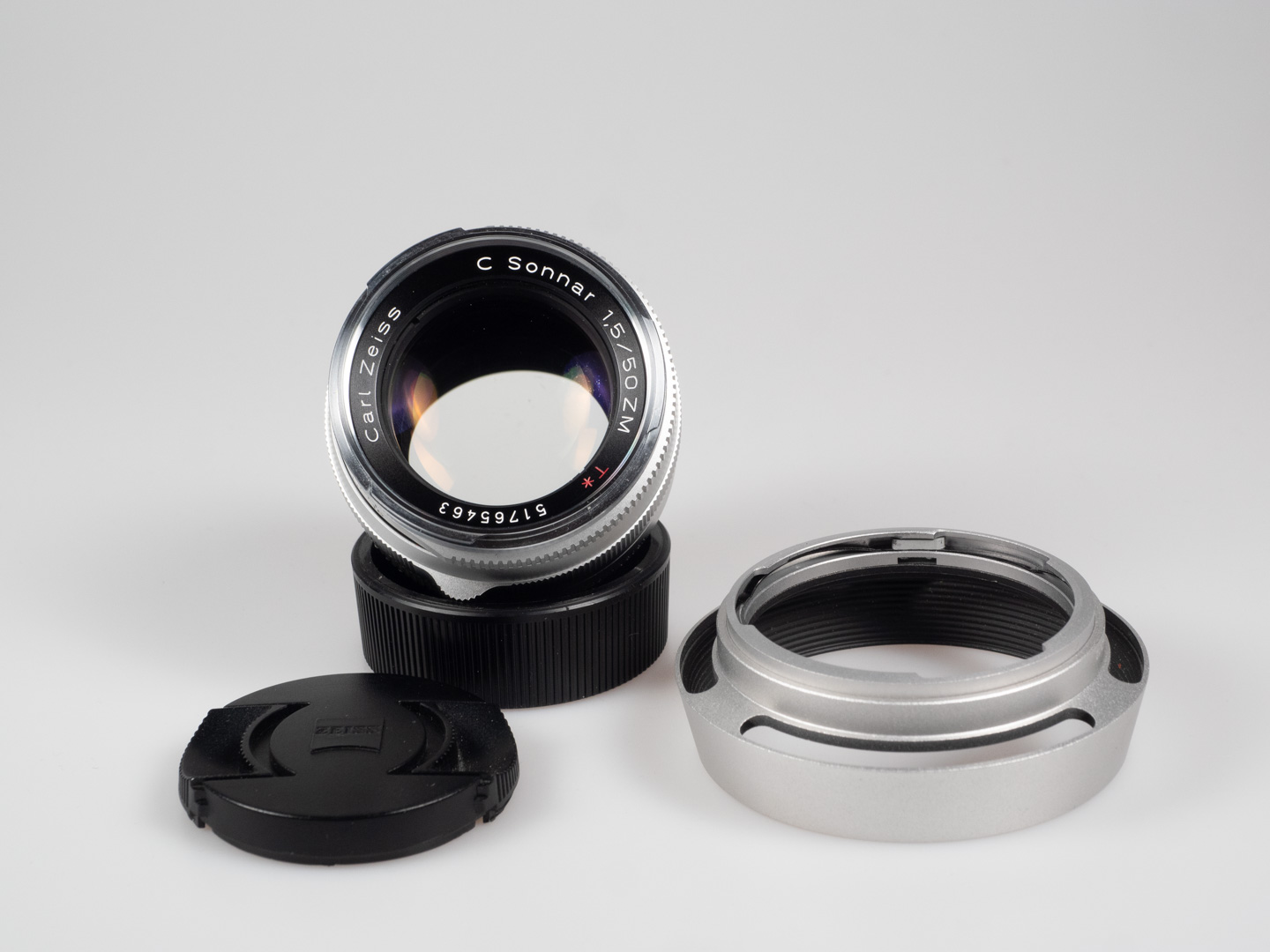
Again, this C Sonnar 50/1.5 is a compact lens, similar to the 21/4.5 and the 35/2.8. Mounted, it is 37mm long (overall length is 45mm) at a diameter of 56mm. It weighs 270 grams with both caps and the Haoge hood and 227g naked. Filter size is the unofficial rangefinder standard, 46mm.
Optics and rendering
Lens design
Within the Zeiss ZM C lenses line and beyond, the Sonnar 50/1.5 has a unique place. It is basically no new lens design but brings back to life a 1930s design by Zeiss.
The Sonnar was famous back then for getting by with a minimum number of lenses. This reduced internal reflection and loss of light transmission. And it was the fastest standard lens of its time, giving Zeiss‘ Contax rangefinder camera a significant advantage over the Leica.
The 50/1.5 has six elements in four groups, no floating element, no aspherical lenses, no funky ED glass types. But it combined, in 2004, a revolutionary design from 75 years ago with the up-to-date Zeiss T* coating technology. Or, in Zeiss’ own words: “The C Sonnar T*1.5/50 ZM lens is the modern technological reincarnation of the classical Sonnar 1.5/50, the fastest standard lens of its time, for the Contax II rangefinder camera.”
Colour drift and vignetting
A 50mm lens should have no colour drift, as the rays of light will reach the sensor more or less at a right angle. And indeed, the C Sonnar 50/1.5 is well-behaved in this area.
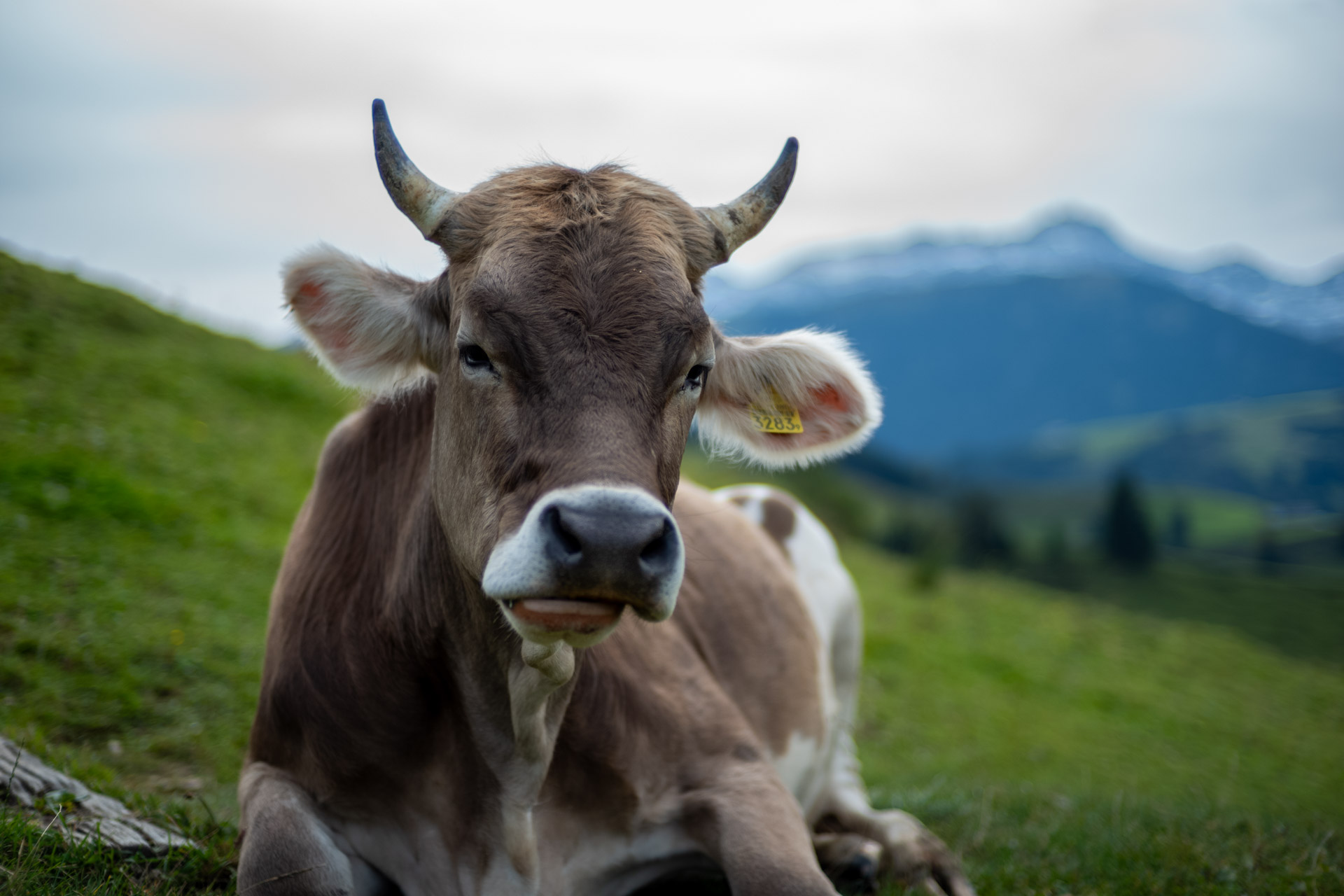
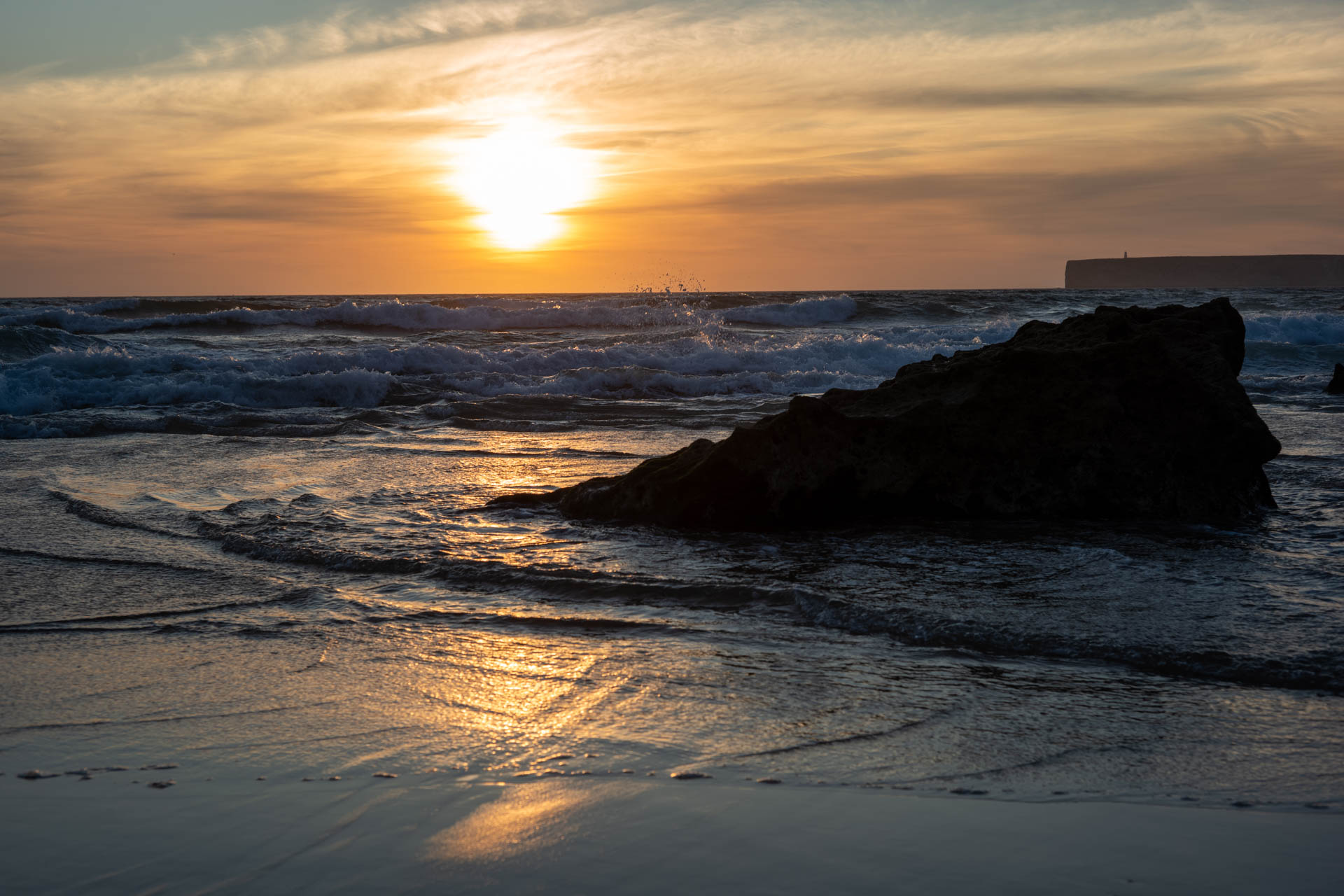
Other with vignetting: Such a fast, and at the same time extremely compact, lens is prone to having significant light fall-off towards margins and corners. That is precisely how it is with the Sonnar: vignetting is strong, especially when the aperture is wide open.
This can be corrected relatively easily in post-processing. However, some people actually find the light falloff towards the edges very appealing in a lens.

Chromatic aberration
The C Sonnar 50/1.5 is a historic design. While the grandfathers of today’s lens engineers were already well aware of the usual optical errors, they did not have today’s means to correct them.
That is, they had no computers to calculate countless iterations of a formula with a considerable number of degrees of freedom. And some of today’s best glass types were not available back then.
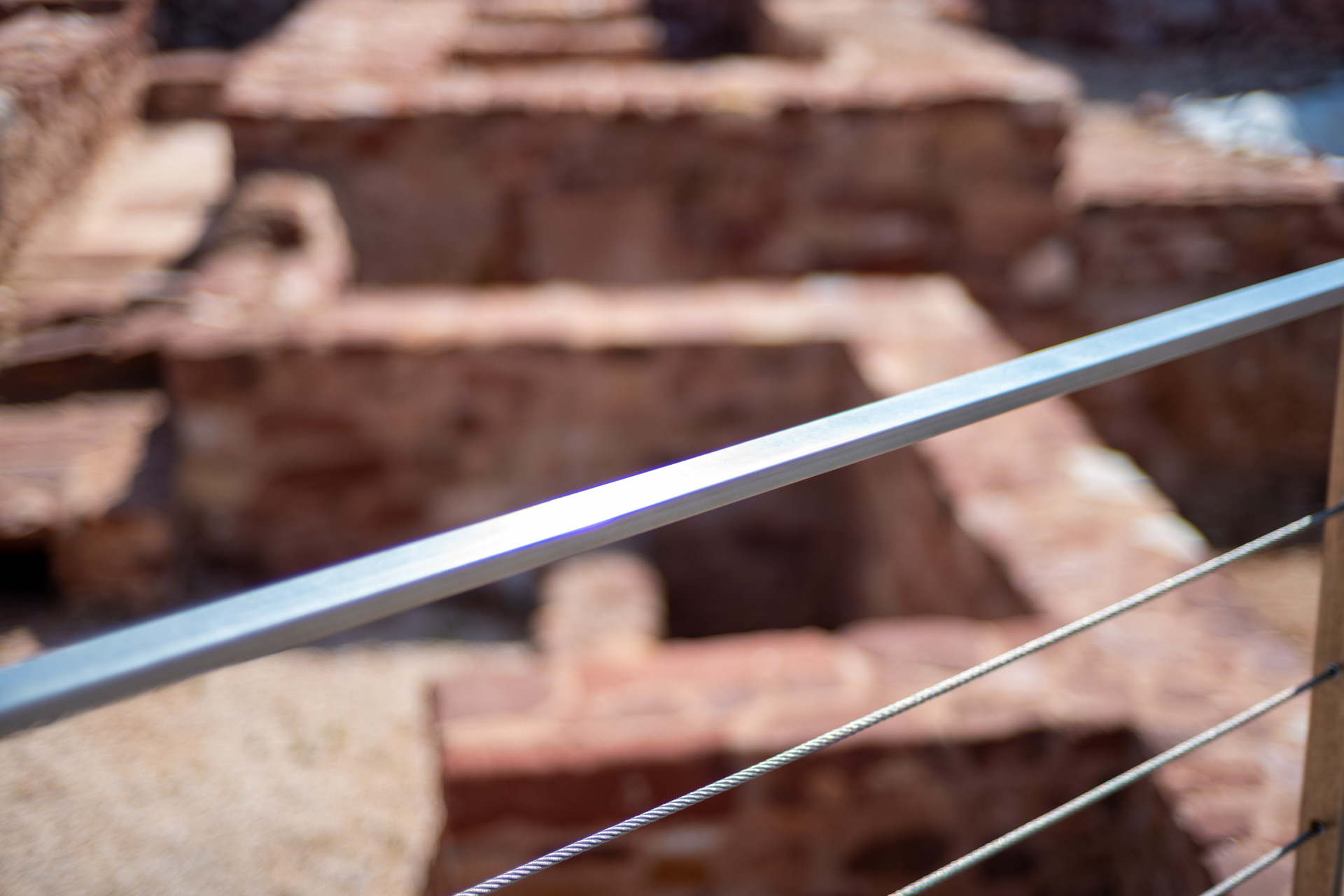
Within these constraints, the Sonnar performs very well. Compared to what is possible today in a small and fast rangefinder 50mm lens, the Sonnar is no longer state-of-the-art. CA of all types occurs. It’s not too bad, but it’s not really good either.
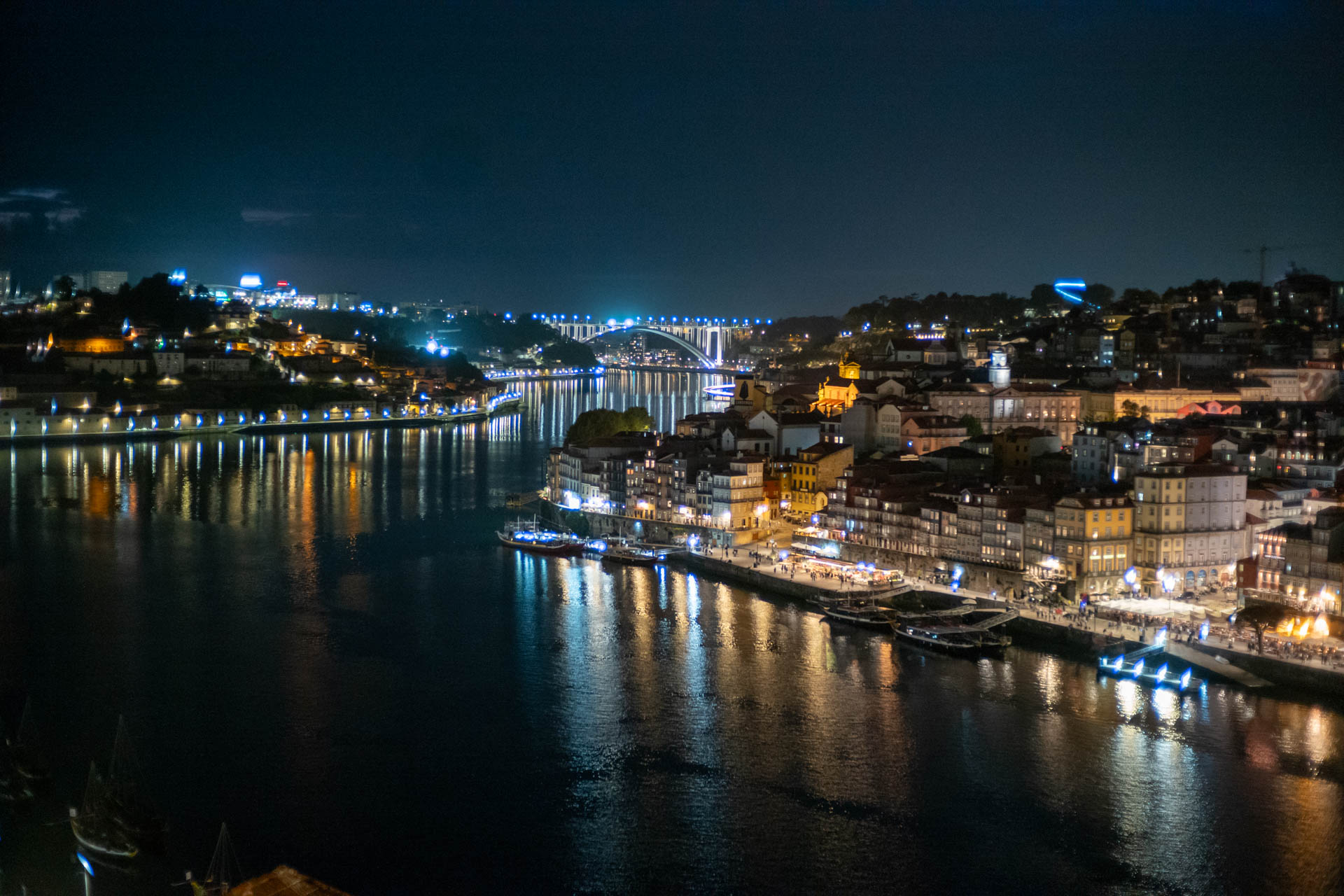

Sharpness
Well, yes, um, how should I put it? The C Sonnar 50/1.5 and sharpness are a bit of an issue. If you actually manage to hit the perfect focus point, it’s pretty good even with the aperture wide open.
Stopped down to f/5.6, the performance is satisfactory. But due to focus shift (see below), it can be challenging to adjust this lens precisely, especially with the rangefinder. Moreover, there’s considerable coma, especially at open aperture and at the edges of the image. No, you can’t call this lens razor sharp.
Bokeh and flare
Often, the flip side of the sharpness coin is bokeh. And while the C Sonnar 50/1.5 may lack punch, it delivers perfectly with a wonderfully soft rendering of out-of-focus areas. Perhaps this quality is even the best feature of this lens.
As for stray light issues, I would have expected more in terms of flare control because the Sonnar is designed to minimize internal reflections. Add to that Zeiss’ T* coating, and you’d expect monster performance. But it doesn’t deliver. The Sonnar is certainly not bad for a fast 50, but flare control is not its greatest strength.

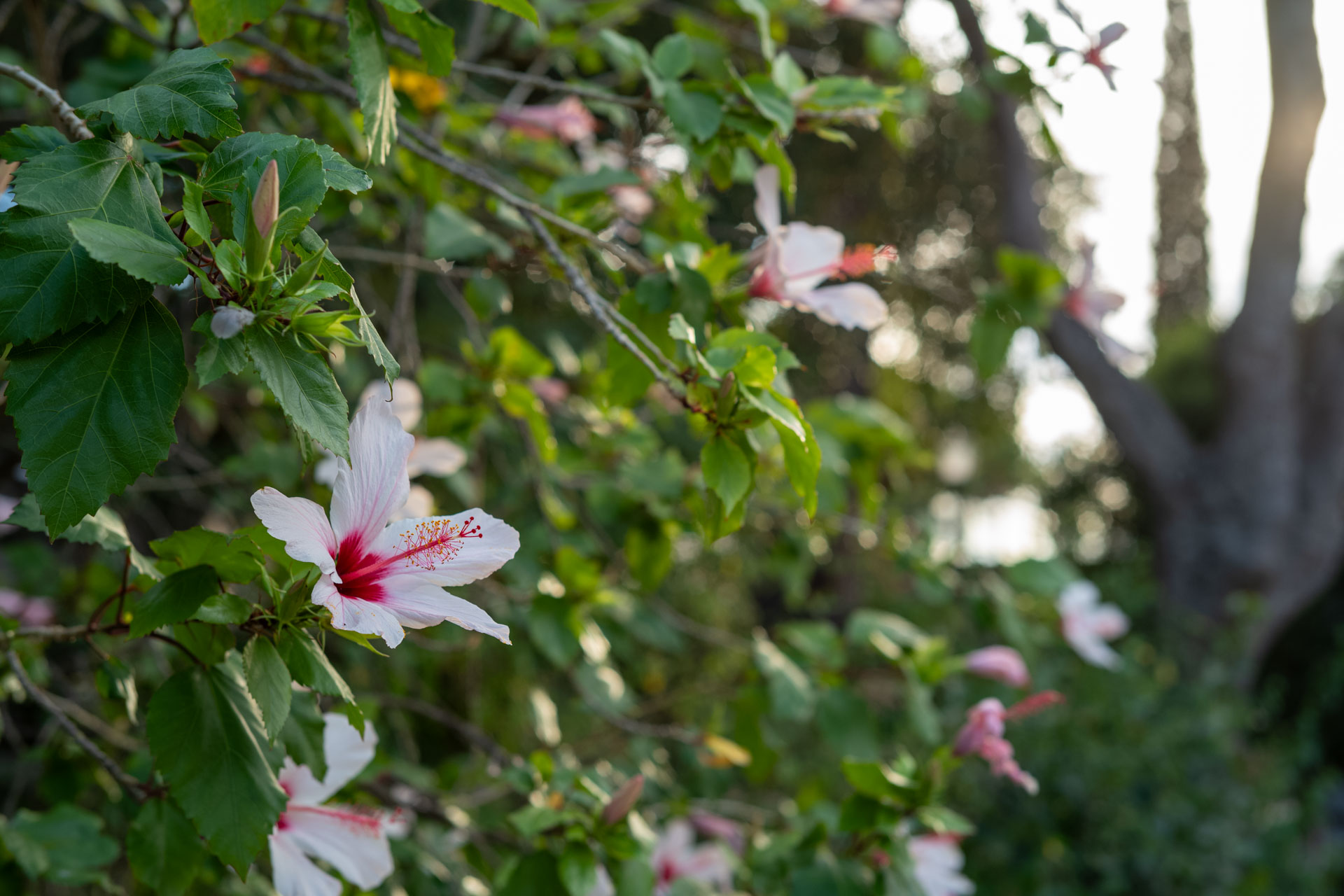

My verdict, optics
To assess the optical performance of the C Sonnar 50/1.5, there are two approaches. Look at it as an almost 100-year-old design, only slightly enhanced with modern manufacturing and coating technologies, and you will be in awe. For a real, real legacy lens, the Sonnar performs exceptionally well even on modern high-resolution cameras.
However, you could also view it as a 2000s lens with a hefty price tag. From this perspective, the Sonnar is disappointing. There are many fast 50mm lenses that are objectively superior and more predictable in outcome.
Mechanics and handling
Overall appearance
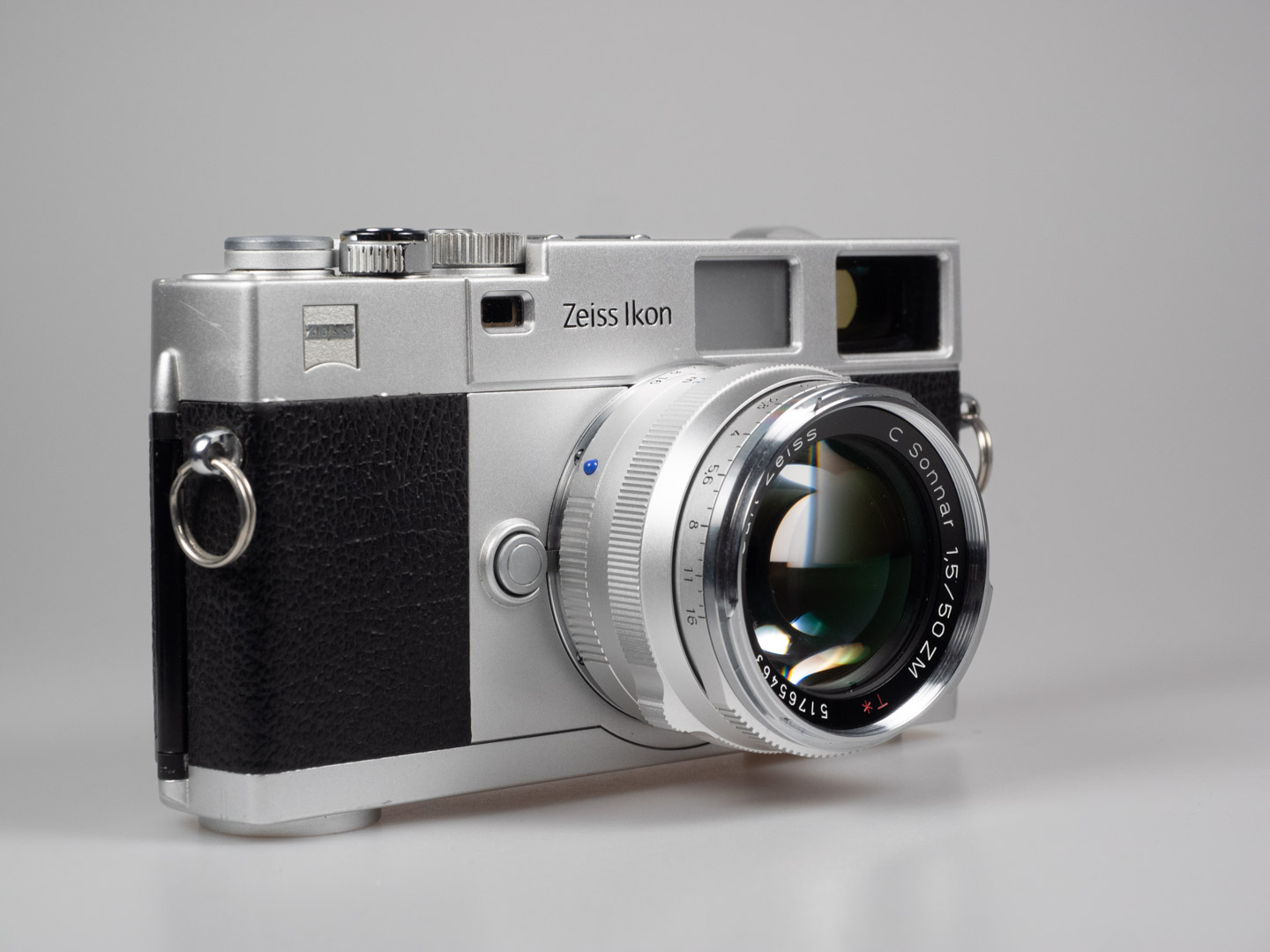
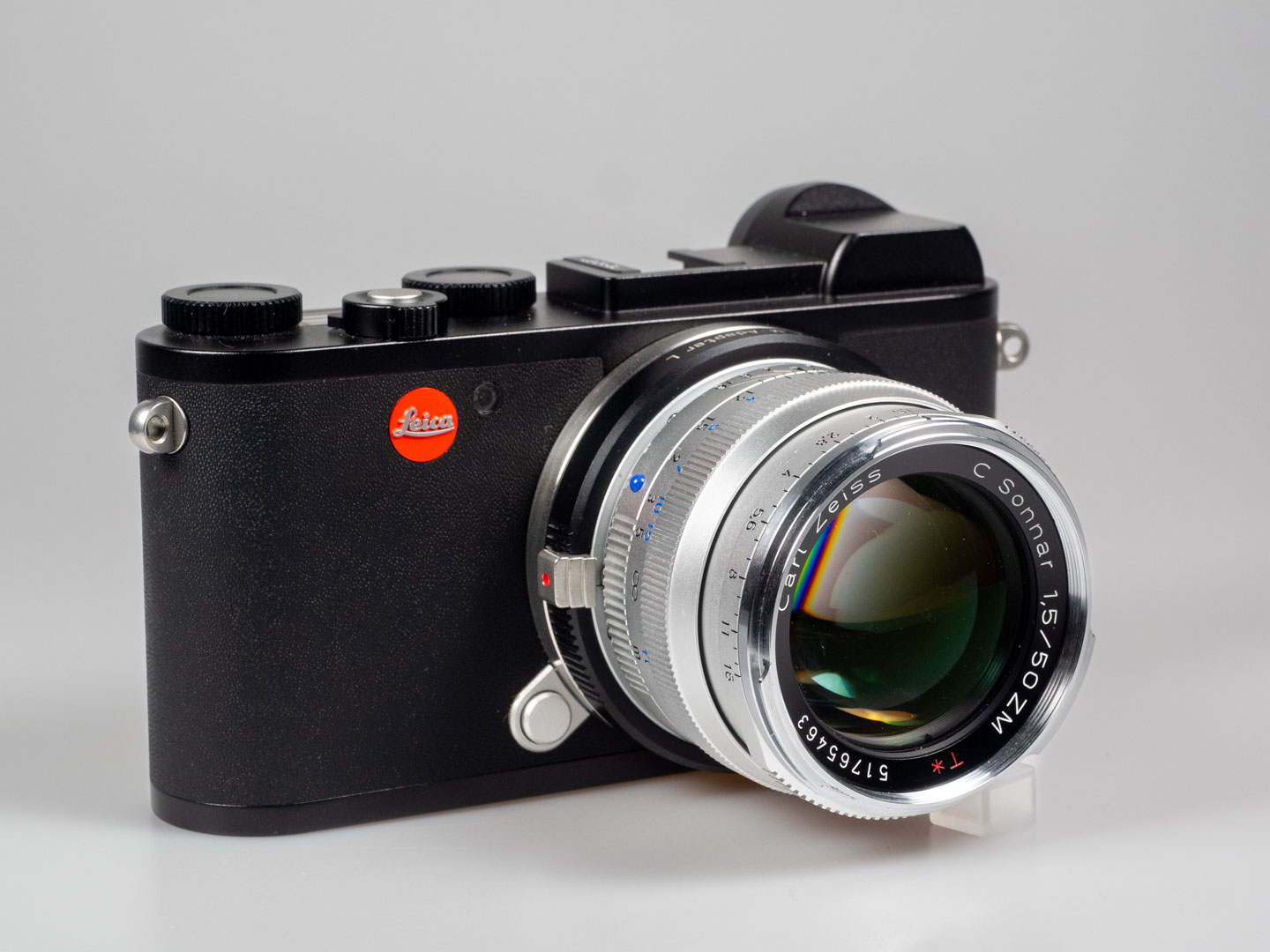
The Zeiss C Sonnar ZM 50/1.5 is, by a small margin, the biggest of the three Zeiss ZM C lenses. That means it is also very compact (first “C” box ticked). However, it is distinguished by its substantial weight and its larger diameter. Otherwise, everything is up to Zeiss standards, and you can see that they were serious with the idea of making compact lenses for rangefinder cameras.
Build quality
Again, a Zeiss ZM lens, and all I have written about the 21/4.5 and the 35/2.8 also applies to the 50/1.5. I have had all three of them for some years now, and they seem to be ageing well. No mechanical problems so far.
I have these lenses in a silver finish and can only confirm what other reviewers are writing. They keep their good looks over a long time. However, I can’t say whether the black-finish lenses show more signs of wear.
Focusing
Now, here comes one major issue with the C Sonnar 50/1.5. Focusing is tricky with this one. First, you are limited by the 0.9m minimal focusing distance. This is a tribute to the historical design, I suppose, but it is not up-to-date any more. Even if you say that rangefinder photography is not so much about close distances, the standard 0.7m just gives you more options.
The focus travel to infinity is 90 degrees. This should be just enough for precise focusing, but the throw is not the problem.
The problem is that the Sonnar does have focus shift in both annoying forms. At a set aperture, it doesn’t give the best sharpness at all distances, even if the rangefinder patches are perfectly aligned. And at a set distance, the focus plane wanders a bit as you are changing apertures.
The only real solution I found was using the electronic viewfinder on the M10 with its zoom-in function. But as we all know, the Visoflex 020 is less than convincing, and you don’t buy a rangefinder 50mm lens if you would rather not use the rangefinder, do you? Perhaps, the new Leica M EV1 gives all the C Sonnars sitting in the drawers a second lease of life.

Viewfinder
Since the lens is compact, and the 50mm frame lines only cover a comparatively small part of the entire viewfinder of standard rangefinder cameras, there are no issues with rangefinder blocking.
If you attach a lens hood (as mentioned, I have a vented model by Haoge), you will see it in the lower right sector. But this is no real problem for composing your image.
At any rate, I would also encourage all photographers to actually use hoods on all lenses. They are in most cases quite effective against stray light. And they also do offer some mechanical protection. It is similar to using UV filters — the extra bit of security is worth it.
My verdict, handling
I think I never had a lens that was so special to handle. And this is not because it is complicated or fragile, quite the contrary. It is just difficult to get the sharpness exactly where you want to have it. This, of course, has to do with the optical design and is not directly related to mechanics and haptics. But in the hand of a working photographer, the peculiarities of the Sonnar 50/1.5 manifest themselves as handing issues.
Alternatives
Alternatives to the C Sonnar 50/1.5 from the Zeiss ZM C lenses range? No problem. Fast 50mm lenses for Leica M-Mount are legion, and a comparison between the different f/1.4(ish) 50mm options would certainly make for a standalone article. So, I will only give a brief overview of alternatives to the Zeiss Sonnar 50/1.5.
Immediately to mind comes, of course, the Leica Summilux 50/1.4. The newest versions have floating elements. No lesser expert than Leica’s Peter Karbe calls the Summilux 50 one of his favourite lenses. The latest iteration comes with improved close-up distance, but you need live view or an electronic viewfinder to take advantage of this. And, obviously, the Leica lens is much pricier: €4,690, more than four times as much as the C Sonnar. Let’s not forget about Leica’s remake of their classic Summilux (pre-ASPH., €3,850) which follows a similar concept to the Sonnar.
50/1.5? Isn’t there a Voigtländer?
An alternative well worth considering is the Voigtländer Nokton 50/1.5 which is almost as compact as the C Sonnar, while delivering outstanding image quality (read the review in episode 27 of the M Files). In the same price range as the Sonnar, it might be the smarter choice to this Zeiss diva. Fast 50mm lenses also come from several Chinese manufacturers, such as Thypoch (the Simera 50/1.4 will be the subject of another M Files episode soon), TTArtisan or Light Lens Lab.
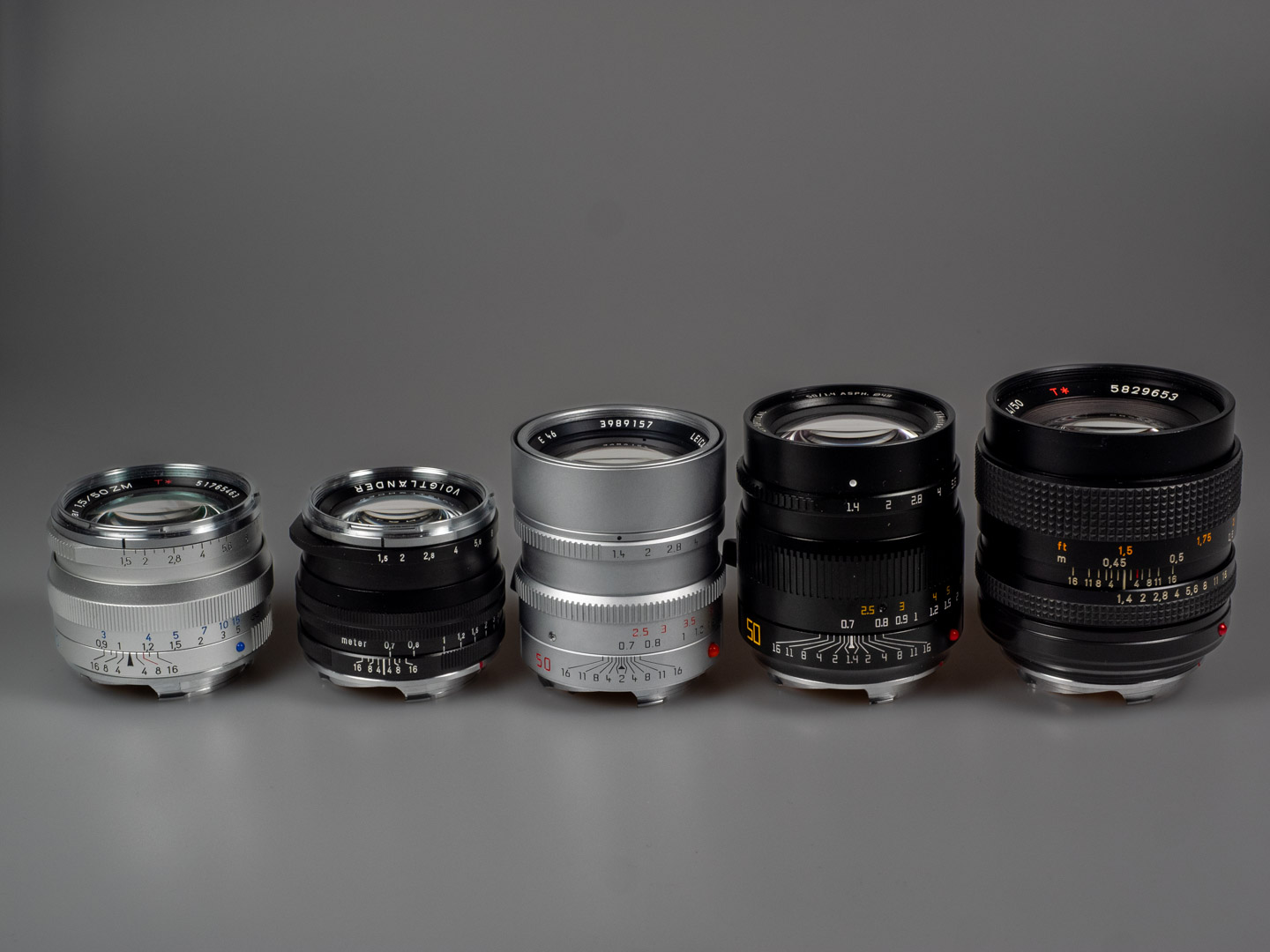
Finally, there is even an alternative from Zeiss itself. The Planar 50/1.4 is obviously not from the Zeiss ZM C lenses line, but for the Contax/Yashica SLR system. Skyllaney transforms this into a rangefinder coupled M-Mount lens in Scotland. Read in episode 15 of the M Files about the result of meticulous craftsmanship.
Furthermore, just to mention it, there is another 50mm Zeiss ZM lens, the Planar 50/2.0 which turned out to be a very competent and affordable (ca. €750) option in part 5 of the M Files.
Zeiss ZM C lens 50/1.5: the bottom line
Within the Zeiss ZM C lenses range, the Sonnar 50/1.5 has a special place. The C in its name could not only stand for classic (which is justified given the fact that it is basically a 1930s design) or compact (this lens is exceptionally small for its focal length and seed), but also for controversial.
The 50mm Sonnar is somewhat of a diva, difficult to handle and with a somewhat uncertain outcome. While stopped down rendering is fine, it can be messy wide open. You can call that character, or imperfection, or simply an annoyance. As the one and only fast 50 for your Leica M, I would never recommend the C Sonnar 50/1.5. But why not use it, after thoroughly gathering experience, as an alternative for special projects, especially portraits?
Zeiss ZM C lenses: overall conclusion
Despite their shared nomenclature, the protagonists in the Zeiss ZM C lenses line-up have less in common than you might expect. It is mostly their compact size they share — all three lenses are remarkably small indeed.
In the C Biogon 21/4.5 and the C Biogon 35/2.8, this is at the expense of speed. In the C Sonnar 50/1.5, the special rendering with its imperfections is part of the compromise. If it is a trade-off, only you can decide.
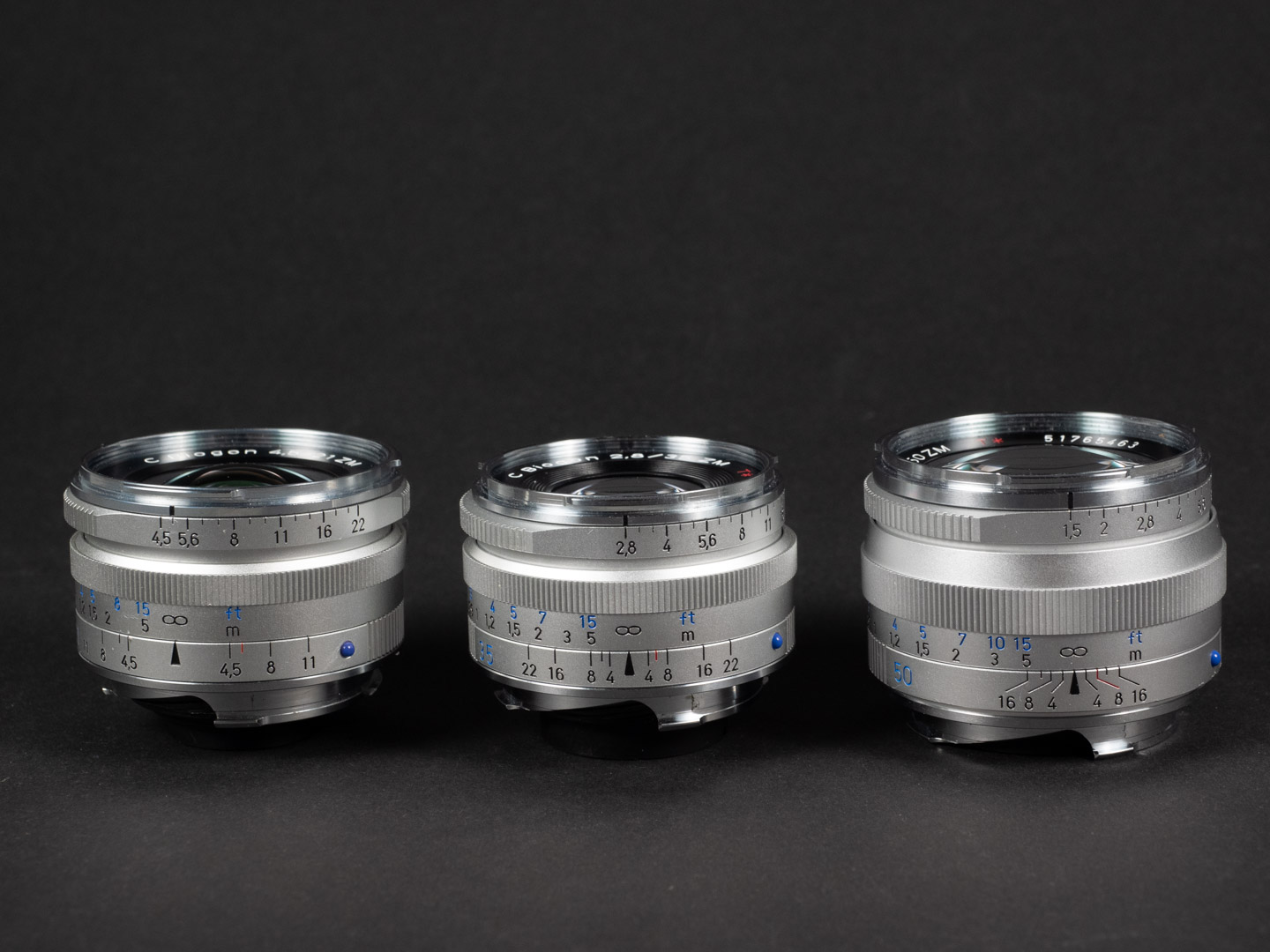
Of the three lenses, the C Biogon 35/2.8 is the most versatile, for sure. On newer digital Leica M cameras, it can show its strengths, most notably excellent rendering, very good contrast, and absence of distortion. On older digital Ms, however, colour-cast can be an issue.
The C Biogon 21/4.5 brings a historic design back to life, but all its limitations as well, especially the heavy colour cast. I would recommend it mainly for analogue use or on a monochrome digital M.
The C Sonnar 50/1.5 finally is what I would define as a love-or-hate-lens. Certainly, nothing for mainstream requirements and not easy in the handling department.
The Zeiss ZM C lenses were a brave endeavour
Concluding, this episode of the M Files about the three Zeiss ZM C lenses certainly covers a niche within the niche. For all three lenses, there are more versatile (and mostly: less expensive) options.
Yet none of that removes the justification for these lenses. The courage of Zeiss in re-introducing the Sonnar after decades is courageous and is appealing to this day. The same is true for the “old-fashioned” C Biogon 21/4.5.
The C Biogon 35/2.8 was an endeavour with its lack of a “contemporary” f/2 aperture. But with its otherwise decidedly modern design, it outperforms many other 35mm lenses in terms of contrast and resolution.
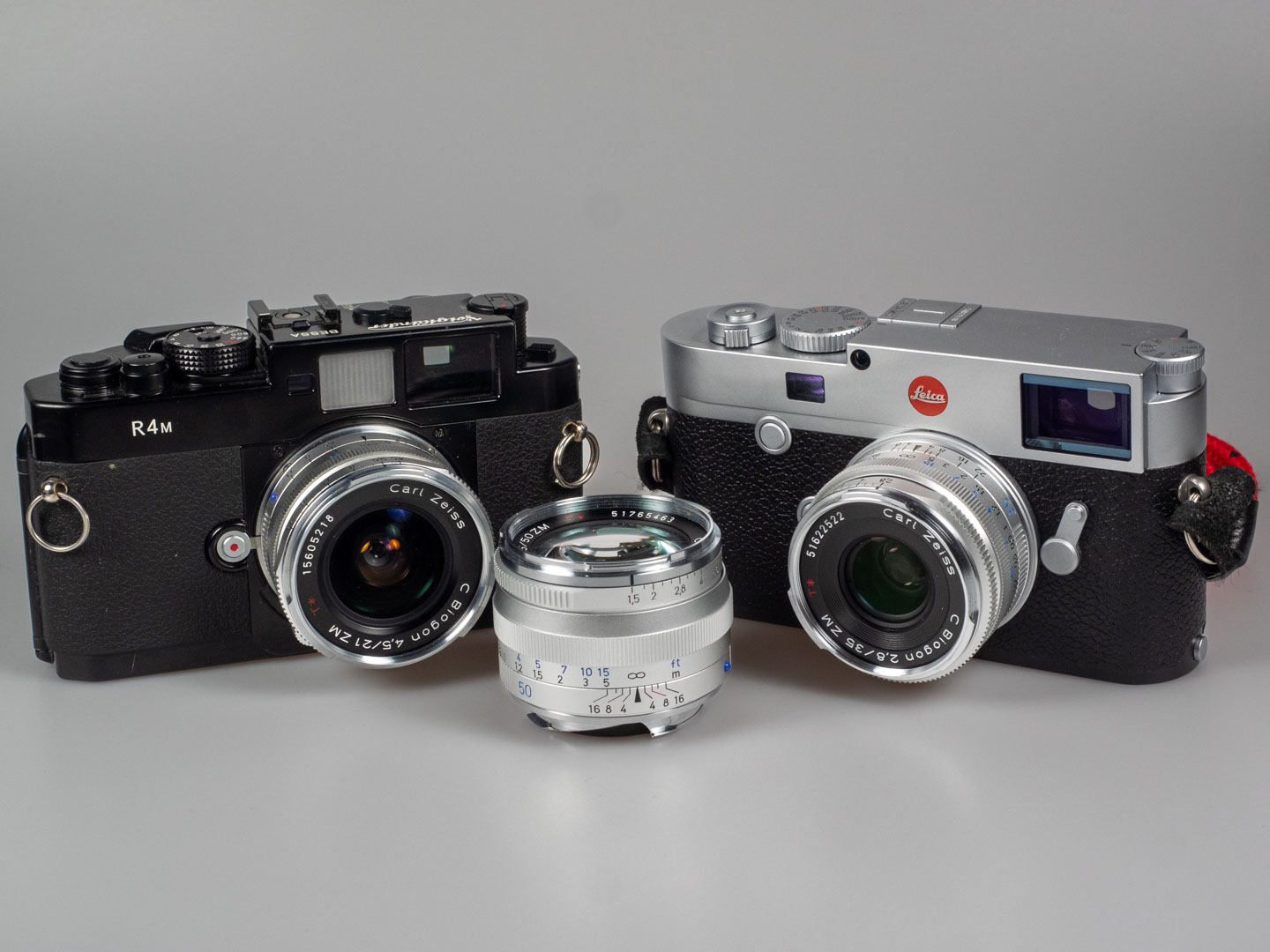
If you can be satisfied with either of the Zeiss ZM C lenses, only you can decide. For what it is worth, I can only say that most notably the 35/2.8 and, to a lesser degree, the 50/1.5 have a certain quality that keeps drawing me back to them.



The M Files: Get in-depth knowledge of M-Mount lenses, cameras, and compatible accessories
The M Files is an ongoing project on Macfilos that focuses on photographic equipment with or for Leica M-Mount, made by companies apart from Leica or which are otherwise not part of Leica’s M system. It follows a more or less encyclopaedic approach without being scientific. The focus is always on the real-life use and usability of cameras, lenses and other items. Products covered by The M Files include cameras, lenses, viewfinders, light meters and more. Brands on the growing list include Contax, Konica, Minolta, Rollei, Voigtländer and Zeiss. Click here for the M Files Navigator, which gives you easy access to all articles and reviews by product type and brand.
Die M-Files: M-Mount-Objektive, -Kameras und passendes Zubehör jenseits von Leica M
Die M-Files sind ein Langzeit-Projekt, das sich auf Foto-Ausrüstungsteile mit oder für Leica M-Bajonett konzentriert, die von anderen Firmen als Leica hergestellt wurden oder die nicht zum M-System von Leica gehören. Es verfolgt einen mehr oder weniger enzyklopädischen Ansatz, ohne wissenschaftlich zu sein. Der Schwerpunkt liegt immer auf der praktischen Nutzung von Kameras, Objektiven und anderen Produkten. Zu den in den M-Files besprochenen Produkten gehören Kameras, Objektive, Sucher, Belichtungsmesser und mehr. Einige der Marken auf der wachsenden Liste sind Contax, Konica, Minolta, Rollei, Voigtländer und Zeiss. In deutscher Sprache erscheinen die Inhalte auf www.messsucherwelt.com.
Hier geht es zum deutschsprachigen M-Files Navigator, der einen einfachen Zugang zu allen Artikeln und Reviews nach Produkttyp und Marke ermöglicht.
Make a donation to help with our running costs
Did you know that Macfilos is run by five photography enthusiasts based in the UK, USA and Europe? We cover all the substantial costs of running the site, and we do not carry advertising because it spoils readers’ enjoyment. Any amount, however small, will be appreciated, and we will write to acknowledge your generosity.
Thank you for this fantastic article. I have a question regarding this glorious trio. Has a sense to get this trio to adapt in a Sony camera? These days I only use it in a tripod and hike a lot. I have some Leica lenses, but lack of the vivid colors, flare control and contrast that I have in say ZM 85. Concretely, Cron 50 is very unsatisfactory and I am going to sell some lenses and simplify what I have. For usage in the tripod for landscape I am using lenses from f5.6, so speed is irrelevant.
You’re welcome, Jorge. I never tried any of these lenses on a Sony camera, so I can’t comment on this. You would have to try. From what I generally know, wide-angle lenses with a rear nodal point close to the sensor tend to be problematic on cameras with a thick glass in front of a sensor and without the microlenses of the Leica sensors (at least until the M10). I hope that helps a little.
Thanks for your very comprehensive article Joerg-Peter. I would like to weigh in supporting the Zeiss C Sonnar 50mm f/1.5, I used it as my sole lens for a year on a Leica M3 with black and white film and really enjoyed the results. Stopped down it behaves perfectly well and even wide open I never noticed the focus shift being a big problem in real life (within the context of use on monochrome film). Rather I found that the rendering wide open gives something of that ‘glow’ which Leica users are reputedly so keen on!
I’ve subsequently used it via an adapter on an EVF camera where focus can be critically assessed with the lens wide open and enjoyed those results too. Perhaps not the best choice for a digital M but within the use cases I’ve tried I would recommend it. Certainly it’s a keeper in my collection.
Dear Patrick, sorry for the late reply and thank you for your comment. I’m glad to hear that you are happy with the Sonnar. I agree that it behaves differently wide open or stopped down. And I think b/w film is somewhat more forgiving than a sensor. This encourages me to use the Sonnar with an analogue body in the near future! All the best, Jörg-Peter
A few years back I downsized my home, gave deposits to my kids so that they could get started on the death ladder.
After they had what they needed, I found myself with some camera money…😀
I spotted one that I liked the look of at Mr. Cad, and even though it was not a Leica, the brand Hasselblad has a great reputation, so I bought my Hasselblad SWC there and then.
On recently finding my negative books, leafing through, even without a loupe, the SWC negatives stand out.
However I rather hastily traded the camera in to buy my Leica Q2. I love the Q2, but I regret trading the SWC as part of that deal. The problem at that time, as I saw it, was that my example did not have the T* lens coating.
What I did not realise was that Zeiss were already selling T* coated UV filters that simply pushed on to the SWC hood, which performs the same function as the newer examples of the SWC cameras.
Since then there has been a massive resurgence in the use of film cameras and I can never seem to find an example of this fine camera, with its zero distortion ultra wide angle view of the world, that moves me to click the buy button.
One day.
Dear Stephen, thanks for sharing tis experience. I have never used a Hasselblad SWC myself but I heard about its stunning optics. I don’t think that any “full frame” camera can give you comparable results. Wether or not a T* filter brings the same results as a T* lens, I cannot say. But as far as I understood, the T* coating is not only applied to the front lens but also to other elements in order to reduce internal stray light effects. But the SWC is still a unique camera, and I hope you find a good copy one day. For the time being, the Q2 is a great piece of kit as well! best wishes, Jörg-Peter
Thanks Jörg-Peter, I did not know about the coatings being internal as well as on the outside of the lens configuration.
I have also remembered another issue that I had, which was a small scratch in the centre of the lens, which did not seem to be on the outside surface…
And indeed, it wasn’t, the early SWA/C cameras had little folds or ‘wings’ on the leaves of the shutter. apparently to stop the shutter jamming, and they made a little scratch right in the centre. If it worsened it had the effect of making the snaps a little misty in places.
This was another, forgotten reason for my resolve to buy a later version.
Michael… Is there a way to edit what I have written?
My reason for this question is that I omitted in my reply to Jörg-Peter above, that the reason that I am harping on about this camera, is that it was designed and built specifically to take the maximum advantage from the Biogon design, the subject of Jörg-Peter’s fantastic piece above on M lenses, one of which is the same Biogon design.
…Forgotten again!
The reason, is that the back of the lens needs to almost touch the film plane, otherwise, there needs to be some form of corrective measure using micro lenses to get the best out of the M design,
I can edit it but unfortunately I am away from the office and don’t trust to do it on the phone. I’m not clear, though. What exactly do you want to say and which of your comments should I delete?
I use the 35mm Summicron pre asph code 000110 on my M240 and have no colour problems at all.
The 21mm f4.5 is altogether different. It’s unusable in colour but with my M240 set to mono it’s terrific, in fact better than my Voigtlander 21mm f3.5, which is obviously much better in colour.
On film the VM 21mm f4.5 was amazing and for digital it really makes me wonder if a mono body is my next purchase.
Tanks a lot, Mark, of adding this information. Good to know that there is a solution for the colour problems. I remember that I once tested 6bit codes and just searched for my images from back then, but can’t find them right now. Having moved on the M10, the issue as kind of solved itself for me. And yes, do keep the 21/4.5, is is incredibly sharp and has so litte distortion. Maybe you intensify your monochrome or analogue work… Best wishes, Jörg-Peter
I once sold this lens and then repurchased it as I missed its wonderful unique rendering of low contrast overcast days. I used an alternate 50mm lens for general use. I know another photographer who also loved the lens for the purpose. I think it still is useful for that purpose but it is a specialty lens.
Hi Brian, thanks for sharing your experience. I guess you refer to the C Sonnar 50/1.5 – this is a specialty lens indeed, I would have loved to find exactly this word. I also know of photographers who bought this lens twice. It will see further use in my personal work, but never be my go-anywhere 50mm lens. Greetings, Jörg-Peter
What a treat, finding this article on a damp January evening in Zambia. Thank you for all your hard work – I appreciate.
Thank you, Richard, for your kind feedback. Glad to read that you enjoyed the article!