
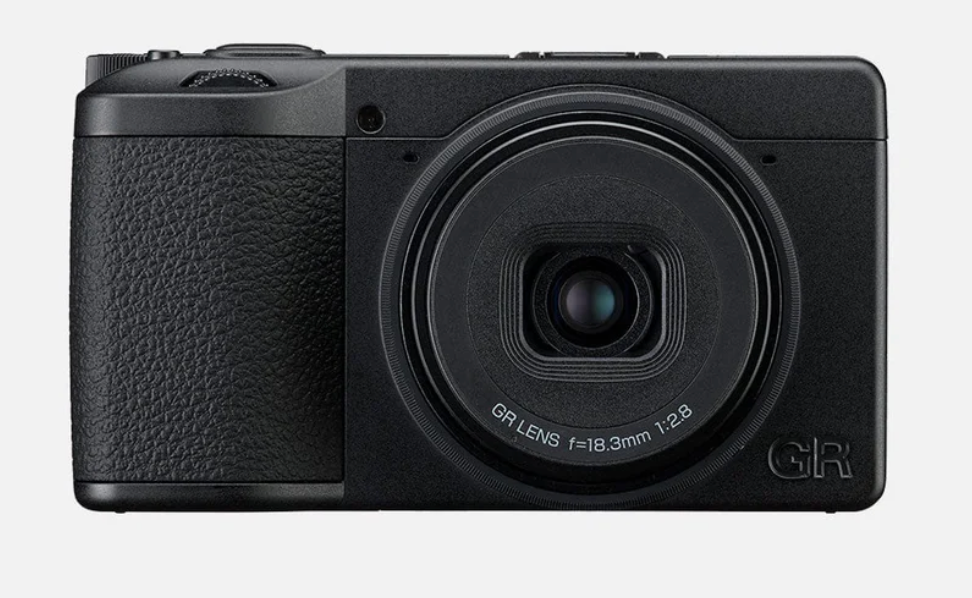
Ricoh has now launched the eagerly awaited Ricoh GR IV Monochrome camera. It is exciting in every respect apart from price, which, at $2,200 in the USA, is far higher than most expected. We covered the camera in detail in November last year, following Ricoh’s advance announcement of the expected configuration. The launch details confirm this previously available information.
The initial launch camera is based on the colour 28mm Ricoh GR IV, while 40mm and HDF versions will likely follow later in the year. The new model will sell for $2,200 in the USA and £1,700 in the UK, thus commanding a $700/£500 premium over the standard GR IV. This probably reflects the relatively niche positioning of the Monochrome and a calculation that enthusiasts will be willing to pay so much extra.
No colour interference
The defining feature of the GR IV Monochrome is its 25.74-megapixel APS-C monochrome-dedicated CMOS sensor that eliminates the colour filter array found on conventional sensors. Unlike standard cameras that convert colour images to black-and-white through interpolation, each pixel captures brightness information directly without colour filter interference. The camera features a newly developed GR Engine 7 image processor.
This fundamental difference is designed to provide sharper rendering with enhanced detail, and richer tonal gradation. It improves light-gathering capability compared to monochrome conversions from colour sensors. The AA filterless design further maximises resolution, allowing the high-performance GR lens — an 18.3mm f/2.8 (28mm full-frame equivalent) optic with seven elements in five groups — to realise its full optical potential in monochrome reproduction.
High sensitivity
Removing the colour filter array significantly boosts light sensitivity, extending the ISO range from 160 to a remarkable 409,600. This expanded sensitivity range enables photographers to employ grain as an element to create effects reminiscent of push-processed black-and-white film at high ISO settings.
The camera features hybrid autofocus combining image-plane phase detection and contrast detection, said to maintain fast, precise focusing even in low light and with the red filter (see below) engaged.
A five-axis sensor-shift image stabilisation system provides up to six stops of correction, essential for handheld shooting in challenging lighting conditions where monochrome photography often excels.
The GR is specifically designed for one-handed operation — it is certainly small and light enough for this — and the enhanced stabilisation is welcome.
Switchable red filter
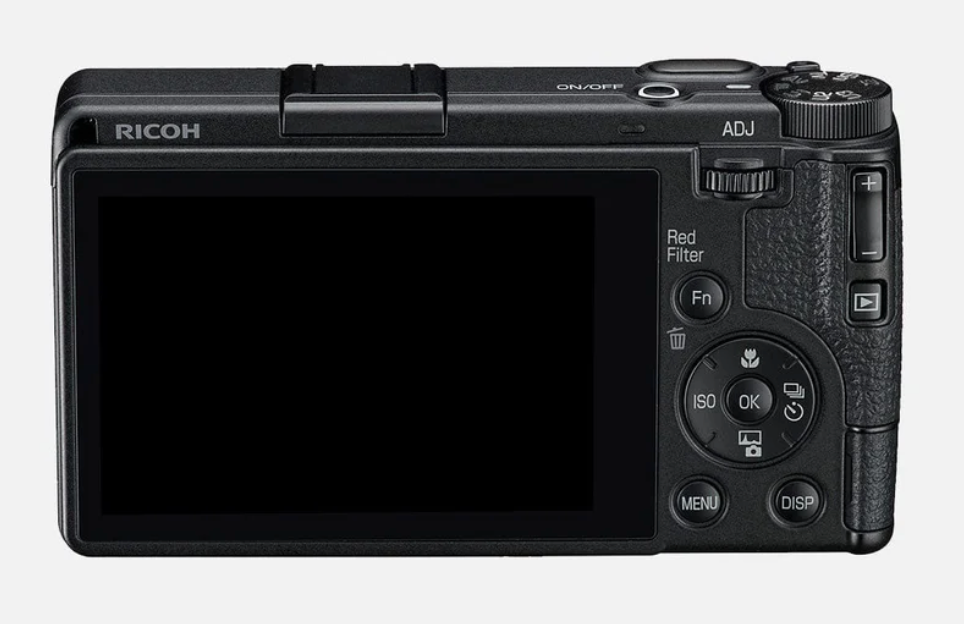
Ricoh has integrated a switchable red filter within the lens unit, eliminating the need for external filters and enabling instant contrast manipulation. It does, however, replace the ND filter of the colour GR IV. When activated via the function button, the red filter darkens blue skies to enhance cloud separation and brightens red subjects for greater prominence— classic monochrome techniques now available at the touch of a button.
The camera introduces monochrome-specific Image Control modes including “Solid”, which applies hard tonal curves for crisp rendering with refined edge clarity, and “Grainy”, featuring pronounced grain reminiscent of silver-halide prints while preserving highlight and shadow detail. These presets provide sophisticated monochrome expression directly in-camera without post-processing.

High-speed electronic shutter
The electronic shutter extends maximum shutter speed to 1/16,000s, dramatically expanding exposure control in bright conditions. This capability allows shooting at maximum f/2.8 aperture in daylight without neutral density filters and enables deliberate high-ISO shooting to emphasise grain effects.
The camera records 14-bit RAW files in DNG format alongside JPEG, with in-camera RAW development allowing complete image refinement using the monochrome-specific Image Control options. Full HD video recording at up to 60p captures black-and-white motion, though recording is limited to 25 minutes per clip.
Discreet appearance
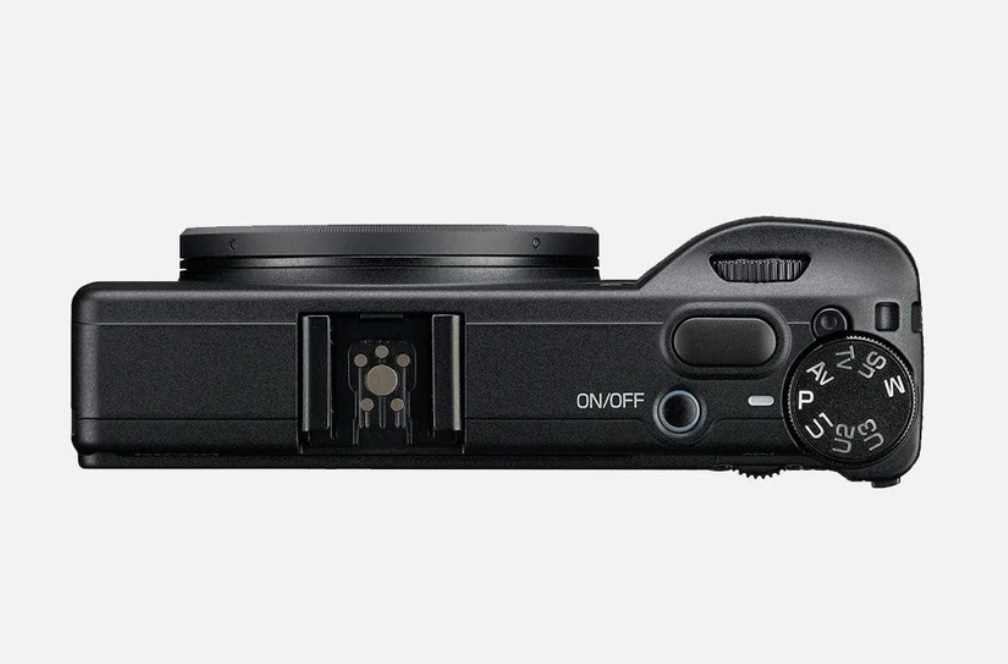
The all-black appearance of the Ricoh GR IV Monochrome reflects the camera’s capabilities, featuring matte-black magnesium-alloy body construction with subdued texture and a semi-gloss black front logo. Even the power button illumination has been changed to white to maintain the monochrome design language.
The camera retains the renowned portability of the GR Series at 262g with battery and card, measuring just 109.4 × 61.1 × 32.7mm. An exceptional 53GB of internal memory stores approximately 2,900 large JPEG files or 937 RAW images without a memory card. There is a microSD card slot for further storage.
The 3-inch touchscreen LCD features 1,037K dots with air-gapless tempered glass and outdoor view settings for visibility in bright conditions. Battery life is rated at approximately 250 shots per charge. In common with other models in the range, the rear screen is fixed.
Chris’s view
30th Anniversary
The launch of the Ricoh GR IV Monochrome marks the 30th anniversary of the GR series, which began with the film-based GR1 in 1996. It has always been a specialised product, appealing to serious professional and amateur photographers as a daily carry.
In the past ten years, however, the digital GR has become a cult camera which, despite its discreet appearance and pocket ability, is an extremely capable camera for experienced and new photographers alike.
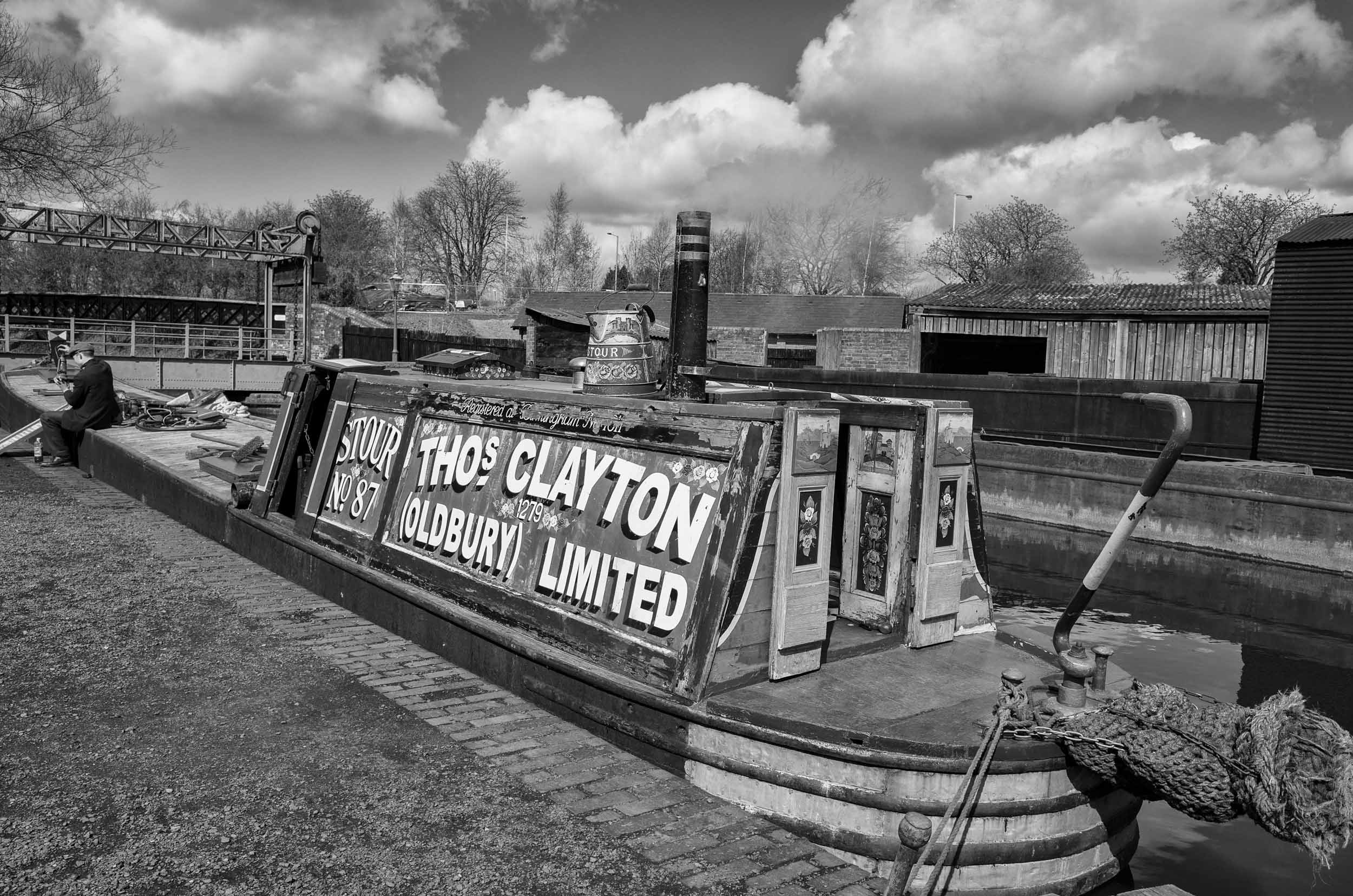
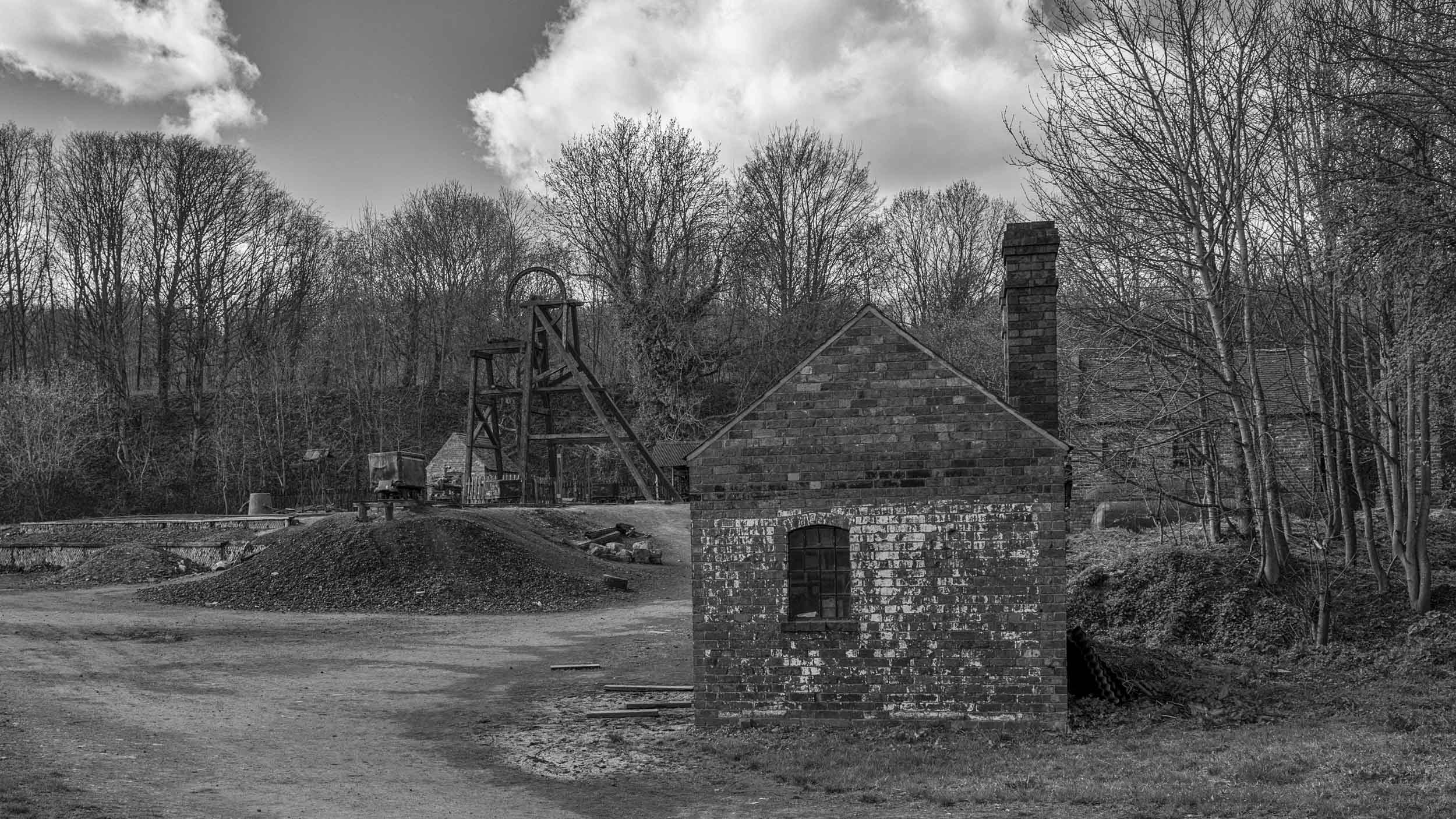
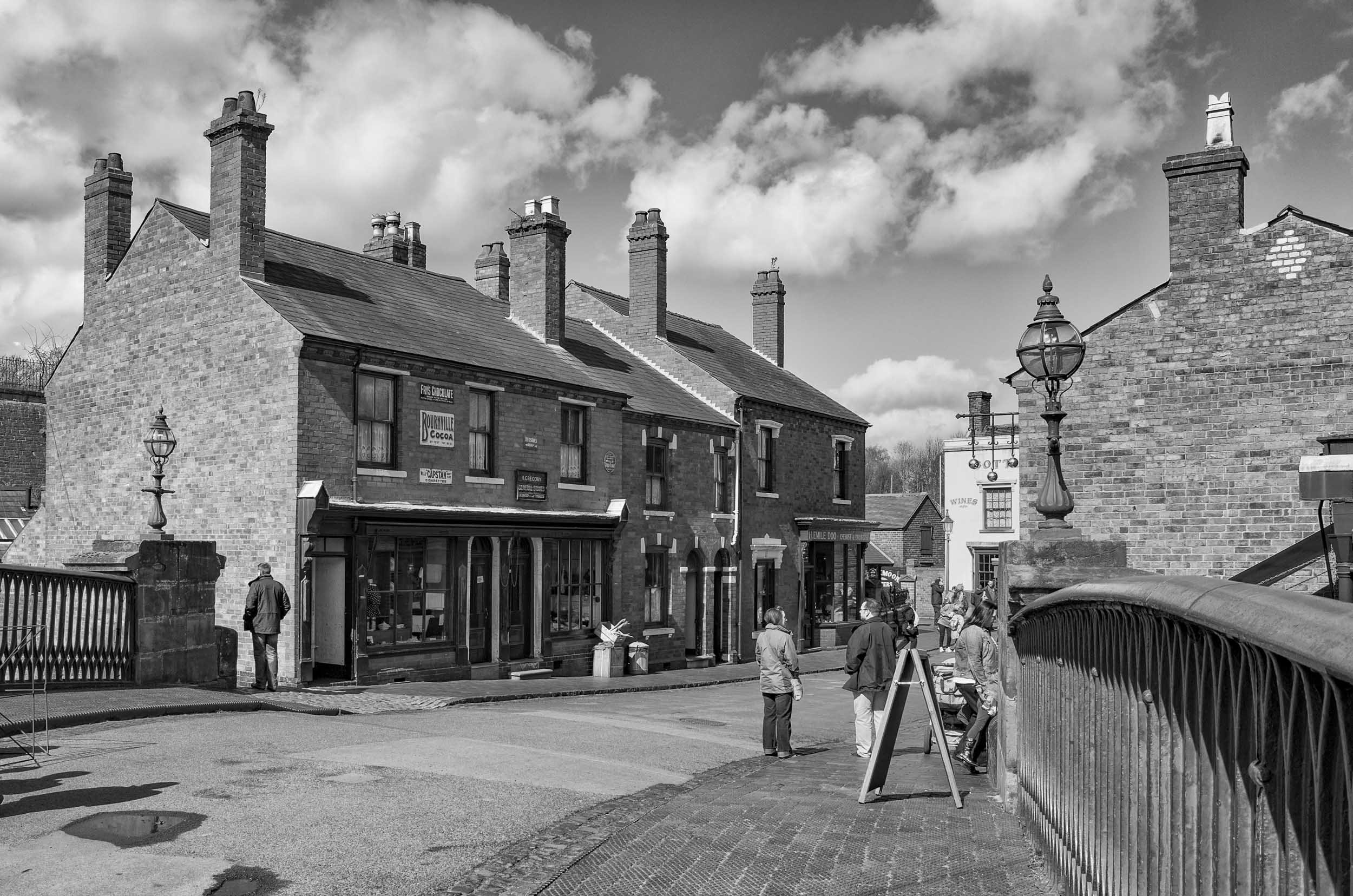
Note that we have no images taken with the new camera. This article uses colour conversions from an earlier version of the Ricoh GR, so are not representative of the abilities of the GR IV Monochrome.
| Breaking Leica’s monopoly | GR IV Monochrome to arrive in Spring |
| GR Series: The ultimate street photo camera | Just the ticket for the keen traveller |
Make a donation to help with our running costs
Did you know that Macfilos is run by five photography enthusiasts based in the UK, USA and Europe? We cover all the substantial costs of running the site, and we do not carry advertising because it spoils readers’ enjoyment. Any amount, however small, will be appreciated, and we will write to acknowledge your generosity.
I don’t think that Ricoh have done this right. Perhaps I am old fashioned, but the tripod effect created by holding a camera to the eye has more than a stabilising effect. I understand that the design incorporates a rear screen, but perhaps they should just re-design it, as it stands now and despite Mr. Nichol’s praise an EVF would have been more appropriate it would allow the snapper to see the snap in glorious black and white.
Leica have a camera called the Deluxe 8… A mono version of that with a mono EVF would allow snappers to see the world in monochrome.
Rather like Chris Nichol did with his video, however instead the whole reel should have been shot in monochrome.
Bonus… If snappers also want to occasionally shoot in colour, they can have one in each pocket, Leica would have doubled their sales.
I went to a pub lunch in Greenwich yesterday and took my old Sigma Quattro DP0. It was set to mono and I had a TTArtisan optical viewfinder hotshoe mounted, it was a little disconcerting for a while, but if that camera had instead sported a mono EVF either built in or hot shoe mounted, I would really see what I am going to get… Genuine wysiwyg!
(Incidentally, that Quattro with a built in Foveon mono-EVF would have been a cracker, unfortunately Sigma have abandoned it and gone over to Bayer which is a shame.)
There’s no doubt that a camera without EVF doesn’t suit everyone. But, as with the boring appearance, the GR follows strict rules.
Adding an EVF would change everything. The camera would no longer fit in a pocket, and it would lose its entire reason for existence.
The Fuji X100 is an entirely different camera which is an alternative to the Ricoh and is a good example of what adding extra features would do to the design.
Thanks Michael.
Changing the subject a little, I was digging around in a drawer and found one of the ‘Camp Snap’ cameras that I bought a couple of years back, I had forgotten, along with tons of other stuff that I had bought them.
Their website is here: https://www.campsnapphoto.com/
These are novel and interesting. Taking inflation into account, they are cheaper than a 1960’s ‘Instamatic’, but they are menu free digital cameras, aimed at the same sort of market…
… Namely summer holidays, where the camera is taken out of the back of a cupboard, dusted off and loaded with a film cassette, ready to go the beach to snap the kids/grandkids paddling or building a sandcastle… etc..
So I charged it up, set it to monochrome, and clicked away whilst sitting at my desktop.
A couple of tweaks and I am now ready to snap pretty nice black and white shots. Key thing is not to take it too seriously, it is just a bit of fun, but more user friendly than an iPhone, and more pocketable since there is no chance of breaking or bending it.
Thanks, Stephen. One of these could make a nice little off-beat present for a photographer.
I think this will be a home run. Hopefully they bring out a 40mm version of this attractive camera.
A shame it’s such an unattractive box. I’ll stick with my Q2M.
That’s exactly why the Ricoh is so popular. It looks boring and inoffensive and, shall we say, unserious.
It’s exciting to see the launch of this long-wished-for camera, if rather disappointing to see the US price. I will stick with my Pentax K-3 III Monochrome for the time being, hoping the tariff effect will somehow go away. I’m happy to see that they chose a red filter to take the place of the ND (or HDF, for those models) filter in the color cameras. Some would say yellow or orange would have greater application for general photography, but the artistic opportunities with red, combined with the hi-contrast modes in this camera, are too good to pass up. I can see a lot of budding Daido Moriyamas out there.
I hope the presence of phase detection pixels on the sensor doesn’t cause any artifacts. I wouldn’t think there would be enough to do so, but the high-ISO limits of these monochrome sensors provides for strong and pleasing grain, and I could see the potential for maybe banding or other artifacts at very high ISO values – I hope not! The Pentax of course doesn’t have PD on the sensor.
Best wishes to the early adopters, and I hope I can eventually jump on this wagon as well without killing my life savings. I do think APS-C true monochrome sensors provide something of a sweet spot in terms of image quality. I imagine this GR is going to produce stunning images.