
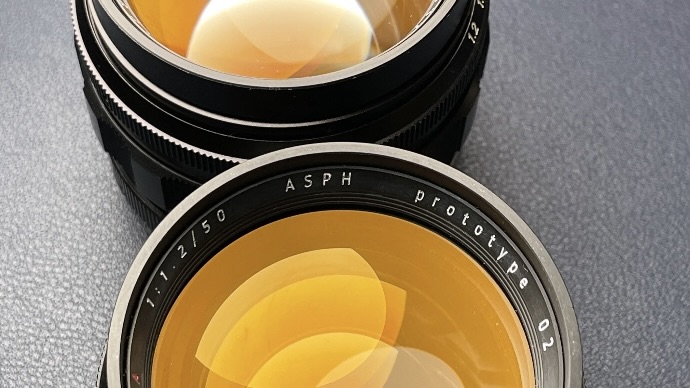
Of the many Chinese lens manufacturers offering products to the world’s photographers, Light Lens Lab (LLL) is unique. The company is committed to producing near-perfect replicas of rare and celebrated vintage lenses, many of which were originally made by Leica. In an enlightening video, the founder of Light Lens Lab, Mr Zhou, recently shared the story behind the company.
Over the last several years, Macfilos has covered the growing wave of new lenses produced by Chinese manufacturers. A number of these companies specialise in M-Mount lenses for use with Leica rangefinder cameras. They offer a lower-cost alternative to the corresponding lenses produced by Leica itself, as highlighted for example in episode 24 in the exclusive Macfilos series, The M Files.
One company, in particular, stands out — both for its philosophy and the quality of its optics: Light Lens Lab. It has set about producing copies of a carefully chosen series of lenses, which are both prestigious and inaccessible.
A rave from the grave
A perfect example is their 50mm f/1.2 ASPH ‘1966’ lens, which was the subject of a Macfilos article several years ago. This is a faithful copy of the famous Leica Noctilux 50mm f/1.2 lens — no longer in production, and costing upwards of $30,000 if you can find a used one.
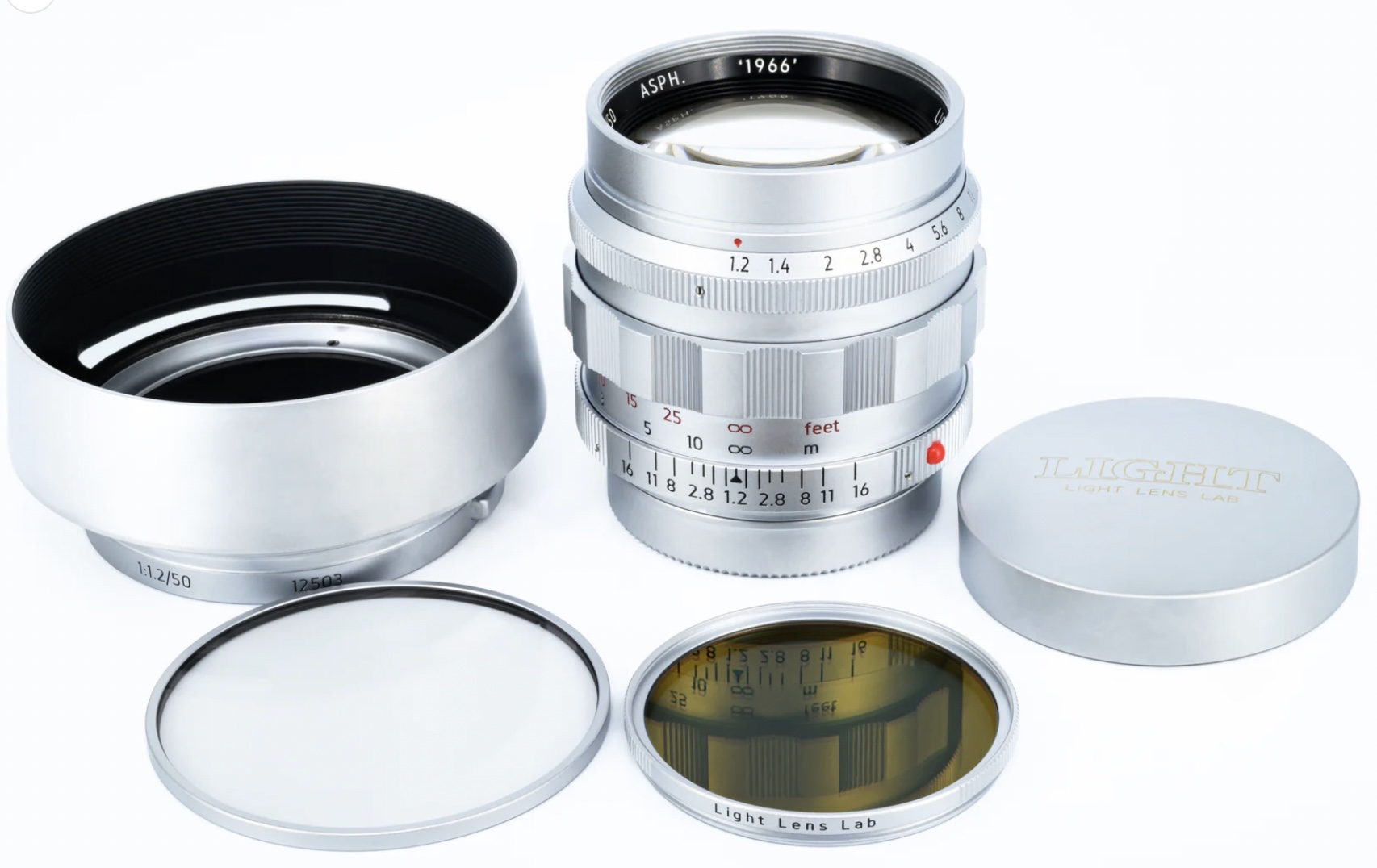
A brand-new Light Lens Lab version of this lens costs around £1,900|$2,500|€2,100. To produce it, LLL went to the trouble of recreating the unique glass used in manufacture of the original. They also worked out how to grind the aspherical elements critical to the lens’s performance when shot wide-open.
Several years ago, Leica released its own recreation of the f/1.2 Noctilux, in black glossy paint. It costs about £7,200|$9,000|€7,900. You can find a Macfilos article about it here.
The LLL business model is not without its critics. Some commentators take the view that the company is taking advantage of the extensive research and development investments made by the originator, Leica. However, as Mr Zhou points out in the interview below, the patents on these vintage lenses have expired.
Patent pending
As anyone familiar with the world of patents knows, an inventor is granted a 20-year exclusivity on their patented invention. In return, they disclose exactly how their invention works. After the patent has expired, and this exclusivity period has lapsed, anyone is free to make ‘generic’ copies of the invention.
We, the consumers, benefit from this arrangement in many spheres, such as pharmaceuticals.
Mr. Zhou and his team are therefore offering photographers a lower-cost alternative to the more expensive ‘branded’ product no longer covered by a patent. Just as generic drug manufacturers offer us a lower-cost alternative to the more expensive ‘branded’ pharmaceutical product, LLL offers a generic lens. No longer covered by a patent.
Anyone who takes a generic drug to treat their hypertension should think twice about criticising Mr Zhou’s production of his ‘1966’ lens.
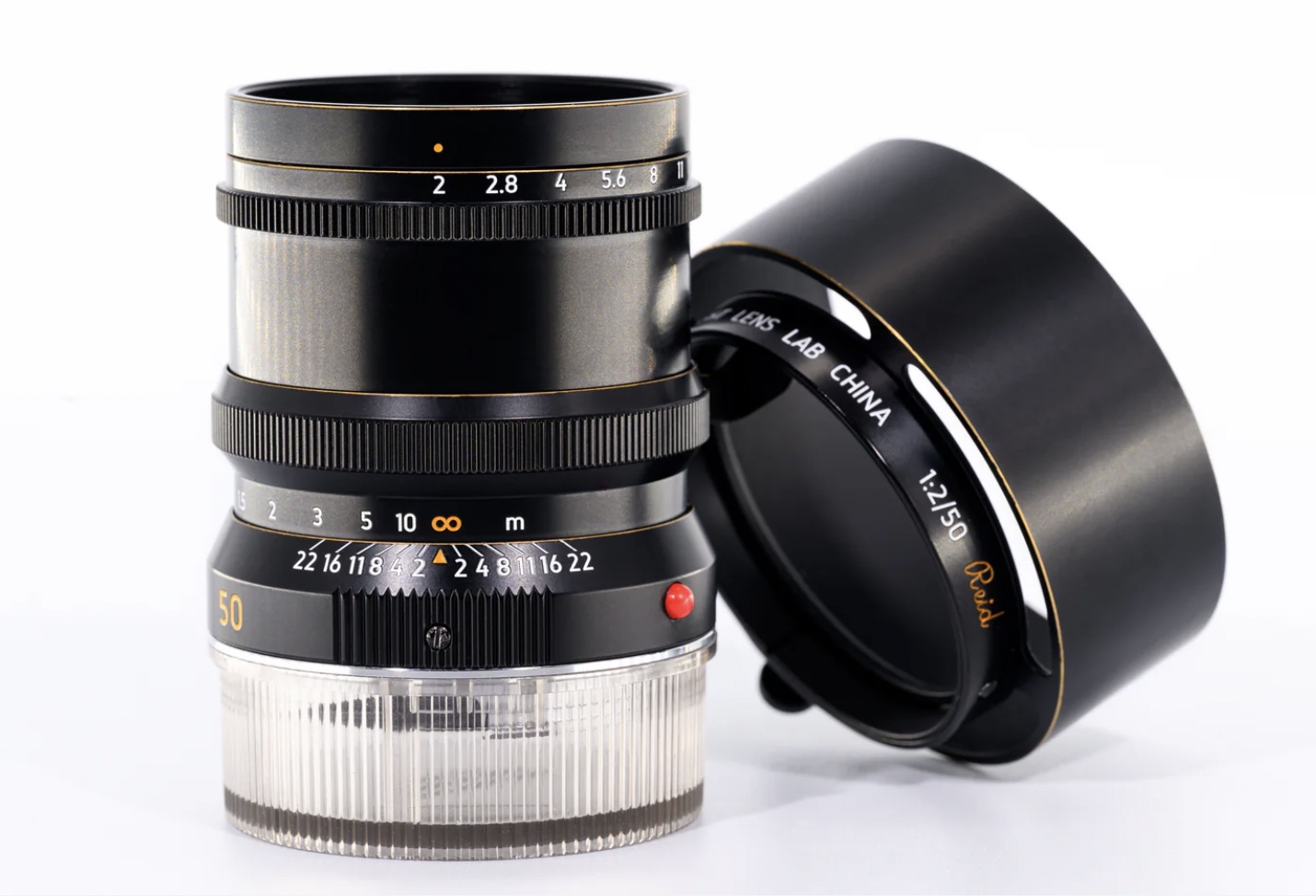

To date, Light Lens Lab has released several analogous replicas of famous lenses. We have posted articles about most of these, for which you can find links in the table below. Buyers should be aware though that these replicas come with all the quirks and aberrations of those original lenses.
Although these articles have often included extensive quotes from the company’s founder, Mr. Zhou, he has remained a somewhat mysterious figure. We therefore found it fascinating to hear directly from the man himself in the video below. We hope you find it interesting too.
| Light Lens Lab 35/1.4 Double Aspheric | Light Lens Lab 28/2.8 Nine Element |
| Light Lens Lab 50/2 Cooke Speed Panchro | M-Mount lenses from China: an overview |
Make a donation to help with our running costs
Did you know that Macfilos is run by five photography enthusiasts based in the UK, USA and Europe? We cover all the substantial costs of running the site, and we do not carry advertising because it spoils readers’ enjoyment. Any amount, however small, will be appreciated, and we will write to acknowledge your generosity.
Thanks Mike, nice piece.
If I have one criticism of LLL, it is that every piece that they make/copy, has CHINA prominently displayed on the lens housing around the glass.
I remember coveting and eventually buying from your good self the Leica M-D. I liked many features of this camera, and I still regret selling it on.
To me, one of the most attractive features was that people being photographed had no idea what kind of camera one had. The only places on the camera that gave such information was on the back of the camera, where it announced that it was a ‘Leica made in Germany’, along with the Leica script on the top of the camera.
Seeing CHINA on the front of a camera, is not going to induce me to smile or grimace, rather a glimpse of the personality of the photographer, is most likely going to influence my reaction to being snapped.
If and when I venture into the market again, I will be very careful in my choice. For instance, with M film cameras, I was always anxious to see, as Winogrand said ‘what it looked like photgraphed’. I am attracted to a couple of cameras, but I am no longer interested in using film… with digital, I can walk round to a Boots CEWE machine, or go to Snappy Snaps and print the snaps that I favour.
The Hasselblad SWC remains my favourite film camera, because there are 12 possible exposures loaded into the back, and one can have a couple of backs differently loaded in the bag, 36 is far too many. This lens produces absolute fidelity, no distortions, and moreover, there are several options from which to source a digital back.
For something less arduous to carry, I think what I might like, is an unmarked Leica M, with the LLL copy of the Cooke Speed Panchro 2.
The “Cooke Look” without the need to have a security guard accompanying me everywhere I go.
Please Mr. Zhou, remove that ‘CHINA’ from such a prominent place, it smacks of the “Empire Made” stamp that was so prominent on goods made in Hong Kong before we trusted them and returned it to China, just before they almost immediately reneged on the understanding in so many ways.