
A boom in compact cameras has swept through Japan. This revival has apparently been driven by younger users, the culture of giving presents, and a desire for a different ‘look’ from smartphones, with fixed‑lens models now dominating unit sales.
After years of contraction under pressure from ever-improving smartphones, the segment surprisingly returned to growth in 2024. This was the first increase in seven years. The surge continued in 2025, with fixed-lens camera increasing by nearly 130 percent and representing 73 percent of all cameras sold by Japanese retailers.
Contrast with global trends
The Japanese phenomenon marks an obvious contrast to global trends, where mirrorless systems dominate. Japanese retailers tell us that many of the new buyers are women in their twenties and thirties who have been influenced by impressive images seen on social media. The appeal of these cameras apparently centres on mood and character, in contrast to the heavily processed, ultra-clean look of smartphone images.
Giving gifts of cameras is also a significant factor in driving the compact market. Japanese parents are increasingly buying compact cameras for children, telling researchers that they see them as “simple, fun tools that are less intimidating than large mirrorless bodies.” At the same time, they are considered more serious than smartphones.
Upheaval
According to one reviewer, buyers see compacts as “affordable, easy-to-use devices that offer a taste of dedicated photography without the commitment or complexity of interchangeable lens systems.”
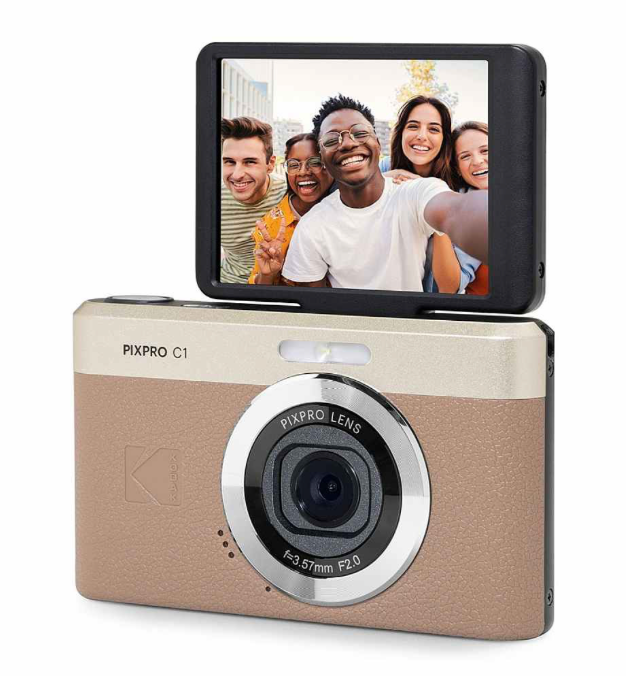
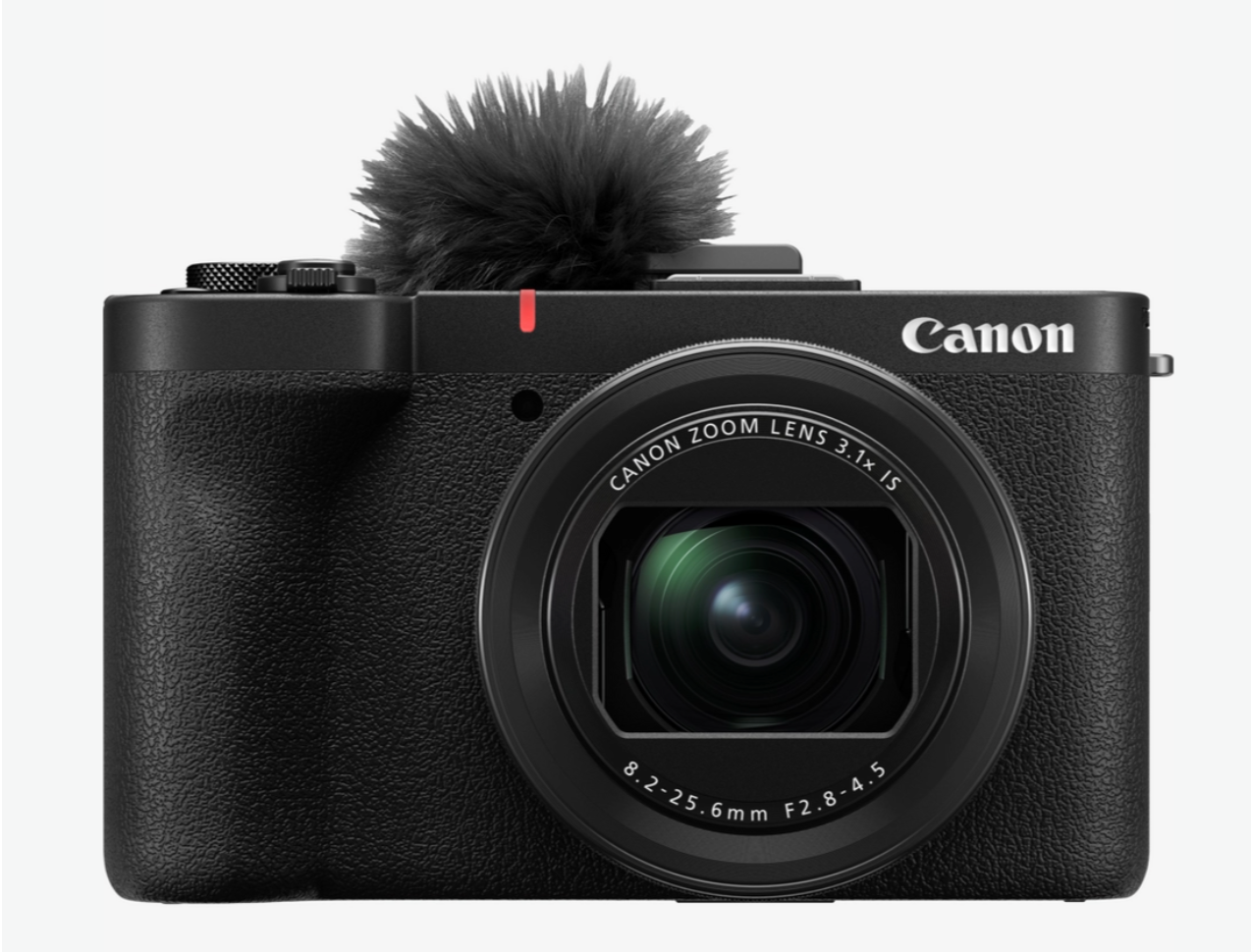
In Japan, this new trend has caused upheaval in the competition between major brands. In late 2024 the market was dominated by Canon (25 percent) and Fujifilm (19 per cent). However, in 2025 Kenko Tokina and Kodak rose in the rankings. In the last year, nearly a quarter of all compacts sold in Japan were Kodak models, such as the PixPro FZrr.
How do we define “compact cameras” in this context? The first step is a built-in fixed lens, either fixed focal length or zoom. The camera must be physically small and portable; pricing is typically in the low-to-mid range, and the models emphasise simplicity, automatic modes, and straightforward operation. Sensor sizes are generally in the small to mid-size, ranging from 1/2.3 to 1-inch, and APS-C at the premium end.
Smartphone contrast
According to Mark Spark Solutions, there is an underlying, subtle change in how Japanese consumers regard smartphone photography. Modern phones offer excellent technical image quality, but they homogenise the style of everyday pictures through heavy computational processing and automatic enhancements.
Young Japanese buyers increasingly “want images that look distinct… favouring compact cameras that can render the scenes with grainier textures, gentler contrast and colours reminiscent of film. In-store displays that directly compare smartphone and compact-camera output have become a selling point, visually demonstrating the different character each brings to familiar subjects.”
Higher-end compacts
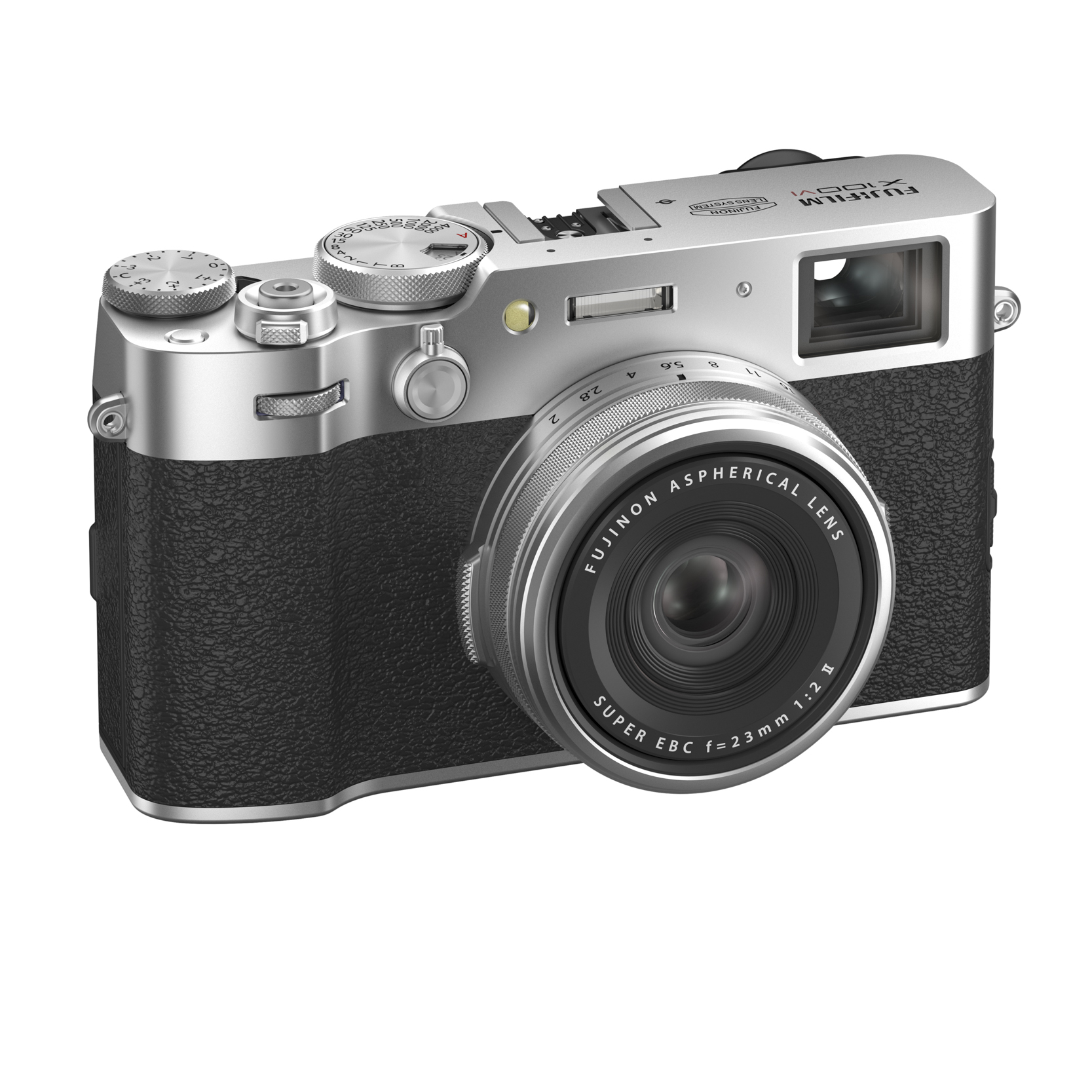
How does all this effect our markets? While we have not seen the growth in budget compacts noted in Japan, there has been a distinct improvement in demand for higher-end compacts, such as the Ricoh GR III and IV, and the Fujifilm X100V and X100VI.
While both these cameras are part of the Japanese compact revival, albeit at the top-end and appealing to a more sophisticated audience, they have established a strong presence in Western markets.
Here at Macfilos we love both these cameras and recognise that they represent a market trend to fixed-lens devices at the expense of the interchangeable-lens offerings. The same trend is apparent even in the rarefied atmosphere of Leica, where the Q models have been a great success.
Simplicity of the fixed-lens camera
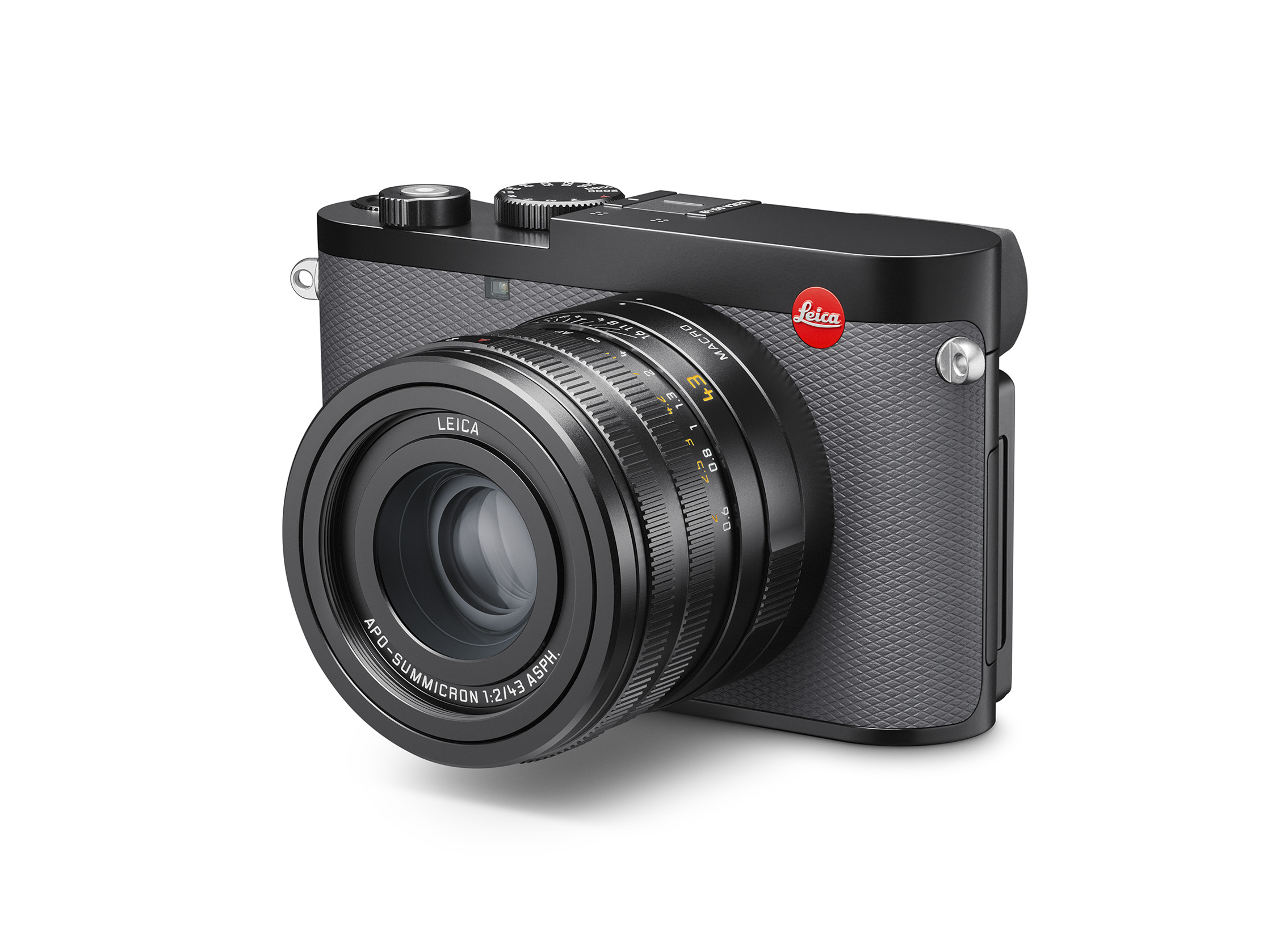

At this higher end of the spectrum we have high-resolution sensors, either 60MP or, in the case of the Fuji GFX100FR, 100MP. These cameras are taking sales from interchangeable-lens systems because of their strong performance, convenience, and ability to provide acceptable digital zoom capabilities.
None of these higher-end cameras are what we could reasonably call “compact”. But they do meet the criteria of simplicity and convenience when compared with traditional mirrorless kits. As we all know, using a Q3 or X100 is a refreshing experience, a one-camera-fits-all solution that makes photography simpler and, in many ways, more rewarding.
Can Japan’s compact boom be exported?
The big question remains: Will the Japanese low-to-mid range compact boom translate to Western markets. There have been few signs so far, but trends happen rapidly these days.
What do you think? Is the Japanese compact craze a refreshing antidote to the artificiality of smartphone photography? Do you believe that the high-end “compacts” from companies such as Fuji and Leica represent a significant change in our market? And where are we going?
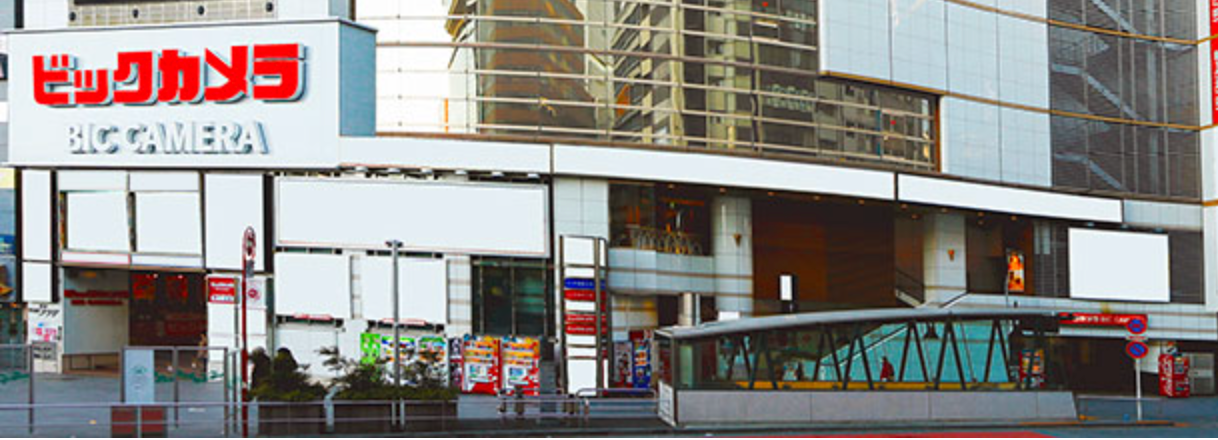
The featured image at the top of this article is of Bic Camera’s Tokyo store, Shibuya East exit.
Make a donation to help with our running costs
Did you know that Macfilos is run by five photography enthusiasts based in the UK, USA and Europe? We cover all the substantial costs of running the site, and we do not carry advertising because it spoils readers’ enjoyment. Any amount, however small, will be appreciated, and we will write to acknowledge your generosity.
Even the big ones might be revisiting earlier decisions and strategies:
https://www.canonwatch.com/canon-is-maybe-possibly-allegedly-working-on-three-new-powershot-cameras-in-2026/
During a recent LSI meeting in LA, I asked Stefan Daniel to consider re-introducing the Leica C/M as a digital version. Of course he was non-committal, and he said I should consider the D-Lux 8. I showed him an image I took (while flying a jet) with the Rollei 35S and told him something like this from Leica would be ideal (AF, IBIS, full frame or APS) with a small Summicron 35mm lens in a package that would fit in my jacket pocket. BTW, following up on the post below, a new version of the X2 or XE might just suffice.
I am still waiting!
I am sure you are! The spec you describe, although 28mm and not 35mm, fits the Ricoh GRIV. But I am sure Leica has missed out on this compact market. If only they had continued to develop the X1 (as Fuji did the X100), things might have been so different.
Mind you, I remember back in 2018 at the (then) LHSA bun fight in Wetzlar when Stefan poured cold water on suggestions of an M camera with an EVF. Sadly, however, I can’t see a similar change of heart on sensor size. APS-C is dead to Leica, so of course all he can suggest is the D-Lux 8. Yet that’s something of a cul-de-sac, isn’t it?
Mike
Let’s not forget the amazing X1, X2 and X-E in the compact department. Still amazing cameras despite their age.
I have sold all of my camera system equipment and then moved from my lovely Fuiifilm X100 VI (at a substantial profit) to the outstanding Fujifilm GFX 100 RF. Photography is a joy with a fixed lens compact!
I have taken the GFX100RF out a couple of times in the past month (after spending a lot of time with it before last year’s review) and agree that it is a great camera. It weighs no more than the Q3. It’s impressively constructed, and the results are outstanding.
I did, however, recall my criticism of the power toggle from the review. On the first outing, I set off from home with a full battery. It was flat when I arrived at the destination, and the power switch was on. I’d even forgotten to bring a spare battery…
Apart from the trigger-happy switch (which is a disgrace and a major design flaw), my problem was exacerbated by the attached shutter release button. I’ve now banished them from my cameras since, if the camera switches itself on while in a bag, any movement presses the shutter release, wake sup the camera and takes a few shots. How they could have produced the RF which such a flaw, I do not know.
I have not had a problem with the power switch by the way I put it in the bag I use. I did appreciate your warning
Regarding compact cameras, I think that I might have mentioned in this very columnar region, the existence of a very cheap and cheerful range of digital cameras known as “Campsnap”.
The idea behind them is that a parent can give one to a teen when they go to summer camp… The type that Alan Sherman made a record about in the 1960’s… “Hello Mudder, Hello Farder, here I am at Camp Granada etc.”.
I have bought three of these, I managed to confuse the first one into unresponsiveness, pulled it apart and then threw it in the bin. However, undeterred I bought two more from Urban Outfitters:
Think ‘Vivitar Wide and Slim’ cameras from the 1970’s, only digital. I also have a modern version of the same, called Reto.
See: https://retoproject.com/products/reto-ultra-wide-slim-film-camera
The Campsnap is here: https://www.urbanoutfitters.com/en-gb/shop/camp-snap-uo-exclusive-check-screen-free-digital-camera?color=015&searchparams=q%3Ddigital%2520camera%26sayt%3Dtrue
I have set one to B&W and painted a big ‘M’ on the back and the other is the default instamatic type colour.
I think they are brilliant for the money, if a bit (in my fists) delicate! 🙂
I’d like to suggest that the Leica D-Lux range of cameras fit the definition “How do we define “compact cameras” in this context? The first step is a built-in fixed lens, either fixed focal length or zoom”.
Others, such as Panasonic and Sony, also offer quality fixed-length zooms, but I’ve a weakness for the Leica branded versions — those using ‘traditional’ aperture, focus and shutter controls. I used the Leica D-Lux Typ 109 as my main camera for trips to Japan and Canada; looking back I’m still impressed with the quality of (some of) the photos.
The only flaw here is the tendency of the extendable lens to accumulate dust and become truly cameras ‘fixed’ lens. I’m writing now from Tokyo, with a Fuji XT30 — compact, with a manual zoom. Quite serviceable!
Self-correction: I’m carrying a Fujifilm X30, not an XT30. The X20 has been extensively reviewed in these pages; see for example Wayne Gerlach’s “Fuji X20: Blast from the past takes on Kyoto in the rain,” and is also an excellent compact zoom.
I would certainly consider the D-Lux 8 to be a “compact” in the sense of this definition.
Proper sliding shell digital version of the Olympus mju with a decent 35mm lens and good full frame low light sensor anyone?
Can I send some love out for the Leica M11 family of cameras? They aren’t fixed lens, but they are small, relatively light, and the m glass lenses are for the most part tiny jewels. I’m looking at you 28mm Elmarit! Great insight in this article.
Yes, the M11 (especially the new M EV1, dare I say, make compact cameras to compete with some fixed-lens offerings. But we didn’t mention this because it doesn’t fit the compact definition of fixed-lens only.
As someone who owns several Ricoh GRs, including the brand new GR IV Monochrome (arrived two days ago!) I’d say it’s already exported 😀 Never going back to big ILCs (but yes, the Ricohs work for my unique needs).
I plan to check out the GRIV and its mono version at the Photo /video show at the NEC in March. I have this wallet-deflating feeling that the mono version might go rather well with my Q3!
I like Ricoh but there are a fair amount of quality issues documented with the GR IV. My GR IV was DOA, lens error, the lens does not go back into the body. That is extremely disappointing. Also, to go from $899.95 for the GR III in 2019 to $1,499.95 for the GR IV in 2025 and to $2,199.95 for the GR IV Monochrome in 2026 is in my opinion stretching it a little bit…
We would be interested in a hands-on review of the GR IV Monochrome, with some pictures, of course. Get in touch if you want to try your hand at an article.
Interesting article! I was completely unaware of the Kodak compact cameras but I see that the Kodak PIXPRO FZ55 has 105 reviews on B&H, so also outside of Japan people seem to be buying them. Traditional camera companies have in my opinion too quickly given up on compact cameras. There are a lot of characteristics being mentioned in this article: simplicity, compactness, fixed lens, look, etc. Most of these are in my opinion not always sufficiently being addressed by the mirrorless systems of the traditional camera manufacturers. Perhaps it is time for a few new names to step in and disrupt the industry.
I’d love fixed-lens digital rangefinders – think digital Canonet QL17, Ricoh 500G or Olympus 35 SP. Manual focus, optical viewfinder/rangefinder, decently fast lens and manual as well as aperture-priority exposure.
Ideally full-frame sensor but I guess APS-C would be ok to keep the cost down.