
The 50mm focal length, often referred to as standard, is probably the most popular in photography. However, while providing a perspective most closely resembling that of the human eye, it has its shortcomings. For example, lacking coverage of nearby surroundings that can add useful context to images. To get that extra coverage, it’s time to reach for those anamorphic lenses.
There are reasons why 50mm lenses are so popular. For example, they offer a field-of-view that is both familiar and comfortable. In addition, they allow the photographer to isolate a subject, such as a person, without having to get too close.
But occasionally that standard field of view has its drawbacks. If there are interesting details just outside the frame, they are missed. A wider lens, such as 35mm, would avoid that issue, but then you’d be forfeiting that attractive 50mm perspective.
This is where anamorphic lenses come into their own. They retain the native field of view of a spherical lens in the vertical dimension, but offer a substantially wider field-of-view in the horizontal dimension.
I wrote about anamorphic lenses in several recent articles (links in the table below), illustrating this phenomenon via some home-studio self-portraits. My aim in this article is to cover shooting with an anamorphic lens while out and about on a photo walk.
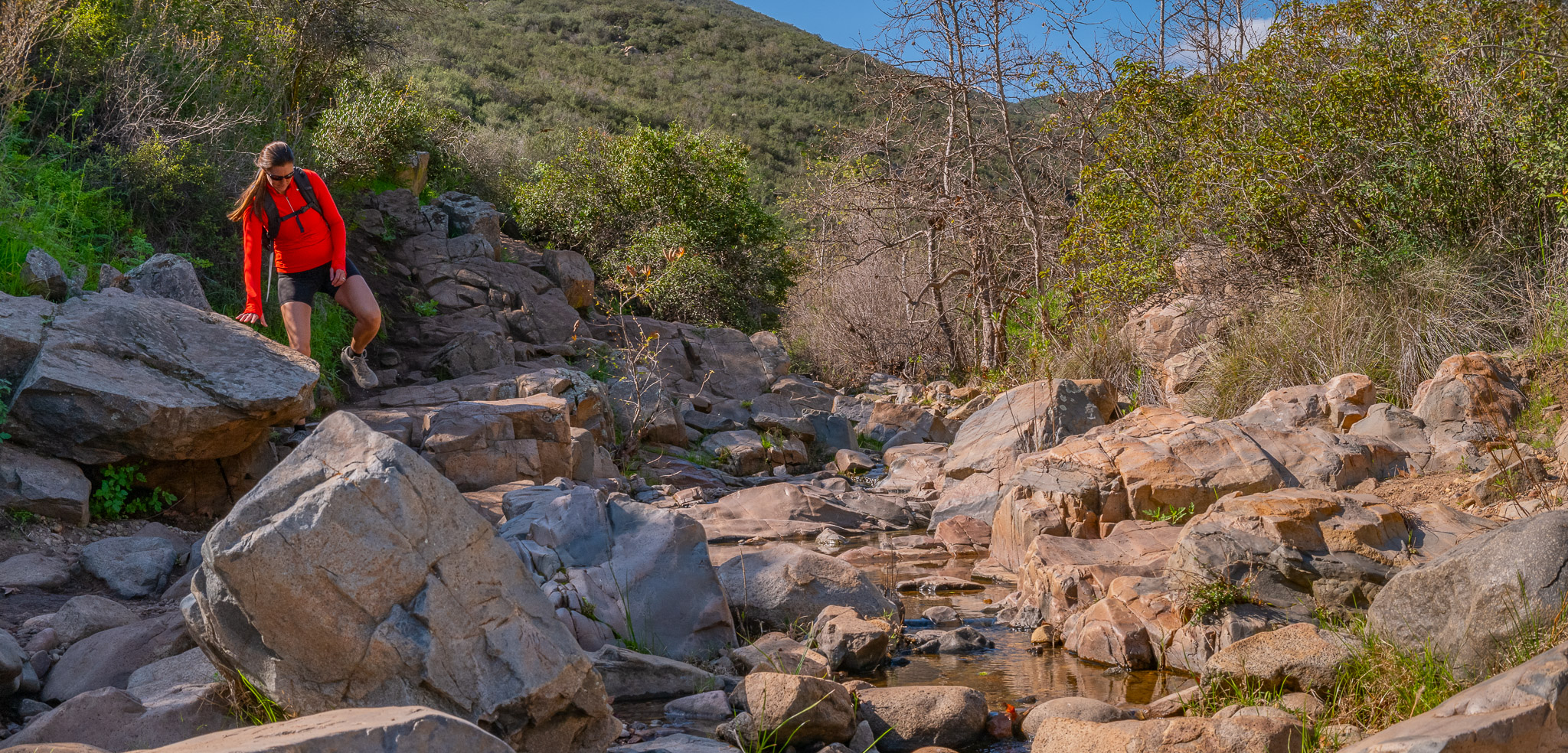
In particular, how it can provide additional context, incorporate two subjects into the frame, exploit negative space, and capture panoramas.
My setup
The lens I used is a Sirui 35mm Super35 1.33-squeeze, manual-focus anamorphic, which I mounted on a Leica TL2 or SL2. The effective focal length of this set up, in full-frame, is 52.5mm — very close to 50mm.
As explained previously, while the lens affords a 52.5mm field of view in the vertical dimension, its 1.33x squeeze factor means a 39.5mm field of view in the horizontal dimension. That might not seem like a big difference, but it represents a 33% increase in horizontal field of view compared to a spherical lens of the same focal length.
There are anamorphic lenses available with larger squeeze factors, such as 1.6x, resulting in even greater horizontal stretching. As mentioned in my previous article, I think a 1.33x squeeze works well for photography, since it’s not too extreme.
For some examples in this article, I used a 16×9 aspect ratio for the squeezed image. This yielded a ~2.4:1, XPan, aspect ratio for the de-squeezed image.
To keep things simple, for the rest of the article, I will refer to my set-up as 50mm, anamorphic.
Additional context
Here are several examples of anamorphic photos taken at a recent outdoor concert, featuring a popular local band — Ron’s Garage. One is a face-on shot of the band’s bassist and lead guitarist. The other is a shot along the front of the band.
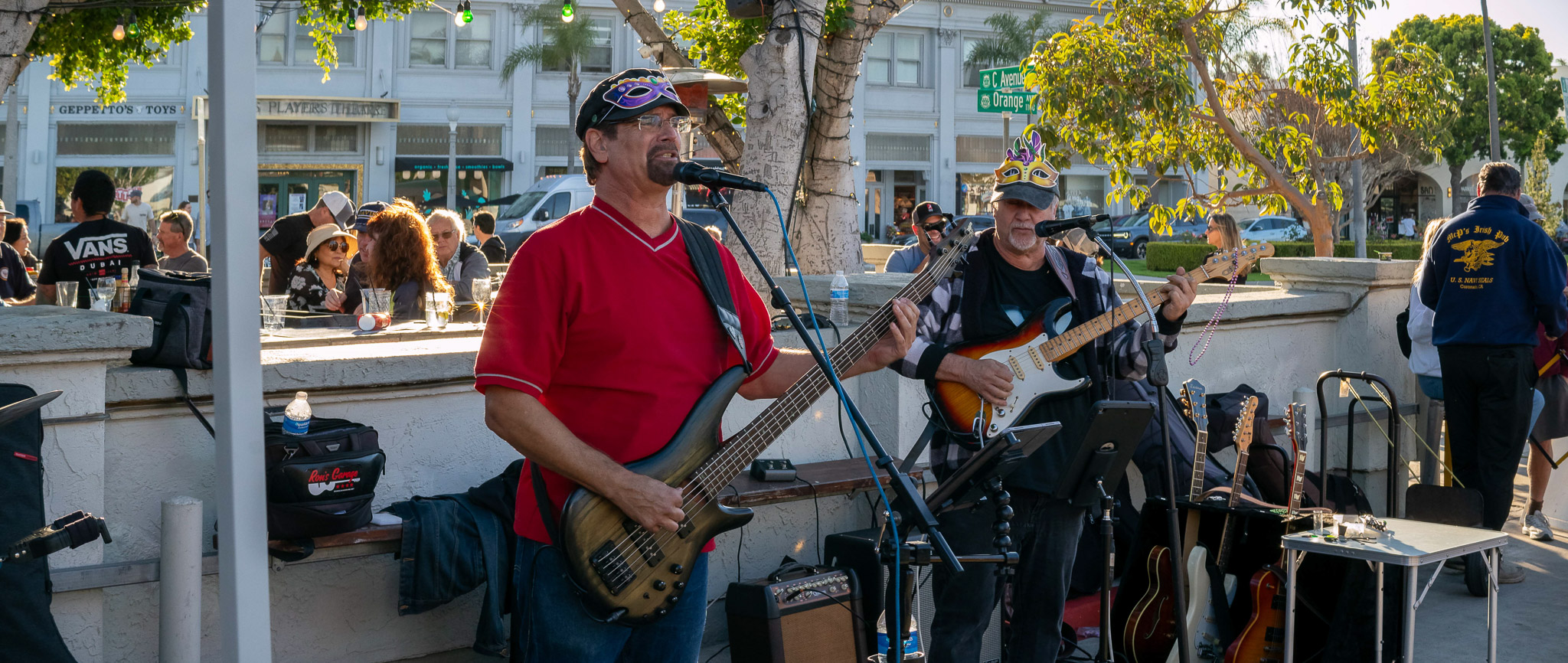
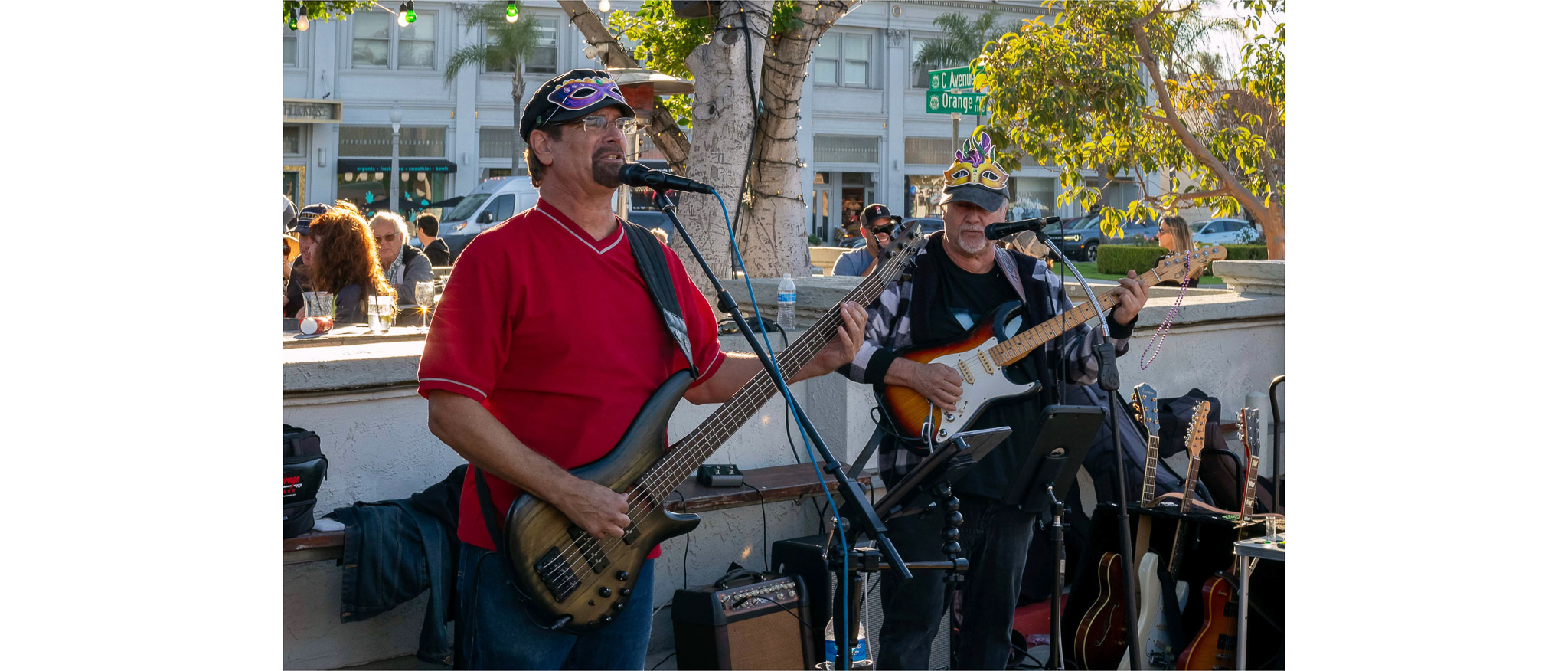
In each case, I made a version corresponding to a shot with a spherical image of the same focal length. I aligned the subject in each pair to aid comparison. The white space shows you what is missing compared to the anamorphic image.
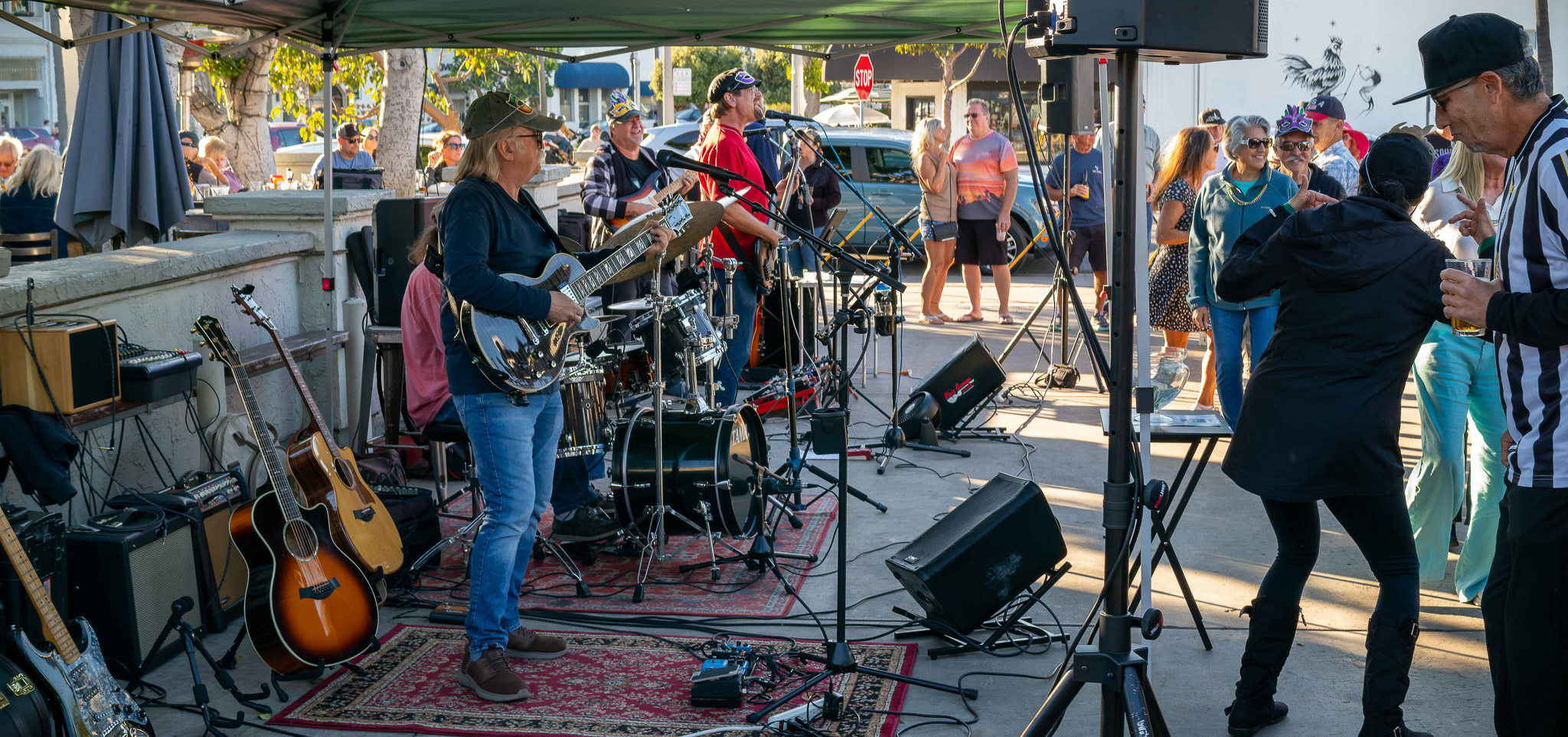
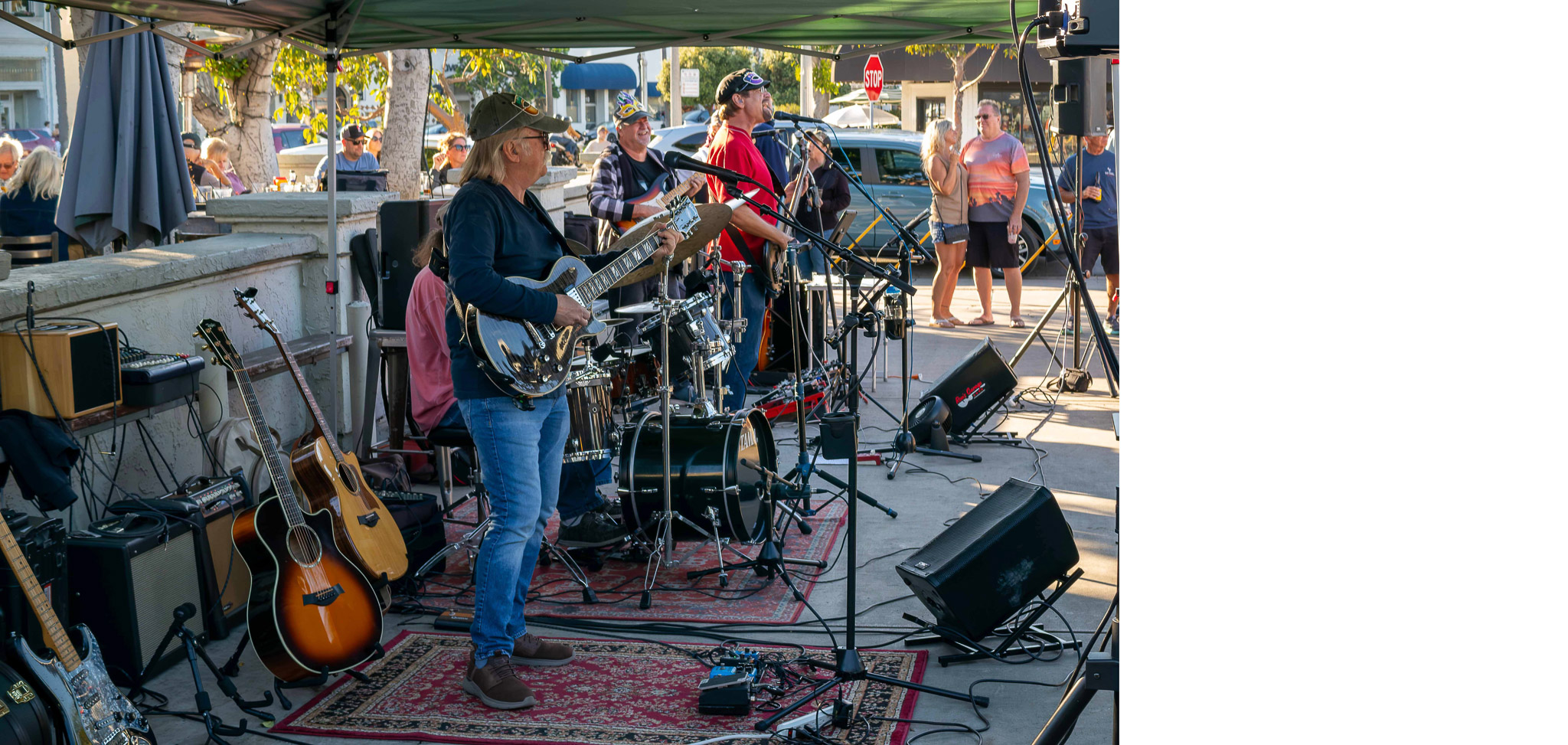
In my view, the wide-screen images are superior. In the face-on shot, you can see people apparently not paying attention to the band. Looking at you, man in ‘Vans’ T-shirt, and bloke wearing a McP’s Irish Pub sweatshirt.
In the shot along the front of the band, you can see the crowd grooving along, dancing and enjoying the music.
Which of these approaches do you prefer?
What is going on here?
You might be wondering how this is possible, and whether you could achieve the same result by cropping a regular, spherical image. In fact, you cannot. This ability to include additional visual information results from the optical properties of anamorphic versus spherical lenses.
For a given focal length (it is important to compare like-with-like here) the anamorphic lens can capture a wider field of view by squeezing a wider scene onto the sensor than a spherical lens can.
So, even if you change the aspect ratio of the spherical image by cropping, for example to 2.4:1, you cannot reproduce the anamorphic image. All you do is chop off the top and bottom of the image.
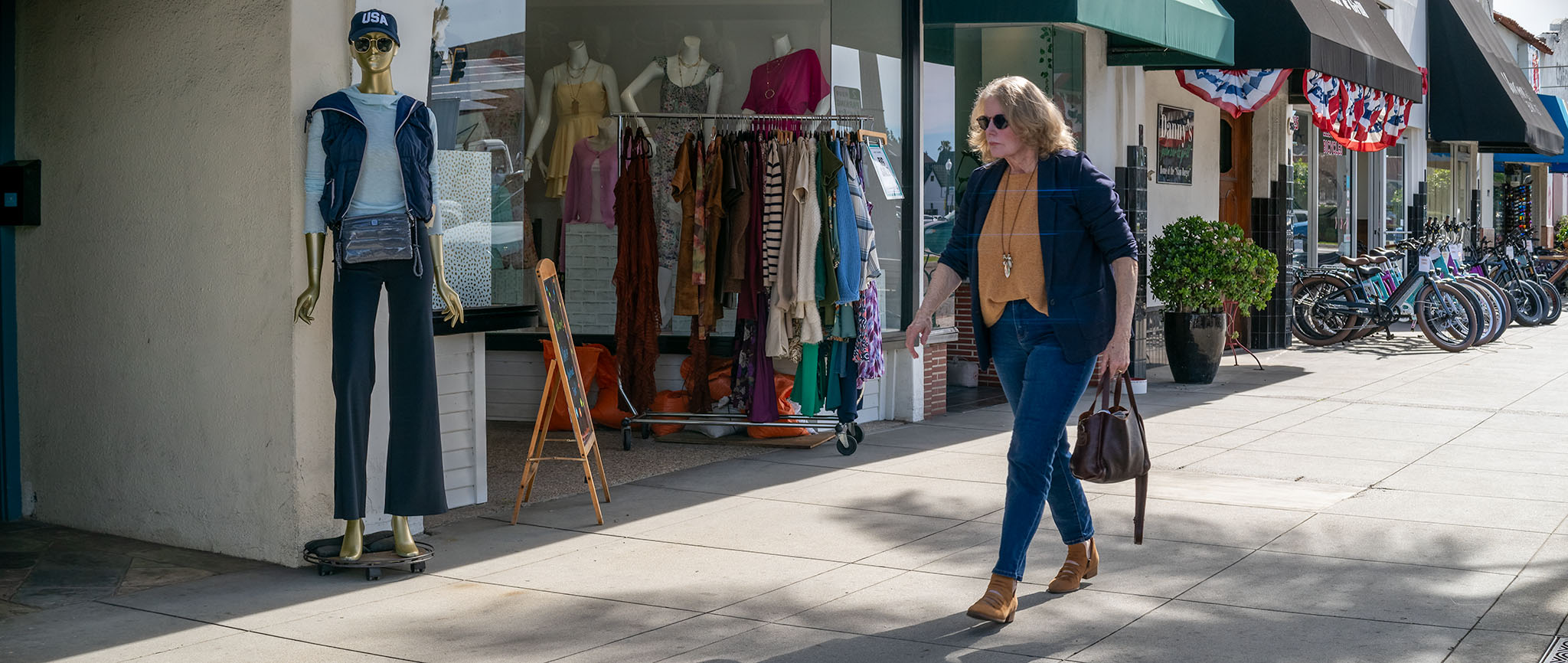
You can, of course, achieve a wider field of view by using a shorter focal length lens, such as 35mm or 28mm. But, you now also change the perspective, so subjects look further away, and images include more space above and below the subject. You can again crop to a 2.4:1 aspect ratio, to dispense with the excess information above and below the subject, but you are still left with an image that has a 35mm or 28mm perspective.
As we know, the difference in perspective between lenses of different focal length can be very significant. Faces, for example, look very different when photographed with a 28mm lens verus an 85mm lens, as does the background, because of the very different perspective of these lenses.
The anamorphic lens therefore pulls off an almost magical trick, maintaining the perspective of a given focal length but increasing its field of view.
Capturing two subjects
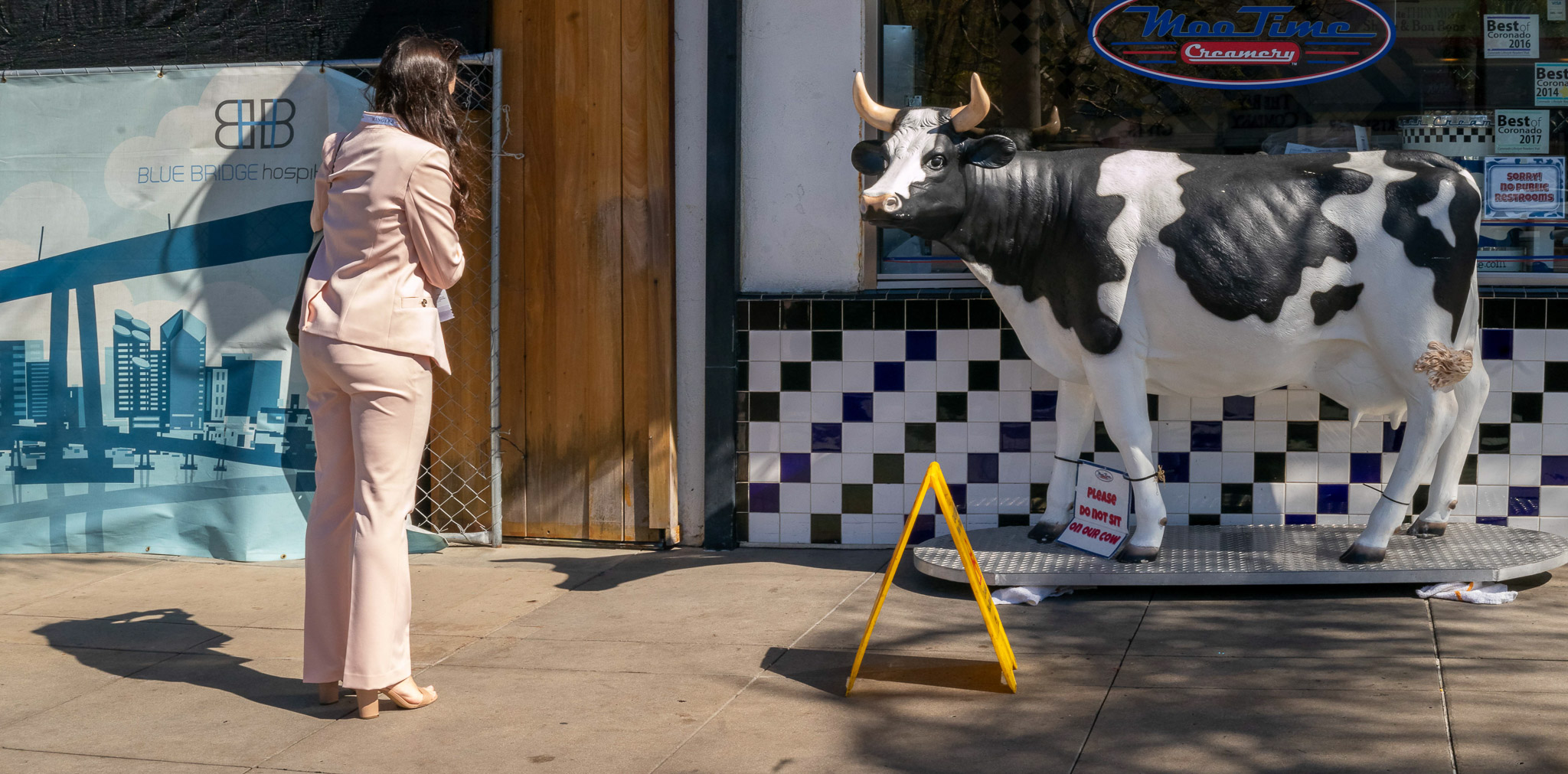
Using the wide field of view of anamorphic lenses, you can fit two subjects into a single frame. And, in the case of my set-up, you see each of them from a 50mmm perspective. Compositions like this are just not possible with spherical 50mm lenses.
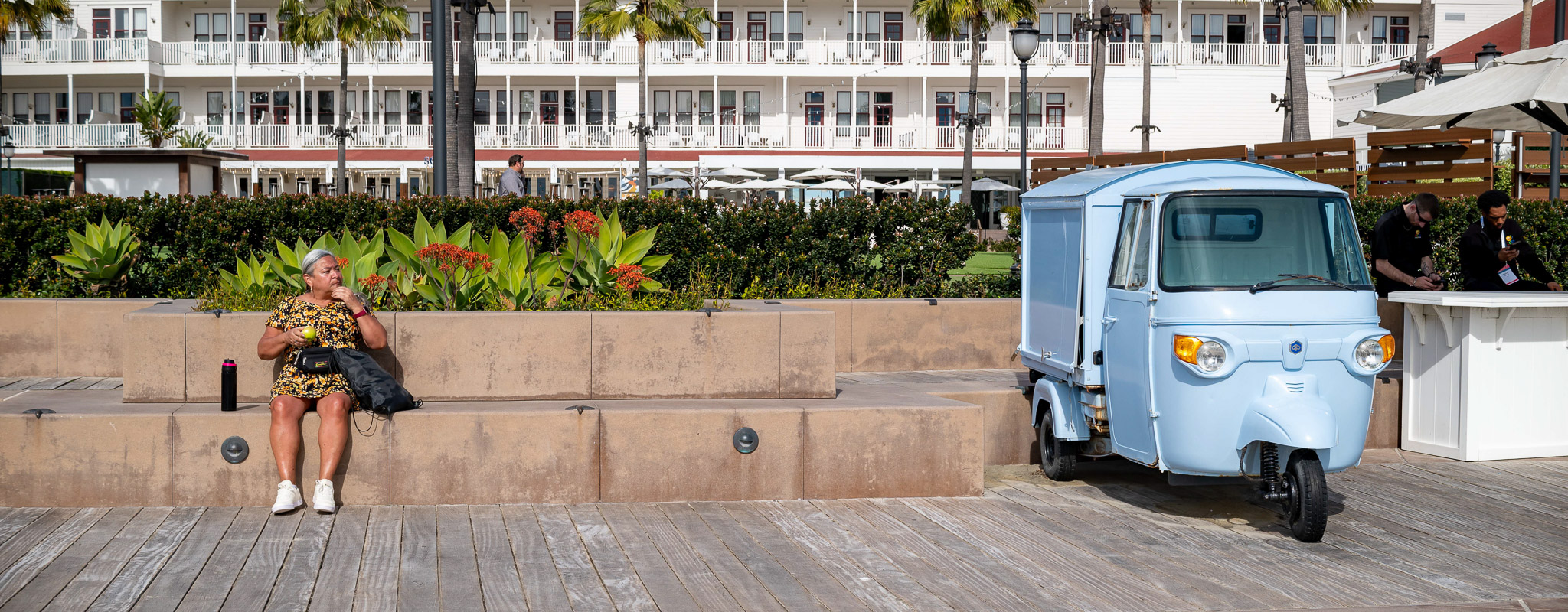
You might argue that you can replicate this wide-screen effect by stitching together several images to create a panorama. This can, indeed, work well for landscape images. However, when you are trying to capture a street scene, or a scene with movement, that seems out of the question.
Exploiting negative space
Placing a subject in a wide frame positions them against a much broader backdrop. If they sit towards an edge of the frame, following the rule-of-thirds compositional guidance, the result is a swathe of unoccupied, or negative space.
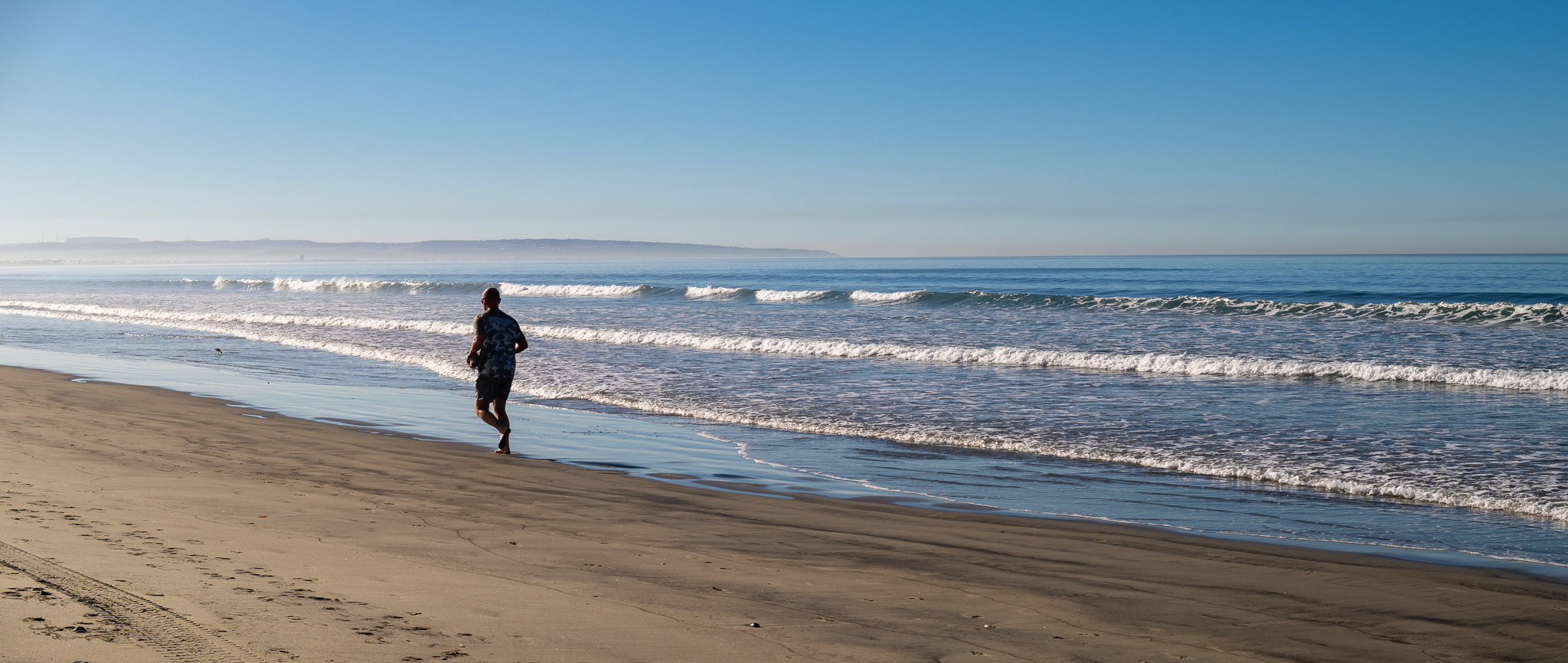
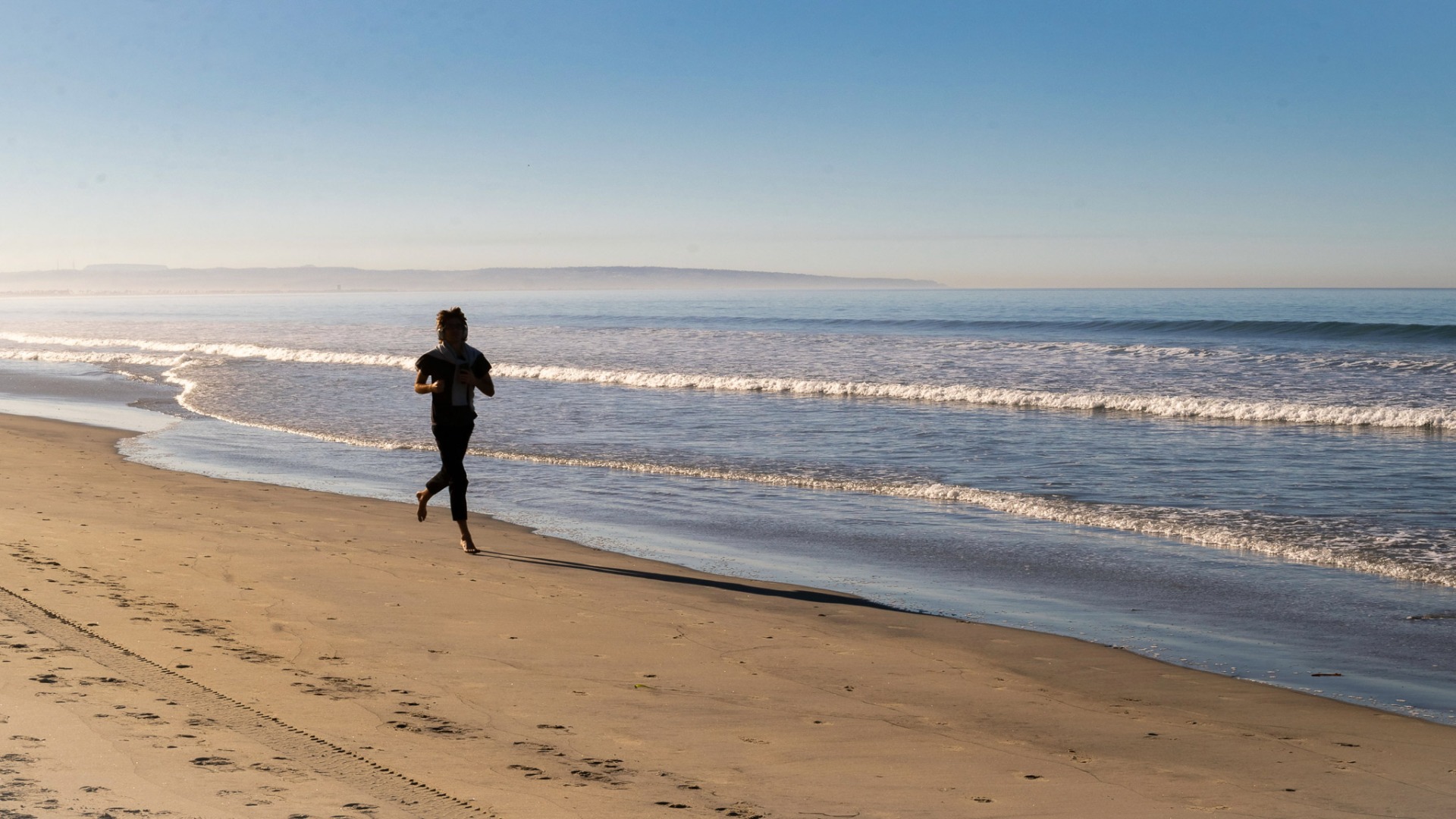
In this photo of a person jogging along the water’s edge, you get a sense of the vastness of the ocean, and the solitude of their early-morning workout.
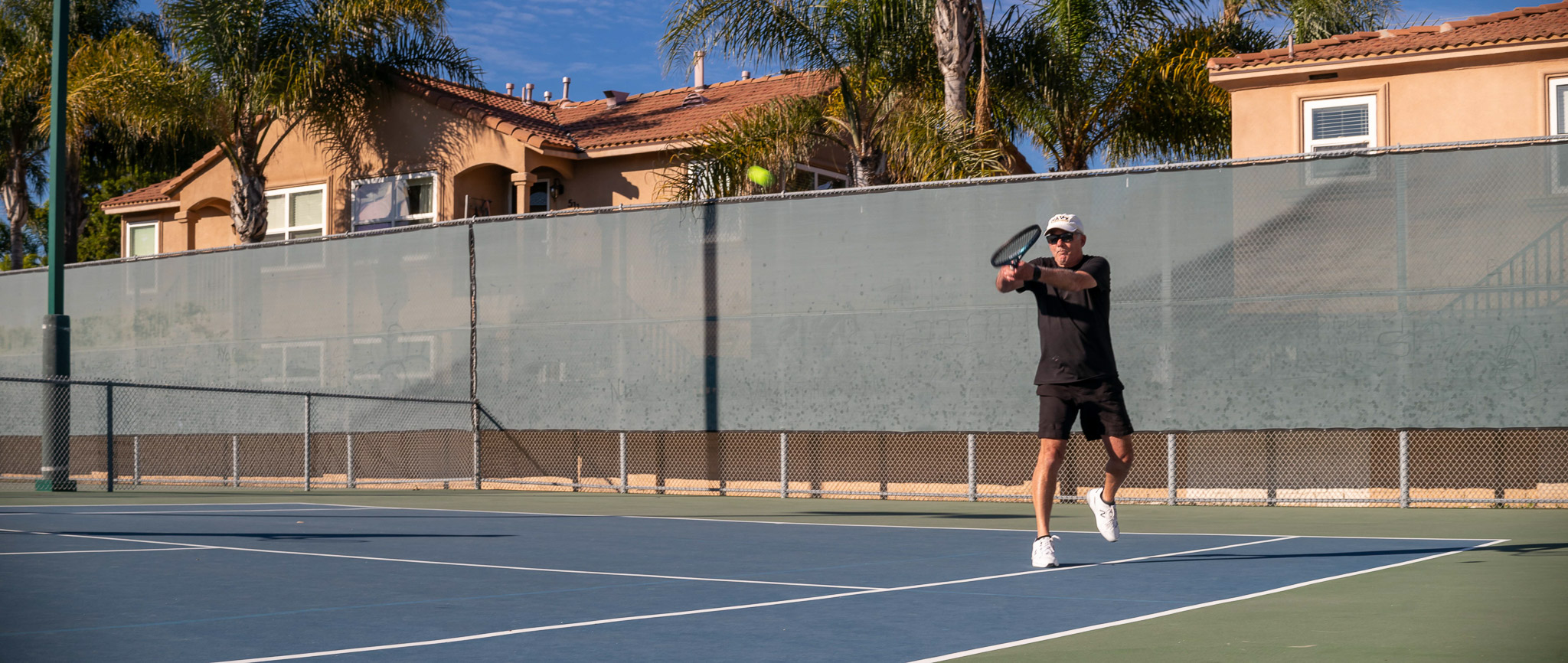
Although the background in the shot of the tennis player is clearly an urban environment, you can appreciate the scale of the court, and the space he has to defend.
Panoramas with anamorphic lenses
Every so often, a scene deserves a wide-angle shot to capture the full scope of a sweeping vista. This faux African landscape is dotted with giraffes and rhinoceros, grazing under an azure sky.
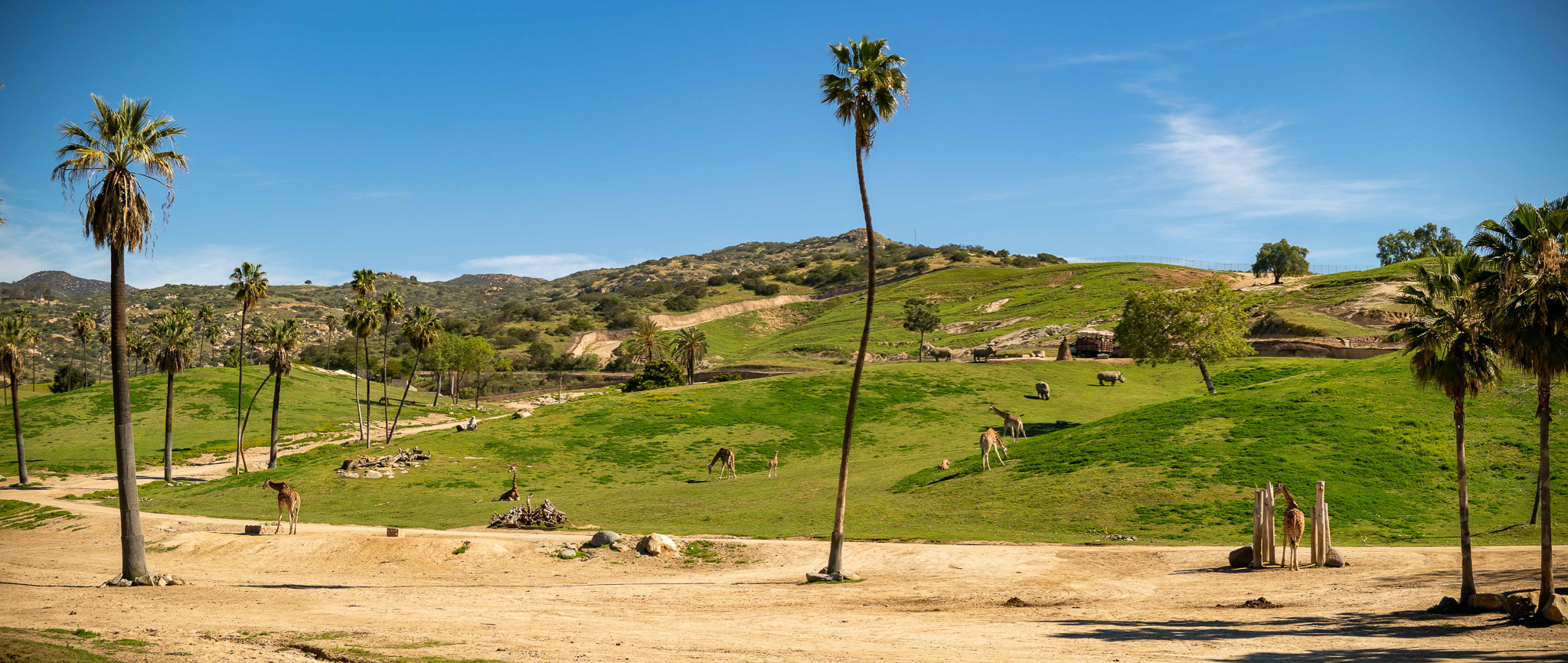
The palm trees give away its location as Southern California, rather than the African savanna. It was shot from a moving vehicle, on a tour of a local safari park. It would have been difficult to put together a stitched panorama based upon multiple portrait-mode shots of the scene.
A single shot with an anamorphic lens does the trick.
Low-light anamorphic shots
My 50mm anamorphic set up comes with a fast T1.8 lens. So, hand-held, nighttime shots are just-about possible. In addition to capturing that additional context, they feature those wild flares for which these optics are known.
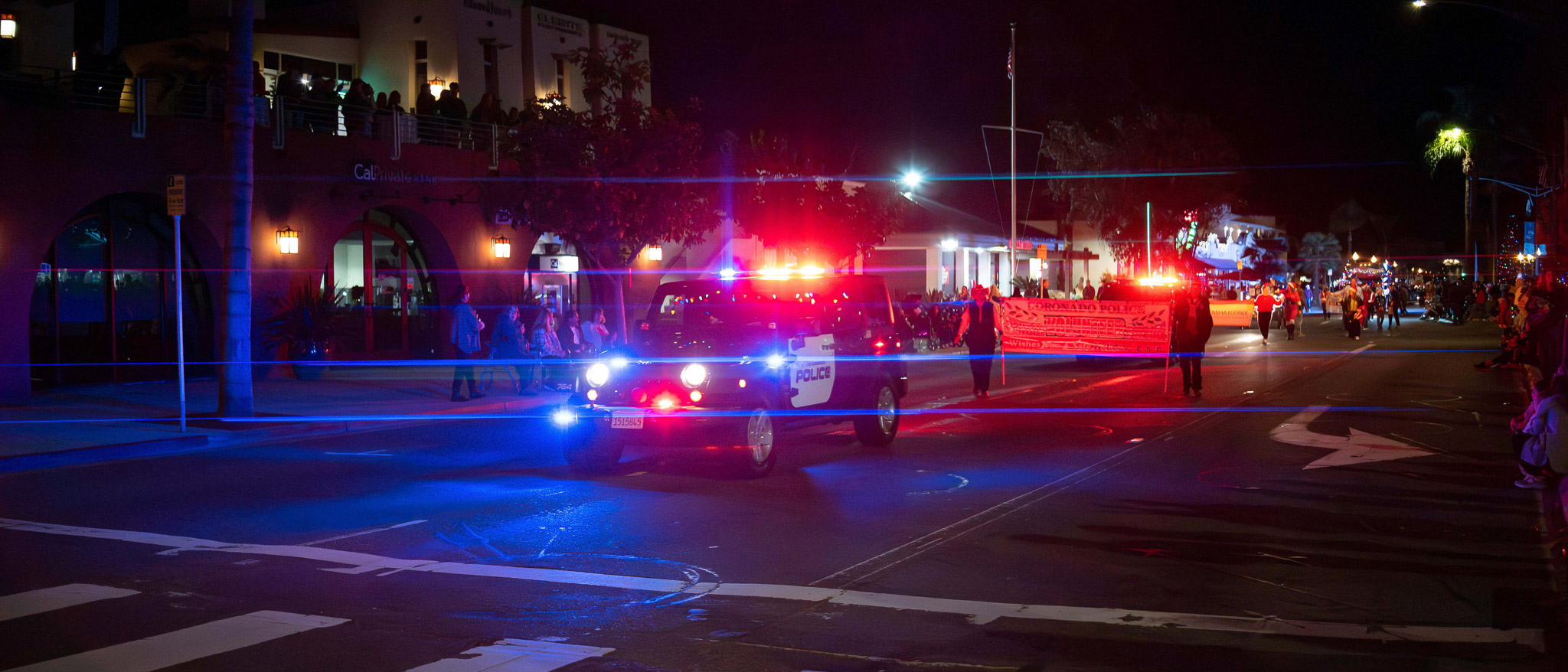
I acknowledge, photographing a police vehicle, lights blazing, at the head of a Holiday parade might be a bit over the top. But you have to admit, it is rather spectacular. JJ Abrams would be proud of me.
Presenting wide-screen anamorphic images
The aspect ratio of anamorphic images does not lend itself to social media platforms, such as Instagram. You can enjoy them, instead, on desktop screens, or mobile devices held in landscape orientation.
Even in those settings, the viewer might have to scan back and forth across the image to take it all in. These wide-screen images are often referred to as cinematic, referencing the origins of anamorphic lenses in the world of CinemaScope films from the 50s.
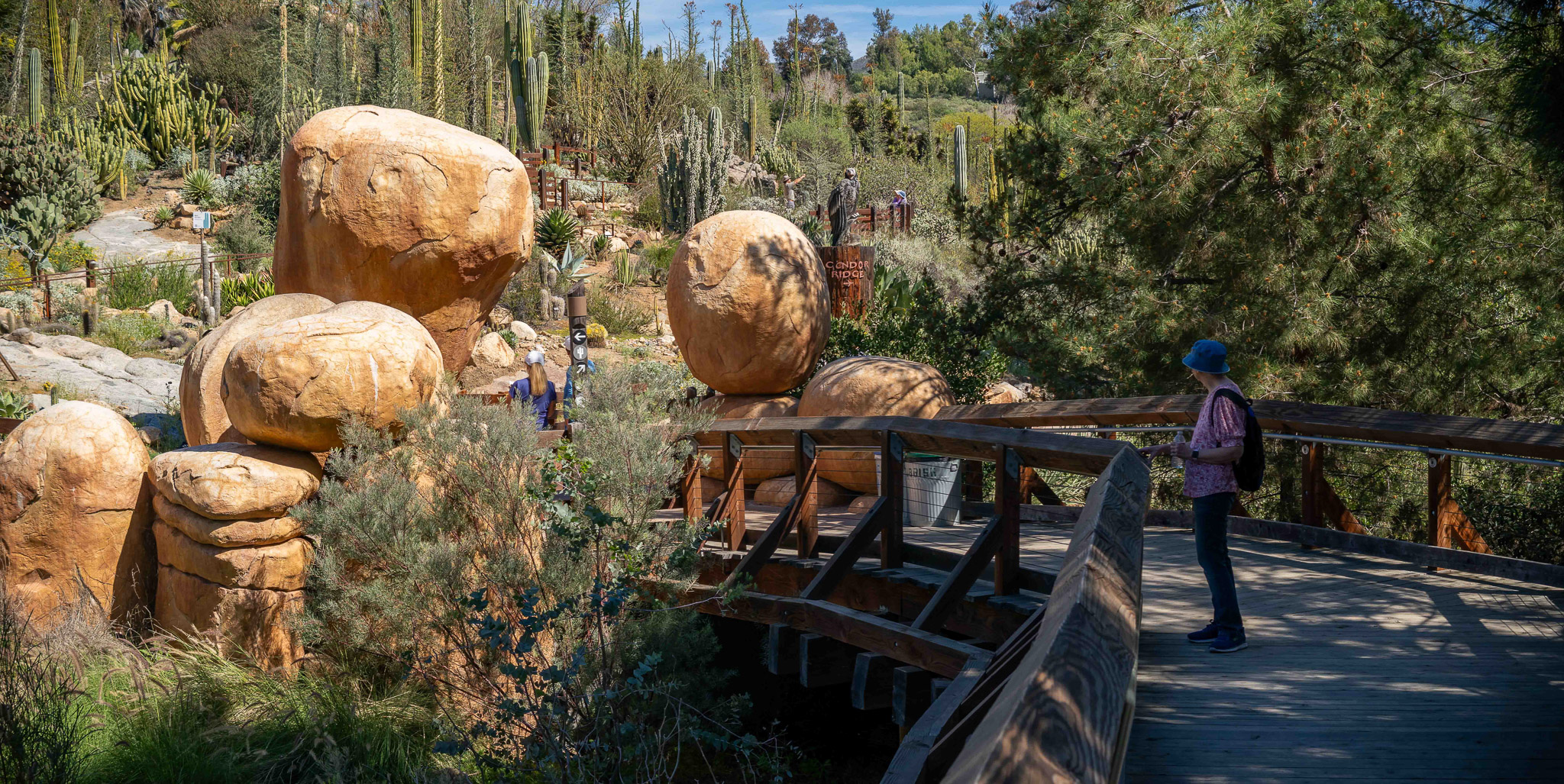

The experience of viewing a wide-screen film in a cinema can rightly be described as immersive. I don’t think you can make that claim for wide-screen anamorphic stills images.
Nevertheless, this niche corner of the photography world can still offer a thought-provoking, alternative approach to the conventional, oftentimes predictable world of spherical images.
I bought my used lens for around $250. It is sharp, and great fun to use. It also gives me yet another reason to fire up my Leica TL2. Three cheers for the L-Mount Alliance!
Make a donation to help with our running costs
Did you know that Macfilos is run by five photography enthusiasts based in the UK, USA and Europe? We cover all the substantial costs of running the site, and we do not carry advertising because it spoils readers’ enjoyment. Any amount, however small, will be appreciated, and we will write to acknowledge your generosity.
Great article! My favourite focal length is the 50mm. It also takes more skill to use wider focal lengths. In my early days I was so excited to get a Nikon 20mm and only took one great image with it. I sold it and got a 28mm and eventually was able to get off the wide angle training wheels.
Keith, excellent article. I recently purchased the Sirui Saturn carbon fiber 50mm T2.9 1.6x Anamorphic and it’s the closest I’ve come to re-creating a digital XPan set up. Easy expansion of raw files using a round trip to Photoshop and then back to Lightroom.
Be well, Richard Clompus
Hi Richard — many thanks! A Sirui Saturn 35mm FF anamorphic is on my wish list. All the reviews I have read support the claim that it is well-built, light, and sharp. Should be able to get some great wide-screen shots with it. Would love to see some of your shots with the 50mm. Perhaps you could be tempted to put together an article in due course? It would be lovely to have more anamorphic action on the site! All the best, Keith
I assume the image captured has a 3:2 aspect ratio and everything in the horizontal dimension is squashed up ? Does software recognise the anamorphic format shots and automatically stretch or do you have to do each one manually in Photoshop. Also curious if the compressed versions give any creative options.
Hi Tom, yes, the squeezed image is captured on a 3:2 sensor. All the visual information you eventually see in the desqueezed image is captured on that 3:2 sensor. And yes, each image has to be desqueezed in Photoshop. It is very easy and I explained how to do this in my previous article. Sometimes I just proceed directly with the desqueezing on the 3:2 image, yielding a 2:1 desqueezed aspect ratio. Or, I crop the captured image to 16:9 before desqueezing, yielding a 2.4:1 desqueezed image. If you are shooting video, as opposed to stills, some cameras (e.g., my Lumix S5) offer a real-time desqueeze, so you see directly what the end result will look like. The compressed images look ‘odd’, and I have not tried to further exploit them.
All the best, Keith
Thankfully Keith isn’t cured yet ;-)) – great pictures and interesting articel. Thanks!
Hi Hans-Peter, many thanks! I suspect these won’t be the last anamorphic shots you’ll see from me…
All the best, Keith