
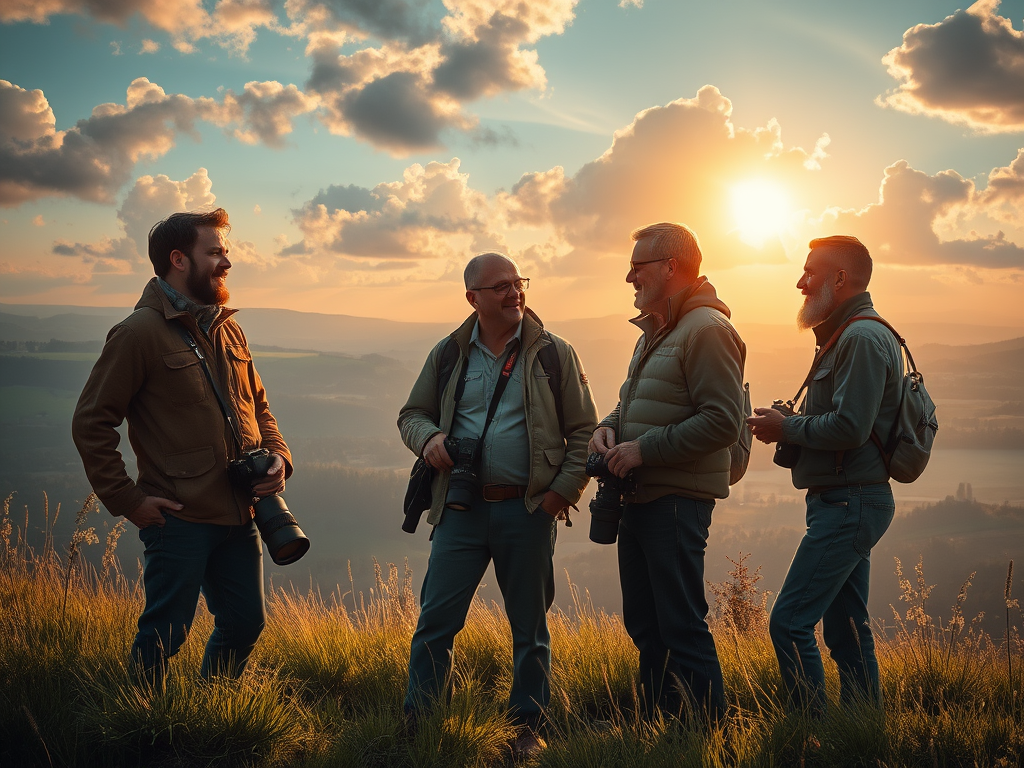
At Macfilos we try to post well-written stories that are both informative and illustrated with great pictures. As a result, over the course of the year, the editorial team views thousands of images. Inevitably, some stand out. So, we decided to select our favourite Macfilos photographs of the year, and share them with our readers.
These are not ‘the best’ photographs of the year. We did not set up a framework for making our selection, based upon a carefully weighted set of criteria. In fact, we each employed just one criterion. Of all the images we saw, this was the one we liked the most.
Perhaps it evoked a strong emotional response by depicting a particularly meaningful location. Or, the author arranged all the elements in a beautiful composition. In the opinion of another editor, it might possess just the right mix of vibrant colours and dramatic shapes.
Subjective
You might consider this a rather subjective exercise, and you would be right! Acknowledging this, we hope that those of you who posted photos that do not feature in this list, will not feel disappointed. Selecting a handful of images from several thousand means many superb images do not appear below.
Regular readers of the blog can, of course, choose their own favourite Macfilos photographs, and we hope you will. You, too, have seen most, if not all, the photos posted over the course of the year. We would enjoy hearing of your favourite image in the comments. If you indicate the author, publication date, and a brief description, we will be able to find it.
So, in no particular order, here are the images that each editorial team member selected as their favourite Macfilos photograph of 2025.
Multiple exposure
Where do I start?
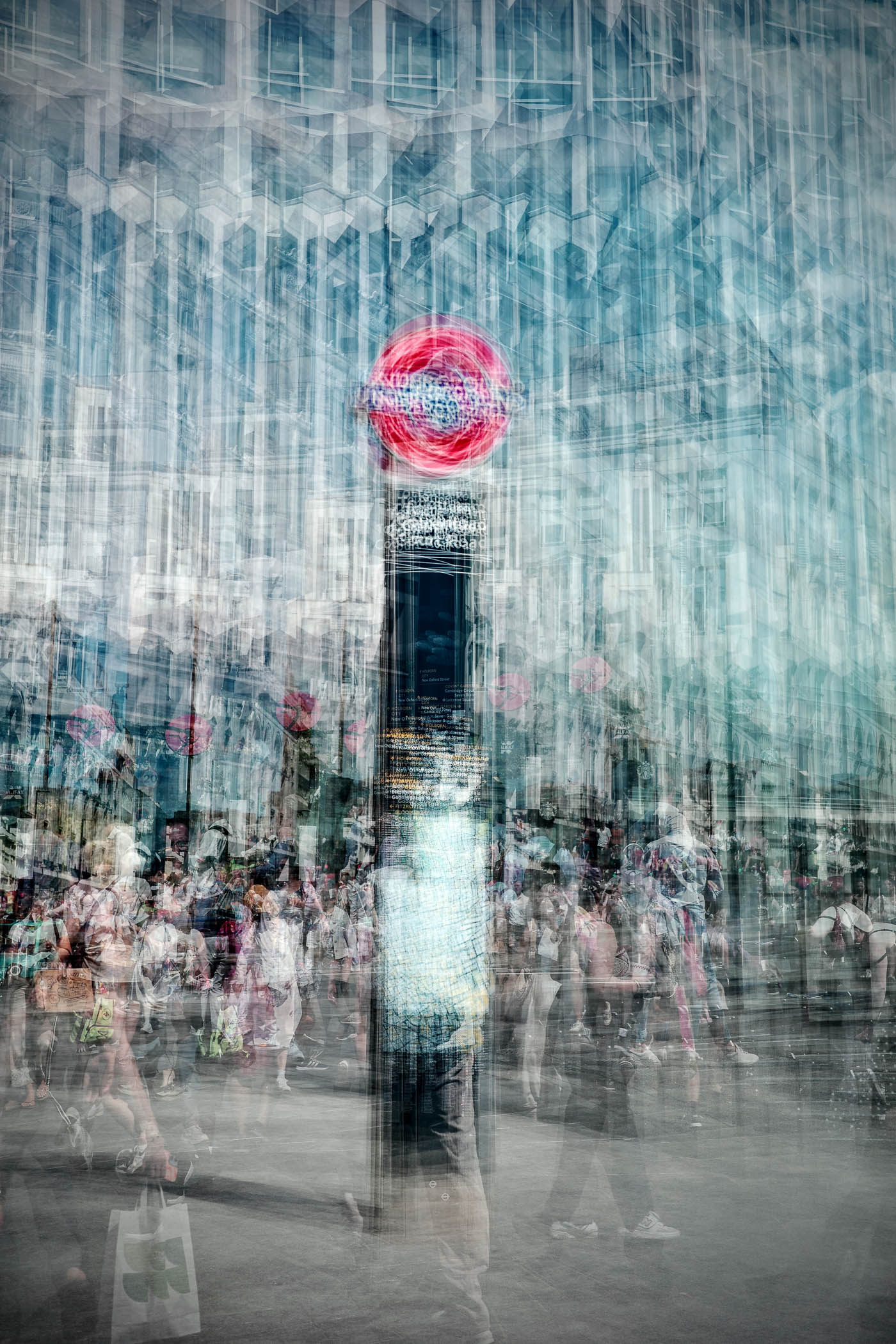
When I first saw this photograph, in Andrew Tobin’s article about using a multiple exposure feature in his Ricoh GR IIIx, my first thought was: “I wish I had taken that”.
I had never seen anything like it. This remarkable picture is the result of intentionally imperfect superposition of a very large number of exposures in a single image. In my opinion, with this, and the other images in the article, Andrew has opened up an entirely new style of photography. Perhaps it’s even a new genre.
He has exploited his camera’s ability to capture, not just a couple of exposures in the same image, but a huge number. Although many people own this camera, he is the one who saw its potential for this new way to create images.
This is the one
His article is chock-full of cool images in this style. But this one stood out for me.
Firstly, I know, and have even used, the Tottenham Court Road Tube Station in London, the subject of this photo. It’s at the convergence of Charing Cross Road, Tottenham Court Road, and Oxford Street, and offers commuters the prospect of getting from ‘pavement to platform’ using lifts. This is invaluable if you are travelling with luggage, and using the Elizabeth Line to get from Central London to Heathrow.
Further, although Andrew has used his technique to create a blur of movement, also making the sign unreadable, there is no doubt that this is a London Underground sign. The image is an abstract rendition of the real world. Love it.
Finally, the colours are fantastic. The red of the sign against the blue of the building in the background is perfect. The texture created by the many, slightly out-of-phase, features of the buildings adds yet another dimension to the image.
I could go on. This photo deserves to win a major photographic award! Aren’t we at Macfilos privileged to feature original, creative, and jaw-dropping photography like this in our blog?
Keith James
And now for something completely different: Story and images by Andrew Tobin, 1 August 2025.
Exiled
I connect with this image from Ian Beesley on multiple levels.
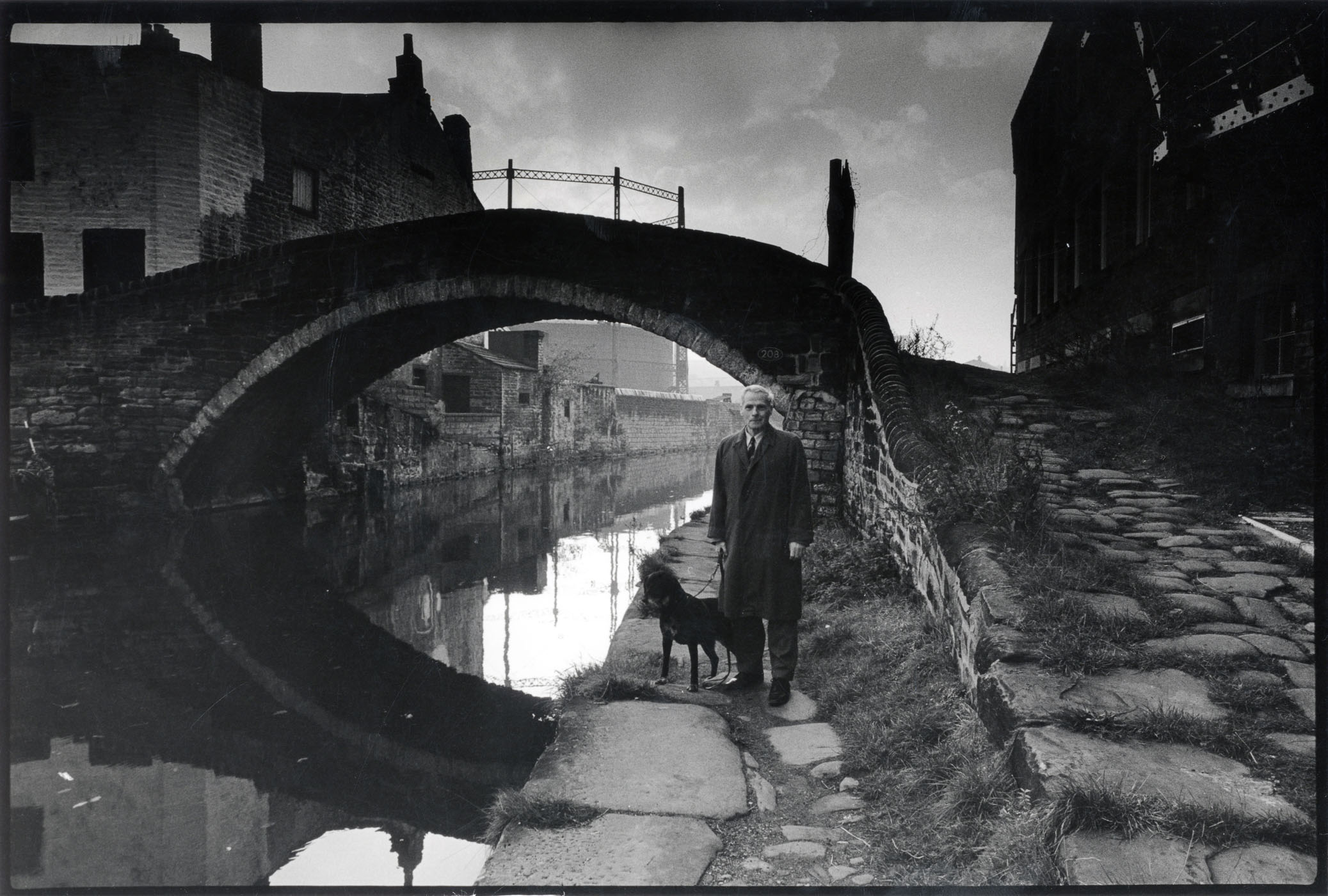
I grew up in Yorkshire and saw some of the scenes of the collapse of British industry that Ian documented. You have a snapshot of history that is very personal for the man with his dog.
I happened to be in Yorkshire a few years ago, in Saltaire at Salt’s Mill, and saw the exhibition that included this image. There are photographers whose images capture you — such as Don McCullin for example — and this exhibition captivated me to an extent that when I joined Macfilos I wanted to ask Ian to contribute an article for us.
When you know the story, it’s hard not to feel empathy for the man who dared not tell his wife that he had lost his job at the mill. So, he would go out every day with his dog and walk for hours until he could come back home without arousing suspicion.
Guidelines
I try to follow a simple dictum when shooting, which I learned from Steve Schapiro, a highly regarded photographer from Chicago.
Emotion — What do I feel looking at this scene? What emotion does it evoke? In this case, it’s the sense of aloneness of the unemployed man, despite being with his dog. He’s exiled from his place of work and former colleagues, and he’s exiled from his home due to fear of being seen to be a failure by his wife.
Design — Does the scene convey a story? Is my eye encouraged to follow what’s in the frame? Our unemployed mill worker is partially framed by an old canal bridge. The path along the canal and down to the canal are rough and broken. The buildings are boarded up and in decay. Being in black and white, there are no distractions to draw you away. This might be Cartier-Bresson’s “Dessau” from 1945, or it could be Lewis Hine’s “Child Labourer” from 1908. Both have the power to hold you and to encourage you to absorb the details.
Information — Do I get a sense of where this is or what is happening here? “Spirit of the place” is an important part of this image, and other noteworthy images. The image takes you there and puts you into what’s happening. It’s a decaying industrial wasteland. There are no other people scurrying about doing their work. It’s as if everyone left and there are no indications anyone will be coming back.
For all these reasons, I chose this shot by Ian Beesley.
“Capturing the decline of industries and communities with a Leica M6”: Story and images by Ian Beesley. Published 10 October 2025.
Jon Cheffings
Joy, beauty and craftsmanship
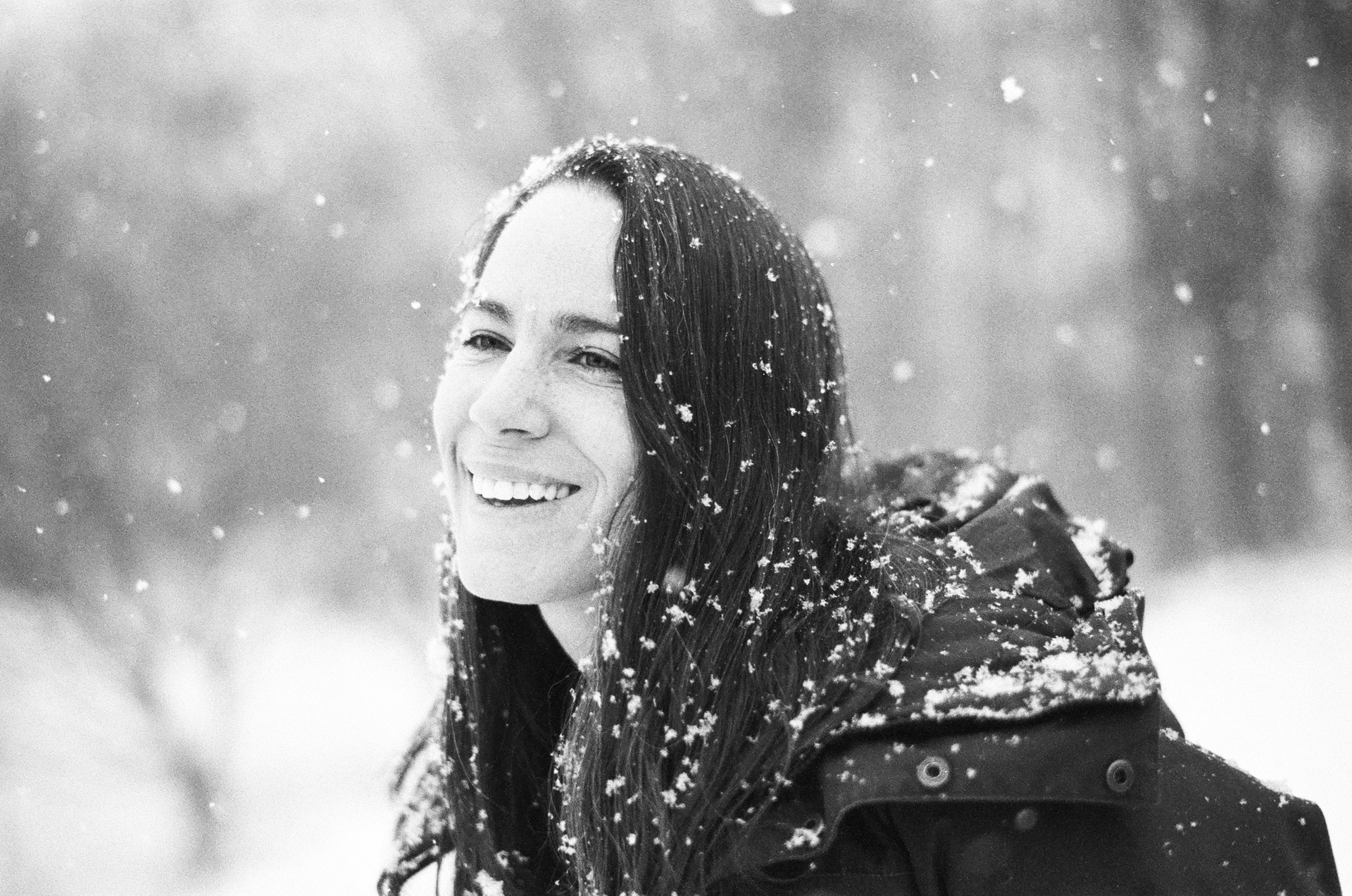

Of all the many images I came to like on Macfilos this year, I chose this portrait by David Smith. In a nutshell, it encapsulates joy, beauty, resilience, memories, and craftsmanship within a single frame.
There are various reasons why this image, out of many potential favourite Macfilos photographs, resonates so much with me.
Firstly, there is the photographer and his relationship with photography. David’s article, ‘Searching for my cameraman’, was very moving for me because it reminded me of my own father and of the loss his death means to me, even nine years later. He was an avid Olympus photographer too, and some of you may have read my articles about my work with my family’s photographic legacy here on Macfilos.
Secondly, there is the joyful mood of this particular image. We can see bad weather and low temperatures. But neither the photographer nor the model see this as a reason to stay indoors. They would rather go out into nature and embrace the circumstances, as we all did as children on the first snowy day of winter. In this respect, the images demonstrate how humans can cope with adverse conditions. That’s what we call resilience these days.
Thirdly, I find this image pretty. It radiates a beauty that comes from within. While no one would doubt that the woman in the photograph is attractive, it’s her emotions that make her (and the image) shine. I think this power is partly because she is not looking straight into the camera, but rather at some distant point, which may even be the cause of her heart-warming smile.
Film photography at its best
Fourthly, this is a technically excellent image. It is as sharp as it gets with a Kodak T-Max 3200. The film was carefully processed and scanned, as can be seen in the grain structure. Working with film, wide-open shots are always an adventure because there is no display to check and repeat the shot if you didn’t get it right. Add to this the balanced distribution of bright and dark areas, as well as the blurred background, which evokes rather than shows a winter forest.
Finally, this image is about photography itself. Photography is the medium through which we can capture the fleeting moment, and the camera helps us to pursue humanity’s age-old dream, as expressed in Goethe’s Faust when Faust says of ‘that moment in time’: “Oh, stay, please stay, thou art so beautiful”. In this respect, David Smith’s image also contributes to the discourse of photography. This sets his photograph apart from so many snapshots, beautiful as they may be.
In short, David’s image moved me as I sensed an immediate beauty, on many levels. I hope both photographer and model are also touched by this document of mutual affection and loveliness.
Jörg-Peter Rau
“The Canadian winter on film: re-embracing cold-weather photography”, Story and images by David Smith, 26 February 2026
The starting gun goes off
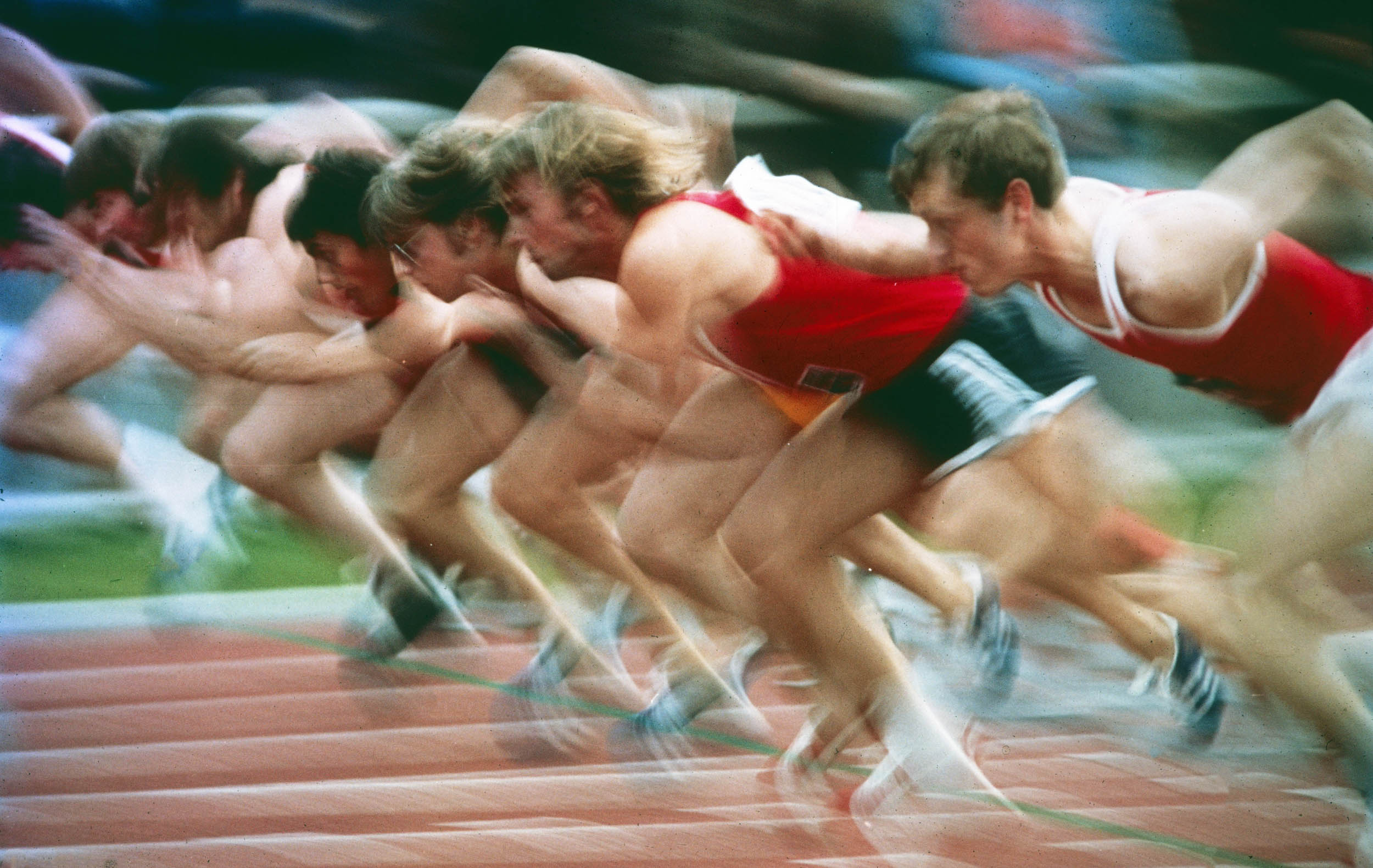
My choice is a photograph taken 53 years ago by my old friend Don Morley, who was then a successful sports photographer working for British national newspapers. He had been sent out to Germany to cover the 1972 Olympic Games in Munich. But no one could have anticipated the terrible terrorist attack on Israeli athletes which took place early in the week.
Don, quite by chance, a certain degree of subterfuge and outstanding courage, was able to gain access to the locked-down village and became the only journalist to get direct photographs of the events as they unfolded. His images became a world-wide sensation, but they were so different from those he had been expecting to record.
Blur: The start of the race
Fortunately, the games were able to continue, and my choice of picture is one of the most iconic images to come out of that ill-fated Olympics. Don’s use of a relatively slow shutter speed was an inspired choice.
Because he took the shot at the start of the race, where the runners had not yet built up speed, we can clearly make out the individual figures. Nevertheless, we see that they are in motion, straining to build up speed. Don achieved the perfect amount of blur — the title of the image.
The colours are deep and rich — the red sprinters’ jerseys, the terracotta track, the green of the background turf, and the blue of their shoes. The line of their heads, knees and flailing arms gives the image a kind of pseudo-symmetry.
This “Start of the Race” is my favourite Macfilos photograph of the year. It’s a remarkable image, full of vitality and purpose. It sums up what, to my mind, is the spirit of the Olympics.
Mike Evans
1972 Munich Olympics World Scoop: How I became the only photographer to get close-up shots of the hostage takers. Story and images by Don Morley, 9 May 2025.
Many thanks to all the authors who submitted articles, together with superb images, over the course of the year. Once again, we would love to hear which photo you would choose as your favourite of 2025. Please don’t hesitate to share your views in the comments below.
Make a donation to help with our running costs
Did you know that Macfilos is run by five photography enthusiasts based in the UK, USA and Europe? We cover all the substantial costs of running the site, and we do not carry advertising because it spoils readers’ enjoyment. Any amount, however small, will be appreciated, and we will write to acknowledge your generosity.
Apologies if I’ve missed a joke.
Why the A.I. image at the head of the article?
If photography blogs use A.I. generated images then 🙁
Ah yes, that was my choice. Since we were already including our favorite photos in the article, I did not want to use a random photo as the featured image. We do not have a photo featuring all the members of the editorial team. In fact, we have never all been in the same place at the same time. Since we happened to have this image, which was created for another purpose, I thought this would be a fun solution. We do occasionally include AI-generated images, but it would be fair to say that 99+% of images on the site have been shot with a camera.
Photos, even AI ones, have an annoying way of affecting our emotions 🙂 Why many of us take photos.
My first reaction to this was “Wow! Are these the editors? What a neat bunch of people. I’d love to hang out with them”
It took a while for me to notice they’re all European, all male, and they mostly had telephoto lenses. If I were on that hilltop, I might have a wide lens. But then I don’t know much about landscape photography!
Great job editorial team in 2026! I enjoy your site so very much.
All the best for the year to come.
No question — Ian Beesley’s photo is exceptional.
But after that … there’s just too many damn good photographers here. What immediately came to mind was Christopher West’s City of Bridges. But then what about Andrew Tobin’s Scotland? And Mark Catto on Istanbul. And . . .
Just too much good stuff 🙁
All the best for the new year Kathy.
Chuffed to be in company like this. Thanks to the Macfilos team for everything you do.
Thanks so much for highlighting my photo, JP. What a beautiful summary of the shot. All the best in 2026. ~david