
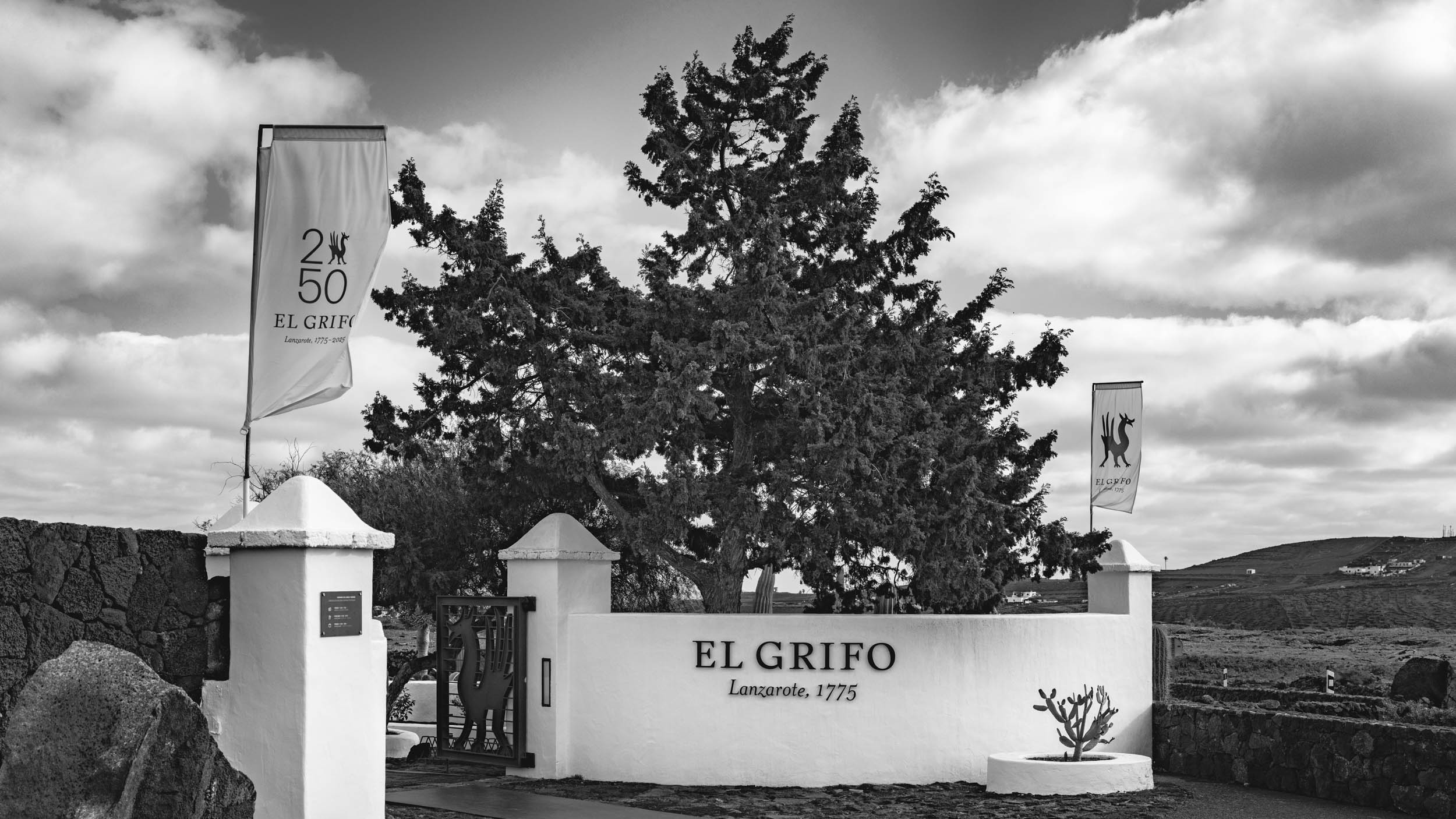
Viniculture was definitely not on my agenda when I took a late-December break in Lanzarote. I was more focused on the sun, the acceptable 20-22 degree temperatures and, of course, a bit of wine consumption (rather than growing the stuff). I hadn’t expected to discover the island’s unusual volcanic viniculture, where black volcanic ash covers most of the land. A visit to the 250-year-old El Grifo winery set matters straight.
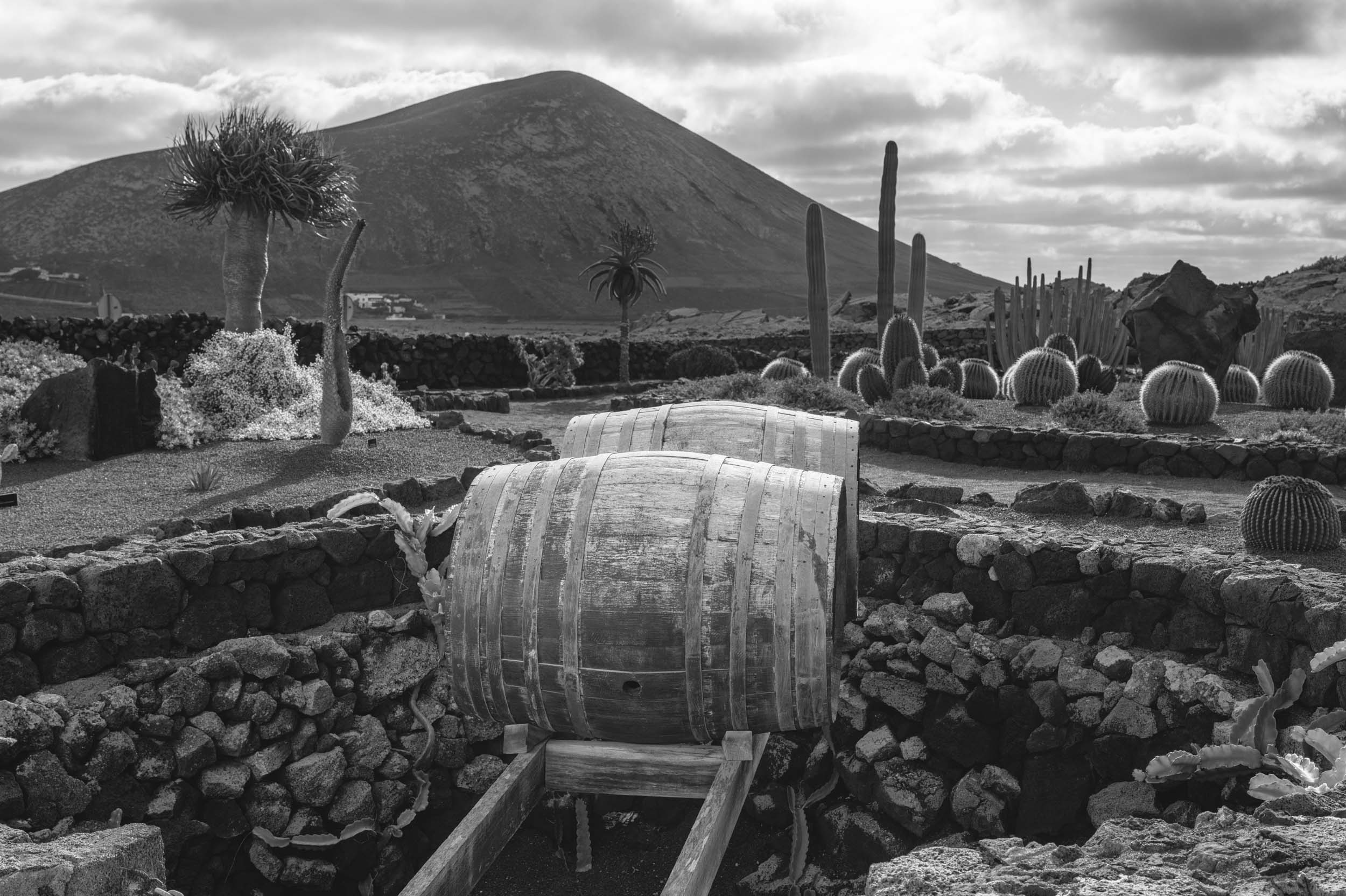
It was a unique experience for me. I had not realised that people could grow grapes under such inhospitable conditions. The ingenuity, and the natural irrigation based on osmosis, is truly fascinating.
Too much canaries
English people have known Canary wine for well over 600 years. Records say the English court partly paid William Shakespeare’s salary as poet with a barrel of Malmsey, wine from the Canary Islands.
In Henry IV, Mistress Quickly says to Doll Tearsheet: “But i’faith, you have drunk too much canaries, and that’s a marvellous searching wine, and it perfumes the blood ere one can say: What’s this”.
Several names have identified wines from the Canaries over the centuries, including Malmsey and Sack. As an impressionable eight-year-old, I thrilled to the vision of the Duke of Clarence (the middle brother between Edward IV and Richard III) drowning in a butt of Malmsey wine.
I’d never tasted wine, of course, and had less clue about “malmsey”. But the name stuck and was invariably good for a shudder. Boys of that age revel in such tragedies.
Shakespeare covers this interesting demise in Richard III: “I’ll drown you in the malmsey-butt within”.
Chequered career
Nonetheless, Canary wines — especially those emanating from Lanzarote — have had a chequered career. They were immensely popular in Britain between the late 15th and 17th century. English importers prized Canary Malvasia (“Canary sack”) as one of the finest wines.
Malvasia, by the way, is an incredibly versatile grape. It can deliver wines that are at one end “pétillant” and light, to full-bodied whites similar to Californian Chardonnay at the other end.
Volumes reached a peak at the end of the 16th century and representing more than half of the islands’ production. Thereafter, from that peak, there was a steady decline, culminating in a complete ban on Canary imports in the 1660s because of political and monopoly difficulties.
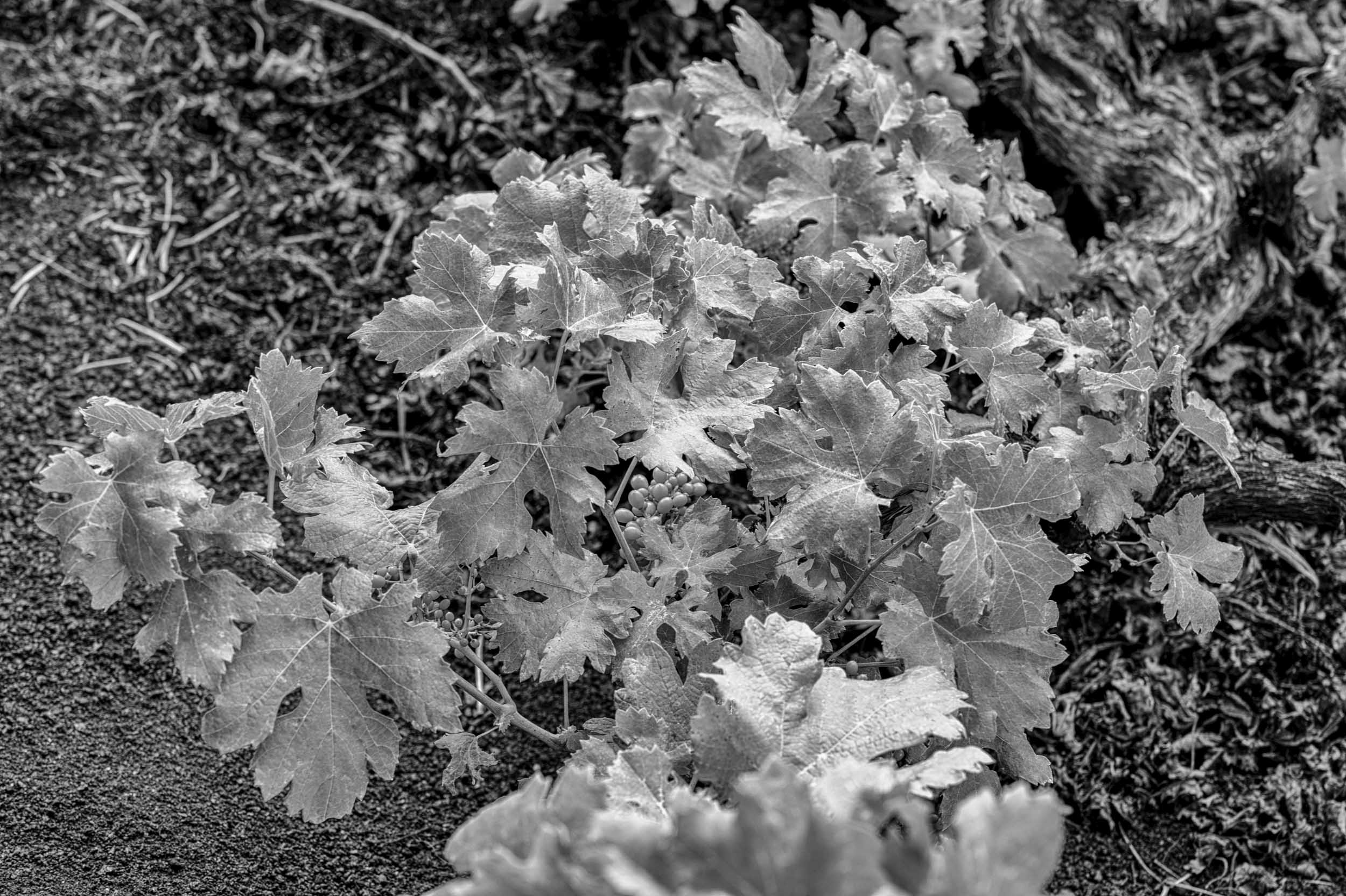
But disaster lay ahead for viniculture in Lanzarote — something that would totally transform the way growers cultivated and harvested their vines. Between 1730 and 1736 some 30 volcanoes erupted, burying more than a quarter of the island under lava and ash. Most of the island’s farmland vanished, and the damage ruined most of the existing vineyards. Strangely, however, the change heralded a new era of “volcanic soil”.
A new type of soil
Farmers began treating the thick layers of loose, black vesicular lapilli (known locally as picón or rofe) as a new kind of soil rather than a permanent catastrophe. The porous volcanic grains absorbed the island’s scant rainfall and gradually released it into the underlying soil, creating a unique ecosystem.
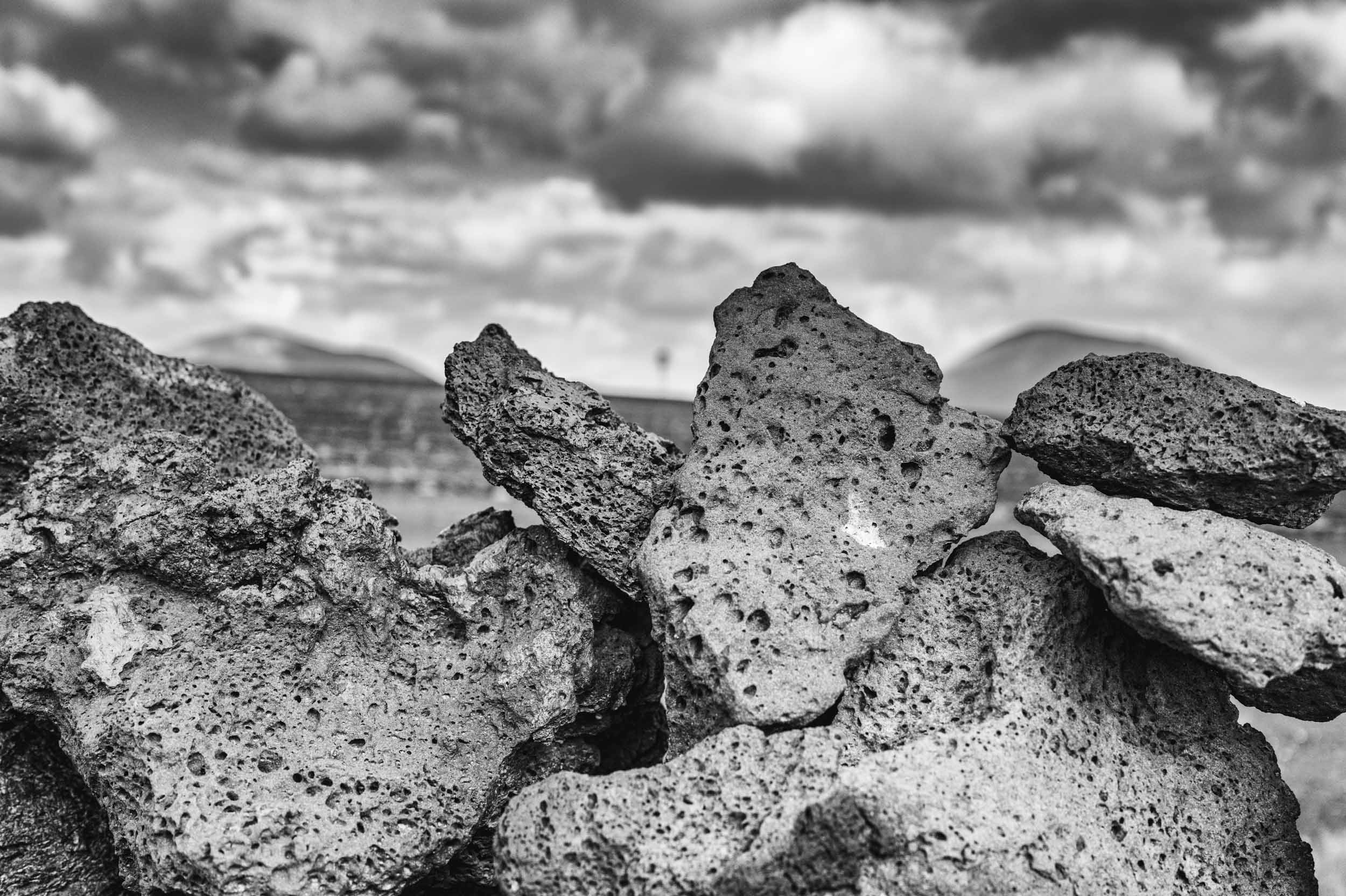
The vineyards adopted the “volcanic mulch” technique. The volcanic ash acts as a natural regulator, trapping moisture, limiting weed growth, buffering temperature swings and providing a slow release of minerals such as iron and magnesium that support vine nutrition.
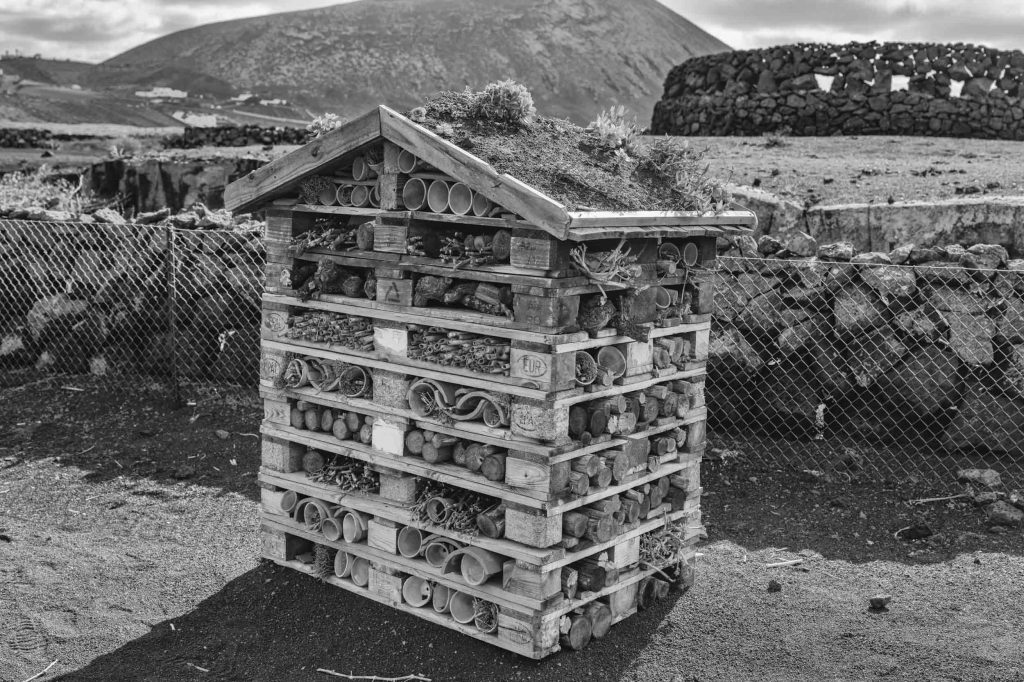
Low-yield, concentrated grapes such as Malvasía Volcánica thrive in these unusual conditions and produce wines known for high acidity and mineral content.
The founders established El Grifo winery 250 years ago, in 1775, after the volcanic eruptions. It escaped the 19th Century phylloxera pest that devastated Western Europe. The “pre-phylloxera” strain preserves older genetic material and the vines can reach great age, sometimes over 100 years.
Labour-intensive
Viniculture in Lanzarote is labour-intensive, low-volume and expensive. But it produces special wines which would not be possible without the 18th Century volcanic events. The volcanic layer acts as a sponge which filters the water and prevents evaporation through a process of slow osmosis. The volcanic soil is mineral rich, packed with potassium, magnesium, and iron that dissolve gradually to feed the plants, so there is little need for artificial fertilisers or substantial irrigation.
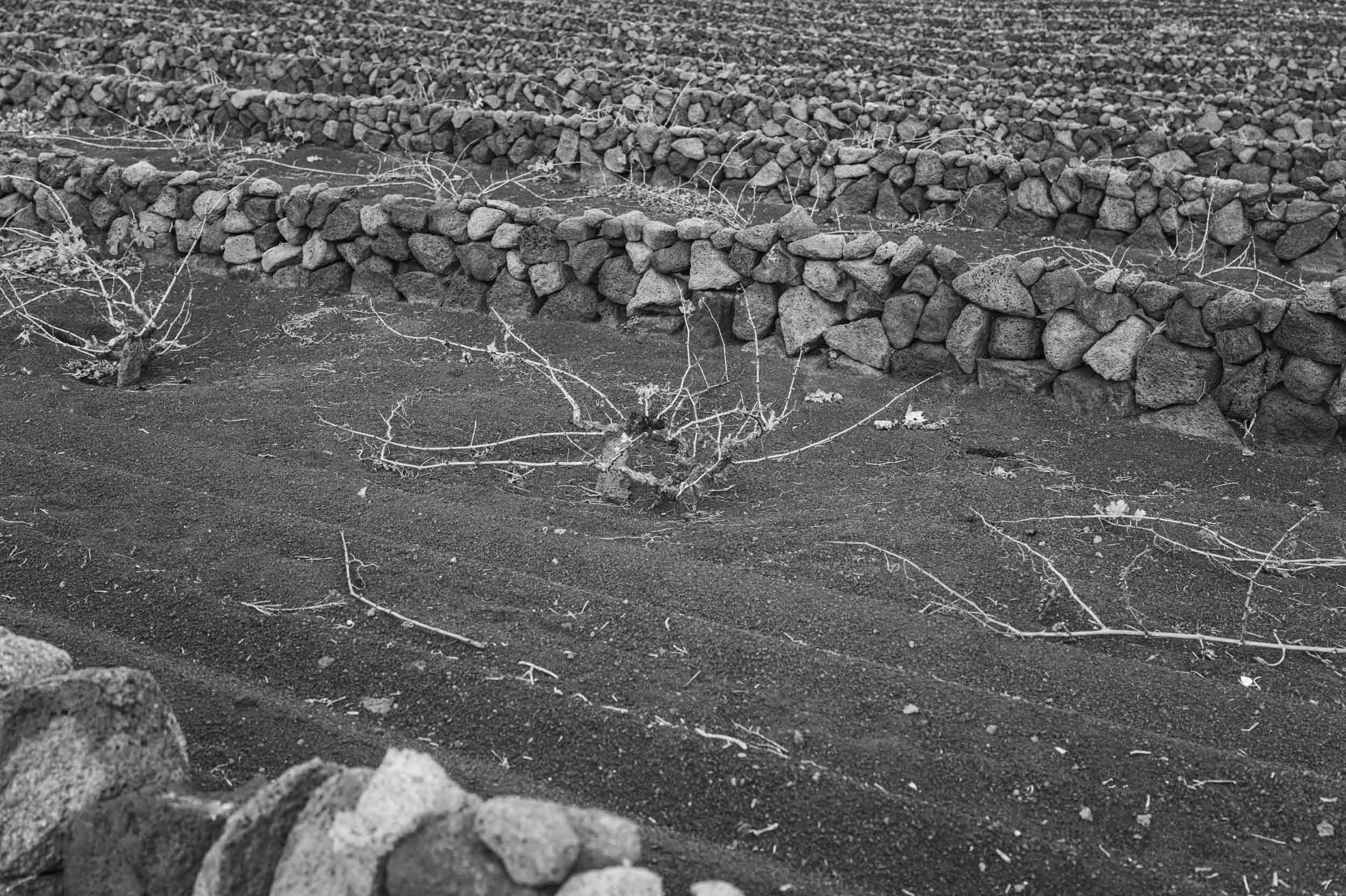
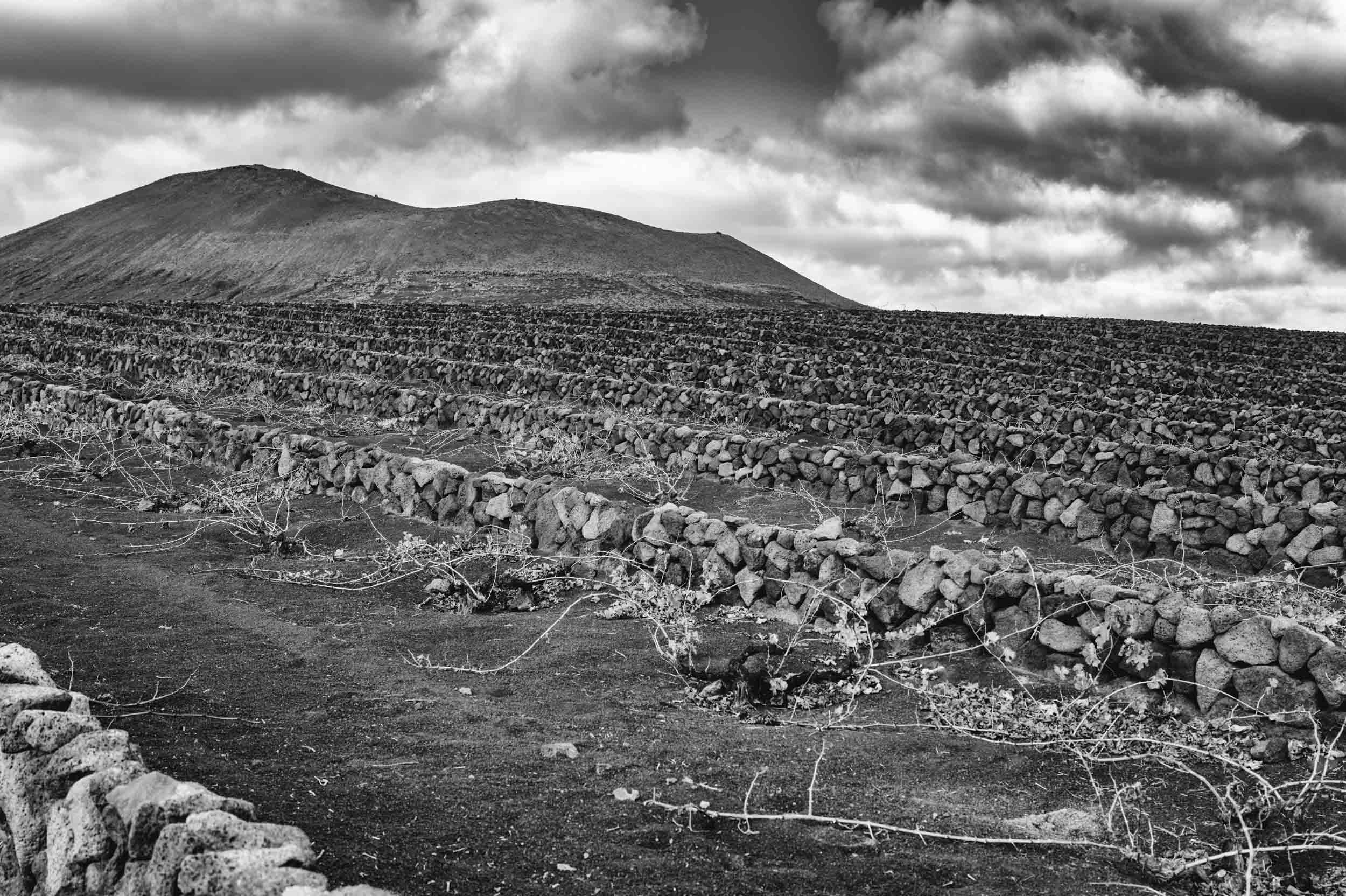
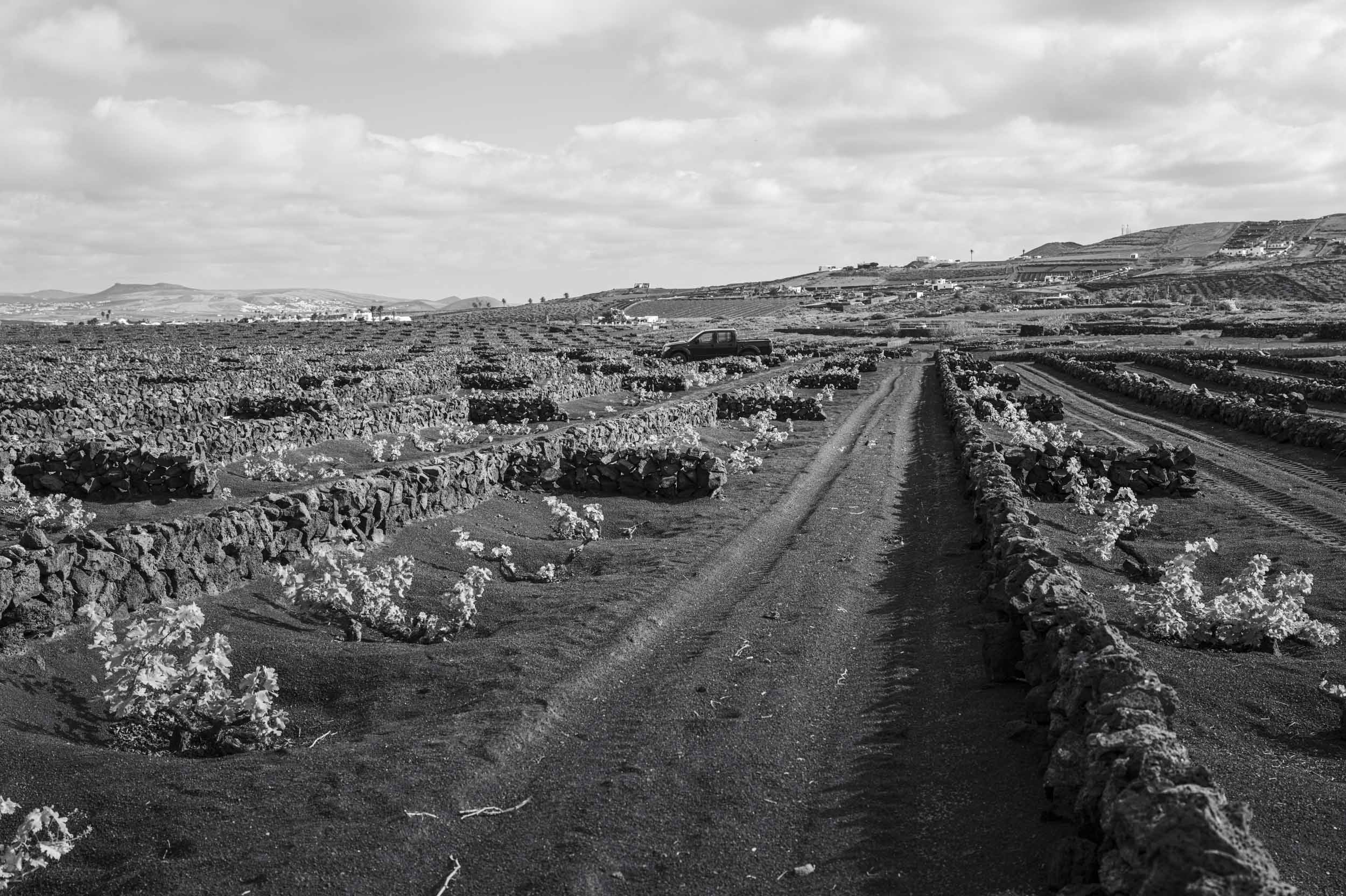
At the El Grifo winery, walls of volcanic rock shield serried ranks of vines from the wind. Each vine sinks its roots into the fertile soil beneath the volcanic ash, so its visible, fruit-bearing shoots spread horizontally across the surface. They all require a lot of space, so the density is far less than that expected in traditional vineyards.
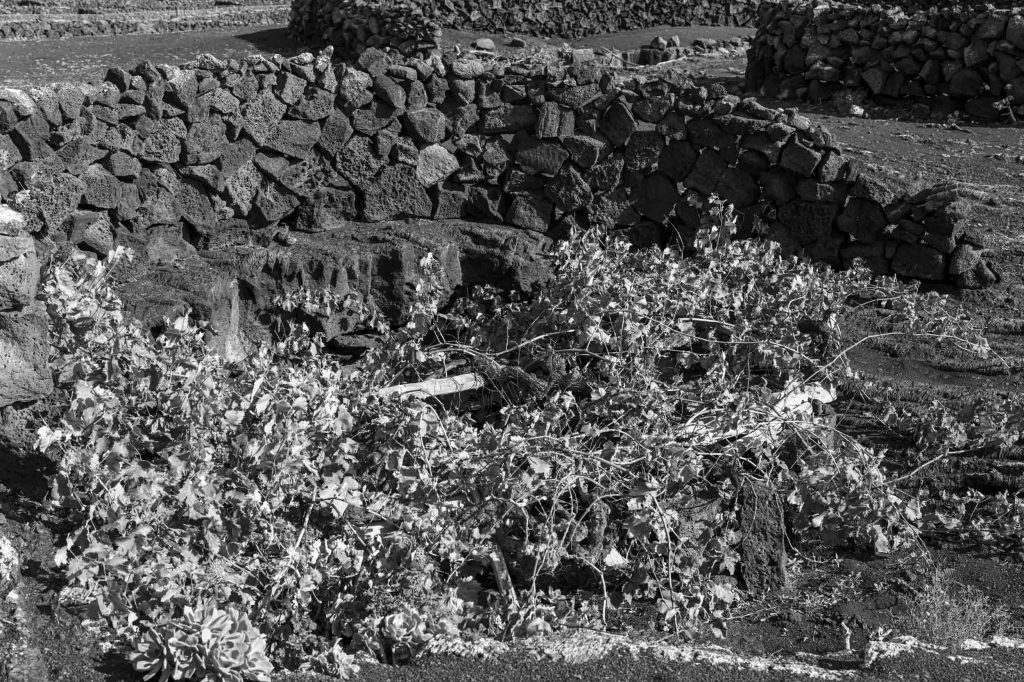
Endemic winds drive locals to build volcanic rock walls that shield surface vines. They use similar walls to guard circular pits, called hoyos, which shelter clusters of vine plants. These structures create a microclimate that traps moisture, moderates temperature, and gradually releases the captured water.
Landscape
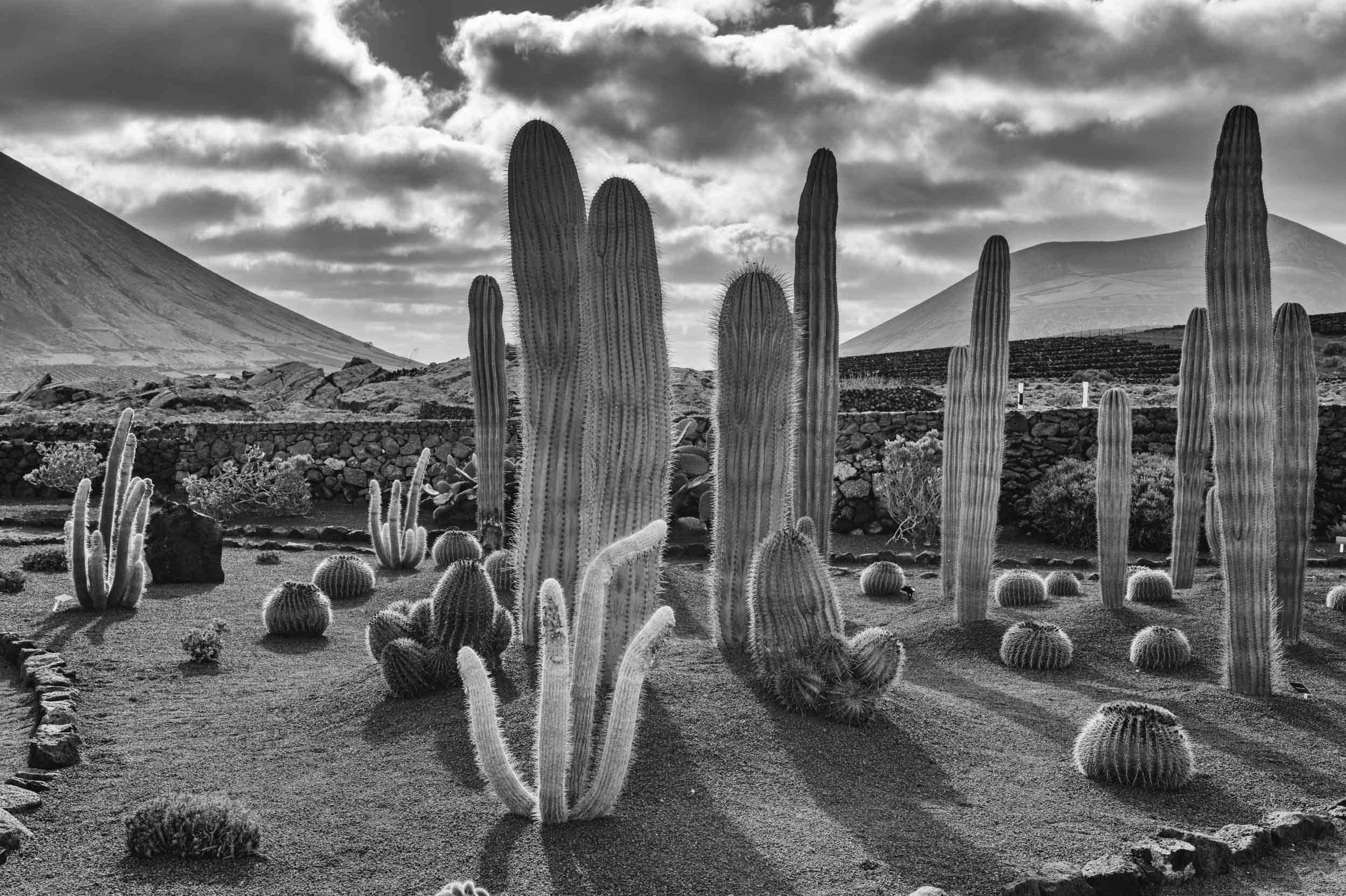

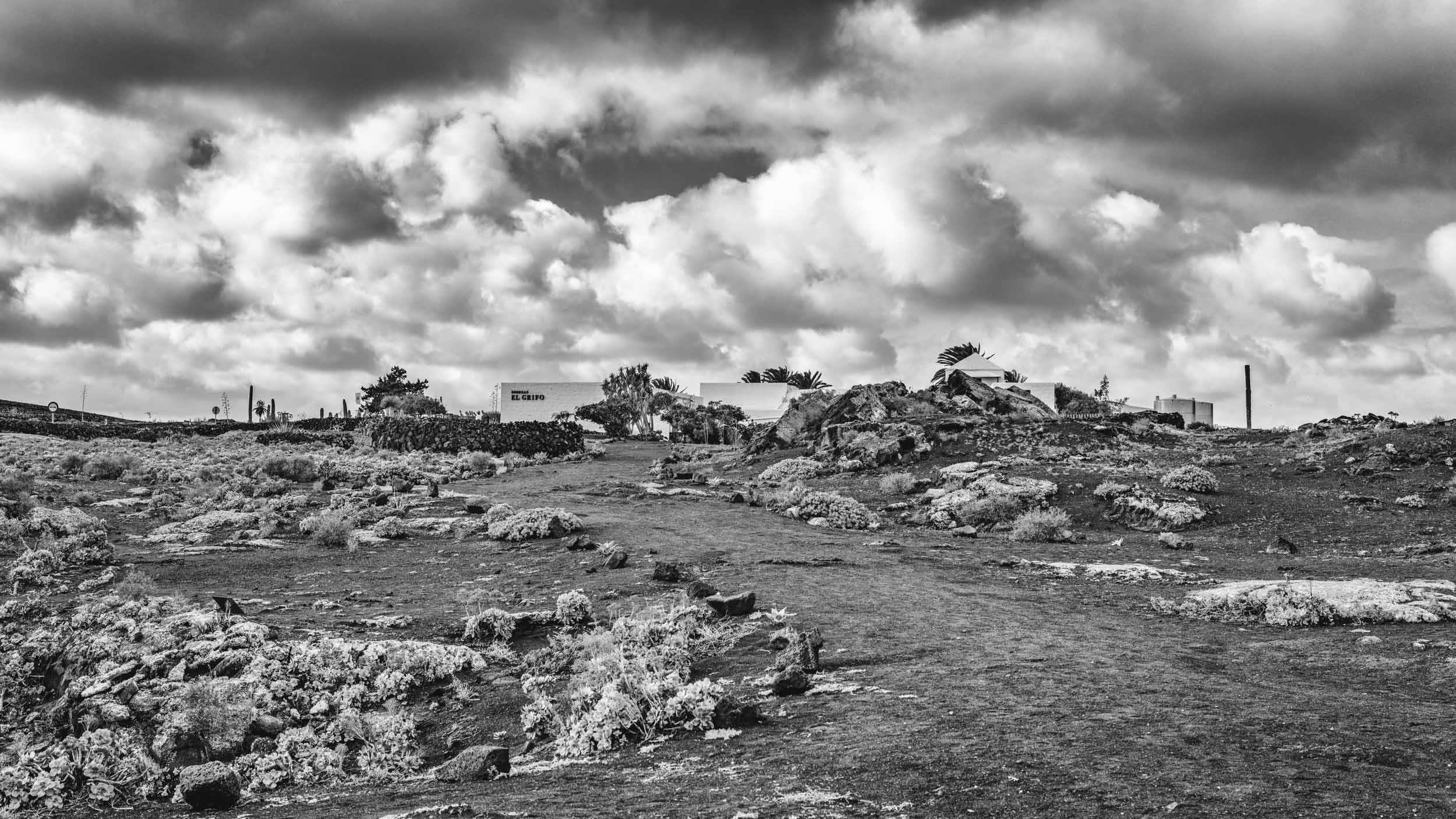
The landscape of Lanzarote is overwhelmingly black because of the universal volcanic ash. Cacti and other plants punctuate the space, creating an unusual desert-type environment. There is little in the way of weed growth, so the overall impression is of a well-tended landscape. At first glance, agriculture appears limited. But a visit to a vineyard such as El Grifo is an eye-opener.
All images taken by the author with the Leica Q3 43
So why monochrome?
David Askham, in a comment to this article, asked by I had chosen to show the images in monochrome. It’s an excellent question, and one which touches on our decision-making here at Macfilos. When I saw the landscape of Lanzarote, my initial reaction was “black and white”. After all, the overall impression is monochrome — jet black ground and brilliant white buildings. Why use colour?
On the other hand, the cacti and the other vegetation introduces a colour to offset the monochromatic impression. I had a long discussion with my colleague Jon Cheffings on this, and it was a close decision. Should it be colour or monochrome? Nonetheless, there is a case for using colour, and the following colour versions of the earlier images are interesting. The question is whether colour is a better medium to illustrate the extraordinary landscape of Lanzarote than monochrome. Judge for yourself. Here is a selection of colour shots drawing on the illustrations in the article.
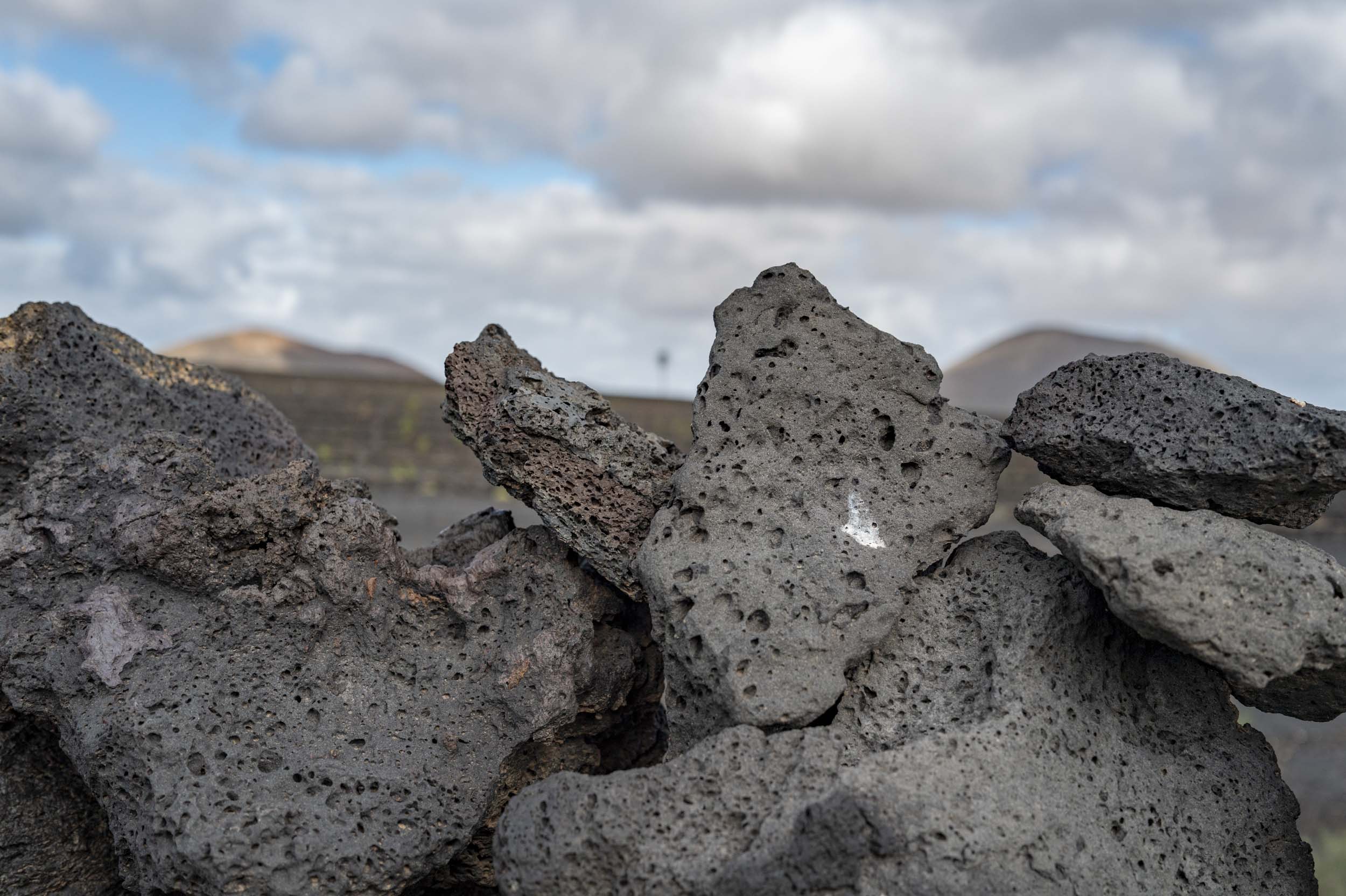
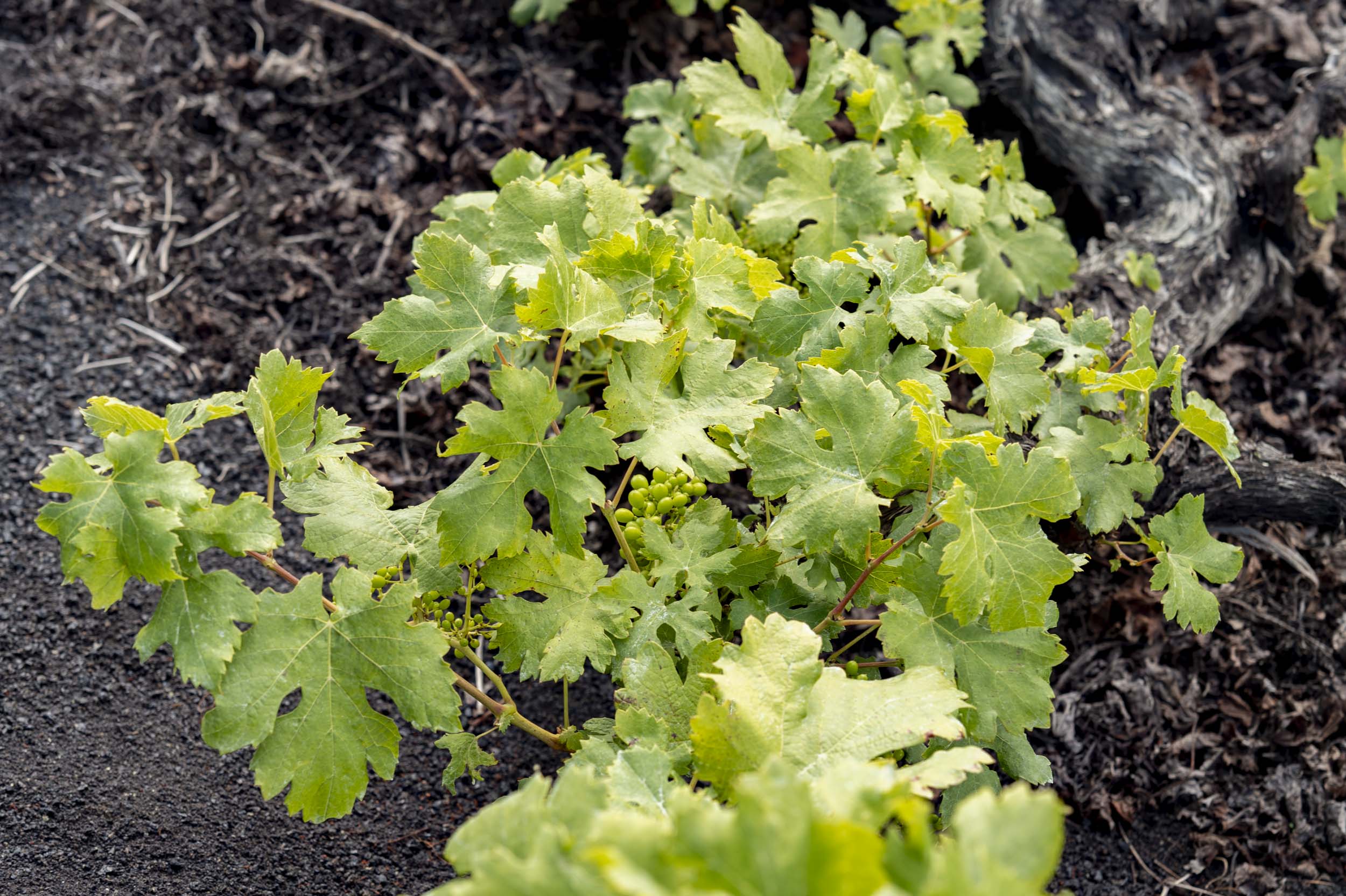
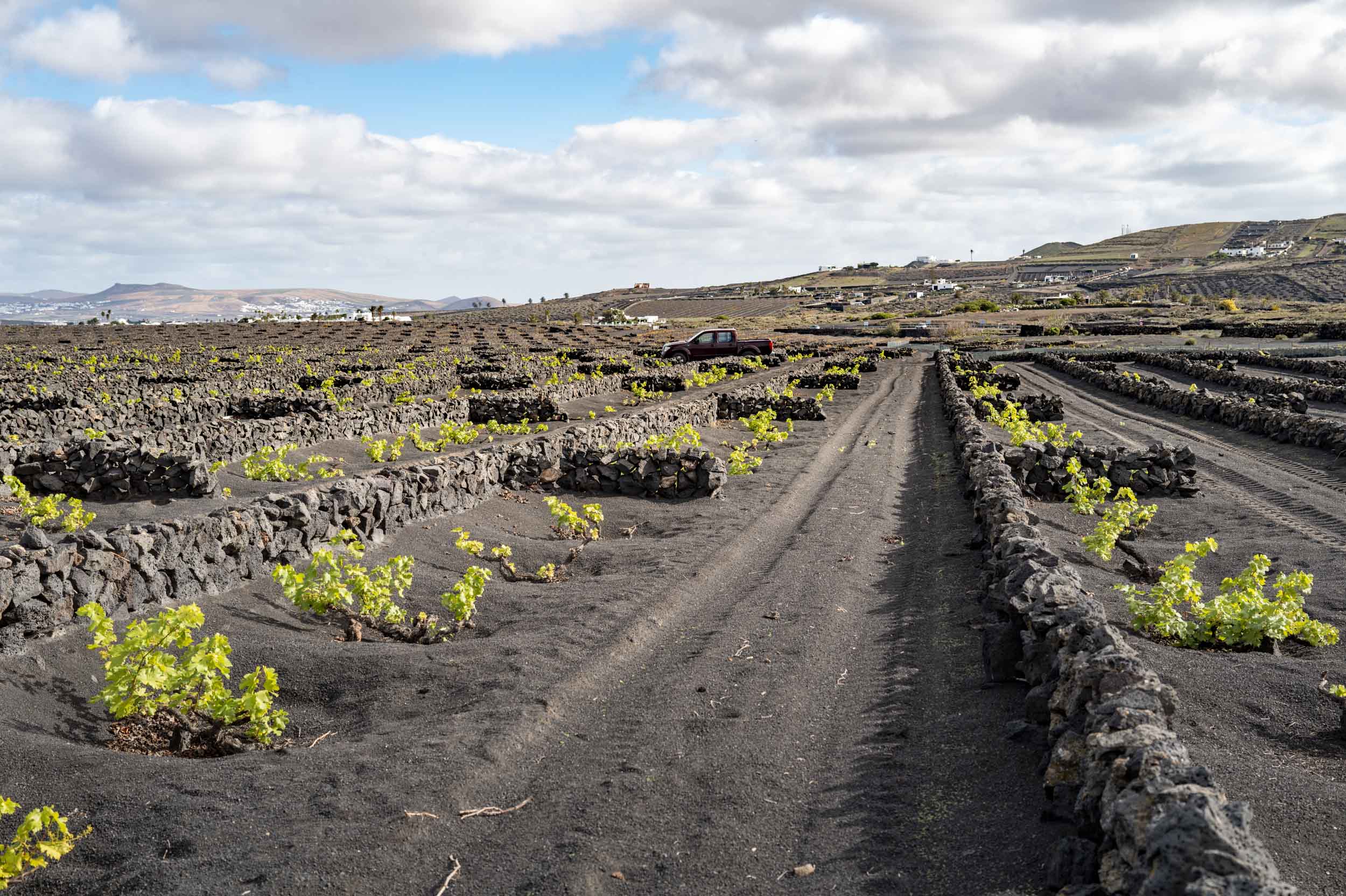
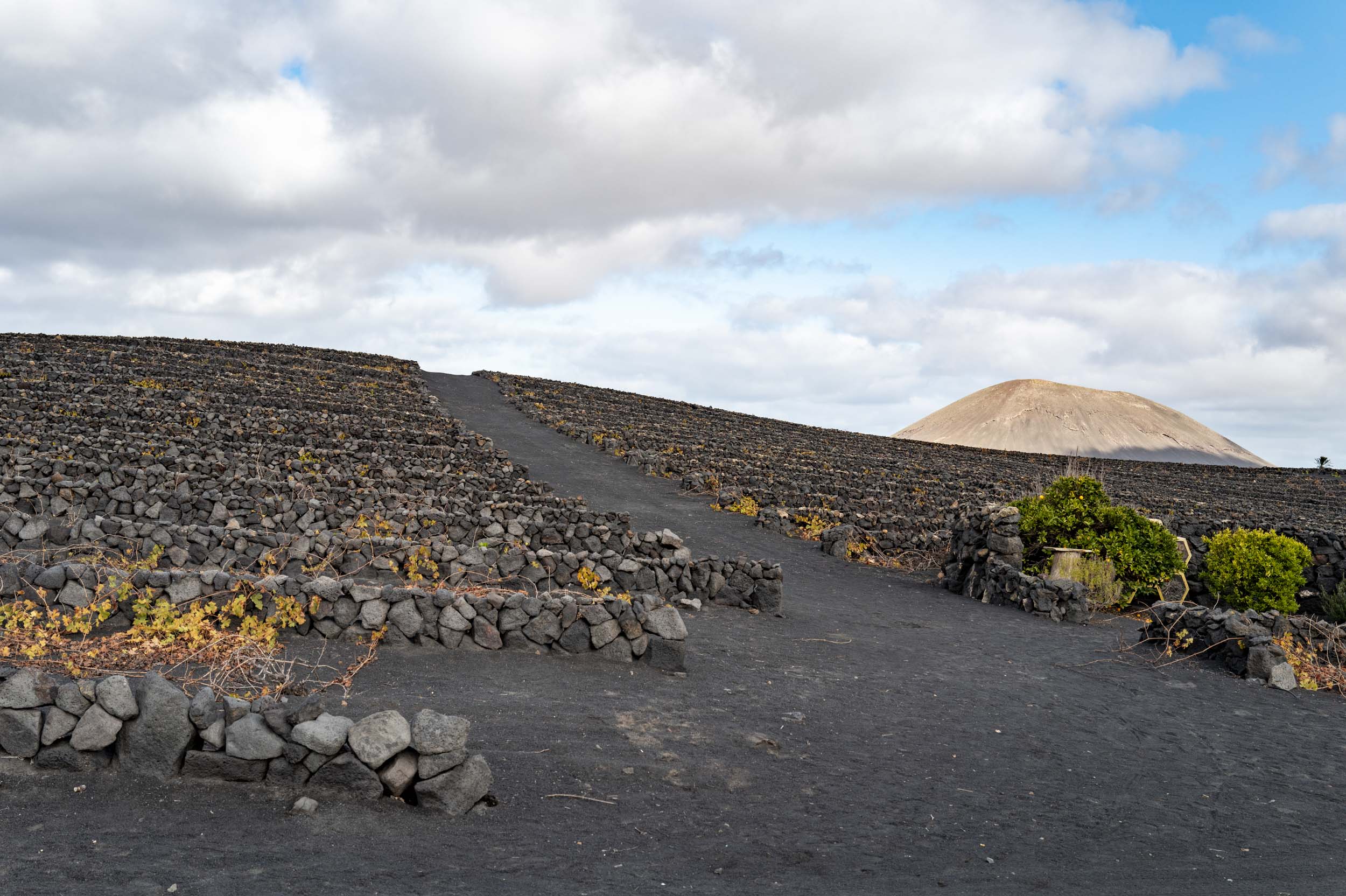
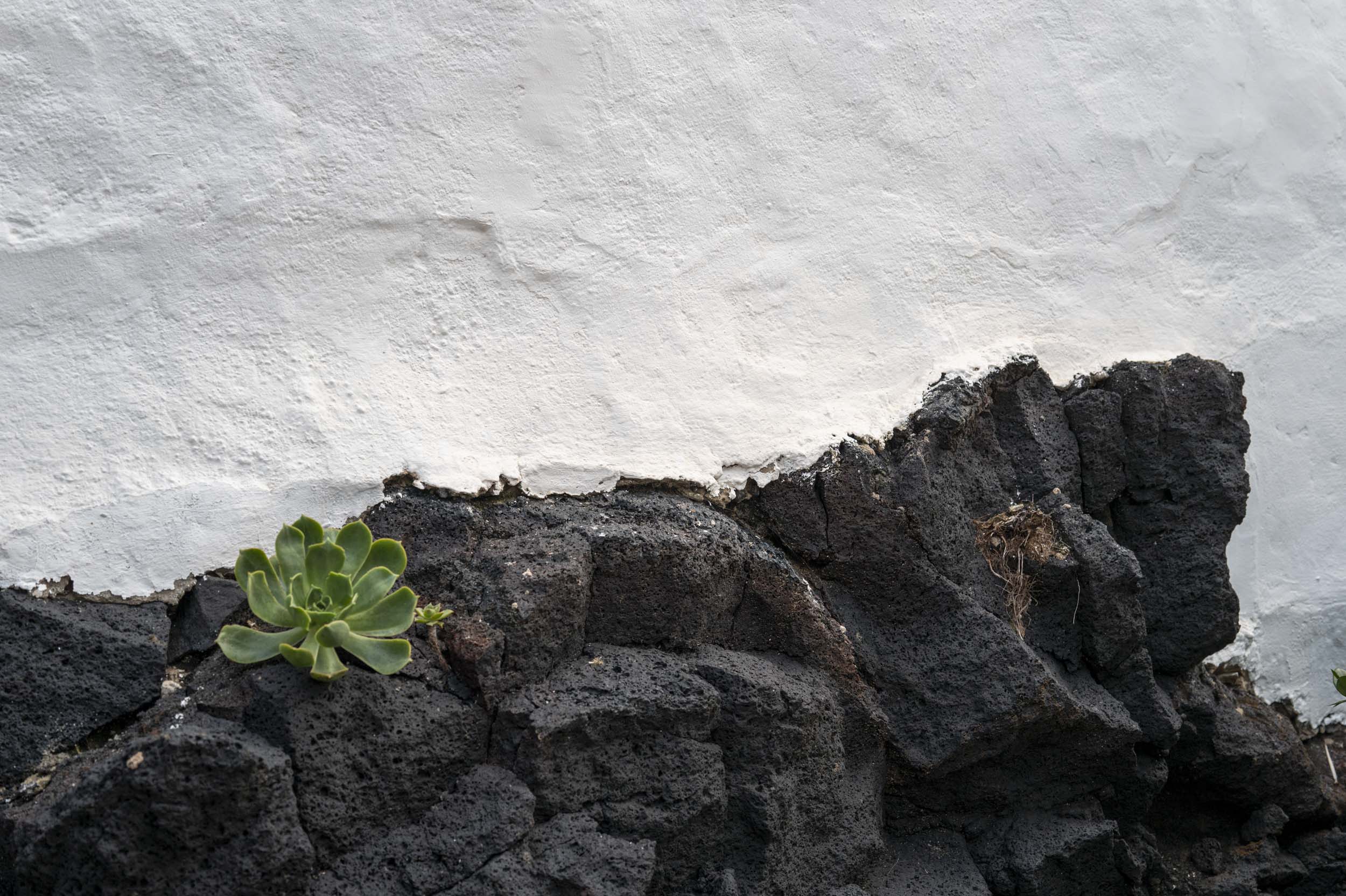
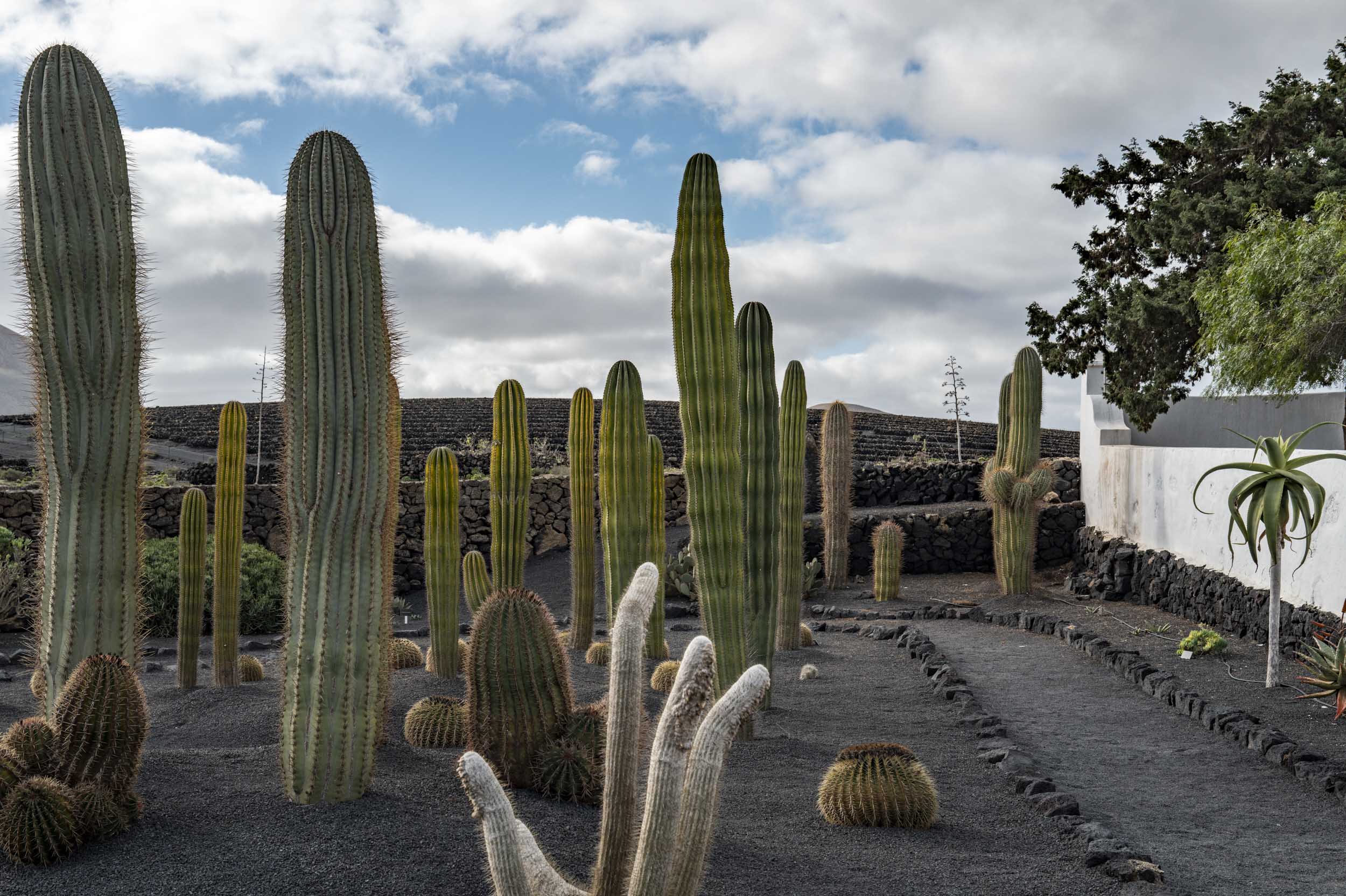
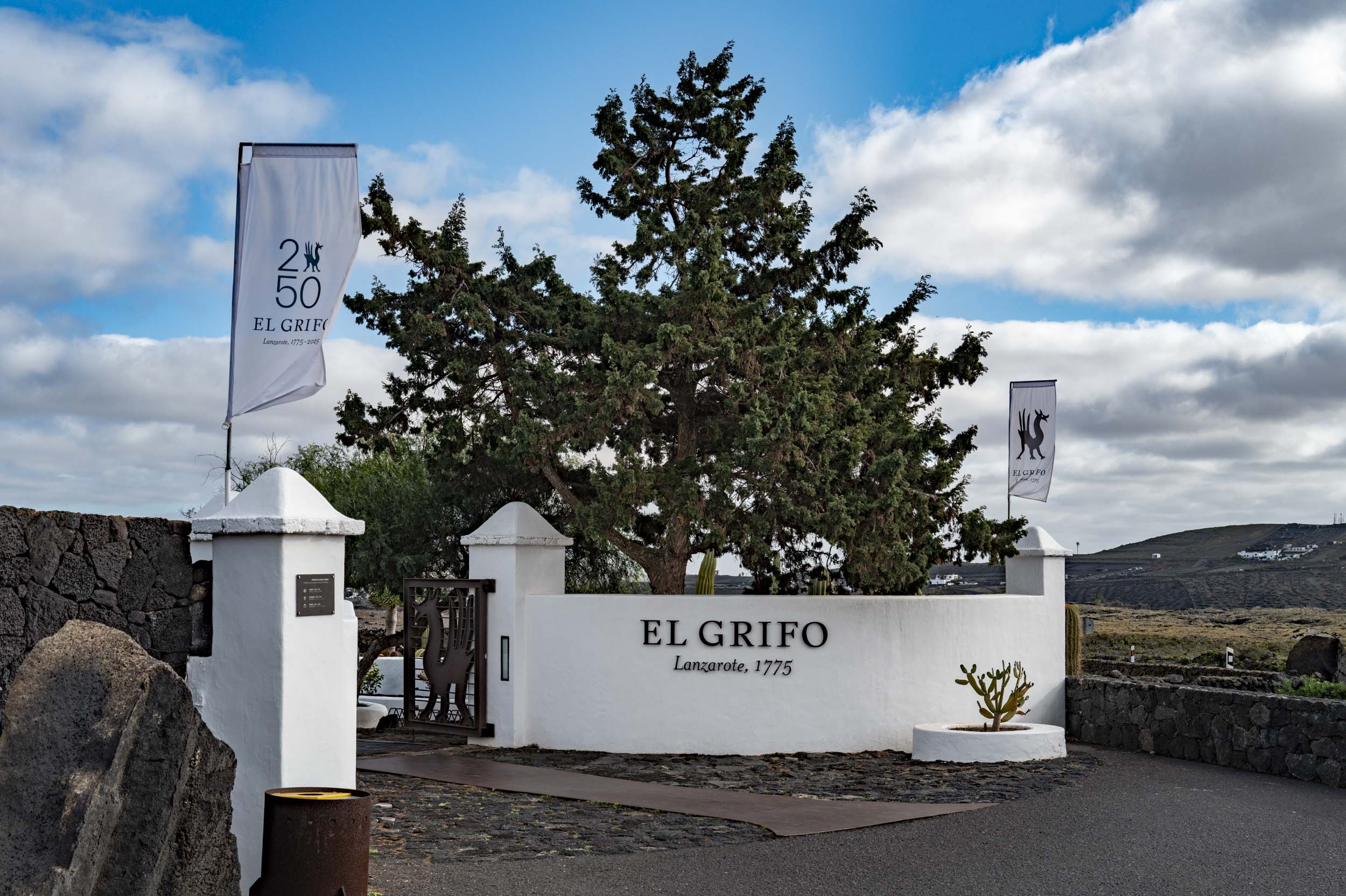
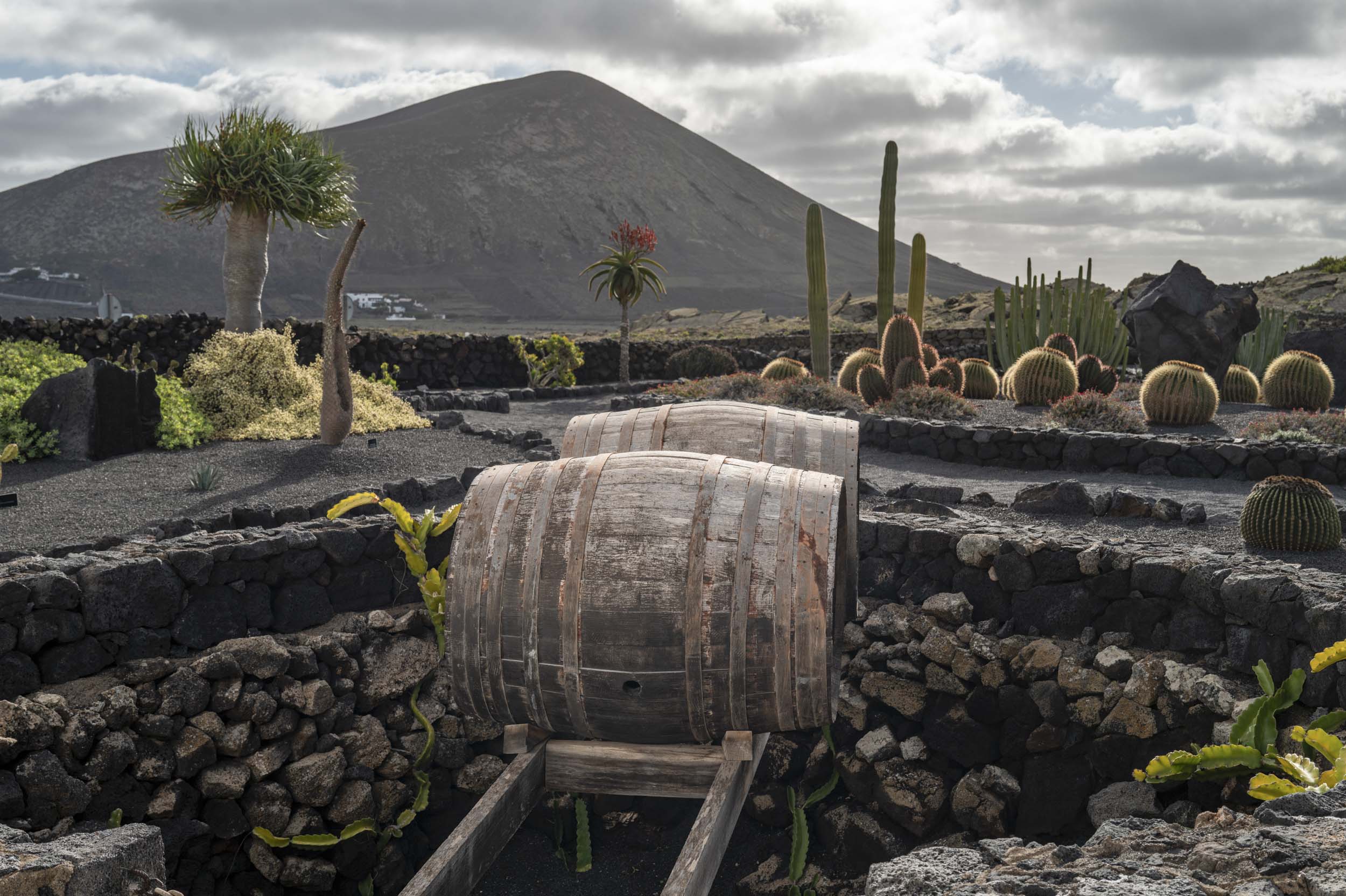
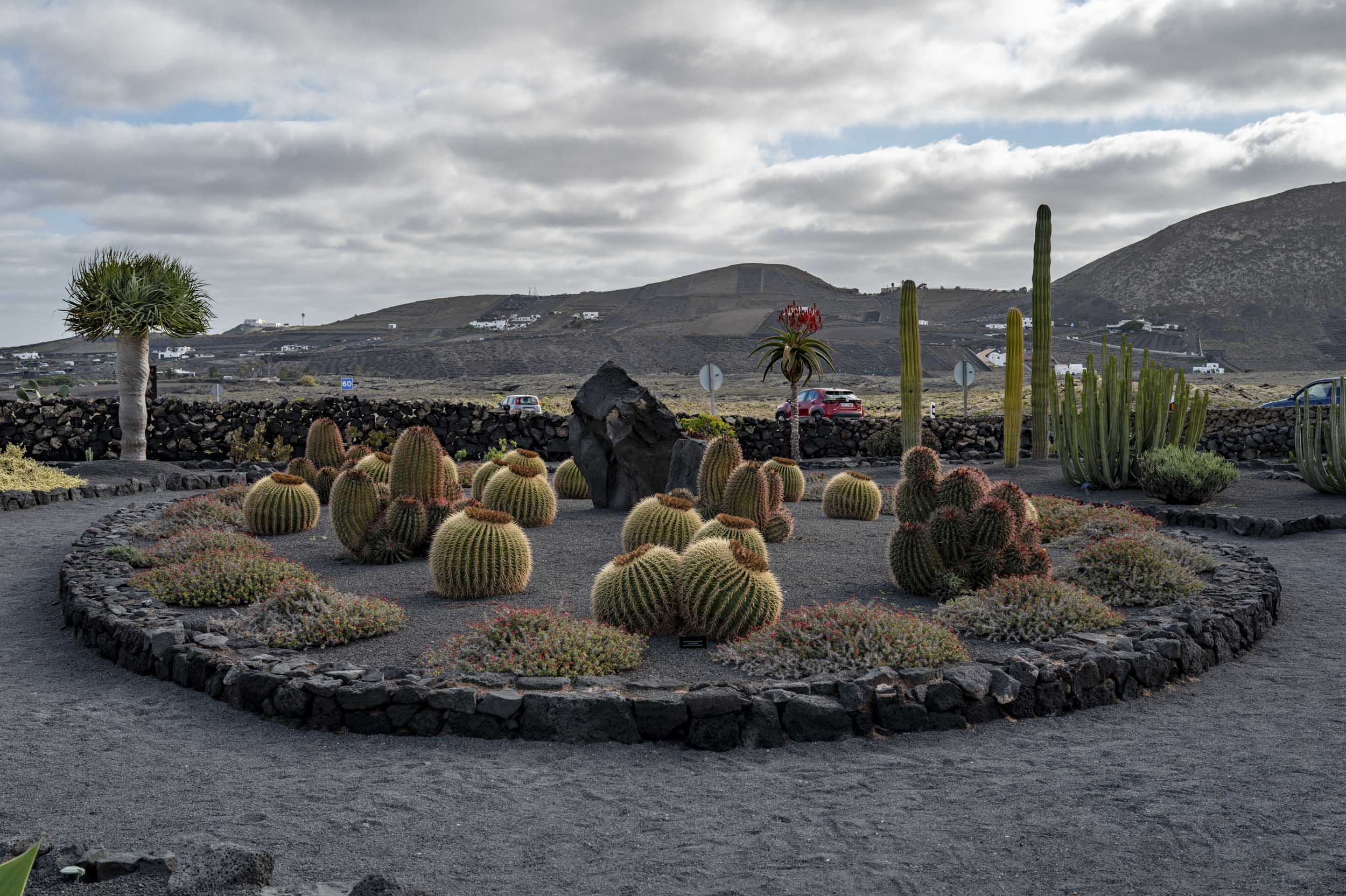
What do you think? Is this a suitable case for monochrome, or does colour add a dimension that creates a more lasting impression of the landscape?
Make a donation to help with our running costs
Did you know that Macfilos is run by five photography enthusiasts based in the UK, USA and Europe? We cover all the substantial costs of running the site, and we do not carry advertising because it spoils readers’ enjoyment. Any amount, however small, will be appreciated, and we will write to acknowledge your generosity.
I think in suggesting to Mike that B&W would make it more interesting with the tonal gradations. I was wrong. The life in green in the form of the vines trumps that, and makes the whole thing a reflection of the challenge of the harshness of the landscape vs the will of the vines to survive and flourish.
Jon, thank you for your frank explanation and honesty. Speaking as a former ‘illustrative’ photographer, whose past work has been used in educational and reference books worldwide, I regarded Mike’s article as a travelog rather than a ‘photo technique ‘ piece of journalism. Travel features require colour to complement the text.
Like Mike and many others, I began my interest in photography in the days of black and white. I faced the distinct challenge of representing my subjects in shades of grey. Masters of monochrome were few. Many photographers will have their favourites. Monochrome requires a very special ‘mind-set’ which takes time and effort to master. What an interesting debate.
Very interesting article. Like the Italians the people of Lanzarote made clevearly use of the fertile lava to grow their vines.
I think the colour photographs add something worthwhile to the pictures. In printers terms the addition of green to monochrome prints is called a supporting colour (when literally translated from Dutch).
Thanks, Gerard. I was told that similar vineyards exist in Sicily and mean to check this. In retrospect, the colour images would have served us better. It was a close call, but I am now persuaded we made the wrong choice. At least, you now have the option to see both versions. Mike
Perhaps a bit quick to judge. I hope you’ll pardon a long-winded response.
I’m new to photography, and have mixed feelings about B&W. But, looking at portraits by some of the masters of early photography, I was reminded of a comment in Eco’s “Name of The Rose”, from memory):we shouldn’t call Anselm fair, for he will become a pile of rotted bones … . Which I take to mean, that we should be concerned with ‘essences’ rather than ‘accidents’.
It struck me that perhaps B&W is way of doing that; in a face we might see not mottled skin and wrinkles, but character and expression. Coming to the present case — if it’s the photographer’s intent to show us a sere landscape, stripped of inessentials, then I imagine B&W might be the right tool.
Comparing color vs B&W, I looked at the photo of the two barrels; they give very different impressions in the two versions. In B&W, they look — old, discarded, isolated in a bleak landscape. Add color, and we see reds on the barrels and now the background has greens and purples on the cacti: the barrels are part of a process, the landscape is alive.
I think the difference here is the photographer’s intent in taking the photo.
Sorry to be a bit late joining the discussion; I really enjoyed reading all the thoughtful comments. Good set of photos for eliciting discussion!
Thanks Kathy, I admit that I love B&W photography, but I realise it isn’t always the best treatment. For me, however, black and white is an integral part of my background.
As a young journalist, I worked in a black and white world. Our highly successful weekly letterpress national magazine existed in a monochrome sphere where colour process was expensive and almost non-existent.
We might have a couple of pages in colour (using expensive photo gravure process) but black and white contact sheets were the order of the day, and 95 percent of our content was in this medium.
Many of these wonderful monochrome shots were taken by our old friend Don Morley, who went on to greater things.
I still get a thrill out of a good black and white image.
But times are different. I can see both sides to this argument, but I acknowledge that the colour images in this article do add to the story telling process.
That’s a great story. I can see it wouldn’t do to put it in the main article, but I’m glad it came out!
A really interesting piece with wonderful images.
All while I’m doing dry January 🤔😂😂
Thank you, Dave… a bit like your Grimsby paths in places. And those hills (dead volcanoes?) remind me of Lancashire slag heaps. Interesting place.
Fascinating insight into growing grapes in such inhospitable conditions. I never even knew they made wine on Lanzarote.
As I was reading and looking at the pictures, I thought “some of these would work better in colour”. A particular example is shot 8 (after the bug hotel). It is difficult to discern the vines against the background. You posted a colour version lower down which in my opinion is far more effective at documenting the growing environment than the mono version.
I think the issue is one of similar textures. The gnarly ground and the twisted vines have similar “crunchy” textures, and where the tones are similar it becomes quite uniform in black and white. If the textures were very different (e.g. twisted vines growing on a very smooth uniform surface) then black and white would work really well.
Anyhow, you’ve given us colour alternatives so we can compare & contrast. I think colour works better as the vegetation stands out a lot more effectively, and the vegetation is what the article is all about. None of my commentary detracts from a very interesting article, so thanks for informing us.
Thank you, Andrew. I, too, was surprised. When I booked for the winery tour I didn’t expect anything like this, but it made for an interesting little story. As you saw from the footnote, both Jon and I pondered over the choice between monochrome and colour. It was probably a mistake to go down the B&W route, and both you and David Askham have confirmed this. Thanks for commenting. Mike
An excellent article and wonderful set of images. The monochrome suits perfectly.
Mike, your visit made for an interesting account of an industry on the island that I knew little about. Although you scarcely mentioned it, I trust you did taste the local wine?
However, for me, one element was missing. I would have loved to have seen a colour version of your illustrations. Your choice of monochrome must have been for a reason. Please share it with us.
An excellent question, David. I discussed this at length with my colleague Jon Cheffings. We examined the colour version and the B&W versions. The colour shots are interesting in that the prevailing tone is black, but the green does stand out. On balance, we decided that the monochrome landscape merited monochrome treatment. But it was a close thing. I have now added a gallery of colour shots to the bottom of the article. What do you think?
I did taste the local wine at the vineyard during the tour, and it was impressive, but rather expensive. I didn’t notice any local wine on menus in the restaurants we visited.
Mike
I think the vine leaves look so much better in natural colour. The contrast between green leaves and the dark volcanic ‘earth’ is more impressive in colour, Mike. Thank you for posting both versions.
Thanks, David. I think I agree with you.
Mike