
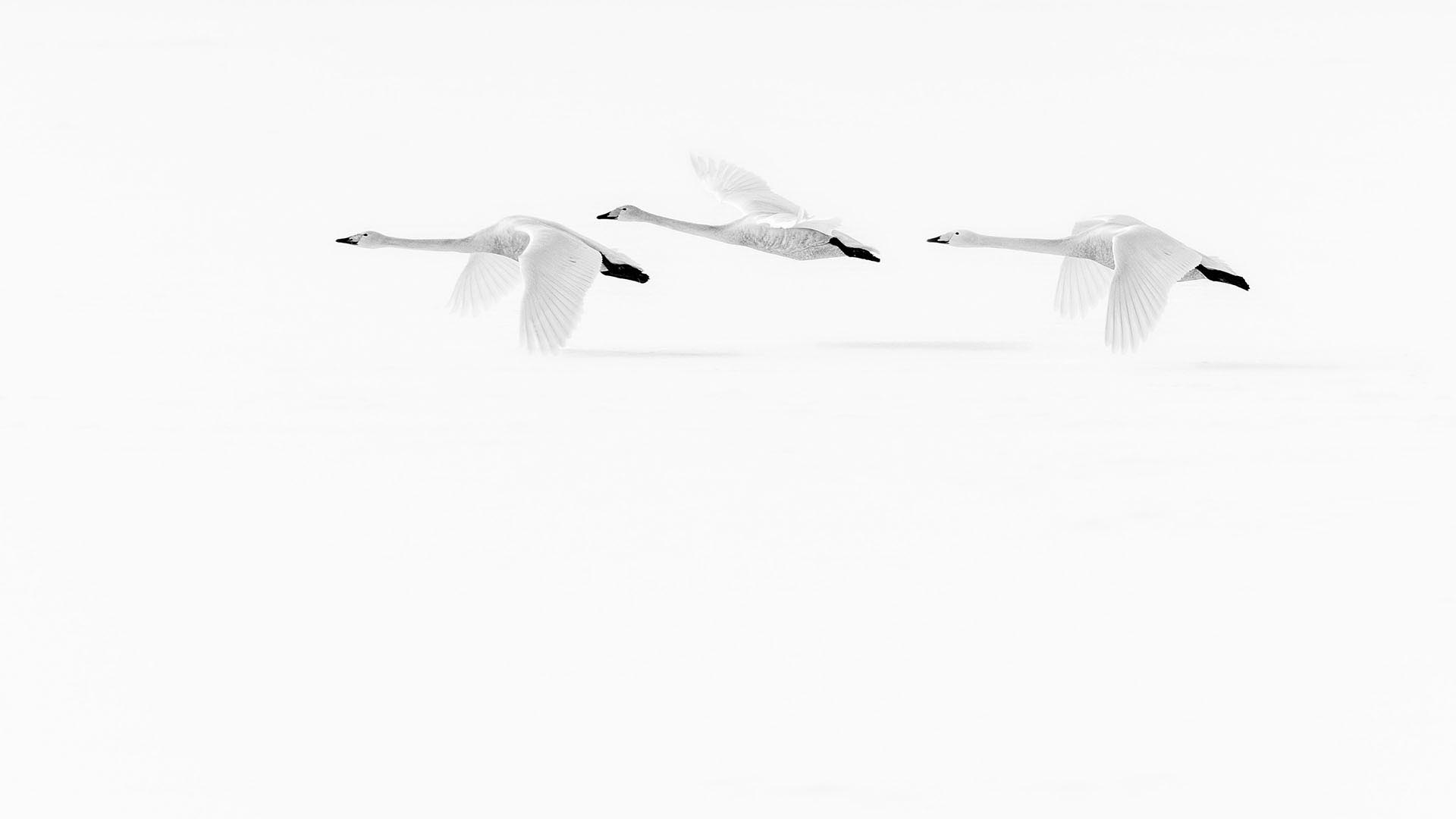
Italian photographer Marco Ronconi masters the art of reducing his images to what is essential. By omitting everything he believes to be unnecessary, even colour, he creates unusual wildlife images. His work is now being exhibited in Germany for the first time.
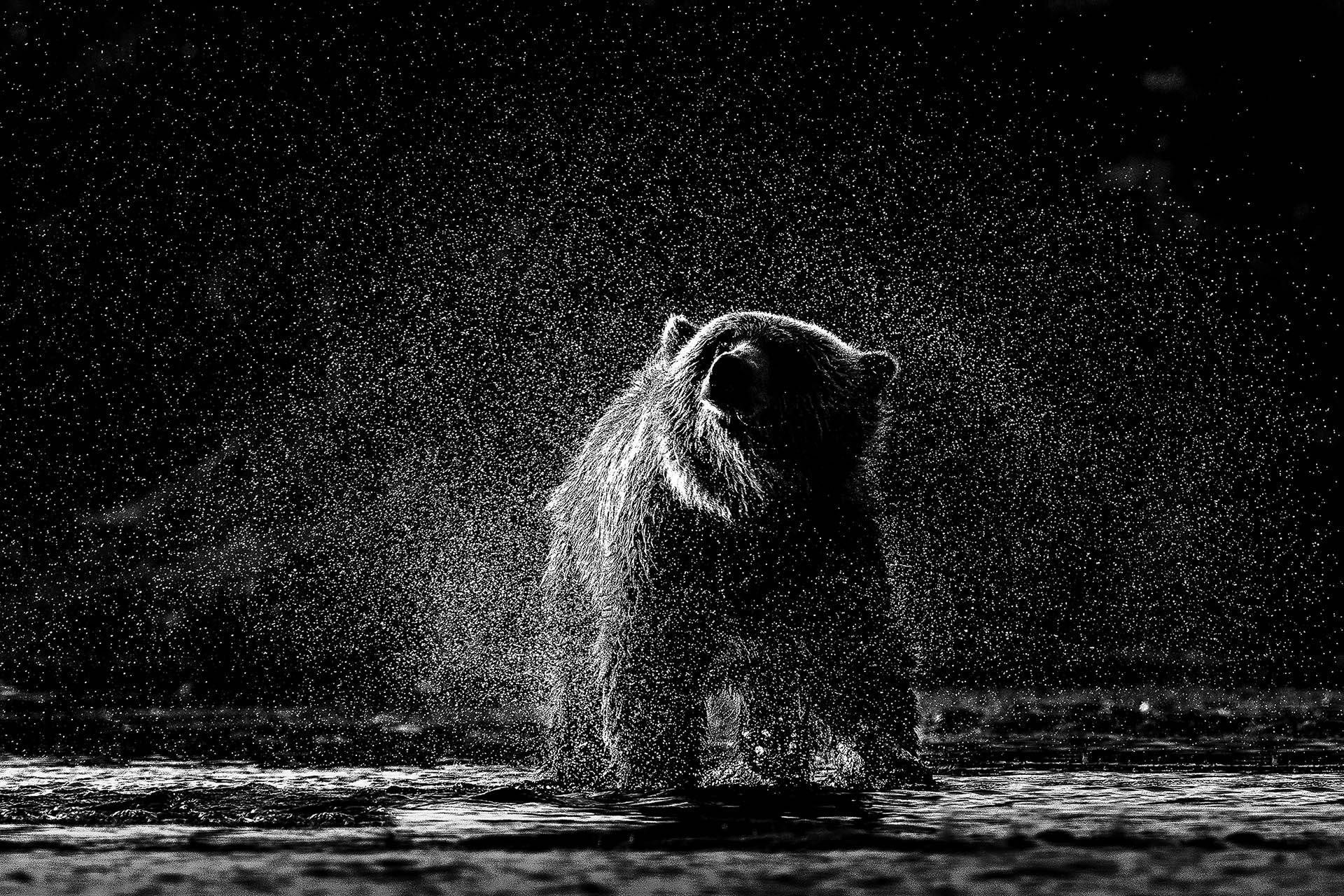
At first glance, these images appear to be predominantly black. Or white. But then, patterns emerge from the almost uniform surface. The antlers of deer stand out against the white of the snow and fog, then their bodies, while their legs remain veiled in the clouds. Or vice versa: against the black background, water droplets sparkle as a bear shakes them from its fur; the animal is barely recognizable and yet immensely present.
In a way, it is unusual to present the colourful world outside so consistently in black and white. Just remember the discussion on our editor’s images from Lanzarote! No golden sunsets, no blue skies, no green trees.
‘Chiaro Scuro’ – a strong reference to art history
Instead, shades of grey that force the viewer and the photographer alike to look at patterns and shapes, geometry and spatial composition of the photo. And, of course, these images are also about contrasts. Marco Ronconi’s exhibition is aptly titled ‘Chiaro Scuro’, which roughly translates as bright and dark or as light and shadow.
With this, the photographer, born in the northern Italian town of Rovigo in 1984, openly references art history. Striking contrasts between light and dark have fascinated artists and audiences for centuries — partly because strong contrasts often trigger strong emotions and amazement.
But Ronconi does not create these images with a brush; he photographs his reality with a camera. He has to master the art of omission when taking the picture, as well as seeing contrasts and subtle shades of grey.
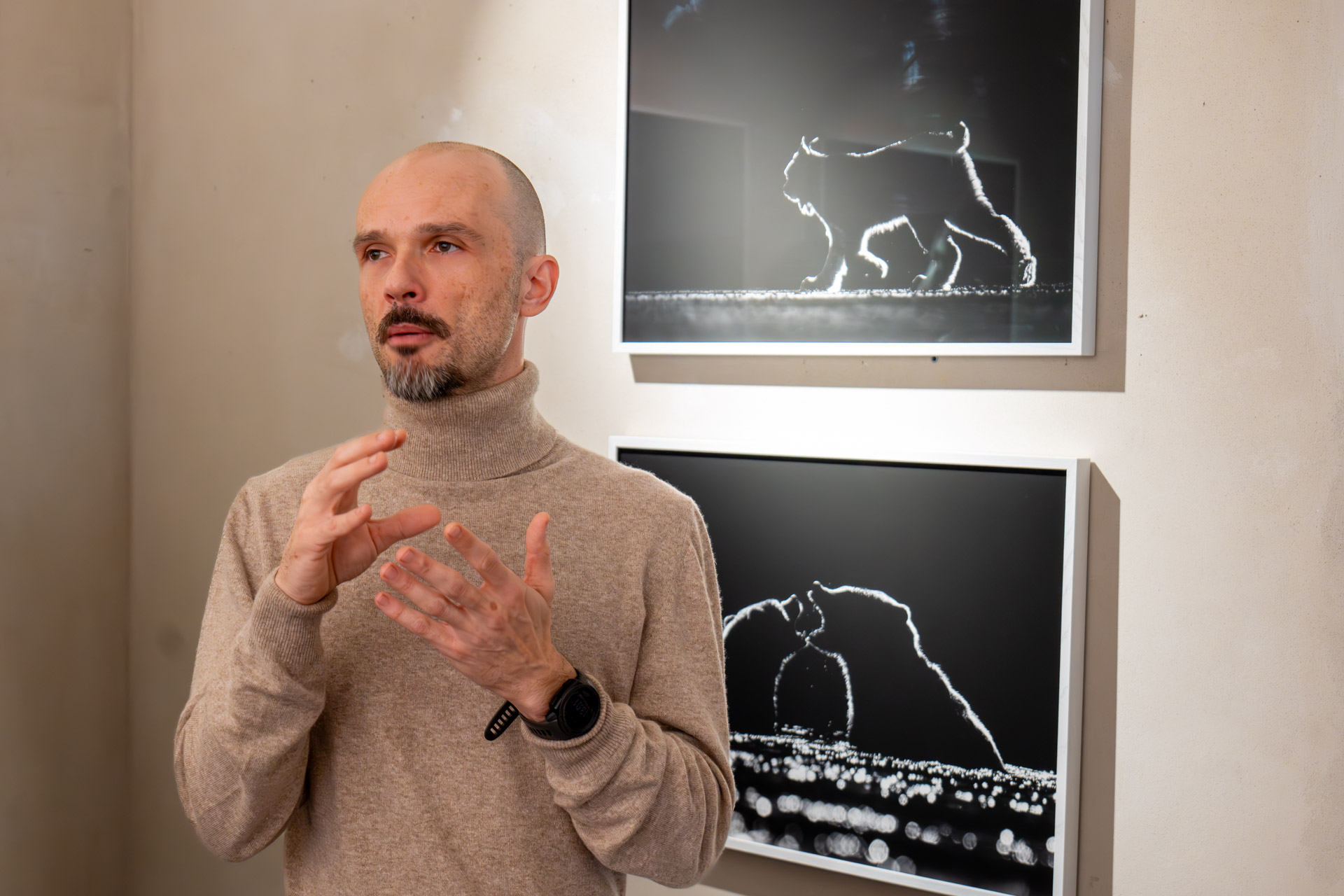
Remarkably, Ronconi is an autodidact, with no formal grounding in photography. His display, at the Leica Gallerie in the Niederburg district of Konstanz, represents his first foray into Germany. He believes that it will provide an ideal opportunity to gauge audience reaction to his pictures, how the radical reduction to the essence of the subject influences the viewers.
Opening spaces for reflection
Indeed, you just can’t ignore the large, seemingly empty areas in his pictures, and Ronconi hopes they trigger a similar process to the one he experiences when taking photographs. For him, he says, photography has something philosophical about it. “It’s not about depicting reality, but opening spaces for reflection and emotion”, he said in a talk with me on the opening night.
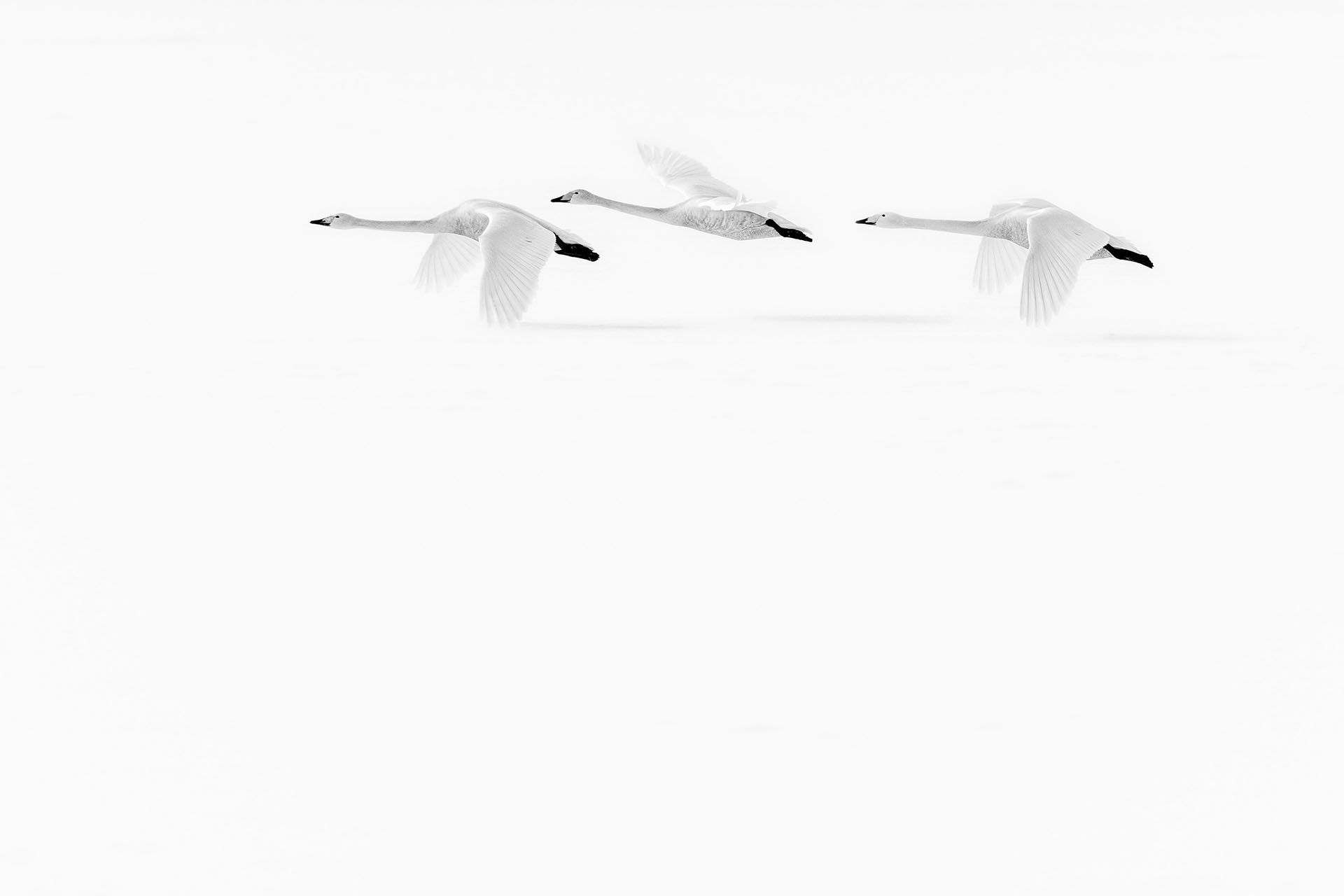
Ronconi is not only concerned with bears, deer, rabbits, swans, or eagles. He is just as interested in emptiness, whether it is completely white and full of light or completely black. It is emptiness that creates the possibility for a subject, artfully inserted into the proportions of the image, to stand out.
Marco Ronconi’s idea of emptiness and nothingness
Here, he references directly to far Eastern art, especially Japanese calligraphy. The negative connotation of emptiness is a Western concept, Ronconi said. He suggests differentiating between what he calls “nothingness” and “emptiness”. In this sense, the (almost) uniform white or black parts of his image are an utmost contrast and at the same time a precondition to what they are surrounding.
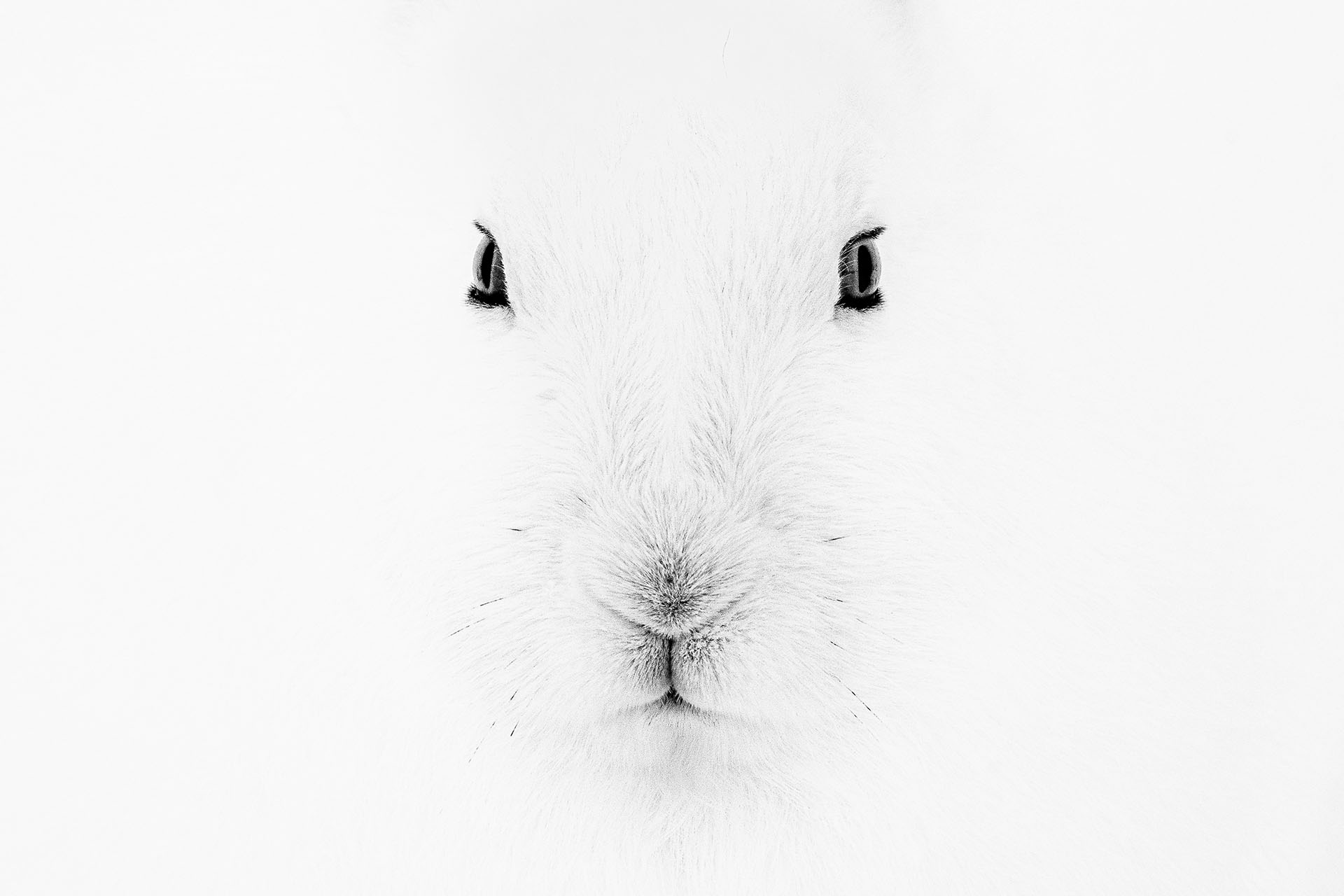
Ronconi’s work is, in a sense, the antithesis of our children’s search-and-find books and, at the same time, a statement of restraint. Where the world is loud, Ronconi counters it with silence; where it is colourful, the photographer reduces it to shades of grey — and where it is full, he provokes with emptiness.
Remove everything unnecessary
This tidiness is, as the photographer says, in his nature. For him, “removing everything unnecessary” is also an attitude to life; the silence that is so often lost is important to him. His black-and-white photographs show in their own way that all this can still be tremendously effective because where he makes more suggestions than depicts anything, he opens up space for the viewer’s imagination.
Ronconi’s images are spare, but not cold and clean; rather, they are full of love for nature. For Ronconi, monotony has become a source of inspiration rather than a threat. The uniformity of life and the notorious fog of his hometown in the Po plains near Venice may have contributed to this. But he has also been influenced by many personal experiences and, not least, his intense engagement with Japanese culture and its minimalist aesthetics.
How Marco Ronconi works
At the opening, Marco Ronconi also shared some information on his workflow: He works with modern mirrorless cameras and shoots in colour. “But I often have the black and white version already before my inner eye”, he said. Careful exposure control ensures the high-key and low-key effects right away. His post-processing consists mainly of black and white conversion in Lightroom with his own profiles.
The quest for the essential — without a red dot
Camera brand makes little difference, as Ronconi said answering visitor’s a question during the opening weekend: “In a comparable price range, the different systems are comparably good, it is mainly down to ergonomics.” He went for Sony, but maybe the exhibition in the Leica Galerie at Konstanz whets his appetite for something with the red dot.
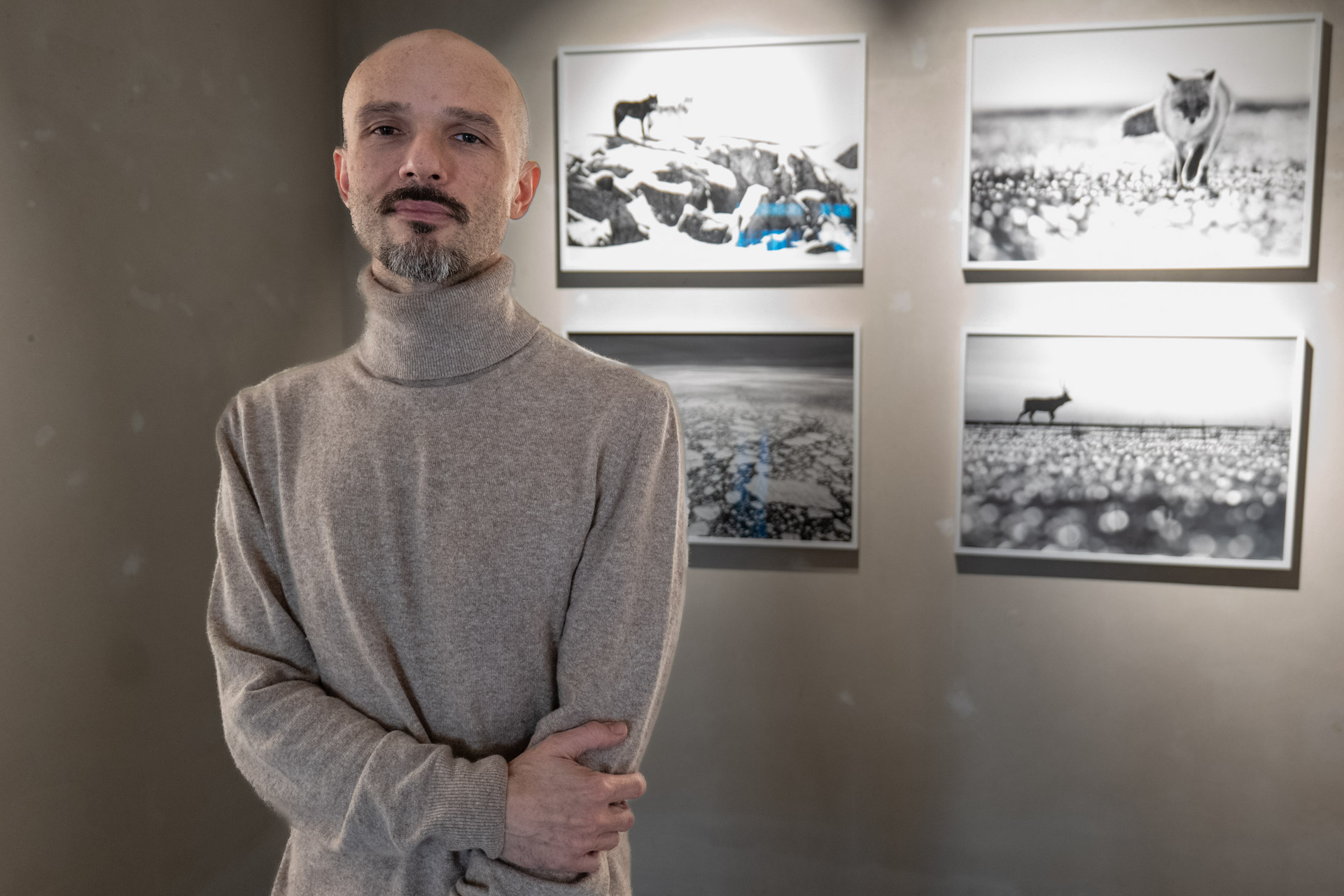

After the opening with more than 200 guests, the unusual images of the self-taught photographer can be seen in Konstanz until 14 April 2026 at the Leica Galerie Konstanz. For viewers, Marco Ronconi’s work is both a challenge and an invitation. It’s all about the interplay of light and darkness, and the commitment to radical reduction. In this respect, these images may even raise the question of what is essential in photography generally, way beyond a wildlife photo.
| Read more | |
| Current exhibition at Leica Galerie London | Marco Ronconi’s colour project |
| How do you interpret “das Wesentliche”? | Lanzarote: in black and white – or colour? |
Make a donation to help with our running costs
Did you know that Macfilos is run by five photography enthusiasts based in the UK, USA and Europe? We cover all the substantial costs of running the site, and we do not carry advertising because it spoils readers’ enjoyment. Any amount, however small, will be appreciated, and we will write to acknowledge your generosity.