
For the past week, we have been examining the fallout from the discontinuation of Leica’s popular CL and the associated TL lens collection. We’ve acknowledged Leica’s innovation and its contribution to camera design, and we have shown how the TL and CL are still extremely competent tools for excellent photography. Yet, there is no denying that this is now a legacy system. For committed APS-C users, the future must lie elsewhere. We have chosen our new APS-C system-to-go.
“I am thy camera, the Leica, and thou shalt have no other camera before Me”
— from Mount Wetzlar, according to Jörg-Peter Rau
Where do we go from here, following the Leica APS-C exodus? I admit that I have never been one to cling to old technology, and remain an enthusiastic first adopter. So I, for one, pulled out of the Leica APS-C system when the CL was discontinued. I maintain that I need to feel part of a system which is very much alive and which is subject to dedicated development.
Jörg-Peter Rau is also, not without a feeling of sorrow, moving on from Leica, at least when it comes to an APS-C system. Both of us have decided on a new brand to call our own.
Macfilos ponders a new system
If we glance at the market, there are currently six contenders in the APS-C field: Canon, Fujifilm, Nikon, Sony, Pentax, and Ricoh. We can discount Pentax now because it is still using the DSLR model, while we prefer to concentrate on mirrorless cameras.

And when it comes to systems, we can also discount Ricoh. Despite the world-wide success of the GR compacts, they are a fixed lens design. But we’ll come back to Ricoh later.
If you are in the market for a lightweight APS-C system, however, you have a quartet of very competent brands to choose from: Canon, Fujifilm, Nikon and Sony. All do the job well, and all would fit the requirements as a successor to Leica. But which is the best choice for Leica users wishing to replace their CL/TL kit?
This is where Macfilos is going to take a stand. For many reasons, we have selected the only manufacturer that is fully dedicated to APS-C, the one that has had the longest unbroken history of organic development, and the one that almost certainly has strong prospects. That manufacturer is Fujifilm.
Fujifilm background
As a company, Fujifilm has demonstrated remarkable consistency over the past 15 years since it entered the mirrorless interchangeable-lens world. This process of organic development, of gradual improvement without drastic change, is called Kaizen in Japanese, and it is often applied to Fuji’s consistency. You can’t imagine Fuji suddenly deciding to cancel its APS-C programme, so dependability is a major factor.
The Fuji XF system is now mature and features some outstanding lenses. It is frequently overlooked by observers, but Fuji is a world-class optical specialist. The company manufactures high-end, specialised Fujinon lenses for industrial use — specifically for machine vision, robotics, and industrial inspection — that are distinct from their consumer photography XF or GFX lenses. These lenses are designed for high-resolution imaging, extreme durability, and precise, consistent performance in industrial environments.
Some systems integrators and broadcasters treat top‑end Fujinon cinema and box lenses as “industrial” optics for large‑venue, surveillance, or specialist imaging rigs. Lenses typically sit in the high five- to six-figure price range — for example, the Fujinon Duvo HZK25‑1000mm f/2.8‑f/5.0 PL‑mount cinema box lens, which costs over $250,000.

Enthusiasm
At the camera system level, Fujifilm is run by enthusiasts and, largely, used by enthusiasts. The company has a touch of the Leica about it, albeit on a larger commercial scale. Its fans are just as committed as Leica users, and the world of Fuji offers a very similar experience.
You just have to watch a few videos and read reviews, to see the hint of messianic belief that is probably rivalled only in the Leica world. Canon, Nikon, and Sony are just too big, too diversified, to satisfy a dedicated enthusiasm for APS-C. With these companies, full-frame always comes first. Good as they are, the APS-C cameras from Canon, Sony, or Nikon are always considered more of entry-level, overshadowed by their bigger brothers.

Fujifilm is different. The company has always been committed to APS-C and has avoided the full-frame market. Indeed, similarly to Panasonic, which leapfrogged APS-C in favour of Micro Four Thirds and full frame, Fuji jumped over full-frame and now has a competitive range of medium-format cameras, including the “lightweight compact” GFX100RF. These imaging meisters complement, rather than compete with, Fujifilm’s established APS-C role.
Mirrorless journey
There will be keen Sony, Canon, and Nikon users reading this article, so we need to add a proviso. Nothing in our choice of system implies that the other systems are inferior or not worth considering. All are good, and photographers have valid reasons to choose them. It’s just that Fuji is our choice for all the reasons we list.
I started my mirrorless journey with Fujifilm, owning the first generation of the X100, as well as the early XF-system cameras. Even after dabbling with Leica’s M8 and M9, I still retained an interest (and the Macfilos interest) in Fuji for several years.
Fuji’s mirrorless cameras have always been attractive, aesthetically, to Leica fans. Somehow, the current models look more Leica like than contemporary Leicas. Unlike Leica, which has gone all minimalist (albeit with an exceptional menu system), Fujifilm is a maximalist company when it comes to physical controls. All traditional dials, bells, and whistles of old-time cameras are on display and delight the fingers. With most Fujifilm bodies, you can still glance down and see all the critical exposure settings without needing to use the screen or viewfinder.
I am now back in the Fuji camp, this time accompanied by Jörg-Peter Rau. Both of us are now Fuji fans, although we have slightly different systems and requirements. We will go into that in more detail in subsequent articles. None of this means we aren’t still fully committed to Leica’s three definitive product lines in the full-frame sector. The M, the Q and the SL are still aspirational.
The Fujifilm range
Now, however, it’s a good time to look at the Fujifilm range from the viewpoint of former TL/CL owners. Fuji produces a bewildering selection of models, which can be perplexing to the outsider. Apart from the fixed-lens X100, the XF-mount models currently fall into two main camps — those that look like an old-style rangefinder and those that are modelled on the DSLR body concept. Both have their merits, and it’s good that we have the choice.
But there is now a further method of narrowing down choice, and that is sensor pixel density. Fujifilm’s cameras are now divided by the type of sensor. The first set of cameras, from both DSLR and “rangefinder” camps, retain the trusty old 26.1MP sensor that has been the mainstay of Fuji’s cameras for several years.
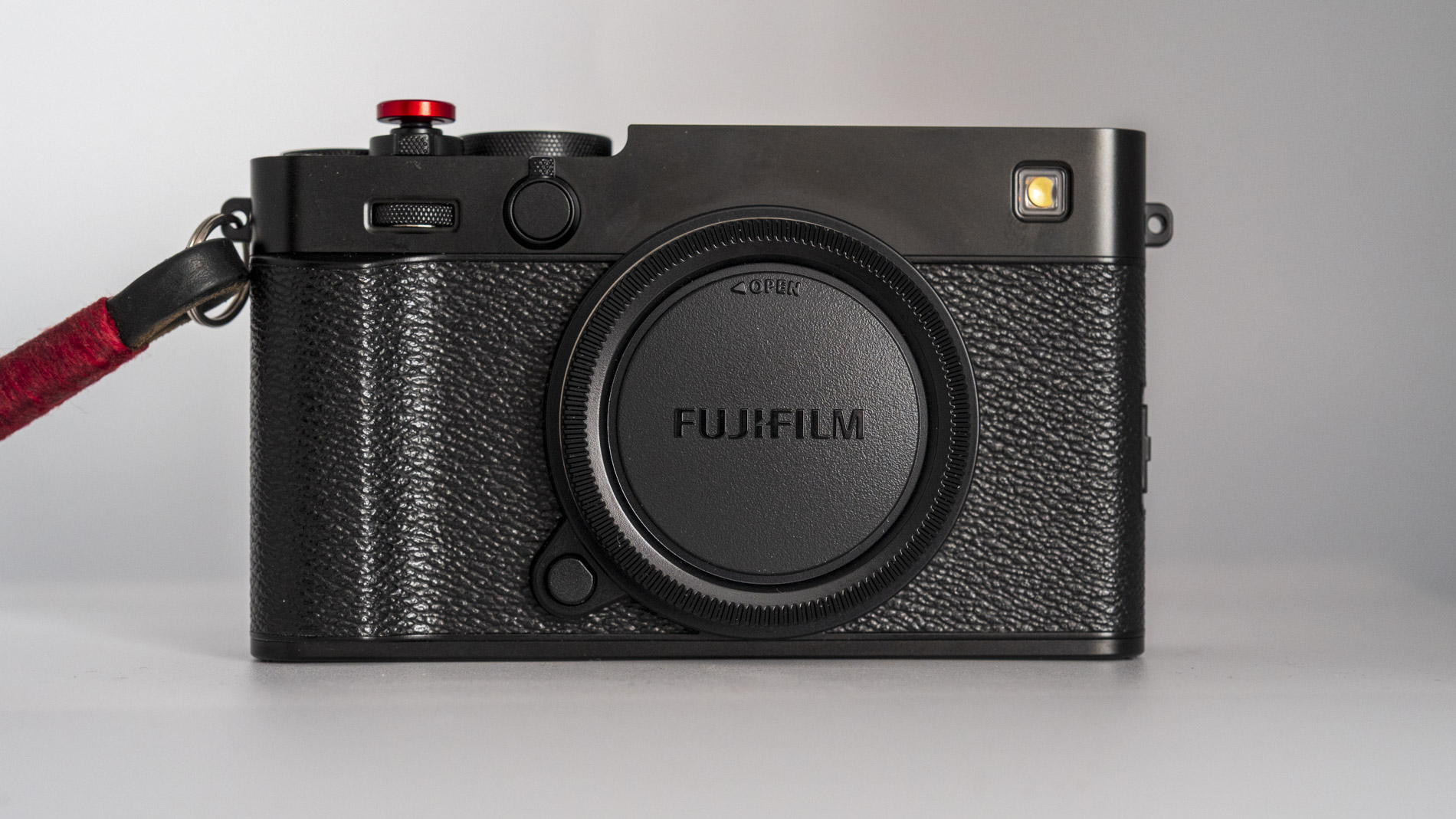
Pixel density
However, the new 40MP sensor is the one to go for, we believe. It offers outstanding pixel density for an APS-C sensor, equivalent to 90MP on a full-frame camera — although that is only a small part of the story and doesn’t mean that it is better than, say, a 60MP full-frame chip with its larger pixels. This is a subject for discussion elsewhere.
Nevertheless, the 40MP chip is a tremendous step forward, and we have been astounded by the results. It’s significant that the nearest challenger to Fuji’s APS-C sensor technology is Canon, with its 33MP offering. On the other hand, if you are happy with the 26.1MP sensor, there are many more Fujifilm cameras to choose from and, of course, you make considerable cash savings.
In our recommendations, then, we are limiting the choice to Fuji’s current 40MP cameras. However, once you are into the system, the older cameras with the lower-density sensor remain great buys and can be added to your family. As you will see, you can pick between a fixed-lens compact, and system cameras in either style.
Let’s look at the cameras we would recommend you consider.
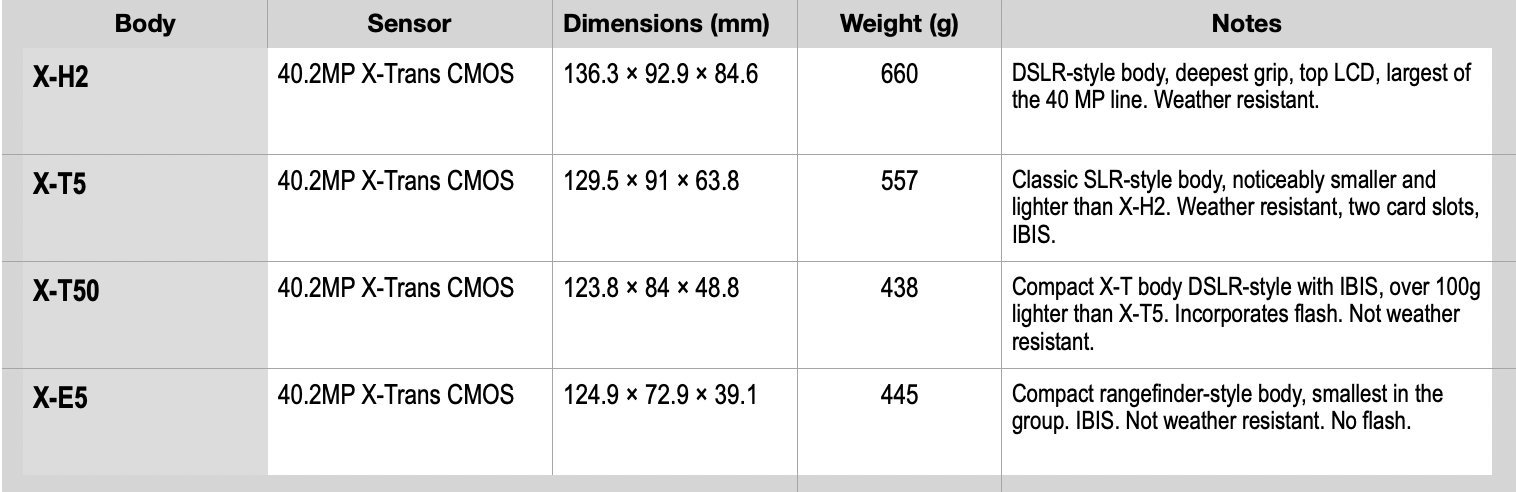
Fujifilm 40MP X-Series bodies
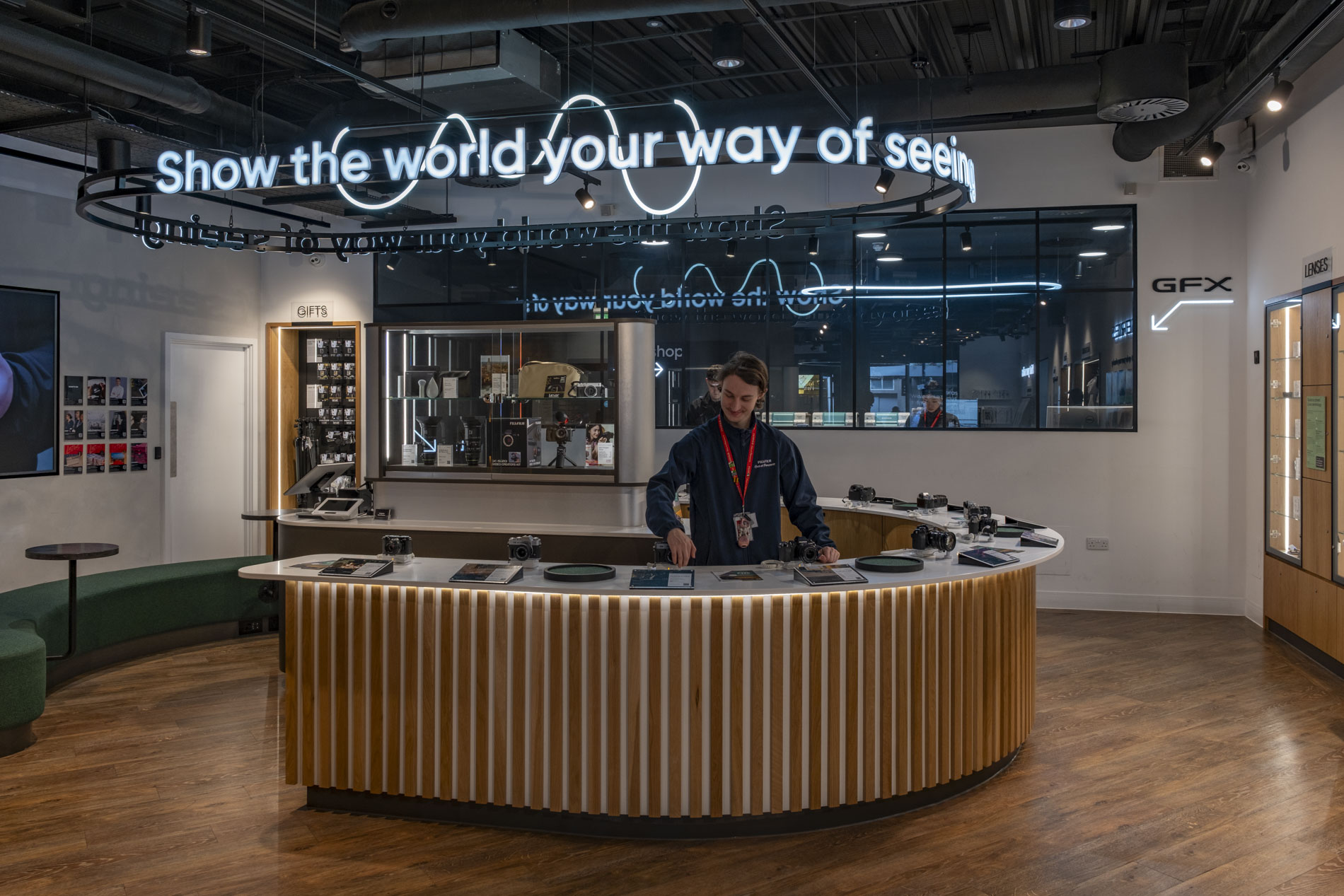
Last week, in preparation for this article, I spent an hour at the Fujifilm House of Photography in London’s Covent Garden. All the cameras are conveniently arranged in a semicircle and allow customers to get a real hands-on feel.
Voted off the island
First to bite the dust, in my opinion, is the X-H2. It’s a great professional camera, but is edging up to full-frame size.
I had to keep reminding myself that the objective with an APS-C system is minimising weight and bulk. So the X-H2 is overkill for the purposes of this discussion.
I liked the tiny X-M5 (not on the above list), which is even smaller than the X-E5, but it still sports the old 26MP sensor, lacks a viewfinder (a dealbreaker unless the camera is as small as the Ricoh GR) and is definitely more video-centric.
There is also the possibility of a new X-Pro being launched this autumn. That camera, with its hybrid rangefinder/electronic finder, will be of interest to Leica fans and will be worth considering if you want a slightly bigger APS-C, more professional body with weather resistance. It is said to feature a new processor and a 5.6MP viewfinder and, of course, the 40MP sensor.
The band of three
So we are now down to a more realistic choice of just three 40MP models. The two lightest bodies, the X-T50 and the X-E5, are almost identical in capabilities, but differ somewhat in control layout and functions. The X-T50 has a “DSLR style” body with central viewfinder while the X-E5 is “rangefinder style” with a body reminiscent of a Leica film camera, with the electronic viewfinder to the left. Neither is weather resistant, but both have IBIS, the X-T50 has flash. That’s about it.
Both these cameras are decidedly ogleable and are extremely well-built. Get one in your hands, and you won’t want to put it down. If anything, the X-T50 is the more compelling, a virtual miniature DSLR and adds the useful feature of a flash.

And the winner is…
But our choice from the two — based mainly on a heart-over-head flip of the coin — is the X-E5, which has now become something of a cult camera, although not in such ridiculously short supply as the superstar X100VI. In fact, with a 23mm pancake lens attached, the X-E5 can easily replace the X100VI as a lightweight, dedicated 35mm-equivalent street camera. They are almost identical in size and weight. If you can afford only one, go for the X-E5. But if you can run to both, they complement one another perfectly.
The third camera in the list is the bigger brother of the pared-down XT-50. The X-T5 offers a more robust, weather-resistant body, a substantial grip, much larger viewfinder and twin SD-card slots. If you like, it’s the pro model in the 40MP lightweight range.
With its chunkier, DSLR-style body and oodles of grip, this camera has a significant advantage for more serious work, particularly if you want to use heavier f/1 or f/1.2 glass, or long telephotos. The tiny XT-50 and X-E5 are rather overwhelmed by such optics, and are best reserved for more modest glass and more gentle pursuits. Nevertheless, a handgrip or thumb grip helps both the smaller bodies.
The only caution with the X-T5 is that the X-T6 is due for release fairly soon if rumours are to be believed. So now might not be the time to buy the current camera. However, once the Six arrives, the Five will still be an attractive buy at a lower price.
The clincher
The clincher is that Fujifilm just fits as a complementary system alongside Leica.
First, Fuji is not a competitor for Leica’s full-frame ranges. On the contrary, the other contenders, Canon, Nikon, and Sony are strong competitors and, in time, could tempt you away from Leica if you feel comfortable with their APS-C offerings.
Second, I know that Fujifilm is well regarded at Wetzlar for its build quality and value for money, not to mention its dedication to APS-C. And Leica has a successful partnership with the Japanese company’s instant camera division. These are all reasons to feel happier choosing Fujifilm if you do want to get back into APS-C.
If you agree with our choice, dust off the spec sheets, go down the nearest YouTube rabbit hole and see which of these three Fujis would suit you best. I don’t think you could be disappointed with any of them. Jörg-Peter and I have already dipped our toes into the water and, in the coming weeks, will tell you what we have picked as our Fujifilm starter kit.
And finally a rosette for Ricoh
Before wrapping this up, let’s give a rosette to a little camera that isn’t made by Fuji or the other three big boys. It’s the only APS-C camera that truly fits in a jeans pocket and is the epitome of the “camera that’s always with you”. Despite Leica, despite Fuji, we recommend the Ricoh GR, versions III or IV (or the intriguing new monochrome version), as a camera that every photographer should own. It is not only a “just-in-case” sort of camera, it is a thoroughly competent APS-C powerhouse.
The GR is genuinely tiny and has a professional feel to it. The results are excellent, and the camera is just so useful for discreet street photography. Without a viewfinder (which we will excuse because of the small size) it has to be used like a smartphone, at arm’s length. While this doesn’t appeal to everyone, it does make the Ricoh less threatening and, dare we say, bland in a good sense? No one would accuse such an inoffensive little snapper of producing professional results. But it does.

Ever-present companion
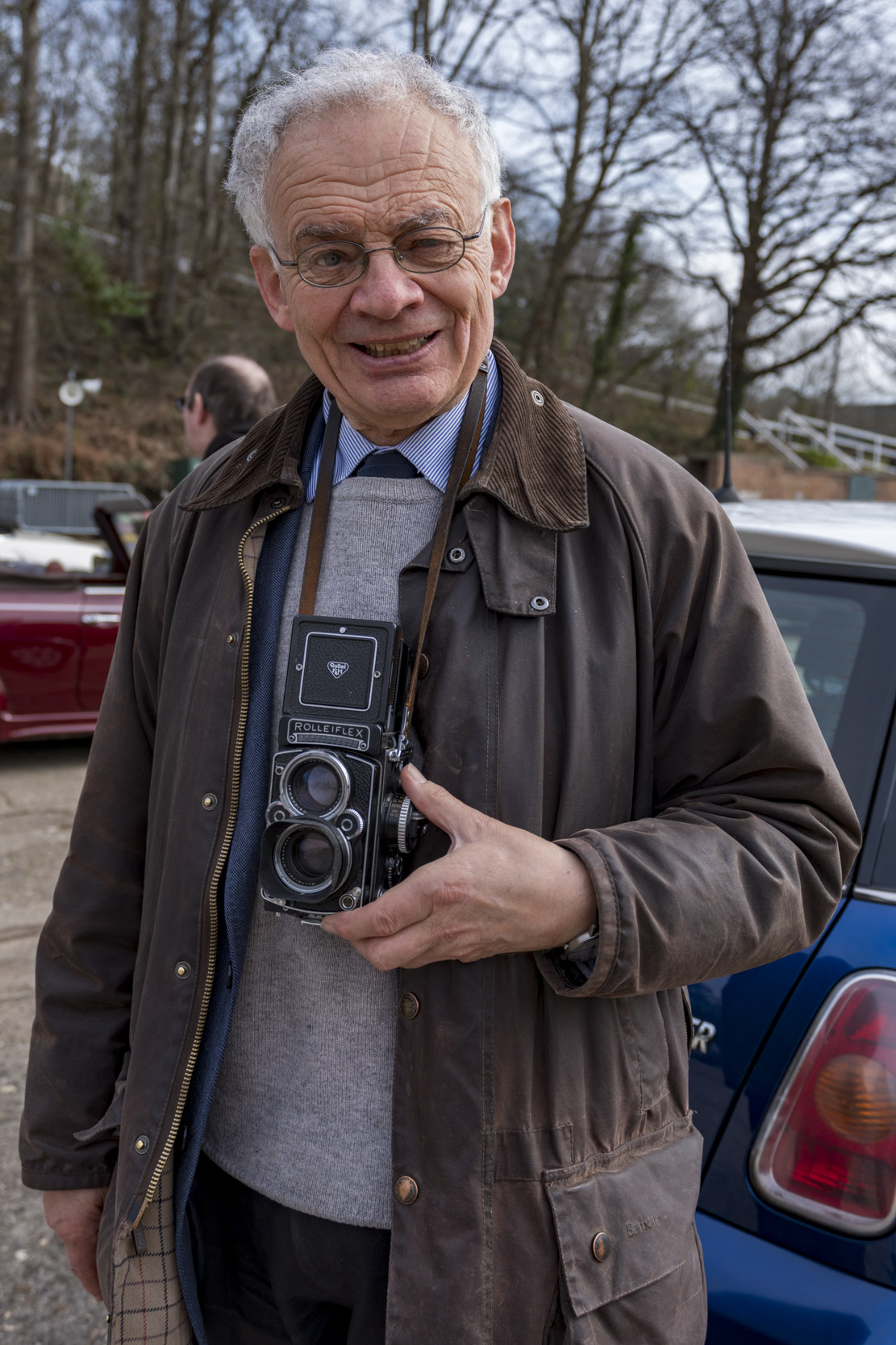
I always take my Ricoh as a reserve whenever I travel. Whether my main camera is a Leica or a Fuji, the Ricoh always finds a little corner of the bag. Jörg-Peter takes his GRIIIx to the mountains or on cycling trips when minimal weight matters. And despite the lack of viewfinder, he likes and actively uses his GRIIIx; see his surprising review of the Ricoh GRIIIx and the historic Rollei 35. It’s a camera that can be slipped into a pocket even when you don’t want to take a camera. So buy one, even if you have a shelf full of alternatives.
The team is now divided
The European half of our editorial team — Jörg-Peter and I — have now adopted Fujifilm as our preferred APS-C brand to supplement our full-frame Leica activities. But our US-based editors, Jon Cheffings and Keith James, have resolved to soldier on with their legacy TL and CL systems. We imagine their view will be shared by many readers. But J-P and I are resolved to move on. And over the coming weeks we will be describing our starter Fuji system.
What’s your view?
Have you given up on APS-C since Leica discontinued the system? Are you plodding on with the CL and lenses until the equipment becomes unserviceable? Or are you, like half the Macfilos team, making a bold move? What’s more, do you agree with our choice of Fujifilm or do you favour another brand?
| Fujifilm X100VI review | Leica v Fujifilm APS-C |
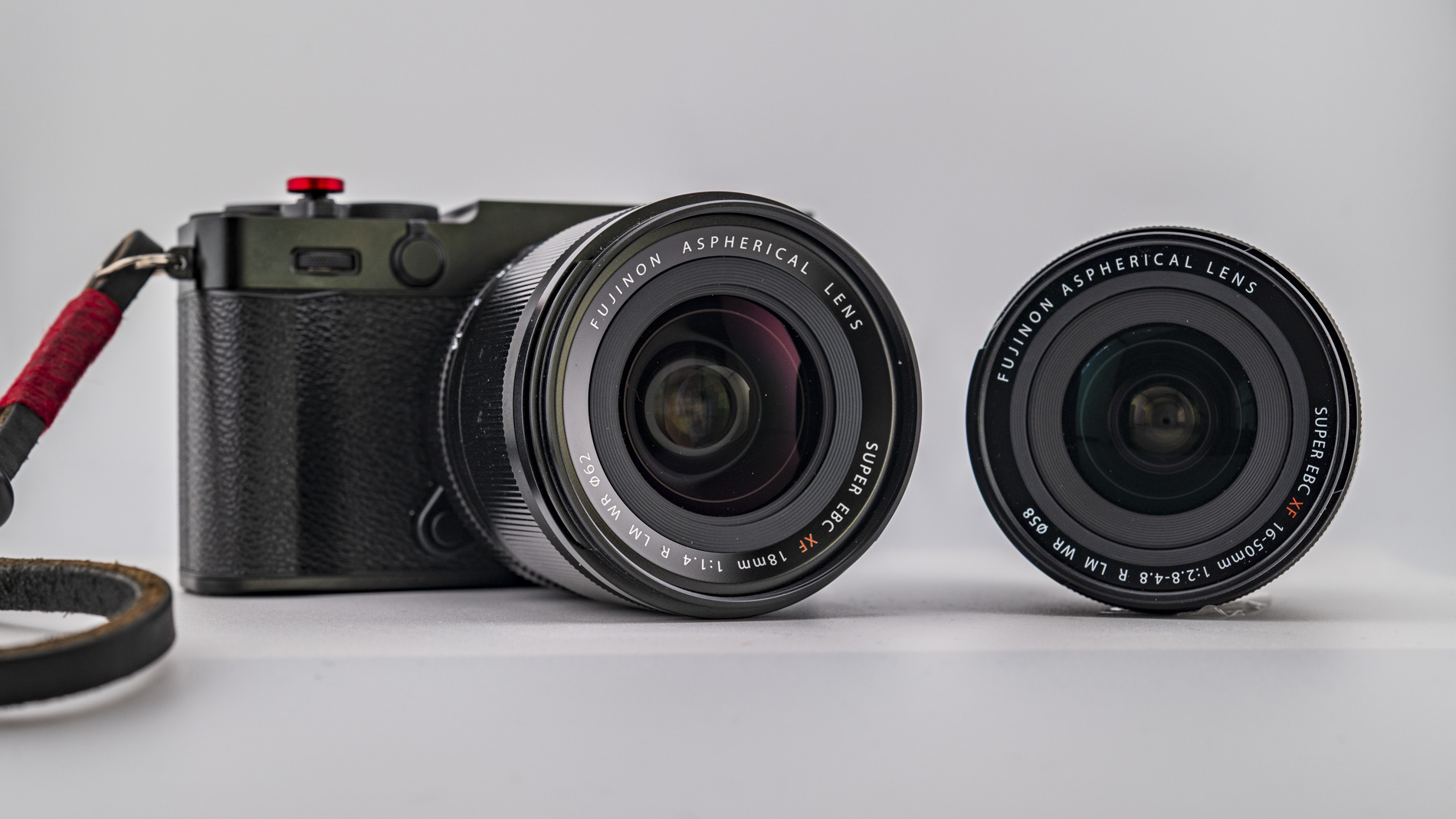
| Why you should visit Camden Lock (Ricoh GR) | Fujinon XF 18mm f/1.4 long-term review |
Make a donation to help with our running costs
Did you know that Macfilos is run by six photography enthusiasts based in the UK, USA and Europe? We cover all the substantial costs of running the site, and we do not carry advertising because it spoils readers’ enjoyment. Any amount, however small, will be appreciated, and we will write to acknowledge your generosity.
I have long admired Fuji both in terms of its products and vitally for me frankly as a more caring company towards its product buyers and users than Leica have been for us for many a long year. Hence though still a devout Leica user I also got involved with Fuji cameras way back in 2012 with the X-Pr0 1 which I loved. Since then numerous other Fuji cameras and lenses have also found their way into the Morley Household and Heart though thus far it has been the X-Pro 2 which has steadfastly remained along incidentally with the original kit zoom, also the superb 55-200 and the equally superb definition 10-24 Wide zoom each of which are at least as good as my T,TL Range of zooms, as yes I have also kept my Leica T alongside the Fuji though long sine got rid of my hated Leica CL. However to get to the point regarding Fuji’s current APSC offerings. I too have tried out the XE5 and likewise loved its small size, but less so its relatively low res viewfinder which is much bettered by the albeit physically larger XT5 cameras, but with my also having very carefully tested the XE5,s 40mp images quality against that of my X-Pro 2, more modest 24mp I have to say that although I like the images from both I do find the 40mp images quite a bit harsher and also a tad more noisy. Not that this factor is necessarily a game changer but it certainly has stopped me from upgrading myself, as has the fact I still rate the X-Pro ranges Hybrid viewfinder system as still being far better to use for me as a spectacle wearer in whatever lighting conditions than any other Mirrorless EVF system I have so far tested or used, so for me for now at least it is a case of roll on the coming of the Fuji X-Pro 4, and this time I will not mind if it offers the 40mp sensor or the old 24mp as in my experience at least, both will still be superb.
Thanks, Don. I find your comments on the optical performance of Fujinon lenses interesting, not to mention your comparison with the Leica TL lenses. I have always agreed with your assessment, but it’s good to get confirmation from an expert.
Whenever I look back, as I often do to the many shots I took all those years back om such as my the Leica Digilux 3 they still please me greatly and in short have stood the test of time, yet its four thirds sensor offered what nowadays seems a very measly 7.5 MP, Importantly however those in modern terms low res images still stand blowing up to such as A3 prints or larger should I desire. Likewise I also had two M8’s from which the image quality in my opinion still rate as being quite stunning, yet its sensor size was only very slightly larger at 27 x 18 than APSC’s 23 x 15.7 and it’s Meggapixel count a mere 10.3. I could go on, but my point here being I remain very dubious about what since has been a marketing rather than a need race for more and more M/Piixels, whereas conversely the true Pro market cameras by such as Canon, Nikon, Sony or Panasonic etc have almost unilateraly stuck with a max between 24 and 33MP.
Frankly I am not impressed either by the oft used arguament in favour of ever more M/Ps for instance being the ability to cropp, to which I would say use your legs or buy a zoom as the the latter are all so good nowadays I see no need anymore to just stick with primes, and I would also argue one of the other biggest downsided with cameras having far more M/Ps than are necessary is the you are also then pushing most lenses and lens or focusing faults beyond reasonable limits,
Personaly I do not enjoy the increased post processing time and computer memory or extra external hard drive demands that come along with such as the 47mp images of such as Leica SL2 and Q2 as opposed to my previous SL and Q and as I also shoot Jpg and DNG simoultaneously I now so often find myself not only deleting more than I perhaps should, but also not bothering to post process the DNG’s
More to the point though to get back to the Fuji debate, although I again still shoot Jpg and Fuji’s equivelent of RAW, I do find the Fuji images require a lot less in terms of post processing time and efforts, AND nowadays even more imporyantly for lazy me. I also find the straaight out of camera jpg’s far better that thos from my Leica’s. And that is a real bonus.
Great article. Welcome to the fold, Mike and Jörg-Peter! As I mentioned my “journey” in a comment the other day I won’t repeat it but suffice to say I am a very happy Fuji user of many years standing and am currently using both an X-E5, with a Ricoh GRIIIx as my “daily carry” (occasionally accompanied by a Minox GT – but that’s another story) Between the two I have cameras that can meet my every need without breaking my back – or my bank balance. I have long held the view that every extra lb of weight in a camera bag equates to a mile off the distance walked in a day so a smaller, lighter but still high quality camera such as the X-E5 is right in my sweet spot.
Do by the way put your focus upon the recipes – On both the Fuji and the Ricoh I shoot raw+jpg which gives me the opportunity to choose whaever look I want after the event. I also am a great fan of both companies’ mobile apps – they are largely on a par in terms of usability and flexibility and make processing on the move a doddle.
Dear Bill,
Thanks for your support and good wishes. Although I now shoot RAW only (there’s an article coming up on that subject), I make extensive use of the Fuji recipes / simulations. On the X-E5, I frequently change the simulation just to have a different look in the EVF. Occasionally, this helps with mood. However, since I don’t shoot JPEGs, I choose the simulations when processing in Lightroom. Fuji’s integration with Lightroom, Capture One (and others, I think) is excellent. I haven’t yet explored the mobile app but it’s on my list of things to do. I must also check out Ricoh’s recipes and mobile apps, as you suggest.
Is it time for you to return to Macfilos and give us the benefit of your experience with Fujifilm over the past ten or twelve years? Reader’s won’t know this, but you were our original outside contributor when I was running Macfilos as a one-man-band in the early Teens and, at the time, I couldn’t have managed without you. I still remember fondly your photo walks in Guildford. Now we are back with Fuji, this could be the time I get involved again… Mike
What an exceptionally informative and well-written article! It almost had me ordering an X-E5 on the spot and line up for an X-Pro 4. Except for a teeny weeny detail– there seems to exist no adapter for my L-mount TL lenses on a Fujifilm body, is the reason optics? Licensing? Am really curious
Thanks for your comment, Robert.
I’ve also thought about this, and I even checked to see if third party suppliers were producing one. My impression (but I could be wrong) is that the L Mount is just too big.
We have M-Mount adapters for all larger mounts, but there must be a technical reason why a larger mount cannot be stepped down. Perhaps someone would like to provide more details.
The case for Fujifilm is well made, but like many have said, it is the TL lenses that keep me from swapping APS-C systems and ditching my TL2 and CL. The rendering of the Summilux 35mm is gorgeous, and the 55-135mm is not far behind. The quality of the 11-23mm is excellent and the 60mm fantastic for 1:1 macros and portraits. I get a range from ca 16-200mm FFE at modest weight and if I want something pocketable I pop the 18mm pancake on the TL2 (and the 23mm for bigger pockets!). Together with a Q3 for FF and an M7 for film the set covers most bases.
Keith,
I do understand your commitment to the TL system. I felt like that up to and some time after Leica’s decision. However, I am sure that we (as a photography) blog have to move on. We can’t live in the past.
On the good side from your point of view, there will be no shortage of TL-oriented coverage if Keith and Jon have anything to do with it.
Thanks again for commenting.
Mike,
This is well thought out and nicely written! It resonates with me and I am a Fujifilm fanboy for sure.
As a full time pro, I was definitely in a small minority, especially ten plus years ago, when I started using Fujifilm gear. I certainly got some raised eyebrows and puzzlement from other pros back then. I of course, have always had full frame systems alongside. Fujifilm’s optics are stellar and the cameras have gotten better, with more pros using them now.
I am on the fence about the X-E5 which I tried briefly, and may revisit, but returned. I found the small controls a little too fiddly and not as intuitive as my X-T5 bodies and I’m willing to take on the slightly greater weight and bulk. I find the X-T5 a nice complement to my M and Q cameras.
Another comparison I think about: My X-T5 bodies are nowhere near the size and weight of a Leica SL2 or SL3 and full frame lenses, while being more analog, which I really enjoy. In spite of it being APS-C, so far, it has kept me from pulling the trigger on a Leica SL3.
I will note the 23mm “kit” lens for the X-E5 is fabulous. It is a better performer than the 27mm, already an excellent lens, which I originally had with an X-E4. I do love my X-T5 bodies, one of which I had modified for infrared.
When I got my first X-Pro 2 bodies in 2016, I started a series on my blog which I called X-Pro tour. My articles followed my photo shoots on location with details about how and why I used particular Fuji film simulations, OVF (optical viewfinder) versus EVF as well as how I approached various types of subjects using Fujifilm.
I was and still am enthusiastic about Fujifilm. At times an evangelist. Over the years I have written 16 Fujifilm specific articles and more than that if I include non-technical stories, travel, and software related to Fuji’s film profiles.
If only I had known about MacFilos sooner!!
Thanks for this article and bringing attention to a great system that really complements Leica 🙂
Dear Joel,
It was good to meet you in London, and I am delighted to receive your endorsement of our Fuji choice.
I can understand your views about the X-E5. I think both J-P and I were bowled over by its cuteness and “mini-pro” feel. But I do have my eye on a X-T5. I would probably have bought one to add to the system before now, but I decided to spend as much time as possible with the X-E5 and keep an eye on the launch of the X-T6, which I will definitely acquire. It could be coming soon, I hear.
Anyway, thank you again for your support. I hope our readers will be hearing more from you on the Fuji topic.
Mike
Thanks. I also very much enjoyed meeting you in London. It was an excellent event.
I can’t deny the mini-pro feel and cute-factor of the X-E5. I too may acquire the X-T6. I’ll have to see if I feel it’s a significant enough upgrade from the X-T5.
In any case, readers will undoubtedly hear more from me about Fujifilm. I am thrilled that Macfilos is open to this.
All best,
Joel
My original motivation of moving from the Sony APS-C E mount system to the Leica TL was based on the quality of the lenses available, rather than the camera bodies. It was clear that the Sony bodies were far more advanced than the Leica T/TL in terms of auto-focus etc, but Sony seemed not to be developing any high-end quality lenses once they had launched the Sony A7 line of full frame cameras. I still use my TL lenses on an SL3 body, in particular the 11-23mm and 55-135mm lenses as great lightweight travel options. I have been impressed with the quality of the Fuji lenses I have tried on my daughter’s X-S20, so I am more interested in your assessment and choice of lenses rather than bodies.
We have a couple of articles coming up —both concentrating on lens choice. Jörg-Peter and I have both written “building Fuji systems” which should help.
An excellent article and full marks for arguing cogently and with good objective reasoning for a Fujifilm choice on a site that is Leica-centric. Interesting too that you could put up such a convincing case without mentioning one of Fujifilm’s USPs: namely its application of many years’ film-manufacturing expertise to produce a convincing range of film looks in camera. I know not everyone has the ability, time or patience to work with raw files and for them—and I add myself to that group—your winning choices in this APS-C field have Fujifilm’s colour expertise as an added bonus to minimize if not entirely negate the need for subsequent processing.
Thomas, thank you for your kind words. You are right about the simulations and they are part of the argument. Maybe they should have been mentioned in this article, but we have at least three Fuji articles in the stocks and the simulations will be given full credit. I did cover them in my tests if the X100VI and GFX100RF.
Dear Mike,
Quite so — and I think actually your article was all the stronger for leaving the raw / simulations / recipes topic for another time! I did read and enjoy your X100VI and GFX100RF articles.
Incidentally, I wonder if Fujifilm will reintroduce a rangefinder-style GFX MF-sensor camera with interchangeable lenses to solve the wish to shoot full body portraits with a diffused background. But that’s straying off topic – no need at all for a reply!
A happy TL2 user here. The haptics of this camera are just wonderful and the image quality from the Elmarit 18 and Summarit 23mm lenses is exceptional. To frame a shot, I use tiny 28mm and 35mm optical viewfinders respectively, the latter purchased originally to accompany an X2. With settings already selected for the light, and focus spot in the centre, the optical viewfinder gives a large, bright, uncluttered image with unsurpassed resolution!
Your article makes a good point that Full Frame is not the only god to worship and, APS-C can deliver exceptionally good image quality. In pursuit of something even less bulky and lighter than my Q3, I recently gave into the hype and bought a Ricoh GR iv, and I have been very pleasantly surprised by the image quality.
I wonder to what extent your article series might have been intended as a ‘wake-up’ call to Leica?
Let’s hope they’re listing!
Many thanks Andrew. The image quality from the Ricoh is so good, and this camera is a sensible alternative to the X100VI if you want a pocket camera. Couldn’t agree more, although I haven’t yet tried the IV.
As for Leica and APS-C, the horse has gone, stable door shut and firmly bolted. One senior executive explained to me that Leica is a still a small company (relative to Fuji, Nikon and others) and has limited resources for development. They simply felt that three main product lines, M, Q and SL, are enough to handle.
It’s significant that our move back to Fuji comes three years after the CL ceased, so we’ve waited long enough for a change of heart. In answer to your question, Leica is listening but is not planning to do anything about it.
Minor correction: Fujifilm uses Sony sensors, just like everybody else (except Canon). X-Trans is not a sensor type, it’s just a colour filter array. For the X System cameras, Fuji replaces the traditional Bayer filter array with their own proprietary “X-Trans” array. It does nothing meaningful, but Fujifilm loves talking about it. Cheers.
Thanks for this. We will verify and, if necessary, amend the sentence.
It is a good decision to use a developed system parallel to a dying system. I like the arguments in this article for the new system because you use photographic arguments between design and quality. The photograpic world has grown in digital times.
I think this article is important because he shows the transition from old to new in a good way. You show that it is not the brand, but qualities that count. And the combination of retro and new is more than the sum of all parts. It is a good time for photography.
Strange conclusion while a compact FF L-mount camera allows to use TL lenses in crop mode. Old Fuji user speaking.
It is certainly an option if you own the lenses. My colleague Keith James does just that. But the conclusion is based on the search for a living APS-C system and is why Fuji was chosen.
I believe most mainstream photography (only) enthusiasts are not entirely convinced yet by the quirky Sigma cameras and the Panasonic S9. As to why Leica is not making a compact L-mount camera… that is and remains a very valid question… We obviously all know the answer… something Steve Jobs would disagree with…
A brilliant article! I loved the Fujifilm X100VI but recently sold it as well as my total camera systems for the exquisite Fujifilm GFX100RF. I am a happy photographer! I am loving a simpler adventure in photography.
I guess I don’t agree with discounting Pentax APS-C, for a couple reasons: one, an SLR viewfinder is a nice thing to have, and Leica users might appreciate it (not Leica APS-C users, I understand that). I personally much prefer looking at the real world to looking at a tiny screen, but, to each their own. Two, the APS-C Pentax lens lineup contains some really compelling and small lenses, the DA Limited line, which are metal and exceptionally well-made. There’s a native monochrome camera, too.
In the end, I get it, people like mirrorless cameras. DSLRs “feel” old in our minds, but I wonder if they don’t provide a better experience than many mirrorless cameras in terms of pure photography.
Thanks, Andrew. That’s a valid view and thanks for joining in. Let’s see what other readers think.
Ha! I just bought my wife an XE-5 to replace her older XT-20. Of course she won’t be using it that much so I’ll have to borrow it.
Good article, well written, with a well-worked out conclusion.