
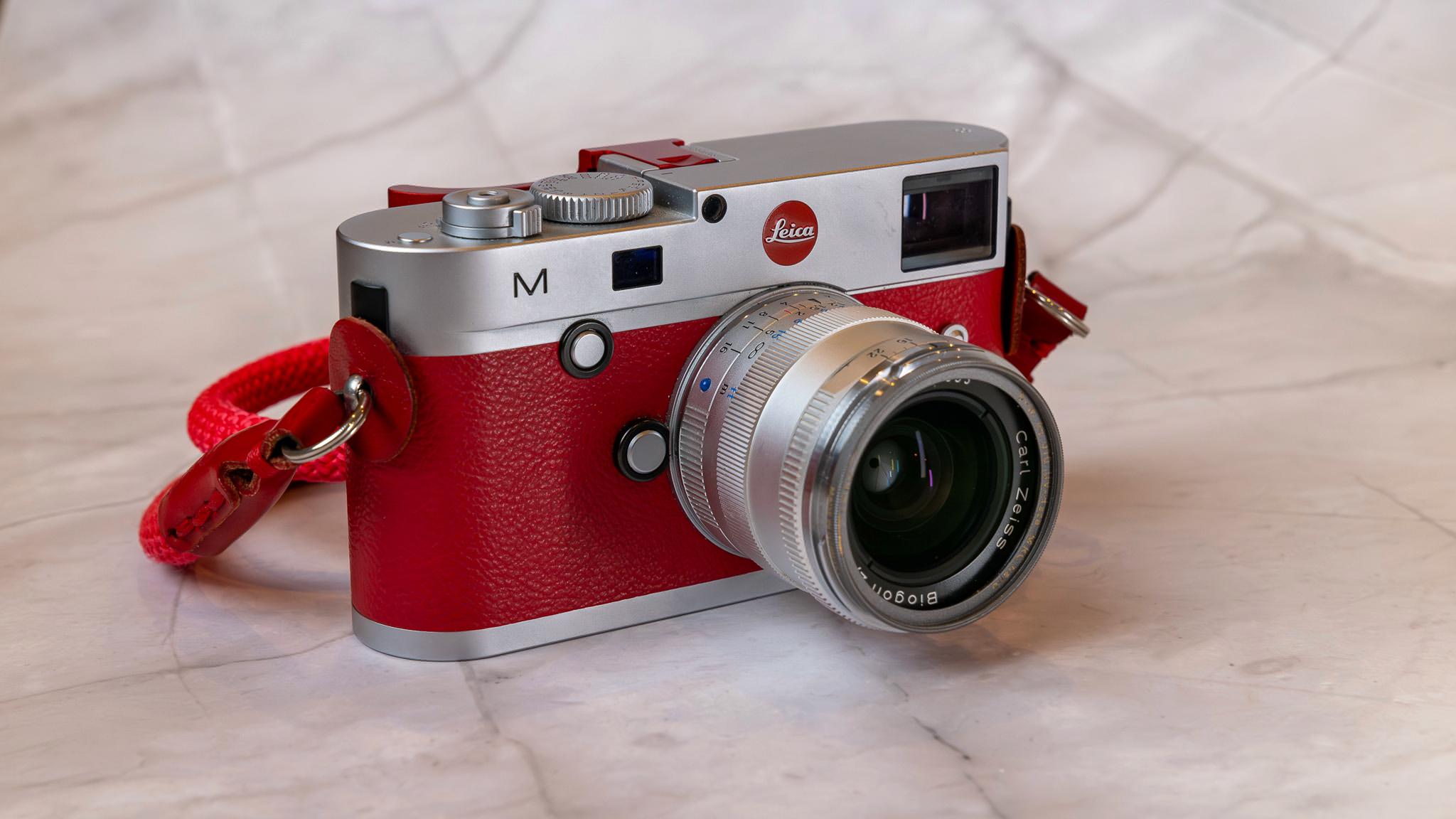
If you want to travel light on your hikes, while capturing magnificent views with your rangefinder, a 25mm focal length represents a versatile, one-lens option. The Zeiss Biogon 25/2.8 ZM is a superb candidate for the job. It is sharp, relatively compact, and a perfect companion for your Leica M rangefinder.
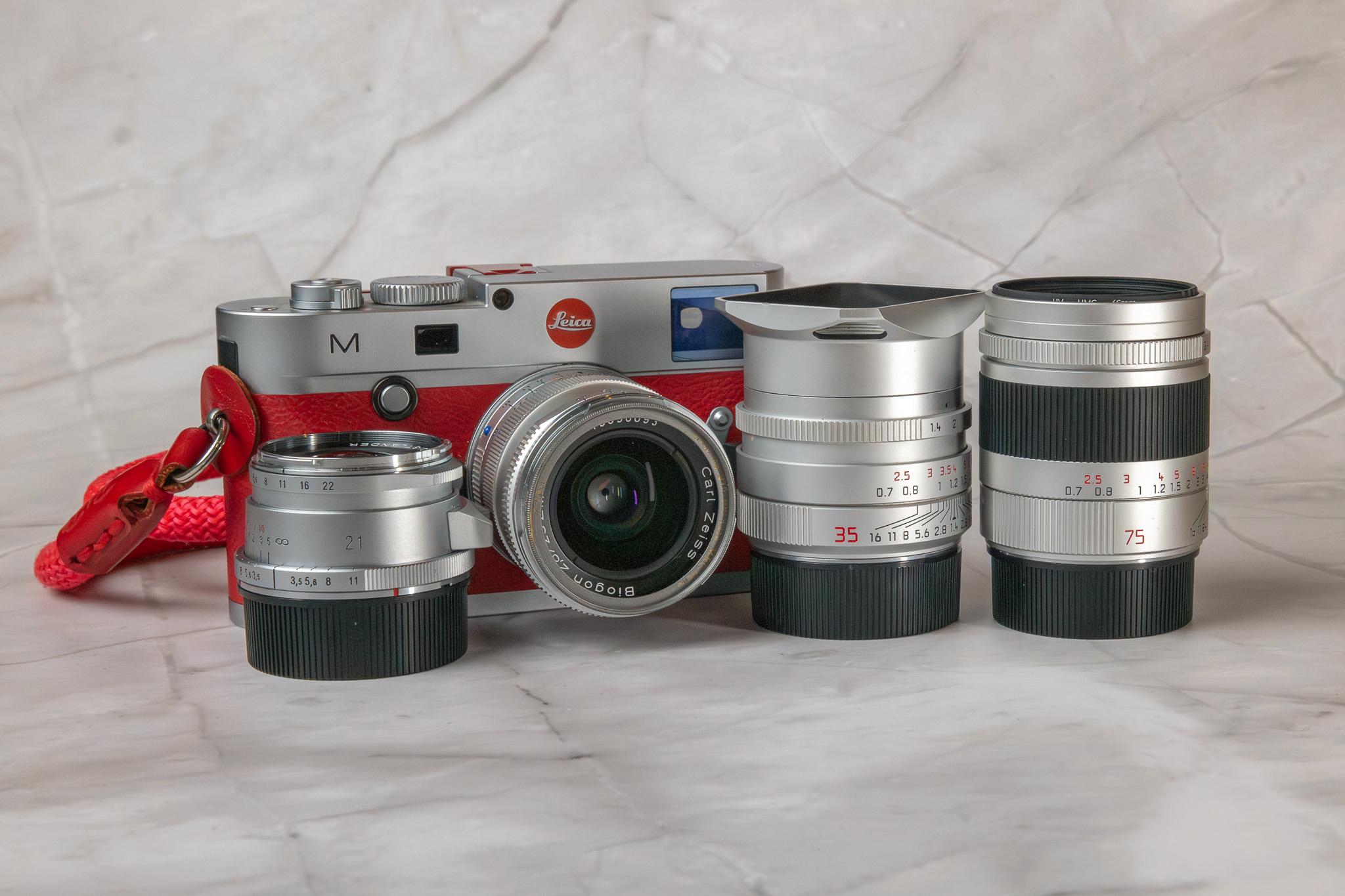
When I took the plunge and bought my rangefinder, a Leica M240, I paired it with a Leica Summilux 35mm, giving me a one-lens, everyday kit. Macfilos colleagues knowingly assured me that I would, in due course, want to add more M lenses to my collection. They were correct.
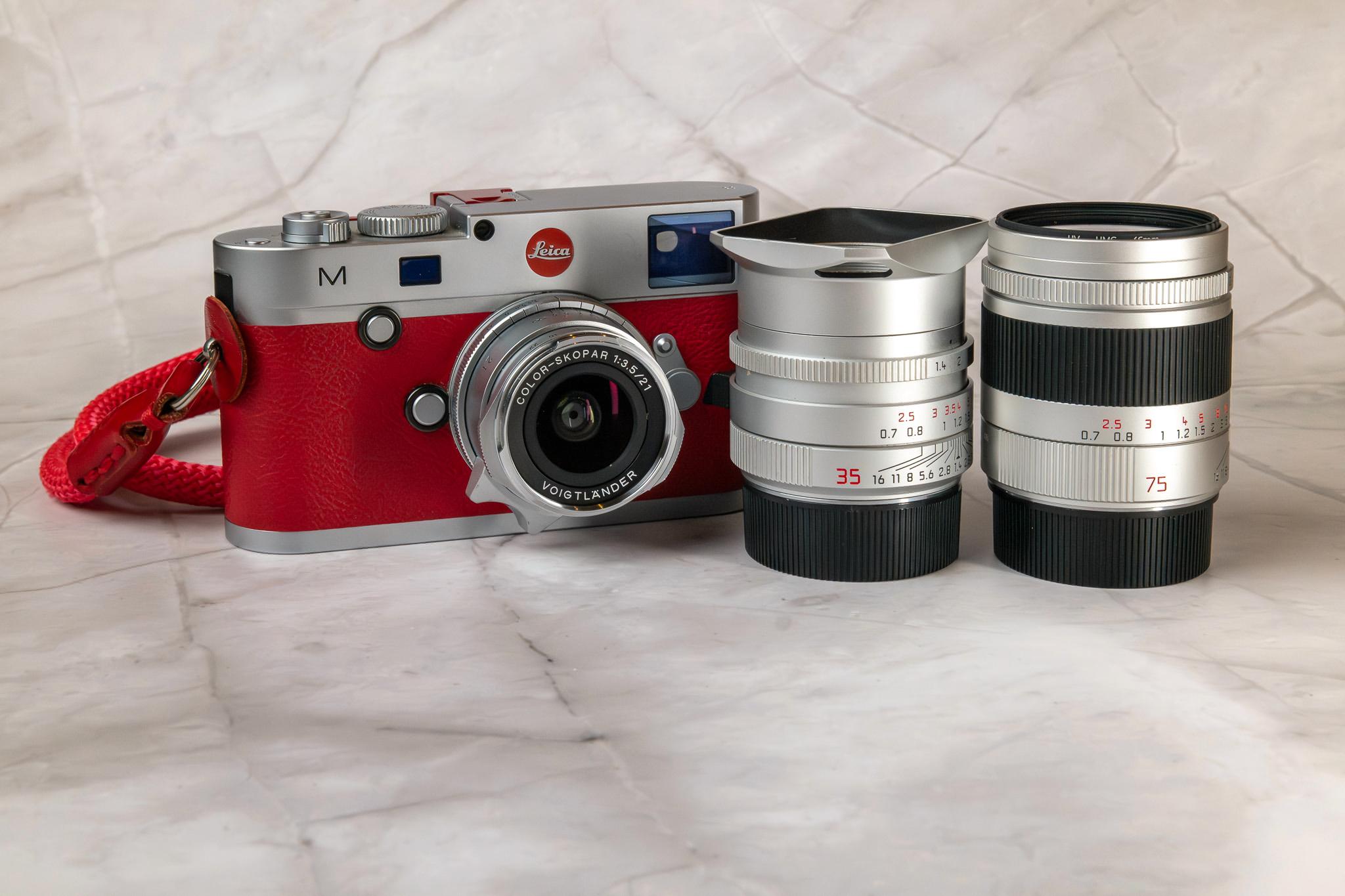
Next came a Leica Summarit 75mm f/2.4, and then a Voigtländer Color Skopar 21mm f/3.5. Both are terrific. I took this three-lens kit on a trip to the Monterey Peninsula a few years ago, and had a great time. Surely, my M-lens collection was now complete?
Just one more…
Not quite. I hankered after a 24mm M-Mount lens. And why might that be? I have access to this focal length on my SL2, courtesy of several zoom lenses, and thoroughly enjoy its field-of-view. Additionally, numerous street photographers, whom I admire, also exploit this focal length to great effect. It falls nicely between 28mm and 21mm.
However, I could not find a used Leica 24mm Elmarit f/2.8 in silver finish, at a reasonable price. That silver finish is a key requirement, to match the aesthetics of my red-leather clad, silver-finish M240.
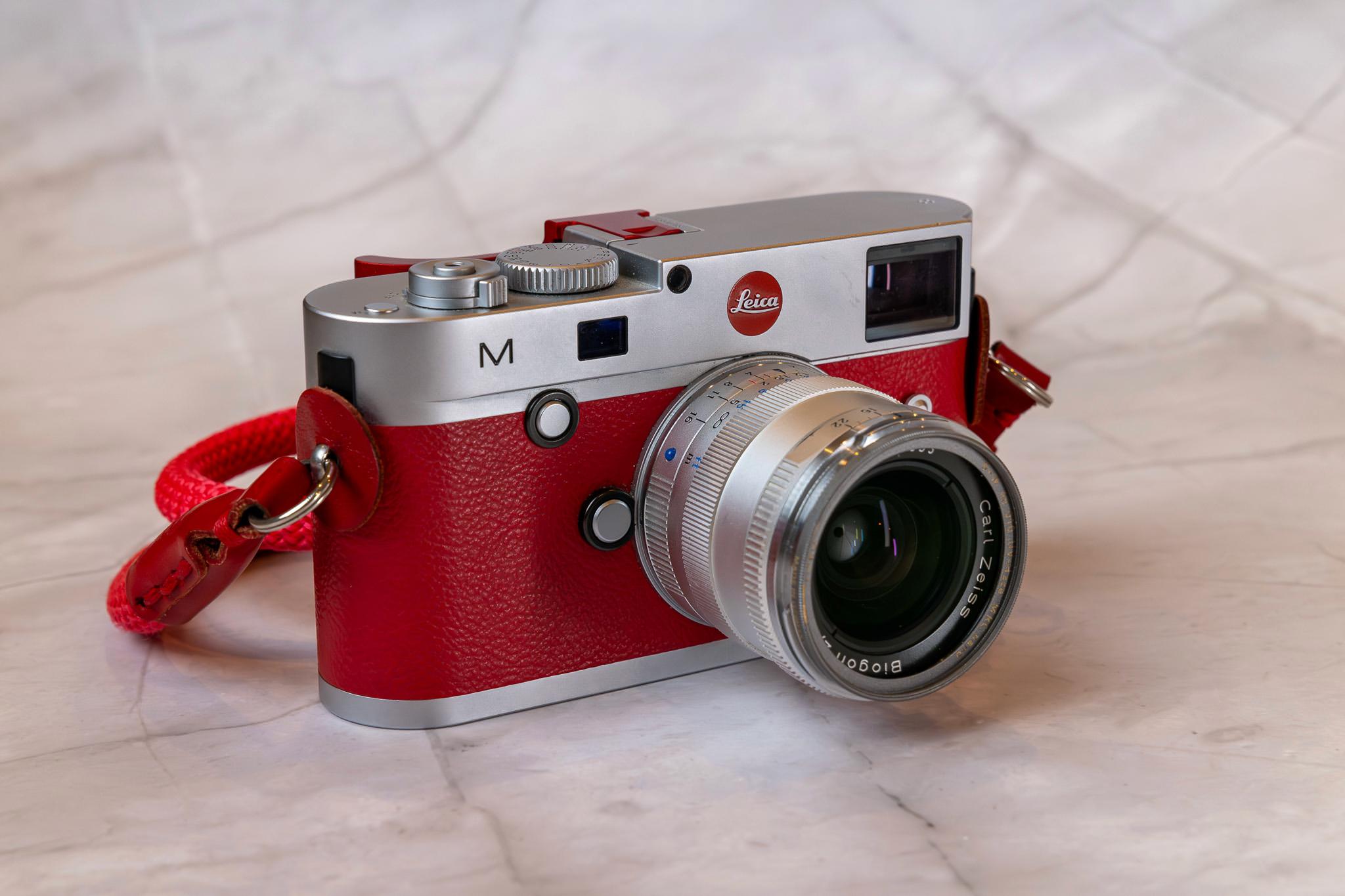
So, when I came across a used, silver Zeiss Biogon 25/2.8 ZM, in excellent condition, it seemed a very attractive alternative. After reading various glowing reviews, I bought it.
An unusual focal length
It has an 82-degree field of view, compared to the 84-degree view of a 24mm Leica Elmarit — almost identical.
The 25mm focal length is quite uncommon, as pointed out by Jörg-Peter Rau in his review of this lens in part 5 of his M-Files series. In fact, it is something of a Zeiss speciality.
I tried out the lens on a few photo-walks, but had been hoping for an opportunity to really get to know it. So, when plans came together for a family hiking trip to Arizona, I decided to take my rangefinder with just the Zeiss Biogon 25/2.8 ZM. Having only this lens with me would guarantee its use, wouldn’t it?
In addition, I was sure that a 25mm focal length would work well for the landscape photography I had in mind.
The Zeiss Biogon 25/2.8 ZM in Sedona
Our first stop was Sedona, a very popular hiking destination about ninety-minutes drive north of Phoenix. Sitting at 4,350 ft (1,326m) above sea-level, this location is considered by climate experts to be “high-desert”, with a semi-arid, seasonal climate. Visitors to the area can enjoy its iconic red rocks, interspersed with chaparral and forested areas.
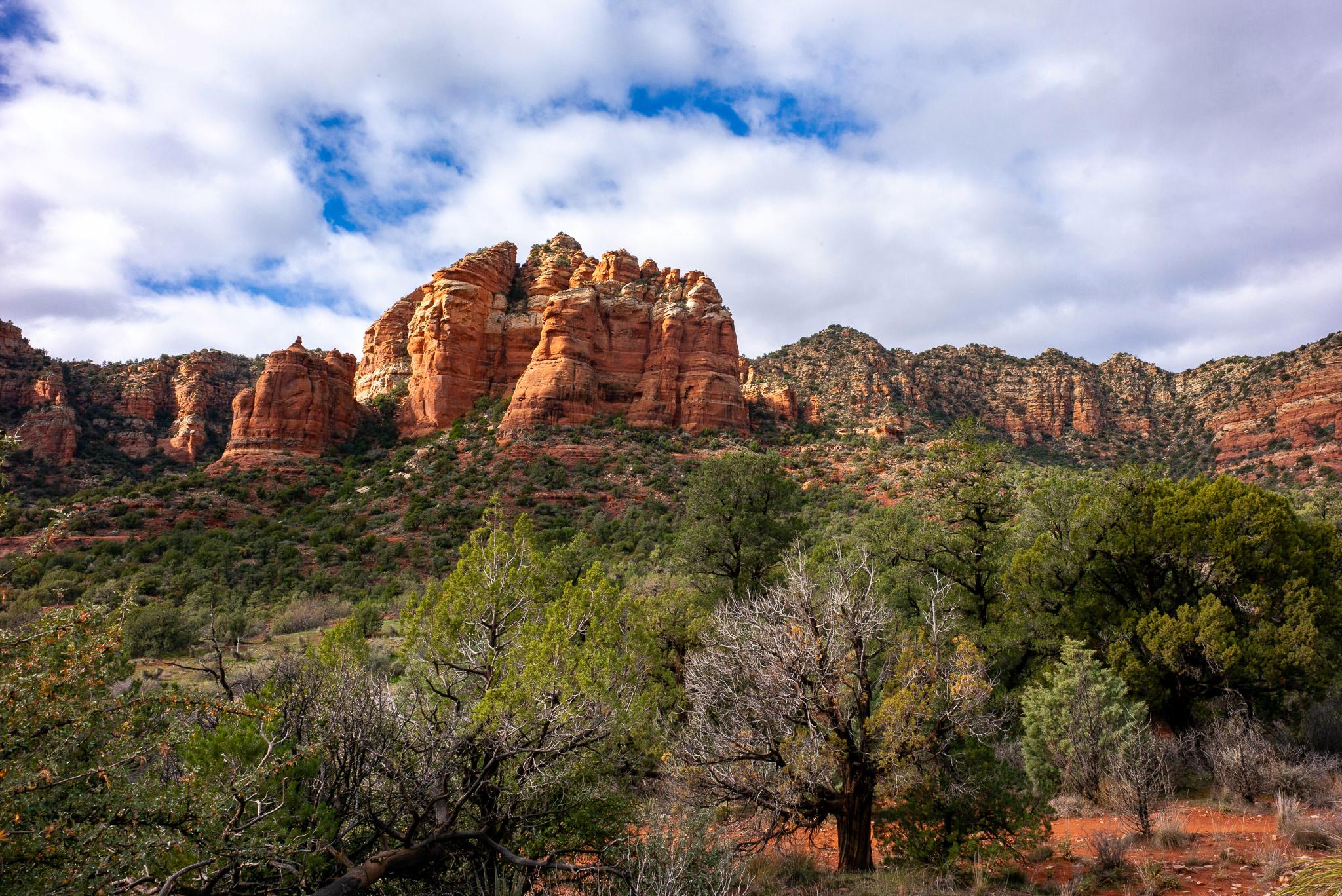
Bright red buttes dominate the landscape — enormous, steep, outcrops of rock, typically possessing a flat top. They are found widely in the southwestern United States. Together with the surrounding deep-green forested areas, they make for a striking landscape.
A storm had recently passed, so some trails were a bit muddy, and low clouds continued to swirl around. However, we did not encounter any rain. It was my first time using hiking poles, and they were a revelation. It took a few hours to master their use, but having experienced their benefits, especially going downhill on loose rocks, there is no going back to pole-free hiking.
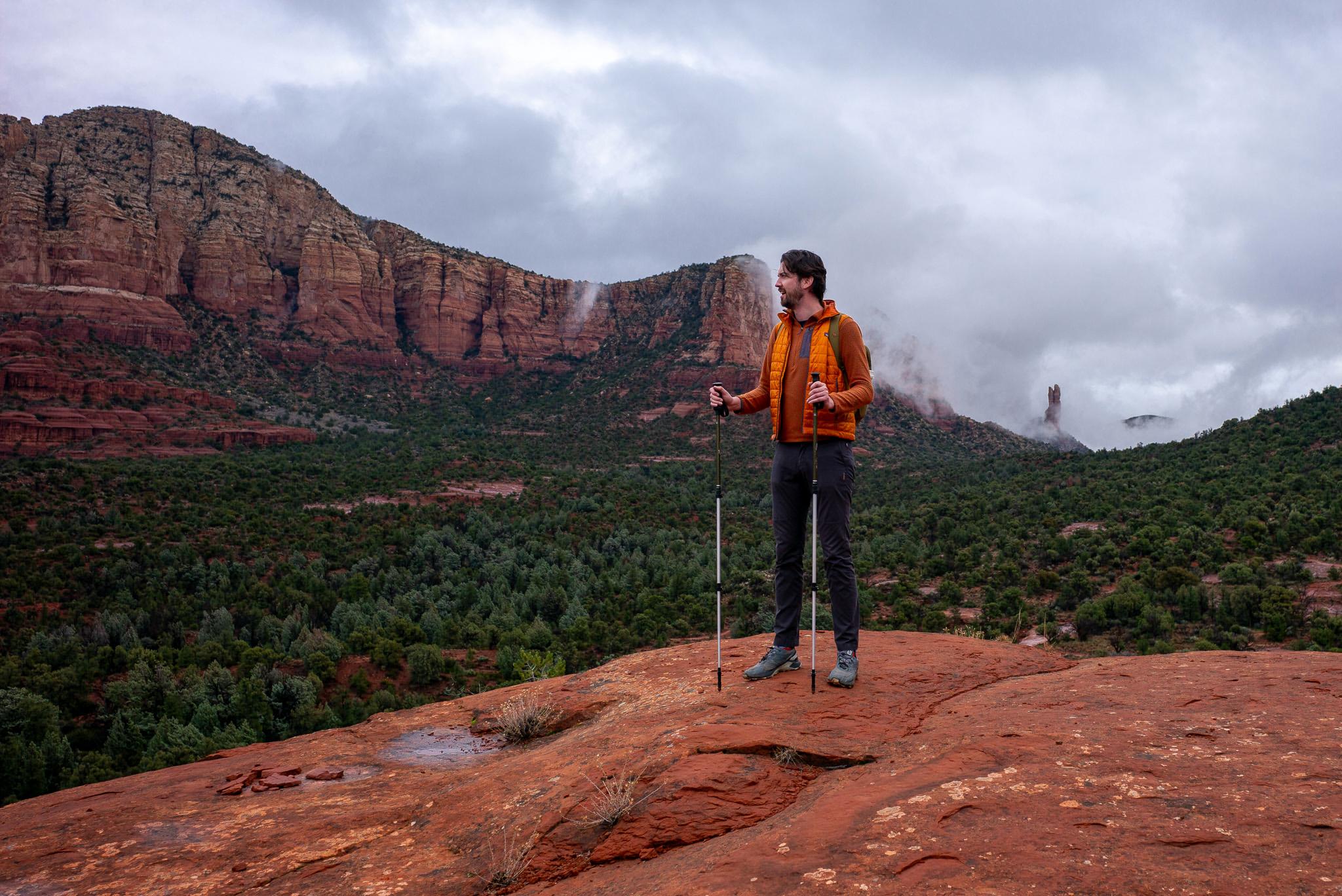
I kept my camera tucked safely in a small Billingham bag during the hikes. It saw the light of day only when I encountered a scene I wanted to photograph.
Aperture antics
On our cloudy, first-day’s hikes, I shot mostly at f/5.6 to f/11, depending on how much depth-of-field I was after. On subsequent days, in bright sunlight, I shot at f/16 to f/22, since I forgot my three-stop ND filter. The maximum 1/4000s shutter speed on the M240 is undoubtedly a limitation in my part of the world.
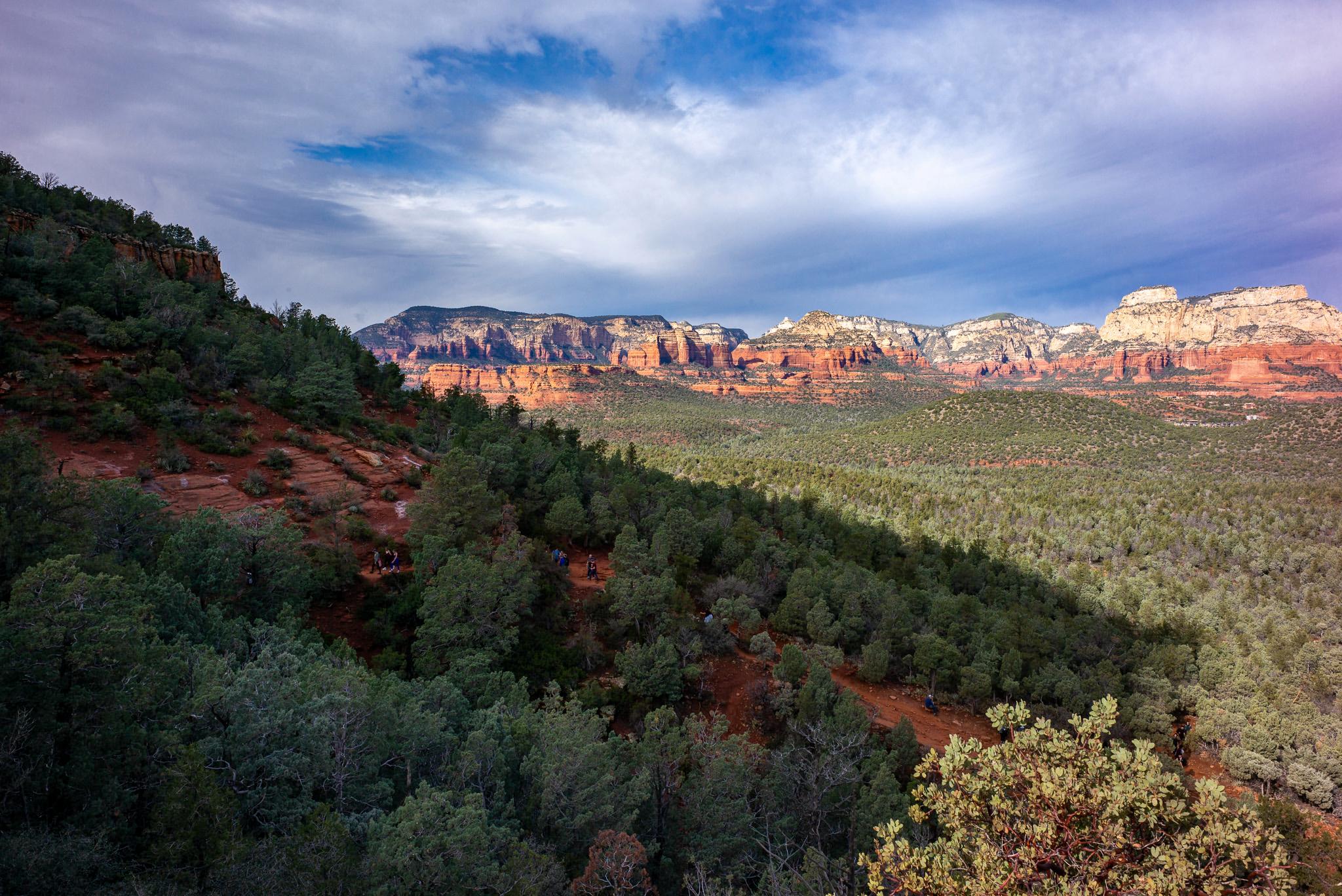
Although the Zeiss Biogon 25/2.8 offers a moderately fast aperture, I did not take any wide-open shots on this trip. Additionally, there are no frame-lines for a 25mm lens in the rangefinder’s optical viewfinder. I guessed how the composition would look, using my left eye to survey the scene while my right eye peered through the rangefinder window.
Occasionally, where accurate framing was important, I relented and used Live View, after first focusing with the rangefinder.
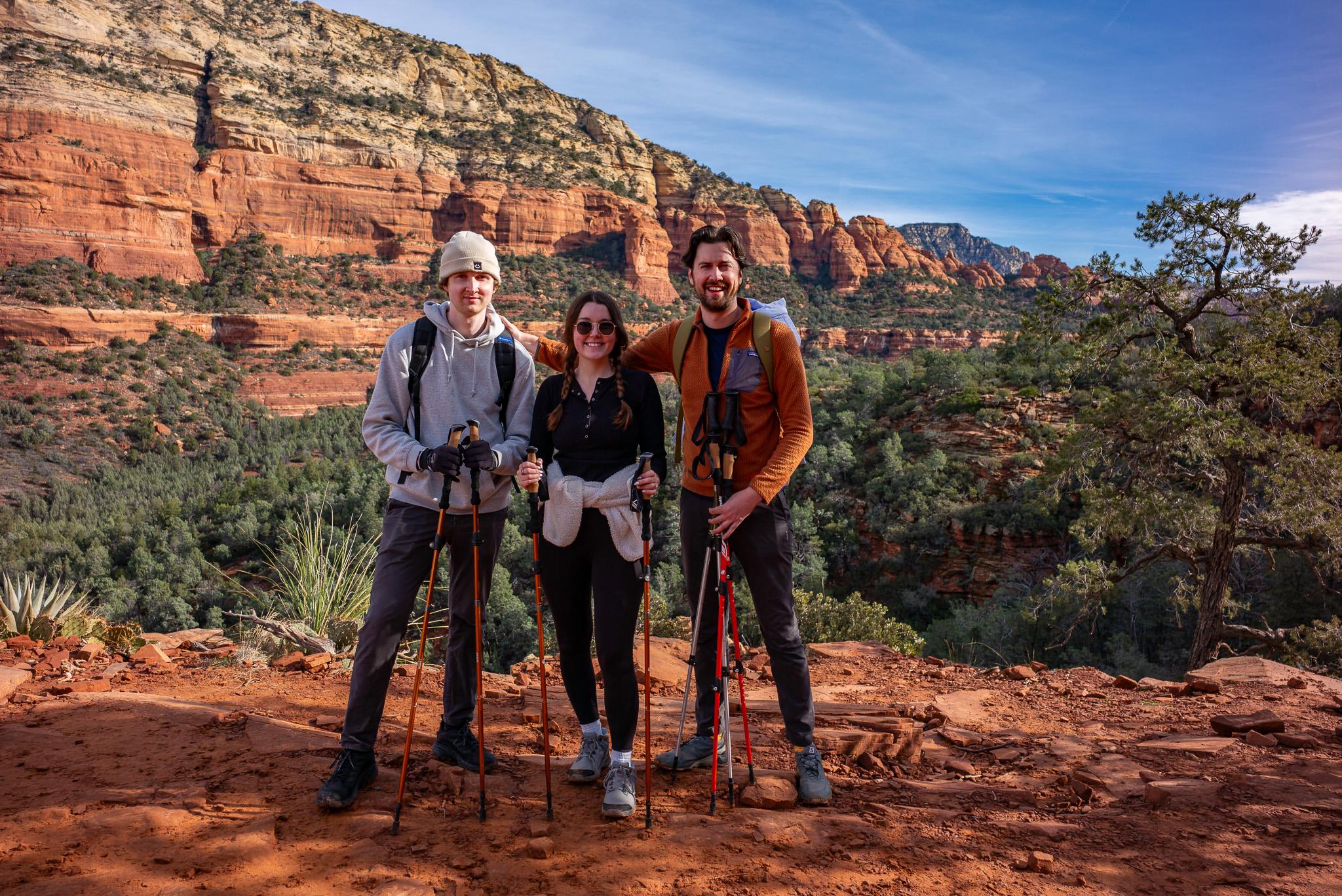
We put in about ten miles of hiking that first day, mostly over level, albeit rocky, terrain.
Devil’s Bridge Trail
The highlight of our second day’s hiking was completing a trail to a natural arch called The Devil’s Bridge. The final section of this route involved a couple of very steep sections, where I was searching for handholds on the rock face. Because of the slow progress we and others were making, it became rather busy.
When we eventually reached the end of the trail, we were greeted by a large crowd. Everyone was awaiting their opportunity to walk out onto the natural arch, to be photographed by companions who would supply that highly instagrammable image.
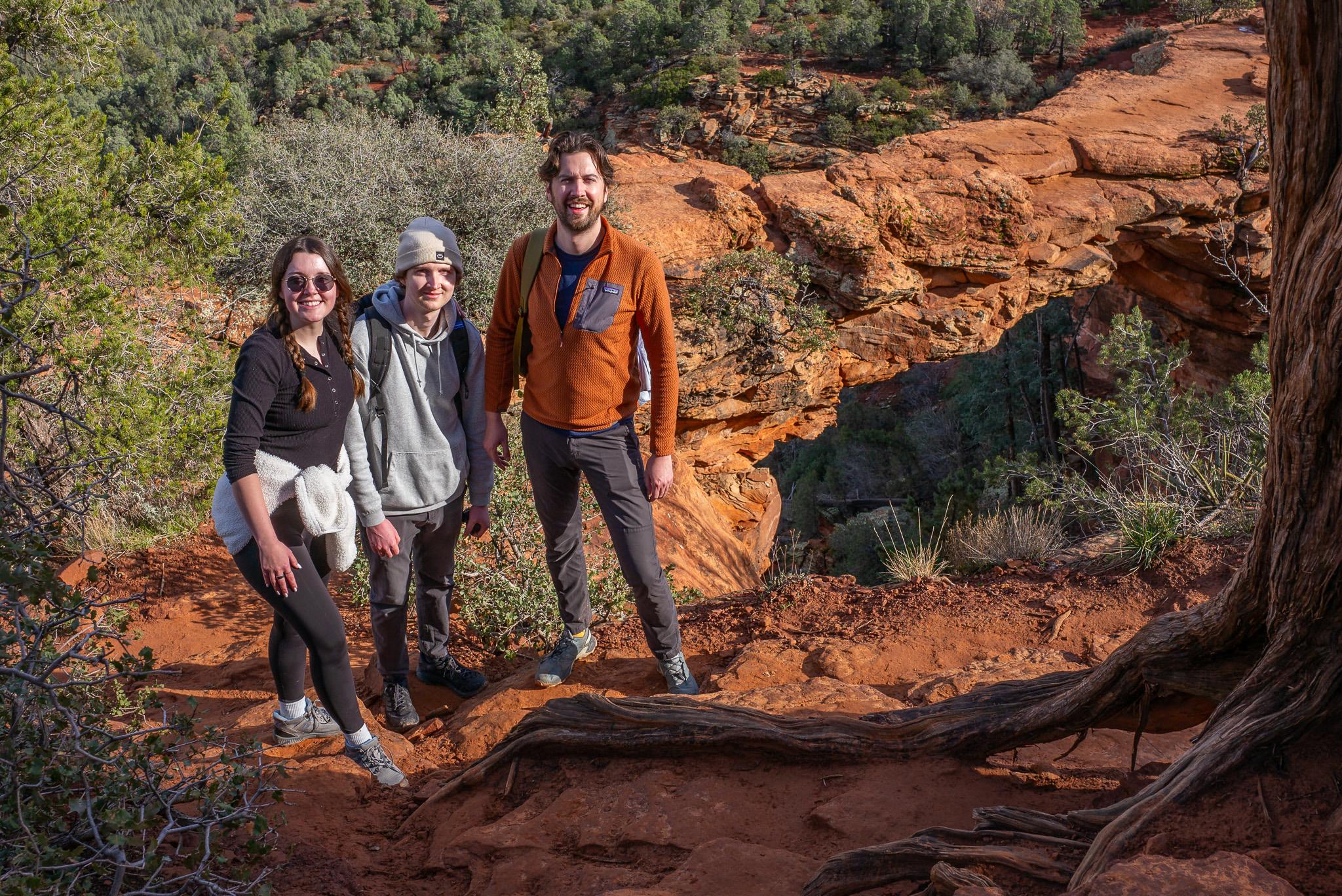
I was accompanied on the trip by my three adult children, So, I took a shot of them with the arch in the background, after which we forewent the wait and headed back down the trail. You can see the arch to the right of the picture, the forest visible below.
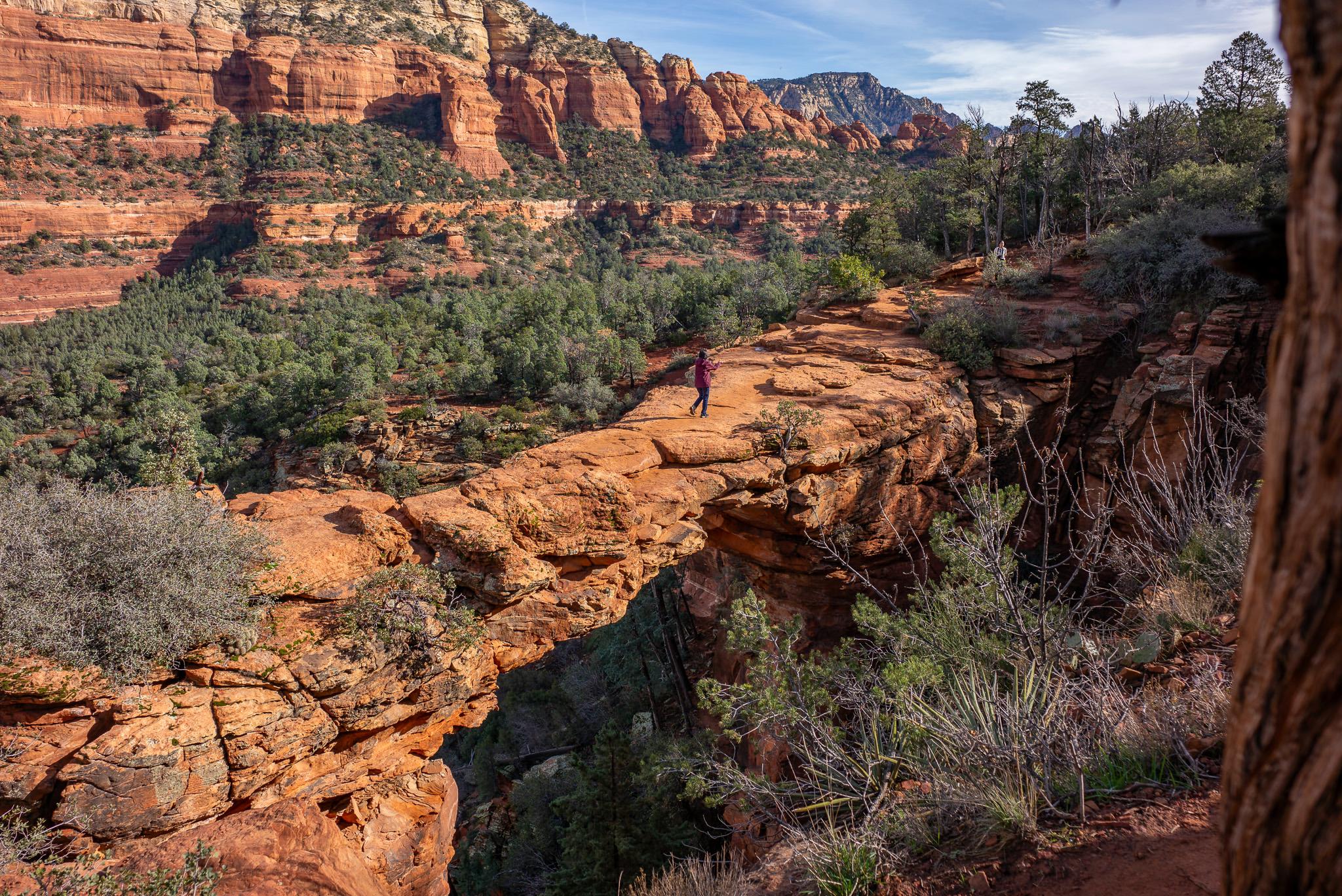
I also took a shot of someone standing on the arch so you can get a sense of its scale. I have not tampered with the saturation of the image — the rock really is that deep terracotta colour. Hopefully, these two images demonstrate how incredibly sharp this lens is.
Sonoran Desert flora
The final leg of our trip was more of a gentle stroll than a hike. After dropping one family member off at Phoenix Sky Harbor airport, the rest of us headed to the Phoenix Desert Botanical Garden.
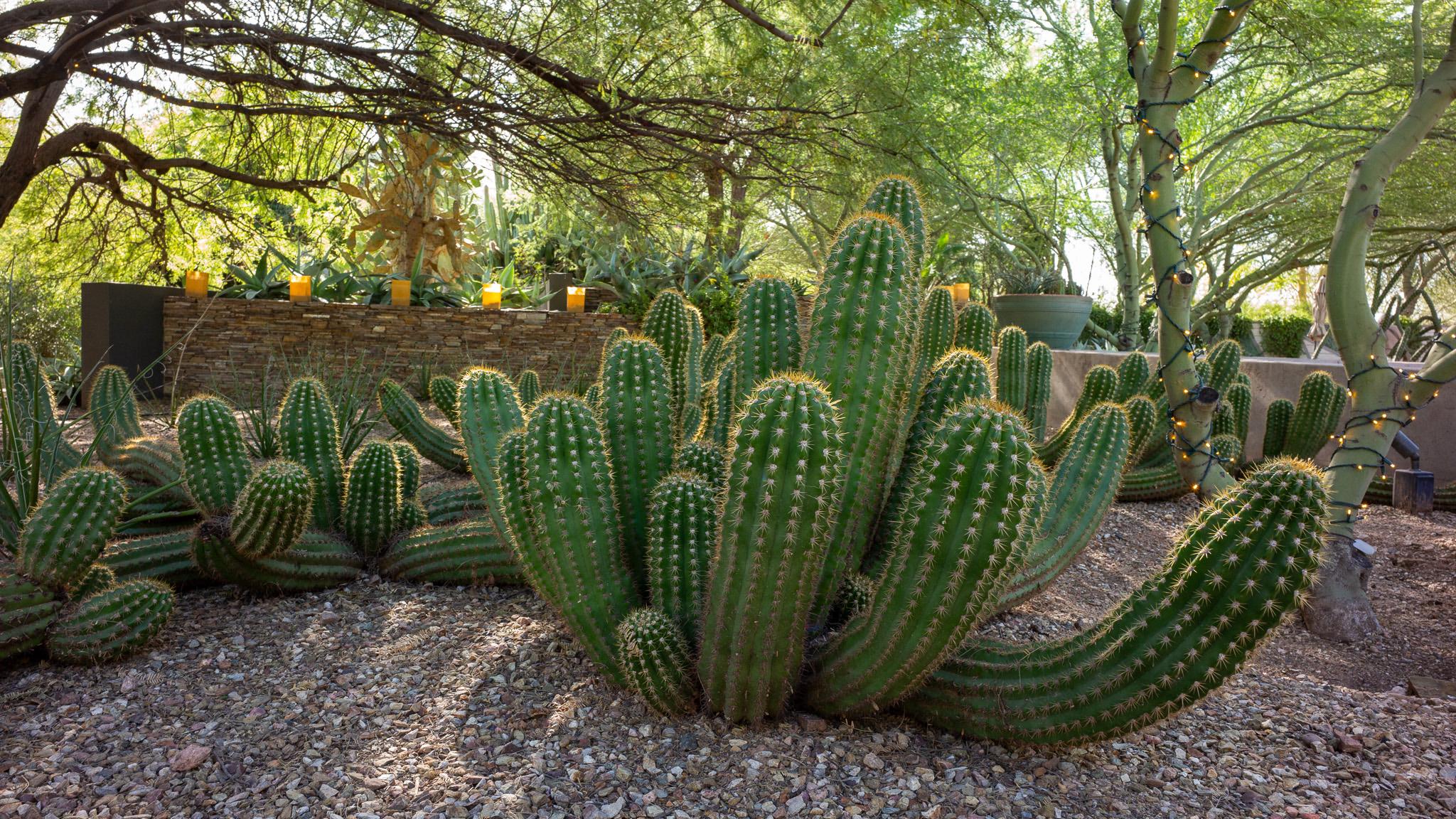
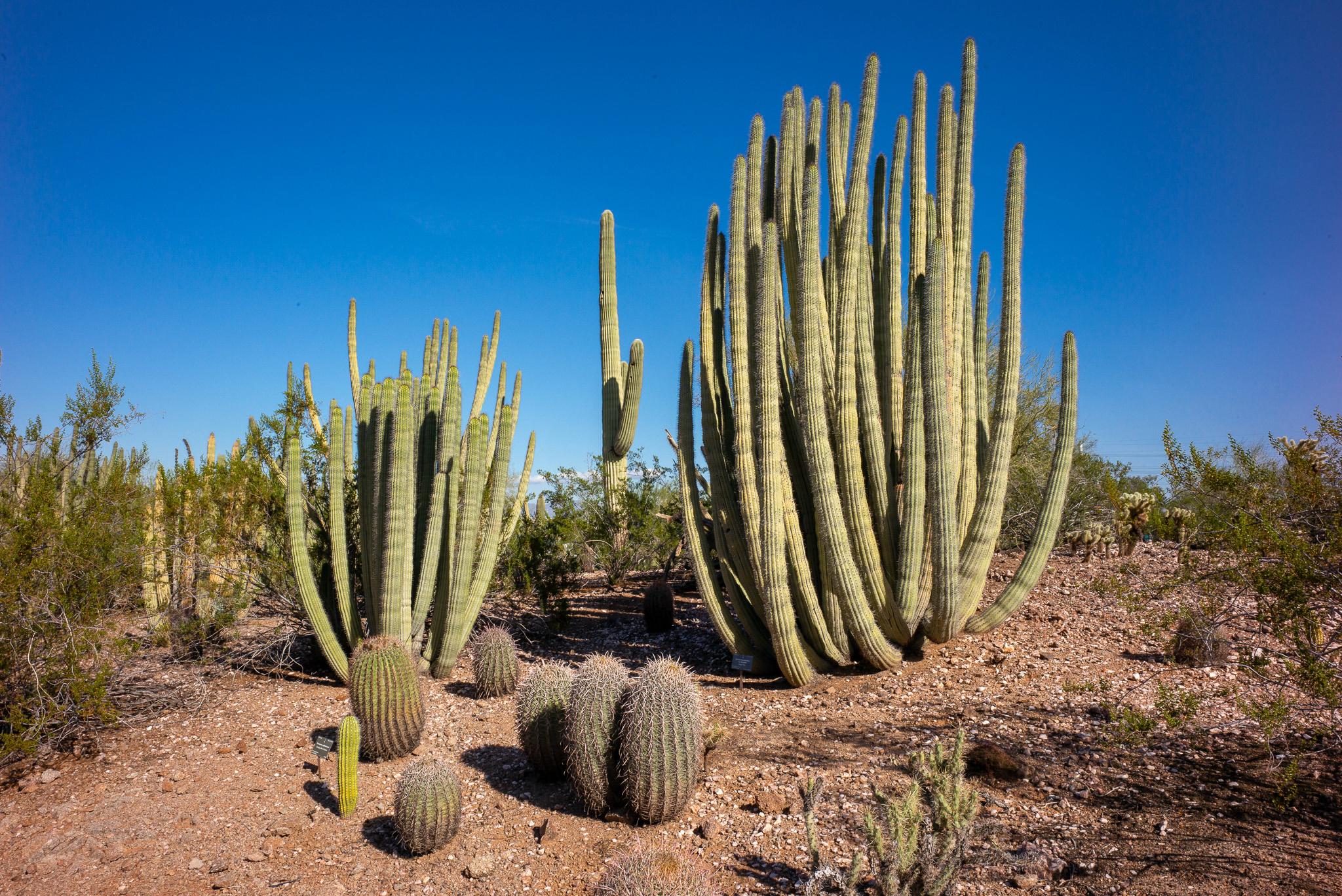
This is a superb, curated collection of desert plants, primarily those found in the Sonoran Desert, encompassing parts of Arizona and Northern Mexico. In particular, distributed throughout the gardens are an enormous diversity of cacti species.
Some of these are in carefully arranged beds, while others grow in more rugged spaces, reflecting a desert environment.
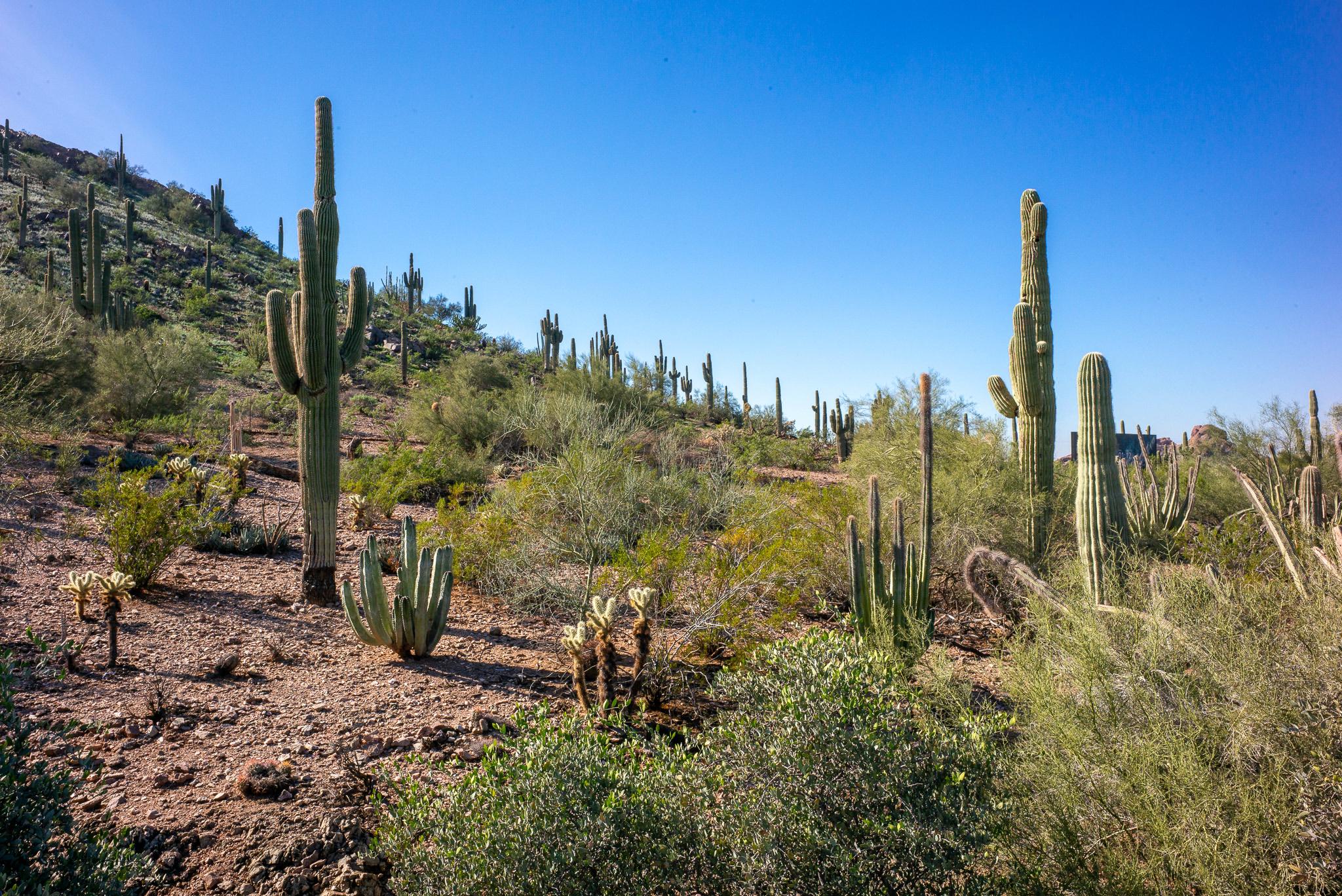
The Sonoran Desert is known as the home of the Saguaro Cactus, an extremely tall species sporting branches that also point to the sky. The cactus emoji you can find on your word-processing app is based upon the Saguaro. 🌵
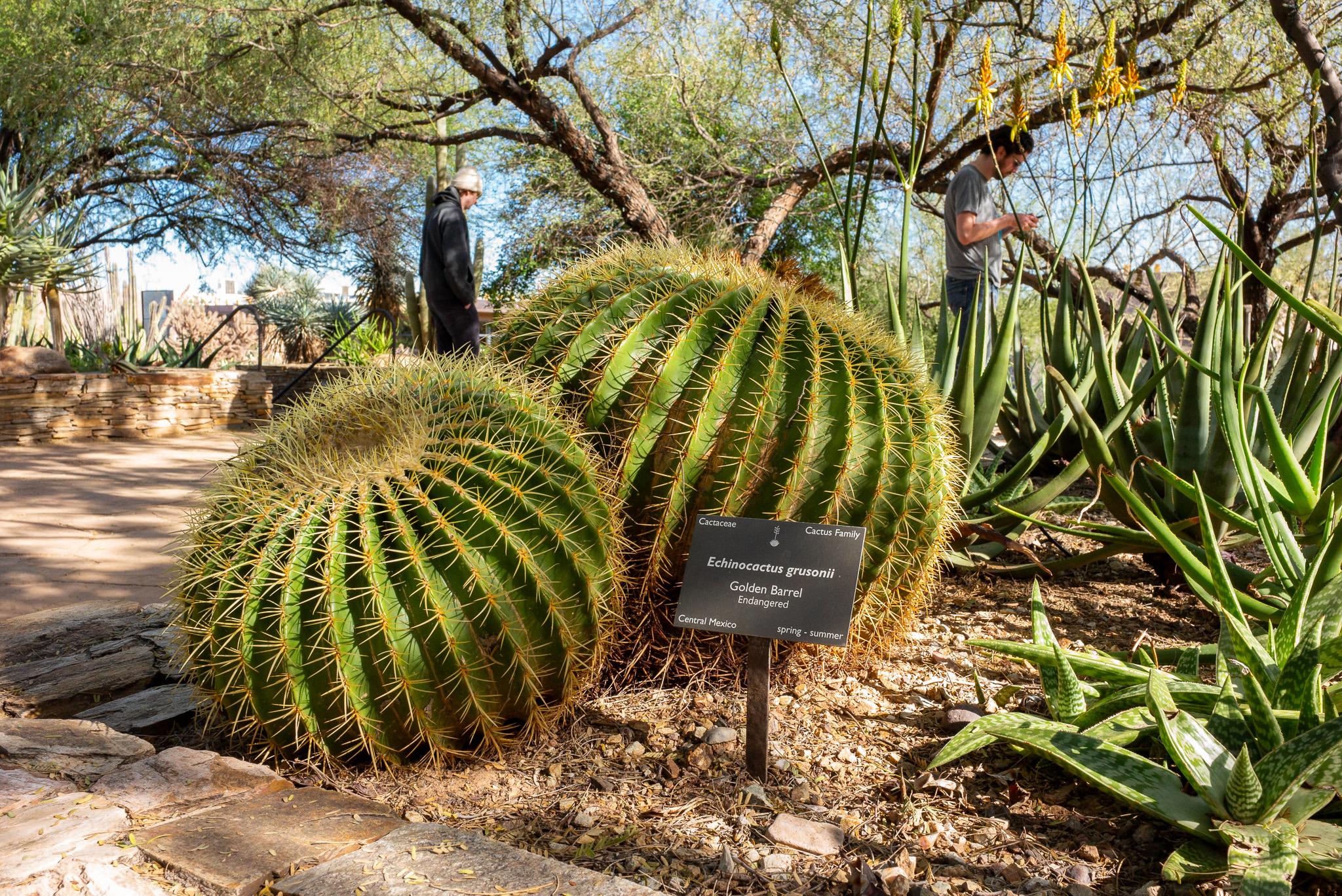
We also saw spectacular examples of Organ Pipe Cactus and Barrel Cactus, their names perfectly describing their form.
Architectural plants
In addition to cacti, the garden features a wide range of succulents, such as agave, all of which have evolved to survive the arid climate. A collective term for these and their cactus cousins would be architectural plants.
They lend themselves to use in urban landscapes featuring contemporary or mid-century modern homes. You can find them sitting amidst a xeriscape comprising decomposing granite, pebbles, and large rocks. They are very popular in Southwestern states, including California, Arizona, Nevada, and New Mexico.
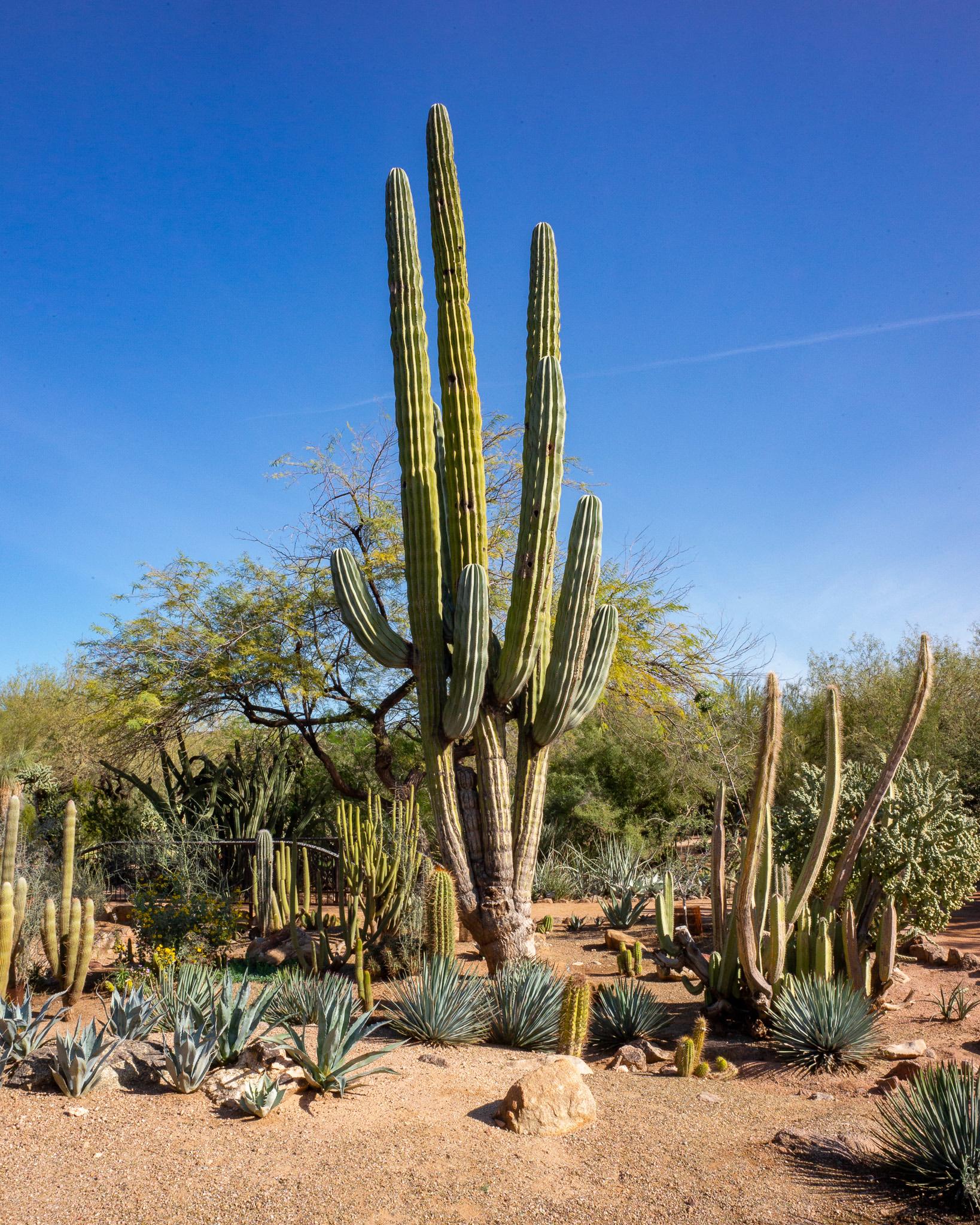

Why battle the elements to sow a lawn when you can have a low-water requirement landscape that looks much more natural?
Final thoughts on the Zeiss Biogon 25/2.8 ZM
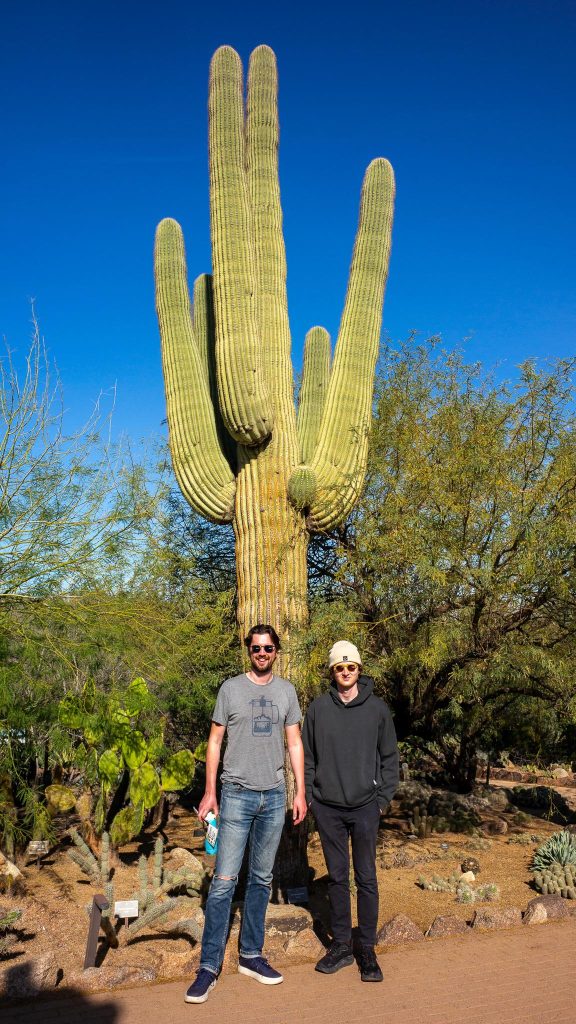
Just as it did in the wild, the Zeiss Biogon 25/2.8 proved to be a fine choice for shooting in this more cultivated environment. The slightly wider field of view than a more typical 28mm lens was helpful for framing shots of cacti in both landscape and portrait mode. Capturing full-height views of cacti like Saguaro and Cardon, especially when you cannot step back very far, is undoubtedly easier with a wide-angle lens.
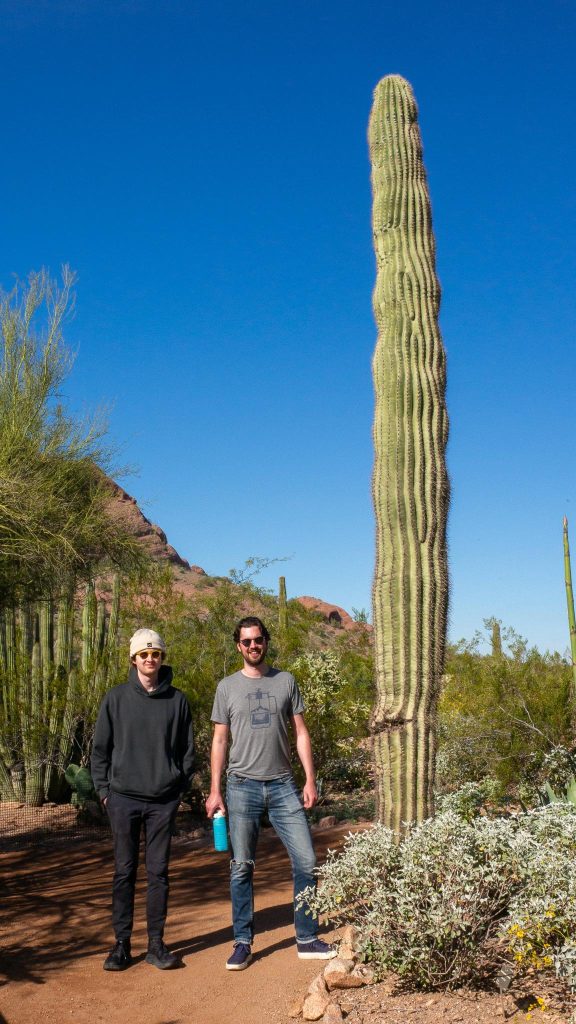
I am very impressed with the Zeiss Biogon 25/2.8 ZM. Now that I have the hang of it, the lens is likely to spend much more time on my M240. I also plan to try it out on my SL2, where I will be able to appreciate its entire field-of-view, as well as comparing its performance on a larger sensor.
Nevertheless, I can certainly recommend it for anyone looking for a sharp, compact, wide-angle, one-lens option for exploring the outdoors with a rangefinder.
| Read more from Keith James | More about using rangefinders in the wilderness |
| Review of Zeiss 25/2.8 in the M Files | The uncertain Future of the Zeiss ZM lenses |
Make a donation to help with our running costs
Did you know that Macfilos is run by five photography enthusiasts based in the UK, USA and Europe? We cover all the substantial costs of running the site, and we do not carry advertising because it spoils readers’ enjoyment. Any amount, however small, will be appreciated, and we will write to acknowledge your generosity.
Hi Keith!
I really enjoyed your article and photos. You picked some great spots. Soon after I moved to Flagstaff in the late 90s, I hiked in Sedona a couple times per week. I never got sick of it and the red rocks always captivate me. It was so nice being able to go back there in my mind looking at your photographs. Devil’s Bridge is a fun one. The scrambling gives you a nice sense of accomplishment when you get there. Looks like you may have hiked Marg’s Draw too? The Desert Botanical Garden is a great way to get a sense of the Sonoran desert. Looks like it was a wonderful trip. You made great use of that Zeiss 25mm!
Nice. I love the way Zeiss Biogens draw and color the image. Thanks for pointing out the 25MM. I had not seen any of the 25MM before.
Hi Stephen, thank you. Glad to have brought the lens to your attention. It’s a cracker, and well worth checking out. All the best, Keith
I wanted an M lens in the 25mm focal length range and ended up with a used Leica 24mm Elmar f/3.8, which I use by composing with the rear display on my M cameras. It is a superb lens and very compact. No need for a wider aperture and typically I don’t stop down past f/5.6 since there is plenty of DoF. I agree with the choice of the 75 Summarit – great lens and so compact!
The 24mm focal length has a really nice advantage: For traveling, leave the 28 and 21 lenses behind and just carry the 24. If you need something a bit wider, simply overlap two images and do a pano merge in Lr or Ps.
Hi Bill, thanks for your comment. Couldn’t agree more on the usefulness of the 24/25mm focal length when on the road. The 75mm Summarit is indeed a star performer and remarkably compact. You can still find plenty of them for sale. Perhaps the lens deserves an article of its own. All the best, Keith