
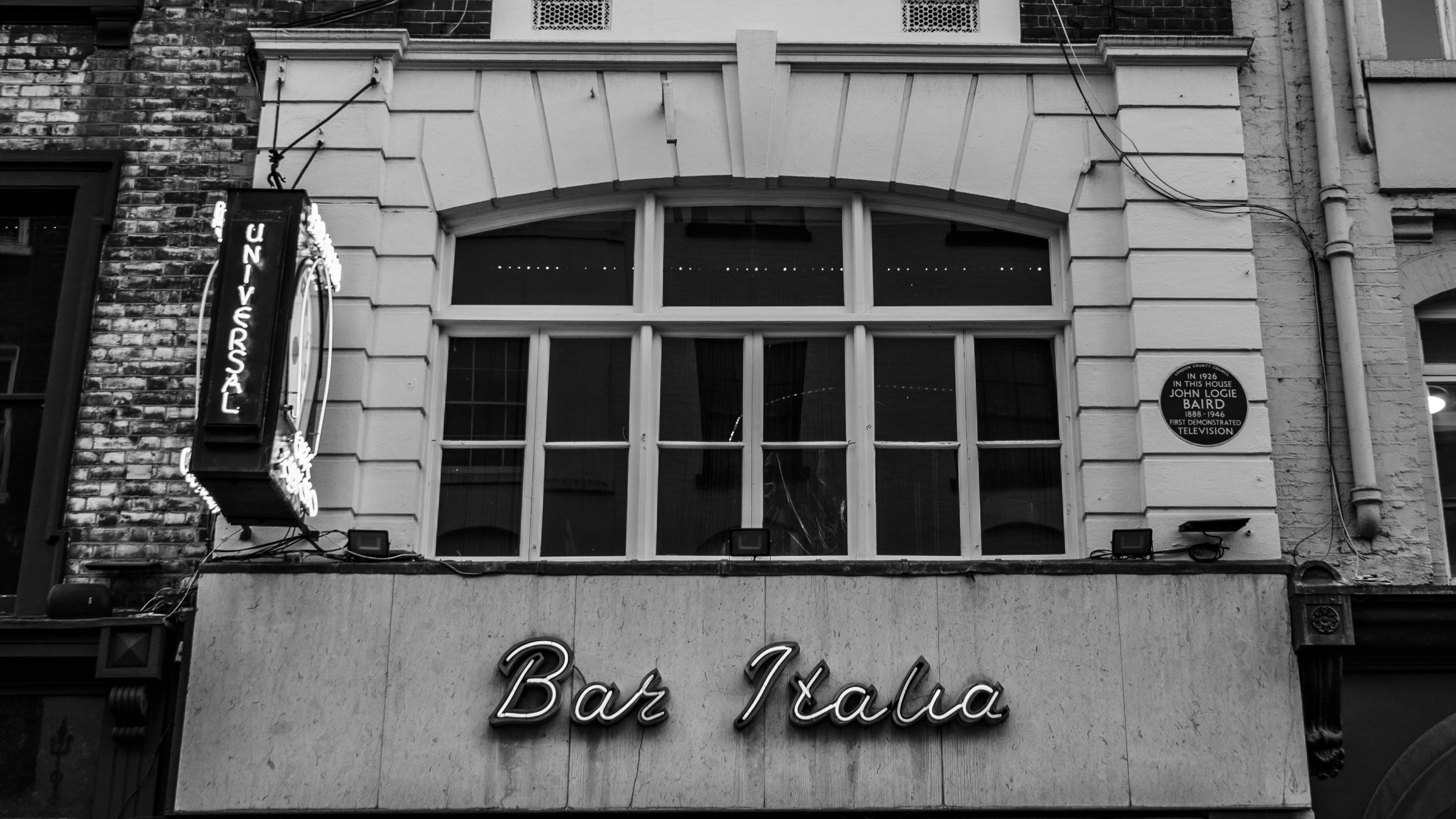
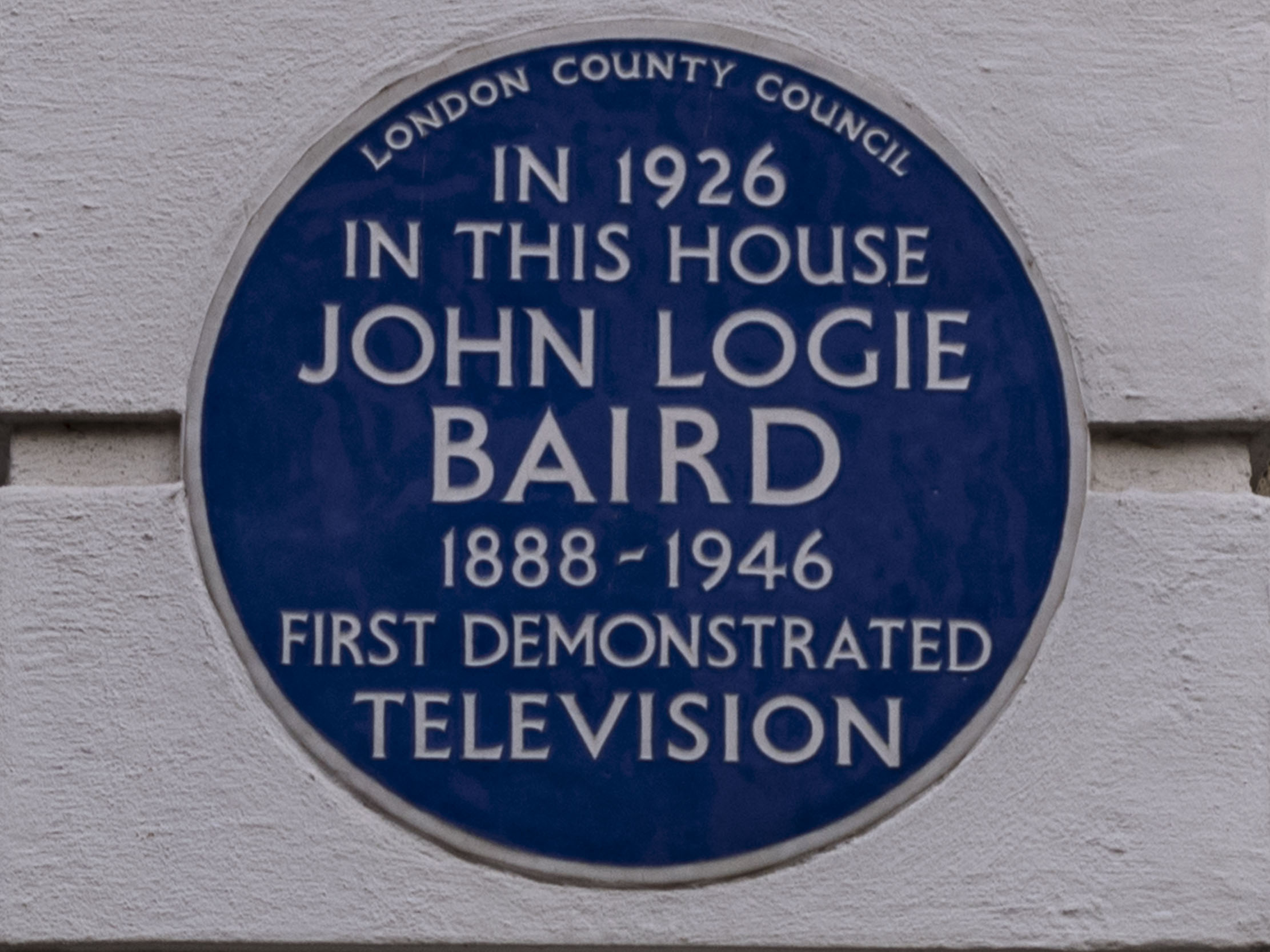
One hundred years ago today, 26 January 1926, television was first demonstrated to the world in an attic at 22 Frith Street in London’s Soho. Scottish inventor, John Logie Baird, gave the public its first sight of a working, electromechanical television system. He transmitted recognisable, moving greyscale images of a ventriloquist’s dummy, named Stooky Bill, and his assistant, William Tainton, using a “televisor”.
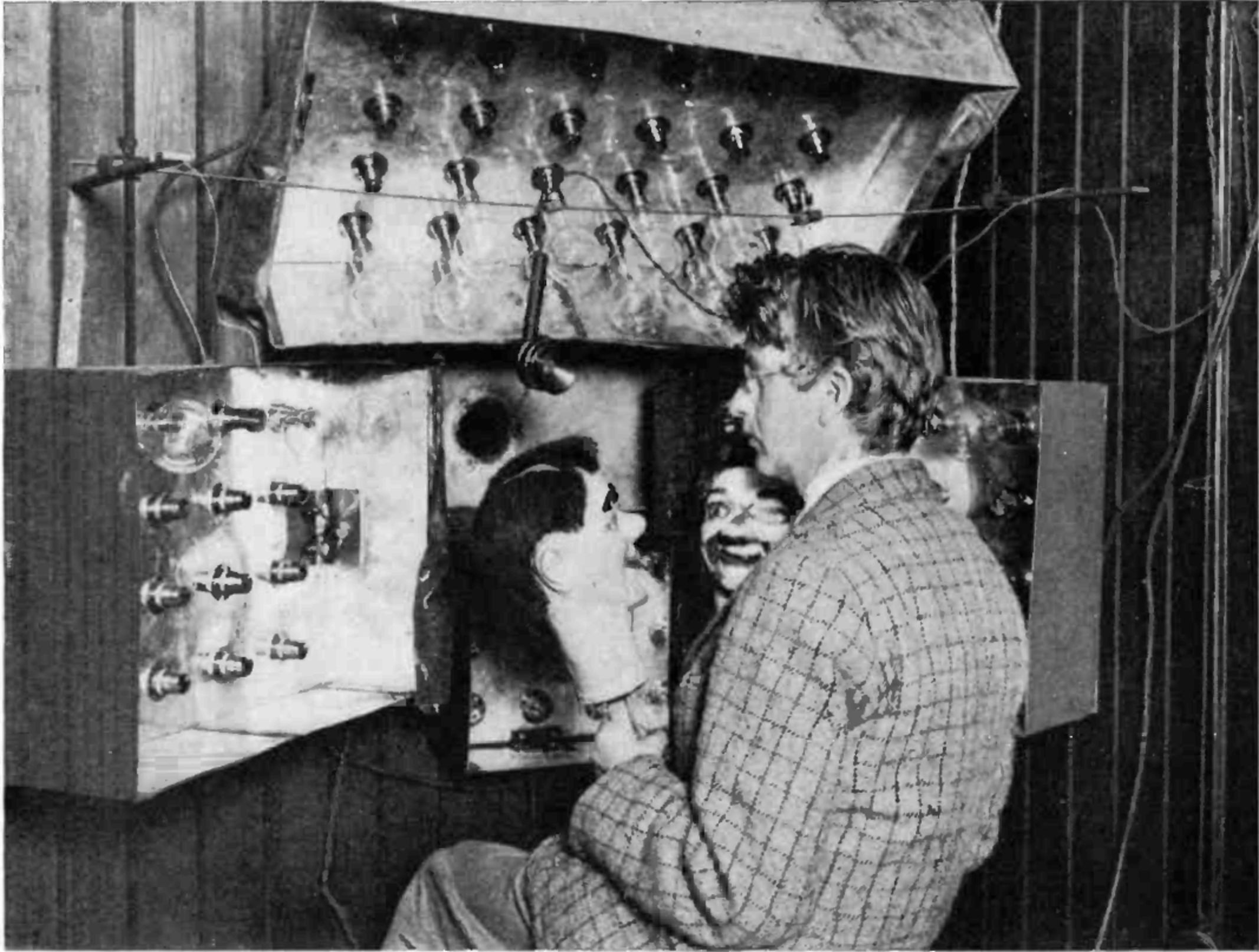
It’s often forgotten that television was a British invention, although Baird’s crude system was subsequently superseded by electronic systems developed by teams such as those at EMI in Britain and pioneers like Philo Farnsworth and Vladimir Zworykin in the United States. Their high definition electronic televisions with far higher line counts and steadier pictures than the original electro-mechanical design won the race.
London experiments
By 1939 mechanical television transmissions in the United States had been fully replaced by electronic broadcasts. The BBC operated a dual transmission from November 1936 from its transmitter at Alexandra Palace in the heights of North London. Baird’s system competed directly with the all-electronic Marconi-EMI standard. The two systems were alternated week by week.
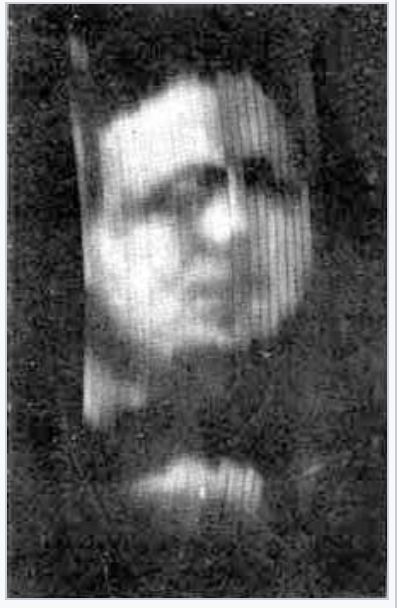
Baird’s 240-line apparatus was a development of his earlier mechanical television, using an intermediate-film process whereby images were shot on cine film, quickly developed, then scanned for transmission. In contrast, the Marconi-EMI system was based on fully electronic 405-line cameras and Emitron tubes, which offered greater definition, smoother motion and much greater operational practicality.
The decision
Even before the end of the six-month trial period ended, the BBC had decided that the 405-line system was the only viable way forward. Baird’s system was abandoned in early 1937, just 11 years after the first demonstration in Soho.
Despite this ultimate failure, the significance of Baird’s work remained foundational to the concept of line-by-line image scanning and the commercial development of television.
His Soho demonstration showed potential investors, newspapers, and the public that live, remote vision was not merely a laboratory curiosity by a plausible new industry.
Electro-mechanical ingenuity
Baird himself later experimented with electronic and hybrid techniques, including early colour and three-dimensional systems, and he readily acknowledged the limits of purely mechanical scanning. In historical perspective, his achievement was in bridging 19th-century electro-mechanical ingenuity and the all-electronic, CRT-bases systems that dominated communications for the rest of the 20th Century.
Bar Italia
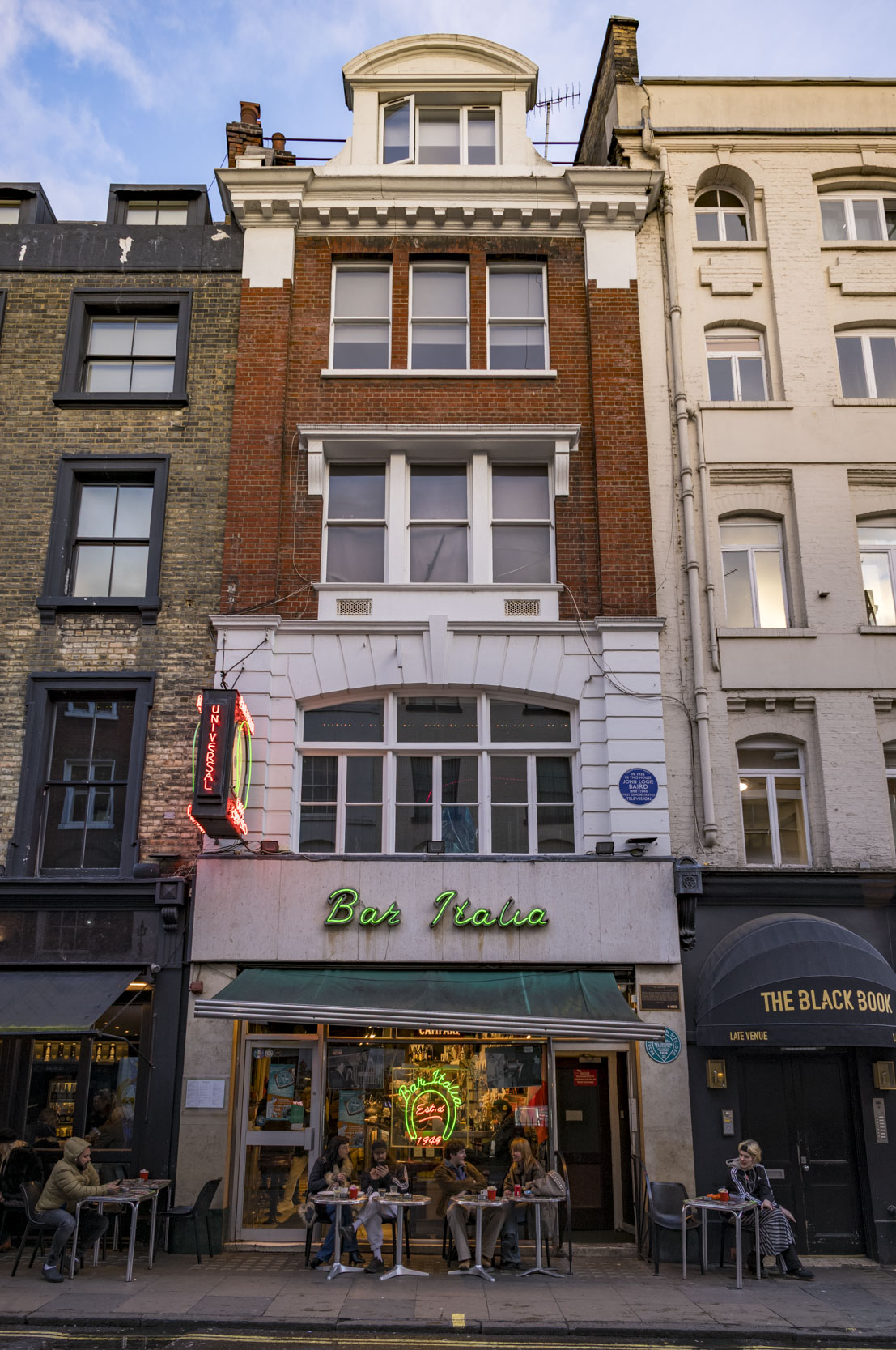
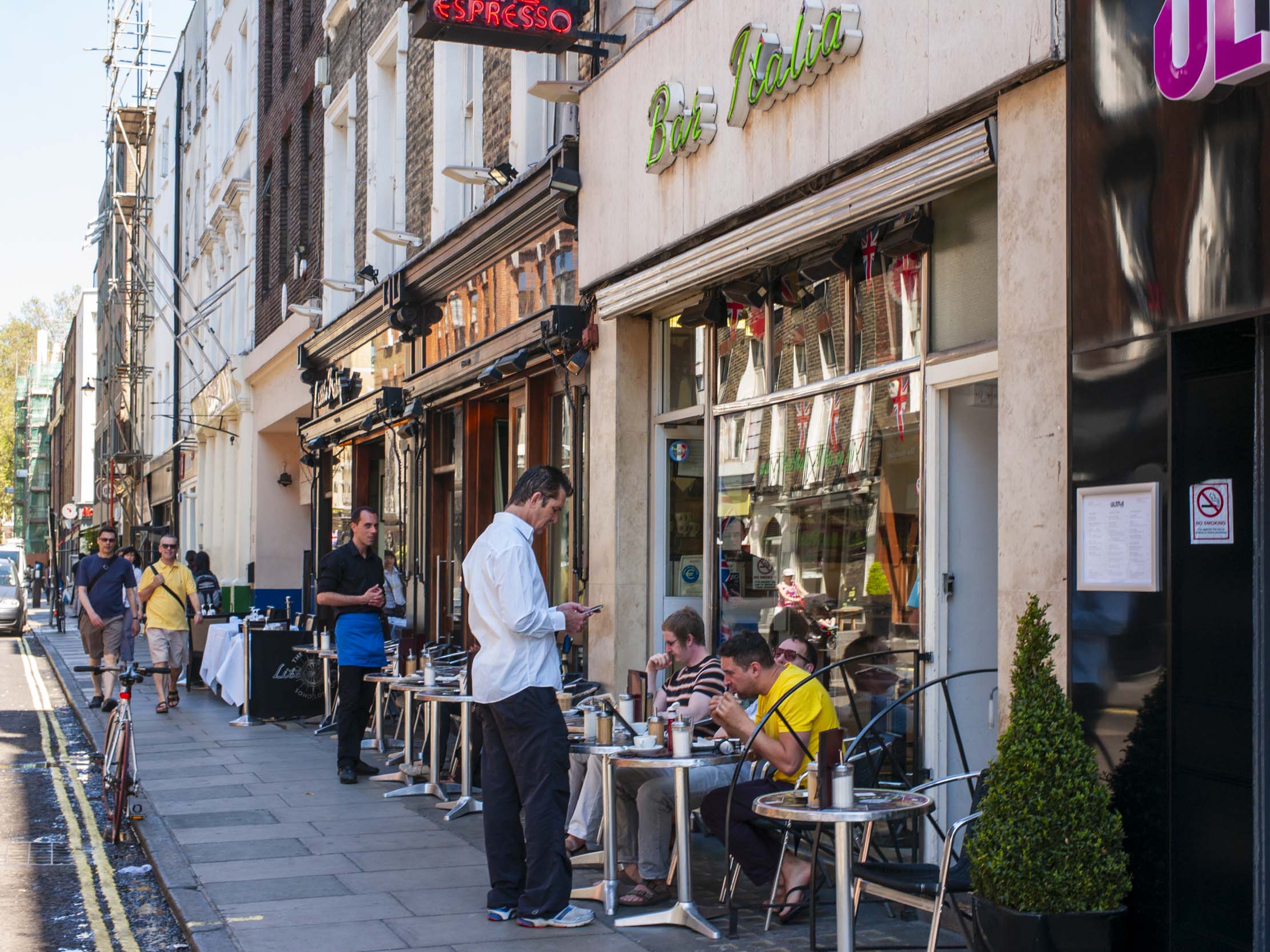
The nondescript building at 22 Frith Street, where Baird rented the attic, is now better known as the home of the iconic Bar Italia, one of the earliest Italian coffee bars in London. Opened in 1949 by Lou and Caterina Polledri, it has remained in the same family and kept much of its 1950s character — Formica counters, gleaming chrome and the sparkling espresso machine.
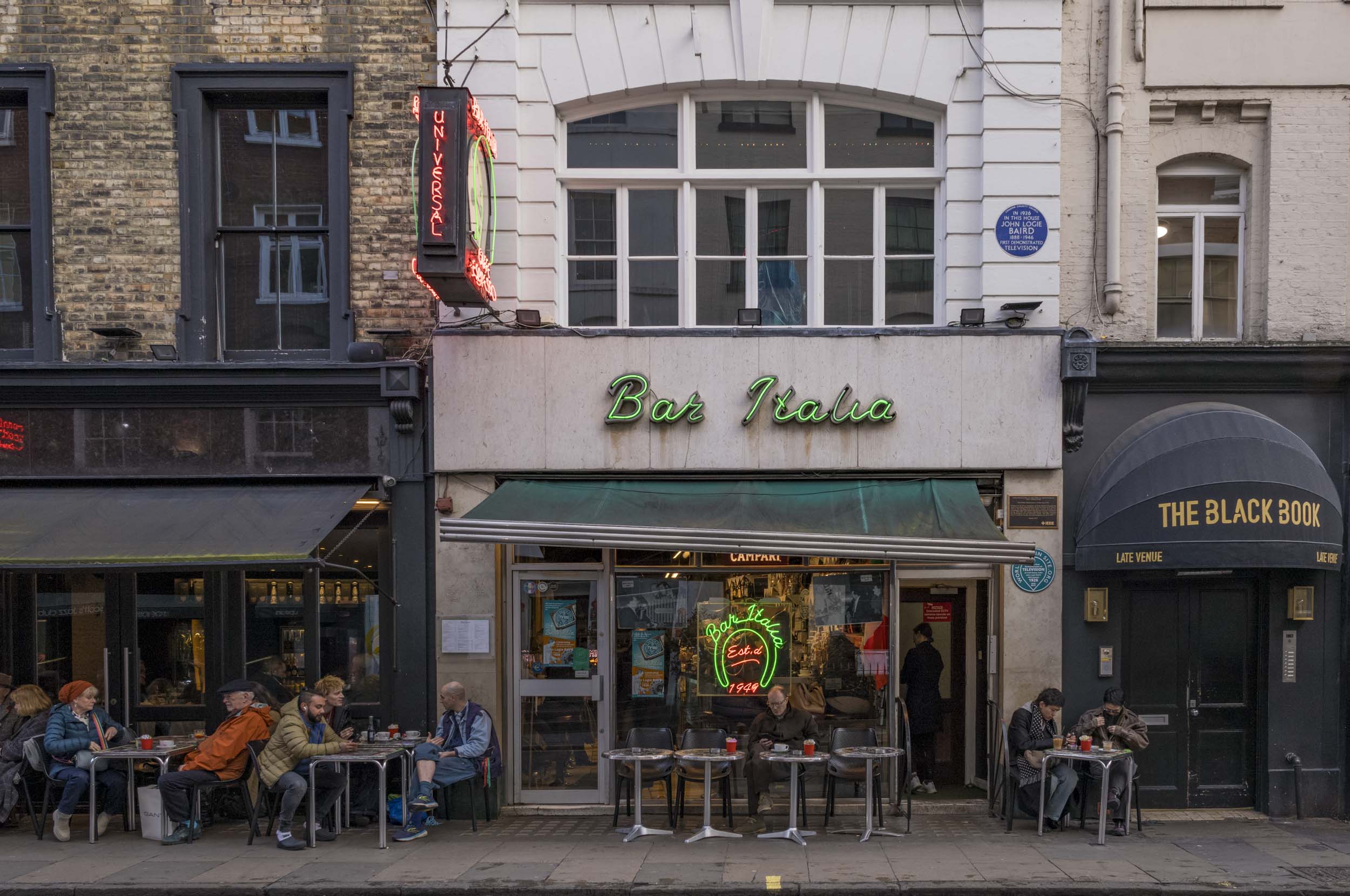

It was once the hub for the London Italian community, but is now a venue for musicians, clubbers, and insomniacs. Few, however, look above the fascia to see the blue plaque commemorating that day in January 1926 when television made its first impression on the world.
Make a donation to help with our running costs
Did you know that Macfilos is run by five photography enthusiasts based in the UK, USA and Europe? We cover all the substantial costs of running the site, and we do not carry advertising because it spoils readers’ enjoyment. Any amount, however small, will be appreciated, and we will write to acknowledge your generosity.
The discussions here about ‘who was first’ remind me of a talk I gave last year about the influence of French Photographers in Ireland in the 19th Century. It was attended by two cultural officials from the French Embassy. After my talk, the senior of the two French officials asked me ” Who was first with photography, us or the British?” I replied “You were both first”.
It is the same with almost everything else e.g. when Barnack was creating the camera which became known as the Leica there were over 40 other parties attempting to launch a 35mm stills camera. Some of those other 35mm cameras even launched before the Leica, but the Leica was the most successful and had longevity. I believe I wrote an article for Macfilos last year to mark the 100th Anniversary of the Leica.
Finally, as regards Bar Italia and Frith Street, that reminded me of an apocryphal story from Ronnie Scott who moved his jazz club from Gerrard Street to Frith Street in Soho in 1965. His story was that when the Kray Twins arrived at his club looking for protection money he just told them that he paid all of his protection to a local man called ‘Italian Tony’ and that the Krays ran out of his place looking scared. Nothing to do with the birth of TV, but I can never resist a good ‘Ronnie story’.
William
Nice piece, thank you.
But, did you know that the Dutch firm, Philips, was experimenting with television already in 1925, using Nipkov dials. Whereas, Bairds contraption only counted 30 lines, Philips managed to realize 405 lines two years later.
Their first almost commercially fit television was shown on the Radiolympia Fair in 1937 in…..London, where people could see a really working television (with 527 lines) for the very first time.
Thanks, Gerard. I do remember reading about that in the past, but Baird is generally credited with being the first, despite the paucity of lines.
Not by Philips, I guess.
The “wonder” of the Nipkov dial and what Philips managed to do with it was so important the it became the name of the most important prize for the best television programs in The Netherlands.
I think Braid profited from Anglo-Saxon chauvinisme.
Best,
Gerard
sorry, typo: Baird
Well you could be right on that. But was a working system demonstrated to the world’s press before 26 January 1926? If so, the accepted version involving Baird is incorrect.
Well, in that case I have to dive deeper into Philips’ history, but my first reaction would be: Why all the interest in 1937 at the Radiolympia in London, where people could see a WORKING television for the very first time?
Some myths are very hard to debunk, like the fact that the Japanese invented the SLR camera, whereas it was – sorry – the Dutchman Steenbergen who didn’t only invent it but brought in on the market, with the Exacta in1935!
Best,
Gerard
By 1937 public television was already being transmitted in the USA and UK. As I mentioned in the article, Baird and the EMI/Marconi system was being transmitted on alternate weeks. There is no doubt about the press demonstration of the Baird system 11 years earlier.
Hi Mike,
Well is is the internationally acclaimed “Father of Television” according to Wikipedia (not always the ‘mither of all sources’ but, het, shortage of time out me to it…
https://en.wikipedia.org/wiki/Paul_Gottlieb_Nipkow.
So, Philips elaborated his ideas already in 1925, in their NatLab in Eindhoven, and finally produced te first working television.
There always many fathers of worldwide successes.
Best,
Gerard
There’s no doubt many organisations were working on television in the mid-1920s. There are no doubt many claims. But there is strong evidence for the Baird story. I think we’ve explored this enough, and we will just have to agree to differ.
Excellent piece Mike, did you know that much of this early equipment can be seen today, much of it working?
Try a visit to the ‘The British Vintage Wireless and Television Museum’ (www.bvwtm.org.uk/), where my old and sadly passed chum Gerry Wells, spent his life collecting, sometimes stealing (actually looting when a boy) and gathering together the elements of wireless broadcasting, radio, and television, along with the other methods for entertaining and influencing the general ‘hoi polloi’, that rapidly developed throughout the twentieth century and on to today with the ‘world wide web’.
This is standard behaviour for the people of these islands, bumble along until some clever blighter sticks his head above the parapet, knock him down and gift whatever he invented to the world to make a mint.
John Logie Baird lived in a fine house at the Crystal Palace end of Dulwich.…Oh, and Tim Berners-Lee will be 70 later this year.
No that I didn’t know. And thanks for the reminder about Sir Tim. I must do something on him also.
Thanks again, Stephen. I will take a look, and I am sure readers will be interested in this link.
Many thanks Mike, as an aside, south-east London has some fascinating features, and not only that, but by London standards, the property there is affordable and varied along with plenty of parkland and other superb amenities…
…I should be an estate agent!
Ferrero Rocher?