

I have some history with 35mm M lenses. I currently own a number of them, and my collection would be even larger if I had not, regrettably, parted company with several others. So, when I learned of the Light Lens Lab 35mm f/1.4 Double Aspheric, an homage to one of Leica’s legendary lenses, it was difficult to resist adding yet another example to my 35mm collection.
I have been a Leica photographer since 1980, when I purchased a Leica M4P with a 50mm Summicron lens. Since that time, I’ve used dozens of Leica M and R lenses. However, I made two mistakes during the past 45 years in photography, both of which involved 35mm lenses.
Mistake No.1
The small Leica M 35mm f/2 version four was easy to use and a favourite lens of mine. It created memorable images, and the small size balanced well with a rangefinder body. When Leica introduced the 35mm f/1.4 double aspheric (11873), I jumped at the opportunity to use a faster optic.
It featured two hand-ground aspherical elements — a manufacturing feat that required skilled technicians and the same machinery used for the legendary Noctilux. Leica produced around 2,000 units before production halted due to high costs and quality challenges, making it one of the rarest modern Leica lenses.
When the lens arrived, I carefully opened the package to find a lens that was huge and much heavier than the 35mm lens I had been using. The increased size and weight was such a surprise, I returned it to my Leica dealer. Yet, hindsight is invariably 20/20. The value now of a used, mint Leica 35mm f/1.4 double aspheric lens ranges between $15,000 and $30,000.
Mistake No.2
When Leica introduced their first 35mm f/2 aspheric lens, they described it as a big improvement over spherical lens designs. I was a less sophisticated photographer then, with aspheric optics being something of a novelty in lens designs. Nevertheless, I looked forward to getting one with the promise of better resolution and reduced spherical aberration.
I wasn’t disappointed when shooting the new aspheric lens wide open. When stopping the aperture down to f/5.6, it performed about the same as the 35mm f/2 I already owned. Not needing two 35mm lenses, I sold the Leica 35mm f/2 v4 lens. Years later, I realised I had sold a mint “King of Bokeh” lens. A used lens in mint condition is currently valued between $3,000 and $8,000. It is unlikely that I will ever photograph with either of these historical lenses again.
Fast-forward to 2026
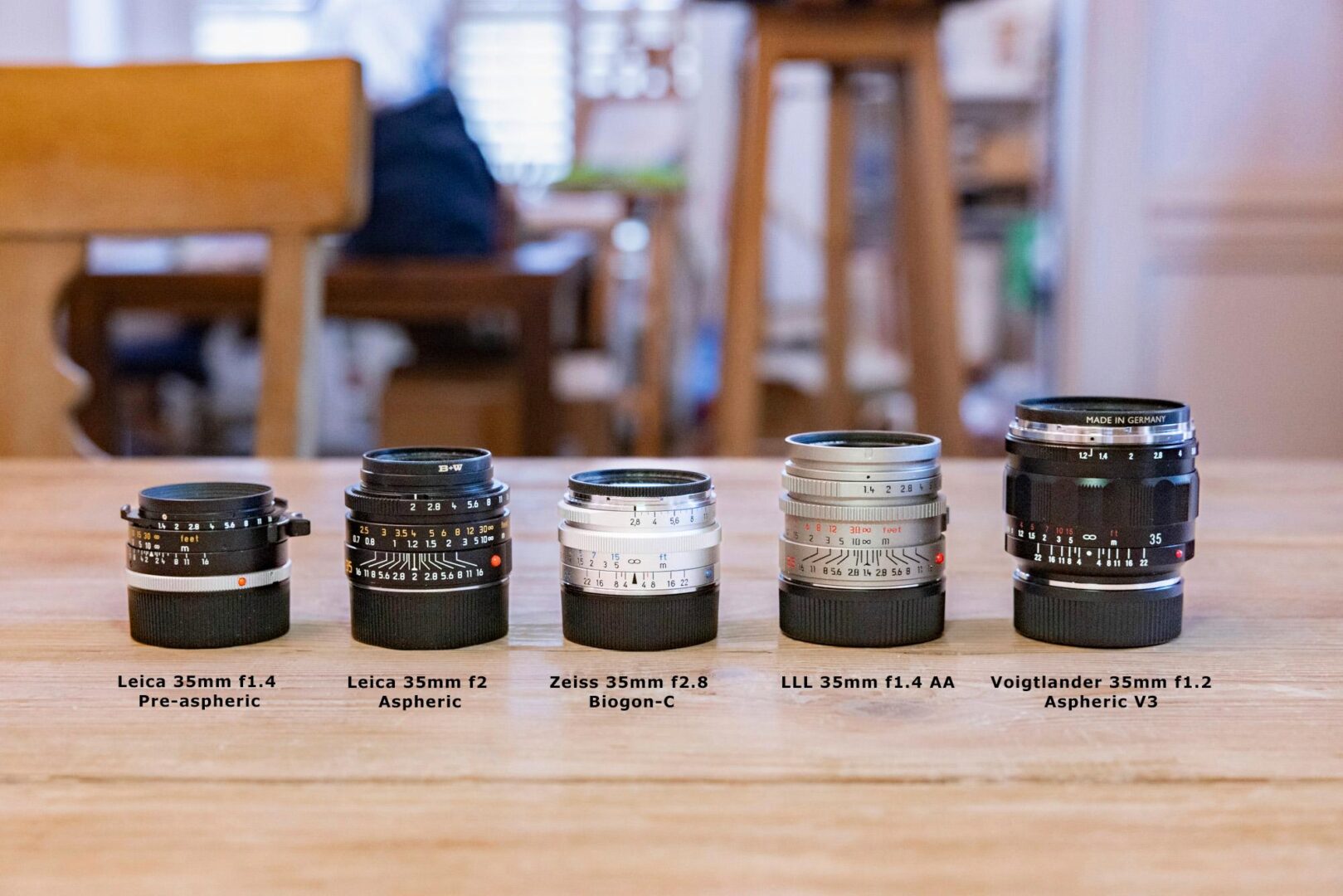
I have been enjoying four 35mm M mount lenses that provide a variety of imaging styles. Here is a size comparison of several 35mm M mount lenses.
Aspheric optics
As an optometrist, I have a keen interest in lens optics. Light Lens Lab (LLL) recently introduced the Light Lens Lab 35mm f/1.4 double aspheric, modelled on Leica’s legendary lens from 1990. It is a modern replica designed to capture that magic at a fraction of the cost of a used Leica lens.
In the world of Leica M-mount lenses, few optics command as much reverence — and wallet-draining allure — as the Leica Summilux-M 35mm f/1.4 Aspherical (11873). It is often dubbed the “Double Aspherical” or “AA” for its two aspherical elements. This rare gem from the early 1990s has become a collector’s holy grail, blending vintage charm with unique imaging.
It featured two hand-ground aspherical elements. Its design pushed optical boundaries, delivering improved sharpness at f/1.4 that outpaced predecessors such as the 35mm “Steel Rim” version. LLL’s 35mm lens is a thoughtful homage that aims to blend the AA’s vintage performance with modern corrections for high-resolution digital bodies like the Leica M11 or SL3.
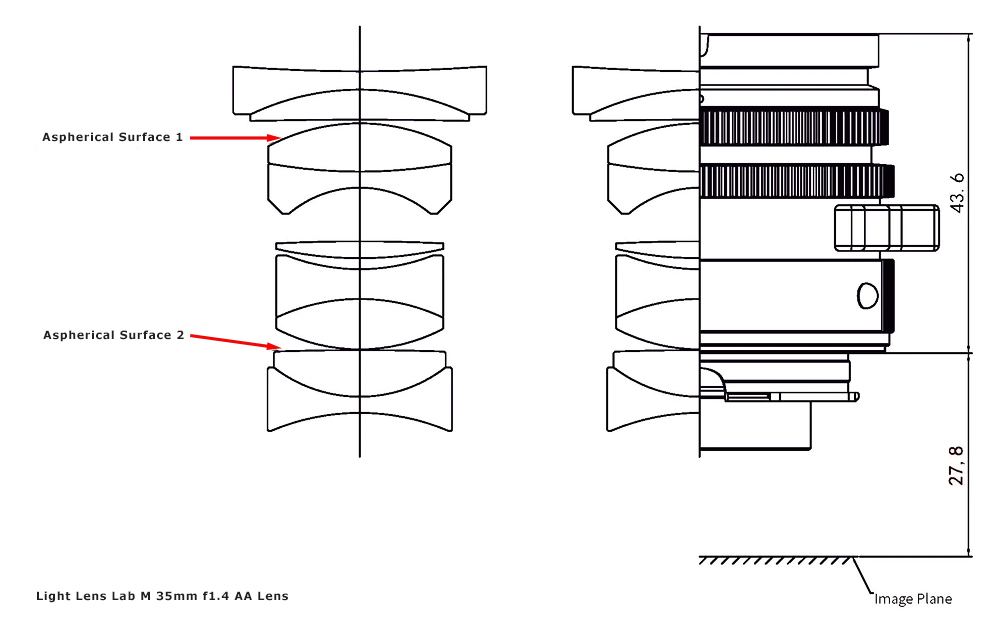
A schematic provided by Light Lens Lab shows the location of the two aspheric surfaces. An aspherical surface provides two advantages: it decreases spherical aberration and can reduce the number of lens elements needed to obtain the same level of optical performance. Over the past twenty years, aspherical surfaces have transformed spectacle lenses for those over the age of 45 that have presbyopia — the normal age-related loss of focusing that makes reading small print difficult.
Look, no lines
Progressive spectacle lenses that provide focusing at distance, intermediate and near in a single lens without any visible lines are the result of aspheric lens design. Lens manufacturers create custom aspheric surfaces using computer controlled (CNC) 3-axis diamond lathes, followed by critical polishing for each person’s unique prescription.
Light Lens Lab created the two aspheric surfaces in this 35mm lens by heating a lens blank and pressing it against a highly accurate aspheric metallic mould. This creates a reproducible aspheric surface and is more economical than grinding and polishing.
Lens design and construction
The optical design of the Light Lens Lab 35mm f/1.4 double aspheric consists of 9 elements in 5 groups, with 70cm minimal focusing distance. The aperture range is from f/1.4 to f/16 in half-stop steps. There are 10 aperture blades. The filter size is 46mm.
The lens weight is 278g for the aluminium version and 300g for the titanium version. The retail price on LLL’s website in US dollars is $1,399 for the aluminium black paint or chrome version. The titanium version was initially a limited edition to 300 pieces; that was reported to have been expanded to 998 pieces. The titanium version is sold out on LLL’s website, but is available new on eBay for up to $2,700.
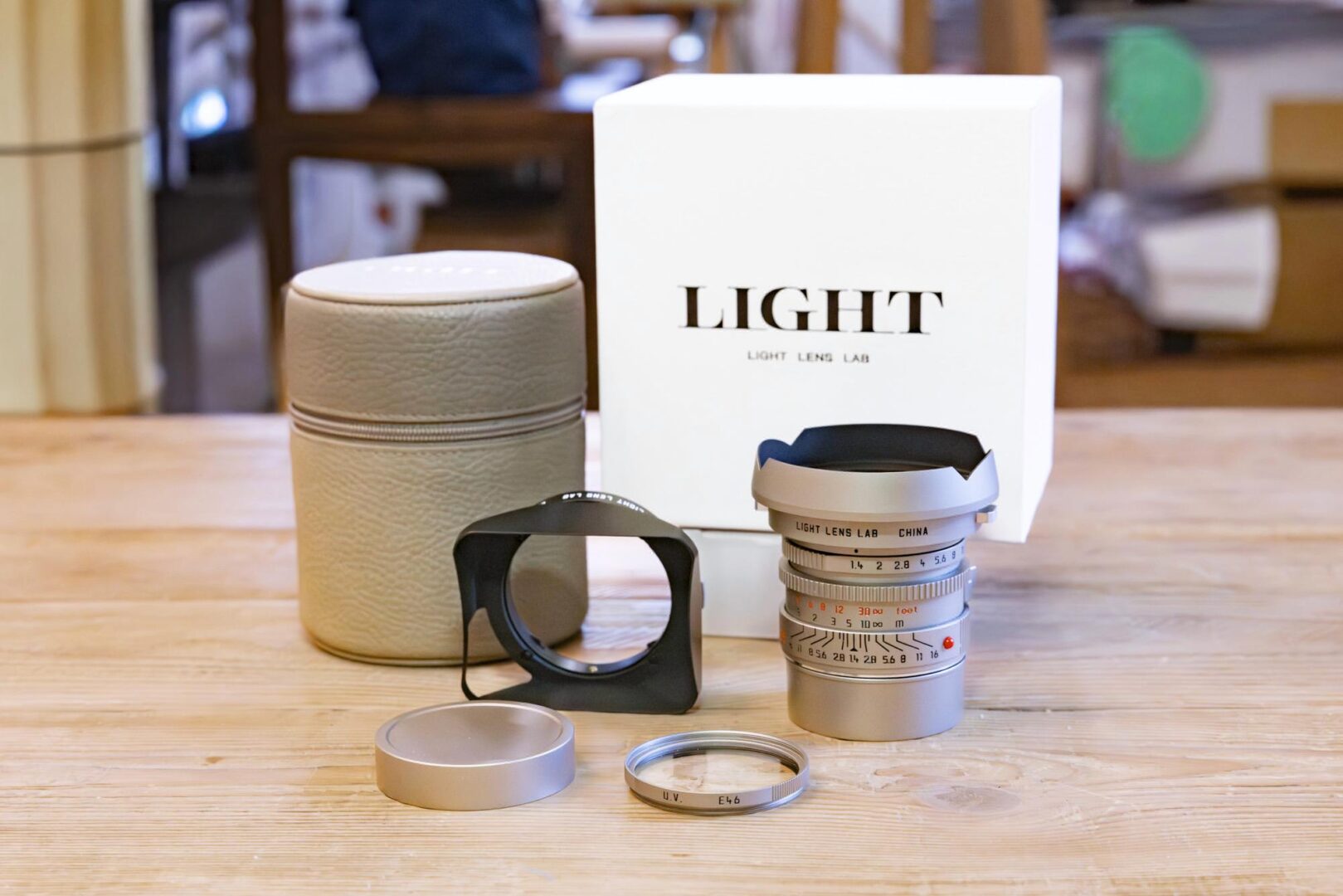
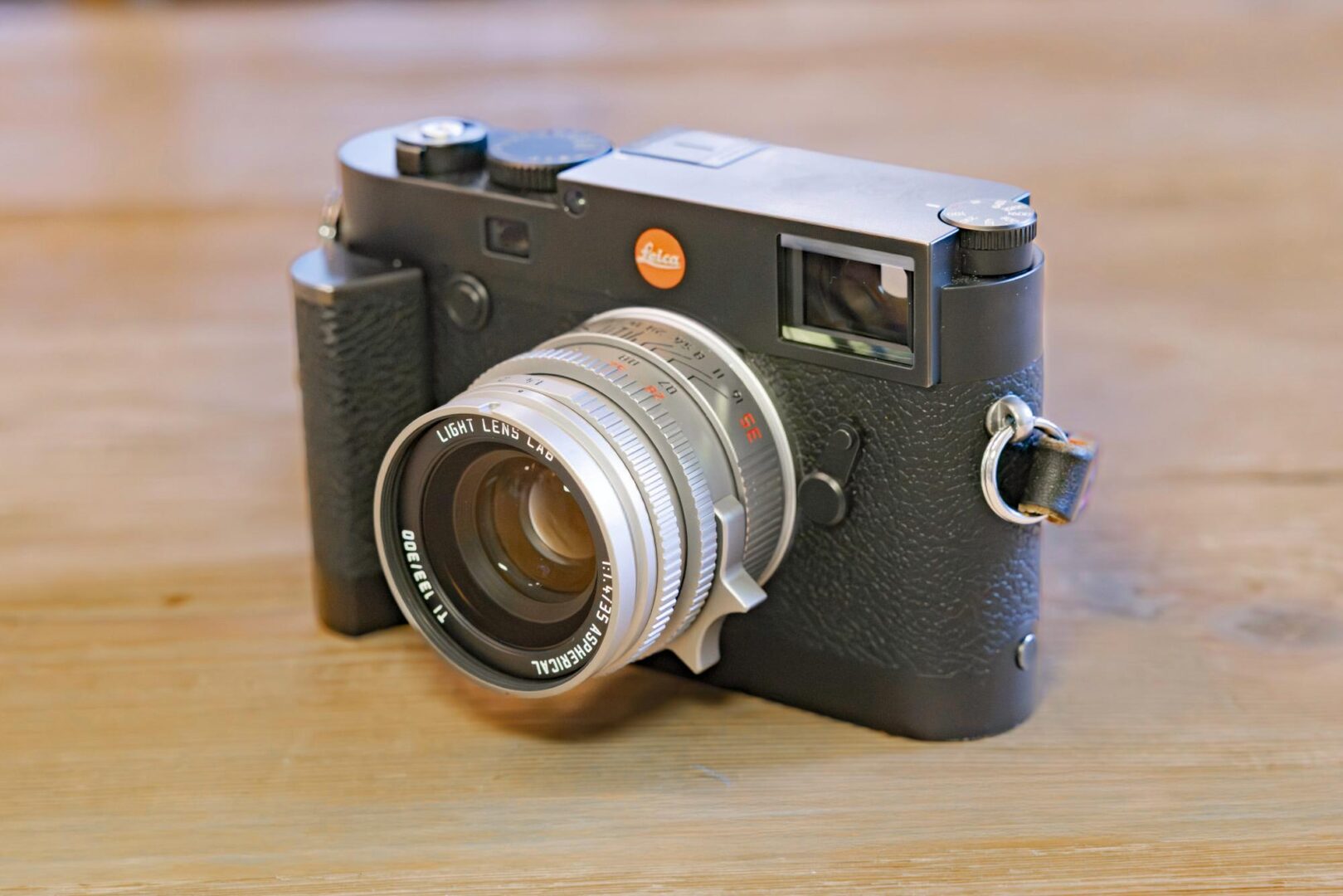
The lens I am reviewing is the limited-edition titanium model (Ti 133/300). I have used it almost daily for the past four months. It is drop-dead gorgeous. This is the first titanium lens I have owned, and I’d like to see more of them. Surprisingly, it comes as a complete kit that includes: leather zippered case, front and rear titanium lens caps, titanium UV 43mm filter, a round titanium metal lens hood, and a rectangular black metal lens hood.
The focusing is smooth and aided with a finger tab. The aperture ring has the same feel as my Leica M lenses. This is the sixth lens I have reviewed from Light Lens Lab. There has been a steady improvement in manufacturing tolerances. I have read other reviews of this lens that report the metal lens hoods rattle when shaken. Fortunately, neither of the lens hoods in this kit rattle.
Design detail
On examining the lens, I observed a feature not mentioned in other reviews. This concerns the small cutouts on the front edge of the lens, used to align with two pins on the metal lens hoods.
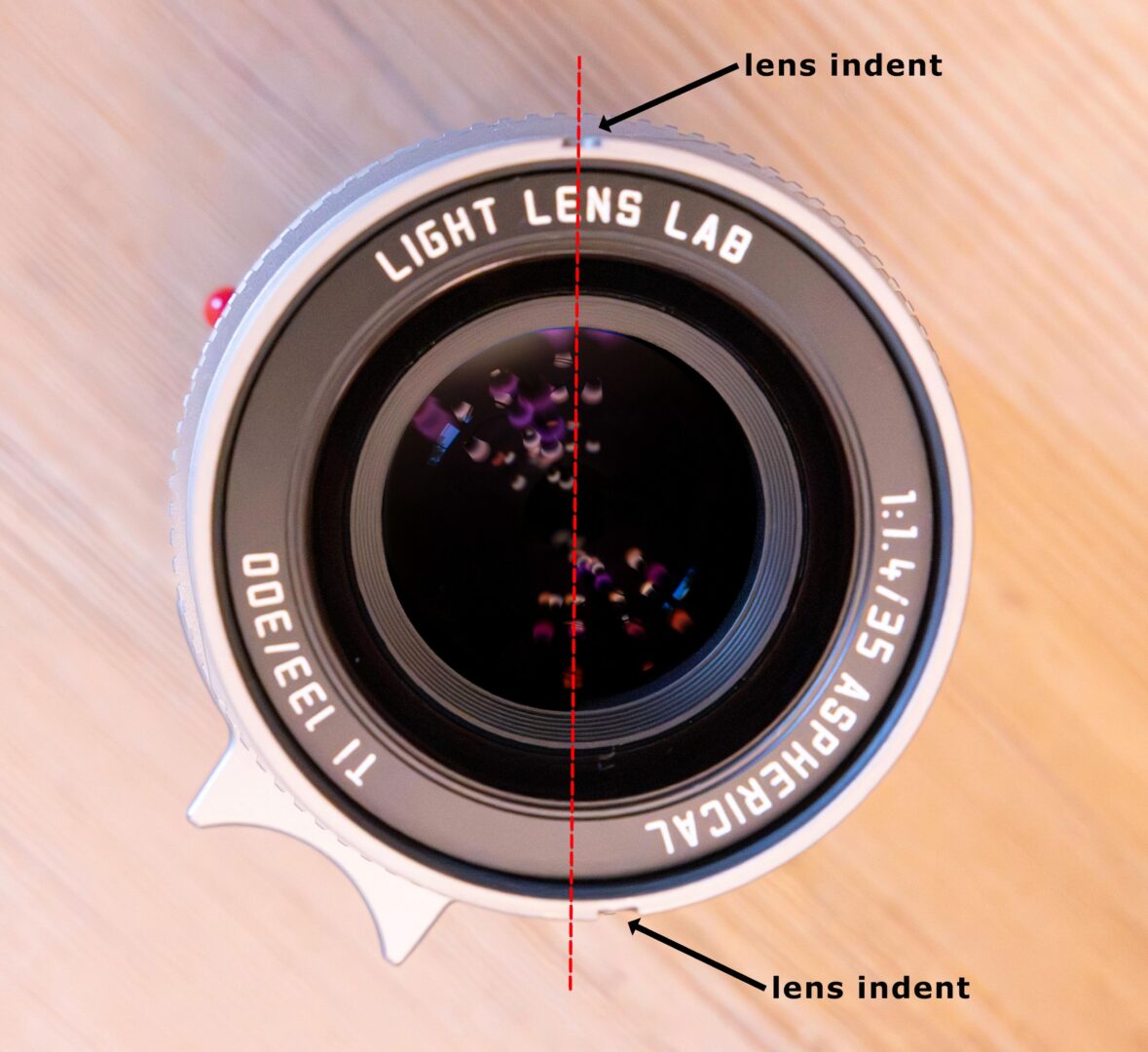
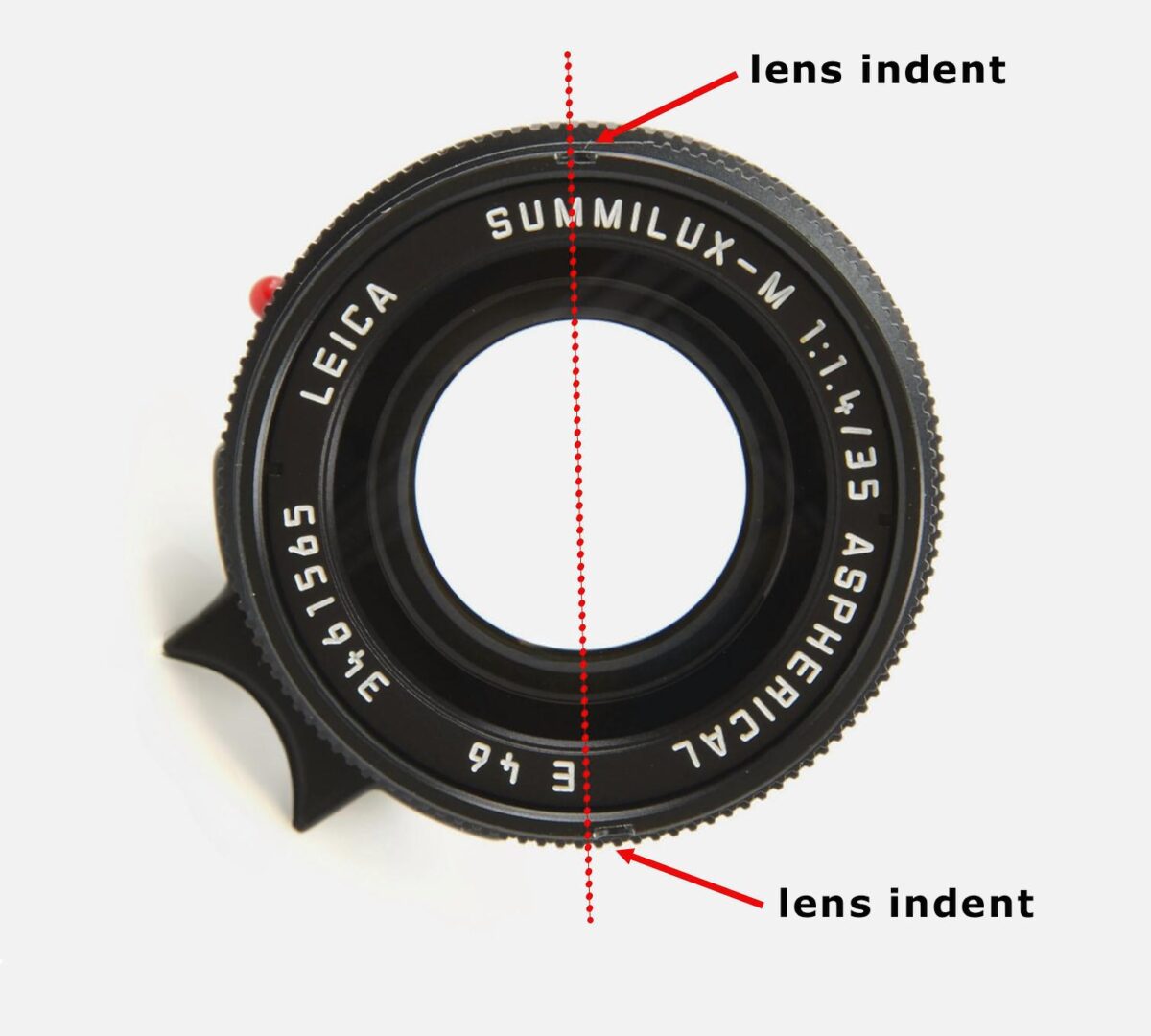
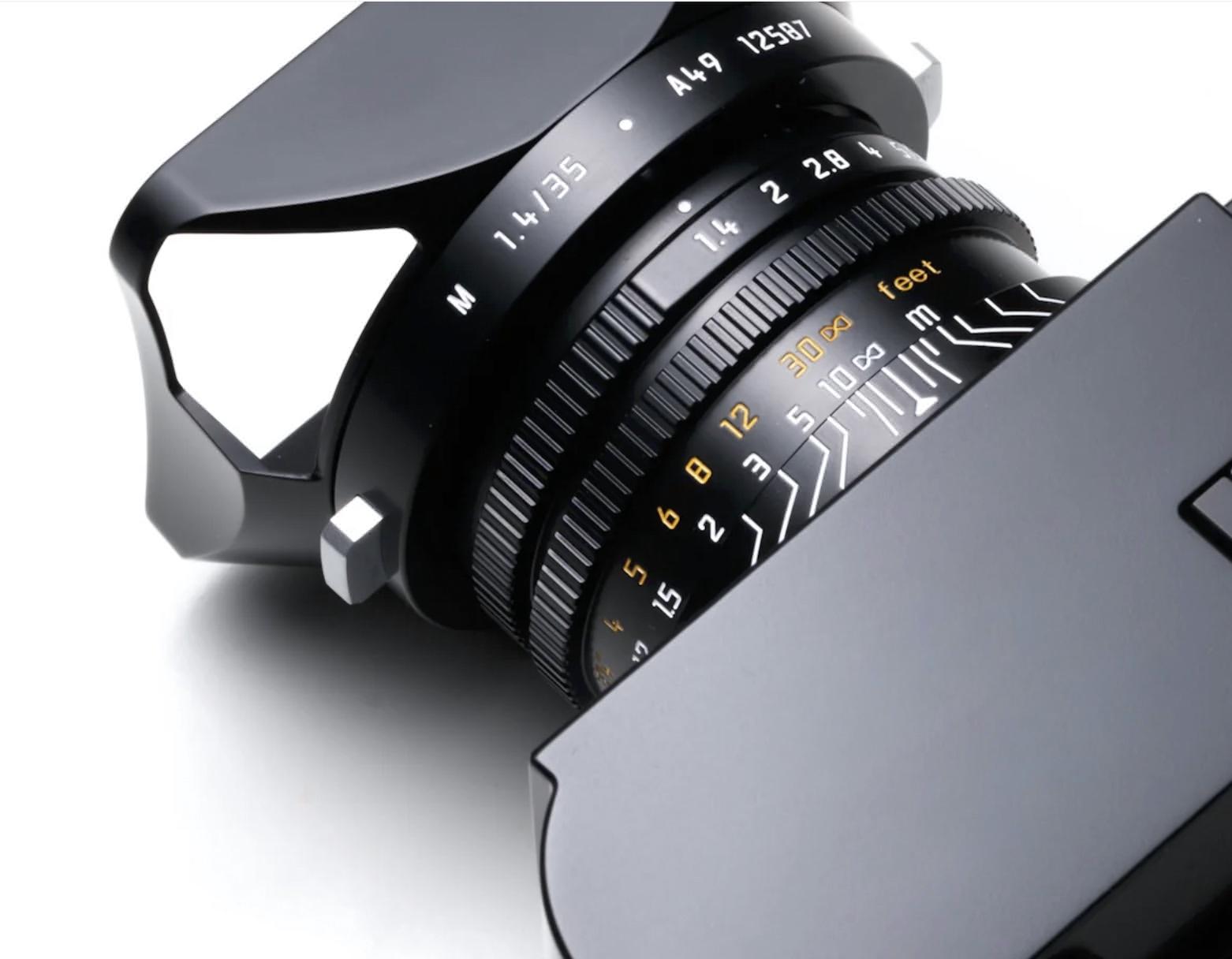
The top cutout on the lens is at 12 o’clock. You might expect the bottom cut out to be at 6 o’clock, but it’s not. It’s located just a small distance anti-clockwise on the lens edge. I was able to examine photographs of the original Leica AA lens, and it has the same feature. These indents are intentionally offset (not exactly 180 degrees apart) to ensure the lens hood locks onto the lens with a specific orientation.
The rectangular metal black lens hood has a cutout that can only be mounted with the proper orientation. It’s a small detail, but one that has been incorporated into the LLL lens. An original plastic Leica lens hood (12587) is listed on eBay for $2,700.
So how does the lens image?
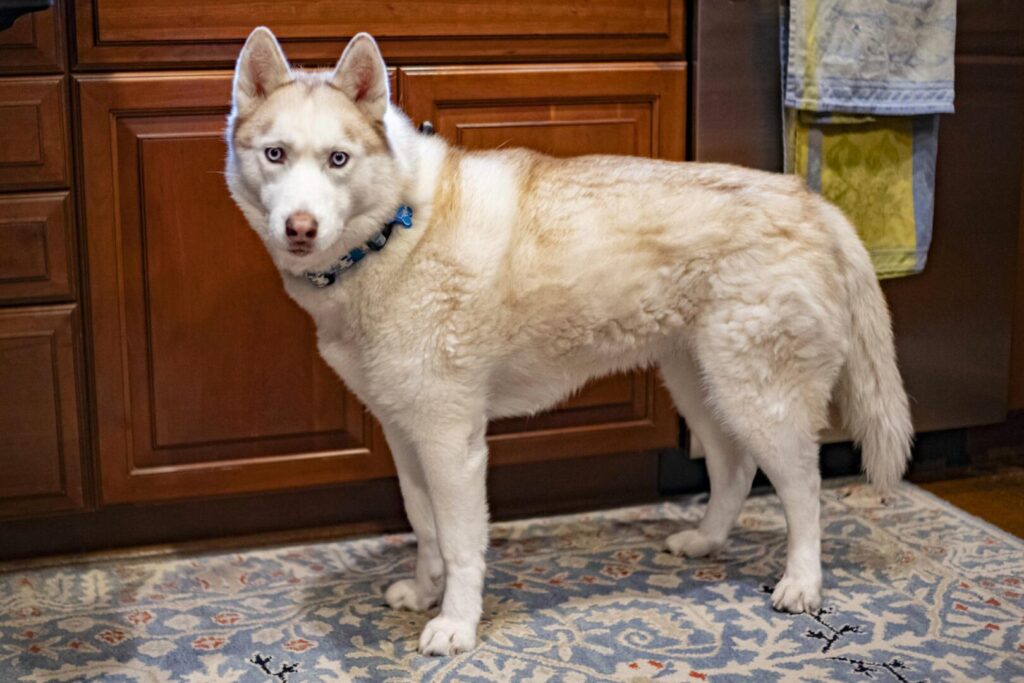
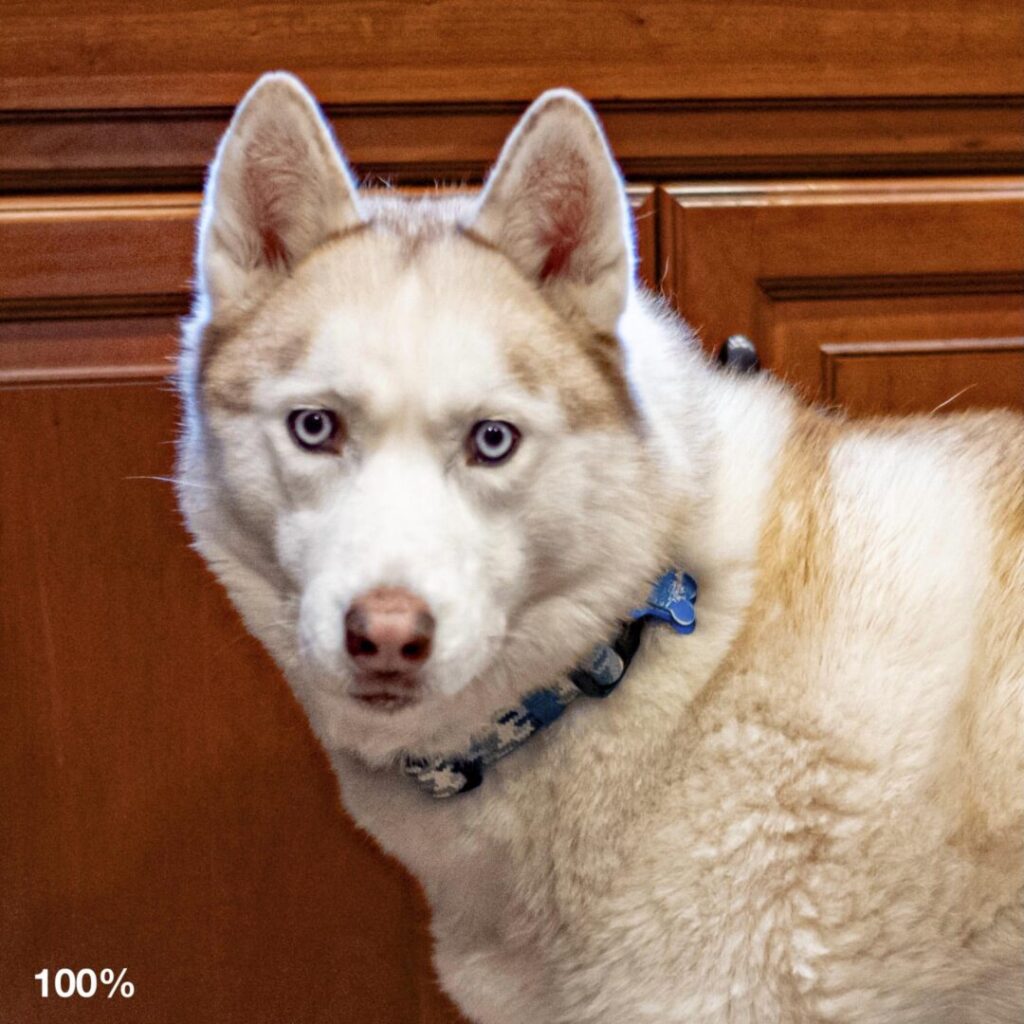
One of the best ways to test a lens is to use it wide open. The Light Lens Lab 35mm f/1.4 Double Aspheric is a joy to use wide open with a Leica M10. There is a very small amount of glow accompanied by a high level of sharpness centrally that is remarkable for a lens based on a 1990 design. The micro-contrast of the backlit fur on our Husky’s ears is very revealing, along with the colour rendering of her blue eyes.
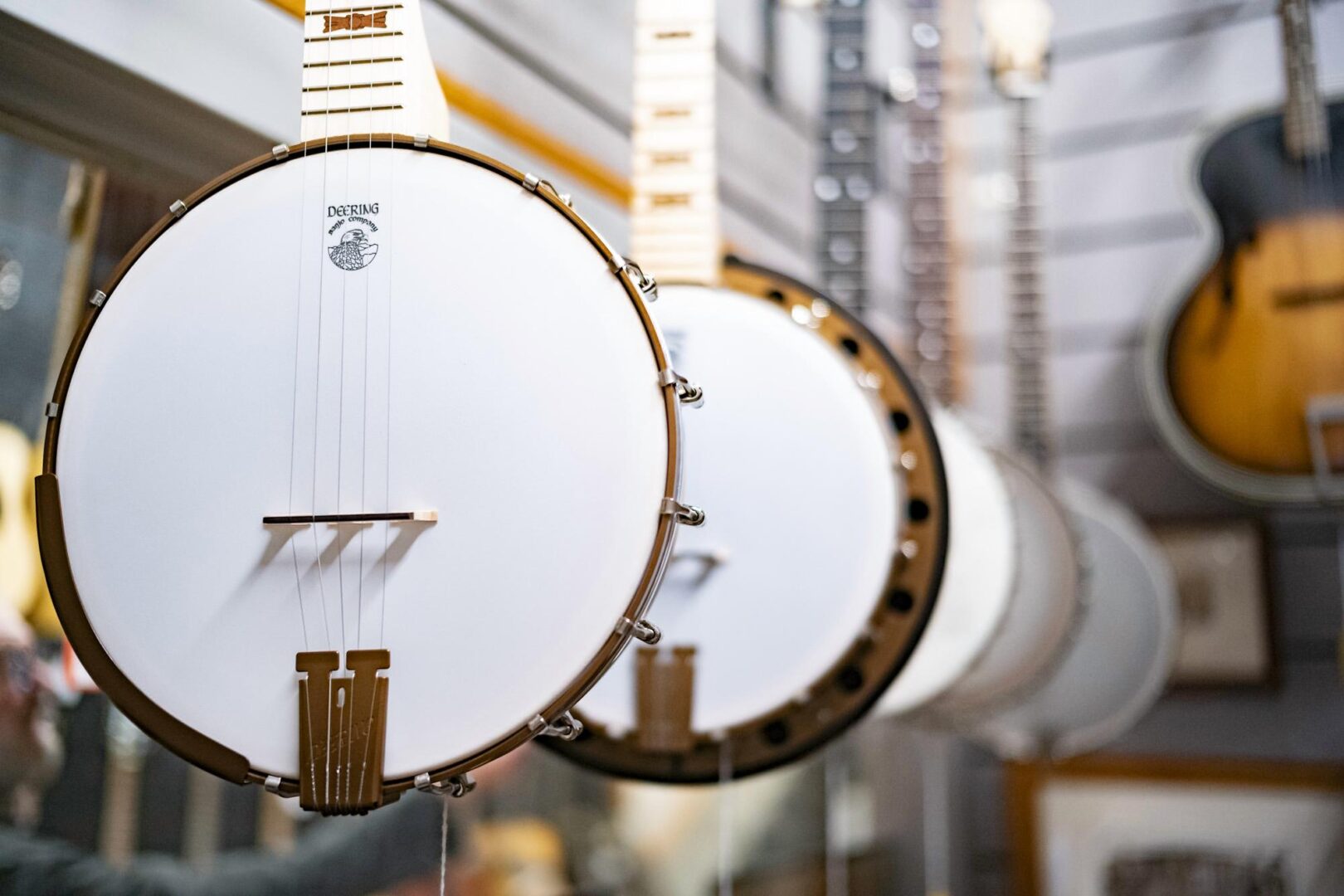
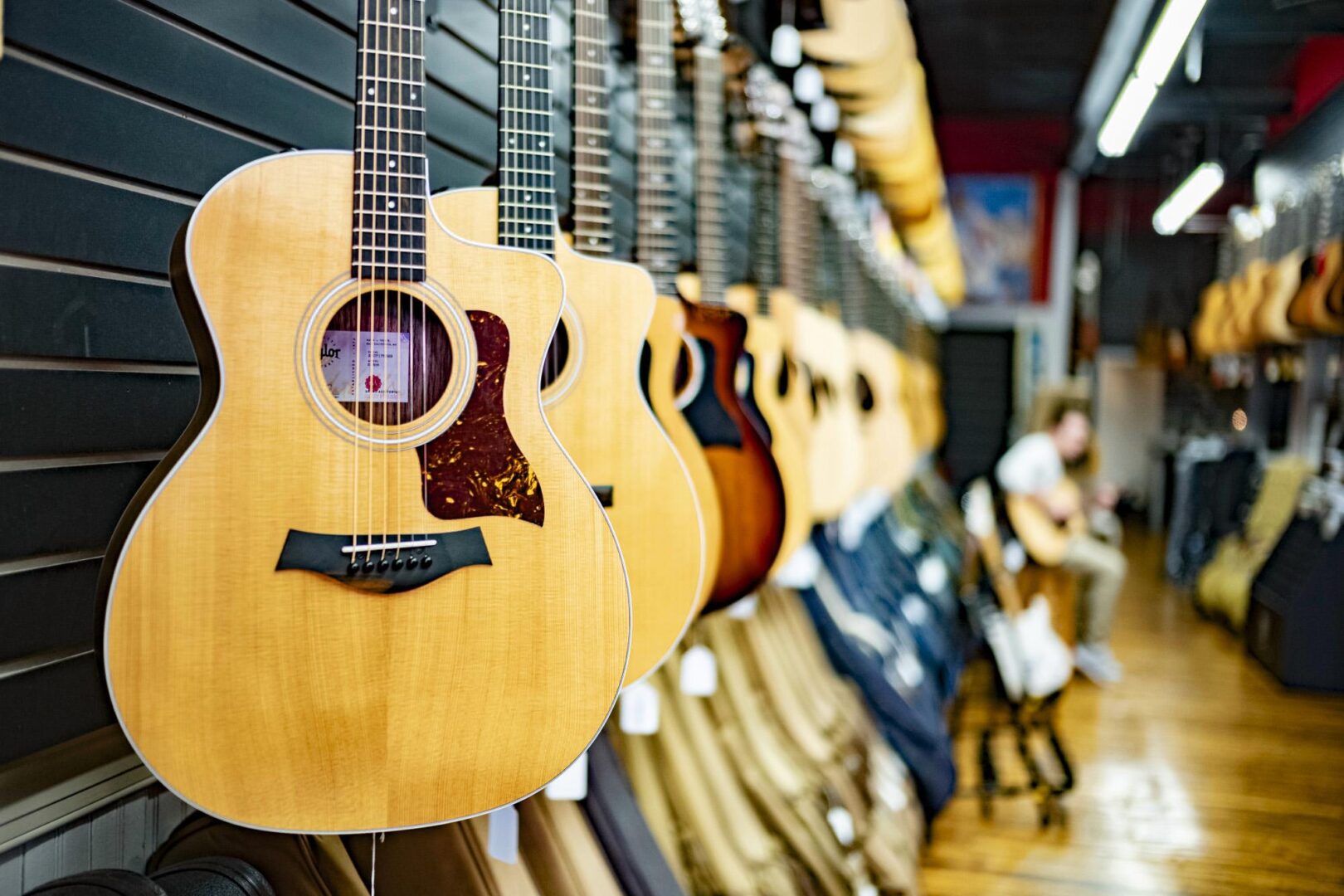
A sightseeing photographic trip through Roanoke, Virginia provided ample opportunities to test out the lens. At Fret Mill Music, a line-up of banjos and guitars shows the smoothness of bokeh at f/1.4.
At Black Dog Salvage, there is always something interesting to photograph.


The lens was able to handle high-contrast scenes at a Saturday outdoor market, with some residual chromatic aberration seen at the rooftop edge. Fortunately, most of the colour fringing can be removed in Lightroom.

There is some vignetting at f/1.4 which is mostly gone by f/4. The lens captures subtle colours.
This lens also worked well with a Leica M10 Monochrom. The lens will flare under the right conditions, producing reduced contrast and in some cases a circular effect.

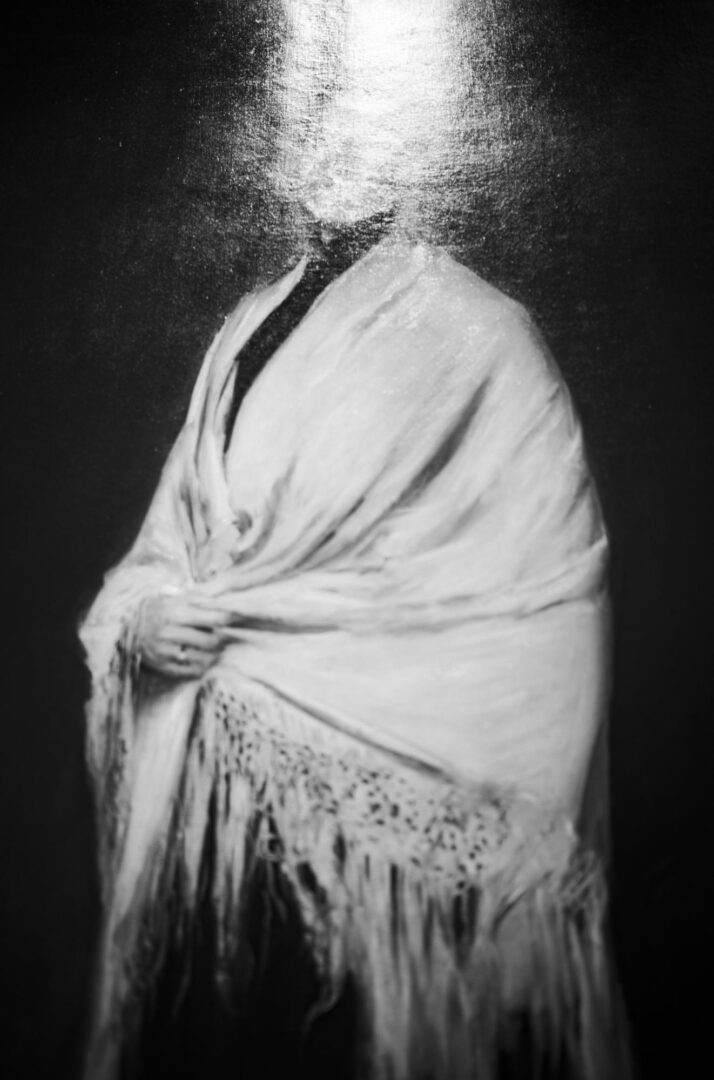
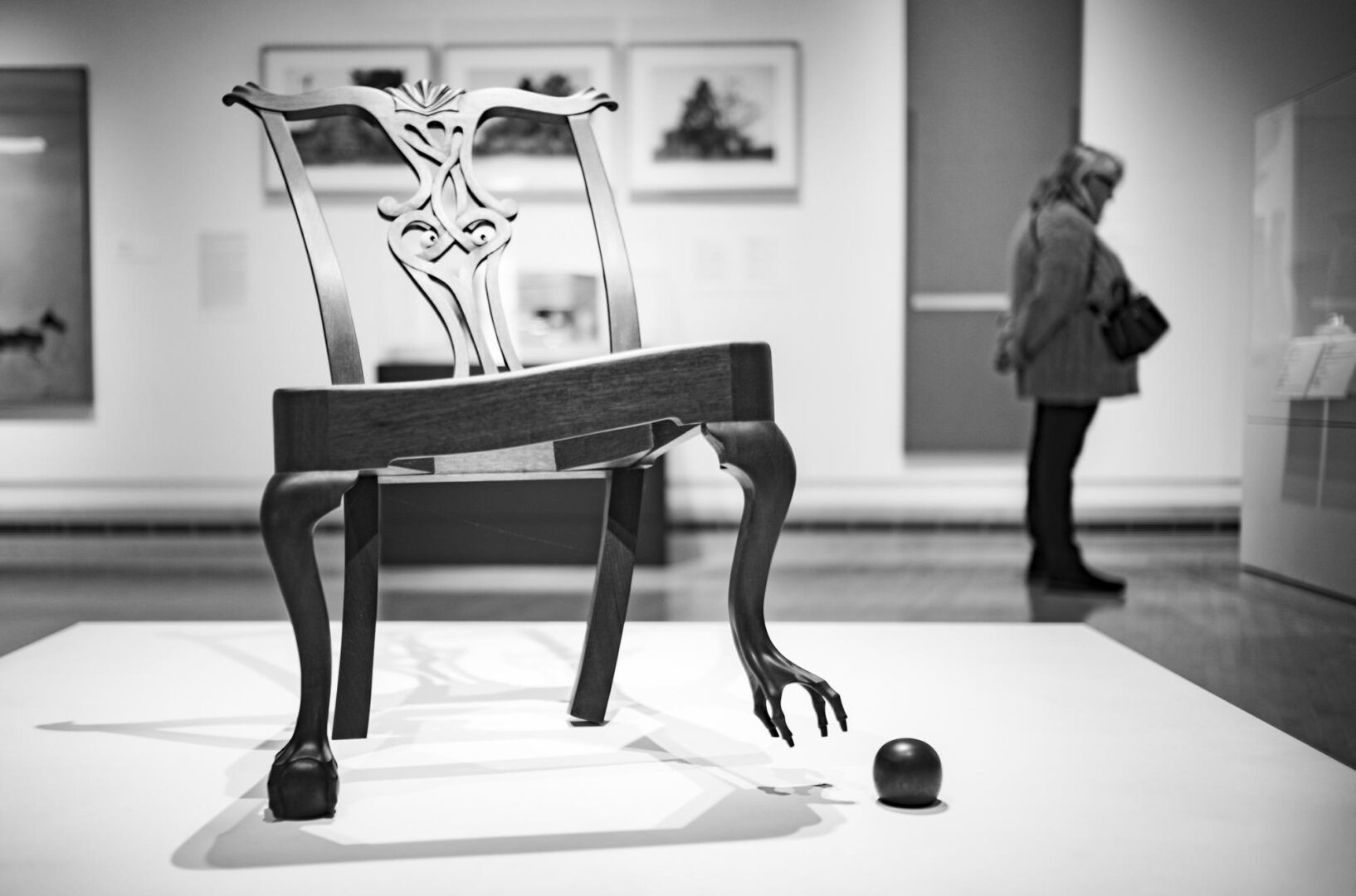
Elliott Erwitt captured some very memorable photos in museums. A visit to the Taubman Museum often provides the opportunity for fascinating images.

Light Lens Lab 35mm f/1.4 overview
It is an understatement that I was impressed with this lens. The quality of manufacturing, the optics, and the accessories that were included with the titanium version is remarkable for a lens in this price range.
With new Leica M bodies surpassing $10,000, and the latest Leica M 35mm f1.4 aspheric lens priced at $6,900, this lens is an absolute bargain.
The vast majority of my rangefinder lenses are made by Leica. Many of their designs are breakthroughs in imaging and precision manufacturing. The 50mm Apo-Summicron set new standards for optical excellence and is frequently attached to my M10M.
A recent trend by both Leica and Light Lens Lab is to re-create lenses from the last century. It has given us “new” options for photography. Sharper is not always better. My favourite 28mm is Leica’s tiny f/5.6 Summaron M lens. My new favourite 35mm is LLL’s 35mm f/1.4 AA lens. It relieves a mistake I made many years ago. This is a wonderful time to be a rangefinder photographer.
Make a donation to help with our running costs
Did you know that Macfilos is run by six photography enthusiasts based in the UK, USA and Europe? We cover all the substantial costs of running the site, and we do not carry advertising because it spoils readers’ enjoyment. Any amount, however small, will be appreciated, and we will write to acknowledge your generosity.
Richard, I currently own three 35mm Leica M lenses. A 35mm V4 black (Wetzlar), a 35mm V4 chrome (also Wetzlar), and a 35 APO. All of them are outstanding in their own way. The chrome V4 has doubled in value since I bought it. The 35APO is stunning at all apertures and on an M11M, is equivalent of a 100MP medium format camera. I had the black V4 CLA’d by Leica, and they added a 6-bit flange, since I use it often. The KOB is a terrific, small lens. The only 35mm lens I may get in addition might be the first 35 Summicron ASPH. Nice performance and size and a reasonable cost. I do agree with your regret at letting go the 35 double asph and the V4. Many of us have similar regrets, including me for trading in my first M6 and a 50mm Summilux.