
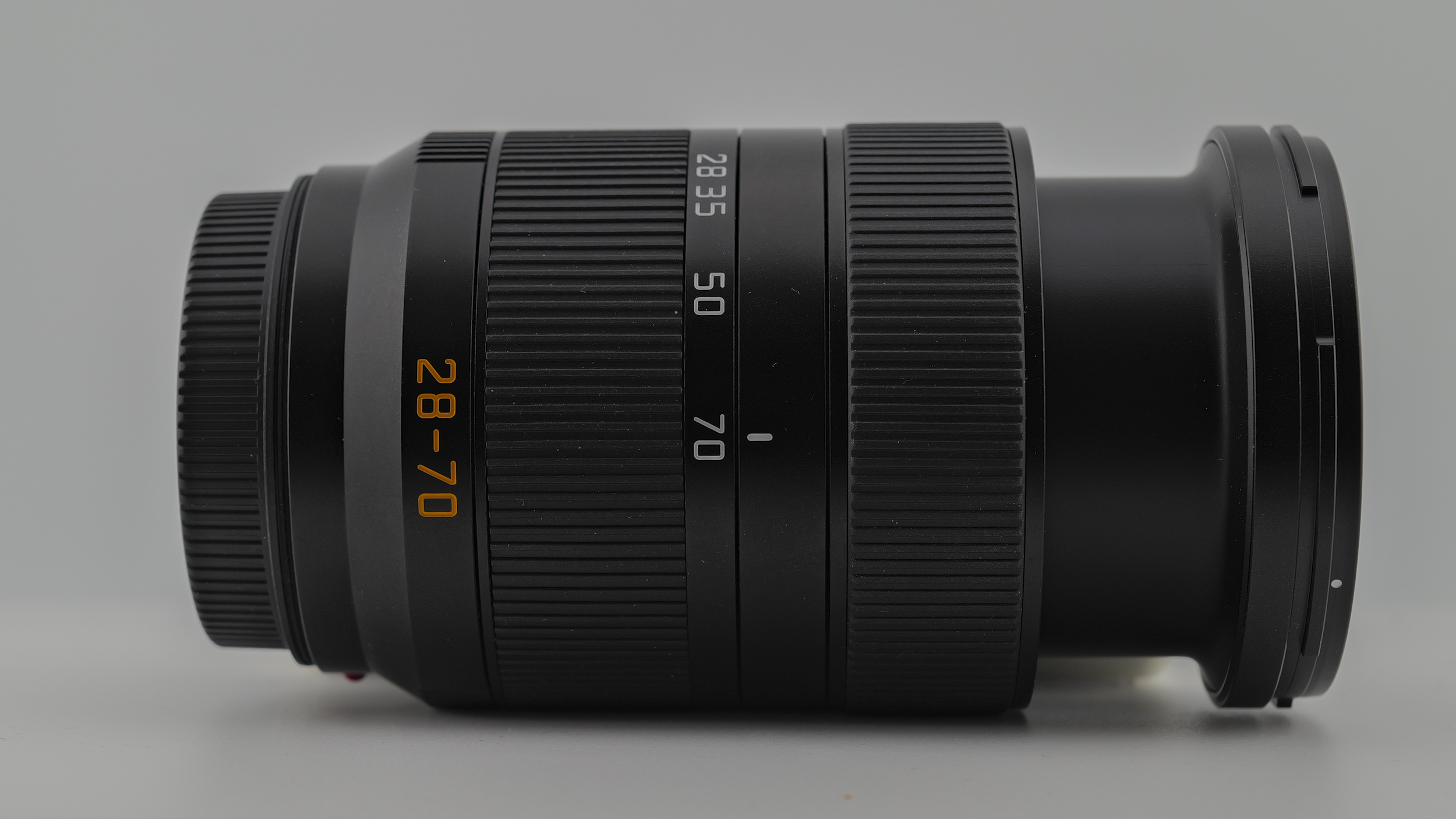
Not so long ago, many photographers dismissed the “standard zoom” as a mere kit lens for beginners. Although this misconception lingers, the truth has changed dramatically. Modern standard-range lenses, such as this 28-70mm zoom duet from Leica and Sigma, perform remarkably well, often matching prime lenses in quality and rendering.
Primes are optimised for a single focal length and usually have simpler optical designs. They tend to show less distortion, less chromatic aberration, and higher peak sharpness or micro-contrast than zooms. However, recent pro-grade f/2.8 zooms can match or nearly match good primes at comparable apertures.
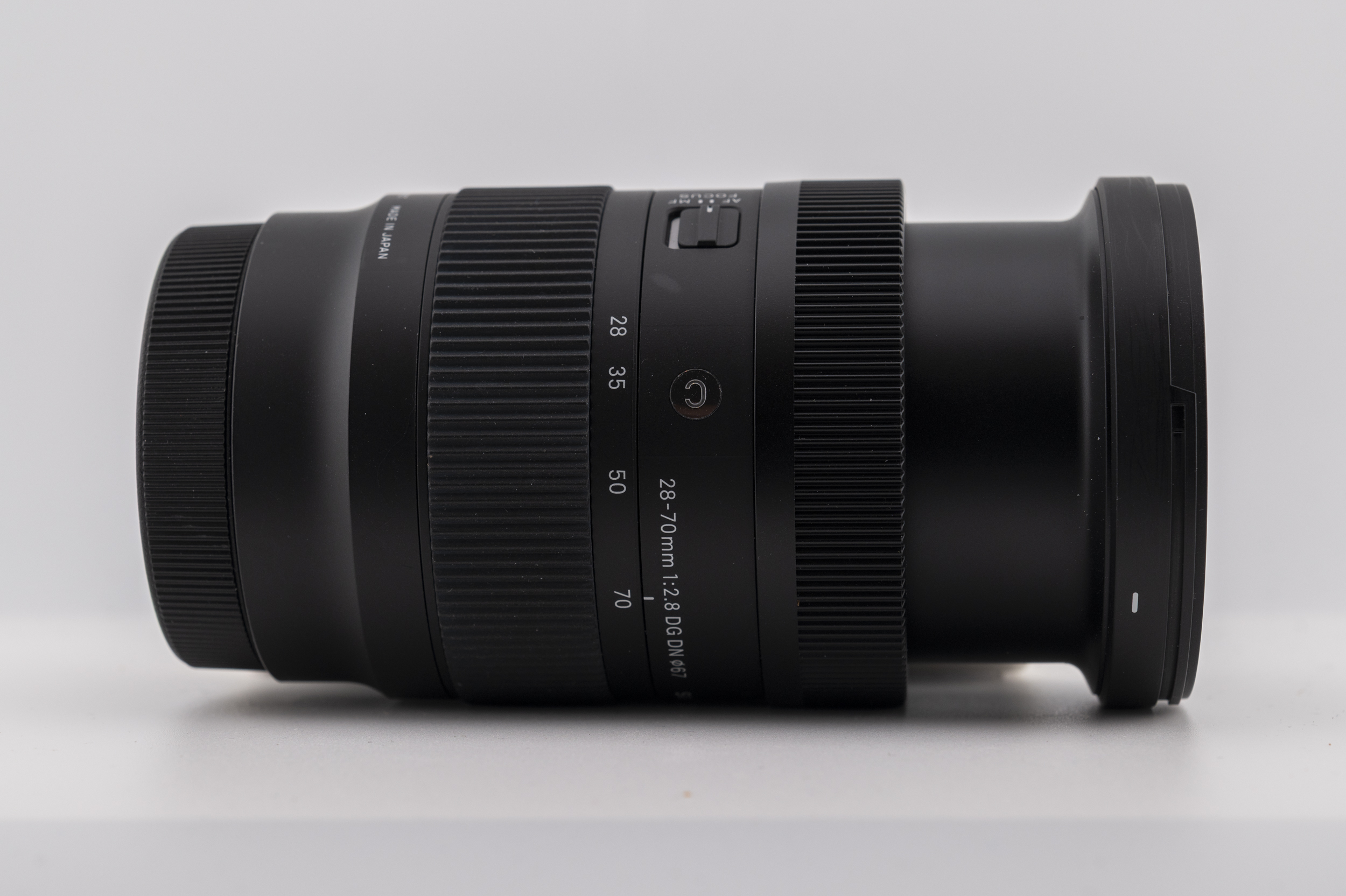
This article examines how one versatile 28-70 zoom — relatively modest focal-length range — can serve as a permanent everyday optic. However, when choosing an ideal zoom, photographers must weigh three critical factors: focal-length range, maximum aperture, and weight. Designing a zoom lens involves inevitable compromises.
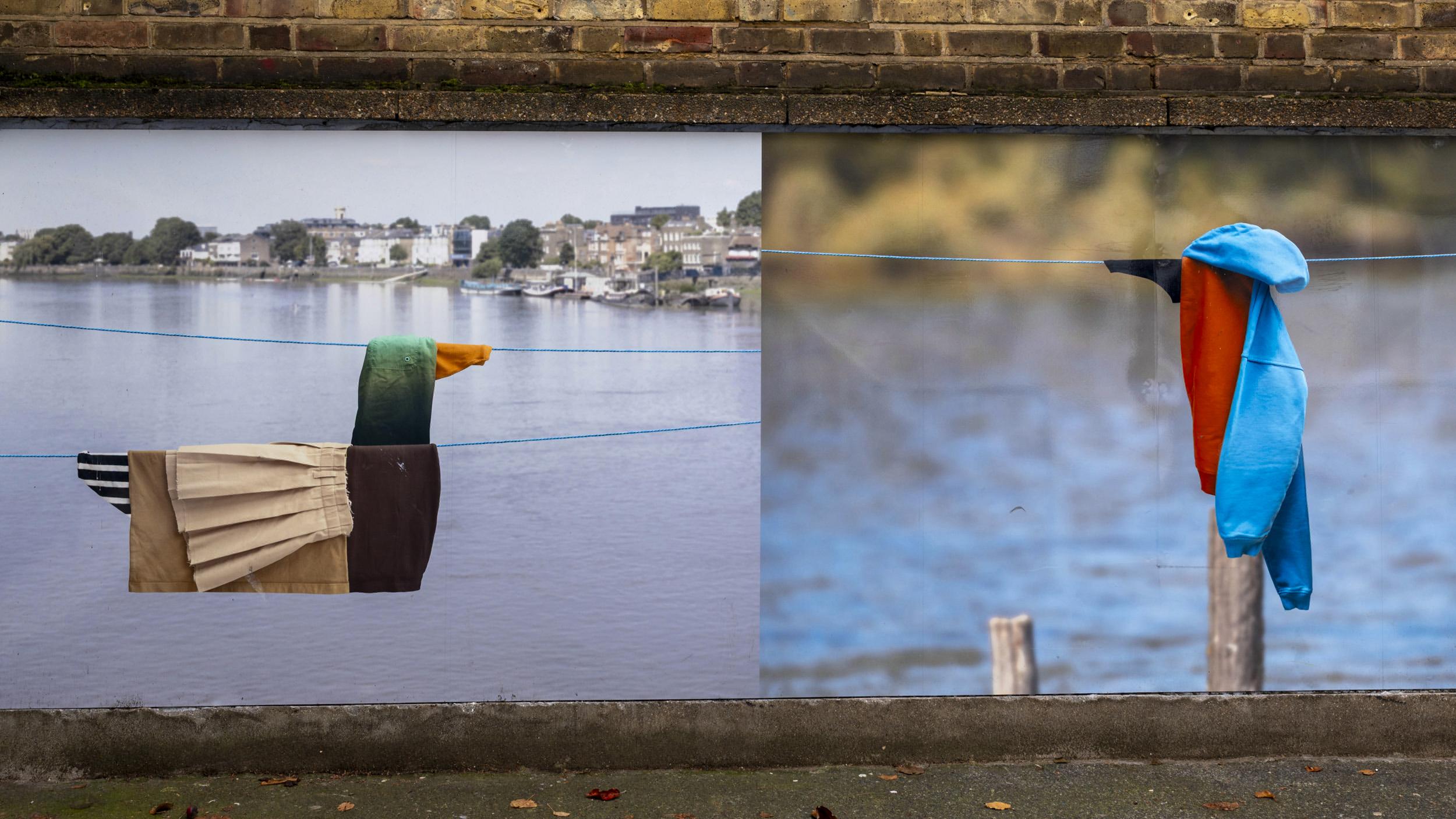
All photographs in this article are from DNGs with minimal post-processing apart from minor exposure adjustments, shadows, and highlights. Both lenses were shot exclusively on a Leica SL3
If you want the widest range, the fastest aperture, and the best optical performance, you must accept additional size, weight, and cost. The Leica 24–90 f/2.8-4.0 Vario-Elmarit-SL ASPH is a clear example of this kind of trade-off.
Compared with most everyday zooms, it stretches wider at 24mm and longer at 90mm, offering greater compositional flexibility. It’s a great lens that produces superb results. and it has always been my favourite Leica zoom because of its near-prime capabilities. But it is heavy, and you have to think twice about using it as a standard fitment.

At the other end of the spectrum, photographers who value lightness and an extended focal range over speed will find the Sigma 20–200 f/3.5-6/3 Contemporary an excellent all-purpose L-Mount lens. I tested this lens earlier this year, and for the price, it delivers impressive results and outstanding versatility.
However, this review focuses on faster constant f/2.8 28-70mm zooms — lenses capable of exceptional performance and suitable for daily use without tempting you to reach for a bag full of alternatives. Two L-Mount standouts in this category are the Leica 28–70mm f/2.8 Vario-Elmarit-SL and the Sigma 28–70mm f/2.8 DG DN Contemporary, both well-matched to the Leica SL3.

Panasonic doesn’t offer a direct equivalent, though the Lumix 24–60mm f/2.8 deserves consideration. And for photographers satisfied with slower optics, the popular Lumix 20–60mm f/3.5-5.6 remains a personal favourite because of its ultra-wide 20mm end — though that’s a topic for another article.
At the outset, I should confess that I own the Leica 28–70mm f/2.8 Vario-Elmarit-SL. I bought it on Jonathan Slack’s recommendation, wanting a fast, all-round zoom with excellent weather protection. In his review, Jono judged its results comparable to those of the pricier and heavier 24–70mm f/2.8 Vario-Elmarit-SL.
Sigma has since sent me a review copy of its 28–70mm Contemporary, and I’ll be comparing the strengths and weaknesses of these two lenses head-to-head.

Design and materials
Everyone knows that both these lenses come from the same factory: Sigma’s plant in Aizu, 185 miles (300 km) north of Tokyo. Sigma enjoys an enviable reputation for optical excellence and build quality, and “Made in Japan” arguably now matches “Made in Germany.”
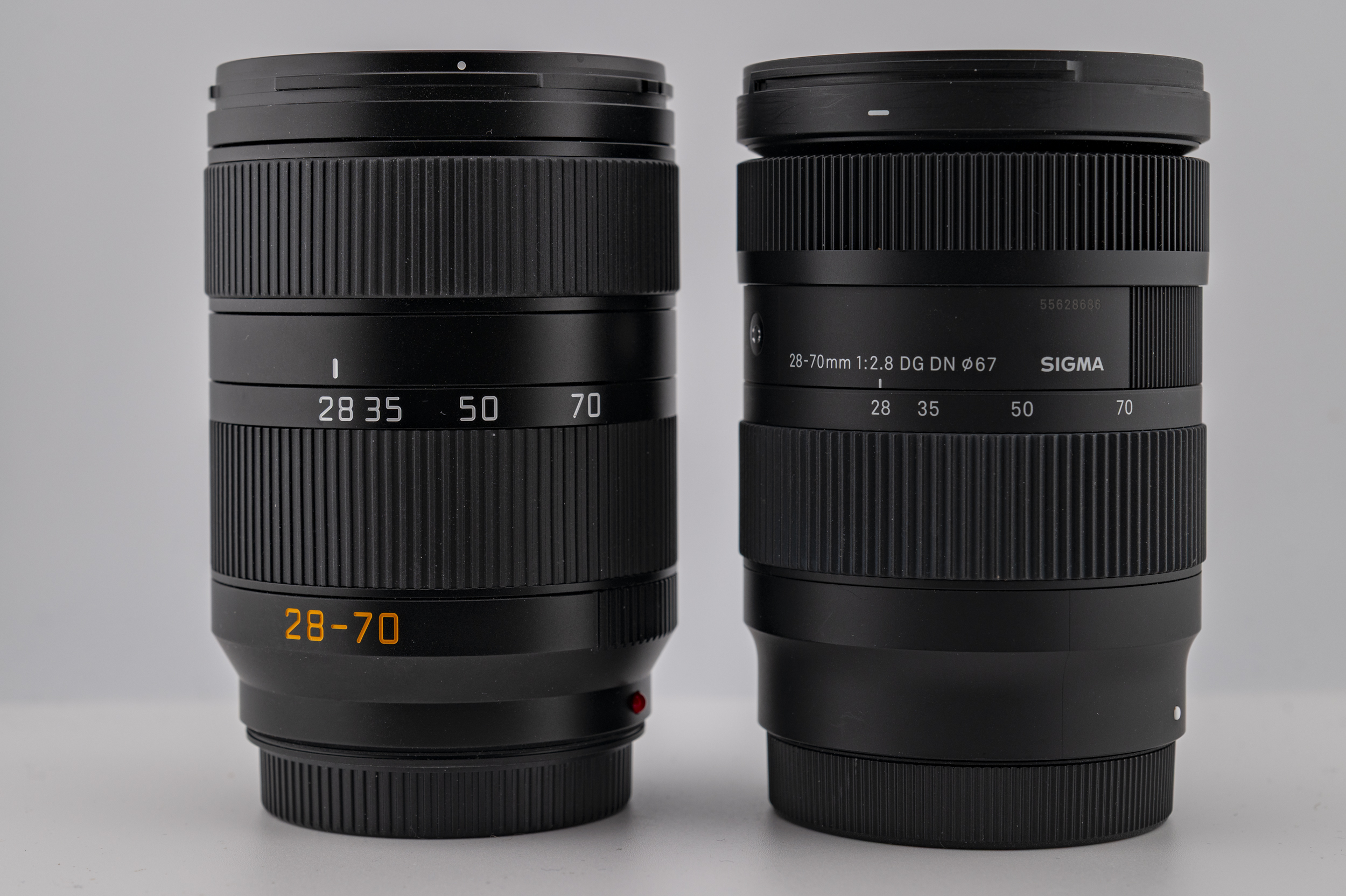
Optically, the two lenses appear to be identical. However, their materials and external appearance differ radically. Sigma builds its lens from TSC (Thermally Stable Composite polycarbonate). Experience with other lenses in the range made from this material has been positive, and it does not seem inferior, just different. And light. You simply have to decide which you prefer.

Graphics
The graphics and overall ambience of the Contemporary are typically Sigma. This lens looks more discreet than the Leica, with subdued white-on-black graphics and no inscription around the front element. Instead, the lens designation is inscribed on the barrel, in front of the focal-length scale, where it can be a little distracting.
Leica, by contrast, sticks to brand tradition, with larger, more prominent and more readable focal-length markings, plus the familiar large orange focal-range inscription. The bold white lens description around the front element is prominent, although it is out of sight in use. The lens also uses an all‑metal body with the sleek styling that characterises all SL lenses.

The compact dimensions of these two lenses are almost identical. Both are short by virtue of the restricted focal length range, and both extend modestly by a mere 23mm. By zoom standards, they are unobtrusive and easy to handle.
Stabilisation
Neither lens has image stabilisation, which is par for the course for modest-range zooms of this type. However, when used on a Panasonic or Leica camera, the in-body stabilisation is adequate. Lumix offers stabilisation on several of its standard zooms, and the proprietary Dual IS system1 (when a compatible Lumix lens is used on a Panasonic camera) does typically allow a couple of extra stops of stabilisation.
Nonetheless, this is not a real issue if you are using a stabilised camera and have a maximum medium-telephoto reach of 70mm.
Controls
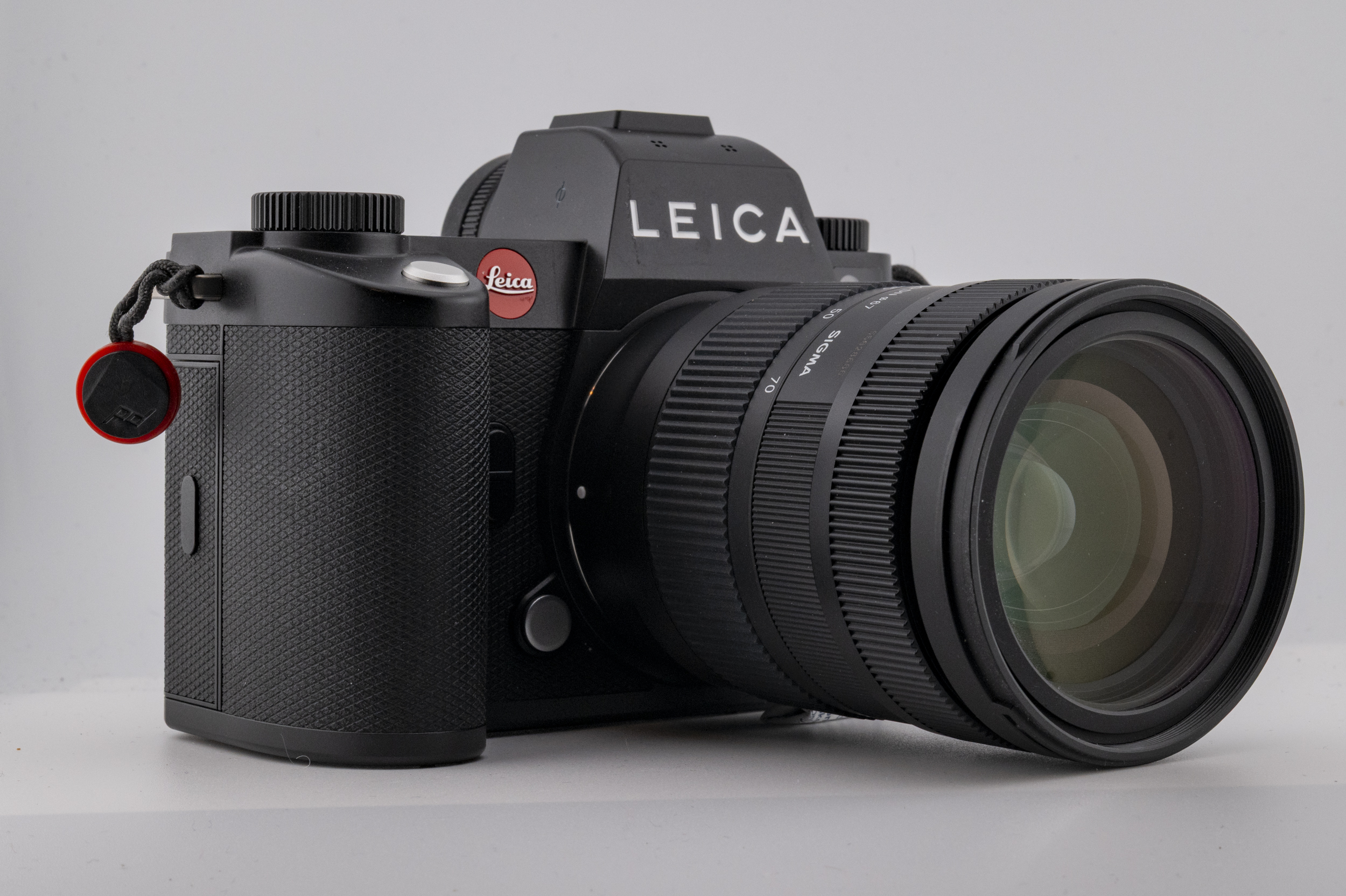
Both lenses offer a similar set of controls and omit an aperture scale. However, Sigma includes a physical AF/MF focus slider on the barrel, a handy feature if you often switch between autofocus and manual focus.
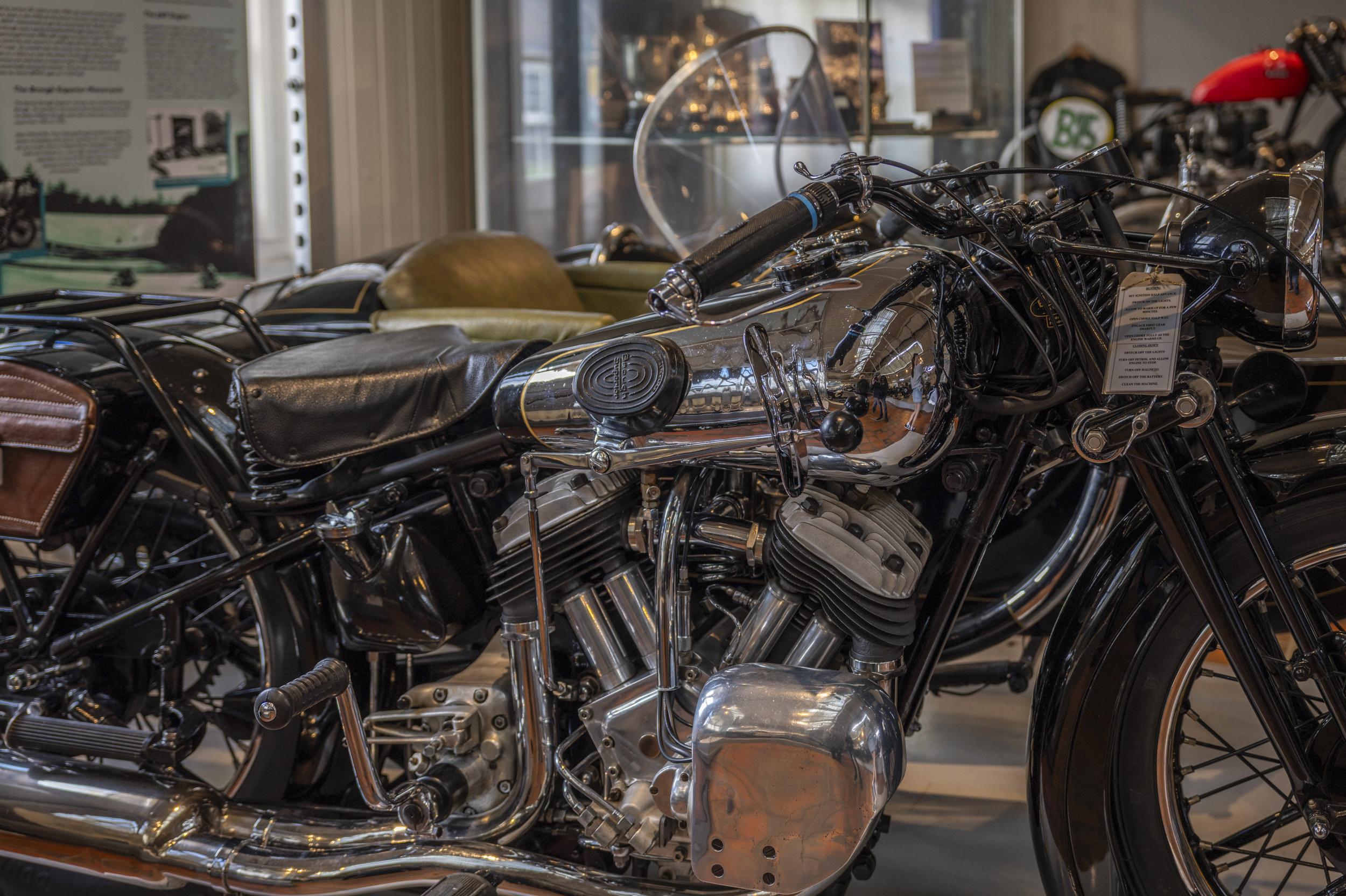
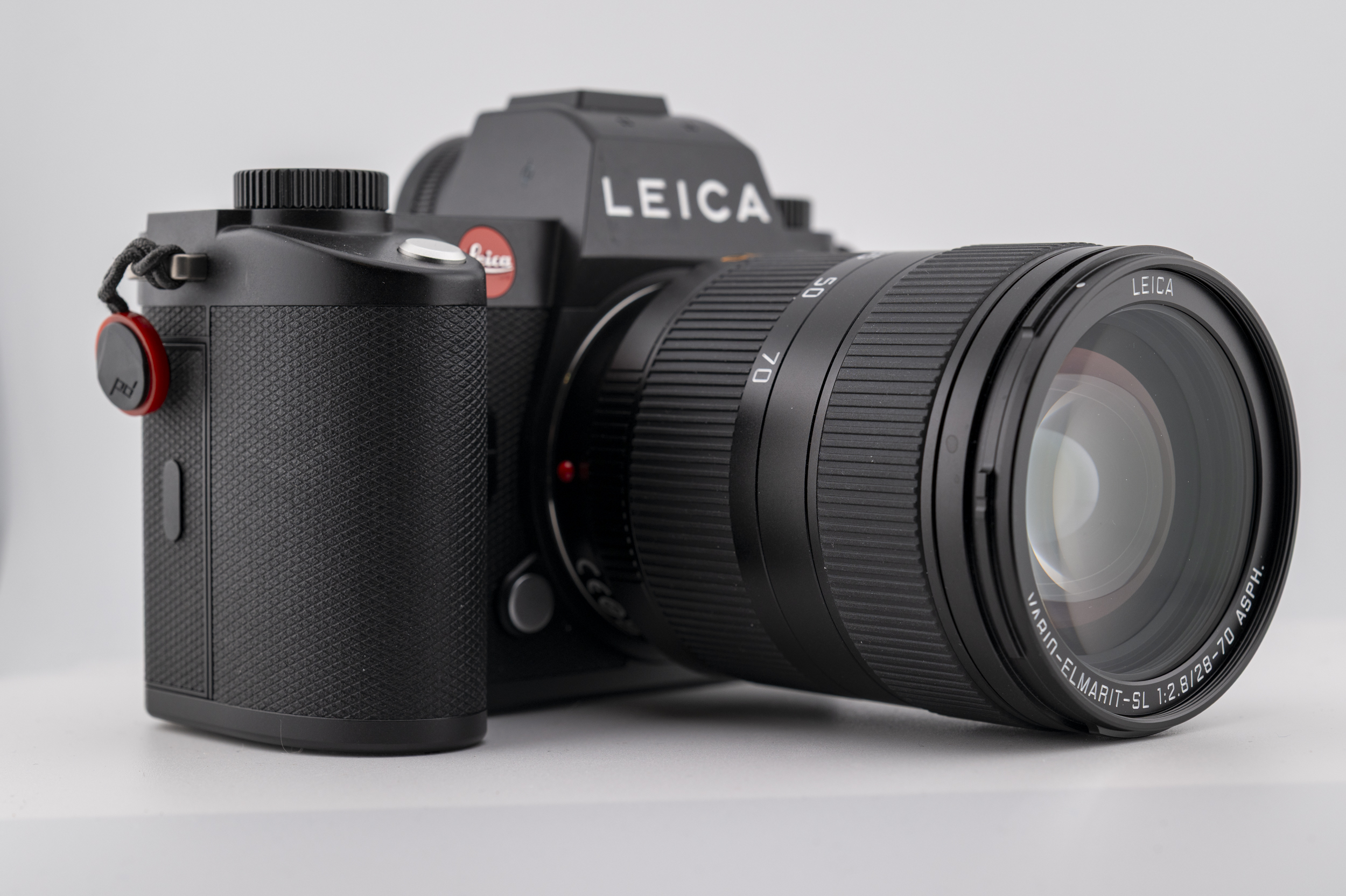
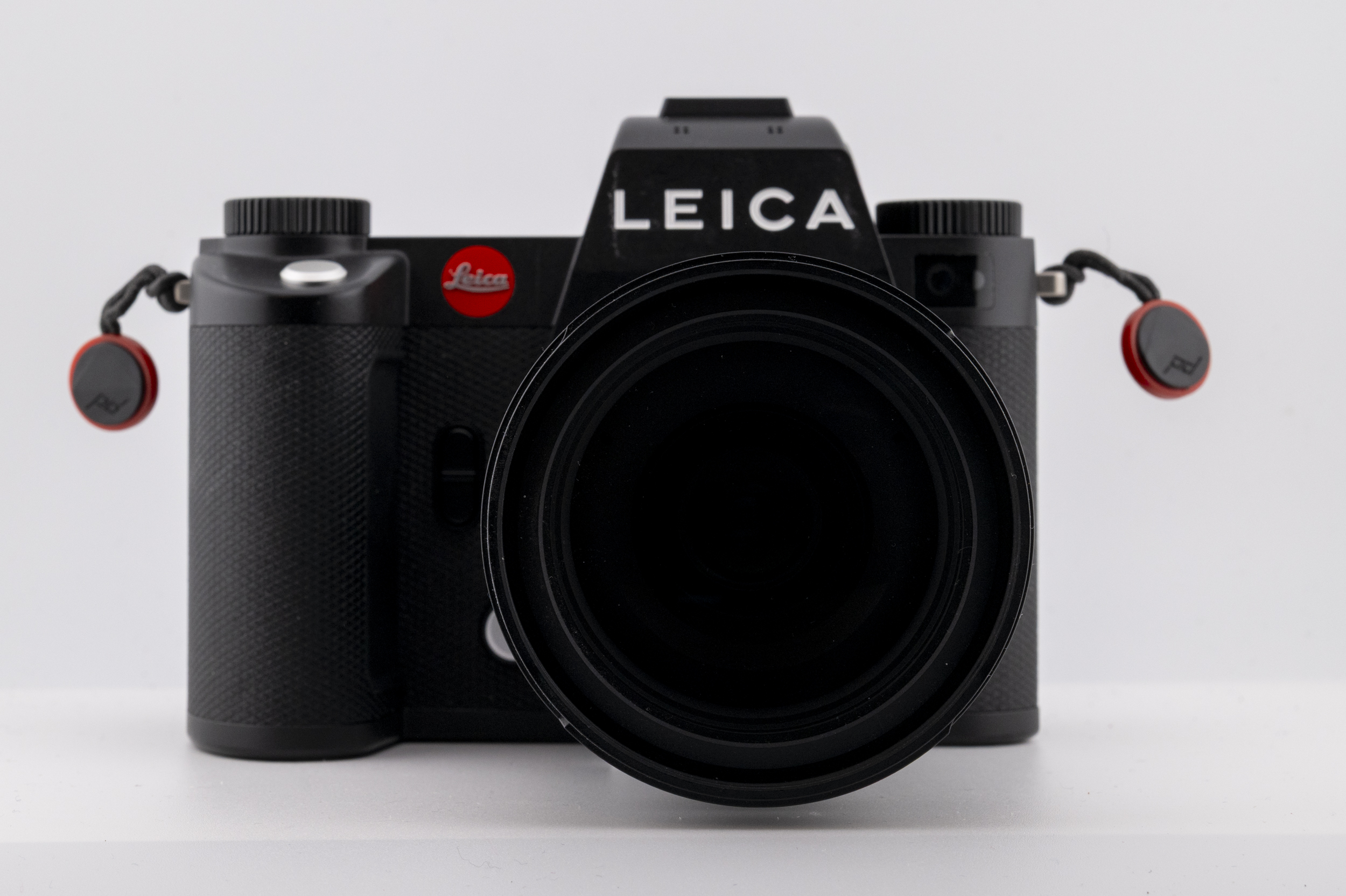
No one can deny that this lens complements the appearance of a Leica SL3, or any earlier SL, more convincingly than the Sigma. The Sigma’s matte black finish, when mounted on an SL, does not look as aesthetically pleasing as Leica’s shiny metal jacket. But all this is deeply subjective.

That said, the Leica lens does feel more substantial and arguably more pleasant to handle, although the difference is marginal at best. The impression of better quality is bolstered by the extra weight. At this level, however, one ends up clutching at straws.

Haptics
It has been suggested that the Leica’s zoom and focus rings operate a little more smoothly and with better damping, although such impressions are a matter of opinion and may simply reflect the different materials. In side‑by‑side use, both Leica and Sigma rings feel identical. I’ve twiddled and twiddled both lenses and, frankly, I find no difference.
As reader Fiatlux points out in the comments section below, the zoom ring on Sigma lenses rotates clockwise from wide to telephoto (viewed from the camera, looking towards the subject). Both these lenses follow the Sigma convention, which is contrary to Leica’s zoom-ring direction on its lenses, such as the 24-90 Vario-Elmarit. This can be irritating if you have both Leica and Sigma-sourced zooms.
Both lenses produce the same distinctive sound as the zoom extends. Raise the SL to your eye and twist the zoom without looking, and you would struggle to identify which lens sits on the camera.

The rubberised control rings feel identical as well, although those on the Vario-Elmarit are slightly deeper and offer marginally more grip. Yet despite these similarities, the two lenses could hardly differ more. Without prior knowledge, most observers would never guess that both come from the same factory.

Leica aficionados understandably accept a much higher price for what they regard as the better‑looking lens. The Leica certainly matches the SL3 and earlier SL bodies more harmoniously, and that visual synergy helps explain its popularity.
Weather sealing
Weather sealing proves more difficult to compare. Testing it properly would risk destroying a lens and incurring the wrath of the manufacturer’s press office, so one has to rely on published specifications.

As part of the Contemporary line, the Sigma offers basic sealing. Sigma essentially provides a mount gasket and general “dust and splash” resistance. However, reports suggest that some later Contemporary lenses (including the excellent 20–200 zoom reviewed recently) receive better sealing than earlier models, such as this 28–70.
Leica, by contrast, claims better weather protection, including dust and splash resistance and an “AquaDura” coating on the front element that repels water and minimises fingerprints. Even so, no one would recommend immersing the lens in a bucket of water. According to Leica, when the Vario-Elmarit is used on an SL3, the combination has IP54 certified weather sealing.
The weather sealing aspect remains difficult to quantify in everyday use, apart from anecdotal episodes of use in persistent rain. Most amateurs can choose when to go out and shoot; if it rains cats and dogs, they can simply leave the camera bag closed.
However, photographers who cover events and cannot control the conditions, need to prioritise the best possible weather protection for both lens and camera. In that respect, the Leica Vario‑Elmarit will provide more comfort.

Build overview
The Leica 28–70 emphasises durability, environmental sealing and premium build quality aimed squarely at professional use. The Sigma 28–70, by contrast, targets a lighter, more compact package with adequate but more limited weather protection.
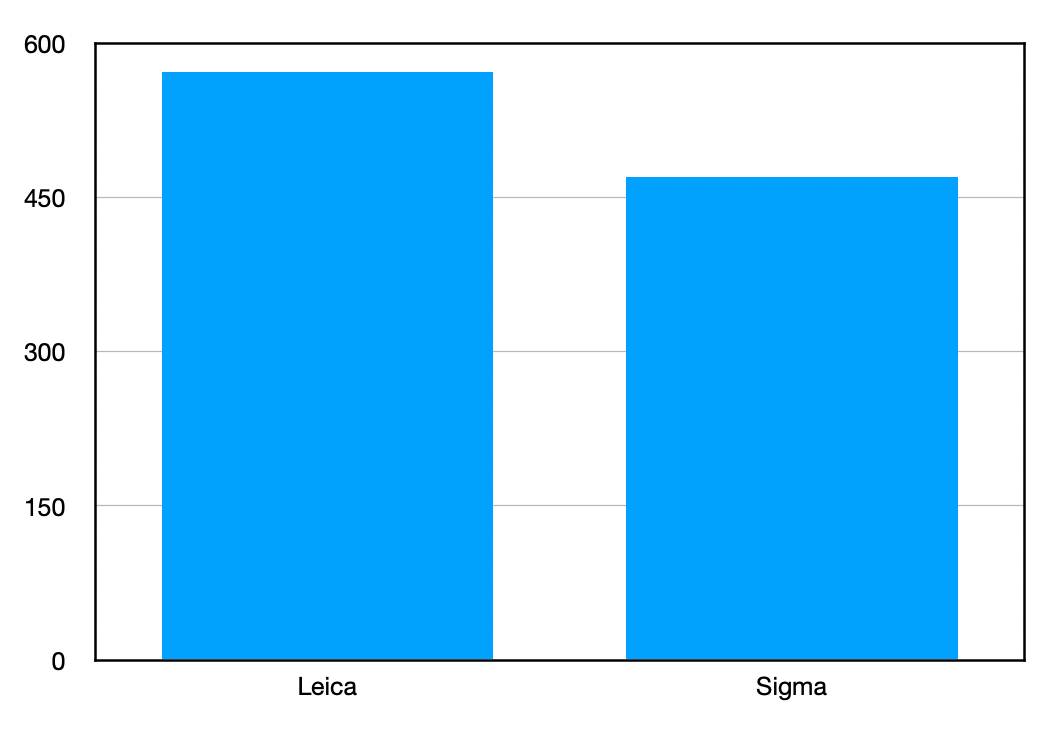
Leica’s all‑metal body and extra attention to sealing add almost 22 percent to the weight compared with the Sigma. The Leica tips the scales at 572 g versus roughly 470 g for the Sigma.
In finish and handling, the Leica’s anodised metal surfaces and mechanical controls feel and look more premium. Sigma’s blend of plastic and metal concentrates on practical handling and light weight rather than overt luxury.

Statistics
While these lenses are strikingly different in appearance, the specifications are strikingly similar…
| Specification | Leica Vario-Elmarit | Sigma Contemporary |
|---|---|---|
| Focal length | 28-70mm | 28-70mm |
| Maximum aperture | f/2.8 | f/2.8 |
| Minimum aperture | f/22 | f/22 |
| Optical formula | 16 elements, 12 groups, 3 aspheric | 16 elements, 12 groups, 3 aspheric |
| Minimum focus distance | 0.19m at 28mm, 0.38 at 70mm | 0.19m at 28mm, 0.38 at 70mm |
| Maximum magnification | 0.30x (1:3.3) at 28mm | 0.30x (1:3.3) at 28mm |
| Aperture blades | 9 | 9 |
| Autofocus | Yes, stepping motor | Yes, stepping motor |
| Image stabilisation | No | No |
| Weather sealing | IP54 when used with SL3/dust and splash proof | Mount gasket/dust and splash proof |
| Filter size | 67mm | 67mm |
| Dimensions (Length×Depth) | 102×73 mm | 101.5×72.2mm |
| Extended length | 125.5mm | 125mm |
| Weight | 572g | 470g |
| Build material | Magnesium/aluminium, full metal | TSC composite/metal |
| Optimised for hybrid (photo/video) | Yes | Yes |
| Lens coating | Hydrophobic Aqua-Dura coating on external lens and multi-layer state-of-the-art anti-reflection coatings on all optical surfaces | Super Multi-Layer and Nano Porous coating + water oil repellent |
The optical comparisons make their case clearly. In fact, everything apart from materials and weight remains more or less identical. Even the lens coating comes down to interpretation. Are they just alternative words to describe the same thing? I’m not convinced Sigma would deliberately use an inferior coating on their own lenses.

Handling and performance
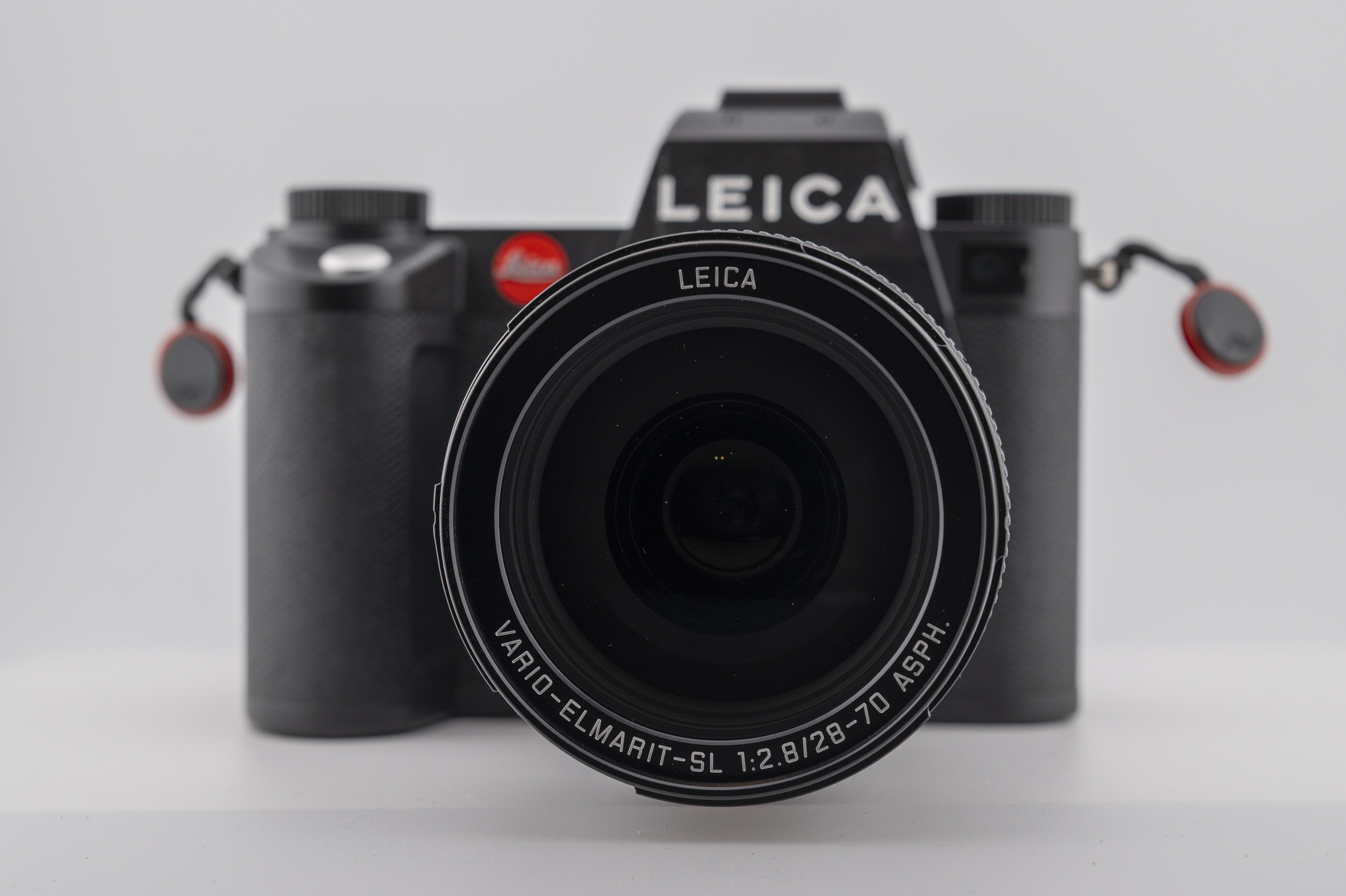
The Sigma feels better balanced on the SL3, which comes as no surprise — though the Vario‑Elmarit isn’t far behind. That 100g weight difference makes itself known.
As noted earlier, both lenses show identical smoothness in their aperture and zoom rings, which operate with silky ease and produce the same quiet zoom sound.
The wide f/2.8 maximum aperture gives either of these lenses outstanding versatility for general use. The widest aperture is enough to quell a craving for a fast prime, unless wafer‑thin depth of field is essential.
In contrast, slower zooms with broader focal ranges often push photographers to carry a faster prime to compensate for their limited aperture.
Both lenses deliver nearly identical autofocus performance. Other reviewers support this view, consistently finding minimal difference in autofocus speed or accuracy between the Leica and Sigma versions. Both respond well in general use and perform reliably for stills and (I am assured) video alike.

In side‑by‑side testing, however, some users — particularly those shooting with Leica SL cameras — observe slightly quicker eye‑AF responsiveness from the Leica lens. This suggests that Leica’s fine‑tuning for its camera system could provide a marginal advantage in AF consistency and tracking. I have to say that I was unable to detect this difference. It is possible it exists, but I did not notice it in everyday use.

Image quality
In direct comparison, I can detect no overt difference between the two image sets. Both lenses use essentially the same optical formula and produce very similar real‑world rendering.
Some reviewers maintain that the Leica 28–70 has slightly better consistency across the frame, especially on high‑resolution bodies, likely because of Leica’s coatings, tighter tolerances, and in‑camera profiling. But, again, this isn’t obvious to me when using the lenses side by side on the SL3, which fits the description of high resolution.
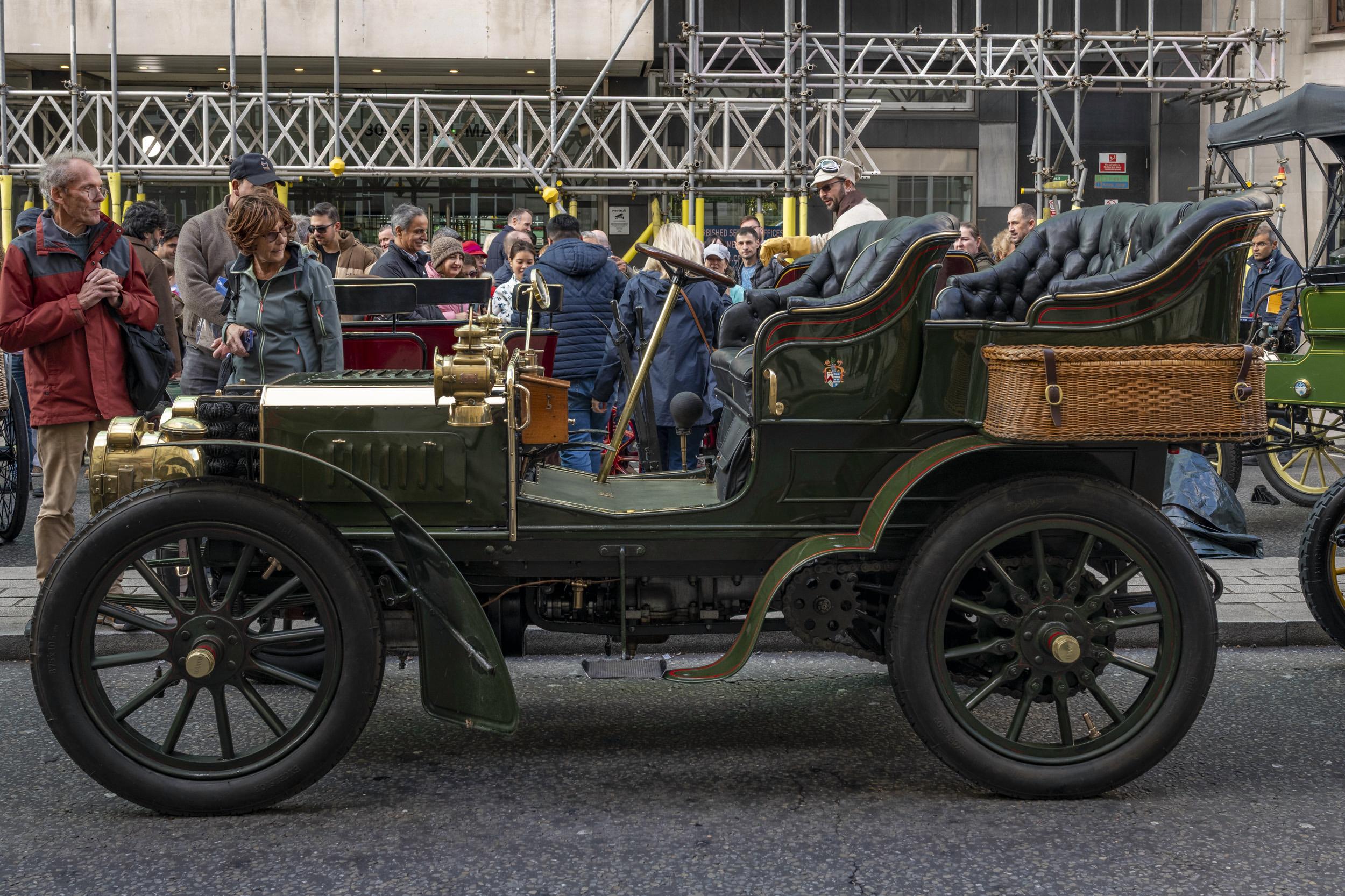
According to Red Dot Forum, independent testing rates the Sigma 28–70 as very sharp in the wide half of the range at f/2.8, with performance dipping a little at 70 mm until stopping down to around f/5.6.
In contrast, hands‑on reviews of the Leica 28–70 on the 60 MP SL3 report high resolving power across the zoom range, retaining fine texture and detail even at 100 percent magnification. Other reviewers attribute the Leica’s strong results to its tighter manufacturing tolerances, in‑camera profiling, and proprietary coatings, which enhance contrast, micro‑contrast clarity, and colour neutrality while maintaining rich tonality on SL bodies.

I do wonder, however, whether two lenses from the same factory really differ in manufacturing tolerances. Some comments in reviews are possibly motivated by a desire to explain the difference in cost between these lenses.

Independent tests
Reviewers of the Leica 28–70 note its smooth, round bokeh and pleasing subject separation at f/2.8, free from distracting onion rings or harsh highlights. The Sigma produces attractive background blur for a compact zoom, but its slightly weaker telephoto performance and greater sample variation make Leica’s results easier to reproduce consistently.
In the end, some of these comparisons rely on perception or expectation — after all, the Leica’s price invites assumptions about superiority. The Leica may hold a small advantage, whether because of different coatings, tolerances, and profiling. Yet, the Sigma stands out as exceptional value: compact, centre‑sharp, and capable of excellent results for most work.
Costs
This is the crux of the matter when comparing these two lenses. There is no ignoring the fact that the Leica 28-70 Vario-Elmarit-SL costs almost £1,000 more than the very similar Sigma Contemporary. Here in the UK, the Sigma costs £703 while the Leica is £1,649. That’s 2.4 times pricier, a huge amount of dosh for the perceived additional benefits of the Vario-Elmarit.
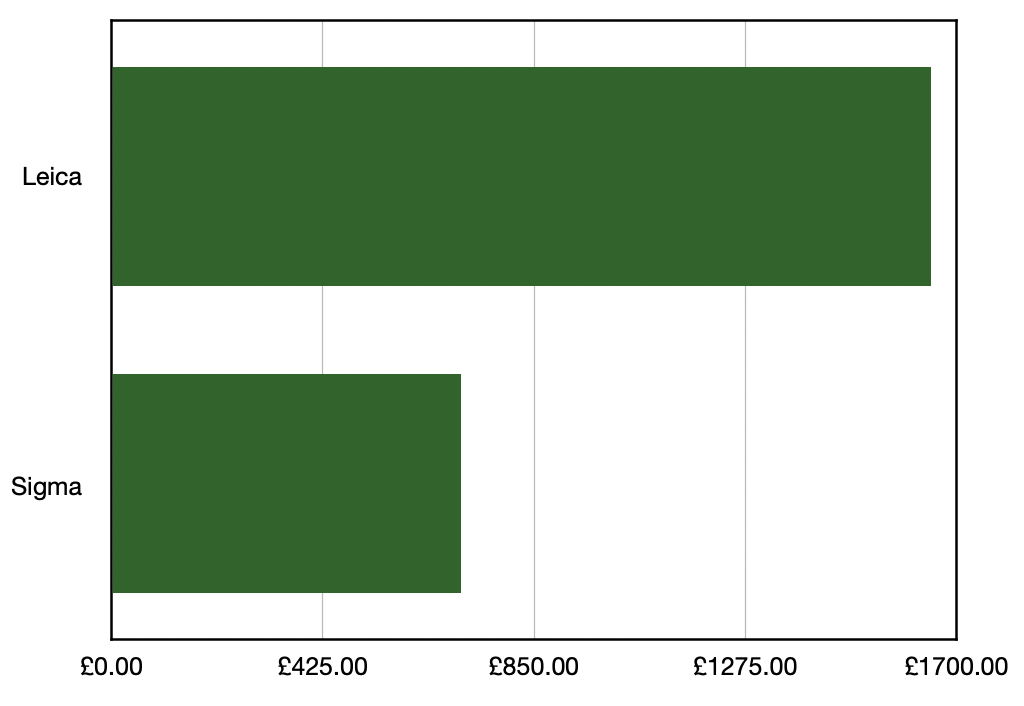
If you always want the absolute best, and own a Leica SL3, then the Vario-Elmarit is worth the extra in terms of appearance, compatibility, brand awareness, and peace of mind. But choose the Sigma and you get similar results and a much lighter lens.
The Leica’s 22 percent weight penalty is obvious in use and, if you are intending to use this as an everyday carry, the Sigma does have a significant advantage.
What about residuals? It’s fairly certain that — in percentage terms — the Leica Vario-Elmarit will retain more of its value when you come to sell.The Leica brand must count for something, after all, and Leica dealers price their stock according to the saving on a new product.
But the difference in purchase cost is so exceptional that residuals are virtually meaningless. You could buy two Sigma Contemporary zooms and have some change, which is an important factor if you are considering residuals. In practice, this means that you could give away the Sigma after you’re done with it and the overall cost could be less than that of owning the Vario Elmarit.
As always, only you can decide whether, on balance, one option is better than the other.


Conclusion
Zoom design has advanced dramatically over the past 15 years. Engineers now use computer-aided design and testing to achieve levels of optical excellence that were once unreachable, and they can do so more cheaply and easily than ever before. As a result, photographers no longer need to look down on the humble kit lens. The standard zoom now serves as a realistic alternative to the much-lauded prime.
Unless you want razor-thin depth of field, maximum light gathering, or those last few percentage points of image quality, a standard zoom — especially a fast one like these two lenses — performs as a highly capable all-rounder.

Of course, these lenses cannot match the optical excellence of the finest L-Mount primes on the market — particularly Leica’s latest APO-Summicron-SL lenses — but they deliver more than enough quality for most users in general use.
Personal choice
As an average photographer, I would happily use either of these lenses. Of course, I would prefer a wider aperture — 24mm or even 20mm — and an extra 10 or 20mm at the long end would be a welcome bonus. But those wishes ignore physics. Fast zooms with an extended focal range inevitably mean more weight. I’m happy to accept the compromise by opting for one of these f/2.8 28-70mm zooms.
“All things considered, either of these lenses will delight”
The choice, ultimately, comes down to personal preference; it’s why I opted for the Leica. It’s a head and heart conundrum. If you reason the case logically, your head will tell you to buy the Sigma. But listen to the heartbeat, and it will push you in the direction of the Leica, wallet permitting.
Owners of the Leica SL2 or SL3 can justify the Vario-Elmarit’s higher price thanks to its appearance, which matches the camera body beautifully, and its alleged tighter profiling compatibility and improved weather sealing. But photographers seeking nearly identical results with less weight — or using a non-Leica camera — will find the Sigma the better choice.

Was the Leica Vario-Elmarit the right choice for me? I think so. I appreciate it as an object of desire and as a thoroughly capable all-round standard zoom.
But had I read this review before buying (which I couldn’t have because I hadn’t written it), I am sure I would have been happy enough with the Sigma. Furthermore, I could have thrown in one of those super Sigma travel 20-200mm zooms as a bonus and still have a few spare coins in the piggy bank.
Detail aside, all things considered, either of these lenses will delight. It’s really down to cost and preference. ‘You pays your money and you takes your choice’, as they said for the first time in Punch magazine in 1846. Things haven’t changed.
Make a donation to help with our running costs
Did you know that Macfilos is run by six photography enthusiasts based in the UK, USA and Europe? We cover all the substantial costs of running the site, and we do not carry advertising because it spoils readers’ enjoyment. Any amount, however small, will be appreciated, and we will write to acknowledge your generosity.
- Panasonic’s Dual I.S. (Image Stabilizer) is a powerful system that “combines in-body stabilisation (IBIS) with in-lens stabilisation (O.I.S.) in compatible Lumix cameras and lenses, working together to correct handshake for blur-free photos and smooth video, especially in low light or at telephoto lengths, by stabilizing five axes of movement (pitch, yaw, up/down, side-to-side, roll) for superior clarity”. ↩︎
Peace of mind? There is absolutely no reason to get the Leica instead of the Sigma. Even Sigma support tends to be faster, and their products are built just as well. (It’s been a long time since Sigma stopped being a cheaper producer of lenses.)
Leica didn’t even try to change the direction of the zoom ring, so it’s basically the same lens with a different housing. I would actually look instead for the Pana 24-60mm f/2.8.
All the talk about tolerances and higher quality is just people trying to justify the price difference. Probably not even the housing of the lens and assembly is done by Leica.
I agree with you and with Jonathan. As far as I could tell, there is no difference between the performance of these two lenses. It’s down to preference and budget, that’s all.
The LUMIX 24-60 is a good competitor and we hope to get our hands on one. I would willingly swap 10mm at the long end for 4mm at the short!
And our experience with LUMIX lenses has been very positive. For instance, I own the 50mm f/1.8 which, like the Sigma 28-70, is very similar to a Leica lens offering.
There’s actually a very good reason to get the Leica. It looks a lot better.
Please note ‘The Leica 24–90 f/2.8-4.0 Apo-Summicron is a clear example of this kind of trade-off.’ This lens is an ASPH. NOT Apo.
Thanks, Vlad. A typo, and after we had four people proofread it, including a real Leica expert! I will amend the text. We also all also missed the obvious — it’s a Vario-Elmarit and not a Summicron! Mike
What I’ve always found odd is that Leica-branded Sigma zooms have their zoom rings turning in the opposite direction compared to original Leica zooms. Personally, I struggled to transition between systems and I certainly wouldn’t want to switch between these two zoom types within a single system. While I understand Sigma would need to make a more substantial mechanical redesign of the lens, it would help bridge the price gap.
Good point. I forgot to mention this.
This question of zoom-ring direction is an interesting one. If the 28-70 Vario-Elmarit had been a redesign to meet Leica’s standards and conventions, perhaps they would have tackled the zoom-ring direction to bring the 28-70 Vario-Elmarit into line with their in-house zooms — if such a thing were possible. The fact that the 28-70 Vario Elmarit follows Sigma conventions, emphasises the similarity between the Leica and Sigma versions.
It bugs me – but I suspect that turning it around would be a real complication, also an admission (in that they’ve always been thus!).
From a manufacturing background I can say it would absolutley be possible for Sigma to produce the lenses to two different tolerances in the same factory.
It may be that they have a ‘binning’ process, and parts/elements that fail the Leica tolerances but fall within the Sigma tolerances are allocated to only Sigma kits, and those that pass the Leica tolerances are used more generally.
It’s also possible that they have tighter tolerances for the final QC level, and more of the Leica units are returned to manufacturing for rework than the Sigma units.
Now…. whether or not that is what they actually do of course is a completely different question, and I suspect the answer will ruffle feathers (either one way or the other)…
I have, of course, considered all those possibilities. They have been mentioned many times to suggest the reason the one lens is better than the other. I can understand that manufacturing processes and quality control could be different. However, the Sigma lens was in production long before the Leica version, and Sigma will have done its best to ensure quality control.
But there is no concrete evidence one way or the other, apart from the metal body and the extra weight (which alone inspires feelings of greater quality). Both Leica and Sigma have not said much on these matters, other than to present their products in the best possible way. That said, the Leicasphere has taken over and has produced a convincing case for the Vario-Elmarit.
As the owner of the Leica version, I hope your suggestions are all true! I feel vindicated.
Mike might want vindication, but I think it’s vanishingly unlikely that Sigma would apply different manufacturing or QA procedures. . . . not because they couldn’t (as you say) but because I’m quite certain that they make all their lenses to the highest standards they can manage. I’ve been using Sigma lenses since the 80s when they made great (good value) lenses. I remember that despite a reputation for being cheap (then) I never had a bad copy (unlike the Nikon lenses I was also using) . . . . on the other hand I think the Leica lens feels nicer with it’s metal casing, and I imagine they will hold their value better (if not that much!).
I think Sigma are wonderful – and it’s great that Leica are still collaborating with them!