
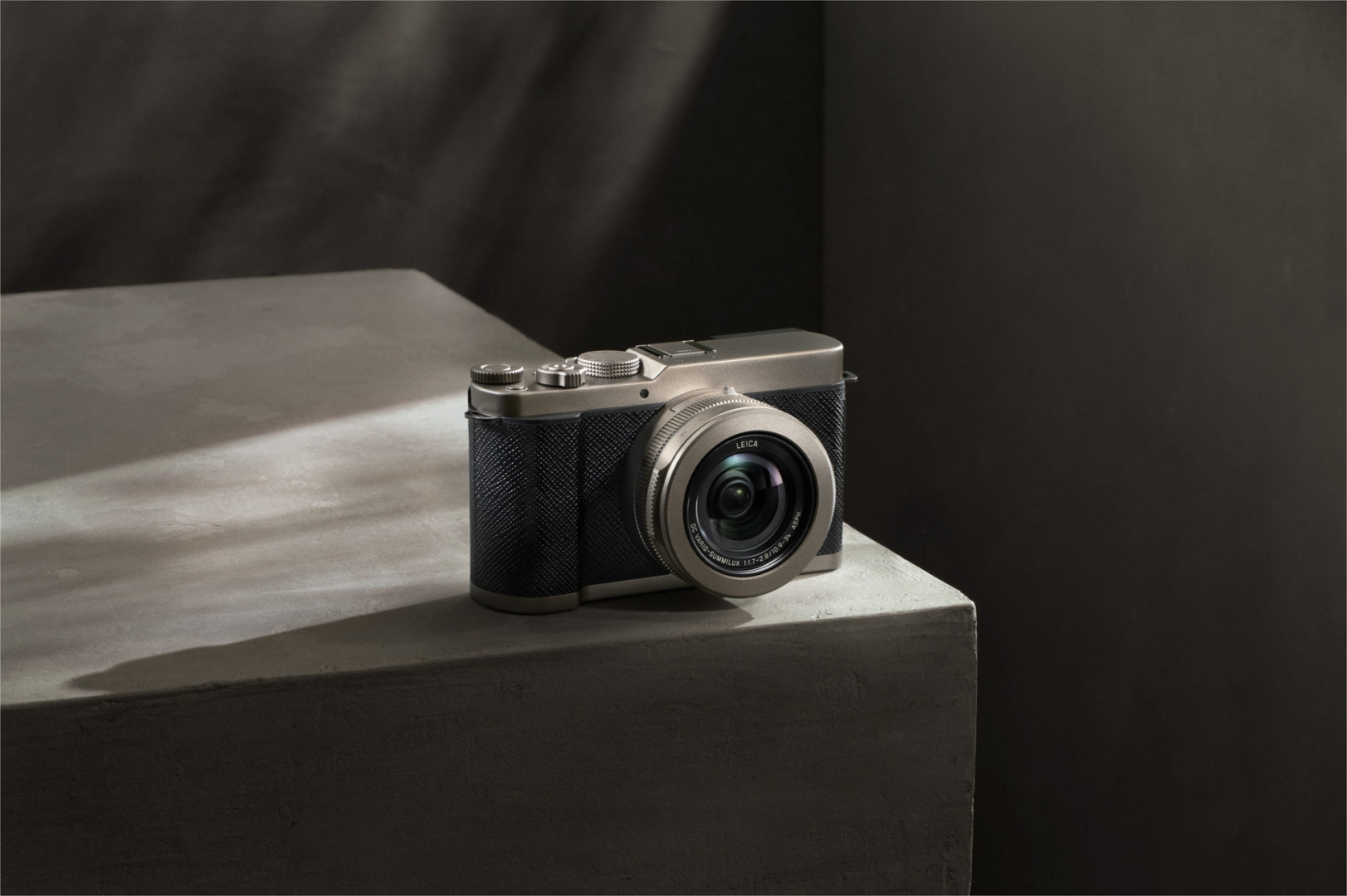
Panasonic is introducing the Lumix L10 (DC-L10), a new fixed lens camera. Developed in Osaka, Japan, the Lumix L10 features a Leica DC Vario-Summilux 24-75mm f/1.7-2.8 zoom lens and 20.4 megapixel, four-thirds sensor.
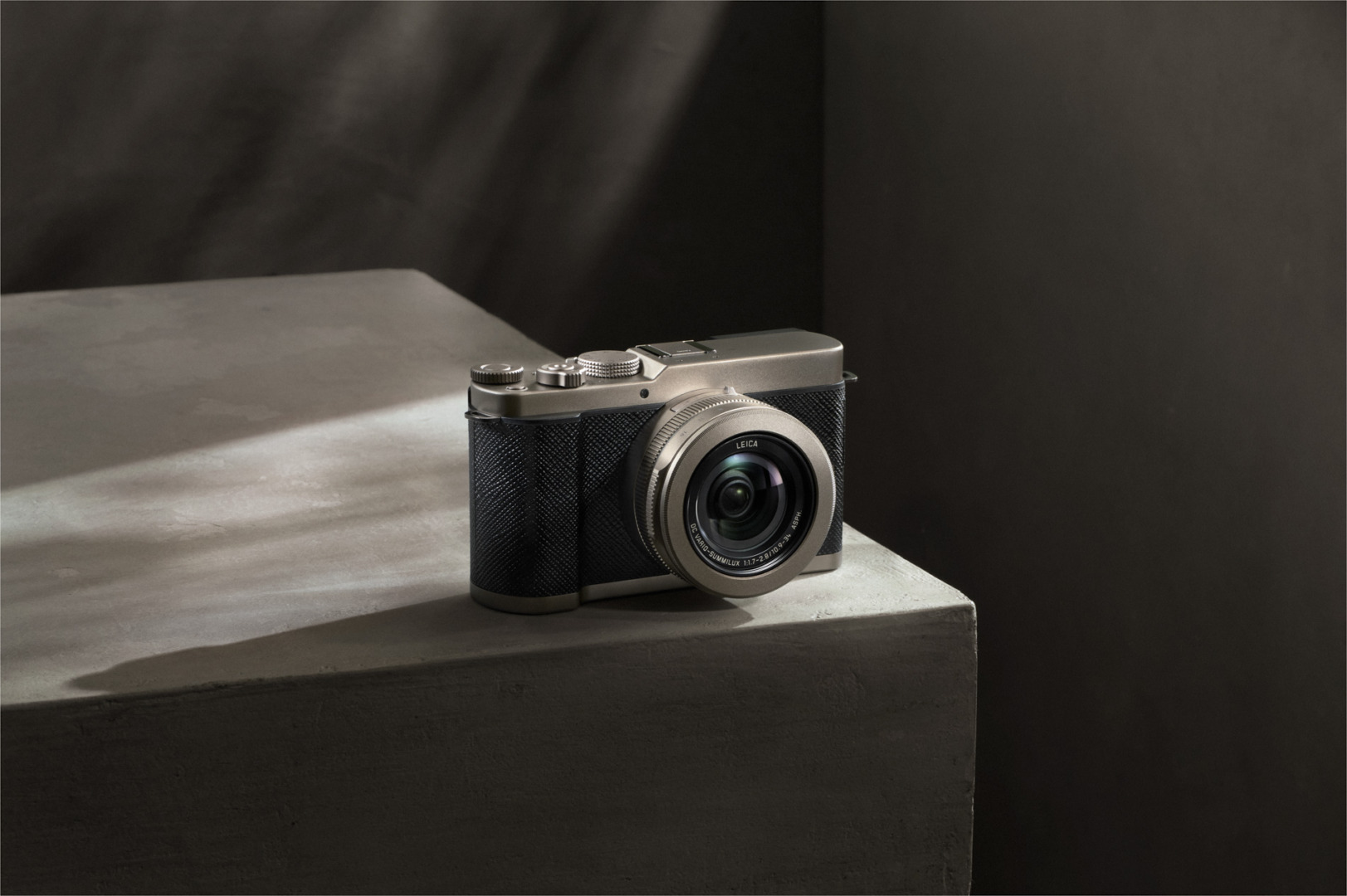
The Lumix L10 resembles, but is distinct from the earlier Lumix LX100 model, since it incorporates internal componentry from its sibling Lumix GH7 camera, as well as featuring several performance enhancements.
GH7 technology
For example, by utilising a sensor larger than the lens image circle, it maintains a consistent angle of view across 4:3, 3:2, and 16:9 aspect ratios, providing greater compositional flexibility, without altering framing. This also allows the standard-format image (4:3) to use the full 20 megapixels available — in contrast to the old LX100 II and Leica’s D-Lux 8 which could cover only 17 megapixels.
The sensor itself is a four-thirds back-illuminated (BSI) CMOS unit, coupled to Panasonic’s latest image-processing engine. The company says the system delivers high image quality, using Dynamic Range Boost to further enhance tonal richness, and expanded shadow detail in still photography. The design leans on that of Panasonic’s flagship GH7 four-thirds camera.
Where the GH7 moves up to a 25.2MP BSI CMOS sensor, with a focus on maximum dynamic range and advanced video formats, the L10 sits slightly below in resolution but shares core technologies such as back-side illumination and phase-detection autofocus integration. The processing engine is also inherited from Panasonic’s top-end line (including the full-frame S1 II), which means support for 10-bit recording, 5.2K capture and the latest Real Time LUT workflow for in-camera looks.
In practical terms, according to Panasonic, users “can expect GH7-like colour science, noise handling and AF responsiveness, just in a body that caps video options and thermal headroom earlier than its system-camera sibling. For stills-centric users, that trade-off is likely acceptable given the reduced size, integrated lens and lower complexity of the L10”.
Colour profiles
With Real Time LUT, users can load custom LUTs directly into the camera and preview the final look while shooting. Up to two LUTs can be layered for added creative flexibility. Using the Lumix Lab app, users can further expand their options by generating LUTs from their favourite images with Magic LUT powered by AI-based colour analysis.
The Lumix L10 features Phase Hybrid AF with 779 focus points, advanced AI-based eye, face, and subject recognition (including Urban Sports), high-speed continuous shooting at up to 30fps with the electronic shutter, and reliable optical image stabilization for hand-held capture.
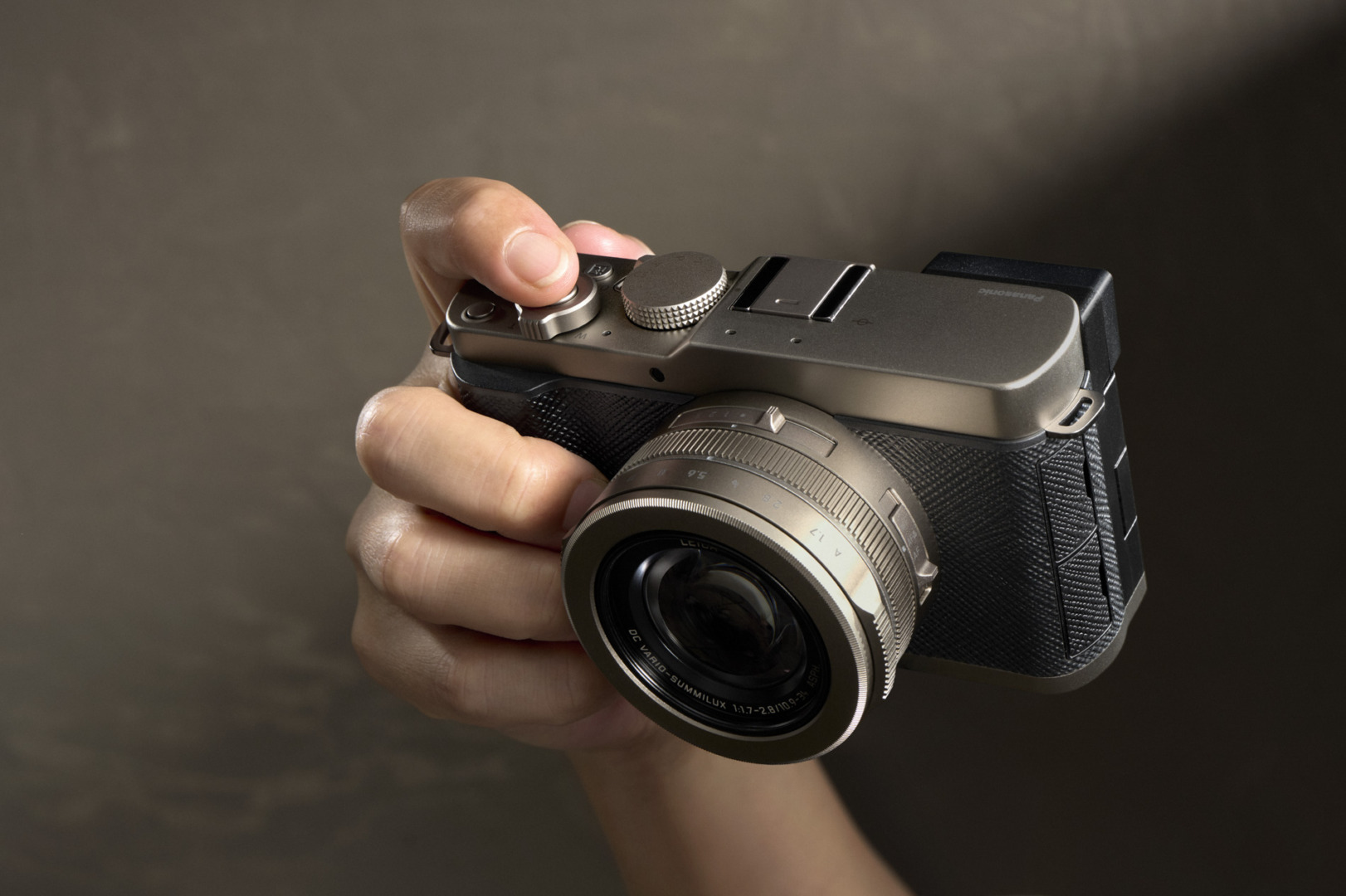
A 2.36-million-dot OLED viewfinder and a 1.84-million-dot free-angle monitor, both supporting a vertically optimized UI, provide flexible framing for modern shooting styles. The Lumix L10 supports both still and short-form video workflows, including MP4 (Lite) for quick social sharing, along with high-speed transfer and editing via the Lumix Lab app.
Special edition
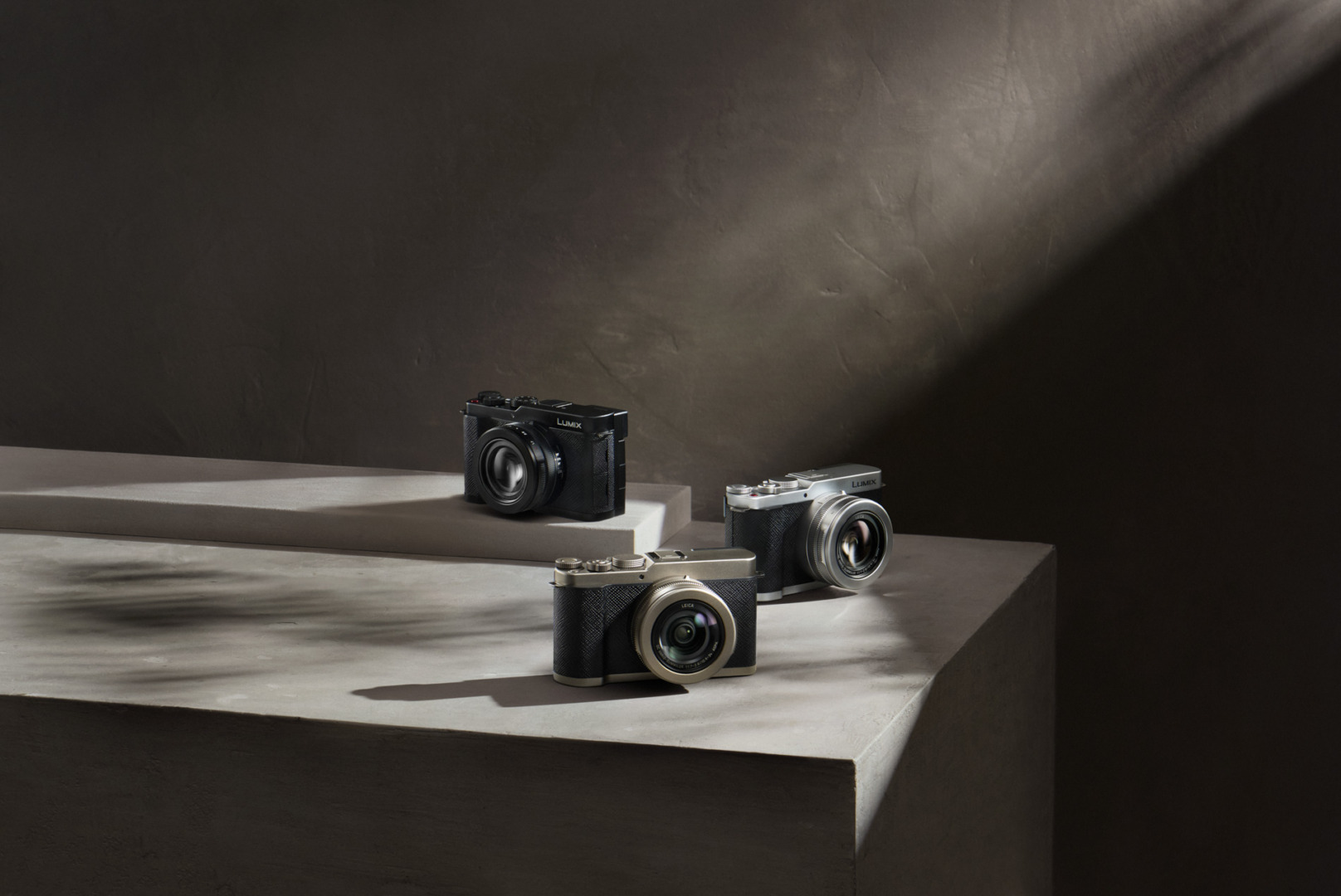
To mark the 25th anniversary of Lumix, the L10 will be available in three colour variations: Black, Silver, and a commemorative Titanium Gold Special Edition.
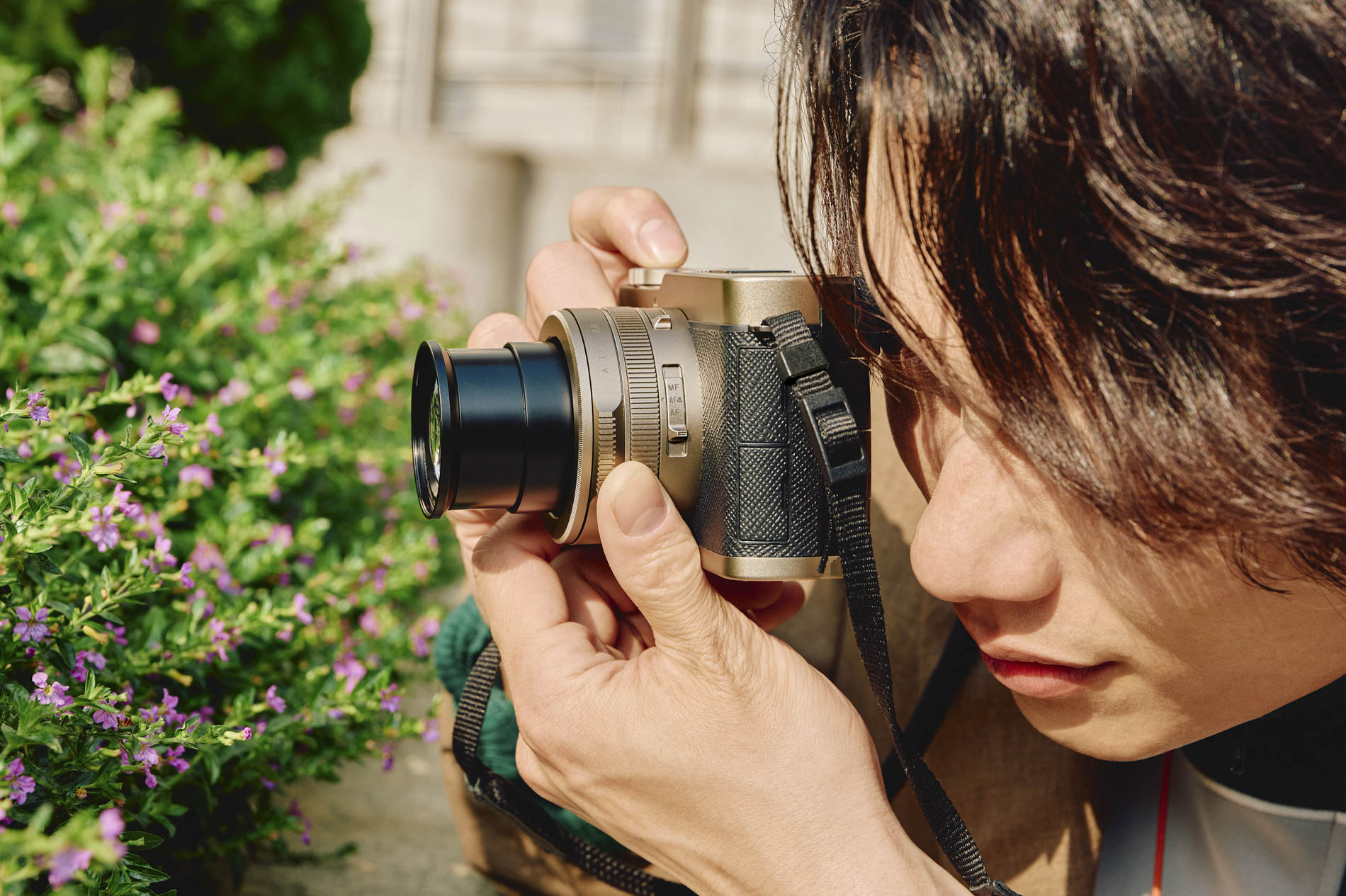

The Titanium Gold Special Edition Lumix L10 also comes with several exclusive features, including a refined menu interface adopting a Titanium Gold theme, subtly placed rear branding that remains visible only to its owner and support for commercially available screw-in shutter buttons for personal customisation.
A selection of dedicated accessories are also unique to the Titanium Gold kit, including an additional auto lens cap, shoulder strap, and lens cloth. The Titanium Gold Edition will be available through limited sales channels, primarily via the official Panasonic Store, with availability varying by region.
The Lumix L10 is priced at £1,299 | $1,499 for the two standard models, while the Special Edition will cost £1,399 | $1,599.
Here is a brief, hot-off-the-press overview of this new camera.
| Lumix LX100 | Lumix S9 |
| D-Lux 8 review | Why this could be the D-Lux 9 |
| I can’t wait to get my hands on the L10 | Panasonic Lumix L10 unboxing |
| The enthusiast compact we’ve been waiting for |
Make a donation to help with our running costs
Did you know that Macfilos is run by five photography enthusiasts based in the UK, USA and Europe? We cover all the substantial costs of running the site, and we do not carry advertising because it spoils readers’ enjoyment. Any amount, however small, will be appreciated, and we will write to acknowledge your generosity.
Comments: Please add a comment to this article. Our comments section is a thriving community and everyone is treated with respect. In addition, please identify yourself (and add an email address, which will not be published, if you would like to see answers to your posting). Our system will automatically delete any “anonymous” posts on the basis that they are likely to be spam.
A significantly larger body, close to that of an M, retaining the 4/3’rds sensor, with the format gimmickry and the less than stellar zoom lens? If the camera had an APS-C sensor and a clone of the 18-50mm Sigma lens, then maybe. Is this camera, or the D-Lux 8, that much better than the latest iPhone? If China is where Leica is going then I guess we will see more of this – ie. lower production costs with higher profits.
It’s a pig with liptsick on.
Don’t be fooled by the shills who dobtless will be getting some benefit from the hands that feed them.
It is a bit of a porker, I must admit. Having been used to the D-Lux 8 and LX100, neither of which are exactly pocketable, the L10 moves up to a new level. Initially I was attracted by the denser sensor and the improved effective pixel count. But there isn’t much else to set it aside from the LX.
I don’t really understand the overwhelming reaction this camera has attracted. It’s the same size as a Fuji X100VI; larger when you switch it on and see the lens in its full glory.
And the Fuji has a larger sensor with a high-resolution pixel count of 40, thus making cropping attractive.
What do other readers think?
I hate that they replaced the shutter speed dial with a PASM dial. One of the joys of the lx100’s and Leica equivalents was the simple A on the aperture and shutter speed dials so setting an exposure mode was so intuitive. Not sure why that made it so much bigger either. It’s the same size as the full frame S9.
Tough to get excited about a largish compact with a cropped m43 sensor. The optics are probably very good, as is the probability the lens will suck in dust.
If I needed to go Panasonic, I think I’d go for the ILC GX9. Used body about half the price, and the Panasonic Leica DG lenses are reported to be excellent. For that matter, why not the Leica CL digital?
I do wonder about that unmarked control wheel on the top of the L10; it seems it can be set to control different functions. At least for the CL, there’s a digital readout to show what the top plate wheels control.
I am not sure whether I get the point, it seems to weigh more than the full frame S9, it costs more and it is bigger, and that with a m43 sensor. Where is the appeal? Would it not make more sense then to make a S9 with a built-in EVF?
Of course, others will probably note this, but the article doesn’t make it clear that this is most likely the exact same sensor as the GH7, the difference in megapixels coming down to the smaller-than-Micro-4/3 crop the camera employs. The lens being optimized for size advantage, it can’t cover the full sensor at any aspect ratio.
Yes, I spotted the same… the paragraph about the sensor and image circle contradicts itself.
It uses the same concept as the D-Lux or LX models with the smaller image circle so that all aspect ratios have similar resolutions and the lens can be smaller (as the first part of the paragraph says), but the second bit is wrong. It’s not 20mp because of using the whole sensor, it’s 20mp because the sensor is the GH7 sensor which is higher resolution than the older sensor.
Interesting comparison by Gordon Laing between the S9 and the L10 body shape and size. As an S9 with an EVF would be very tempting.