
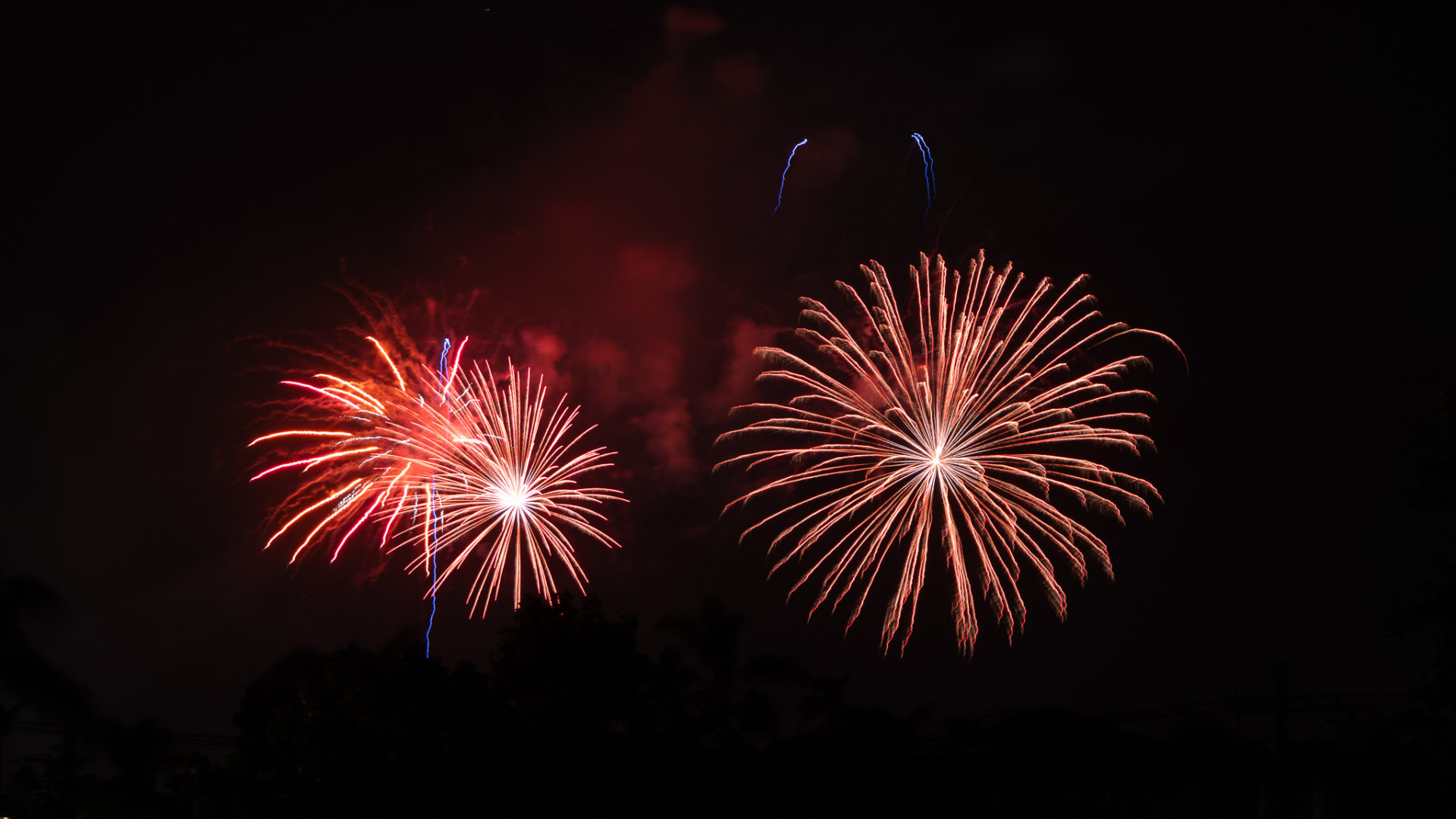
A firework display is a blend of chemistry, pyrotechnics, and rocketry – a visually spectacular, ephemeral artwork. But photographing fireworks is tricky. Many of my previous attempts ended in blurry, over-exposed images. However, I believe I have finally worked out how to capture sharp, well-exposed photographs of these aerial light shows. So, here are my top ten tips for photographing fireworks.
Tip number 1: Have plenty of spare capacity in your battery and SD card
This is pretty basic advice for any photo shoot, but unless you live next to Disneyland, fireworks don’t come around that often. So, it could be a long wait for another opportunity if you miss one because your battery is flat or your card is full. And, as you will see below, you’ll need to take lots of shots.
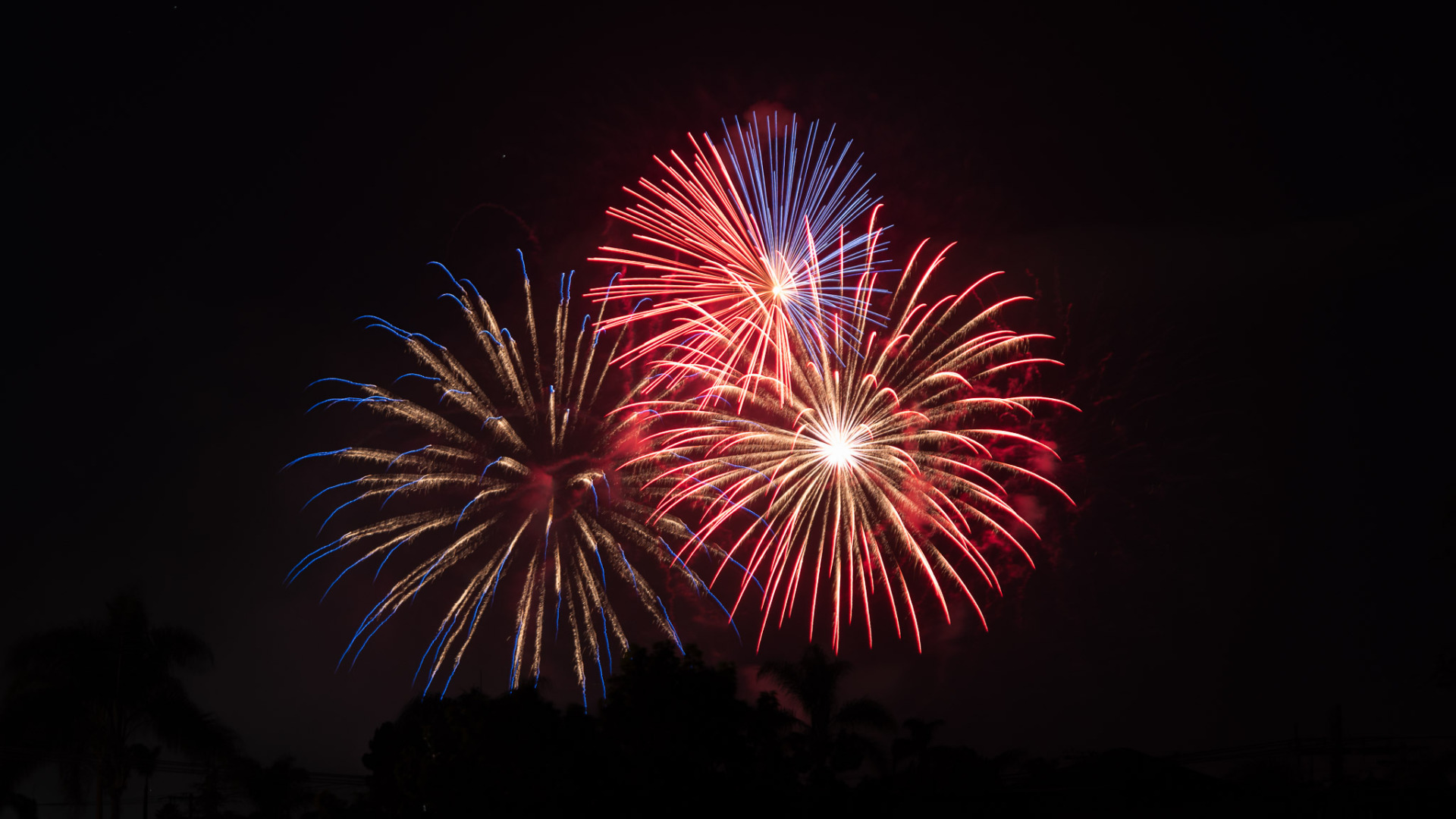
Tip number 2: Choose a shooting location with an unimpeded view
This might seem obvious! But, if there are trees or buildings between you and the section of sky where the fireworks light up, your images will be spoiled by dark patches from the silhouettes of these objects.
On a recent firework photo shoot, I was able to stand on a roof deck, above the tree line and adjacent buildings. I therefore had a clear view of the nearby display. Another practical option is to shoot across a body of water, where again you have a direct line of sight.
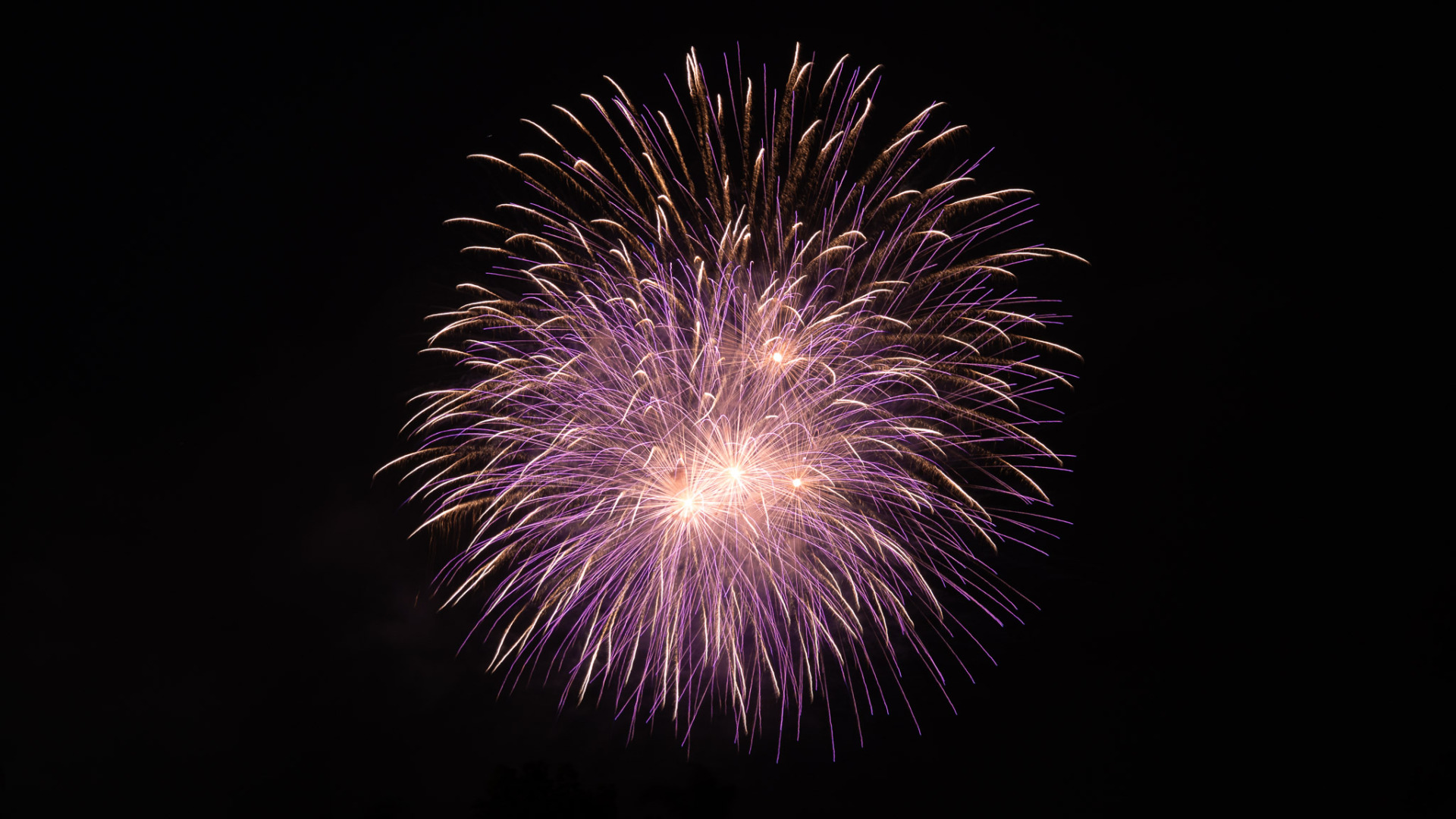
Tip number 3: Use a zoom lens
The field of view you will need depends on how close you can get to the action and how widely spread the bursts are. So, it’s helpful to be able to adjust your focal length in situ. Once the display begins, you will be able to zoom in or out until you find the ideal setting. Because the bursts of light do not all appear at the same spot, I usually pick a focal length which will capture the majority of flashes. With a modern, high-resolution sensor, you can always crop in post to isolate individual bursts.
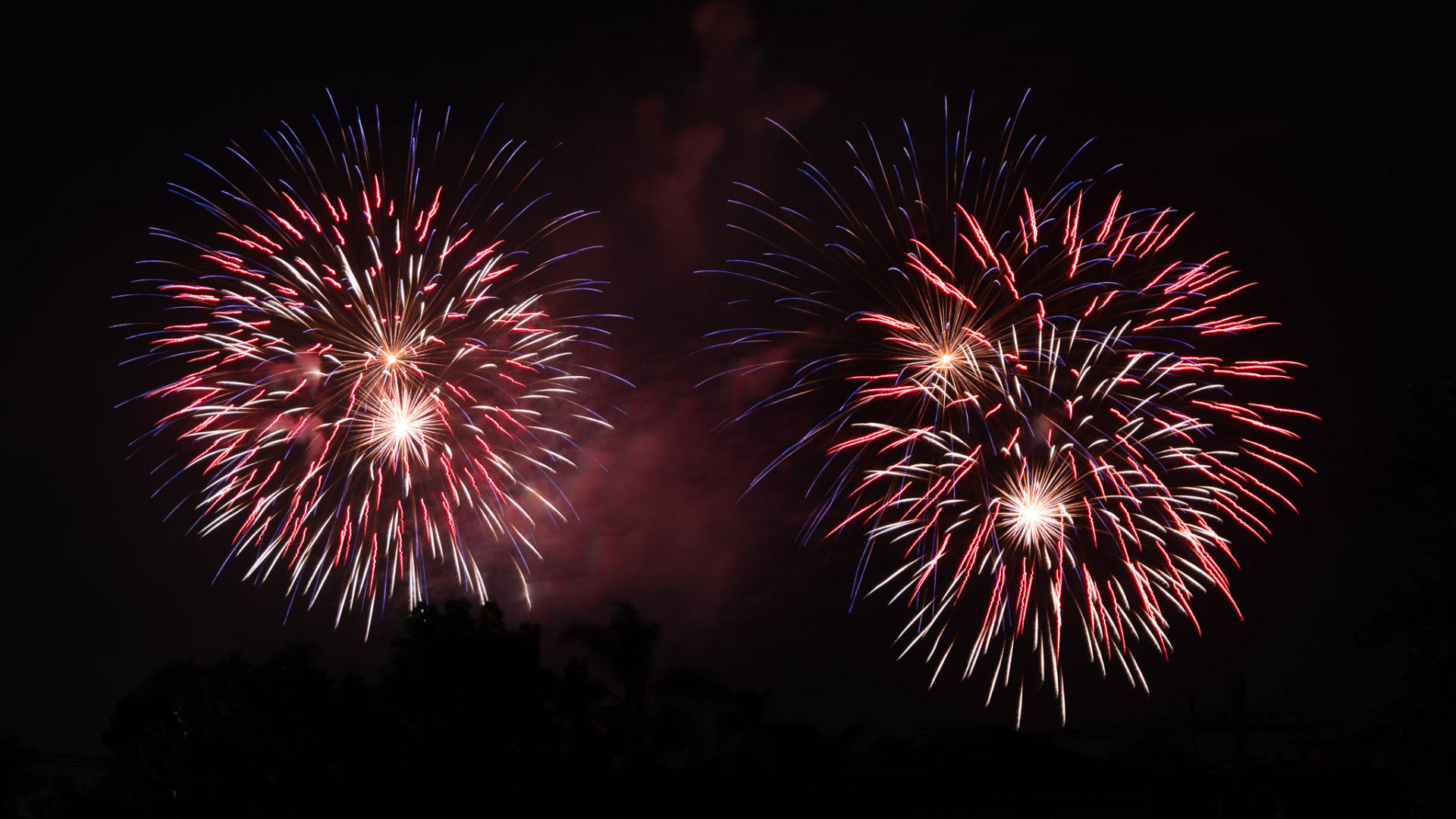
Tip number 4: Mount your camera on a tripod
I am a firm believer in using a tripod when shooting fireworks. You can work with small apertures and slow shutter speeds without fear of camera shake. Furthermore, you do not have to hold the camera up to your eye for the duration of the display. This is especially important if you are using a chunky, full-frame camera and telephoto lens. Once you have found the optimum direction in which to point the camera, you can lock the tripod and focus all your attention on deciding when to press the shutter release (see below).
Tip number 5: Set focus manually using a distant object
Because the bursts of light from the fireworks are so transient, it is impossible to use them as a basis for focusing. And, since they are not an infinite distance away, it is risky just using infinity focus. I therefore recommend finding a distant object, such as a building, or tree, or street light, and focusing on it before pointing the camera in the direction of the fireworks.
Tip number 6: Use a slow shutter speed
One of the trickiest aspects of photographing fireworks is the uncertainty surrounding the precise moment of the aerial burst. Pressing the shutter release when you see the explosion of colour is too late; you will almost certainly miss the very start of the individual burst. A way to avoid this is to use a slow shutter speed, in the hope that a shell will explode while the shutter is open.
I have found five seconds to be a suitable option. The software that operates modern firework displays often sends up several shells in quick succession. These explode within seconds of each other, and so a five-second shutter speed affords a good chance of capturing numerous explosions in the same exposure.
Tip number 7: Use AUTO-ISO and let the camera choose the correct aperture
Having set shutter speed to achieve a longish exposure time, you have various options for handling aperture. Going completely manual is challenging because you cannot predetermine how bright the firework burst will be.
If instead, you select SHUTTER PRIORITY and use AUTO-ISO, then the camera should, in principle, vary aperture and ISO to achieve a correct exposure. In my experience, this works well. I first set exposure compensation to -⅔ EV to preserve highlights. Using AUTO-ISO, all my shots were well exposed, and captured at base ISO 100, with aperture varying from f/6.3 to f/13.
This also meant I achieved a reasonable depth of field, increasing the likelihood of sharp images if focus was not perfect.
Tip number 8: Press the shutter release ahead of a burst
I mentioned earlier that one of the challenges in photographing fireworks is catching the very beginning of the firework burst. A way to increase your chance of doing that is to anticipate when the burst will occur, and press the shutter release before it happens.
Usually, you can see a shell climbing into the sky. Its trail of sparks provides a hint of where and when it might go off. With the five-second shutter speed recommended above, even if you press that shutter a few seconds before the explosion, the shutter will still be open when it happens.
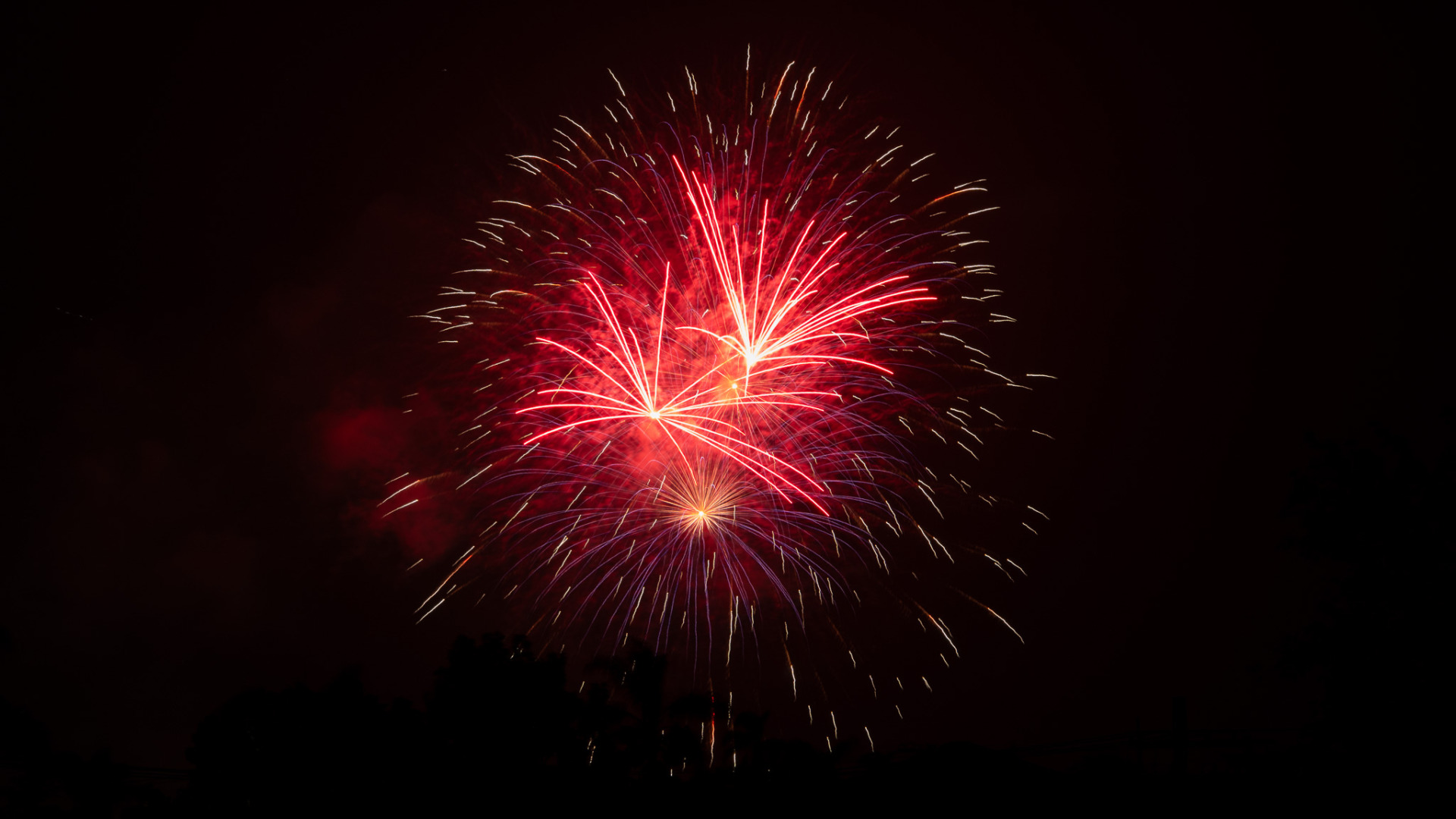
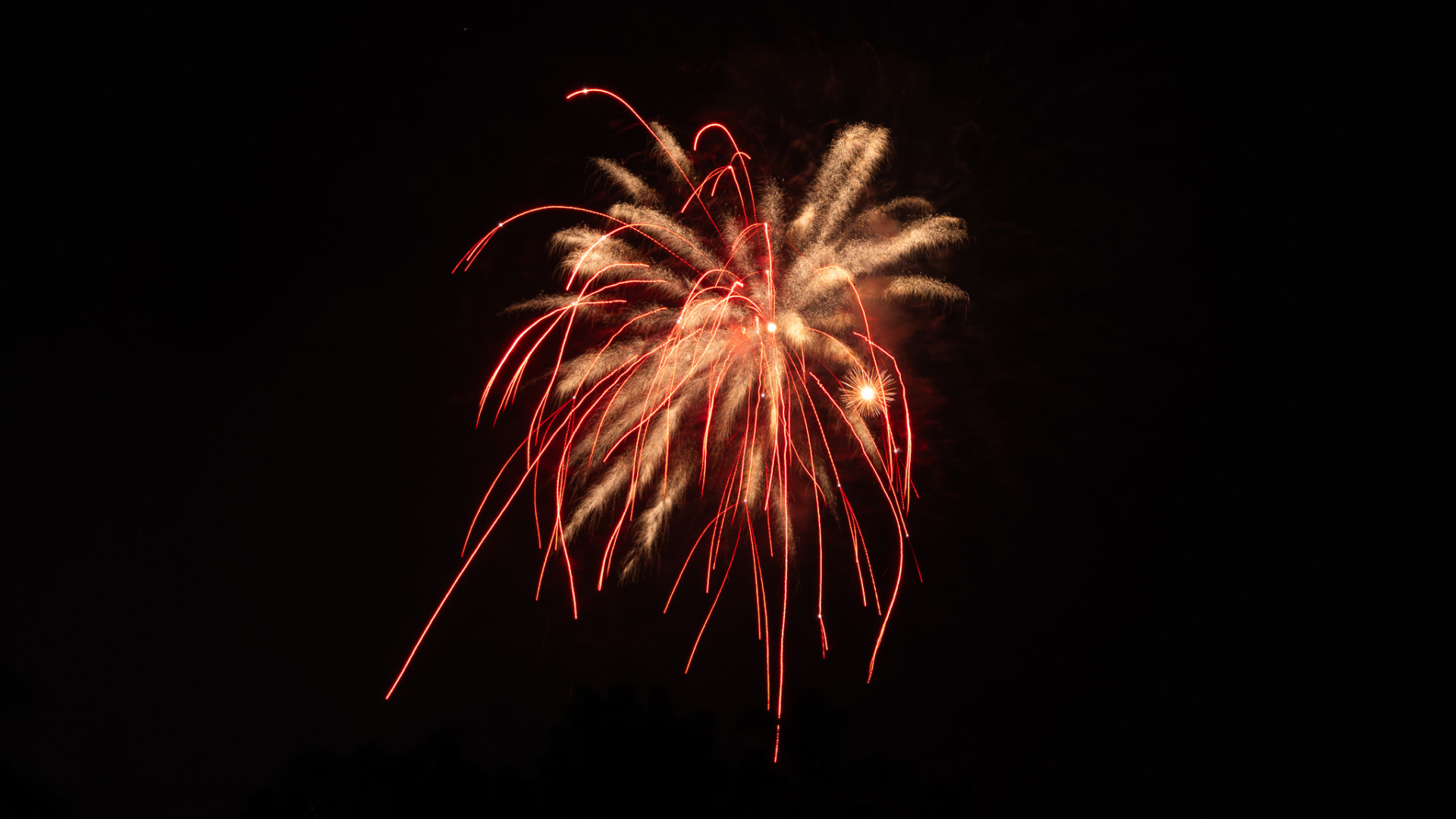
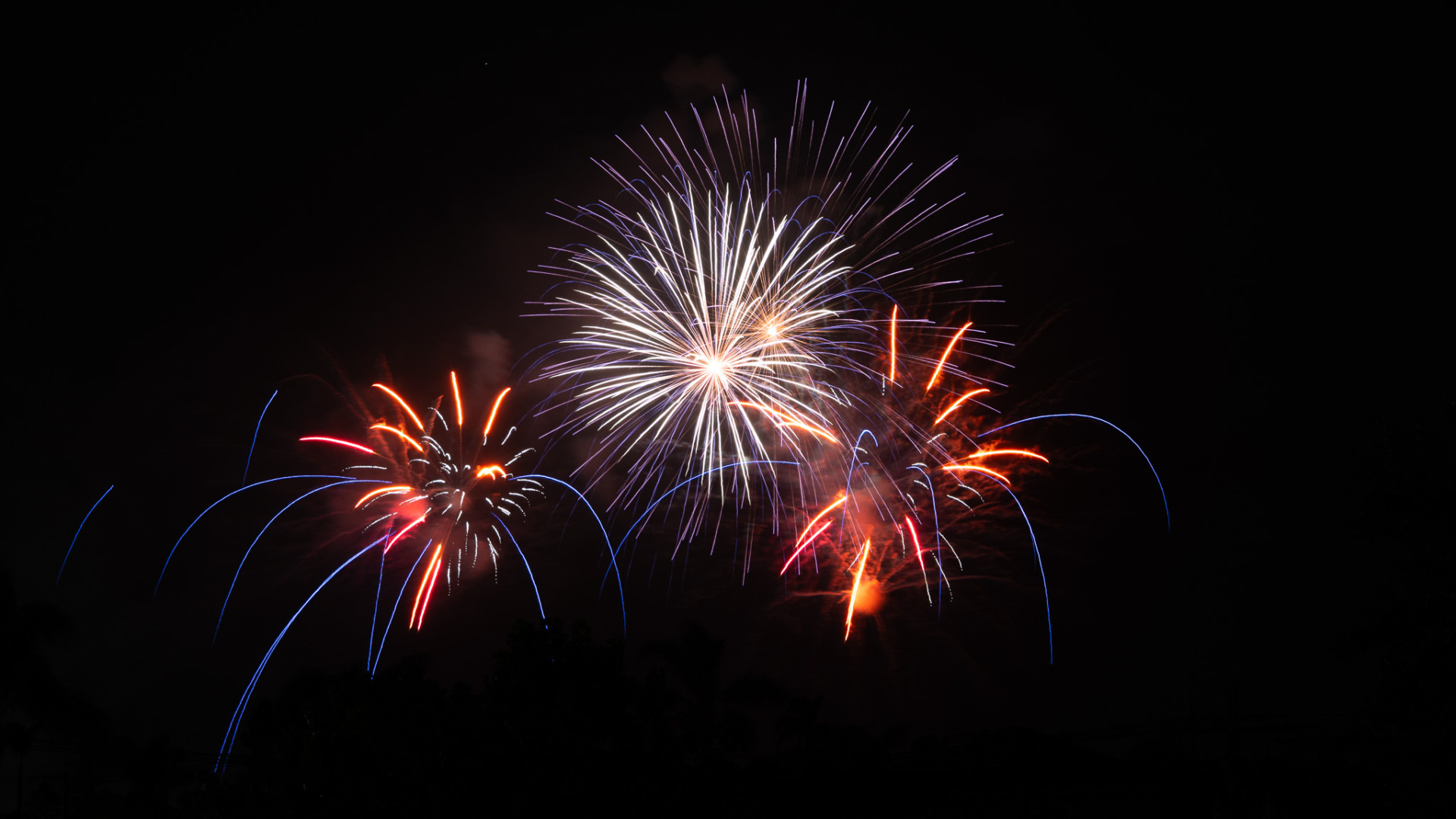
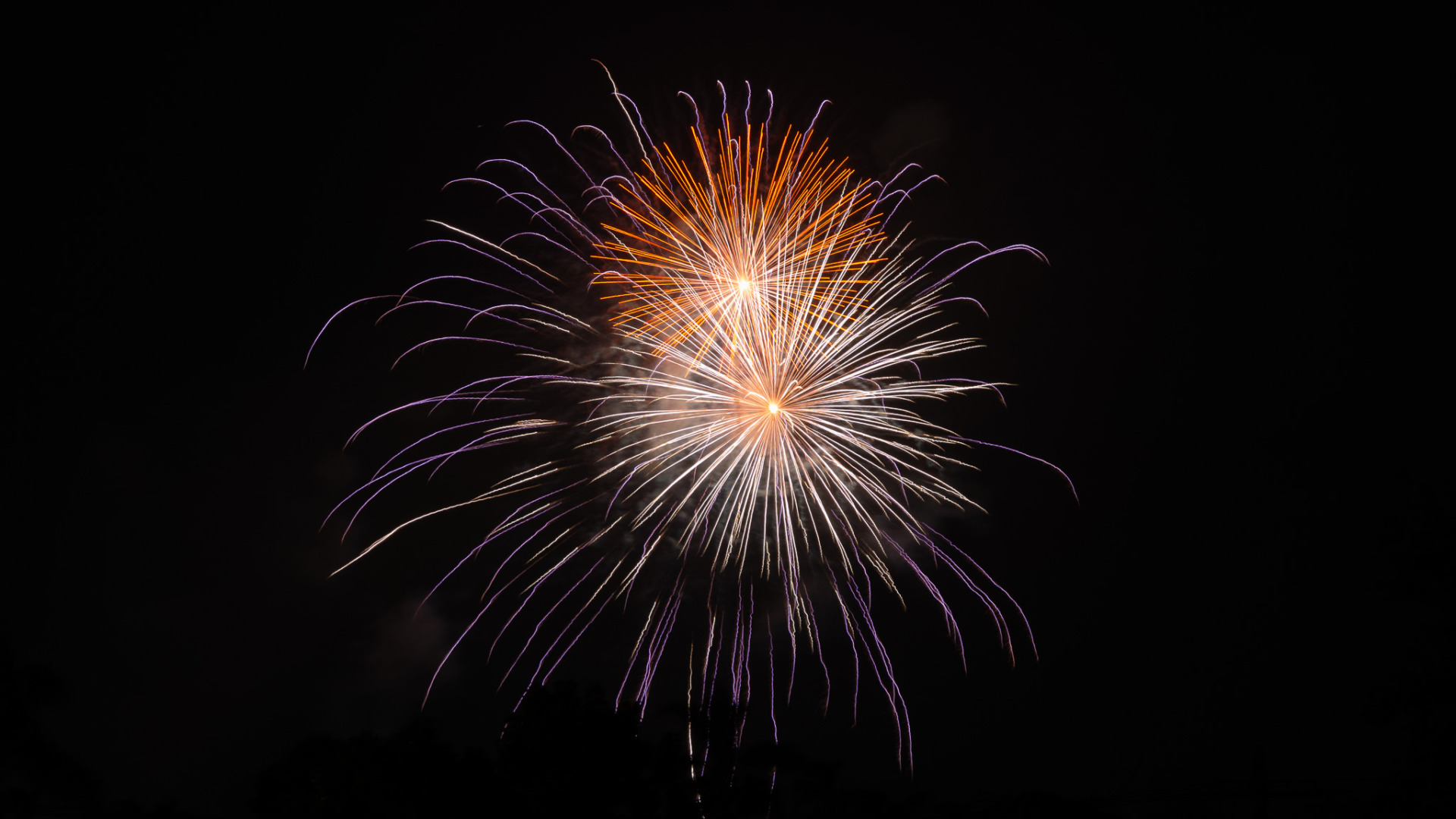
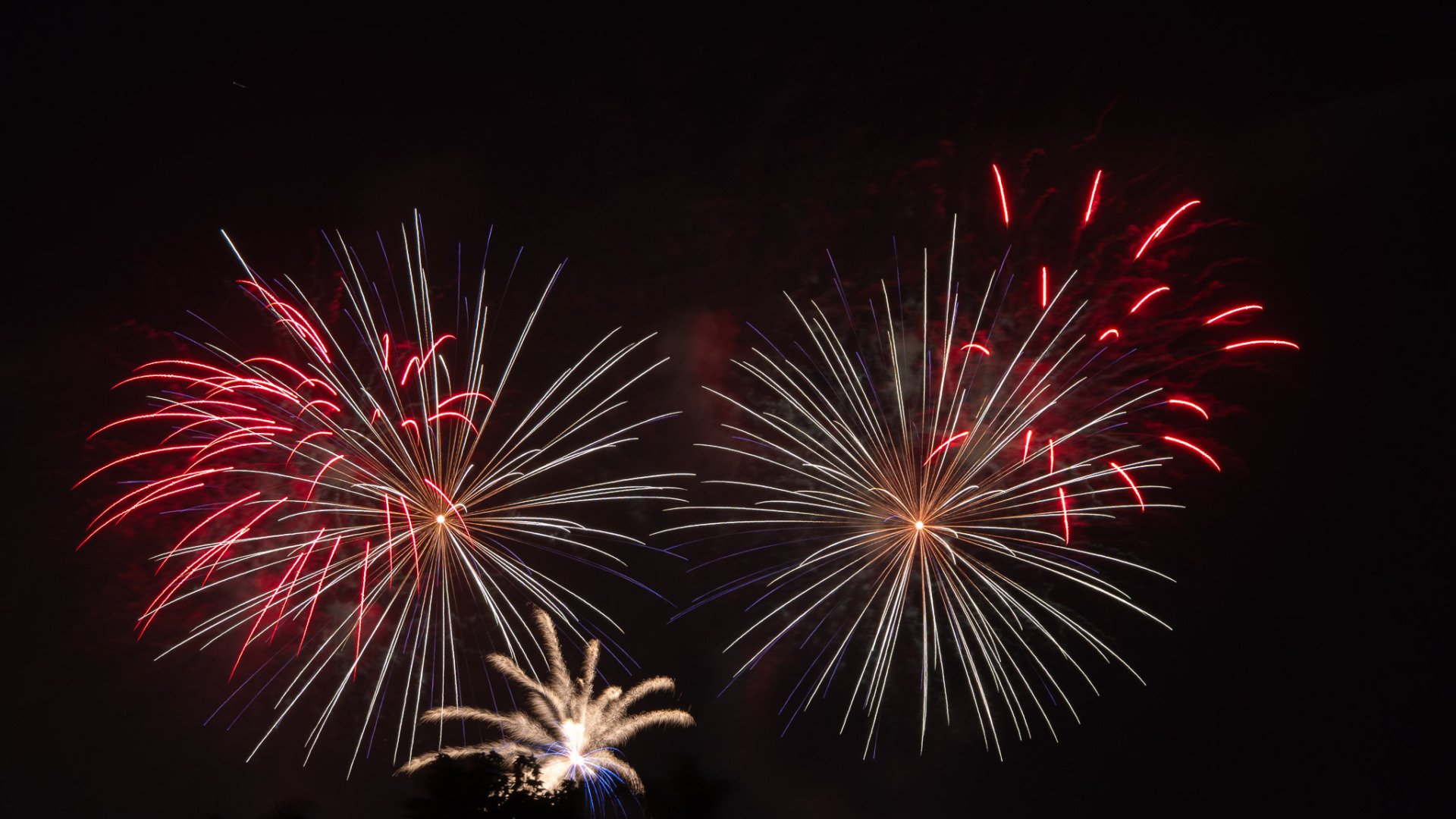
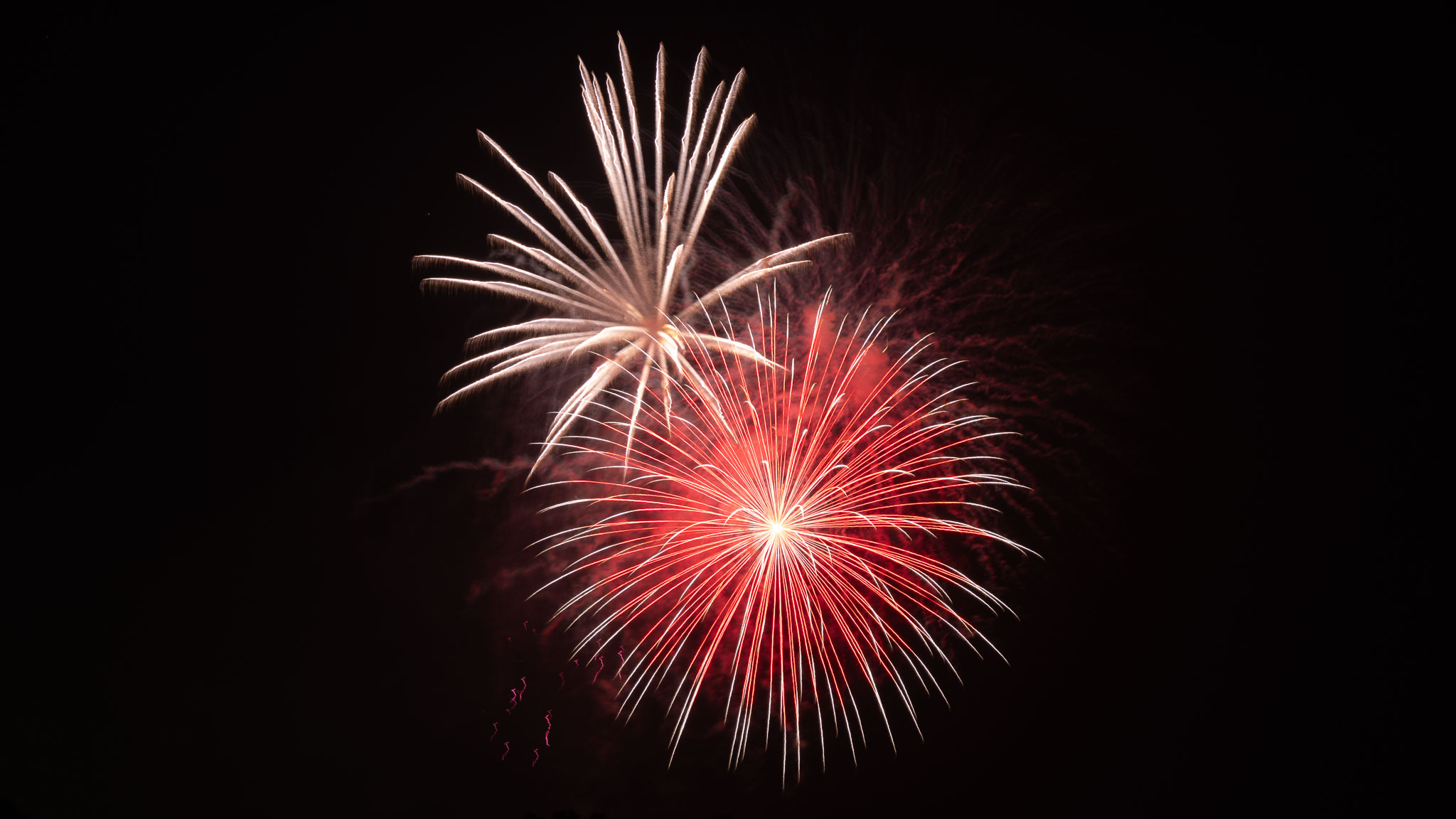
You can see in the examples I have used to illustrate this article that many of the images feature the bright central explosion. Some images feature two, three, and occasionally four, explosions. You can also see examples where the explosion happened just before the exposure began.
In some instances, the exposure captures light-emitting particles radiating symmetrically from the locus of the burst, just before they fade. Their parabolic trajectory is clearly visible, as the force of gravity overcomes the explosive force of the ignition.
Tip number 9: Keep shooting until the display is over
Because capturing firework bursts is a hit-or-miss business, it’s a good idea to keep shooting. Displays are typically 15-20-minutes long. If you are taking a couple of five-second exposures a minute, you can easily end up with 30 to 40 photos to sift through. I bet you will find some superb shots in there.
Tip number 10: Tweak the highlights and saturation in post
Your exposures should be pretty good right out of camera. But, assuming you shoot RAW, there is plenty of scope to adjust exposure and saturation in post. Even though I underexpose by ⅔-stop, I typically dial back the highlights further to reveal the sharp lines of the light trails. Your sensor will have captured considerable colour information from each burst of light, but you might have to push individual colour sliders to emphasise them.
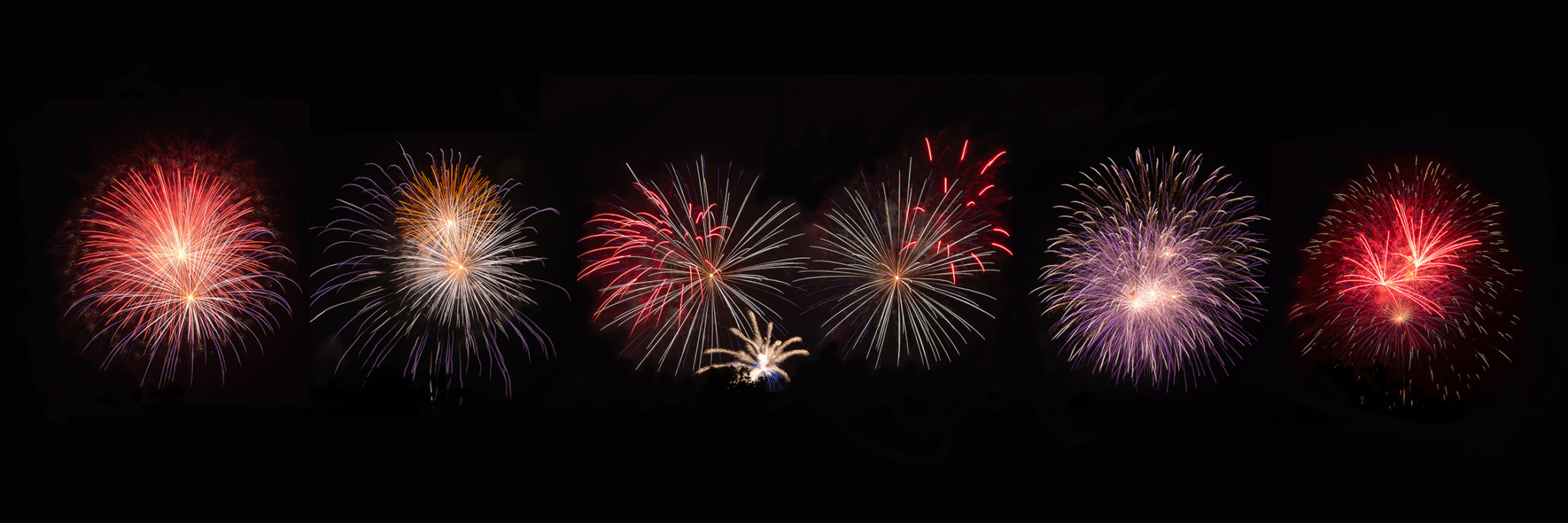
The diversity of firework bursts is remarkable, and because the light-emitting particles produced are subject to gravity, each has a definite top and bottom. I have compiled several composite images in 1:3 aspect ratio to illustrate this. Using Photoshop skills I have recently acquired, I blended each image into the black background of the canvas.
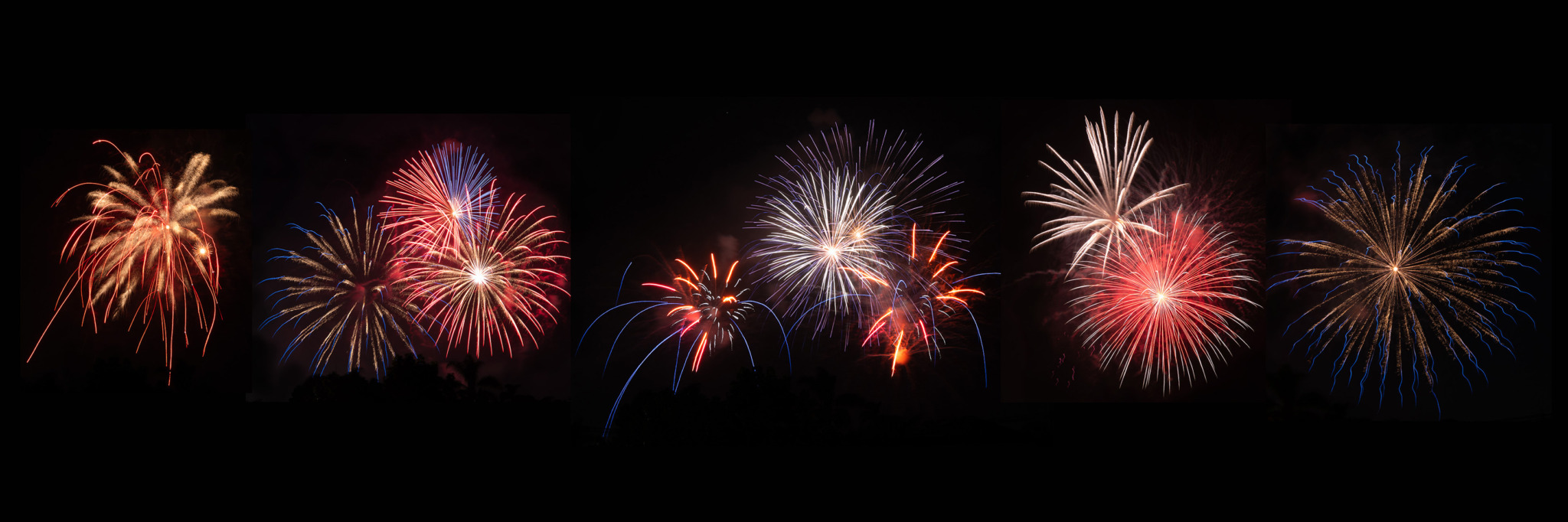
I am sure you will agree, the shapes and colours are beautiful

Bonus tip number 11: Use an Olympus/OM System camera
The OM System platform offers both a pre-record option and a LIVE COMPOSITION function. The latter captures a baseline image and then adds only new sources of light, avoiding over-exposure of the background. Apparently, you can watch the image grow with each new firework burst. When you decide the composition is complete, you finish the exposure by a further press of the shutter release.
I have not used this system myself, but am told it’s an excellent solution for any dark-sky situation.
Photographing fireworks
There may come a time when firework displays have been completely replaced by drone-swarm shows. These are quieter, more ecologically friendly, and capable of literally painting images in the sky. Think of each individual drone as an aerial pixel that can move in three dimensions.
Photographing such shows will probably pose different challenges, compared to photographing fireworks. Their light output most likely changes more smoothly, and there is no guessing when to press the shutter. So, a more conventional, short exposure might be appropriate to avoid motion blur. On the other hand, their light output is most likely considerably less than a firework burst, and so a wide aperture might be required. I wonder if any readers have tried photographing drone-based aerial displays? If so, please feel free to comment.
Although drone-swarm displays might be the way forward, I, for one, would miss the excitement and challenges posed by firework displays. I sympathise with dogs and their owners, for whom the procession of teeth-rattling bangs is an ordeal to be endured. But as a visual pyrotechnic extravaganza, conducted on a colossal scale, a firework display is difficult to beat.
Make a donation to help with our running costs
Did you know that Macfilos is run by five photography enthusiasts based in the UK, USA and Europe? We cover all the substantial costs of running the site, and we do not carry advertising because it spoils readers’ enjoyment. Any amount, however small, will be appreciated, and we will write to acknowledge your generosity.
Comments: Please add a comment to this article. Our comments section is a thriving community and everyone is treated with respect. In addition, please identify yourself (and add an email address, which will not be published, if you would like to see answers to your posting). Our system will automatically delete any “anonymous” posts on the basis that they are likely to be spam.
I would also suggest including some context—something that shows where the fireworks display took place. Ideally, it should be visually striking and add atmosphere and impact to the photograph.
“Tip number 10: Tweak the highlights and saturation in post”
You taught me this one for sunsets –works wonders!
(we don’t get fireworks in the forest — though we do hear them)
Hi Kathy, I suppose you would have to make do with Roman Candles and Catherine Wheels in a forest clearing. But then again, fireworks and trees sound like a very ill-advised combination — especially in this day and age. All the best, Keith
Tip number 12: Bring a flashlight!!
This past July 4, I went to photograph the fireworks display in Naples, Florida where I live. It is a great location for fireworks photography, because it is on the beach (Gulf of Mexico) and besides the fireworks themselves, there it the reflections on the water, and the silhouettes of the folks on the beach watching.
Partway though I had to make some adjustments, but ended up fumbling in the dark. I missed the Finale, but at least got a few good shots.
Torch.
Yes a torch, specifically a head torch!
Hi Martin, great suggestion. As you indicate, by their very nature, firework displays take place after dark, and so if your camera does not have an integrated, self-illuminated display of its current settings, being able to illuminate it with a flashlight/torch can be a lifesaver. Cheers, Keith