

Leica’s vice president of global marketing has just said something no camera maker usually confirms. Andrea Pacella told Chris George, writing for Digital Camera World, that the megapixel race has ended. That’s a bold claim from a company long needled for charging a premium while boasting about resolution. So I looked for a second opinion, and found two — Photography Life and PetaPixel — each telling a rather different story . . .
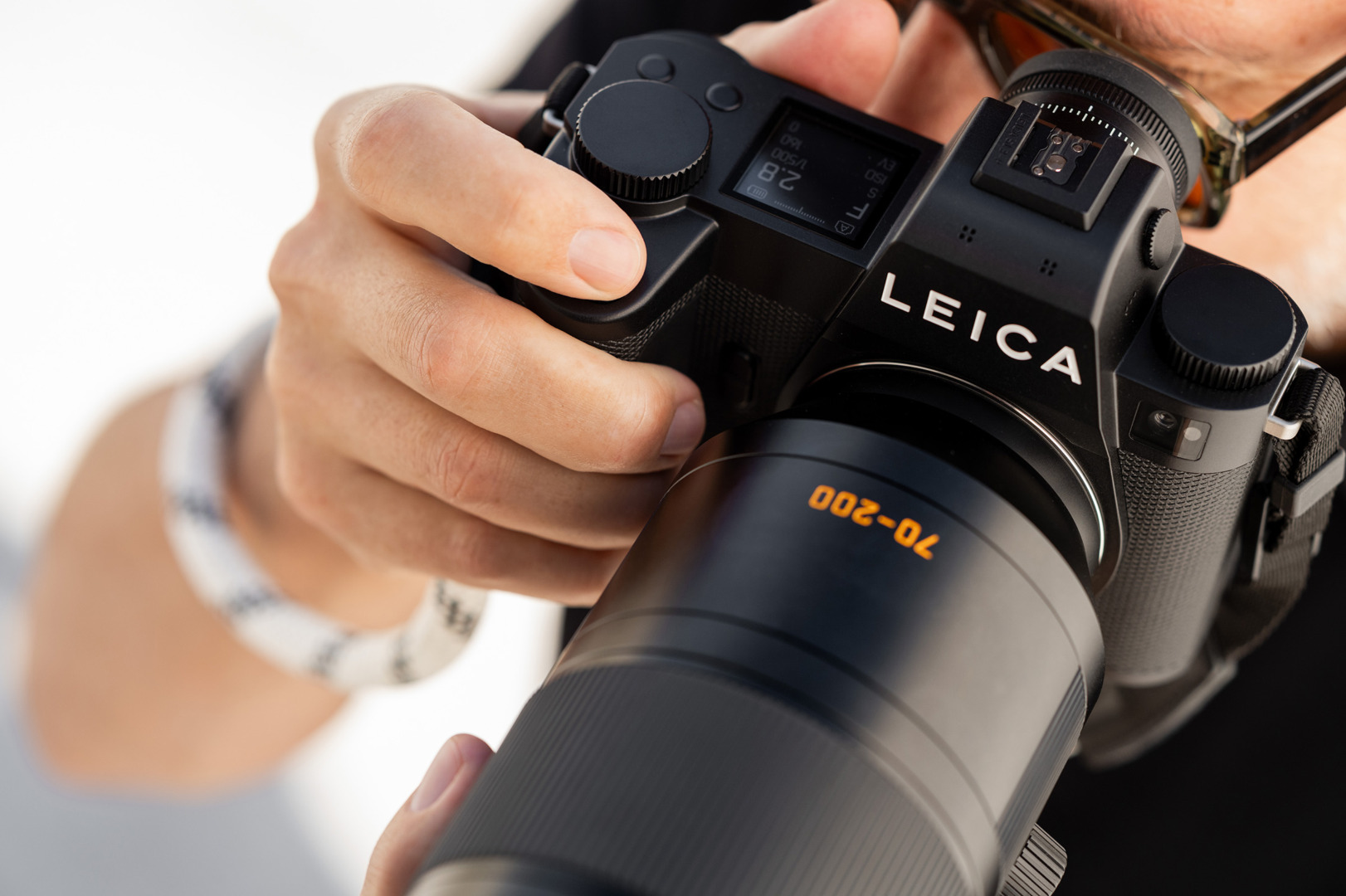
Andrea’s case
According to Chris’s report for Digital Camera World, Andrea believes Leica buyers have stopped weighing cameras purely on resolution. “The megapixel race has ended,” he told Chris, “and now manufacturers are working more on the overall system, build quality, usability, and dynamic performance.” Buyers care about the whole system now — colour rendering, usability, and how a camera behaves in real conditions — rather than whether it offers 44, 60 or 100 megapixels.
Andrea also pointed out that the Leica SL is no longer the most expensive camera on the market, since Canon, Nikon, and Sony now all have flagship bodies that cost as much or more than a Leica.
To me, that changes the usual take on pricing. Leica isn’t the eccentric outlier any more — everyone else has caught up on price while still chasing higher numbers. These comments apply specifically to the SL3 family rather than the M range, which has always carried its premium and faces no real competition.
The rebuttal
Photography Life takes a different view. Its writers argue the pixel war hasn’t ended at all — it has simply gone quiet at the top while continuing everywhere else. Flagship resolution has genuinely plateaued, they note: Nikon hasn’t moved since the 45-megapixel D850 arrived in 2017, and Canon’s 51-megapixel 5DS dates back to 2015.
It’s worth noting that Canon’s current professional flagship, the EOS R1, uses a 24.2-megapixel stacked CMOS sensor, trading resolution for blackout-free 40fps bursts, strong low-light performance and minimal rolling shutter. Leica takes a similar path with the SL3-P.
Yet high-resolution sensors have become far cheaper secondhand, Photography Life points out, and resolution keeps creeping up through the middle of the market. Part of the pressure comes from 8K video specifications, which demand approximately 39 megapixels regardless of any stills ambition. Sensor-shift trickery can multiply that further still: a 61-megapixel sensor, shot through a multi-shot mode, can turn into a 244-megapixel composite.

Viewing distance
PetaPixel goes further, arguing that photographers have become collateral damage in a contest the manufacturers are mostly fighting among themselves. Its case rests on viewing distance. An A3 print only needs 300 pixels per inch to look sharp — a figure well attainable by a 20-megapixel sensor, such as the one in the site’s own long-term test camera, an Olympus OM-1 Mark II. Context, the site concludes, matters rather more than the number printed on the box.
Leica’s own evidence

Leica reached this conclusion in hardware some time before Andrea said it in an interview. Look at the SL range alone. The SL3-S sticks to 24 megapixels, built for speed and low-light work rather than outright detail, although we have had no confirmation that the model will not be phased out in favour of the newer -P camera.
The newer SL3-P settles for 45 megapixels, a deliberate compromise between speed and resolution that Jono Slack praised in his long-term Macfilos review. The original SL3 remains on sale for anyone who wants more resolution and can live with slower handling, at a full 60 megapixels.
Rather than picking one number to fight over, Leica built a range that lets the owner choose the trade-off. That feels more useful than chasing a bigger figure for a press release, and it rather supports what Andrea told Chris about Leica’s own customers never really fighting this war in the first place.
My verdict
Reading all three accounts together, I think Andrea has a point — though a narrower one than he perhaps intends. As Chris reports it, the marketing shouting has genuinely stopped. Nobody serious is promising a revolution over another ten megapixels.
Photography Life has the more complete picture, though. Resolution keeps rising quietly, driven by video specification and component cost rather than bragging rights. That isn’t really a war any more. It’s arithmetic.
For most of us shooting stills, PetaPixel’s underlying message still holds: the camera already in the bag is probably good enough, whatever any interview claims.
So, has Leica called time on the pixel wars? I’d say it has called time on the argument, even as the numbers keep drifting upward regardless. That distinction, reported first by Chris, is rather more interesting than the headline alone suggests.
The feature image, at the top of this article, is a 400% crop from an image taken with the 60MP Leica EV1 M and 35 APO-Summicron-M lens
Having just finally “succumbed” and bought a Q2 Mono, I must say that IMHO 40Mp is about the right limit.
Like most people I am photographing to print up to A3 and don’t print wall-sized images, ever. I had many long discussions with camera buffs, pro printers and many others and we came down very much in favour of 40Mp or thereabouts as being pretty much optimal for most pictures. Of course we could find exceptions but in practical terms we all agreed that was it. Comparison with the 60Mp Q3 Mono showed little appreciable difference, and so after months of thinking about it I went in to Leica and bought the Q2. Fascinatingly thet saw the point of my arguments…
Bear in mind too, that various people have been saying for some time that the best option for B&W simulation, if you can find one and afford it, is an M10M with a Summicron IV.
At the current level of technology there is so much more that can be done with software that there is still a lot of capacity to develop the system.
Peer
Leica appointed a VP of Technology & Innovation in the beginning of the year. I believe it is no secret that one of his roles is new sensor development with support of 3rd party manufacturers, a process that is expected to take at least 5 years. I read the words of Andrea Pacella in the light of that, and assume he means that till Leica reaches that point they might stick with the 60MP sensors they are currently using.
“An A3 print only needs 300 pixels per inch to look sharp — a figure well attainable by a 20-megapixel sensor”
Seriously? 20MP for A3 print? (Being an American, I had to look it up. Essentially the same size as the U.S. tabloid, 11″x17″). I steadfastly cling to my Nikon Df, which is a lowly 16MP. Its images look sharp to me on a 55″ (diagonal) TV screen, let alone 11″x17″ print.
Well, I think the megapixel wars should be over. I just don’t see the point in sensors that can out-resolve most lenses. I noted that when Nikon designed the Zf, a mirrorless replacement for the Df, they could have chosen their 45MP sensor for it; instead they chose 24MP, only 50% higher than the Df, even ten years later! Creating great images is certainly about much more than raw resolution. I trust that is a non-controversial statement.
I can print my M10 image files up to A2 at home without any issues on my EPSON P800. My printer has used the same files and printed up to A0 for my clients without any issues. I do understand those who like to crop see the sense in larger pixels, but in the M series I think 24-40MP is a sweet spot range. On the M240 colour look, which I really liked, until I got my M10 and, to my eye, it looked even better, more refined. But it’s all down to the user’s perception, perhaps.
But what comes next?
Customers must be persuaded with new features.
I have the Lytro Illum, that supports depthcharts.
The reviewers laughed at the presentation about this camera, the jpeg pictures it produces were 15? Mp only.
Is that the way?
Or will Apple with the iPhone be the coming technic leader?
Regards, Jan
What comes next is . . . nothing. That is, dedicated cameras will disappear as far as the general public is concerned. It will take a while, but smartphones will eventually replace cameras altogether, except for professional photographers and specialized photo recording equipment used in the sciences.
Niche cameras like Leica my be the only exception. I couldn’t help but notice that my chosen brand, Nikon, after 18 years with Contax mount, and 60 years with F mount, chose “Z”. In so doing they skipped over 18 letters in the English alphabet, perhaps signalling the Z cameras are the last they expect to build. Nikon does manufacture other lines of optics, so perhaps in the future they intend to concentrate on those.
perhaps they have reached the limit and cannot squeeze more pixels in the current full frame sensor 🙂 Time for a medium format with compact body ! I have had the chance to use the S system and it is way beyond the current SL system(picture quality). the only downside is the weight. But the greats like Josef Koudelka still use it!
Thanks, Kannan. I own (and reviewed here) the Fujifilm GFX100RF, and it’s a brilliant camera for results — and the same size and weight as the Q3.It isn’t without its faults, but Fuji will learn and the Mk II will overcome these issues, I’m sure.
thanks Mike. I tried the GFX100RF and it felt really good in the hands. and the right focal length too. I am so used to rangefinder now that , i find it odd using the EVF 🙂
An odd thing happened to me recently: I’m still using my trusty old 24mp Leica M240, but I read about the wonders of the M11 and think “Well, why not? I can afford it.”
But then I came across an article by Thorsten Overgaard, in which he remarks that the M240’s sensor has a unique and wonderfaul way with color.
Now, at late last, I’m realizing that there are other qualities to a sensor than megapixels of resolution.
(yet an inner voice nags me: “but if you bought the M11, you could compare”)
Funny you should mention Thorsten’s M240 article because a colleague (who shall be nameless, I would rather not steal his thunder) has also been impressed by Thorsten’s endorsement and is thinking of writing an article on the subject. We will have to wait and see what he comes up with.
Thorsten’s was one of the articles that confirmed my opinion that 40Mp was about the useful limit.
Dear Mike, thank you very much for your article.
In 2003, I got my first digital camera, a Canon 300D with 6.5 million megapixels. Ever since then, I’ve been following the debate over the question, “How many megapixels are sufficient—or even conceivable?” We all know where we stand now: 100 megapixels and more are easily achievable today; a Leica M has 60 megapixels—just 4 megapixels fewer than the medium-format Leica S3 did in 2020.
Of course, it’s fascinating to speculate on where this trend is headed, but I’m not in a position to make a prediction, nor do I believe such a discussion makes any sense at all.
The increase in the number of megapixels is nothing more than an indicator of technological progress, and that progress will continue one way or another. Do we always need an ever-higher number of megapixels? There are certainly photographic applications for which high megapixel counts are essential, but for the amateur photographer, this question is certainly open to debate.
But I don’t want to have this discussion at all; I’d simply like to have the option, even as an “amateur photographer,” to use the most advanced technology available. That’s why I’m simply looking forward to discover what the (photographic) future has to offer technologically, because even Leica won’t be able to shut itself off from this development and won’t make the mistake again of believing it’s smarter than market trends.
It’s always difficult to decide when “enough is enough”. I remember 20 years ago some people were adamant that 5MP was the ceiling and that any further development is pointless. However, dare I say it, we have now reached something of a plateau and most people are happy with anything between 24 and 100MP. A continuation of pixel wars is now most likely to disadvantage the consumer because of the constant pressure to update. It’s a conundrum, for sure.
Dear Mike, I basically agree with you…but people were making exactly the same assumptions years ago. When I had a 24-megapixel camera, I thought we’d reached the end of the road. Today, I use five 60-megapixel cameras and one 45-megapixel camera. And to be completely honest: I don’t want to go back to 24 megapixels, because I can always decide right in the camera whether I want to reduce the number of pixels. “It’s better to have it than to need it!”
Apple and Samsung release new cell phones every year that often differ only minimally in terms of technology. And yet the new models still sell.
I’m just a user when it comes to photography, not a technologist, but I’m sure that manufacturers will test the technical feasibility and bring these products to market—and that there will be buyers for them, myself included.
I thought that’s more or less what I said . . . every generation thinks it’s the end of the road, but it isn’t. I really don’t know what will happen, certainly not whether the pixel wars will reignite soon. Mike
As a non-technical person, I may have a different perspective on this topic. My ‘main’ camera is a Q3, because of its portability, ease of use, menu system second to none, and image quality. My second camera is an OM-3, not only because it is (quite) compact but because it has world-class image stabilisation, excellent auto-focus and burst speed – for wildlife and grandchildren, its nigh on perfect. My third camera (we’ll ignore the Om System TG-7 for holiday swimming pool snaps), is the Ricoh GRiv – truly pocketable, fast and easy to use.
So, 60mp, 20 and 26 megapixels – each capable of producing excellent images to at least A3 print size. What matters to me is “fit for purpose”, not megapixel count.
You are quite right, Andrew, and I don’t think chasing pixels is much of a meaningful occupation these days.
For those of us who ‘invested’ in additional TL lenses for our Leica APS-C cameras, and who continue to use them on full frame bodies (partly because most offer very useful tilting rear screen monitors), the SL3-S (24MP FF) when used in APS-C mode, produces a 10.3MP ‘cropped’ image – compared to the SL3P (45MP FF) which when wearing its APS-C hat, creates a ‘more versatile’ 19.4MP file. When producing A3 prints utilising Leica’s superb APS-C ‘TL lenses’ on FF cameras, the SL3P, thus ‘whoops’ the SL3-S (unless upscaling is employed). My Leica TL 11-23mm APS-C zoom lens is frequently used on a 47.3MP Panasonic S1R – creating a c. 20MP cropped sensor image file. If I decide to ‘upgrade’ to a current FF Leica L-mount with a tilting monitor, the SL3P, or possibly the SL3 (60MP), would be my choice. The SL3-S is not really a contender for those of us still wanting their £money’s worth from their L-mount APS-C lenses. The discontinued TL 11-23mm lens has a lot of mileage left in it and is one one of the Peter Karbe design team’s masterpieces – along with the TL 60/2.8 APO and TL 35/1.4 ASPH. Better still would be a Leica APS-C ICL camera with a tilting or articulated monitor – but Leica decided c. 7 years ago that: “the future is full frame”. However, at that time their FF cameras had yet to ‘catch up’ with other manufacturers’ tilting and articulated rear screen offerings.
All good points, Dunk, and thanks for adding to the debate.
I own a M11M and Q3 43, both at 60 mp. Enough sensor resolution. IMHO, Leica should concentrate on more dynamic range, less noise, and computational imaging (like iPhones) to expand the range of imaging. I already see a dramatic reduction in the need for a tripod for any kind of shooting, even at night(except long exposure images), When combined with recent noise reduction applications and Leica’s superb optics, the combination is hard to beat.
I agree with this
Bill and I are on the same page here.
It didn’t register my name.
Thanks, Ed. I won’t delete you. Try adding your email address next time you comment. I don’t understand why it isn’t accepting your name. I’ll ask Richard Watts, who looks after the site’s technical side, if he has any ideas.
Thanks, Mike. I was using a different device that did not have my email.
This may be one of those times when one says “donut” and the other says “do not.”
Personally, I haven’t upgraded my M240, so I’m really not the one to say ‘please no computational imaging in a future Leica’. But I feel that way. My old German Studies teacher used to quote Ranke: ‘Wie es eigentlich gewesen.’ — ‘How it actually happened’. I just feel, for me, we shouldn’t try to stray too much from that.
There’s now a good deal of debate over AI written text. One concern is that AI may tend to make everything sound generic. A similar worry for AI ‘corrected’ photos.
Hi Mike,
Interesting stuff!
I think I word has to be said about diffraction. About a dozen years ago I wrote about the initial Sony A7r, and then about sensor / pixel size. Here, slightly edited, is that I said about the latter:
“Fairly recently we have Canon announcing a 120MP APS-H sensor. Translated to a full frame 24x36mm sized sensor this would be 200MP, and compared to this, it might sound as though Sony’s 36MP sensor is small beer. But even assuming that Canon’s sensor was the same quality as Sony’s, there is the not-inconsiderable matter of diffraction to consider. All lenses have what is termed a diffraction limit, the highest theoretical resolution for that size objective for a given wavelength of light on a particular imaging medium. We are no doubt familiar with the idea that a particular Leica lens loses resolution above f/11 or f/16 due to diffraction. We are also familiar with the concept that lens aberrations tend to be reduced upon stopping down that lens. For our purposes, the diffraction limit of an older Leica lens might be that point, let’s say f/11, where diffraction starts to limit the otherwise increasing resolution inherent in stopping down. But that f/11 is with film. With a digital sensor capable of better resolution than film, the diffraction limit is pushed to larger apertures.
Diffraction limit can be a confusing subject. Think of a visual subject as comprised of many points of light. As the rays from each of these points passes through the lens, at any aperture, they get bent by the edges of the aperture and create something called an Airy (after its initial describer) Disc, a representation on the imaging medium of concentric rings comprising the image point and an interference pattern around the point due to diffraction. As long as each Airy Disc remains discrete and does not overlap with another, the lens is still resolving properly. As the aperture is made smaller, each Airy Disc grows, and eventually overlaps with the next one; at this point the lens is said to be “diffraction limited” and cannot resolve any finer detail even if further stopped down. Clearly for a finer sensor, that point is going to be at a larger aperture than for a coarser one.
According to Nathan Myhrvoid on Luminous Landscape, with a full frame 35mm sensor of 50MP, the diffraction limit is f/6.4, for 100MP it is f/4.6, and for 275MP it is f/2.8! (Please note that this is for a green light wavelength, and the pixels in the current Bayer array – perhaps some new pixel architecture might change these numbers.) The upshot is that even something like Leica’s [then] new APO-Summicron ASPH 50/2, which is so well corrected wide open, would show little improvement at these higher sensor pixel sizes if closed down to medium apertures. “Fine” you may say, “let’s use it wide open”. But the APO Summicron comes at a very high price, as would all such super lenses. Less SOTA lenses may not show maximum resolution until, let’s say, f/5.6, and if a camera system maxes out at f/4, one could close the lens down but not get its maximum performance, at least as this author understands it. So there are likely diminishing returns in much larger full frame 35mm sensors perhaps beyond 50 – 60MP.
… We may be approaching all that can be squeezed out of small cameras.”
Just my 2 cents.
Thanks, Ed. Some of this is above my pay grade, but interesting nevertheless.
thanks Ed. that explains a lot.
i recently tried to use a 35 APO on m10 M and at f8 i did not see a huge difference in sharpness or resolution. it was quite disappointing actually as the Zeiss zm 35mm f2.8 i have, had a better output.
But having used a 50 APO on a M9 monochrom, i could see it visibly sharper with more contrast. not sure if it relates to what you have mentioned.
So for M10M f8 would be a good aperture before diffraction kicks in ? (i mainly shoot street and f8 -f11 is my aperture amd m10 m is my main camera!)
Best
Kannan
Thanks, Kannan, for your question. I am going to guess than when one has 60 MP at one’s disposal, that around f/5.6 is the limit for increasing diffraction stopping down. The M10 M has 41 MP and perhaps f/8 ought to be about that point. That does not mean that you won’t get increasing DOF at smaller apertures, but that diffraction would creep in. For the M10 M It likely would not be that noticeable / objectionable. By all means, use the f/ stop that gives you your image.
I use my own M10 M at f/5.6 to f/8 for street shooting, FWIW. with a LLL 35/1.4 or their 28/2.8.
On the M9, with 18 MP, you could stop down your 50 APO and continue to get sharper / more contrasty images because the Airy discs would allow this.
The 35 APO is an odd lens for me. Peter Karbe says no difference stopping down, and only use that for DOF. O/w shoot wide open. So it is at max resolution wide open. Always beautiful, creamy bokeh, feels almost too good to be true. So mostly I use other 35s. LOL!
I wrote what I posted quite a number of years ago, and so far, yes, about 60 MP seems to be a limit.
thanks Ed. Right now i have slimmed down my gear to just one lens and one body !! (m10m and the new close focus 35 summilux)
coming back to the M APO lenses, i would tend to think of those as studio / reference lenses. For street, stopping down(at f5.5 or f8), the fall off is too good, and the depth is not so good as compared to the summilux or cron from previous design. even the 35 cron the first asph version gives better depth of field compared to the revised version from 2015. similar observation with summilux as well. the older asph version seems to offer a better depth of field. perhaps the newer ones are more optimized for digital sensor.