
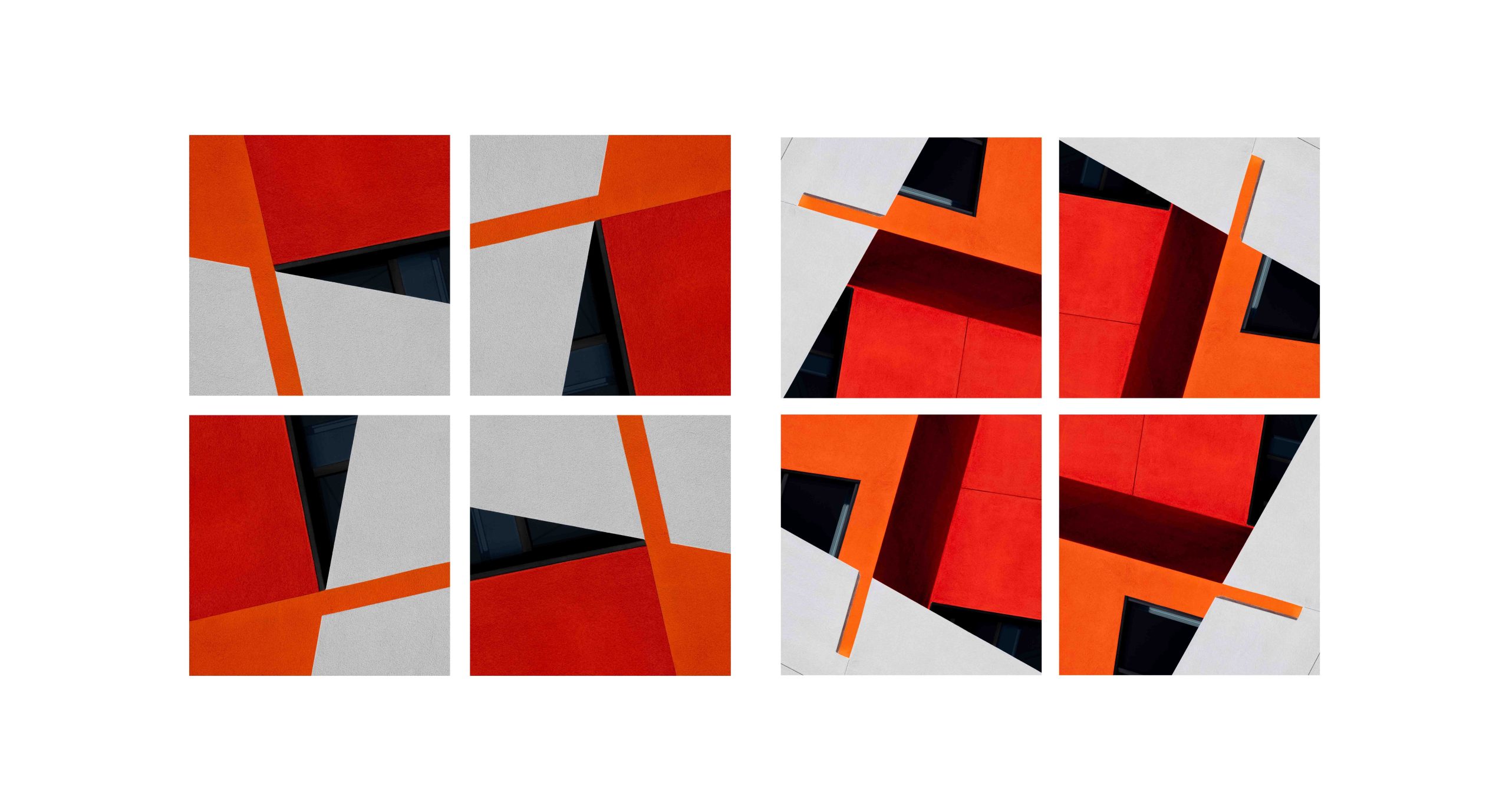
Abstract quadriptychs — what pretentious gobbledygook you might be thinking. But wait. I did not cook up this term myself. It’s an actual thing. And it means exactly what it says on the tin: an artwork comprising four panels, each of which is an abstract image. Why are we posting an article about this on Macfilos? Read on to find out.
I like modern art — the more abstract the better. In fact, I much prefer it to traditional, representational art. Such contemporary, abstract art is usually created by painters. But, given we are also exponents of a creative, visual medium, surely there is a role in modern art for photographers too.
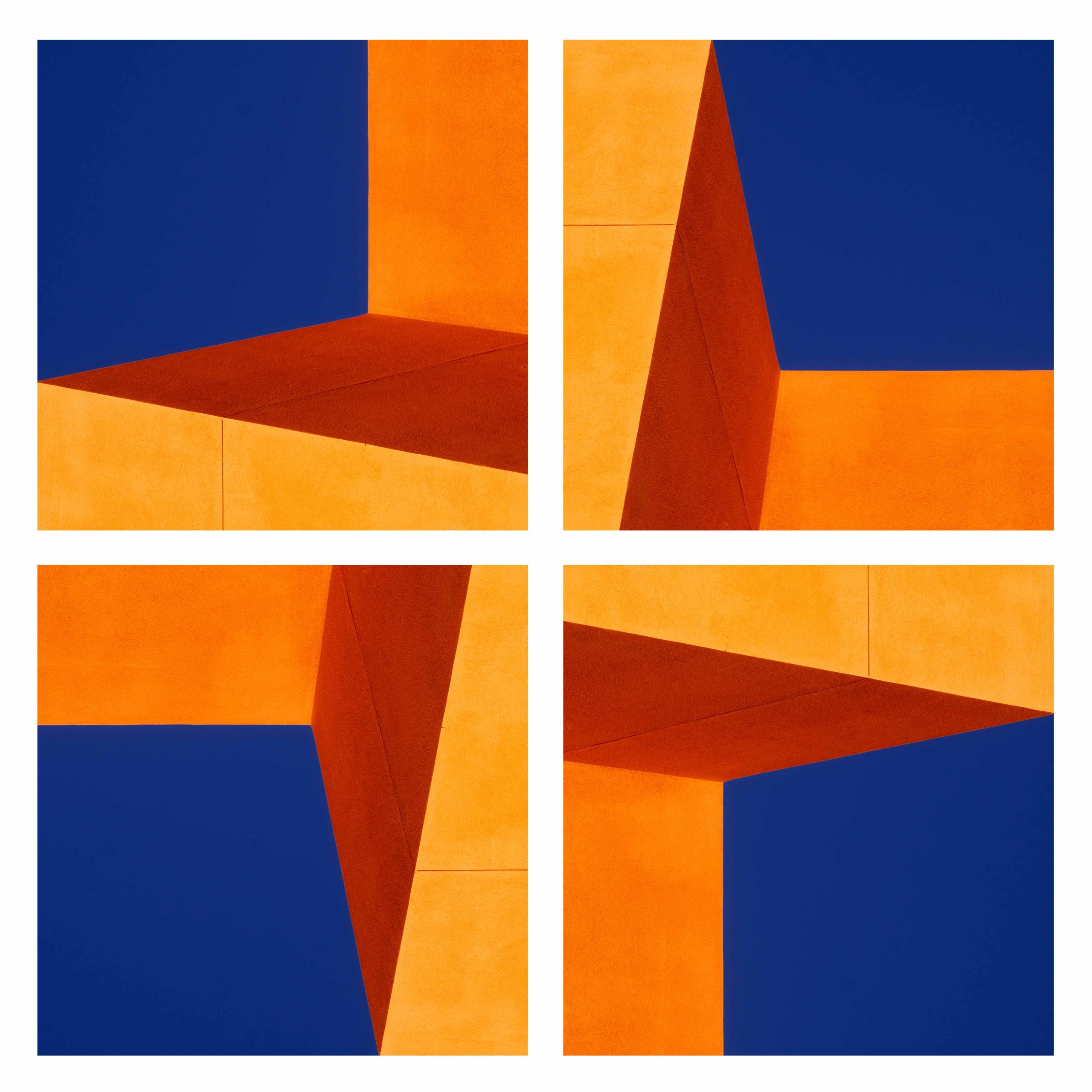
We typically consider photography to be a means of documenting the world around us. We even label popular photographic genres as landscape, architecture, sport, street and so forth. However, we can also use it to create images whose relationship to the real world is barely discernible. This is the domain of abstract photography.
Repurposing pixels
Instead of a blank canvas, paint and brushes, we have pixels to work with. A photograph of a scene in nature, or the built environment, is full of them. All we have to do is abstract, then manipulate them to create a new, aesthetically pleasing image.
I have written about this topic several times for Macfilos, and so will not reiterate my thinking on the subject — you can find links in the table below. Instead, I will briefly describe a new aspect I have explored.
My interest in abstract photography has converged with another fascination — composite images. The occasion was a call from our local cultural arts commission for submissions to a forthcoming exhibition: In the Abstract. It was the perfect opportunity to tackle a new photographic project: abstract quadriptychs.
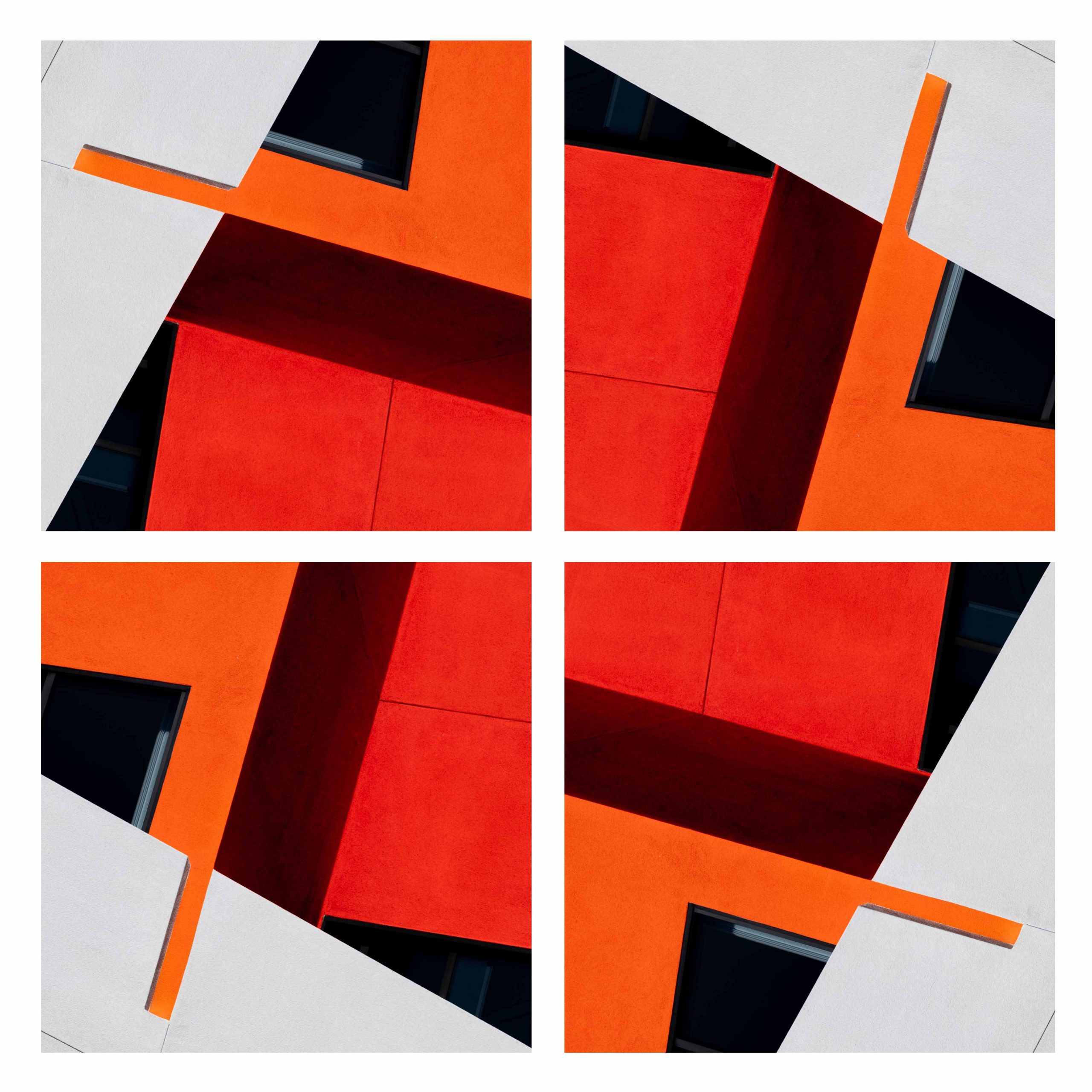
I wrote an article about a particular type of composite image — diptychs — the smaller sibling of triptychs, last year. The idea was to place two different, but somehow related, images on a single canvas. They might be subtly different views of the same scene, two conflicting perspectives, or even the same photograph, mirrored.
The intention was to create a new ‘higher-order’ image which has greater visual impact than the sum of its parts.
Bigger is better
When I first considered exploring the bigger, rather than smaller sibling of triptychs — quadriptychs — the idea seemed barmy. How could one possibly find four distinct, but related, images that would together form a coherent whole?
It then occurred to me that I already possessed them. They are readily available within the collection of geometric, abstract images I have built over several years. Importantly, they are all, purposely, in square format.
If one of these were sequentially rotated, three times, by ninety degrees, I could create exactly what I was after — four distinct but related images. Furthermore, their square format would allow me to ‘tile’ them, establishing a new, higher-order square image.
More than the sum of the parts
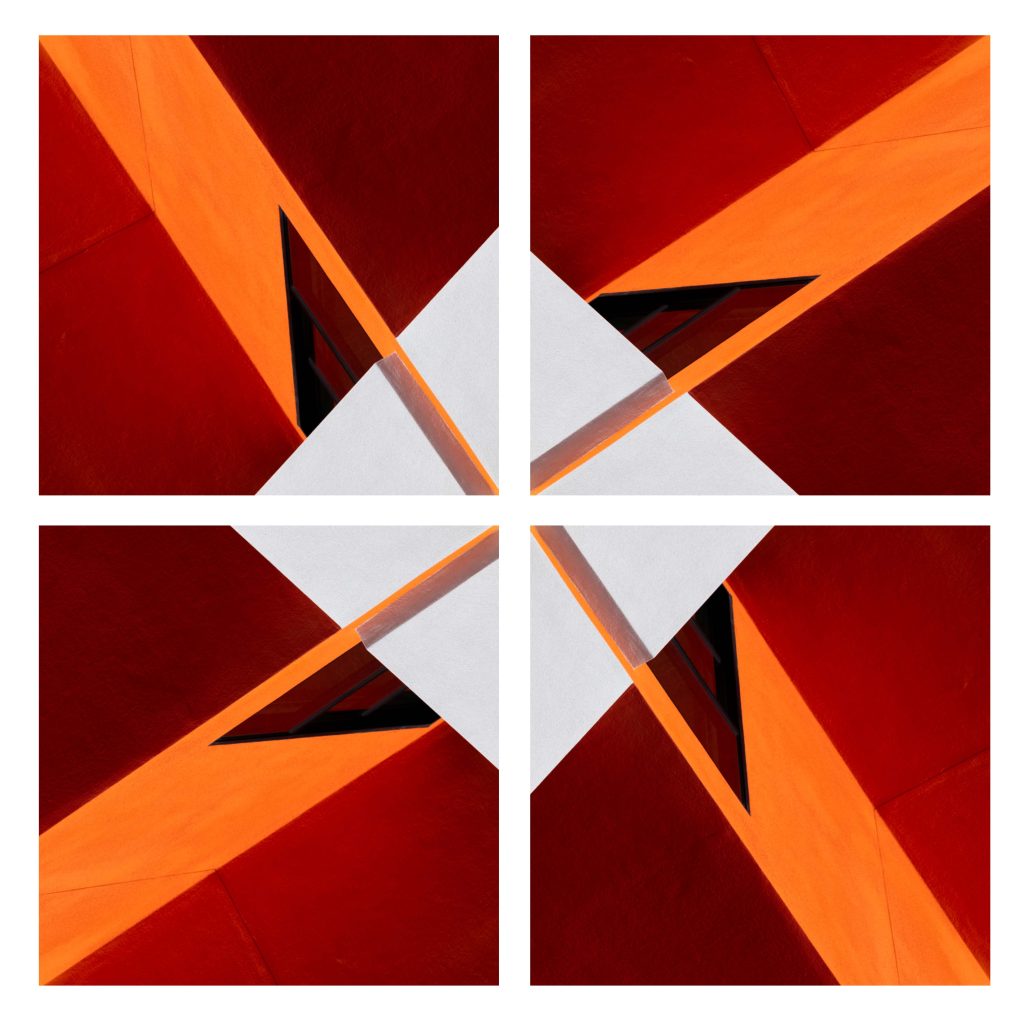
When I tried this out on the first abstract image that I felt had potential, the result was surprising and intriguing. I had created a four-fold symmetrical, Escher-like image resembling a confused gear wheel, bristling with multiple, non-interlocking planes. I liked it.
By the way, four-fold symmetry is a scientific term. If you rotate an object with four-fold symmetry by 90-degrees, it looks the same as when you started.
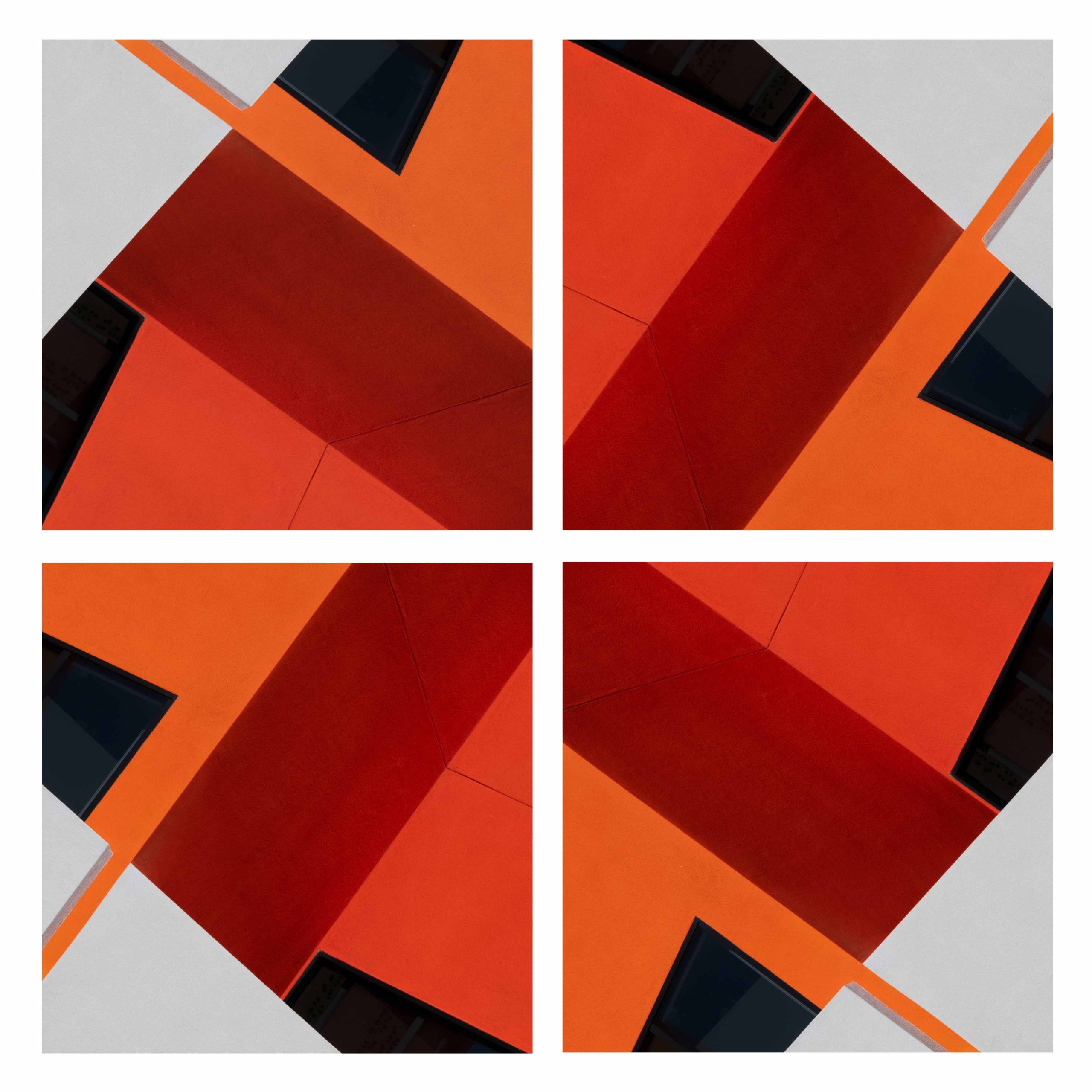
Viewed at a distance, so that it looks like a single image, the quadriptych represents two degrees of abstraction — two steps away from an original photograph. The first is abstraction of pixels from the picture I took; the second, assembly into a composite image.
I decided to keep a border around each sub-image, rather than have them abut one another, so that it is a compilation of four stand-alone images — a quadriptych. Viewers can therefore appreciate the individual panels, and the composite.
I explained how to incorporate multiple images into a canvas, using Photoshop, in an article last year (see link below).
Off and running
I have so far created five abstract quadriptychs using this approach. In each case, I used a root image with geometric features that ‘worked’ when replicated, rotated, and organised in this way.
Two of these, Quadriptych 2 and Quadryptiych 4, have been selected for inclusion in the forthcoming exhibition. As much as I look forward to hearing what visitors to the exhibition make of them, the process of creating them has been rewarding in itself.
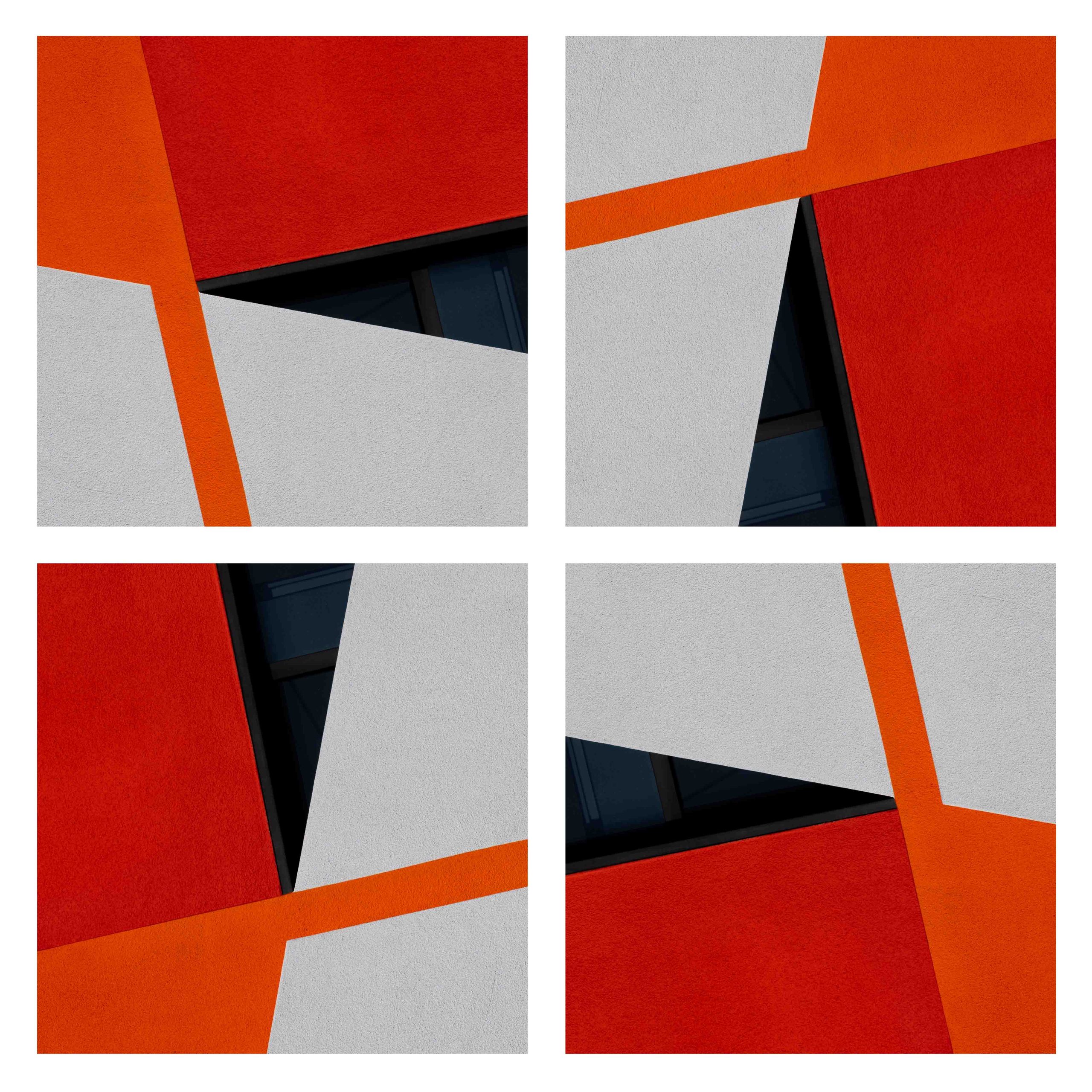

I am certainly not the first person to have produced abstract quadriptychs, which are also sometimes referred to as tetraptychs. An online search revealed a large body of work exploiting this approach. However, all the examples I have found to date are paintings.
So, there is plenty of opportunity for us photographers to elbow our way into the abstract quadriptych crowd and make our mark.
Make a donation to help with our running costs
Did you know that Macfilos is run by five photography enthusiasts based in the UK, USA and Europe? We cover all the substantial costs of running the site, and we do not carry advertising because it spoils readers’ enjoyment. Any amount, however small, will be appreciated, and we will write to acknowledge your generosity.
“Abstract quadriptychs — what pretentious gobbledygook you might be thinking.”
Indeed, and sorry Keith, after reading the article, I am still perhaps contrarily thinking the same.
I am also thinking that, as John Lydon said, “Ever get the feeling you’ve been cheated?”
I would rather use the word ‘had’ it is less severe, but nevertheless, perhaps we should leave abstraction to the painters.
Photography is about what you leave out, rather than what you squeeze into a frame… surely?
As an example, JMW Turner crammed a number of buildings in Venice that were miles apart onto one canvas, and created a masterpiece.
Done with a camera, one is merely distorting reality.
As Winogrand said, ”I photograph to find out what (how?) something will look like photographed.”
Hi Stephen, thanks for your comment. It seems we differ in our views on where the boundaries of photography are. But diverse opinions are good, right? I didn’t understand much of what you said, especially about being cheated or being had. The last time I checked, nobody is being charged to read Macfilos articles, nor is anyone being compelled to read them! I also think the title is an accurate description of the article’s contents. Oh, well. Once again, thanks for commenting. Keith
Hi Keith, thanks for your reply, I suppose I did not make my point that well. I just think that photography is less art and more documentary. Notwithstanding a snap may well be artistic, even if it falls into the category of abstraction.
https://archive.org/details/the-genius-of-photography-2-6-h-264-aac-dvb-t/Documentary+-+The+Genius+of+Photography+%5BBBC%5D/the+genius+of+photography+-+1-6+-+h264-aac+-+dvb-t.mp4
The above link is to a BBC television series, that has miraculously survived the BBC’s instinct to destroy its own work.
Somewhere in there is some stuff about the differences between artistic abstraction and documentary photography. If you haven’t seen it before, it is well worth a watch.
Hi Stephen,
Along the lines of your BBC series, I highly recommend Guy Tal’s excellent book entitled More Than A Rock. He is a true artist that happens to use photography as his medium of choice. I think most serious photographers would get something worthwhile out of his book. I have always had it on my recommended reading list for my workshop participants.
Thanks Joel, I will take a look… Regards SJ
Why can a person not distort reality with a camera? Any image from a camera that is creatively processed is modifying reality to various degrees. Photography is an artistic pursuit and a person is entitled to pursue their vision. I do not in the least appreciate or like Picaso paintings but I do not look down on people that love his paintings.
Your comment is not productive and extremely biased. I could say more but ….
I forgot to mention that photography can be documentary or artistic. Certainly, fine art images are not documentary. I thought the negative viewpoints on photography being a form of artistic expression had ended some time ago. Doing artistic photography is not a careless or easy snap of the shutter as uninformed people believe. There is a lot of skill involved in the capture of the image and then in the processing of the image.
Very original and interesting. I’ll have to try this. Thanks for sharing.
Be well,
Richard Clompus
Hi Richard, many thanks! I find abstract photography to be a fun diversion from more mainstream genres such as street, landscape, and portrait photography. I hope you have a chance to try it for yourself. Cheers, Keith
Hi Keith
Excellent!
I would love to see these printed large and be able to view them in person at different distances. I found myself studying these, zooming in and out. I’m sure you will get lots of positive feedback from people at the exhibition. It should be quite interesting to hear all the different reactions and how various images speak to people.
Thanks for sharing these!
Joel
Hi Joel, many thanks! I printed them at 16×16″ and mounted them in a 20×20″ frame. This size seemed to work well for viewing from four to six feet away, as is typical in an exhibition. They stood out from most of the other items, and in general, people were surprised that they were prints derived from photos. One visitor to the exhibition would like to buy one of them! All the best, Keith