
I am not a rangefinder user. I find manual focusing and the limitations of the traditional rangefinder frustrating. But after the Leica M EV1 was unveiled in October 2025, I looked into the camera’s design features before making the momentous decision to take the plunge. It also meant buying a lens — no helpful kits with the M EV1. The camera, lens, and accessories were in stock, and two days later I was in business. Was it the start of an unbreakable bond, or would it turn out to be a mistake? That’s what I’m going to answer.
I am no stranger to Leica, and my experience has been built up using two Q3s and an SL3. They were my preferred poison. The Q3 is almost my dream camera, but I always missed having one focal length or another. The SL3 addressed the problem, but at a considerable cost in weight.
For decades, I’ve lugged around heavy Canons and somewhat lighter Fujis, but I always dreamed of a compact, full-frame system with interchangeable lenses.
Looking back, it was on the personal recommendation of a Leica Academy instructor that I delved into the M-System. I even treated myself to a one-day private training session in Wetzlar in the Spring of 2025. The incredibly patient Siegfried Brück spent the whole day explaining the system and helping me get the hang of it.
However, unless I used the Visoflex 2, at most a third of the images were in focus on the subject I’d selected. With the electronic viewfinder attached, my success rate went up to, perhaps, 70 percent. This was despite disliking the Visoflex in terms of both optics and handling.
I normally wear glasses and, with the Q3 or SL3, I was able to shoot without glasses, relying on the diopter control on the viewfinder. Sadly, the rangefinder was more complicated. Without glasses, focusing was really difficult, although Siegfried pointed out that screw-in diopter adjusters (correction lenses) are available from Leica.
They come in five positive values, from +0.5 to +3.0, and five negative values, from -0.5 to -3.0. They are £175 | €200 | $215 a pop, so it’s bad news if they come unscrewed and fall down a nearby drain. This didn’t seem a viable option for me.
My conclusion on the first day was that, at both first and second glance, the M-System isn’t the ideal one for me. I’d have to invest a lot of time and patience (I like to work with wide-angle lenses and light telephoto focal lengths, which aren’t fully displayed in the rangefinder anyway) to get halfway decent pictures. In the end, the only appealing aspects are the compact size and weight of the M11.
Enter the Leica M EV1
After the Leica M EV1 was announced in October, I looked into the camera’s design and features and thought I’d give it a try. When it arrived, I was immediately impressed. Leica had succeeded in preserving the iconic design and elegance of this camera series.
Keeping the small “frame line” lever and assigning it to new functions is a smart idea. Of course, a flip-out display would have been a nice-to-have feature, but I liked everything I could see and discovered after unboxing. The price is also fair, by Leica standards. I was really looking forward to using the new system.
Every beginning has its magic. The first few days with the Leica M EV1 felt good, and confirmed my initial enthusiasm on the day the camera was launched. Now, at last, my personal Wendepunkt with interchangeable-lens systems might be upon me. After some initial (experimental) shooting during the first few days, a sense of enthusiasm for the system began to grow.
With the 35mm f/1.4 and the EVF, focusing was a breeze, and 90 per cent of the images were sharp — exactly where I wanted them to be. The remaining shots were also sharp, but in places I hadn’t aimed for. Focusing worked with and without assistance; the EVF is so clear and bright that I could focus well even in low light.
I had started with “simple” subjects that couldn’t run away, and by the end of the first week, I convinced a few people from my circle to pose as models. The focusing process was surprisingly fast, always relative to my “beginner’s standard” or my expectations.
Undoubtedly, an SL3 or Q3, with autofocus, is faster. But I realised this, and didn’t expect speed — more the leisurely approach that any M-fan will describe. The camera without a lens is incredibly light, and even with the lens attached, it’s heavy enough for good handling but still pleasantly light. And a certain sense of euphoria did arise from using such a wonderfully compact interchangeable-lens camera system.
So if my initial infatuation turns into a lasting love affair as I begin practicing photography, I might just become a new, enthusiastic user of this system.
Of course, I also found things that aren’t perfectly resolved (you’re never really satisfied, but that’s also because this is already the case with other Leica cameras), and there was one thing that made me laugh.
I’ve taken note that chargers are no longer included with cameras these days, and I don’t get upset about it any more. After all, the option to charge the battery inside the camera can also be practical and useful. But…
Including a USB-A (3.0 port) to USB-C adapter in 2025 is, in my view, absurd and no longer appropriate. USB-C is the standard today (and especially for a new release), but Leica probably had to clear out its remaining stock.
So, would love at first sight turn into an enduring partnership?
Just under 20 days later, the initial euphoria hadn’t faded, and after taking a couple of thousand images, I came to an interim conclusion:
The good bits
Dimensions/Weight:
I used the Leica M EV1 in the same way as my two Q3s, with a thumb grip, hand grip, and wrist strap. The “perceived weight” is that of the Q, but with the added option of lens interchangeability. I can achieve my goal of replacing the “larger and heavier” SL system.
Lenses:
The quality of the M lenses is indisputable; except for the ultra Noctilux, their size and weight match the camera body perfectly, making the desire for a compact system with interchangeable lenses easily achievable. I started with the 35mm f/1.4 and then made the costly mistake in Wetzlar of also trying out the 21mm f/1.4. Two-thirds of the photos I’ve taken so far were shot with these two lenses, and the quality is outstanding by my standards.

Viewfinder
I felt right at home from the start thanks to my experience with the Q3 and the SL3. Even in low-light conditions, I get along well with the display (of course, everything could be a little better, but I don’t feel any shortcomings compared to what I’m used to). Focusing without aids also works in the EVF under optimal lighting conditions. The fact that I can shoot without glasses, thanks to the diopter adjustment, is also a standard feature I’m already familiar with and wouldn’t want to do without.
Handgrip:
Compared to the Q3, the Leica M-EV1’s handgrip is designed to allow battery and memory card changes without removing the grip.
Focusing/Composition:
“You see what you get!” — I’m familiar with this from the Q3 and the SL3, and it simply makes photography more comfortable and encourages me (at least) to experiment even more. I mainly used focus peaking (I tried all the colours; in very few situations I chose green, but red has become the default setting) and only rarely used the magnify option (it was just too cumbersome for me to navigate the field there using the directional buttons).
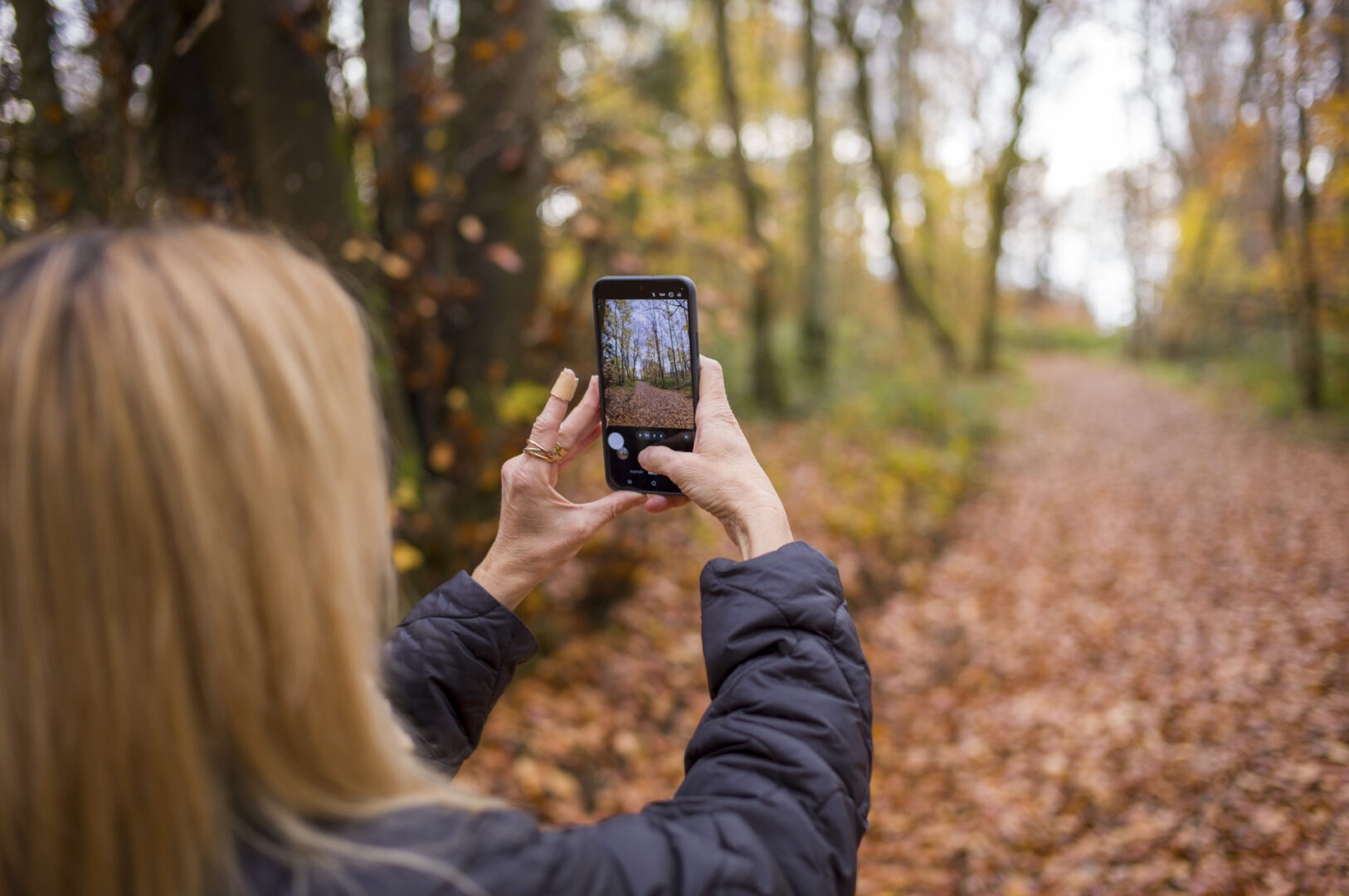
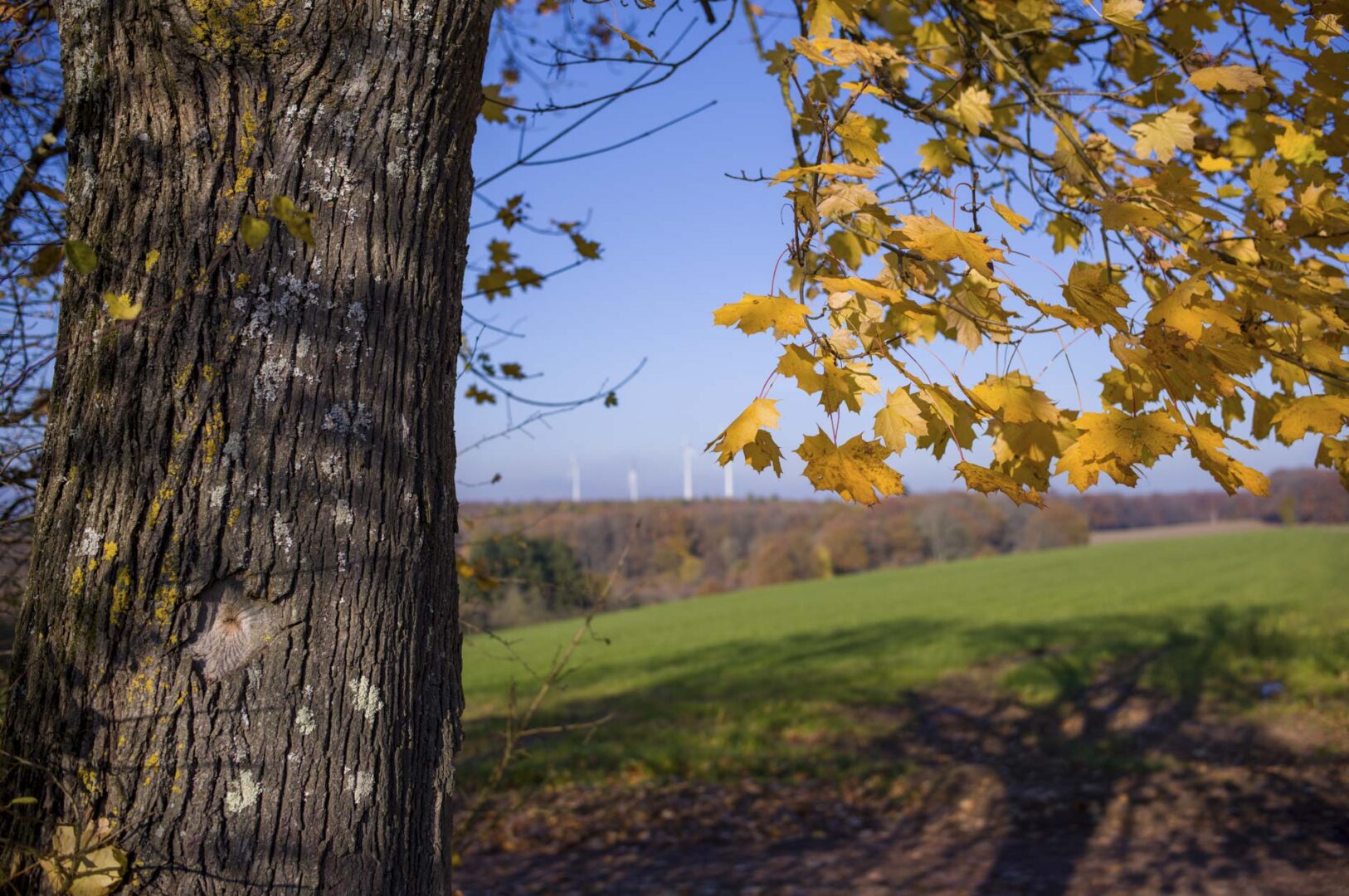
After taking over 2,000 photos with the Leica M EV1, I found that 100% of them were in focus, and in about 80% of them, the focus was precisely where I intended it to be. I found it fascinating that I became significantly faster after a relatively short time.
I also practiced extensively for several hours in various lighting conditions with different subjects, and my “private test models” confirmed that there was almost no time difference compared to how I worked with my previous cameras. In some cases, I had already made an estimated setting on the lens beforehand and then just quickly fine-tuned it. I found it quite comfortable.
Neutral
Focusing/composition:
There are moments when I miss having autofocus for fast-moving subjects. I’ve already tried zone focus and generated usable shots, but when it comes to moving objects, nothing beats autofocus that can track them consistently. BUT: You know this before buying a camera like this, so this point remains in the “Neutral” category.
Memory:
The internal memory of the Leica M EV1 could at least have the capacity of the M11P. But I was just glad to have any at all.
Focal lengths:
I was very lucky to be able to buy a brand-new 16-18-21 Tri-Elmar in Wetzlar, so I initially have sufficient focal lengths for the wide-angle range. However, I missed the fast and, in some cases, exceptional 15mm f/1.4 Fish Eye Sigma Art lenses.
My wish would be a 14 or 16mm f/1.4 Summilux as a lower-end complement to the 21mm f/1.4, and a 135mm f/2.8 or f/2.0. But, you are aware of the options in this range before buying such a camera, so this point remains in the “Neutral” category.
Power consumption:
With data transmission to the Leica FOTOS App turned off, I can’t detect any higher battery consumption than with the Q3.
Yes, that initial positive feeling has grown stronger. I began to see this camera, in combination with the interchangeable lenses, as a genuine alternative to the SL system for me. I obtained initial quotes for selling the old equipment and began to warm to the idea of giving up the L in favour of the M.
Combined with the indispensable Q(3)s, I felt perfectly equipped for photography.

Enthusiasm fading
Every beginning has its magic… Does love at first sight turn into a partnership, and does the magic survive in everyday life?
After just under 40 days with the Leica M-EV1, the initial euphoria faded; some 3,000 images and various photographic situations later, the system settled into everyday use and thus reached the limits of my expectations for a high-performance camera:
The flip-up display on the SL3 (and the Q3s) have become such a cherished feature for capturing extraordinary perspectives. This doesn’t work with the M-EV1 because, in common with the M11, it has a fixed screen. I would rather not do without the feature, and I also don’t want to be crawling around on my knees or on the floor.

Focusing with the M-EV1 is technically possible, but in practice, there are many wasted shots. Focusing with the SL3 and Q3 is significantly easier, faster and more precise. With an SL3 or a Q3, you can align the shot low via the display, focus, and the subject or the eyes/face is sharp. And that works almost every time.
Image stabilisation (combined with fast lenses) is another feature I truly appreciate. I can’t remember the last time I needed a tripod. An SL3 with a Sigma 15mm f/1.4 fisheye or a 35mm f/1.2 II with a 14-24mm f/2.8 takes sharp pictures handheld at 800–2,000 ISO in low or reduced light conditions.
Yet under the same lighting conditions, with an M-EV1 paired with a 16-18-21 Tri-Elmar, I’m already at 3,200–6,400 ISO or require a tripod for lower ISO settings. In some (indoor) locations, that’s not allowed or practical. In those situations, the advantage of the system’s compactness quickly becomes irrelevant. Photographing moving objects or people in such lighting conditions is also more efficient with stabilisation.
The lens selection for the L-Mount is excellent for my preferences (wide-angle, preferably ultra-wide, and telephoto up to 105 or 135mm, both preferably very fast). The M-System performs worse in comparison. Inclement weather conditions also limit my work: While the SL3 keeps going undeterred and risk-free, the Leica M-EV1 has to go back in the bag.
After six weeks with the M-EV1, I weighed many factors carefully; the compactness in particular makes the M-System extremely attractive, but, eventually, the “autofocus guy” in me won out. The Q3s were a given anyway, and I’ll continue to bite the bullet on the heavier weight and use the SL3. It just feels right and good photographically.
Conclusion
The M chapter is closed. And, though this is somewhat strange, I feel a greater sense of satisfaction, enthusiasm, and connection when photographing with the SL3.
I admit, however, that there are still one or two moments when I think I should have given the Leica M EV1 a little more time. But when I then use the new Sigma 135mm f/1.4 or 14mm f/1.4 on the SL3 and, with proper use of the autofocus, every single picture is sharp, these moments are quickly over.


Finally, however, my decision is based purely on personal considerations. I know that Leica rangefinder photographers do tend to discuss things dogmatically, and I respect everyone’s opinion. There are certainly many M photographers who can achieve technically what I achieve with the SL and Q. And that says it all — it’s not about system issues, it’s about the right match between technology and the photographer.
The Leica M-EV1 is and remains a smart evolution for M photographers who want to use all (including third-party) lenses without optical limitations.
Despite my costly experience, I have to admit that the camera and the M-System still hold great satisfaction for me. Indeed, I spent another day at a Leica Academy Workshop in Wetzlar and, of course, the team placed the M-EV1 with the new Leica Noctilux-M 35 f/1.2 ASPH on my desk. I began to wonder (yet again) if I hadn’t given the camera and the system enough time. Luckily, the Leica Store at HQ had already closed for the day by the time the workshop ended. Phew…
Make a donation to help with our running costs
Did you know that Macfilos is run by five photography enthusiasts based in the UK, USA and Europe? We cover all the substantial costs of running the site, and we do not carry advertising because it spoils readers’ enjoyment. Any amount, however small, will be appreciated, and we will write to acknowledge your generosity.
Comments: Please add a comment to this article. Our comments section is a thriving community and everyone is treated with respect. In addition, please identify yourself (and add an email address, which will not be published, if you would like to see answers to your posting). Our system will automatically delete any “anonymous” posts on the basis that they are likely to be spam.
Excellent write up. I’m a q3 guy looking to jump into ev1. But this is exactly what I needed to read!
Thanks for adding your thoughts. I think there is something special about manual focusing an M-Mount lens, whether via rangefinder or EVF. I seldom use manual focus with an AF lens (such as on the Q), except for exceptional purposes. The EV experience with M is excellent on an L-Mount camera (with adapter) or, in some cases, with an adapter on APS-C. But for the lightest, purest experience, the EV1 has a role to play. — Mike
Thank you very much for the interesting User experience. In case the M System tempts you again I will recommend you to give the correction lenses a try. I‘ve used one for three years and it Never Fell off (or got Even loose) so I See no significant Risk.
If you want to give them a try, I would recommend to do some tests to find the right one. I am Short-sighted (-2.0) but got the best results with the -1,5 lens. I can perfectly focus with it, even 90mm wide open (2.0). So they are really helpful.
I acknowledge it would adress most of the criticism you have in the article. However rangefinder focusing is much quicker than Focus peaking and makes using the Camera a way more pleasant experience.
Dear Stefano, thank you very much for your comment and your recommendations. A “normal” M would not be an option for me because I find the limitations in focal lengths and the viewfinder unacceptable. I don’t like the Visoflex for aesthetic reasons and taking photos through a display in folding mode sometimes makes sense, but not in principle. If I succumb to the M again, it will definitely be with EVF.
I believe you about the faster focusing, but is it more precise, especially with open-aperture images of people? I met one or two M photographers at various workshops and the number of images without focus or with focus in the wrong place was surprisingly high.
I can only speak for myself. I tried the Visoflex, focussing withe the screen and I also tried the M-EV1. With each of them I am much less precise than with the rangefinder (if you see well). I has many reasons. Focus Peaking is not too precise. Magnification works better but it takes longer. The longer it takes, the lower the precision because either the photographer or the subject has time to move. If you shoot wide open eben the slightest movement can result in the subject being out of focus even if you focused properly. As long as Leica does not offer a more state-of-art focus aid the M-EV1 is not an option for me.
Thank you for your feedback and explaining your position.
It is all about choice. The M-EV1 grew out of a meeting of Leica Society International (LSI) which was held in Dublin in October 2022 and which was well documented here on Macfilos. At the time Stefan Daniel said that the camera might be produced provided a certain level of sales might be possible. The demand was driven by LSI members who wanted to be able to use a wider range of lens on M cameras, particularly wide angles and telephotos. A survey of Leica users was held and, following that, the M-EV1 went into development and then production.
I tried a preproduction test version of the M-EV1 in Montreal on the day of the launch and I found it difficult to use with a 50mm Summicron lens which I had with me. I subsequently found out that I had an issue with my spectacles which I have since had replaced. I had acquired a Q3 43 earlier while I was having eyesight difficulties and I am, like Olaf, happy with that. I have not looked at the M-EV1 since last October. However, I continue to use LTM and M cameras with film. I have never been tempted by the SL cameras and the L mount zooms. 20 to 25 years ago I used professional Nikons like the D3 with large zooms, but I was a lot younger and fitter back then. These days I much prefer to have a small camera with me. As regards focal lengths I had found that if I went out with a 35mm or 50mm lens on an M, that lens stayed on all day and I did not ever change to any wide-angle or small telephoto lens which I had with me. You soon learn how to adapt to using the same focal length all day. One lens that I find to be both tiny and outstanding to use is the Voigtlander 21mm f4. I also have a WATE, but I rarely use it. I use the ‘Frankenfinder’ occasionally, though.
The best camera is the one you have with you and the best one to bring with you is the one you are most comfortable with.
William
William, thank you for your comment and sharing your thoughts and experience.
As I already wrote it in the article, it is all about the perfect match between you and your camera.
Good to hear that you are happy with the Q3 43.
An excellent read! Thanks so much!
Florian, thank you for your feedback, very much appreciated.
A good alternative wide angle are the Voigtlander 10 &12 lenses
Thank you for your comment and recommendation.
Very interesting intro to the M system and experienced gained.
Thank you for your comment.
Loawa make a fantastic 15mm f2 lens in M Mount. The DOF is so good you don’t need to focus, everything is just in focus unless it’s extremely close. You can also adapt R lenses if you want
Thank you for your comment and recommendation.
In the past I used Bessa R3a, Leica M9P, M (240) with some nice Leica M lenses so no stranger to rangefinder system. Purchased SL when it first come out, then SL2-S and now SL3 and SL3-S. Interested in Leica gear when M EV1 I was tempted several times in regards to its size and weight, but with no tilting screen and IBIS no thank you. SL body with M to L adapter and M lenses is a better option for me, bit heavier, but I am a big boy now. On top of everything else SL and APO SL lenses what more do you want.
Thank you for your comment. I completely agree with you, however, the three Leica Q3s remain my first choice. On the SL3, I only use the three Leica f/2.8 zooms and, in addition, prime lenses from Sigma. I like shooting wide open, and Sigma simply has the better options here: 14mm f/1.4, 20mm f/1.4, 35mm f/1.2 II, 85mm f/1.4, and 135mm f/1.4.
Great article. You can’t fault Leica for trying something different but the way I understand it the ev1 isn’t as good a rangefinder as the m10/11 and isn’t as good an ev-finder as the SL. Hey tbh the article was a little sparse on imagery. Where can we view more of your work? Im on insta Linz.cd if author or anyone else wants to swing by.
Thank you for your comment. Most of the pictures are from people for whom I don’t have permission to publish. I’ve deleted the blurry, unsuccessful photos. I would have liked to show more pictures, but this story happened more or less four months ago, so I deleted those pictures as well.