
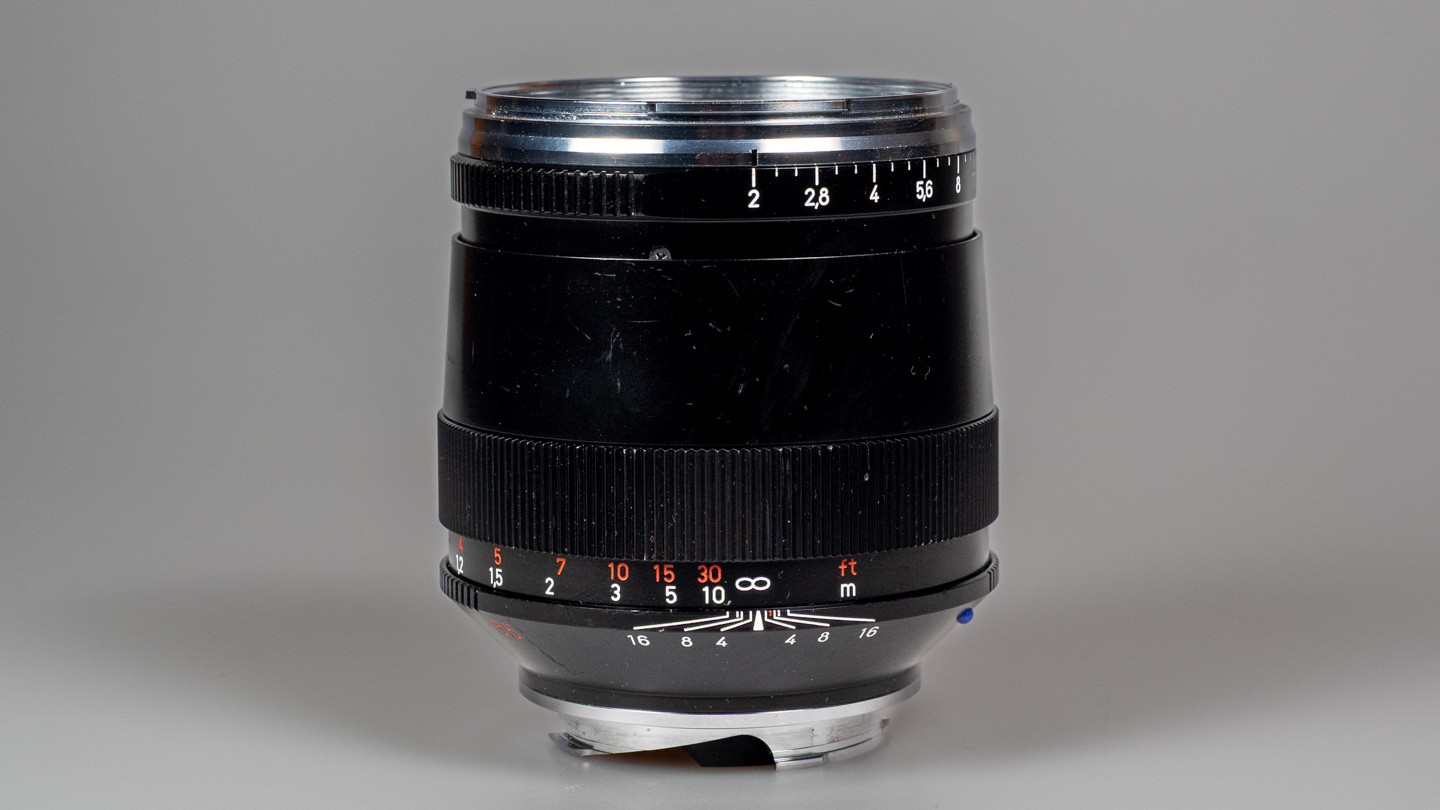
Someone even asked in a forum whether this lens exists at all. Indeed, even long-time rangefinder photographers may never have seen the Zeiss Sonnar 85/2 ZM. According to various sources, only a few hundred were ever produced. But what is this lens other than rare? The hands-on review in the M Files will tell us.
So far, we have normally published combined reviews of several lenses, or covered lens-camera kits (such as the Minolta CLE with its three lenses, part 8) in our series, the M Files. In each episode, we wanted to show you alternatives to Leica’s own (and, for the most part, excellent) M-Mount lenses. Often, a handy travel kit (for example with a 28 and 75 in part 23) or a series of lenses (such as the Zeiss ZM C line in episode 29) have been featured.
One Lens, one article
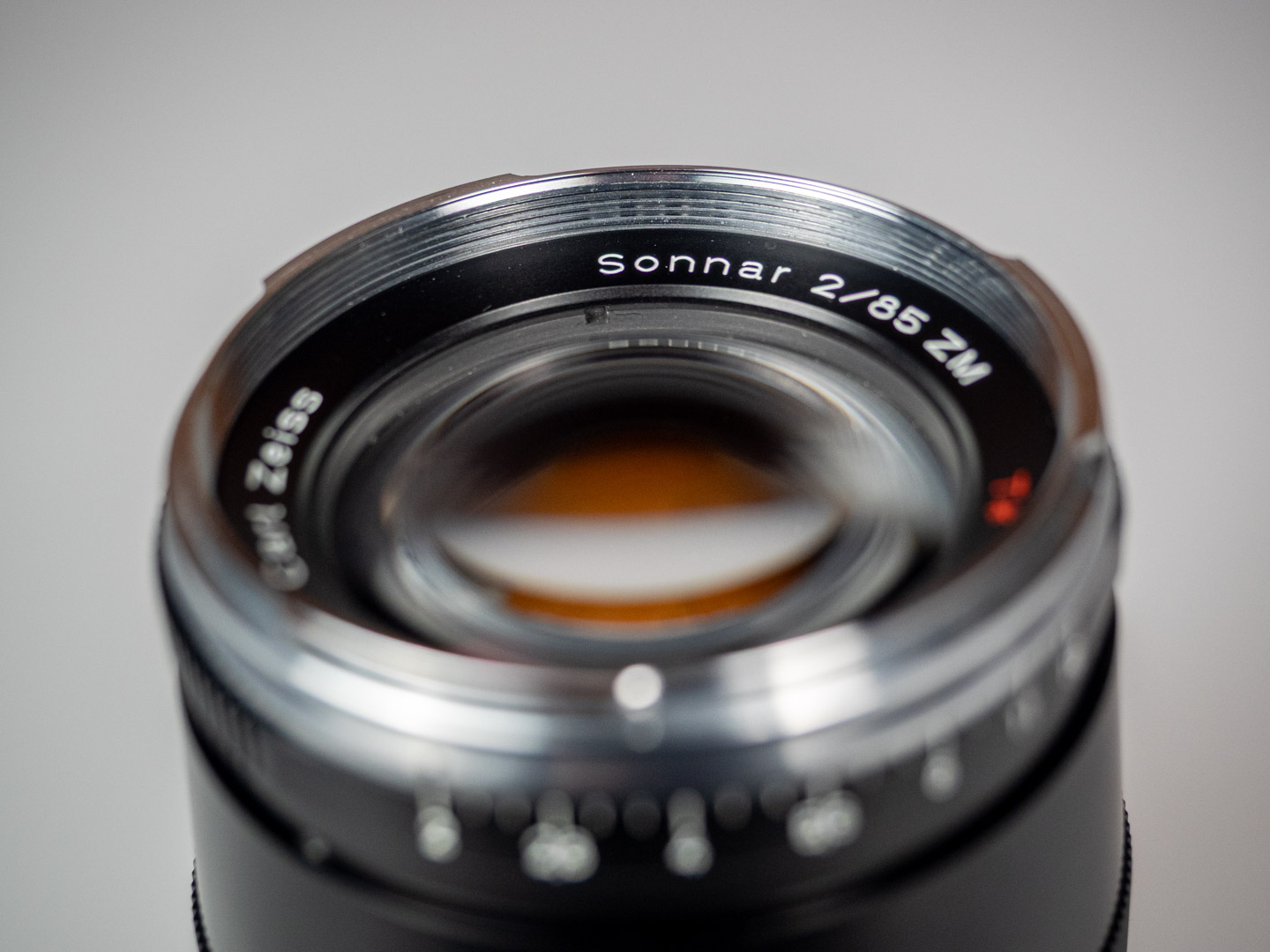
With this 30th article in the series, we not only celebrate a small jubilee, but we shift over to a “one lens, one article” principle. And which lens would be better suited to mark such a change? The Zeiss Sonnar 85/2 ZM would have earned an article on its own anyway.
With a production number of only 600 (often reported as here, but never confirmed by Zeiss), it is one of the rarest M-Mount lenses ever. And it is one that has enjoyed little coverage by reviewers until now. Exceptions are Michael Letchford and PebblePlace, and also Erwin Puts wrote a bit about the Sonnar. Maybe most copies are sitting in a forgotten drawer, waiting for collectors’ prices to climb further.
In a way, the Zeiss Sonnar 85/2 ZM is the new Berlin airport of the M-Mount lens collection. Berlin’s project had a complicated start, with repeated postponements. Zeiss encountered the same with the 85/2 ZM. The company announced the lens together with the Zeiss Ikon camera as part of the new system at the Photokina photography trade fair in 2004.
The fast telephoto lens was supposed to be a cornerstone for the Zeiss M-Mount range of cameras and lenses. But after several delays, procrastinating press announcements, and mild pressure by dealers, it was not until 2007 that the first examples reached customers. In the case of Berlin’s new airport, they had to wait another 13 years, by the way. That example of procrastination opened only in 2020 after a nine-year delay.

Difficult to manufacture
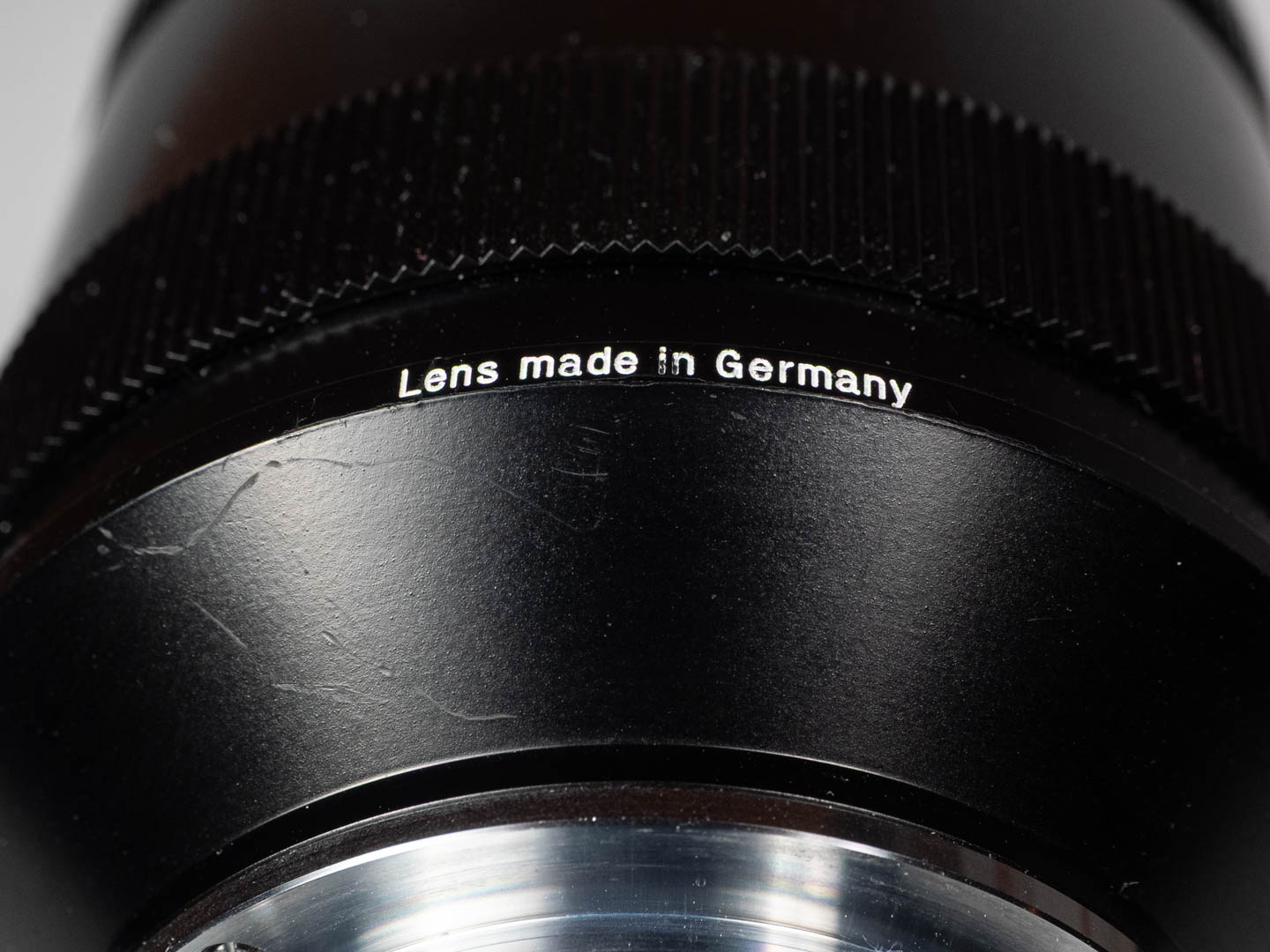
Back to the Sonnar: The lens had turned out to be difficult to manufacture — even for the experts in the Zeiss headquarters in Oberkochen, Germany. While production of almost all the new ZM lenses was outsourced to Cosina in Japan, the Zeiss Sonnar 85/2 ZM was allocated to the German plant.
Among the 13 different ZM lenses ever made, the 85/2 is one of only two lenses to be made in Germany (the other being the 15/2.8). Both the optical and mechanical parts pushed Zeiss to their limits. This is stated in several press releases (they were collected on lens-db.com, unfortunately the site appears to be down now).
At any rate, the lens does exist, to answer the anxious question by a user in this forum. It has been with me for a few months now, and I used it with different cameras in different scenarios. Here is what I found out.
Technical data, scope of delivery, price, availability
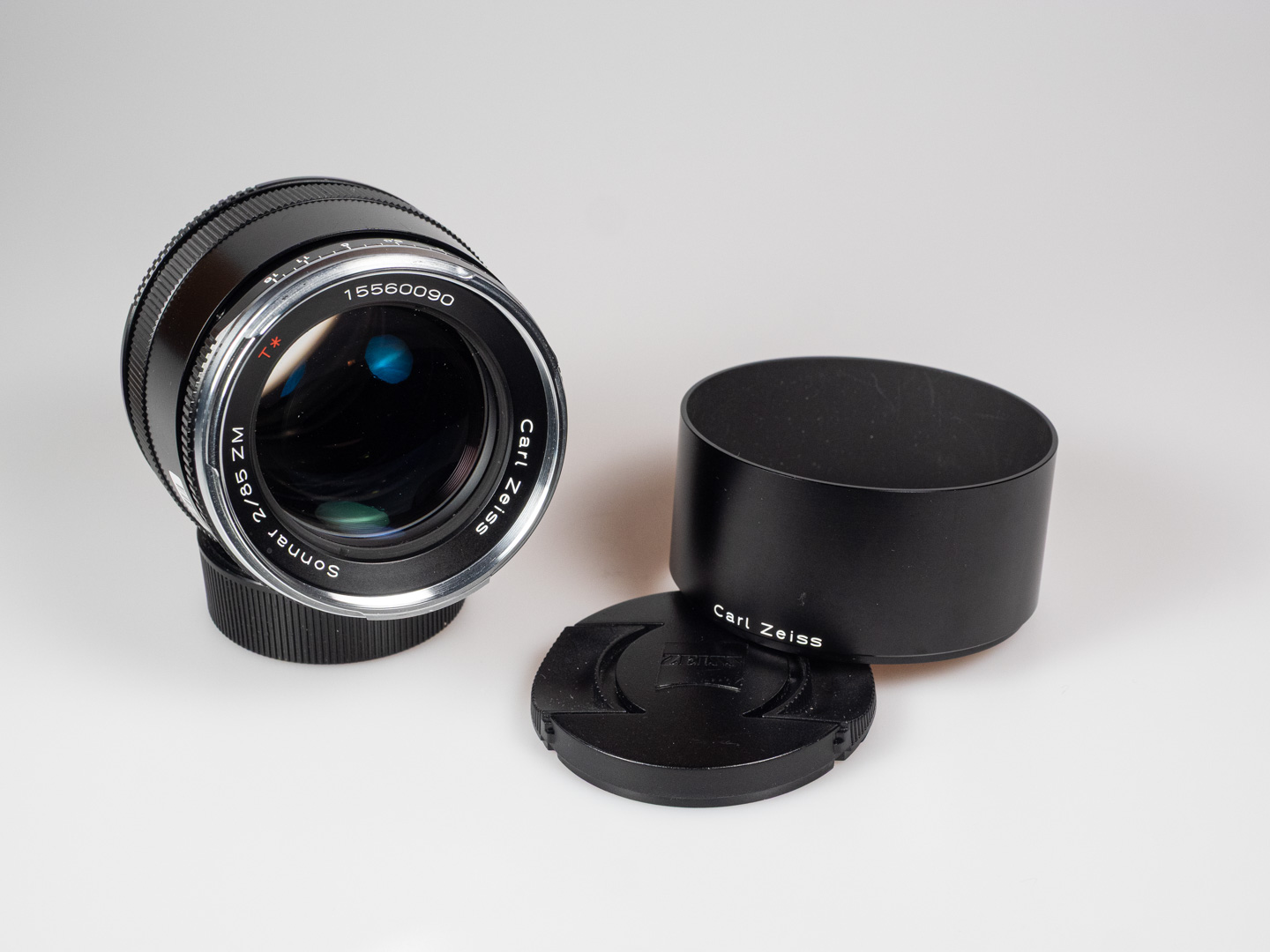
The Carl Zeiss Sonnar T* 2/85, to quote the engraved on the front ring, was announced in 2004 but only sold from 2007. It was quietly discontinued in 2011 and soon disappeared from the stores.
The launch price was €2,800, only slightly under Leica’s APO-Summicron 90 ASPH. It came only with front and rear caps. The lens hood (Zeiss article number 1365-668) had to be purchased separately. I found a new one from a dealer in New York for $75, after months of searching.
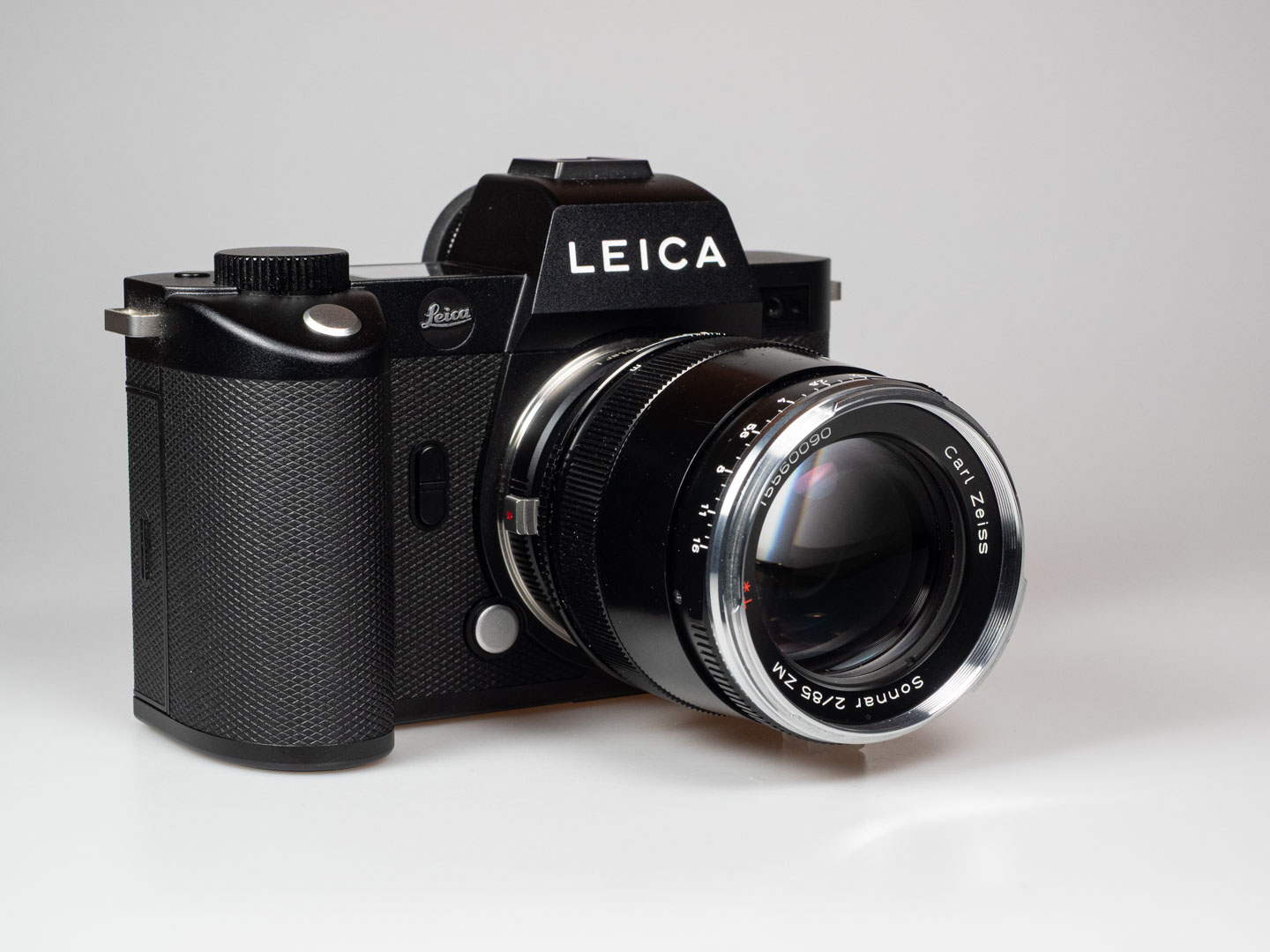
The Sonnar is a rather big lens, with a length of 76mm (when mounted in a camera, overall length is 82mm) and a maximum diameter of 71mm. Weight as-in-my-bag (that is, with both caps and lens hood) is 529g; the lens alone is 477g. With these dimensions, the Sonnar belongs to the big and heavy optics in the M-Mount context. The angle of view is 29 degrees (diagonally, compare Leica 90 Summicron: 27 degrees). Minimal focus distance is 1m.


Zeiss Sonnar 85/2 ZM on Leica SL2, 1/2000 sec, f/2, ISO 100
©Jörg-Peter Rau
Collectors dictate prices now
The story of the small number of manufactured lenses quickly spread, and the Sonnar soon became a sought-after collector’s item. Sporadically, a copy turns up in eBay or at respected sellers, with prices up to €6,000 for a mint copy. This makes the Sonnar 85/2 one of the more expensive collectibles in the M universe. But still, its price is not yet as outrageous as that of the legendary 35 Summilux ASPHERICAL.
I got my copy from Kamerastore in Finland. The people there do a terrific job with repairing cameras and lenses from the film era. One cannot thank them enough for the enthusiasm with which they give beautiful gear a second lease of life.
I discovered the Sonnar by chance, and it was aptly described as showing signs of use. I got the lens below the launch price from back then, which was appropriate. And to confess it right away, I kept the Sonnar. That’s because it makes my collection of the Zeiss ZM lenses complete. Maybe I will dedicate a separate article on this aspect in the future.
Optics and rendering

Lens design
The Zeiss Sonnar 85/2 ZM consists of six elements in six groups. The lens design was, according to a Zeiss brochure about their Zeiss Ikon camera and ZM lenses, chosen to give “perfectly sharp images over the entire focusing range from infinity to close-up — even wide open”. Remarkably, however, it is no apochromatic design along the lines of Leica’s 1998 APO-Summicron 90.
But the Sonnar sports features the APO-Summicron does not. The 85/2 is, to quote Zeiss once more, “the first M-mount telephoto lens with floating elements and incorporates an ultra-precise, nonlinear rangefinder coupling mechanism”. This special design was, allegedly, also the cause for manufacturing problems and the massive delay at launch. Read here the full data sheet with MTF curves.
Colour drift and vignetting
As you would expect in a telephoto lens, the telecentric character of the Sonnar‘s design lets the rays of light reach the sensor more or less at a right angle. So, there is no colour drift or “Italian flag” phenomenon.
The Zeiss Sonnar 85/2 ZM does show a fair amount of vignetting wide open. Stopping down to f/4 solves the problem, or you remove it in post. However, there is no ready correction profile in Lightroom for the Sonnar. For all other Zeiss ZM lenses there are, by the way. I don’t object to a bit of vignetting in most cases, but your mileage may vary, of course.


Zeiss Sonnar 85/2 ZM on Leica M10, 1/500 sec, f/6.8, ISO 250
©Jörg-Peter Rau
Chromatic aberration
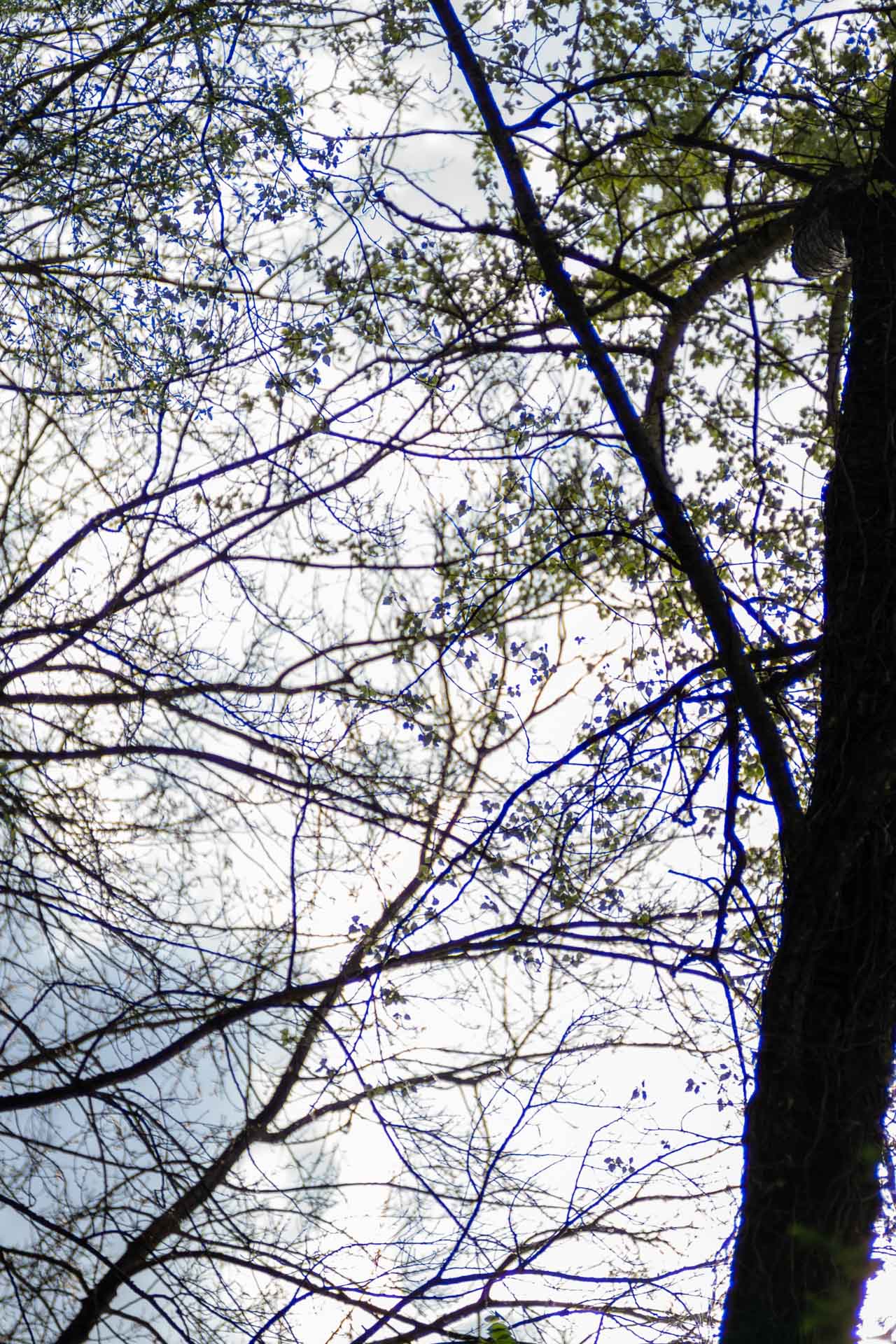
Well, now, here it gets tricky. The Zeiss Sonnar 85/2 ZM shows excellent resolution, as the MTF charts prove. Maybe this lens is even one of the highest resolving M-Mount lenses ever made. However, this comes at a price. Chromatic aberration is visible in many images. Most prominent are blue edges when you use the lens in backlit situations wide open. I have no idea why Zeiss did not go for an APO design right away. Perhaps they just wanted to make this fast telephoto lens “different from what the colleagues over there in Wetzlar are doing”.
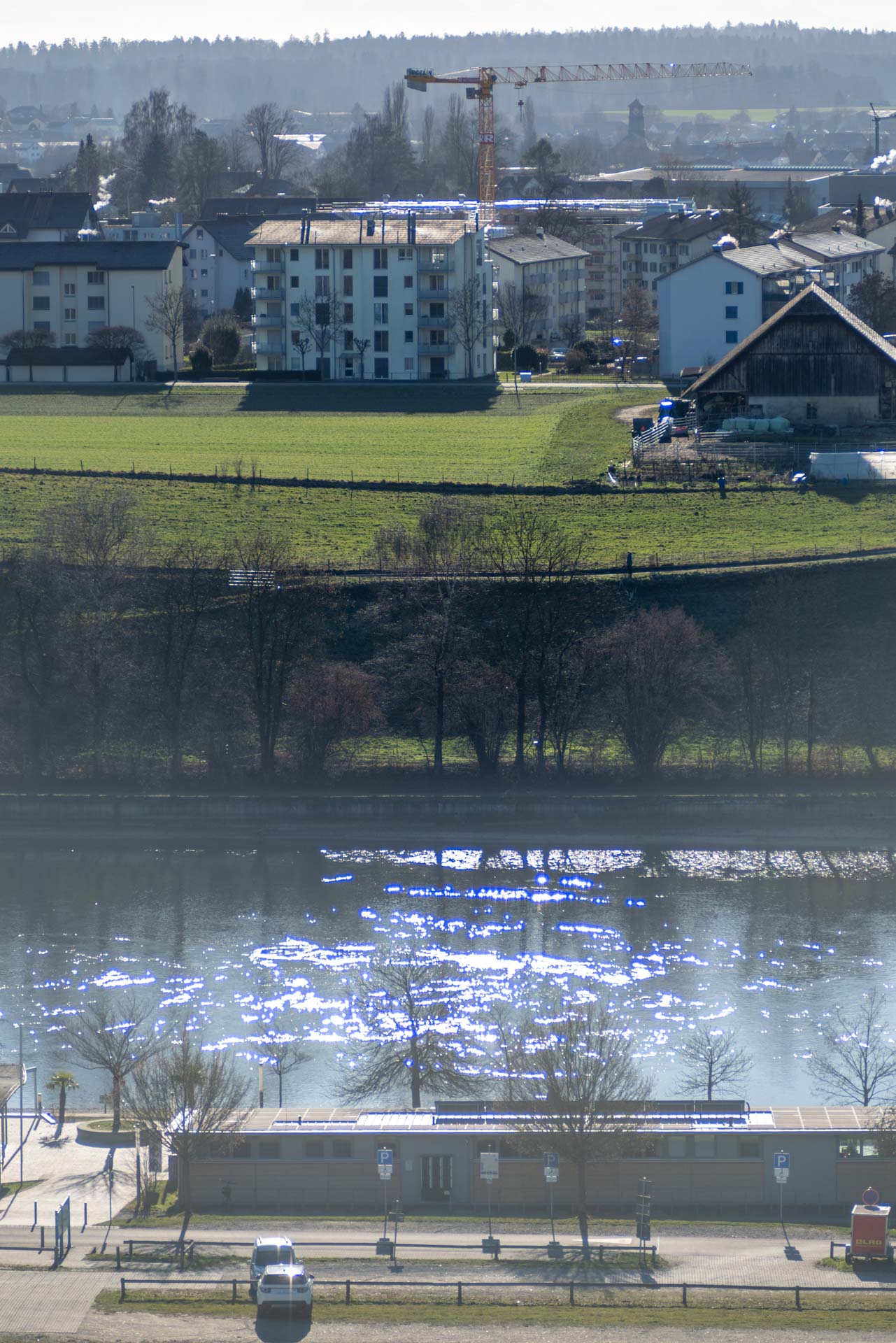

The stamens are yellow in reality; Zeiss Sonnar 85/2 ZM on Leica SL2, 1/1250 sec, f/2, ISO 100 (crop)
Chromatic aberrations in the branches; Zeiss Sonnar 85/2 ZM on Leica M10, 1/4000 sec, f/2, ISO 250 (crop)
©Jörg-Peter Rau
Sharpness
As mentioned, the Zeiss Sonnar 85/2 ZM delivers exceptional resolution. However, you also need to nail focus, and that’s not all that easy within the limitations of a rangefinder camera. I perceived no difference in the rangefinder coupling when comparing the Sonnar to the best short telephoto lenses from Leica (APO-Summicron M 75 and 90). The best results, however, I obtained with the SL2 and Leica’s M to L adapter. And they showed superb sharpness, from f/2 and right into the corners. Incredible, if only it weren’t for the blue fringing….

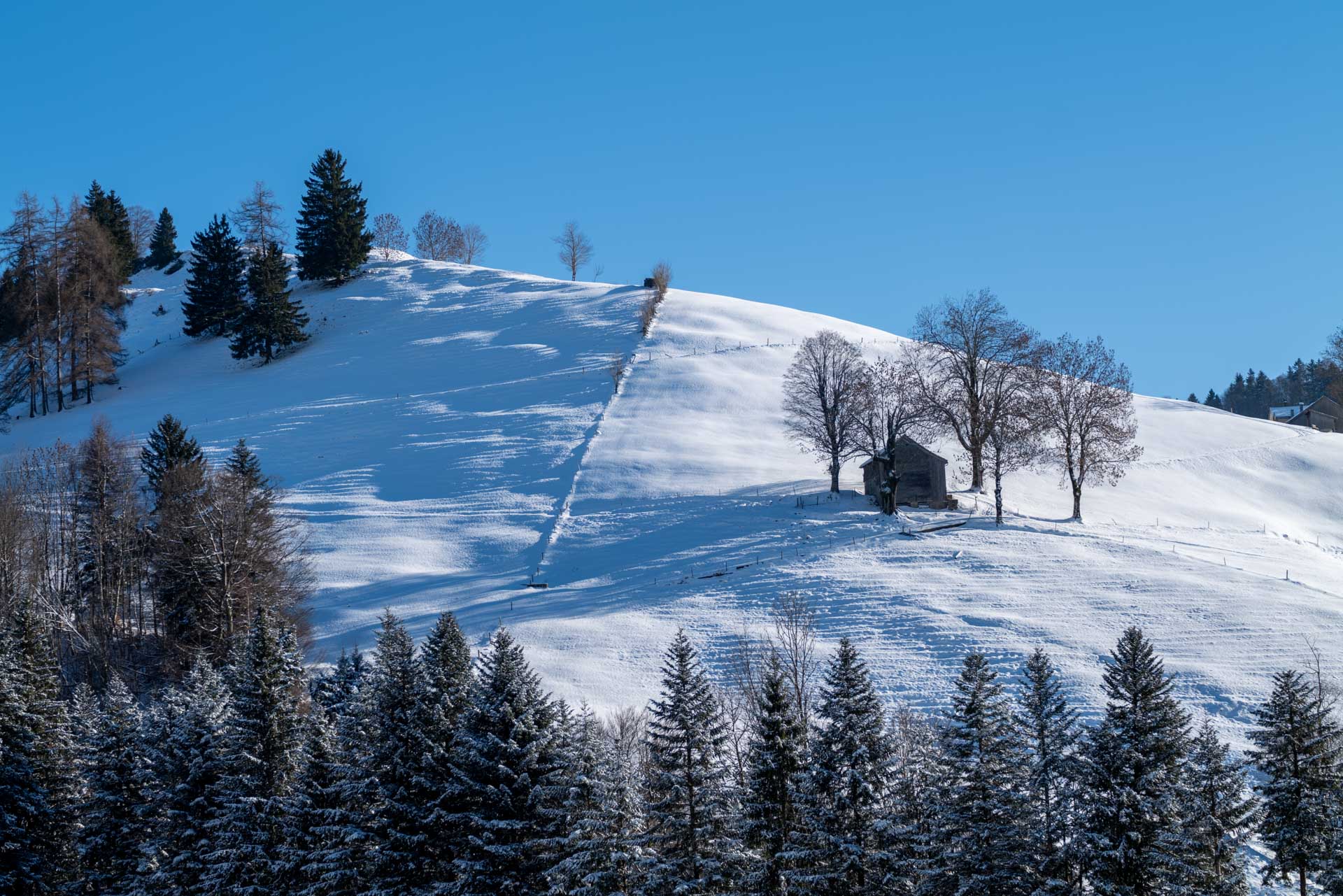
Zeiss Sonnar 85/2 ZM on Leica M10, 1/4000 sec, f/2, ISO 200
Zeiss Sonnar 85/2 ZM on Leica SL2, 1/800 sec, f/6.8, ISO 100
©Jörg-Peter Rau
Bokeh and flare
As you can expect from a fast telephoto lens shot wide open, the focal plane is paper thin at close distance. So, most of your image is likely to be unsharp if you use the Zeiss Sonnar 85/2 ZM in such a way. This directs the user’s interest to the blurred foreground and/or background parts of the image. I found these areas in most cases beautifully rendered, with harmonious bokeh balls and well-defined specular highlights. In other situations, you might find the bokeh somewhat nervous, though; just look at the examples.


Zeiss Sonnar 85/2 ZM on Leica M10, 1/1000 sec, f/2, ISO 200
Zeiss Sonnar 85/2 ZM on Leica M10, 1/350 sec, f/4, ISO 400
©Jörg-Peter Rau


Zeiss Sonnar 85/2 ZM on Leica M10, 1/180 sec, f/2, ISO 200
©Jörg-Peter Rau
Flare is generally well controlled thanks to the Zeiss famous T* coating. In some instances, however, you can incur heavy veiling and ghosting. It is definitely a good idea to always use the lens hood. It effectively helps prevent unwanted stray light effects.
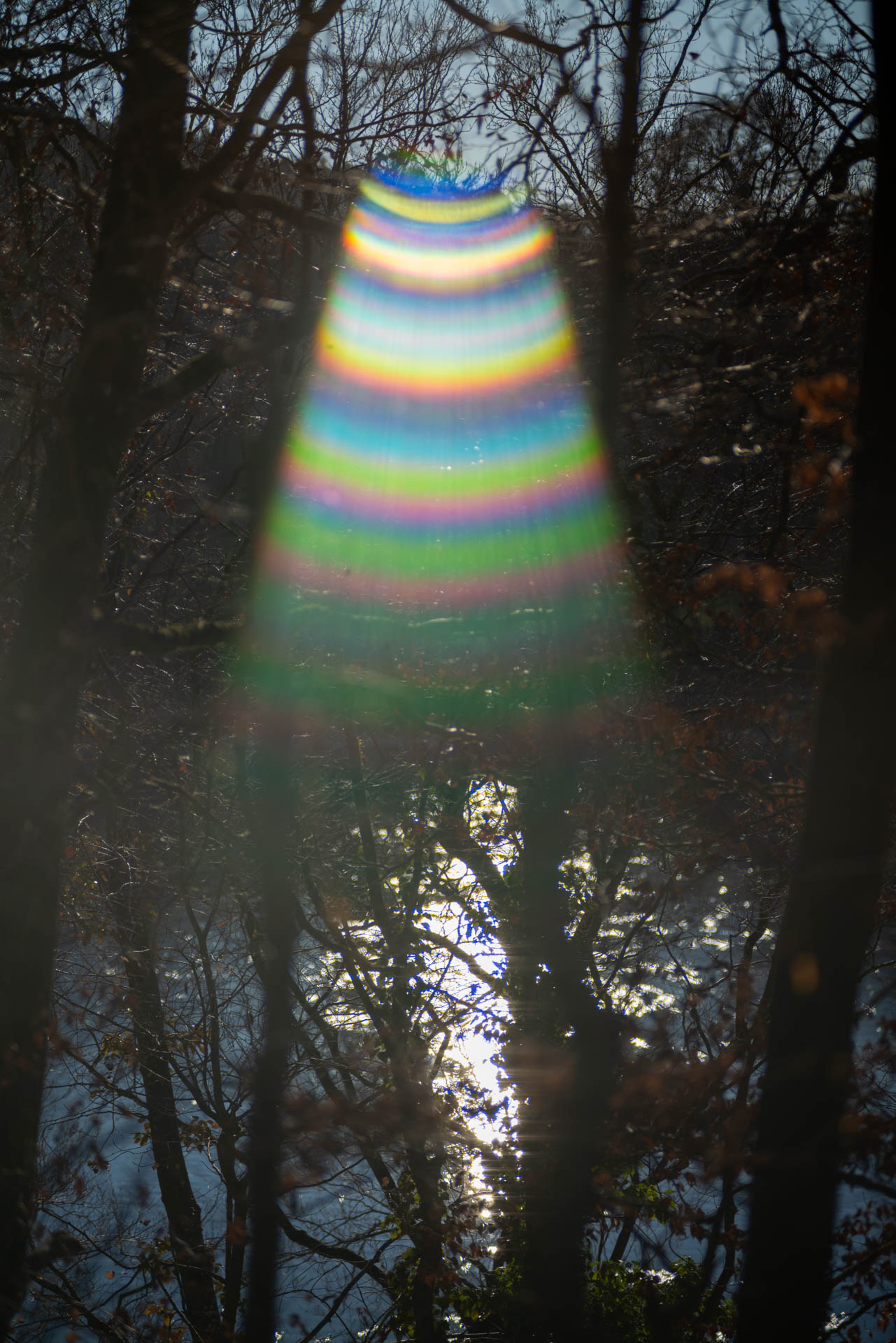
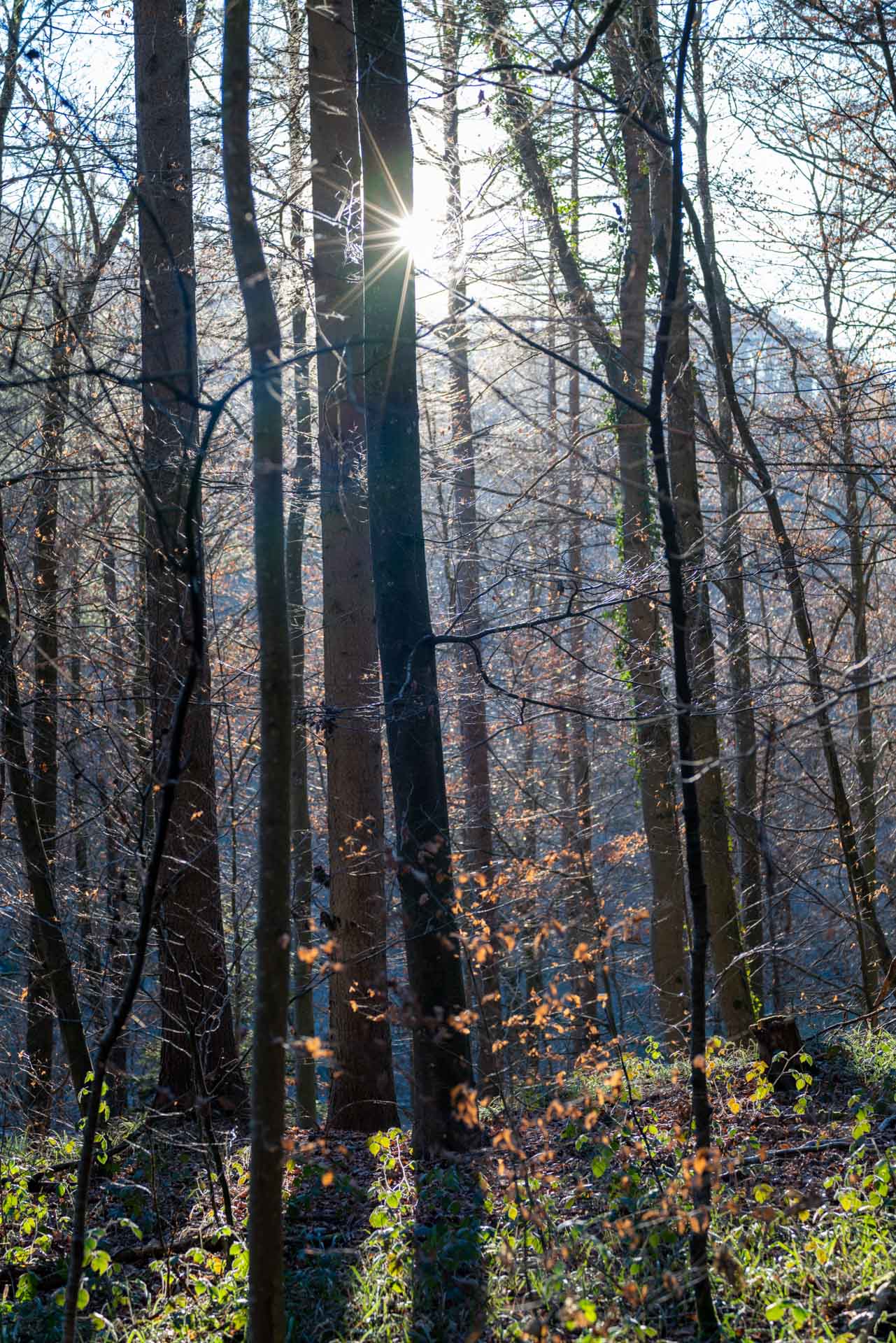
Zeiss Sonnar 85/2 ZM on Leica SL2, 1/125 sec, f/2, ISO 200
©Jörg-Peter Rau
My verdict, optics
There is light and shade in the optical performance of the Zeiss Sonnar 85/2. And in some respects, it resembles another Sonnar in the ZM range, the 50/1.5. While resolution, sharpness and micro contrast are outstanding, chromatic aberrations and sometimes messy bokeh are a high price to pay for these benefits. This is the point where it becomes obvious that this lens just came too late. It would have been a triumph ten years before. But with the APO-Summicron as direct competitor, the Sonnar fails to convince fully.
Mechanics and handling
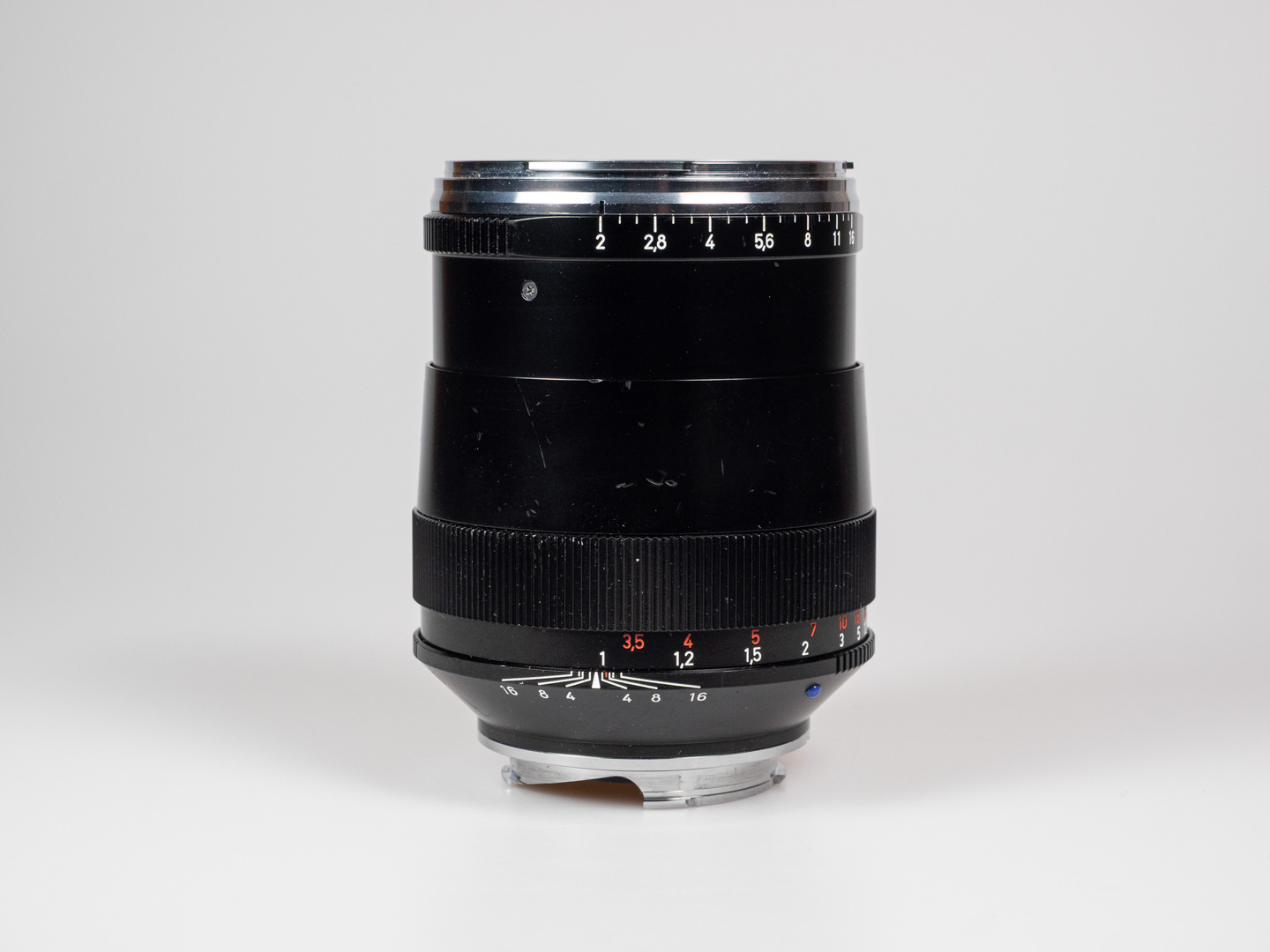

Overall appearance
The Zeiss Sonnar is an all-metal and glass construction, like the other Zeiss ZM lenses. However, it looks quite different from most of its ZM siblings. The lens barrel is conical, with its biggest diameter close to the Mount; it tapers slightly towards the front lens and very sharply towards the bayonet mount. With a 55mm filter size, you wouldn’t call this lens compact. This is all the more true when compared to other fast telephoto lenses (see below in the “Alternatives” section).
Build quality
The Zeiss Sonnar 85/2 ZM is one of only two ZM lenses that were made in Germany. However, the build quality does not appear to be significantly better than in the ZM lenses that Zeiss has/had manufactured by Cosina in Japan. My copy has a minimal amount of play. There are also reports from Sonnar owners who repeatedly needed servicing for their Sonnars.
Focusing
On my copy, the rangefinder coupling with my M10 (with which I do almost all my reviews for the M Files) worked very well. Of course, focusing is tricky at first, with the shallow depth of field a 85mm lens gives wide open. But I had a good share of keepers from the pure rangefinder use. No issues of course with electronic viewfinder (either a detachable EVF or built-in). So, the Zeiss Sonnar 85/2 ZM might be a particularly interesting companion for the new M EV1.


Zeiss Sonnar 85/2 ZM on Leica SL2, 1/500 sec, f/3.4, ISO 100
©Jörg-Peter Rau
Viewfinder
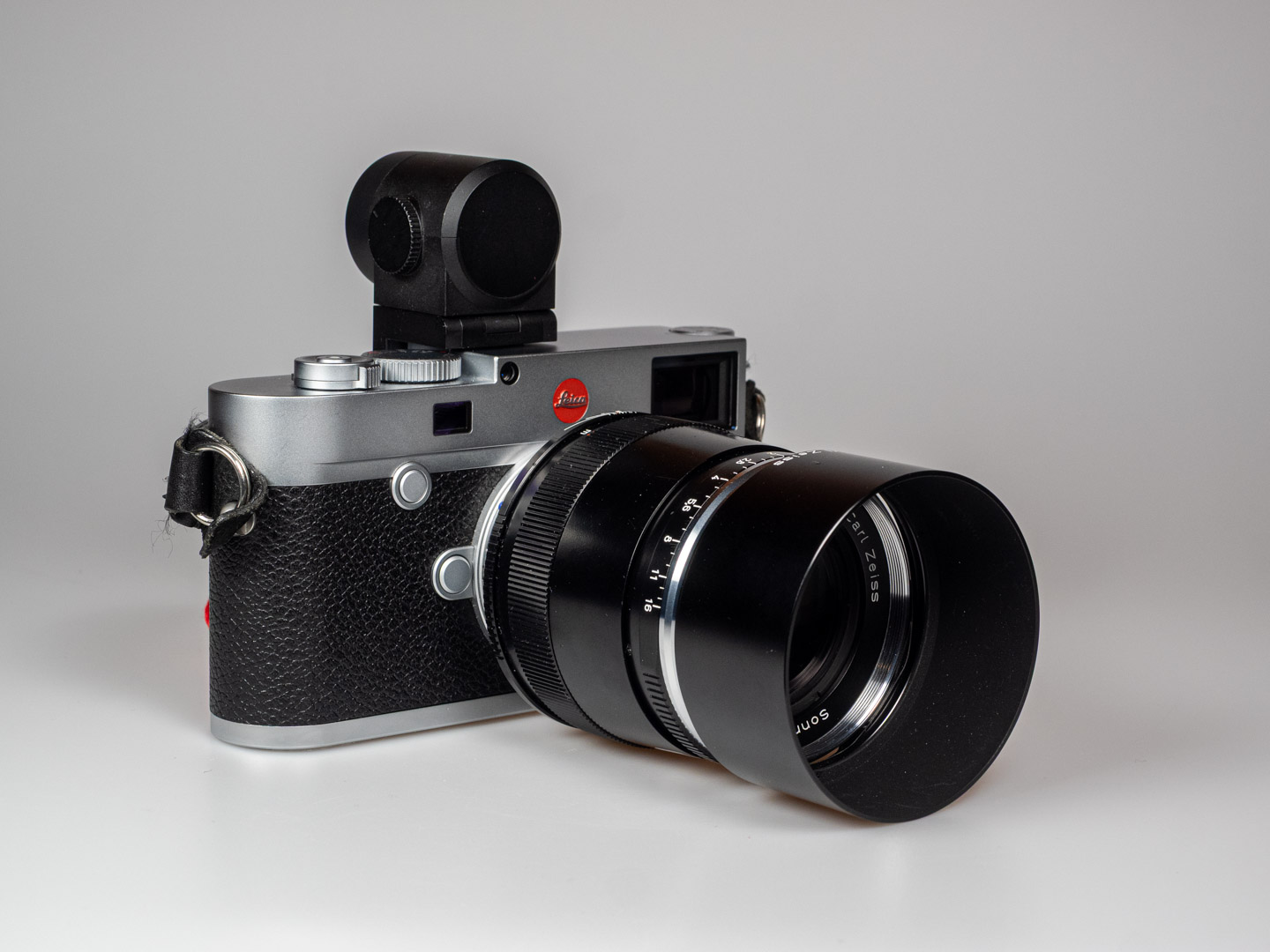
The 85mm focal length is a rather rare in the Leica context. However, I had no difficulty in using the 90mm frame lines in my rangefinder cameras. You just get a small amount of extra margin. Just think of the area that is covered by the frame line itself, and maybe an additional line of the same width. More serious is viewfinder blockage, especially at close distance. With the lens hood attached, up to one third of your image will be obstructed by the lens. Again, an electronic viewfinder solves all problems.
My verdict, handling
Overall, the Zeiss Sonnar 85/2 ZM is a well-built lens. However, it doesn’t quite hold up to the best Zeiss ZM lenses, such as the Distagon 35/1.4. The slightly shorter focal length compared to the Leica 90mm standard is unproblematic for rangefinder use. Viewfinder blockage can be annoying, though.
Alternatives
Speaking of a fast M-Mount ≈90mm lens, Leica’s APO-Summicron 90/2 comes first to mind, of course. According to many reviews, this is one of the best Leica M lenses ever made, and it is astonishing how Leica managed to combine an aspherical element and APO quality in a five element design. The few comparison reviews (here is one on Qimago) suggest that the APO-Summicron 90 might be at least as good as the Zeiss Sonnar 85/2 ZM. And it is far easier to find, especially on the second-hand market.
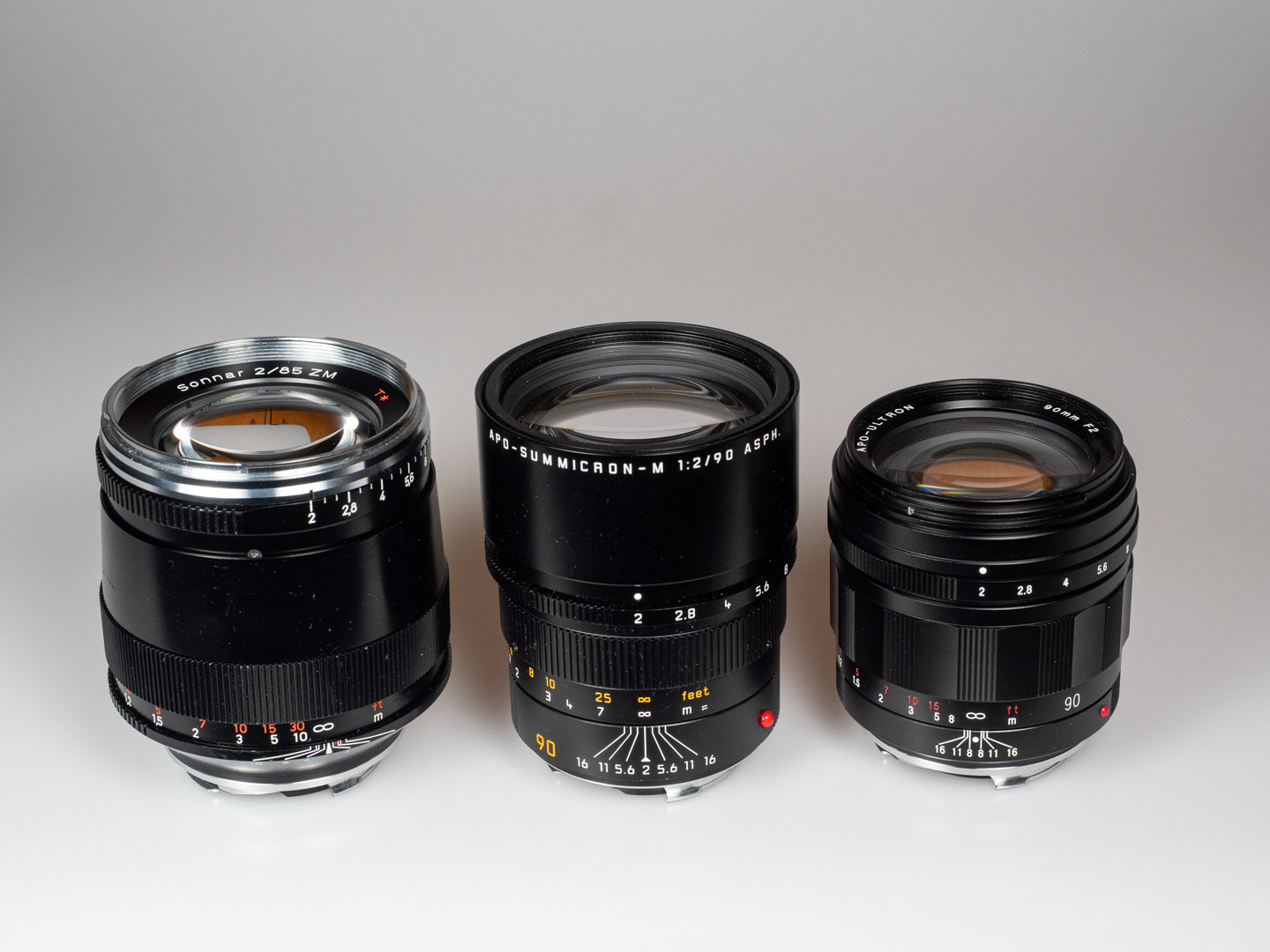
Another current fast 90 is the APO-Ultron by Voigtländer. It is a remarkable compact lens and fully usable from full aperture. In my review in episode 28 of the M Files, I came to the conclusion that the APO-Ultron might be the only 90mm lens for M-Mount that you could ever need. And it costs a fraction of the APO-Summicron 90 or the Zeiss Sonnar 85/2 ZM.
Vintage lenses from Leica
Finally, the older Leica Summicron 90 could be an option — externally it looks much the same as the newer ASPH. version, but is a very different design. Expect less resolution and contrast, but I know users who really like the somewhat nostalgic rendering of this lens. An even deeper delve into history brings up the Thambar 90/2.2, a re-issue of a 1935 design. Read more about it here — and if you’re interested, start looking on the used market, as the Thambar is also discontinued now.
Modern 90s from various manufacturers
If you don’t need f/2 on a 90mm lens, there are many, many options. I can’t give a full overview, but do consider the excellent Leica Summarit 90/2.4 or 2.5, but also the discontinued 90/2.8 Elmarit in its various versions. More current 90mm lenses with f/2.8 and slower come from Voigtländer (see here part 14 of the M Files). On the used market, there are options from Minolta, Konica and others. And if the exact 85mm focal length matters, the Zeiss Tele-Tessar 85/4 ZM might be an option, it was covered in episode 12 of the M Files.
The bottom line: The Zeiss Sonnar 85/2 ZM: A missed chance
Coming back to Berlin’s airport. When it finally opened, after all those delays, it was already outdated because it was based on plans from a pre-smartphone era. The Zeiss Sonnar 85/2 ZM is a similar oddity from bygone times. It was developed for analogue cameras, but somehow arrived too late for them.
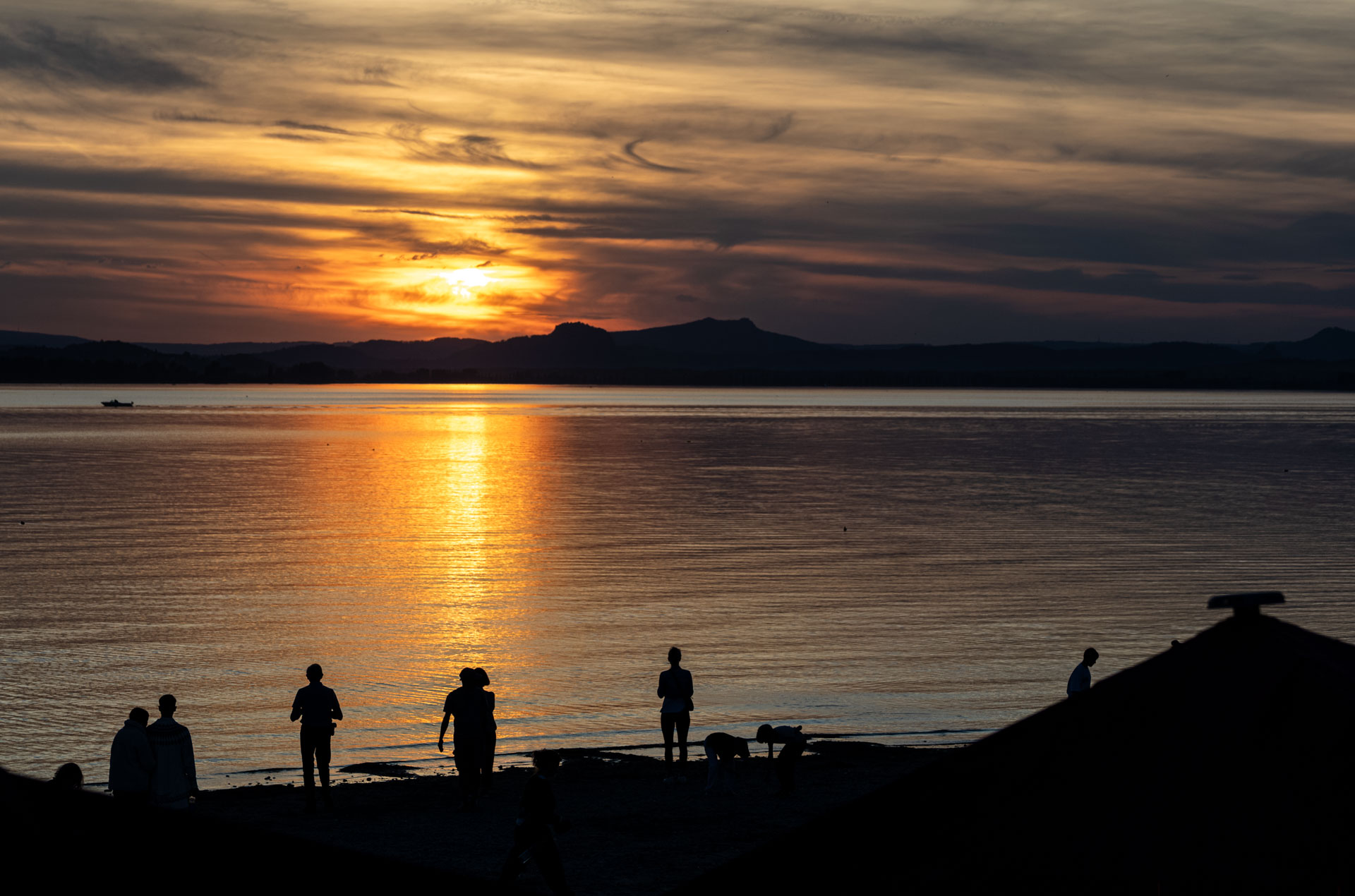
The good news is that the M-mount is still going strong and there are plenty of ways to use this exceptional lens digitally. It can perform impressively, despite flaws such as the blue fringing or the sometimes messy rendering. The Sonnar can produce stunning images, even on modern cameras, right from wide open and across all focal lengths. Given the relentless resolution of modern sensors, I recommend using an electronic viewfinder to rule out any inaccuracies in the rangefinder coupling.
Collector or working photographer?
Ultimately, however, this unusual and rare lens remains a matter of personal taste. While collectors will surely have no doubt about whether they need this lens (yes, but please in mint condition and in its original packaging!), practical users have other options. It would certainly be unfair to dismiss the Zeiss Sonnar 85/2 ZM by stating that rarity is its most compelling feature. But in my opinion, the photographic results achievable might not — at least for a working photographer — justify the great effort required to acquire this lens.
The M Files: Get in-depth knowledge of M-Mount lenses, cameras, and compatible accessories
The M Files is an ongoing project on Macfilos that focuses on photographic equipment with or for Leica M-Mount, made by companies apart from Leica or which are otherwise not part of Leica’s M system. It follows a more or less encyclopaedic approach without being scientific. The focus is always on the real-life use and usability of cameras, lenses and other items. Products covered by The M Files include cameras, lenses, viewfinders, light meters and more. Brands on the growing list include Contax, Konica, Minolta, Rollei, Voigtländer and Zeiss. Click here for the M Files Navigator, which gives you easy access to all articles and reviews by product type and brand.
Die M-Files: M-Mount-Objektive, -Kameras und passendes Zubehör jenseits von Leica M
Die M-Files sind ein Langzeit-Projekt, das sich auf Foto-Ausrüstungsteile mit oder für Leica M-Bajonett konzentriert, die von anderen Firmen als Leica hergestellt wurden oder die nicht zum M-System von Leica gehören. Es verfolgt einen mehr oder weniger enzyklopädischen Ansatz, ohne wissenschaftlich zu sein. Der Schwerpunkt liegt immer auf der praktischen Nutzung von Kameras, Objektiven und anderen Produkten. Zu den in den M-Files besprochenen Produkten gehören Kameras, Objektive, Sucher, Belichtungsmesser und mehr. Einige der Marken auf der wachsenden Liste sind Contax, Konica, Minolta, Rollei, Voigtländer und Zeiss. In deutscher Sprache erscheinen die Inhalte auf www.messsucherwelt.com.
Hier geht es zum deutschsprachigen M-Files Navigator, der einen einfachen Zugang zu allen Artikeln und Reviews nach Produkttyp und Marke ermöglicht.
Make a donation to help with our running costs
Did you know that Macfilos is run by five photography enthusiasts based in the UK, USA and Europe? We cover all the substantial costs of running the site, and we do not carry advertising because it spoils readers’ enjoyment. Any amount, however small, will be appreciated, and we will write to acknowledge your generosity.
thanks for this maestro – I really enjoy your “other manufacturers” stories. No mention here of the Tele Tessar 85 4.0 amongst the alternatives? I had one for a while about ten years ago it it was a delight to use. I guess generally I would not be using an 85/90 in low light so the 4.0 wasn’t a problem. I now use a Leica 90 2.8 which is a comfortable size and a good performer. I am thinking of adding a used 75 Apo 2.0 which I bought and sold a few years ago and I would like to scratch that ‘just a bit longer than 50″ itch once again. I’d love to hear your thoughts on the upcoming Voigtlander 75 apo-skopar when you get your hands on one! It might be very tempting I think…
Thanks, Des McSweeney, for commenting.
The Tele-Tessar 85/4 is mentioned at the end of the “Alternatives” section, and there is also a link to episode 12 of the M Files where the lens has been covered. In my view, f/4 for a short telephoto lens is tolerable thanks to the high ISO performance of modern camera, in so far I agree. However, you can’t replace the narrow depth of field a f/2 or also f/2.8 gives, especially at short distance.
And yes, the Voigtländer 75/2 APO is on my list. But it might take a little time; as you know, I use the lenses in many different settings before I make a judgment. For the meantime: If you get a used APO-Summicron 75 at a decent price, you cannot go wrong.
ha ha. I just needed to concentrate for half a second longer to have seen the f4 😉 thanks for taking the trouble to reply, always appreciated. I have my eye on two APO’s and am just hoping that the right price/quality will coincide. Birthday next week 😉