

Macfilos has been covering the Fujifilm-X1 (APS-C) system recently, primarily in the context of an alternative to Leica’s discontinued APS-C cameras and lenses. I don’t have that comparison, never having owned Leica’s APS-C gear. But I can tell you why, as a career photographer and Leica fanboy, I have owned and used my Fujifilm-X system for over a decade. I have done so for both professional and personal work. And, well, okay… I am also a Fujifilm fanboy.
Why Fujifilm-X if I own Leica?
The short version for owning and using the Fujifilm-X system is that I shoot in situations that I can’t cover as well, or at all, with my full frame (FF) Leica M and Q systems. I shoot and even see differently with my Fujifilm-X system.

My main uses compared to the M11 and Q3 are ultra-wide and long telephoto focal lengths. I also use zooms, and infrared capture. An SL system could handle two of those, though SL sensors can’t be modified for infrared. More obviously, an SL system would represent a significant increase in cost, weight, and bulk for both bodies and lenses.

I have owned many non-rangefinder full frame systems over the years, most recently Sony. After years of using both Sony FF and Fujifilm-X systems, I found Fuji cameras and lenses more fun to use. They also get out of the way of my concentration on my subject and image creation. It was an evolution and now, after eleven years, I still use and enjoy the Fujifilm-X system immensely.
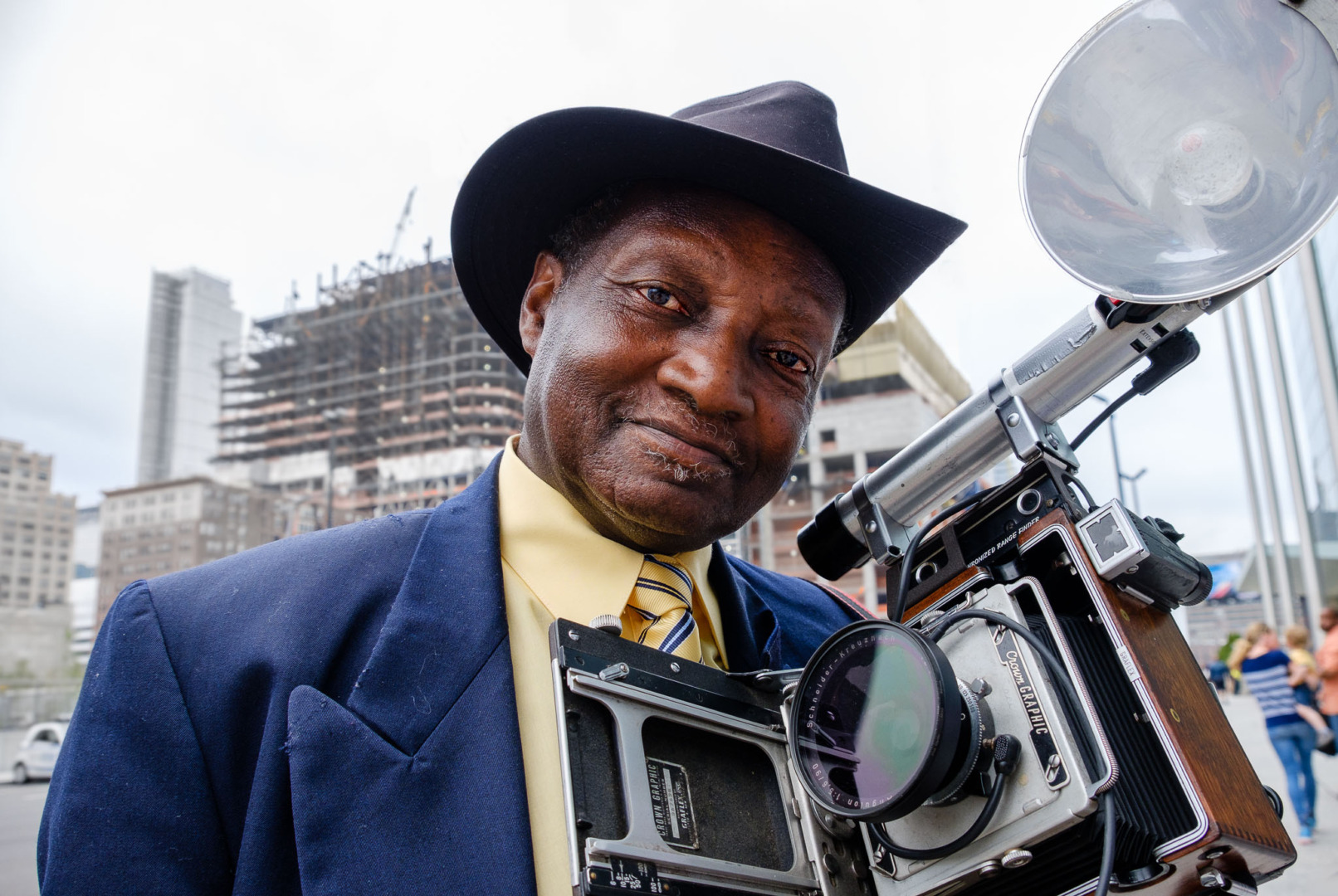
Top eleven reasons I use Fujifilm-X
❶ Compact and lightweight, especially compared to FF systems, yet solidly built.
❷ Tactile analogue controls (easy transition from Leica rangefinders).
❸ Top-notch optical quality of their lenses – I thoroughly test every lens I buy or rent, and Fujifilm’s lenses stand up to Leica and Voigtländer.
❹ Feels like a natural extension of myself, allowing me to create images without having to think about it. Contrast this to Sony, which always felt like using a computer with lenses attached.
❺ Best bang for the buck without compromise.

❻ Great colour science behind their film profiles and stellar colour balance to assist in visualising the final image. The accurate colour saved my neck on some commercial shoots.
❼ More extensive lens offerings than most other companies: To date, 44 native Fuji-X lenses, over 30 of which are weather sealed and have optical image stabilization (OIS). Plus, dozens of third-party options, both autofocus (AF) and manual focus (MF).
❽ The 1.5x crop advantage. More reach for long lenses, yet many lenses available on the ultra-wide-angle end of the range. Furthermore, one more stop effective depth of field (DOF), allowing you to use better performing apertures when you need to maximise DOF.
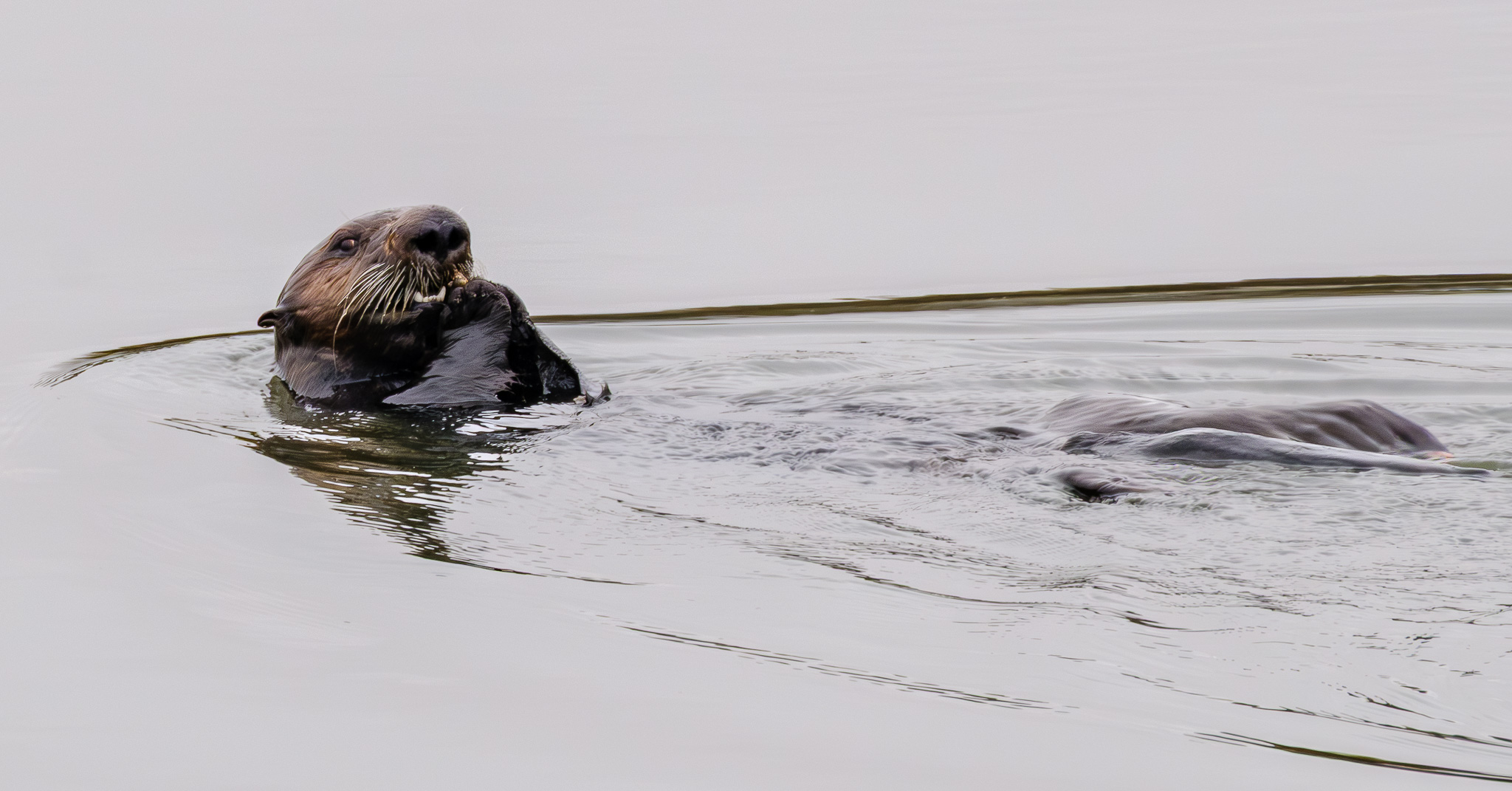
❾ Ability to store MF lens names that appear in EXIF data (my X-T5 bodies store up to six lenses).
❿ Several lenses that perform well with both visible light and infrared. I shoot both.
⓫ Fujifilm has a long track record of being committed to APS-C for professionals and enthusiasts alike, while also continuing to innovate and cover different types of photography/photographers.

A few niggles
- No camera or system is perfect, so here are some things I don’t like, in contrast to my Leica M and Q cameras. None are dealbreakers for me, but here they are:
- The menu system is not very intuitive. Of course, no worse than most other brands. There are two saving graces: I make use of the MY MENU (like the Favorites Menu on Leica) and Q menus, similar to User Profiles in Leica-speak.
- My X-T5s aren’t the easiest to configure for some autofocus situations.
- Fujifilm’s X Pro Service isn’t as good as Sony’s and costs more ($399 versus $100 per year).
- With the X-T5, the 3.69m-dot electronic viewfinder (EVF) is good, but I would prefer a 5.76m-dot like the Fujifilm X-H2/S, and Leica Q3, SL2/3. Maybe we’ll see it in the X-T6. Note that the X-E5’s EVF, although usable, is even lower resolution at 2.36m-dot.

Still lovin’ Fujifilm
Since I tried my first Fujifilm camera eleven years ago, my system has evolved from X-Pro2 bodies, then X-T3 bodies, and currently X-T5 bodies. In that process I also owned an X-Pro1 briefly, an X-T20 as a backup that I never really needed, X-T1, X-T2, X-T4 bodies and also an X-E4 for a while and an X-E5 which I returned.
I may revisit the X-E5, as it is irresistibly cute and highly capable. One of my X-T5 bodies is modified for infrared photography, which may be an article for another time.
I favour zooms over primes. At various times I have owned numerous Fujifilm-X lenses from the XF 8mm f/3.5 up to their venerable XF 100-400mm f/4.5-5.6 and 1.4x converter.
For now and the foreseeable future, Fujifilm is my APS-C companion system of choice.
Notes
Although I mention the film profiles I used for the images in this article, I don’t use the out-of-camera JPEGs to which these profiles are applied. I use them to help me visualise in the viewfinder and as a reference for processing. Typically, the Adobe versions of the Fujifilm profiles in Lightroom are a good match to Fuji’s own. In the case of the X-Pro2 images, I captured some of those using the OVF; thus the visualisation was in my mind’s eye.



| More from Joel Wolfson | Mike Evans’s Fujifilm kit |
| Jörg-Peter Rau’s Fujifilm kit | Fujifilm, the Macfilos-preferred APS-C system |
Make a donation to help with our running costs
Did you know that Macfilos is run by five photography enthusiasts based in the UK, USA and Europe? We cover all the substantial costs of running the site, and we do not carry advertising because it spoils readers’ enjoyment. Any amount, however small, will be appreciated, and we will write to acknowledge your generosity.
Comments: Please add a comment to this article. Our comments section is a thriving community and everyone is treated with respect. In addition, please identify yourself (and add an email address, which will not be published, if you would like to see answers to your posting). Our system will automatically delete any “anonymous” posts on the basis that they are likely to be spam.
- Fujifilm has two systems: Their X system which is APS-C and their GFX system which is medium format. ↩︎
FWIW, Fujifilm is now bigger than Nikon… They must be doing something right!
https://www.canonrumors.com/canon-dominates-with-46-digital-camera-marketshare-for-2025/
An entertaining and interesting article—thank you! After Canon, Fuji was my gateway into mirrorless photography. Even though I am very happy with Leica today, I still find the brand and its product lines appealing and exciting.
Hi Olaf,
Thank you! I’m happy you liked it. I was a dedicated Canon user for many years starting in the film age. I got into mirrorless due to a hand injury and subsequest surgery. My Canon DSLRs were too big and heavy to handle while I was recovering. I had to continue to make a living. I bought a micro four thirds system as it was small and lightweight. I got hooked on mirrorless. This was a time when Canon and Nikon were ignoring mirrorless, thinking it would never go anywhere. Hence my ultimately getting into Fujfilm and Sony once my hand healed. Of course I love using my M11 and Q3 but it’s a very different type of shooting for me than the Fujifilm system.
Joel – a great article, and excellent photographs! I owned Fujis for a long time before switching completely to full-frame. I agree with you that Fujis generally excel in their build quality, tactile dedicated controls, lighter weight, and great colors. I also agree that they have an excellent lens selection; seeing some of your photos made me miss my 70-300mm. I have my reasons for shifting to full-frame, but every now and then I wonder whether I should have stayed with the Fuji system, especially when I am out shooting all day with heavy equipment. I recently came across some images in my library that I really liked and was surprised that they were taken with my XT-3 and XE-4, I thought they were photos with full frame! When I decide to go back to lighter gear, Fujis will definitely be on the top of my list. Thanks for highlighting how good the Fuji system is, especially for the demanding professional work you do.
Hi Ed,
Thanks! It’s really nice that you appreciated both the images and the article. For me, of course, creating the images is paramount. As mentioned the Fujifilm cameras feel natural and don’t get in my way. When Fujifilm went to the 40MP sensor, that was the last nail in the coffin for my Sony full frame system. Sony and Zeiss/Sony lenses are amazing but the bodies just never felt right in my hand. I had a similar experience with Nikon. I tried their system in the film age and again with a D800E and it never took, but that’s another story.
Very interesting that you discovered some favorite images were done with the X-T3 and X-E4 😉
Now that I’m older and less willing to schlep heavy, bulky gear, I can’t see replacing this system with full frame. That said, your review of the S1RII and our subsequent discussions got me more interested in that camera. As you know, it would be primarily for my vintage SLR lenses and minimal use overall, compared to my Leica M and Q and Fujifilm systems. I have experience using the S5IIx which is similar in handling and it’s very nice to use and well thought out.
Happy Shooting!
Joel
A very good article and interesting to see the use of zooms for a change, compared with the usual emphasis on fast primes.
As a fan and user of many of the film simulations I actually like to see the full name Fujifilm in print and on the cameras: the name strikes me as a justly proud reminder of the company’s film roots, heritage, and expertise applied to modern digital colour and b&w imaging. I have even found myself gently chiding photographers who shorten it to Fuji!
Thomas,
Thank you and glad you found it interesting. I do find that I prefer using zoooms with my Fujifilm cameras. It fits the way I shoot with that system. I’ve sold off most of my Fujifilm primes. The zooms I own or have owned are all great performers. I favor the ones that also do well with infrared. Not all of their lenses work well with infrared but that’s no different than any other manufacturer.
I like your take on the Fujifilm name. It’s funny how things change. In the film age I used to refer to the film I used as just “Fuji” the same way I did “Kodak” unless mentioning a specific type such as Kodachrome or Velvia. And now with digital cameras it’s “Fujifilm.” Fujifilm, the company, is unique in having moved their film engineers into the digital division. Instead of “Kodaking” themselves, they created a phenomenon with film simulations which, ultimately, everyone else has tried to emulate…or should I say simulate? 🙂
-Joel
My story is quite similar. Started with Fuji and then added Sony full frame. I replaced Sony with Leica M10 and M10M. I use Fuji when auto focus and/or long lenses are required.
Hi Chuck
I also feel no compulsion to get an EVF full frame system. Though I would like to get a FF body at some point, mainly for adapting my vintage SLR lenses. It would be a limited use case for me.
It would be interesting to find out how many photographers out there use this combination of M and/or Q for FF alongside Fujifilm-X for APS-C. Mike, have you done a survey of Macfilos readers?
Respect for Fuji and for their commitment to the APS-C format, unlike that other company that dropped their customers without a clear upgrade path.
I love the cameras and have owned five but find the menu system unbearably obstructive (and sent my beautiful x100vi back).
I agree that their menu system has plenty of room for improvement. It is particularly noticeable when you compare it to Leica, which in my opinion, has no rival.
I used the compact X100 series for seven years, supplemented by an X70; I really liked them. I especially like the hybrid viewfinder in the X100 series. I tried an XE-1, but did not like the EV. Of course I realize that EVs have come a long way since then. I resisted getting into the models styled like SLRs, because they only had EVs. I also resisted interchangeable-lens models, because I feared going down the rabbit hole of “needing” more and more lenses. Ironically, that is exactly what I have done once I decided to return to the Nikon fold via the Df. Oh, well.
Thanks, Joel. Great photos! And a fine, convincing discussion of the qualities of the Fujifilm APS-C cameras, which I don’t happen to own, but your article makes the GAS version of me want one. (BTW, every time I see or hear that name, I can’t help thinking they should drop “…film” and just go with “Fuji” on their cameras.)
They are very strict on the use of Fujifilm and we get ticked off by the PR department if we transgress. That’s why we use the “film” but as much as we do. I suspect it’s a trademark issue and some other company might have Fuji. After all, it’s a common name in Japan. — Mike
Thank you for the kudos. If you give in to GAS, I’m sure you will enjoy using Fujifilm cameras and find it can expand your vision.
I agree it seems counterintuitive that Fujifilm keeps the “film“ part of their name. I suspect Mike is correct that it is probably a trademark issue. In the film days, they used Fujica and many of their lenses are labeled Fujinon.
A very fair, unbiased and hence valuable review. Thank you Joel, and may I add one which exactly matches my own findings of likewise using Fuji and Leicas
Thanks Don!
I think it makes a fair amount of sense that there are many of us using both systems. Actually, more than I had originally thought. I’m so glad that you found my review valuable. Happy Shooting… with both systems!