

Noctilux, Summarit, Elmarit, Summicron or Tri-Elmar: Leica lens names are special. For newcomers, it might seem like a foreign language they have to learn. And “APO-Summicron-M 1:2/35 ASPH.”, as it is engraved in the lens’ front ring, might even look alarming. But basically, it’s all easy. This article explains Leica’s taxonomy and how you can take advantage of a system that is actually pretty logical.
Are Leica lens names difficult to understand? Even Leica obviously had some concerns in this direction. In a big customer survey back in 2023, they wanted, among other things, to learn if the audience still understood the nomenclature. I guess there were at least some thoughts of possibly changing a system that had been used for decades. But to this day, there are Noctiluxes, Summiluxes, Summicrons, Elmars and the like. And with their names comes a living Leica legacy.
Let’s first have a look at the unusual proper names. There is no question about them requiring explanation, not least because there is a comprehensive overview concerning this topic on Leica’s home page. In a second step, I will explain APO, ASPH., and other prefixes and suffixes. And at the end, you will see that you can read not only the focal length and maximum aperture from a Leica lens name, but also the quality standard and (roughly) the generation to which a specific lens belongs.
Summicron & Co: Leica lens names
Noctilux
The term Noctilux is derived from Latin: “Nox” meaning night (and “noctu”, by night), while “lux” stands for light. So, Noctilux lenses are the ones with the best low-light performance in terms of maximum aperture. The first Noctilux was the spectacular 50mm f/1.2 with aspherical lenses, a result of the high-speed-lens race in 1960. But the Noctilux is alive and kicking, as we see from the announcement of the very interesting 35/1.2 only a few days ago.
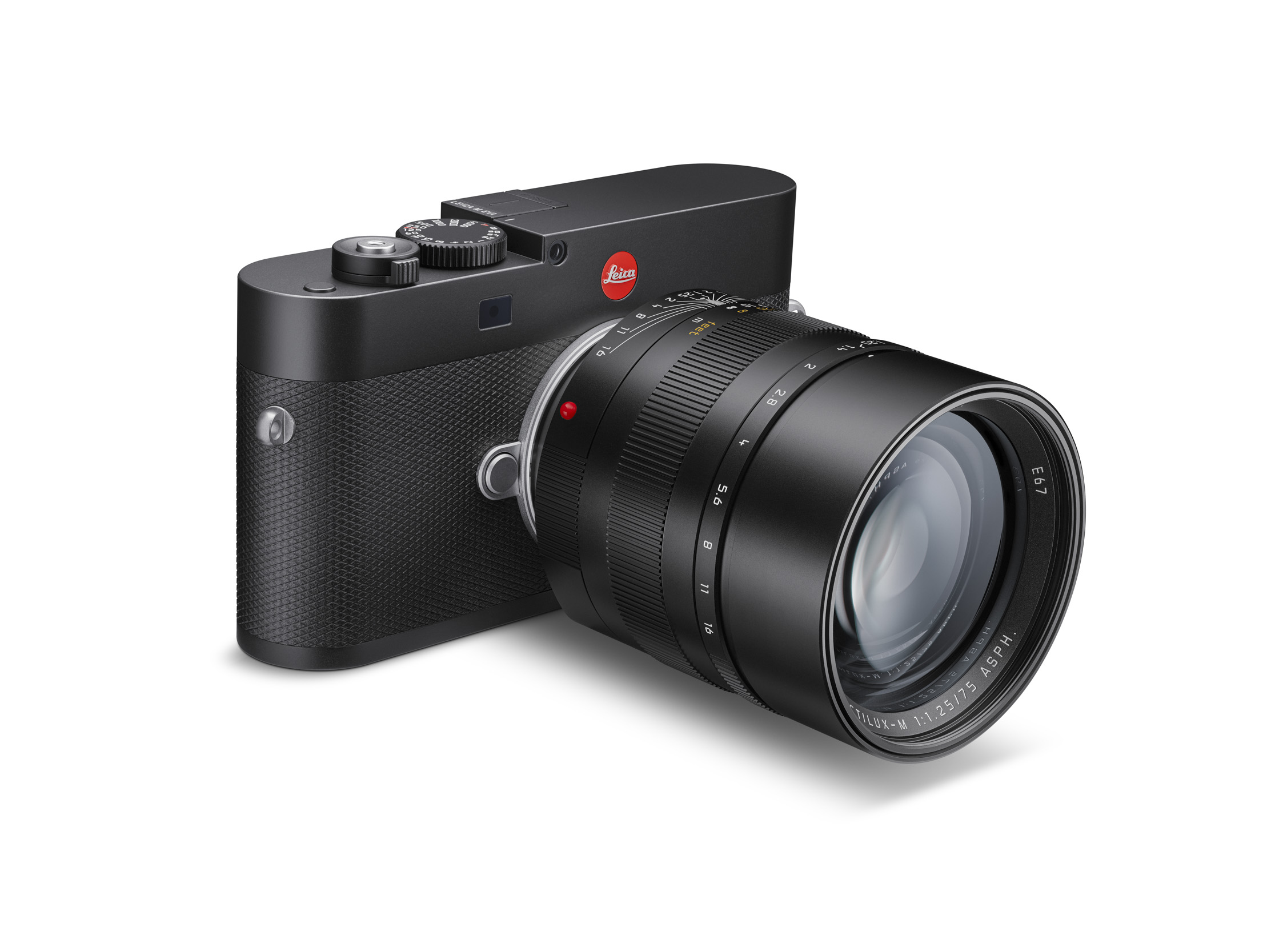
Today, we have a 50mm f/0.95, and Noctilux is the name for lenses with a maximum aperture of f/1.2 or faster (the 75mm M-Mount Noctilux has “only” f/1.25, though). With the high ISO performance of modern digital cameras, these impressive apertures might not be necessary for indoor or night shooting, but the shallow depth of field of the Noctilux lenses is still unique. See and read here what Jonathan Slack thinks about the creative options that the new Noctilux 35/1.2 offers.

Summilux
Again, Latin comes into play. The “lux” is here combined with a derivative of “summus”, meaning “highest”, “best” or also “utmost”. The English term “summit” has its roots in this Latin word. Summiluxes were the fastest Leica lenses before the first Noctilux was launched. Mainly, they had and still have an f/1.4 maximum aperture.

Today, Leica offers almost all M-Mount focal lengths in a Summilux version, but the 75mm f/1.4 and the 24 f/1.4 have been discontinued. The 90mm lens has “only” an f/1.5 maximum aperture. And the 28mm f/1.7, which is the fixed lens on the Q, was also honoured with the Summilux designation despite being slightly slower.
Summicron
This is maybe the most revered Leica lens name. The etymology is relatively unclear, even according to Leica. The “summi-” part should be clear by now. The “-cron”, however, is explained either by the Greek word “chroma” (colour); this makes sense as the rise of colour photography created the need for better lenses. Or, the “cron” comes from the use of Kronglas (a special type of glass material that allowed for considerable improvements in lens construction). The more important thing to know is that the Summicron lenses always have a maximum aperture of f/2.

The Summicron lens line has a significant position in the history of Leica and beyond, and to this day, these lenses are seen by many as the perfect compromise between speed, compactness, and optical quality. And they tend to be a bit less expensive than the Summiluxes — more on this below. However, the latest APO-Summicrons are very pricey as well, but then they offer a more pronounced sharpness fall-off. This creates what many call the 3D effect without the difficulties in focussing an f/1.4 Summilux wide open. So, the APO-Summicrons can be considered a perfect all-round choice if money is no issue.
Summarit
Where the “-arit” comes from, is not clear. At least, I found no convincing explanation. Interestingly, the first Summarit was a 50mm f/1.5 lens before this name was temporally discontinued. Leica resurrected it in 1995 for the compact Minilux camera, which had a (truly excellent) 40mm f/2.4 lens.

In 2007, Leica launched an entirely new entry line of lenses, supposedly as an answer to the new competition from Zeiss and Voigtländer. Because of brand policy, and for other reasons, these lenses had to be slower than the Summicrons. So, a set of 35, 50, 75, and 90mm lenses with a maximum aperture of f/2.5 appeared. After a relaunch (without changing the optical design, the saying goes) it was f/2.4. These Summarits were and are great performers, all of them giving exceptional value for money. Unfortunately, the series was discontinued in 2020.

Elmarit
Another “-arit” lens, but the “El-” is interesting. The acronym is likely to come from Ernst Leitz, the former name of the company that we know today as Leica. There were earlier lenses called Elmax, combining the names Ernst Leitz and Max (Berek), the two pioneers of the 35mm photography. Elmarit lenses have an f/2.8 aperture.

Today, the only Elmarit in Leica’s line-up is the 28mm f/2.8, but there are many discontinued lenses. Best known is perhaps the Elmarit 90mm f/2.8. As with other Leica lens names, Elmarit was also used for the (SLR) R system lenses and appears in modern L-Mount lenses as well.
Elmar
Similar to the Elmarit, this is more of a historical Leica lens name. The most famous Elmar was the collapsible 50mm f/3.5 lens, which was a standard lens for many M-Mount Leicas in the 1950s and early 1960s. Interestingly, the collapsible 50mm f/2.8 also had the Elmar designation (right until its last version from 1994) even though it was actually an Elmarit. I think this was just a tribute to history.
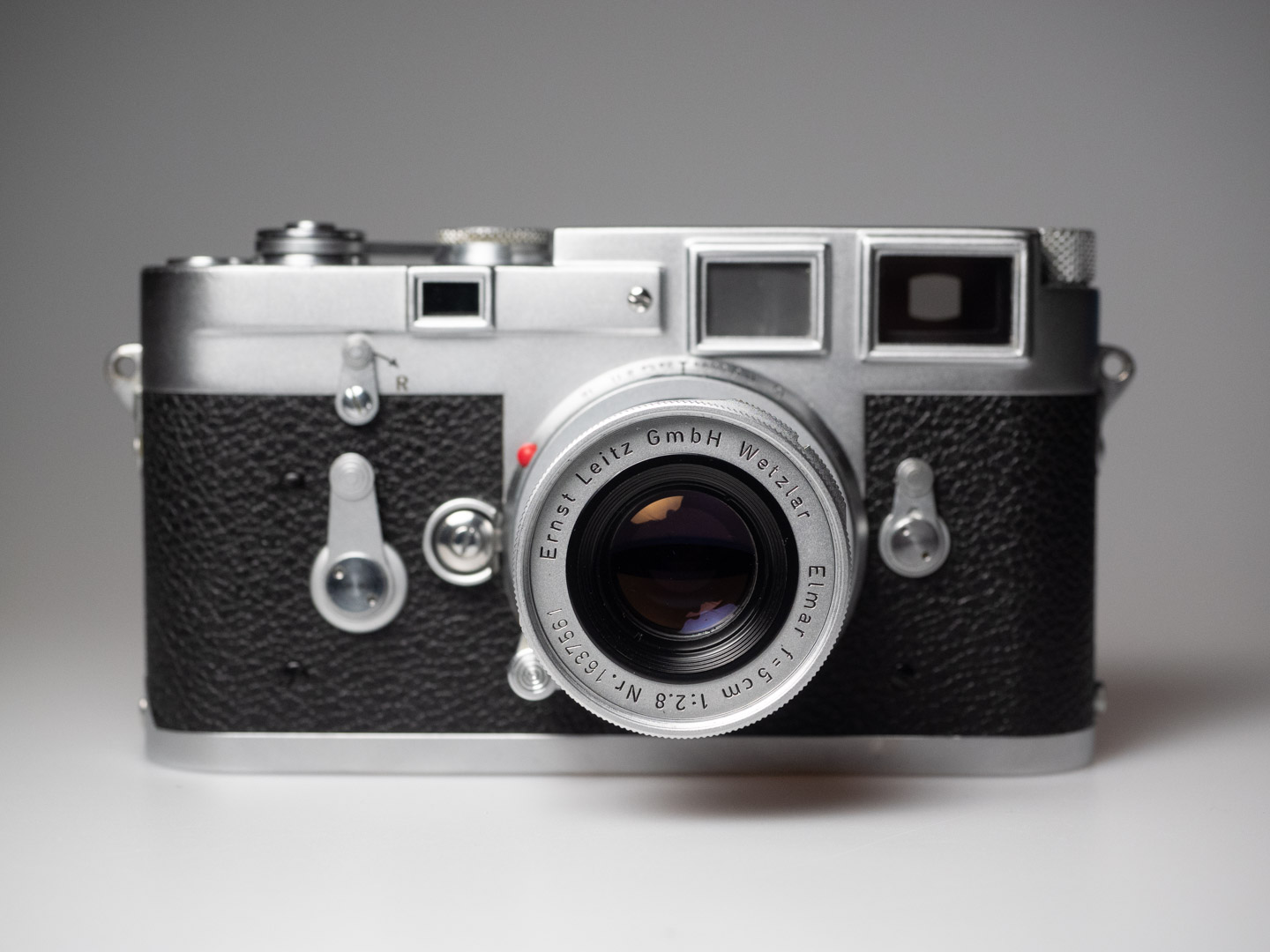
At any rate, to this day, lenses with S- or L-Mount bear the Elmar name if their maximum aperture is around f/3.5. And the current collapsible 90mm f/4 M-Mount lens also was given the name of Elmar.

Further Leica lens names
You might also come across an ELCAN lens, a Hektor, a Summar, a Summaron, a Telyt or Thambar. All these Leica lens names have a specific history, and often etymology can help explain the meaning. But there are also funny aspects. Hektor, for example, was Max Berek’s dog… Further information is available here. In this article, we are focusing on the most common lenses (new or second-hand).
M & Co.: System abbreviations
M, R and C
Each one of the Leica lens names selected in the past decades also reveals the mount identity. M stands obviously for M-Mount (M from German Messsucher, rangefinder), R means R-Mount (R for Reflex, short for Spiegelreflex [mirror reflex], SLR). The C in the 40 and 90mm lenses refers to the film-loading Leica CL for which they were designed (albeit having an M Mount).
S and SL
S refers to the short-lived digital medium format system with S-Mount (introduced in 1996 and never officially discontinued). SL designates L-Mount lenses with a full frame coverage, for the bodies starting with the SL (Typ 601 from 2015) to the latest SL3-S.
T and TL
L-Mount lenses that would only cover the image circle of an APS-C sensor had a T in the beginning and later a TL. Supposedly, T Systems, a subsidiary of Deutsche Telekom, was not amused by Leica launching a T System. The name was changed. One result is that you can estimate the production date of the lens by these letters: TL lenses are newer than the T lenses. Unfortunately, Leica entirely gave up on the APS-C system.
Super, APO, ASPH: What’s more in Leica lens names
APO for apochromatic
The magical three letters, APO, at the beginning of a Leica lens name means that the lens has extraordinary colour correction. Apochromatic means, basically, that light rays in all three colours, blue, green and red, are rendered on the same film (or sensor) plane, read here Jono Slack’s excellent article on this. The result is improved sharpness and the absence of unwanted colour fringes.
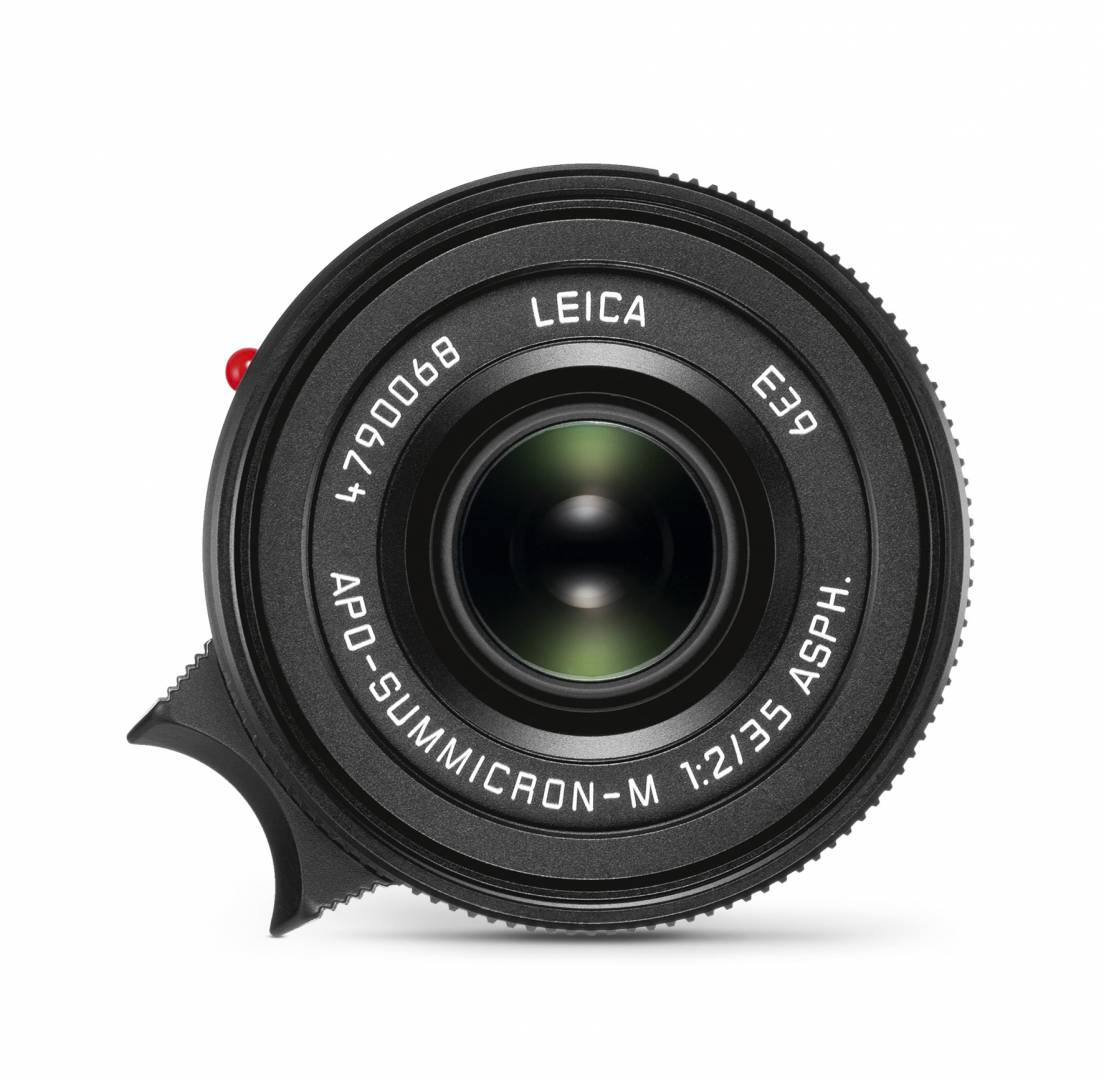
In so far, APO is also a quality marker. This is most evident in the 35 and 50mm Summicron lenses, where an APO and a non-APO version exist side by side. The APO lenses are newer, better, and far pricier.

ASPH.
Leica was a pioneer in use of aspherical lens elements. These can help correct some optical errors, but it comes at a price. From the first 50mm Noctilux in 1966 and the much sought-after Summilux 35 with ASPHERICAL (1989) in its name, Leica took a great effort to further research and implement aspherical lens technology.

This approach was not always economically feasible, as Leica’s long-standing lens designer Peter Karbe once said in a very interesting presentation for Leica Akademie Australia. For customers, the ASPH. (Leica always adds the full stop) at the end of Leica lens name means that it is a newer lens, launched in the 1990s or later. And you can expect superb rending.
Super
The “Super” as in “Super-Elmar-M 1:3.4/21 ASPH.” is not a claim of quality, as you might think in the first instance. “Super” refers here to “super-wide”, designating lenses with a focal length of 21mm and below. Interestingly, the 21mm f/1.4 is not a “Super-Summilux” but just a Summilux. Well, Leica lens names are not always fully logical.


Vario
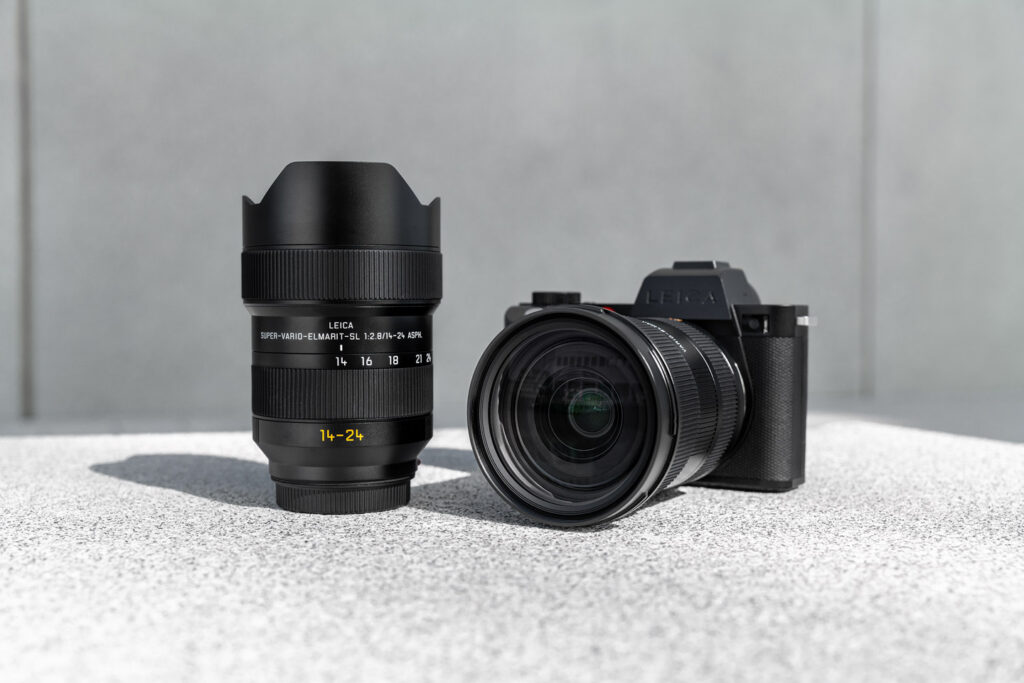
The term Vario refers back to a time when “zoom” was not yet so common. It just stands for a lens with a variable focal length. It is also common for Leica-branded lenses, for example for the Micro Four Thirds system, which are obviously not made by the Leica company itself. Furthermore, it is often combined with the proper names explained above. One example: Panasonic sells a “Leica DG Vario-Elmarit 12-35mm 2.8 ASPH. POWER O.I.S”.
Leica lens names: a conclusion
Leica lens names might seem a bit exotic, but on second sight, the system is pretty logical. You can get a lot of information from the designation. The name of the APO-Summicron-M 1:2/35 ASPH., for example, tells you beyond focal length and maximum aperture that it is (1) part of the versatile Summicron range, that it is (2) a fairly recent aspherical design, and (3) that it features apochromatic correction and thus promises extraordinary image quality. And you can (4) immediately see that it is for M-Mount.
More details, not only on Leica lenses, can be obtained from the highly recommendable Leica Pocket Book published by Red Dot Books, a subsidiary of Red Dot Cameras in London. And, by the way, customers seem to appreciate the system — I have not heard of any pressure to reopen the discussion on Leica lens names.
But what do you think? Are the Leica lens names complicated? And if so, what would work better for you? Or do you think that the Summicrons and the like are so much part of Leica’s legacy that the company never must let them go?
| Read more | |
| The Leica survey 2023 | Retro lenses, alive and kicking |
| What apochromatic really means | Review of Leica Pocket Book |
Make a donation to help with our running costs
Did you know that Macfilos is run by five photography enthusiasts based in the UK, USA and Europe? We cover all the substantial costs of running the site, and we do not carry advertising because it spoils readers’ enjoyment. Any amount, however small, will be appreciated, and we will write to acknowledge your generosity.