
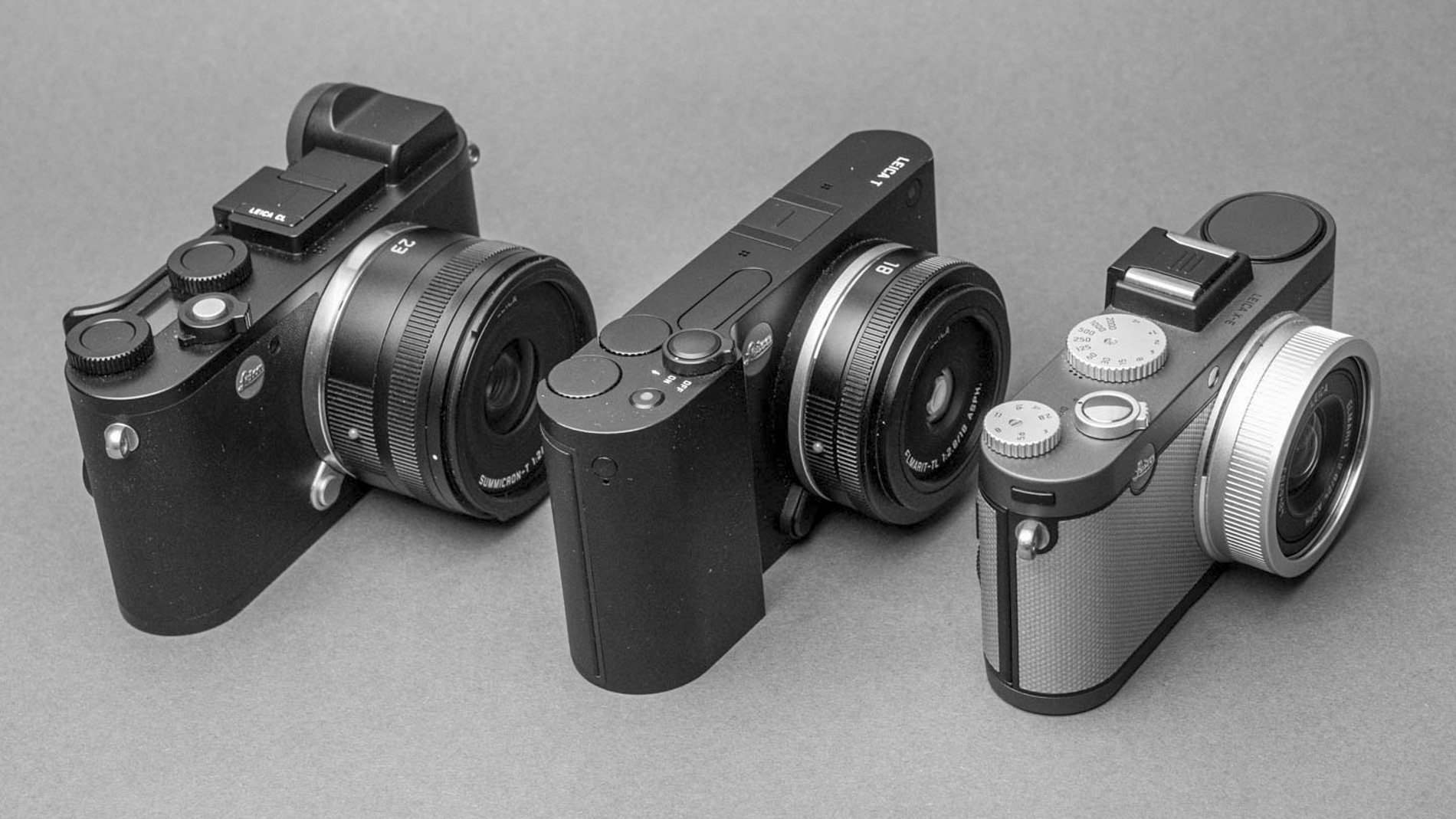
It is four years since the much-loved Leica CL APS-C system fell by the wayside, as all APS-C cameras had done, one by one, since the company entered the crop-sensor market with the X1 in 2009. However, the CL is far from forgotten. Indeed, every time we mention its demise, we get a torrent of comments from disappointed owners. APS-C clearly had a place in the product mix, and it is sad that the CL, and the entire system of lenses, met such an abrupt end.
Nonetheless, In the rush to full frame (and, even, medium format), APC-S and its yet smaller brother standard, Micro Four Thirds, have been somewhat overshadowed. But they are alive and kicking and still in demand. Delve into YouTube and you will find a thriving community of dedicated APS-C shooters who can make a convincing case for the crop sensor. And here at Macfilos we also believe APS-C has a future — but that future must now be without Leica.
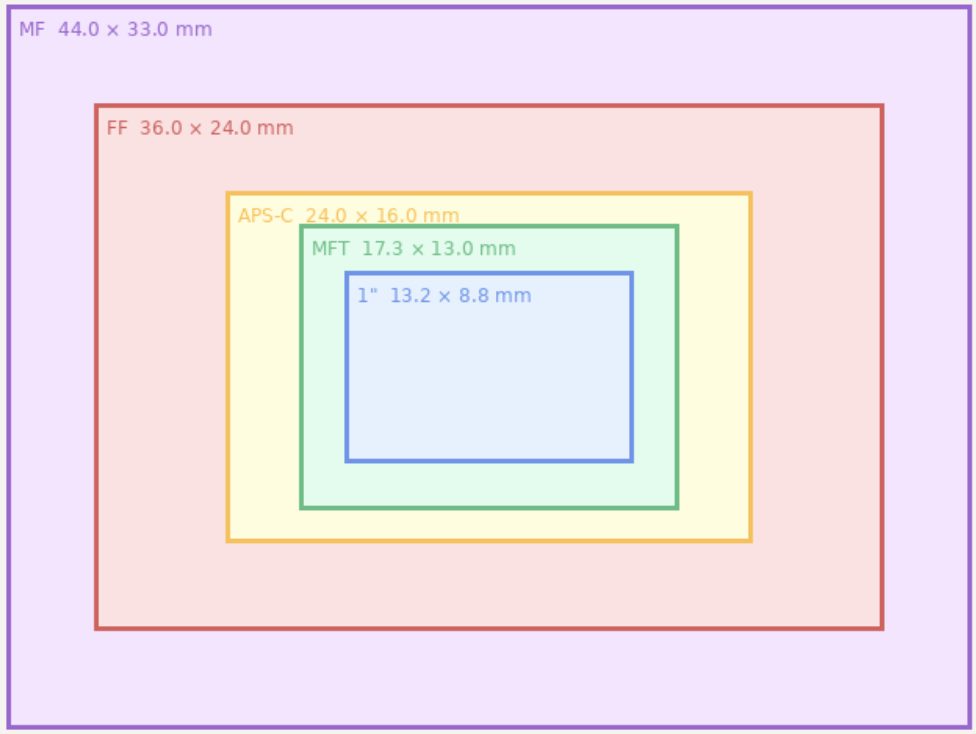
Today, and throughout next week, we are focusing on APS-C and the reason the system is still worth buying. We will leave Micro Four Thirds for another day, although the advantages of this even smaller sensor in keeping down system size, especially when telephoto lenses are involved, are also worth exploring in the future.
On Monday next week, Jon Cheffings will emphasise the good things that came out of Leica’s APS-C development programme — positives that deserved a future. On Wednesday, Keith James will tell us how Leica’s discontinued APS-C cameras and lenses are still worth buying and using.
Finally, on Friday, we will spring a surprise and tell you which of the several brands of APS-C cameras we are favouring as the Macfilos crop-sensor “companion” for the future. While our primary area of interest remains with Leica and the L-Mount system, we believe there is still a need for a compact range to complement the full-frame story.

Advantages of APS-C
Crop sensors offer practical benefits in cost, size, and effective reach that make them attractive alternatives to full-frame systems. For some readers, these advantages will matter more in daily use than the small gains in image quality offered by a full-frame sensor.
Because APS-C sensors are smaller, cameras and especially lenses can be designed to be more compact and lighter, which is a big advantage for travel, street, and long days shooting handheld. Smaller sensors also allow manufacturers to build more affordable bodies and lenses, so an APS-C system often costs significantly less than an equivalent full-frame kit while still delivering excellent image quality.

The crop factor effectively extends focal length, so a 300mm lens gives a 450mm equivalent field of view on APS-C, which is ideal for wildlife and sports without needing larger, more expensive super-telephotos.
General photography
Everyone can appreciate the case for APS-C systems. It isn’t always necessary to burden yourself with full-frame, just for the sake of it. You have to ask if you really require the greater resolving power, the slightly better dynamic range and greater crop opportunities that full frame affords.
For many photographers, including fans of Leica’s lamented range, a lighter system offers practical advantages in cost, size and effective reach that add to their attraction. These advantages can matter more in daily use than the small gains in image quality offered by larger sensors.
A smaller system is ideal for many types of photography:
- For general carrying, street photography and, in some cases even, the camera that is in your pocket, ready for any opportunity.
- For travel. A competent APS-C kit can weigh half that of an equivalent full-frame outfit. It packs more easily for flights, and is less of a burden at the destination, especially if you fancy a bit of hiking.
- For older people. Carrying a large piece of kit, such as the Leica SL3 with a professional lens, is often too much for older photographers. It can weigh nearly 2kg and rapidly becomes a burden. An equivalent APS-C camera and equivalent lens weighs no more than 750g, but delivers 90 percent of the benefit — and in certain circumstances, 100 percent.

Image quality
In practice, image quality, despite the obvious factor of the smaller sensor, is more than adequate. Full‑frame retains the edge in extreme low light and for the most aggressive shallow‑depth‑of‑field looks. However, modern APS‑C cameras now offer 12–14 stops of dynamic range, strong high‑ISO performance, and excellent colour, so differences are subtle unless you pixel‑peep or shoot in very demanding conditions.

Sensor technology continues to advance, and today’s state-of-the-art APS-C sensors can offer 33 or 40MP, which is actually a higher pixel density than that of, say, a 60MP full-frame sensor. Of course, there are other factors and play, and when push comes to shove, the full-frame is always going to win.

Depth of field and focus tolerance
APS‑C naturally gives deeper depth of field at the same framing and aperture than full‑frame, making it easier to keep a whole scene reasonably sharp.
That extra depth of field can be helpful for older photographers whose eyesight makes ultra‑thin focus planes more stressful to manage, especially in candid or travel work.
You can still blur backgrounds nicely with fast APS‑C lenses, but you are less likely to miss focus by a few centimetres and lose the shot.

Reach and lens practicality
The crop factor effectively “extends” focal lengths, so you get more reach from smaller, lighter telephoto lenses—very useful for wildlife, birds, or distant subjects. For example, a 400 mm lens behaves like a 600–640 mm equivalent on APS‑C, avoiding the need for huge, heavy 500–600 mm primes.
This represents another benefit for older photographers, who can continue to enjoy telephoto genres without hauling overly heavy glass.
The king is dead, long live the king
Almost every Leica enthusiast I speak to has kind and wistful words to say about the discontinued Leica CL — and especially about the L lenses that were introduced in 2014/15. Many diehard fans still use them and have decided that they will stay with the moribund system until it falls to pieces in their hands.

I fall into another camp. If I am going to continue to enjoy APS-C, I want to invest in a living, developing system. Whether it be Ricoh, Sony, Fuji, Nikon or Canon, a live-and-kicking camera system is more interesting, more practical and, ultimately, more competent than adhering to a technology that is nearing ten years old.
That is why, while acknowledging the innovation of Leica, and recognising that TL/CL system is still an excellent photographic tool, we are looking to the future. Read our articles next week to find out which system we believe offers Leica users the best future in APS-C. First, though, let’s have a look at the market and the USP (Unique Selling Proposition) of all manufacturers.

The APS-C contenders
The main manufacturers of APS-C mirrorless cameras are Canon, Fujifilm, Nikon, Sony.
Canon
Canon’s APS-C system is built around the RF/RF-S mount, with models like the EOS R7, R10, R50, and R100 representing its current crop-sensor line up. Its main USP is the ability to use the same RF ecosystem as Canon’s full-frame cameras, which simplifies lens sharing and upgrade paths.
Canon’s Dual Pixel autofocus and strong video features make it especially attractive for hybrid shooters. The picture below was taken with the small EOS M, Canon’s first mirrorless APS-C camera.

Fujifilm
Fujifilm is one of the most committed APS-C makers and has built its entire interchangeable-lens X system around the format. Its USP is the X-mount ecosystem paired with distinctive colour science and film simulations, which many photographers choose for the shooting experience as much as the specs. Fujifilm also offers a broad range of bodies, from compact street cameras to high-end performance models.
Nikon
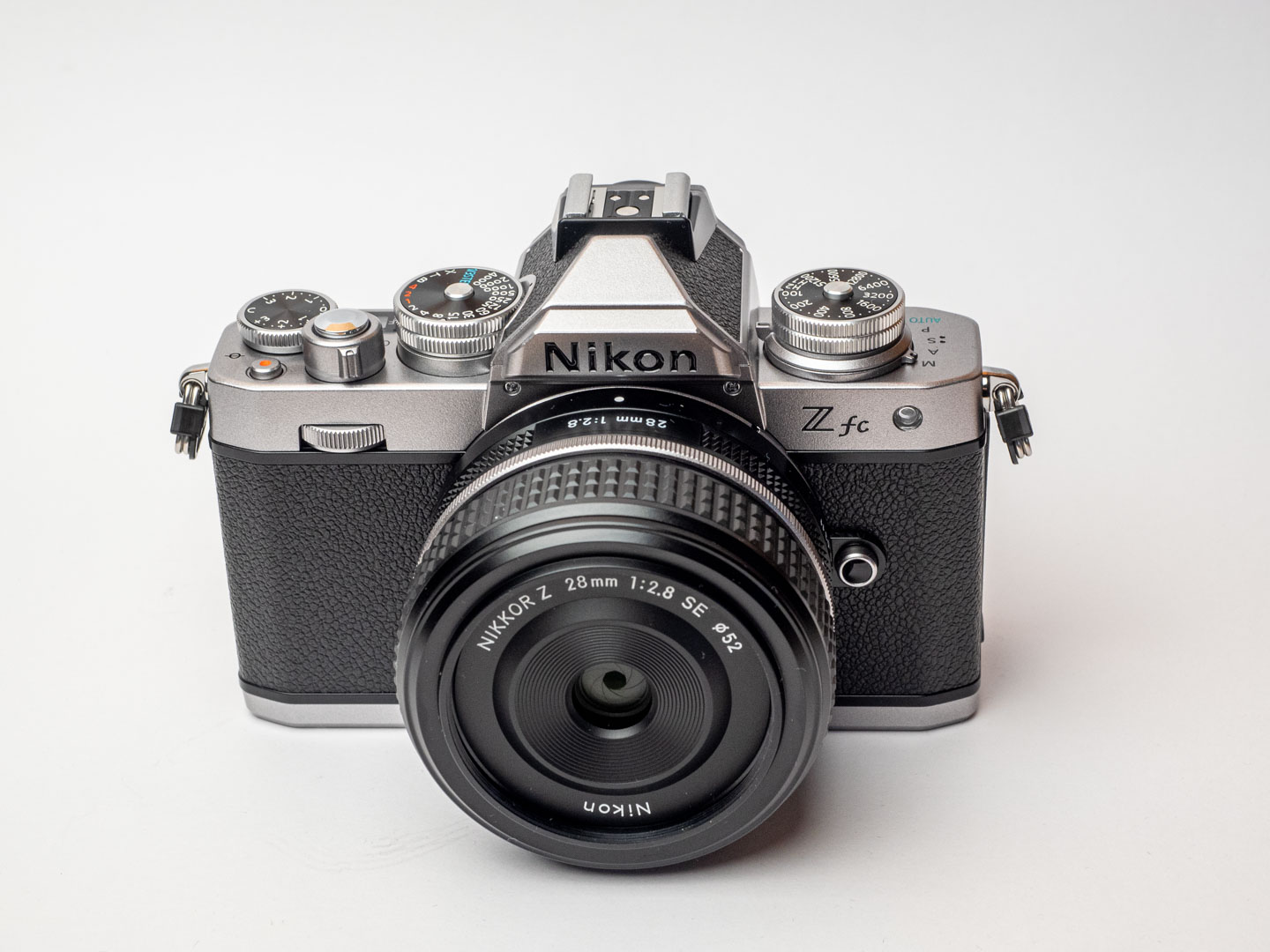
Nikon’s APS-C mirrorless line includes the Z30, Z50, and Z fc, all using the same sensor family and Z mount. Its USP is straightforward system integration with Nikon Z lenses, plus a clean, familiar handling style across the range. The Z30 is geared toward lightweight vlogging, while the Z fc adds retro styling for users who want a more distinctive design.
Sony
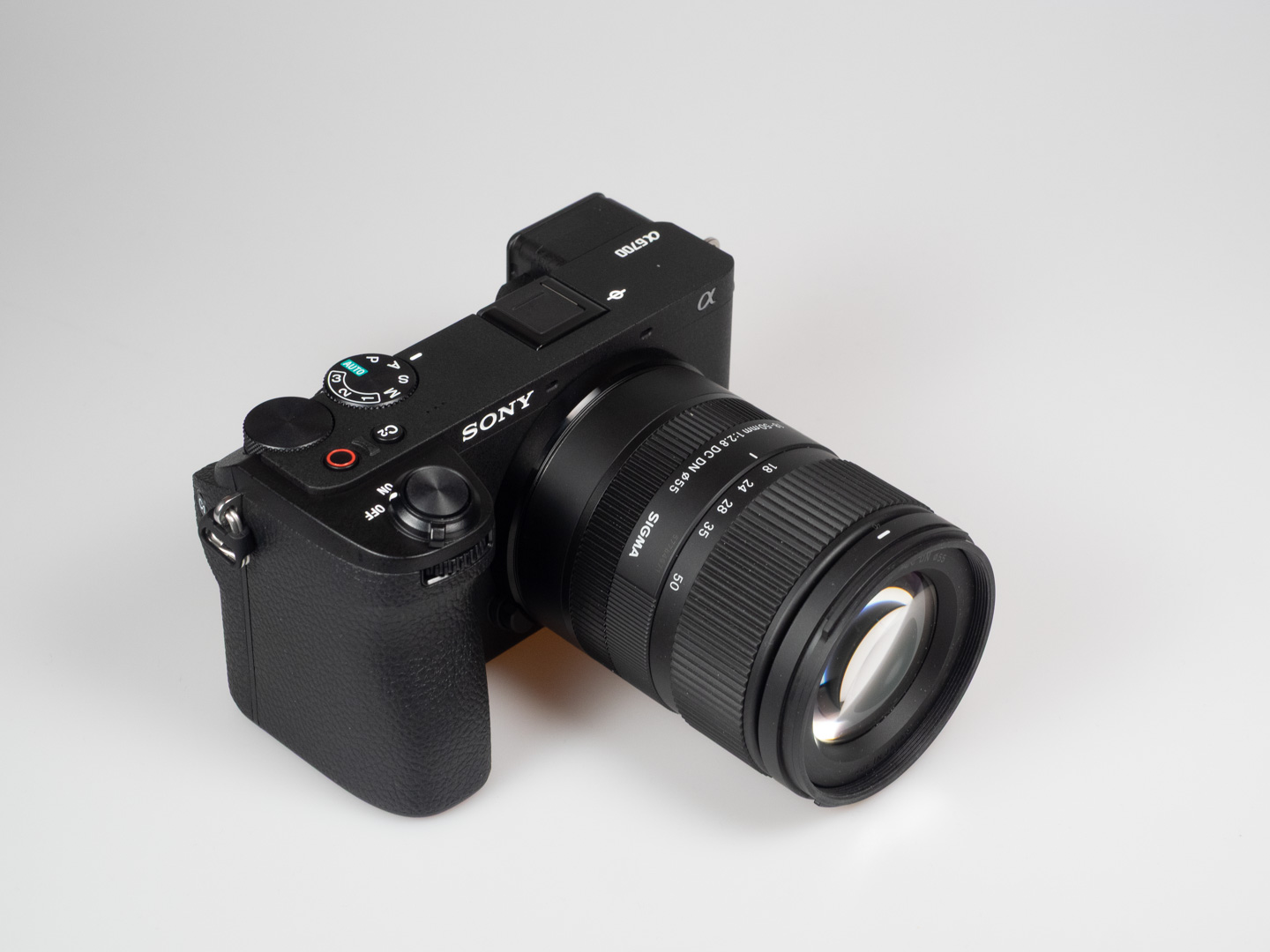
Sony’s APS-C system uses the E-mount and includes bodies such as the a6700, a6600, ZV-E10 II, and ZV-E10. Its biggest USP is the depth of the E-mount ecosystem, including broad third-party lens support and strong autofocus performance. Sony is especially strong for creators who want fast tracking, compact bodies, and advanced video features.
The non-contenders, but still worth consideration:
Pentax
Pentax remains a notable APS-C DSLR manufacturer, with the K-3 Mark III as its flagship APS-C body. Its USP is classic DSLR handling, an optical viewfinder, robust weather-resistant construction, and in-body stabilisation. We are excluding Pentax from our list because we wish to concentrate on mirrorless cameras.
Leica
Not so much a contender as a former combatant. However, there are thousands of cameras still in use and, indeed, many Leica fans are determined to persevere with their system — at least until Leica withdraws repair support.
Ricoh
Ricoh’s APS-C presence is mainly through the GR series, including the GR III and GR IIIx compact cameras. Its USP is the fixed-lens, pocketable APS-C concept, optimised for street photography and discreet everyday shooting. The GR line stands out for its wide-aperture lens, large sensor in a tiny body, and minimalist approach. But more about Ricoh later. It isn’t a system camera, but it’s a wonderful pocket camera for any experienced photographer.

Which system?
For our choice of a future APS-C system for Macfilos, we are looking at the four manufacturers who make interchangeable-lens mirrorless cameras. It’s a narrower brief, but here are the contenders.
| Manufacturer | APS-C system status | Main USP |
|---|---|---|
| Canon | Active mirrorless APS-C in RF-S | RF ecosystem sharing with full-frame bodies |
| Fujifilm | APS-C-first interchangeable-lens system | X-mount, colour science, film simulations, sharing with MF |
| Nikon | Active mirrorless APS-C in Z mount | Simple Z integration, compact Z30/Z50/Zfc, sharing with full-frame |
| Sony | Active mirrorless APS-C in E-mount | Strong autofocus and broad third-party lens support. Sharing with full-frame. |
A practical way to think about the market is that Canon, Fujifilm, Nikon, and Sony dominate interchangeable-lens APS-C, while Pentax and Ricoh serve more specialized niches.

Which of these manufacturers will get your business now that Leica APS-C is defunct?
Make a donation to help with our running costs
Did you know that Macfilos is run by five photography enthusiasts based in the UK, USA and Europe? We cover all the substantial costs of running the site, and we do not carry advertising because it spoils readers’ enjoyment. Any amount, however small, will be appreciated, and we will write to acknowledge your generosity.
I am in the thick of this argument as I am wondering which way to go next. I have an M3 – is there a more “Leica Leica”? – and a IIIf, but I was thinking about a Q3M as a carry-able digital, or perhaps a Q43, as a friend said I could release “my inner Martin Parr”! But as I shoot only B&W these days that really isn’t something I feel the need to do 😉
For the past five years I have been shooting with an XE-2.. It’s a joy to use, which has put the XE-5 on my radar. The lenses are very, very good and in addition I can use my M, and indeed older lenses, on it via adapters, which Fuji market.
40Mp on an APS-C gives more than sufficient density for my printing as I don’t print to wall size, that is adequate.
Oh and of course it’s a small fraction of the price of an M11 (in any of its variations) and still roughly half the price of a Q3.
Regrettably I really do think that Leica have missed more than one trick and a 40 Mp camera that allowed for interchanging lenses would really not be a bad idea.
Thanks Peter,
Macfilos Towers is divided on APS-C and where to go next. Two of us still have Leica TL and CL kit. “The Rebels” have partially shifted allegiances as you will see.
I have a pair of Q3s as a substitute for an M and that combustion works for me. If the two, the Q3 28 is more flexible.
As a final note, you can reduce the file size with both Q3s and also crop (JPEGs) in camera. Plenty of flexibility whichever way you look at it.
“the best future in APS-C” — I guess we’ll have to wait until the final judgement comes off the press! Meanwhile, a few thoughts.
Last week I was trying to photograph a complex scene: bright light to the left, dark on the right. Absorbing parts; highly reflective parts. Complex patterns.
I got out my trusty Fuji X-T5, and did what I’d learned to do with my M240 in the blinding sunlight of Texas. Set the ISO, set the shutter speed, set the aperture — all of these setting available by looking down at the camera top. Looked through the EVF (magnified) and focused.
Amazingly, it all came together and I got the photo I wanted. Just like I had so many times with the M. What I want to ask is — not whether the candidate cameras could get the photo — but whether I could use the skills I’d learned from the M.
I believe the Ricoh offers none of these affordances. The Sony has a viewfinder, but again — nothing manual. The Nikon comes closest, but I’m not sure the Z-lenses offer marked apertures on the lens barrel.
For me — none of the cameras offer ease of use — if ‘ease of use’ is defined in the very narrow way that an M or CL offers. Certainly all the cameras offer other kinds of ease and have serious advantages. But not for me.
Thanks Kathy,
One person’s “best” is another person’s “ho-hum”. I like my CL and brace of Q3s, but know if the CL broke it could be replaced by an alternative.
Equally I could push all my Q3 chips across the table and buy an M.
Who knows whether that change would be equal to “best”.
Well, we agree on those points, and I suspect that many of us have more than one camera, for that reason.
But doesn’t that make it more difficult for the editorial team? Well, however it plays out, I’m sure we’ll all band together and support the final decision.
(ahem)
Given what I learned through the Leica APS-C debacle, if I were to invest in an APS-C system right now I would only invest in companies 100% committed to APS-C and in my opinion that leaves only Fuji and Ricoh with Ricoh obviously being limited to fixed-lens cameras (additionally without an EVF). I read Nikon Zfc below but how many dedicated APS-C lenses has Nikon produced so far? Google tells me 7 versus 40+ for Fuji. Clear enough for me…
Indeed. We are taking all that into account…
As has been said elsewhere, you marry lens systems, and have affairs with cameras. I think those of us who bought into Leica’s APS-C “system” believed it would be for ever, Till death us do part. Sadly we owners were sent divorce papers with no option for any counselling.
Dear Mr. Mike Evans,
Thank you for your interesting and informative article. You are right that most cameras with APS-C sensors are fully comparable to those with larger sensors.
24×36 mm is simply what we used to call the “small-format” or 35 mm format — not some inherently “full” format. In reality, the term only arose in the digital era, when APS-C DSLRs entered the market and manufacturers wanted to indicate that some digital cameras offered the same field of view as 35 mm film. “Full frame” is really a marketing term rather than a physical truth.
Sensor size has two primary issues:
Shot noise (photon noise)
This is not a fault in the sensor or processor. It simply results from the statistically random arrival of photons. It is more a matter of quantum statistics than electronics.
Read noise
This is where electronics and processing come into play. Many newer APS-C sensors have read noise so low that, at base ISO, the difference compared with larger sensors becomes almost academic.
That is why many photographers today feel that modern APS-C cameras “lack nothing.”
As an very old Leica photographer, I know that size does matter, because the smaller the camera is, the more likely you are to take it with you. Personally, I am very fond of my Ricoh GR III.
If I had to choose among your selections, I would pick the Nikon Z fc — though that probably has something to do with the age stated on my birth certificate. Newer Leica cameras and lenses I’m much too big in my point of view.
Kind regards,
Paul de Kruiff
Many thanks Paul. All very true. I agree the sensor terminology is confusing, especially for newcomers. As Jörg-Peter Rau always points out to me, even modern “medium format”, as used by Hasselblad and Fuji, is a just a convenient but ultimately misleading term. And “full-frame” is a anythjng but.
As you know, back in the 1920s 35mm (our “full frame”) was advertised as “Kleinbild”, or miniature photography. Yet, for some reason, it has become the standard against which all other formats are judged.
I would be in favour of renaming sensor sizes. What about making the 1in sensor an A, micro-four thirds a B, APS-C a C (of course), “full frame” a D, and “medium format” an E. Sounds sensible, but then someone would ask about APS-H as used in the M8 or the non-standard Canon version of APS-C.
Overall, it’s a very messy system and needs a complete overhaul. Can other readers come up with a logical suggestion that would mean something to new and established photographers.
Mike
Funny enough when I started to photograph some light years ago when I went to a photoshop to buy film 35mm film, many photo dealers use the term kinofilm.It was the same term in both my native languages. But cinema films is the other way round The Academy format was standardized in 1932, so the format was exactly 1.37:1.So is cinema film half format?Just kidding.The only weak point in the APS-C System is the lenses.The demand for quality in the lens is of course higher because you’ll need a better resolution demanded by the smaller pixel step.Take for instance, the Leica lenses for the TL/CL system. If you compare the MTF curve between the Leica-T 1:2/23 mm Summicron ASPH is very close to the performance of the Apo-Summicron-M 50 mm.That is the reason why some professional photographers, I know, use the TL lenses on there SL cameras because you can’t see the difference especially in a newspaper all on a PC screen and they are smaller and lighter.Even the now retired Leica a dealer in Copenhagen used to TL/CL lenses on his SL. Take pictures don’t count pixels
Best
Paul
Stil using my half-broken CL with manual M lenses; hanging on to the TL and the X1 and X2 languishing in a drawer.
To me discontinuing APS is on the same level as the M5/M4 discontinuation, betting the company on the R8/9 and giving AF to Minolta. But, as the company is prospering, I suppose we should blame hindsight and look forward and await the miniaturization of full-frame cameras.
I sold my Leica CL, knowing full well that it was a terrific camera, but was willing to sacrifice it because I also have a Q3 and my workhorse SL3 system. I kept my TL lenses and use them on my SL3. But, when I look at those CL images I created, I admit it was a wonderful tool. Would I buy a new CL/APS-C if Leica resurrected it? No, probably not, but would applaud anyone else that went that way.
Which of these manufacturers will get your business now that Leica APS-C is defunct?
None if it cannot sport TL and M lenses. A full frame L-mount camera working in crop mode would fit better. My Sigma FPL for instance or a future Leica based on the Panasonic S9 possibly.
The virtues of the CL do not need my endorsements it’s the only camera that I use these days however, a few years ago I wrote about the baptisms of some of my ancestors in that famous church at Trafalgar Square. It was quickly pointed out that it’s St Martin-in-the-Fields.
David
Ah was the caption wrong? That’s what I think too, so I’d better check. This is despite proofreading by six people, me included!
Thanks, David. Done. The possessive is gone, as if by magic!
Much loved and missed but never forgotten, the Leica CL. Loved mine for all the years I had it.
I now have a D-Lux 8 for travel. My M10 just too heavy to carry around all day in my 70’s.
If Leica produced a CL2 I’d be first in the queue.
I think that reflects the views of many users and former users. But the prospect of Leica going back into APS-C is vanishingly unlikely. We just have to soldier or or move to be territory.
Timely. My Leica TL2 is still at the heart of my everyday carry. Yes, the M still unquestionably rules its particular domain, but for general purpose photography there’s a whole segment out there that wants the option of autofocus from interchangeable lenses (sorry Leica Q) at something less than than SL2 price and weight levels of commitment.
Thanks, Robert. We’ve also been giving a lot of thought to that. Some of us are still using the CL or TL which two of us have moved on. We will be going over our thoughts during next week and will reveal all on Friday.
Mike
Please do not forget the Leica T either, for although it only ad a seemingly meagre 15mp so did the X-Vario which preceded it. And that superb little camera remains as being one of my all time favourites although sadly I no longer own it. I do however still have and use my T and its image quality is as the likewise 15mp X-Vario BUT with the T having the extra plus pus of it also having interchangeable lenses, and great lenses they are too.
We haven’t forgotten the T and TL, Don. Keith will be writing about them during next week.
For me Fuji because of the viewfinder possibilities and the handling.
Fuji is on the list… Mike