
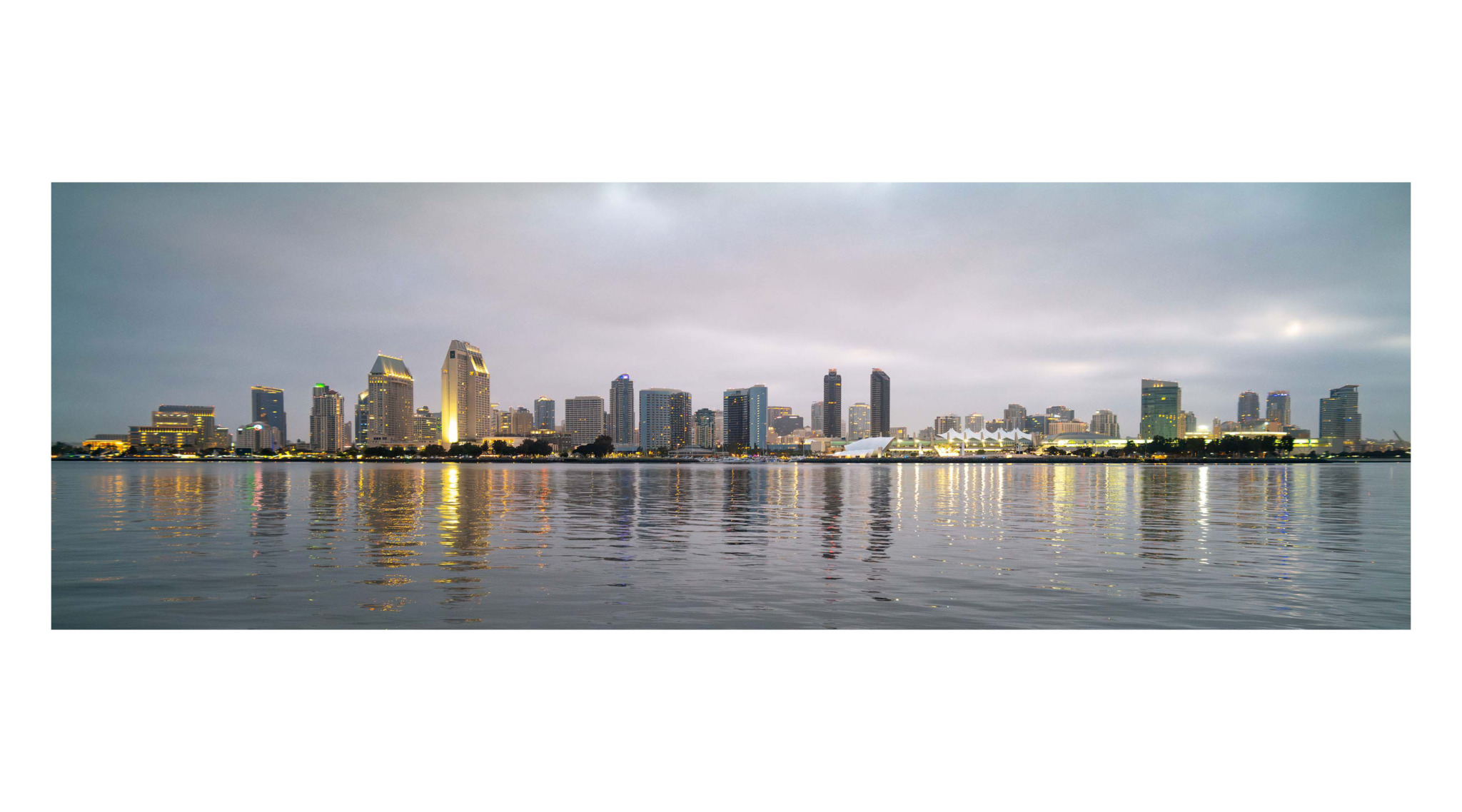
Panoramic photos, with aspect ratios such as 1:3, deliver impressive visual impact. The viewer’s eye can sweep admiringly across the ultra-wide image, drinking in all that delicious detail. It’s hard to fully enjoy them on social-media platforms primarily geared to square or vertically oriented images. But on a wide-screen, or in large-print form, they look sensational. The question is, what’s the best method of taking panoramic photographs?
I recently highlighted the large-format photography of Nick Carver, a California-based professional photographer. He uses a 6×17 large-format view camera to capture spectacular panoramic images on film. I found Nick’s dedication to his craft inspirational, leading me to think more broadly about taking panoramic photographs.
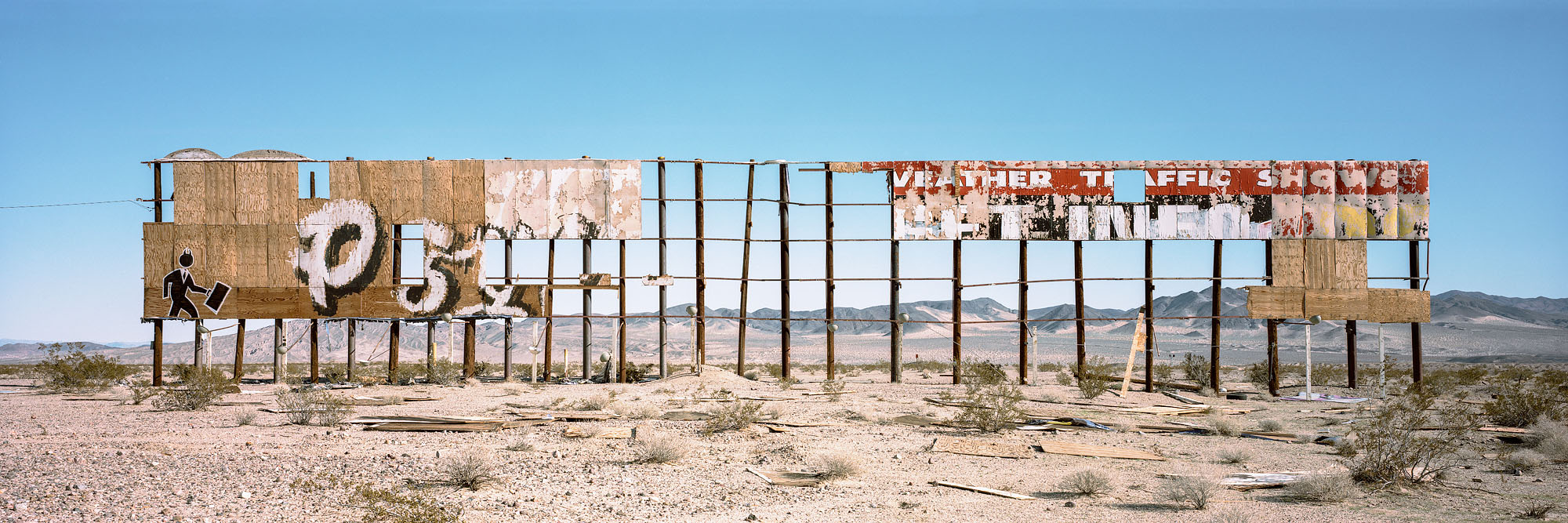
Not everyone is willing to invest the time required to take panoramic photos on film using a view camera. But, there are more accessible, albeit less immersive, approaches available to us. I found it helpful to think about this subject broken into three distinct categories: specialised cameras, lenses, and software.
Specialised cameras
Nick’s Shen Hao view camera (shown below, ©Shen Hao) is designed specifically for panoramic photography.
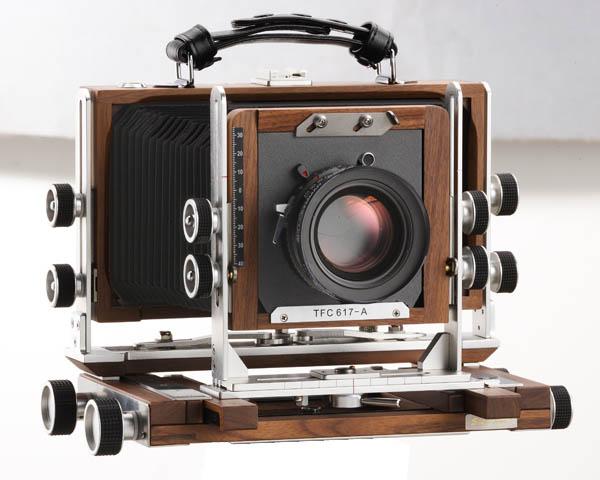
It captures a 6×17 format image directly on an enormous negative. With such a camera, the photographer can precisely adjust the relationship between the lens and ground-glass viewer/film cartridge.
Those in the know refer to these as the front and rear standards, respectively.
Thus, using rise, tilt, and swing manoeuvres, the camera can capture the entire scene free of distortion, with all vertical and horizontal lines appearing exactly as they should.
I have never used such a camera, nor even been close to one. However, I suspect a photographer might have used one to catch me in my college days, while rowing on the River Cam. I am the third rower from the right — number six in this eight-man crew — in the photograph below. Those were the days.
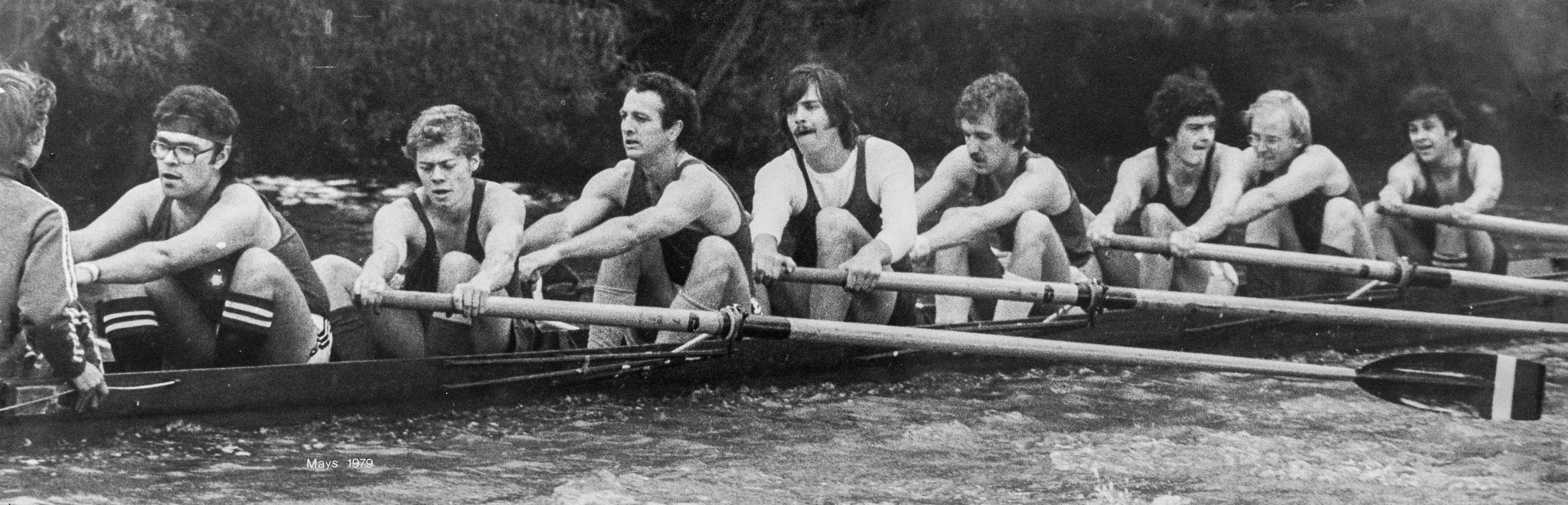
Since the photographer was producing panoramic photographs in 1979, on film, with an aspect ratio around 1:3, I suspect they might have used a view camera. If it was actually taken on a medium format, or 35mm camera, it would represent a mighty crop!
Let’s swing
But there are several other camera types that can directly capture panoramas, albeit without the absolute control of perspective provided by a view camera.
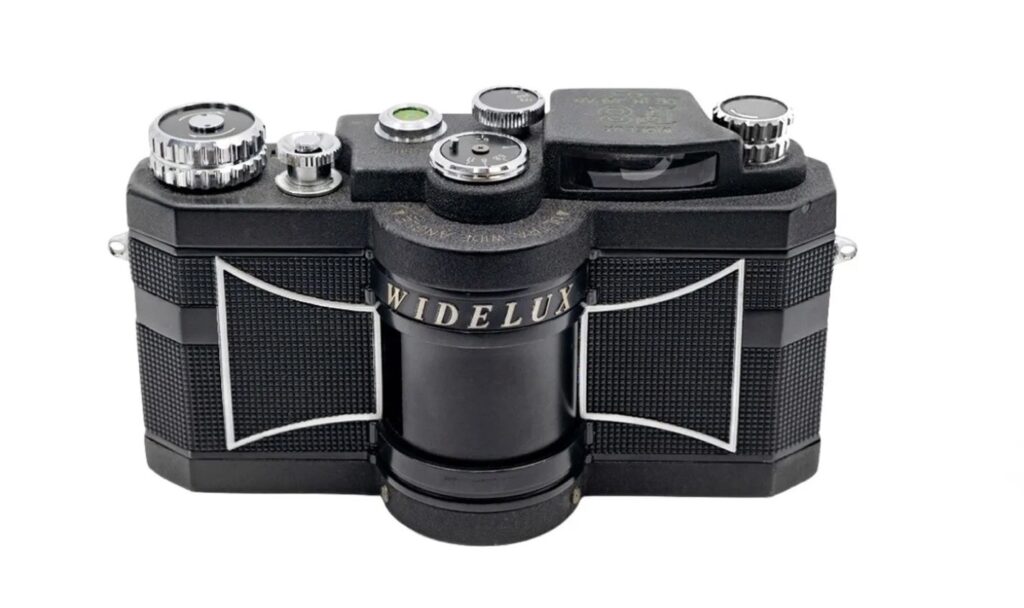
For example, swing-lens cameras, including Widelux (image left ©Widelux) and Noblex brands. In both cases, when you press the shutter button, a rotating lens projects the image onto a curved strip of film.
The sweep of the lens is enormous, and so the field of view of these systems is vast.
In fact, some manufacturers fitted the cameras with handles or indents on each side to avoid the photographer’s hands appearing in the image.
Although they represent fascinating creative tools, swing-lens cameras come with numerous drawbacks.
Firstly, they are film cameras, where you have to thread the film through a finicky set of rollers while loading. When you close the rear door of the camera, the film is pressed onto a curved surface, so that light passing through the rotating lens hits the film at 90-degrees.
Distortion
Further, the resultant image is distorted. Objects in the centre of the frame appear larger and closer than those at the edges of the frame, and straight horizontal lines appear convex.
Here is a video, from Nick Carver, whom I mentioned above, exploring the Noblex swing-lens camera.
School photo
I am from a generation of Brits who experienced what was euphemistically referred to as a ‘selective education’ system. This entailed sitting an examination at age eleven (The Eleven Plus), the results of which determined whether you would attend an academically-oriented or vocationally-oriented secondary school. The former were referred to as grammar schools and the latter as secondary-modern.
Anyone attending grammar school back then (the 1960s in my case) might have witnessed this swing-lens concept in action — on a grand scale.
In order for a photographer to capture our entire school cohort of almost a thousand pupils and teachers, he lined us up in a gigantic semicircle. The camera/lens, placed at the centre of the semicircle, then slowly rotated through a 180° arc, capturing a crisp image of the lot of us.

The photograph above was taken in 1967. I am sitting in the front row, at the centre, just to the left of the gap in front of the headmaster, Mr. Norris.
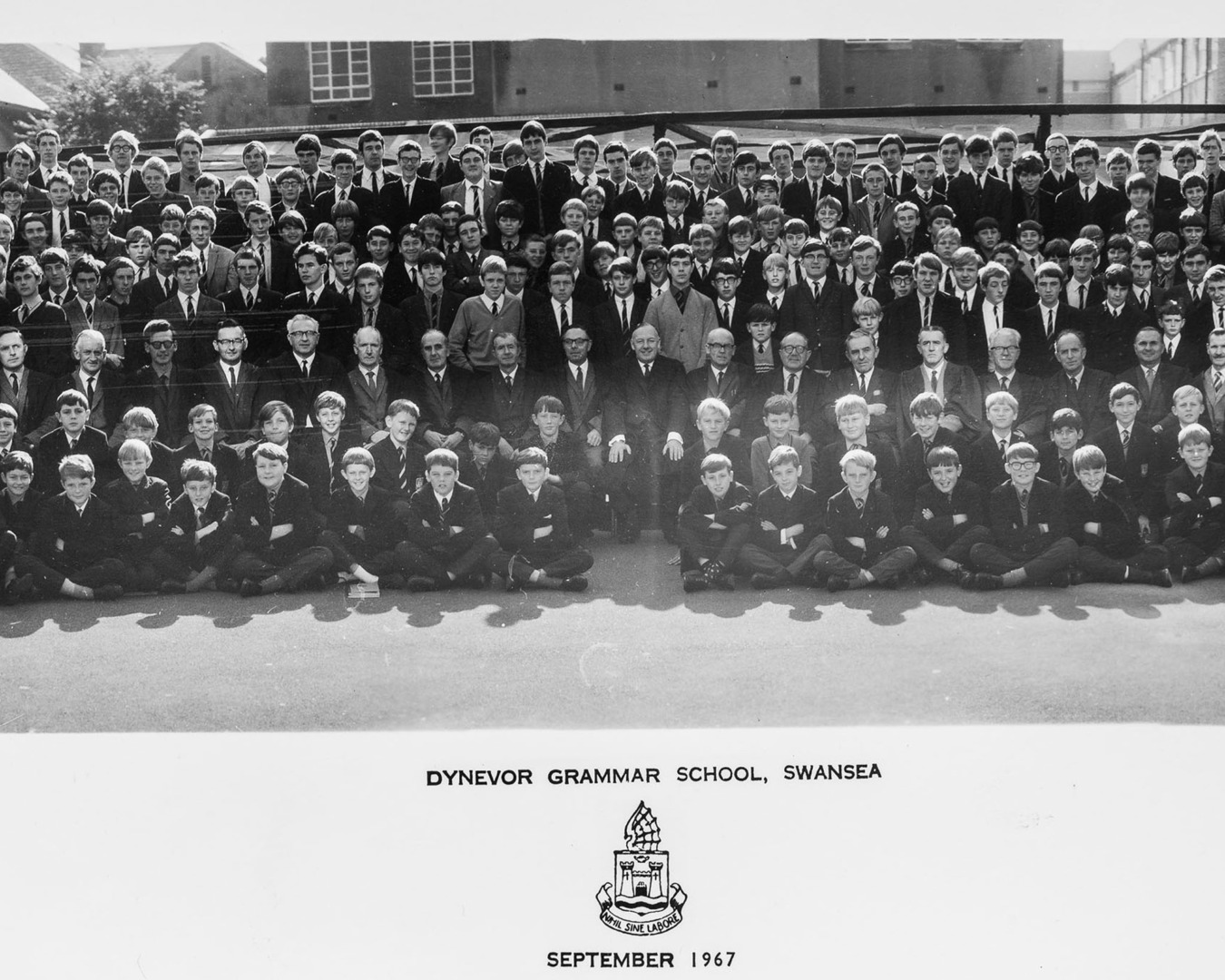
It is not the case in this image, but on subsequent occasions, a few enterprising youths ran from one end of the line-up to the other as the camera rotated. As if by magic, they appeared twice, at opposite ends of the photograph. This must be one of the oddest quirks of taking giant panoramic photographs.
As you might be able to see on the school emblem, our motto was NIHIL SINE LABORE – Nothing Without Effort. Not a bad philosophy for life.
XPan aspect ratio
Rather than employing a rotating lens approach, several manufacturers produced cameras which captured panoramic images using a stationary lens. Thus, the Hasselblad XPan, an interconvertible lens rangefinder camera, exposes a huge, panoramic, 24×65mm negative. It occupies almost twice the horizontal length of a regular 35mm (24×36mm) negative.
The Hasselblad XPan (originally developed by Fujifilm, and sold as the TX-1 in Japan), is no longer in production. Used models are highly sought after. We recently treated Macfilos readers to a superb article from Mike Amos, illustrating the types of image possible with this format.
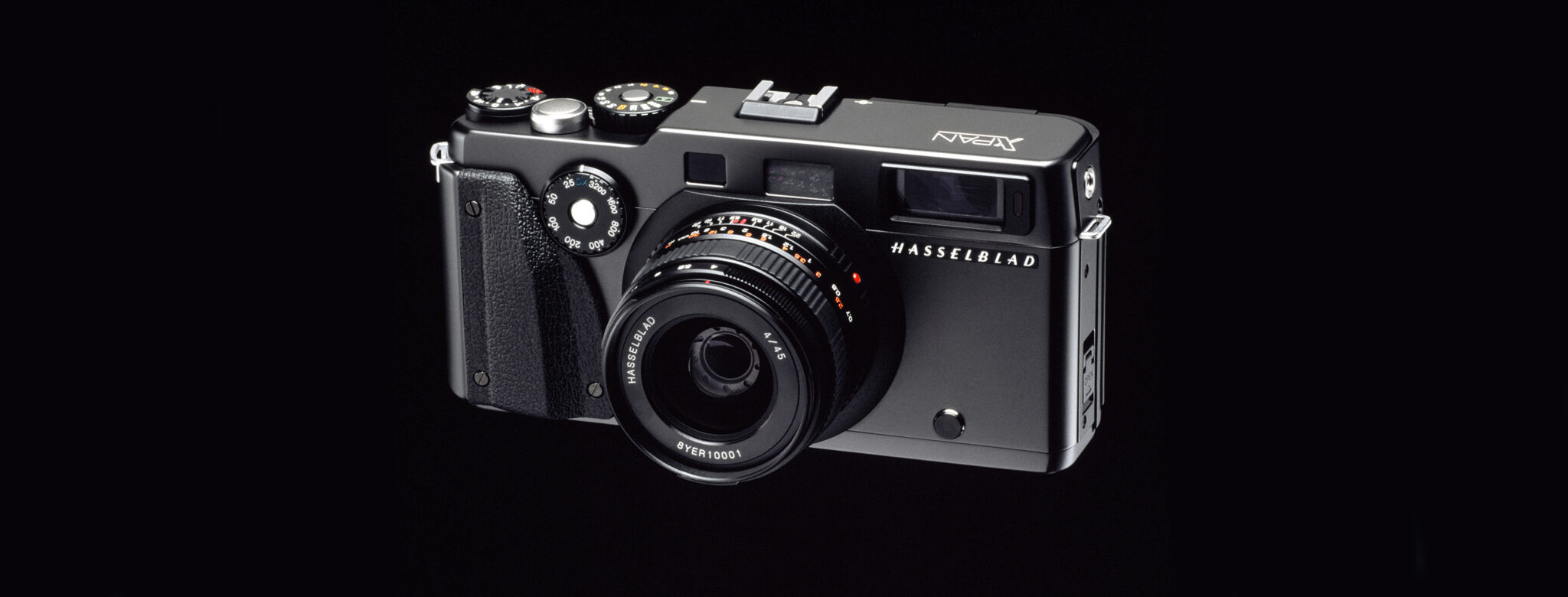
In the digital age, the so-called XPan crop has been incorporated into medium format cameras by both Hasselblad and Fujifilm. Owners of these cameras can choose the 24×65, or XPan, aspect ratio from among the options in the camera’s settings.
The image seen through the viewfinder, and captured by the sensor, is in effect a crop. However, for a camera possessing a 100 megapixel sensor, the resultant, cropped 24:65 image still yields a high-resolution, 50-megapixel photograph.
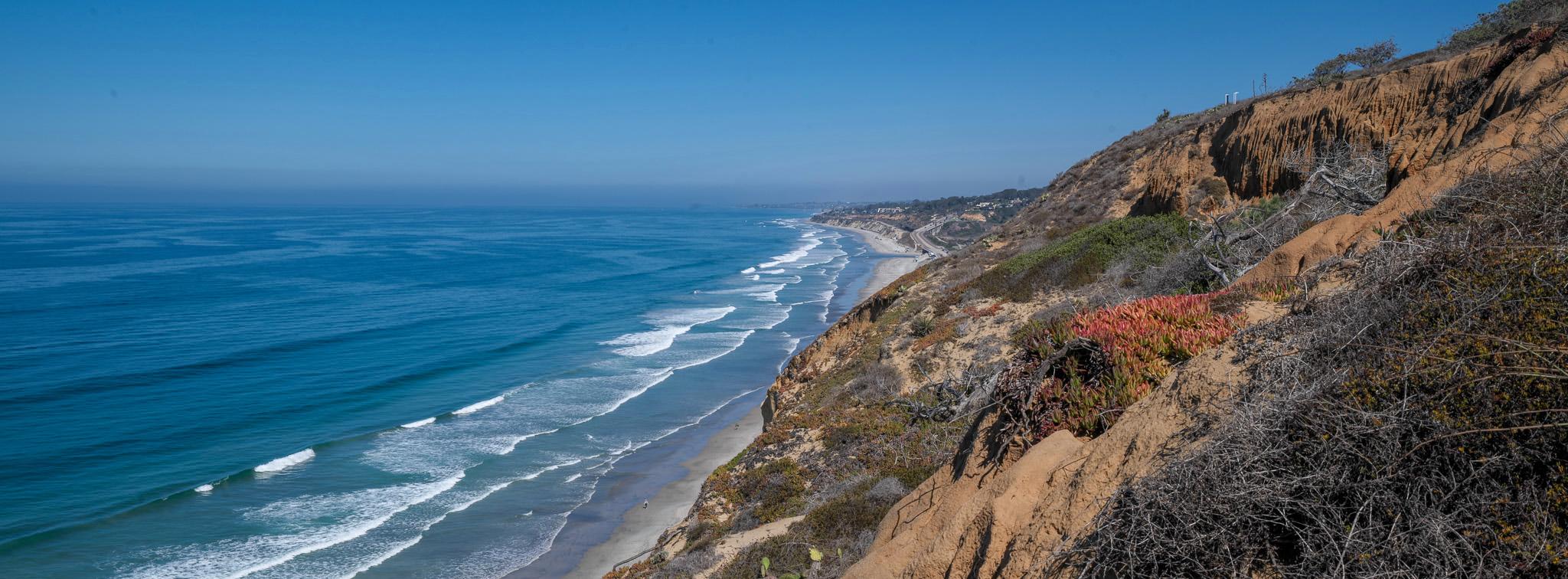
I was fortunate enough to borrow a Hasselblad X2D II medium-format camera last year, and so was able to try out the XPan format. It made such an impression on me that I was determined to find a way to do more of it. However, I has no intention of adding another camera system to my photography world. The solution?
Specialised lenses
As I have written about several times (in this article, for example), back in the 1950s, film-makers introduced panoramic, wide-screen formats to compete with television. To continue employing the same cameras and 35mm film stock that they always had, they turned to specialized lenses to achieve their wide-screen aspirations.
These anamorphic lenses squeezed a wide-screen scene onto a conventional film frame. When projected with the appropriate lens, a de-squeezed, correctly proportioned image appeared on the screen. You can find more information about the anamorphic process here.
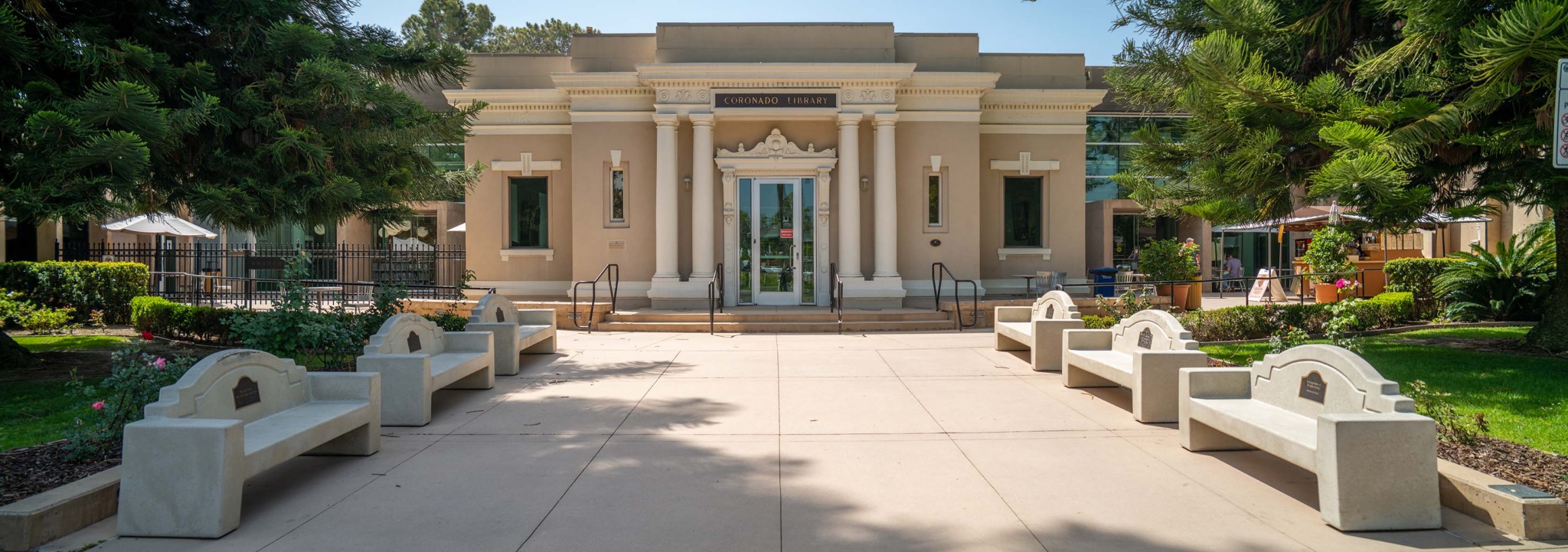
Anamorphic lenses can be used with modern-day, mirrorless digital cameras. They are primarily aimed at video recording, but they also offer yet another approach to taking panoramic photographs.
I now own two anamorphic lenses: a 35mm 1.33-squeeze Super-35, for use on an APS-C camera, and a 35mm 1.6-squeeze full-frame Saturn lens. Both are from Sirui, a member of the L-Mount Alliance. I have written several articles about the Super-35 lens; you can find links in the table below. It yields an approximately 1:2.4 de-squeezed final image from a photograph shot at a 16×9 aspect ratio.
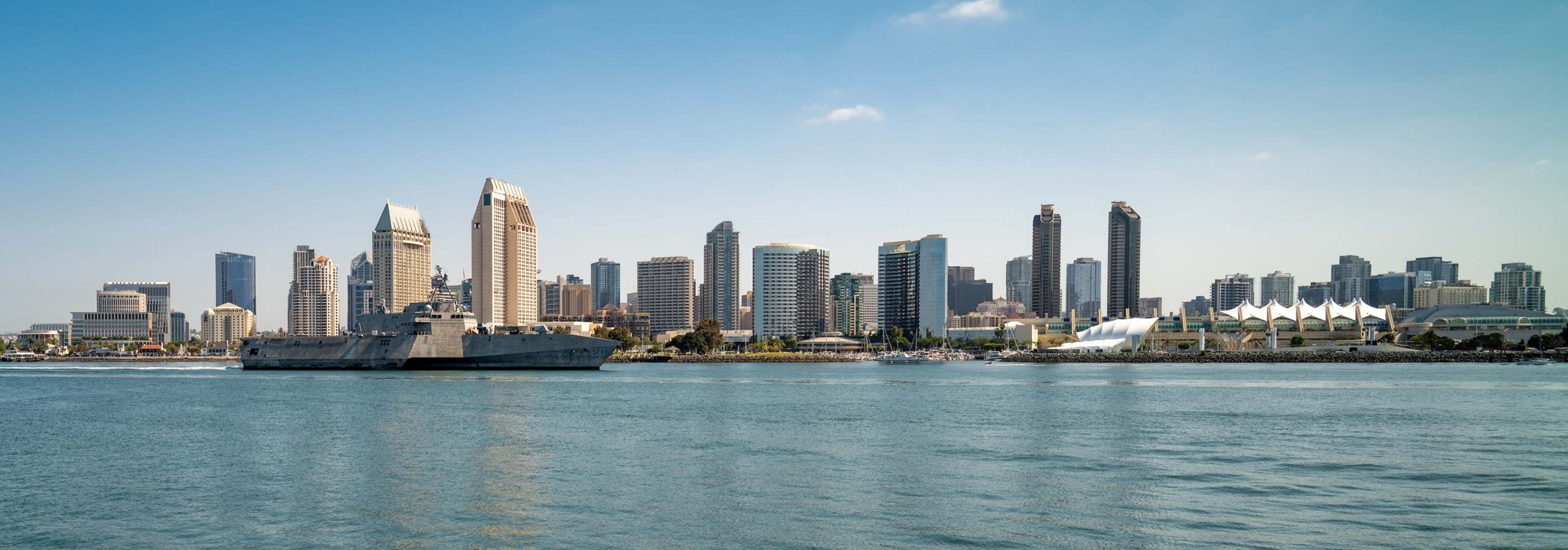
We will shortly publish an article about a project I undertook with the 35mm Saturn lens, as well as share my impressions of its performance. Meanwhile, I have included a few examples in this current article.
Anamorphic pros and cons
As a means of taking panoramic images, anamorphic lenses have a lot going for them. Various brands manufacture reasonably priced lenses of different focal length for most camera mounts. So, you do not have to invest in a dedicated camera system — just pop the anamorphic lens onto your existing camera.
While these lenses usually exhibit some pincushion distortion, which can be corrected to a degree in post, they do not suffer from the extreme distortion of the swing-lens systems referred to earlier. And, because they capture a scene in a single exposure, they can handle moving subjects.
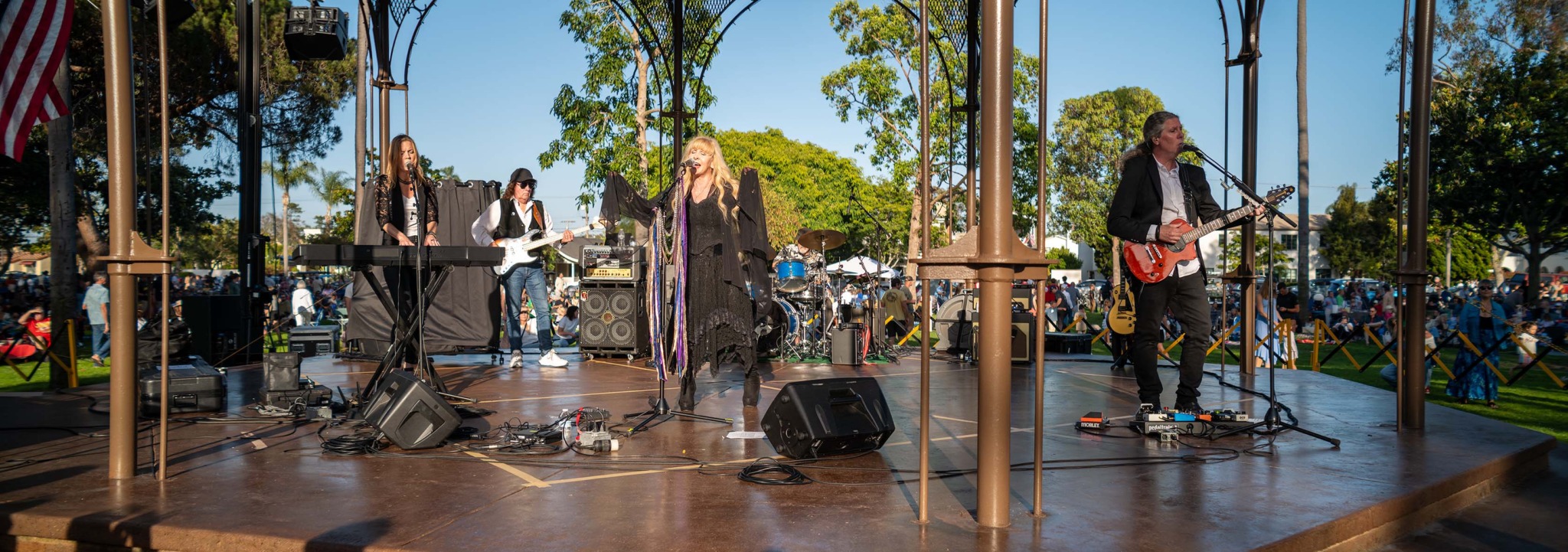
However, the workflow involved in processing anamorphic images is a little more involved. After making initial edits in, for example, Lightroom, you need to export the image to Photoshop to de-squeeze it. That step is straightforward.
Anamorphic lenses are geared primarily to video recording and, as a result, they typically do not have clicked aperture rings. This takes some getting used to, but is not insurmountable.
Specialised software
Modern computational photography has advanced to the point where a series of overlapping images of a scene can be stitched together to create a panorama. Many smartphones even have this feature built in.
Panoramas can be created from high-resolution images using Photoshop. Landscape photographers, in particular, use this technique, stitching together a series of overlapping images taken using a tripod-mounted camera.
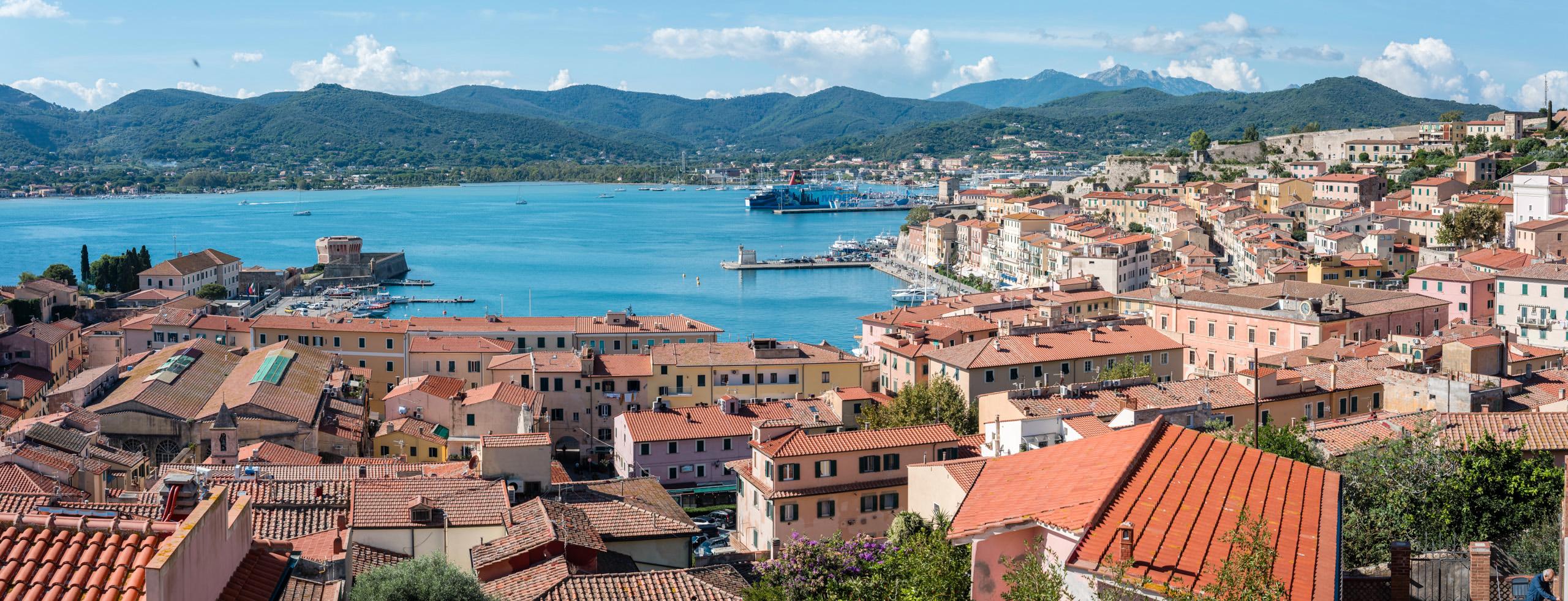
A benefit of using a sophisticated software package, such as Photoshop, is that artefacts from the stitching process can be easily corrected.
Photographers can even create panoramas from a series of hand-held shots, thanks to the image-stabilisation technology built into modern cameras. In a recent article, Claus Sassenberg argued that the narrower field of view of a Leica Q3 43, compared to the Leica Q3 28mm, is not an issue because he can generate wide-angle panoramas by stitching images together in post.
The approach seems an attractive option for panoramas of scenes involving stationary subjects — such as landscapes. I don’t see how it could be used for situations where there are moving objects in the frame, such as cars.
Conclusion
Hopefully, as you can see, if this is a corner of the photography world that is of interest to you, there are many approaches to taking panoramic photographs.
Devotees of film photography have the edge here, because of the ability to capture panoramic images on a large film negative. Since there is no such thing as a panoramic sensor, digital photographers have to rely on cropping, anamorphic lenses, or stitching images together.
Whichever approach you choose, you can be sure of producing an image which is a refreshing departure from the quotidian 4×3, 3×2 or 16×9 images with which we are all familiar.
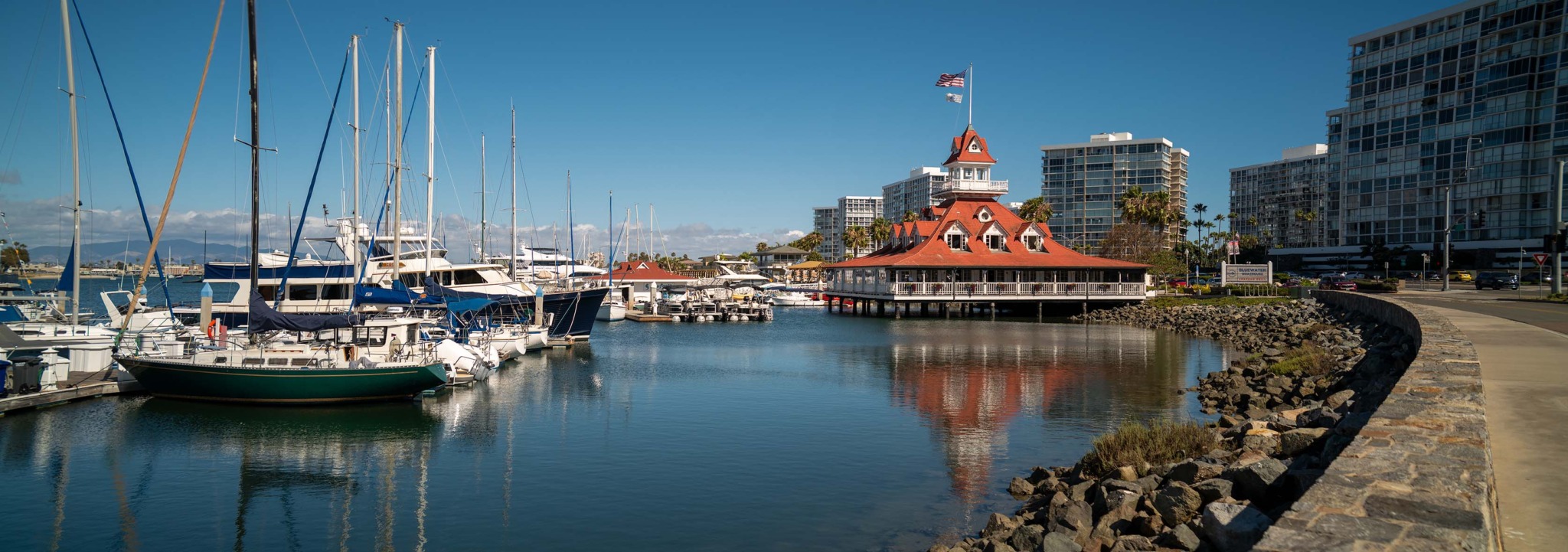

They might not be social-media-friendly, but so what! Let’s not be bound by the limitations of viewing images on smartphones.
If it’s not already obvious, my preferred approach is to use an anamorphic lens. If it’s good enough for Metro Goldwyn Mayer, it’s good enough for me. You do not need a dedicated camera, you can shoot digital, and you can capture moving subjects. As long as you have a subscription to Photoshop, you are in business.
Please let us know in the comments if you enjoy taking panoramic photographs, and if so, which technique you prefer.
| Sirui Super-35 1.33-squeeze anamorphic lens | Sirui innovators in anamorphic lenses |
| Shooting anamorphic on the Leica TL2 |
Make a donation to help with our running costs
Did you know that Macfilos is run by six photography enthusiasts based in the UK, USA and Europe? We cover all the substantial costs of running the site, and we do not carry advertising because it spoils readers’ enjoyment. Any amount, however small, will be appreciated, and we will write to acknowledge your generosity.
Keith – thanks for another great article. One of the reasons I like higher-resolution sensors is the ability to crop images into panoramic formats. I have tried stitching LR in a very long time, and this article has reminded me to try it out again. BTW I bought myself an APS-C anamorphic lens for my CL based on one of your previous articles, and never went beyond shooting a few test shots. Now that the CL has been sold, I wonder how it will do on an SL3-S on APS-C crop? I will try this out as well.
Hi Ed, and many thanks! I have written another article discussing panoramic shots with an anamorphic lens, which will be posted next week. In this case I took the shots using a full-frame lens with a 1.6x squeeze, giving me an almost 1:3 aspect ratio. The lens is considerably smaller and lighter than the Super-35 anamorphic I also own. This could be the one for your full-frame camera(s). Cheers, Keith
Dear Keith,
what a superb description of methods to get panoramic images.
You know that I have experimented with pano images for a while but lately got to lazy to carry the equipment needed. I used solely digital cameras and first a panoramic head with fixed angle movements and later a motorized head. With these I could do images with more than one row of single photos. I had done some with more than one hundred single images, ending up with psb files of more than 1 GB.
One can use LR or PS for stitching. But that will only work up to like 8 to 10 single photos. Maybe that depends on the amount of RAM PS has available. So I used PTGui for stitching. The trouble starts, when the exposures of the single images are to different.
At the end it was a lot of work that no one except for me could see or value, so I sort of quit these efforts.
Many greetings
Dirk
Hi Dirk, many thanks! In light of your comment, and the others below, I now feel obligated to try some stitched panoramas myself. I have been shooting panoramic shots locally at dusk, with my camera mounted on a tripod, enjoying the captured light trails from passing vehicles. It would be easy to shoot a series of images using a spherical lens by panning the camera across the scene. I shall compare the stitched pants with shots taken with my anamorphic lens. Will have to wait for gaps in the traffic though! All the best, Keith
Another option is a tilt shift lens. I use a Canon 24mm T/S lens with an adaptor on my Leica SL3. The lens has 12mm of shift left and right (or up and down) so you can get a 60mm x 24mm (36 +12 +12) aspect. As the camera doesn’t move, only the lens, you get no distortion from frame to frame when stitching. This is particularly good for buildings where preserving straight lines is important. You can also combine left/right shift with up/down shift to get taller buildings but with a wide angle of view. Nick Carver’s videos go through the technique. It’s a relatively modest crop to go from 60:24 to 65:24 or 17:6 if you prefer the X-Pan or 617 field of view.
Hi Tom, many thanks for pointing out yet another approach to taking panoramic photos. A tilt-shift lens sounds like an excellent strategy. I especially like the fact that you can achieve a distortion-free image that is very close to an XPan aspect ratio. A 24mm focal length sounds like a great starting point too. It looks as if used versions of your lens are available in the $600-700 range, plus whatever the cost of an adaptor is. If I were a professional architectural photographer, I would be placing an order! All the best, Keith
Great article Keith, many thanks.
I was recently on the mailing list created by Jeff Bridges along with his wife and a couple of investor friends as they spent a fortune remaking the Widelux camera, their version is called “Wideluxx”. It does some impressive tricks, and for a while I was tempted.
Bridges, in what is an impressive feat, successfully brought the camera to the market place where so many such ventures fail. Here I am thinking of Neil Young and his ‘Pono Player’.
As an actor, one of the little tricks that inspired him was to ask his subject to move from one side of the wide camera frame to the other, whilst adopting an alternative expression… eg: from a smile to a grimace as he demonstrates here: https://wideluxx.com/the-29th-annual-infinity-awards/
This is a bit like your aside about school photos, where an enterprising pupil runs along the back of the assembled pupils in order to appear twice in the resulting snap. For what is really a novelty, the $4.400 asking price, which will probably be the same, only with a pound sign in front of it, should it ever be available in the UK, will be a bit rich for my blood.
As a mildly brain damaged pensioner, I made a good decision not to proceed with a purchase, although I suspect that those who have will have made a sound investment.
Who said that the camera doesn’t lie?
Hi Stephen, many thanks for your comment, and for the additional information about the Wideluxx swing-lens camera. I had heard that Jeff Bridges was somehow associated with this branch of photography, but had not appreciated how committed to it he is, nor his direct involvement in the development of a swing-lens camera model. They are fascinating devices, and the photos he has taken with one are fantastic, although they undoubtedly benefit also from the star power of his subjects. All the best, Keith
Hi Keith, I have just laid new eyes on my last few paragraphs and realised that I made a boo-boo.
When I said that Bridges asked his subject to move, it was of course, he that moved the camera as his subject adopted a different expression.
I am pretty sure that was understood, but I thought I might as well correct things. 🙂
Thanks Stephen. Yes, you can see a blurred section in the middle of each ‘double expression’ frame where he is moving the camera. He literally swings the swing-lens camera! Cheers, Keith
Many digital cameras have the panorama stitching capability built into the firmware. My Fujifilm X100 series did. However, I used it only a few times. While the images are impressive, it is difficult to display them impressively. I just found one I shot on a Greek island in 2018. EXIF says it is 9644 x 1104, or about 9:1 aspect ratio. If I had room to display a physical print 9 feet (2.75 m) long, that would be impressive indeed. But on the typical TV or computer screen, one can only look at a piece of it at one time, else the height of the displayed image is too small.
Hi Martin, I agree that there is a limit to how wide an aspect ratio makes sense, particularly for stills. I initially thought that the approximately 1:2.4 aspect ratio achieved with my 1.33-squeeze lens was optimum, but am now addicted to the 1:3 aspect ratio of my 1.6-squeeze lens. This is just a bit wider than the XPan format. They look great on my iPad. I am hoping to submit some to a forthcoming exhibition, where I would display them as 8×24-inch prints in a 9×27-inch frame. For social media, I place them on a 16×9 landscape background, and it works reasonably well. A 1:9 aspect ratio is quite something — way beyond anything I have in mind! All the best, Keith
I regularly use Lightroom (Pano Merge) to make panoramic shots with both my Leica M11M or Q3 43. It is totally not necessary to use a specialized camera for this purpose any more given the quality of the software. There is no need to use a tripod, simply overlap by 25-35% each shot. As long as you are careful not to change the elevation angle much between frames you get great results. The resolution from the 60mp sensors is stunning and the merges are seamless. When you combine this with the ability to use AI to remove distractions and intruding objects (or subjects) it is a very effective method. Lightroom produces a raw image (DNG) resulting from the merged images.
Hi Bill, thanks for your comment. Do you see any distortion or curvature in your stitched pano images? I ask, because, just as with the swing-lens camera, you are rotating your view of the scene as you swing from beginning to end of the sequence. I think I can see some curvature in the stitched panoramic image from Claus that I included in the article. Perhaps with landscapes, where there are no buildings, it’s not obvious that there is some distortion. I would be interested to hear whether you have encountered this. An advantage of a view camera, or anamorphic lens approach, is that the sensor remains at right-angles to the scene while the image is captured — so, no distortion from different angles of view. All the best, Keith
I have used LR’s pano merge multiple times, the most extreme was to stick together 22 images of a giant live oak tree from fairly close up. Yes, there were mild curvature problems and other distortions — I used a 35mm lens IIRC — but easily fixable.
Of course, with a 60 MP image, just use a high-end super WA and crop. WATE anyone?
Ed
Hi Ed, I have resisted the cropped ultra-wide angle approach because of the extensive foreground you get with such lenses. However, since I would be cropping anyway, perhaps this isn’t really an issue. I have a fast, 16mm prime, and so will give it a go. All the best, Keith