
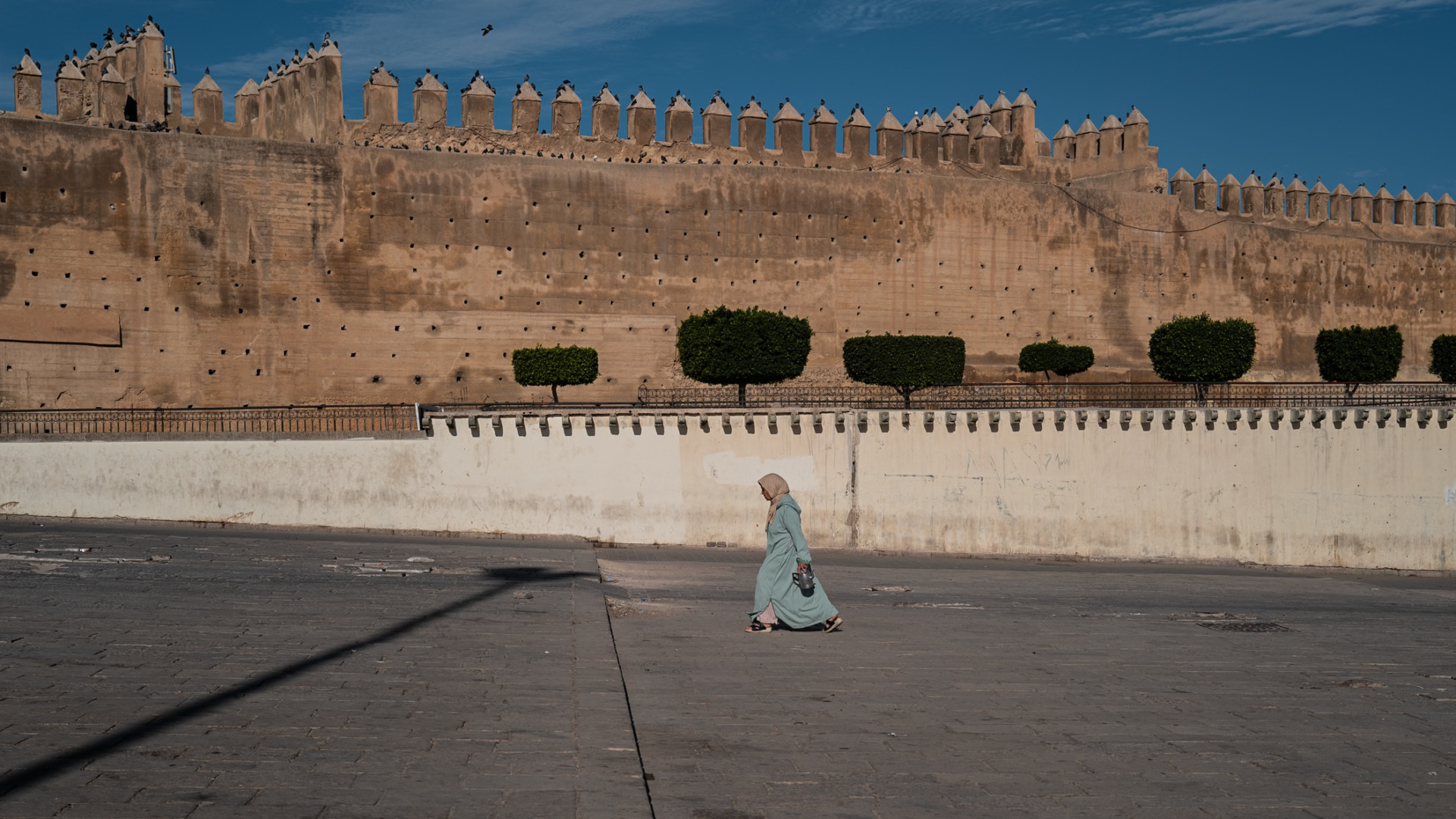
What’s it really like to join a Leica Akademie trip? How much does it cost, and is it actually worth it? I found myself asking all of those questions before deciding — slightly out of character — to sign up for something wholly different.
I joined Jessie Marlow and Steve Dupont from Leica Akademie Australia on a multi-day journey to Morocco, quite literally halfway across the world. Furthermore, I’d been told these trips feel less like formal workshops and more like being welcomed into the wider Leica family. That turned out to be remarkably accurate.
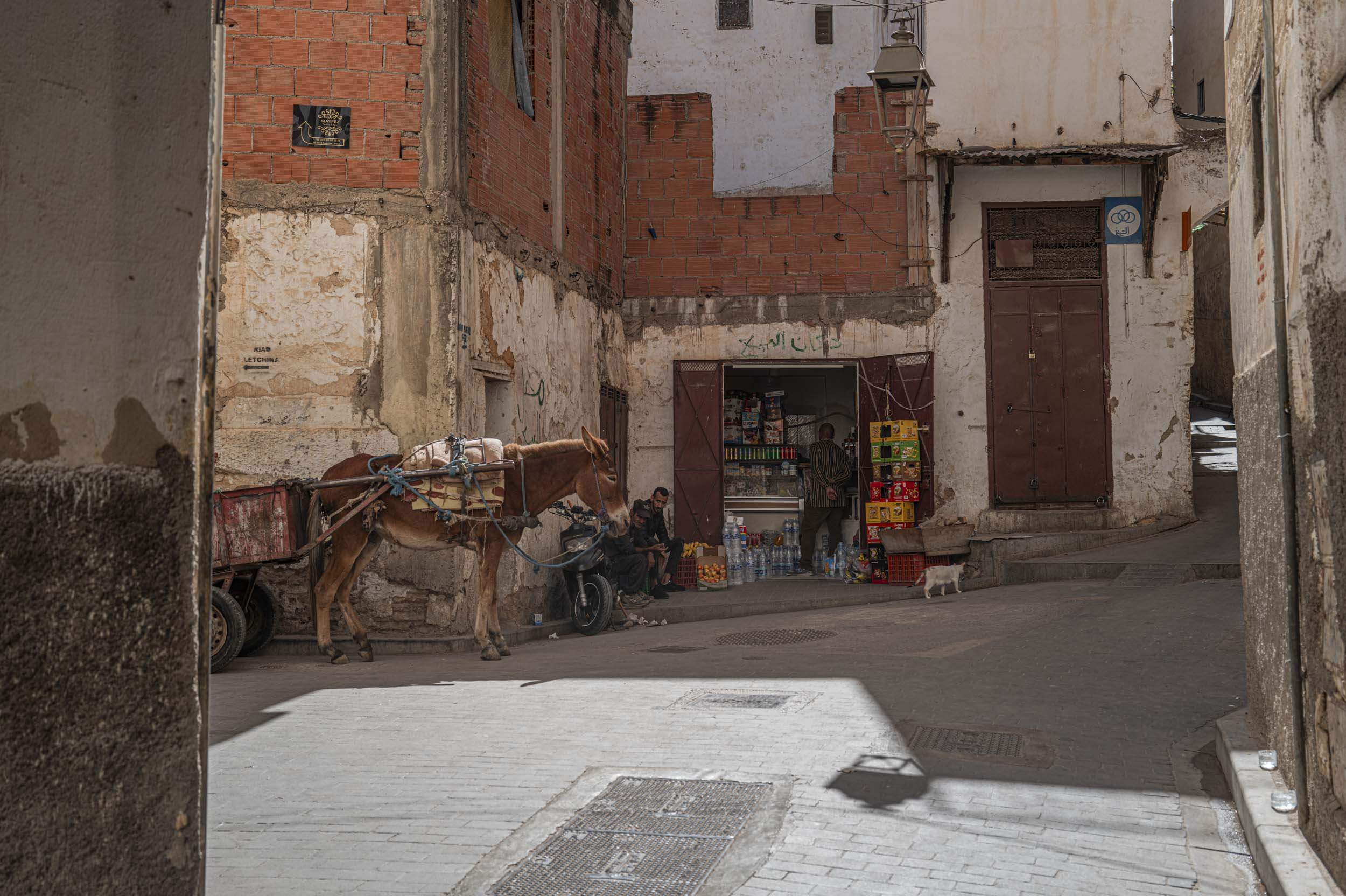
From the outset, this wasn’t about ticking off a syllabus. We were out in the field — cities, landscapes, real environments — working alongside experienced photographers, learning through doing rather than being instructed. The days naturally blended shooting, conversation, and thoughtful critique.
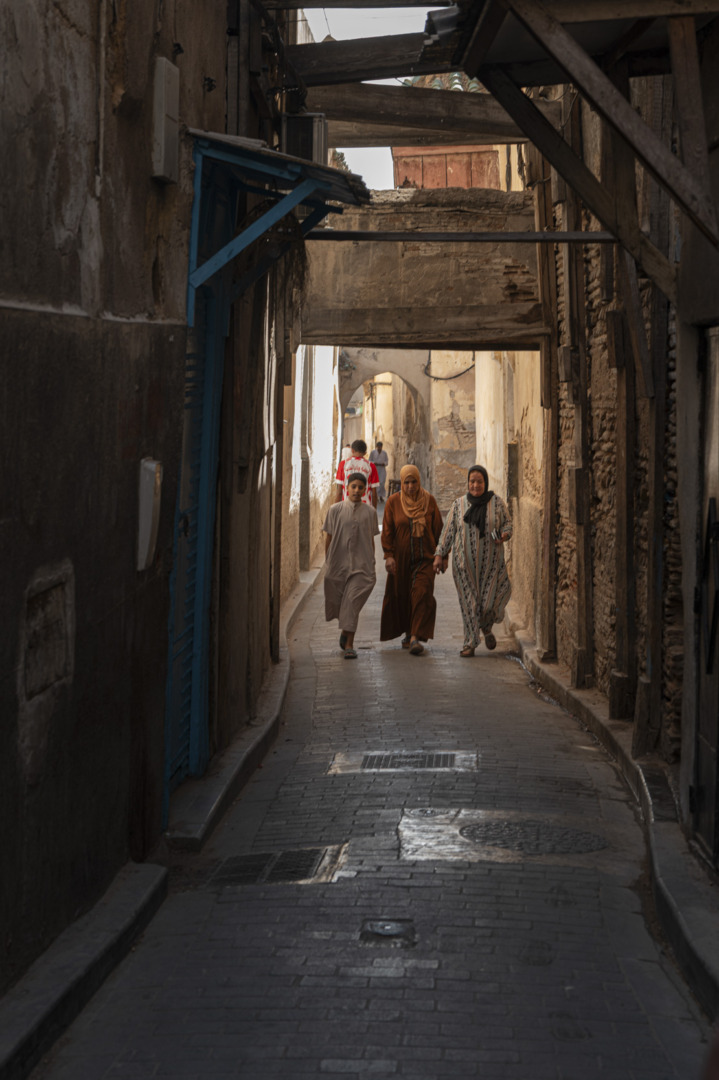
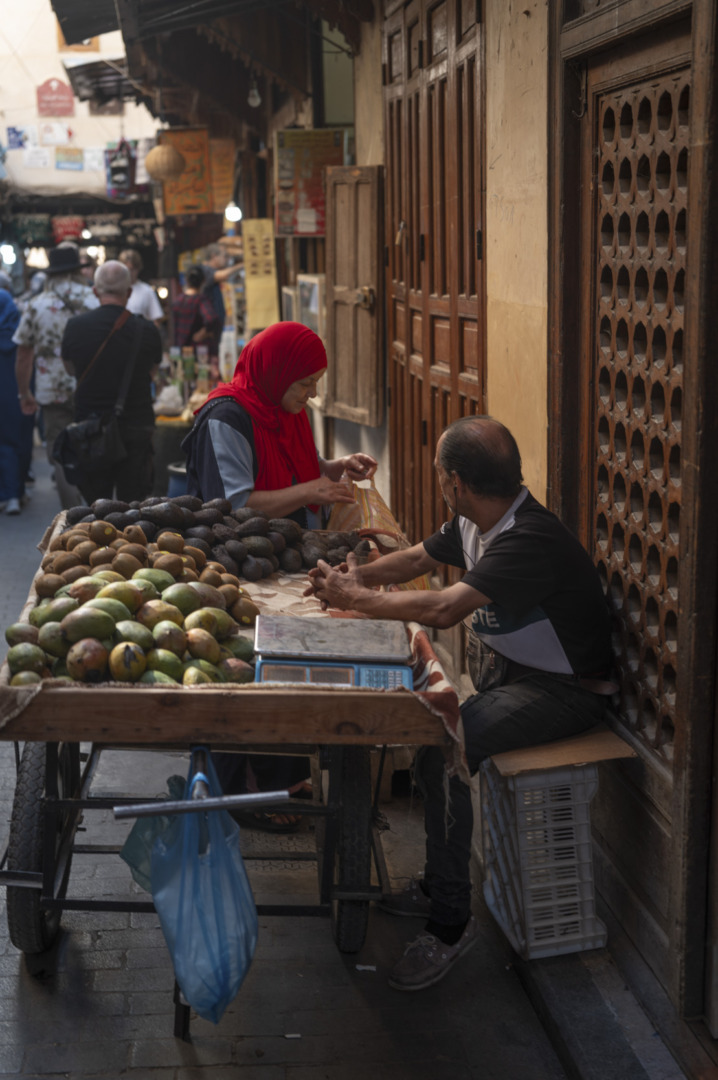
At their best, these trips become a continuous photographic dialogue, combining travel, craft, and community. That was certainly my experience.
That said, I did wonder beforehand whether I was suited to this kind of organised adventure. Most of my trips are solo, or occasionally with a friend. Travelling as part of a group was unfamiliar territory.
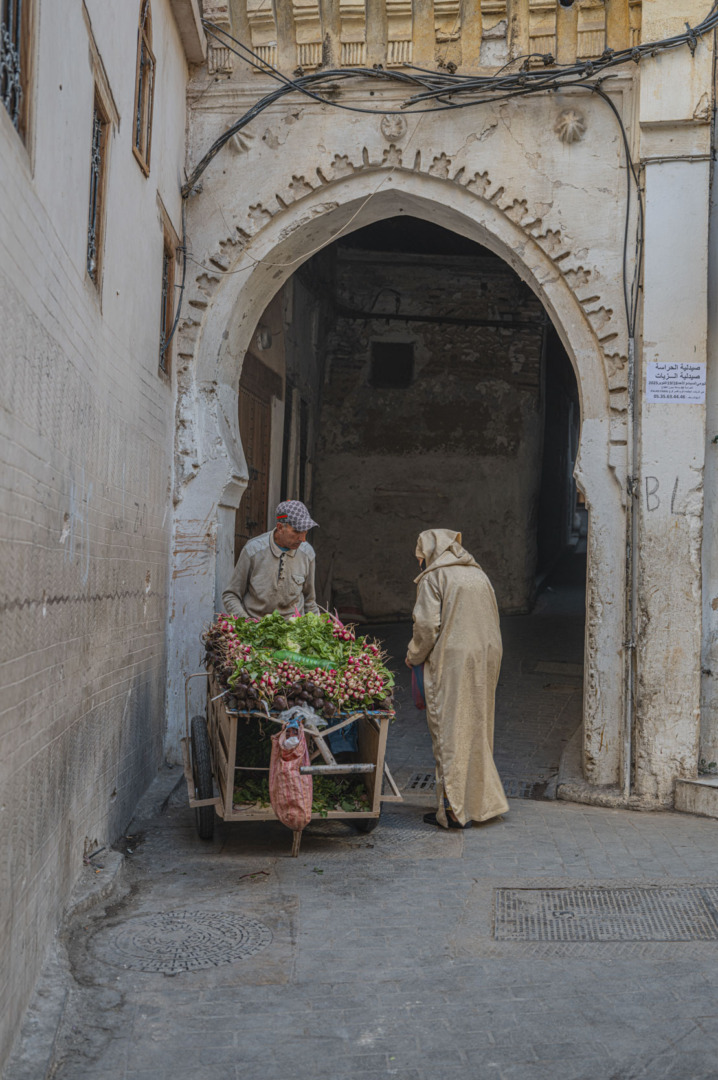
Counting the cost
Let’s address the obvious point: a Leica Akademie trip is not cheap. However, once you consider what’s included — everything apart from flights — the overall value begins to make sense.
I chose the Morocco tour, and excluding flights from Sydney, the cost came to AUD 15,000 | £7,800 | $10,300. It’s a significant investment, and I’ll admit I hoped I’d come away with both stronger images and a positive group experience.
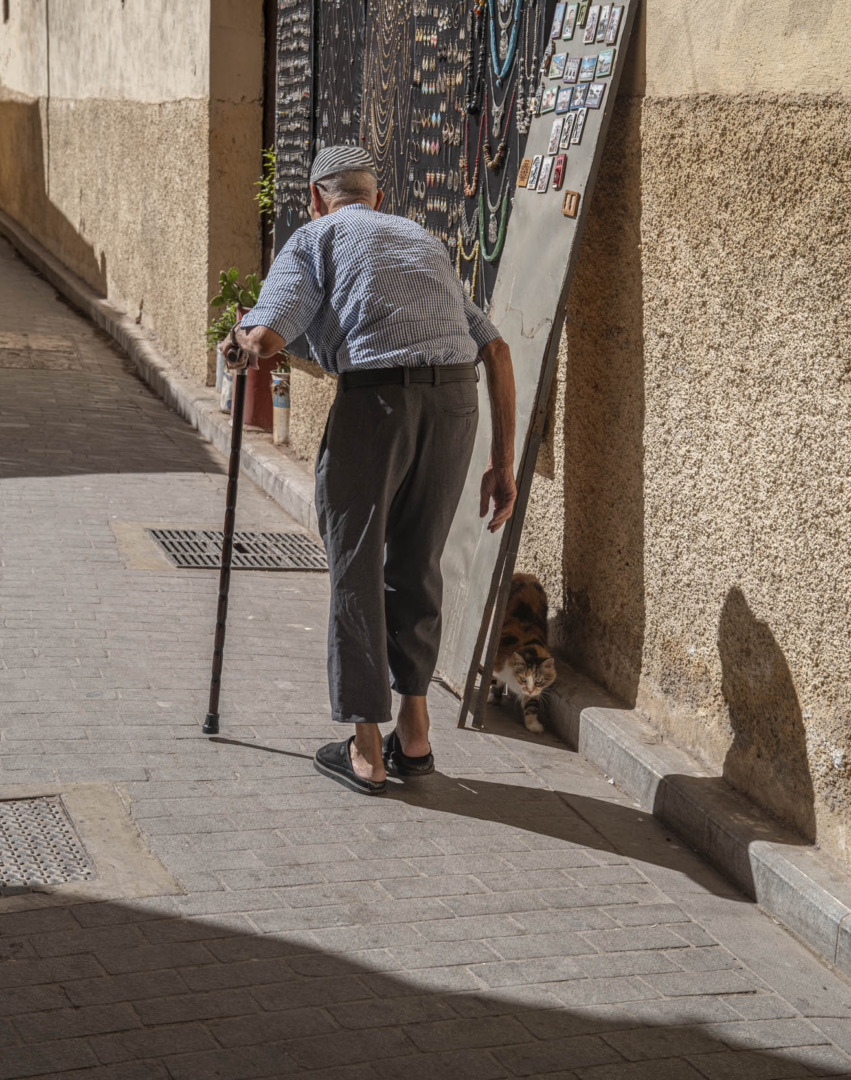
In the end, our group was small — just nine participants — which made a real difference. Jessie Marlow and Steve Dupont led the Leica Akademie trip, and the dynamic felt relaxed and collaborative from the start. I’d half expected a heavy focus on gear, but that never materialised.
Yes, everyone took photography seriously, but conversations were observational and thoughtful rather than technical for its own sake.
Travelling light
In contrast to many of my fellow travellers, I kept things simple. I brought just one camera: the Leica Q3 43. Around me was a fascinating mix — M11s, Monochroms, SL3s — a rolling showcase of Leica’s current line up.
Our itinerary included several locations across Morocco, but for me, the Medina in Fes stood out as something truly special. Described by Wikipedia as “the country’s spiritual heart”, the Medina is a dense, layered environment where history and daily life are tightly interwoven.
Within the walls of Fes el Bali, the past feels very much alive. Donkeys and handcarts still move through the narrow alleys, navigating routes that have existed for centuries. It’s vibrant, chaotic, and utterly compelling.
Wikipedia
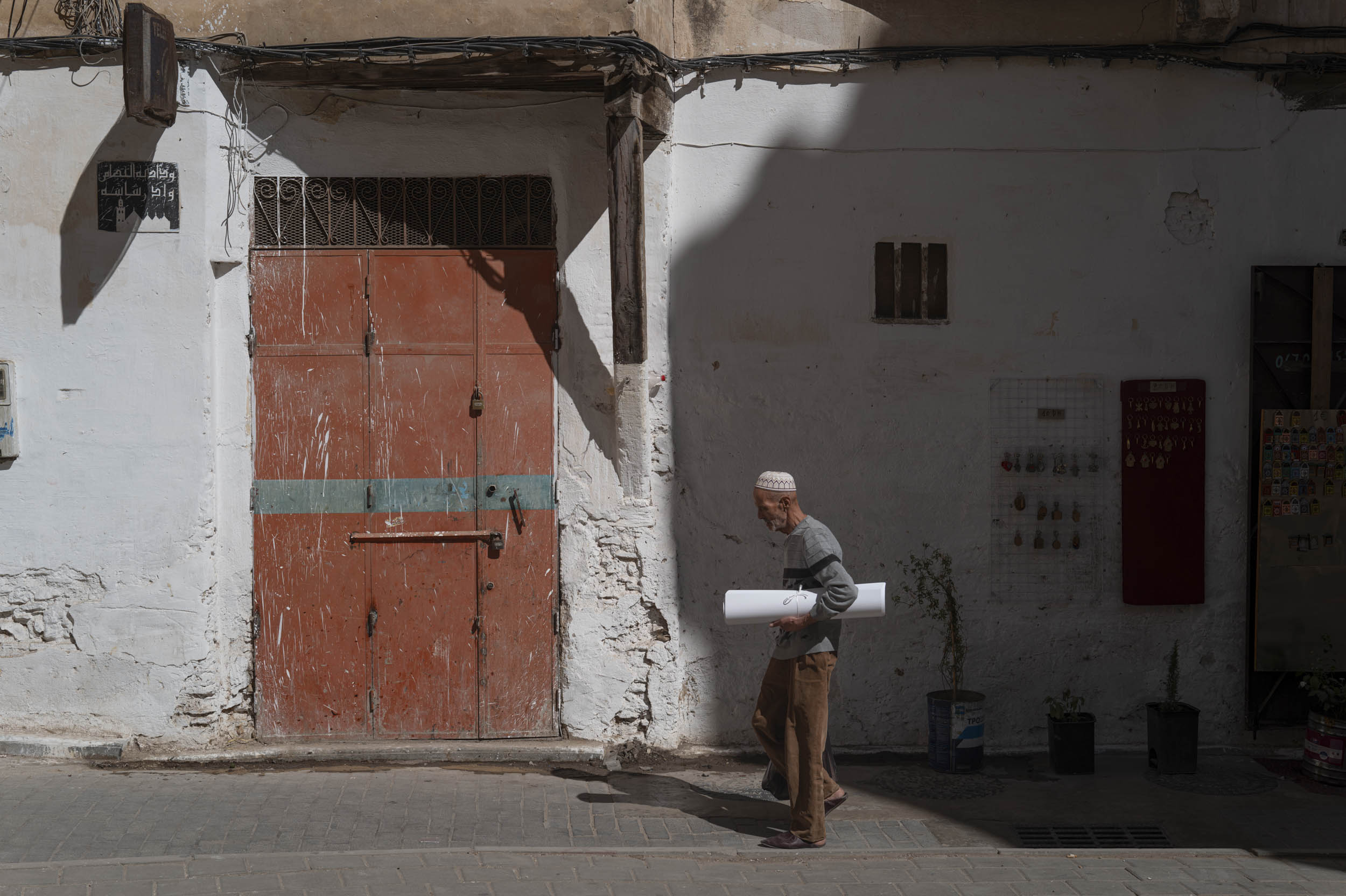
In that environment, the Q3 43 proved to be an ideal companion. Its slightly tighter field of view suited the compressed, intricate scenes of the Medina perfectly. It’s not the lightest camera over a long day, but it offers a reassuring solidity and consistency that I’ve come to appreciate across the Q series.
What I valued most, though, was the pace of the trip and the organisation by the Leica Akademie. We were given genuine freedom to explore. There was no constant herding from one location to the next.
If a scene held your attention, you could stay with it — wait, observe, and let the image come to you. In a place like Fes, that freedom is invaluable.
An alley here, an alley there
Nine thousand alleys, according to the guidebooks. Whether that figure is exact almost doesn’t count. What matters is the feeling.
Once you enter the Medina, you’re absorbed into a labyrinth that seems to rearrange itself at every turn. I quickly realised this wasn’t a place you simply visit — it’s a place you surrender to.
The lanes twist and narrow unpredictably, opening suddenly into pockets of light and activity before closing in again. Landmarks disappear almost as soon as you notice them. Navigation becomes instinctive rather than logical.
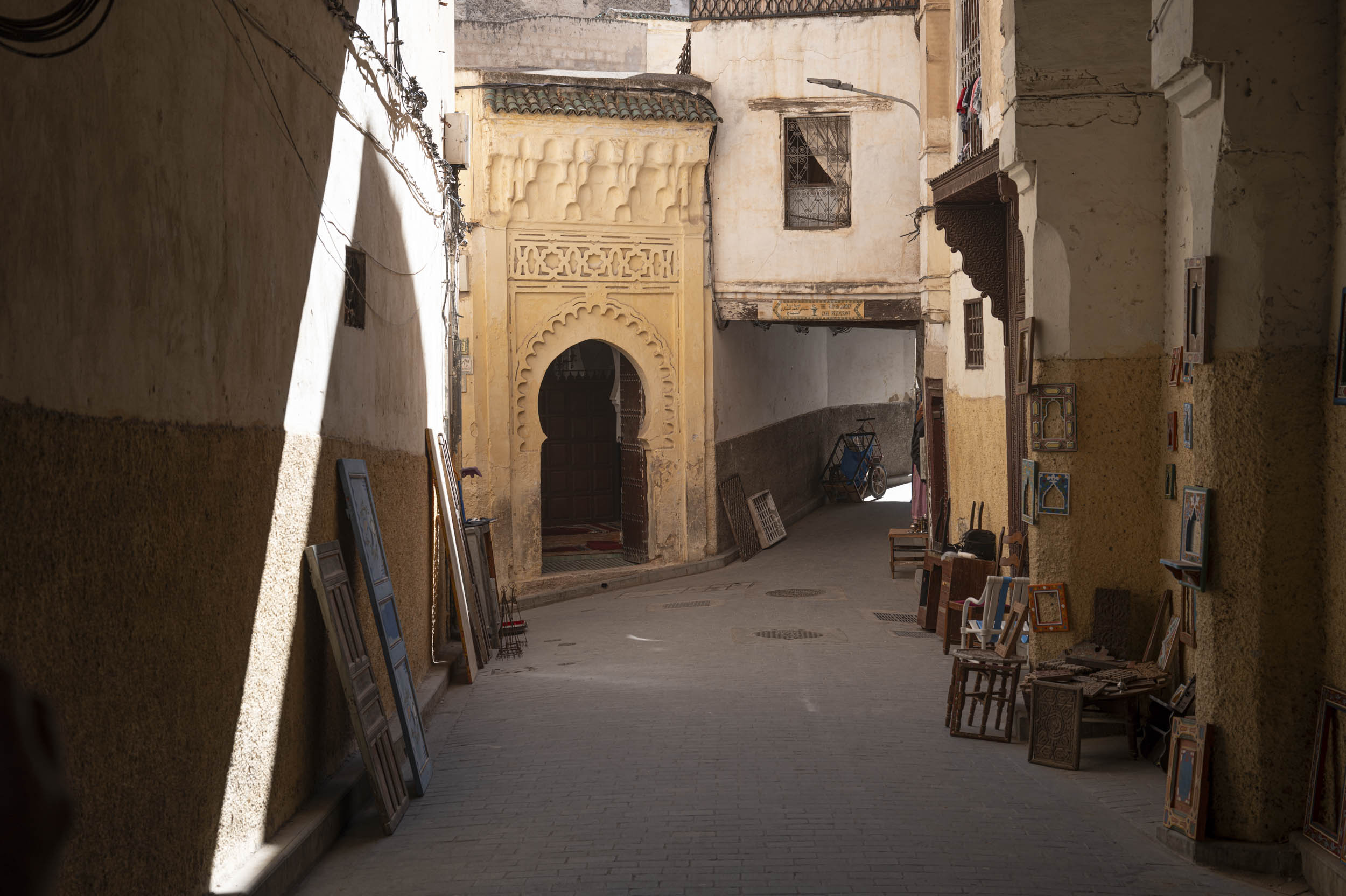
A living organism
What struck me most was the authenticity. The Medina isn’t preserved as a historical exhibit—it’s a living, working environment
Getting lost isn’t a risk — it’s inevitable. And unlike most places today, there’s no reliable digital safety net. Google Maps is largely ineffective; signals struggle, and mapping is incomplete.
Instead, you navigate the old-fashioned way: memory, intuition, and occasionally asking for help. It feels entirely appropriate in a place that predates modern navigation by centuries.
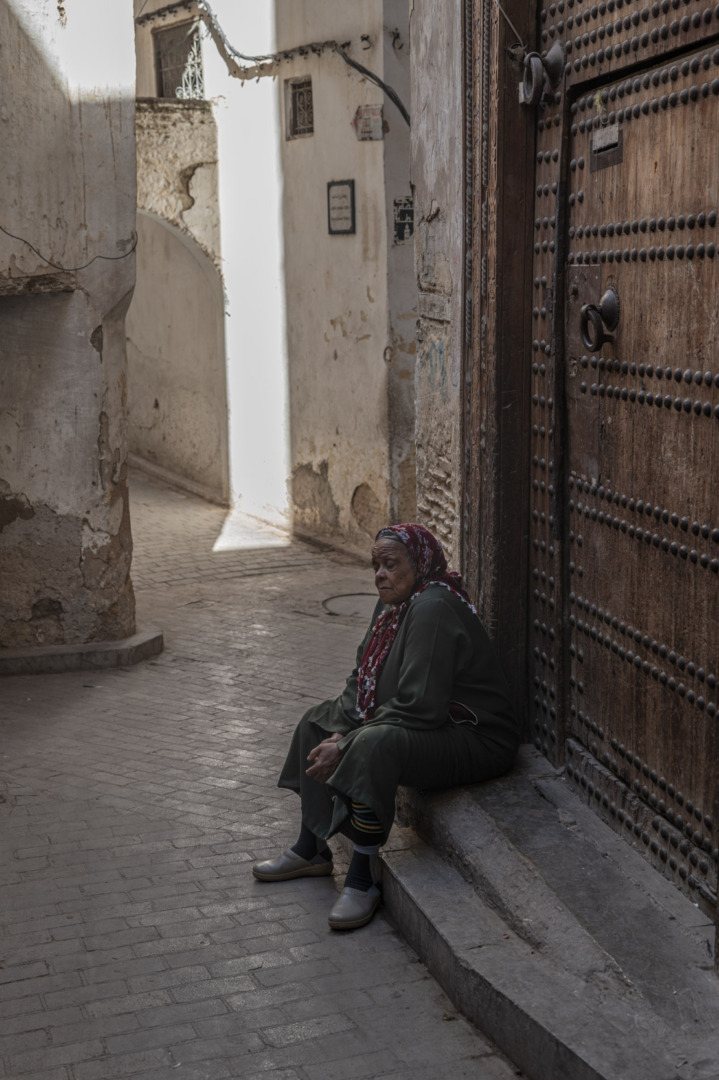
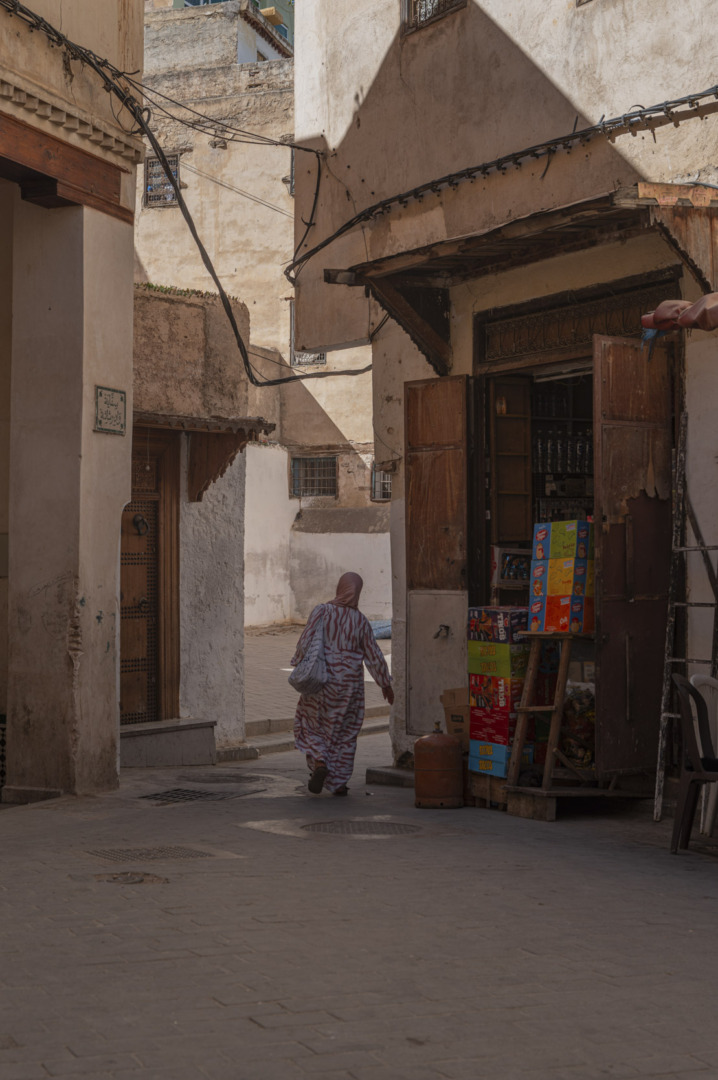
What struck me most was the authenticity. The Medina isn’t preserved as a historical exhibit—it’s a living, working environment. Yes, there are stalls for visitors, but they exist alongside everyday life: butchers, bakers, cobblers, spice sellers.
During my visit, locals far outnumbered tourists, which gave the place an energy that felt genuine rather than curated. I suspect that balance shifts at busier times of year, but I was fortunate to see it in a more natural state.
Then and now
Having first visited Morocco in 1987 and again in 1994, I was fascinated by the balance between change and continuity. Outside the Medina, development is clearly visible. Inside, however, much of traditional life remains intact.
For a photographer, such continuity is incredibly valuable. It offers not just visual richness, but a sense of connection across time.
Throughout the Leica Akademie trip, Jessie and Steve were generous with their knowledge. This wasn’t a structured workshop, but there was a steady flow of practical insight — how to read light, when to wait, how to approach people respectfully. Small things, but cumulatively very valuable.
Through the IRYS
One unexpected highlight of the trip was the use of the IRYS app. Jessie created a shared Leica Akademie Morocco gallery where we could upload images throughout the journey.
IRYS is a relatively new platform designed specifically for photographers. It’s ad-free and algorithm-free, with a clear emphasis on photography as a craft rather than disposable content.
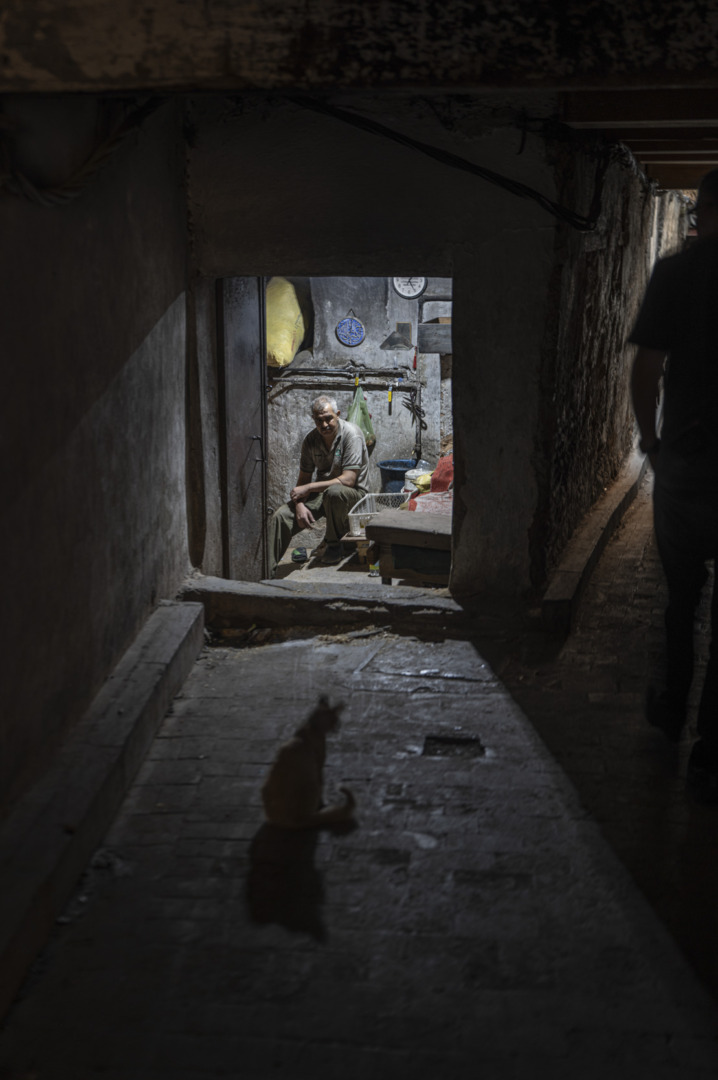
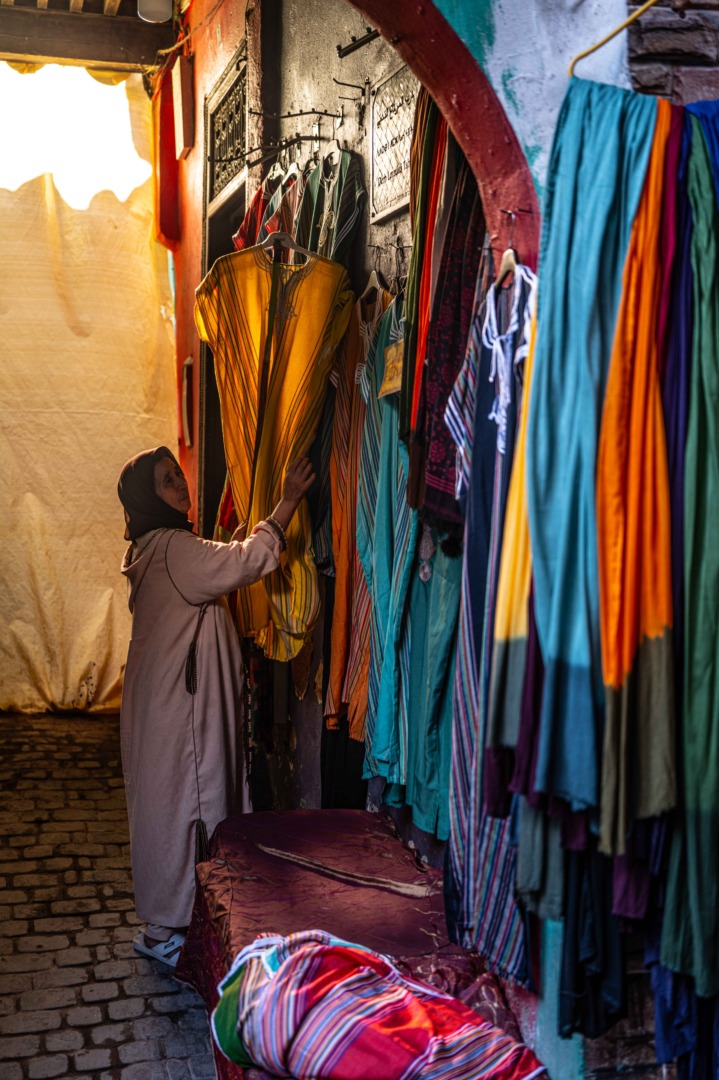
The platform added an entirely new dimension to the experience. I found myself transferring images from the Q3 43 to my iPhone, processing them in Lightroom Mobile, and uploading them along the way.
Watching other participants’ images appear in near real time created a subtle but ongoing visual conversation—different perspectives on the same scenes, unfolding side by side.
Was it worth it?
For me, absolutely.
I came away with a more profound understanding of a place I thought I already knew, a collection of strong images, and more “keepers” than I would normally expect from a trip of this length.
The inclusion of a printed hardcover album— featuring nine images from each participant — felt like a particularly thoughtful touch. In an age where most photographs remain on screens, there’s something deeply satisfying about seeing them in print.
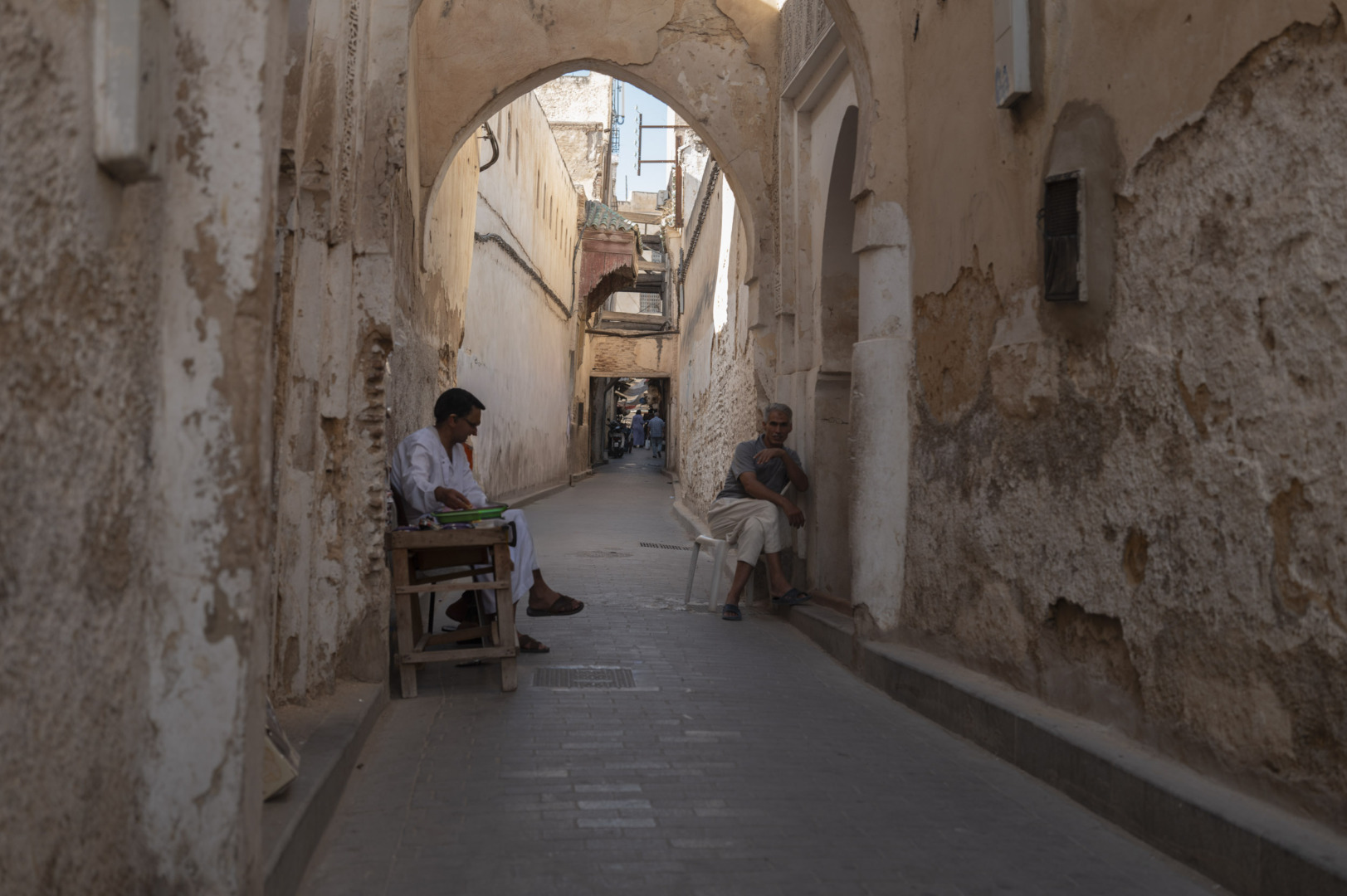

As for the Medina itself, whether it truly has 9,000 alleys is almost irrelevant. What stays with me is the experience — the constant interplay between confusion and discovery, the sense that every turn holds something unexpected.
That, ultimately, is what makes it such a compelling place to photograph.
And while the Medina was only one part of the Leica Akademie journey, it was undoubtedly a highlight. There’s more to say about the rest of the trip — perhaps something for a future article.
Further reading on Macfilos
Make a donation to help with our running costs
Did you know that Macfilos is run by six photography enthusiasts based in the UK, USA and Europe? We cover all the substantial costs of running the site, and we do not carry advertising because it spoils readers’ enjoyment. Any amount, however small, will be appreciated, and we will write to acknowledge your generosity.
It seemed to me that your photos were very “atmospheric” — creating a distinct sense of light and place. I wonder whether that was deliberate — using the light in the Medina to create that sense. In any case, it was quite successful!
Another question: back in the day, when the Leica Digilux 2 was quite the thing, some photographers warned that taking photos of women was culturally not allowed. It seems from your photos that this is no longer the case — which means that you were able to give us a better rounded sense of people and place.
I also enjoyed the detail in the photos — I’m enjoying your choice of the Q3 43 🙂
John, thanks for the preview! Although my tour guide will be my daughter, who lives and works in Tangier. She has been campaigning for me to come, and I plan to “kill two birds with one stone”, or do two tours with one trip, August 2027, when North Africa will experience a total eclipse.
I won’t have to travel as far as you did, as there are direct flights from Miami to Casablanca, and I am only two hours from the Miami airport.
John, thank you so much for this entertaining and interesting post—it’s great! Even though Morocco isn’t my top travel destination, this report has made me at least to give it a try.
It also confirms my own experience with the Leica Academy. Although I’ve only recently (in 2021) immersed myself in the world of Leica, I’ve come to see the Academy as a very valuable institution for knowledge transfer, measurable learning outcomes, and overwhelmingly positive group experiences with like-minded photography enthusiasts. If I’m not mistaken, no other camera manufacturer offers anything like this. So far, I have not regretted one single workshop/journey.
Thank you, John, for your beautifully written story of your trip to the Medina in Morocco. I felt that I was on your shoulder, tagging along for fear of getting lost. Actually many experienced photographers advocate getting deliberately lost in a strange place. So long as human help is nearby. It is the best way to discover photographic opportunities.
I look forward to episode 2 of your journey with Leica Accademy Australia in due course. And it is good to see you back with your Macfilos friends.