

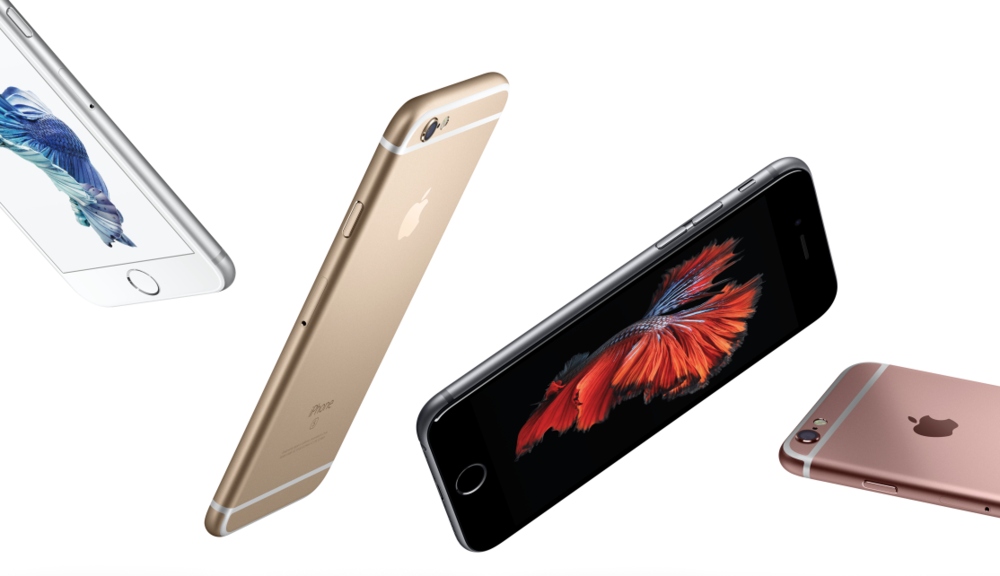
So Apple has had another bumper quarter, making the biggest profit in history. iPhone sales tickled 75 million, an all-time high. Yet analysts were disappointed and Wall Street gave Apple stock a drubbing. Much of this hysteria centres on Tim Cook’s understandably conservative projection for iPhone sales in the coming quarter.
I fully expect iPhone sales for the first half of 2016 to be conservative but for very good reasons. Any lack of demand for the current model is mainly down to one factor: The iPhone 6 and 6 Plus were just too good for Apple’s own good. For the first time since the introduction of the phone in 2007 there has been less reason to upgrade and more people are stretching their use to two years instead of one.
Pent-up demand
The performance in the first quarter of the current financial year (the final quarter of 2015) was all the more impressive in view of the iPhone 6 syndrome. Year-on-year sales could have been a lot worse simply because the iPhone 6 (and particularly the 6 Plus) has sold in record numbers. There was tremendous pent-up demand for the 6 Plus when it reached the market in September 2014 and fans took the opportunity to jump on the phablet bandwagon.
Fast forward to the last quarter of 2015 and many regular upgraders decided that the iPhone 6 or 6 Plus was good for another year. I am among those who, in the past, religiously upgraded every twelve months. Yet anecdotal evidence from many of my friends and acquaintances tells me that I am far from alone.
Why is it that the 6 Plus is a keeper for another year? For my money, the big advance in the 6 Plus was not so much the size of the screen, it was the enhanced battery life. Previous iPhone 3, 4 and 5 models were hard on their puny batteries and, after a year’s use, they were running out of juice before the end of the day. After a year, it always seemed a good time to get the latest phone with a brand-new battery.
Upgrade frenzy
This year is different. My iPhone 6 Plus is still going strong in the battery department after 16 months’ use and I realise that it will certainly still be more than adequate when it is time to order an iPhone 7 in the Autumn. For the time being I am more than happy with the 6 Plus. The added speed, the force touch and other improvements of the 6s are not sufficient temptation—for the first time ever—to encourage me to upgrade.
All this points to the biggest-ever upgrade frenzy this coming Autumn when the 7 arrives. We haven’t seen anything like it yet and I predict rollicking sales. While the current 6s and 6s Plus are doing better than expected—particularly in view of the perceived longevity of the original 6 and 6 Plus—the iPhone 7 is going to put everything in the shade.
None of this seems to have been highlighted by the analysts who are focused on Apple’s impending doom. They will be wrong, yet again.