
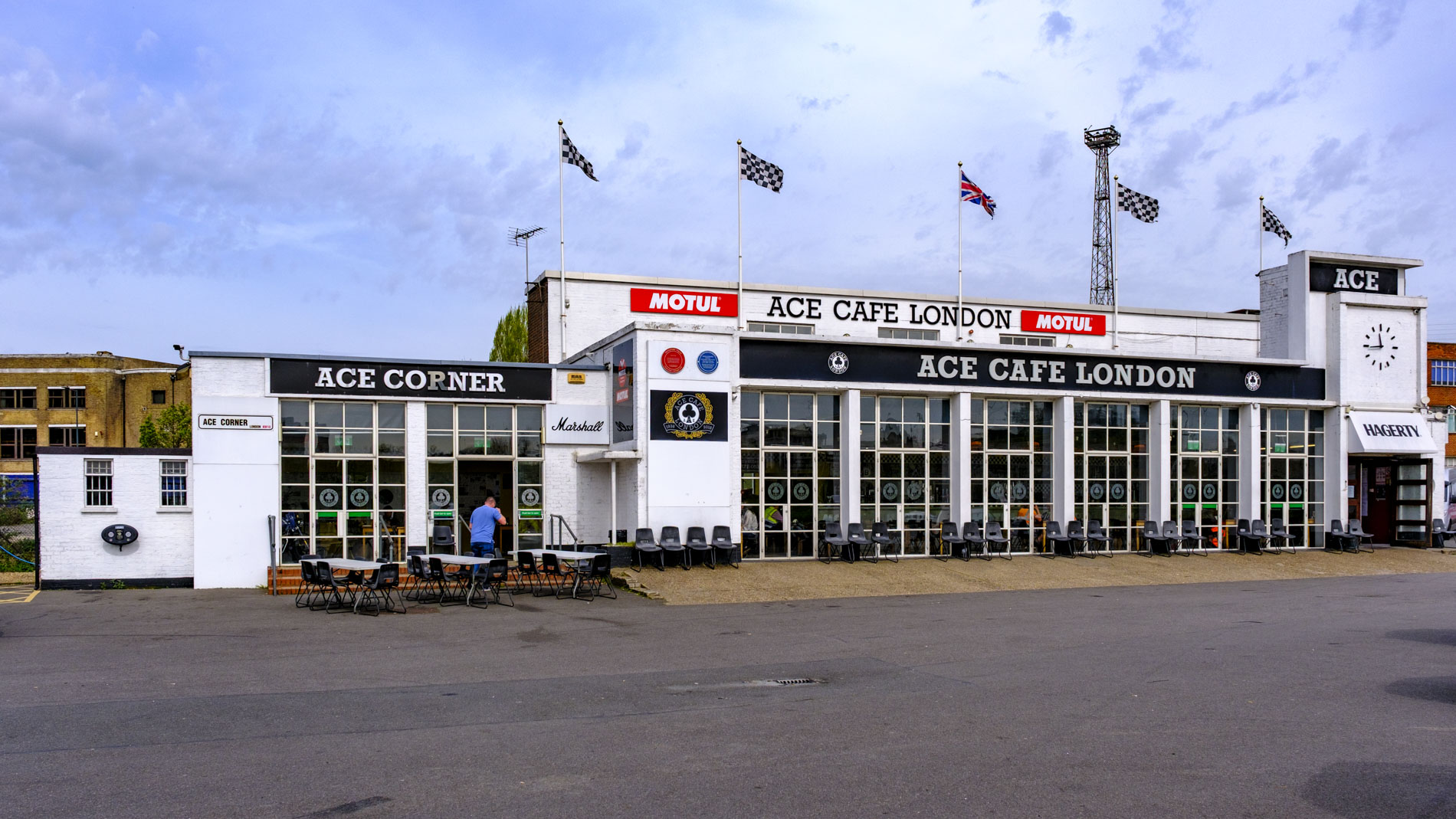
The Ace Café has become a landmark of motoring and youth culture in Britain and beyond. Opened in 1938 as a practical 24‑hour rest stop for drivers, the Ace evolved into an iconic meeting place for motorcyclists in the Fifties and early Sixties. It closed its doors for the last time in 1969; however, decades later, it was revived in the 1990s, both as a working transport café and as the inheritor of its legendary past.
A few weeks ago, on the spur of the moment, I remembered the Ace Café. As a result, I jumped straight into the Tesla to make my first visit in sixty years. Naturally, I wondered what it would be like on a brisk spring morning in 2026. When I arrived, at first glance it looked pretty familiar, both inside and out. However, the big shock was that the signature bacon sandwich had risen in price from eight pence to eight pounds. Clearly, that’s more than simple inflation.
Classic transport café
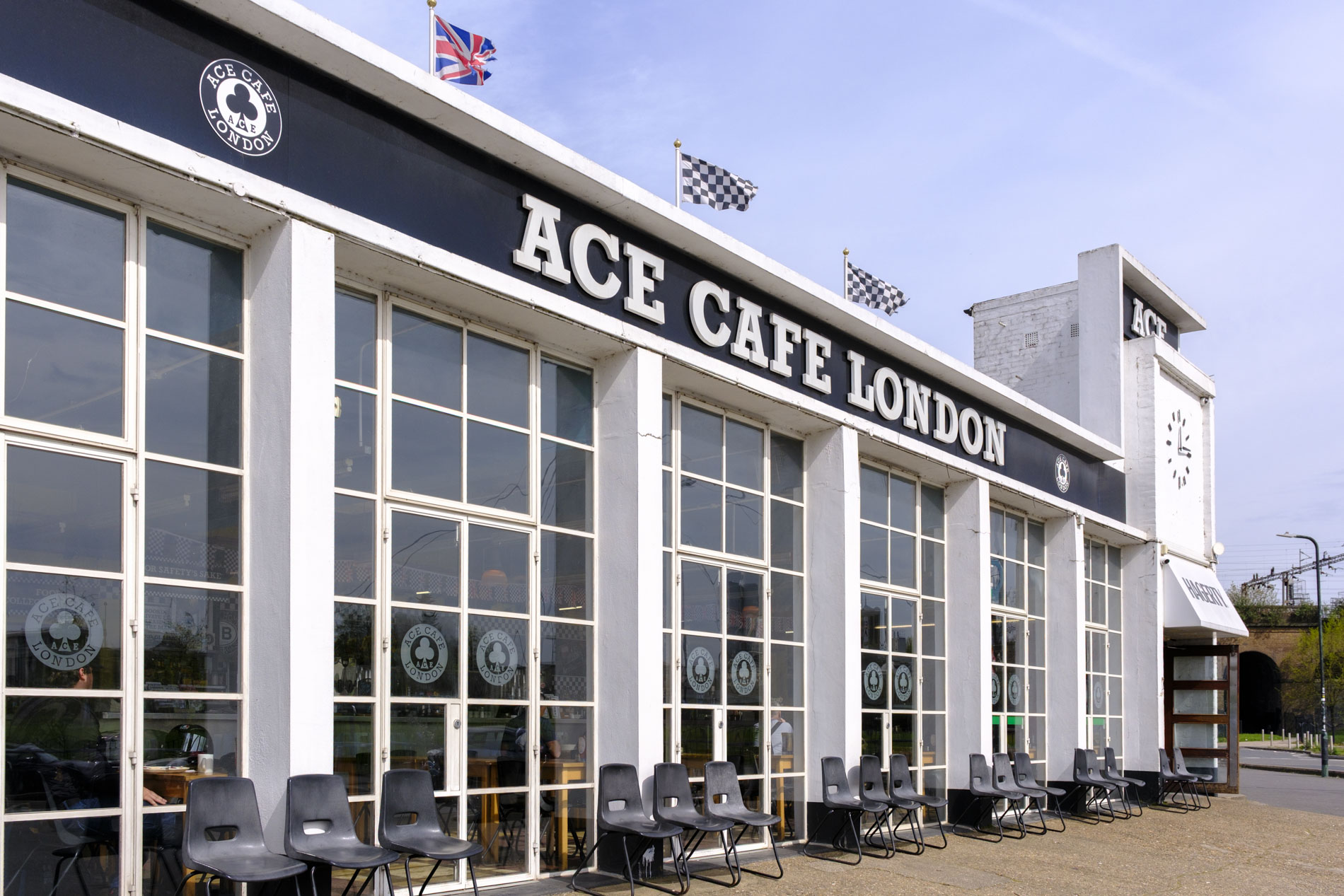
The building occupies a strategic but unglamorous site, hemmed in by the North Circular ring road, the railway, and the Grand Union Canal. Initially, it began life as a classic transport establishment, serving lorry drivers and other travellers with fuel, hot food, and a place to rest at any hour of the day or night.
However, the war years interrupted this routine. Bombing of nearby rail infrastructure damaged the building, which was subsequently rebuilt and, by the late 1940s, reopened in a more robust form.
In post‑war Britain, the Ace began to acquire its iconic status. Road improvements and the growing affordability of motorcycles and small cars meant that young people now had unheard-of mobility. A distinctive teenage culture began to gather around music and machines. Consequently, the Ace, open all night on a fast dual carriageway, became a natural hub for this new world: riders could gather, tune their bikes, drink tea, and listen to the latest rock ’n’ roll records before then blasting off along the ring road.
In the 1950s and 1960s, the Ace became synonymous with rockers and “ton‑up” boys—young motorcyclists chasing the magical 100 mph mark on stripped‑back café racers built from Triumph, BSA, and Norton parts. Daredevil youths would start a track on the jukebox and ride to the nearest roundabout before the last note sounded: the story has lost nothing in the telling 60 years later.
Social club
On an everyday level, the Ace functioned as a social club, informal workshop, and staging post for rides. In this context, regulars would argue over carburettor jets, the latest “high hysteresis” tyres, or dropped handlebars, before then heading out together along the North Circular or further afield.
Meanwhile, bands and bike clubs used the café as a recruiting ground and noticeboard, plastering walls with flyers for runs and gigs. By night, the glow of the building and the dense cluster of bikes outside lent a certain edgy elegance to an otherwise utilitarian urban landscape.
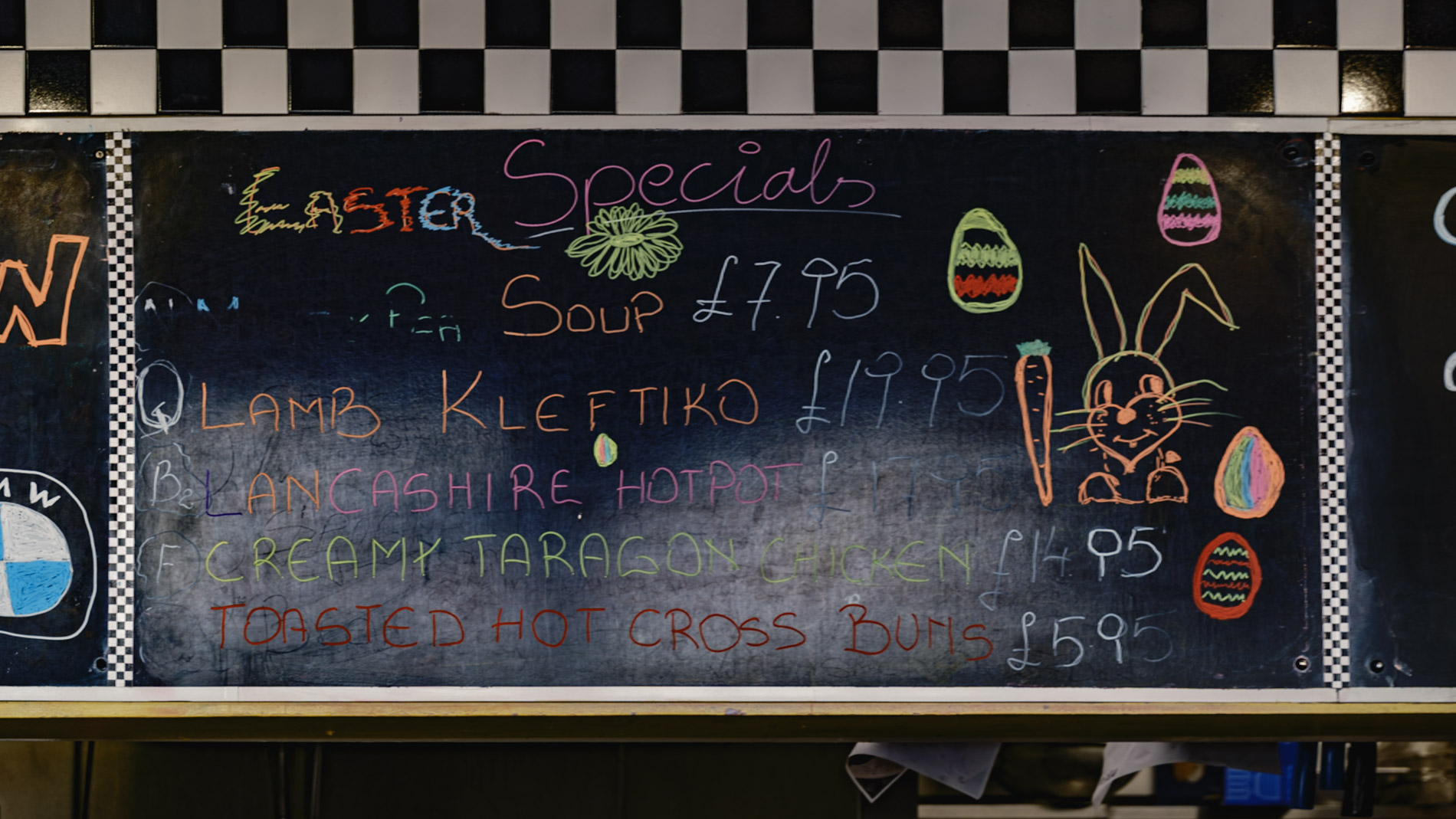
The Ace was part of a network of biker haunts known to every rider in the London area. There was the Busy Bee, in Watford, near the temporary (early sixties) end of the new M1 motorway, the Saltbox at Biggin Hill and many other less-well-known venues scattered around the metropolitan area. They all contributed to a remarkable cultural phenomenon of “rockers” with their badge-festooned leather jackets.
Nevertheless, the forces that made the Ace famous also contributed to its demise. As Britain’s motorway system expanded in the 1960s, for example, new service areas on routes like the M1 drew away long-distance traffic that once depended on roadside cafés such as the Ace. At the same time, shifts in youth culture and the decline of the domestic motorcycle industry further weakened the specific subculture that had clustered around the North Circular.
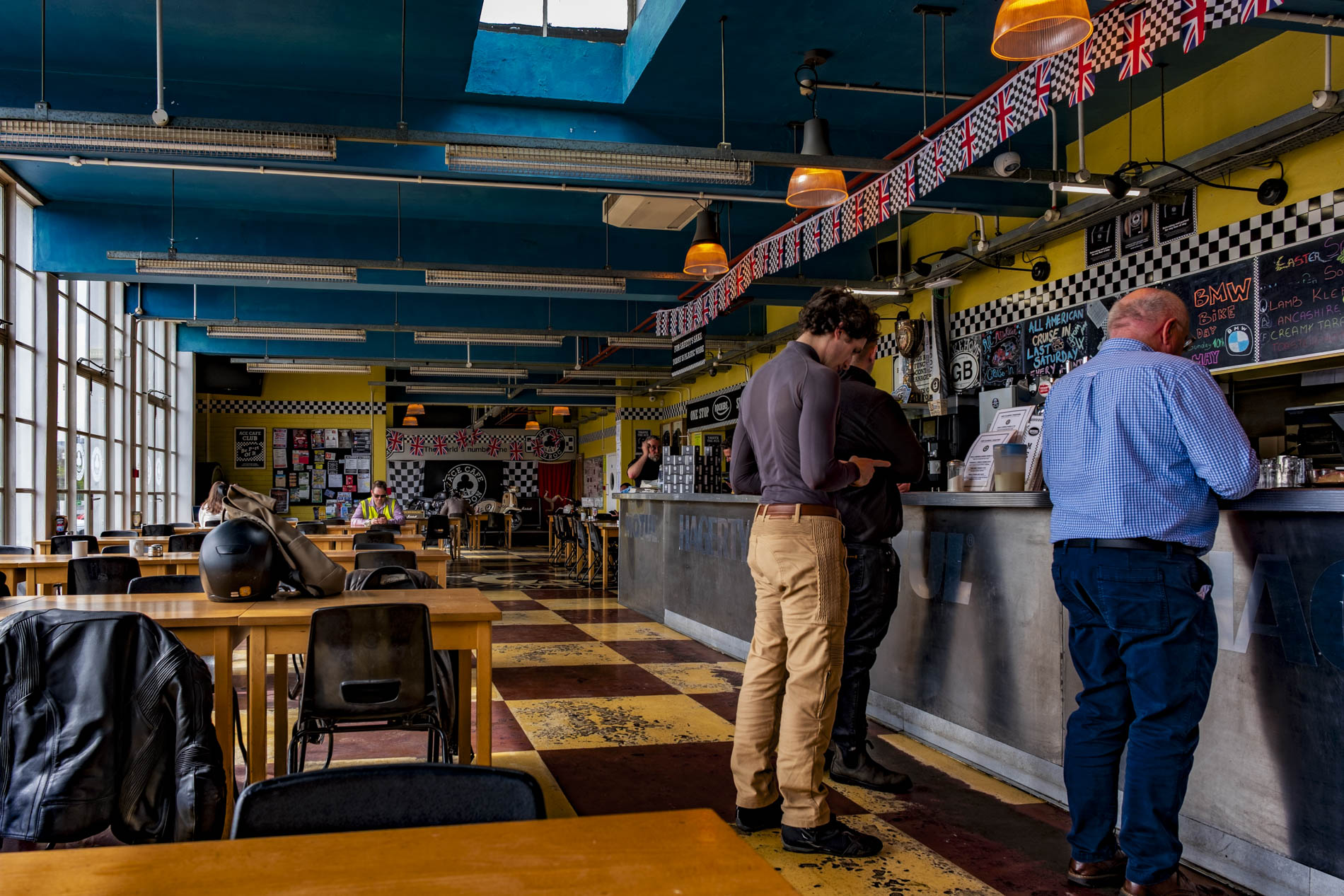
Consequently, by 1969 the Ace had ceased trading as a transport café, and the building was subsequently reused for other businesses, including motor repairs and tyre fitting.
Nostalgia
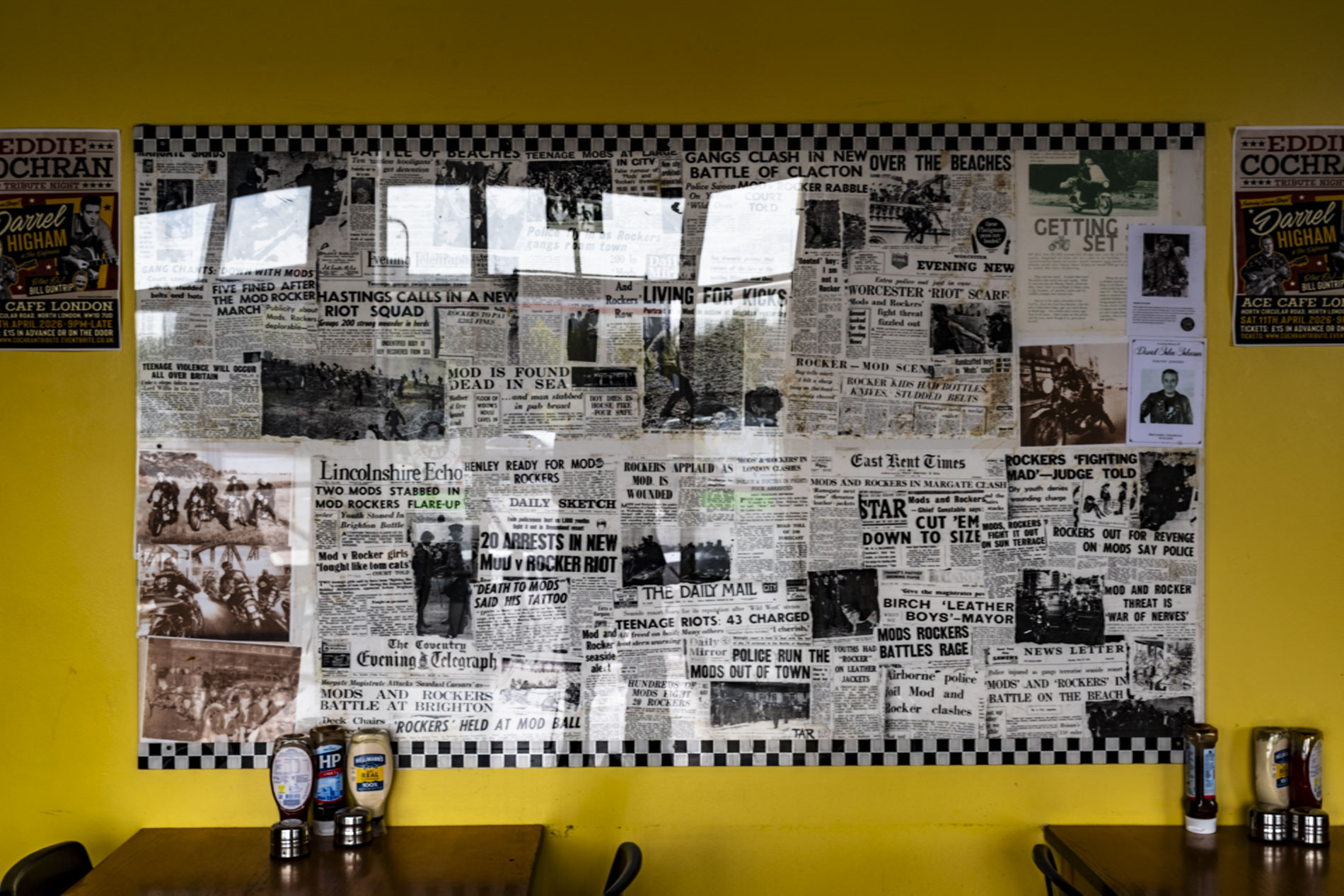
For several decades, the Ace continued mainly in memory and in black-and-white photographs of rockers crowding the forecourt. However, as nostalgia for the rocker era and for classic British bikes gathered pace in the 1980s and 1990s, so too did an aspiration to reconnect with one of the key sites of that culture.
Meanwhile, enthusiasts organised reunion events on or near the original Ace site, thereby proving the still-potent pull of the place.
Consequently, this activity helped to build the case for a full revival. Ultimately, in the late 1990s, the Ace Café was formally reborn at Ace Corner, once again welcoming riders and drivers while consciously honouring its past.
The modern Ace describes itself as a home for “motorbikes, cars and rock ’n’ roll”, reflecting its broadened allure. The building is the same flat‑roofed, white edifice, with large windows facing the forecourt, where rows of bikes and cars line up on busy evenings.
Modern reinvention
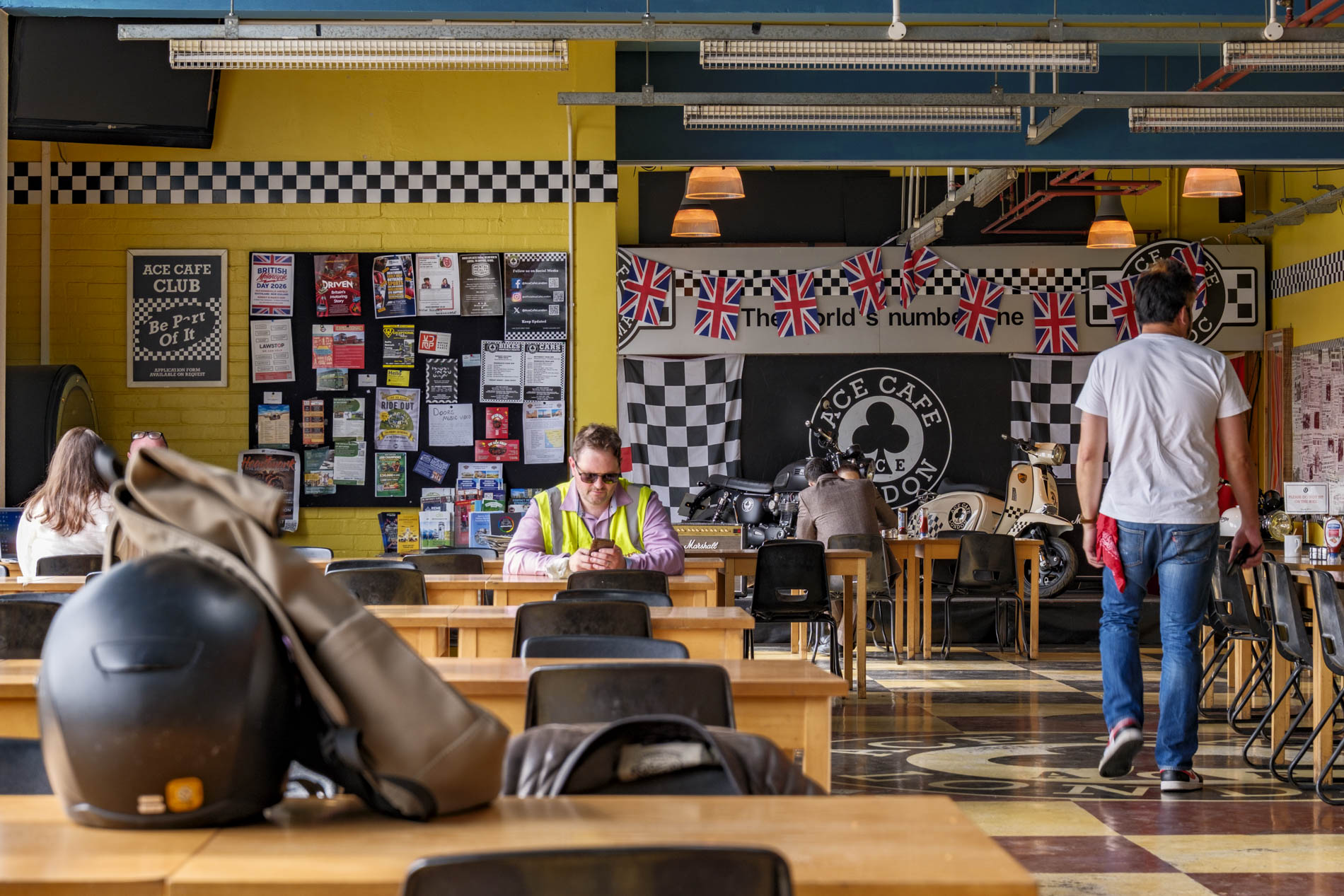
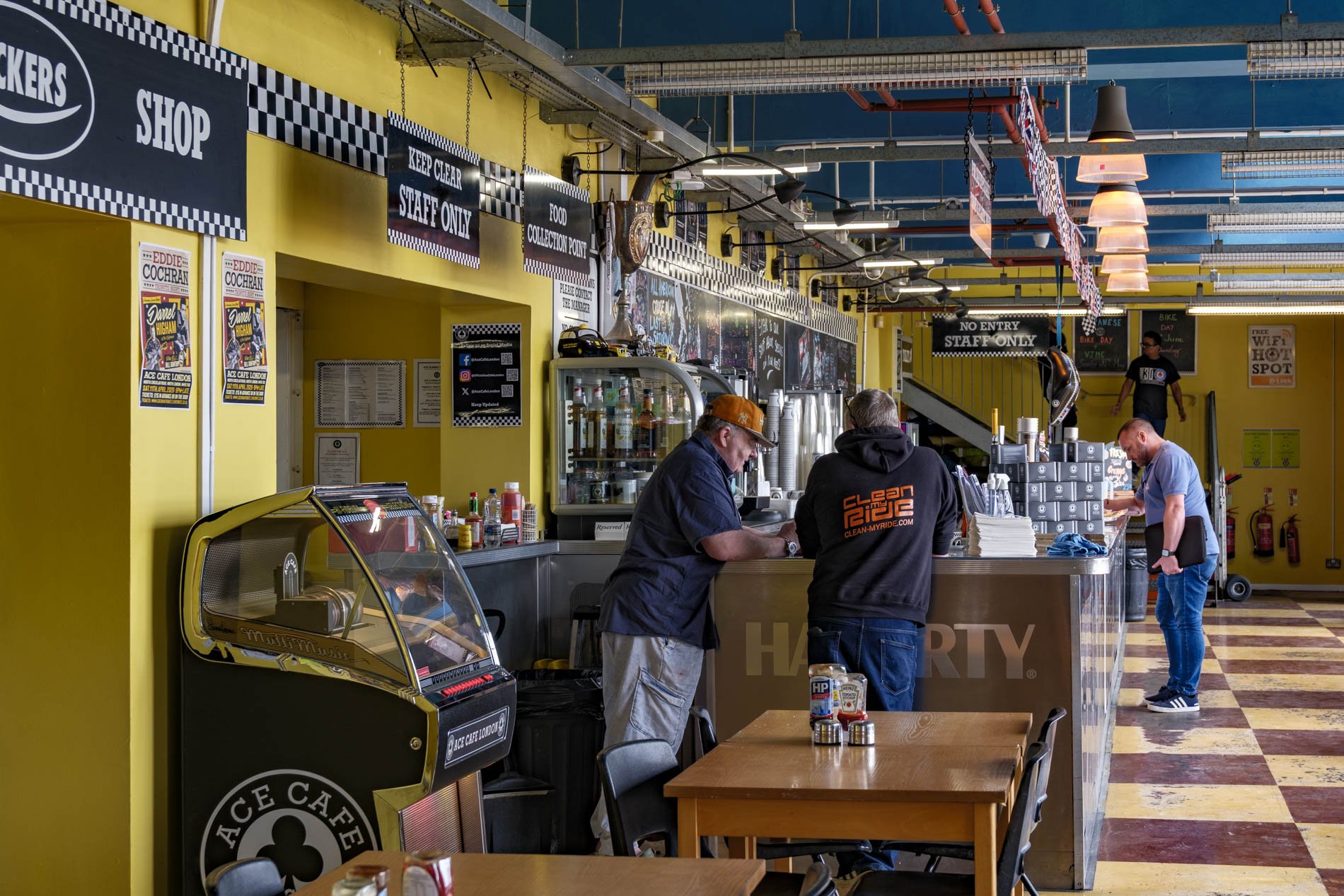
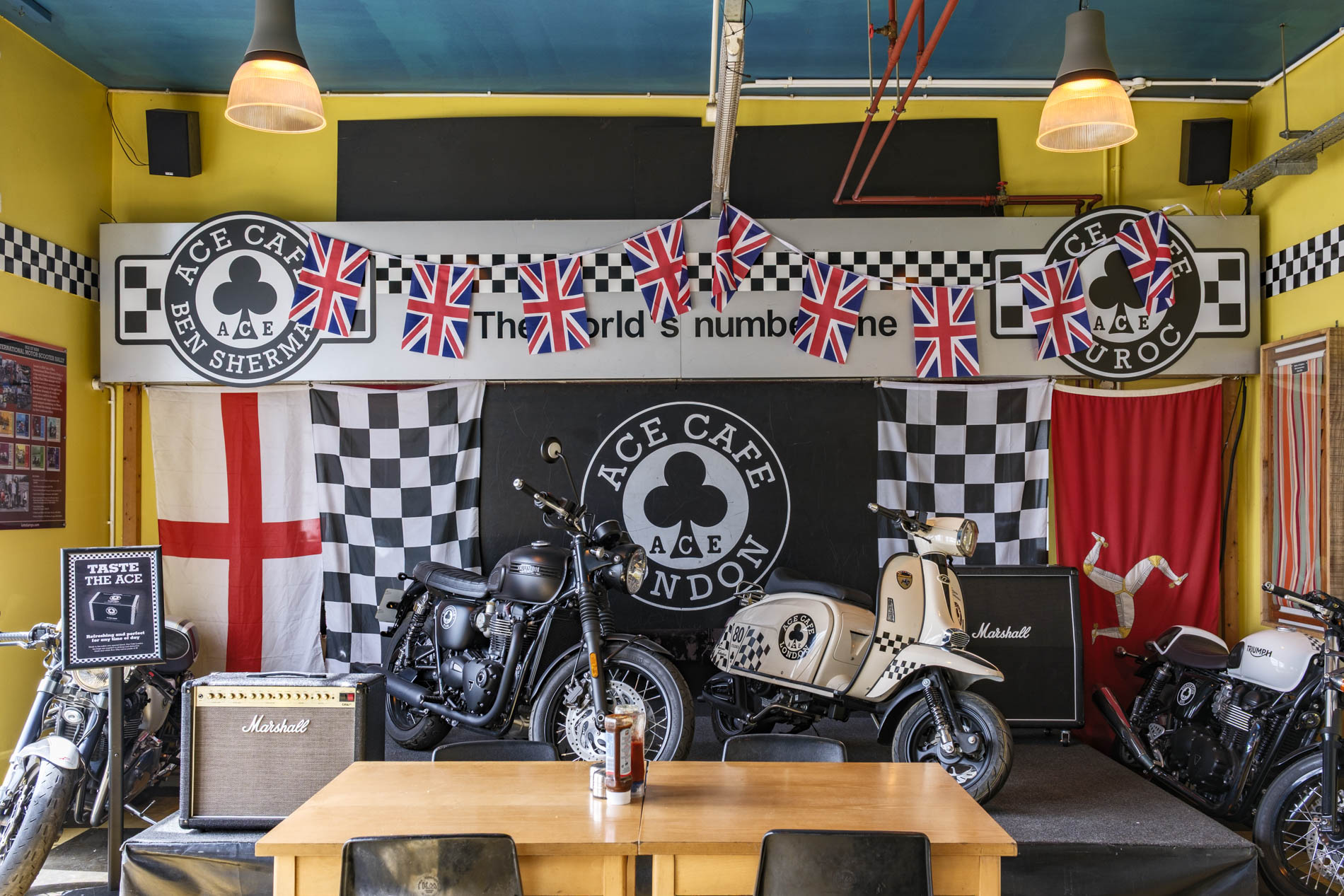
Inside, the walls are filled with photographs, club badges, and memorabilia from the 1950s and 1960s, thereby keeping the heritage alive rather than acting simply as decoration. Meanwhile, the café now operates as a conventional restaurant and bar serving breakfast, lunch, and dinner; however, it also functions as an events venue and community hub for enthusiasts.
Notably, a major part of the present-day Ace is its extensive events calendar. In particular, dedicated bike nights bring in everything from modern superbikes and tourers to vintage British twins, big singles, and custom café racers from the café’s earlier era.
Meanwhile, car gatherings focus on particular strands of automotive culture—American muscle, German performance cars, hot hatches, classics, and more—each drawing a distinct type of crowd. In addition, live bands, DJs, charity runs, and themed evenings weave through the programme, thereby underlining the Ace’s role as a living cultural venue rather than a static museum.
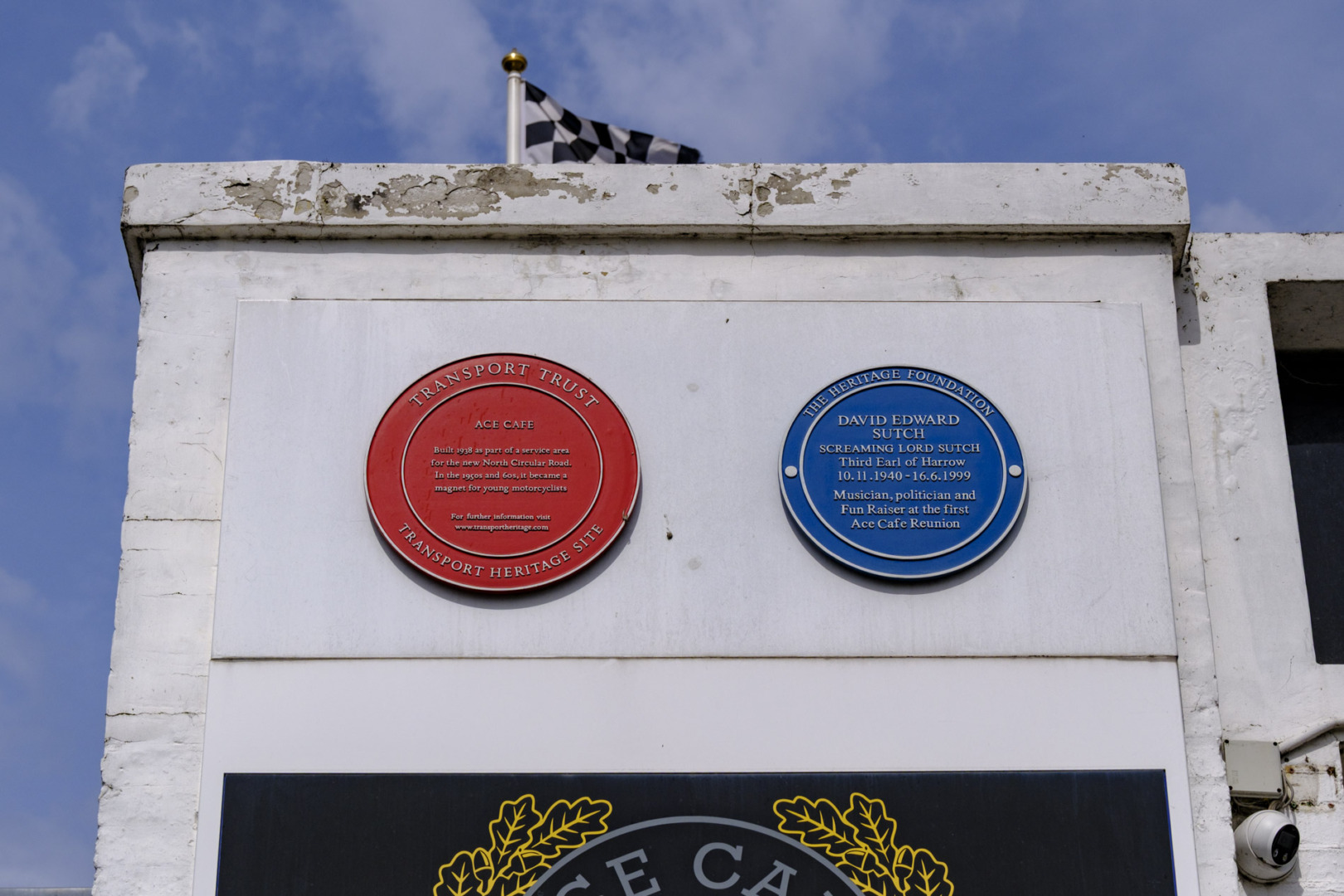
The annual Ace Café Reunion and the associated Brighton “Burn‑Up” ride have become signature events. Each September, thousands of motorcycles converge on the venue before heading in convoy to Brighton, echoing the seaside runs that were part of rocker life in the 1960s.
Ace Café Chongqing
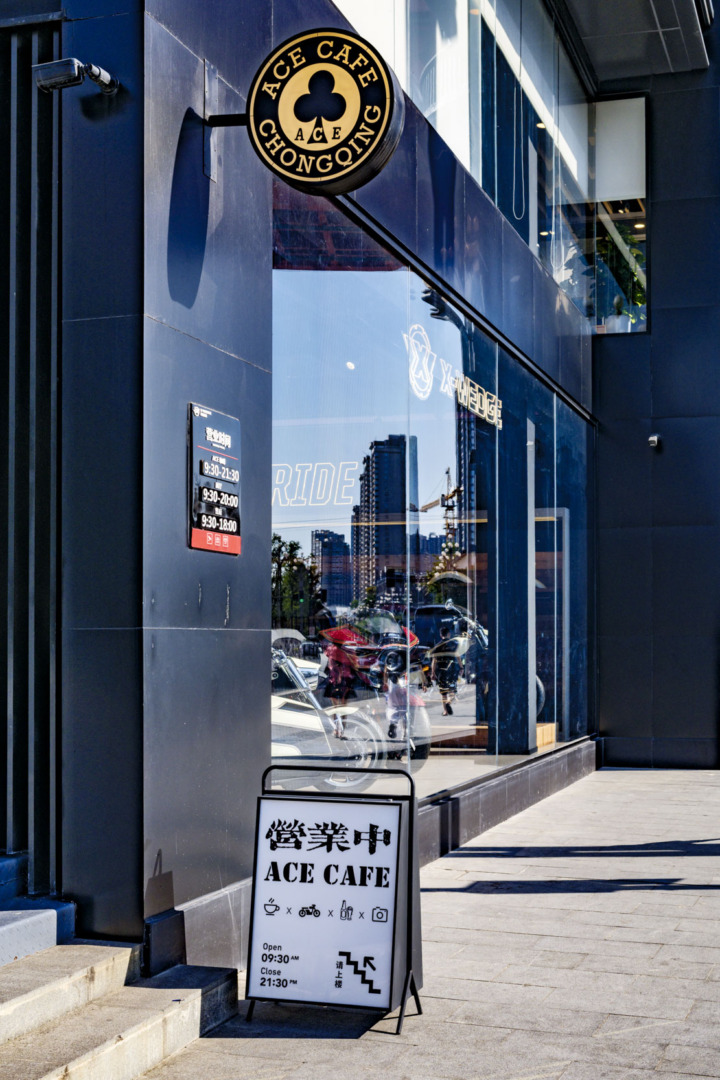
Remarkably, the Ace name has even travelled abroad, with related venues opening in places such as Beijing, Lucerne, Kuala Lumpur, Sandford FL, and even in the Chongqing—as, in fact, I discovered by chance last September while strolling through the central area.
While these offshoots adopt the visual language and ethos of the London original — chequerboard motifs, the Ace logo, bikes, live music, and a club-like ambience open to anyone — they nonetheless exist within very different cultural contexts.
Accordingly, the North Circular site remains the definitive reference point, the place against which the authenticity of its global descendants is measured.
Seen through the lens of cultural history, the Ace Café, more broadly, charts changing attitudes to youth, speed, and urban life.
In particular, in the 1950s and 1960s, the Ace symbolised a rebellious, predominantly working-class youth asserting itself through style, machinery, and music rather than through conventional institutions.
Shifts in youth culture
In this context, the closure of the Ace in the late Sixties mirrored broader shifts towards regulated motorway services and a more dispersed youth culture that no longer revolved as strongly around fixed physical venues. Conversely, its revival coincided with a renewed interest in the fashions and stories of that earlier era, thereby reframing rocker style as a heritage to be celebrated rather than a problem to be solved.
Even on a bright Saturday morning, with few visitors, I could appreciate the link to the past, as I remember it as a frequent visitor at the time. I suppose I am among many of the older visitors, reliving their youth and conjuring up the sights, sounds and smells of Castrol R in the air. The Ace Café remains at heart what it has always been: a working roadside meeting place on a bend in the North Circular Road.
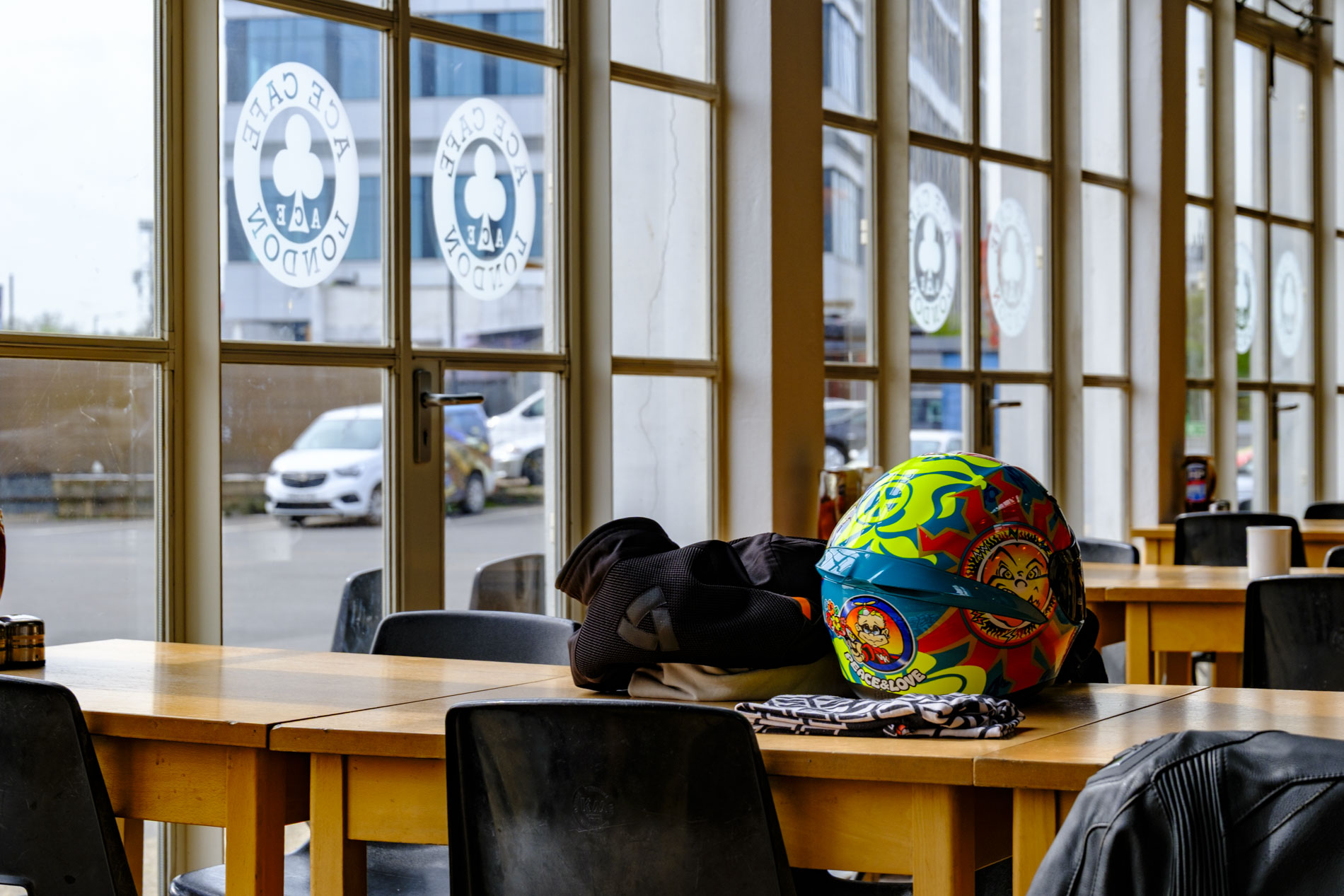

All the images in this article were taken with a Fujifilm X-E5 and Fujinon XF 16-50 f/2.8-4.8 compact zoom — except for the Chongqing picture, which is from a Fujifilm X100VI.
Make a donation to help with our running costs
Did you know that Macfilos is run by five photography enthusiasts based in the UK, USA and Europe? We cover all the substantial costs of running the site, and we do not carry advertising because it spoils readers’ enjoyment. Any amount, however small, will be appreciated, and we will write to acknowledge your generosity.
Comments: Please add a comment to this article. Our comments section is a thriving community and everyone is treated with respect. In addition, please identify yourself (and add an email address, which will not be published, if you would like to see answers to your posting). Our system will automatically delete any “anonymous” posts on the basis that they are likely to be spam.
Funnily enough I must have driven past the location scores of times as I had my teenage and early twenties years near the North Circular in Finchley and passed through Stonebridge Park regularly. I never realised the building was there. Maybe it was because I rode a Honda that I was never initiated into the cult. Great article Mike.
Thanks, Tom. At some point (not sure when) they rebuilt the North Circular and the bit that runs past the Ace is now on road back. It’s a bit confusing, and difficult to decide where to turn when driving along the main road.
A Honda wouldn’t have been unusual. At the time I was regularly testing Japanese bikes and I always felt welcome.
Mike,
Great article! Very interesting history. The photos are a great match- my favorite is the colorful helmet on the table. What a nice juxtaposition to sum up the story.
Sounds like the bacon sandwich prices are akin to Leica gear. 😉
Looking forward to meeting you in person later this week!
Joel
Hello Joel. Thanks very much. Yes, I will be around most of the event. Please come up and say hello if you see me.
Joel, strange you should mention the relationship between the bacon sandwich and Leica M11-P (homing in on the detail). I was thinking about that. An M3 body in 1963 cost around £150. Now, a similar product (the M11-P) runs to £8,000. If the bacon sandwich has inflated x100 (as per scientific research at the Ace Café), the M11-P should now cost £15,000. Conclusion: Bacon sandwiches have inflated twice as much as Leicas. The M11 is now as cheap as chips. In fairness, however, the Ace Café’s delicacy is outrageously expensive and not worth £8, speaking as a London resident. Elsewhere, one can be had for much less, probably half as much, at a local greasy spoon. — Mike
Mike, a great story with great images.
Let’s have more like this. Quirky and nostalgic.
Gear reviews and gear stories are everywhere but your stories are special, unique and entertaining.
John
Thank you, John. As Richard Marchant requests also, I will dust off some more anecdotes and historical unusual locations to provide a bit more entertainment!
Mike
A most interesting article – thank you. As someone without a single motorbike gene in him, I’ve long had a surprising curiosity about the Ace Cafe (it’s less than 10 miles from me). I visited for the first time a month or so ago when there was a small display of vintage London taxis outside; I enjoyed the food there too. For some more memories of the place I can recommend an excellent almost 200-page book: ‘The Ace Cafe Then and Now’, edited by Winston Ramsey and published in 2002 by After the Battle (ISBN 1 870067 43 6).
Thanks, Alan. The book will be of interest to anyone seriously into the Ace. Although I was a regular visit in the cafe’s heyday, I can’t really remember much about the appearance, inside or out.
It’s telling, thought, that I live six miles away, similar to you, and I haven’t felt motivated to visit before. So I thought a little article would help.
A great article and images Mike. You ought to tell more of your motorcycle past. There is much the Macfilos family don’t know and would like to hear. All the best Richard Marchant
Many thanks, Richard. Perhaps you are right. In fact, I was discussing this with colleague Jon Cheffings only this morning. We mentioned how “quirky articles” (that is, not specifically about photography or photographic gear) can be interesting to a wider group of people and, actually, generate visitors once the search engines pick up the post.
As it happens, one of our most successful articles ever published was my review of the Tesla Model 3. That had absolutely nothing to do with our theme, but it has brought in many thousands of readers who would never have thought of having a look at Macfilos. We hope that some were interested in photography and have stayed with us. I am now threatening colleagues with writing a similar review of the Model Y.
I am sorely tempted to do some more anecdotes if I can find (or take) suitable pictures.
— Mike
Mike,
Interesting to see how the cafe has adjusted to changing economic circumstances .. and, possibly, youth mores. I did notice (search for and find) a woman in one of the photos. I wondered whether that was new — back in the early days, was this a male-only space?
I believe things developed rather differently in America. I was at a hotel where a group of touring motorcycle men were staying — all wearing the ‘uniform’ — black leather with metal studs. In the elevator, one of them asked me “I bet you never thought you’d be hanging out with a bunch of bikers’ — the stereotype being that bikers are violent and misogynistic. These, of course, were perfect gentlemen.
I noticed that you photographed primarily with the Fujinon XF 16-50 — I happened to have just purchased one and am in the process of selling my primes. My most recent trip to Japan, I seemed to always have the wrong lens with me. We were in a museum in Ueno, and I had only the 14mm f2.8 with me. It is a great lens, and with 40mp to crop, but still — I think I’ll carry the short zoom next visit!
Hi Kathy,
Absolutely, I can verify from personal experience, the biker scene in the early 1960s was not a male preserve. Everyone had their girlfriend in tow (it was mostly male riders, just one or two women), who perched precariously on the pillion. I think this scene was very different from the American “Hell’s Angels” variety. In fact, the aping of the HA style came much later in Britain.
The Fujinon 16-50 f/2.8-4.8 is a superb little zoom. It would be a grave mistake to write it off as a “kit lens” (just as the excellent Leica 18-56 was remarkably better than your typical kit lens of yore). What I particularly like about this lens, apart from the 240g weight and small size, is that it doesn’t extend. It is always 71mm long, whether at 24mm equivalent or 75mm. For the size and cost, and the rendering, this zoom is absolutely worth buying. — Mike
PS, I forgot to mention that the girlfriends were characterised in the general press as “rockers’ molls”.
“moll” — isn’t that the term for the girlfriend of a criminal? Wonder what the etymology is there… in any case, we don’t want to go into what the American term is.
One very nice aspect of the new ‘not-really-a-kit’ lens is the new motor. It is so much quieter than the older lenses.
And … my old X-E3 didn’t support this but the X-T5 does — assigning one of the function buttons to “back focus”. Can you do that on the X-E5? It’s so convenient to mix that with manual focus.
Hi Kathy, I think “rocker’s moll” was based on the American gangster idiom. Although it is fixed in my mind, I think it was mainly a term used by the general press rather than within the biking community. It was also a bit of joke term used by the mainstream motorcycling fraternity, who would never have described themselves as “rockers”.
No, I haven’t explored back focus in this respect with the X-E5. I have recently been doing some (successful) photography with the X-E5 and M lenses and I will write about the experience later. Of course, another asset of the X-E5 is IBIS, which is relied up on by the 16-50 and many of the other non-OIS lenses. It does make a difference, as it does the manual focus with M lenses. — Mike
I’ll be very interested to see your experiences with Leica M lenses on the Fuji. I recently bought a Voigtlander 50 APO for Fuji (I’m too stingy to buy the Leica APO lenses!!). They’re pure MF, so I wonder whether I should focus with the lens wide open, and then stop down, as some people recommend? Or just focus stopped down.
Usually, I find this too cumbersome, and it’s possible to lose focus when stopping down again.
However, opening to maximum aperture does allow more accurate focus, and it’s useful for those special shots. Doing it for every shot would drive me nuts.
So far, my experiences have been positive with the X-E5. There is one big disadvantage and one advantage of using full-frame lenses on an APS-C camera.
Disadvantage: The focal lengths all get stretched by 50 percent.
Advantage: The focal lengths all get stretched by 50 percent.