
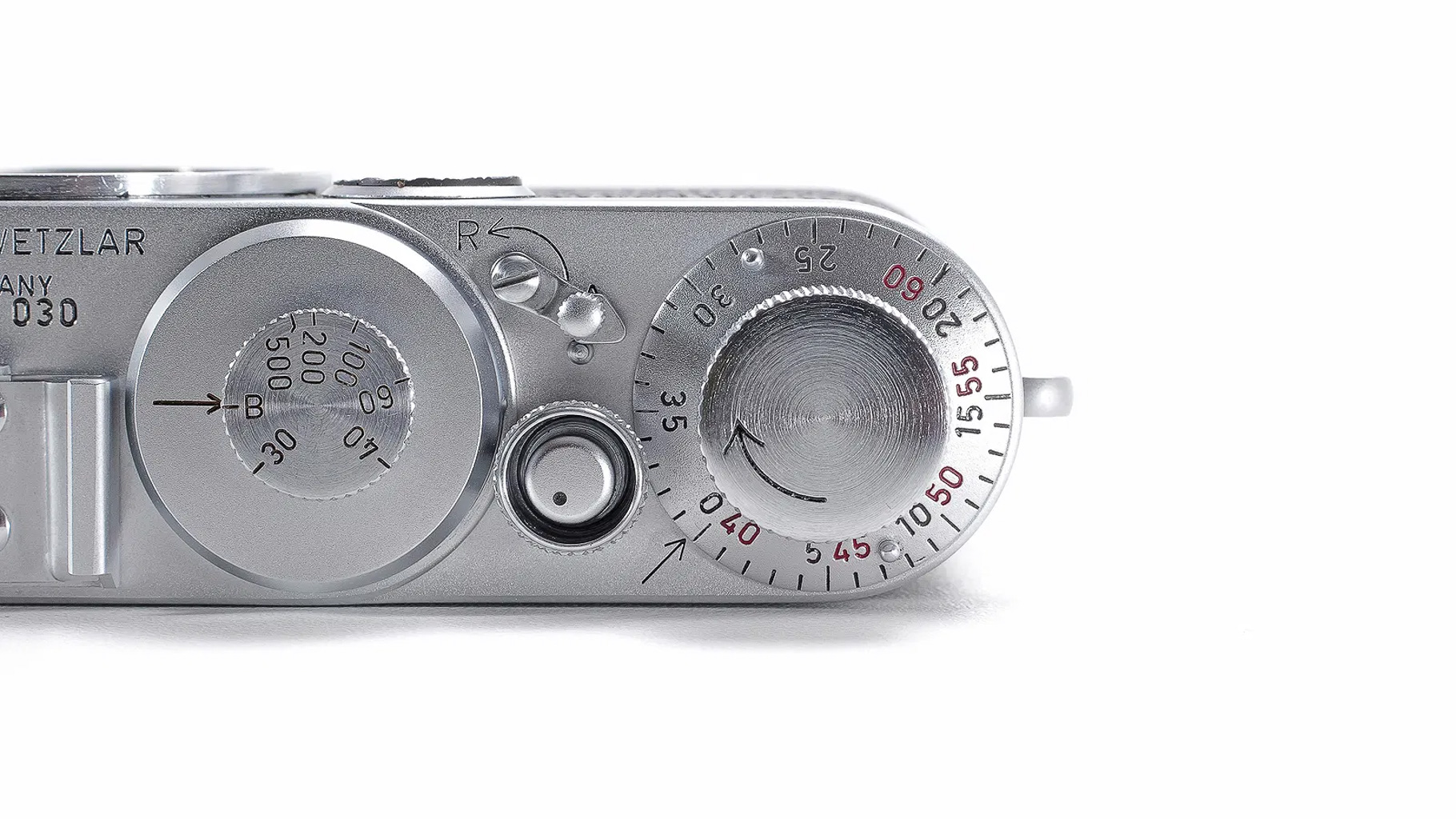
Wetzlar Camera Auction has reached its eighth edition, and I am still faintly amazed by that fact. Lars Netopil, my friend and a great supporter of the Leica Society International, runs it from Wetzlar together with Jo Geier of Vienna. This year I will attend for the first time, and the timing could not be better: the sale falls on 10th October, just two days after the Leica Celebration of Photography and the announcement of the 2026 Leica Oskar Barnack Awards. A million-euro Barnack prototype, a Luxus in gold, and a camera built for a cosmonaut are all waiting in the same catalogue.
The auction catalogue is here.
Million-dollar baby
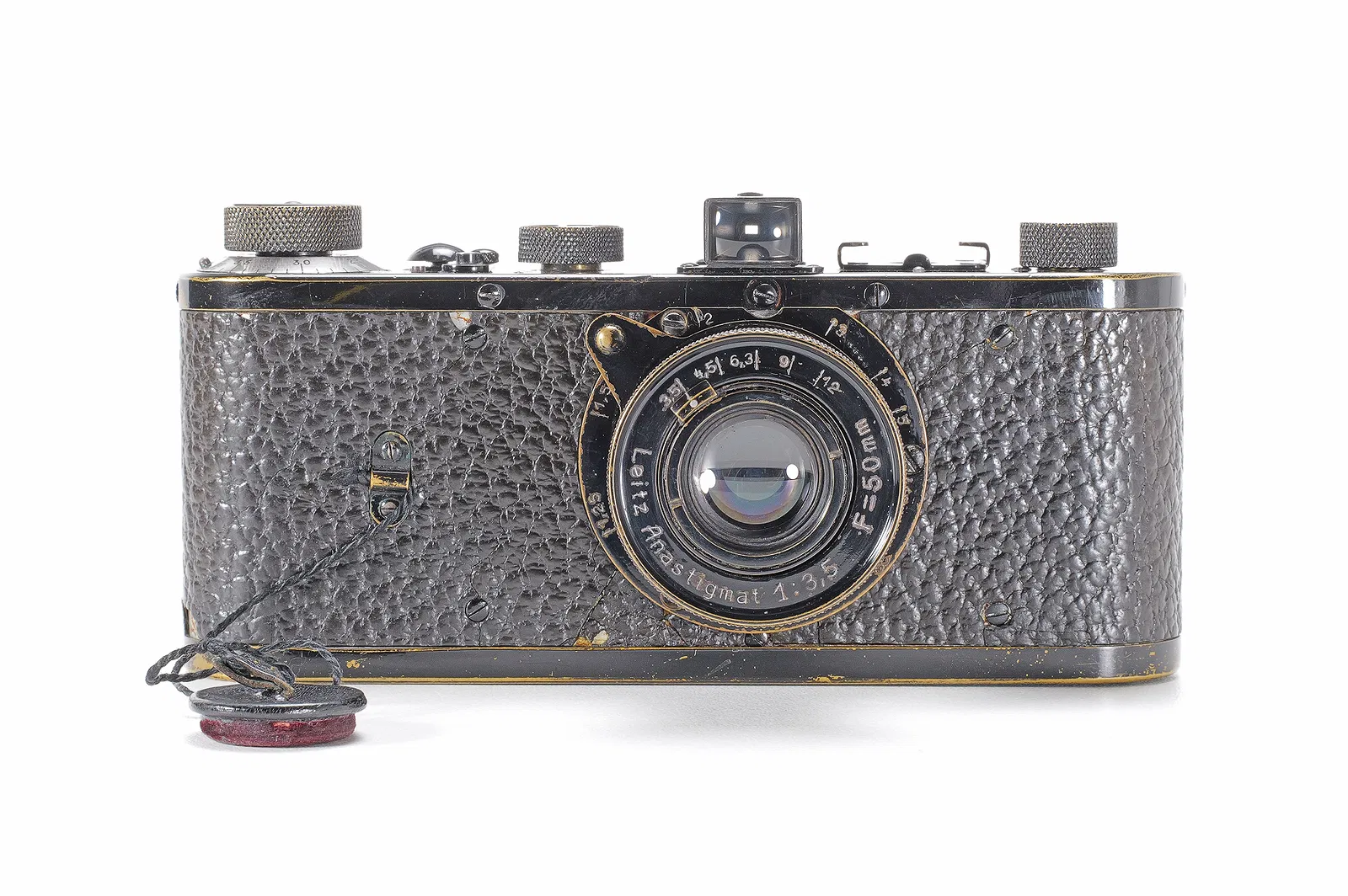
The first lot worth lingering over is another of the 0 Series cameras Oskar Barnack and his team built at Ernst Leitz. Number 103 can be counted as the third Leica ever produced. The delivery register shows it went to a mining assessor named Kipper, in Oberhausen, an oddly specific choice for an early predecessor of Jono Slack. Leitz distributed these prototypes to parties willing to test the concept behind the Kleinfilmkamera, and mining companies were already good customers for microscopes and other instruments used to examine ore samples.
This particular camera passed through the collection of Rolf Fricke, a founder member of the LHSA, now Leica Society International. Visitors to the Leica Archive in Wetzlar will know the Fricke collection well. Rolf died in early 2025, and items that were still in his hands have since begun to surface at sale and auction.
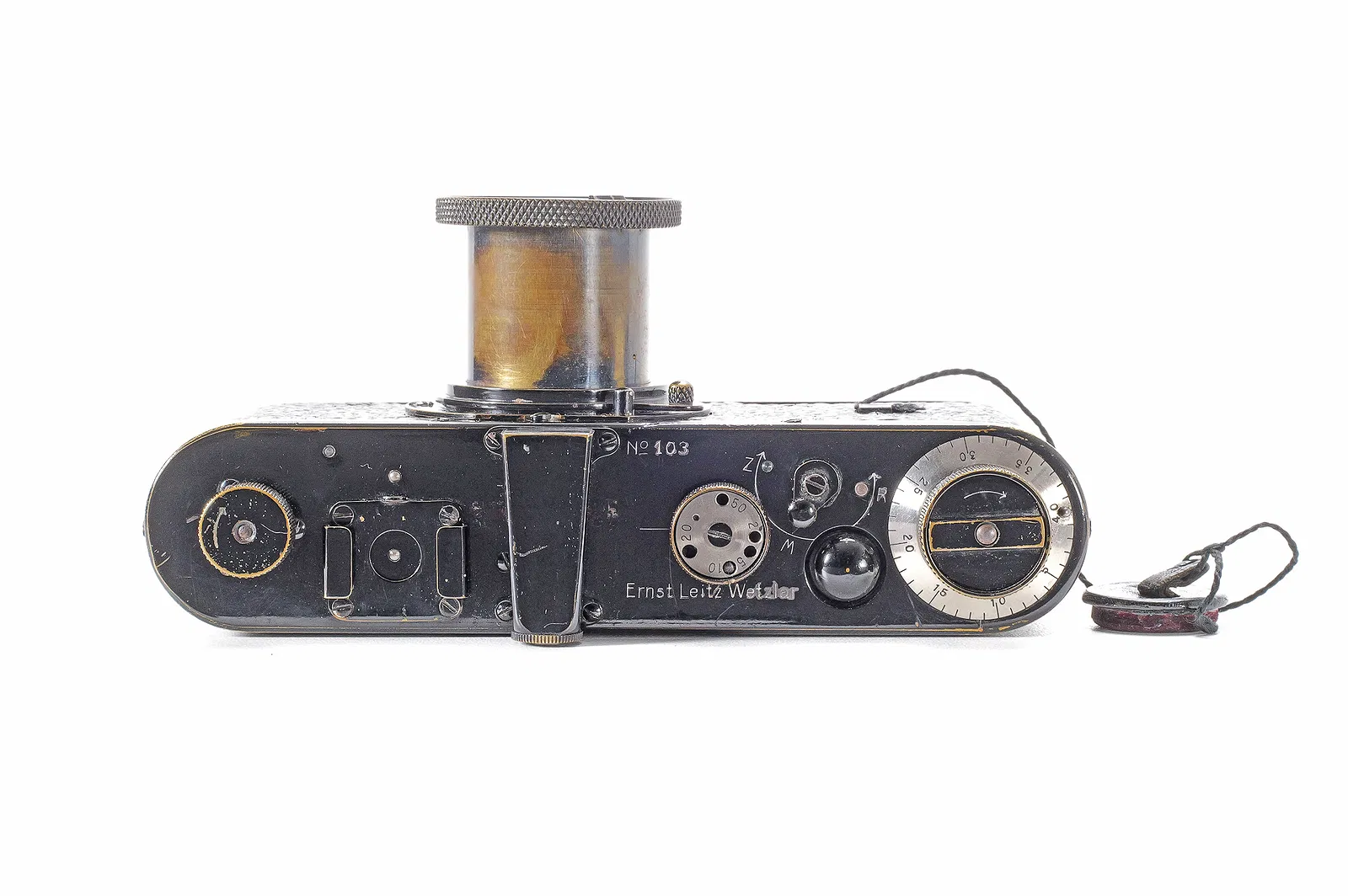
No two 0 Series cameras are quite alike, and this one has its own quirks. Its tubular viewfinder, which replaced the original flip-up type, sits centrally rather than to the side as on production Leicas, and the accessory shoe has moved to the left, where the viewfinder would normally be.
The speed dial is marked in slit widths rather than shutter speeds, numbered in reverse order, as I explained in my 2022 piece on No 105 of the 0 Series that went on to sell for €14.4 million at the Leitz Auction that June. In keeping with the slit concept, the shutter is uncapped, and the lens cap, tethered by a cord, has to stay on while the camera is wound.
This is a rare and expensive item, valued by wealthy collectors more for its scarcity than for anything it can actually do — a caveat I find myself repeating whenever I write about these auctions.
Lot 0003 Start price €800,000 – estimate €1,500,000–2,000,000.
Hand made
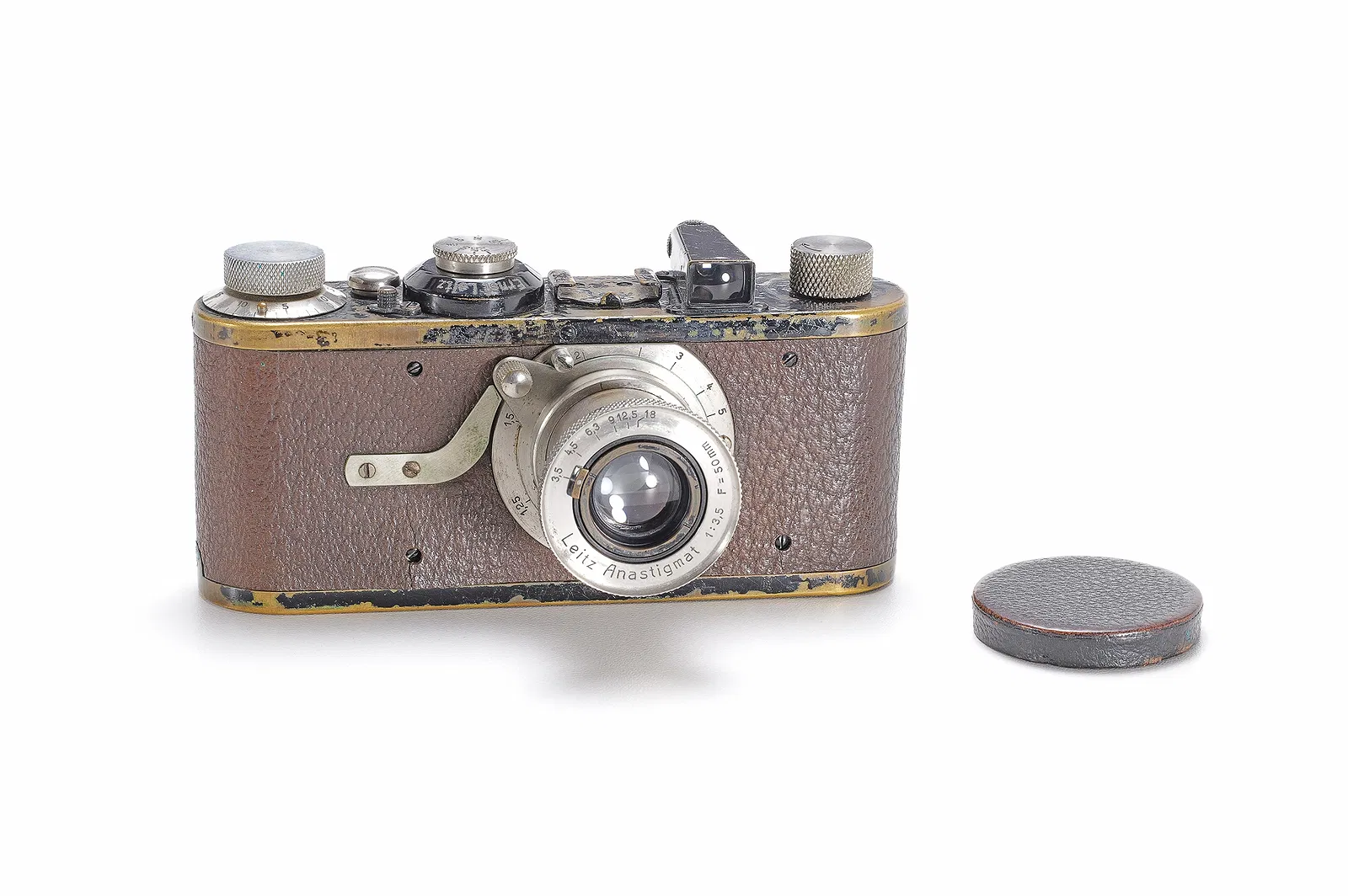
This next lot is one I never expected to see come up for sale. At first glance it looks like a Leica I Model A with the so-called “hockey stick” logo, but it is something else entirely: the original hand-made example, without a serial number, designed by Wilhelm Schaefer in 1923–24 so he could draw up the production Leica I Model A that debuted at the Leipzig Trade Fair in April 1925.
This piece came from Wilhelm Schaefer’s own estate and is genuinely unique, rarer even than a 0 Series camera. It should draw plenty of interest from serious, well-resourced collectors.
Lot 0006 Start price €80,000 – estimate €150,000–200,000.
Chrome like Henri’s
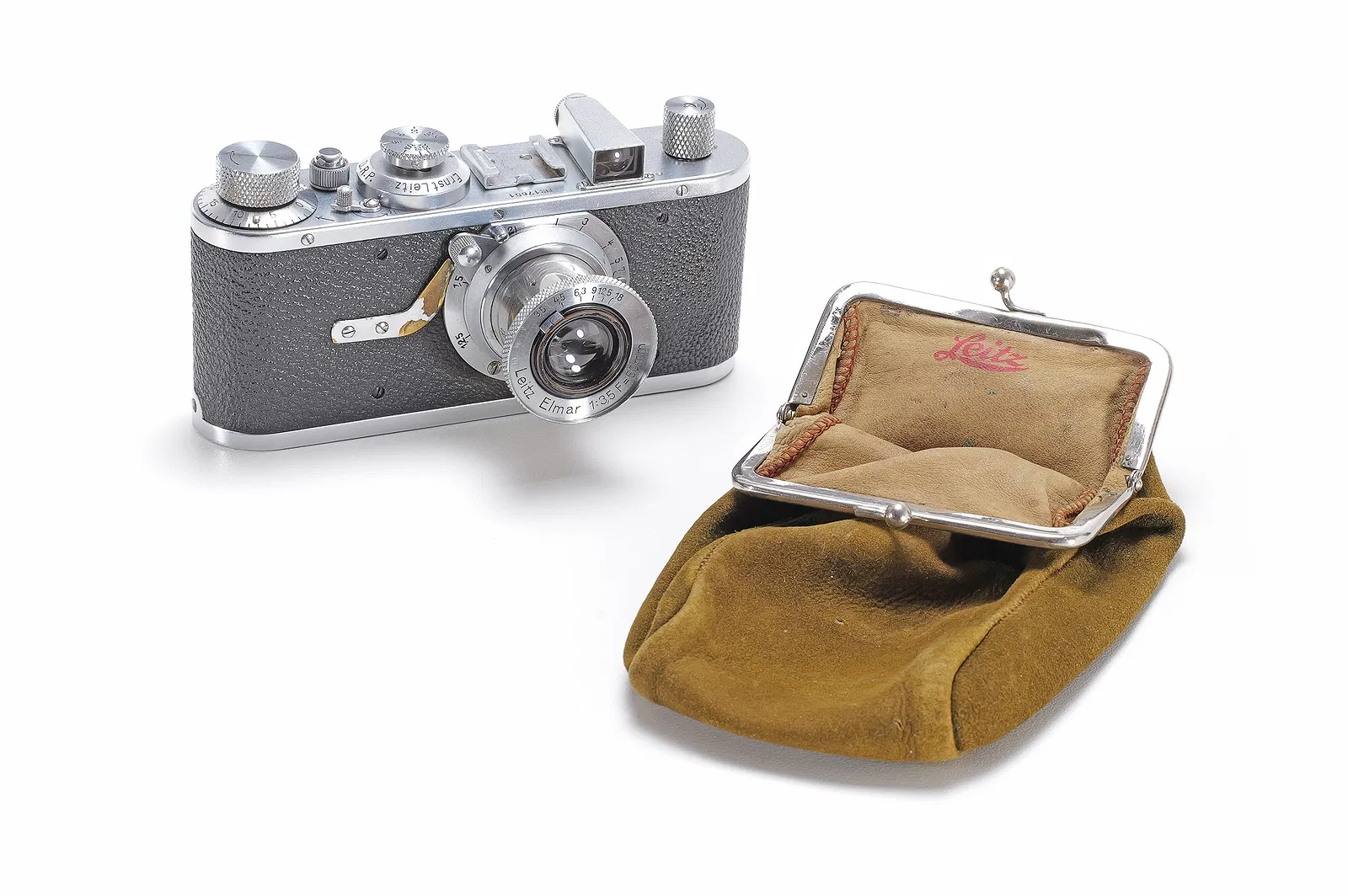
Fans of Henri Cartier-Bresson will know that his first Leica the 1 Model A, was chrome-plated. Every production Leica 1 Model A left the factory in black paint, though Leitz offered a conversion to chrome as an option. When chrome first appeared in 1933 it cost more than black paint, and the earliest examples were finished in what became known as bright chrome, a treatment used for only a few months that year.
This camera, made in 1929 and chromed in 1933, is one of those early examples, and it wears far better than the satin chrome that followed and has lasted to today. I own a Leica II and a Leica III in bright chrome from 1933, and both still look as though they left the factory yesterday. This one comes with an Ettel purse-type case, and its relative rarity should earn it a premium over an ordinary black-paint camera.
Lot 0007 Start price €1,600 – estimate €3,000–3,500.
Now for some gold
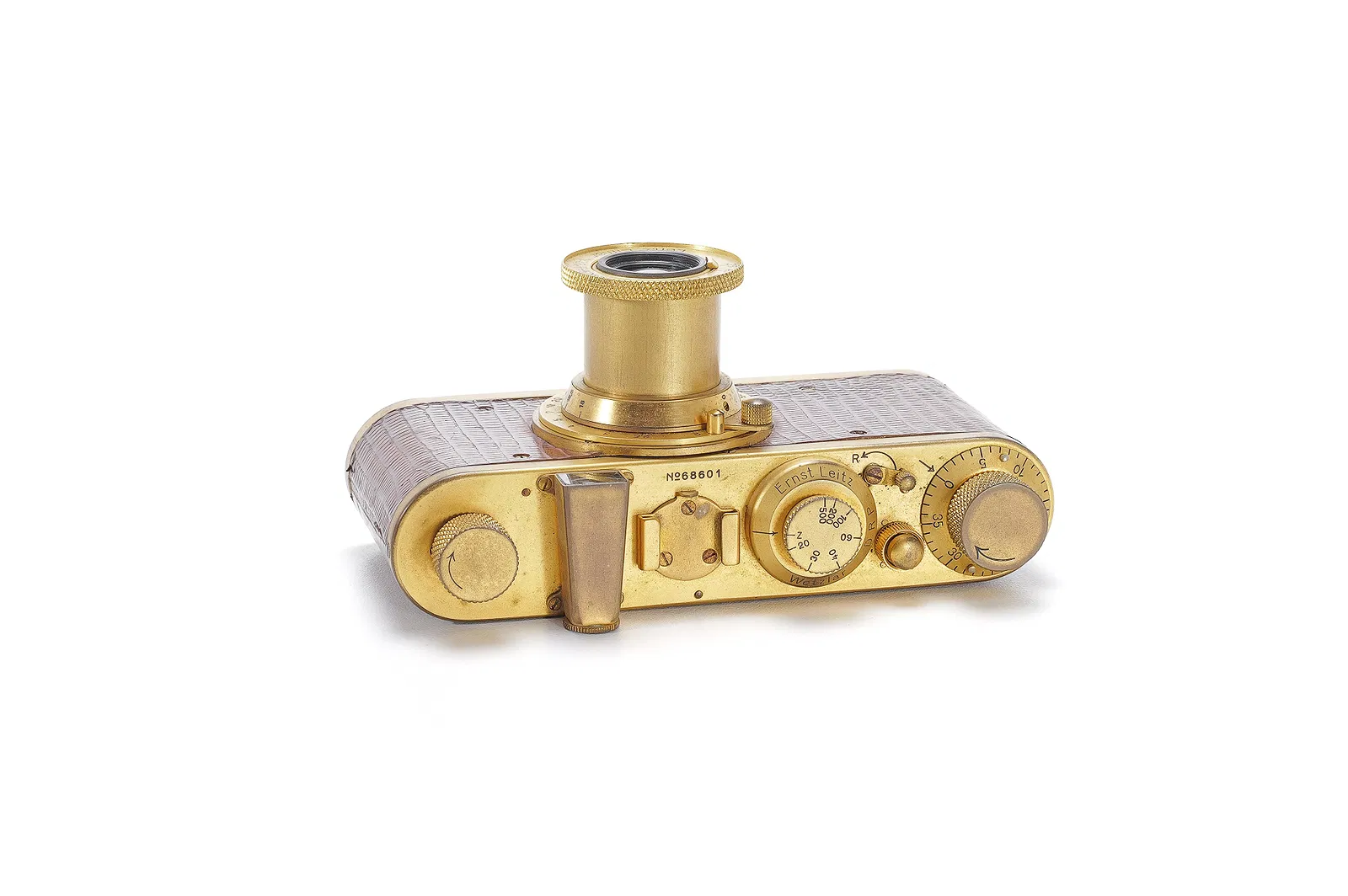
The early gold-plated Leica Luxus models are valued as much for their rarity as for the gold plating and lizard-skin covering. This one is rarer still: a Luxus I Model C, one of only two ever made, serial numbers 68601 and 68834. It was delivered on 21st October 1931 to Lutz Ferrando, the Leitz distributor in Brazil, and was later bought by the collector Rolf Fricke in Rio de Janeiro during the 1970s.
Lot 0008 Start price €180,000 – estimate €300,000–400,000.
Lots 0009 and 0010 belong with it: a matching case in the same colour crocodile leather, and a pair of matching Leitz Bilustra Luxus 3×13.5cm binoculars. Whoever wins Lot 0008 will most likely be chasing the other two as well.
All square
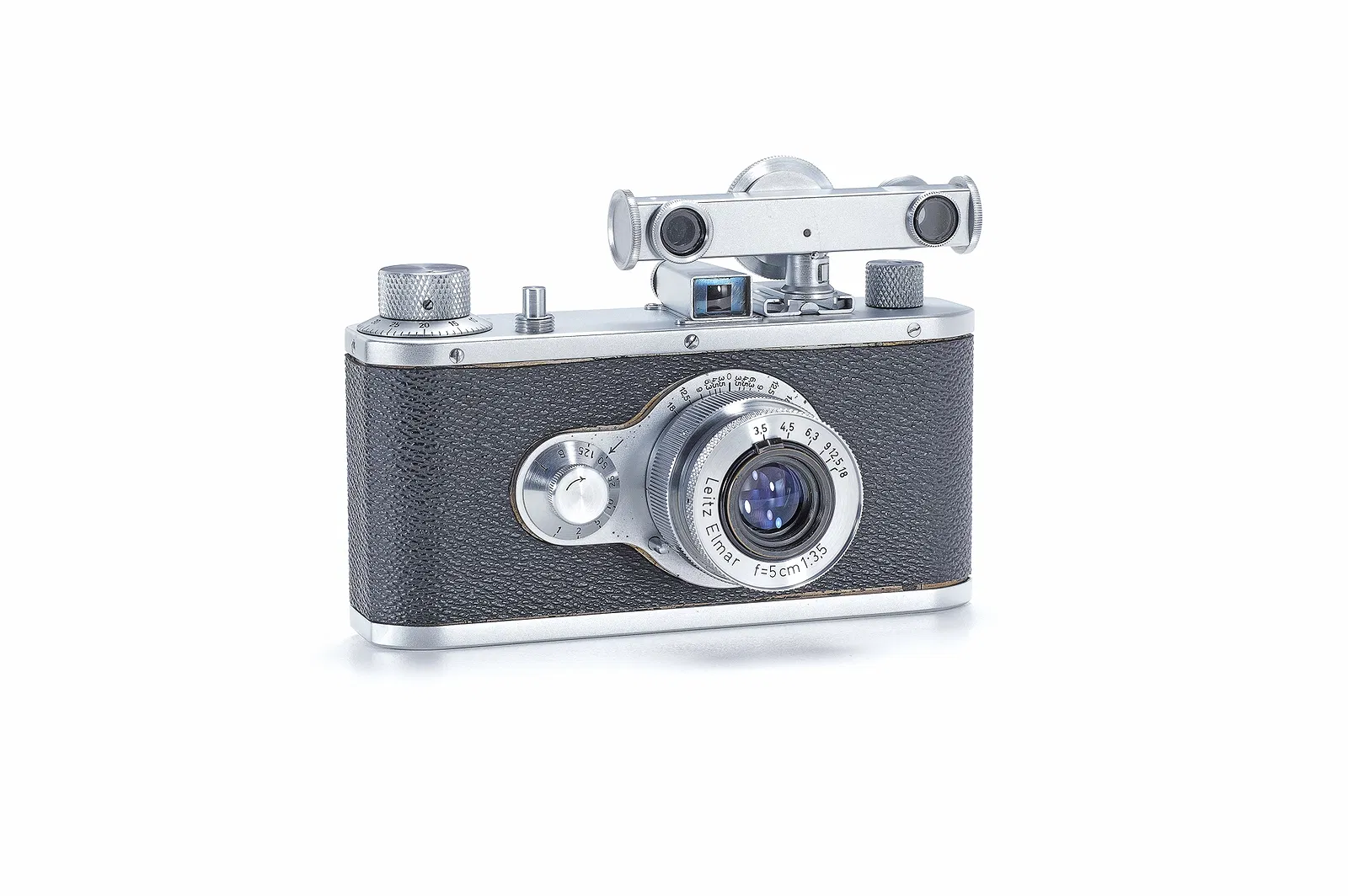
The next two lots are prototypes from Leitz’s experiments with a square 24mm x 24mm format, in place of the usual 24mm x 36mm frame used on 35mm film.
This first prototype dates from 1947–50. It has no built-in rangefinder, but comes fitted with a Leitz HFOOK clip-on rangefinder, and it carries a Leitz Elmar 5cm f/3.5 lens head on a mount built around a central leaf shutter.
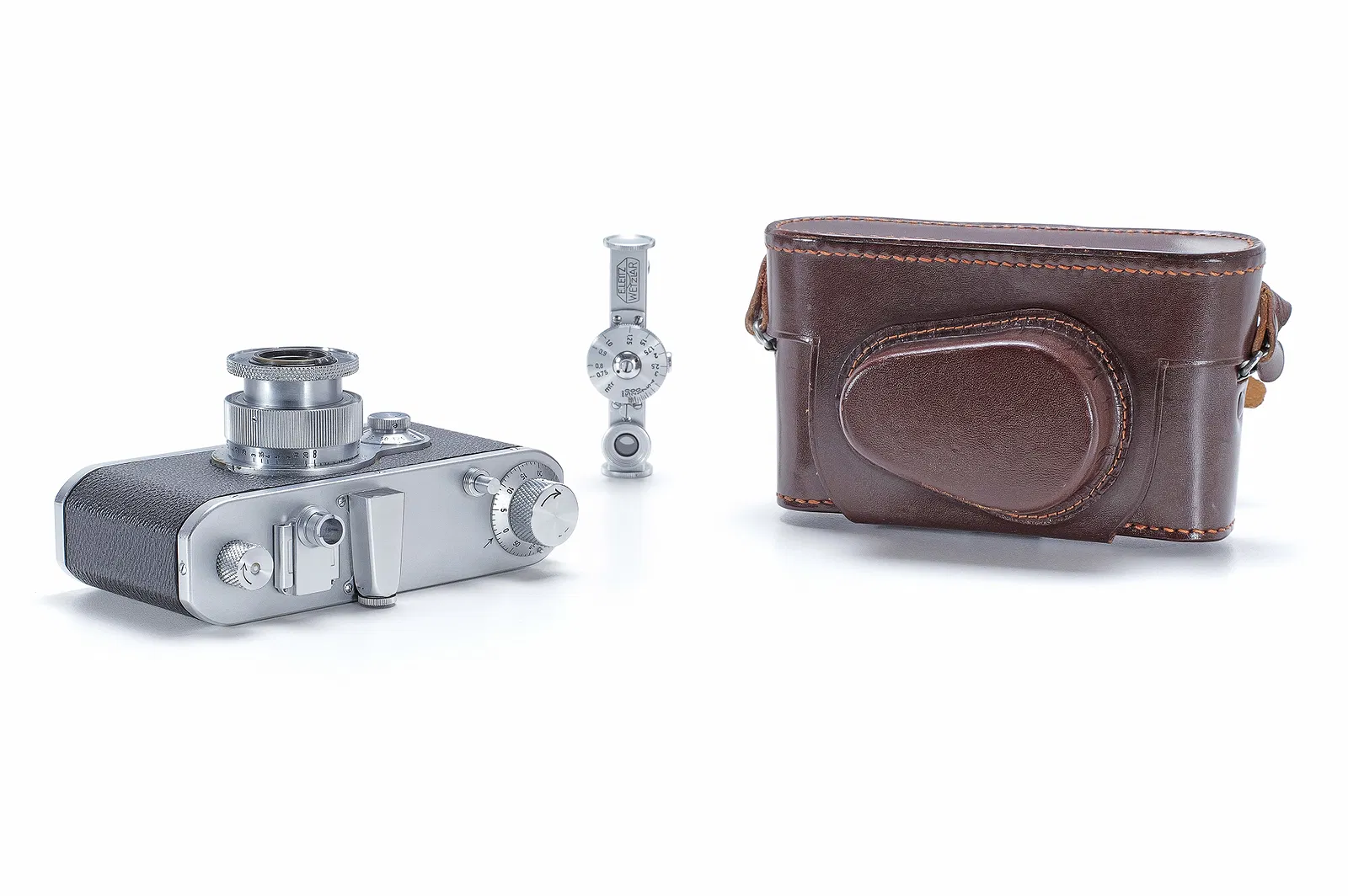
It comes in an unusual leather case designed to cover the front-plate furniture and the HFOOK rangefinder, and the frame counter, visible here, runs to 50 exposures, another giveaway of a square-format design.
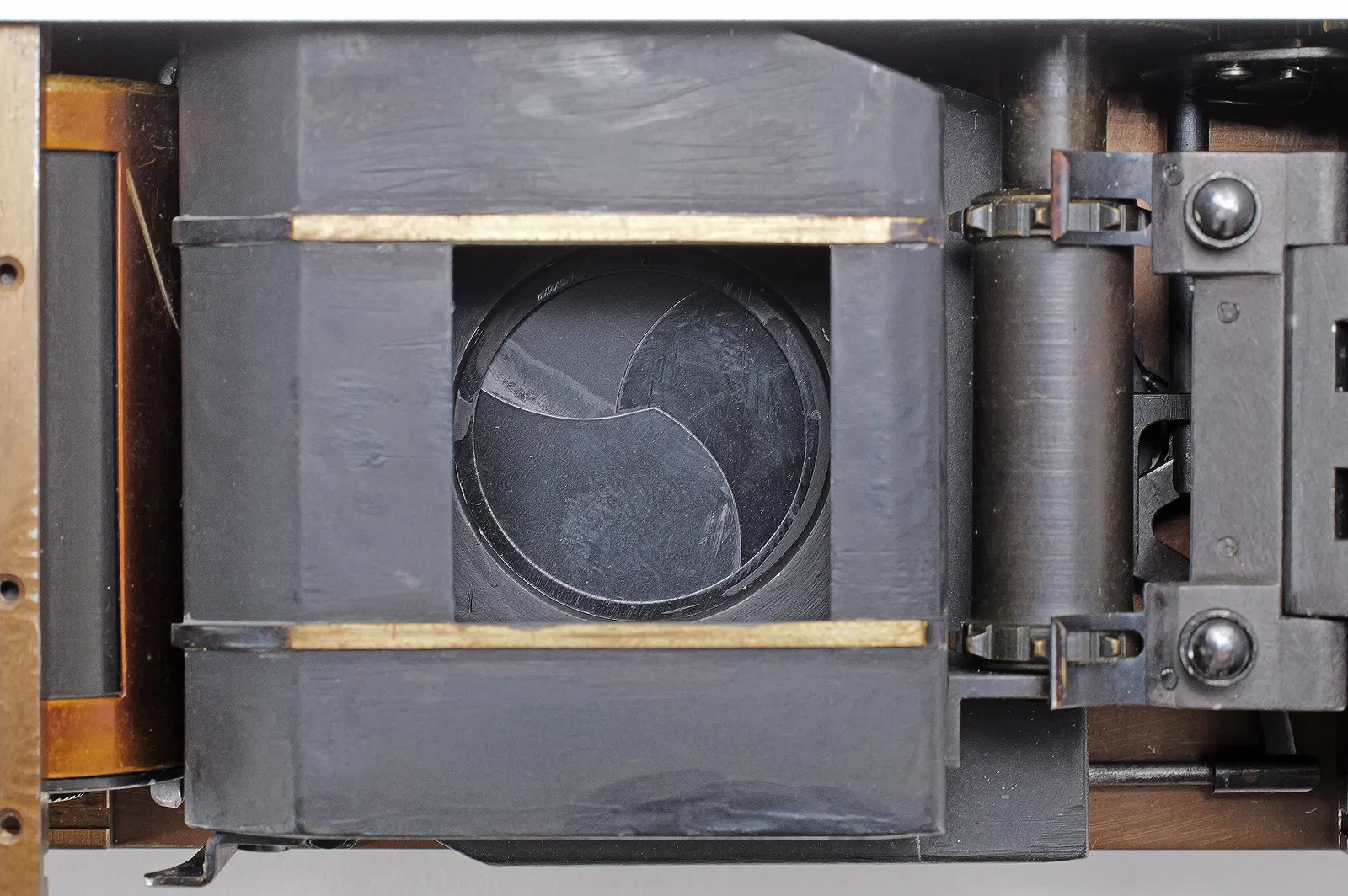
This shows the square exposure frame and the leaf shutter. The camera comes from Wilhelm Schaefer’s estate and never reached series production; it appears to be one of a kind.
Lot 0026 Start price €6,000 – estimate €12,000–15,000.
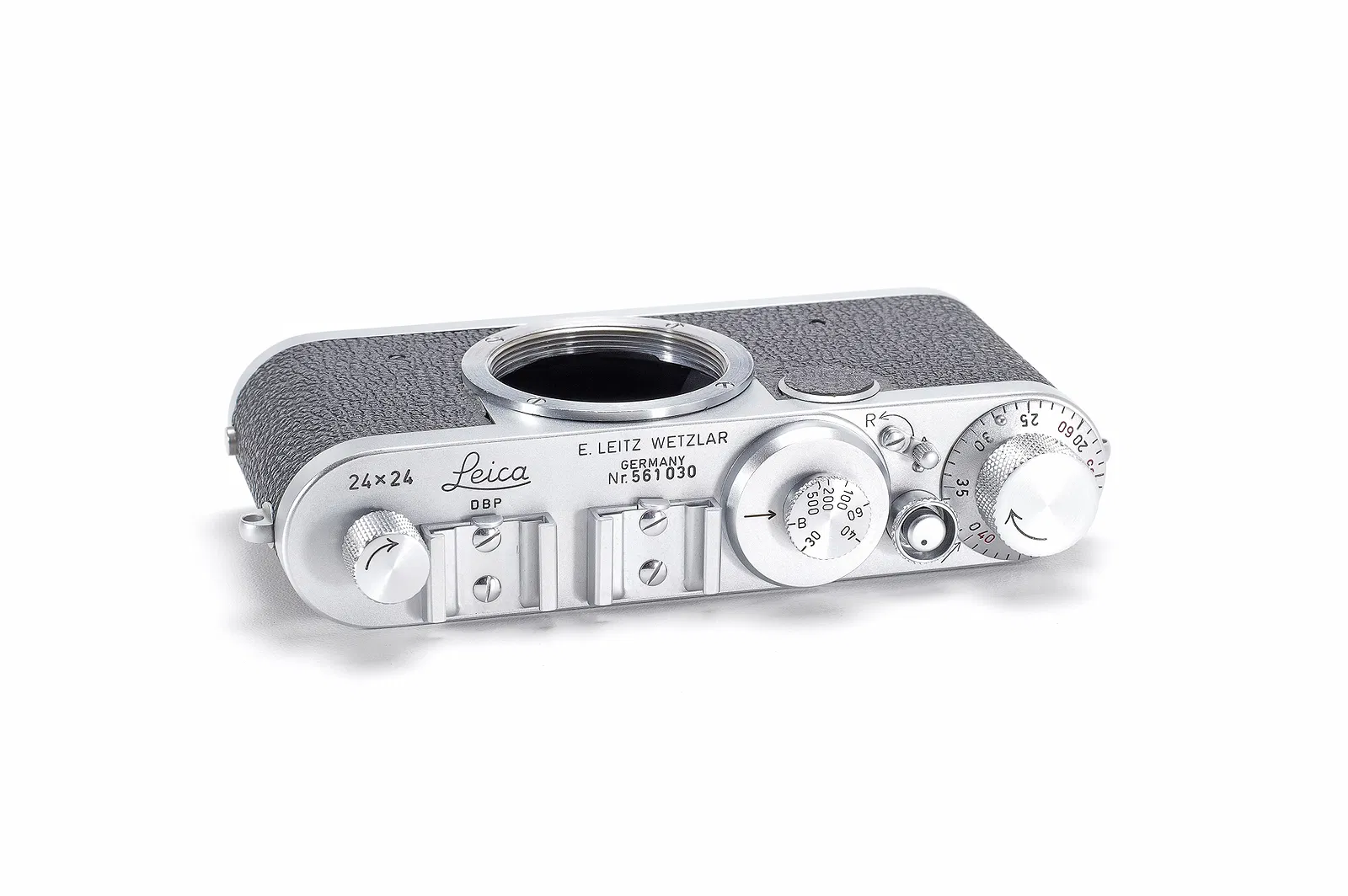
The second square-frame prototype dates from 1951 and resembles the Ic and If models. Unlike the first, it has a standard focal-plane shutter of the kind found on LTM Leicas, though the exposure frame remains square.
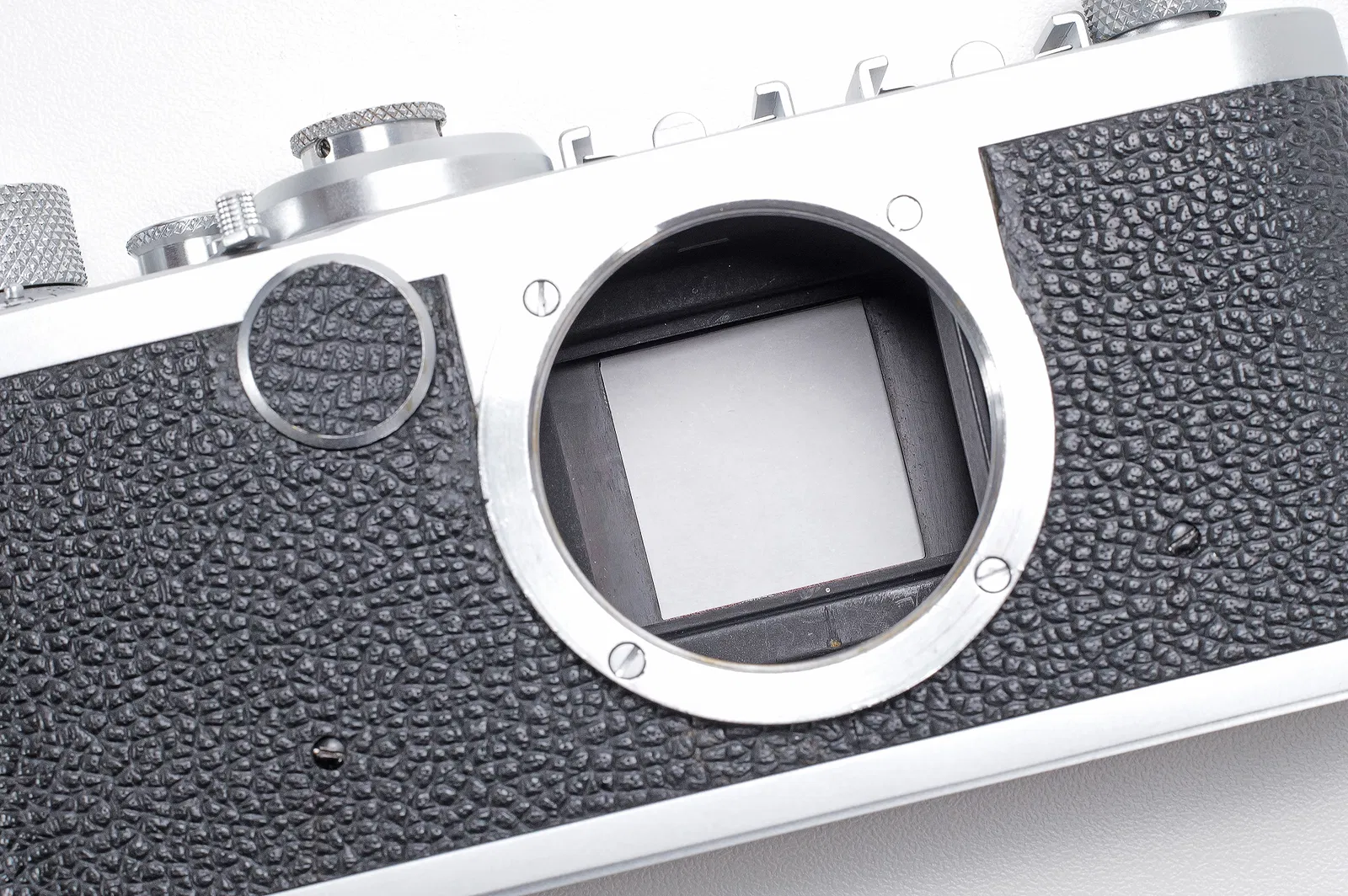
It was said to be designed for 52 frames, but the exposure counter runs to 60, with a duplicate set of numbers marked in red beyond 40.
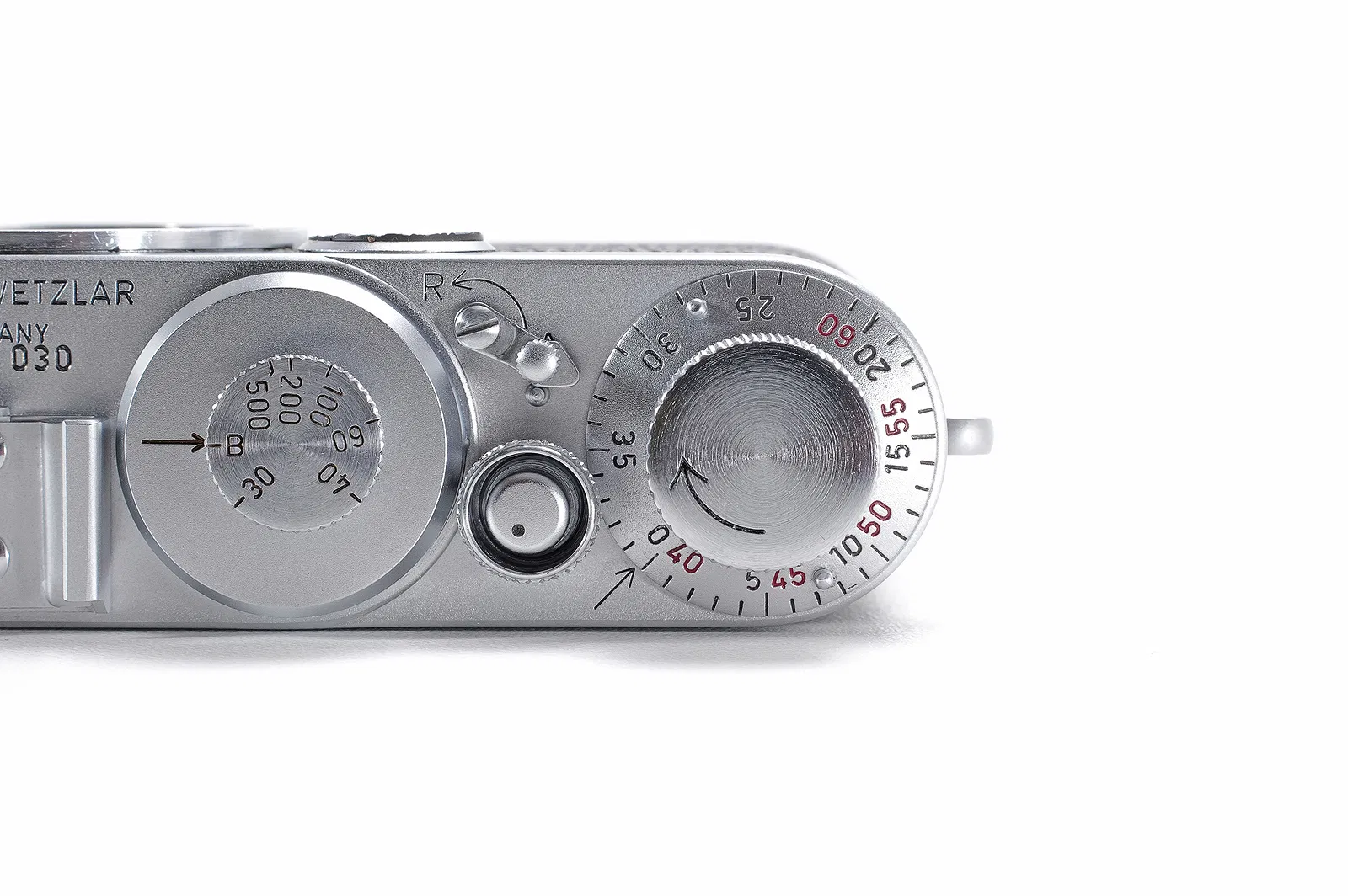
This prototype was built for the Berlin Criminal Police, apparently for identification photography using the Bertillon process. Leitz tried the 24mm x 24mm format on several such experimental jobs, but it never reached series production for civilian use.
Lot 0030 Start price €8,000 – estimate €15,000–20,000.
Up periscope
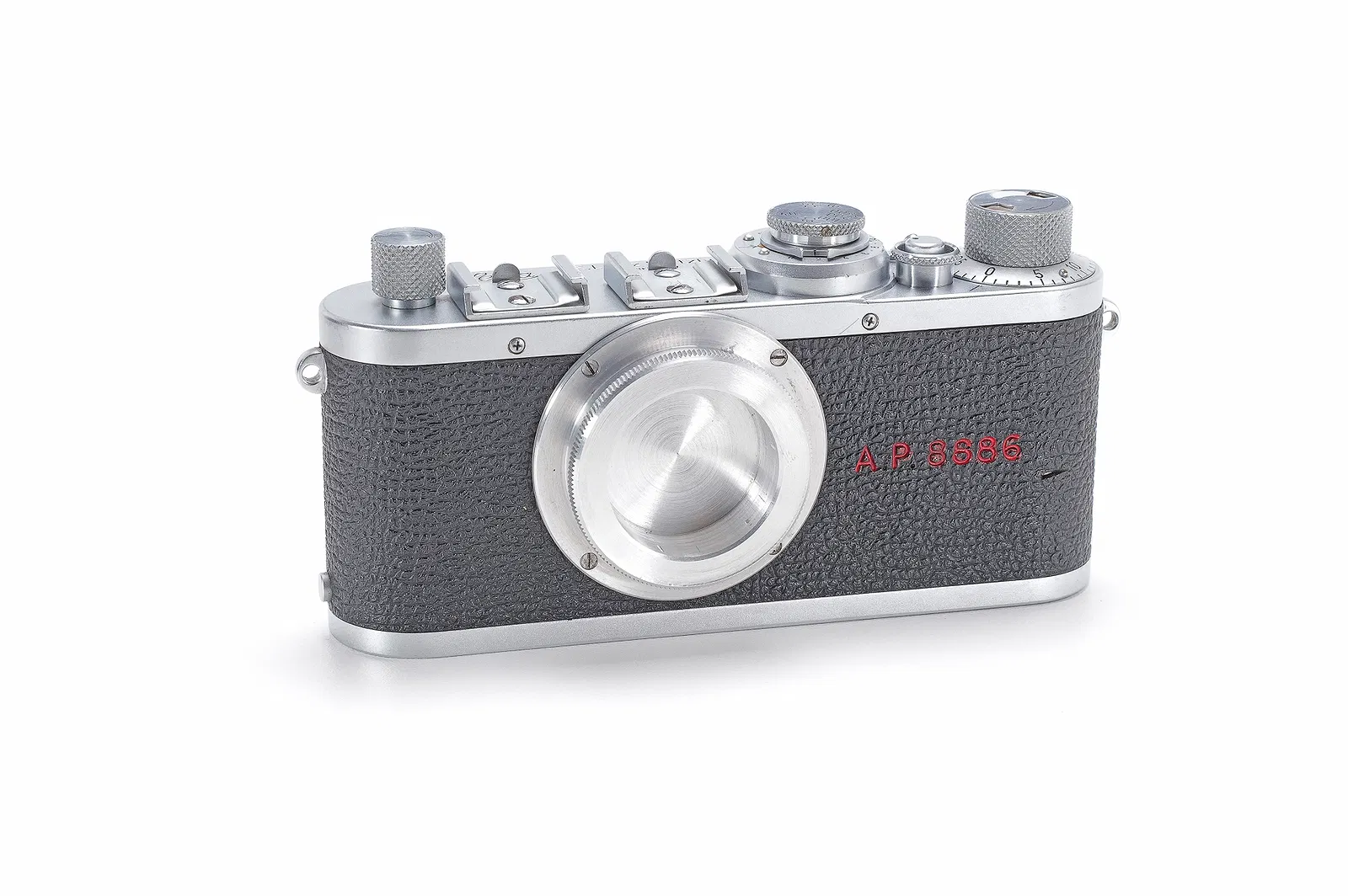
Seen here from the back is a Leica If Black Dial from 1951, built for the Royal Navy and marked A.P. 8886 on the base plate. There is also an opening on the back for use with a periscope; I cannot explain exactly how the mechanism worked, but the camera could be focused on the film plane through a ground-glass screen.
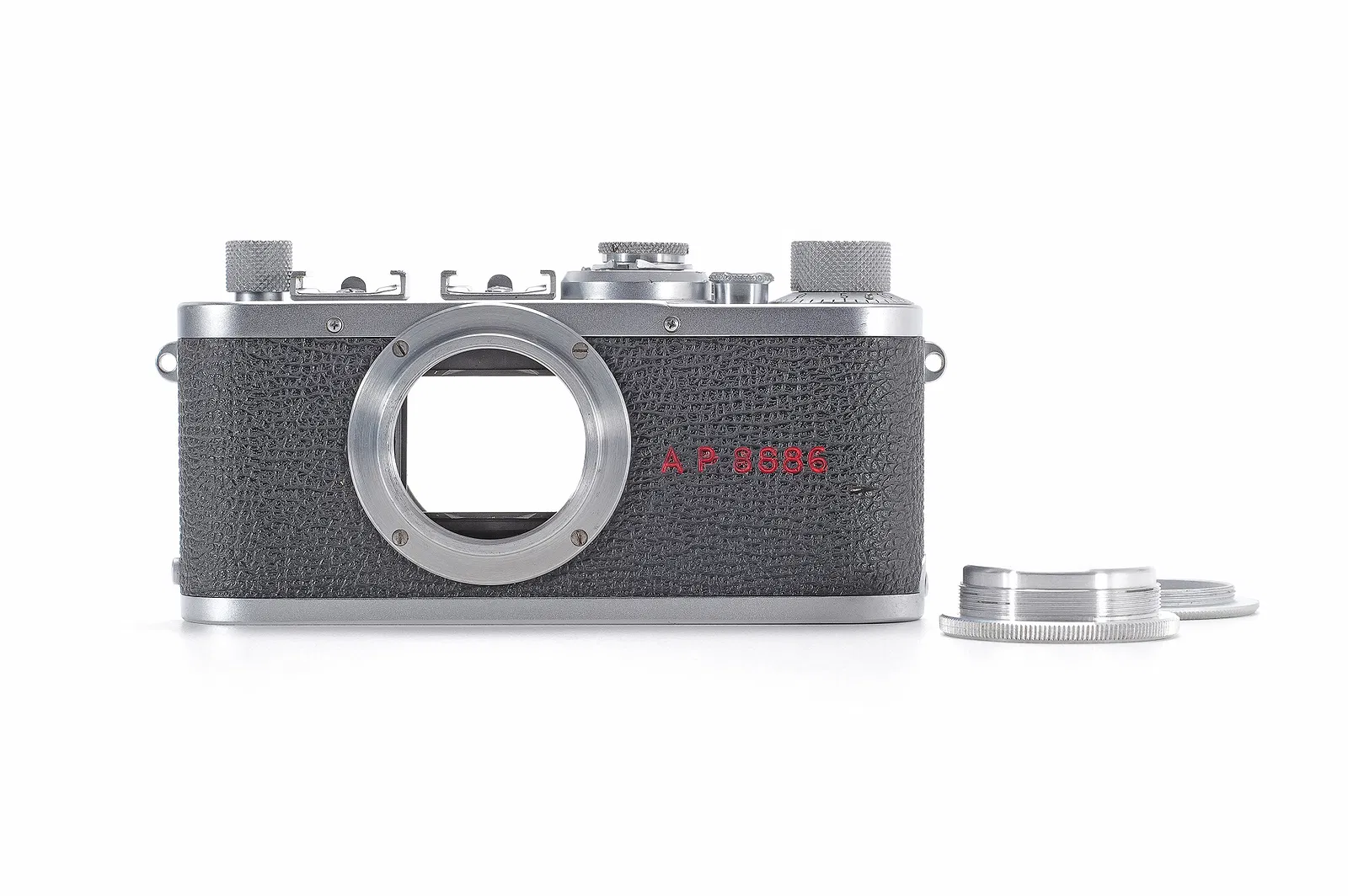
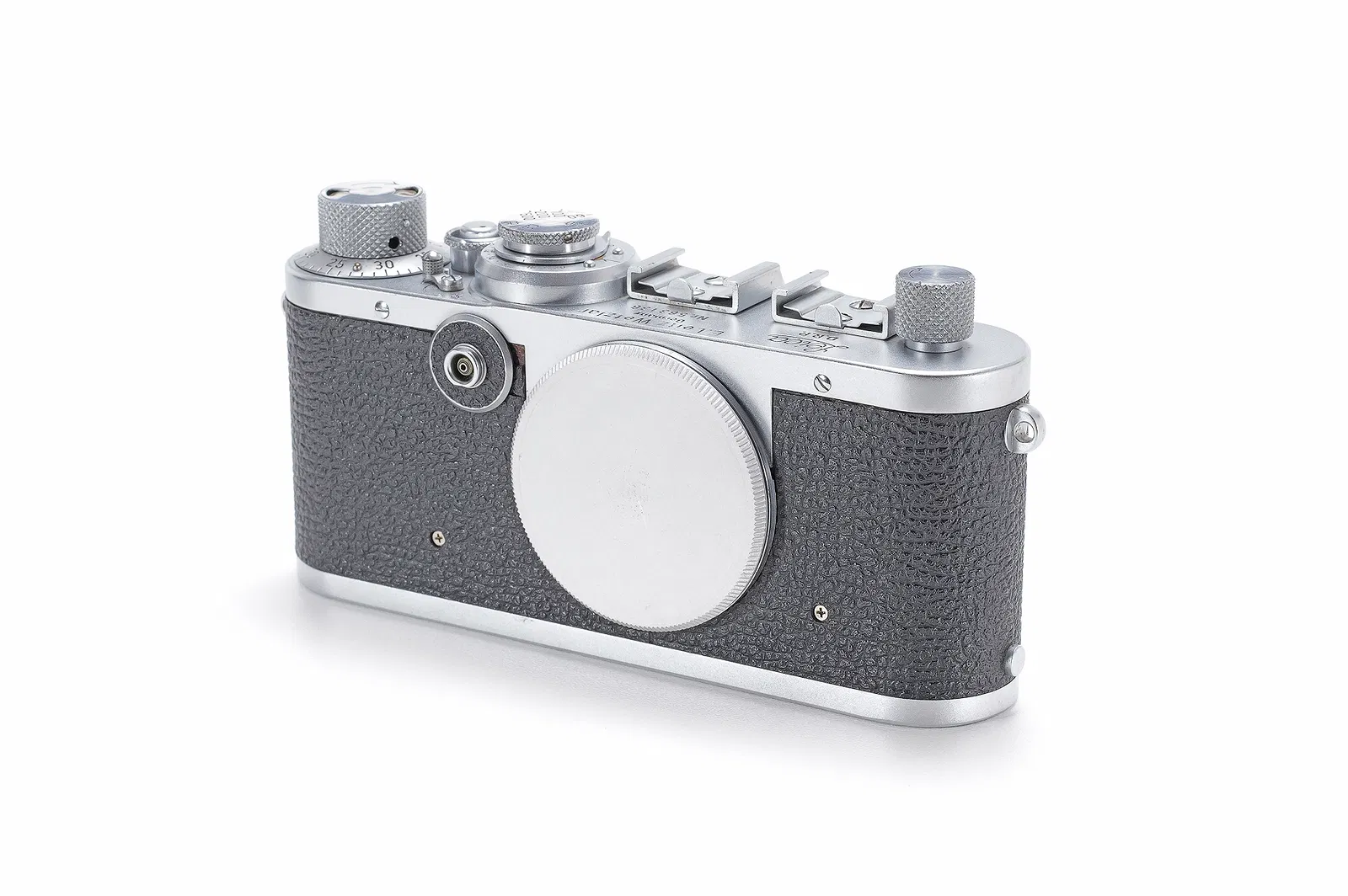
From the front, it looks like an ordinary Leica If Black Dial. These cameras are genuinely rare and much sought after by collectors.
Lot 0035 Start price €2,200 – estimate €4,000–5,000.
The all blacks
Nothing to do with rugby here, but rather black-paint Leicas from the late 1950s, which routinely fetch very high prices at auction. Some might see a touch of fetishism in how irrationally collectors chase these cameras, many of them badly brassed where the original paint has worn through, yet time and again they command extraordinary sums. Two examples turn up in this auction.
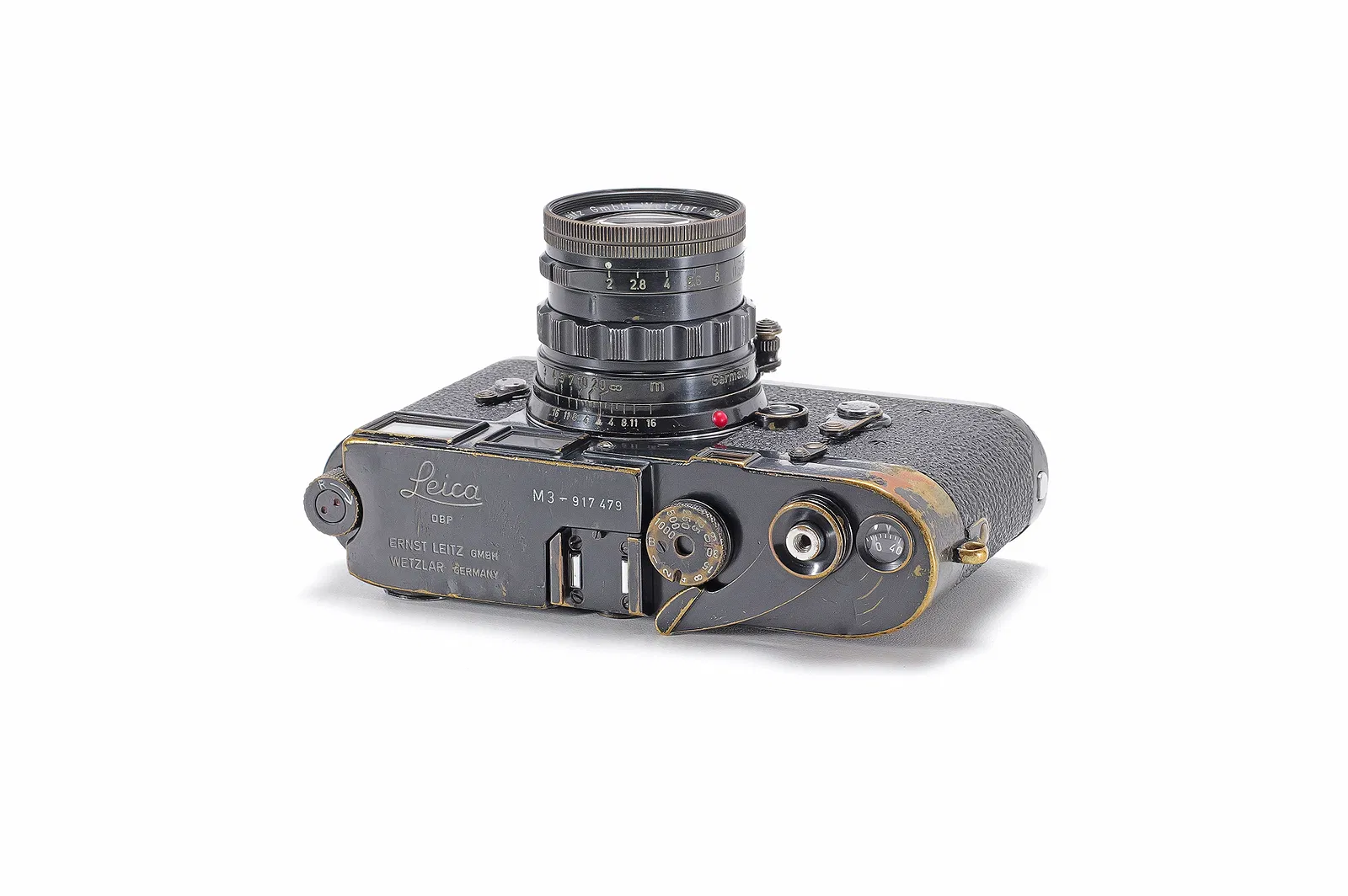
A black-paint Leica M3 from 1958, paired with a matching Leitz 5cm f/2 Summicron. It is an early special-order example — only around 90 were made this way — produced before the first official black-paint M3 batch, and that rarity keeps the price high.
Lot 0069 Start price €130,000 – estimate €200,000–250,000.
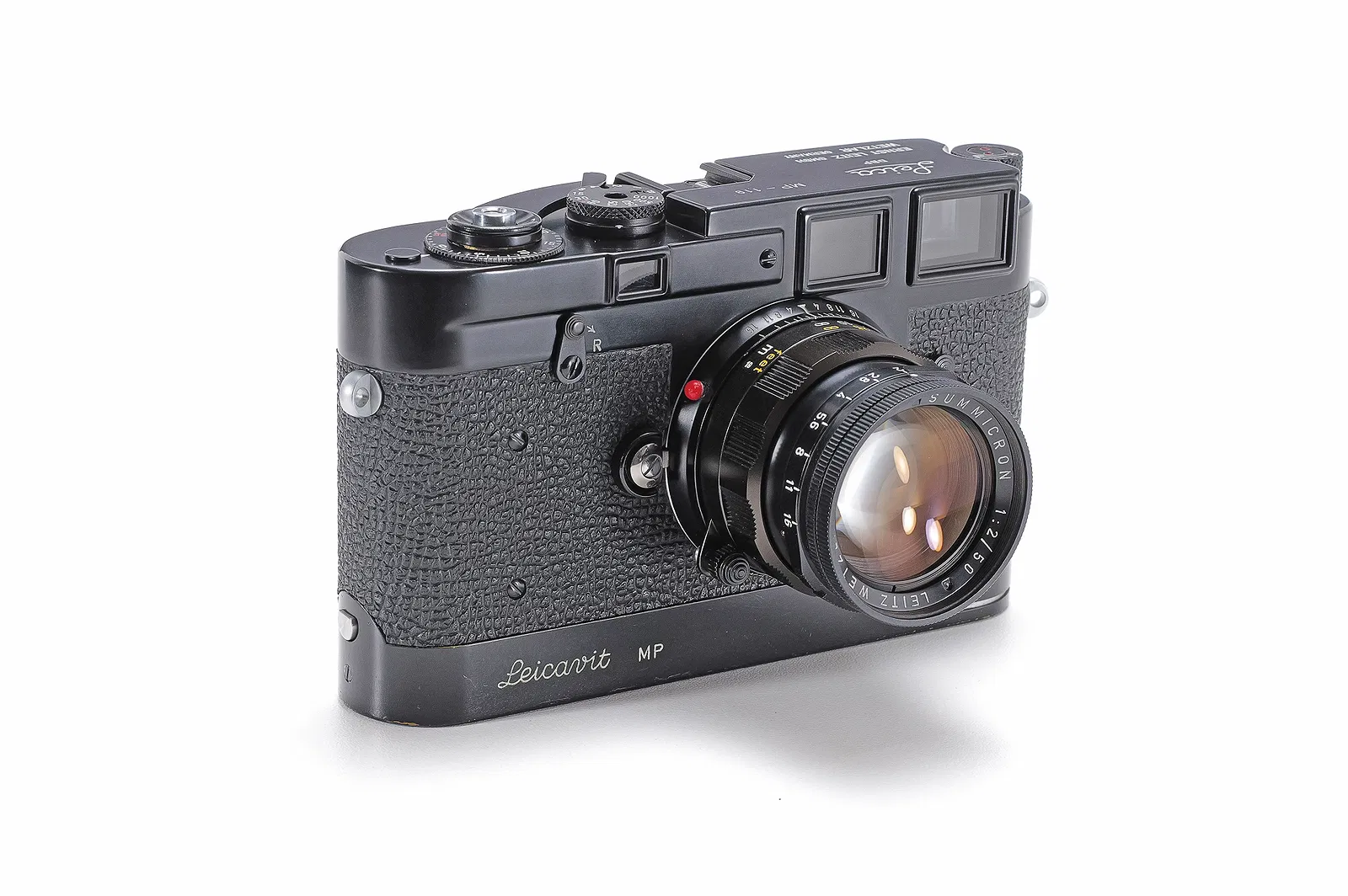
This lot, from 1957 and restored in the 1970s, is similar in its black paint and lens, but the body is the legendary MP, built in small numbers for professional photographers, and it comes with a Leicavit MP winder. MPs were made to order in tiny quantities and fetch even higher prices than the black-paint M3s.
Lot 0075 Start price €160,000 – estimate €300,000–350,000.
Military kit
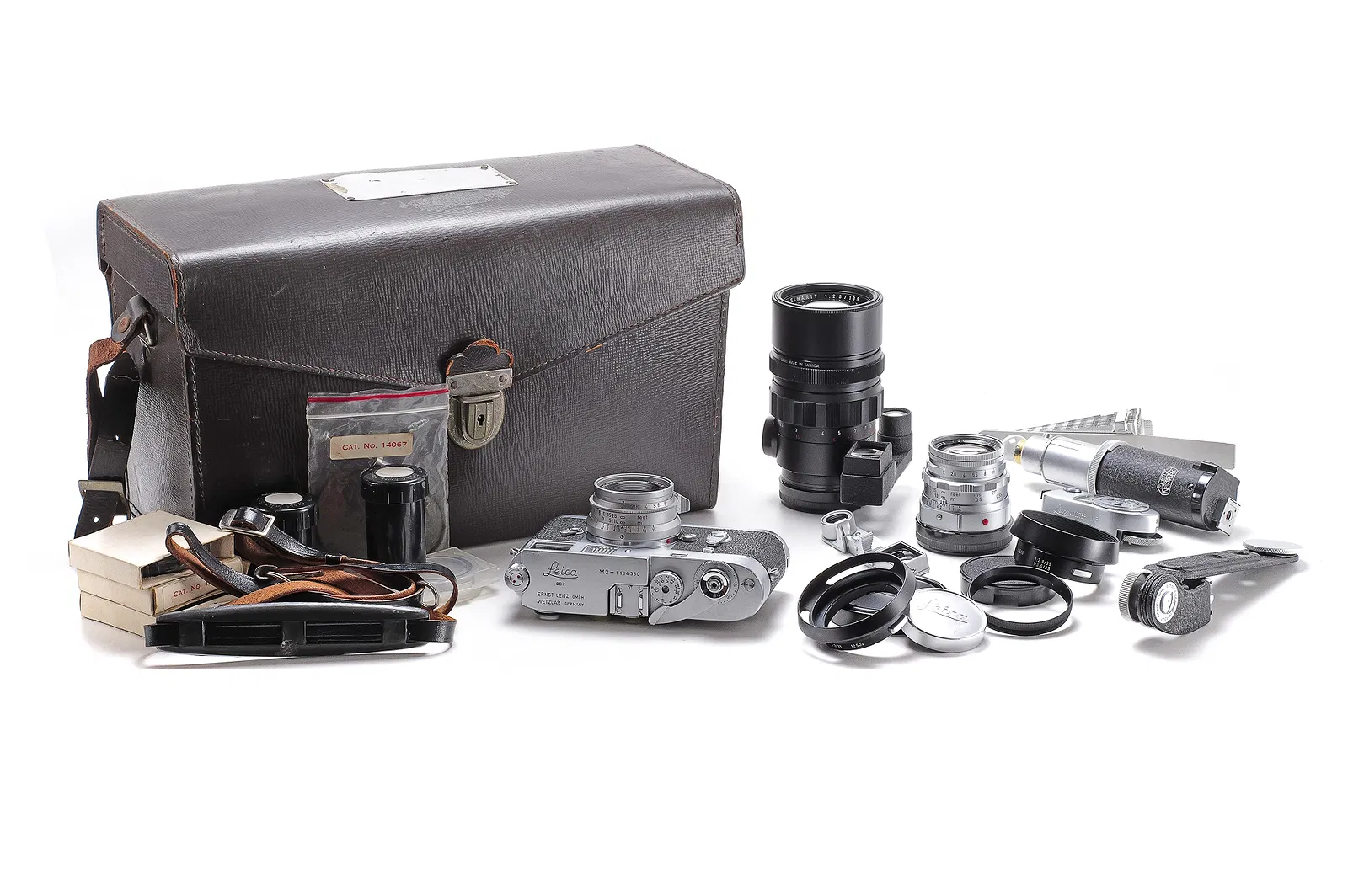
This lot includes something new to me: the M2 KS15-4 outfit. I had heard of it but never actually seen one. These were built for the US military during the Vietnam War, and this example dates from 1966. The camera is an M2 fitted with a quick-load spool of the kind that later appeared on the M4, housed in a large case along with a 35mm f/2 Summicron, a 50mm f/2 Dual Range (DR) Summicron with goggles, and a 135mm f/2.8 Elmarit also with goggles, plus assorted accessories including a flash and some filters.
The outfit came from the German photographer Jay Ullal, who worked for Stern magazine, possibly acquired while he was covering Vietnam. Here we have both rarity and provenance in one lot.
Lot 0084 Start price €3,000 – estimate €6,000–8,000.
Half frame
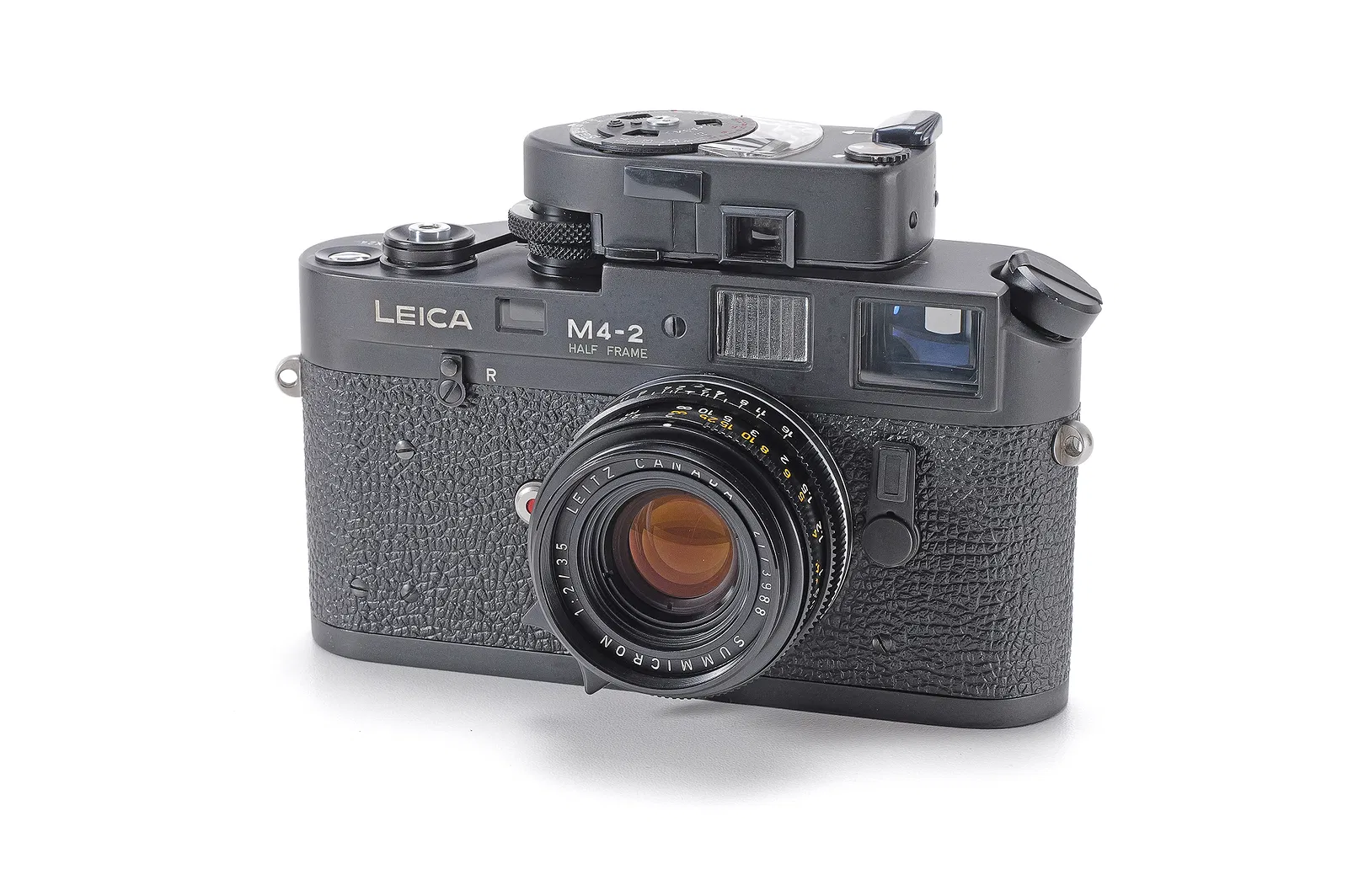
Not as rare as the square-frame prototypes above, but this half-frame (18mm x 24mm) Leica M4-2 is still uncommon enough to attract serious interest and may well fetch a higher price.
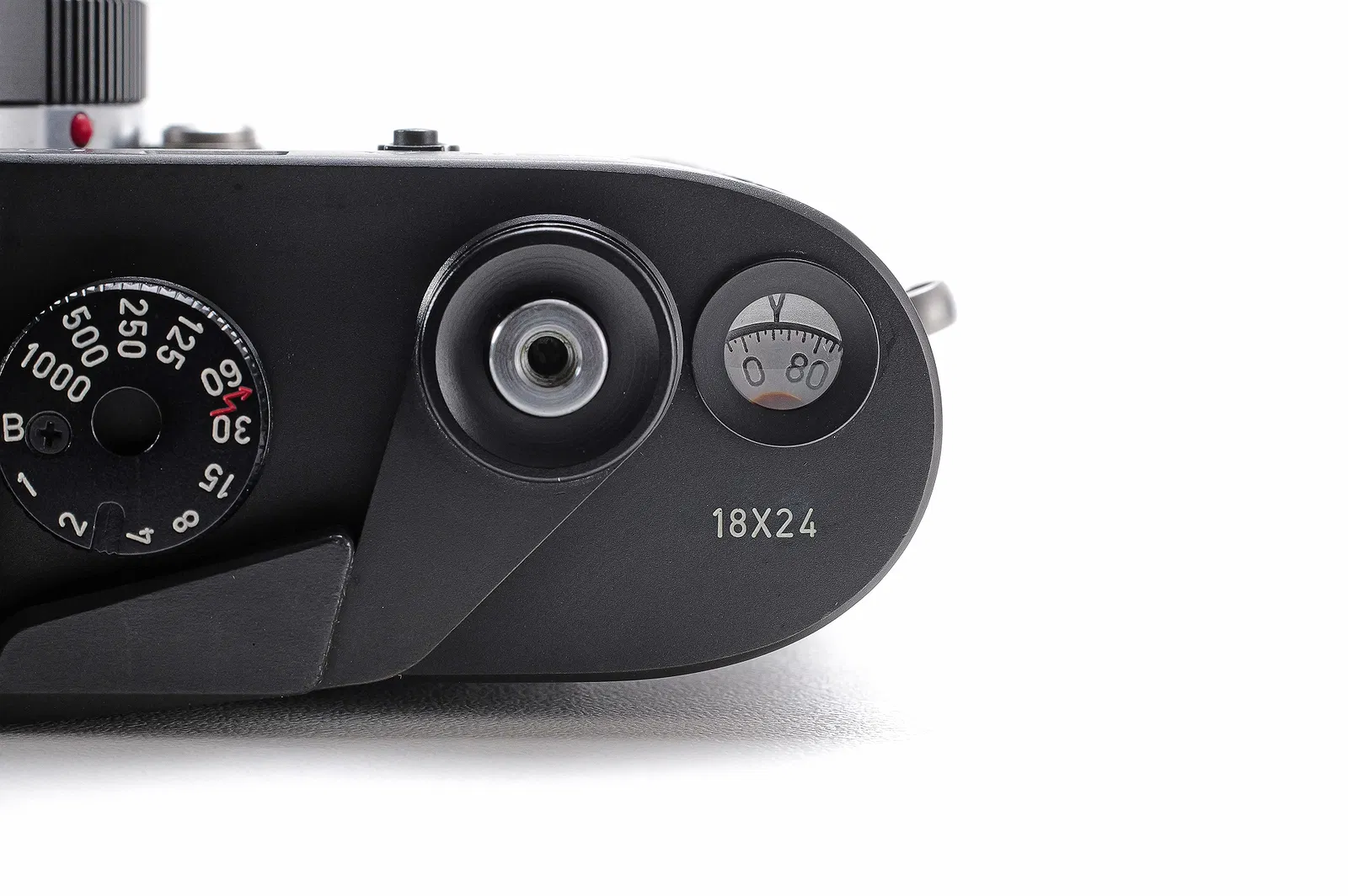
The camera produces 72 frames on a standard roll of 35mm film, and the counter runs to 80. It comes with a Leitz 35mm f/2 Summicron and a Leicameter MR, and the half-frame cutout for the shutter is visible here.
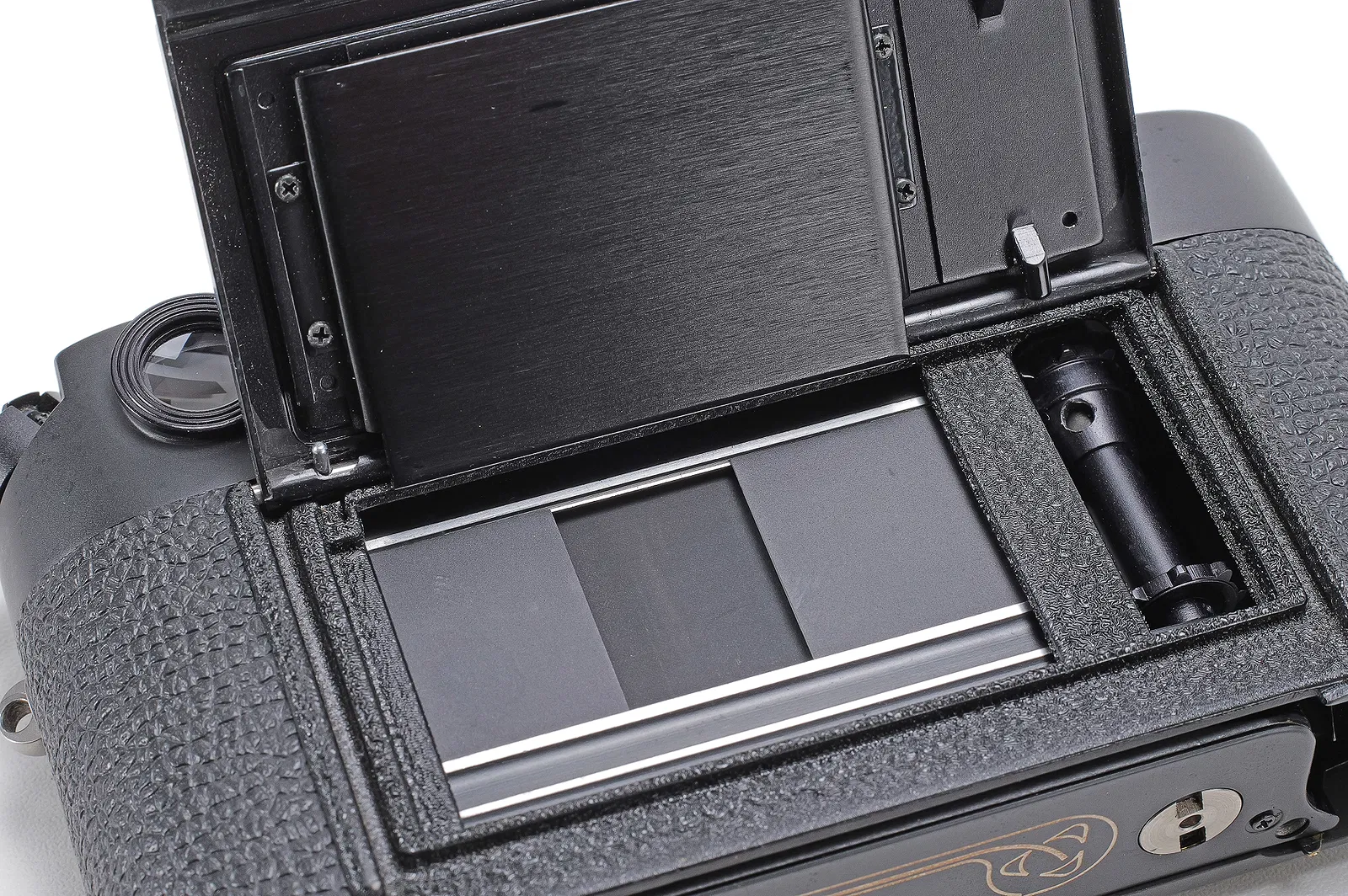
Lot 0094 Current bid €10,000 – estimate €15,000–20,000.
A pile of M11s
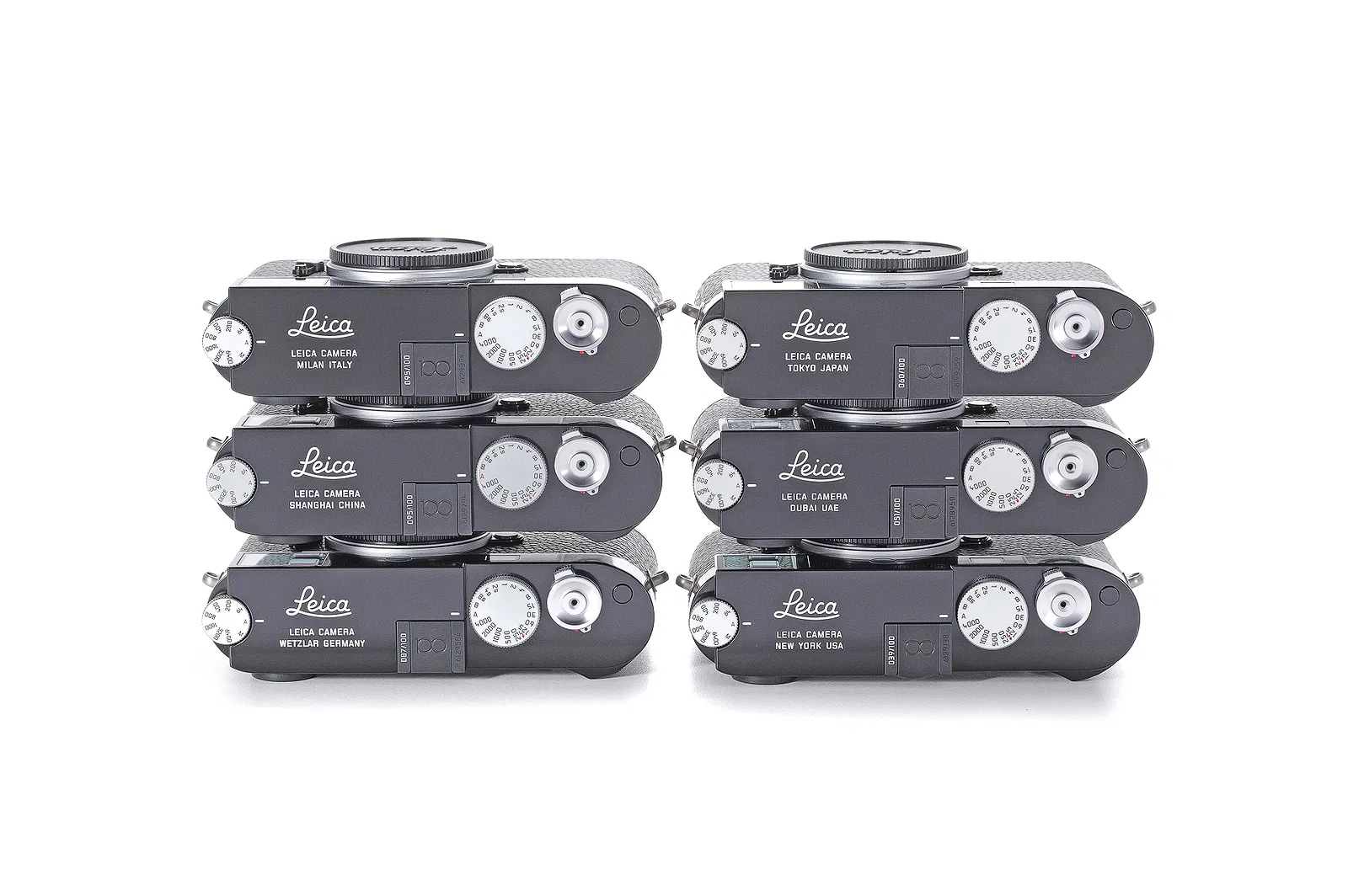
For the Leica camera’s hundredth birthday in 2025, the company produced several special editions, among them a glossy black Centennial version of the digital M11, sold only at six locations worldwide, 100 units at each, with the relevant city printed on the top plate. Now, inevitably, someone has assembled a full set from all six: Dubai, Milan, New York, Wetzlar, Shanghai and Tokyo. It is hard to guess what a set like this will fetch as a single lot, but there will likely be buyers keen to own the complete run. The auction will tell.
Lot 0118 Start price €30,000 – estimate €50,000–60,000.
Space is the place
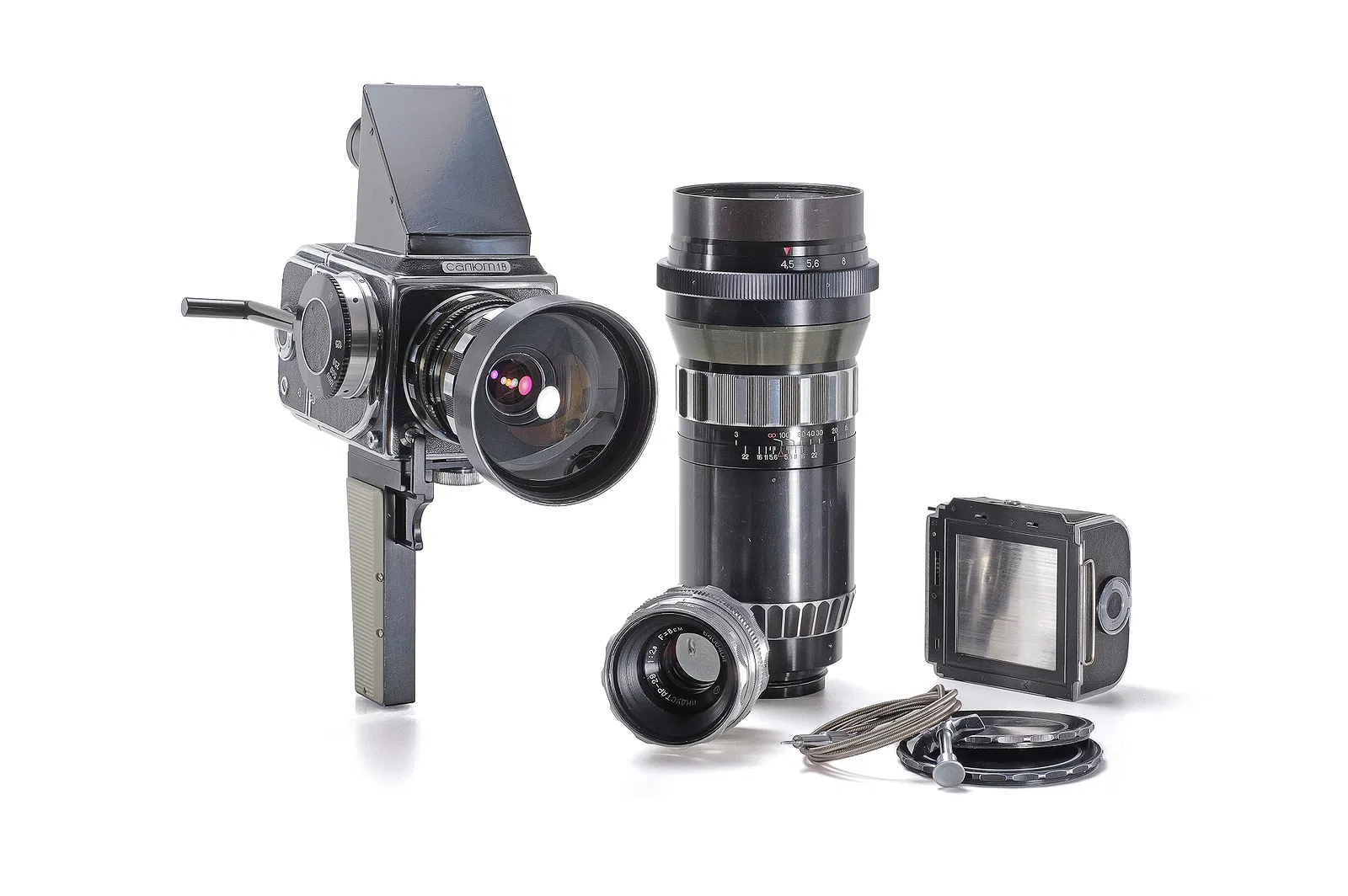
Readers of my generation will remember the space race of the 1960s, and one name most of us can still summon is Yuri Gagarin, the Soviet cosmonaut who became the first person in space in 1961, when I was 11 years old. Just a few years earlier the idea of a person travelling into space had seemed impossible, and the achievement fuelled fierce competition, particularly between the Soviets and the Americans. This 1964 camera takes me straight back to that era: a Salyut, the Soviet equivalent of the Hasselblad medium-format camera, one of 15 modified for the Soyuz space missions. It has enlarged knobs for use with gloved hands, along with a handle and trigger, and the lot includes three lenses: 65mm, 80mm and 300mm.
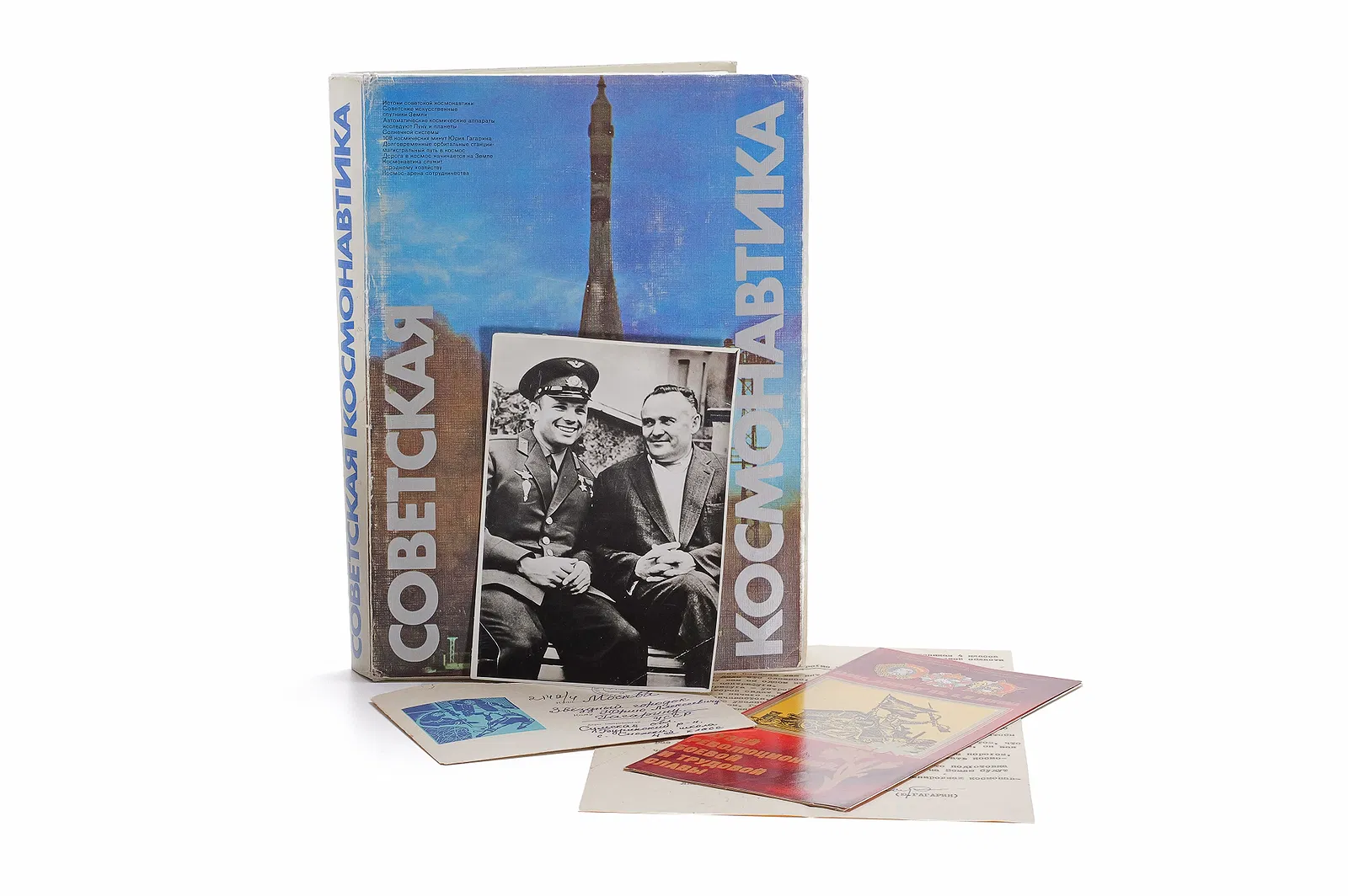

The lot also includes a photograph of Yuri Gagarin with the chief designer of the Soviet space programme, plus a book and some brochures from the period. Gagarin himself died in a plane crash in 1968, in circumstances that have never been fully explained.
The standard of items at the eighth Wetzlar Camera Auction is exceptionally high, and I am looking forward to being there on 10th October.
Further reading
| Macfilos Articles | Other Links |
|---|---|
| Oskar One Zero Five sells for €14.4 million – The last 0 Series to reach auction, and the record it set | Wetzlar Camera Auction No 8 catalogue – The full lot listing on LiveAuctioneers |
| 185-year-old camera and more at the seventh Wetzlar Camera Auction – William Fagan’s preview of last year’s sale | 185-Year-Old Voigtländer Daguerreotype Camera Auctioned for $580,000 – PetaPixel’s report on how WCA7 actually went |
| Sixth Wetzlar Camera Auction: October 12 is the red-letter day for collectors – A look back at the auction two years ago | Leica Society International – The organisation William Fagan currently leads |
| Leitz Auction No 47: Rare cameras and unique provenance from the Pope to Communism – Another recent sale built on rarity and provenance | Leica Oskar Barnack Award – Official site for the award announced two days after this sale |
| The Leica and I: Yul Brynner, Protecting Journalists and some Fotoform – Another Macfilos piece on Leicas with a journalist’s provenance | Lens of History: The extraordinary photography journey of Jay Ullal – A profile of the Stern photographer behind Lot 0084 |
| 2026 Leica Oskar Barnack Award Finalists Announced – This year’s LOBA finalists, announced days after the auction | Yuri Gagarin’s historic Vostok 1 flight – Background on the cosmonaut linked to Lot 0118’s Salyut |
Make a donation to help with our running costs
Did you know that Macfilos is run by six photography enthusiasts based in the UK, USA and Europe? We cover all the substantial costs of running the site, and we do not carry advertising because it spoils readers’ enjoyment. Any amount, however small, will be appreciated, and we will write to acknowledge your generosity.
Thanks, William. Excellent rundown on these jewels. I find learning about Leicas fascinating.
Hi William
Great article!
Looking forward to seeing you there. Although I will be away before the auction (too much temptation!).
All the best
Excellent article William, and some extremely exotic pieces.
Though rather a pity that they will most probably move from the auction room directly to a safe or bank vault somewhere, never to see enough light to make snaps again!
Thanks, Stephen. Just sit down and think about. If you were a collector with possibly hundreds of cameras and you could afford to buy one of the very expensive items listed above, would you walk around around London using it or have it around your neck on the Tube? I never hear the same thing said about paintings, although for really well know items some people might prefer to see one going to a museum or a gallery where it might get hung on the wall rather than be sitting in a vault, but most museums and galleries have far more items than they can exhibit at any point in time. Collecting is a valid hobby/occupation and we are lucky that auctions allow us to see such rare or beautiful items for even a short period of time. You could even think of an auction as a form of museum or gallery.
William