
Jim Fisher’s recent piece for PCMag, “Why I Put 50-Year-Old Lenses on My New Mirrorless Camera (and Why You Should Too)”, is one of those articles that depends on which side of the adapter fence you’re standing on. For anyone who has spent the last decade or two bolting Leica, Zeiss and Voigtländer glass onto everything from a Fujifilm X-Pro to a Sony A7, none of it is news. But it is a useful reminder that what looked, ten years ago, like a niche enthusiasm confined to a few stubborn rangefinder diehards has become mainstream enough for a mass-market technology title to run a feature.
Jim Fisher works his way across several adapter manufacturers and a representative slice of the mirrorless world, making the case that a fifty-year-old optic, properly adapted, can still outshine a brand-new kit zoom. He’s right, and the interest he’s tapping into shows no sign of fading. If anything, it keeps growing, and the M-mount, Leica’s 1954 rangefinder standard, sits at the very centre of it.
I’ve been playing with M lenses on mirrorless cameras for years, and Jim’s piece gives me a good excuse to set down what I’ve learned about the adapters themselves. Why do I keep coming back to one in particular, and what actually happens, both good and bad, when you put a lens designed in the post-war era onto a sensor that didn’t exist when its designer retired?

An adapter for every occasion
Like Jim, I haven’t stuck to one manufacturer. Over the years I’ve used Novoflex adapters, which are beautifully machined and have a well-earned reputation for precision, and I’ve used the official adapters from both Fujifilm and Leica. I even, for a while, ran the Techart autofocus adapter on a Sony A7III, the LM-EA7, which uses a small motor to physically rack the entire lens back and forth to achieve focus, since M lenses have no electronic contacts.
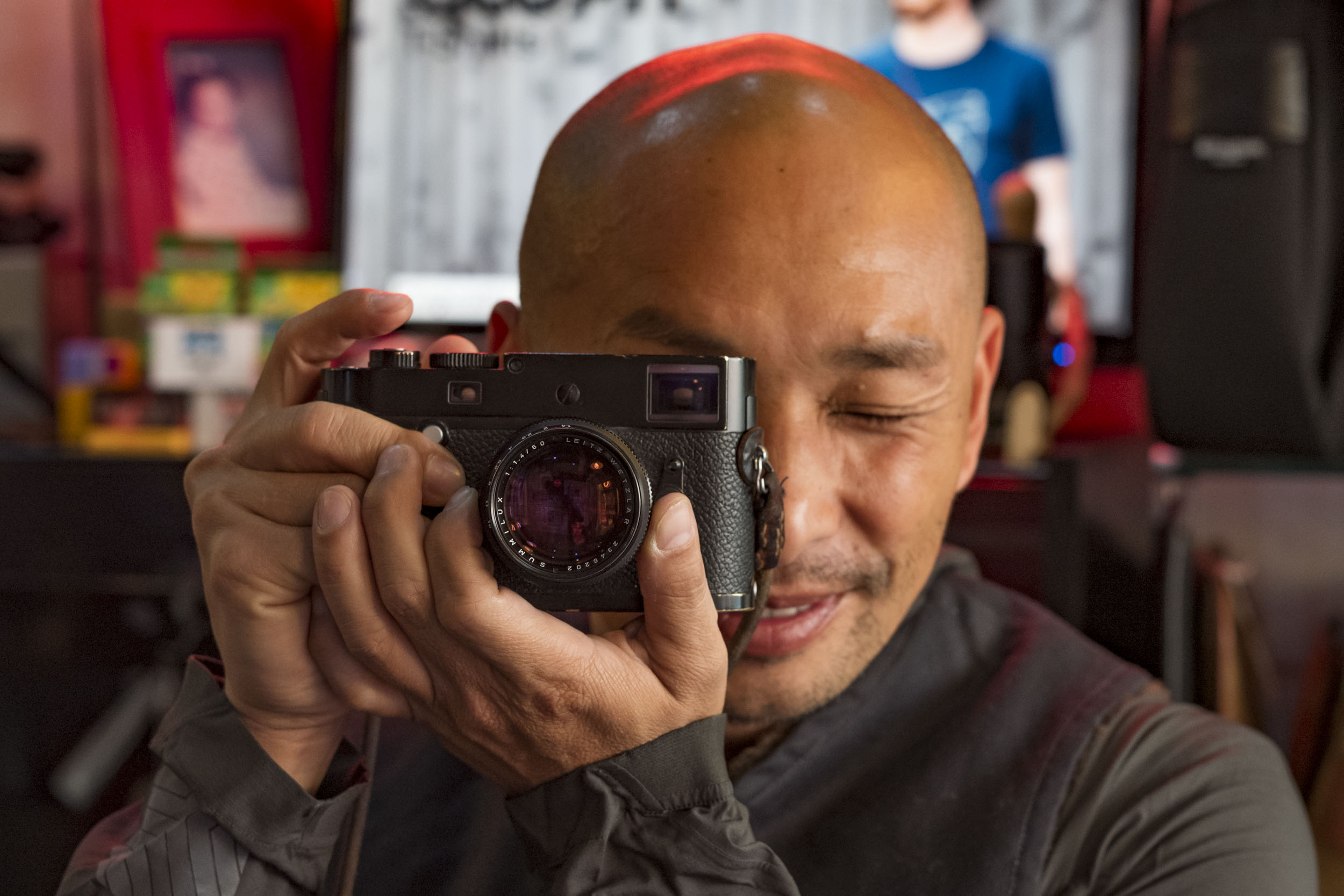
Autofocus with M lenses sounds like a contradiction in terms, and in a sense it is: it’s slow compared with a native Sony lens, and it hunts more than you’d like in dim light, but it does actually work, and it’s a clever piece of engineering that solves a problem most of us assumed was unsolvable. Macfilos covered the Techart story in detail See Tech and the art of autofocus with M-mount lenses and the follow-up, Techart autofocus Leica-M adapter for Sony A7III, if you want the full story of getting autofocus out of lenses that were never meant to have it.
It’s worth remembering, too, that this wasn’t always a Leica story at all. Mirrorless cameras had been around for the best part of a decade before Leica itself offered one capable of taking M lenses: the Leica T didn’t arrive until 2014, and until then, all the running had been made by third-party bodies.

For more than five years, the real centre of gravity for M-mount adaptation was elsewhere — on APS-C Fujifilm X-series cameras and on Sony’s full-frame mirrorless line, both of which were adopted enthusiastically by M-lens owners with no Leica mirrorless option of their own to turn to. It’s easy to forget, now that Leica has a full mirrorless range of its own, that for a good few years the company was effectively watching its own back catalogue of lenses find a second life on other manufacturers’ cameras.
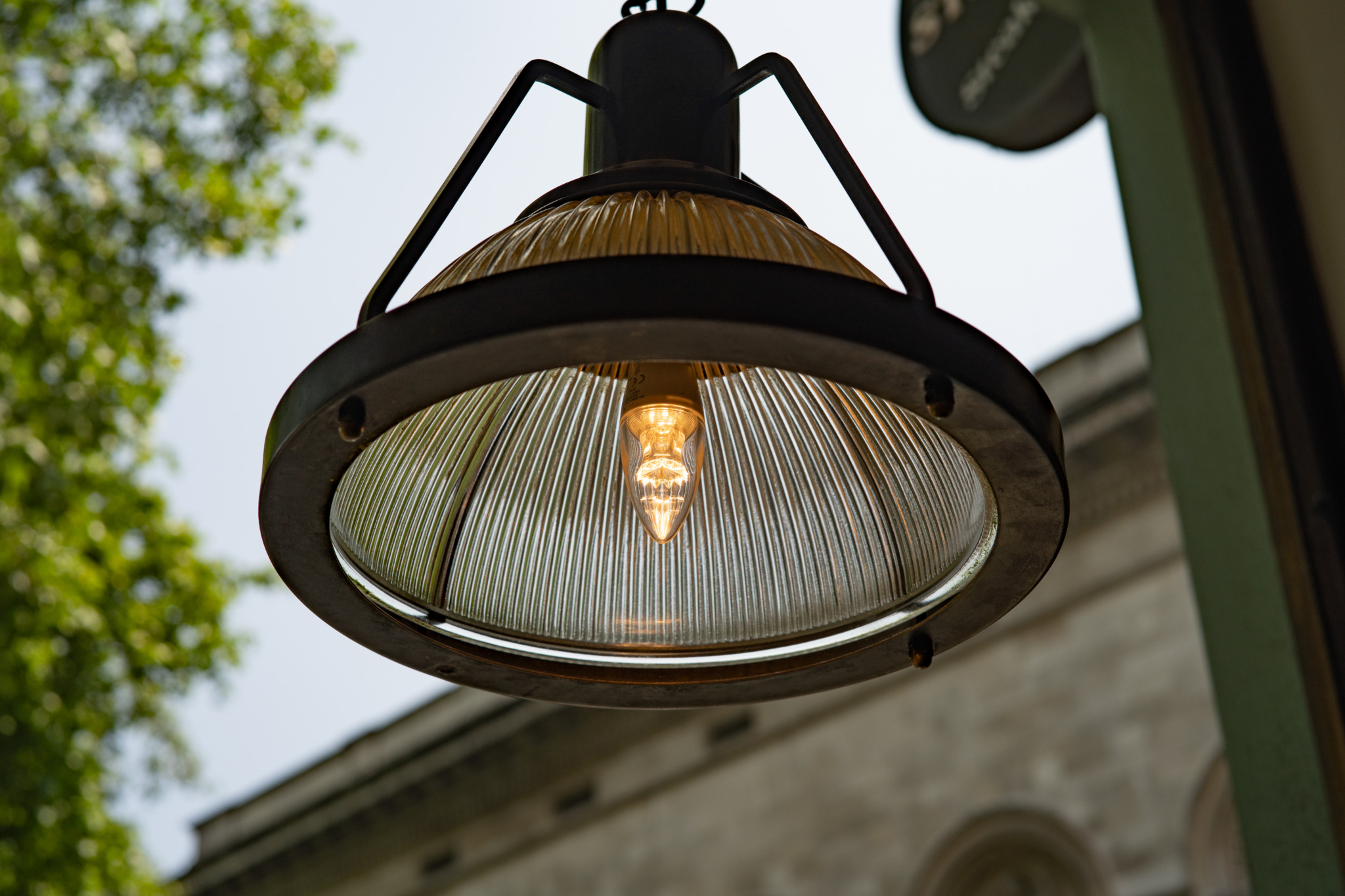
But my centre of gravity, at least in the past 20 years, has always been Leica cameras. More recently, I’ve owned various iterations of the SL, the original, the SL2, and more recently the SL3, and each has been, at different points, my main M-mount host. And then there’s my latest acquisition, the M EV1, Leica’s electronic-viewfinder-only M-series body, which needs no adapter at all because it is an M-mount camera.
It’s easy to forget amid all the adapter talk that the M EV1 is perhaps the purest implementation of using M-mount lenses on a mirrorless camera that currently exists. There’s no intermediary, no extra flange distance to compensate for, no sensor for reading lens data bolted onto the front.
The lens simply mounts, as it has done on every M camera since 1954, and the camera’s own systems — live view, focus peaking, and its EVF-driven magnification — do the rest. I wrote about that experience at length in Leica M with EVF: I have the next-best thing.
What the M-Adapter-L actually does — and doesn’t do
For the SL-series bodies, though, an adapter is unavoidable, and the one I use is Leica’s own, officially called the M-Adapter-L (it comes in silver, part number 18765, and black, 18771). It’s a clever piece of kit: the M-Adapter-L incorporates a contact array that reads the six-bit coding etched into the rear of many M lenses, a series of small black-and-white notches that identify the lens type to the camera.

When it recognises a coded lens, the SL body can apply lens-specific corrections, support aperture-priority metering more accurately, and write the lens identity into the image’s Exif data. This is a thoroughly useful bit of housekeeping if, like me, you shoot with several M lenses in a session and want to know afterwards which one made which frame.
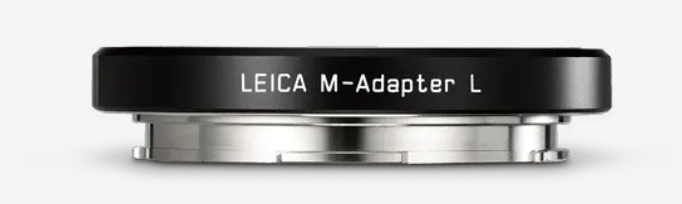
It’s an excellent, if unglamorous, piece of engineering, but not a weightless one. Officially, it adds around 70g to whatever lens you’re using, and roughly 15mm to its overall length. Leica lists the adapter itself at 61mm in diameter and 15mm deep. It costs £450 | $480 | €465 (but check locally, and there are often good used bargains to be had).
The weight of an adapter is not to be discounted. Stack it onto an already substantial lens such as a 50mm Summilux-M and the combination stops feeling like the svelte rangefinder kit it used to be. It’s one good reason to choose the M EV1 if all things were equal.
This becomes the one real, unavoidable downside of adapting rather than mounting natively. Every adapter, however good, is extra, glass-free real estate, that adds bulk, adds a mechanical joint that is one more thing to have machined to perfect tolerances. In cheaper designs, it is one more place for play and misalignment to creep in.

Why I default to the official adapter anyway
Given the extra weight and length, and given that plenty of third-party alternatives exist at a fraction of the price, I could reasonably be talked out of paying Leica’s premium for its own M-to-L adapter. I haven’t been, for a handful of reasons that have accumulated into a fairly settled preference:
It reads the six-bit coding reliably, which several third-party adapters either can’t do at all or do inconsistently, Furthermore, once you’ve grown used to having lens identity and vignetting corrections applied automatically, going back to guessing is annoying.
The build tolerances match Leica’s own, which matters more with M glass than with almost anything else because rangefinder lenses were engineered around a very precise flange distance. Any slop in an adapter shows up immediately as softness or mis-focus at wide apertures. However, manufacturing tolerances are less important when using an electronic viewfinder, where you have WYSIWYG for focusing. Even a misaligned lens can produce decent images on a mirrorless camera.
It’s a known quantity across the whole family of L-mount bodies I’ve use — T, TL, CL and SL (which is the only one still in production) — so I’m not carrying different adapters, with different tolerances and different quirks, for different cameras.
There’s a resale and reliability logic to buying the Leica part: its adapters hold their value, seemingly never go out of production, and don’t leave you stranded when a small third-party manufacturer folds or discontinues a line.
And, perhaps least rationally but not unimportantly, it simply looks and feels right: machined, and finished to match the cameras and lenses it sits between, rather than looking like an afterthought bolted on for cheapness.

One lens, three focal lengths: adapting across sensor sizes
One of the more entertaining side effects of M-mount’s compatibility with almost every mirrorless system is that the same physical lens behaves quite differently depending on the size of the camera sensor. Full frame, APS-C and Micro Four Thirds sensors all crop the image circle a Leica lens was designed to cover, and the smaller the sensor, the longer the lens effectively becomes.
| M lens focal length | APS-C equivalent (1.5×) | MFT equivalent (2×) |
|---|---|---|
| 28mm | 42mm | 56mm |
| 35mm | 53mm | 70mm |
| 50mm | 75mm | 100mm |
| 75mm | 112mm | 150mm |
| 90mm | 135mm | 180mm |
| 135mm | 203mm | 270mm |
There is one important caution to bear in mind because it’s the part of the “equivalence” conversation people most often skip over: cropping to a smaller sensor changes the angle of view a lens delivers, but it doesn’t change the lens itself.
The optical formula, the maximum aperture, and — crucially — the depth of field the lens renders at any given aperture are all fixed properties of the glass, not of the sensor behind it. A 28mm M lens used on Micro Four Thirds frames like a 56mm lens, but it still focuses, and still throws its background out of focus, like the 28mm f/2 (or whatever the maximum aperture happens to be) that it actually is.
Put this another way: that “56mm equivalent” view in the MFT chart doesn’t provide the same opportunities for shallow depth of field and background separation that a genuine full-frame 56mm, or the nearby 50mm, lens would give you at a comparable aperture. You gain reach, in the sense of a narrower field of view from the same shooting position, but you don’t gain the compression-and-shallow-focus character that traditionally goes with a longer lens. That character comes from the lens’s real focal length and aperture, not from the crop.
It’s a decidedly different optical result dressed up in the same “equivalent” number, and worth keeping in mind before assuming a cropped wide-angle behaves, in every respect, like the longer lens it now frames as.

Practical convenience
There’s a practical convenience in this once you own bodies across two or three sensor sizes. A single 50mm Summicron becomes a standard lens on full frame, a useful short telephoto on APS-C, and a proper portrait lens on Micro Four Thirds. These are three distinct tools out of one piece of glass, without buying, carrying or learning a second or third lens.
You can travel light and cover a range of “effective” focal lengths without a bag full of optics. Owning one exceptional M lens and a couple of adapted bodies of different sensor sizes is a thoroughly elegant way to do it. It’s part of why the adapter market has stayed so healthy even as native autofocus glass has improved.
The trade-off, though, is real, and it bites hardest at the wide end. Every crop factor works both ways: what gives a useful boost when you want a longer reach becomes a serious handicap when you actually want a wide angle. A 28mm M lens, a moderate wide-angle on full frame, becomes a 42mm “almost normal” lens on APS-C, and on Micro Four Thirds it is the equivalent of a 56mm lens, squarely in nifty-fifty territory and nowhere near wide.
Genuine wide-angle options effectively disappear on the smaller formats unless you go hunting for the handful of extreme M-mount wides, 12mm, 15mm — that exist specifically to claw back some width once the crop factor has had its way with them. And, bearing in mind the caveat above, that 56mm-equivalent framing you get from a 28mm on Micro Four Thirds is only an equivalence of angle of view — you’re still shooting with a wide-angle lens depth-of-field behaviour, not that of a 56mm lens, so the picture you get is neither a true wide-angle shot nor a true short-telephoto one, just the field of view of the latter borrowed from the rendering of the former.
The real catch
It’s the one real catch in the “one lens, many bodies” convenience: the format that makes a telephoto lens feel like a super zoom is the same format that makes a wide-angle lens vanish, without actually delivering a proper substitute for either.
This is precisely why I tend to think in terms of a small stable of M lenses rather than a single one when I’m juggling formats. A 28mm and a 50mm together will cover full frame comfortably and still leave something usable at the wide end on APS-C, whereas either lens on its own, taken to Micro Four Thirds, drifts a long way from where it started. It’s a good discipline in itself: rather than buying a lens for every focal length on every body, you end up buying two or three exceptional lenses and letting the sensor size do the rest of the work. This is both cheaper and rather more elegant than the alternative.
Why manual focus still makes sense
All of this, adapters, coding contacts, crop factors, is really in service of a much simpler pleasure: manually focusing a well-made lens and getting it right. It’s worth remembering just how deep and how alive that lens ecosystem still is. The M-mount itself dates to 1954, and Leica has kept the mount essentially unchanged since, meaning any M lens from the last seventy-odd years still fits and functions on the newest bodies.
Go back further still, with a slim screw-to-bayonet adapter, and Leica Thread Mount (LTM) lenses reaching back to the early 1930s become usable too. You’re using genuinely pre-war glass, rendering images on a modern sensor.
And the ecosystem isn’t just Leica’s own back catalogue: Voigtländer has built an entire modern lens range in M-mount, at prices a fraction of Leica’s. Zeiss has done the same with its ZM line, alongside a long tail of Chinese manufacturers, TTArtisan, 7Artisans, Light Lens Lab and others, now producing M-mount glass of steadily improving quality. It’s an unusually rich, unusually affordable and unusually long-lived catalogue to choose from, and it keeps growing rather than shrinking.
Satisfying
None of that would matter much if manual focusing itself weren’t satisfying, but it is. There’s a precision to homing in on a focus point by eye and by feel — watching a rangefinder patch snap into coincidence, or a peaking overlay sharpen at exactly the right moment — that autofocus, for all its speed, doesn’t replicate. It slows you down in a way that, for a lot of photography, is no bad thing.
None of this, however, is an argument against autofocus, which remains the right tool for most situations. It’s simply an argument for why so many photographers who could use autofocus every day decide not to, occasionally, on purpose.
There’s also simply more to explore here than in almost any other corner of the lens world. Because the mount hasn’t changed in seventy years, and because Leica, Voigtländer, Zeiss and the newer Chinese houses have all kept designing fresh optics for it, a lens collection can span nearly a century of lens design philosophy.
Pick up a 1930s 3.5cm Elmar via an LTM-to-M ring, and you’re shooting glass designed before the Second World War; take a current Voigtländer Nokton 35mm f/1.2 Aspherical IV, and you’re using a lens released this year, built to modern optical standards but still, mechanically speaking, the same seventy-year-old language as the Elmar. Very few systems let you move between those two extremes on the same body, with the same adapter, in the same afternoon.
One word about the screw adapters. You’ll need one of these if you are using a lens more than around 65 years ago to convert the screw mount to M-Mount. These are very thin rings which screw onto the old lens and turn it into an M-Mount lens.
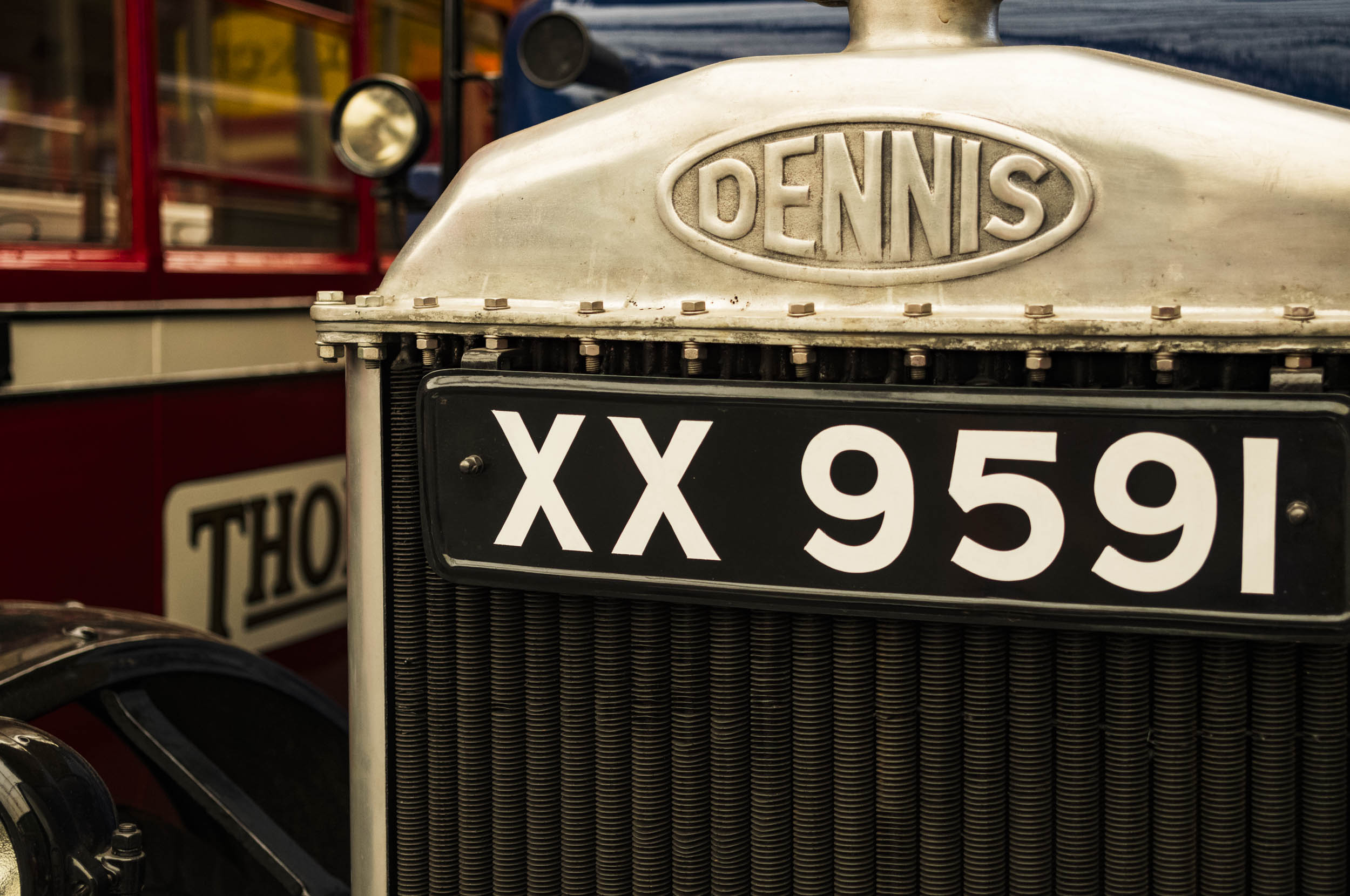
They come in several versions to ensure that the correct framelines are presented for the particular lens. The three official pairings are 28/90, 35/135, 50/75. Some early rings are also marked simply “28” or “50” on their own. This wasn’t a fourth pairing, but a way of telling you that a 28mm screw-thread lens on an M2 could use the outer edge of the viewfinder for rough framing, since 28mm didn’t get an official paired frameline of its own in the vintage line-up.
The original vintage Leitz adapters can be expensive, but Voigtländer and Light Lens Lab offer alternatives. There are also budget options available, if you are lucky, on Amazon or eBay.
The “smearing” problem
When considering using M lenses on mirrorless cameras, there is one reason why the new Leica M EV1 might be your best possible choice. It’s for a reason not often mentioned in these discussions.
“Smearing” is the polite word for what happens when M lenses, wide-angles especially, meet a sensor never designed for their acutely angled light rays. Corners soften, colours shift towards magenta or green, and fine detail dissolves into mush — worse on Sony bodies than almost anywhere else. The culprit is the sensor stack, the glass sitting above the sensor itself. Leica’s own M cameras use a deliberately thinner stack, closer to what film once demanded, so the steep rays from rangefinder glass land cleanly. Third-party bodies, built with autofocus lenses in mind, use thicker stacks and pay for it.
While putting this article together, I chatted with Jono Slack, who suggested adding smearing to this article. As he says, it relates to the cover glass, the focal length of the lens and the distance from the subject (the further you go, the closer the rear element to the sensor and the worse the smearing). He believes Fujifilm is bad in this respect, closely followed by Sony. Nikon, he says, is pretty good and, of course, Leica is the best.
The rangefinder M and the EV1 are built specifically for the requirements of the long catalogue of manual lenses. However, the situation with the SL3 range is not quite so clear.
There’s no public Leica spec sheet confirming a thinner sensor stack on the SL2/SL3, unlike the M-series claim, where Leica has been explicit. But the circumstantial evidence points the same way. Panasonic’s S1R (same L-mount family) measures roughly 2.4mm of cover glass, well above the ~0.8mm considered optimal for M lenses, and testers report needing f/5.6–f/8 before M glass sharpens up.
Leica’s own lens designer Peter Karbe has been notably evasive when asked directly about the SL2’s stack, and side-by-side tests (Leica SL2-S versus Panasonic S5II/S5IIx, both L-mount) consistently show the Leica body handling wide M lenses at wide apertures with visibly less corner smearing and colour shift. So the working assumption in the enthusiast community — reasonably well-supported but not Leica-confirmed — is that the SL-series does carry a thinner stack than its L-mount siblings, just without the marketing claim Leica makes for the M-series cameras.


Verdict
We have adapters from half a dozen manufacturers, compatibility with every major mirrorless mount and a lens catalogue running from 1930s screw-mount glass to lenses released this year, Furthermore, there is the purist native option in the M EV1 that requires no adapter.
It’s not remotely surprising that interest in M-mount keeps climbing rather than fading. Jim Fisher’s PCMag piece is a perfectly good entry point for someone arriving at this from the wider mirrorless world.
For those of us who’ve been here rather longer, it’s simply confirmation that the rest of the photography world has caught up with something M-mount owners worked out a long time ago.
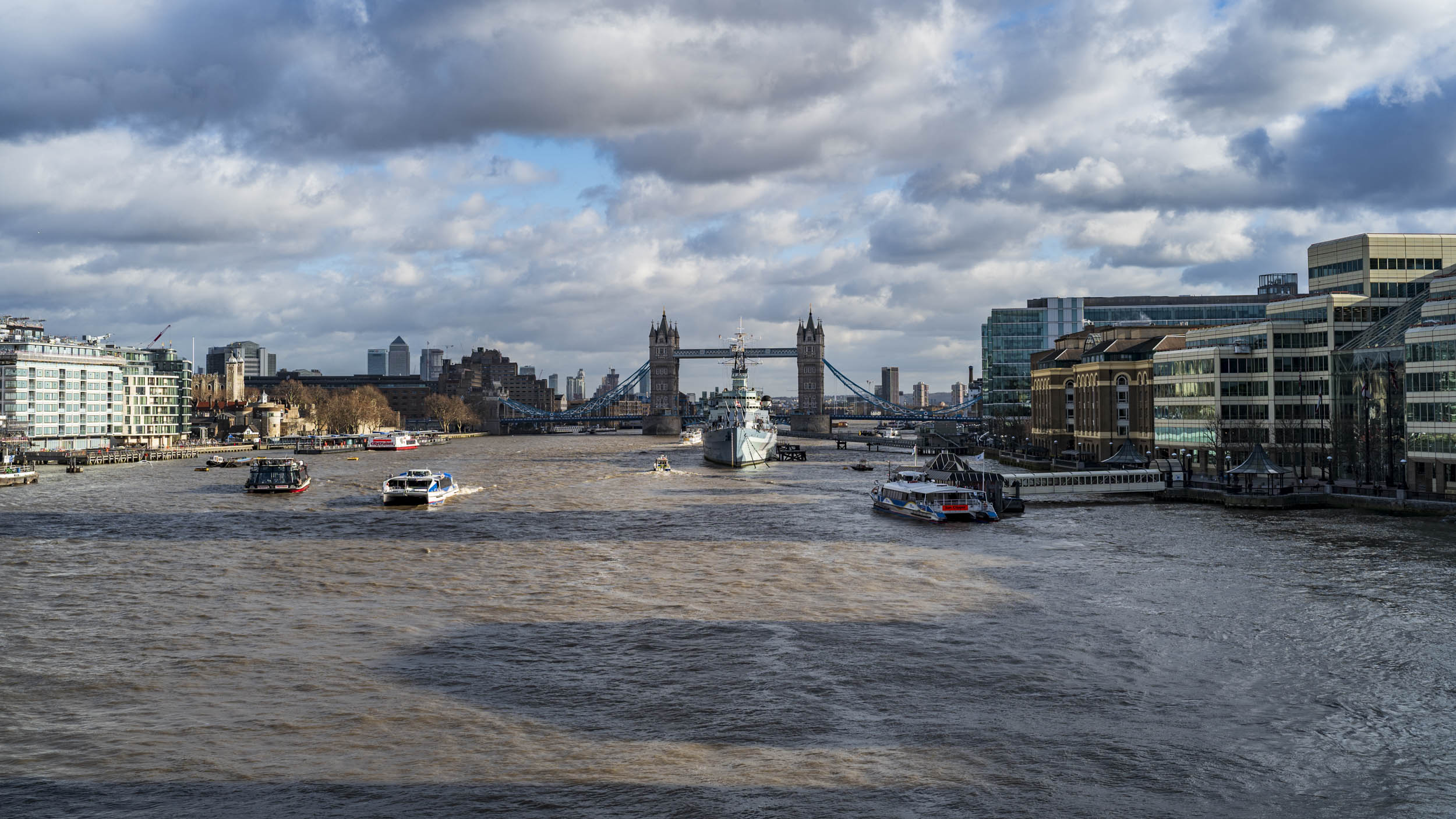
The feature image at the top of this article was taken with a Leica SL3-P and 35mm Summilux-M, the “Steel Rim”, one of Leica’s new reproductions of vintage lenses.
If you want to know everything about third-party M-Mount lenses, visit Jörg-Peter Rau’s M-Files Series. It is available in both English and German:
Further reading on Macfilos
Macfilos has been writing about M-mount lenses and adapters for over 15 years, including Jörg-Peter Rau’s long-running M-Files series, which has covered individual M-mount lenses in depth and, in one instalment, adapting third-party glass with six-bit coding. A selection of relevant pieces:
Source: Jim Fisher, “Why I Put 50-Year-Old Lenses on My New Mirrorless Camera (and Why You Should Too)”, PCMag.
I would like to thank Jonathan Slack for reading this article and offering some significant suggestions, including the section on smearing. Any errors are entirely my fault.
Make a donation to help with our running costs
Did you know that Macfilos is run by five photography enthusiasts based in the UK, USA and Europe? We cover all the substantial costs of running the site, and we do not carry advertising because it spoils readers’ enjoyment. Any amount, however small, will be appreciated, and we will write to acknowledge your generosity.
Dear Mr Mike Evans,
Thank you very much for an entertaining and interesting article regarding the use of slightly older lenses on modern cameras. In particular, I found the section where you explain that the focal length does not change when using these lenses on cameras with a smaller sensor to be especially well done, as you have managed to explain it in a simple and understandable way.When I try to explain it to my friends, they ask me to stop speaking Engineering.
I find it somewhat unfortunate when you describe these lenses as old. I have used many of them when they were new.
Kind regards, Paul de Kruiff
Me too! I’m older than most of them.
Great piece Mike. I can confirm everything that you say. Using old lenses on digital such as Fujis is an experience which is well worth trying. I have used everything from Hektors to ‘crons via adapters. In particular, you can get something of that thirties, forties and fifties Leica B&W feel (with a bit of judicious PP) out of a modern digital camera with them. Adapt on!
Many thanks, Peter. It’s great fun, as you say, but it’s nice to come back to a bit of AF for routine work (such as my reportage material for Macfilos).
Mike, thank you very much for your entertaining and well-written post.
I am just beginning to discover what you describe with the M-EV1… and using R-lenses with it, too. An interesting option!
A question for you: Do you have any experience with the “Canon 50mm f/0.95 Dream Lens”? Is its (at times) legendary reputation justified?
Thanks, Olaf. No I don’t have any experience with the Canon lens but I have something in the back if y mind. I handled one somewhere. A friend had it, I think. And I have a suspicion that we did an article about it a long time ago. — Mike
I was waiting for your mention of some 50 year old M lenses. I did not see any and instead just talk about adapting M lenses. This seems like click bait now.
Dear Anonymous,
The linked article covers the use of older lenses in more detail. Did you bother to read it?
I developed the wider story of using M lenses on mirrorless cameras. And, since we are a Leica specific site, I concentrated on Leica L mount lenses. This is what interests our readers.
Maybe the title was slightly misleading, but there was no malice intended. We don’t do click baiting at Macfilos.
More to the point, we do like to know who we are taking to.
Mike
I need no adapters. I shot manual-focus Nikkors (never aftermarket) on Nikon film cameras for 40 years. Now I am delighted to use them on my Nikon Df bodies. The Df will accept every F-mount lens Nikon made from 1959 to, what, 2022? (Correction, there are two that are incompatible). The oldest Nikkor I have was made circa 1966. That makes it 60 years old. It works better on digital than it ever did on film cameras. I like the rendering of the old lenses, I like the build quality, I like the tactile experience, I like the visual experience of an optical viewfinder. Considering my age, I doubt that I will ever “upgrade”.
Thanks Martin. I know there are many opportunities for manual lens use on a wide range of cameras. As you will understand, this was a Leica-centric approach and I had no time to go off at a tangent. However, thanks for the reminder. Mike
My bad. I took it as a “using old glass on modem cameras” topic.
It’s an easy mistake to make. We sometimes forget that since we are Leica-centric and don’t cover other makes (except L-Mount, Ricoh GR and Fujifilm) readers understand that we don’t mention Nikon and so forth. It’s just our specialised way of doing things. If you come fresh from the web, you wouldn’t realise that.
I recently acquired a ’61 years young’ Leitz 135/4 Tele Elmar M which has a reputation for ‘near APO’ performance and costs c. one tenth the s/h price of the current Leica 135/3.4 APO Telyt M. I’m more than happy with the purchase and can vouch for its superb imaging. So far only used with my CL as a c. 200mm FF equivalent optic – and now do not need to consider buying a s/h TL 55-135 APO costing 4x the price. Also bought a ‘good old workhorse’ Leitz 90/4 Rigid Elmar which will be using with M tubes as a lightweight alternative to my Sigma 100/2.8 Macro L-mount. I use s/h Novoflex adapters but also favour URTH ‘s adapters too – their build quality is as good as Novoflex. I also use Leitz / Leica R lenses on my L mount cameras.
Thanks, Dunk, and thank you for mentioning Urth and Novoflex. Both are good and I wouldn’t disagree with you on quality. I thought of expanding the article to cover third-party adapters but, apart from a mention, I couldn’t do justice to the subject without making the article too long. There is enough scope for another article when o get round to it.