
We all observe life around us but some of us are better than others. Some of our best-known photographers have become masters at capturing life in public places; from Henri Cartier-Bresson to Gary Winogrand to Vivian Maier to Elliott Erwitt and Martin Parr. They turned “everyday” life and the mundane into an art form of human interest. Now you can add Oliver Bennett to that list.
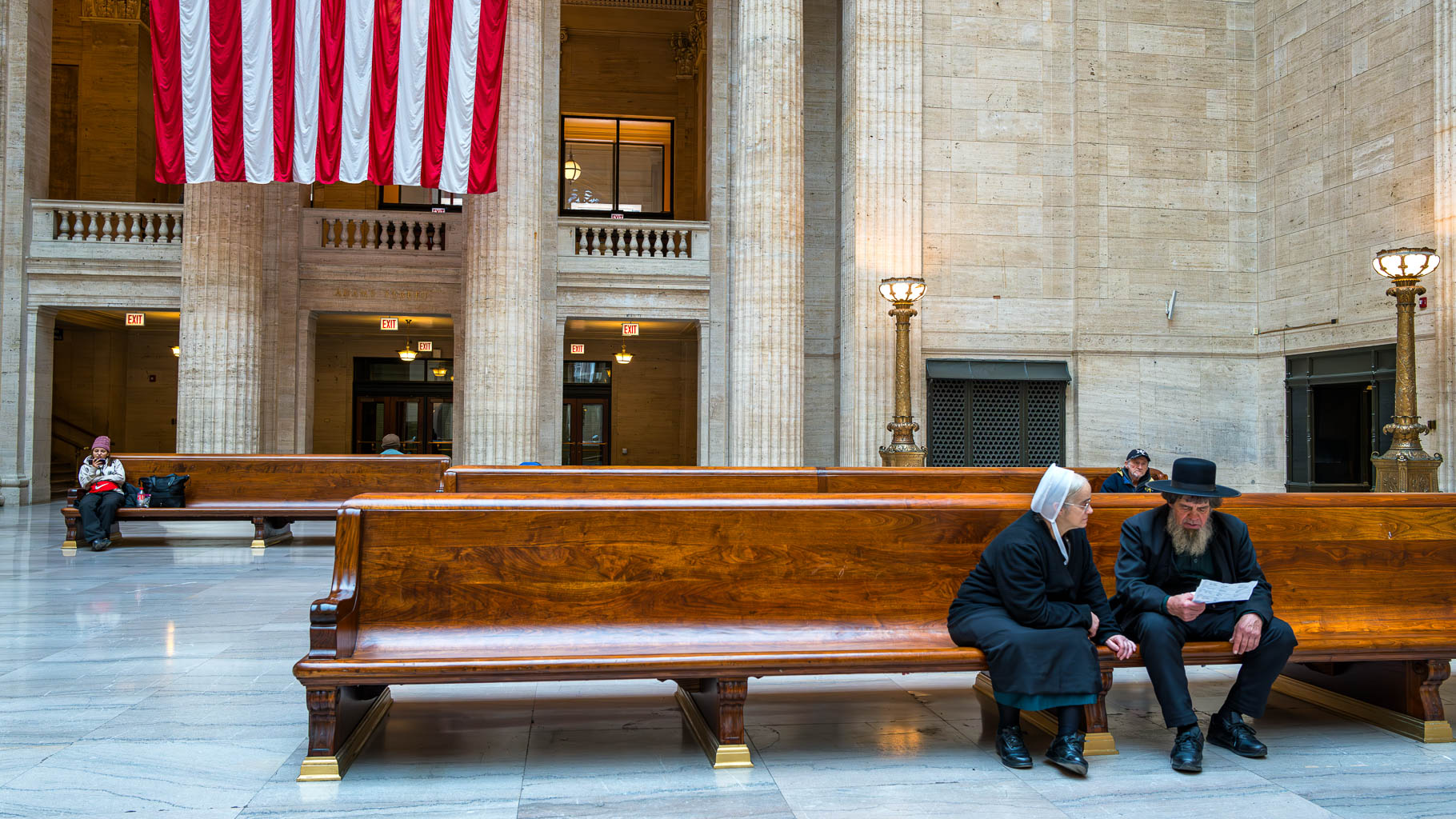
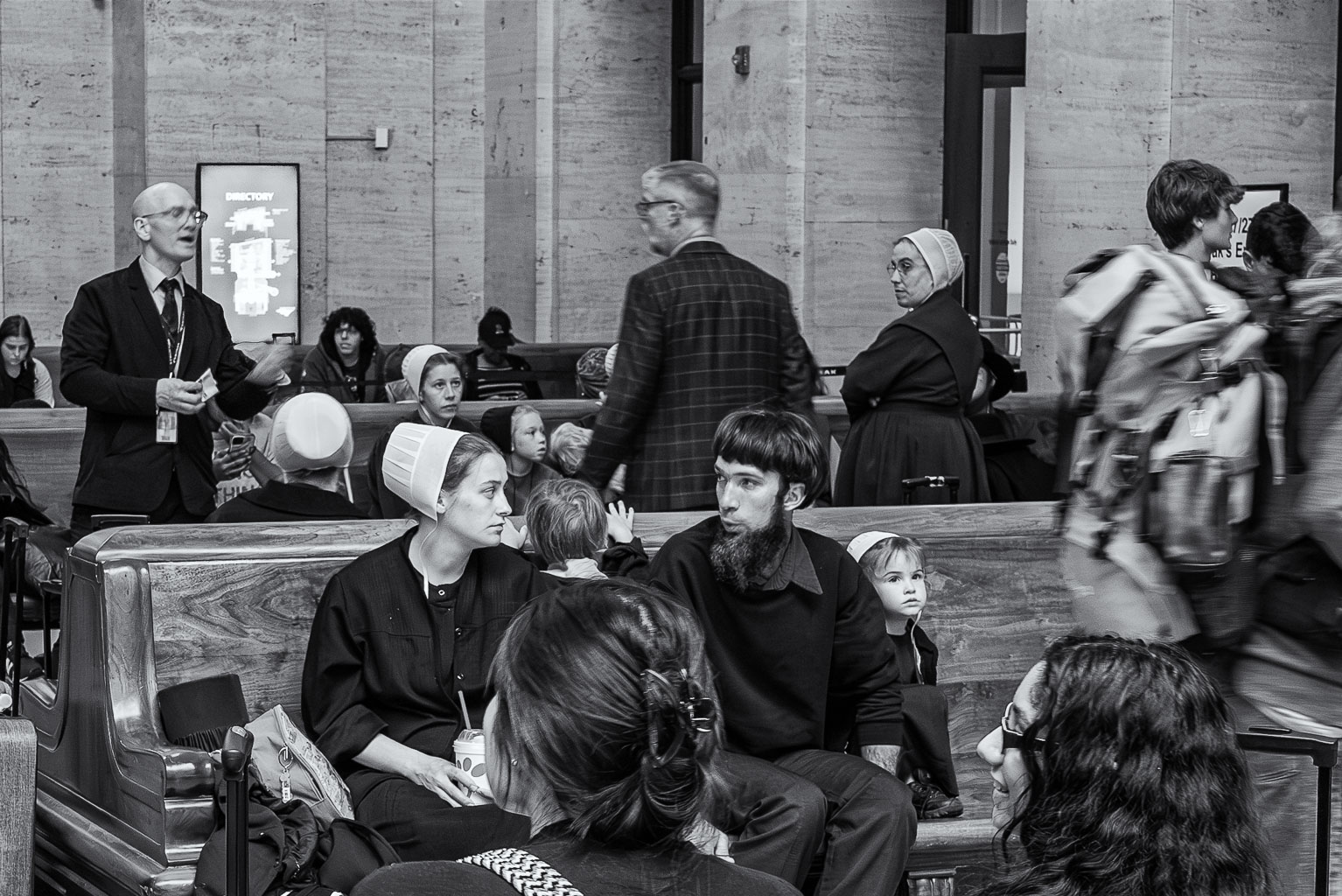
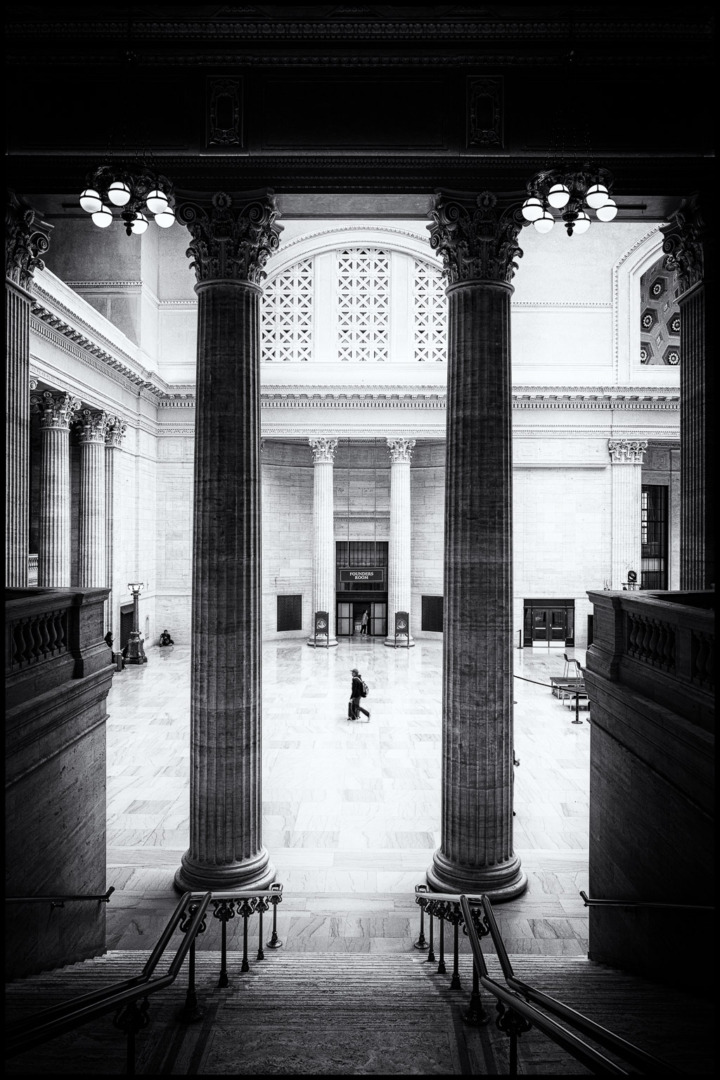
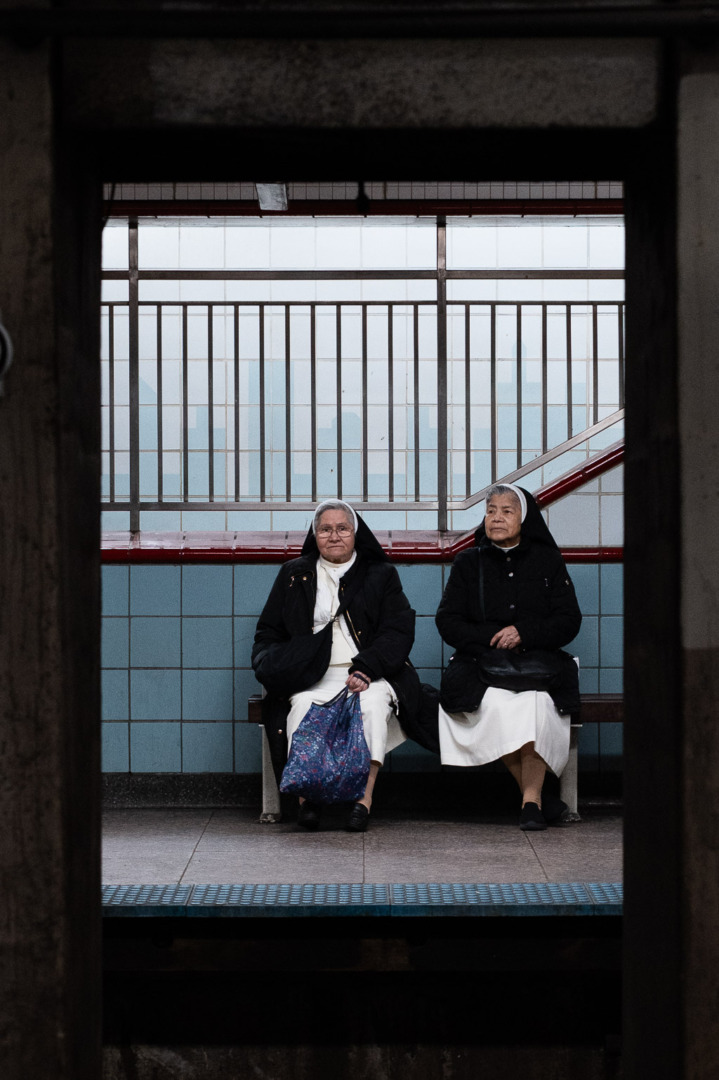
Please take a note on the pictures in this article. Sadly, we don’t have copyright permission to use Oliver Bennett’s photographs from his Amateur Photographer article about his work. Instead, we have raided our archives to find feature pictures that complement the idea behind Oliver’s article. I hope you enjoy them!
Frequently, observing life becomes heightened when we travel. Professional photographers and videographers often take on similar narratives. It can be exhilarating on a road trip to escape from the mundanity of every day life; when we head out on holiday, or to visit an interesting location. Each journey is unique in every sense but one. We see it from our perspective and our movement, on the way from somewhere to somewhere.
Capturing life in public places
But this photographic essay by Oliver Bennett is different. He photographs everyday life public places like service stations, bus stations, railway stations (maybe the clue is in the word “station” as an earlier project was titled “People on a Platform” shot at Bristol Temple Meads station), and even airports, that offer a window into people travelling through. Click here to find more examples of Oliver Bennett’s work.
About Oliver Bennett
Oliver Bennett mainly works as a documentary photographer, based in Bristol; focusing on everyday life in the streets, in the countryside and wherever people gather. His approach is to return to the same place, week after week, over a long period of time. This not only helps him get a more in-depth understanding of both place and people but also forces him to find new ways of photographing what he sees.
He is particularly drawn to transitional spaces like railway stations and airports, through which people move on the way to somewhere else. On any day of the year, you can encounter people from different backgrounds and travelling with different purposes. Many kinds of human drama play out, between long stretches of inactivity and apparent boredom. These places offer a special window into contemporary life, and photographs taken over time seem to build a layered picture of how we live now.
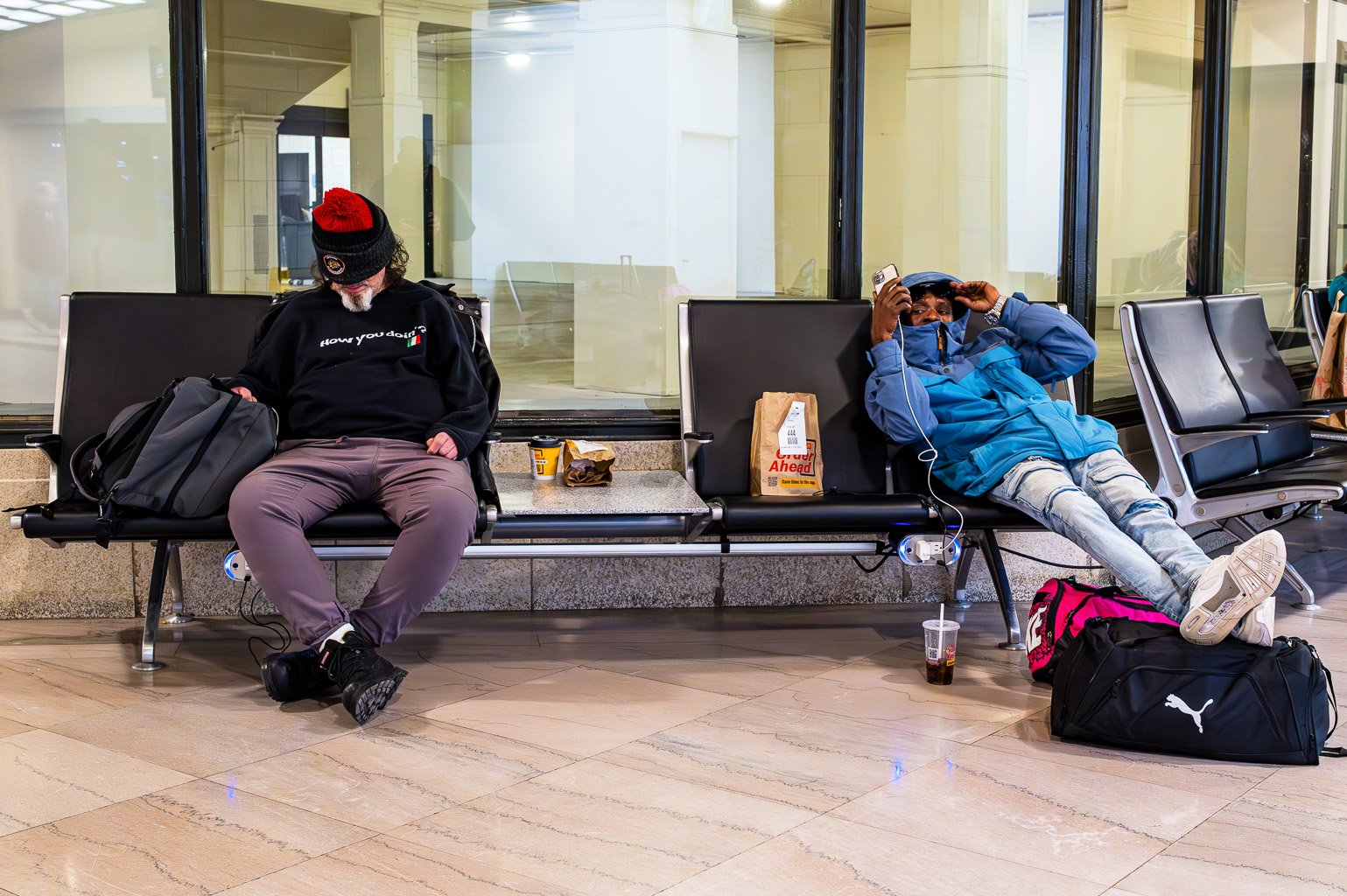

Instead of being on the road, you watch the movement of others from a static perspective. In this case, a motorway service station poetically called “The Welcome Break’s Gordano Services” to the west of Bristol, England, and conveniently just to the south of the M5/M49 motorway interchange. It’s where everyday happens to pass you by.
Oliver captures this changing tempo by time of day and day of the week. “I try to be open to whatever is in front of me. The taking of the photograph is usually a spontaneous act” he says. It’s a monumental accomplishment and dedication to his stamina to find scenes of interest to capture over the course of 12 months.
A window on Britain
“What I found in this most unlikely of places was a window like no other onto Britain today. People of every age and background, travelling for every imaginable reason, converged there in continually shifting patterns” he says. But there are ways to do this that are inclusive of the participants and the observers “There’s a fine line between laughing at people and laughing with them” he says, and it’s a line he’s learnt to tread carefully.
It’s theatre of the minutiae, of everyday life, taking place all in one location. The actors arrive, perform, take their bows, and leave. “I like to go back to the same place week after week over a long period. It helps me understand both the place and the people, but it also forces me to find new ways of photographing what I see” Oliver says.
It’s a brilliant piece of work. In the case of Oliver’s photographic essay, you see everyday patterns of behaviour captured in the service station, outside the service station in the car park. You see the bride and her bridesmaids gathering, a family picnicking, babies being changed. It’s everyday life all in one place. The service station is the Swiss Army Knife destination of life. You can do almost everything here that you might do in multiple other places, or on multiple other occasions.
Make a donation to help with our running costs
Did you know that Macfilos is run by six photography enthusiasts based in the UK, USA and Europe? We cover all the substantial costs of running the site, and we do not carry advertising because it spoils readers’ enjoyment. Any amount, however small, will be appreciated, and we will write to acknowledge your generosity.
Jon – late to the party reading this article. I did look at Oliver Bennett’s website after reading it, and he does have very interesting projects. Your own photos of the lone traveler and the waiting nuns, as well as the feature photo, capture the essence of his approach. I must say that while I have not quite been as disciplined as Oliver, returning to the same place regularly to capture different moods and moments, this is the type of photography I do enjoy. Having just spent too many hours in airports due to flight delays, I have found that a good way to while away the extra time is to walk around and get in more steps, as well as find photographic opportunities among my fellow travelers. Thanks for sharing Bennett’s work.
Ed
I was among around twenty folk that took a photo walk just last Saturday, it was organized by Stephen Dowling, the founder and editor of Kosmo Photo and centred on The Photographer’s Gallery in Ramilles Street W1.
We did around 7 miles… So not staying in one place 🙂
Anyway, it was great fun, and I have nearly a roll of his very limited edition of Kodak XX in my Leica, which I will develop once I have exposed the last 6 or 7 frames.
So staying still in one place will have to wait until the next roll, but it is a fascinating idea. and Jon has taken some great shots.
Who would drive the motorways and what’s more go to a service area in curlers?
I can’t say i’ve ever read an article about a photographer that featured somebody else’s work. I don’t know whether to be appalled or impressed.
I know Jon will answer this. But we wanted to run the story which is interesting. And for copyright reasons we had no images. I think Jon’s solution of using his own pictures was a good idea and the article turned out well. — Mike
You can be either, as you wish. It depends on knowing the context and what your personal views are that follow knowing that context. In the end I was interested and impressed by Oliver’s work. Since we are obliged to respect his copyright the only solution was an homage to the idea behind that work. Now if Oliver would like to publish directly with Macfilos we would be delighted to have him on board.
Jon
Very good substitute images! Whetted my appetite to find original Essay.