
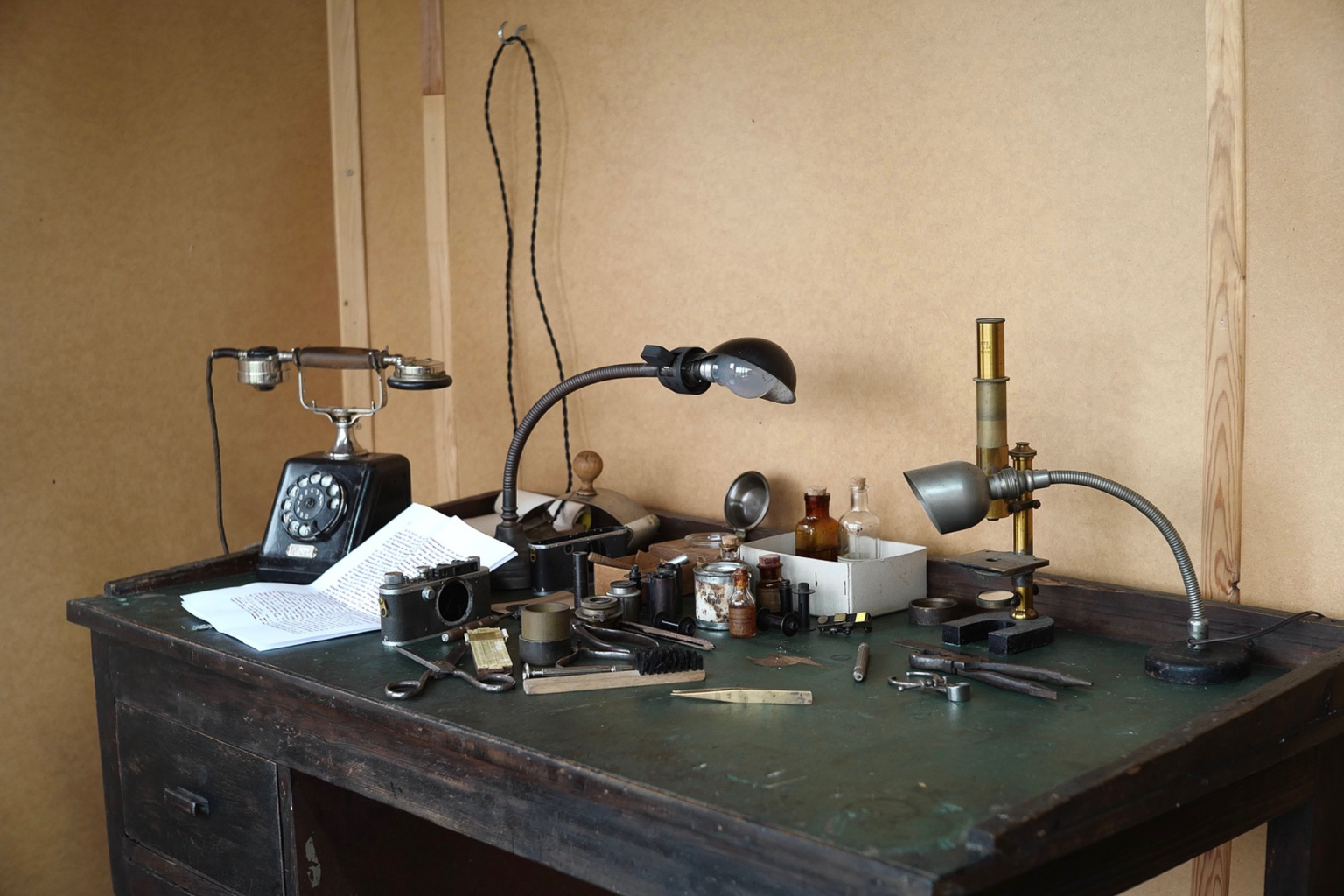
Alan Clark spent some 40 years with Leica UK, first as a camera technician and later as workshop manager. He also never threw anything away. When the time came to clear his home workshop in Luton, Alan offered David Stephens of Leica Store Manchester the chance to take on its contents, much of it rescued from the skip (dumpster if you live in North America) over the decades. David could hardly turn it down. What emerged from those boxes would set him on a two-year quest to recreate one of the most famous workspaces in photography: Oskar Barnack’s desk.
David had no idea what he would find. Box after box yielded thousands of spare parts and tools from the pre-war Wetzlar factory, along with long-forgotten accessories. Alan had joined Leitz in the golden years of the early 1960s, at Mortimer Street in London, and retired from Leica in Milton Keynes in 2005. Without his habit of saving things, almost all of it would have been lost. So, many thanks, Mr Clark. It may yet prove one of the most historically important Leica collections anyone has uncovered.
No Master Plan
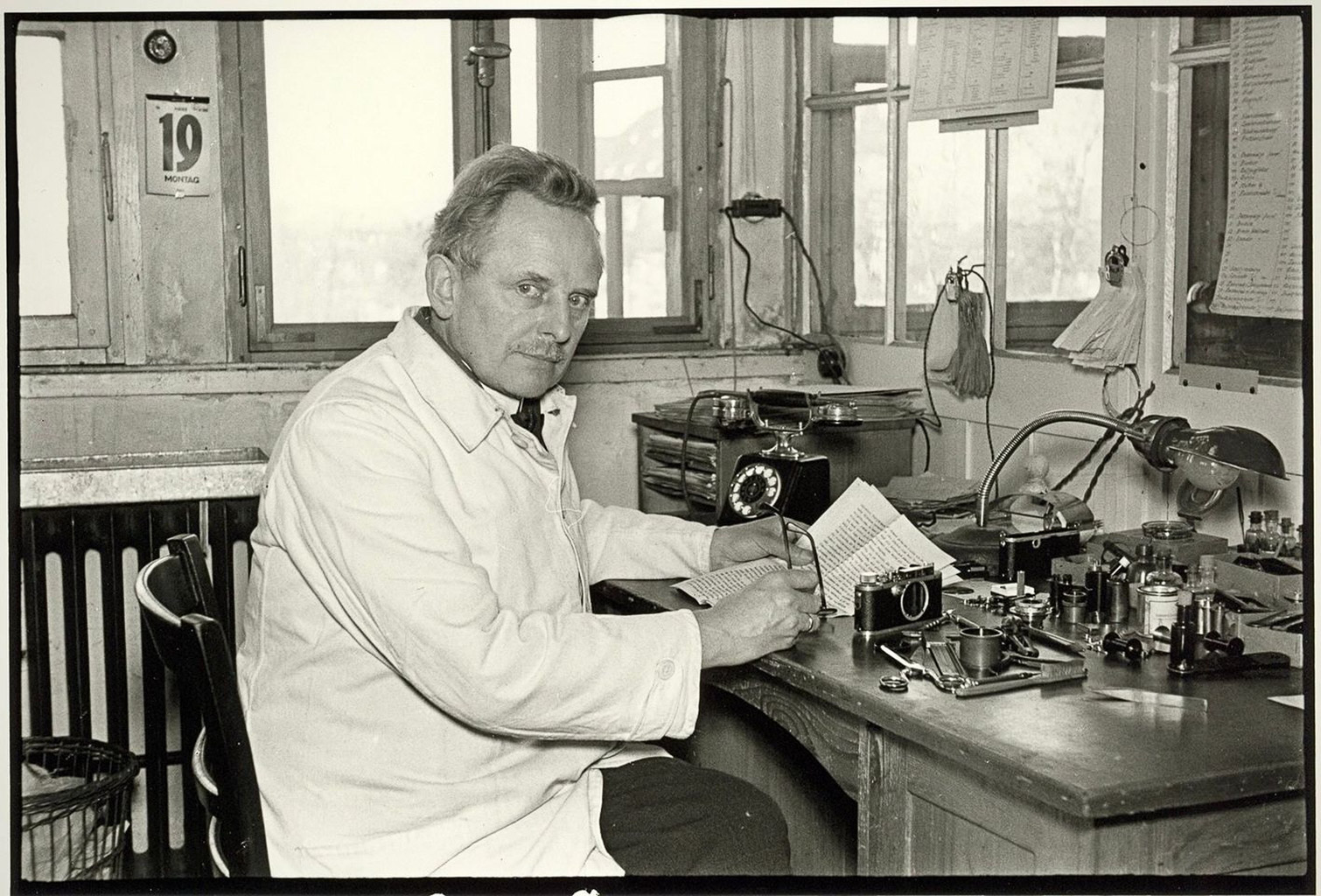
There was no master plan, no checklist and no declared outcome. But David vividly remembered the famous photograph of Oskar Barnack at his desk, and an idea began to form. To him, the picture was never simply the master at his workspace. It was a portrait of thought: the tools, the magnifying glass, the quiet order beneath apparent disorder. These were the instruments of a man who solved problems with his hands and his eyes.
Barnack had joined Ernst Leitz in Wetzlar in 1911 and built the prototype now known as the Ur-Leica around 1913. By adapting 35mm cinema film for still photography and settling on the 24×36mm frame, he laid the foundation for the modern compact camera. His guiding principle is usually summed up as “Small negative – big picture”. It made the camera portable, and capable of catching spontaneous moments.

On Monday, 19th March 1934 (St. Joseph’s Day), Barnack was at work in the Hausertorwerk, the Leitz building on the banks of the Lahn in Wetzlar, which Ernst Leitz II had acquired in 1921 to house his expanding business. It was a critical year for Leica, with the IIIa in development, and Barnack was by then one of the most influential engineers in photography.
Behind the lens
According to research by LSI member Alan Stokes, Julius Huisgen took the photograph at the request of Ernst Leitz II. Emil G Keller, writing in Viewfinder 28-1, places the desk on the second floor of the Hausertorwerk. Julius worked from a tripod with a 50mm lens and Perutz film, lighting the scene with a flash bulb. Readers curious about the photographer will find more in Viewfinder 11-1, from page 7 onwards. As a footnote, Julius was a guest speaker at the 1977 conference of the LHSA, as the society was then known. That photograph became David’s inspiration. His first question was disarmingly simple: could he find these things? Not replicas, and not something “similar”, but the same kinds of objects, of the same era, character, and intent.
The first object
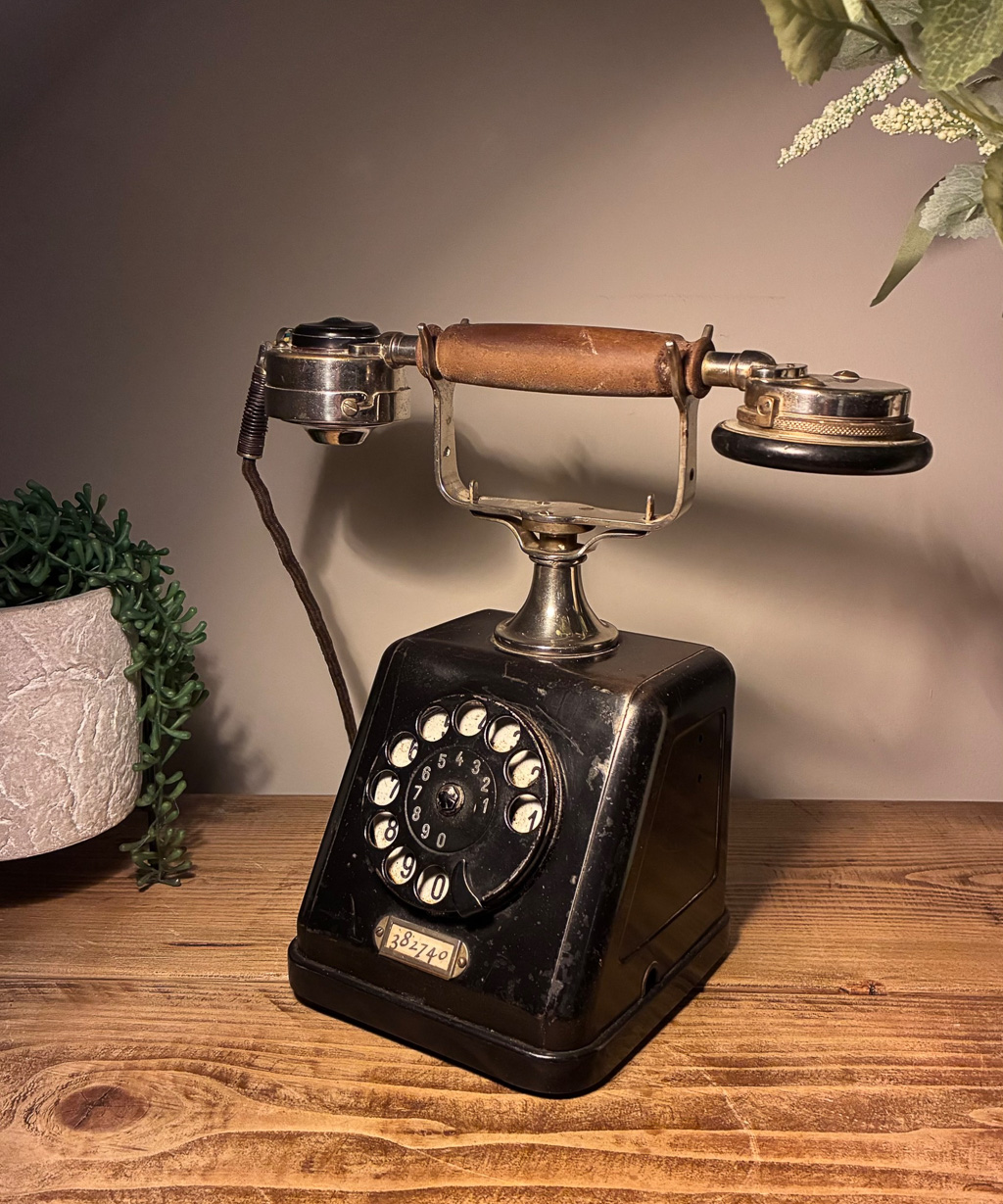
The telephone caught his attention first. It sits in the photograph almost apologetically, yet it is unmistakably there. After a period of searching, David found an identical model on eBay. The price, €300, gave him pause. Then he bought it. That moment, he says, was when the project quietly committed him. “Let’s crack on,” he thought, still without knowing why.
No end game
At no point did David decide what the finished project would look like. It might be sold. Maybe kept. Or be permanently assembled, each object fixed in place, so the desk can never again be disturbed — an archaeological moment suspended in time. Perhaps it could simply remain a challenge: working out what belonged where in the first place.

A formidable challenge
That challenge proved formidable. Some elements were straightforward. David made the inkwell himself and sourced a camera to match the one on the desk, while bottles bearing the Leitz name emerged from obscure listings and private collections. Gradually the lamp appeared, the telephone took its place and the desk itself began to assert its identity. Other objects resisted easy answers.
Disciplined guesswork
Lenses turned up, some genuine and some dummies. A Leica I pressure plate surfaced — the original circular version, without a film hole, that fits inside the camera body. Then another version appeared. Which one belonged on that desk, at that moment in Leica’s history? There were no definitive answers, only informed judgement.
David calls the process “disciplined guesswork”: research layered with intuition, guided by the logic of a working engineer rather than the rigidity of a catalogue. It mirrors Barnack’s own way of working. Historical accounts describe a practical engineer who relied on experiment and iterative prototyping rather than rigid theoretical planning, refining early Leica prototypes in the Leitz workshops while he tested film stocks, shutter mechanisms and optical performance in real conditions. This was not forensic reconstruction. It was empathy.
The internet archive
One revelation surprised David more than any single object: how much of this material still exists. Scattered across auction sites, specialist forums and forgotten inventories were fragments of a working life from a century ago. Here were the tools of experiment, the by-products of iteration, the physical evidence of a mind in motion.
Paradoxically, the hardest part was that first object. Once David had found it, the rest began to reveal themselves, and each acquisition sharpened his eye for the next. Momentum took over. The desk stopped being a collection and became a presence.
Twenty of thirty
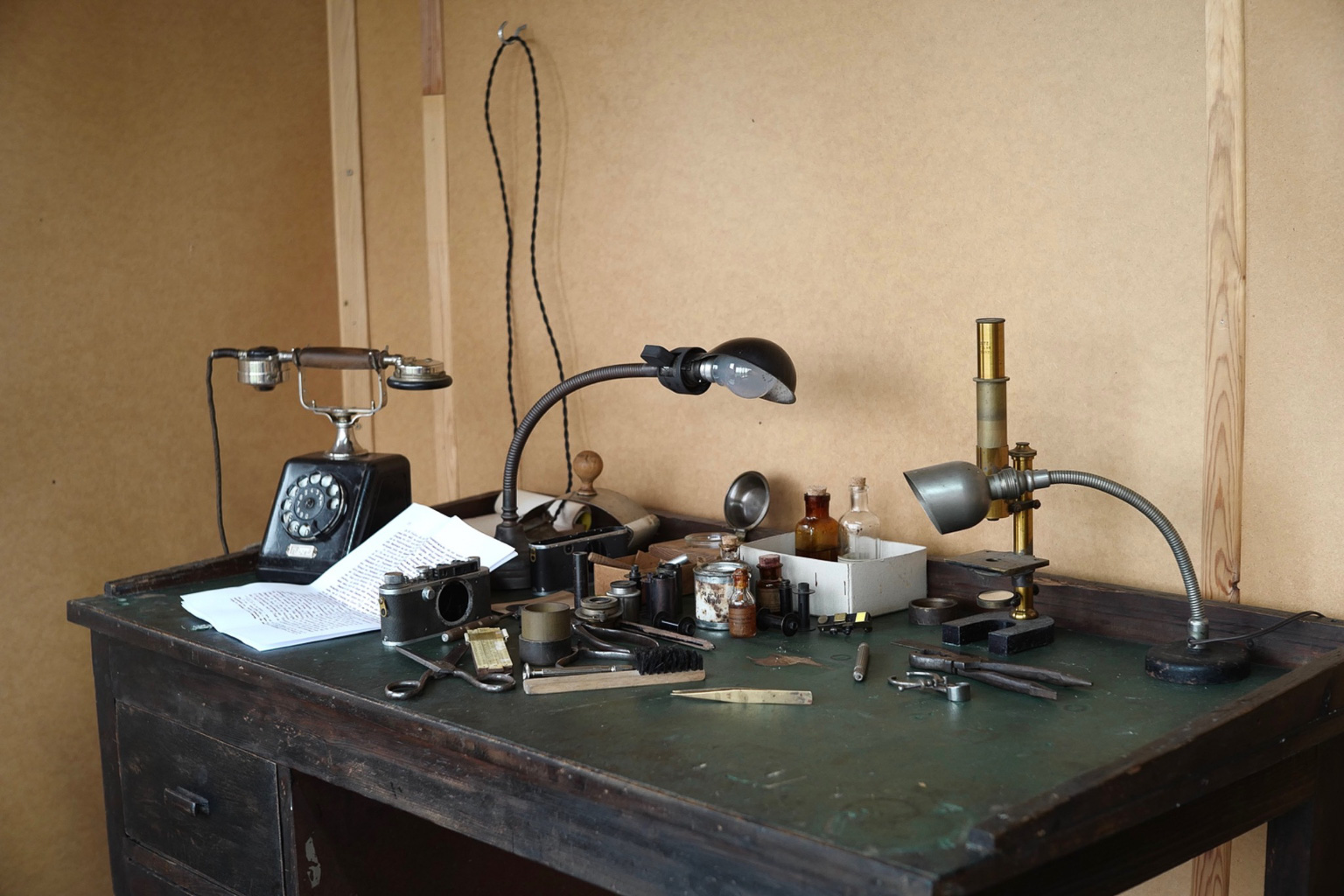
By David’s own reckoning, the famous photograph shows about 30 items, and he has so far collected around 20. First, here is the desk as it stood in March 2026. After that comes a closer look at seven of the finds with the most historical interest.
The telephone
The telephone sits prominently just behind Barnack’s left forearm, and it took an extensive search to track down. David eventually bought an identical model from a seller in Germany: a Siemens & Halske ZB.06 from the late 1920s. Founded in 1847, Siemens & Halske had become one of Europe’s dominant electrical engineering companies by the 1920s. Its telephones were widely used in industrial settings, including precision works such as Leitz in Wetzlar. A set like this would probably have connected to the factory’s internal switchboard, letting engineers and machinists coordinate between the optical design, machining and assembly departments.
The tweezers
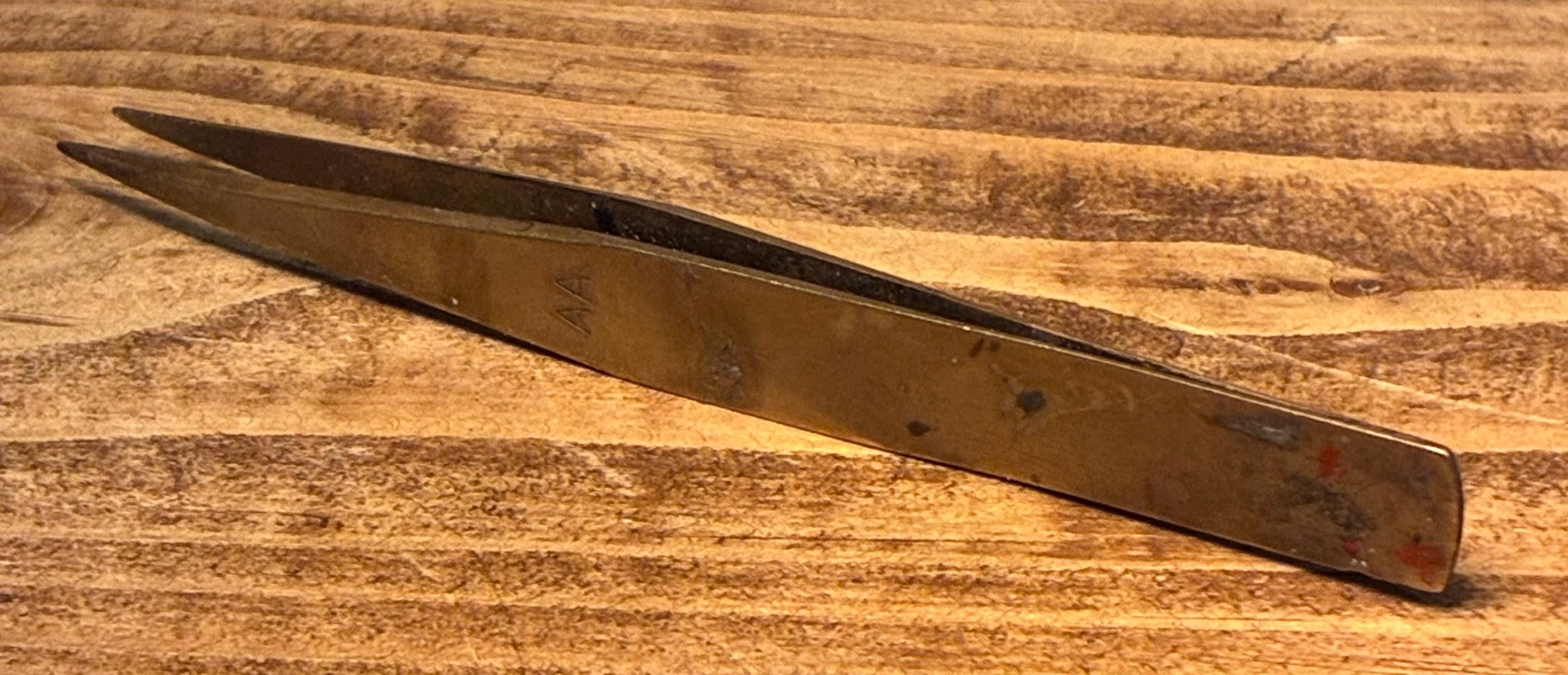
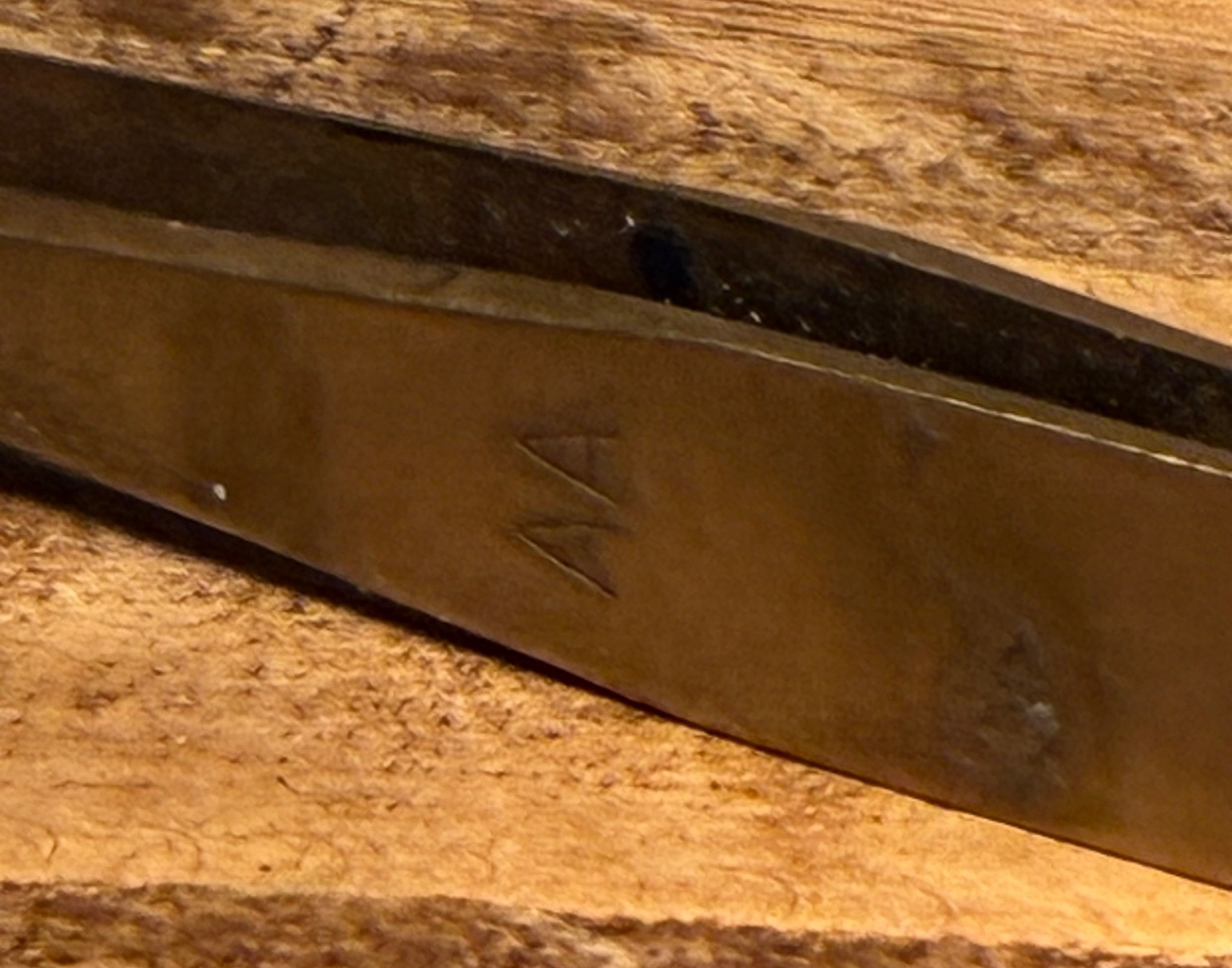
Tweezers are just the thing for picking up the hundreds of tiny screws inside a Leica. You might think a pair would be easy to find and, as it turns out, you would be right: a perfect set was hiding at the back of a drawer full of tools. These are not any old tweezers, though, but a beautifully aged brass pair stamped “AA”. Precision tweezers were indispensable in the Leitz workshops, where assembly meant handling miniature screws, springs, and shutter parts to extremely tight tolerances.
The ink blotter
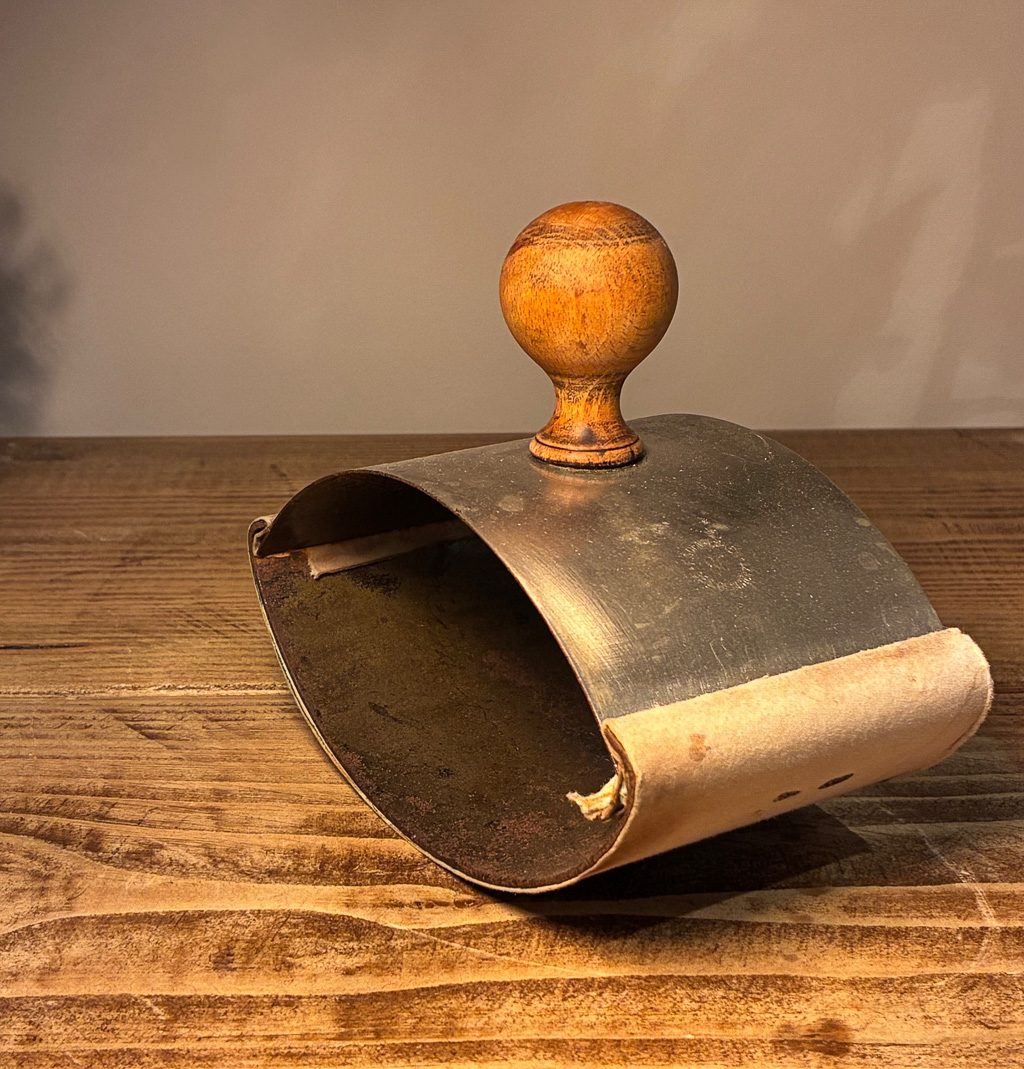
This one was a challenge. What on earth was the object in the rear corner of the desk, half hidden behind the lamp and the inkwell? The inkwell itself was the clue: it was a period rocker ink blotter. It took longer to find than anything else, eventually turning up on Etsy in France, patiently awaiting its place in Leica folklore. Before ballpoint pens became widespread after the Second World War, engineers relied on fountain pens, and blotters dried their technical notes, sketches and calculations.
The Fett can
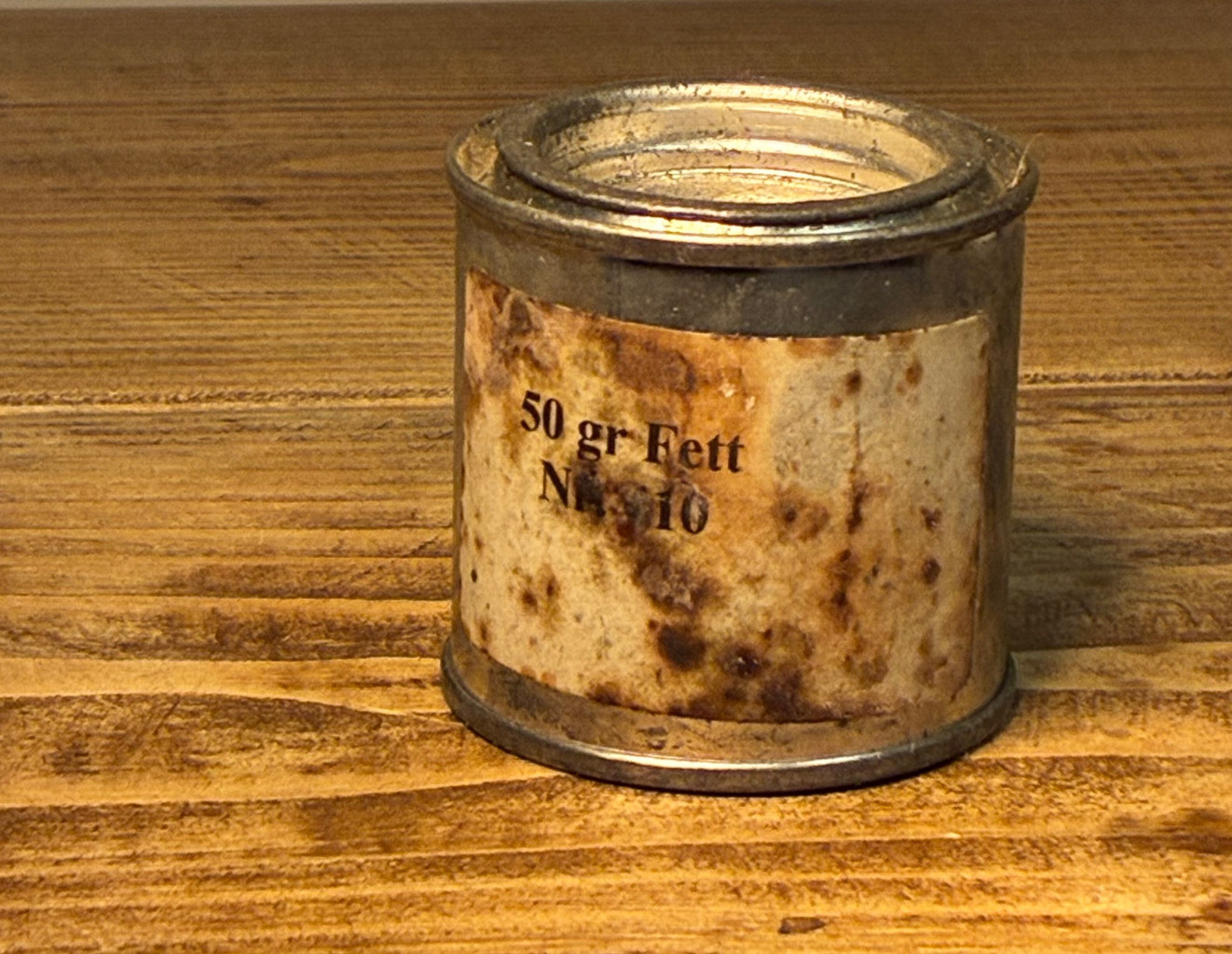
Among all the boxes were five of these metal tins, filled with grease (“Fett” in German) of varying viscosity for lubricating helicoids and the like. The smell is somewhat overpowering, so the can sits at the centre of the desk sealed tight. Lubrication was critical to Leica design. Precisely machined brass helicoids and shutter assemblies needed carefully formulated greases to give smooth focusing and reliable shutter operation across a range of temperatures. Now you know why your lens turns as though it were gliding on melted butter.
The letter
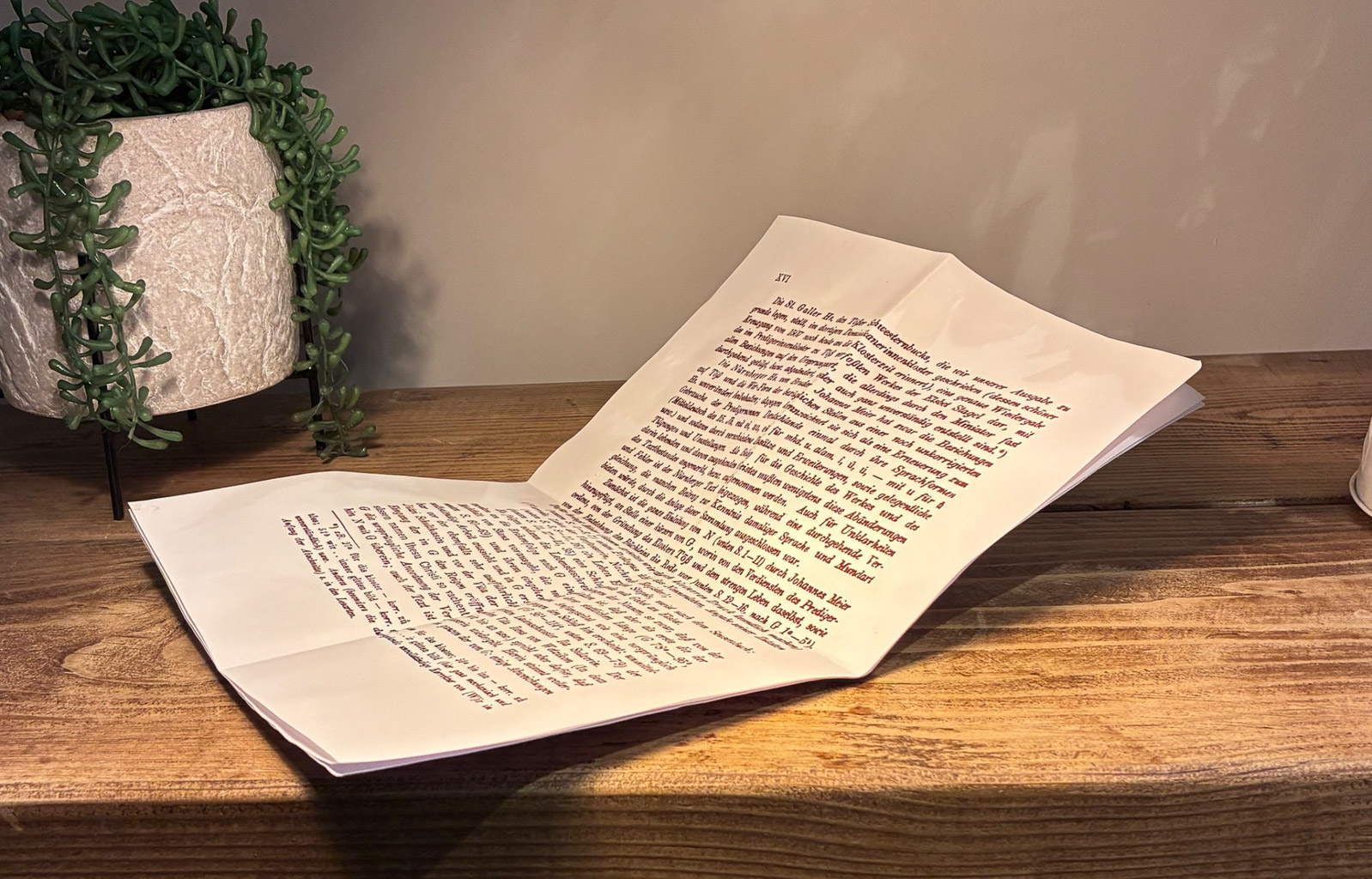
Correspondence played a significant part in engineering work at Leitz. During the rapid camera development of the 1930s, engineers regularly exchanged letters about prototype testing, component suppliers and mechanical tolerances. Unfortunately, the letter on Barnack’s desk can’t be deciphered. Reading it would have taken a Peter Karbe lens and a high-resolution sensor, and neither existed in 1934. Instead, David found some printed German text and folded and creased the sheets to mimic the papers on the desk.
The Leica IIIa
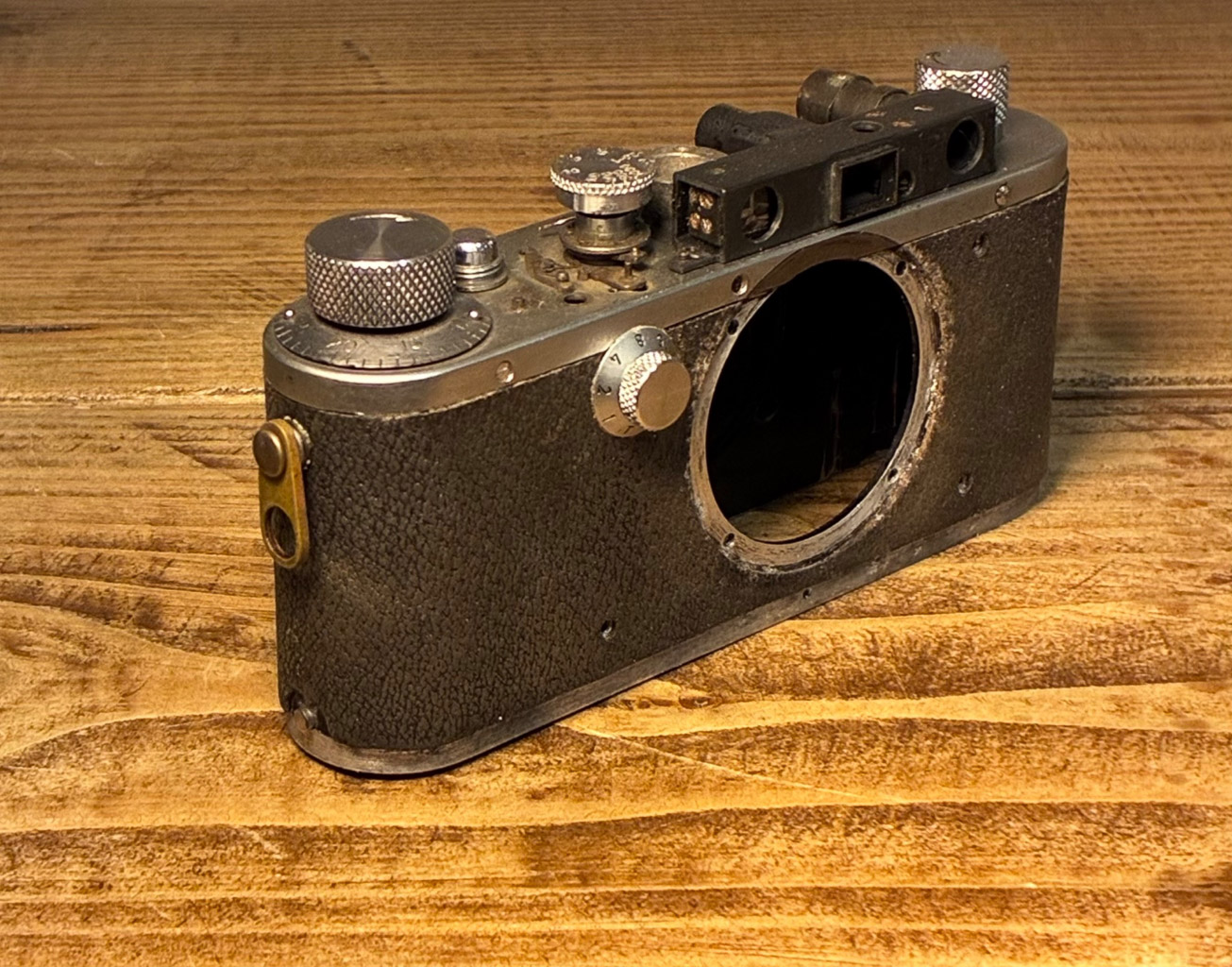
Another gem surfaced from one of the many boxes from Alan Clark’s workshop, and it makes for a neat coincidence. Barnack’s desk was photographed in 1934 when the IIIa was in development. Introduced commercially in 1935, the IIIa was the first Leica with a top shutter speed of 1/1000s, a significant advance for action photography and bright daylight. It was also among the last Leica models developed under Barnack’s direct supervision before his death in January 1936.
The PIX pencil
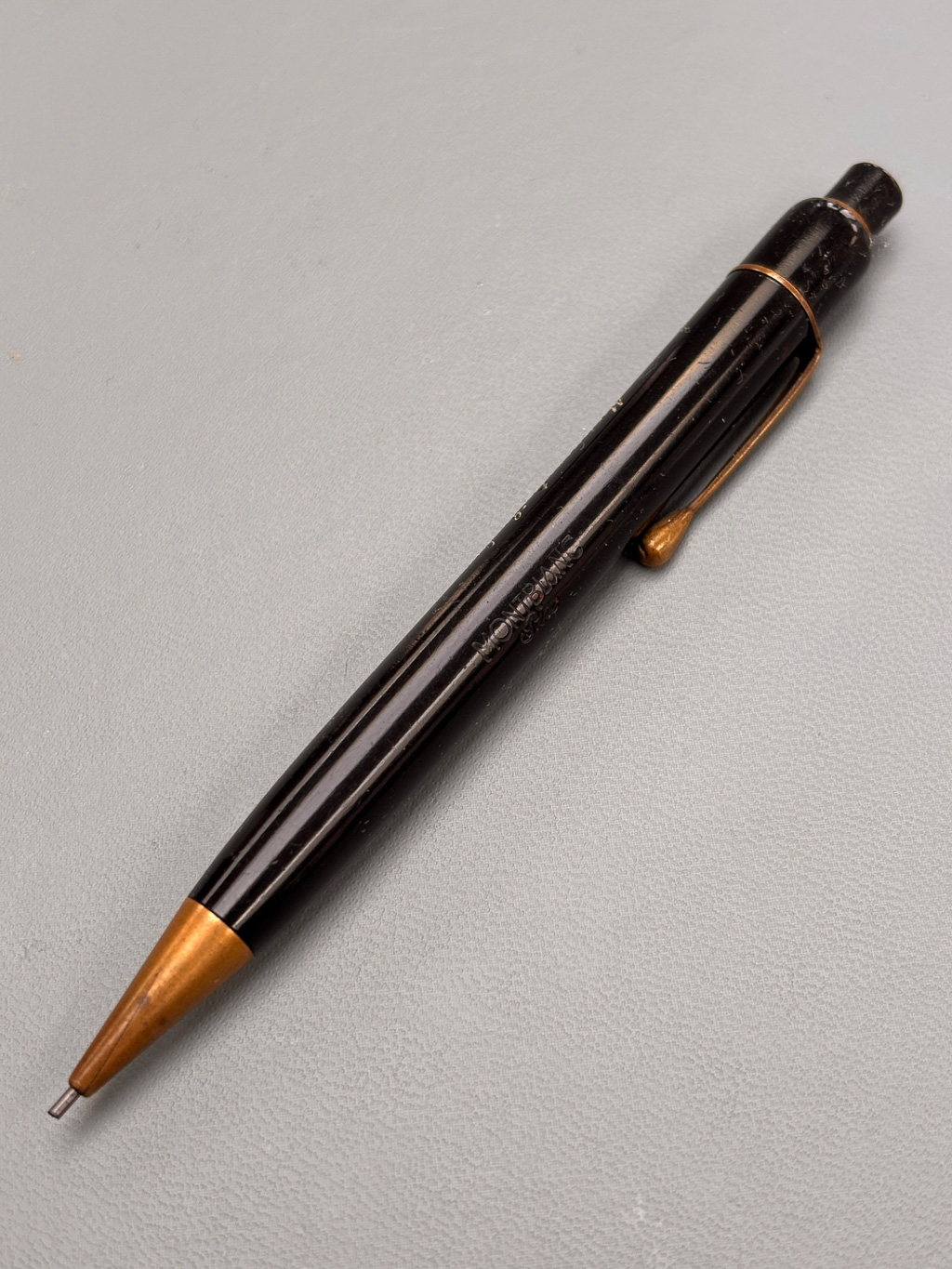
Bill Rosauer, editor of the LSI’s Viewfinder journal, has researched the Leitz family, Barnack, Max Berek and Leica’s history in great depth. According to Bill, Barnack rarely used an ink pen. Most of the Barnack notes in his possession are in pencil — a Bleistift, to be specific, the proper mechanical pencil an engineer would use. Barnack being the voracious inventor he was, he even designed a pencil that Montblanc went on to produce under the PIX name. He worked on it with a colleague from his Zeiss days, and it used a distinctive system for feeding the lead. Readers who want the full story can find it in Bill’s Viewfinder article and his post on the LSI blog.
When to stop
David believes a moment will come when nothing more needs to be added. That won’t be because everything possible has been found, but because the desk will feel complete, balanced and true. Until then the work continues, driven not by perfection but by respect.
In reconstructing Barnack’s desk, David has done something quietly radical. He has shifted the focus from the camera as artefact to the conditions that made it possible.
Unglamorous artefacts

The tools, the experiments, the unglamorous objects: these enabled one of photography’s most enduring revolutions. In the end, though, this is not a display of objects at all. It is a labour of love, and a reconstruction of how ideas become reality.
What will become of it? Perhaps it is best left as it was in 1934 — oil-stained, dusty and untidy, the desk of a master inventor who cared about the result rather than about process and uniformity.
In many ways, the reconstructed desk is more than a historical curiosity. It captures the working environment that produced the Leica, the camera that turned photography from a slow, tripod-bound process into a portable tool for recording life as it unfolds.
The Leica became the camera of the early photojournalists and documentary photographers, and it helped shape modern visual storytelling. And it all started with a retiring technician who couldn’t bear to throw anything away.
With thanks to David Stephens, Bill Rosauer, Alan Stokes and Ed Schwartzreich for their contributions to this article.
About the author
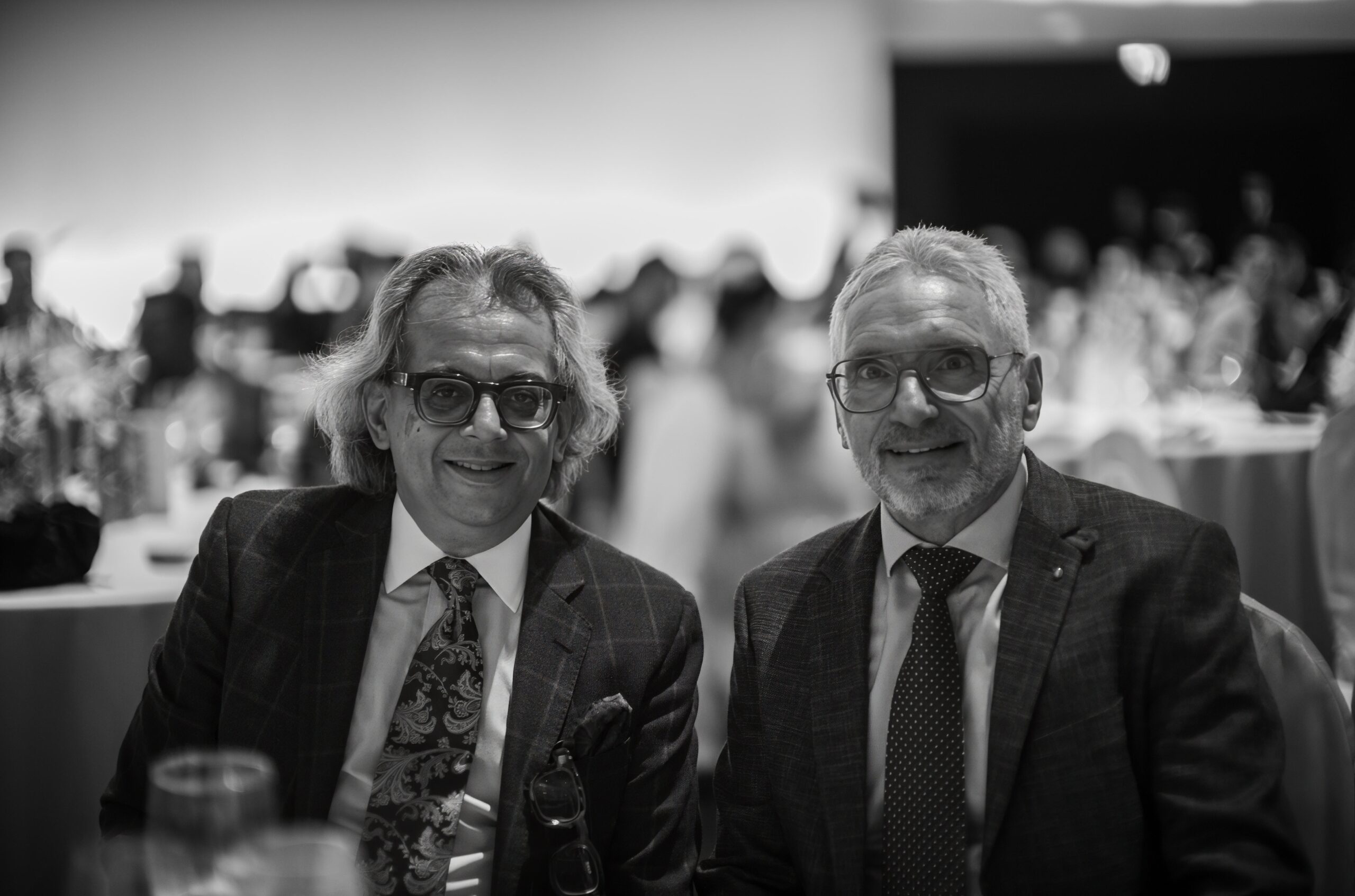

Amitava “Chats” Chatterjee is very active in the global Leica community. A Leica Society International Executive Committee member, he is published in Viewfinder and its associate editor and proofreader-at-large. He frequents various Facebook Leica photography groups and believes he founded the Instagram hashtag #ChasingLeitz. Chats built and owns www.lsiconnect.org, a global digital collaboration platform for LSI members, present and future, all thanks to Jono Slack’s desire for LSI to offer competitions. You can find Chats at www.chatsphotog.com, Facebook (@Chatsphotogpilot), Instagram (@Chatsphotog) and Medium (@Chatsphotog). David Stephens is managing director of Leica Store Manchester, which offers retail, Leica Akademie courses, tours, and classes. Chats hopes to visit one day.
Further reading
| Macfilos Articles | Other Links |
|---|---|
| Oskar One Zero Five comes in loud and clear – The tangled provenance of the 0-Series Leica linked to Barnack | How the world’s first Leica camera came to be – John Wade traces Barnack’s path from Zeiss to the Ur-Leica |
| 46th Leitz Auction: After 100 years, camera No. 112 leads the way – Another camera from Barnack’s own Wetzlar workshop | The first picture taken on a Leica – Barnack’s early Wetzlar photographs, including the Lahn floods |
| Leica cameras in the 1930s: A decade of progress – The IIIa in context among its screw-mount siblings | Oskar Barnack on Camera-wiki – A concise biography, including his Zeiss years |
| Leica IIIa brought back to life after 85 years: Flip or flop? – John Shingleton restores a IIIa of his own | Viewfinder, the LSI’s quarterly journal – Where Bill Rosauer and Alan Stokes publish their research |
| A century-old Leica I, stripped down and made whole again – Workshop craftsmanship of the kind Barnack’s desk represents | Leica Store Manchester – David Stephens’s store, home of the Leica “Stammbaum” |
Make a donation to help with our running costs
Did you know that Macfilos is run by five photography enthusiasts based in the UK, USA and Europe? We cover all the substantial costs of running the site, and we do not carry advertising because it spoils readers’ enjoyment. Any amount, however small, will be appreciated, and we will write to acknowledge your generosity.
I really enjoyed reading this article. What a project! Thanks for sharing this with us.
Hi Erica! David has done an amazing job and I am honored and humbled he agreed to let me document his efforts. I am glad you enjoyed the article! All the best and Happy Shooting. Hope to see you on LSI and LSIConnect.org. Best, Chats
All credit to David for taking this project on. I enjoyed reading Chats article in Viewfinder originally, and again now. Really pleased it is getting wider circulation here through Macfilos, and hope it produces access to artefacts and clues about items in the photograph.
Thanks so much, Keith. Thank you for your support of LSI. Glad you enjoyed reading Barnack’s Desk. Agree wholeheartedly regarding wider circulation, and am so grateful to Jon and Mike. The article is also being translated into Japanese and Vietnamese, with the objective of reaching our Leica family in (part of) Asia. Best, Chats
Thanks so much for posting this, Jon and others at Macfilos Tower. David’s passion project touched me deeply and I had to tell this story to the world. The article was ready several months ago but didn’t get published outside Viewfinder until recently due to everything going on with me personally. Thanks for your patience.
That’s wonderful Chats – a great project on David’s part and really well described and written up by you.
Thanks
All the best
Thanks Jono. This was a lot of fun and I am glad David entrusted me with telling his story.
Great article, Chats. I’ll be with David Stephens in Wetzlar next week and we can discuss the missing items. Office equipment often comes up at auction here in Europe, particularly at the Breker auction in Koln, but the prices can be high. Telephones come up regularly, but David already has the exact model. In 2023 Bill Rosauer, Jim Lager, a few others and myself went down to see the Hausertor, but the building is now set out in small offices and it was not possible to gain entry and see the view that Barnack had from his desk. There was, however, a nice platform between the two halves of the building where we could view and photograph the River Lahn.
I presume that David has looked through the book of photos from the diary of Wilhelm Albert who was Barnack’s main technical assistant for many years. The book was published in recent years by Leica Historica – the German Society. These could contain images of some of the items on Barnack’s desk. Albert listed precisely what is in the photos. We will be seeing Lars Netopil while we are in Wetzlar and he may be able to help. Likewise Tim Pullmann at the Leica Archive may recognise some of the items, but not everything that they have in the archive is fully catalogued. Tim has opened drawers for me with all kinds of items in them and has asked me what they were. What is there must stay in the archive, but if items can be identified then it might be possible to find similar items or substitutes. I am used to doing this type of thing. For example, I am currently cataloguing a collection with scientific items going back to the 1780s (e.g. a lens and a microscope from the 18th Century) and I have just finished doing another one with photographic items going back to the 1850s which included several Leitz instruments. Identifying old items can often involve going through the online catalogues of science museums and other institutes. Very simple technical instruments are often catalogued there, such as slide rules and other measuring instruments.
David had mentioned to me he was doing this but I have not got involved in the details. We can do a catch up in Wetzlar next week.
Thanks once again for the detailed article which covers a lot of the important milestones in the history of Leica.
William
William, what great idea to catalogue optical instruments. Don’t forget Voigtländer, which was founded in 1756 ! and which, when in evolved to making cameras immediately when Daguerre invented photography. The very first lens for photography based on scientific calculation by Petzval was made and sold by Voigtländer. After more than two centuries Voigtländer had produced over 5 million lenses.
There is this German spoken documentary (1h.40) on YouTube, which tells a wonderful story that unfortunately doesn’t end well, as we all know.
I must no’t forget to thank the author of this very interesting article on the desk of Oscar Barnack.
Interesting stuff, the pencil in particular struck me. We mostly write to a computer screen these days and it is regarded as progress, but nothing written in pencil that was intentionally kept has been lost, possibly misplaced, but one day it will resurface.
Written material that is for display on a screen, does not survive a disk malfunction or replacement for ‘upgrade’.
I wonder what history will look like to our descendants, will there be another, so-called ‘dark age’?