
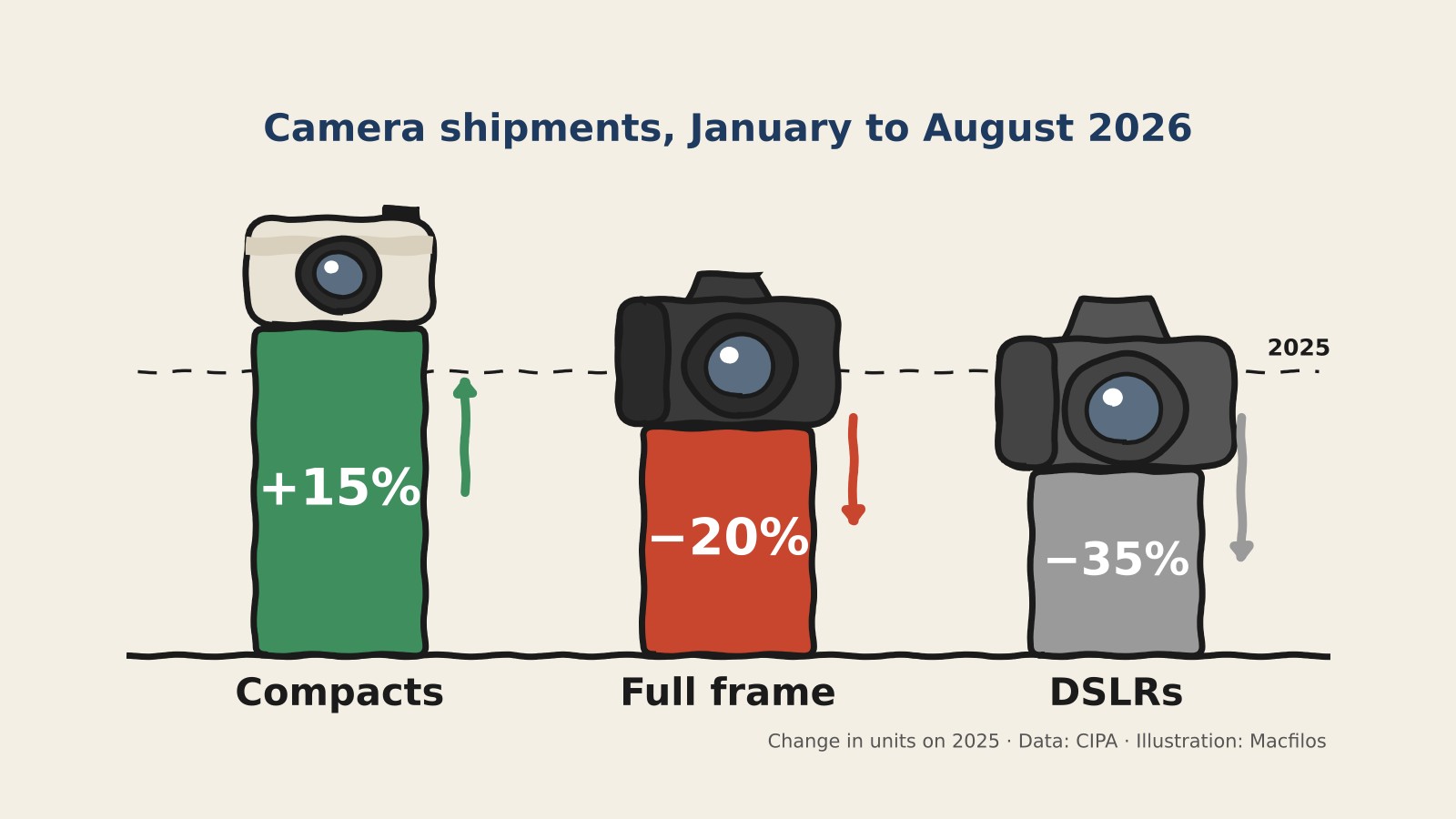
Fewer cameras are leaving the factories, yet the camera makers are collecting more money for them. That is the message from the latest figures published by CIPA, the Japanese industry body, covering the first eight months of 2026. Shipments of all digital cameras fell by 3.2% compared with the same period last year, while their value rose by 3.7%. Fixed-lens compacts continue to defy the smartphone, and the DSLR is fading into a footnote. But the most striking number of all concerns the format on which many Macfilos readers have spent a small fortune…
The headline figures
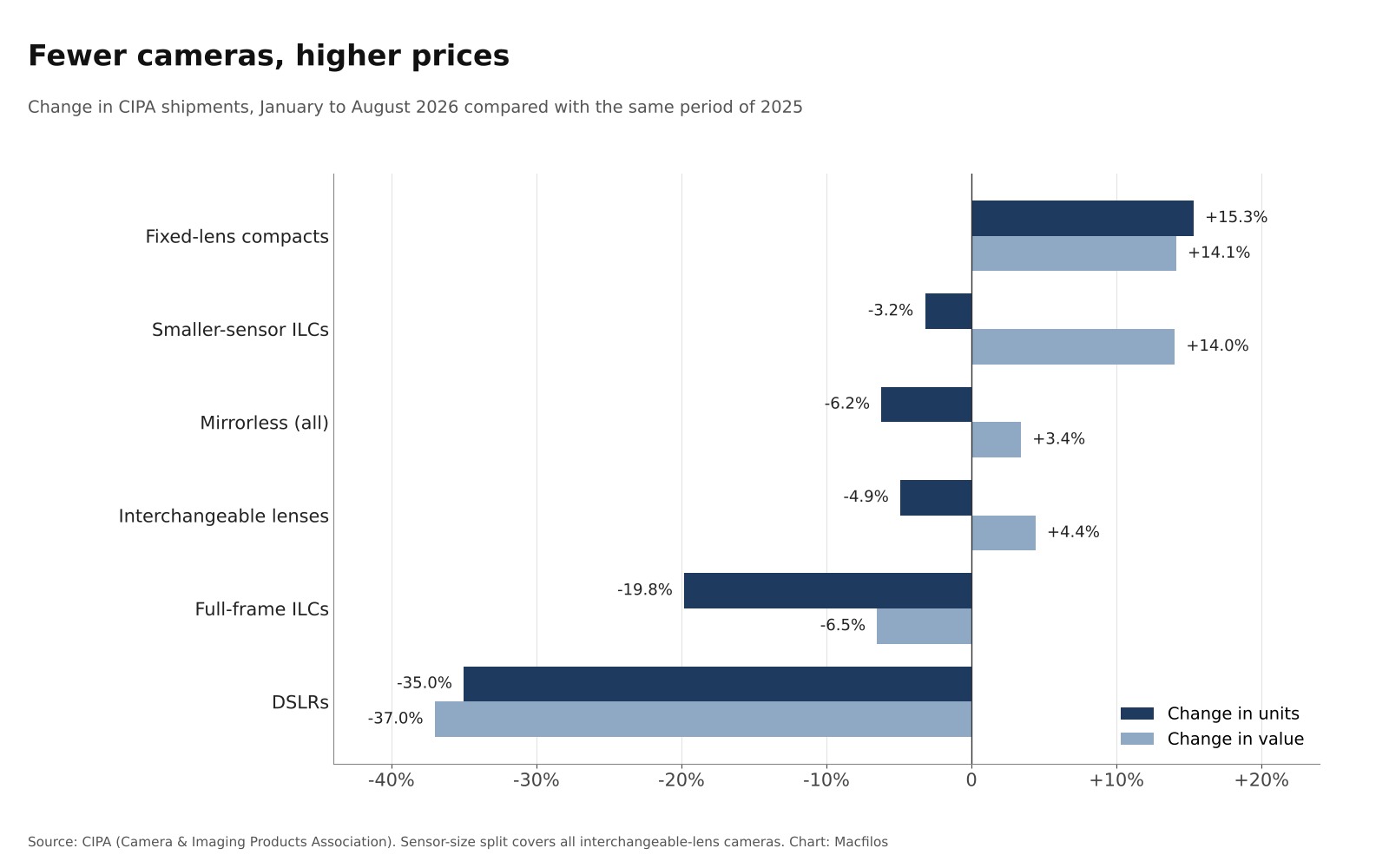
Between January and August, CIPA members shipped 5.7 million digital cameras worth about ¥572 billion (roughly $3.65 billion). Interchangeable-lens cameras accounted for 4.01 million of them, down 9.3% on 2025, although their value edged up 1.5% to around ¥465 billion. Mirrorless bodies now make up 92% of all interchangeable-lens shipments. They fell 6.2% to 3.7 million units, while their value rose 3.4%.
The August statistics, released by CIPA on 1 October, break down as follows. All comparisons are with January to August 2025.
| Category | Units, Jan–Aug 2026 | Change in units | Change in value |
|---|---|---|---|
| All digital cameras | 5.70 million | −3.2% | +3.7% |
| Interchangeable-lens cameras | 4.01 million | −9.3% | +1.5% |
| Mirrorless | 3.70 million | −6.2% | +3.4% |
| DSLR | about 0.31 million | −35% | −37% |
| ILC, 35mm sensor or larger | – | −19.8% | −6.5% |
| ILC, smaller than 35mm | – | −3.2% | +14% |
| Fixed-lens cameras | 1.69 million | +15.3% | +14.1% |
| Interchangeable lenses | 6.31 million | −4.9% | +4.4% |
The usual caveats apply. CIPA counts shipments from manufacturers into the distribution chain, not sales across the shop counter, and it covers only its member companies. These include Canon, Sony, Nikon, Fujifilm, Panasonic, OM System and Ricoh. Leica, as far as I can tell, is not among them, so its fortunes sit outside these numbers.
Full frame retreats
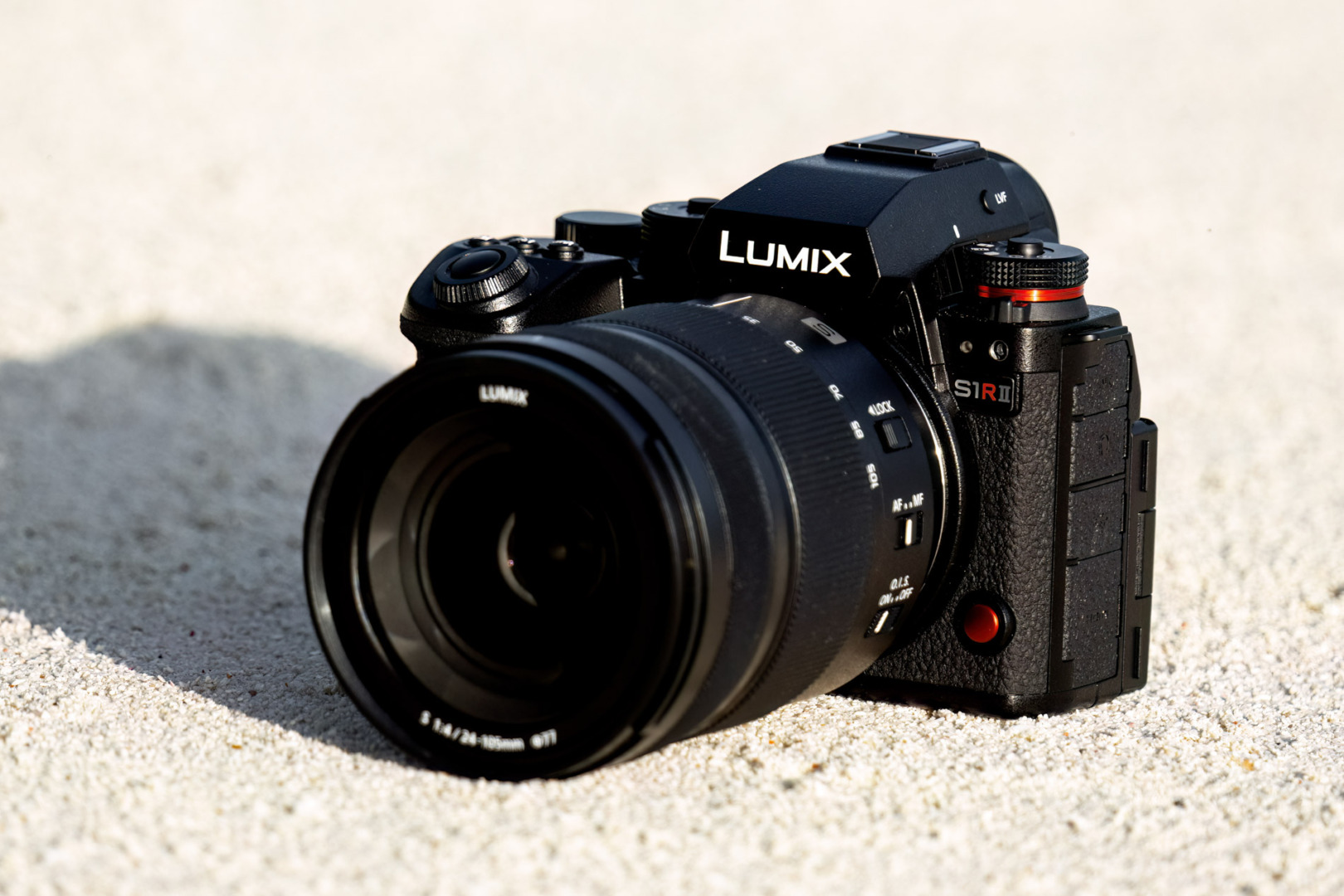
Here is the surprise. Interchangeable-lens cameras with 35mm or larger sensors fell by 19.8% in units, although their value dropped by a more modest 6.5%. Smaller-sensor models, APS-C and Micro Four Thirds, slipped just 3.2% in units and gained 14% in value. By my rough arithmetic, full frame has gone from about three in every eight interchangeable-lens bodies shipped last year to roughly one in three today.
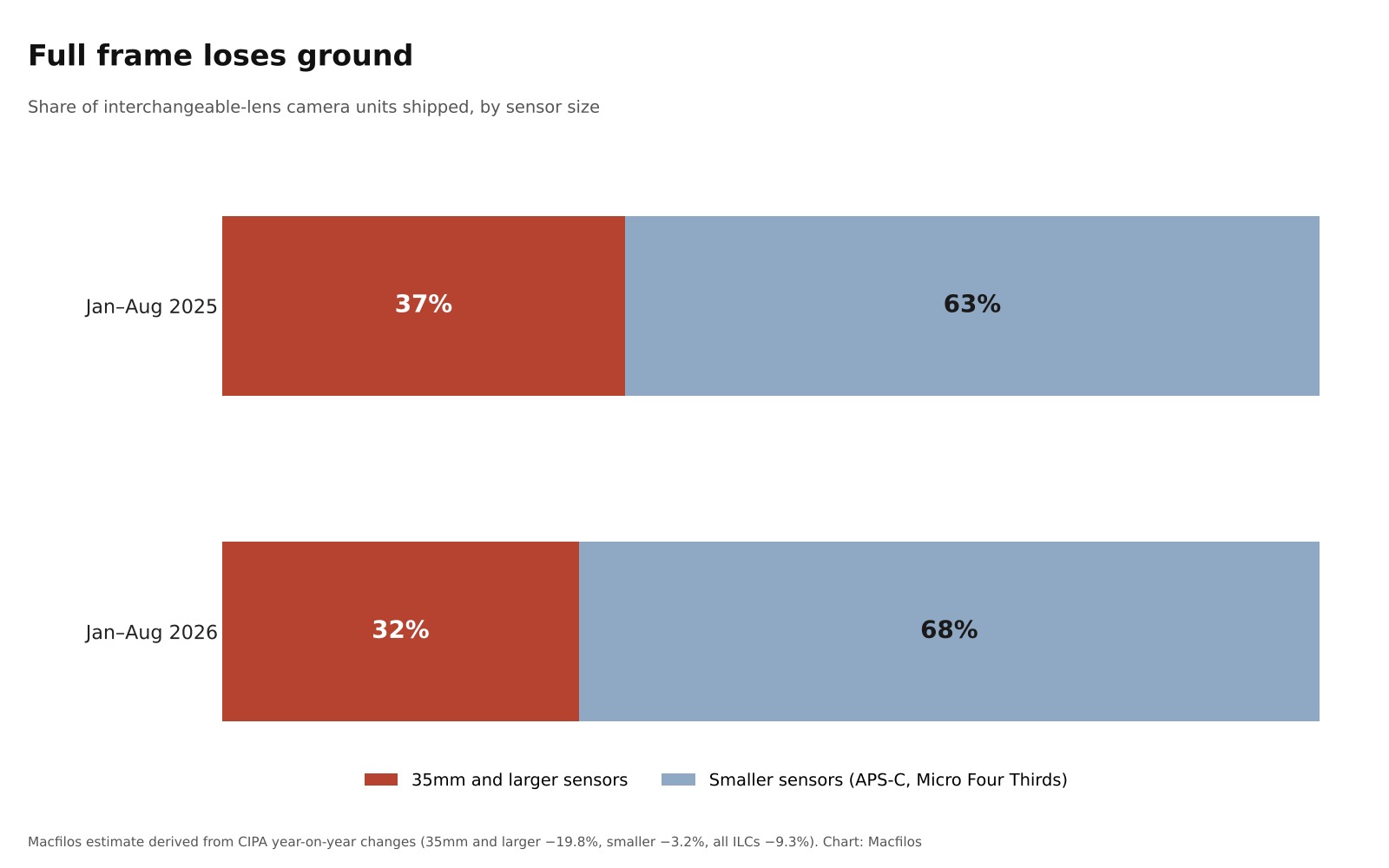
This turns a familiar story on its head. For a decade, we have been told that full frame is where every serious photographer eventually ends up. In 2025, the picture was already shifting, with full-frame and medium-format shipments growing by under 2% while smaller-sensor bodies grew by more than 8%. This year the gap has become a chasm.
I suspect price is part of the explanation, along with a growing appetite for lighter kit. China, which led the world for much of last year, has seen interchangeable-lens shipments fall by more than a fifth, and a full-frame dip there was already dragging lens figures down in 2025. Here at Macfilos, we have made our own move in the same direction, choosing Fujifilm as our APS-C system after Leica abandoned the CL.
Paying more
The rise in value against falling volumes tells its own story. RedShark News calculates that the average mirrorless body now ships at about ¥122,000, some 10% more than a year ago. Within each sensor format the increase is steeper still: by my calculation, shipped value per body is up by around 17% for both full frame and the smaller formats. The swing towards cheaper smaller-sensor cameras masks part of that inflation in the overall average.
Some of this reflects the mix of new models, but much of it is plain price rises. Fujifilm increased European prices on several models from 1 September, blaming semiconductor costs. The X100VI went from €1,799 to €1,999, an increase of 11%. In the United States, tariffs on Japanese imports have already pushed prices up more than once.
Compacts keep growing
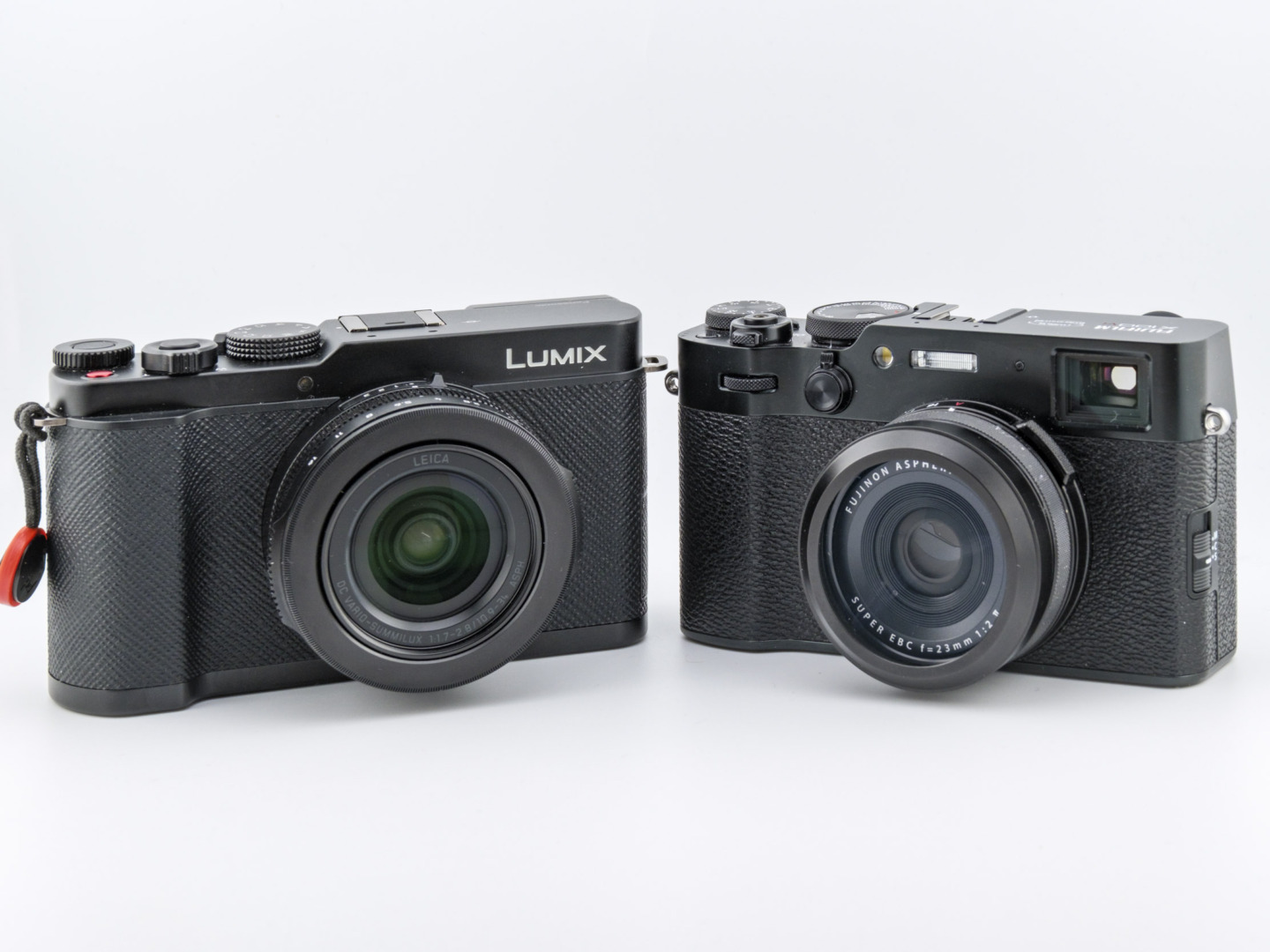
Fixed-lens cameras remain the one clear growth area. Shipments rose 15.3% to 1.69 million, worth about ¥107 billion, and compacts now account for almost 30% of everything CIPA members ship. In August alone, they were up by almost a third on the same month last year.
Interestingly, the average value of a compact barely moved, at around ¥63,000 per camera. Unlike the interchangeable-lens market, this growth comes from volume rather than price. Canon told investors in July that it is raising compact production again in the second half of the year and is aiming for full-year compact sales growth of more than 50%, driven by younger buyers.
One statistical wrinkle deserves attention. CIPA added Kenko Tokina to its camera figures from January without adjusting the 2025 comparisons. Kenko is a big seller of budget compacts in Japan, so part of the compact surge is probably a new member joining the count rather than new demand. The momentum has also eased: compact growth ran at about 30% in the first four months and has drifted down to its current level. Even so, it is a remarkable turnaround for a category many had written off, as we discussed when looking at Japan’s fixed-lens boom earlier this year.
DSLRs and lenses
DSLR shipments fell by 35% in units and 37% in value, and they now represent under 8% of interchangeable-lens cameras. In July alone, DSLR shipments were down 76% on the same month in 2025. The format is now a niche.
Lenses are holding up better than bodies. Shipments of 6.31 million lenses were 4.9% lower, but their value rose 4.4% to about ¥340 billion. The lens-to-body ratio has climbed to 1.57, from 1.50 a year ago. Lenses for smaller sensors fell by 3% in units, while those for 35mm and larger fell by 7%, with both rising in value. Whether owners are investing in glass instead of new bodies, or bodies are simply falling faster, the effect is the same.
A summer slump
The year began strongly. Total camera shipments for January to April were up by almost 12%, and mirrorless was growing. Then came a run of weak months, culminating in July, when total shipments were just 76.7% of the July 2025 figure and mirrorless only 74.4%.
August steadied the ship, with the year-to-date mirrorless decline holding at about 6%. That needs some context, however, because August 2025 was itself a soft month and offered an easy comparison. Photo Review attributes the wider slowdown to global instability and pressure on household incomes, and Canon has pointed to weak demand in Europe and the United States, where tariffs continue to bite.
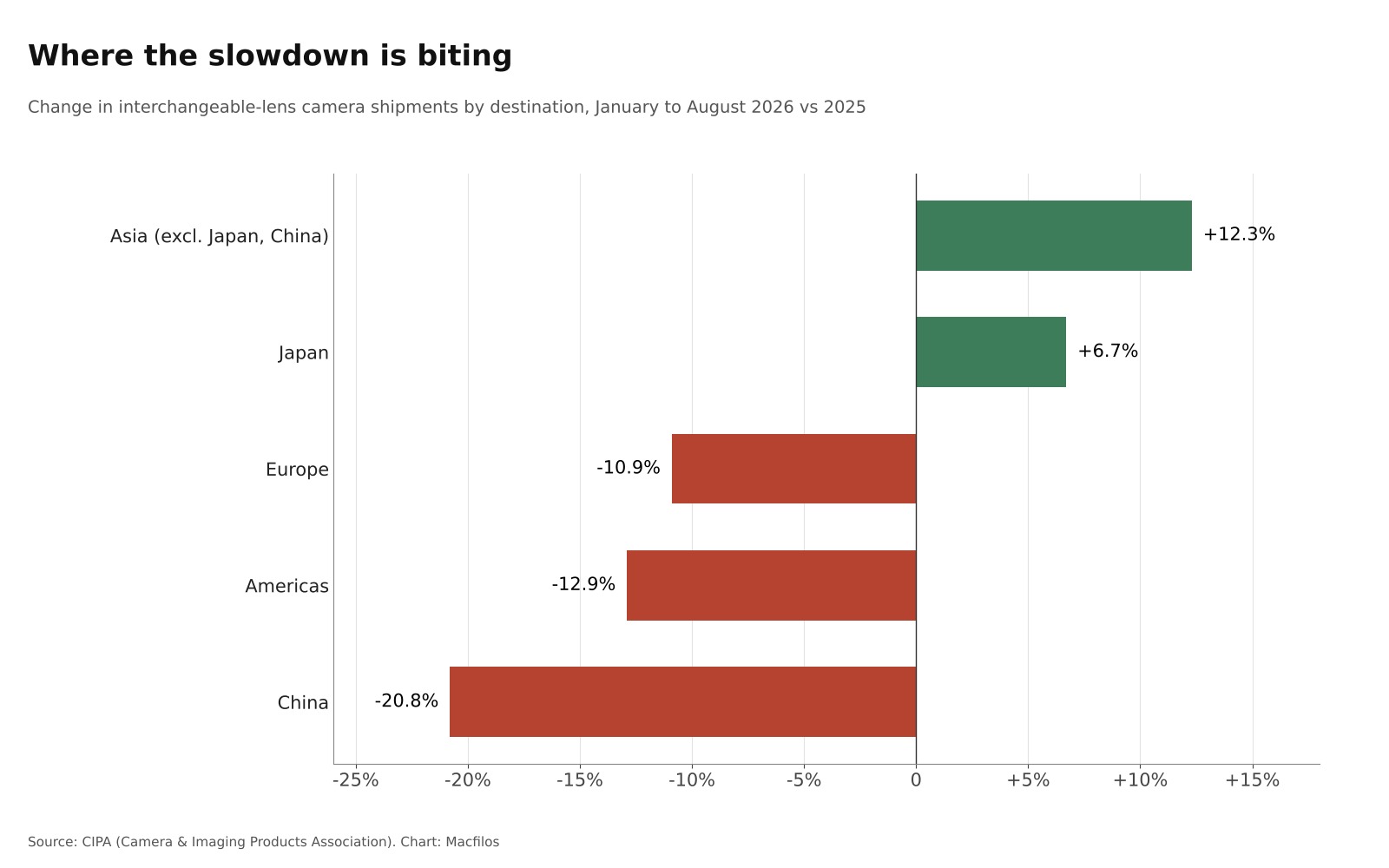
Regionally, interchangeable-lens shipments fell by 20.8% to China, 12.9% to the Americas and 10.9% to Europe. Asia outside Japan and China rose by 12.3%, and Japan by 6.7%.
The year ahead
In February, CIPA forecast 6.82 million interchangeable-lens bodies for 2026, against about seven million last year. That target now looks out of reach, since it would need monthly shipments some 40% above the year-to-date average. Canon, in July, expected the market to reach 6.45 million units.
The analyst ZoetMB, whose figures are published by Nikon Rumors, has cut his prediction again to between 6.0 and 6.35 million, back to 2023 levels. That would mean a fall of roughly 9% to 14% on 2025. September to November is traditionally the busiest period for shipments, so there is still time for a recovery. Remember, too, that the Kenko Tokina addition flatters the 2026 figures, so like-for-like declines are probably steeper than those reported.
What it means
In my view, the market is changing shape rather than collapsing. The camera makers are shipping fewer interchangeable-lens bodies and charging more for each one, while the unit growth has moved to fixed-lens compacts. Full frame, the format the industry has marketed hardest for a decade, is taking the heaviest hit.
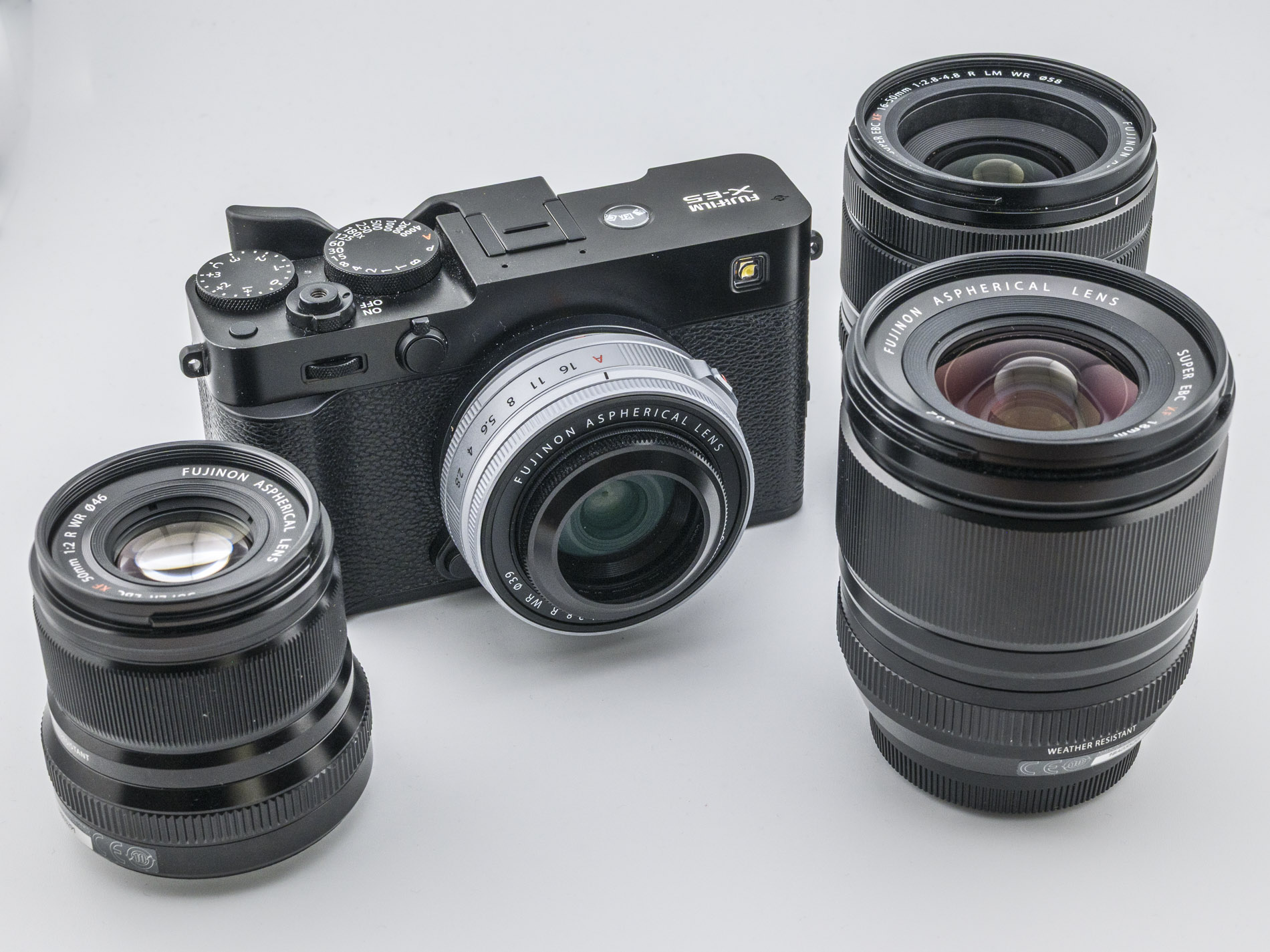

For Leica watchers, the figures make uncomfortable reading in one respect. Smaller-sensor interchangeable-lens cameras grew their value by 14% this year, a market Leica left when it dropped the CL. As we argued in Leica vs. Fujifilm: How the APS-C race was won, Fujifilm stayed and is now reaping the rewards. Whether the full-frame retreat is a passing summer blip or the start of a longer trend should become clearer once the autumn figures arrive. What do you think is driving it?
Further reading
| Macfilos Articles | Other Links |
|---|---|
| Compact Camera Market: Is the Japanese fixed-lens boom starting a worldwide trend? – Our look at the compact revival that began in Japan | CIPA digital camera statistics – The original monthly shipment data in PDF form |
| Leica vs. Fujifilm: How the APS-C race was won – Why Fujifilm succeeded with APS-C where Leica gave up | CIPA August 2026: camera and lens shipments – RedShark News analysis, including the regional breakdown |
| Choosing Fujifilm: The best APS-C system alternative to the Leica CL – How Macfilos chose its APS-C system | August 2026 CIPA numbers – ZoetMB’s charts and full-year prediction |
| Compact cameras – All Macfilos coverage of fixed-lens compacts | Canon’s camera profits skyrocketed thanks to compact cameras – Canon’s compact production plans for 2026 |
Make a donation to help with our running costs
Did you know that Macfilos is run by six photography enthusiasts based in the UK, USA and Europe? We cover all the substantial costs of running the site, and we do not carry advertising because it spoils readers’ enjoyment. Any amount, however small, will be appreciated, and we will write to acknowledge your generosity.