

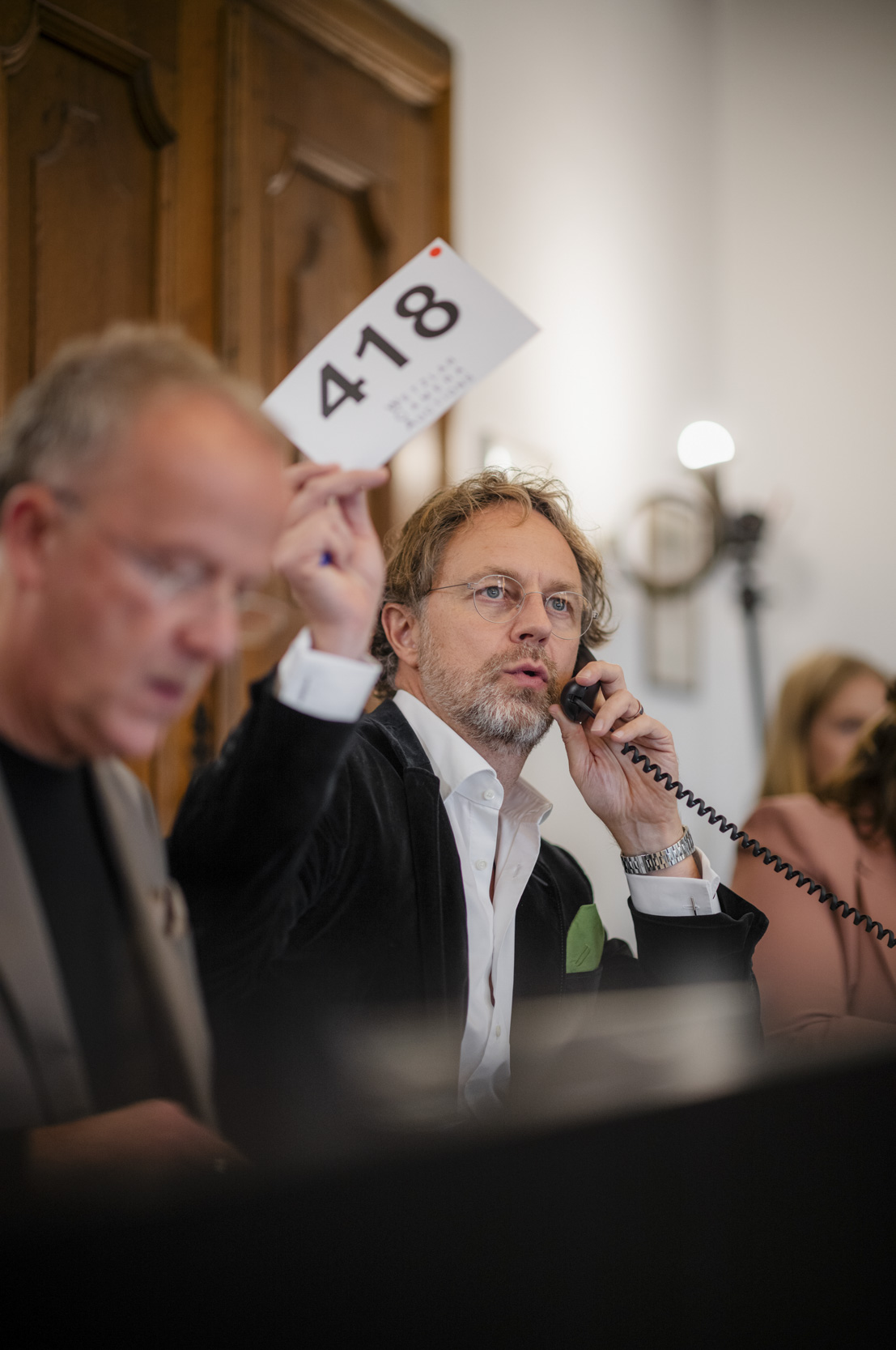
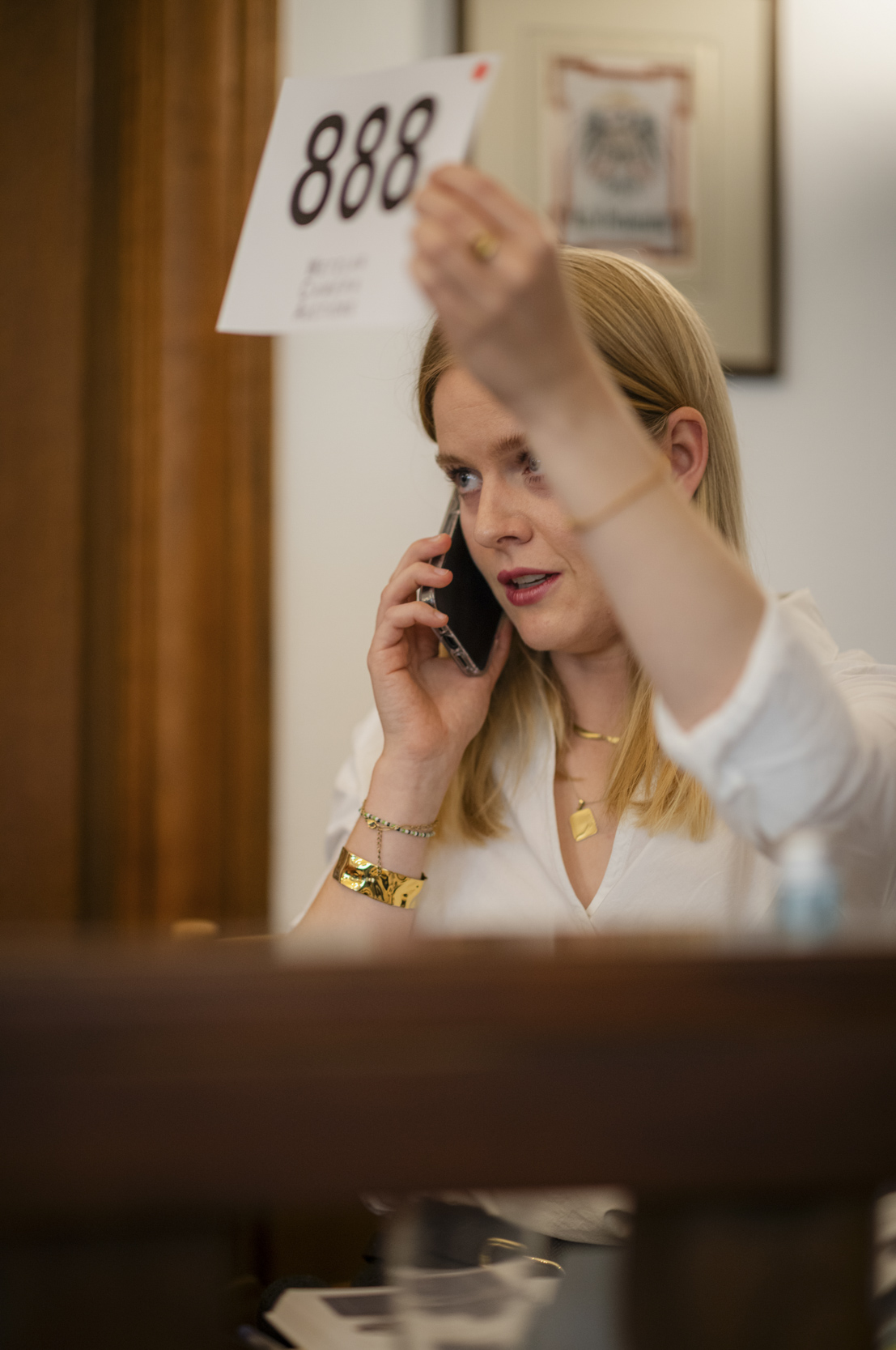
A Leica built in 1923, two years before the first production cameras reached the shops, changed hands in Wetzlar on Saturday October 10 for €4,250,000. The buyer secured 0-Series No. 103 after a 20-minute contest between several telephone bidders. The final figure was more than double the upper estimate of €2 million. It was the headline lot at the eighth sale held by Wetzlar Camera Auctions (WCA), but by no means the only Leica to sell for a six-figure sum that afternoon…
THIS ARTICLE IS NOT YET APPROVED
The third Leica
The 0-Series cameras were Ernst Leitz’s trial run. Oskar Barnack’s 35mm concept was still unproven in 1923, and the company built a small batch of pre-production cameras to test it before committing to serial manufacture. Around 25 were made. According to WCA, only 16 are known to survive, split between museums and private collections.
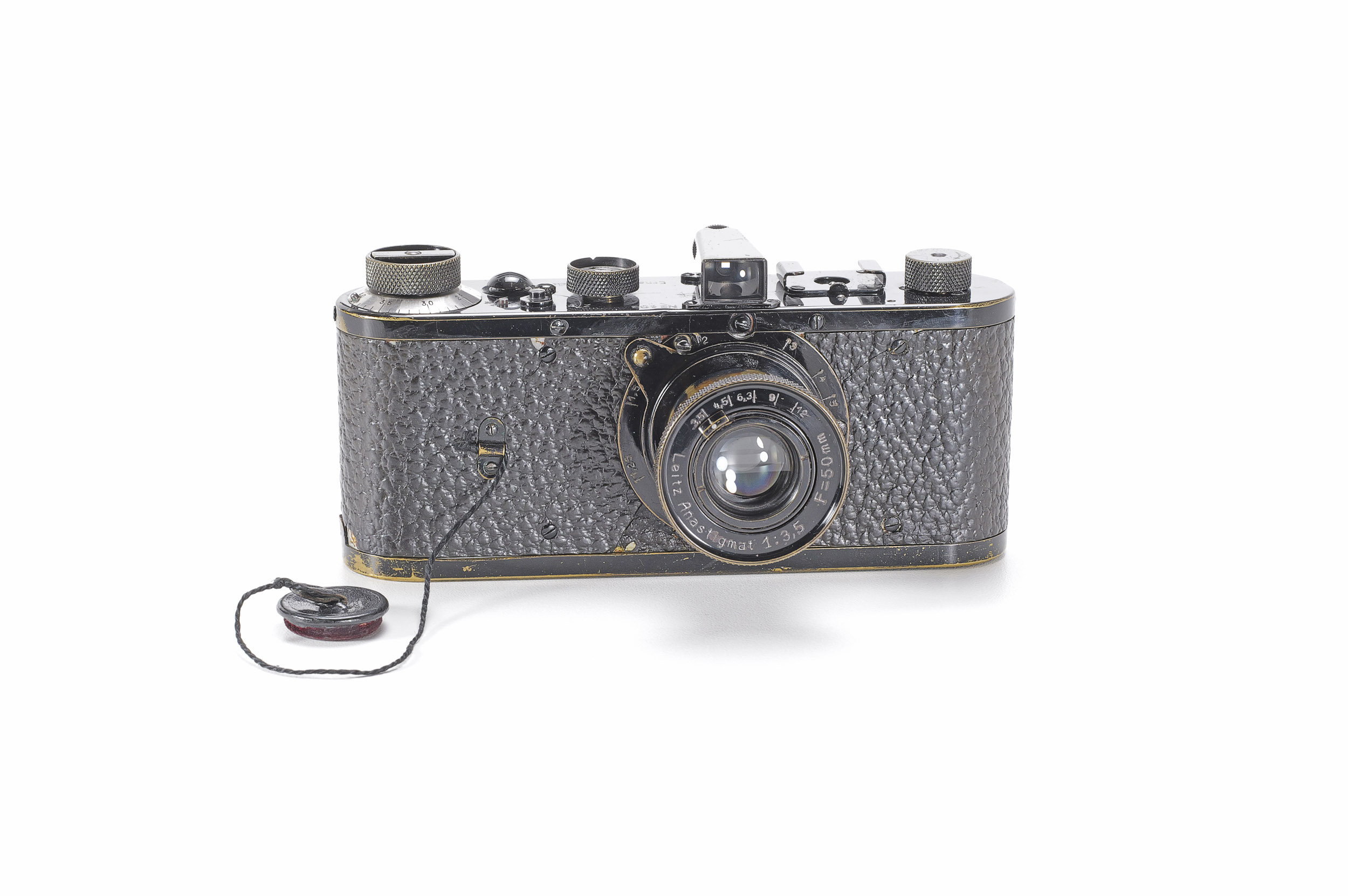
No. 103 was the third camera in the series. Leica began its serial numbering at 101, a sequence that has now passed six million, so this example sits very close to the start of the entire run. It had spent more than 50 years in a private collection in the United States, and WCA describes it as original and complete.
Lars Netopil, a co-owner of WCA, is in no doubt about its standing. “The Leica 0-Series represents the very beginning of Leica’s remarkable history and is regarded as the holy grail of Leica collecting,” he says. “The exceptional result for No. 103 reflects its extraordinary historical significance, remarkable originality and outstanding provenance.”
Putting the price in context
WCA describes the result as one of the most expensive camera sales ever recorded at auction, and that claim holds up. It does not, however, approach the record. In June 2022, 0-Series No. 105 — the camera Oskar Barnack is understood to have used himself — sold at the Leitz Photographica Auction in Vienna for €14.4 million, a figure that still stands as the highest price paid for any camera.
That gap says more about No. 105’s direct link with Barnack than about the relative condition of the two cameras. Provenance carries enormous weight at this level of the market. Even so, a doubling of the presale estimate suggests that bidders were prepared to go a long way for any surviving 0-Series camera in this condition, and that the supply of such cameras is unlikely to grow.
Before the Leica I
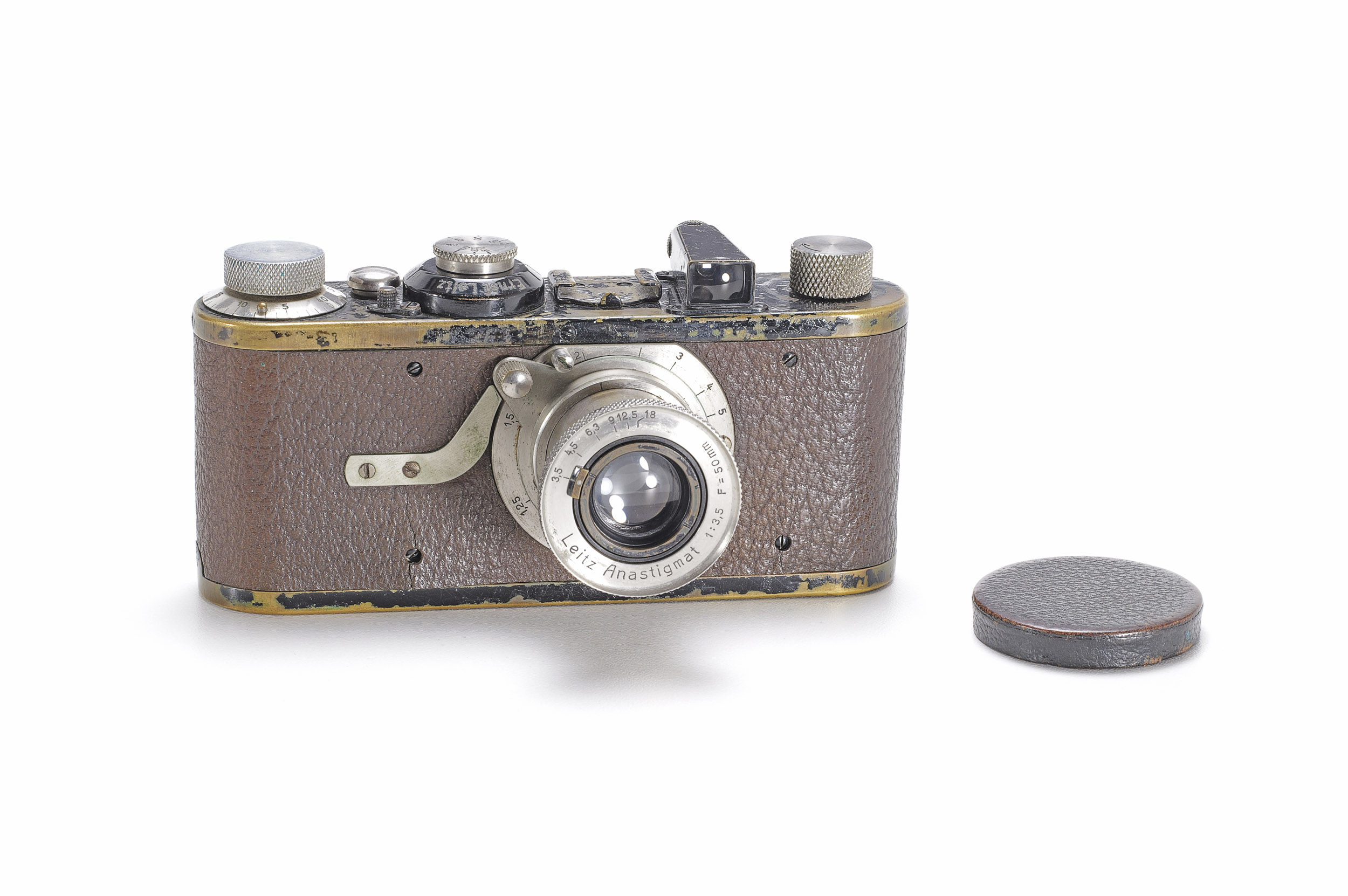
A second lot from the very earliest period also drew strong interest. A handmade prototype of the Leica Model A sold for €225,000. WCA says this camera served as the reference for a final technical drawing dated 5 August 1924, prepared by Wilhelm Schaefer, who worked closely with Barnack.
That places the prototype between the experimental 0-Series of 1923 and the Leica I, which went on sale in 1925. For collectors interested in how the design settled into its production form, cameras such as this are the missing steps.
Gold, prototypes and squares
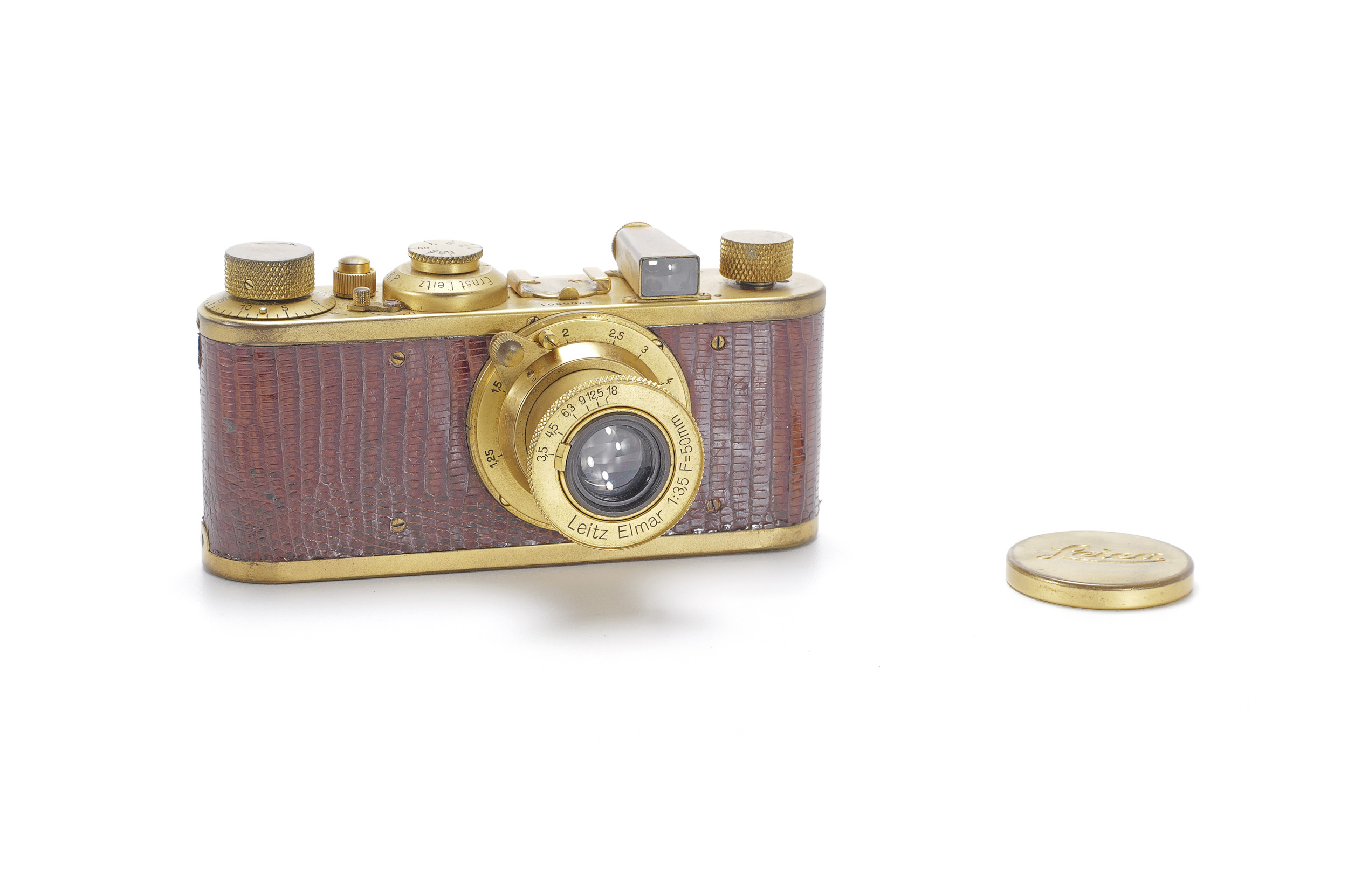
Two lots shared the next-highest price of €375,000, and they could hardly be more different.
The first was a gold-plated Leica I Model C “Luxus” from 1931. Leitz made fewer than 100 gold-plated Leica I cameras in total, and WCA says only two of this particular Model C “Luxus” version were produced. These cameras were built as prestige items rather than working tools, and that rarity is reflected in the price.
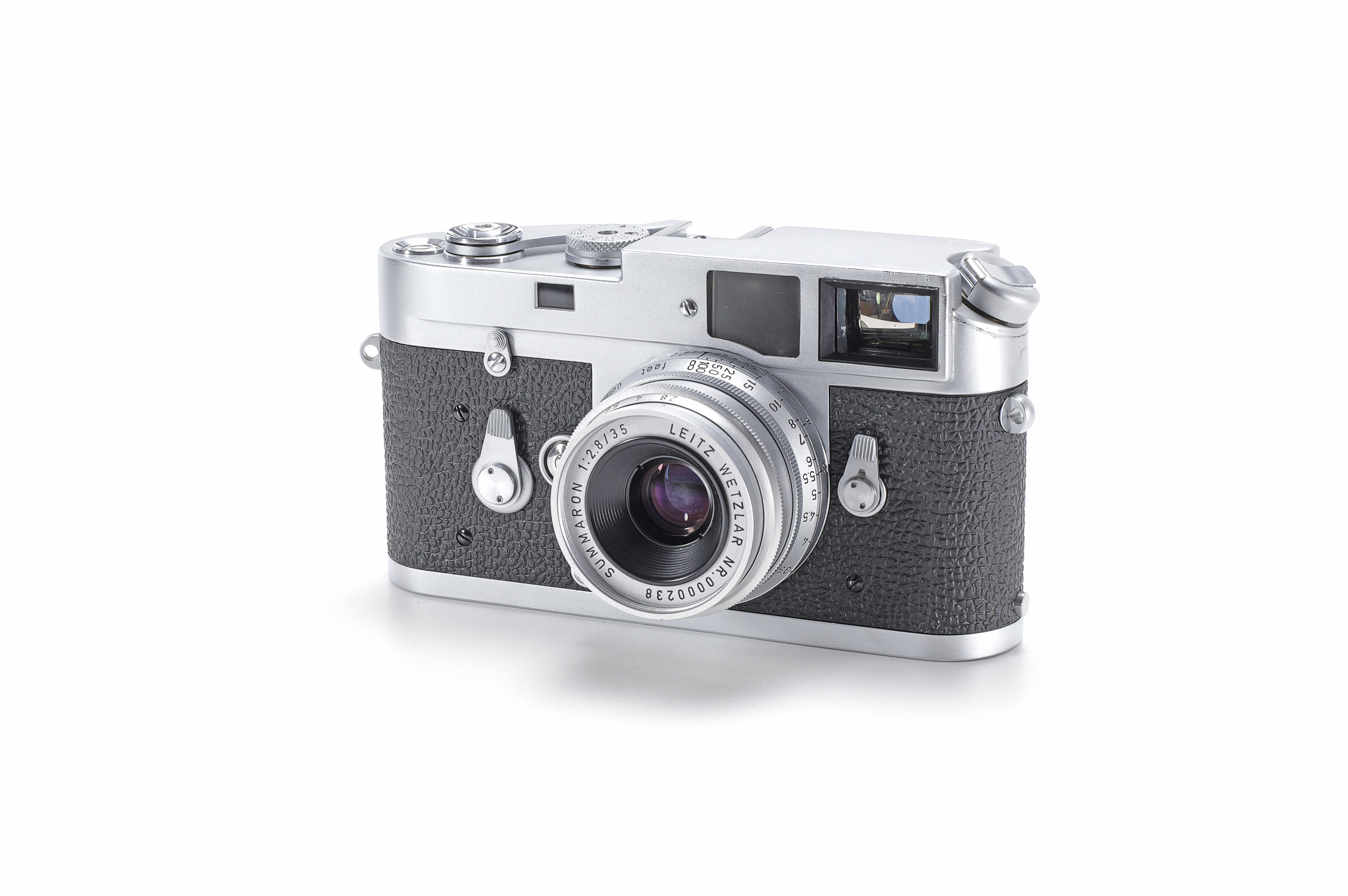
The second was a 1965 prototype of the Leica M4, incorporating several handmade parts. Only two examples of this prototype are known to exist. It gives a glimpse of Leitz refining the M body in the mid-sixties, as the M4 replaced the M2 and M3 with its angled rewind crank and faster-loading mechanism.
Perhaps the most intriguing camera in the sale was a Leitz prototype shooting square 24 × 24mm frames on 35mm film. WCA dates it to 1946–1948 and describes it as a recently discovered, unique example. It has a central shutter rather than Leica’s familiar focal-plane design, and no coupled rangefinder. It sold for €137,500.
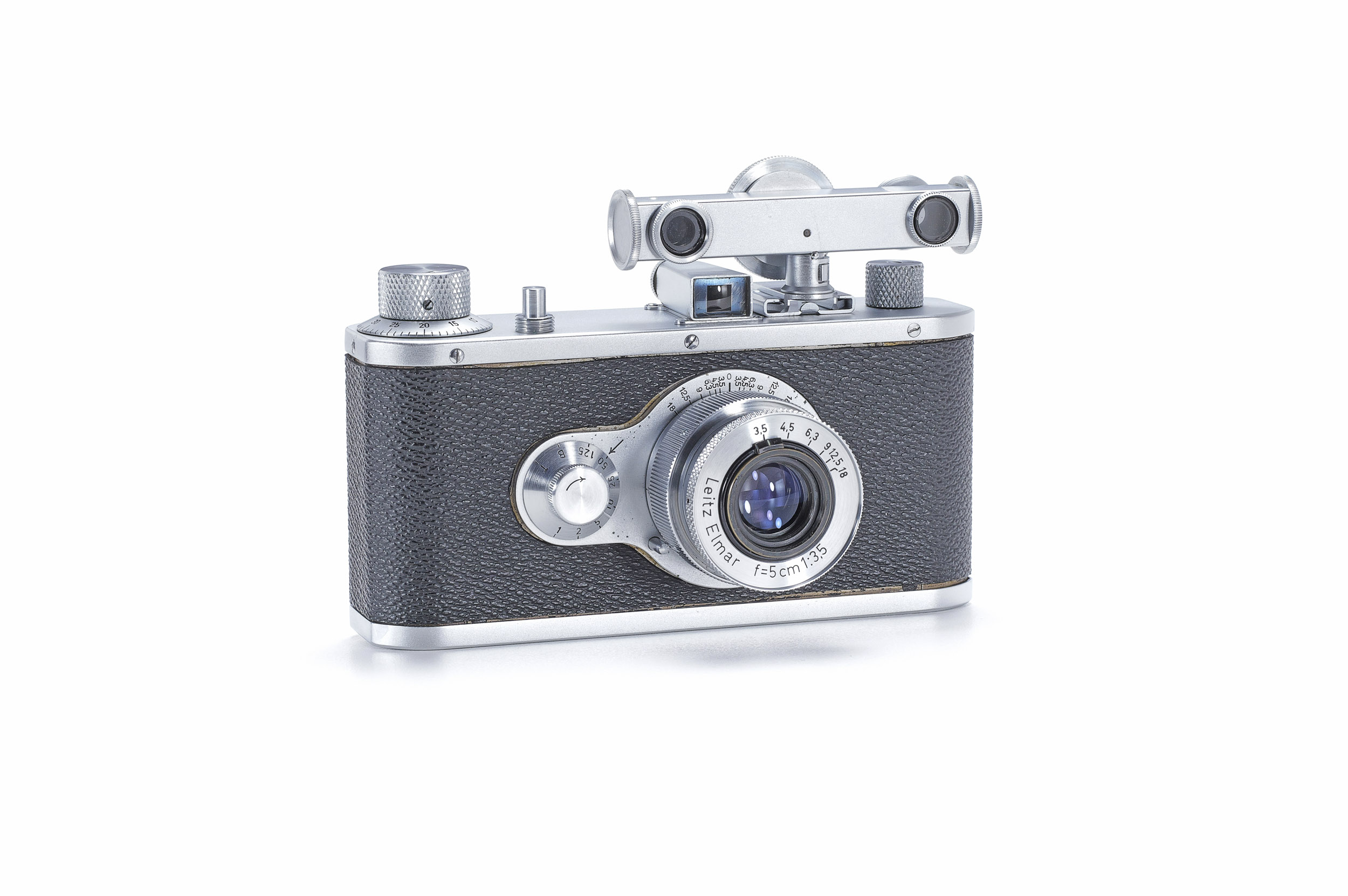
Leitz never put a square-format camera into production, so this is something of a road not taken. It would be fascinating to know more about why the project was started and why it went no further.
Black paint holds firm
Black-paint Leicas from the 1950s remain among the most sought-after cameras in the collector market, and this sale did nothing to change that.
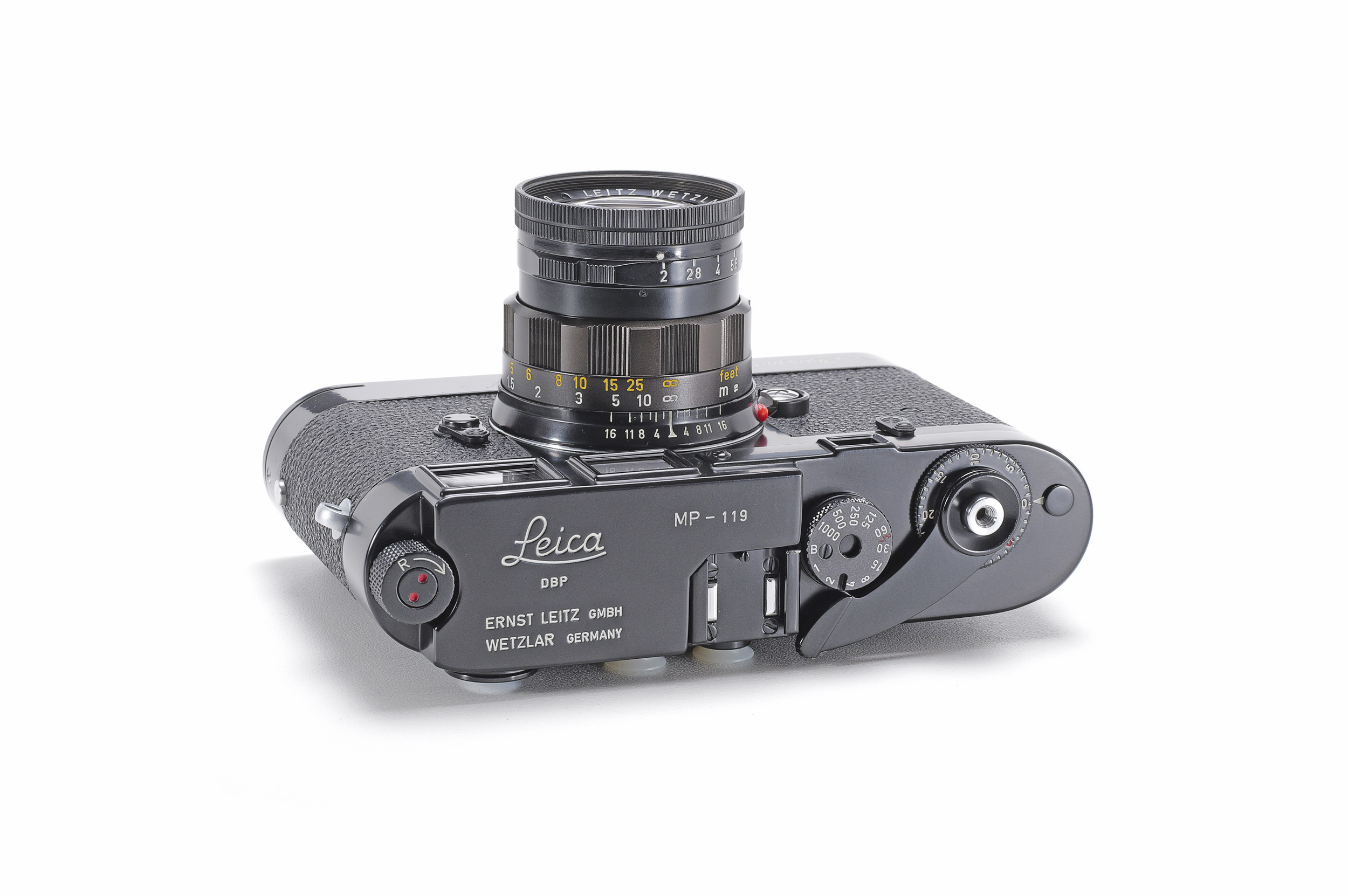
A black-paint Leica MP from 1956 sold for €325,000. Fewer than 140 of these cameras were produced, originally aimed at working professional photographers rather than collectors. The MP of the 1950s is a different animal from the modern MP that Leica introduced in 2003, and original black examples rarely come up for sale.
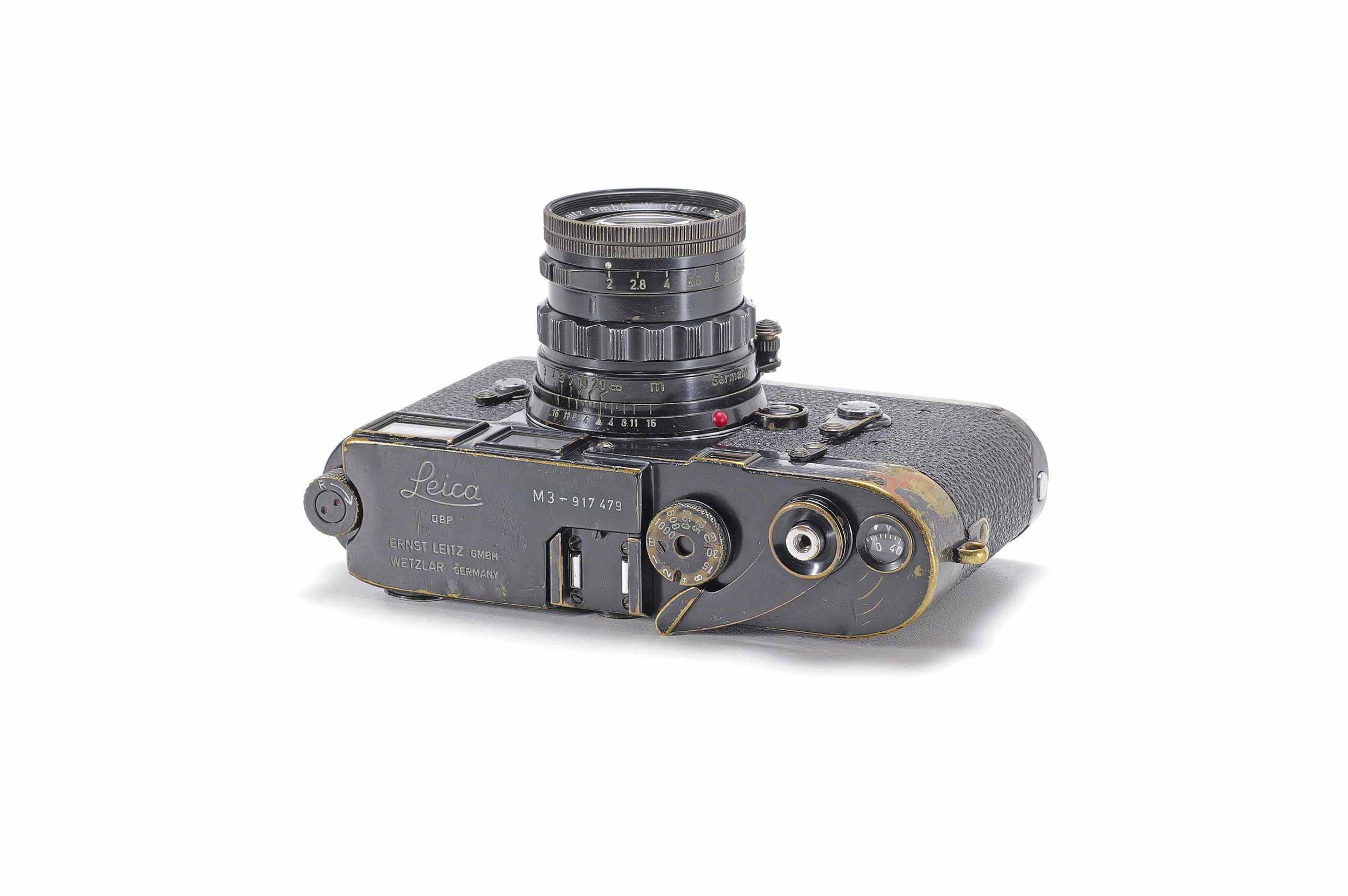
An early black-paint Leica M3 fitted with a black frame counter fetched €187,500. Black M3s were never common, and the black frame counter makes this one rarer still.
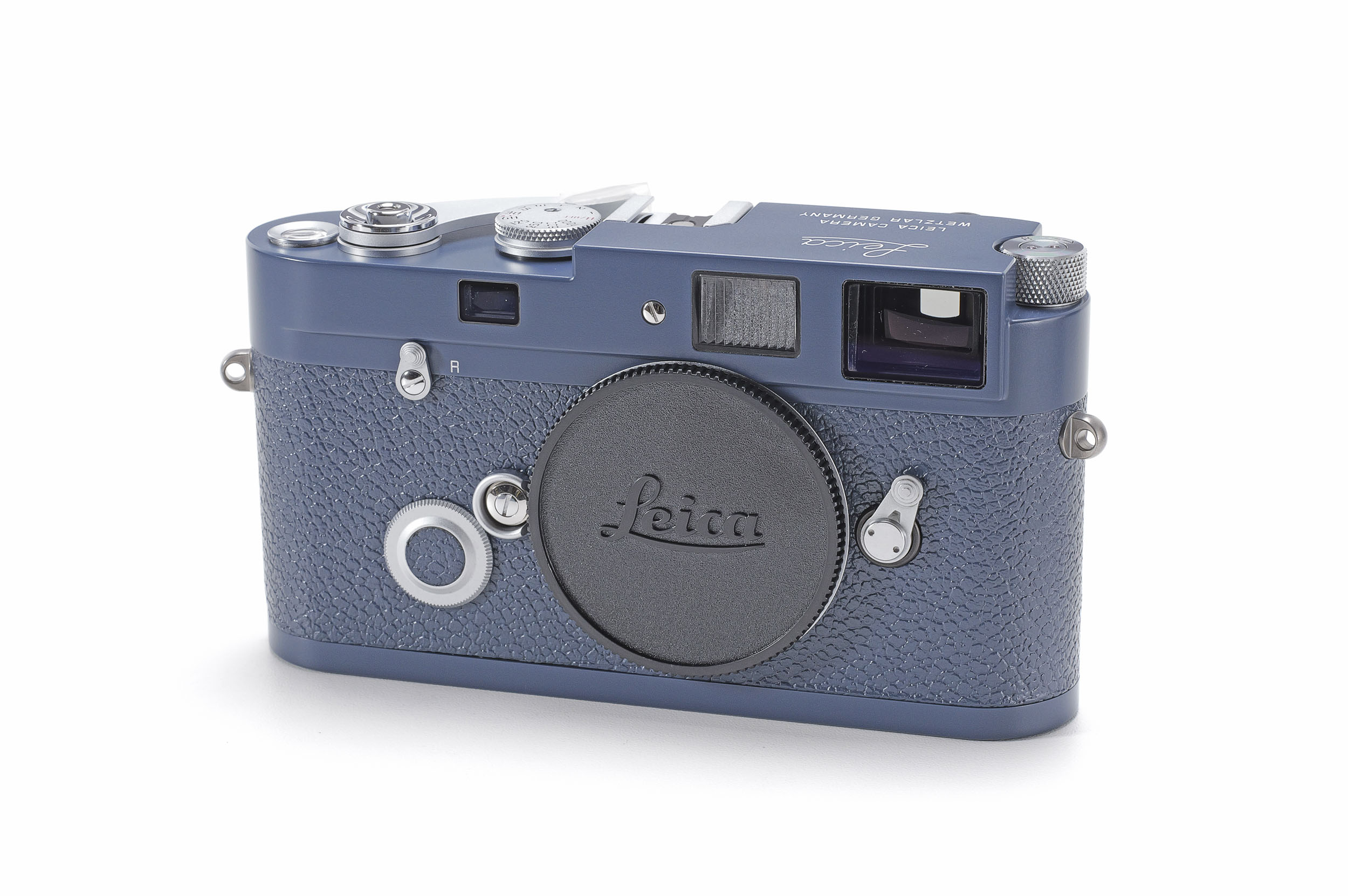
There was also room for something more recent. A grey-blue lacquered sample of the current Leica MP, dating from 2015, sold for €40,000. That is a fraction of the prices paid for the historic lots, but still a substantial premium over a standard MP. It also shows that collector interest in unusual factory samples extends well into the digital era.
Beyond Leica
Leica cameras formed the core of the 259-lot sale, but two lots from other makers stood out.
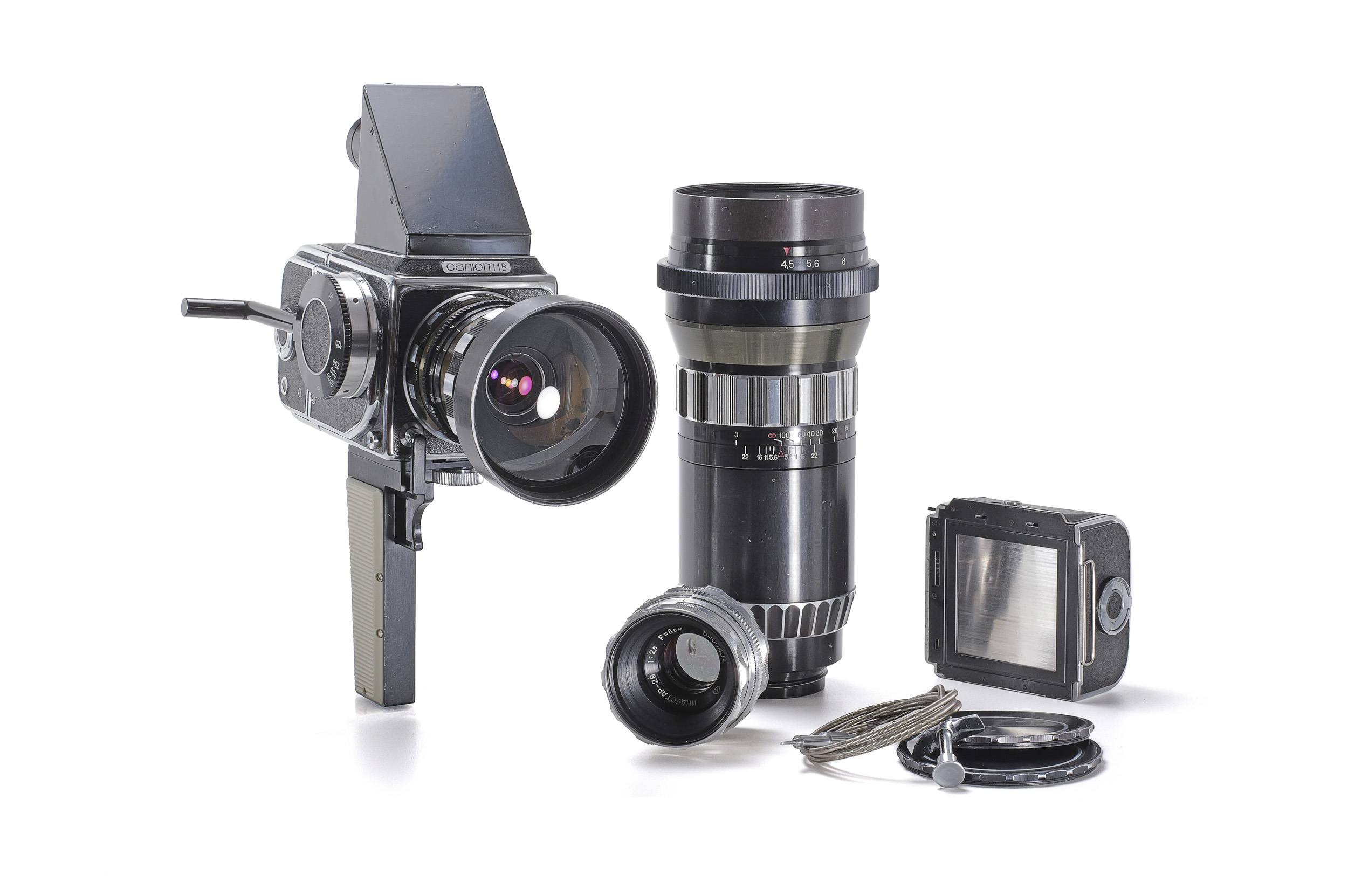
An Arsenal Salyut 1V space camera set, made in the Soviet Union in 1968, sold for €75,000. The set came with three lenses and a substantial body of original documentation, which will have added considerably to its appeal. The Salyut was Arsenal’s medium-format system camera, and this variant was developed for use in the Soviet space programme.
Jo Geier, another director of WCA, sees a shift in collector attention. “The growing international interest in historic Soviet space photography equipment is particularly fascinating,” he says. “For decades, cameras associated with NASA missions have attracted strong collector interest. We are now seeing comparable enthusiasm for rare photographic equipment developed for the Soviet space programme. The €75,000 result for this remarkable Salyut set underlines that development.”
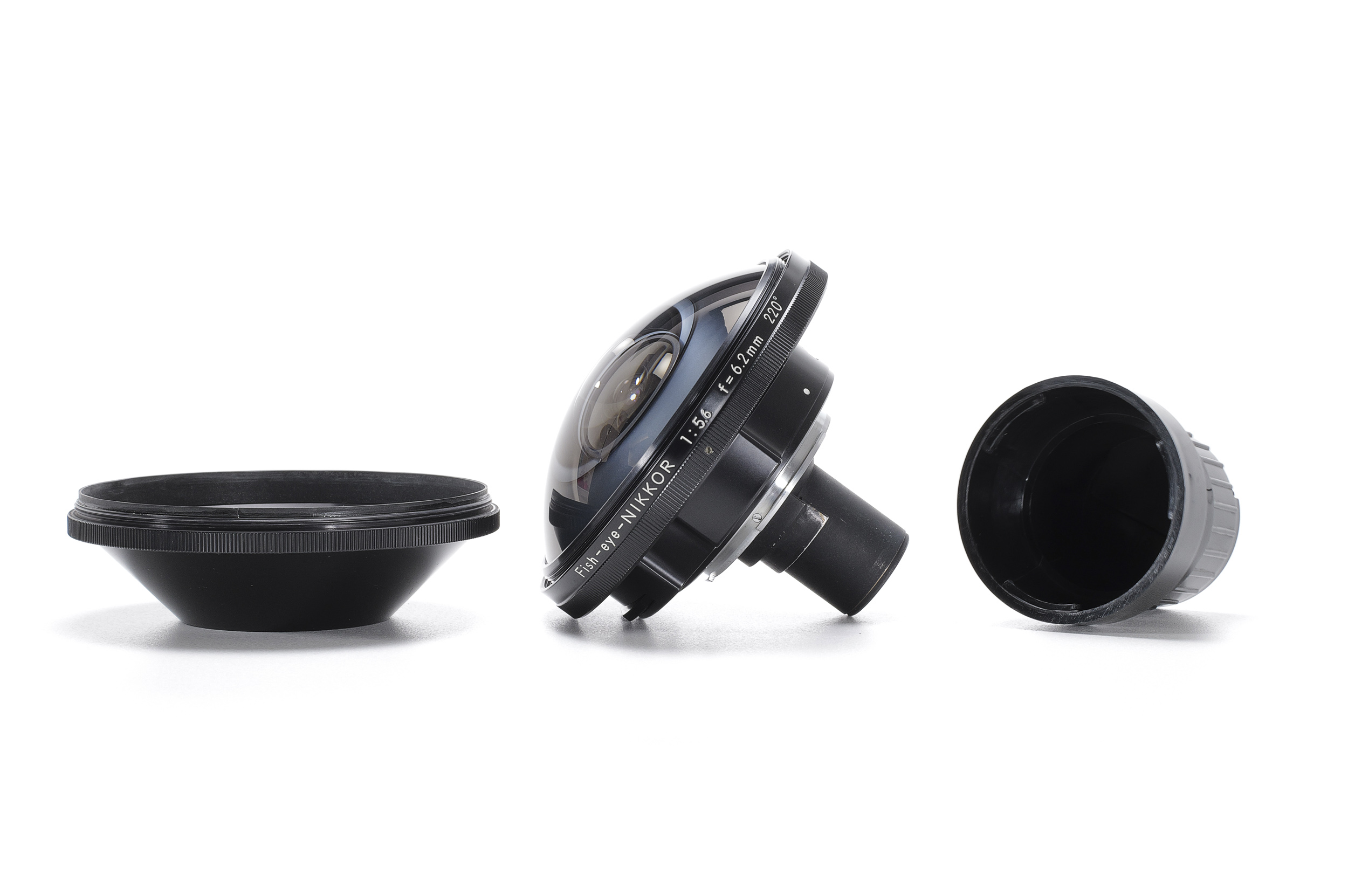
The other non-Leica highlight was a prototype Nikon Fish-Eye Nikkor 6.2mm f/5.6 from 1970. Its 220-degree angle of view means it can see slightly behind itself. It also sold for €75,000.
What the results show
Taken together, the results point to a market that remains firm for genuinely scarce items with a well-documented history. The pattern is consistent. The cameras that did best were either from the very beginning of the Leica story, or one of only two or three examples of a specific variant, or both.


Condition and provenance appear to matter as much as rarity. No. 103’s half-century in a single collection, and its original, complete state, were clearly central to its appeal. The Salyut set’s documentation will have played a similar role at a lower price point.
Every price quoted by WCA is the final sale price, including the buyer’s premium. That makes the figures directly comparable with results from the other major camera auctions, which report on the same basis.
The next sale
WCA’s next auction is scheduled for Saturday, 9 October 2027, and the company is now accepting consignments. Full results and details of future sales are available on the Wetzlar Camera Auctions website, and WCA has published a video of the auction on YouTube.
Further reading
| Macfilos Articles | Other Links |
|---|---|
| Wetzlar Camera Auctions: Over three million for Leica Null – Our report on the 2023 sale of 0-Series No. 121 | Wetzlar Camera Auctions – Full results and consignment details for the 2027 sale |
| Leica: The three million dollar camera under the hammer – William Fagan on the 2018 0-Series sale in Vienna | Auction video – WCA’s own film of Saturday’s sale |
| Leitz Photographica Auction No 46: The results – How the rival Vienna auction fared last year | Leica 0-Series No. 105 sets world record – Leica’s announcement of the €14.4 million sale |
| Wetzlar Camera Auctions on Macfilos – All our coverage of WCA sales | The history of the Leica I – Leica’s own account of the road from 0-Series to production |
Make a donation to help with our running costs
Did you know that Macfilos is run by six photography enthusiasts based in the UK, USA and Europe? We cover all the substantial costs of running the site, and we do not carry advertising because it spoils readers’ enjoyment. Any amount, however small, will be appreciated, and we will write to acknowledge your generosity.