
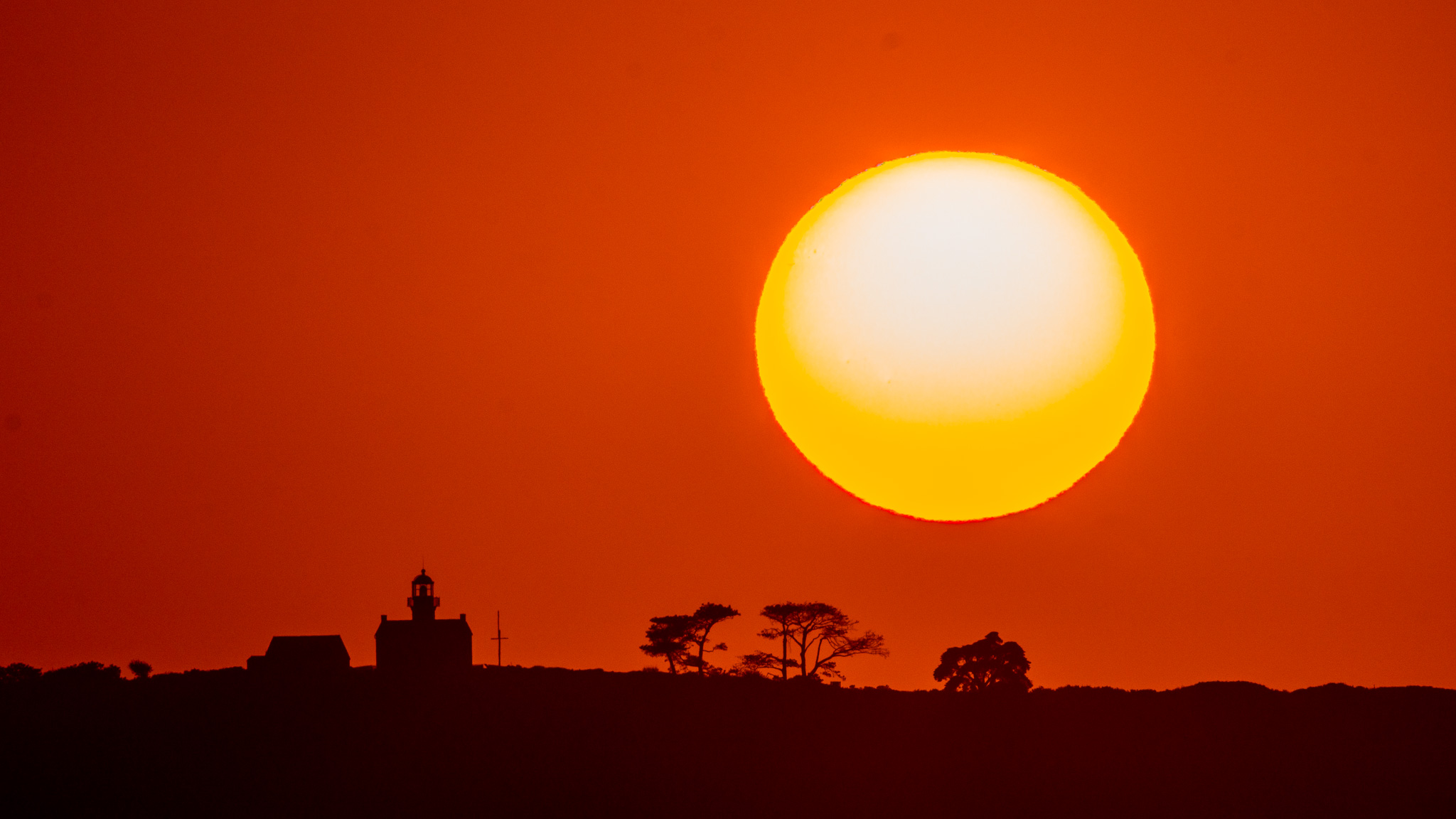
Capturing a celestial object — the sun, the moon or the Milky Way — perfectly aligned with a notable terrestrial landmark is one of photography’s favourite challenges. It takes planning, determination, some specific camera gear and a fair helping of luck. I decided to take on the challenge. So, I bought a Sigma 2x teleconverter, which handily doubles my telephoto reach, then set off to see whether the sun would play ball…
I enjoy spur-of-the-moment shots on photo walks, perhaps of an unexpected alignment of colourful subjects. But I also enjoy carefully planned shots, where you know the date and time at which a picture-worthy event will occur. This is the story of one of those shots.
Spot the lighthouse
From near where I live, I can see two lighthouses across the bay. Can you spot them in the 50mm shot below?
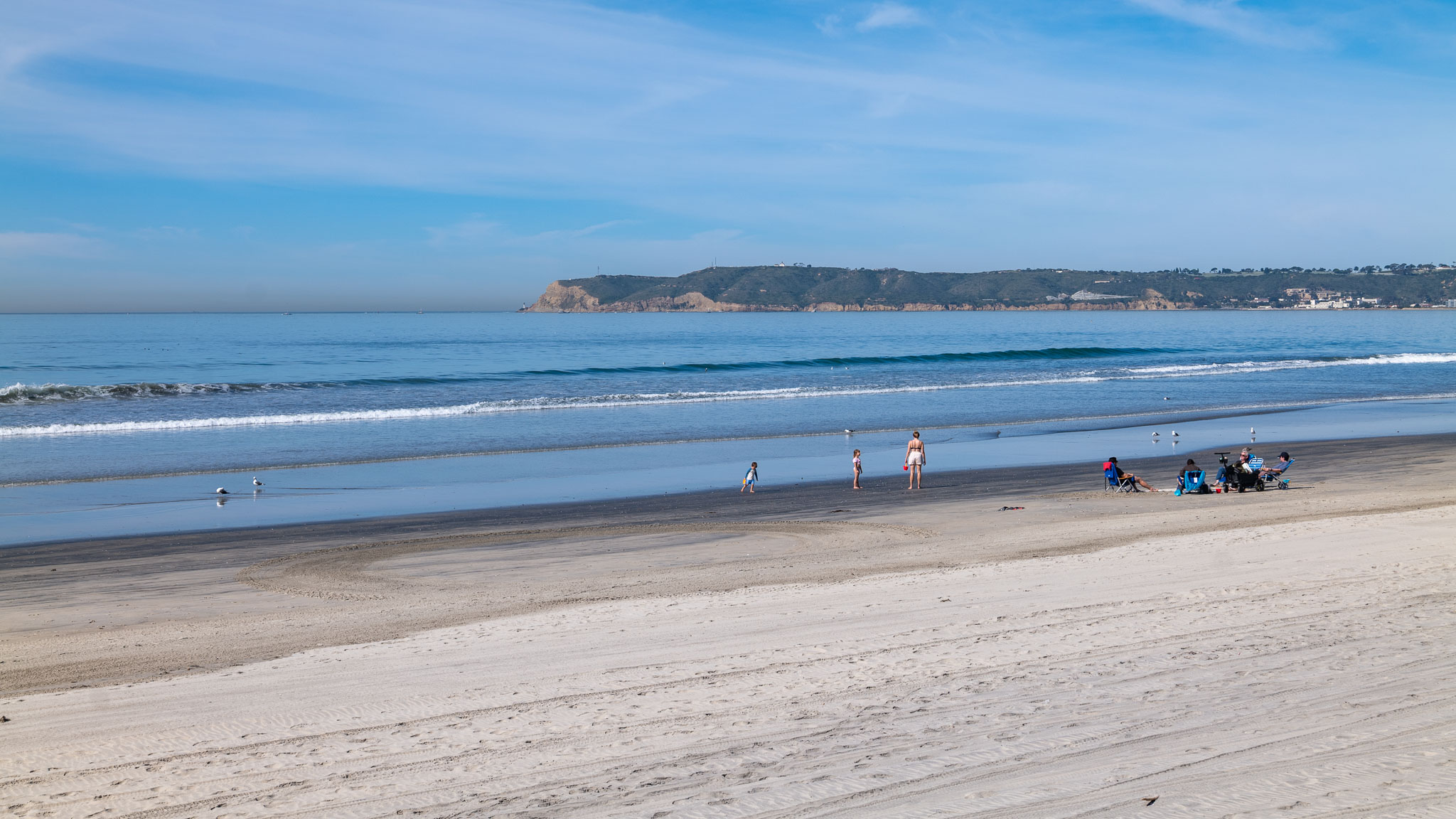
They are roughly four miles away, so it would be understandable if you couldn’t. What about in the 100mm shot below?
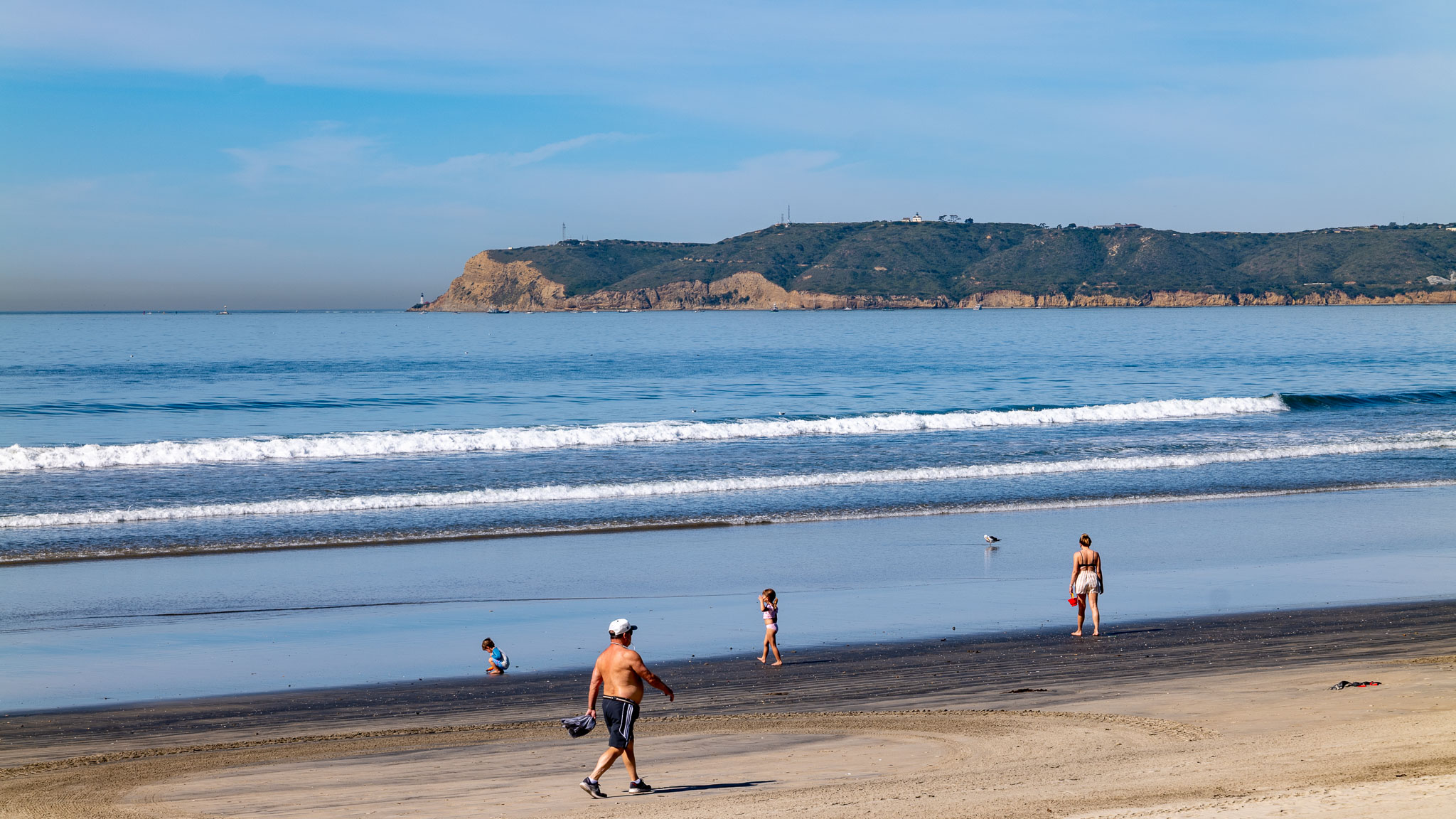
Still mystified? Here’s a 200mm shot. One sits at the very tip of the headland, on the left of the picture: a white tower with a black lamp room on top. The other is a white building perched on top of the peninsula, towards the right.
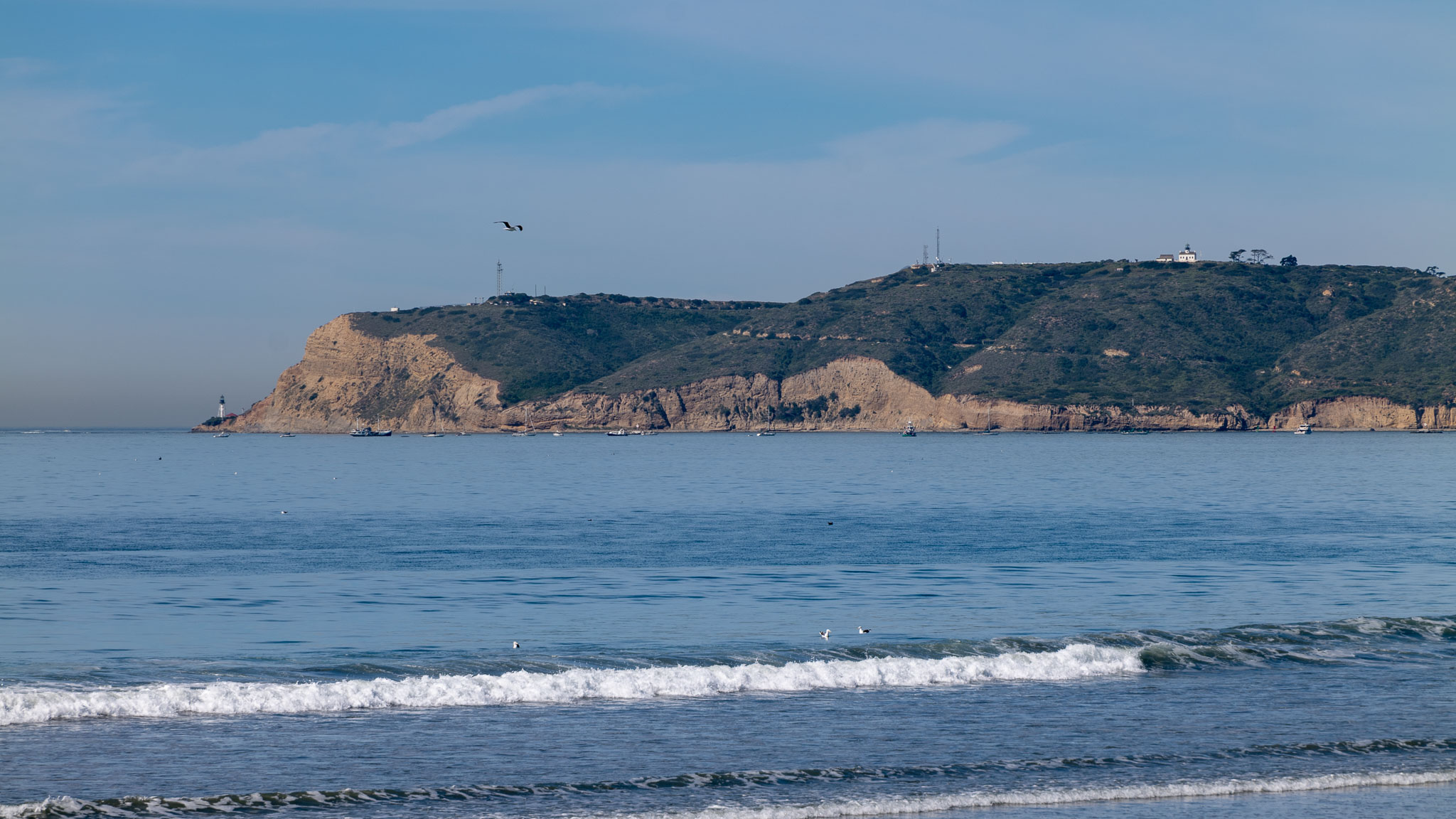
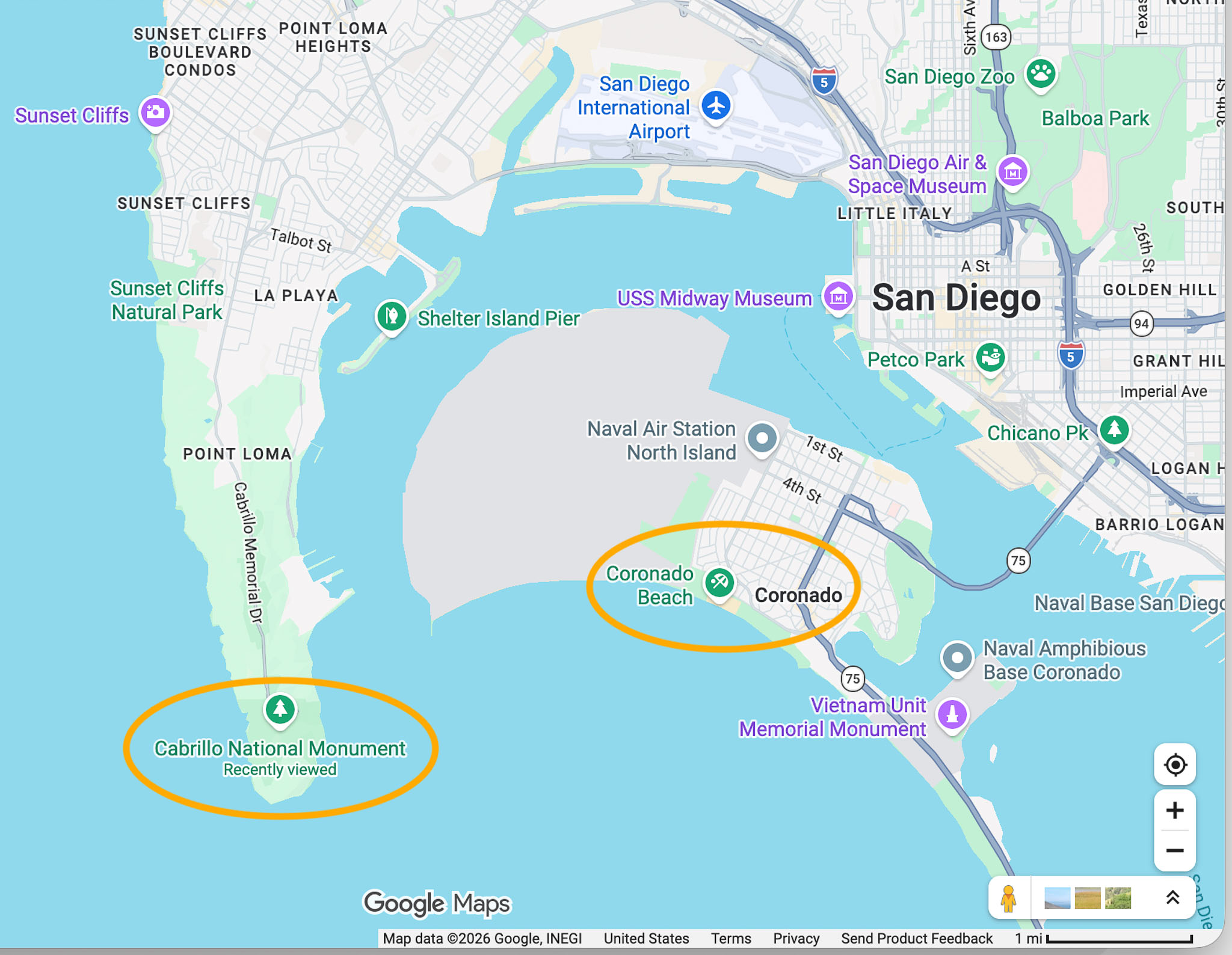
That second one is the Old Point Loma Lighthouse, a historic landmark and part of the Cabrillo National Monument. It first shone in 1855 but closed in 1891 because sea fog and low cloud so often hid its light. Its replacement, the New Point Loma Lighthouse, opened the same year at sea level, where it is far less prone to being fogged in.
An irresistible urge
Both lighthouses lie roughly west of the stretch of coast where I live. Ever since I worked that out, I have felt an irresistible urge to photograph them at sunset. Timed correctly, and shot with a long telephoto lens, the sun should appear as a large yellow sphere in the same frame.
Back in March 2026, I described an early attempt at such a shot, using a Sigma 100-400mm f/5-6.3 zoom and, of all things, a Leica TL2. At full zoom, the full-frame lens on the TL2’s APS-C sensor gave me an effective 600mm. I did eventually capture a shot I was happy with, but it took a great deal of trial and error.
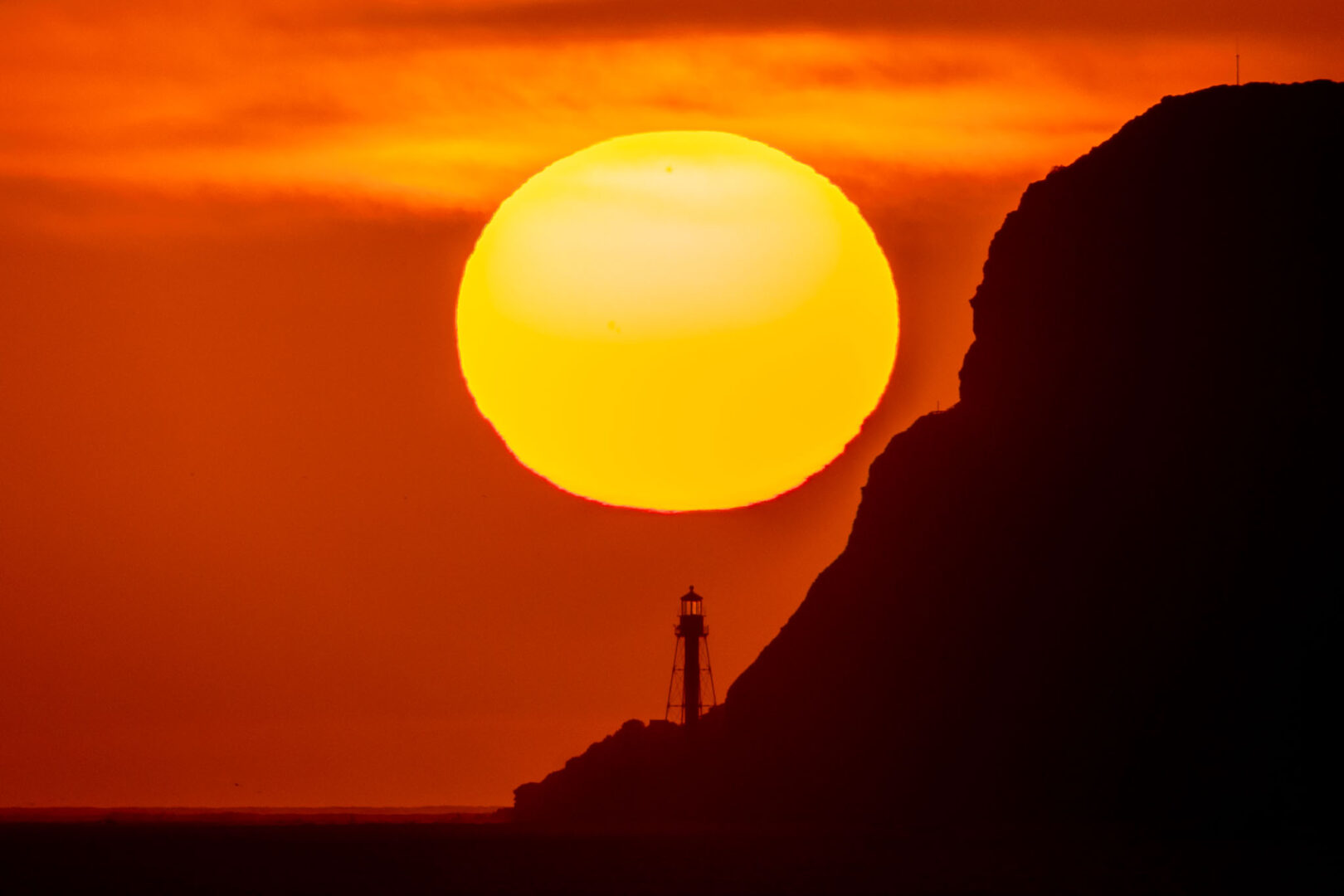
This time, I decided to put more effort, and money, into my quest for a killer sunset-and-lighthouse shot.
Planning the shot
First, I built a solar alignment calculator with the help of Claude, Anthropic’s large language model. I wanted to take the guesswork out of planning shots like this. Yes, I know commercial photography-planning apps already exist. Writing my own, though, was part of a wider effort to get to grips with AI models.
My calculator told me that the sun would set in line with each of the Point Loma lighthouses in February and October, as its setting point moves north and then south along the horizon. So, as October approached, I began preparing for the big event.
More reach
My TL2 and Sigma zoom had served me reasonably well, but I wanted to use my Leica SL2 this time. It has a higher-resolution sensor, a superb EVF, several focus aids and a joystick for moving the focus point around. The snag? With the Sigma telephoto on this full-frame body, I would top out at 400mm.
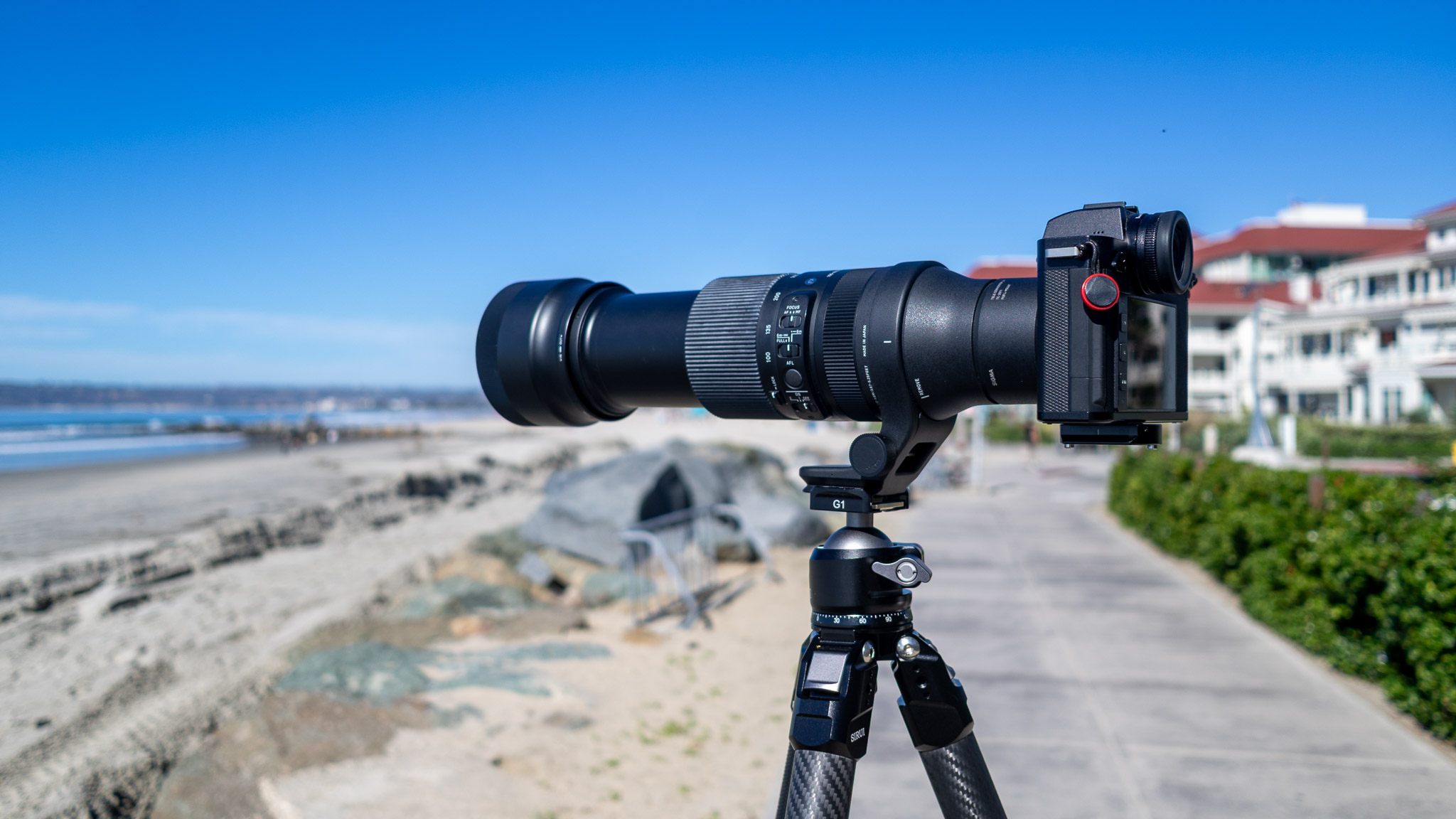
Enter the Sigma TC-2011 2x teleconverter for L-Mount, which stretches the zoom’s maximum focal length to 800mm, at the cost of two stops of maximum aperture. It costs $479, and it’s a dust- and splash-proof design with eight elements in four groups.
I attached the teleconverter to the 100-400mm and mounted the combination on the SL2. The whole kit weighs a hefty 2.48kg. Hoisting it onto my Sirui carbon-fibre tripod is something of a workout, but once it’s up there it balances nicely, thanks to the lens’s tripod collar and integrated Arca-Swiss foot.
The old lighthouse
My first target was the sun setting behind the Old Point Loma Lighthouse, the first of the two the sun would reach on its journey south. My app predicted that the sun would set within one degree of the lighthouse on three consecutive days. However, the app calculates azimuth at sea level (by design), and this lighthouse stands more than 400 feet above it.
I hedged my bets and photographed on each of the days the sun was likely to set close to the target.
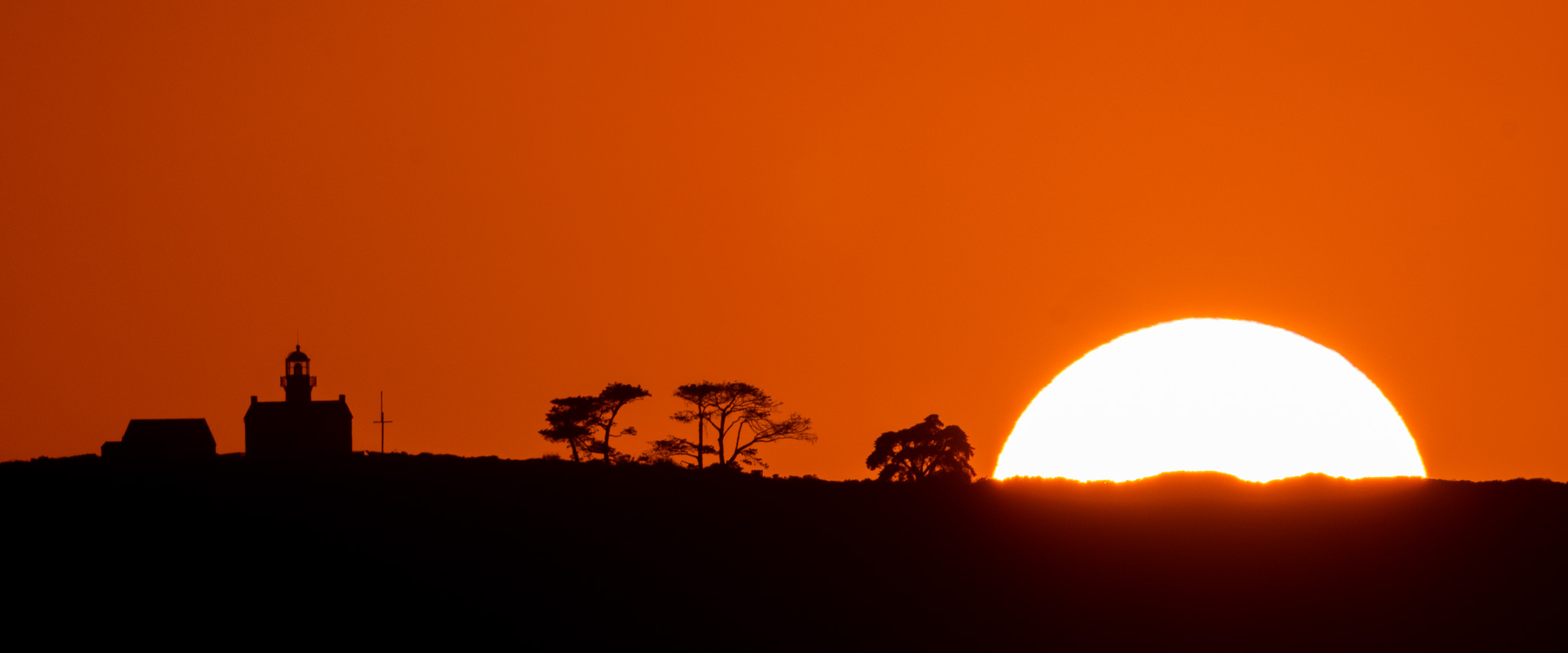
The best image I managed is this one, with the sun and lighthouse diagonally opposite each other, at upper right and lower left of the frame.
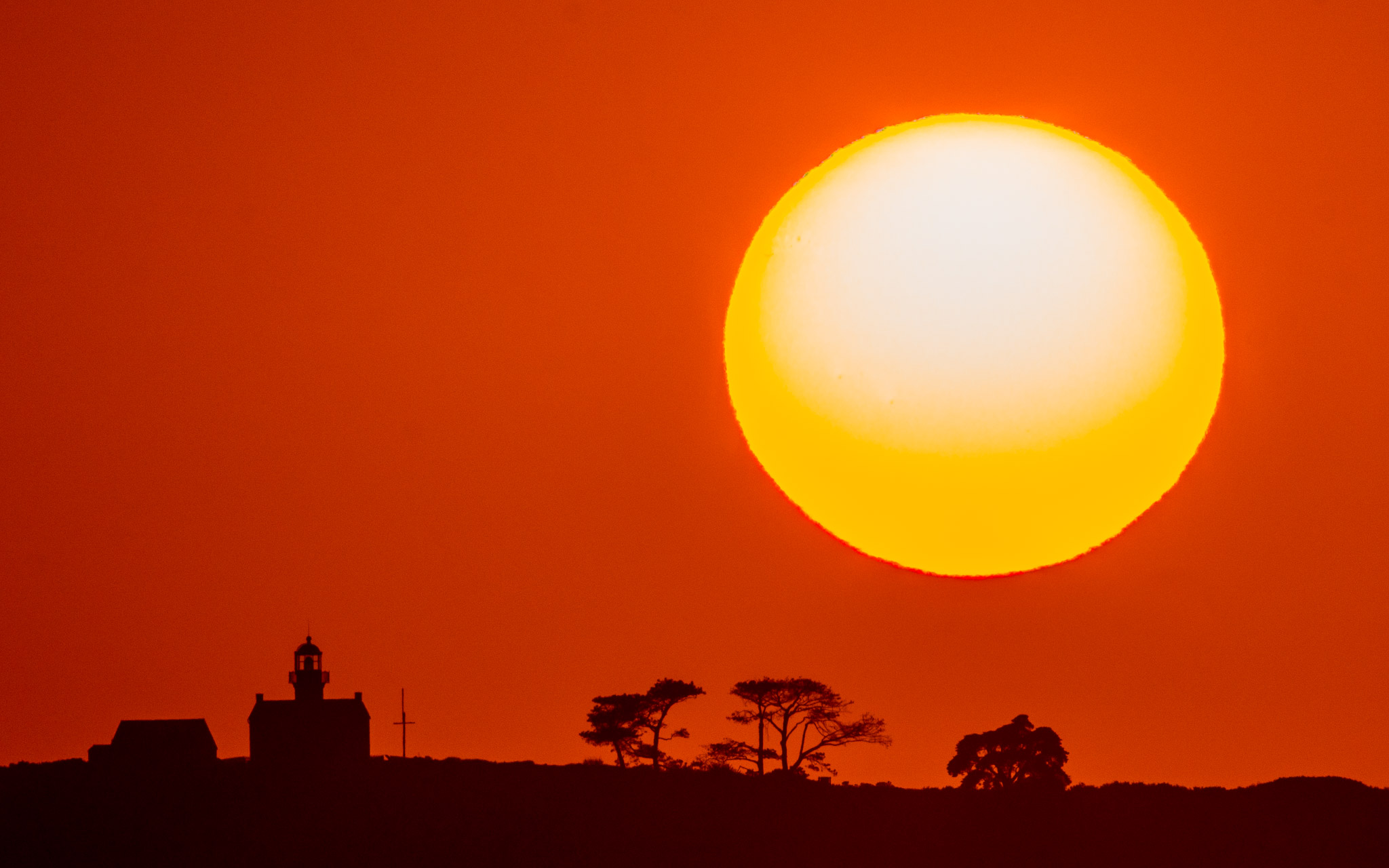
The silhouettes of the lighthouse and nearby trees are sharp, and the sun keeps some of its colour. I cropped the original to an effective focal length of 1,580mm, practically doubling the reach of the lens-and-teleconverter combination.
Eventually, the sun dropped below the line of the headland, slowly disappearing to the right of the trees. In the next shot, it is blown out, and it throws off glare where it meets the land.
Too much shimmer
The following evening, the sun set directly behind the lighthouse. But shooting through four miles of warm air on a hot day meant the whole scene was shimmering, even before the sun arrived. When it did, it was so bright that it blew out even at f/22 with two stops of underexposure, and the heat haze badly distorted the lighthouse’s silhouette.
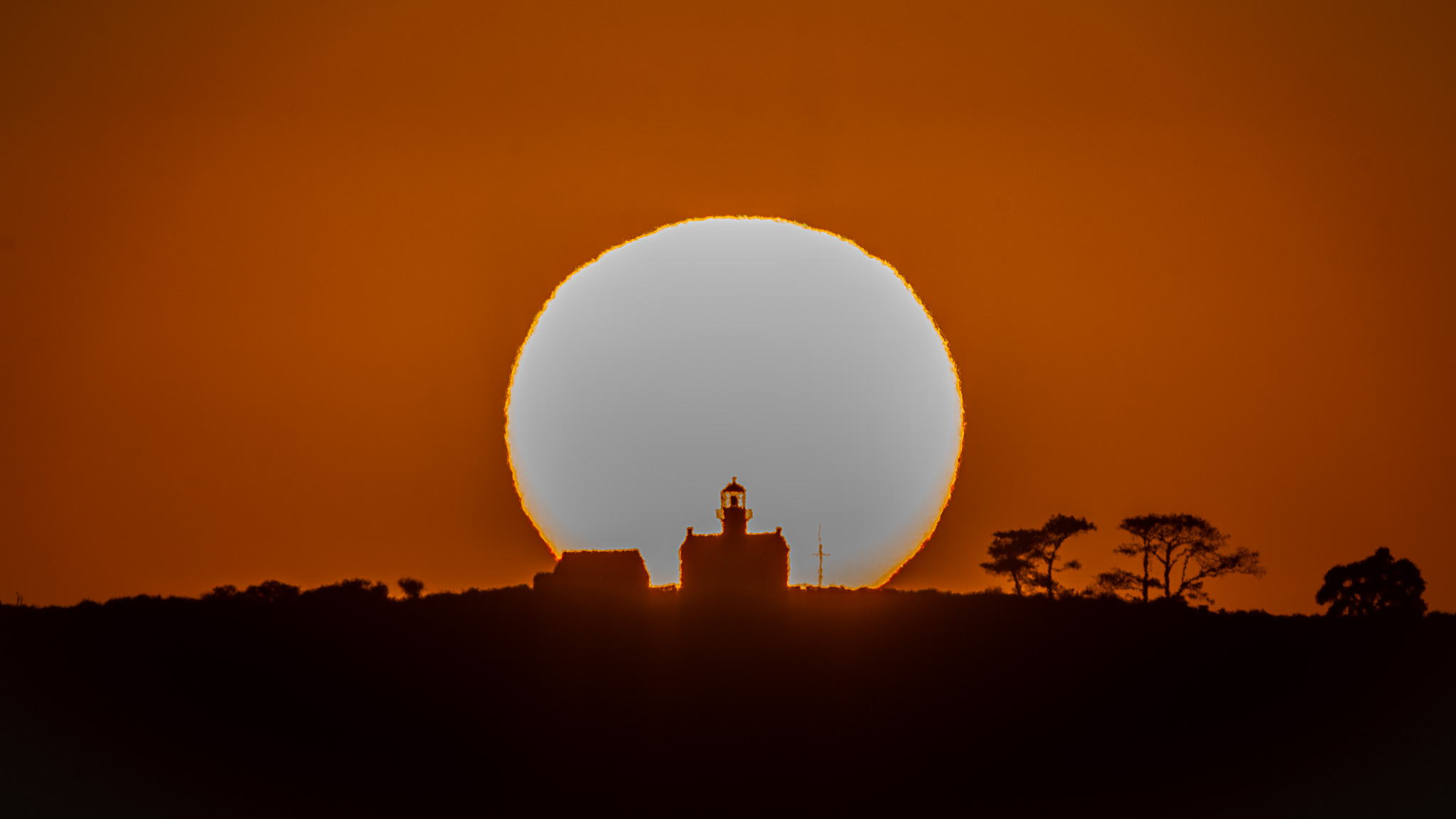
Ah well. A technical success in terms of planning, but an aesthetic failure in terms of image quality.
The sun is still well above sea level when it sits behind this lighthouse, with little sea mist to dim it. I concluded that this will probably always be a challenge with this particular scene.
Time to move on to the New Point Loma Lighthouse.
The new lighthouse
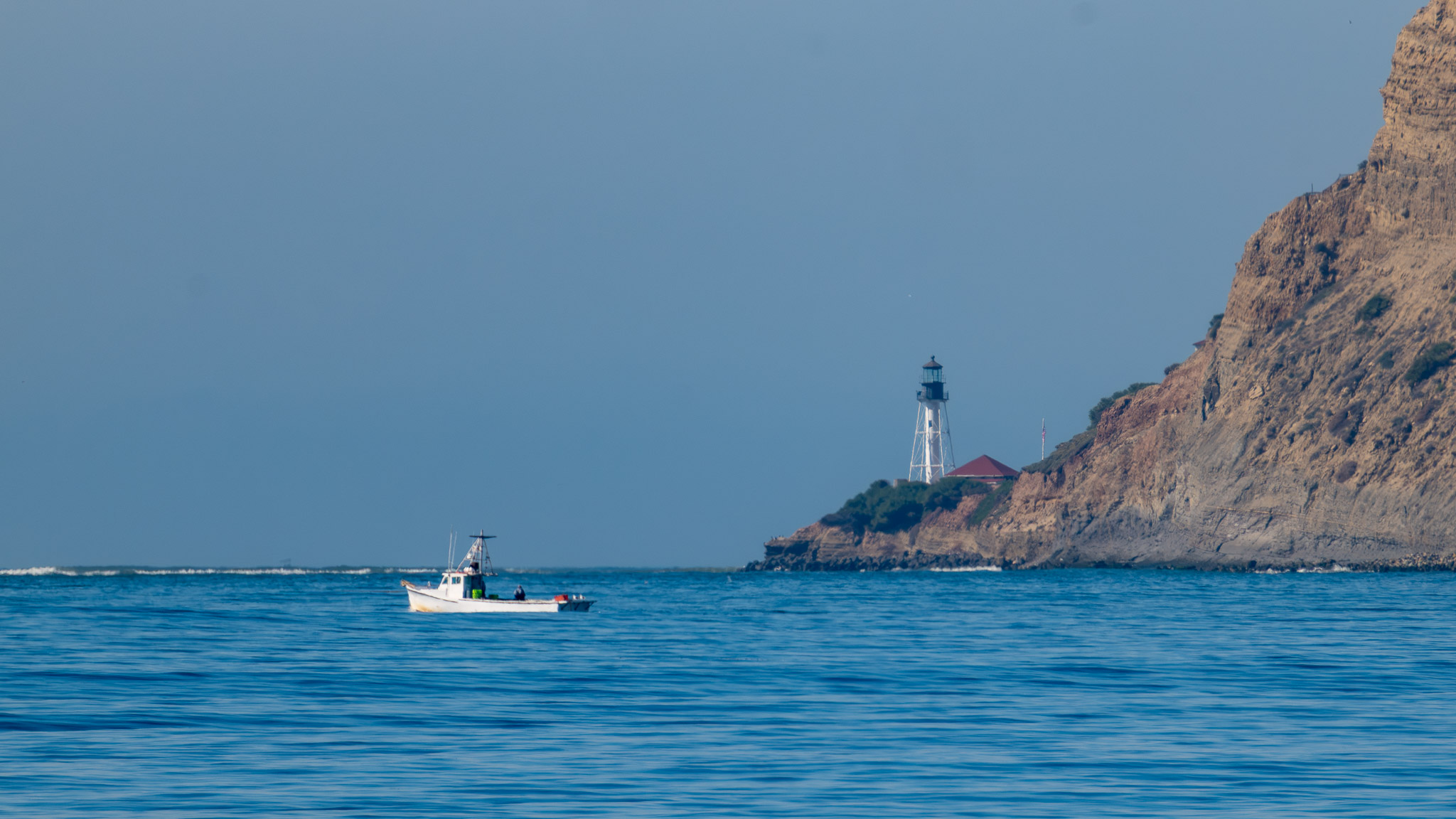
This proved a more straightforward proposition. Because the lighthouse sits at sea level, light from the setting sun passes through a much thicker slice of atmosphere on its way to the camera. Together with the ever-present sea mist, that both tames its brightness and lends it a yellow-orange glow.
I arrived at my chosen spot on the beach about 30 minutes before sunset and set up. The lighthouse was clearly visible in the EVF, and I adjusted focus at 800mm until its supporting struts and light chamber were sharp. As the sun sank, I estimated its path with the naked eye. Then I shuffled 30 feet or so up and down the boardwalk until I was confident it would meet the horizon very close to the lighthouse.
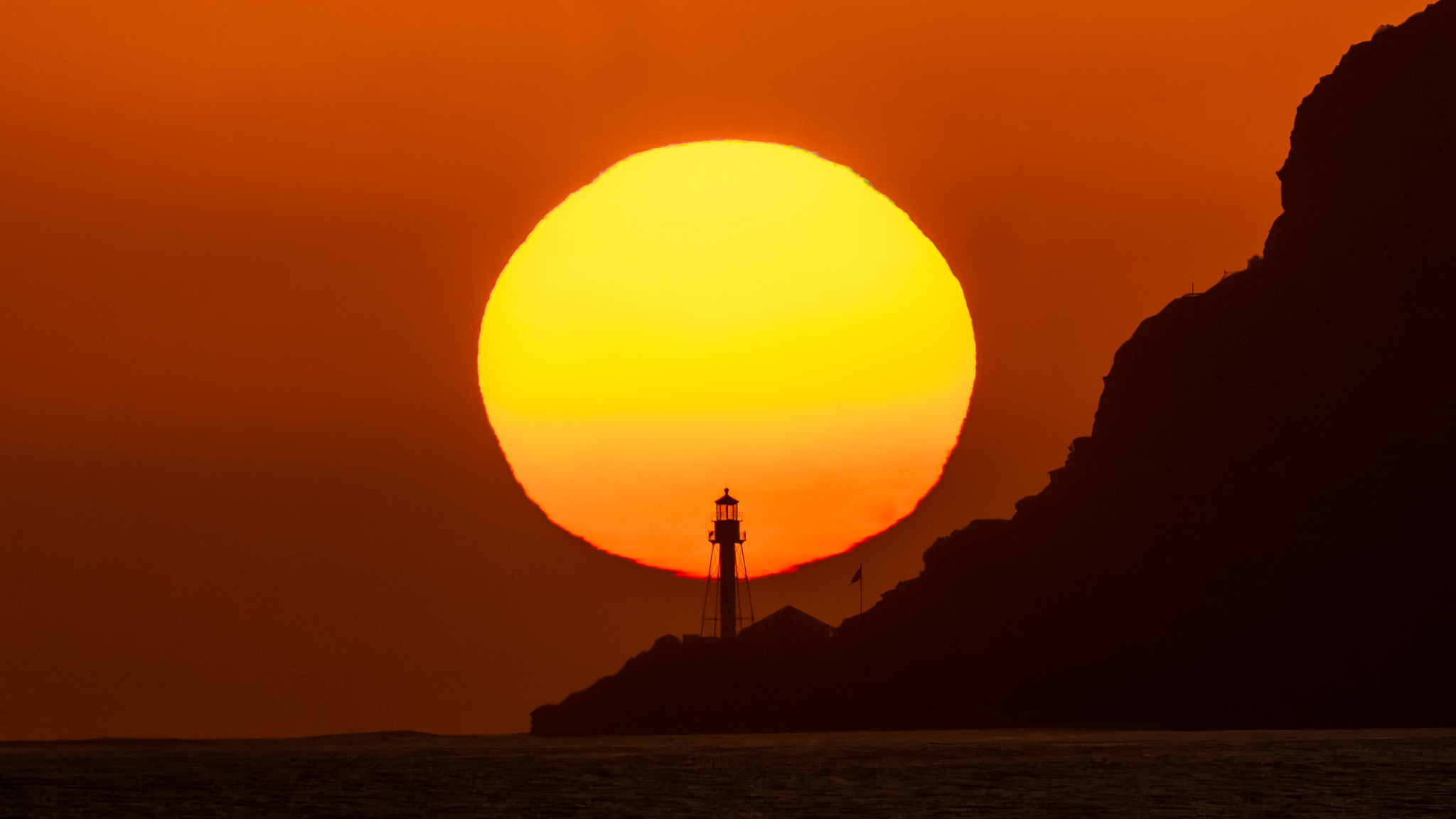
With a two-second delay set on the shutter release, I took a series of single frames until the sun disappeared behind the headland. Below is the photograph I was after.
Five simple elements
It’s a crop to an effective 1,600mm, and the composition is simple, with just five elements. The sun, a bright yellow ball, sits directly behind the silhouetted lighthouse. The black outline of the headland forms a diagonal against the orange glow of the sky, and the whole scene sits above a moody ocean in the foreground.
The sun isn’t perfectly round because the thick layer of atmosphere between sun and sensor distorts it slightly. Its lower edge is also starting to turn orange as it nears the horizon. Look closely, and you can see a silhouetted flag flapping in the breeze just to the right of the lighthouse.
Unlike my earlier shot of the old lighthouse, I judged this one a success on both counts: technically, in its timing, and aesthetically, in its composition and image quality.
But is it the best shot in the series?
The next photograph certainly gives it a run for its money. I took it a few seconds later, after the sun had sunk a little further towards the horizon, leaving the entire lighthouse backlit. The supporting struts and the window frames of the light chamber stand out with perfect clarity. It has the same five elements as before, just arranged differently.
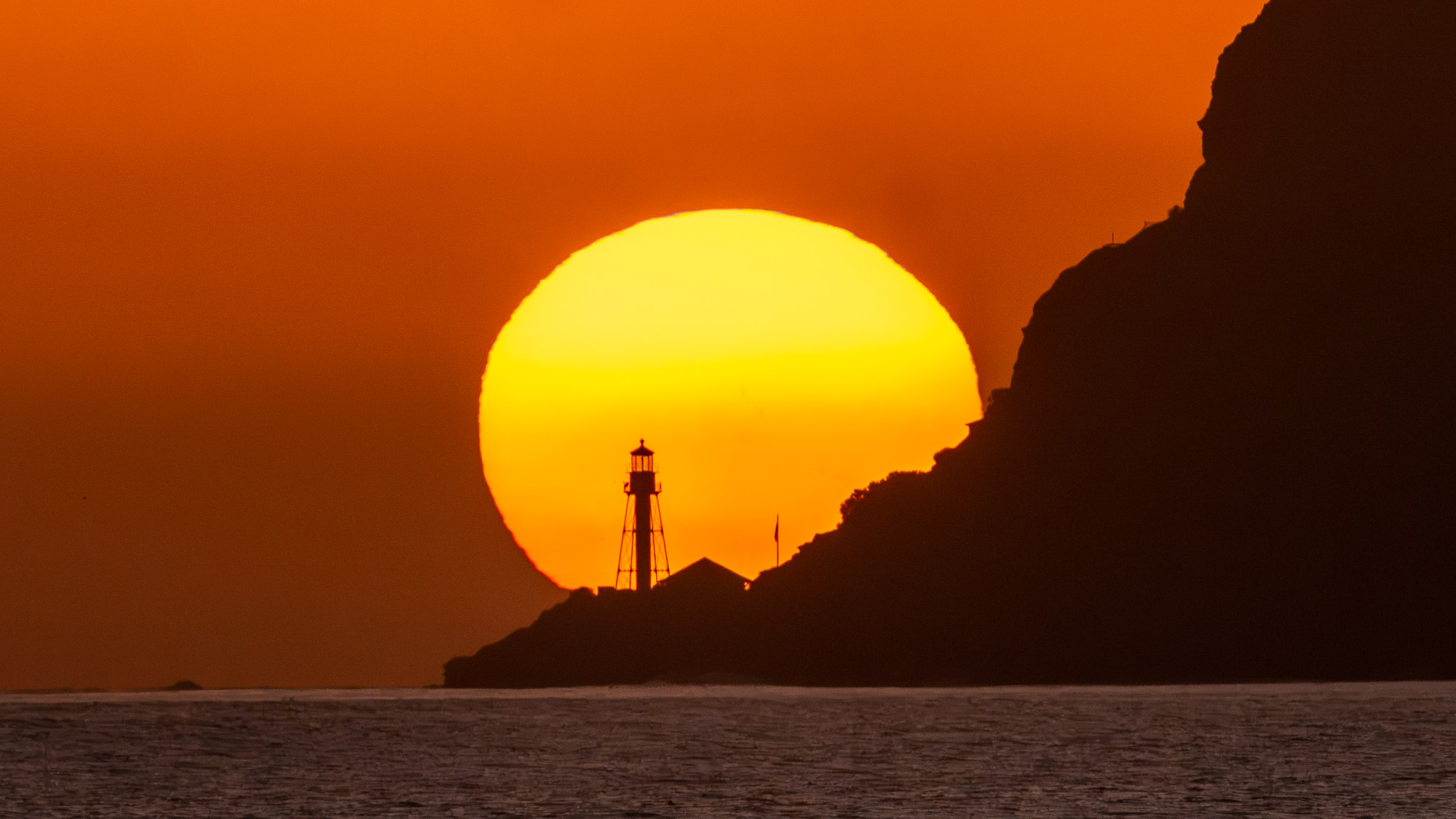
As a composition, I think it has a lot going for it. It doesn’t show the full circle of the sun, but seeing the whole lighthouse silhouetted inside a glowing fireball is, to my eye, rather special.
If you have a preference, please let me know in the comments below.
Lessons learned
A project like this isn’t for everyone. It needs a level of organisation and long-range planning that appeals to some and horrifies others. Looking back over the steps involved, I realised how many things had to click into place to pull it off:
- Living close to the scene, so I could make several attempts.
- Using a planning app to calculate the dates and times of the alignments.
- Waiting patiently, for several months, for the predicted alignment.
- Enjoying clear conditions with good visibility.
- Owning a suitable telephoto lens and a sturdy tripod.
- Setting up the camera for a sharp, well-exposed image.
- Making last-minute adjustments to fine-tune the alignment.
There may well be others, but those are the ones that occur to me.
Moonsets next?
Alongside the solar alignment calculator, I have also built a lunar version. In due course, I hope to photograph the moon setting near these lighthouses. It’s a tougher proposition because the moon’s motion is considerably more complicated than the sun’s, and there are phases and daylight to consider as well.
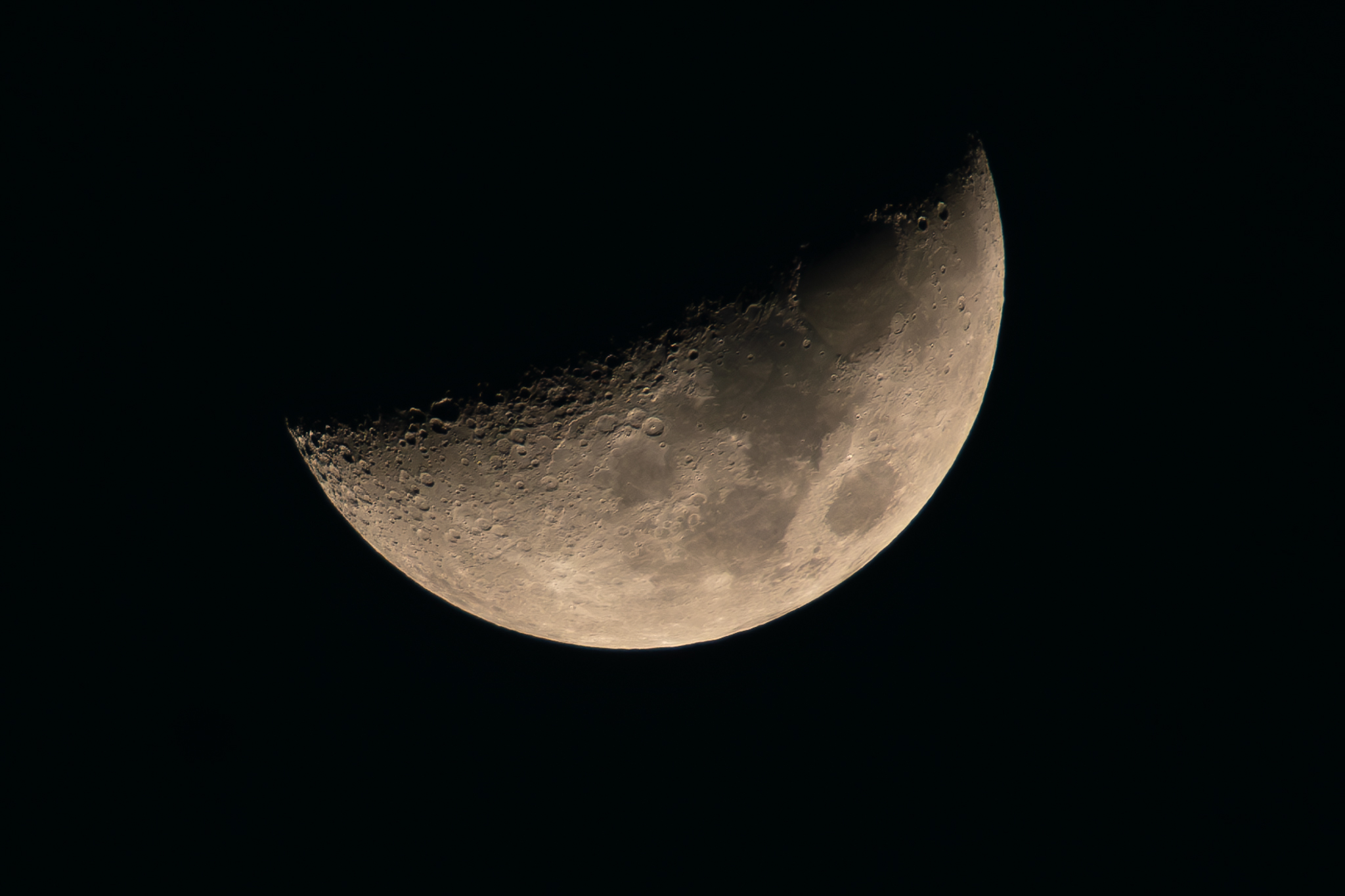

So this could be a long-term project. If I make any progress, you’ll read about it in a future Macfilos article.
Further reading
| Macfilos Articles | Other Links |
|---|---|
| Telephotography with the Leica TL2: Chasing a killer sunset shot – Keith’s first attempt at the lighthouse sunset, at 600mm equivalent | The Lighthouses of Cabrillo National Monument – The National Park Service’s history of both Point Loma lights |
| Sigma 100-400mm Telephoto Lens: A year’s experience with a Leica alternative – A long-term look at the zoom used here | Sigma TC-1411 1.4x and TC-2011 2x teleconverters for L-Mount lenses – Launch details and specifications of the teleconverter |
| Sigma launches new 100-400mm f/5-6.3 for L-Mount: Up to 800mm reach with teleconverters – The lens and teleconverter launch, as Macfilos reported it | Old Point Loma Lighthouse – Background on the 1855 lighthouse and its fog problem |
| AI and Photography: Are they friends or foes? – Keith’s wider look at AI, the background to his planning app | Sigma TC-2011 2x Teleconverter for Leica L – Current US pricing and availability |
Make a donation to help with our running costs
Did you know that Macfilos is run by six photography enthusiasts based in the UK, USA and Europe? We cover all the substantial costs of running the site, and we do not carry advertising because it spoils readers’ enjoyment. Any amount, however small, will be appreciated, and we will write to acknowledge your generosity.