

Last week I was chatting to Andy Sands, owner of my local camera dealer, Chiswick Camera Centre. On that occasion, our topic was the boom in compact cameras such as the Fujifilm X100VI, the Panasonic L10, and the Ricoh GR IV. Suddenly, he rummaged in a box behind the counter and produced two Fujifilm X70 cameras, one black, one silver. I’d completely forgotten about this little camera, so when he offered to lend them to me, I was delighted. The only snag was that they are dummy demo cameras, but they are good enough for a bit of product photography. Nonetheless, this set me thinking about what might have been.

I was looking at a camera that, for a few months in 2016, was one of the most acclaimed compacts money could buy — and that Fujifilm killed off so quietly and so fast that most people, myself included, had simply forgotten it ever existed.
Built to be pocketed
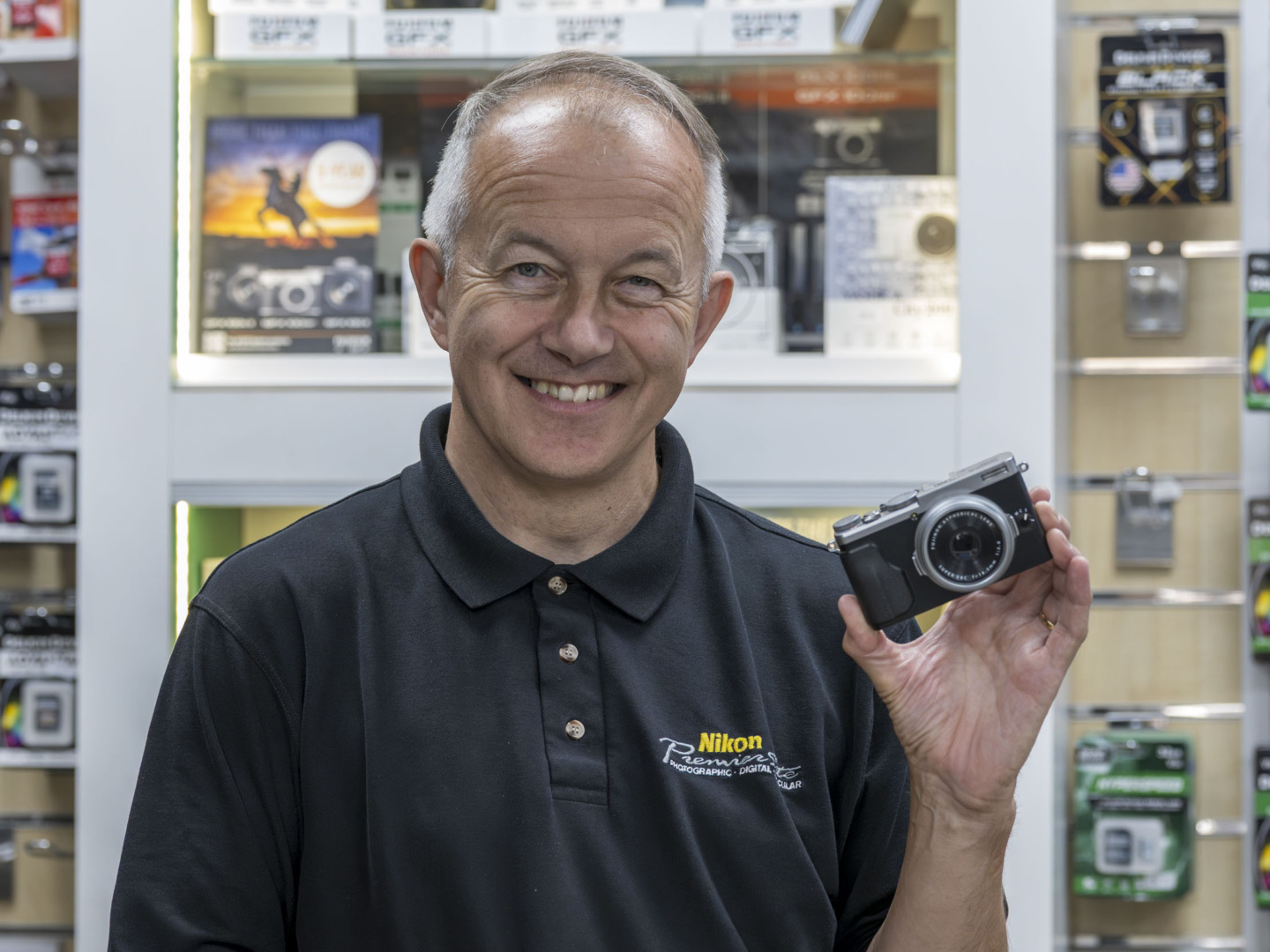
Fujifilm announced the X70 on 15 January 2016, alongside the flagship X-Pro2, the X-E2S and a rugged waterproof compact, the XP90. Of the four, the X70 was the one you pocketed rather than admired.
It was the smallest and lightest camera the X-series had yet produced, pairing a 16.3-megapixel APS-C X-Trans sensor with a fixed 18.5mm f/2.8 lens — 28mm equivalent, the classic focal length for street photography. It went on sale a month later, on 18 February, priced at £549 in the UK and $700 in the US.
The pitch was simple: everything people loved about the X100 series — the same sensor generation, the same Film Simulation modes, a similar dial-led control layout — in a smaller, cheaper body, with the optical viewfinder removed to make room for something the X100 didn’t have: a touchscreen that tilted 180 degrees upward and 45 degrees down, handy for shooting from the hip or turning the camera on yourself.
Fast autofocus
Fujifilm also gave it faster autofocus than almost anything else in its price bracket, a 49-point single-area system backed by a 77-point wide-tracking mode, plus an 8fps burst rate and an electronic shutter capable of 1/32,000sec — both figures that embarrassed cameras costing considerably more.
Reviewers, largely, loved it. Amateur Photographer awarded 4.5 stars, describing neither camera as objectively better: each excels in different areas, making the choice dependent on individual shooting priorities and aesthetic preferences. Furthermore, even the more mixed reviewers were fond of it: ePHOTOzine flagged cramped rear controls and a stingy grip, but still admired the build quality and the screen.
The one recurring gripe was the missing viewfinder, sold separately as a £149 hot-shoe accessory, but most critics treated that as a fair trade for the size and the price rather than a flaw. Nevertheless, at a time when phone cameras were starting to make compacts look like an indulgence, the X70 argued its case unusually well: an APS-C sensor and a genuinely sharp lens, in a jacket-pocket body, for under £550.

The obvious rival
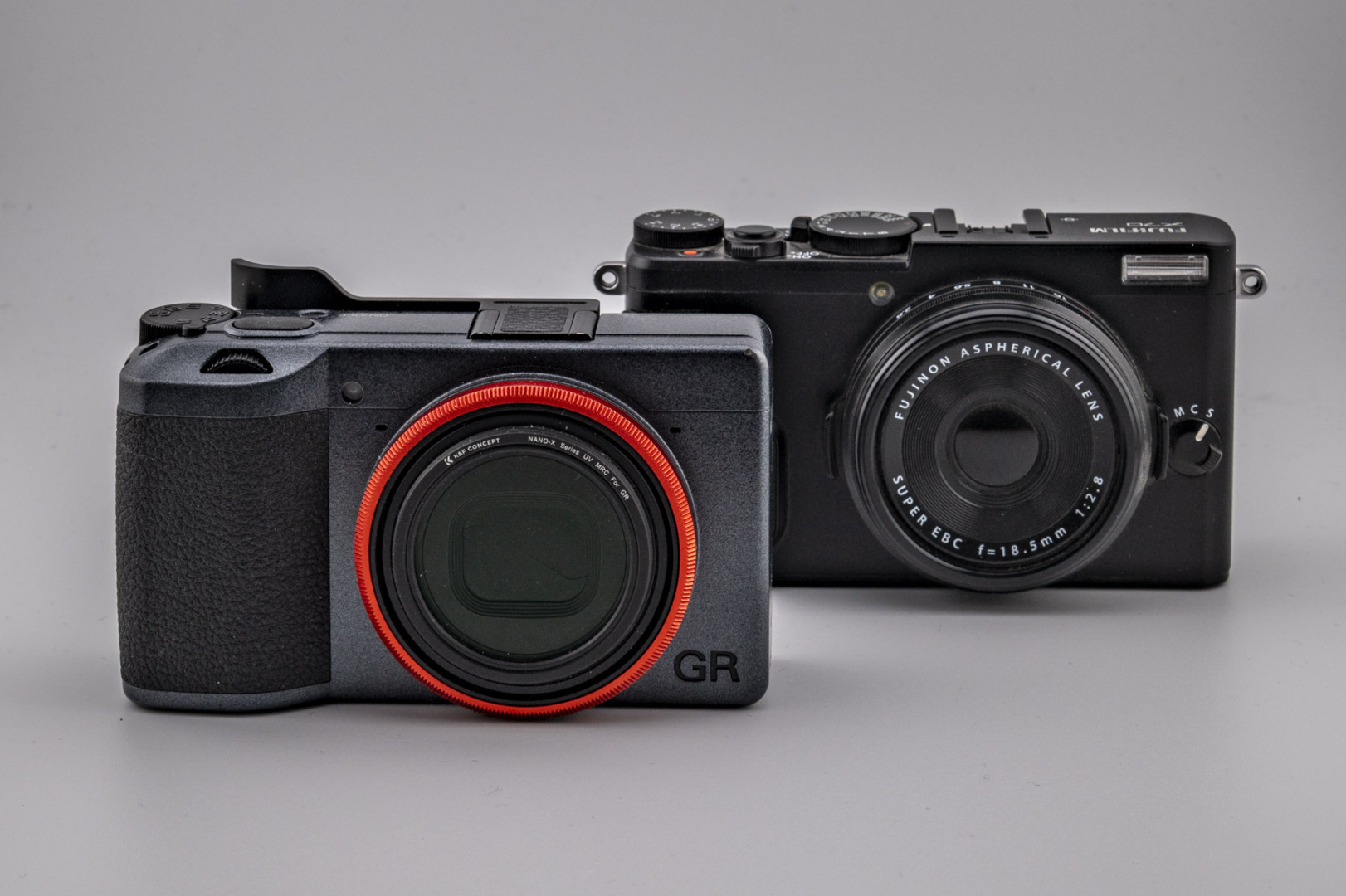
It also had, from day one, an obvious rival: the Ricoh GR II, then the reigning champion of the pocketable, 28mm, APS-C niche. Comparisons between the two ran everywhere reviewers gathered, and they tended to split along familiar lines. The X70 won on autofocus sophistication — the GR II’s nine-point contrast-only system looked antique next to Fujifilm’s hybrid array — and on burst speed, 8fps against 4fps, and on that tilting touchscreen, which the fixed-screen GR II simply didn’t have.
Neither camera is objectively better — each excels in different areas, making the choice dependent on individual shooting priorities and aesthetic preferences
The GR II clawed the advantage back with a reportedly sharper lens wide open, a higher native ISO ceiling with full RAW support at higher sensitivities, a built-in ND filter, and its cult-favourite Snap Focus mode. This mode lets street photographers pre-set a focus distance and shoot instantly, without waiting for autofocus at all. It’s similar, in fact, to the old zone-focus method of handling M cameras and lenses.

One detailed article in Mirrorless Comparison summed it up fairly: “Neither camera is objectively better — each excels in different areas, making the choice dependent on individual shooting priorities and aesthetic preferences.” It read, at the time, like the start of a rivalry that would run for years, each brand needling the other into better cameras.
No contest
It didn’t happen. Ricoh kept building GRs: the GR III in 2019, the GR IIIx two years after that, and now the GR IV that Andy and I had been discussing when he pulled those two dummy X70s out of his box. Fujifilm never built another X70.

What actually happened to it is murkier than a normal product’s retirement because Fujifilm never really explained it. By December 2016 —ten months after launch, not even a full year into a run that had opened with awards and rave reviews — trade reports citing dealer and distributor sources, first surfacing on the rumour site Fuji Rumors, said Fujifilm had quietly discontinued the X70.
The reported reason wasn’t the camera at all. Sony had halted production of the 16-megapixel APS-C sensor generation that powered Fujifilm’s X-Trans chips, shifting its manufacturing towards higher-resolution parts instead. That sensor was powering several Fujifilm bodies at once — the X70, but also the X-T10 and the X-T1 — and with limited remaining stock to allocate, reports say Fujifilm prioritised the higher-volume interchangeable-lens cameras over a single, comparatively niche, fixed-lens compact. It was industry-wide plumbing trouble, not a Fujifilm misstep, and reportedly not unique to Fujifilm either. But the X70 was the model that paid for it.
Mystery deepens
Fujifilm never officially confirmed any of this: no recall notice, no press release, no explanation beyond the plain fact that a camera which had been winning awards eight months earlier simply stopped being available to order. It is a strange kind of ending. It wasn’t a failure of sales, or of reviews, or of the camera itself, but a supply-chain decision made somewhere else entirely, in a sensor factory that had nothing to do with why anyone actually liked the X70.


Fujifilm simply never brought it back. Fuji X Weekly and many other enthusiast outlets have spent the best part of a decade running some version of the headline “Fujifilm needs to make an X80,” to no response. Meanwhile, the used market has done the talking for them: clean X70s now regularly sell for close to, and sometimes above, their original retail price, chasing demand that has nowhere else to go. This is in a market where an X100VI has been a tremendous success.
Compact for dummies
This brings me back to the two dummy cameras sitting on my desk, and the the big question in my mind. Would the X70 have become the little brother to the X100VI, with all its worldwide success, if Fujifilm had simply kept making it?
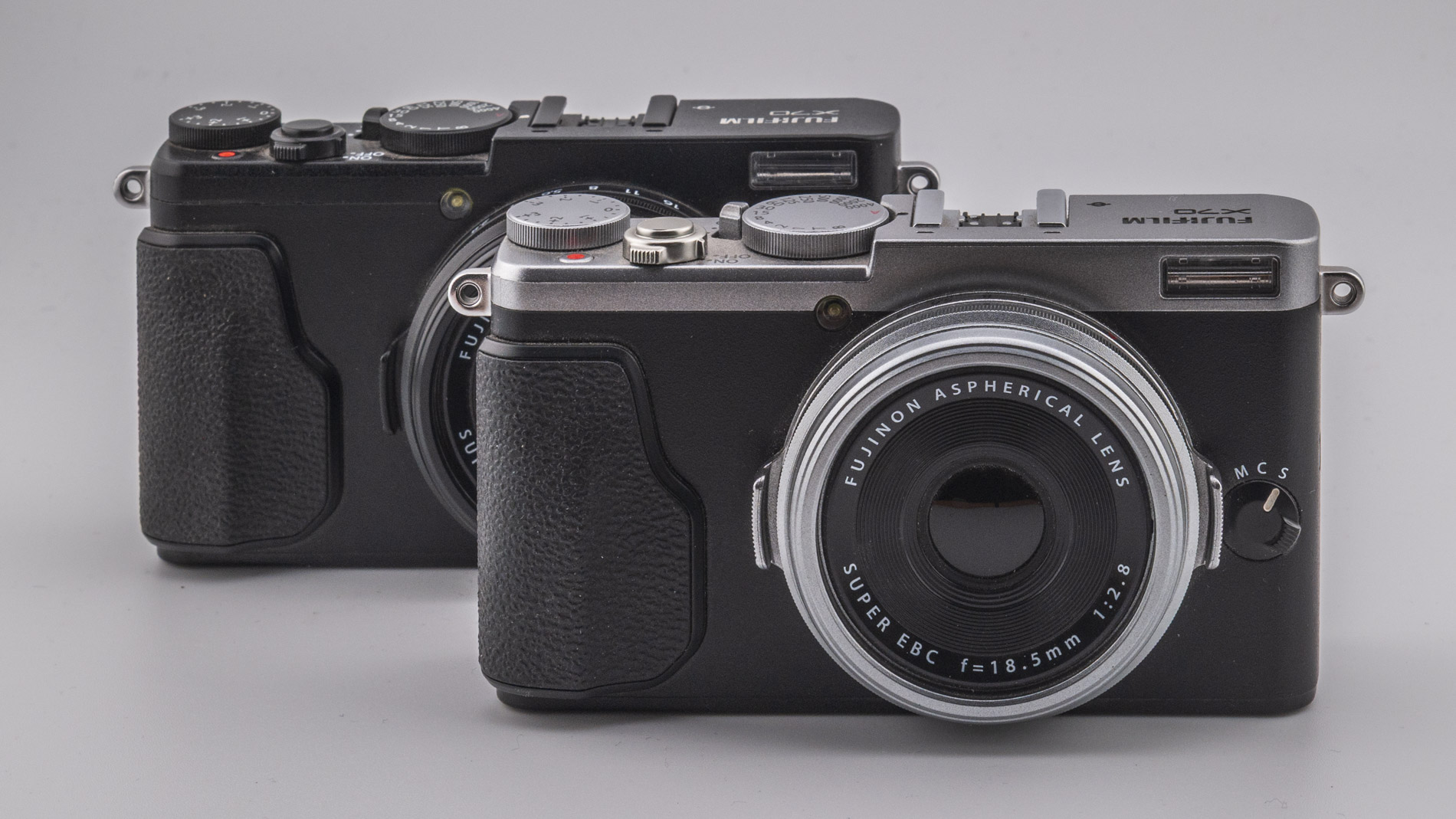
It’s tempting to say yes, and there’s a real case for it. The two cameras share a surprising amount of DNA: the same X-Trans sensor generation, the same Film Simulation modes that now drive so much of the X100VI’s appeal, the same dial-led, deliberately analogue control layout that reads as “authentic” to a generation raised on phone cameras.
The X70 arrived nearly a decade before the current retro-compact boom, before TikTok turned Film Simulation presets into a genre of their own, before “shot on Fujifilm” became a small industry in itself.
If it had survived — and, crucially, if Fujifilm had kept improving it the way Ricoh relentlessly developed the GR — through a GR III, a GR IIIx and a GR IV — there would plausibly be a version in 2026 of an X80 or an X90 sitting exactly where the X100VI sits now: sold out everywhere, resold at a markup, filling the same web magazines.
Contrarian view
But it’s just as easy to argue the other way. Much of the X100VI’s mystique is bound up with the one thing the X70 was specifically built without: a viewfinder, and that’s Fujifilm’s hybrid optical/electronic finder, the single most distinctive, most discussed feature of the entire X100 series.


A camera relying on a rear screen for composition is a different object, symbolically as well as practically, from one held up to the eye. It isn’t obvious that “shooting like your dad did” appeal survives the loss of a viewfinder to look through. The Ricoh GR III and GR IIIx have proved a screen-only compact can absolutely build a devoted following of its own, but it is a different, quieter kind of following than the X100VI’s — built on street-photography credibility, rather than retro spectacle.
The clear answer is that nobody will ever know because Fujifilm never gave the X70 the chance. It got one acclaimed model year, a supply-chain accident, and then a decade of silence, while its closest rival went on to define an entire category. Holding a hollowed-out demo unit on my desk feels a little like holding the “what if” itself: proof that once, just briefly, Fujifilm built almost exactly the camera the market is now desperate for — and then, for reasons that had nothing to do with anyone actually wanting it, let it go.
Find Chiswick Camera Centre here
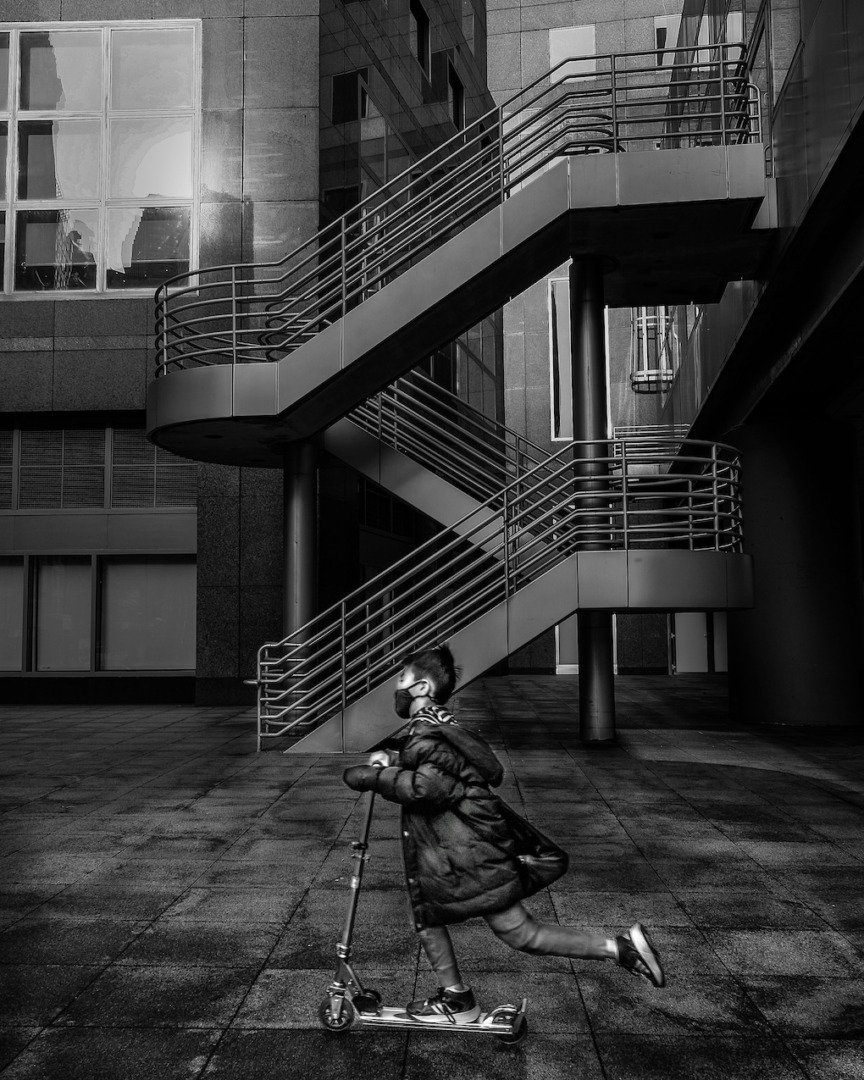
Author’s note: Since I have never owned the X-70, my colleague Ed Lara kindly offered to find a few of the shots he took with the X-70 during its year of stardom.
Further reading
| Macfilos Articles | Other Links |
|---|---|
| Fuji X70: Is it the perfect street camera? – Macfilos’s own contemporary verdict on the X70 | The Phoblographer’s original X70 review – The five-star, Editor’s Choice review quoted in the piece |
| Fuji X70: First impression hands-on with the new Baby X – An early hands-on from launch week | Amateur Photographer’s X70 review – Another of the 4.5-star verdicts referenced above |
| Fuji announces X-Pro 2, X-E2S and X70 – Macfilos’s coverage of the original January 2016 announcement | Photography Blog’s X70 review – The third 4.5-star verdict quoted in the piece |
| Fujifilm X100VI Review: Is this the best fixed-lens compact on the market? – The camera the article asks whether the X70 might have become | Mirrorless Comparison’s X70 vs Ricoh GR II head-to-head – Source of the “neither camera is objectively better” verdict |
| Ricoh GR IV: Latest in the line of cult fixed-lens compacts – The GR IV mentioned in the shop-counter anecdote | The Phoblographer’s report on Sony’s sensor production halt – The trade report behind the discontinuation story |
| Panasonic Lumix L10 Review: A premium compact camera for enthusiasts – The other camera named in Andy’s shop that day | Ricoh GR III official product page – Manufacturer specifications for the GR III |
Make a donation to help with our running costs
Did you know that Macfilos is run by six photography enthusiasts based in the UK, USA and Europe? We cover all the substantial costs of running the site, and we do not carry advertising because it spoils readers’ enjoyment. Any amount, however small, will be appreciated, and we will write to acknowledge your generosity.
That makes three Mike, I had never seen this one either.
My tiny camera of choice was and still is, the Panasonic DMC LX3/5. I had the LX3 version and when I moved to something else, it sat in its box for a while, until one of my daughter’s friends happened to mention that she was looking for a camera, I offered her this for £80 and she jumped at it.
Sometime later, I missed it and started looking for another and I found an LX5 for a similar price, this time I also bought the accessory eye level viewfinder DMV-LVF1, it was more expensive than the camera! I still have them and will not part with either again.
NB: For Leica fans, they sold a rebadged of version of this, which looked great, with the usual caveat that it did not have a bump on the front to assist in holding it.
Leicas are great cameras, but I always find it a bit frustrating that they leave that essential part off of their cameras. I had to buy one for my Q2, indeed two, the first was made by JJC which semi failed in that it covered up the 4 way zoom that is a feature of the Q series, so more recently I have bought the Leica version, which is much better.
You are right on Leica’s dismantling of a perfectly good Lumix body design. I covered this in some detail in my test of the new Lumix L10, conjecturing that when it comes out as the D-Lux 9, it will lose the handgrip (expensive extra needed) and some other aspects, including the step-zoom feature. Often, “das Wesentlich” means “Das Less Practical”. Mike
Please forgive me if this is too far off topic — but I’ve always wondered about ‘pocketable’ cameras (being a person whose clothes have no pockets, with the exception of a large heavy fur).
I imagine a young person wearing jeans with a US$1600 Ricoh in their back pocket. Then I imagine them entering a train or subway, and being quickly relieved of their camera.
Or am I being A) paranoid or B) with way too vivid an imagination?
🙂
Well, I don’t know. The GR definitely fits in the side pocket of a pair of jeans. And will go into most jacket pockets. I don’t think sensible people would trust it to the back pocket, both from the theft perspective and the potential damage when sitting down. But it is definitely “pocketable” (if you have one) — Mike
I have to confess that the X70 passed me by as well. Very interesting to see it next to the Ricoh – similar size. Thanks for the article Mike.
Thanks, Andrew. I was surprised to, and even more surprised that I had forgotten all about it.