

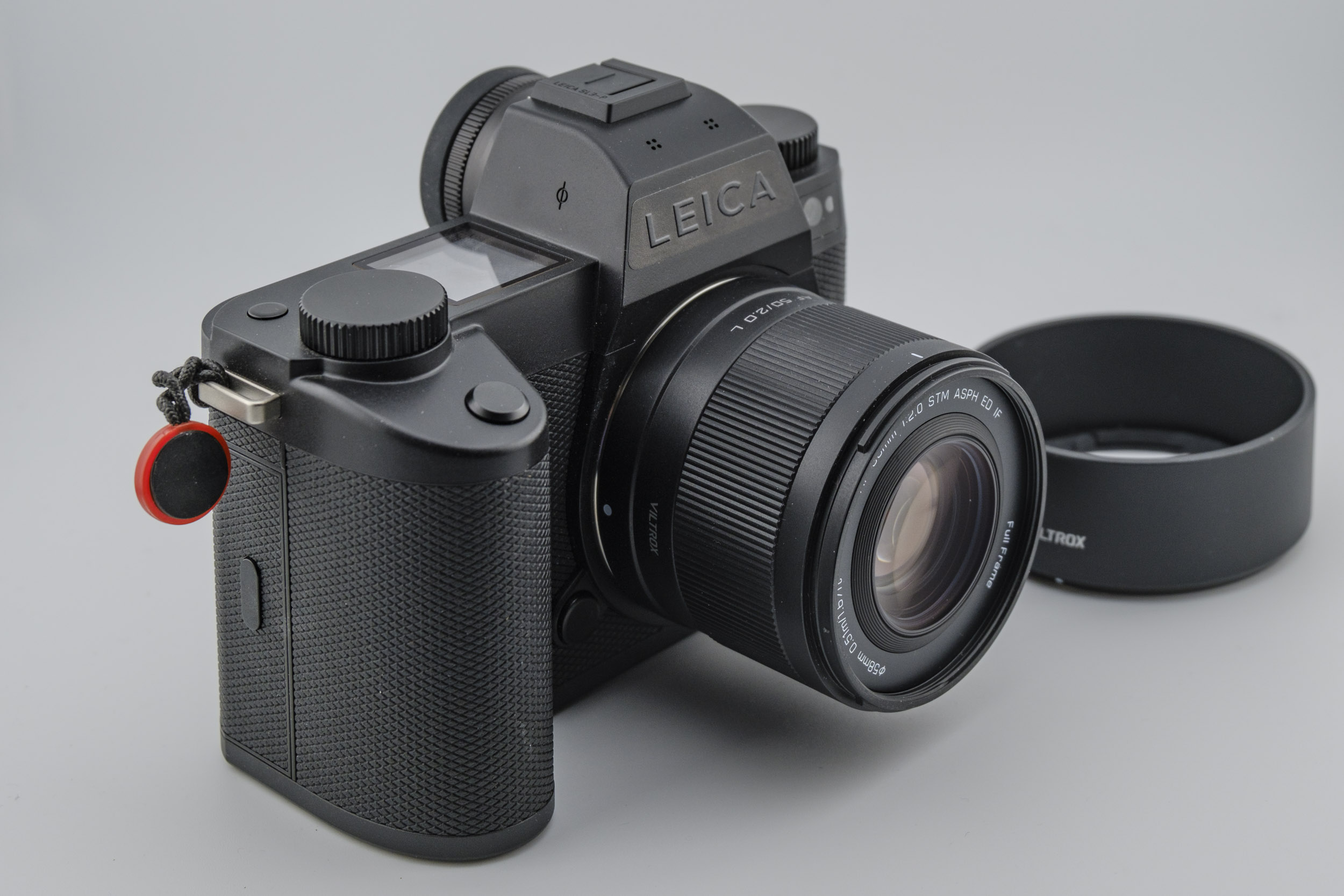
It was almost a case of love at first sight when I opened the tiny but sturdy box and put the Viltrox AF 50mm f/2 Air L in the palm of my hand. It’s so small, perfectly formed and tactile. And when I mounted it on the Leica SL3-P it looked the bees’ knees, complementing the rather hefty body in a way that’s difficult to explain. Taken on appearances alone, this is the ideal nifty-fifty companion for an SL or Lumix body. All this is well and good, but even the most attractive lens falls if it doesn’t meet the optical standards we expect. That’s what I aim to discover …
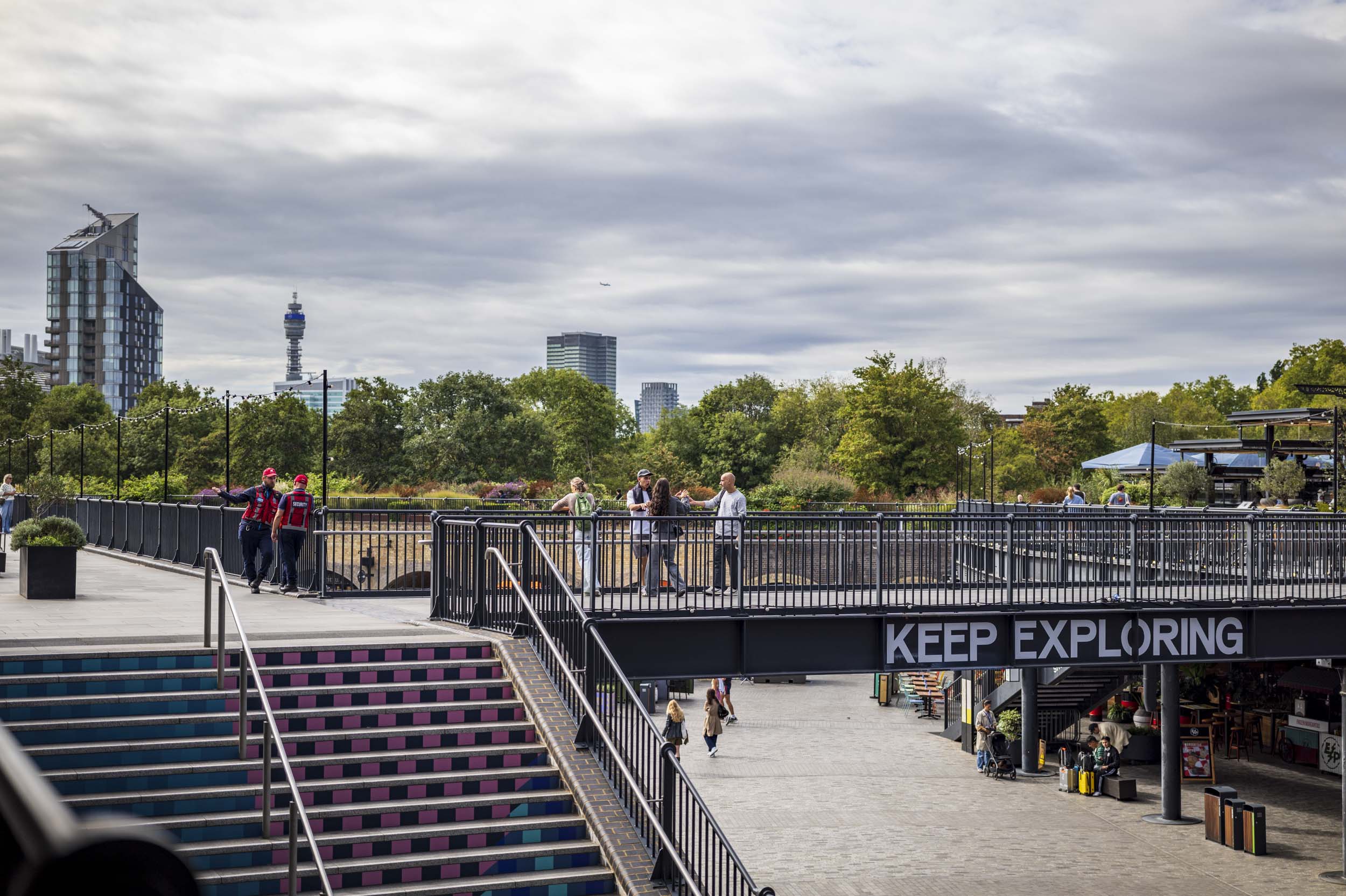
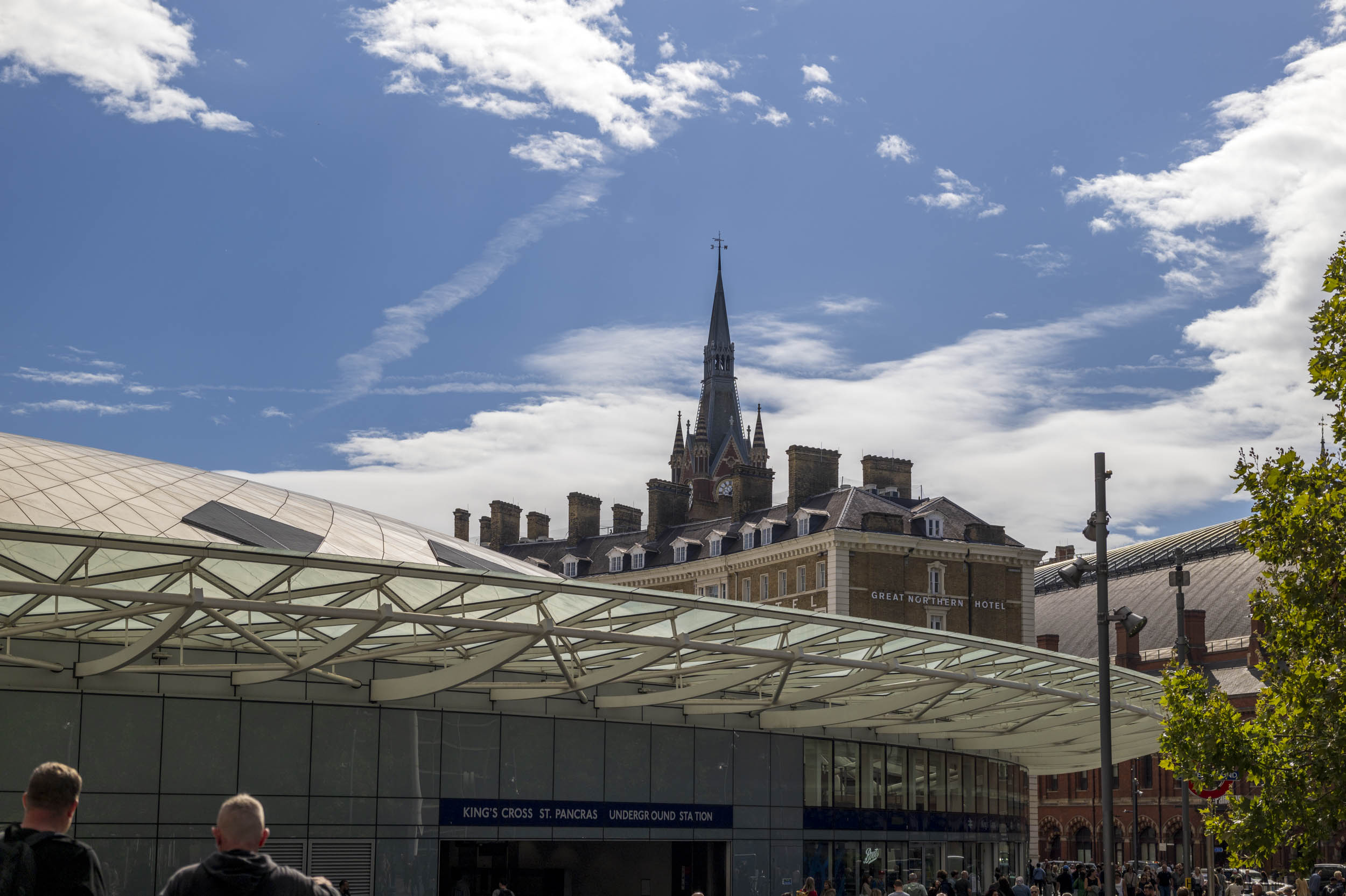
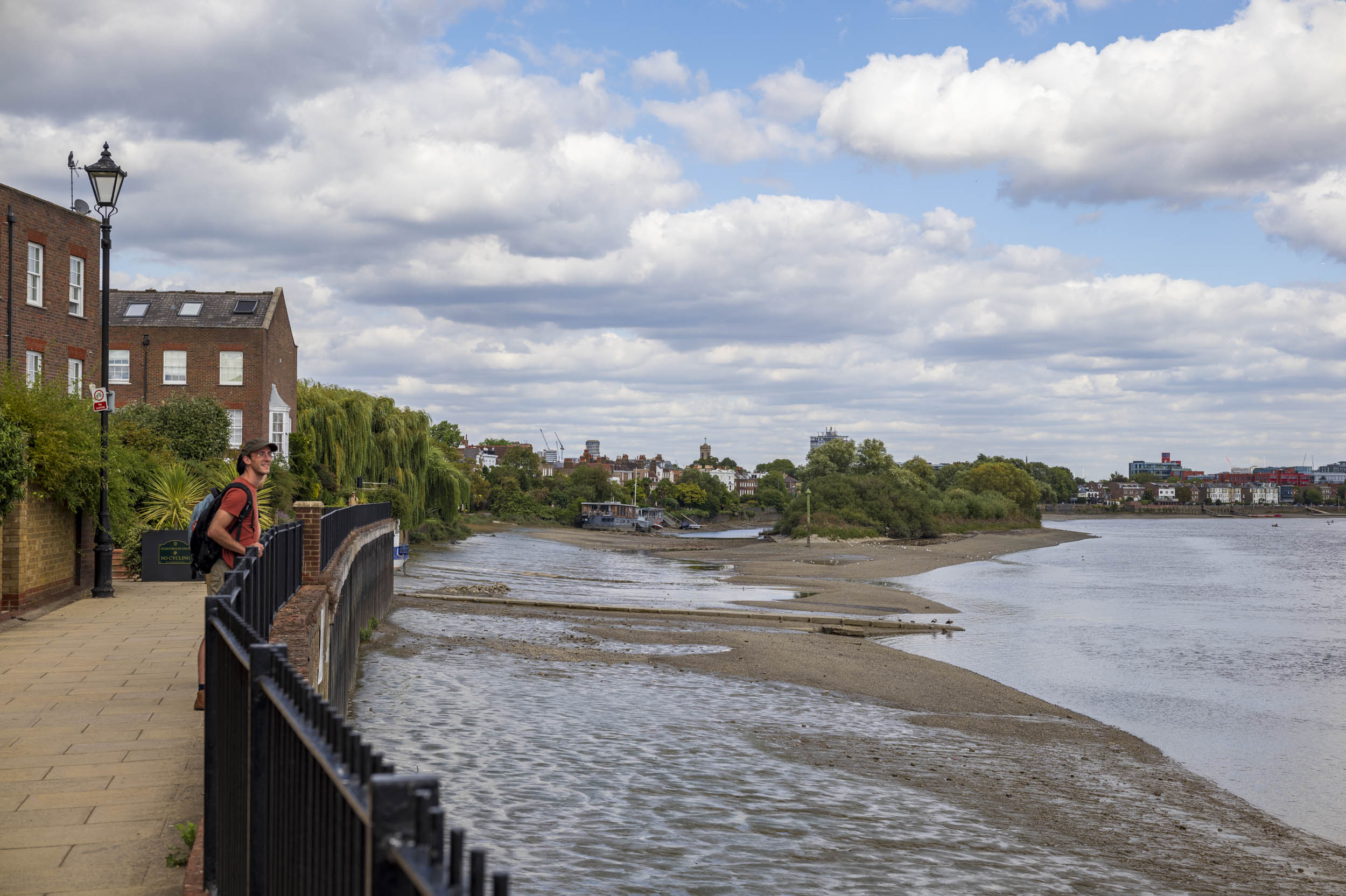
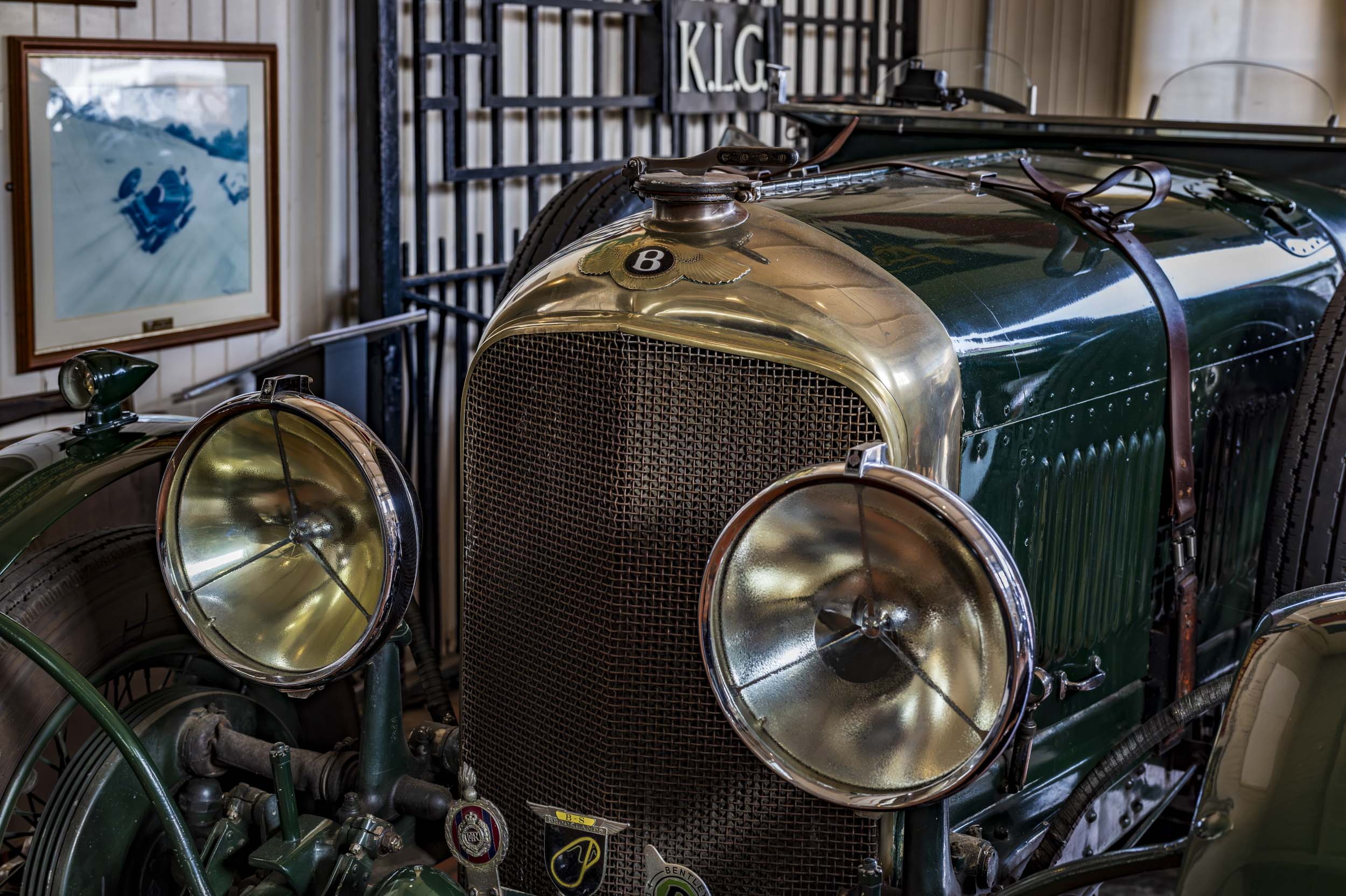
I lived with the Viltrox for a fortnight, in the kind of mixed weather early autumn brings here in London — our glorious summer fading fast, and the final week spent dodging showers between sessions. Testing took me to three familiar patches: the Coal Drops Yard area of King’s Cross, where I fell into conversation with several other photographers clearly there for the same reason — it’s a genuinely good spot street photography; Brooklands Museum, a regular haunt of mine, whose static cast of cars, motorcycles, and aeroplanes makes it ideal for comparison shots across cameras and lenses; and my usual stretch of the Thames riverbank in west London, another reliably photogenic corner I visit almost daily.
Where Viltrox fits in
Viltrox’s L-mount range currently spans three tiers: the premium Pro series, the speciality pancake-format Chip, and Air — everyday compact primes built to a budget, with plastic-composite bodies and fast STM autofocus, aimed at travel and lifestyle shooters rather than professionals.
The 50mm f/2 tested here belongs to Air, launching alongside three further Air primes (40mm f/2.5, 20mm f/2.8 and 14mm f/4) — Viltrox’s biggest single push into L-mount so far. Viltrox sent this test lens to us three weeks before today’s launch.

It goes up against a small, well-defined field of semi-fast L-mount 50mm primes — chiefly the Panasonic Lumix S 50mm f/1.8, the Leica Summicron-SL 50mm f/2, the Sigma 50mm F2 DG DN Contemporary, and, at the very top, the Leica APO-Summicron-SL 50mm f/2. I will return to these lenses after the hands-on testing.
Design and build
First impressions matter, and the Viltrox does not disappoint. It arrives in simple but good-quality packaging that feels secure rather than flimsy — a small box, but a sturdy one, with nothing wasted.
The lens itself is tiny and light, and its construction is refreshingly minimalist. There are no dials or knobs, bar a single focus ring — large, sensible, and exactly where the hand expects to find it.
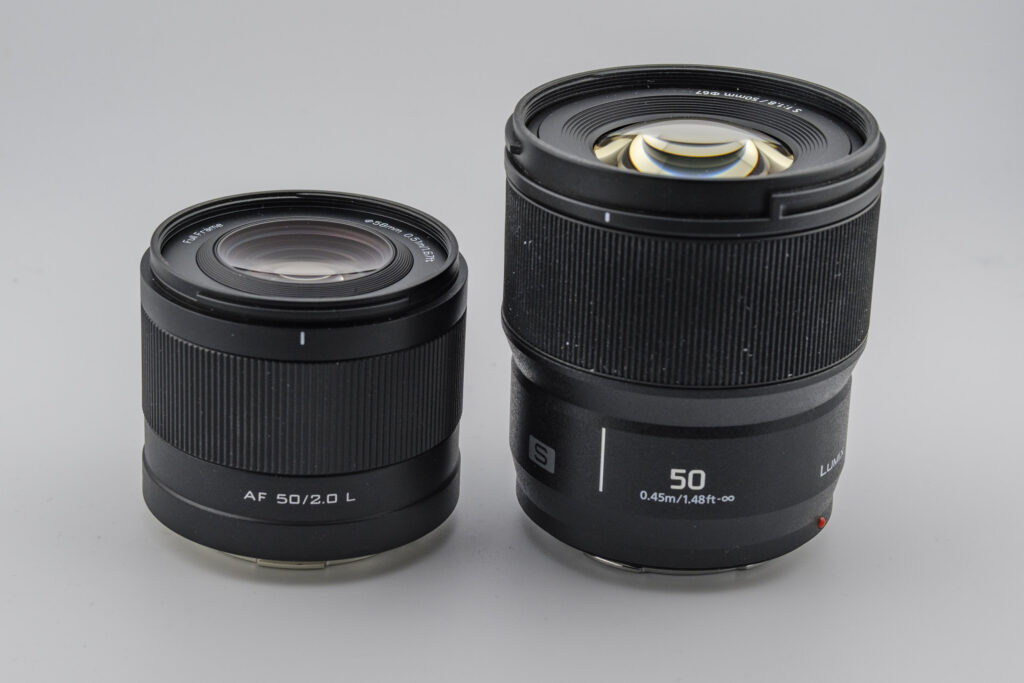
At around 55mm long and 65mm in diameter it is one of the smallest 50mm lenses available for the L-mount system, weighing around 205g officially. I weighed the review sample myself, without hood, filter or caps, and got 210g — close enough to the official figure.
| Specification | Detail |
|---|---|
| Aperture range | f/2.0–f/16 |
| Focus distance | 0.51m to infinity |
| Maximum magnification | 0.11× |
| Weight | 205g (official) |
| Dimensions | φ65.1 × 54.4mm |
| Focus motor | STM |
| Mount | L-mount |
| Angle of view | 47.4° |
| Filter thread | φ58mm |
| Optical construction | 13 elements in 9 groups (3 ED, 4 HR, 1 asph.) |
| In-camera correction | Supported natively on L-mount bodies |
| Price | £190 | $199 | €229 |
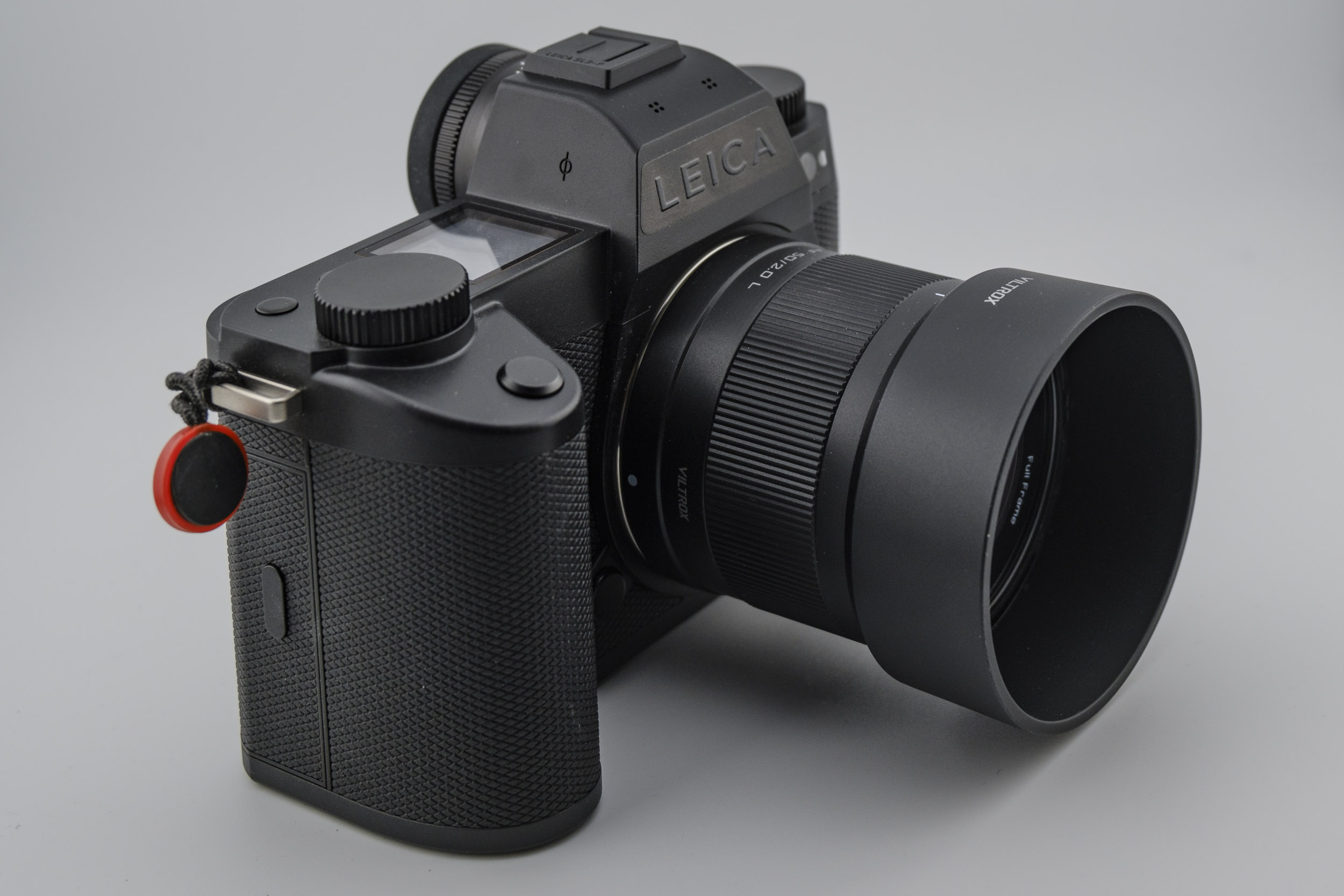
The lens has a constant diameter throughout its length, which adds to its modern appeal, and comes with a quick-release straight plastic hood that’s genuinely attractive — the kind you just want to leave attached permanently. Call me picky, but I really hate the appearance of huge petal hoods. It fits precisely, with clear markings for attachment, and feels extremely solid in use. The Viltrox branding sits dead-centre as you look down from the camera. The filter thread is 58mm.
Official specification sheet
Viltrox’s own chart lines up neatly with my own conclusions. At f/2, 10 line-pair/mm contrast (the thick lines) stays high — around 0.97–0.98 — almost to the edge of the frame, matching the strong centre-to-mid-frame sharpness seen wide open. But the 30 line-pair/mm resolution (the thin lines) falls away steadily from the centre (~0.88) to the extreme corner, dropping to around 0.64 — the same corner softening at f/2 the Sharpness section below bears out.
Stop down to f/8 (the blue lines) and 10 line-pair/mm contrast stays almost perfectly flat across the whole frame; 30 line-pair/mm still eases off toward the edges, from about 0.83 to 0.76, but far more gently than the equivalent drop at f/2 — a pattern the aperture brackets ahead confirm too: corners catch up substantially once the lens is stopped down, without quite closing the gap entirely. This is all quite fortuitous since the MTF chart arrived from Viltrox after I’d drawn my own conclusions.
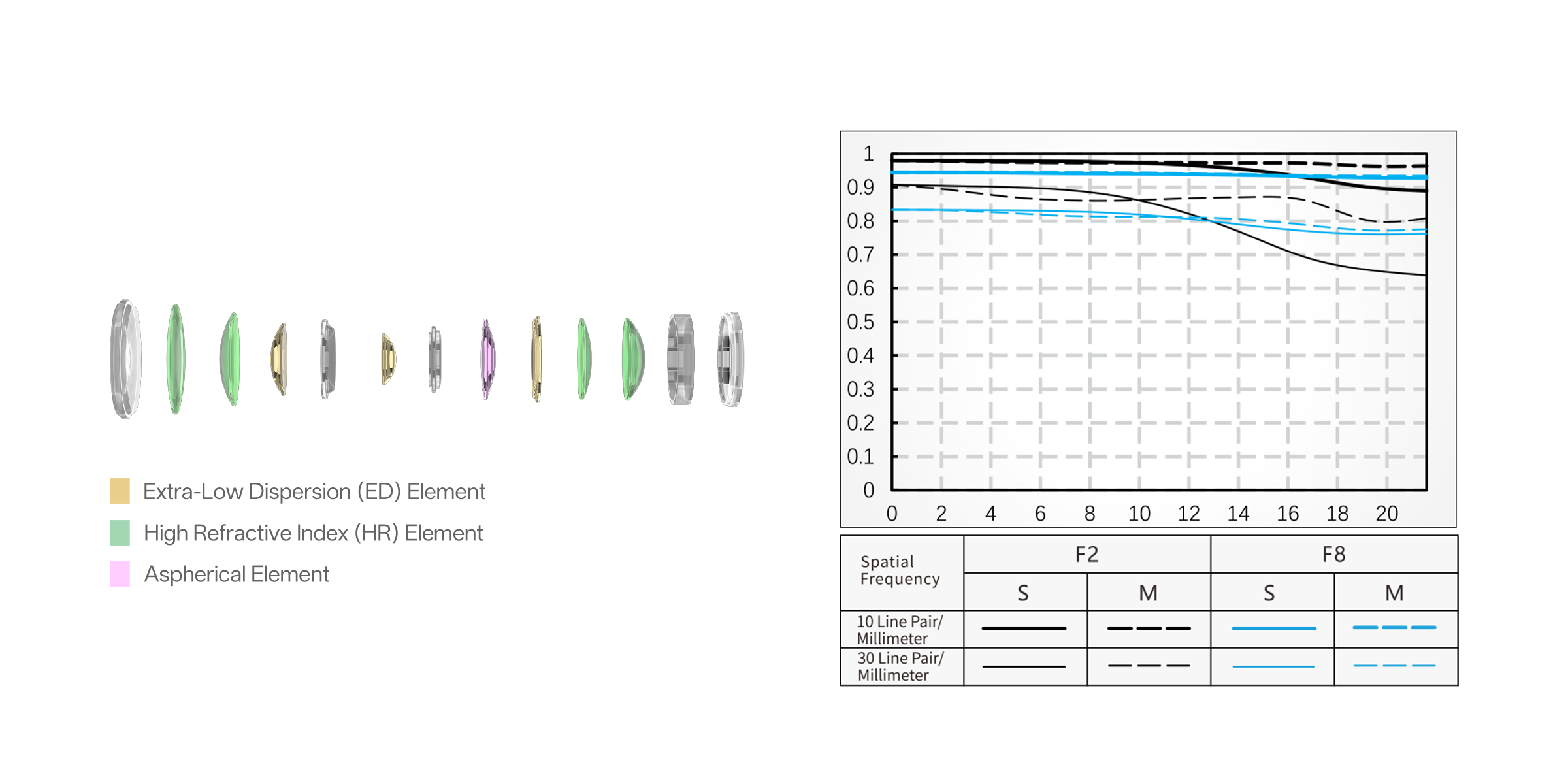
But do note that these diagrams are not directly comparable with most other manufacturers’ MTF charts, as these often give 20 and 40 line pairs/mm.
Finish and feel
Even though Viltrox built this as a member of its lightest and cheapest range, the Air series, I was nonetheless impressed by the quality of the thermoplastics used in its manufacture. It looks and feels considerably pricier than its tag suggests, with a slightly glossy matte sheen that photographs well and wears well in the hand.
There’s no USB-C port on the barrel for firmware updates — a minor omission, but it’s something some users prefer.
Handling
After two weeks of constant use with the Leica, I felt completely at home with the Viltrox. My first impressions of size and weight were confirmed as I carried it around King’s Cross and the old Brooklands racetrack. On the hefty SL3-P, the 50/2 is a mere Corinthian bagatelle, a trifle, and you’ll happily tote it all day.
This camera provides overkill in the way of grip and stability with such a light lens, and the in-camera stabilisation works brilliantly. The lens is significantly smaller and lighter than the Lumix f/1.8, itself a lightweight in the 50mm L-mount stakes, and, with its neat hood, it looks essentially businesslike. I have nothing bad to say about the handling. With just one control, the focus ring, there really is nothing left to consider.
The lack of an AF/MF switch on the barrel is a minor inconvenience — it’s a control I’ve come to rely on with other lenses I own, though I switch modes relatively infrequently in practice, and adjusting in the camera’s menu instead is a small enough price to pay.
Focus-by-wire can feel vague or laggy on cheaper lenses, but the Viltrox’s version is smooth and precise, with none of the rubbery imprecision that sometimes affects budget optics. Manual focus is easy, accurate, and satisfying, helped by a focus ring that’s smooth and nicely damped throughout its travel.

A natural fit
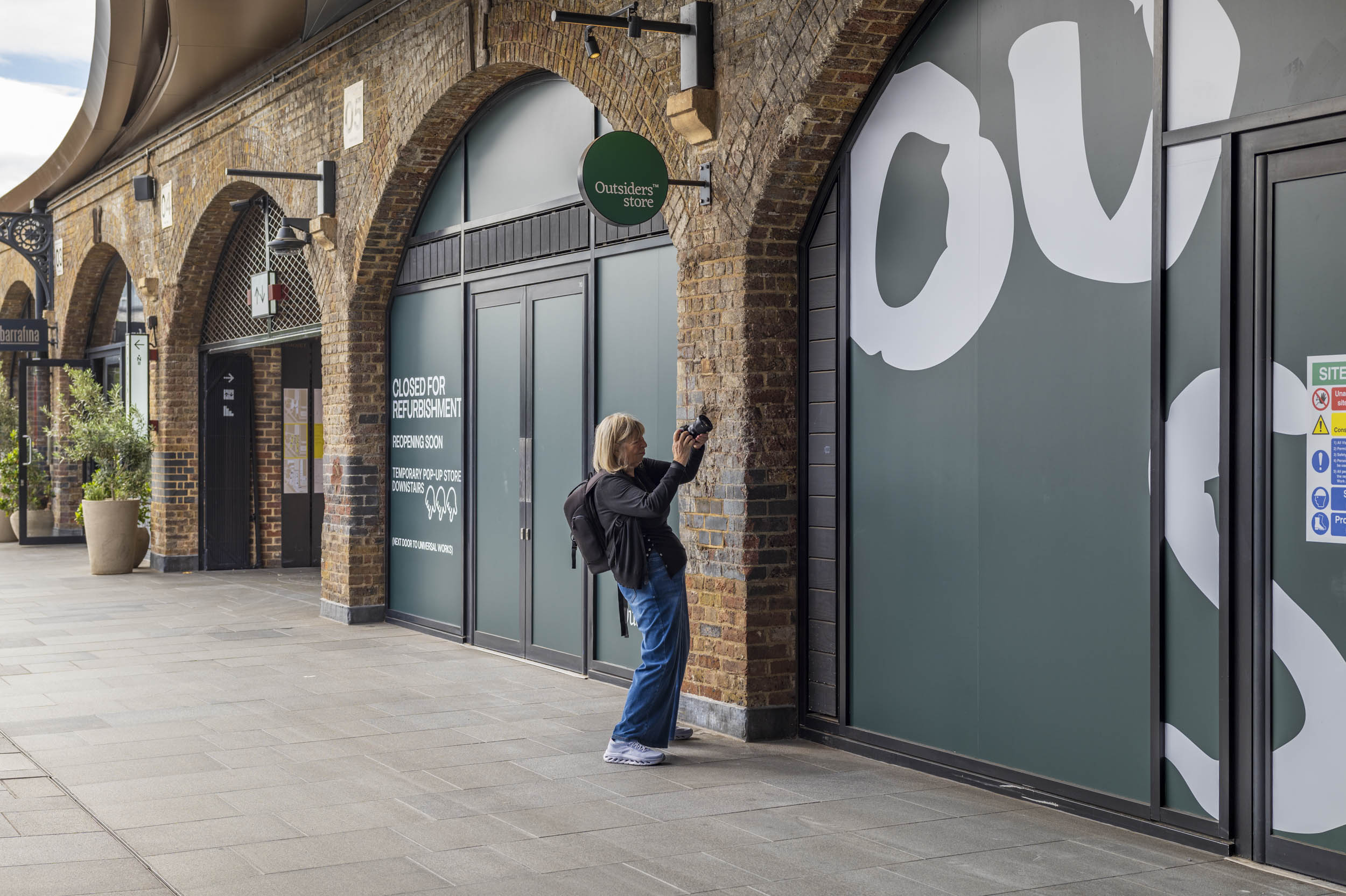
During my travels, particularly when walking around Coal Drops Yard at King’s Cross, the combination of the SL3-P and the Viltrox Air felt comfortable, light, and perfect for the job of snapping other photographers. I suspect this lens would be even more at home on smaller L-mount bodies such as Panasonic’s S5 range, the viewfinder-less S9 and Sigma’s oddball BF.


From a handling and feel perspective, I prefer it to any of the competitor lenses in the 50mm f/1.8-2.0 range. It’s also vastly more amenable for the struggling photographer than Leica’s APO-Summicron, which really is for those who want the best, can afford it, and retain sufficient muscle power. I would never consider it as an all-day carry lens as I am happy to think of the Viltrox 50/2 Air.
Autofocus
The Viltrox’s STM (stepping motor) is the same basic drive technology found in most budget autofocus lenses. It moves the focus group in small, evenly spaced increments, which makes it smooth and quiet — useful for video — but a simple stepping motor is not generally the fastest solution for snap autofocus or fast-moving subjects, since each step covers only a small distance.

In practice, autofocus proved fast and reliable — helped, no doubt, by the SL3-P’s improved autofocus system. Any difference in outright speed against faster mechanisms elsewhere in this class is genuinely challenging to notice in normal use. Eye and person detection worked well throughout, with no sign that a third-party lens was confusing the SL3-P’s recognition. I noticed no autofocus noise at all in use — the lens operates quietly.
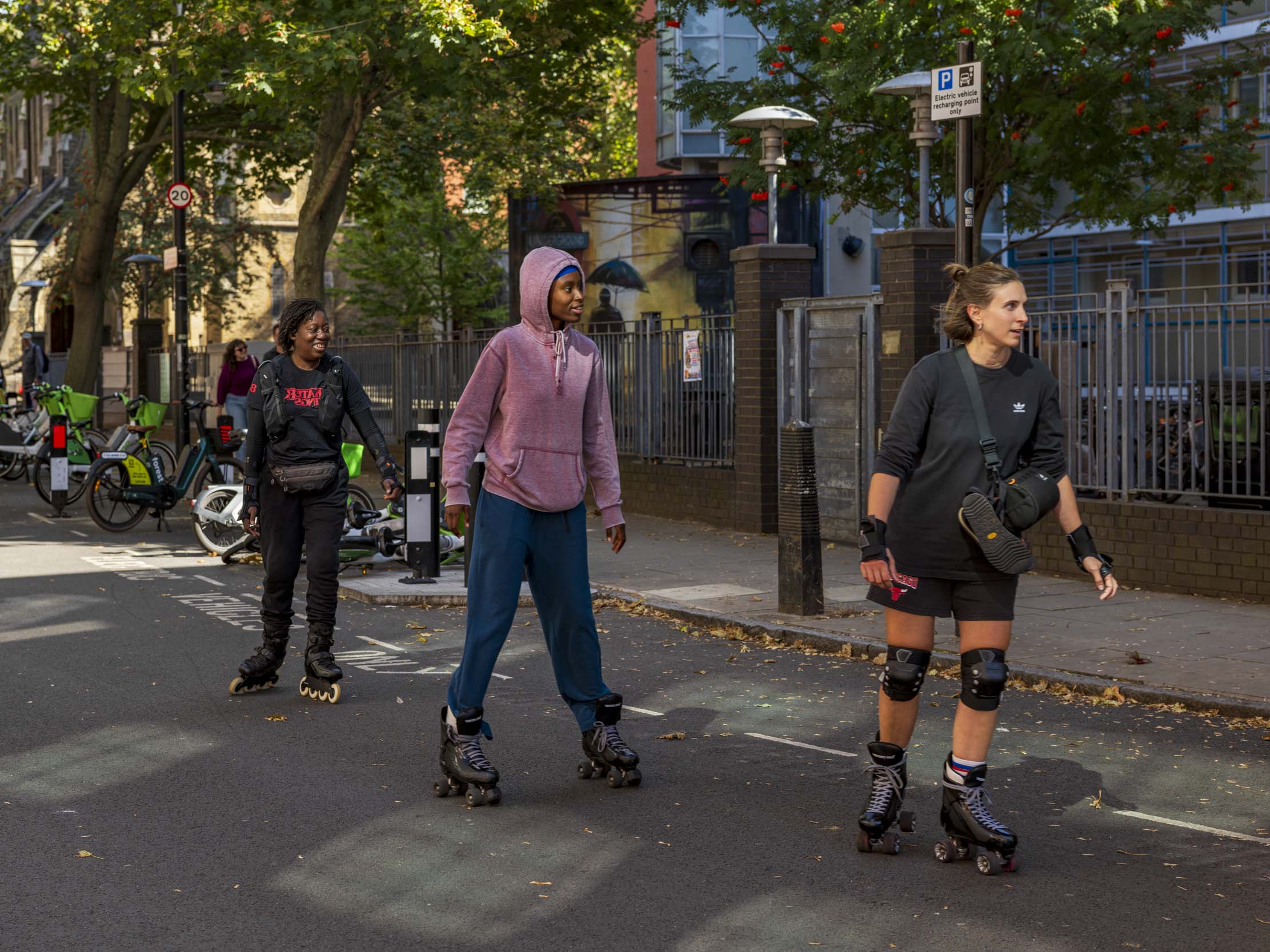
Most of the photography for this test was done with static subjects, which I tend to prefer, but the autofocus did a good job with moving subjects such as the roller skaters I found in a quiet street in Bloomsbury, just south of King’s Cross station.
I haven’t tested video performance because we don’t cover this aspect at Macfilos. Focus breathing matters chiefly to videographers pulling focus rather than to stills shooters, so I’ve left it out of scope here.
Image quality
A note on correction
All images evaluated in this test are raw imports into Lightroom after any camera corrections have been applied. The lens profiles are doing real optical work, not just tidying at the margins. Since the Viltrox’s own spec sheet confirms native in-camera correction support on L-mount bodies, the same principle applies here: what follows describes the corrected image as most owners will see it.

Sharpness
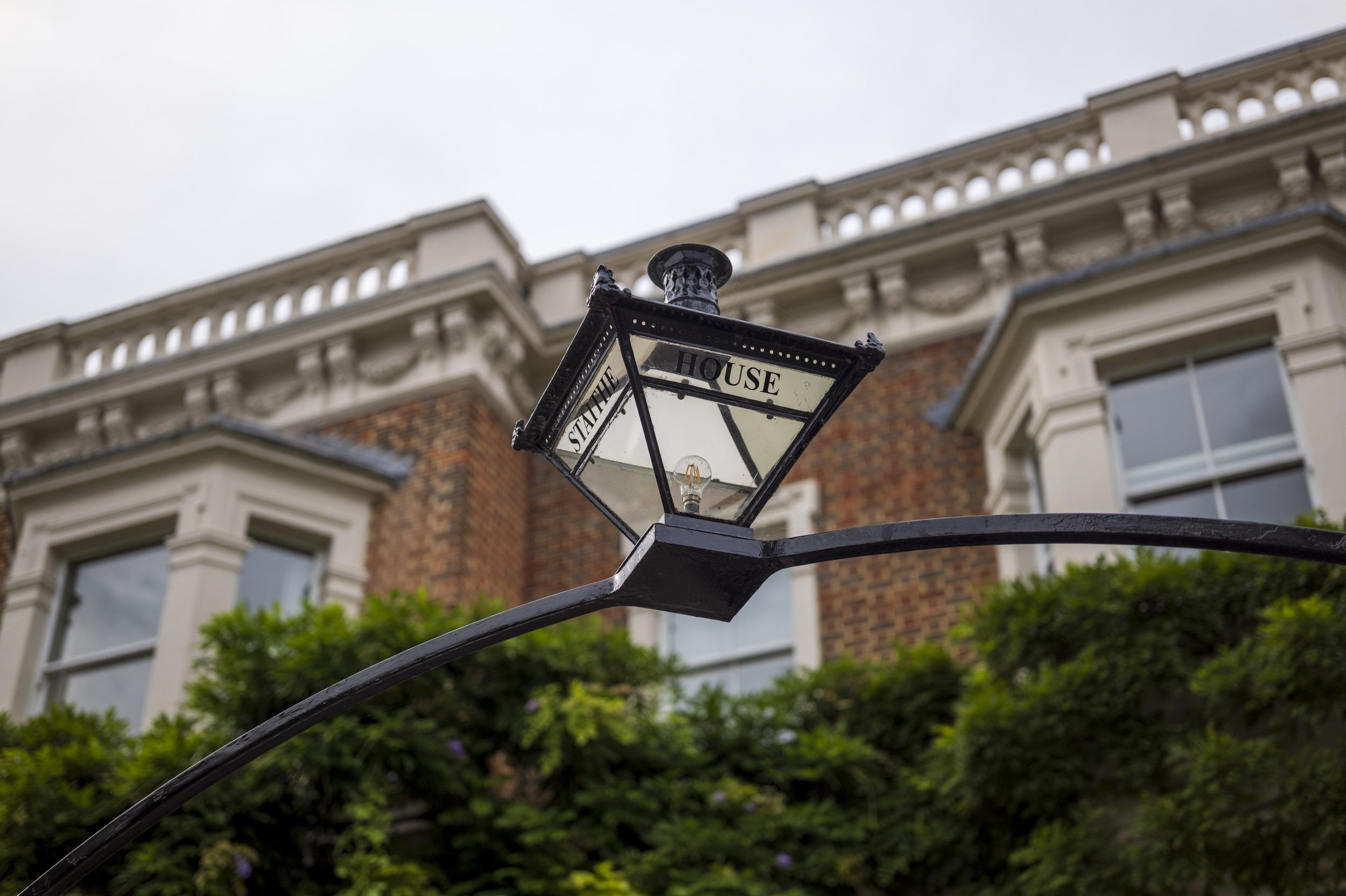
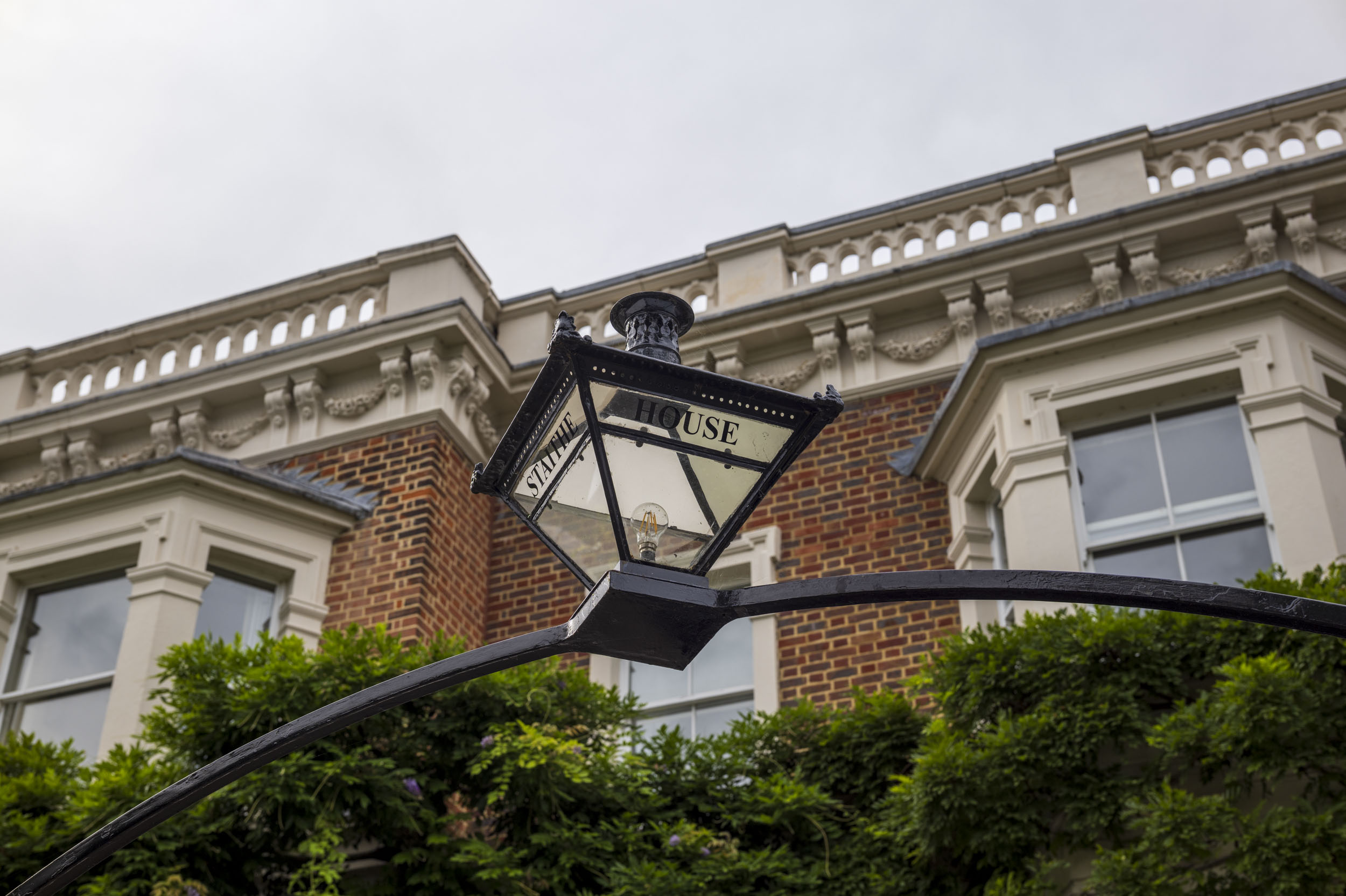
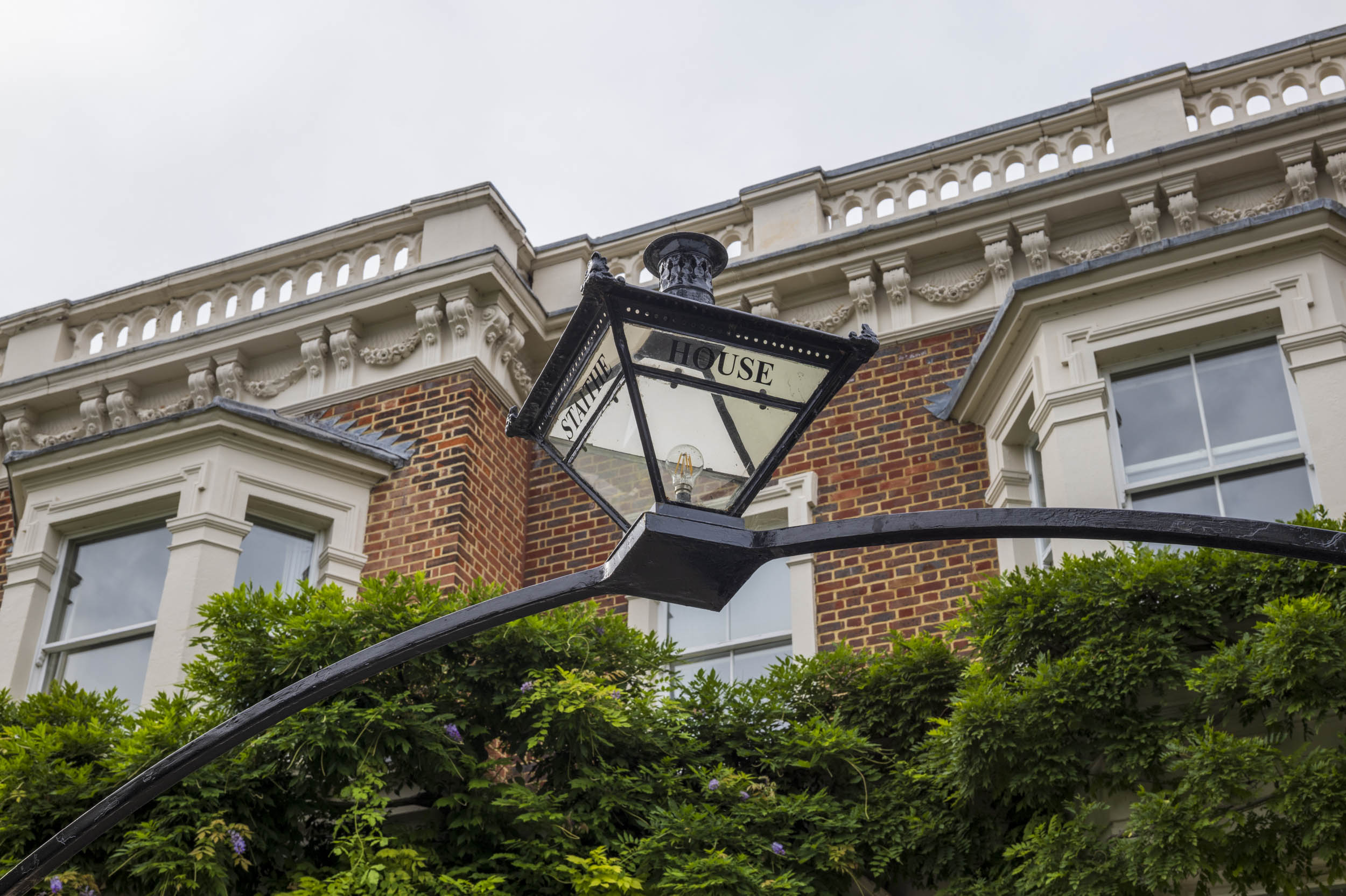
The first genuine aperture bracket is the Staithe House lamp. At f/2, the LED filament inside the lamp glass resolves into individual strands, with the façade behind softly blurred and no trace of colour fringing. Stop down to f/5.6 and that brickwork begins resolving as the background sharpens, while the lamp’s own lettering stays every bit as crisp as it was wide open; by f/11 the brickwork has fully resolved, and the lettering remains razor sharp throughout.
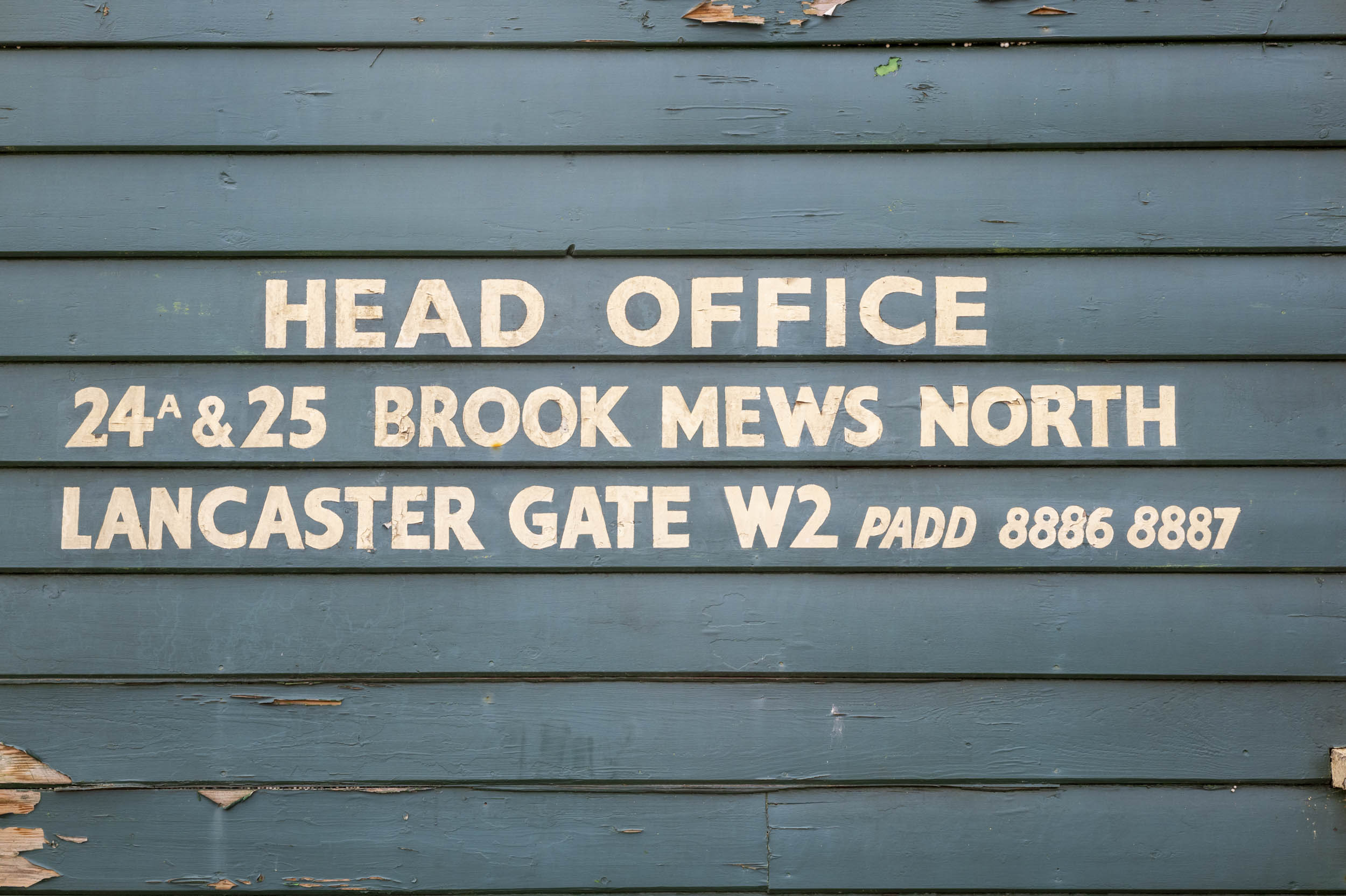
A second bracket is the most impressive this set: a hand-painted “Head Office” sign, its genuine brush texture and flaking paint giving far more fine detail to work with than a printed notice. Corner detail — peeling paint at the frame edge — holds up well even wide open, and brush strokes stay crisp at f/2; wood grain takes on extra bite at f/5.6, the sharpest point in the bracket, and detail holds steady at f/11 with no visible softening. By f/16 there’s a clear, visible softening against the f/2 result — a clear demonstraton of diffraction.



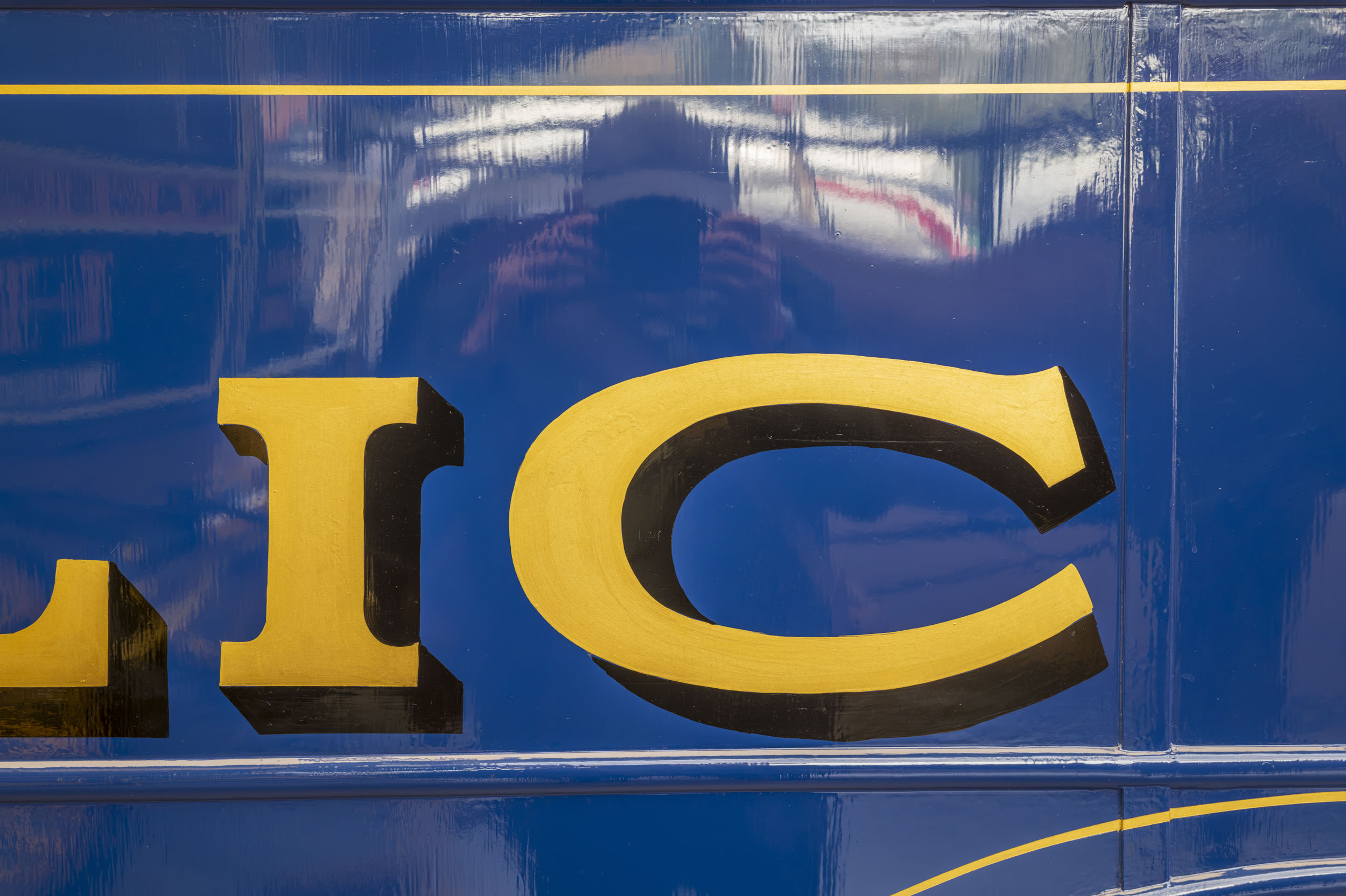
A third bracket carries the same test onto a much more reflective surface: gold sign-writer’s lettering on glossy blue enamel, part of a vintage bus livery. Gold-on-black lettering stays crisp at f/2, my reflection visible in the gloss but never distracting; both detail and reflections sharpen further at f/5.6, and corner and edge sharpness hold steady at f/11. Only a mild softening from diffraction shows up at f/16, with the lettering edges staying perfectly clean throughout.



Resolution in reserve
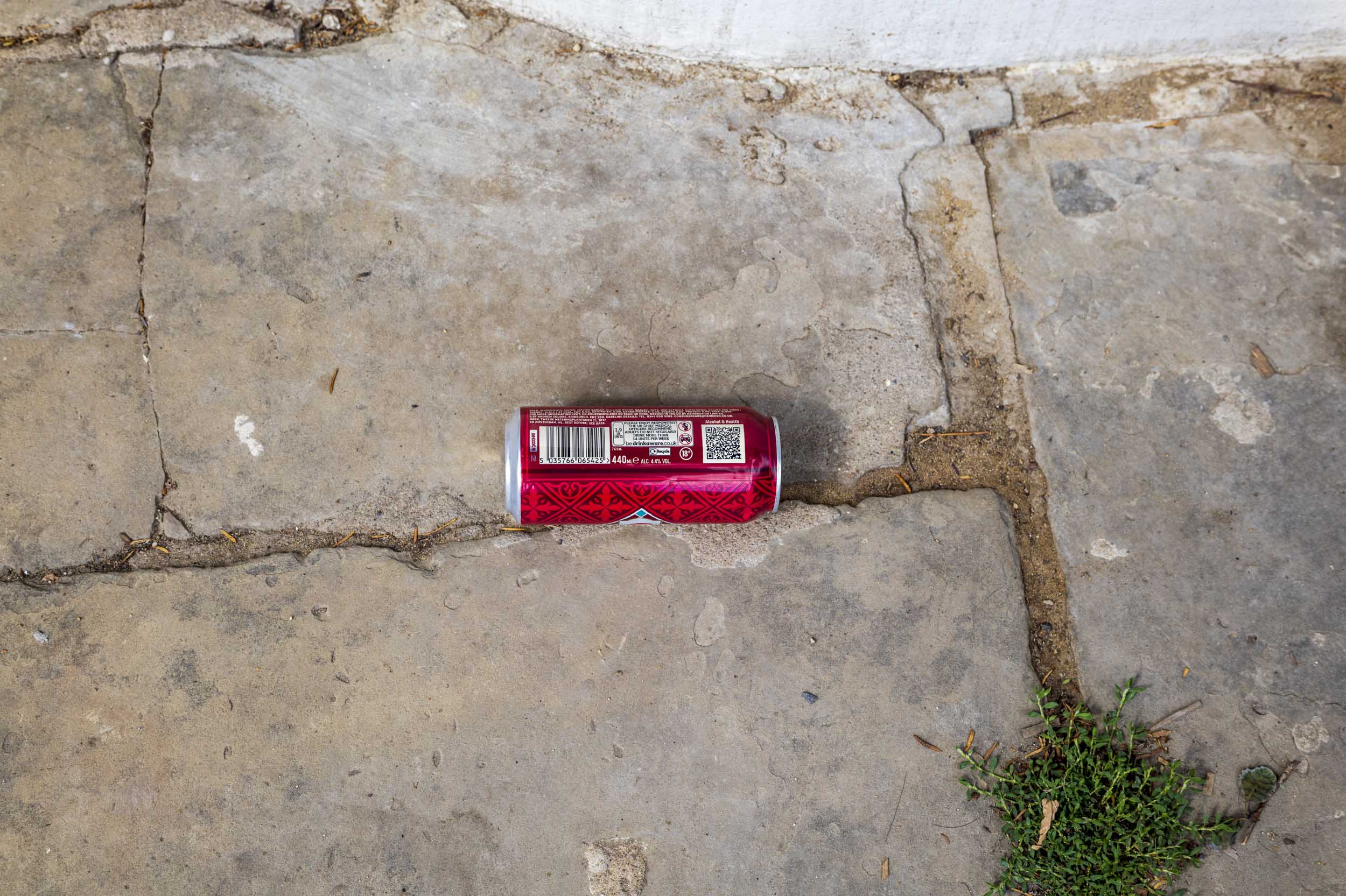
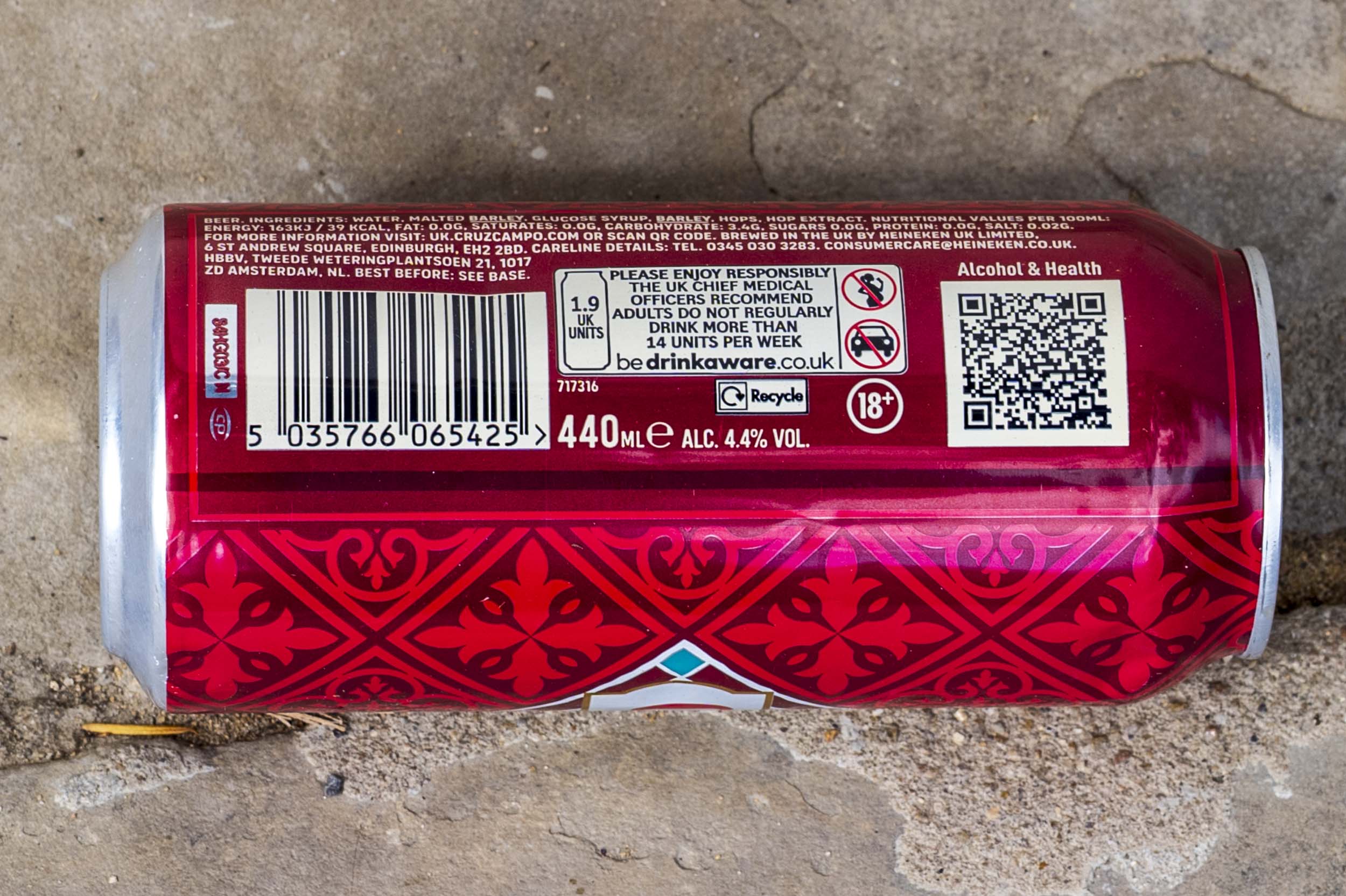
One more comparison is worth including, even though it tests cropping rather than aperture range: a drinks can shot at f/5 renders paving texture and label graphics sharply from corner to corner, and cropping in tight on that same frame keeps the barcode lines and individual QR code modules fully resolved — a good demonstration of the cropability of the Viltrox.
Overall, this is a sharp lens by any reasonable standard, at every aperture I tested.
Chromatic aberration
I struggled to find any colour fringing at all, even in scenes built to provoke it. The Staithe House lamp — a backlit lamp with bright glass against black ironwork — showed no fringing at any aperture, and neither did high-contrast branch-against-sky transitions nor fine text against a pale background. For a lens at this price, that is a genuinely strong result.
The glossy enamel bus panel went further still: saturated gold-on-black lettering on a highly reflective blue surface, with my reflection visible in the gloss. I could detect no lateral colour shift, even wide open and would rate this as a good CA performance.

Bokeh and flare
Out-of-focus rendering is smooth and natural, and subject separation is good too — the Air isolates a subject from its background quite well for a lens at this price, without the blur ever looking objectionable. I find the bokeh attractive, particularly in the image of Mary below. However, we did have quite a lively discussion here in the office on what constitutes good bokeh. One colleague felt that the bokeh from the Viltrox is rather harsh and unattractive, but I don’t see this. In the end, we agreed that bokeh is very much a personal taste. If I had done more specific testing on this issue, we would have known more. But I like it.

Flare control shows at least one point of vulnerability, though this is based on a single test frame rather than a full backlighting bracket. With the low morning sun filtering through leaf cover at the frame edge, a mild diagonal veiling-flare streak appeared — a soft, contrast-reducing haze rather than hard ghosting or coloured blobs. Whether the lens holds up as cleanly against harsher, more direct backlighting remains untested; sun star character and aperture-blade shape with the sun directly in frame are open questions, too.

Colour and texture
Saturated colour holds up well. A red velvet blanket retained visible fibre texture rather than blocking into a flat mass, and fine surface textures — woven basket, worn paint, brick grain — all rendered with real tactile quality rather than looking waxy.
Colour rendering, though, is slightly more muted than I am used to with the Lumix 50mm f/1.8, which leans toward a punchier, more saturated look straight out of camera.

In the marketplace
After the hands-on testing, it’s useful to see how the Viltrox stacks up against its main competitors. In this respect, I have gone with the main L-mount Alliance mainstream manufacturers.
The backstory
Viltrox’s presence in L-mount at all is itself a recent development, and not an accident. Leica formally admitted Viltrox to the L-mount alliance in 2026 — a pragmatic acknowledgement that a broader, cheaper lens ecosystem helps sell L-mount bodies, including Leica’s own SL cameras.
It’s worth asking, too, how a lens this size and price is even possible. Not, as the marketing shorthand sometimes implies, because of some AI design breakthrough — no Chinese manufacturer markets its lenses that way, and the optical-engineering literature doesn’t support the idea either. Computerised lens-design optimisation is decades old; Leica itself was an early adopter, through Walter Mandler’s work at Ernst Leitz Canada in the 1950s.

What has radically changed is that those same tools are now cheap and widely available, filtered into a Chinese supply chain built over two decades of consumer-electronics and smartphone-camera manufacturing. Manufacturers can now produce precision aspherical glass and moulded optics at real scale. The story is manufacturing and tooling economics catching up, more than any new design paradigm.

Price and specification
Against the wider field of L-mount 50mm primes, autofocus options only, in the f/1.8–f/2.2 bracket, the Viltrox is highlighted below. Its pricing is confirmed at £190 | $199 | €229; figures for other lenses are approximate street prices and will vary by retailer and region.
| Lens | Max aptre | Weight | Filter | Elements/groups | AF | Build / sealing | Ap. ring | Price |
|---|---|---|---|---|---|---|---|---|
| Panasonic Lumix S 50mm f/1.8 | f/1.8 | 300g | 67mm | 9/8 (3 aspherical, 1 ED, 1 UHR) | Linear | Weather-sealed | No | £379 | $349 | €399 |
| Leica Summicron-SL 50 f/2 ASPH | f/2.0 | 370g | 67mm | 9/8 (3 aspherical) | Dual Syncro | Weather-sealed, metal | No | £1,800 | $2,350 | €2,090 |
| Leica APO-Summicron-SL 50 f/2 ASPH | f/2.0 | 740g | 67mm | 12/10 (3 aspherical, APO) | Dual Syncro | Weather-sealed, AquaDura coating | No | £3,750 | $4,495 | €4,290 |
| Sigma 50mm F2 DG DN Contemporary | f/2.0 | 350g | 58mm | 11/9 (1 SLD, 3 aspherical) | STM | Mount weather-sealed, all-metal | Yes | £559 | $560 | €639 |
| Viltrox AF 50mm F2.0 L (Air) | f/2.0 | ≈205g | 58mm | 13/9 (3 ED, 4 HR, 1 aspherical) | STM | Plastic-composite, metal mount | No | £190 | $199 | €229 |
| 7Artisans AF 50mm F1.8 | f/1.8 | 421g | 62mm | 11/9 (2 aspherical, 1 ED, 2 HRi) | STM | All-metal, USB-C port | Yes | £216 | $228 | €251 |
| Meike 50mm F1.8 AF STM | f/1.8 | 382g | 58mm | 11/7 (1 ED, 1 HR) | STM | Standard, no sealing noted | No | £180 | $170 | €175 |
| TTArtisan AF 50mm F1.8 Neo | f/1.8 | 156–167g | 52mm | 12/8 (2 ED, 4 HRi) | STM | Glass-fibre composite, no rings at all | No | £85 | $89 | €95 |
Shared formula
The Leica Summicron-SL 50mm f/2 ASPH shares its nine-element, eight-group optical formula — three aspherical elements, same layout — with the Panasonic Lumix S 50mm f/1.8. Numbers that, let’s say, are “not unadjacent” to one another.
Leica doesn’t frame it that way, of course, and the two lenses are far from identical in every other respect. What Leica does emphasise is the build: all-metal construction, tighter manufacturing tolerances, and full weather-sealing, which together could account for most of the roughly sevenfold price difference over the Panasonic (or the ten-fold premium on the little Viltrox). And then there’s the Leica stardust, always a potent nostrum, to add to the mix …

The wider field
Because so much of what follows leans on a handful of the same rivals, it’s worth setting a few provisos. The clearest specification rivals in the f/1.8–f/2.2 bracket are the Panasonic Lumix S 50mm f/1.8 and the Leica Summicron-SL 50mm f/2, both covered above. The Sigma 50mm F2 DG DN Contemporary represents a step-up in ambition, and a yet another step up takes us to the Leica APO-Summicron-SL 50mm f/2.
Below the Viltrox on price sit a clutch of similarly compact primes — the TTArtisan AF 50mm F1.8 Neo, the 7Artisans AF 50mm F1.8, and the Meike 50mm F1.8 AF STM — none of which I’ve tested myself, so those three are not included. Two small extras worth noting: the 7Artisans is the only lens here with a USB-C port for firmware updates, while the Sigma is the only one, at any price, that keeps a manual aperture ring.

Sigma on paper
On paper, the Sigma is the most interesting of the group: eleven elements in nine groups, with one low-dispersion element and three aspherical surfaces — matching the Lumix and Summicron-SL’s aspherical count. The Viltrox, by contrast, reaches thirteen elements in nine groups with just one aspherical surface, leaning on ED and HR glass instead — the cheaper route to a busy spec sheet, since aspherical elements do the costlier correction work. On the numbers alone, the Sigma could out-perform all three direct rivals. It also matches the Summicron-SL’s all-metal, weather-sealed build at just 350g, yet commands a real premium over the Lumix.
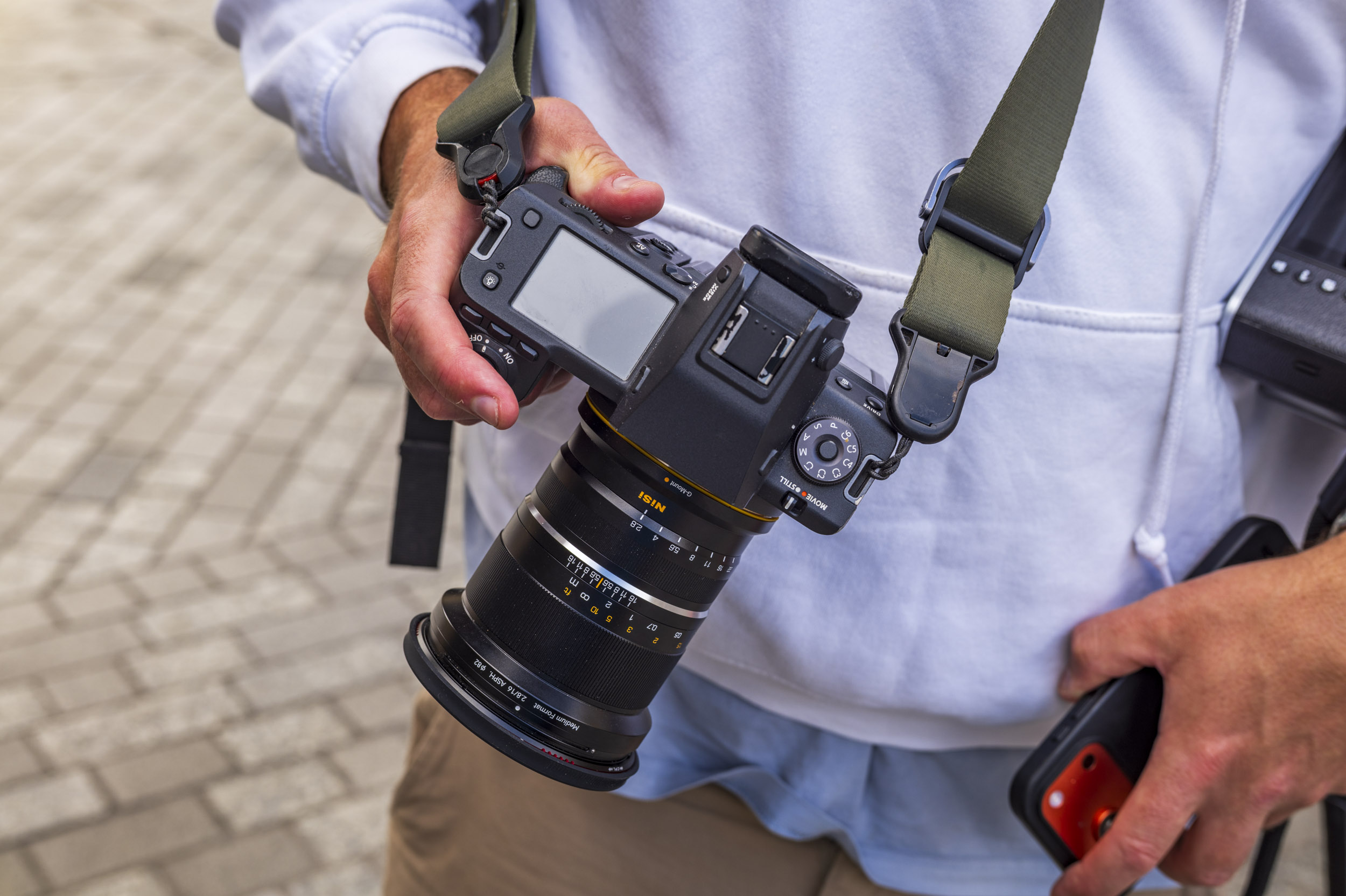
Autofocus motors
Autofocus technology varies more across this group than the spec sheets suggest. As noted earlier, the Viltrox relies on a simple stepping motor (STM) — smooth and quiet, but not the fastest architecture for snap focus on fast-moving subjects. The Lumix, by contrast, pairs a linear motor with a stepping motor — a linear motor drives the focus group directly along a straight path using electromagnetic force, and it’s widely regarded as the quickest, most precise mechanism available in mirrorless lenses.

Leica’s Dual Syncro Drive, fitted to every Summicron-SL, sounds like something else again, but at heart is still a stepping-motor system — just a considerably more sophisticated one, using two small stepping motors, each driving its individual lightweight focusing element, in close synchronisation; Leica claims a minimum-focus-to-infinity time of around 250 milliseconds, putting it firmly in the same speed bracket as a linear motor despite the different underlying technology.

A different league
And then there’s the Leica APO-Summicron-SL 50mm f/2. Having used it in the past, I know without needing to try them back-to-back that it’s in a different league — the same gap you’d find between a 35mm or 50mm APO-Summicron-M and the humbler M-mount lenses — and it costs, and weighs, several times as much. It isn’t really a fair fight, and the comparisons earlier in this review are best read as a way of placing the Viltrox on a map that already has the APO-Summicron out on an unattainable limb at the price.
Conclusion
If the Leica APO-Summicron is the snootiest fifty, the Viltrox AF 50mm f/2 Air L is the niftiest fifty. On price alone, I would take it over the Lumix f/1.8, and that also implies that I would take it over the Leica Summicron-SL. The Leica costs roughly ten times as much, but you do get an all-metal build, a slightly better autofocus motor, and probably better weather protection for that money.

The Sigma is an unknown quantity as far as I’m concerned because I haven’t used it, but the specification promises better optical performance than the other three lenses.
That leaves the mighty APO-Summicron, the snootiest of the bunch. It will blow your socks off and leave the Viltrox and its companions in the dust. But it costs some 23 times as much as the Viltrox and weighs about three-and-a-half times more. You pays your money and you takes your choice . . .
But this little Viltrox is a superb performer at an excellent price. In fact, I am tempted to ask Viltrox if I can buy the test lens from them — it edges out my own Lumix f/1.8 on weight and appearance alone, while offering very much the same performance, and I won’t have to go to the usual trouble of packing it up and booking a courier to China.


If you wish to purchase the Viltrox AF 50mm f/2.0 Air L lens, use the link button below. You will receive a 5% discount, and we will collect a small contribution to our running costs. Macfilos is run by photography enthusiasts who cover the overheads after any donations have been received. We make a loss, not a profit.
Further reading
Make a donation to help with our running costs
Did you know that Macfilos is run by five photography enthusiasts based in the UK, USA and Europe? We cover all the substantial costs of running the site, and we do not carry advertising because it spoils readers’ enjoyment. Any amount, however small, will be appreciated, and we will write to acknowledge your generosity.
Comments: Please add a comment to this article. Our comments section is a thriving community and everyone is treated with respect. In addition, please identify yourself (and add an email address, which will not be published, if you would like to see answers to your posting). Our system will automatically delete any “anonymous” posts on the basis that they are likely to be spam.