
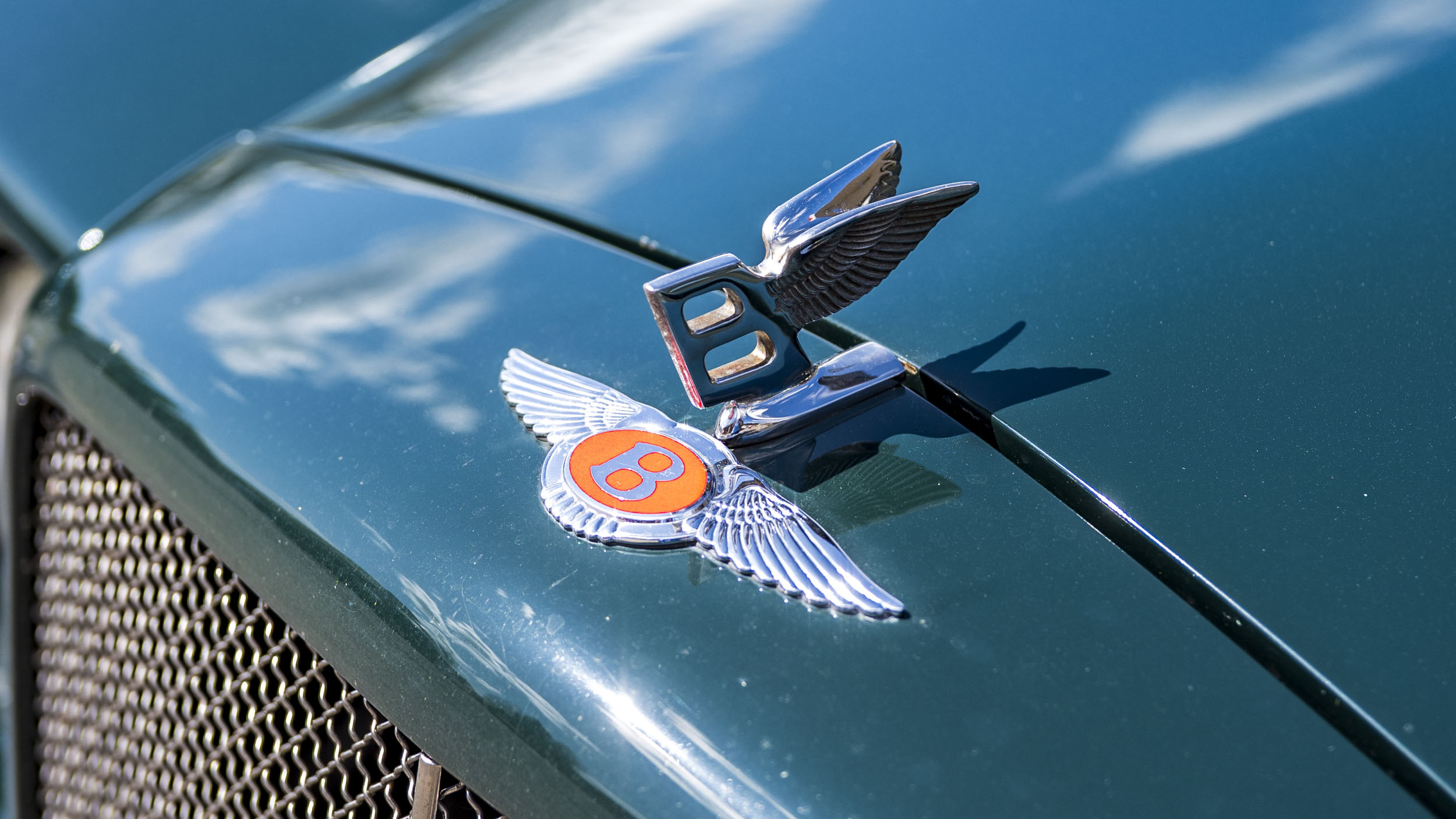
Not a day passes without something of interest happening at the old Brooklands racetrack in Surrey. As regular readers know, the Brooklands Museum is one of my favourite photographic test locations. I choose it because there is always something new to see, but also because of the constancy of the subject — useful for comparison purposes — and the accessibility. For me, though, one of the main attractions is the people. You meet the most fascinating characters at Brooklands.
A few Saturdays ago I drove to Brooklands with one purpose in mind: close-focus photographs with the delightful Leica 35mm APO-Summicron-M lens, mounted this time on my new Leica SL3-P via the L-M adapter. The previous Saturday I had taken the same lens to the same location on the Leica M EV1, focusing just as close, and I will be including the results in an article this Autumn. Two Saturdays, one lens, two cameras — that is about as thorough as I get.
I composed this piece in my head on the drive home on 22 August, as I often do with articles, and had it filed with Macfilos by that evening. Such is the queue of articles waiting for their turn, however, that it has taken until now to see daylight. Patience, I am told, is a virtue. I am still working on it.
A lens, not a car show
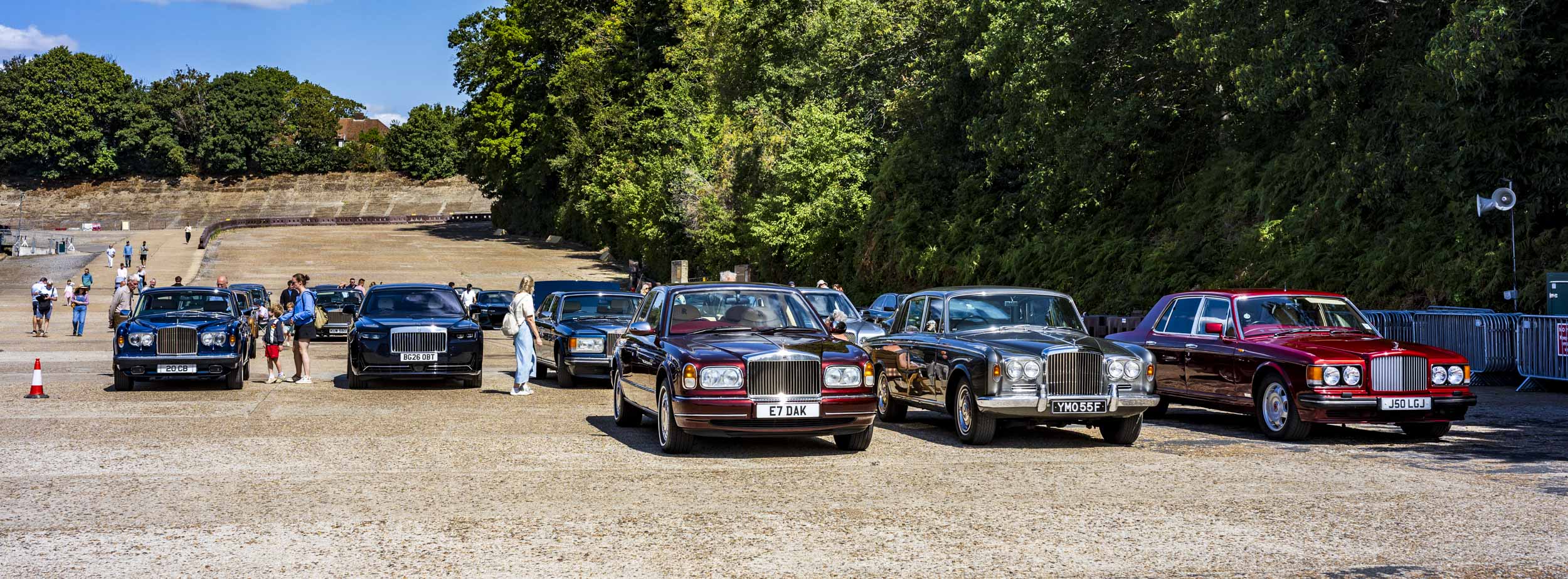
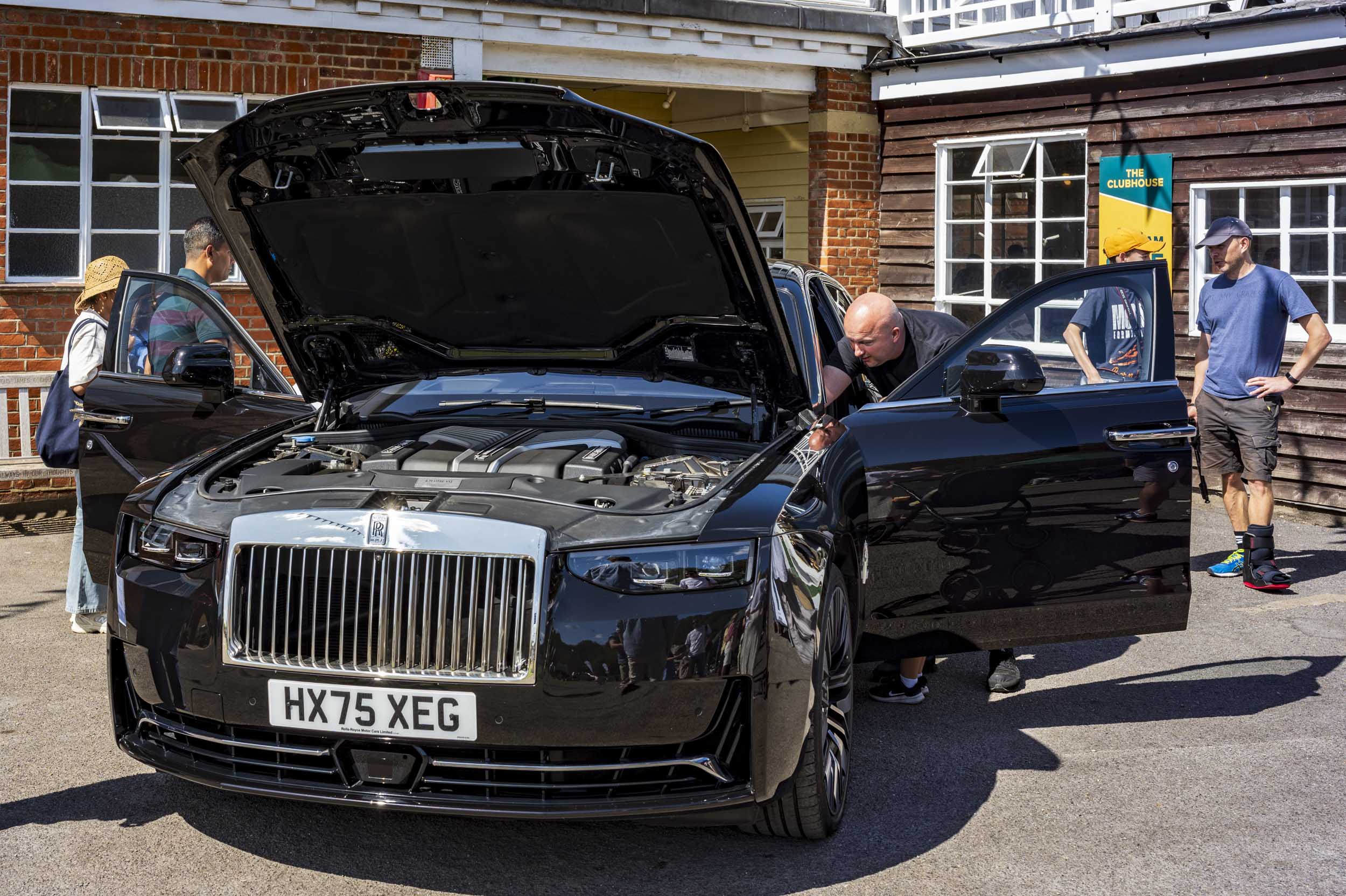
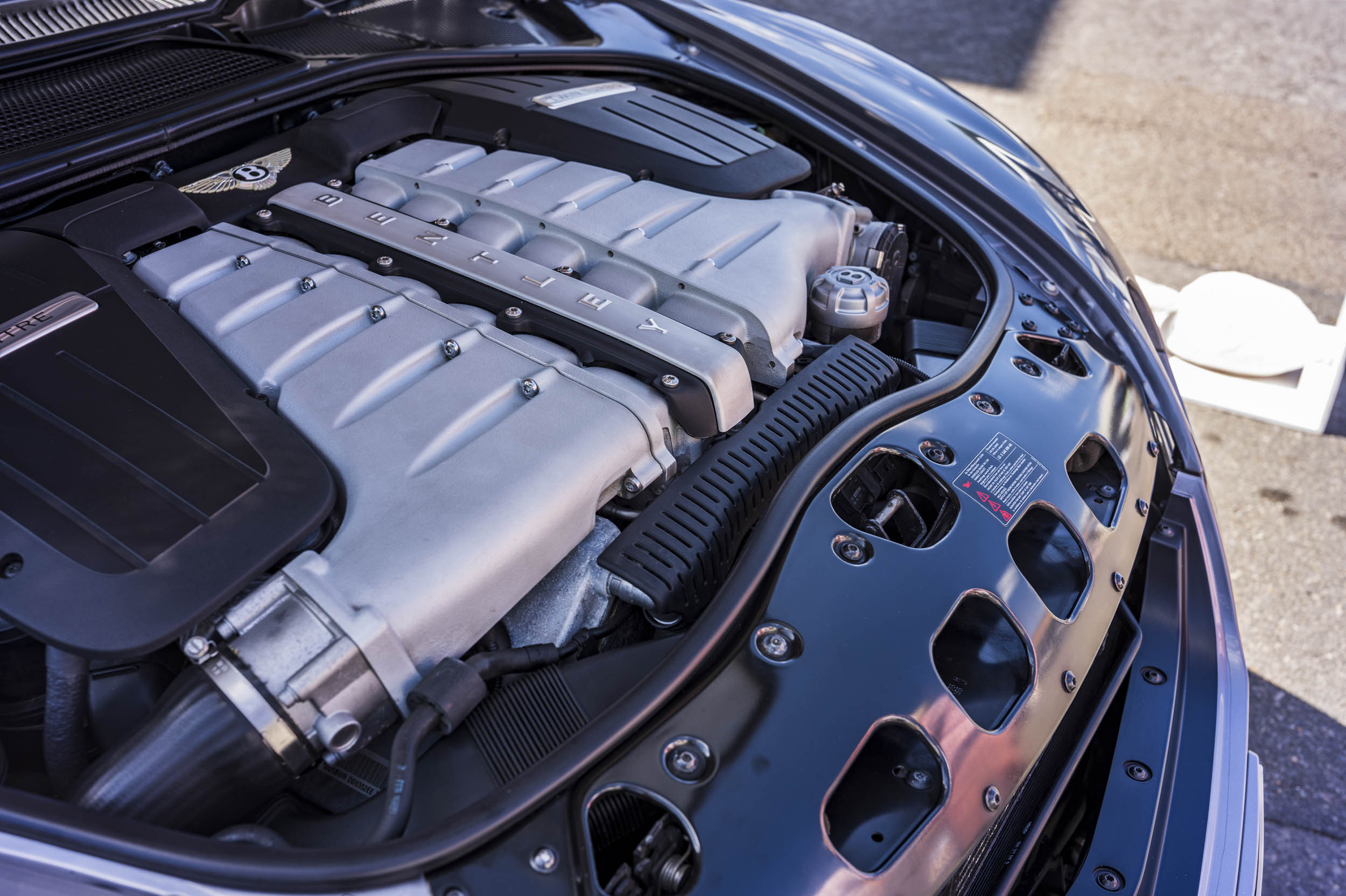
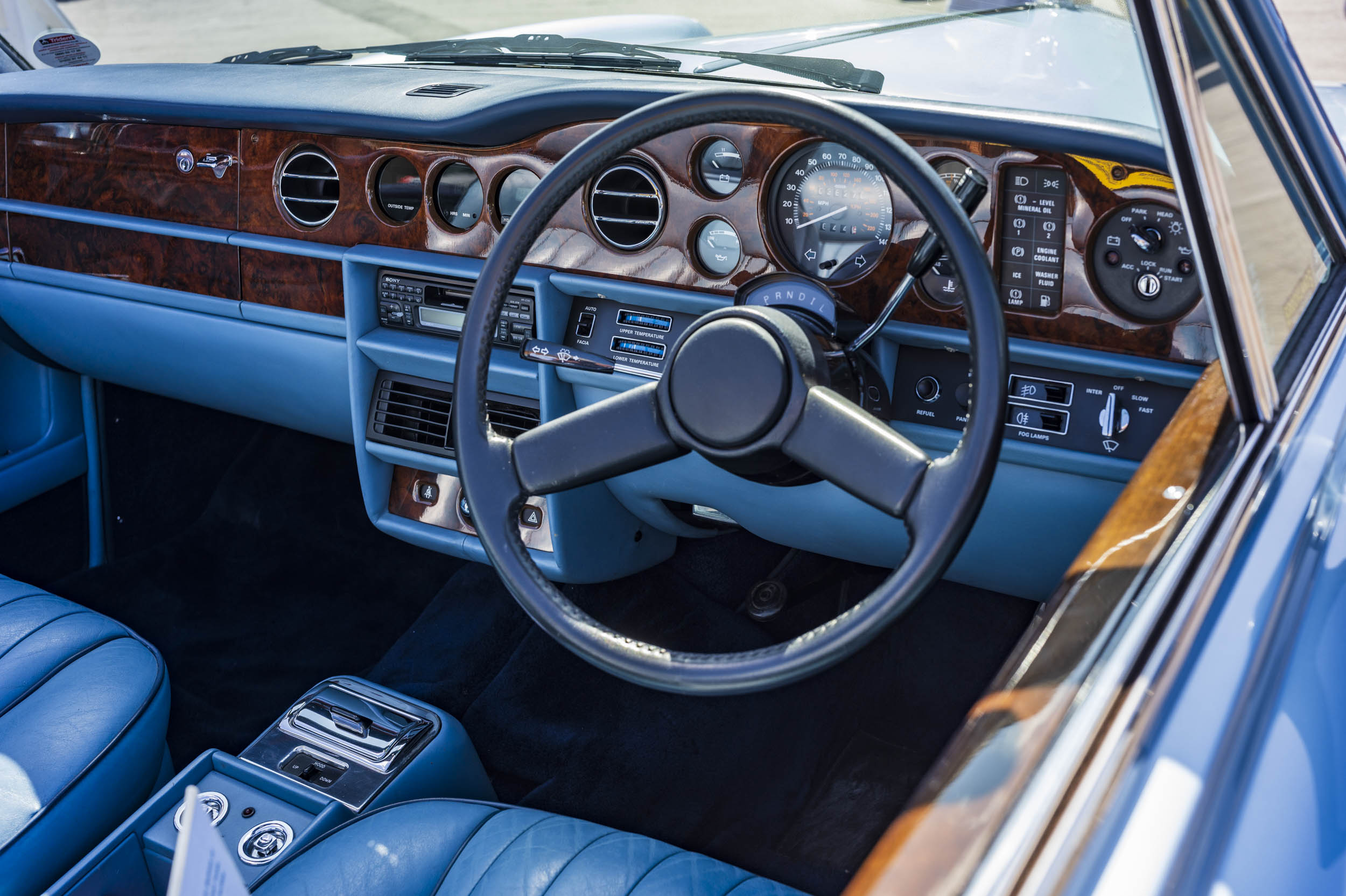
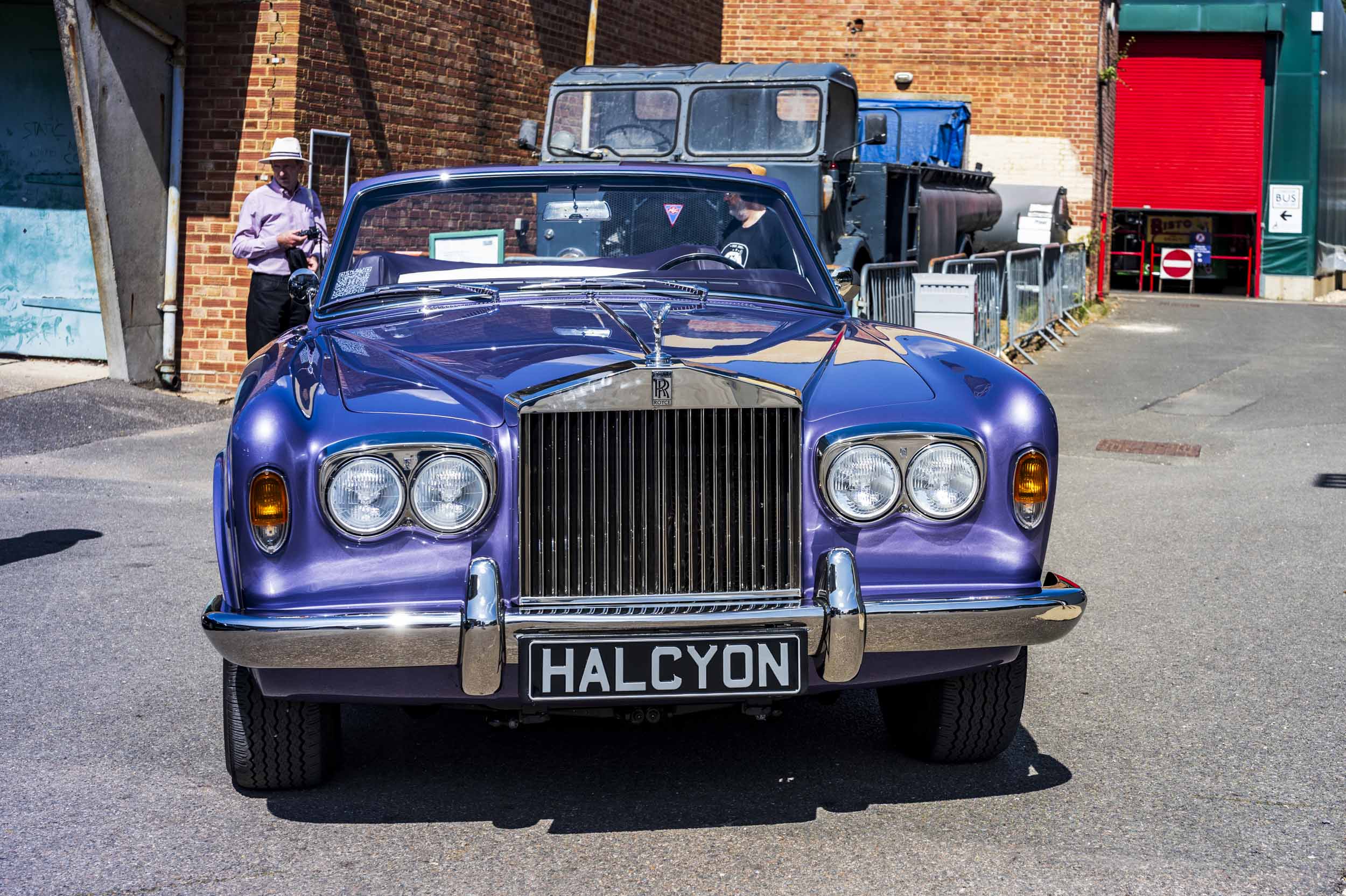
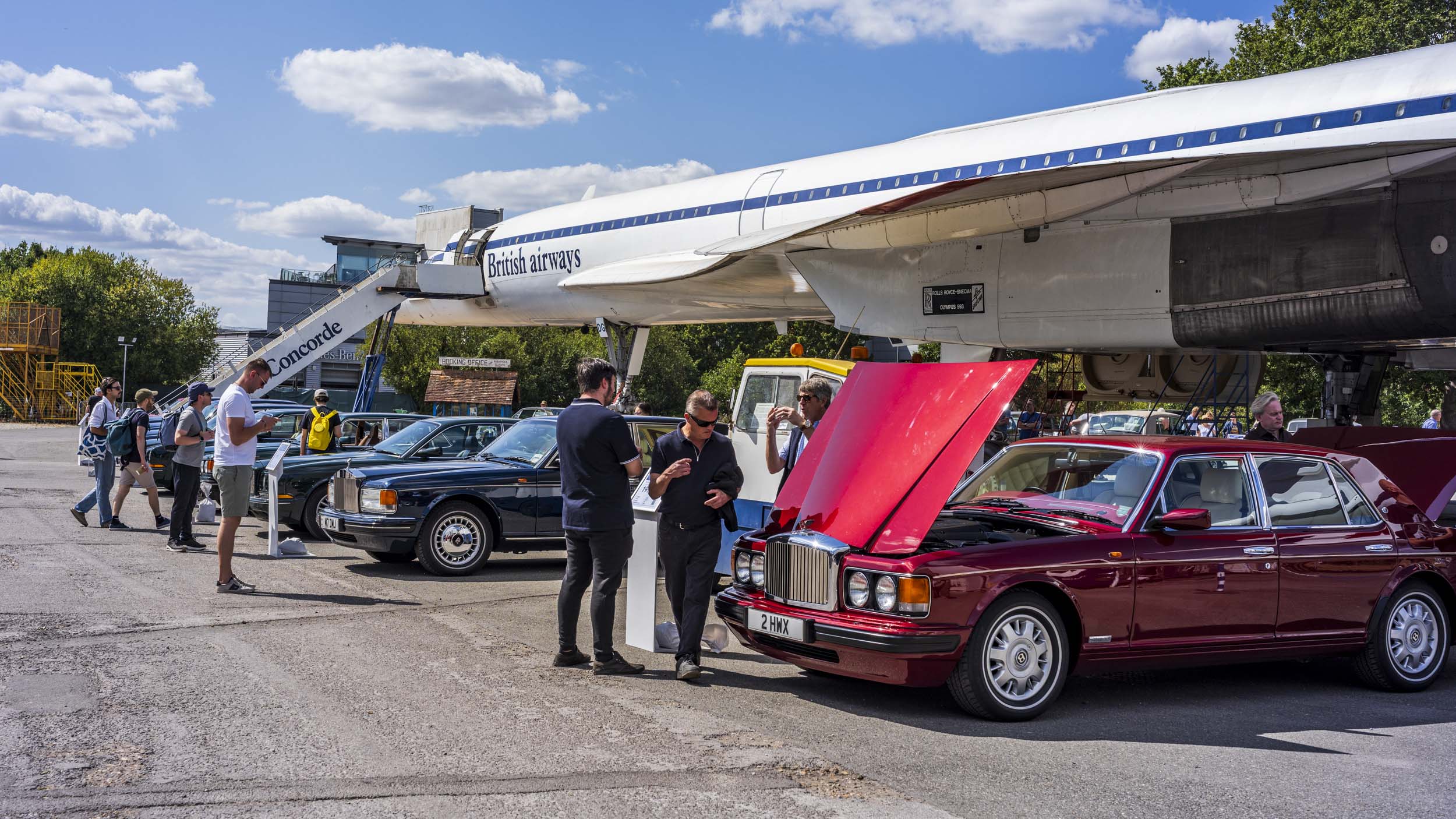
What I had not bargained for was Rolls-Royce and Bentley Day. The place was full of what must have amounted to many millions of pounds of silent motoring, parked wing to wing on the grass. Who needs an EV, I thought, when a 1960s Bentley will glide past just as quietly, and with considerably more presence? For a photographer, this was an unplanned bonus. Alongside my close-focus experiments there were some handsome longer shots to be had of cars that rarely leave their garages, let alone parade in public.
Had I known about the event in advance, I would have packed an autofocus lens for the SL3-P, which would have made the job of tracking cars and people a good deal easier. As it was, I made do, which is more or less the story of my photographic life.
Brooklands and Bentley
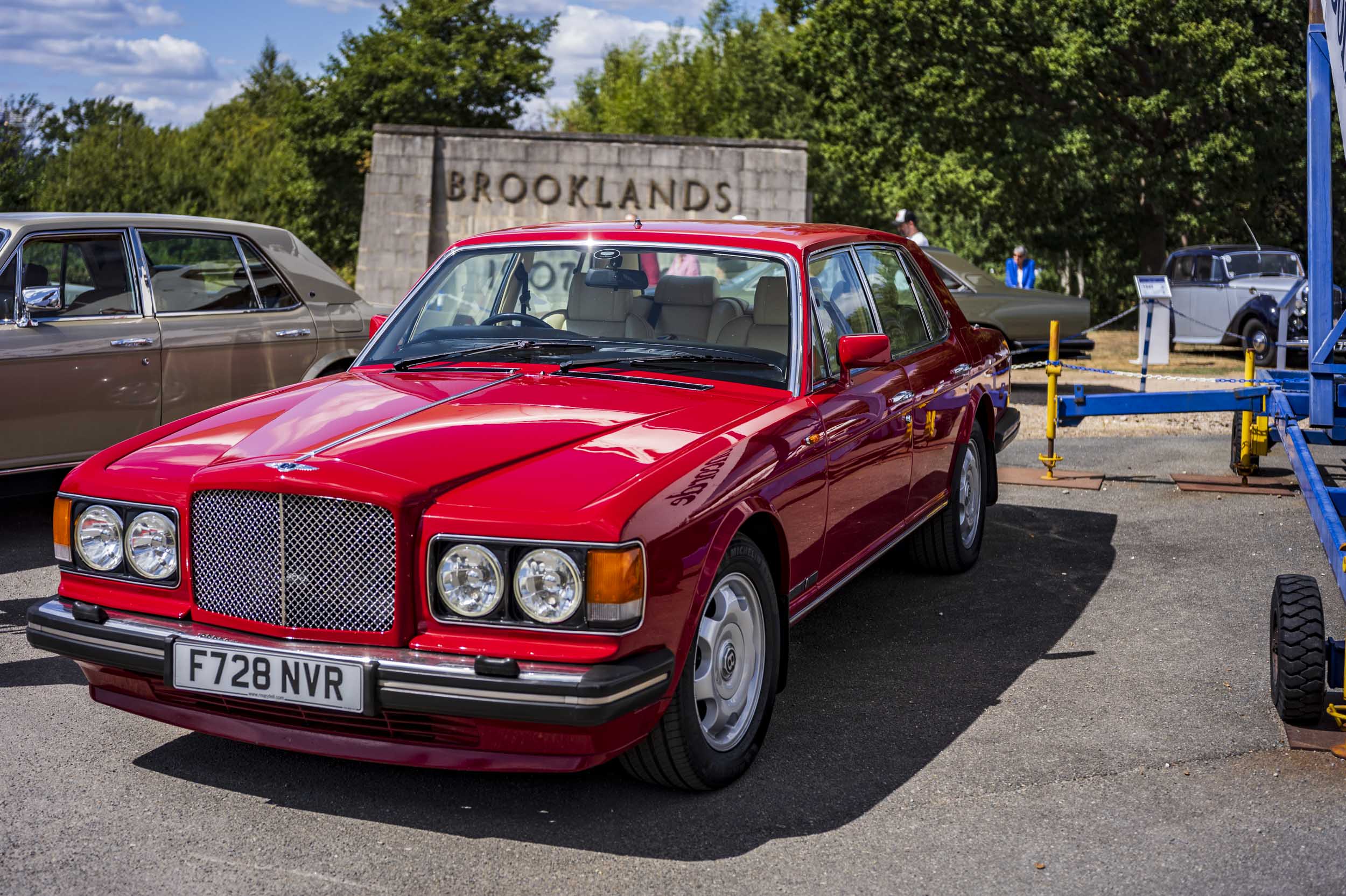
The Bentley story is forever entwined with the history of Brooklands, and it is worth looking at why. The track opened in June 1907, built at the instigation of Hugh Fortescue Locke King as the world’s first purpose-built banked motor-racing circuit — a direct answer to the Motor Car Act 1903, which had clamped a 20mph limit on Britain’s public roads and left manufacturers nowhere to develop a fast car properly. Nearly two and three-quarter miles of concrete, banked almost 30ft in places, gave them exactly that.
By the 1920s, Brooklands had become the natural home for a loose fraternity of wealthy, daring, and occasionally reckless drivers who raced Bentleys there and at Le Mans: the Bentley Boys. Woolf “Babe” Barnato, the diamond heir who bought the ailing Bentley company outright in 1925, was the group’s central figure and famously raced his Bentley Speed Six against the Blue Train — the celebrated Calais–Riviera express — from Cannes to London in 1930, winning a £100 wager by a comfortable margin. Sir Henry “Tim” Birkin brought the supercharged Blower Bentley to Brooklands and to legend.
S.C.H. “Sammy” Davis, sports editor of The Autocar, drove as well as he wrote, and did more than anyone to turn the Bentley Boys’ exploits into public folklore. Around them clustered Dudley Benjafield, Glen Kidston, Frank Clement, and the Dunfee brothers, among others — a roll call that reads like a Boy’s Own annual, except that it all actually happened.
Between 1927 and 1930 Bentleys won Le Mans four years running, a run of reliability that so annoyed Ettore Bugatti that he dismissed them as “the world’s fastest lorries” — a jibe the Bentley Boys wore as a badge of honour. It could not last. Barnato’s fortune, not any great commercial success, had kept Bentley afloat through the 1920s, and when the Depression bit, the company went to Rolls-Royce in 1931. Brooklands itself raced on until 1939, then vanished into secret aircraft work for the war and was never again heard above a whisper as a circuit.
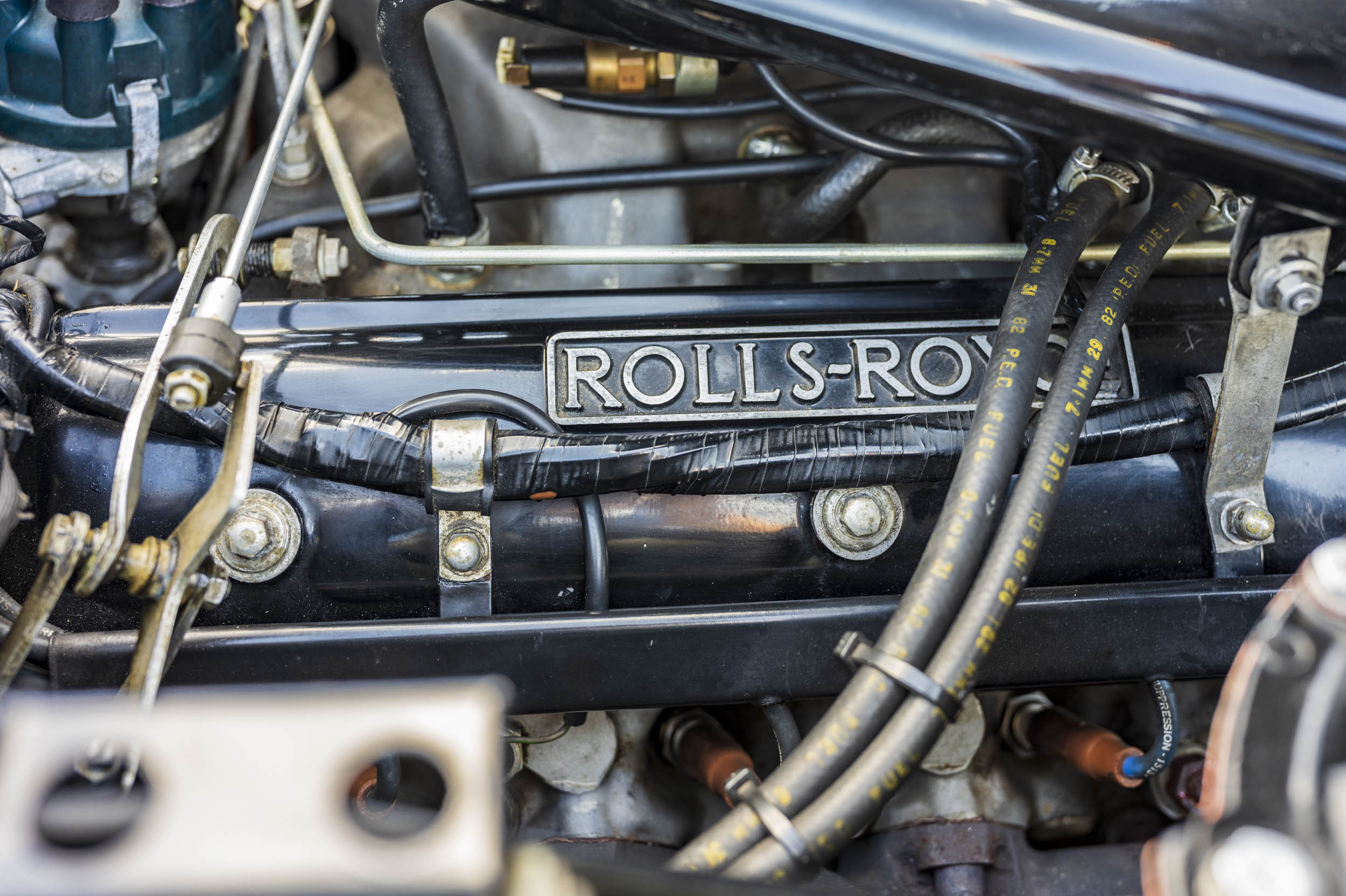
Macfilos has returned to this ground more than once. Don Morley’s 1973 account of Brooklands and the last of the Bentley Boys describes photographing Sammy Davis — by then the sole survivor of the original group — at a private reunion of pre-war racers, alongside names like Dudley Froy and Bob Dicker, men who had actually driven the banking in anger. I wrote my piece in 2019, Bentley boys and girls come out to play, on the Bentley Drivers Club’s centenary picnic at the same museum, where Bentley and Brooklands felt, as I put it then, entirely synonymous. Little had changed for this latest gathering, except that the cars on show this time wore two badges rather than one.
A fellow retirement case

As I said earlier, I like meeting people, and I met a real corker that day. I found someone as daft as me when it comes to retirement occupations. Daft? Yes — I spend my retirement taking photographs of questionable quality, writing articles of slightly less questionable provenance, and managing a team of long-suffering volunteer editors scattered around the world.
The result is Macfilos, a thoroughly daft project by any sensible measure, but I wouldn’t swap it for anything.
Yet, I was eclipsed the moment I met Jonathan Del Mar, standing outside the London Bus Museum, which shares the Brooklands site. I thought I recognised his face — possibly because he turned out to be a fellow Brooklands Club member, though we had never actually spoken before that day.
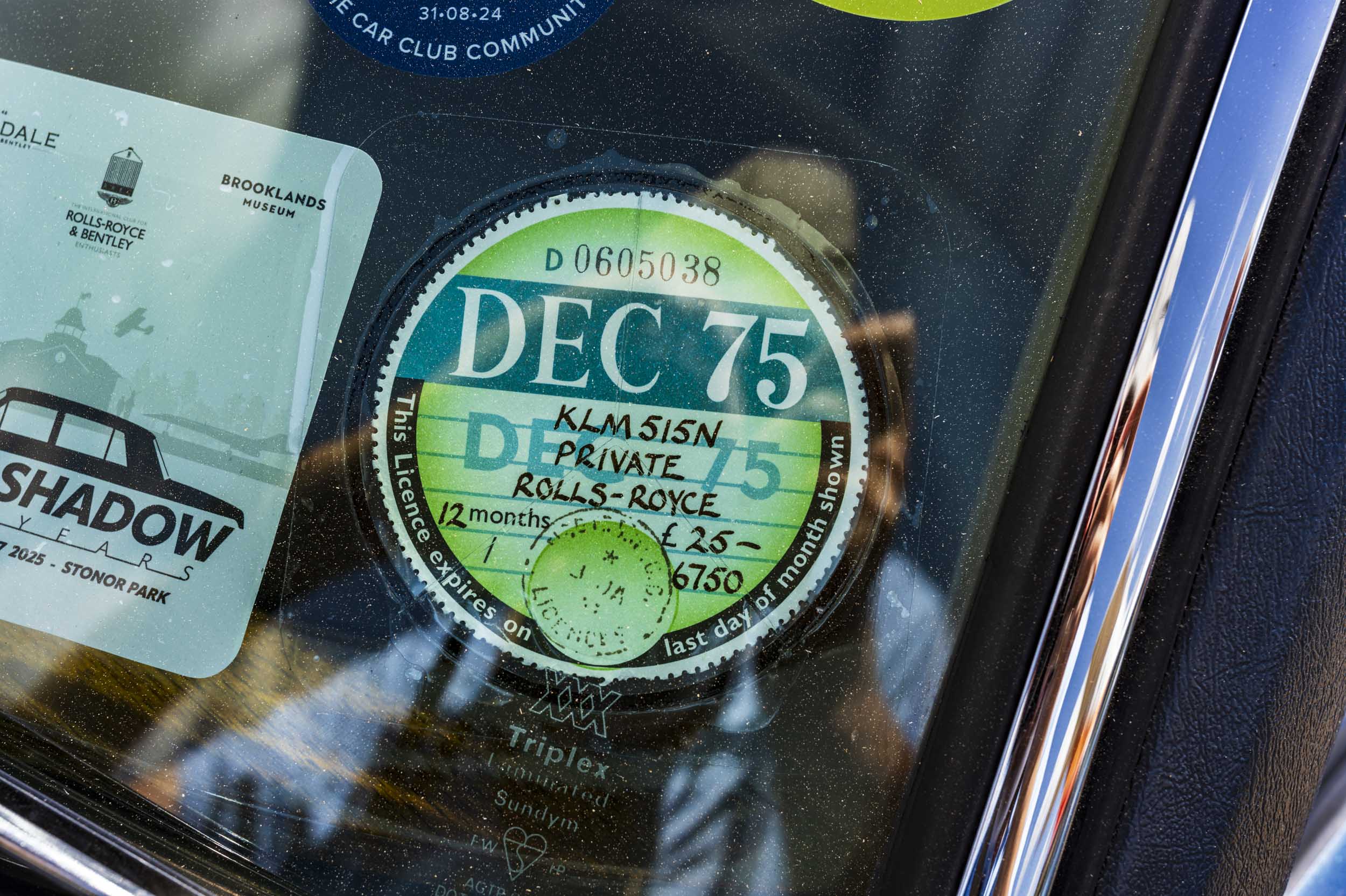
Jonathan spends his time on an even odder case of daftness than mine: he is, by his reckoning and everyone else’s, one of Britain’s foremost authorities on vehicle number plates.
Within seconds of introducing myself, I was explaining that I own a vintage registration number, bought fifty years ago, which I have been transferring from car to car ever since. It has even, on one undignified occasion, been attached to a motorcycle. The poor number has been on more vehicles than is entirely decent. It has not had an easy life.
Jonathan told me, without hesitation, that my number had been issued in West Bromwich in 1963. He needed no reference book — it was all there in his head, in much the way that a good slice of Leica history sits permanently in mine.
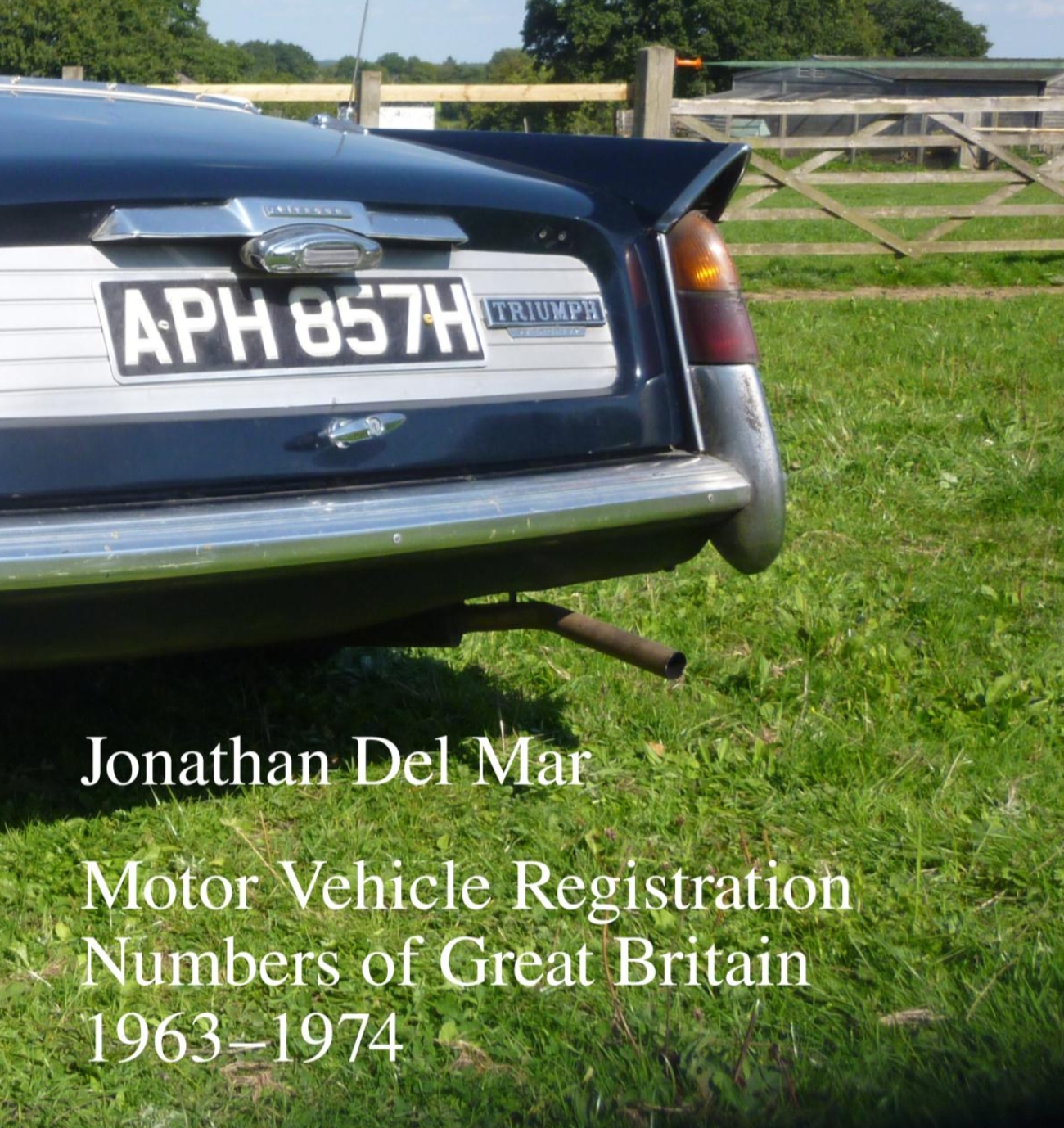
Quite remarkable, and rather touching, this business of two men each carrying around a headful of entirely useless (many would say), entirely wonderful information. We talked for a good while, and I ended up agreeing to buy his new book, Motor Vehicle Registration Numbers of Great Britain 1963–1974 — a snappy title if ever there was one. At least it says what’s in the tin. I was on the point of sliding it into my Billingham when Jonathan gently reminded me that I ought to pay for it first.
Quite right too. There was, however, a snag, which I explained to him. I do not carry cash — or I pretend not to if anyone asks. I went digital years ago, which in Britain you can do without a flicker of guilt; rather less so in some other countries I could name. Jonathan, understandably, was not carrying a card reader in his back pocket, so emergency measures were called for.
I hauled out my much-neglected wallet, whose main function these days is migrating from one pair of trousers to another as I change gear. Out it came; I brushed off the moths and extracted a tenner and a fiver, which — thanks to a discount Jonathan kindly gave a fellow club member — was enough to settle the bill. Full price, he tells me, is £19.99, or £24 posted within the UK, so I got off lightly. I resolved to read the book, the number-plate world’s equivalent of Red Dot Books’ Leica Pocket Book, before bed that same evening. I very nearly managed it.
Show the lads down the nick
Jonathan’s book attracted me because number plates have also fascinated me (although to a much lesser extent than Jonathan, evidently). Several decades ago, when my company was handling public relations for the motorcycle industry, I discovered a car with A1 on the front (and back).
It was driven by a senior Dunlop executive, let’s call him Stuart, because it was the company’s policy keep the number safe on staff vehicles. A1 had been registered by the London County Council in late December 1903, just before the official start of number plates. The owner was the 2nd Earl Russell (Bertrand Russell’s brother, John Francis Stanley Russell), for his Napier motor car. Presumably Dunlop acquired it much later.
Stuart wasn’t impressed by his amazing number, however. He confessed that A1 was nothing short of a liability. Since acquiring the plate he had been stopped by the police regularly. Some officers were honest: “Sorry about this, sir, but I just wanted to record A1 as a ‘stop’ in my notebook. You know, show the lads back at the nick”1. Others were slightly more disingenuous, and spent quite a few minutes exploring minor infringements of the codes: “I think your offside rear stop light might not be working, sir”.
Altogether, though, this was a monumental disadvantage to owning such a number all those years ago. Today, A1 must be worth tens of thousands of pounds, and I wonder if the owner gets stopped as often. Probably not, I think because the police now leave everything to cameras while they are back at “the nick” completing forms and checking boxes. Cameras aren’t quite as curious. And they don’t display their catches “down the nick”.
Beethoven’s sideline
Here is the part I still cannot quite get over. Jonathan Del Mar, Britain’s number-plate guru, treats registration numbers as a sideline. His actual profession is rather more exalted: He is a world-renowned editor of Beethoven’s music, and a conductor to boot.
Trained at Christ Church, Oxford, and the Royal College of Music, and the son of the conductor Norman Del Mar, Jonathan has spent the best part of four decades producing new Urtext editions of Beethoven’s works for the German publisher Bärenreiter. He has put away two centuries of copying errors, editorial guesswork, and plain misreadings to get as close as anyone now can to what Beethoven actually wrote.
Jonathan’s edition of the nine symphonies, completed in 2000, is now used by conductors including Claudio Abbado, Simon Rattle, and Bernard Haitink, and by orchestras worldwide. He went on to do the same job on the concertos and the string quartets, and has only recently finished the piano sonatas. Jonathan pointed this out when he read this article in proof; he has now produced new editions of the complete works in all four forms: symphonies, concertos, string quartets and piano sonatas. Wikipedia, I gather, still has him finishing the piano concertos; Jonathan tells me they were done and published back in 2015, so even the internet’s memory needs a service from time to time.
Retirement, clearly, is a relative term because Jonathan has not exactly been resting on his Beethoven. Since 2020 he has been working through Dvořák’s symphonies for the same publisher: numbers six to nine are already out — the ninth being the popular New World — and number five is going through the press as this article is published. That, he says, will be the end of his Dvořák, since nobody plays symphonies one to four. Whether it will be the end of his retirement altogether is another matter; he mentioned, almost in passing, that some Schubert is in the offing.
What, you might reasonably ask, has Beethoven got to do with British number plates? Nothing whatsoever, which is rather the point. But I am fairly confident that Ludwig, who died in 1827, would never in some 105 years — reckoning forward from the middle of his life, around 1799, to the introduction of British registration marks on 1 January 1904 — have pictured a number plate, let alone a man who could recite the registration history of a stranger’s old MG from memory.
The daft and the delightful
So there it is: a day that began as a straightforward exercise in close-focus photography ended up taking in the Bentley Boys, several million pounds of parked silence, a stranger’s photographic memory for number plates, and a detour into Beethoven scholarship, all within the space of an afternoon at Brooklands. I doubt I could have planned it if I had tried, and I certainly could not have knitted it out of thin air — every word of it actually happened, which is more than can be said for some of my more imaginative captions.
Brooklands keeps doing this to me. It is, on the face of it, just an old racetrack and a museum park in Surrey, yet it keeps confronting me with Bentley Boys, bus museums, and men who edit Beethoven for a living, all in one afternoon. I went for a lens test and came home with a number-plate lesson, a new book, and a lighter wallet. If that is not a good day’s work for a retired man with a camera, I do not know what is. I shall be back at Brooklands before long — there is, after all, always something new to see, and somebody new and gloriously daft to meet.

If you want to buy a copy of Jonathan Del Mar’s book, contact Jonathan direct at jrdm.oakwood@gmail.com. Alternatively, use the link below to David Thomas at Allautobooks.com, and you can purchase direct from there.
Further reading
| Macfilos Articles | Other Links |
|---|---|
| Bentley boys and girls come out to play – Mike’s 2019 report from the Bentley Drivers Club centenary at Brooklands | Bentley Boys and Girls – Bentley Motors’ own history of the Bentley Boys and Girls |
| Brooklands 1973 and the last of the Bentley Boys – Don Morley’s account of photographing Sammy Davis at a 1973 Brooklands reunion | Bentley Boys – Wikipedia – A fuller roll call of the group and their Le Mans record |
| Brooklands: Secrets of the Transport Museum – A closer look at what the museum holds beyond the racetrack | Brooklands Museum – Plan a visit and check the events calendar |
| Après-lockdown: Brooklands comes to life – Brooklands reopening after the pandemic | Rollers & Racers: a celebration of Rolls-Royce & Bentley – The Brooklands Museum event page for the day described here |
| Delage: Together again 95 years after the British Grand Prix at Brooklands – Another Brooklands motor-racing profile | Jonathan Del Mar – Biography of the Beethoven scholar and number-plate expert |
| Leica Pocket Book: One hundred years of facts in your pocket – Macfilos on the Leica reference book this article compares Jonathan’s to | Buy direct from Allautobooks.com – You can purchase Jonathan’s book here, |
Make a donation to help with our running costs
Did you know that Macfilos is run by six photography enthusiasts based in the UK, USA and Europe? We cover all the substantial costs of running the site, and we do not carry advertising because it spoils readers’ enjoyment. Any amount, however small, will be appreciated, and we will write to acknowledge your generosity.
- “The Nick” is British police slang for the Police Station. It derives from the expression, “you’re nicked”. It is similar in connotation to the old faithful, “I’ll ‘feel your collar‘ if you don’t move that car immediately (sir)” ↩︎
Mike – I really enjoyed reading this article – – – what an eclectic set of topics and tangents, which you managed to weave together so well! How great it must have felt to be in the presence of so many magnificent machines. As an aside, every time I read your articles set in Brooklands, I am brought back to the three years my family and I lived in Surrey, and the visits my sons and I would make to the famous museum. One of my places of work was in nearby Weybridge, so it was never a problem to make the trip to the museum. As an aside, the color and sharpness of your photos showcase the excellent combination of the 35mm APO Summicron with the Leica SL3-P, which, after Brooklands, Bentleys, and Beethoven (and the rabbit hole of vintage motor vehicle registration plates), seems to have become an afterthought!
Cheers,
Ed
Many thanks, Ed. I do like going off at a tangent as the fancy takes me. Some call it rambling, but I enjoy it so I’ll carry on meandering up the garden path. The 35 APO is an absolute gem. Many call it a “reference lens” and you can understand that when you see the sharpness and rendering. Some, however, think it is rather clinical; but that doesn’t bother me. I like it. I own many good lenses and test quite a few more. And the close-focus capability makes it much more versatile.
I remember your telling me about your visits to Brooklands. It’s a small world, indeed.
Mike
Excellent stuff Mike, and some great snaps, many thanks.
I remember when my kids were still nippers, that on fairly regular Sunday mornings, we could hear a roar, as if a fleet of lorries was thundering along our road in Sydenham.
It turned out to be a single supercharged Bentley going from A-B which just happened to use our road for the purpose, it was always an impressive sight and we sometimes went out to wait for the spectacle.
I wonder if this was one of those ‘Bentley Boys’?
Anything is possible, Stephen, but it’s a nice thought. I see these cars in action quite often, at Brooklands, of course, and they are magnificent beasts. So big and impressive, and definitely the classic car to own. The maintenance cost is probably on high side, I imagine. Thanks for your comment. Mike
Quite an exceptional story, happening as a chance encounter. I have often discovered that using a camera to request someone’s portrait is a door to an interesting 10 minutes of chat during which life stories quite unexpected can be revealed. People are, quite often, much more interesting than their surface image may suggest.
I agree, Andrew. The strange thing is that on this occasion the Leica had nothing to do with it. It was Jonathan brandishing his book that was the conversation opener. He was on a mission, on a special day that would bring out classic and vintage car enthusiasts who are probably the prime market for the tome. As you say, an exceptional encounter… — Mike
Mike,
Thank you for this wonderful article.
Donald
Many thanks, Donald