

There’s a peculiar rhythm to the D-Lux story: every LX100-derived Panasonic refresh eventually gets a red-dot version, as it did in 2014, 2018 and 2024, with the D-Lux (Type 109), D-Lux 7 and D-Lux 8. Therefore, when Panasonic rolled out the Lumix L10 in May 2026, the question was inevitable — will it be the basis for a new D-Lux 9?
The more interesting question, however, is whether Leica has reason to answer soon. The D-Lux 8 isn’t yet two years old, and it was well received at launch. It sold out quickly, and was on backorder for many months. Supplies have eased since then, but reviewers have maintained their enthusiasm. Despite its dated heritage, it still looks to be on a roll.
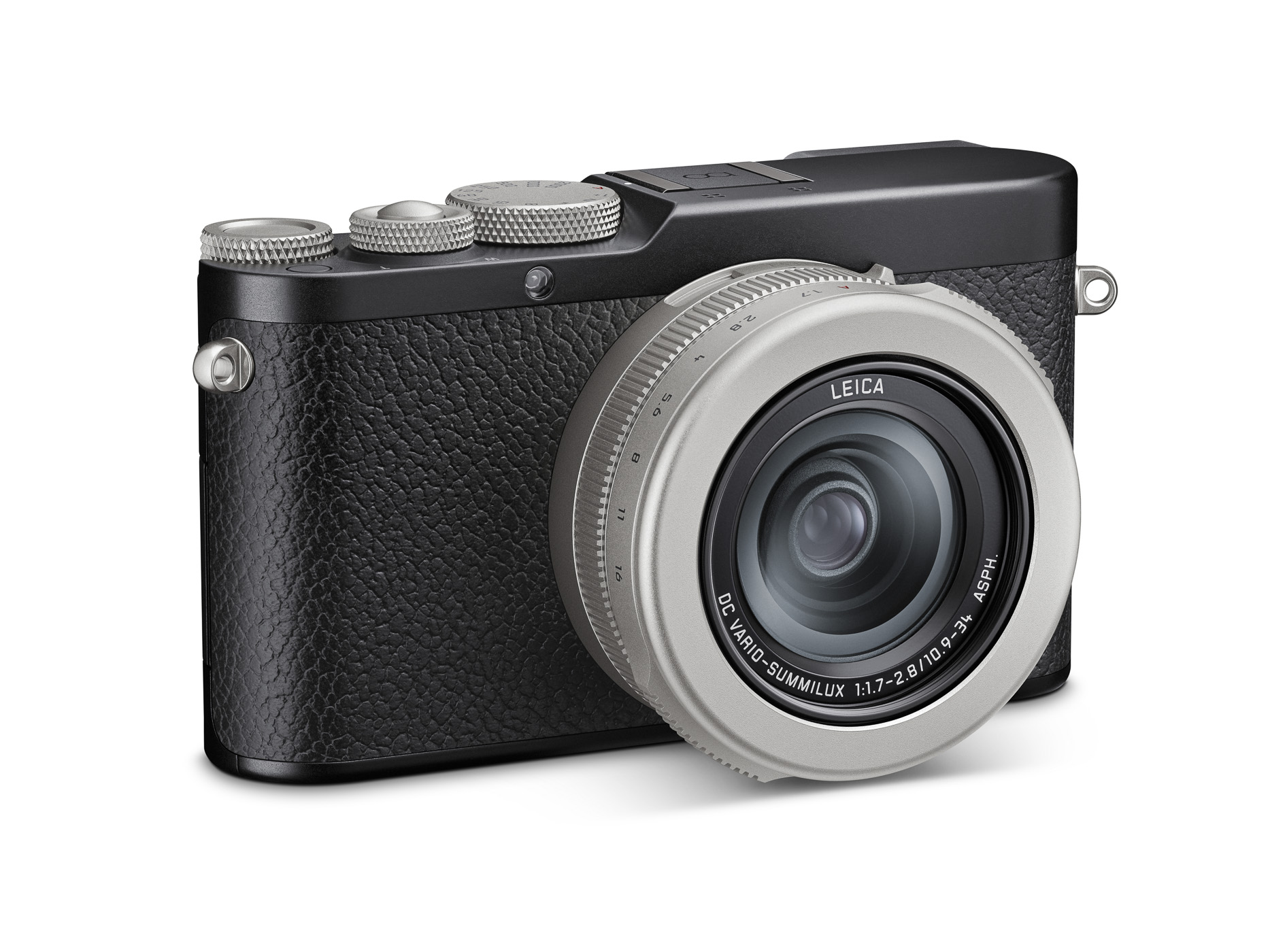
D-Lux family tree
Every D-Lux since 2005 has been built on Panasonic engineering — usually the platform behind Panasonic’s own flagship compact, the Lumix LX series.
By the time of the D-Lux 8, Panasonic had discontinued the LX100 II, so there was no rival version on shelves. The D-Lux 8 stood alone, and felt, as I wrote in our launch review, like the first true member of the Leica family, even though the sensor and processor underneath still dated to 2018.
That matters now: the D-Lux 8 became exclusive largely because Panasonic wasn’t selling a rival any more. The L10 is different — Panasonic’s new flagship, on sale at full price.
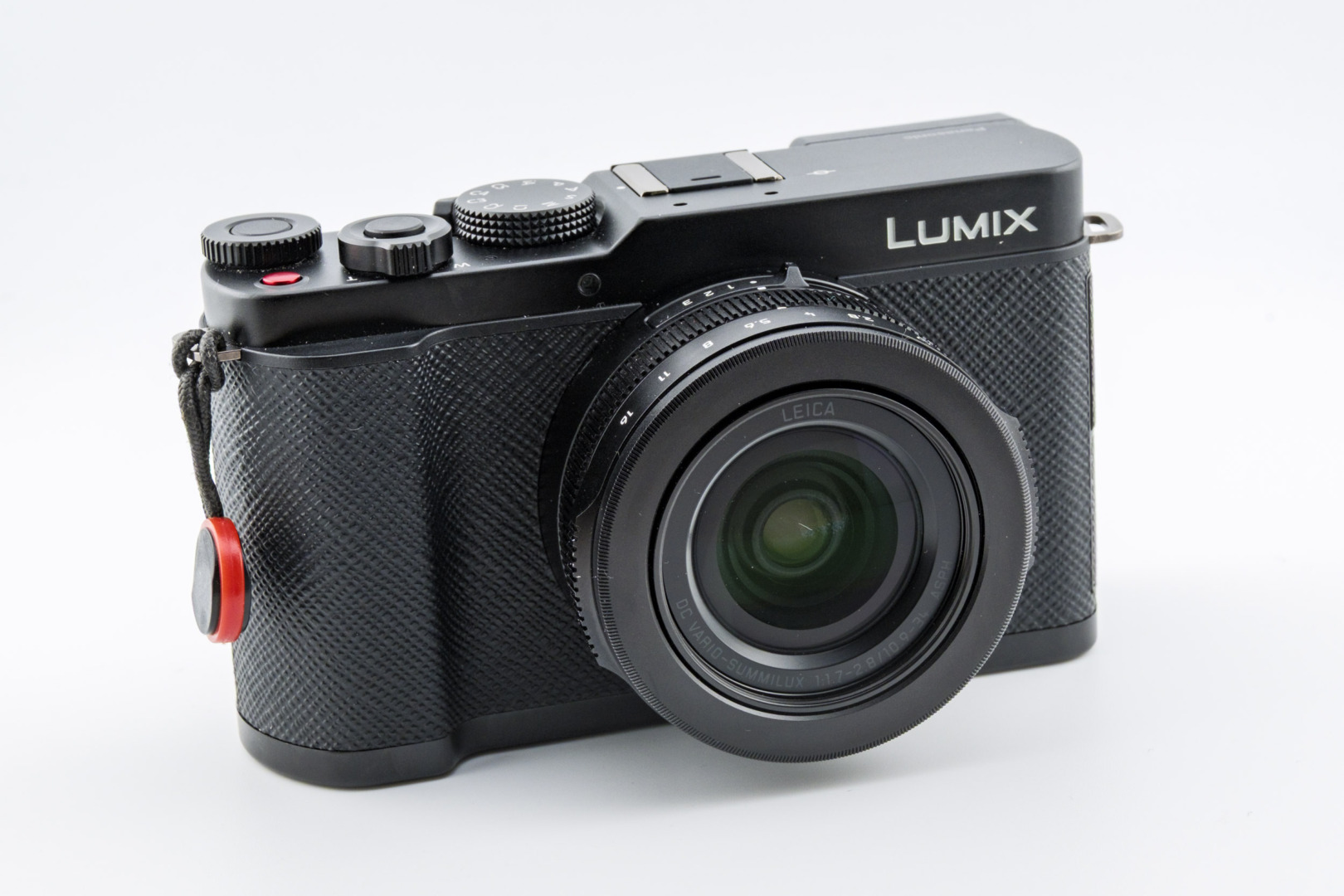
Enter the L10
Panasonic announced the Lumix L10 on 12 May 2026, pitched as the LX100 line’s spiritual heir for the Lumix brand’s 25th anniversary (Panasonic itself is much older). On paper, it’s a big step up from the D-Lux 8:
| Specification | Leica D-Lux 8 | Panasonic Lumix L10 |
|---|---|---|
| Sensor | 17MP Four Thirds (2018-generation, LX100 II derived) | 20.4MP effective (26.5MP total) BSI Four Thirds |
| Lens | Leica DC Vario-Summilux 24–75mm equiv., f/1.7–2.8 | Leica DC Vario-Summilux 24–75mm equiv., f/1.7–2.8 |
| Autofocus | Contrast-detect, criticised as slow | Phase Hybrid AF, 779 points, AI subject recognition |
| Rear screen | Fixed, non-articulating | Fully articulated touchscreen |
| Viewfinder | OLED EVF | 2.36m-dot OLED EVF |
| Burst shooting | Modest, mechanical shutter limited | Up to 30fps electronic, ~11fps mechanical |
| Video | 4K, limited frame rates | 5.6K up to ~60p, 4K up to 120p, V-Log, 10-bit 4:2:2 |
| Step-zoom (24/28/35/50/70–75mm) | Removed | Retained, assignable to the manual ring |
| Connectivity | Wi-Fi 4 | Modern Wi-Fi, GH-series-derived battery |
| Build | Metal, Leica styling | Magnesium alloy, saffiano-leather-style finish |
| Weight | Approx. 397g | Approx. 508g |
| Price | $1,915 / £1,450 now (launched at $1,595 in July 2024, briefly hit $2,790 during 2025’s US tariff spike) | $1,499 | £1,299 |
Two things stand out beyond the price gap: the L10 fixes most of what reviewers criticised in the D-Lux 8, and keeps the step-zoom feature from the LX100 II and D-Lux 7, a detail many Leica owners will notice. That’s been a particular hobbyhorse of mine, though I accept my view is probably a minority one these days. Its absence doesn’t seem to have hurt D-Lux 8 sales — many of these cameras, I suspect, are going to newcomers to Leica, which is good for the brand in itself.
The step-zoom question
Every D-Lux up to the D-Lux 7, and every Lumix LX up to the LX100 II, offered step-zoom: the zoom lever, or lens ring, jumping between familiar focal lengths — 24, 28, 35, 50 and 75mm. It lets you compose deliberately rather than zoom by eye, and many D-Lux 7 owners used it constantly.
The D-Lux 8 dropped it, along with lens-ring zoom assignment and a one-touch lock. I covered this at length on Macfilos at launch. Leica called these deliberate simplifications, in pursuit of “Das Wesentliche” — the essential. Some owners missed it badly; others found the simpler camera easier to live with.

What’s changed is the L10, which keeps step-zoom on its manual ring, praised by reviewers. That raises a question: if the feature sits right there in the donor firmware, would Leica leave it out of a D-Lux 9 too?
My guess is yes — Leica called the omission deliberate, not technical, which isn’t the language of a company leaving the door open. I’d be glad to be wrong: a firmware restoration on the D-Lux 8 itself is plausible, even if a full reversal timed to a D-Lux 9 feels less likely.

The rumour mill
It’s worth separating fact from hope here.
Leica Rumors asked “is the Leica D-Lux 9 coming next?” the day the L10 was announced, arguing by pattern: Panasonic has released a new LX100-class camera, Leica has always eventually followed, so a D-Lux 9 is “likely in the next one to two years” — inference from history, not a leak.
Notebookcheck frames a D-Lux 9 as a wishlist: what Leica “couldn’t do without raising the price too much” — language suggesting nobody has seen a spec sheet. A few YouTube channels have gone further, with titles like Leica D-Lux 9 Leak Update and Leica D-Lux 9 Leaks, none traceable to a verifiable source.
The summary is simple: there’s no credible leak, just commercial logic and hope. Forum sentiment splits — some hope a new model brings the D-Lux fully up to date, others are simply tired of a line reinventing itself every time they’ve learned its menus.

Reasons for delay
Set against the enthusiasm, there are solid reasons a D-Lux 9 could be further off than the “one to two years” being proposed.
The D-Lux 8 is still young. Announced in May 2024, it has just turned two. Leica’s rhythm has been much slower than that — roughly four years between the original D-Lux and the D-Lux 7, six between the D-Lux 7 and the D-Lux 8. The L10 doesn’t and most likely will not change that pattern.
Panasonic still needs to sell the L10 itself. The D-Lux 8 became exclusive because the LX100 II had already been discontinued. The L10 is brand new, and Panasonic will want to sell it at full price for a while yet.
Leica’s R&D looks pointed elsewhere. Recent reporting suggests Leica has scaled back medium-format development, moving staff to the M and SL ranges amid ownership uncertainty — Blackstone is reportedly seeking to sell its stake.


Cost vs philosophy
The pricing doesn’t get easier. The D-Lux 8 already costs more than the better-specified L10. A D-Lux 9 would widen that gap, not close it — probably launching above £2,000.
The design philosophies may not fit. Leica’s instinct here is reduction: fewer options, simpler menus. The L10 is the opposite — articulating screen, 5.6K video, V-Log, 30fps bursts, AI tracking, full manual controls.
| For a D-Lux 9 arriving soon | Against a D-Lux 9 arriving soon |
|---|---|
| L10 fixes almost every D-Lux 8 criticism (AF, screen, video) | D-Lux 8 is just over two years old |
| Historical pattern: Leica has always followed an LX100-class refresh | Historical rhythm has been 4–6 years, not 1–2 |
| Price gap makes D-Lux 8 look poor value today | A D-Lux 9 would cost more, not less, than the L10 |
| L10’s return of step-zoom raises pressure to restore it | Leica called the step-zoom removal deliberate, not a mistake |
| Community demand is vocal and persistent | Panasonic has no urgency to hand over a brand-new flagship platform |
| Leica already sells the D-Lux 8 without a rival Panasonic model | Leica’s R&D focus has shifted to M, SL and proprietary sensors |
Where we stand
None of this means a D-Lux 9 will never happen. The L10 is a genuine upgrade over the D-Lux 8’s ageing sensor generation, as I found when I reviewed it, and Leica hasn’t shown any long-term willingness to leave this line behind. At some point — once the L10 has had its run — the pattern will likely continue.
But there are no guarantees. There’s no leaked D-Lux 9, no confirmed timeline, and good reasons to expect a wait: a young current model, a company watching its R&D spend, and a Panasonic partner under no pressure to hand over its newest camera. If that cycle restarts, I wouldn’t assume step-zoom comes back with it — Leica called its removal deliberate, and companies rarely enjoy reversing a decision they’ve described that way.
For anyone deciding whether to buy a D-Lux 8 now, that’s reassuring: they can be reasonably confident their new camera isn’t about to be replaced by an imminent, better-value successor. Enjoy it a while longer — every rumour headline right now is a fair question without a reliable answer.
What do you think? Is it too soon for a D-Lux 9? Would the return of step-zoom change your mind? As ever, the comments are open.
Further reading
| Macfilos Articles | Other Links |
|---|---|
| Panasonic Lumix L10 review: a premium compact camera for enthusiasts – Our full review of the camera at the centre of this rumour | Notebookcheck: Leica D-Lux 9 could become the perfect smartphone upgrade – A wishlist view of what a D-Lux 9 might offer |
| Leica D-Lux 8 review: redesigned compact becomes a full member of the Leica family – Our launch review of the current model | Panasonic Lumix L10: should you wait for the Leica D-Lux 9? – A dissenting, buy-now case against holding out |
| Leica D-Lux 8 loses popular features in quest for the essential – Our original coverage of the step-zoom removal | PetaPixel: Chinese private equity firm emerges as leading bidder for a stake in Leica – Background on Leica’s ownership uncertainty |
| Leica D-Lux 7 rounds off a week of pleasant surprises – Our first-impressions review of the previous generation | Video comparison: Lumix L10 vs Leica D-Lux 8 – A side-by-side look at both cameras in use |
Make a donation to help with our running costs
Did you know that Macfilos is run by five photography enthusiasts based in the UK, USA and Europe? We cover all the substantial costs of running the site, and we do not carry advertising because it spoils readers’ enjoyment. Any amount, however small, will be appreciated, and we will write to acknowledge your generosity.
Hi Mike,
Great article! I had the Dlux 8 but sold it & bought the Panny L10.
I love 4 things about it.
1) the step zoom
2) the newish sensor
3) the real lut function; I use the Ross and his jpegs Mara & Maku luts and love them.
4) the phase detection focus
I have the Q2 Monochrome and the L10 is a great complement to it.
Keep up the great work,
Ed
Thanks, Ed. I really liked it too and would have bought one if i didn’t have too many cameras to try out. It is better than the D-Lux 8 in so many ways, yet many people just won’t consider it because it doesn’t have the Leica badge and Leica menus. But fortunately for Panasonic, this is a minuscule part of their potential market. Mike.
Good read, Thank you
I for one did not buy the 8 due to the omission of step-zoom. (and old sensor tech)
It’s that important for me. I really hope if/when there is an LX9 they would reconsider and add it back on!
Arash, Thank you for your support on the step zoom issue. I was beginning to think I was the only one with such a firm view. I sold my D-Lux 8 for the same reason and will not buy a D-Lux 9 if they omit it again. Despite the convoluted menus, the L10 is a better all-round camera for me.
Logical menus and camera controls are so important to me. Leica has made a huge leap of logic in the D lux 8. Making the D Lux 8 controls and menu much like their other cameras is so much better than past D Lux models. If the Lumix L10 has a menu anything like past LX100’s I would not consider it.
This is something I know many people want. If you are in the Leica eco-system and used to the menus, it’s a challenge to go with Lumix or Fuji.
Interesting article Mike, as you know, I have a Q2, which has step zoom.
For a long time I had a JJC thumbgrip attached and it virtually hid the step zoom button, I forgot that the Q2 had the feature.
I recently bought the Leica thumbgrip and now check the step zoom before almost every shot, so that depending on where I am standing, I can see whether there is a better shot, or should I move?
So yes, I would say that a step zoom feature is a ‘good thing’ (as Sellars and Yeatman might say) to have with a fixed lens camera.
Indeed. There is a difference between the Q’s “zoom” which of course is a crop, and the D-Lux stepped zoom. I still think its a good thing!
Dear Mike, thank you very much for this interesting post.
I can’t give you a definitive answer to your question, but I can share my experience from conversations with staff at two Leica stores: The D-Lux generally sells well to the following target groups: Young customers who want to make the transition from smartphones to the Leica product world but aren’t willing or able to afford a Q or an M, and who also want a compact, easy-to-use camera with a lifestyle appeal and strong brand image. Then there are male Leica customers with above-average incomes who buy this camera for their children, grandchildren, and/or wives. Let’s be completely honest: anyone who can afford a Noctilux or APO lens generally doesn’t give the price of a D-Lux a second thought. That may sound arrogant and decadent, but it might be realistic in certain situations.
This reminds me a bit of Porsche… at some point, they also offered 911 enthusiasts the Cayenne as an SUV for everyday driving. And once that caught on, the Macan was introduced as a car for the wife.
Both models are available from Volkswagen (Touareg/Audi Q5), but enthusiasts stay within their beloved brand’s ecosystem.
That all sounds very logical, Olaf, and is in line with my expectations.
I have grown to be very doubtful about predicting any new small-format Leica cameras after their treatment of earlier non-‘M’ models, Mike. I would be delighted if Leica surprised me. But I will not hold my breath!
I don’t think the future of the D-Lux is entwined with the APS-C episode. I think, though, they must realise that there’s a market for a D-Lux camera, but the problem will be when it’s time to upgrade. Only the L10 will be available for them to spray their magic dust on.
I checked a couple of sites, and as you show in your first comparison chart, used but near mint D-Lux 8s are selling in the States for more that original list. That is quite remarkable after only two years!
It is remarkable, and I’m not sure why.