
I have taken holidays in Spain several times in the past and visited Madrid and Barcelona for work. But those trips were many years ago. I probably had my old Olympus OM2 with the standard 50mm f/1.8 lens and that was it. What could I capture on this trip in one fairly small province to give a flavour of what it’s like there? I’m short handing the article “Sketches of Spain” because you can never fully capture a country in one broad brushstroke and one colour.
Miles Davis was inspired by Spain and its musical heritage. At the centre of that inspiration was Joaquin Rodrigo’s “Concierto de Aranjuez”. It encouraged him to explore where the roots of that musical piece came from. From that exploration came what experts call the “Third Stream” and the marrying of Jazz, Traditional Folk music, and Classical. The album “Sketches of Spain” was released on 18 July 1960 to great acclaim. That cultural “third stream” lives on in Spain to this day and continues to mine its roots and evolve.
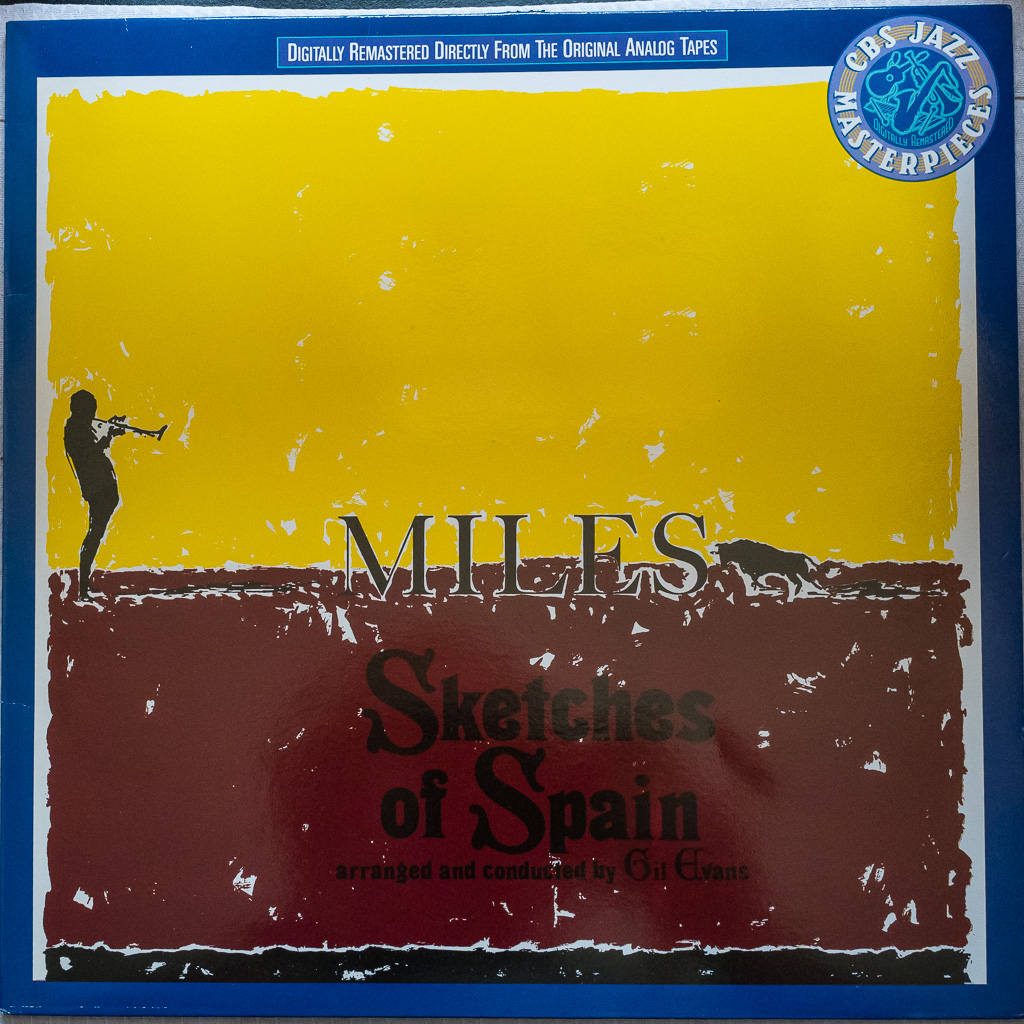
“You’ve got all those Arab music scales up in there, black African scales that you can hear. . . There was a little bit of the same thing, the same kind of voice that I played on the trumpet in ‘Solea’ [on Sketches of Spain]. ‘Solea’ is a basic form of flamenco. . . It’s close to the Black American feeling in the Blues. It comes from Andalusia, so it’s African-based.”
Miles Davis
Travelling light
Could I capture my own Sketches of Spain with just one camera? Sadly, I do not have the equivalent of Gil Evans to help me orchestrate my shots. I could have taken more kit, but I much prefer to travel light. I can’t remember the last time I checked a bag for a flight – there’s always a launderette somewhere that provides both humour and a new cultural experience.
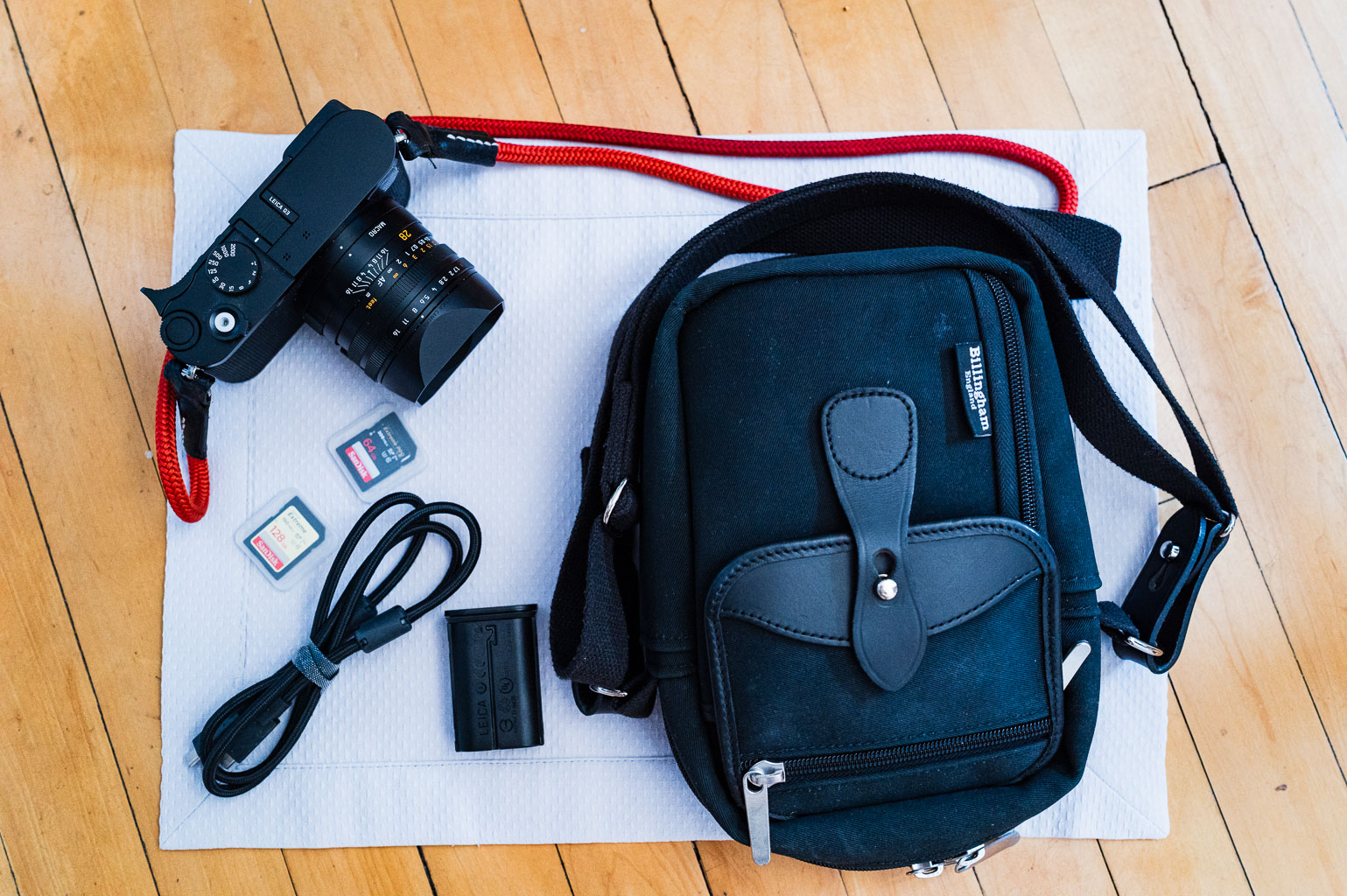
One camera and one lens that suits the destination is what I try to practice. The Leica Q3 is that essential, minimalist tool that forces you to think about what you want to convey and how you need to shoot it. And less about worrying whether you have the right or wrong lens on the camera.
Keep moving
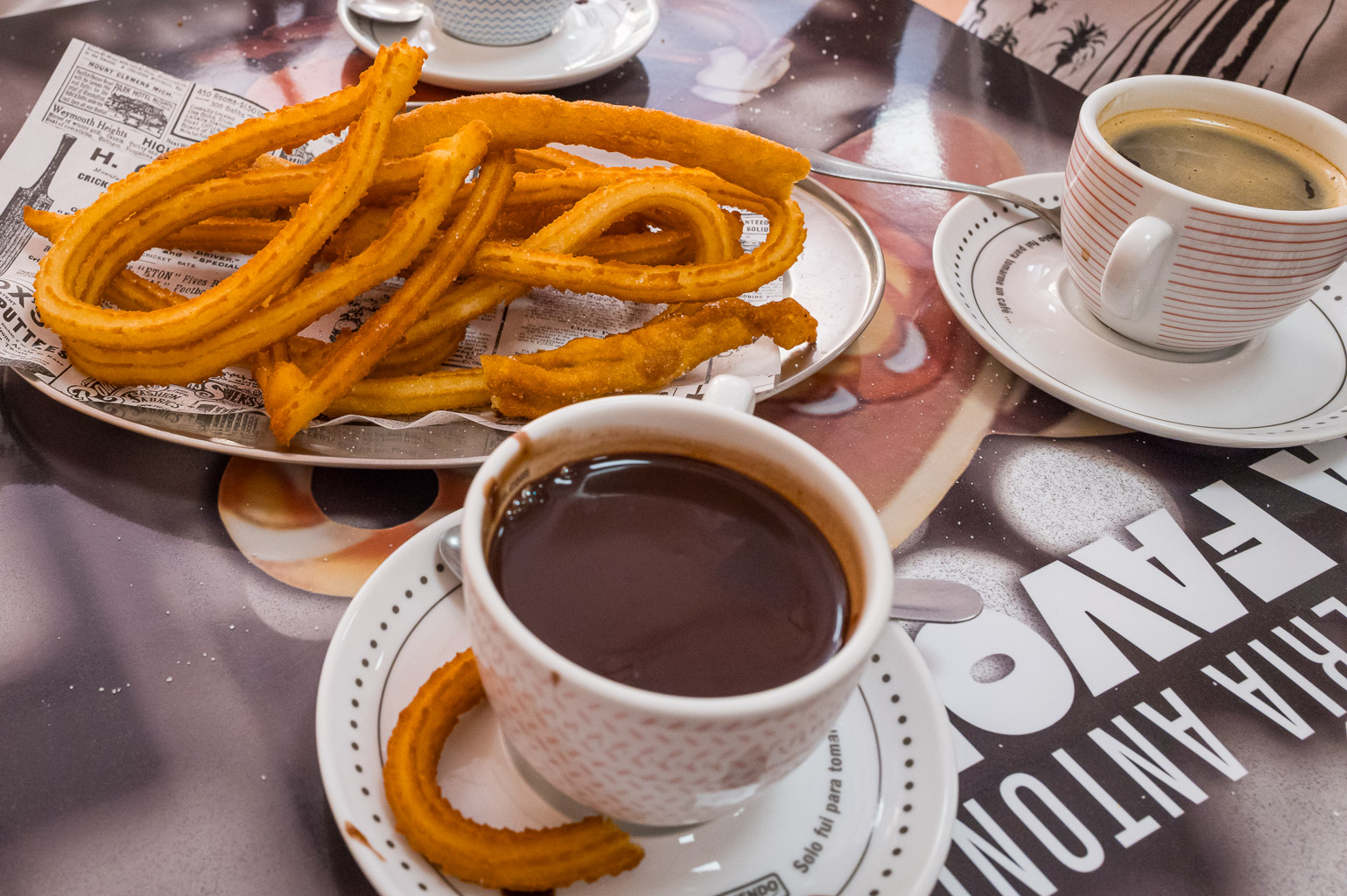
I cannot sit on a beach and read another 50 pages of a predictable Robert Ludlum book. I have to be doing things — like exploring by getting off the main drag, digging into history, experiencing different food and art, and watching someone else’s world go by. Once my breakfast chocolate and churros have been guiltily consumed, I’m ready to explore.
I have set up my Q3 28 with several profiles to match the shooting opportunity. For most of this trip the profile was Landscape with single focus, highlight weighted exposure, adjust the histogram to suit, and set a minimum shutter speed of 1/125. If I wanted to change it, a one button press orchestrates all the changes I needed to quickly get to Street or Portrait.
So where did I go?
My friend Colin invited my wife and me to his home in a small town called Rojales in the Alicante province. If you go to see a standup comedian in Britain, then at some point they will likely mention the names of the most famous towns in the region. Those mentions will create titters in the audience. The Alicante province in Spain has become home-from-home for Brits, Dutch, and Germans, and probably many other national groups. But, beneath the Fish and Chips and English spoken here signs, are layers of history that form part of my Sketches of Spain.
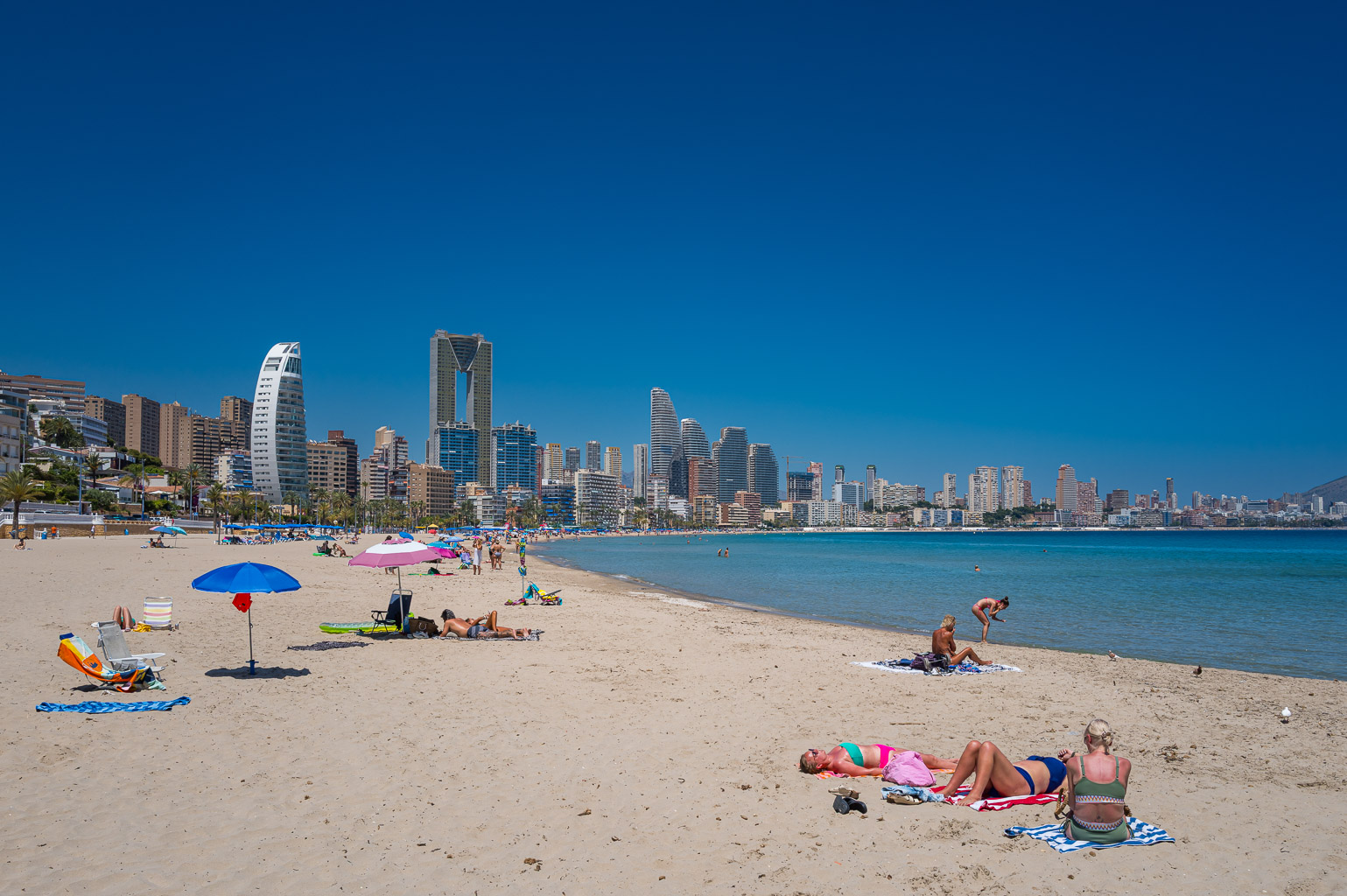
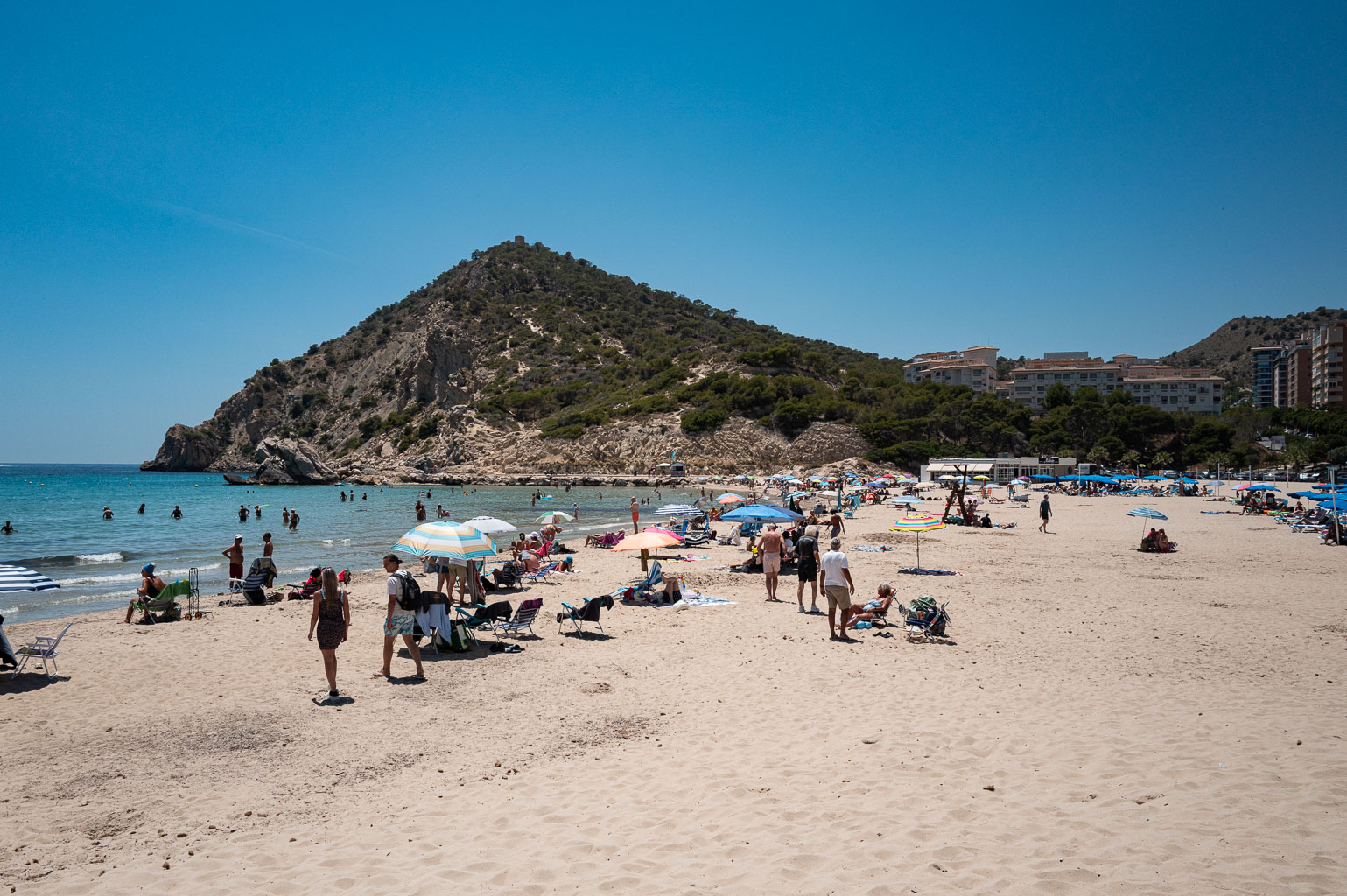
A bit of Guardamar potted history
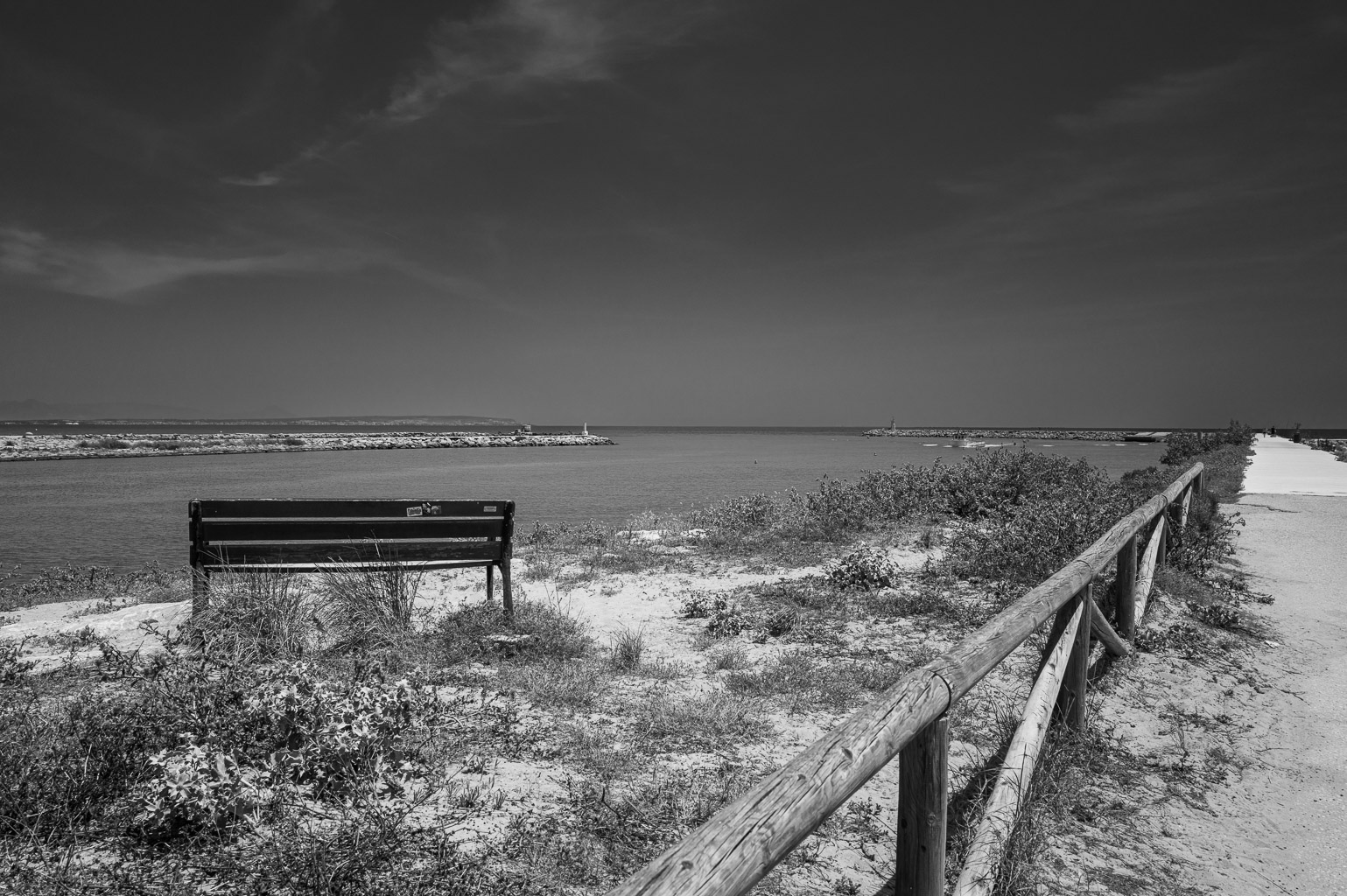
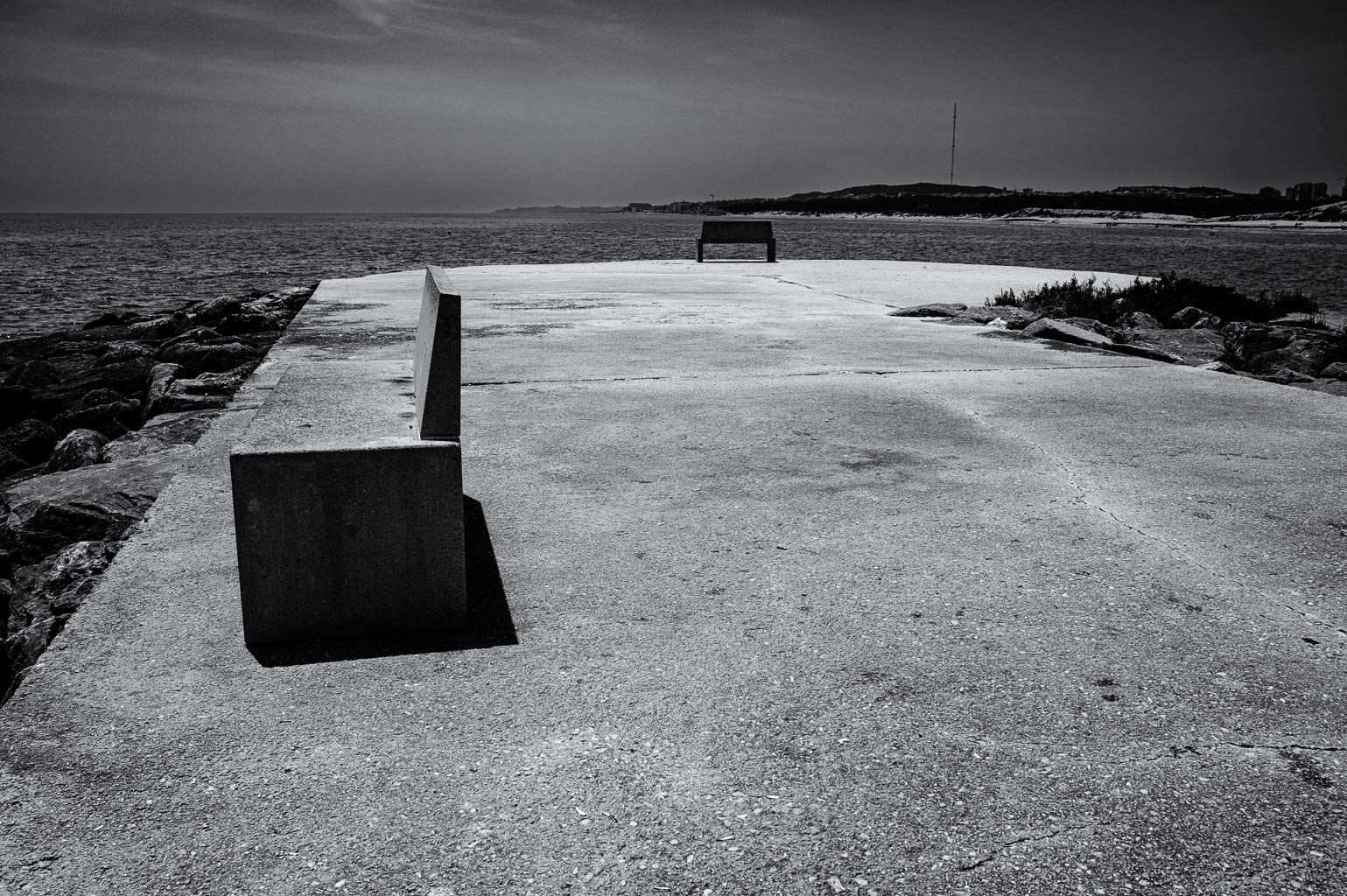
History is written by the hands of the victors. Or, as Paul Simon sang it in more contemporary times, “The words of the prophets are written on the subway walls.” The name of this town means “Protect from the sea” and its roots date back to the 8th century BC. Guardamar was built at the mouth of the Segura river as a port city for trading and also for fishing.
It was originally called La Fonteta and was established by the Phoenicians who crossed the Mediterranean from city states in what today would be Lebanon, Syria, and parts of coastal Israel. The surrounding area is semi-arid, and dedicated to agriculture, with lemon and lime groves employing planned irrigation. (Dig out a map or go online to see the area.)
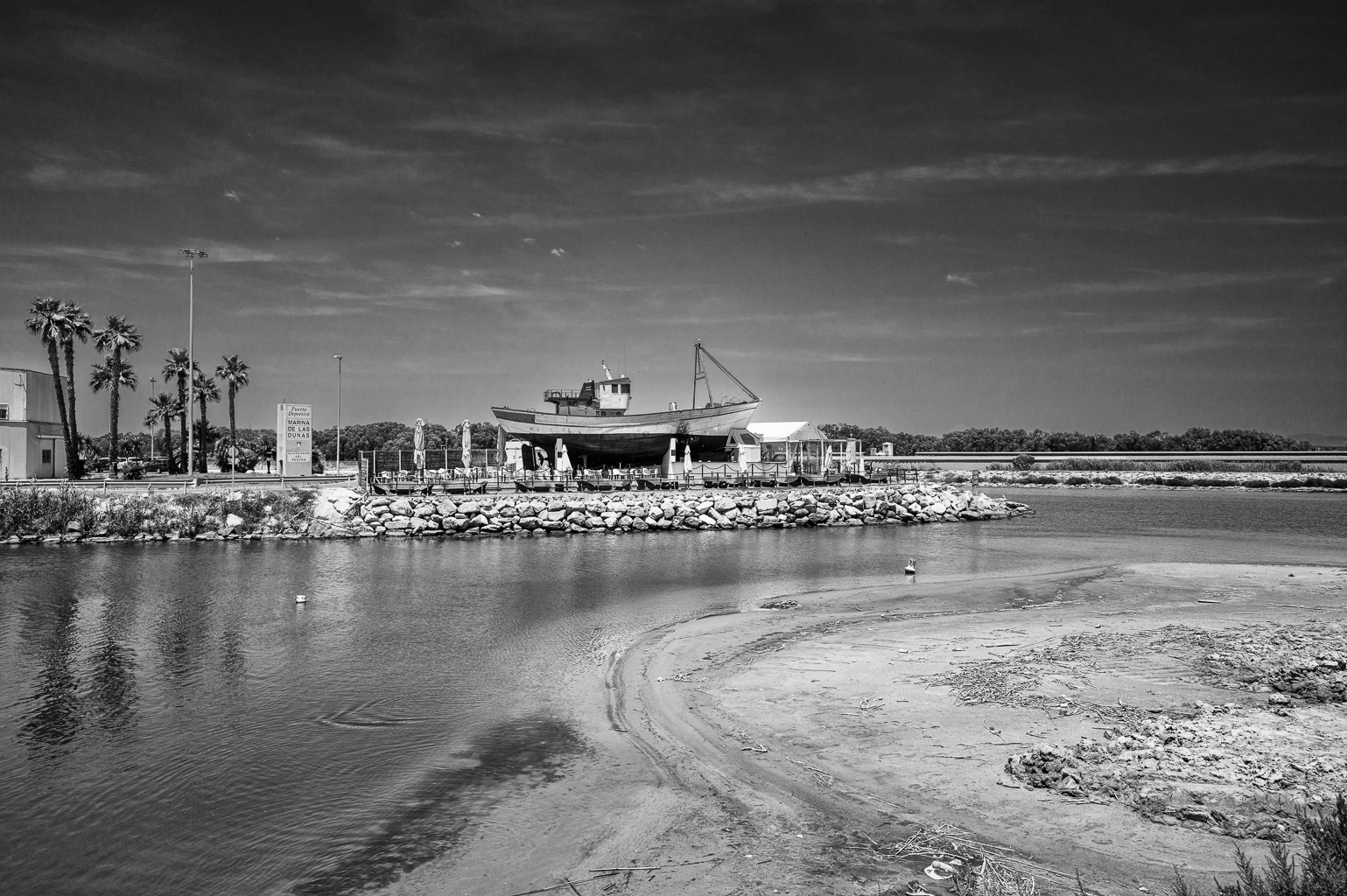
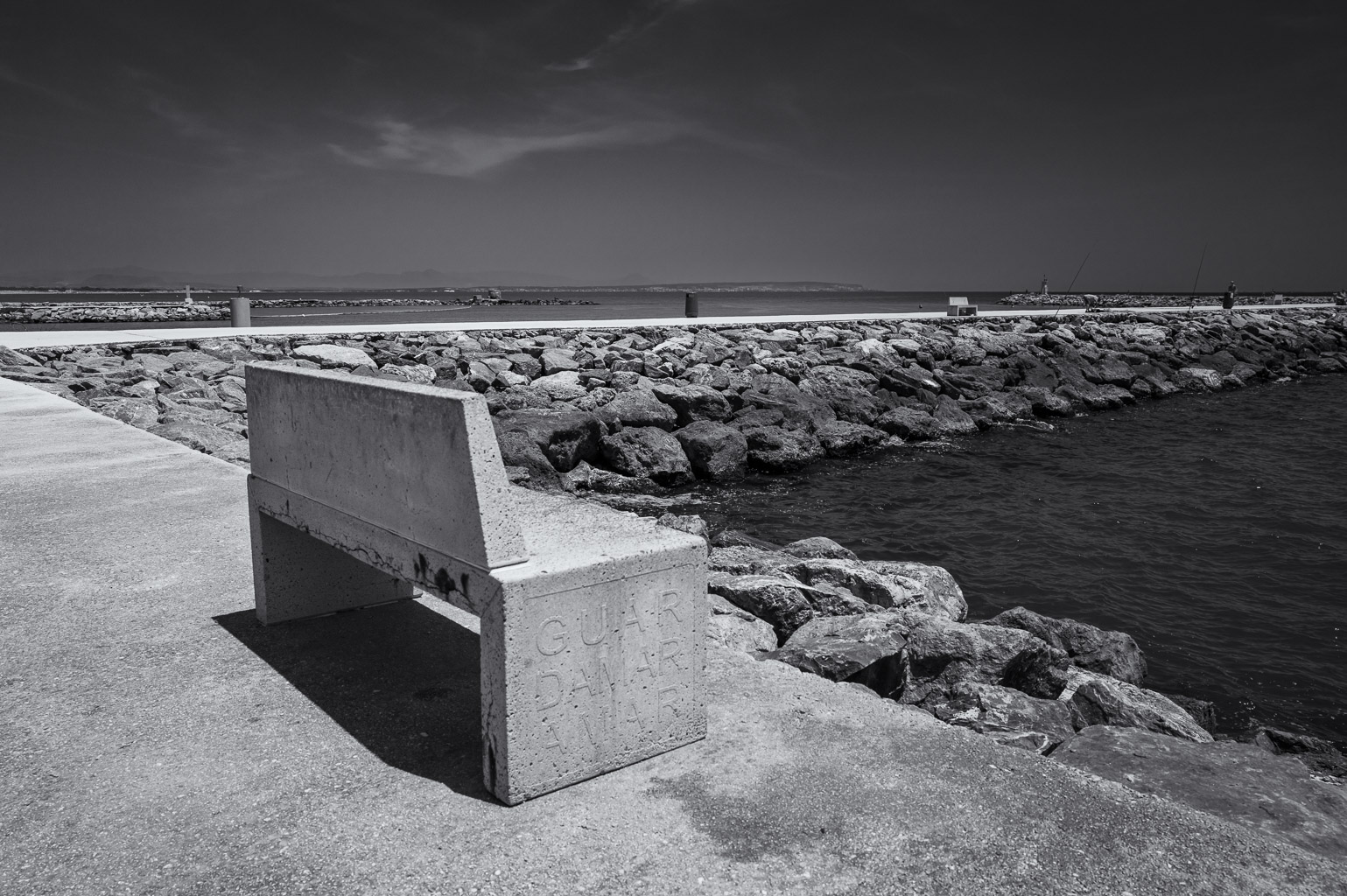
Layers of history
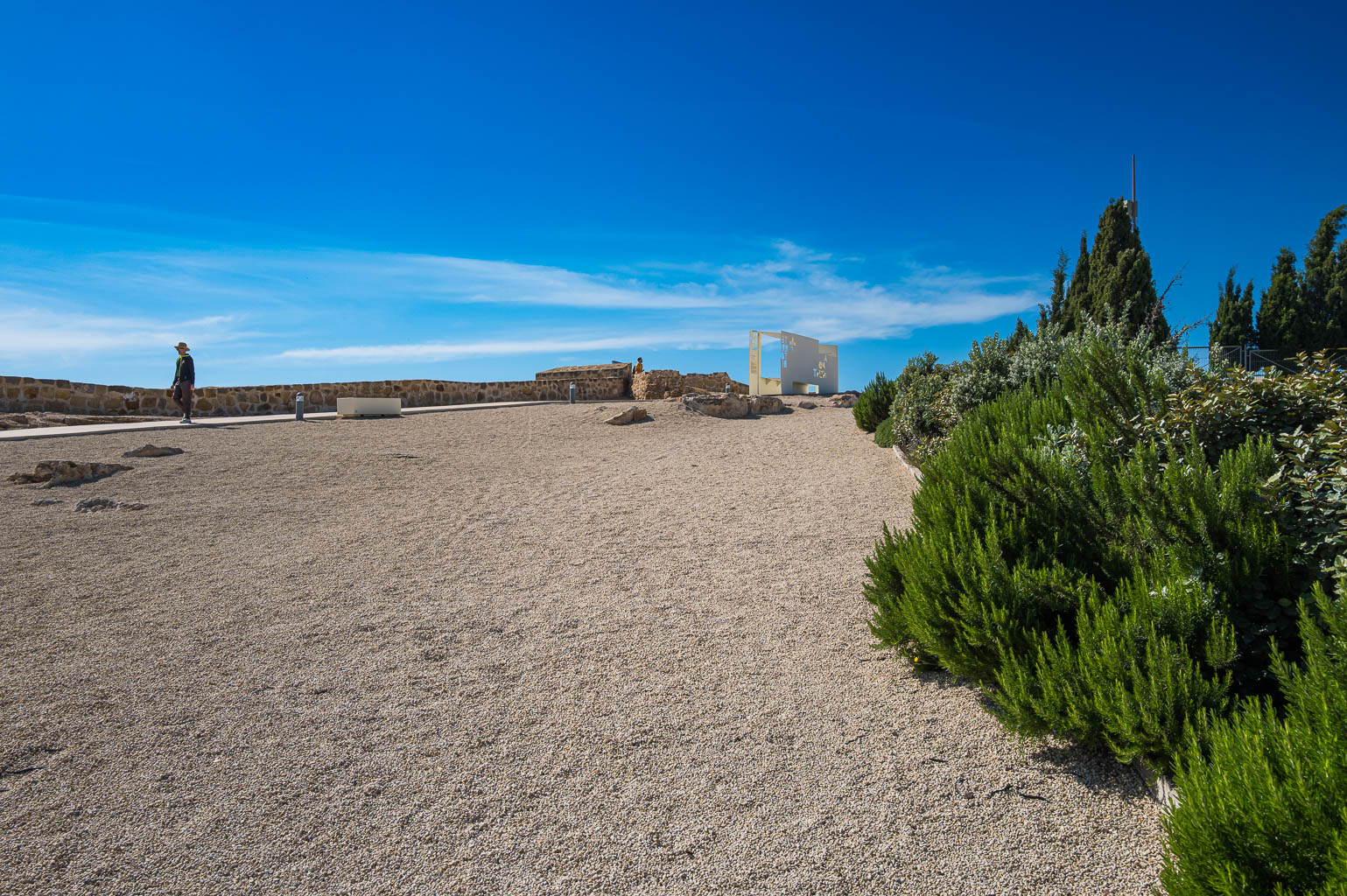
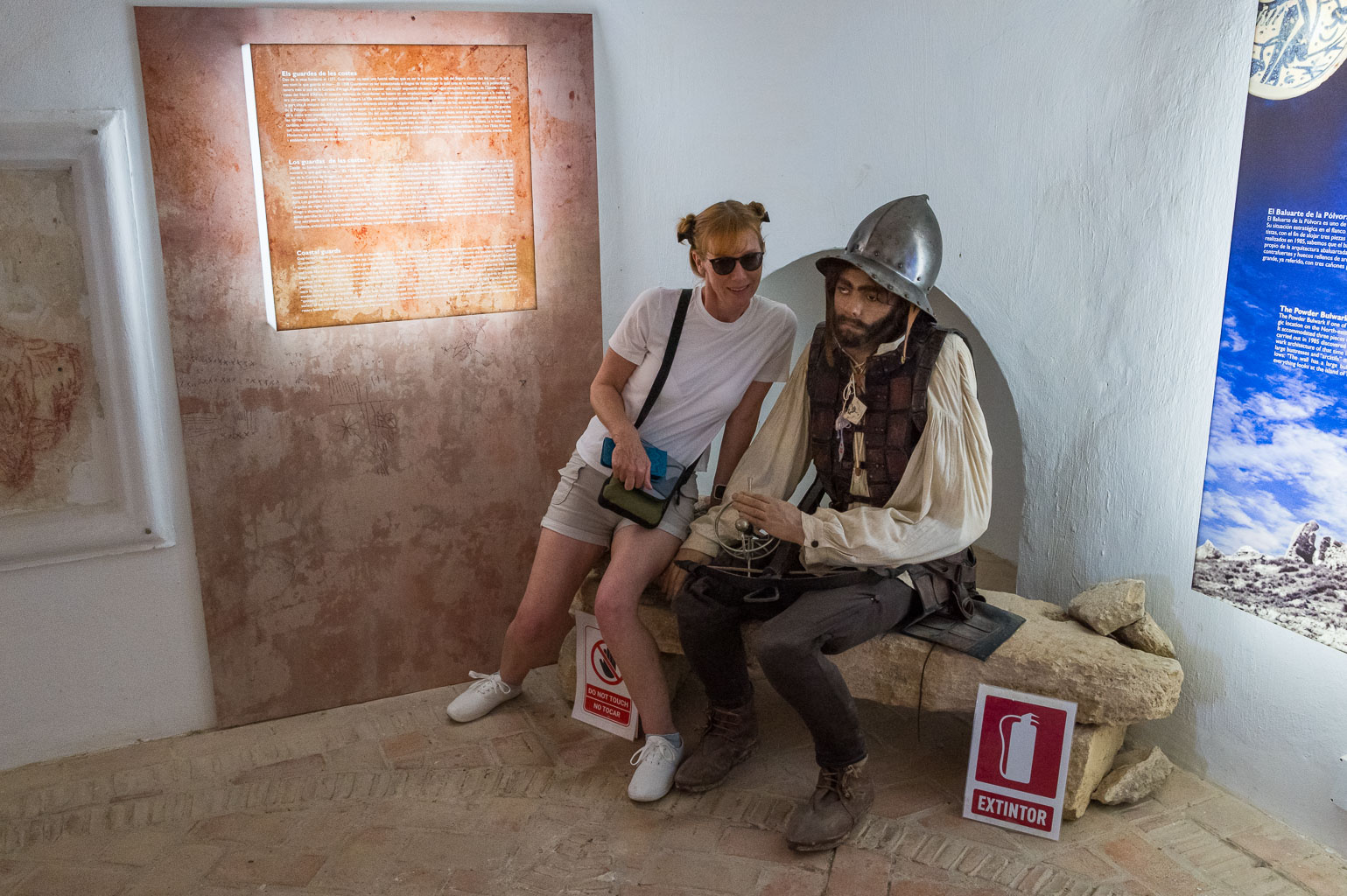
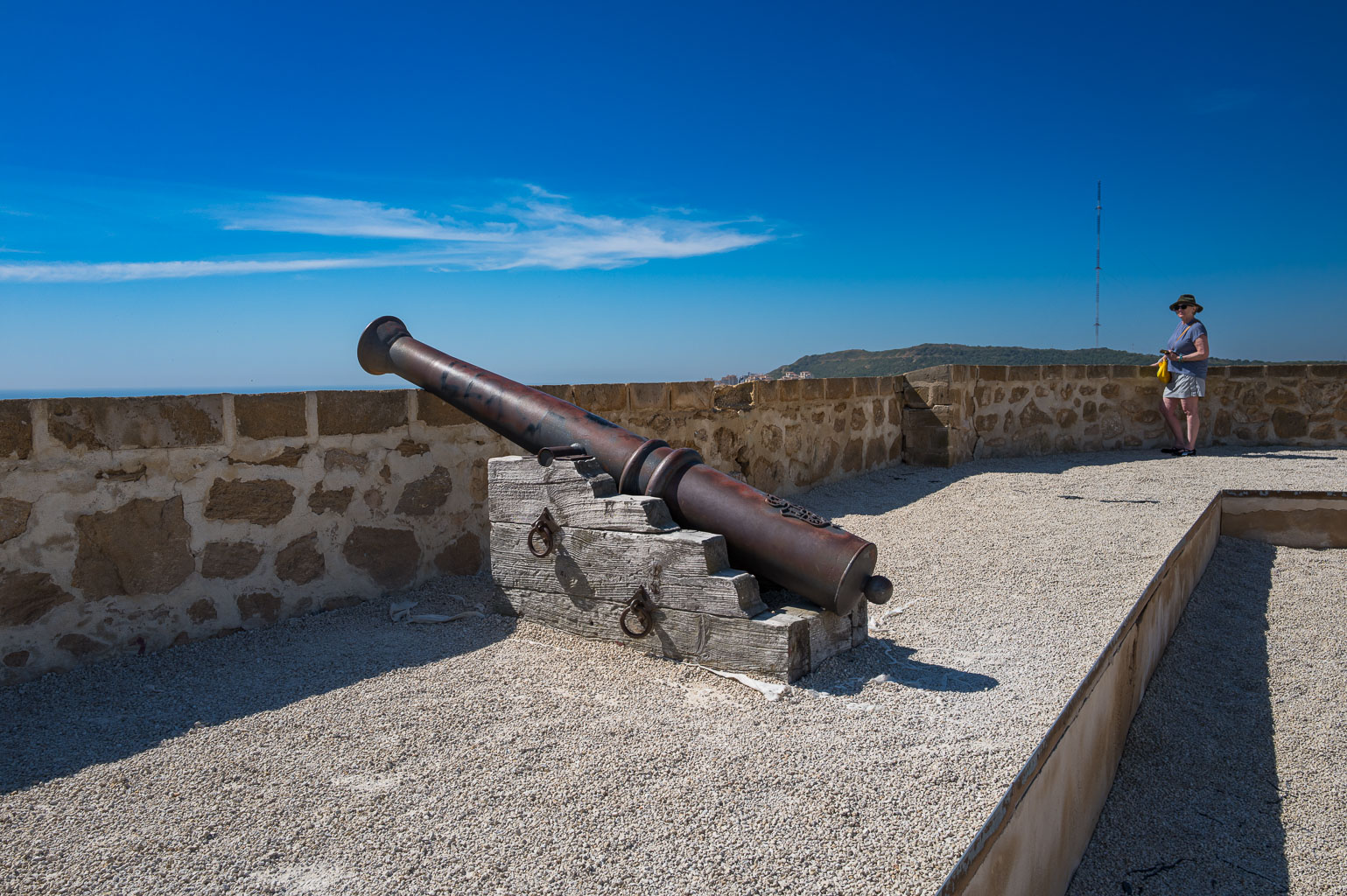
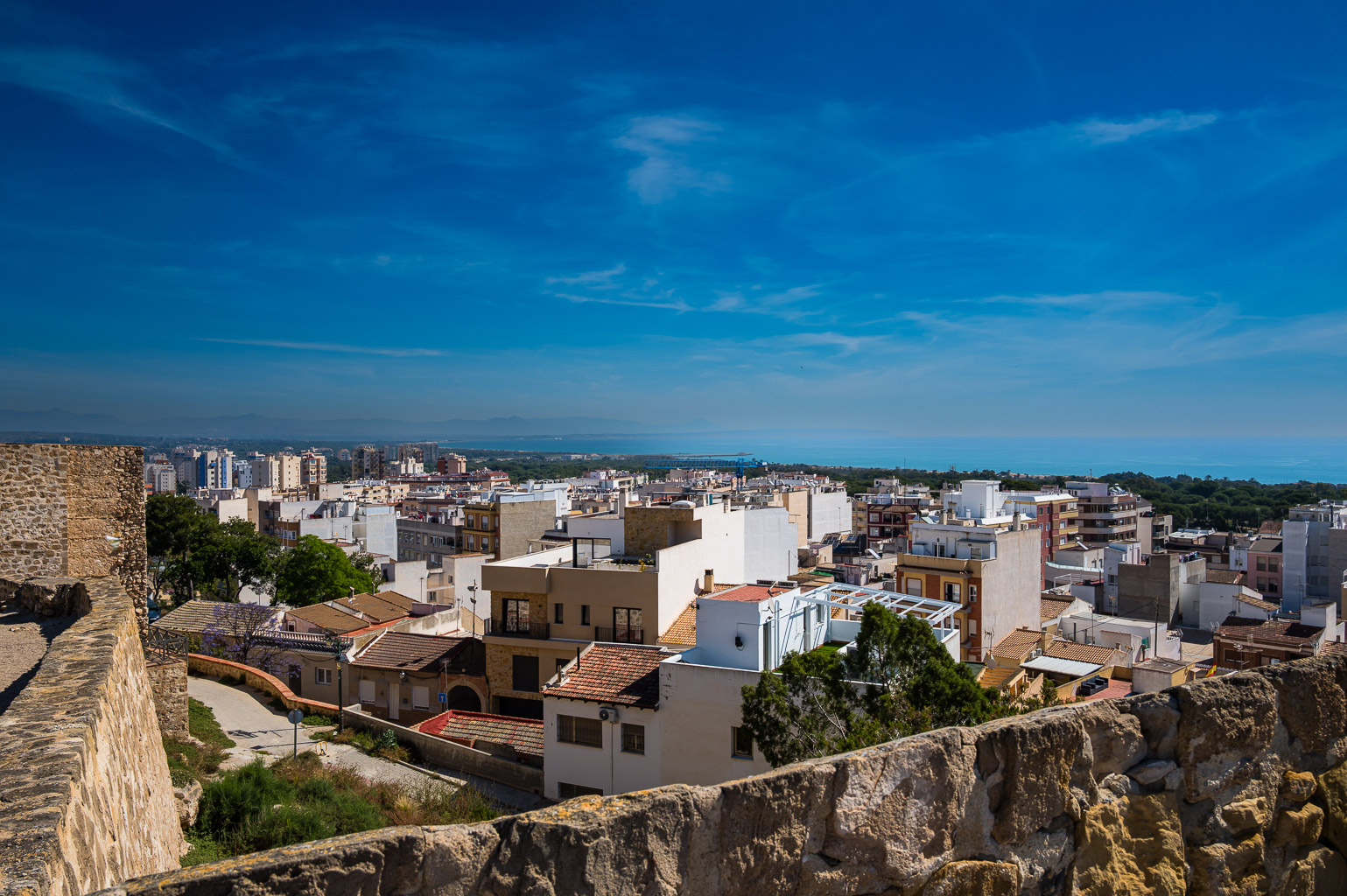
Guardamar has layers of history built upon this start. In the tenth century CE, Islamic settlers took over the area and one of their gifts was the Rabita Califal prayer centre, whose remains are still being excavated. The castle on the hill in Guardamar was built over generations by Phoenicians, Iberians, Romans, Moors, and Christians, between the eight century BCE to the nineteenth century CE, to protect the town and river access from invaders. It was a classic cultural melting pot and embraced a thriving town of merchants and trades people.
The earthquake that changed everything
Sadly, the year 1828 CE would prove to be its literal downfall when it was destroyed by an earthquake. Parts remain and some of the ramparts have been rebuilt. It would have given an amazing 360 degree view over the Mediterranean to the north and south, and over the interior down to Murcia and inland further to Albacete.
Babilonia and shifting sands
In the late nineteenth century, nature became the new invader. Changing weather patterns created shifting sands that threatened to turn the town into a desert. Thankfully, environmental engineering, led by Francisco Mira, planted thousands of pine trees to stabilize the dunes.
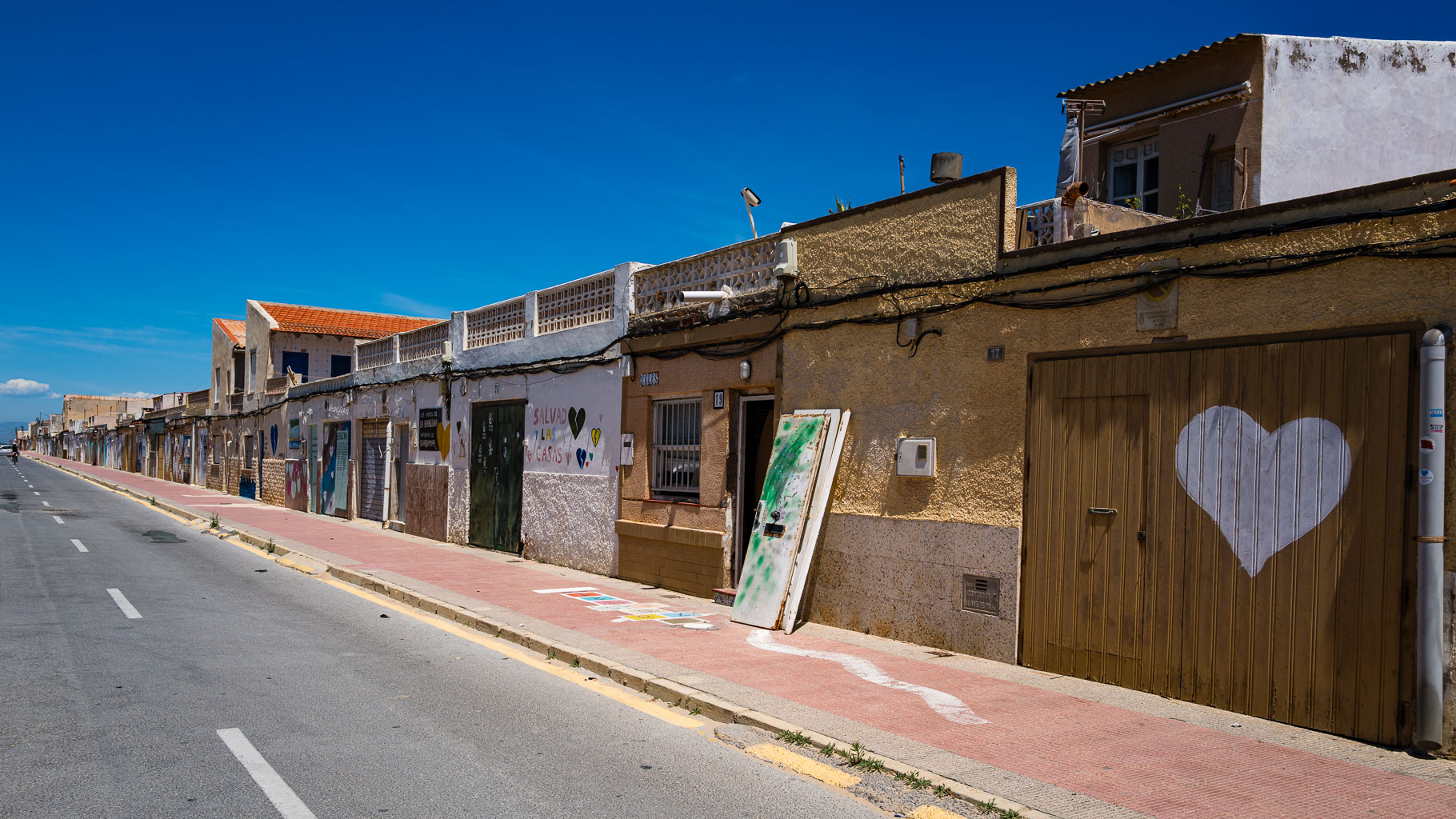
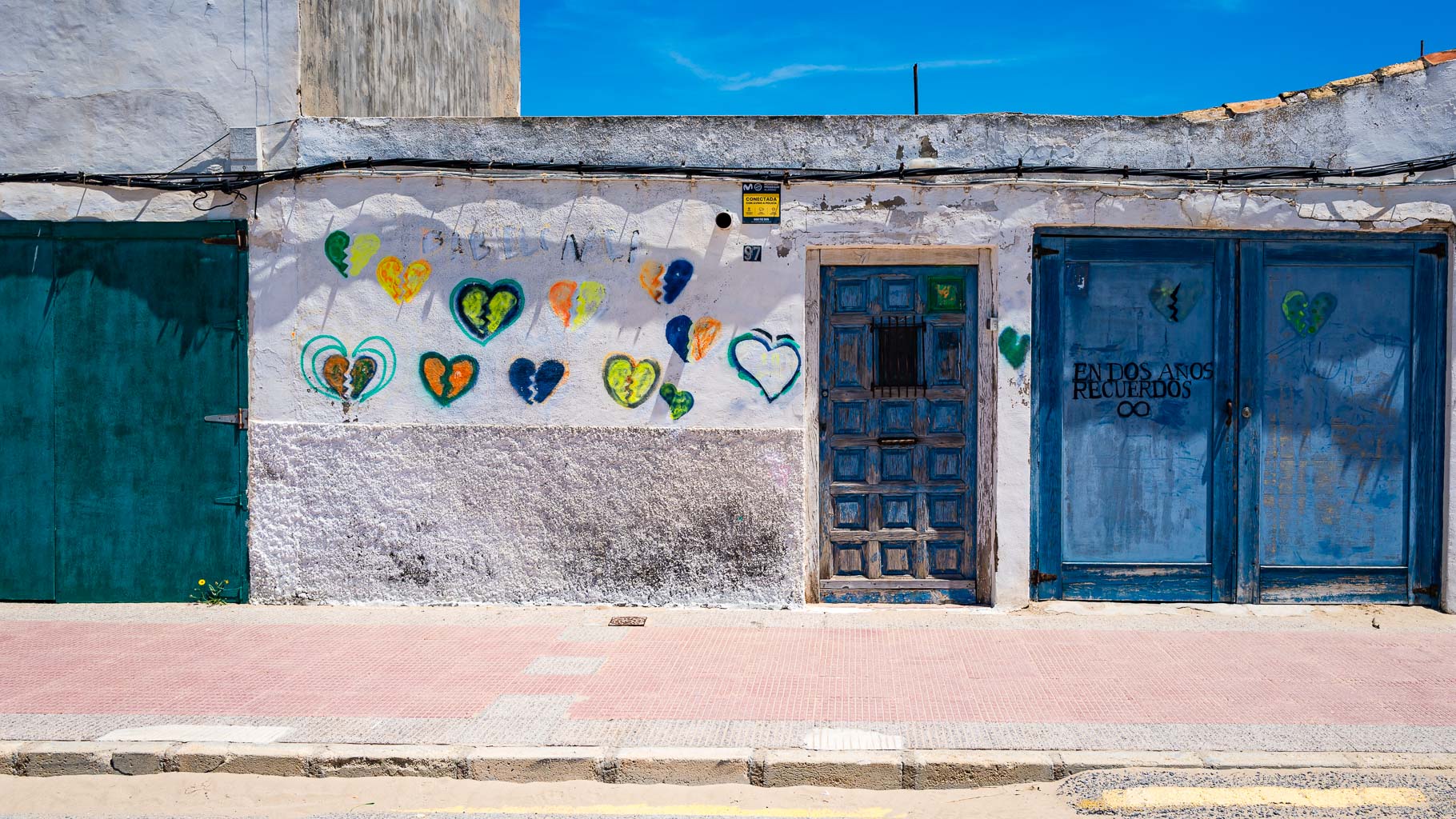
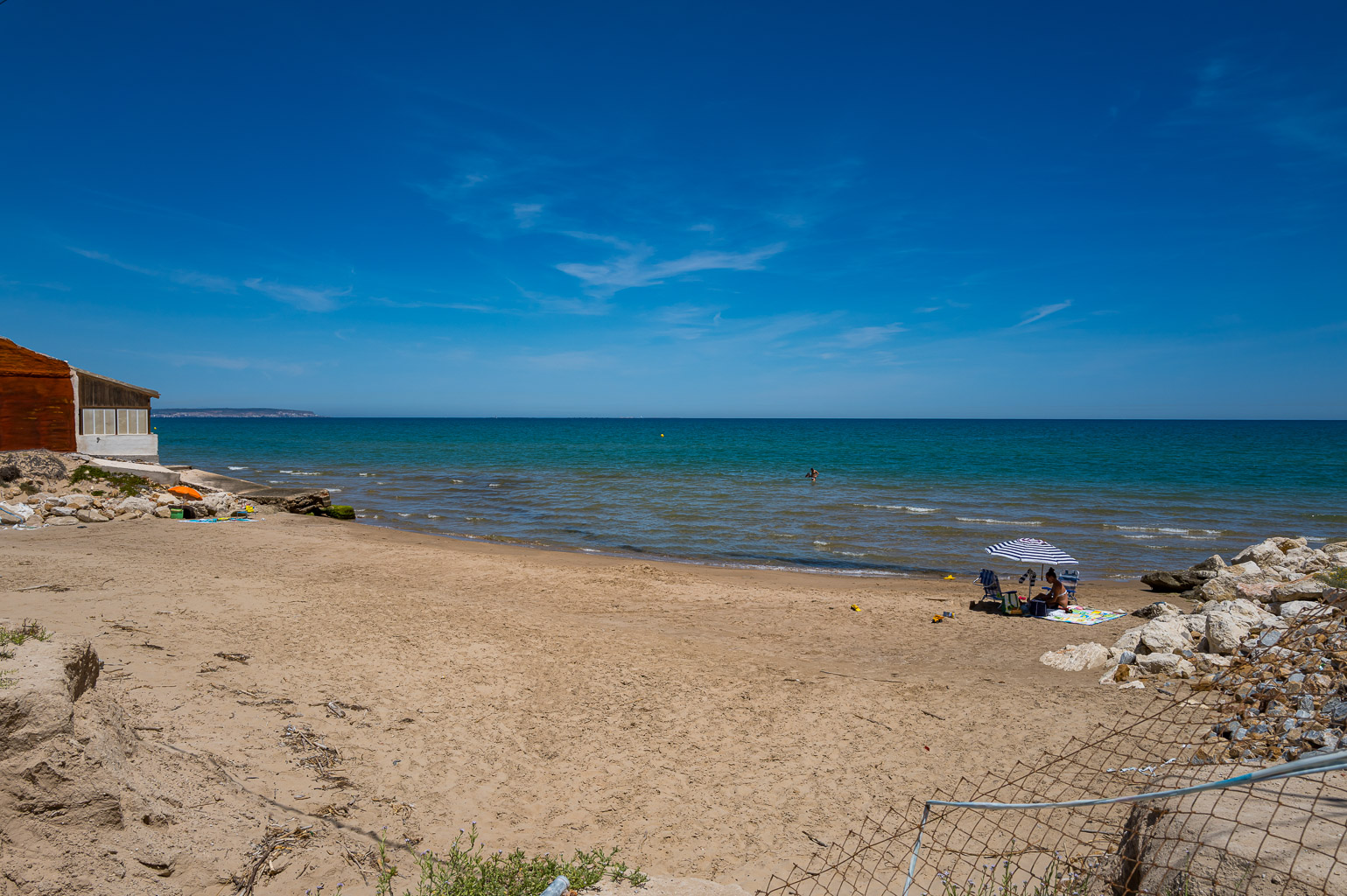
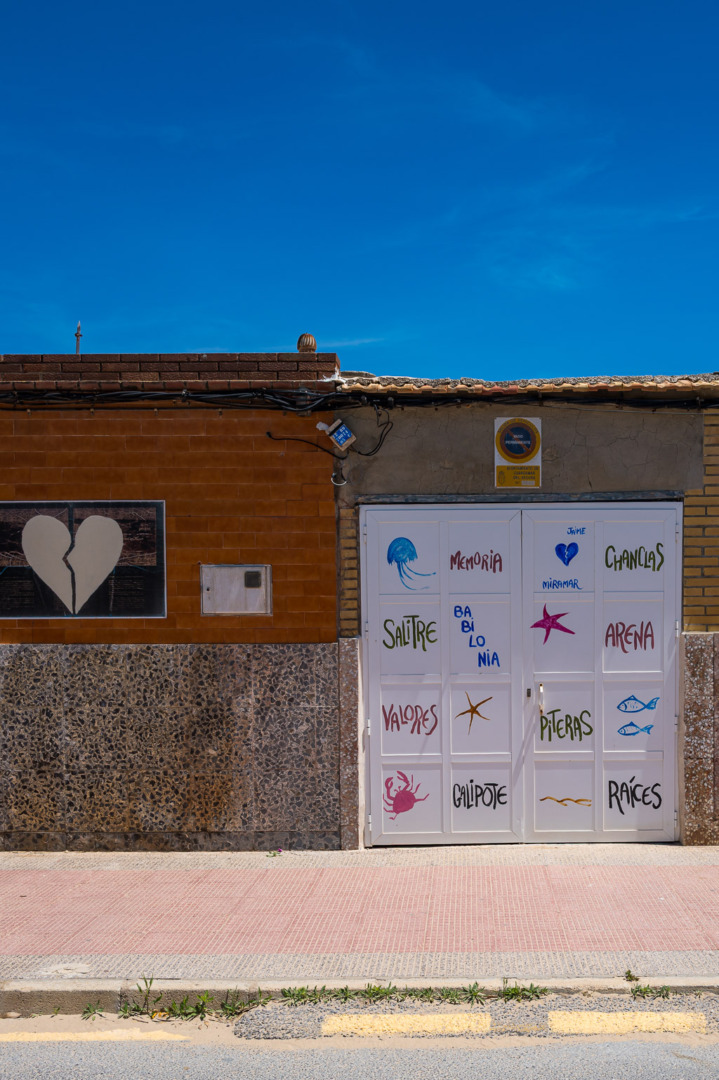
Playa Babilonia, the name of a street of fisherman’s cottages, existed for more than a century. The homes were passed down within families from generation to generation. Now because of the encroaching sea, and shifting dunes, the Mediterranean comes right up to the doorsteps of those homes.
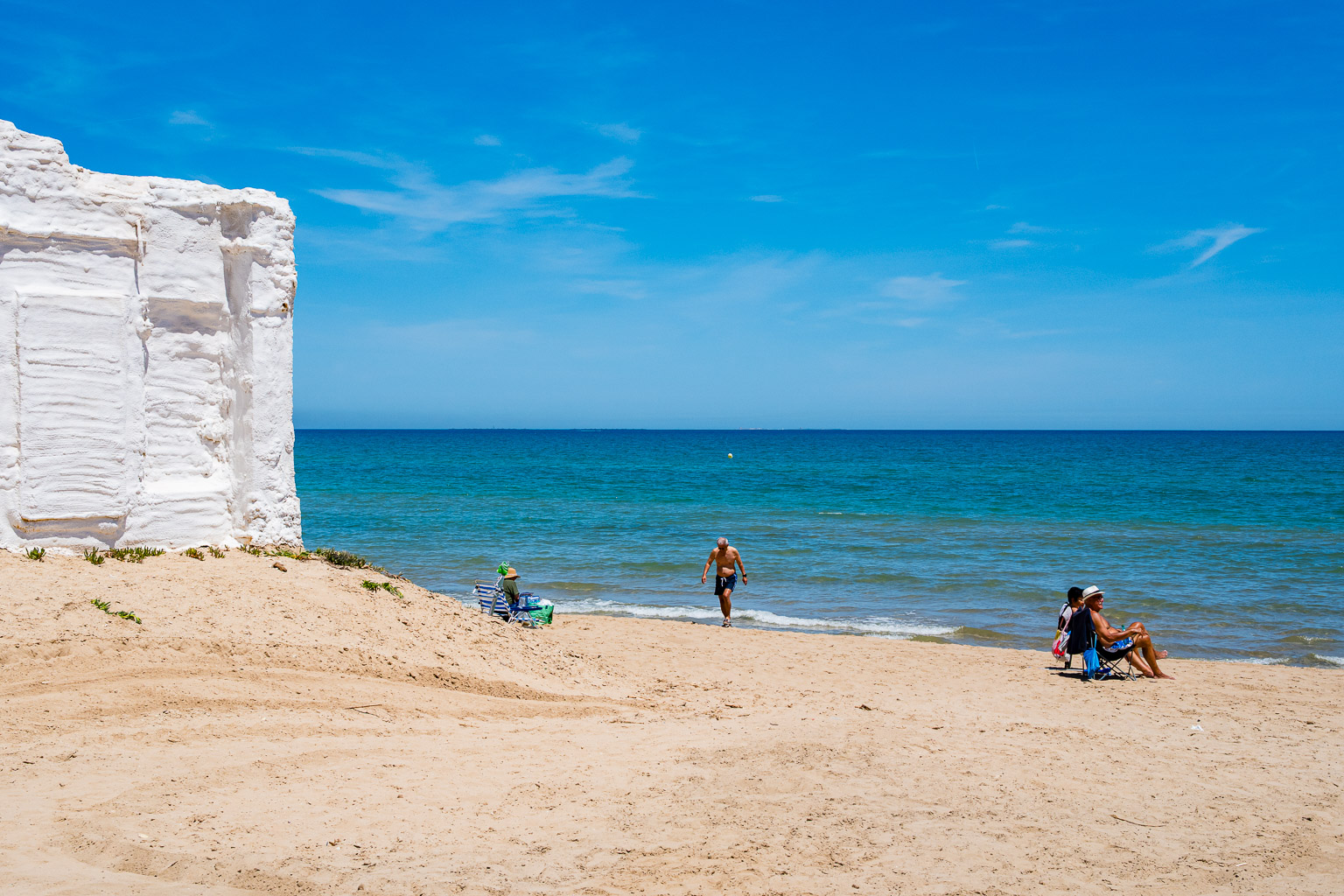
Spanish law creates broken hearts
Strict Spanish coastal laws (Ley de Costas) have made the cottages a public maritime domain. The government has ordered the demolition of the homes, which has led to public protests and legal battles from the residents.
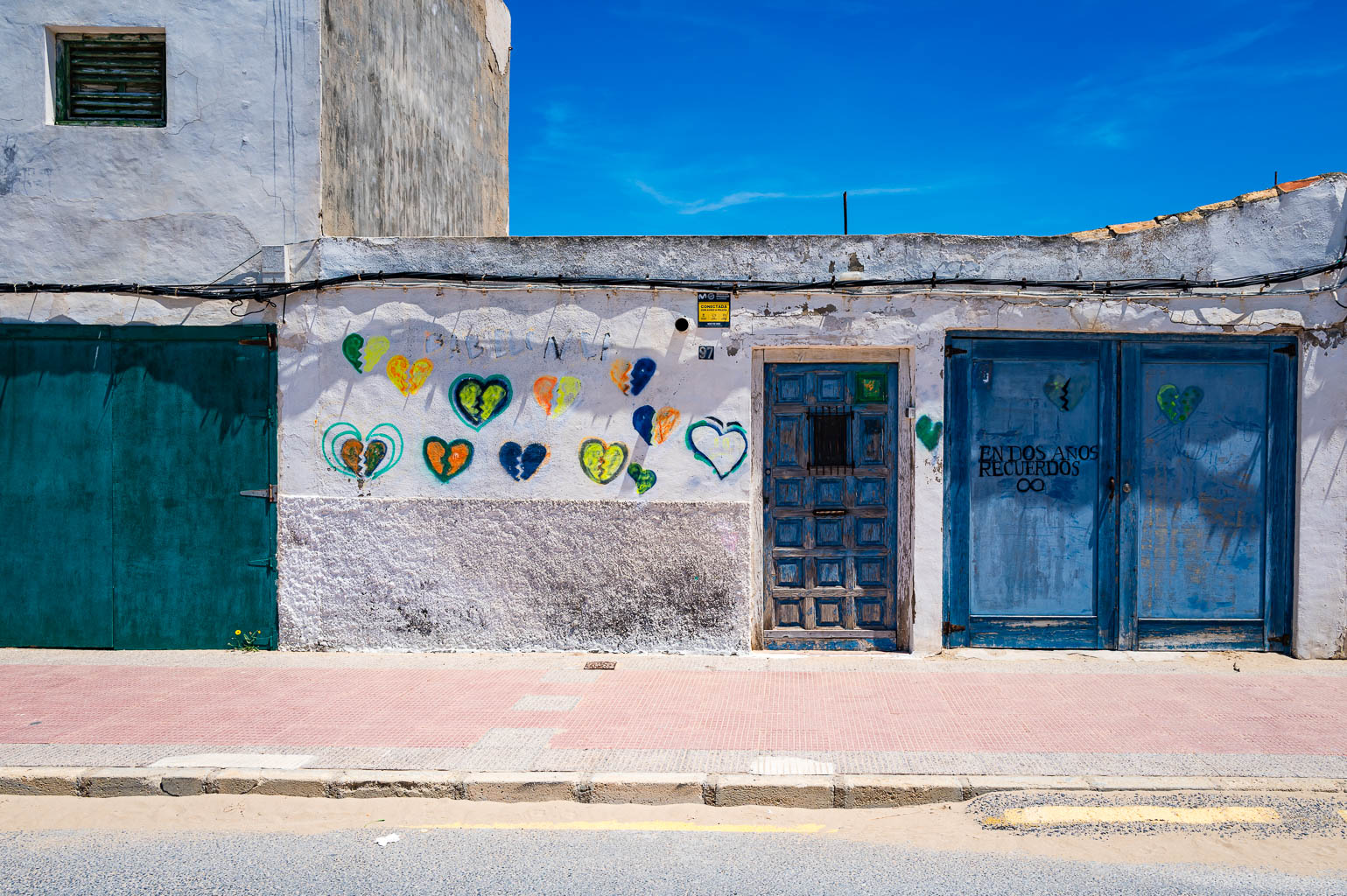
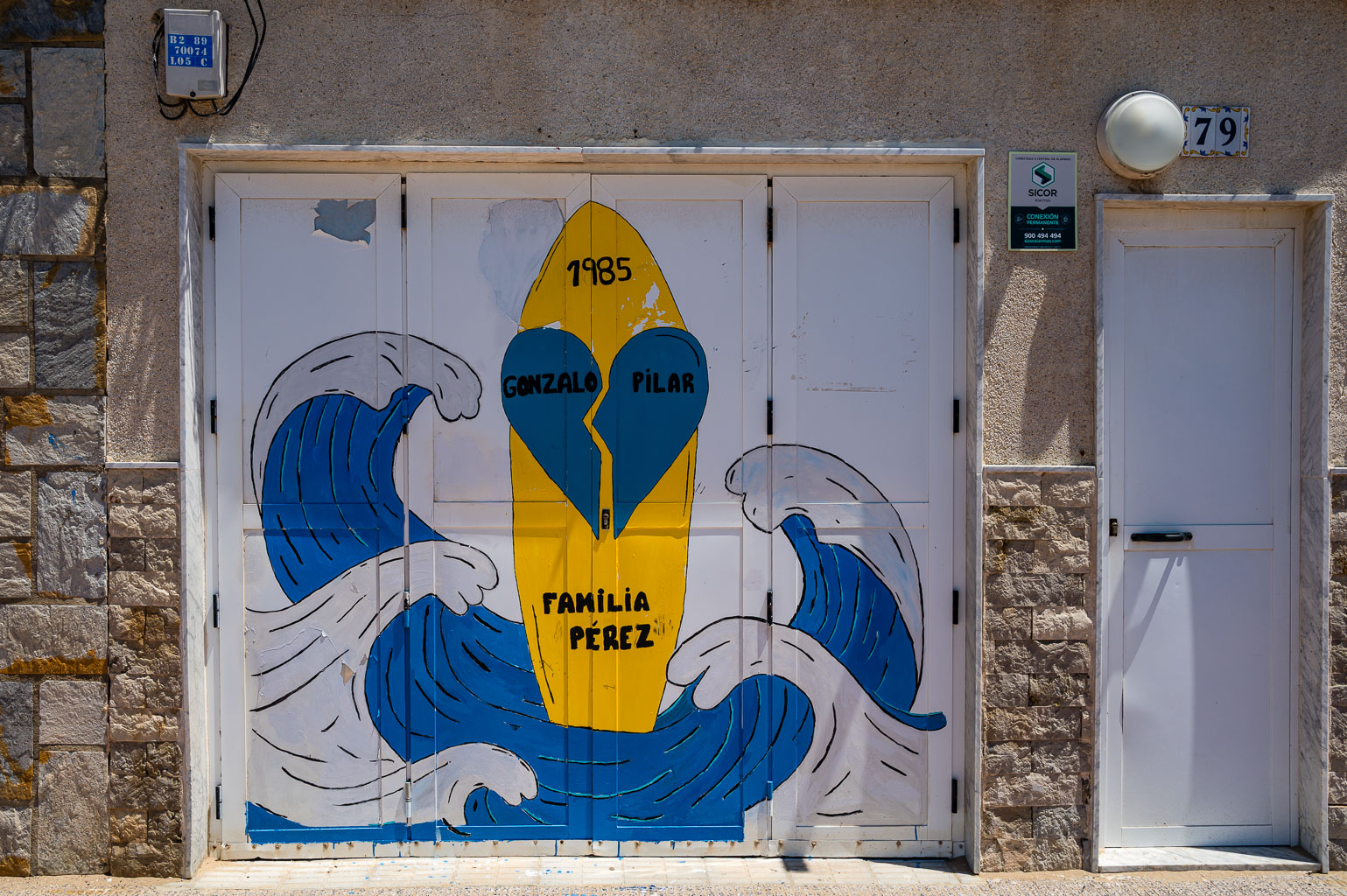
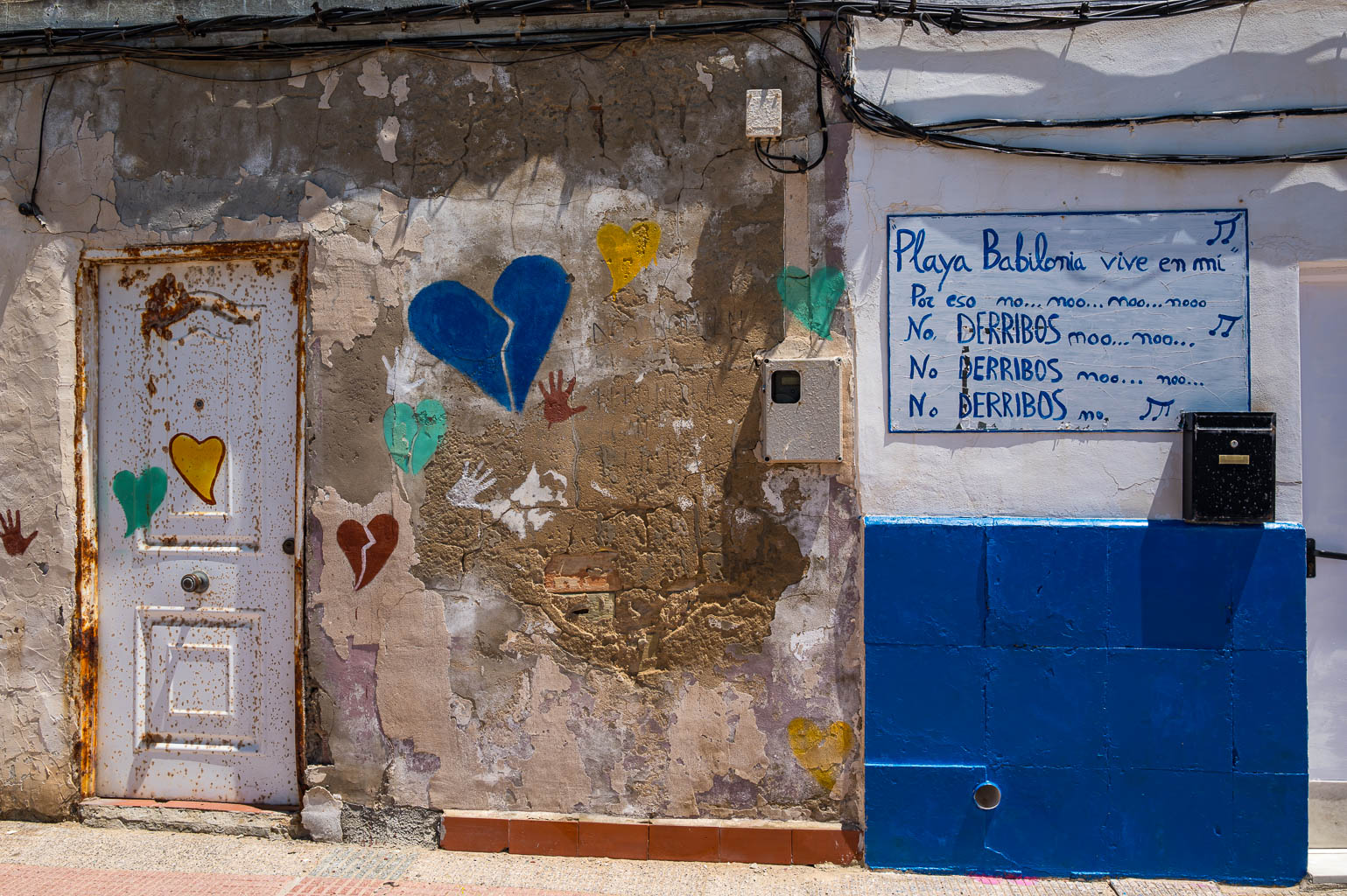
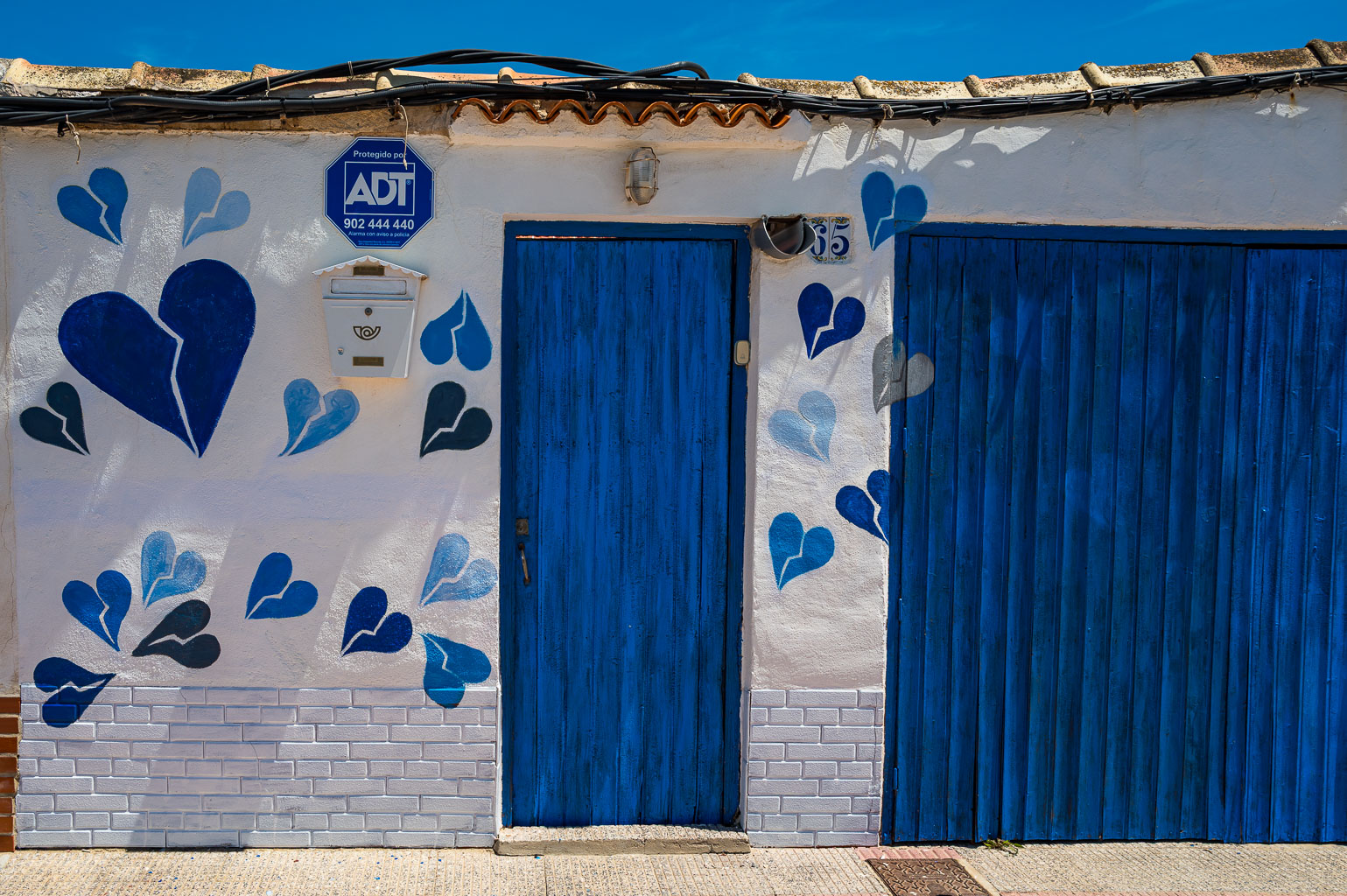
Because of these challenges, some homes have been abandoned by their owners, some have been condemned and declared as uninhabitable, others simply left empty, while the remainder have had their utilities restricted. It gives Babilonia the feeling of a ghost-town. What remains are emotional murals, love notes and eulogies to family history, left by residents that show how they feel about being forced to leave their homes.
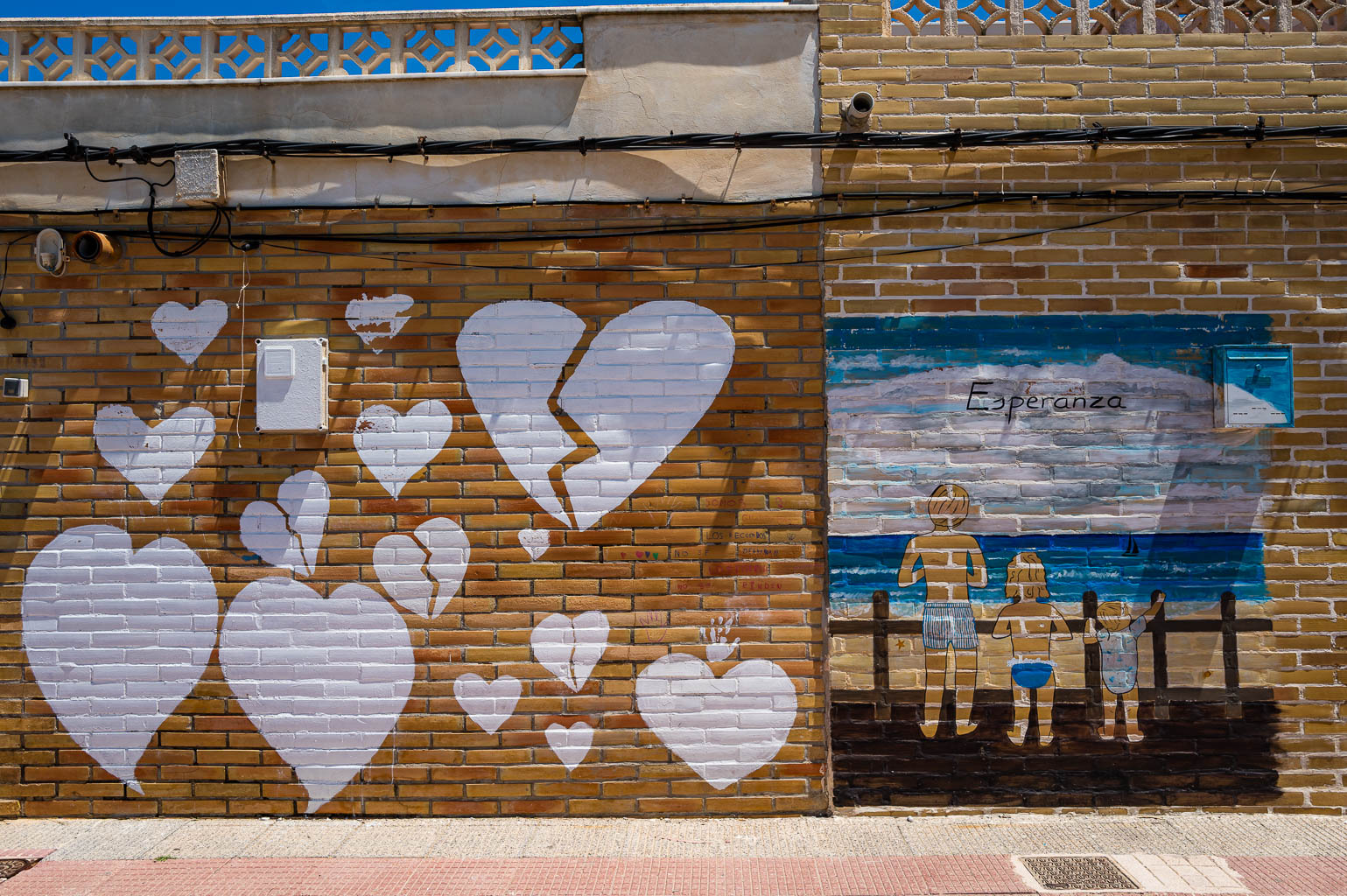
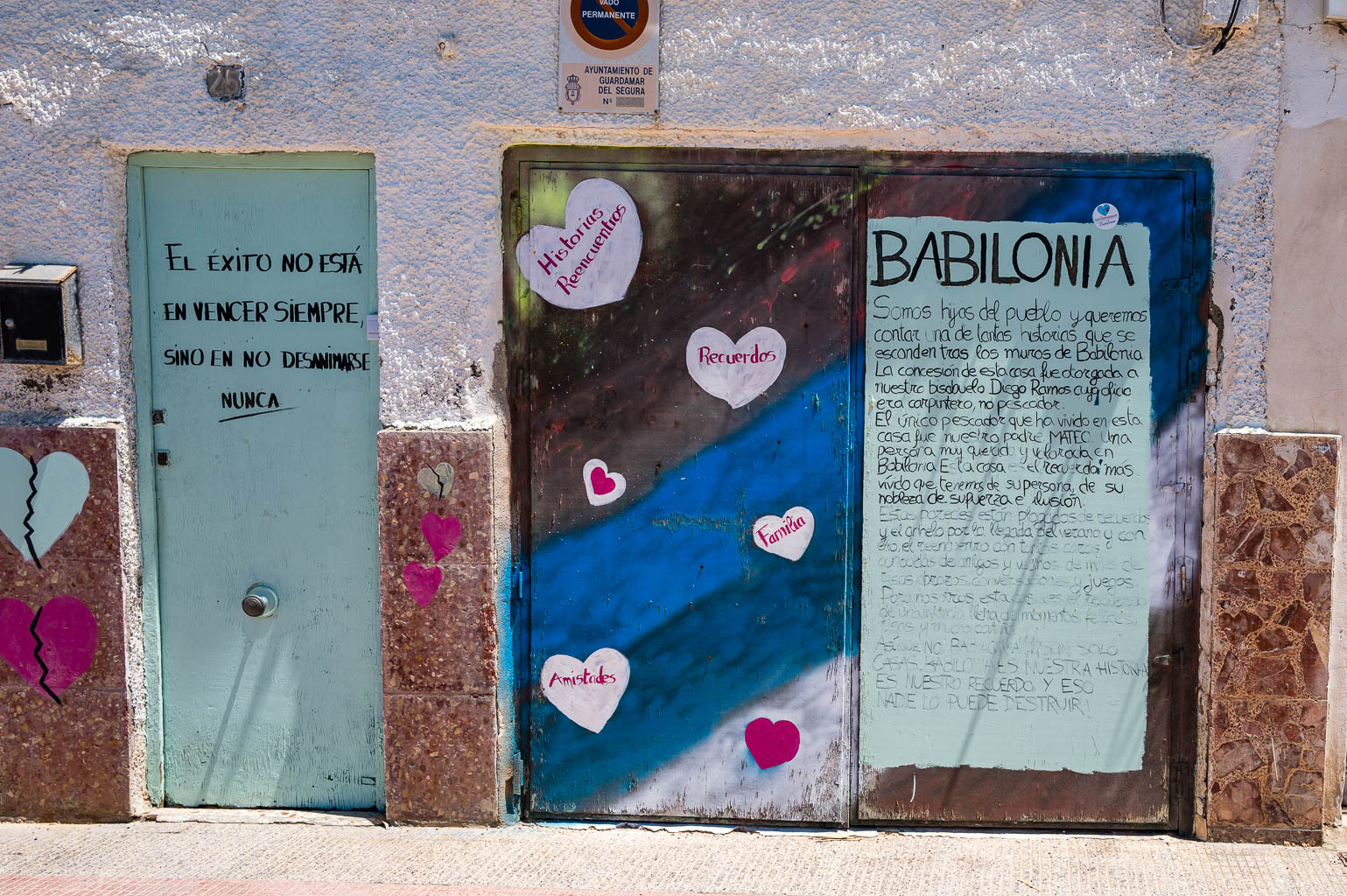
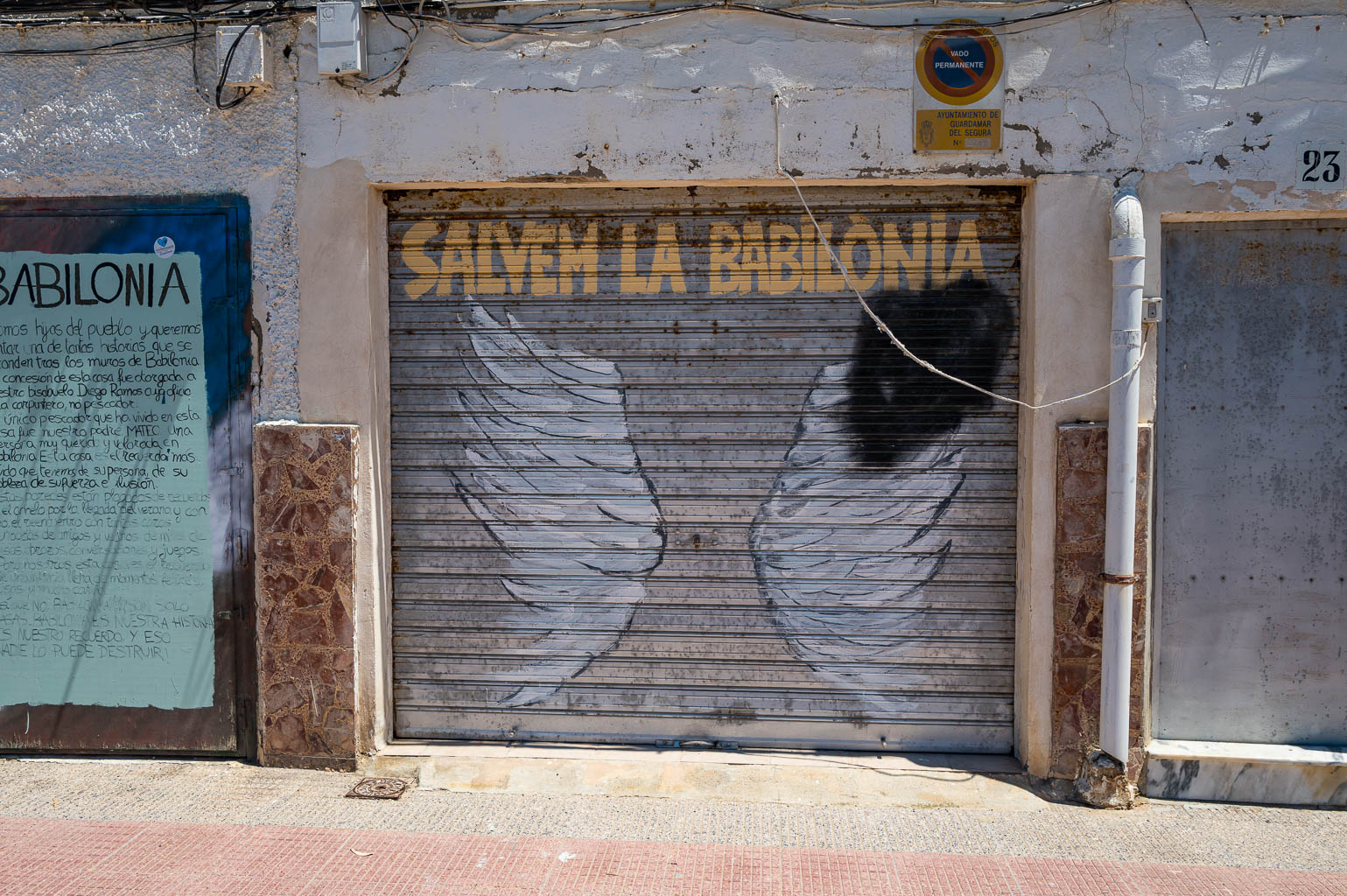
Another sketch from Spain: La Rabita Califal
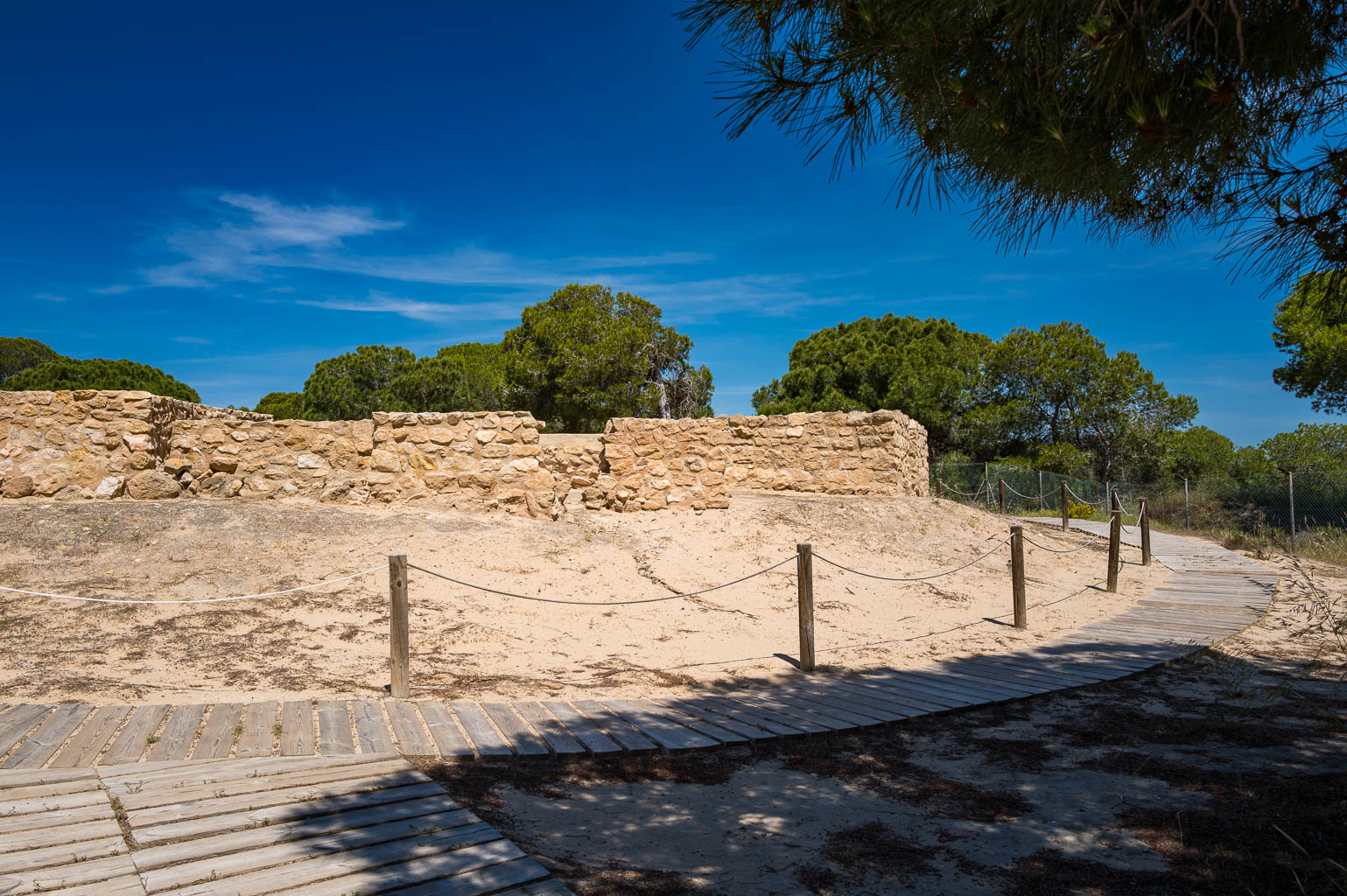
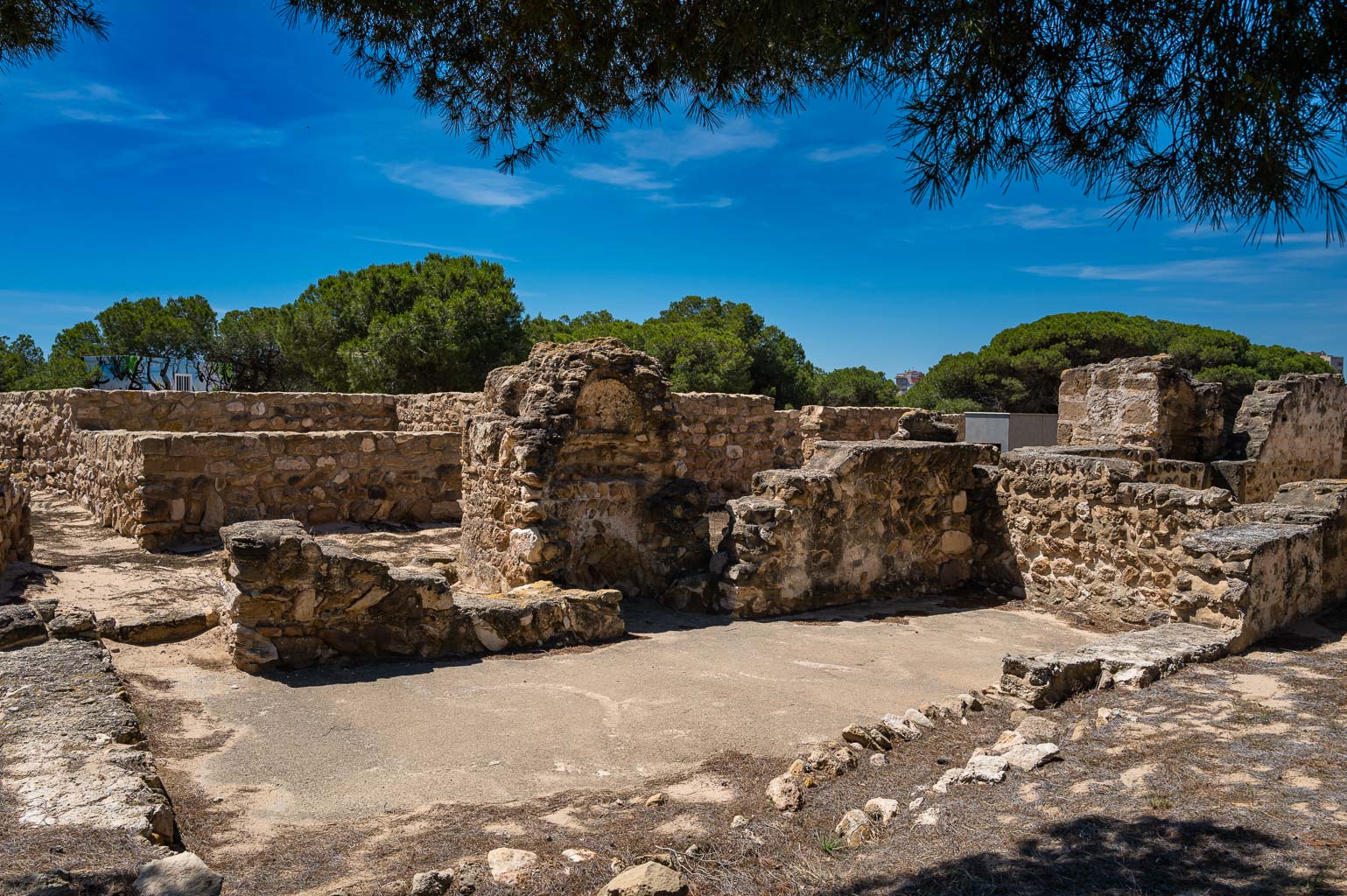
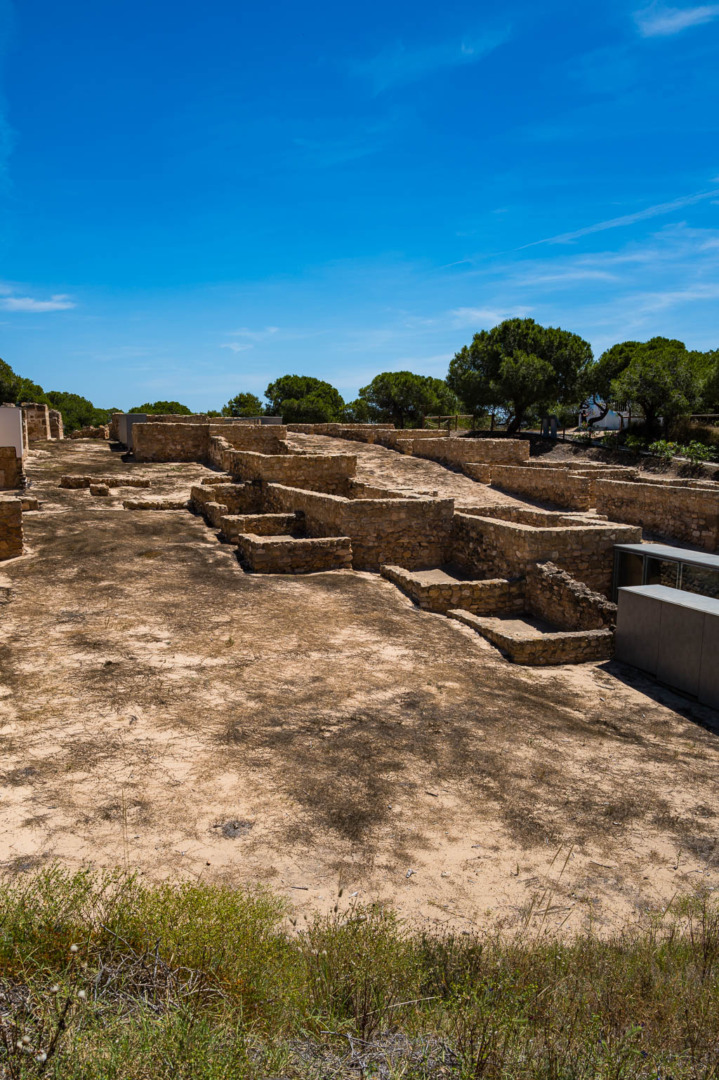
La Rabita Califal was a communal Muslim prayer retreat centre, dating back to tenth to eleventh century CE. The word Rabita in Spanish comes from the Arabic ribât, which means a frontier post that could be for military purposes or a monastery, usually on the borders of the Islamic world. The site had been lost and forgotten in the shifting sands of the Guardamar coastline over the centuries, but rediscovered during the reforestation project of the shore.
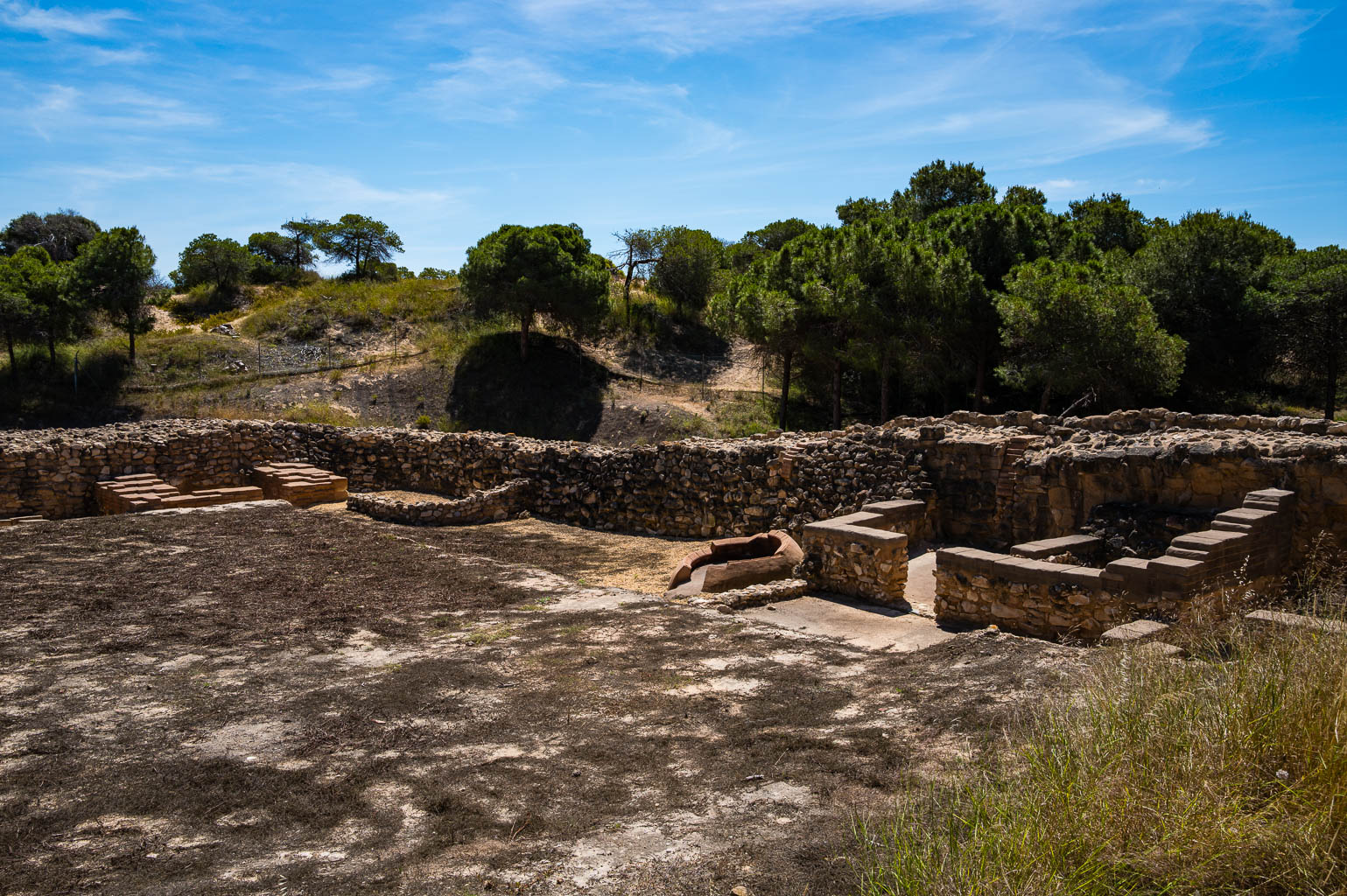
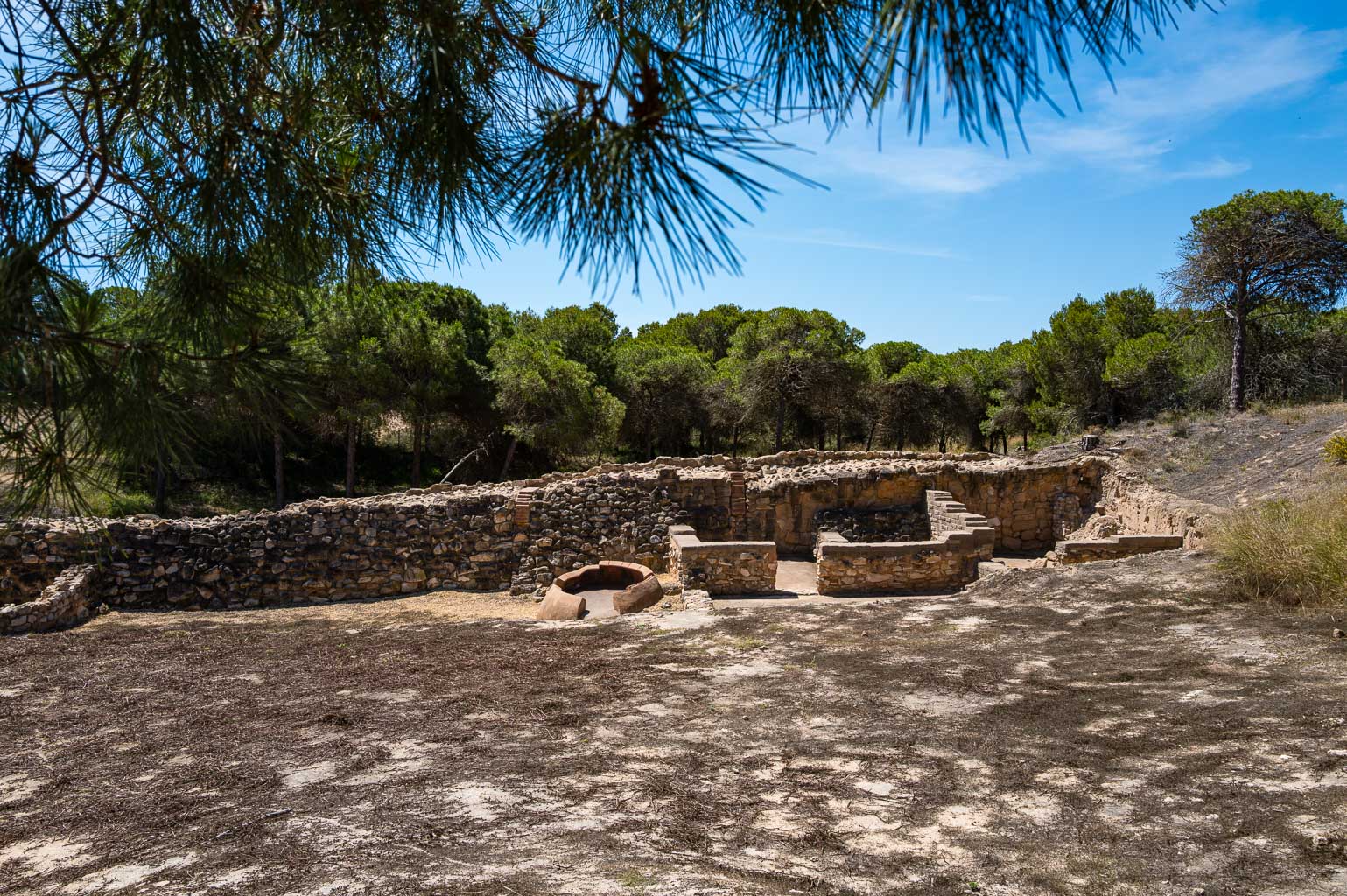
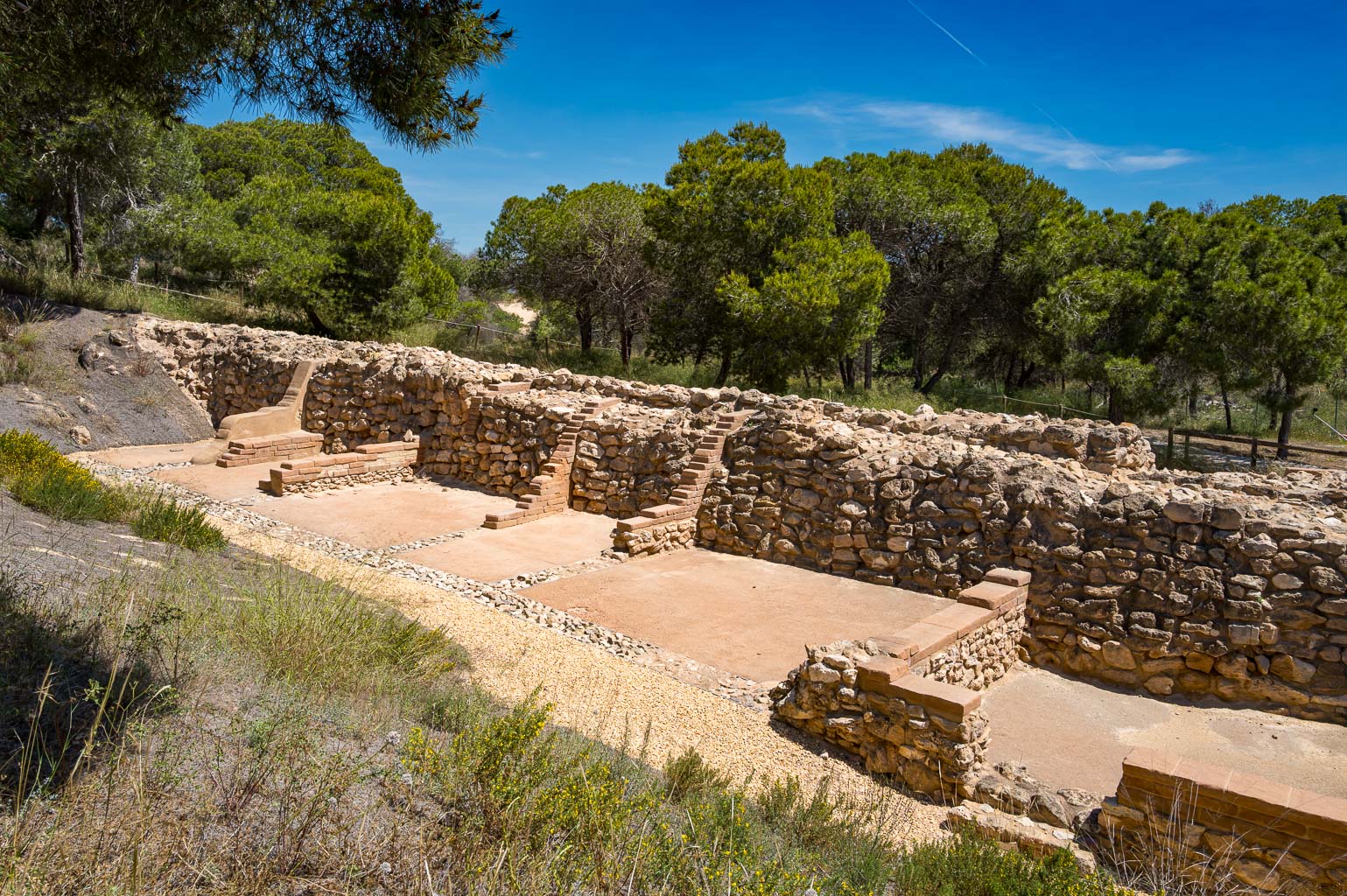
As it continues to be excavated, more of the centre has come into view. We know there were 23 prayer cells, a mosque and two complementary rooms. Each prayer cell is less than eight metres in length and three metres wide. Some of these cells still show signs that they were originally decorated with geometric patterns. You have to pinch yourself to remember that most of Spain was an Arabic/Muslim country from 711 to 1492 CE.
Footprints
There is so much more that could be said, but for that, you would need a much more detailed account of La Rabita Califal, how it was created, developed over time, and eventually abandoned as Spain returned to Christianity.
Throughout all this heat, glare, high contrast, risk of sand, and blindingly blue skies, the Q3 continues to deliver. So far, I’m not missing another lens or wishing I had another camera with me. I think it’s easy to become reasonably proficient with the Q3, much as people do with musician instruments. It has a broad “footprint” which allows you to shoot beautiful landscapes on one setting and performers on another. You quickly know what you require in terms of where your feet should be and what settings should be on the camera to get what you want.
Sketches of street art in Guardamar
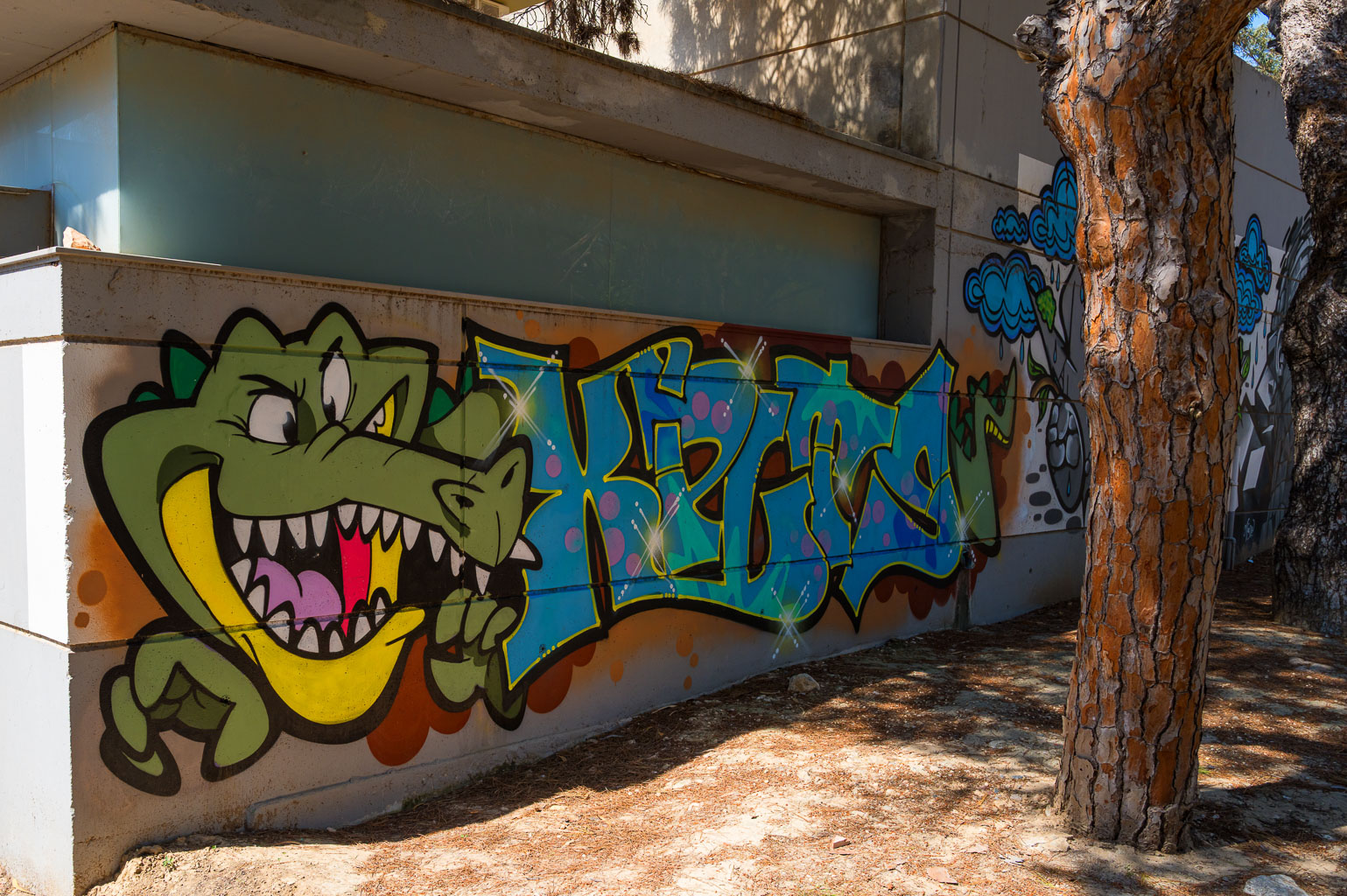
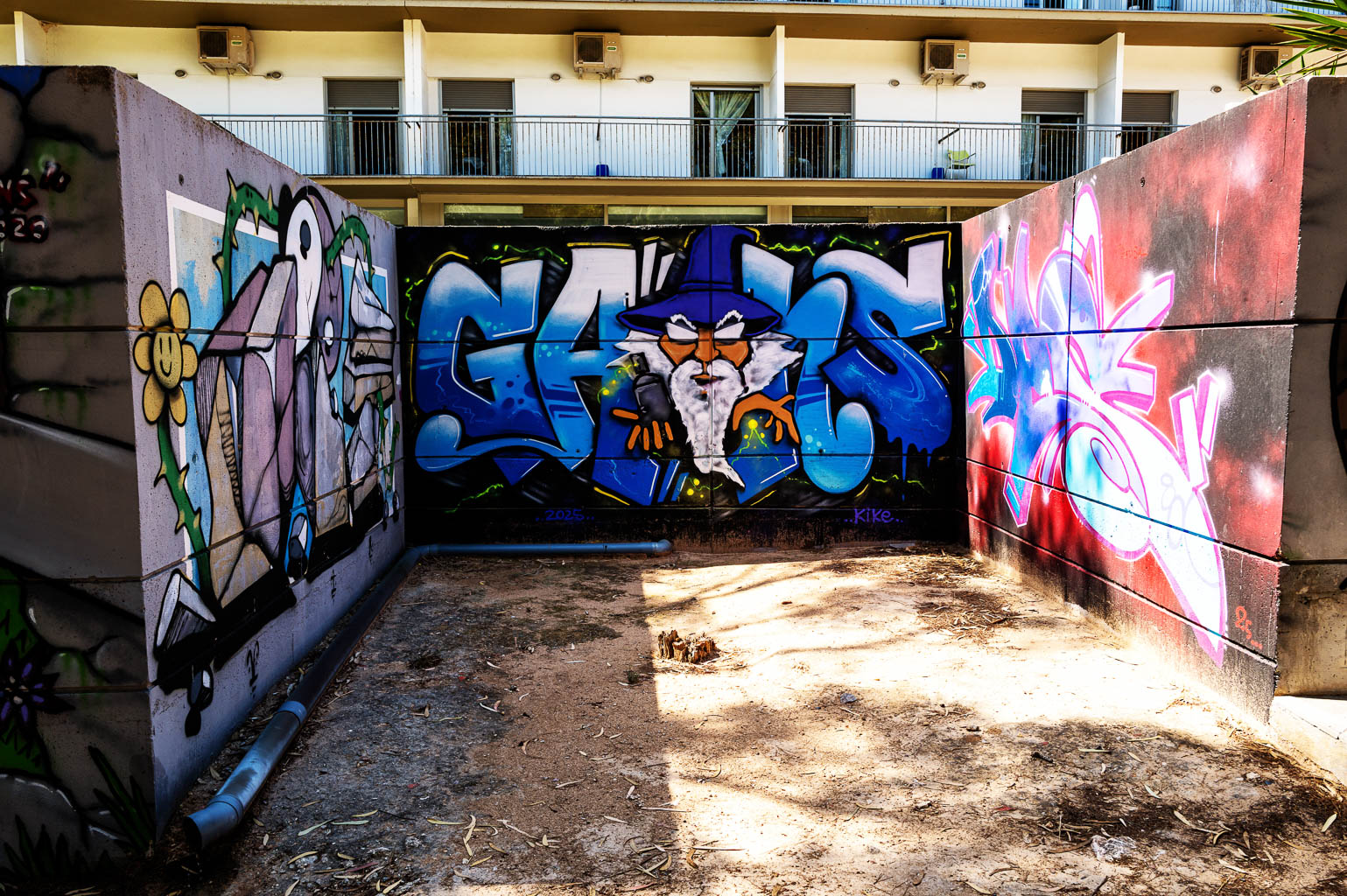
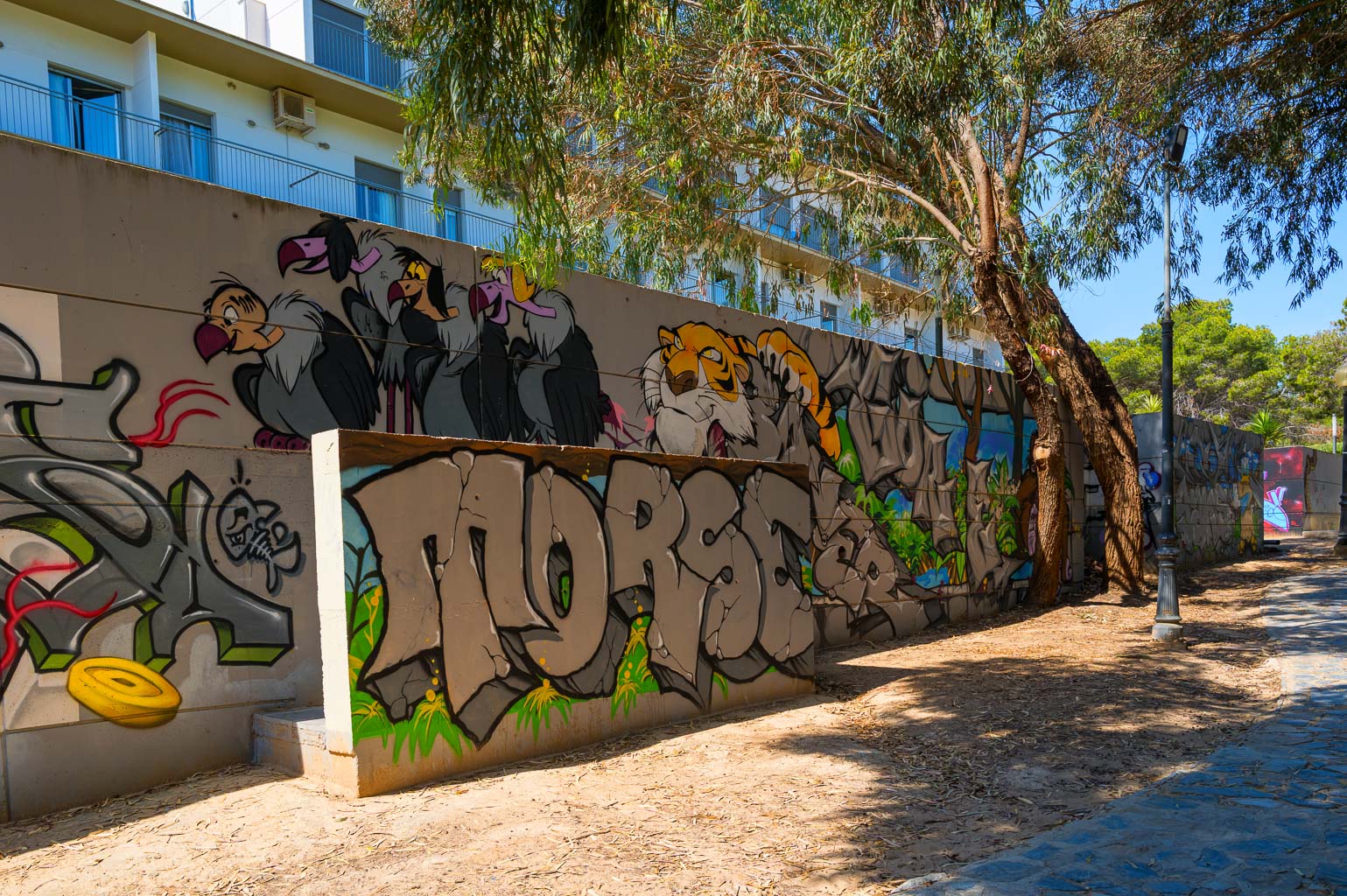
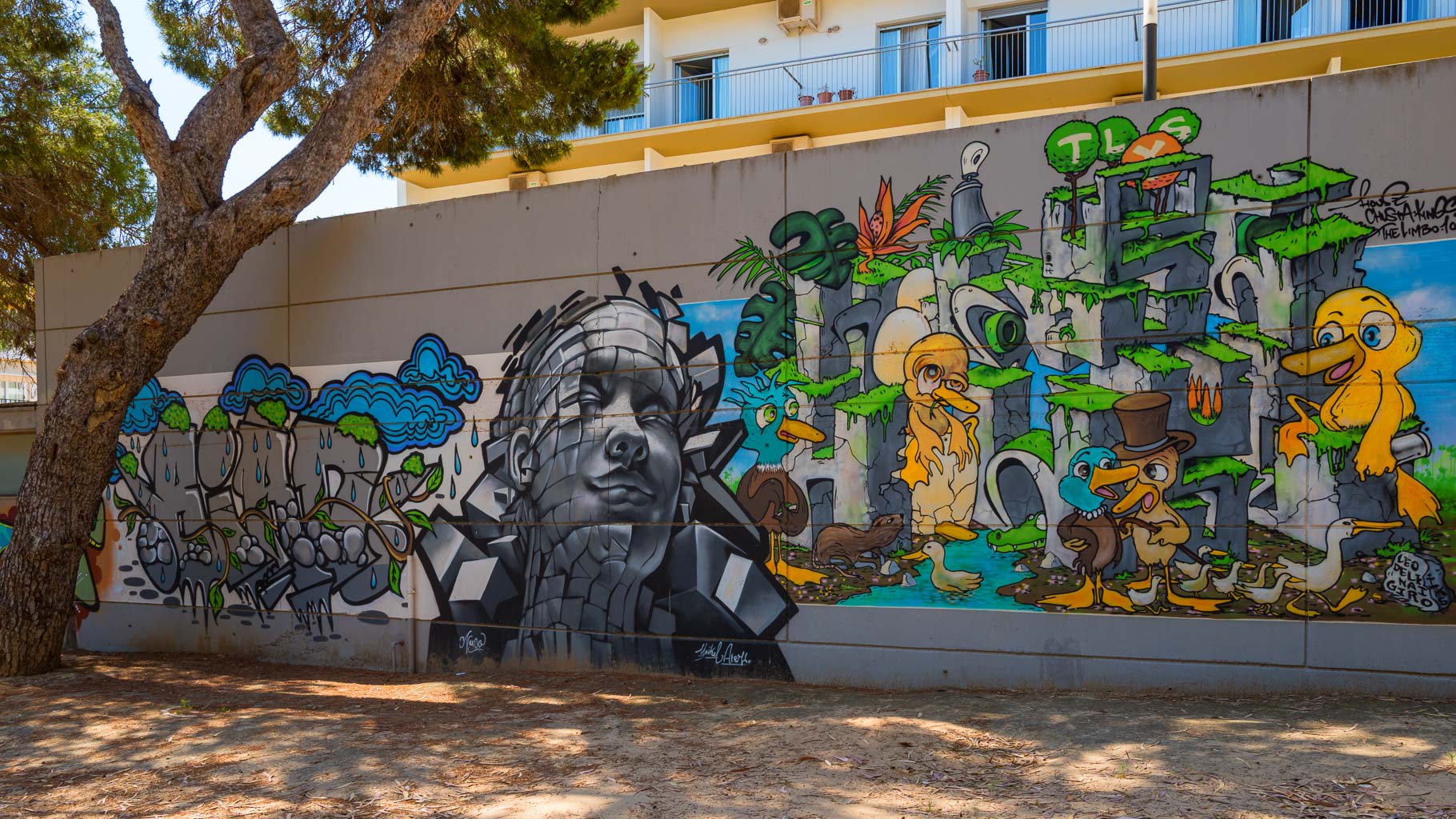
If you follow the theme, Guardamar offers more “Sketches of Spain” with street art in the Parque Reina Sofia and the Plaza del Ayuntamiento. It’s not the flashier organised street art of cities like Miami, or even Chicago, but it shows a vibrant culture that keeps evolving.
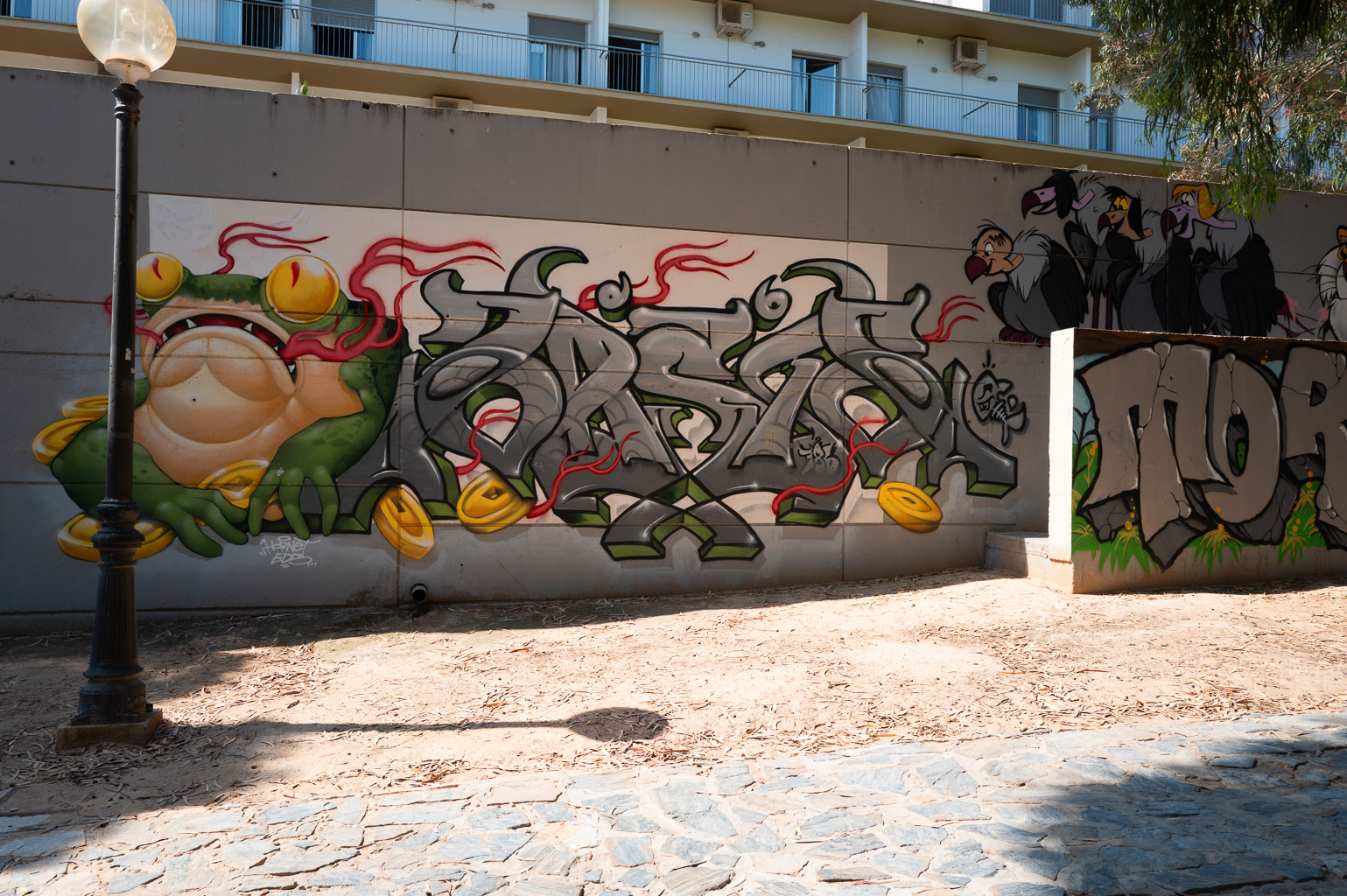
This is hopefully the first of a two-part series. The linking idea is that they all contain “Sketches of/from Spain” Sadly this relatively small province is often dismissed as a cultural desert, or the butt of a standup comedian’s jokes. You can begin to see the truth lies in many layers beneath that clichéd surface.
Conclusions
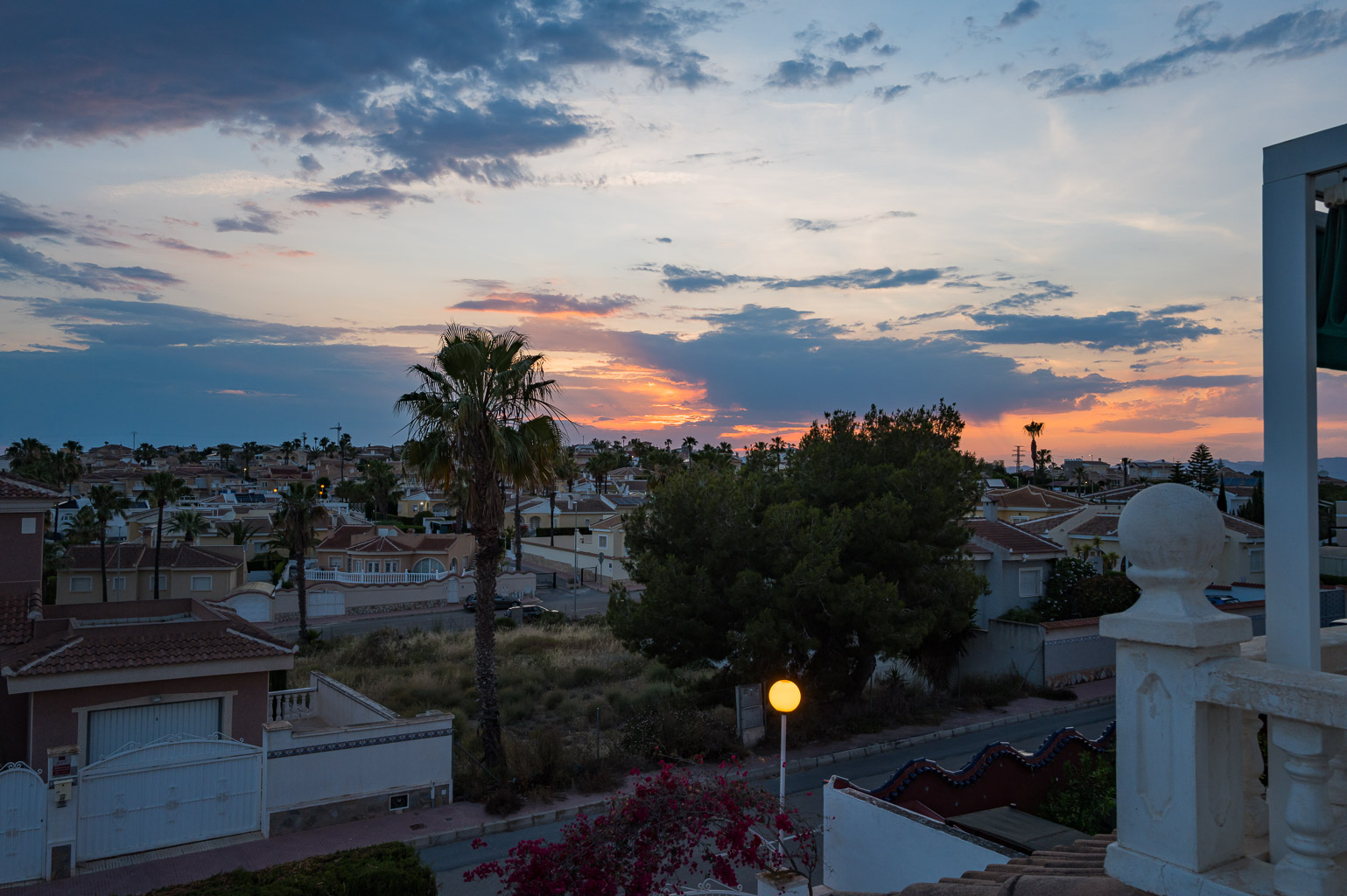

Did I succeed? Could this first set of sketches have been done differently? I’m no photographic pro, so maybe I missed many ways to do it better. Did I have the right kit? What would you have taken to improve these shots, or find better ones?
Make a donation to help with our running costs
Did you know that Macfilos is run by five photography enthusiasts based in the UK, USA and Europe? We cover all the substantial costs of running the site, and we do not carry advertising because it spoils readers’ enjoyment. Any amount, however small, will be appreciated, and we will write to acknowledge your generosity.
Lovely piece Jon. I did wonder how a Mono would have handled these situations, or what extra it might have inspired you to do. The Q3 – in fact all the Qs – are fascinating cameras.
Early medieval Spain was a remarkable, integrated and cosmopolitan society about which we hear far too little. Thanks for reminding us.
PS Miles isn’t bad either !! 🙂
Looking forward to Part 2.
Thanks Peter,
Much as I like the idea of a Q3M, it runs up against my taking out only one camera and one lens approach. Maybe I’m wrong, but I think with a Monochrom, you really have to know before you set off that you only want shoot B&W: no ifs or buts. With LR and SilverEfex, I can get most of the way there and still shoot colour if I want to.
Medieval Spain is a fascinating cultural study, both where it came from and how it ended up far and wide in other countries. I want to take another trip to Seville, Salamanca, Ronda, and Granada sometime.
The music of Miles lives on in many category-stretching and defining ways.
More to follow!
Jon
Jon, thank you very much for your engaging and entertaining post.
For me, it confirms my enthusiasm for the Q3s—cameras that, in my view, can handle the vast majority of photographic challenges.
Thanks Olaf,
I think the Qs represent a pretty high plateau when it comes to their adaptability to different environments and uses. I get “encouraged” to add an M, which would be interesting. I like shooting with an M when I’ve borrowed one. It adds a different shooting experience, but also means adding more kit. With the Q you can be the minimalist and not worry about whether you should have brought another lens.
Best
Jon
Jon, I totally agree to what you say to the “M”…this is the reason why I use my SL3’s and the M-EV1. Nevertheless, the Q3’s are still my favourite choice.
Jon, thank you very much for your engaging and entertaining post.
For me, it confirms my enthusiasm for the Q3s—cameras that, in my view, can handle the vast majority of photographic challenges.
Thanks Jon, some excellent snaps and a good write up.
I have visited that part of Spain but never been to the ruined La Rabita Califal. More recently, I have seen a documentary that talked about a ruin that lies a bit further north called Belchite where Franco completely destroyed the whole town following the resistance by its denizens to his leadership challenge in the 1930’s. It has been left that way, as a reminder of man’s inhumanity to man.
Sadly, there are a couple of places in the Med that seem to be ‘in the way’, this is one, and Sicily is another.
The upside of course, is that they make for some very photogenic opportunities.
Lastly, Miles Davis ‘Sketches of Spain’ has long been one of my favourite pieces of music, I like it more than the Rodrigo piece on which it is based.
Coincidentally, EL Beeb featured Miles’s music in one of its Proms last night, it was performed with a small Miles type outfit, who were accompanied by a much larger chamber orchestra, together, they did a great job, which if you missed it, is worth seeking out on the iPlayer.
Thanks Stephen,
I live in Chicago, so sadly the iPlayer won’t work. But I will continue to enjoy this boxed set of Miles and Gil’s music.
BOY, is this country at a crossroads with what has recently happened with Mroccans
It’s a great country. And as we don’t do politics on Macfilos, I will leave it there.
As an aside, “Concierto de Aranjuez” is also referred to in the film “Brassed Off” as “Orange Juice” and is one of the most poignant moments in an excellent film.
Thanks Andrew,
I’m currently working through “Miles Davis and Gil Evans” which is a boxed set of tracks arranged and performed by Miles and an orchestra.It features songs from Porgy and Bess, as well as Concierto de Aranjuez. Miles was the consummate shape shifter, but listening to this transports me back to Spain and I feel another trip coming on. There is another article to follow as well.
Whatever about the Q photos, which are all lovely, the Miles stuff is very interesting. I assume you have the CD box set- I have the version with the engraved brass end plate which is probably appropriate for a Leica collector. I bought it in Copenhagen airport on the same day as Princess Diana’s funeral. I had some of the albums on LPs from earlier, such as Sketches of Spain, but I could not resist getting the work of Miles with Gil Evans all together. Evans was a brilliant composer and arranger in jazz, right up there with other greats such as Duke Ellington. On Sketches of Spain there is a number called ‘Saeta’ (meaning ‘arrow’ or ‘a heart broken by grief’) which is based on a traditional Andalusian song or hymn sung a cappella during Holy Week, often from balconies. Miles basically plays that on his trumpet as though he was on a balcony in Granada or Seville.
Some of the painting and colours on the walls in your photos remind me of Pablo Picasso and, indeed, on the Miles Ahead album in the same box set you will find ‘Blues for Pablo’ dedicated to the great man. Miles Davis liked using Spanish themes and on ‘Kind of Blue’ you will find a piece called ‘Flamenco Sketches’ and on ‘Bitches Brew’ (which may not be to everyone’s taste) there is a number called ‘Spanish Key’.
There are great analogies in your article, Jon. Thanks for setting me off!
My favourite place in Andalusia is Cordoba. I got some nice images of the Mezquita which features a Christian Cathedral built inside a Muslim Mosque which says a lot about the history of Spain. I think I was using an M9 and a WATE at the time my visit.
We must catch up on this when we have that pint (or two) in Detroit, Jon.
William
Thanks William,
My wife and friends will tell you I’m obsessed by Miles Davis and his career. I even worked with one of his mistresses many years ago. And that must be worth a pint! I have another article to come based of his album “Siesta”. All TBD.
I presume it wasn’t French singer and actress Juliette Greco as she was way before your time, Jon. I have been collecting jazz records for about 60 years compared to about 16 years for Leicas, so the number of jazz records (thousands) well outnumbers the number of Leicas (good number of tens). We can swap stories over those pints. Check out the late pianist Henry Butler from New Orleans who was blind and also did photography. He once took my photograph outside of Government Buildings in Dublin and did not cut off my head – his trick was to use the sound of your voice to judge distance. It was well before digital and I only saw a print which a friend of mine had. He has lost it of course! Henry was once in a Discovery Channel documentary about blind photographers.
William
Lovely images and, as always, a lovely read. Your ‘broken heart’ images would make a great panel at an exhibition.
Thanks Keith,
The walk down that street is quite emotional with all the signs painted on doors and walls. All you hear are wind in the wires and the waves breaking. All you see is an occasional stray cat looking for lunch at homes that used to feed it. And then silence.
Jeff, thank you for your historical account of a country at the crossroads of many trading routes. You invited comments on alternative photographic solutions.
Since none of your illustrations required the speed of a Summilux lens, I might have chosen to take my venerable Leica CL, plus my standard Leica zoom lens. Granted it would add a few extra grams to my luggage, but its stand-off distance at the tele setting (85mm equivalent) would be very useful to me. Just my personal point of view.
Thank you for your good work helping with the prolific production of Macfilos editorial content. Much appreciated!
Thanks David,
The layers of culture and how they have blended together over time is really fascinating. Architecture, food and music just to address three. It’s well worth another trip for me, for sure.