
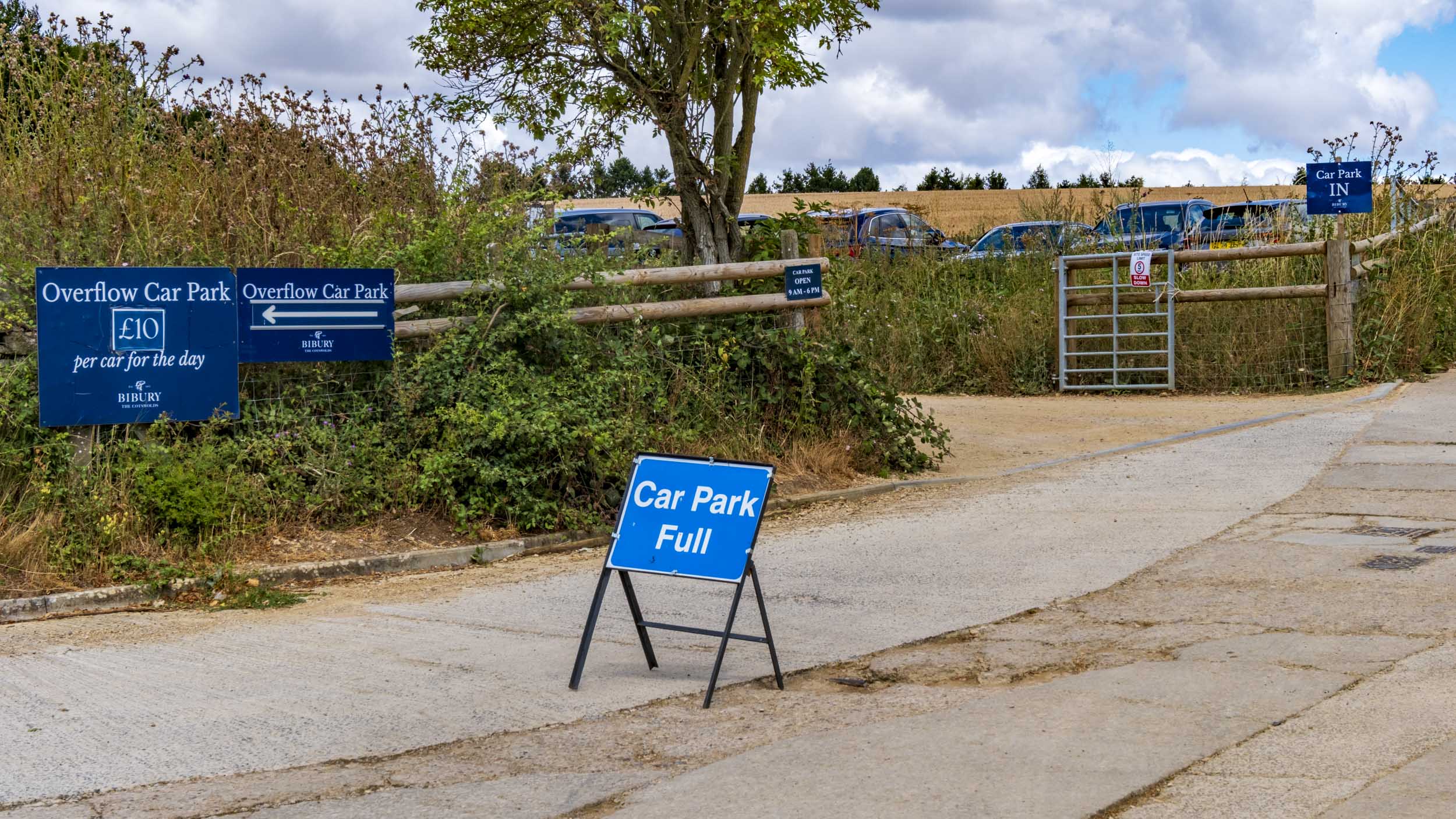
Overtourism has become a big thing in the past few years. Cities such as Venice and Florence have been overwhelmed, and there have been mass protests in some Spanish resort areas. But it is often a two-edged sword. Locals tend to become frustrated by the disruption caused by tourists, but the local business community and the city itself benefits enormously from the cash brought by tourists.
It’s a conundrum that, somehow, has to be solved. So, in a small way, I decided to do some ferreting around in the English Cotswolds area that has long been a magnet for visitors.
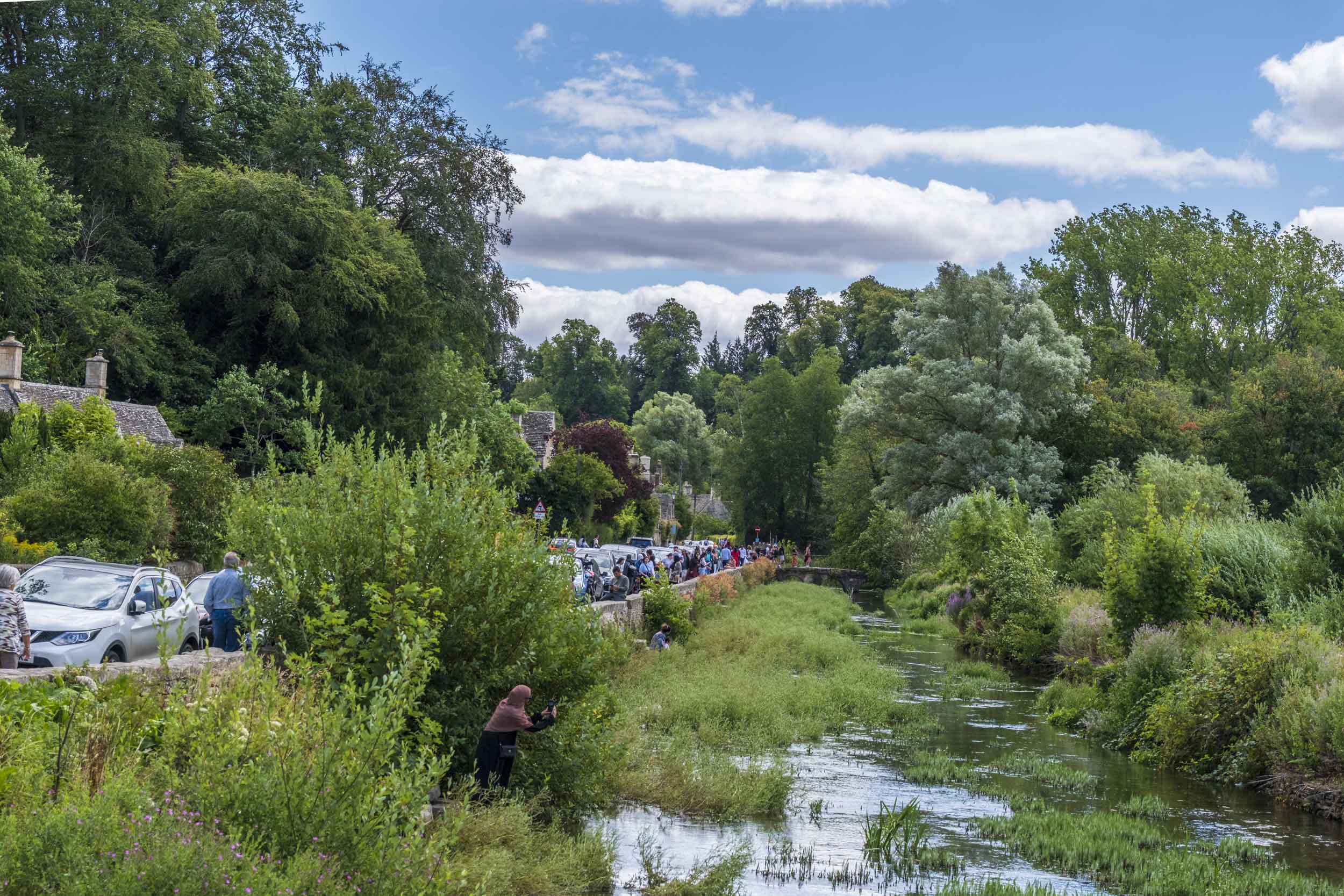
My investigation took place in Bibury, one of the most popular Cotswolds villages. I picked a weekend, hoping for shots of throngs of visitors, but I was to be disappointed. Despite the car parks being full, I began to wonder where all the passengers had gone. Yes, there were many people in the village, but not at the overwhelming levels I’d been led to believe.
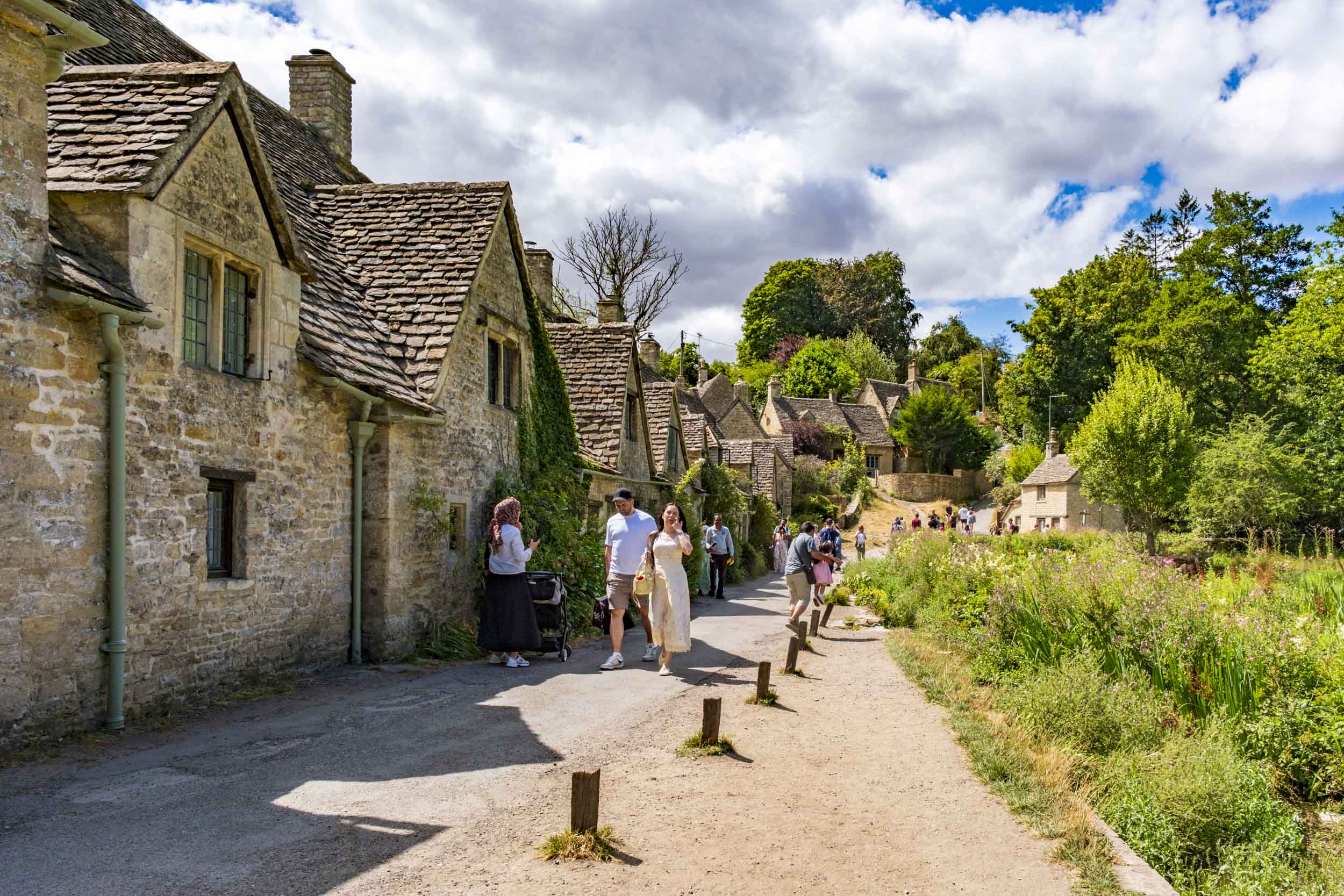
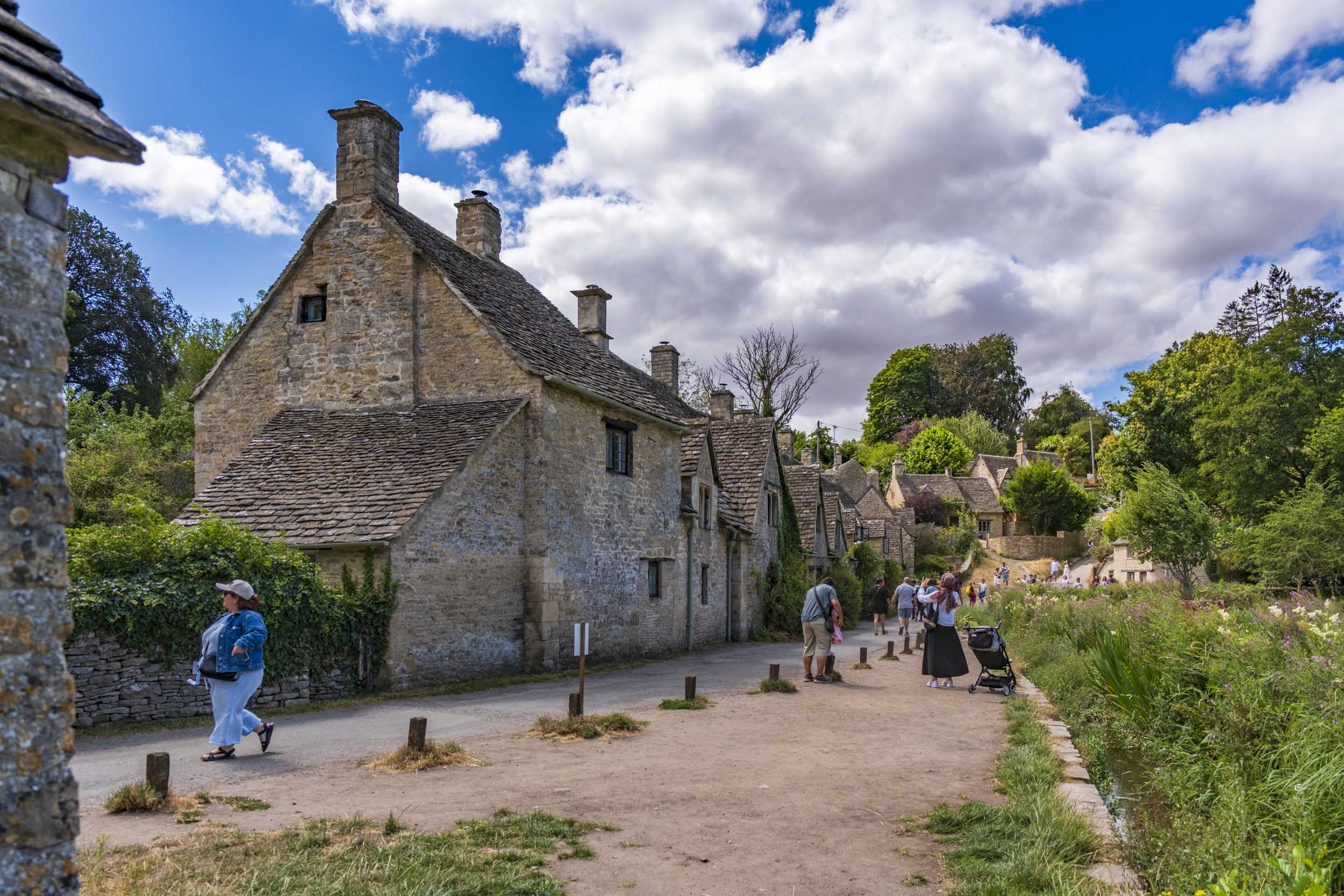
I made a beeline for Arlington Row, the achingly beautiful line of cottages that are one of Bibury’s most striking features. Sadly, the occupants of all those cars were already there. Despite hanging around for an hour, I was unable to get a pedestrian-free shot of Arlington Row. In the end, I settled for the least-busy shots I could find.
Back in November 2025, Andrew Tobin wrote about overtourism in Florence, where the situation is even more dire than in the Cotswolds. He emphasised his impressionist-style photographs captured with his Ricoh GR IIIx HDF. It is well worth a visit as a salutary lesson to accompany this overview of the situation in the Cotswolds.
Breaking point
Bibury has around 630 residents. Yet on a peak summer weekend, it is said to absorb up to a staggering 20,000 visitors — a ratio that would strain any city, never mind a small village in the Cotswolds, let alone one built on narrow lanes designed for foot traffic and the occasional cart. Think of it another way. It’s the equivalent of 300 million visitors flooding London over a weekend. The situation in the capital is bad enough, but not that bad.
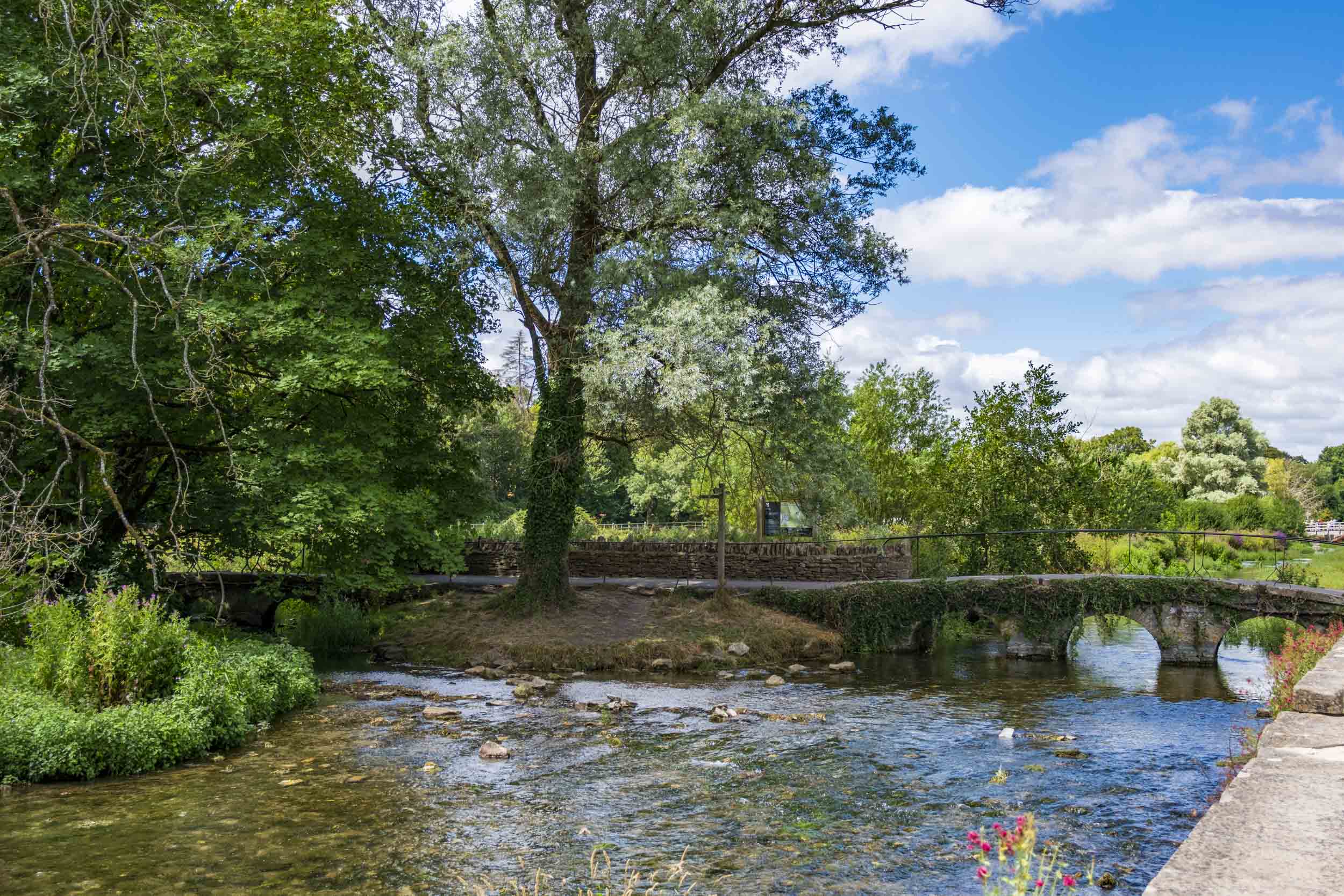
Forbes named Bibury the world’s most beautiful village in 2025, which sounds like a compliment until you consider what that kind of global attention does to a place this small. William Morris, the visionary designer and craftsman, called it the most beautiful village in England more than 150 years ago.
And for most of that time, the description was accurate. Beautiful but quiet. Now it’s a bucket-list stop for “influencers” and for coach tours running a Cotswolds circuit in a single day. The village is buckling under the weight of its reputation, although it seemed to have had a respite when I pitched my tent.
Not just a Bibury problem
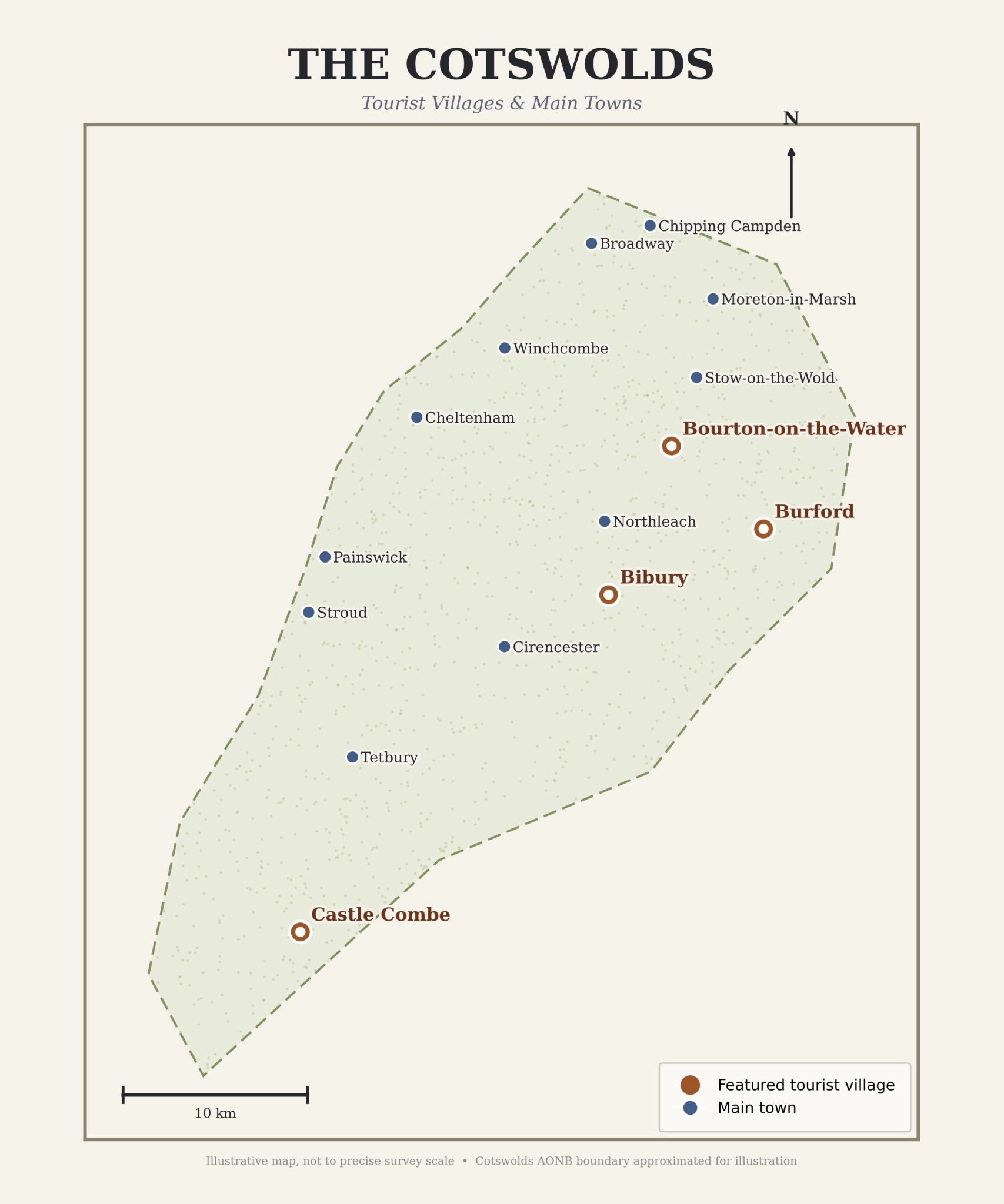
Bibury, of course, is not a one-off problem. The same complaints can be heard from Bourton-on-the-Water, Castle Combe, the Slaughters, Burford, and many others.
It’s for broadly the same reasons: longer seasons, opportunistic bank holiday spikes, and a rise in short-notice domestic breaks that together stretch visitor pressure across most of the year rather than confining it to a few summer weeks.
Bourton-on-the-Water is another prime example of tourist overload. Nicknamed the Venice of the Cotswolds for its low stone bridges and the River Windrush running gently through its centre, Bourton is precisely the kind of place that photographs beautifully and travels well on social media — which is part of the problem.
Local councillors increasingly describe the pressure as a mix of traditional overtourism and something newer: visitors arriving specifically to create content, treating a residential village as a backdrop rather than somewhere people actually live.
A 2024 motion asking the council to formally recognise tourism as a concern for the village failed by a narrow margin. This tells you plenty about how contested this issue still is locally, even among people who see the same traffic and the same crowds every weekend.
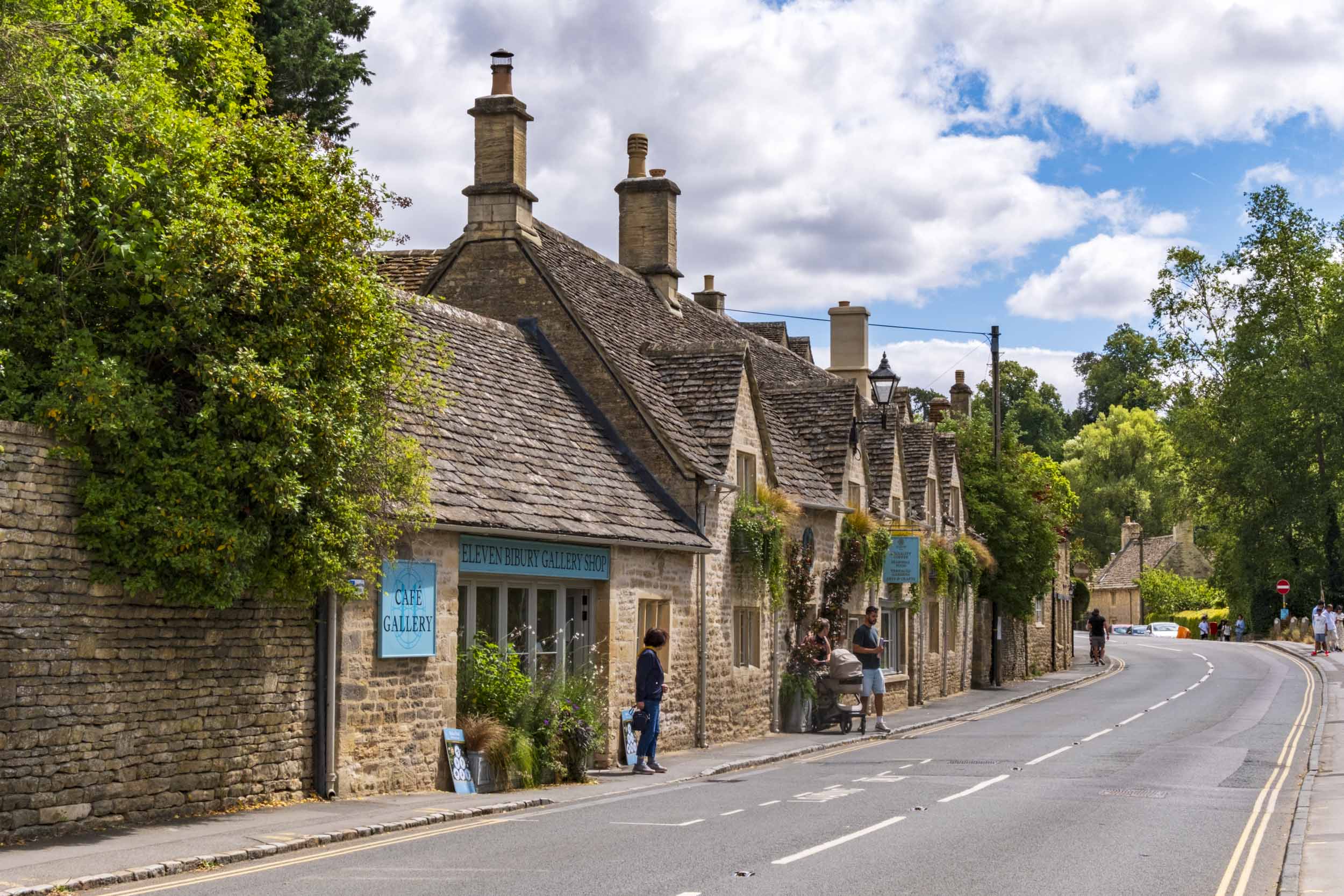
Bibury, up close
Bibury deserves the closer look, partly because it’s become the emblem of this whole debate, and partly because it’s where I was standing with my Fujifilm X-E5 and Fujinon XF 16-50mm f/2.8-4.8 zoom. This combination is used in all these images except the picture of Castle Combe.
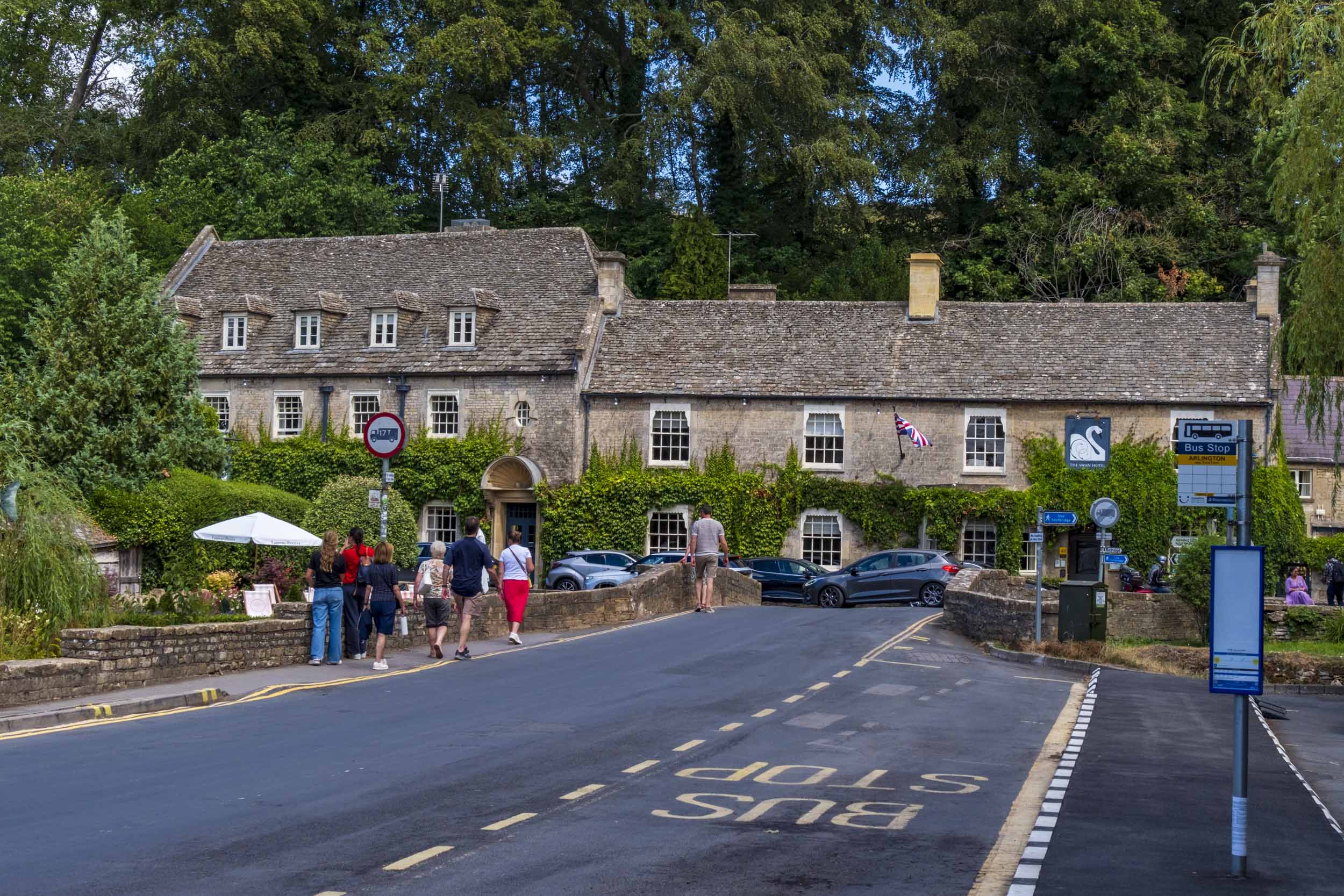
On the busiest days, the village can see up to 50 coaches passing through or parking nearby, funnelling visitors onto pavements that were never built to take that kind of footfall. Moreover, Gloucestershire County Council reports over 4,500 cars crossing Swan Bridge in a single day.
I was fortunate to pick one of the least-suffocating weekends of 2026, despite it being sunny and hot. I’d expected to get shots of throngs of tourists, but, instead, had a reasonably clear run. But I see this as the exception to the current rule of overwhelming visitor numbers.
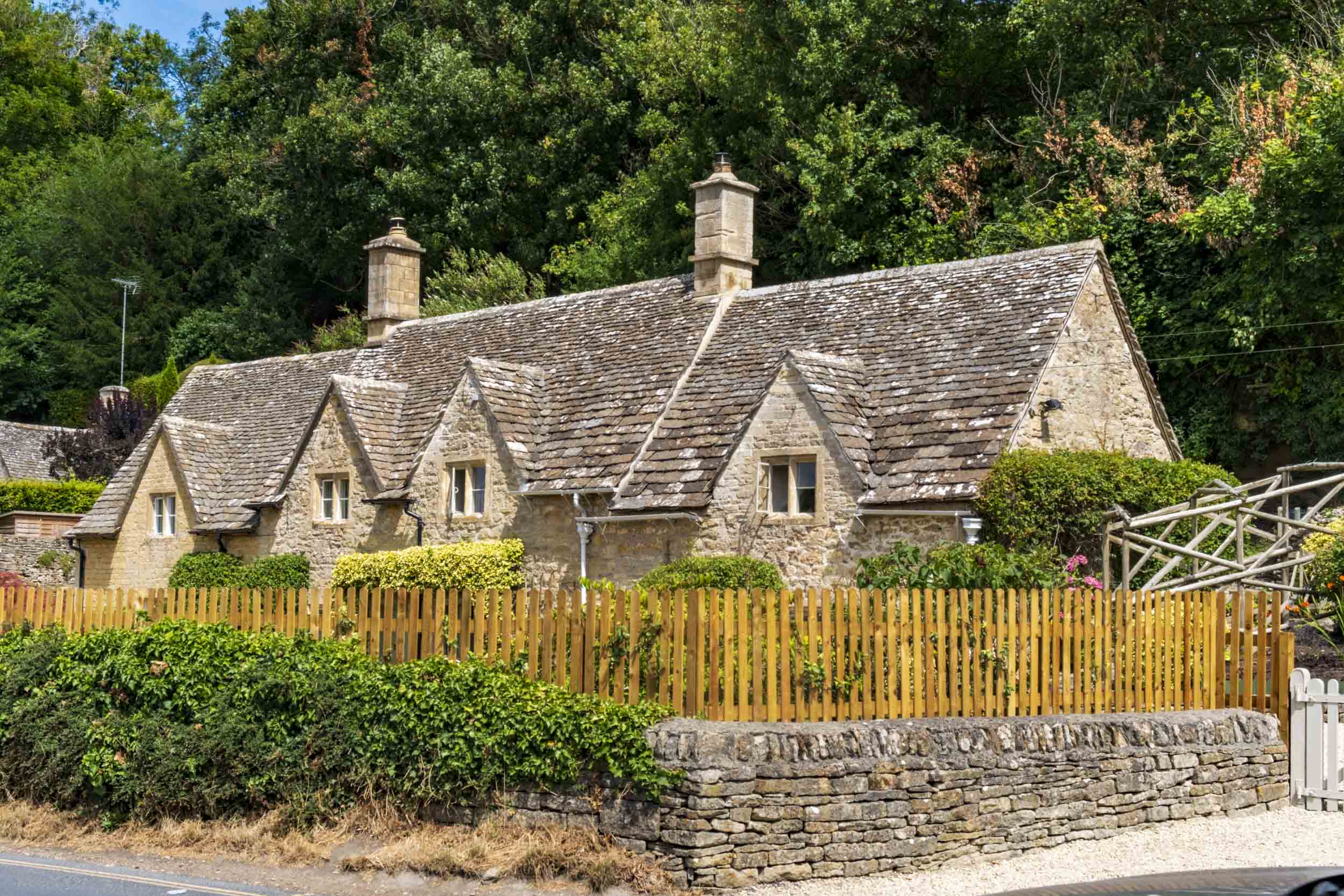
In 2024, photographs circulated showing tourists climbing garden fences and leaning against centuries-old stonework to get a better angle for their pictures. It’s also where the friction has turned physical. A resident was assaulted last year during a dispute with visitors over parking, an incident that crystallised just how frayed patience has become in a village that’s meant to represent rural English tranquillity.
Gloucestershire County Council has now committed £175,000 to a Bibury Overtourism and Safety Mitigation Scheme, developed jointly with the district council and shaped through consultation with the parish council, local businesses, coach and tour operators, and the police.
This is a genuinely collaborative effort, which gives it a better chance of actually sticking than most top-down traffic schemes.
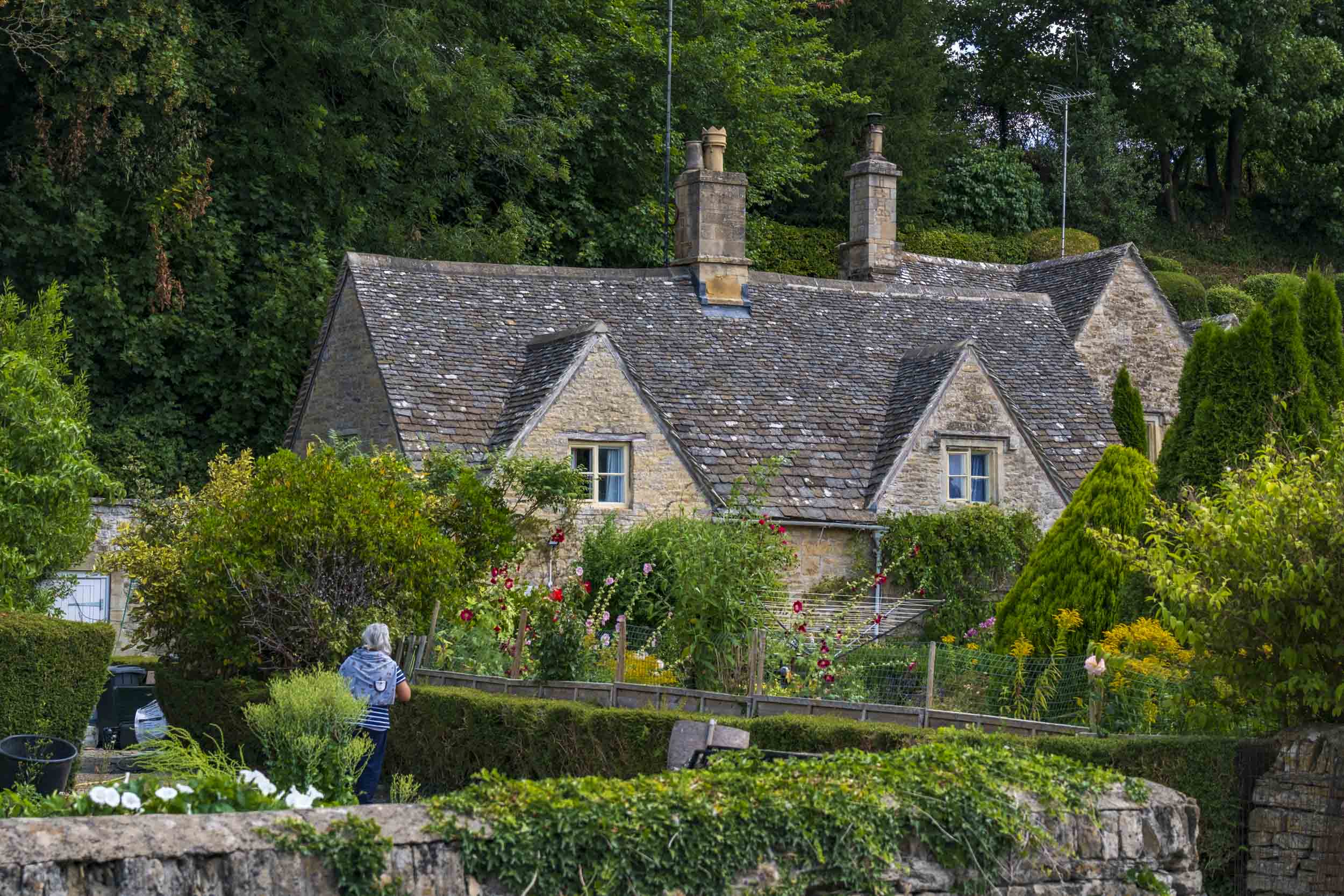
What residents are saying
I chatted to a few locals in Bibury, including shopkeepers, and a pattern emerges quickly: frustration that isn’t really about tourism itself, but about losing any say in how their streets function.

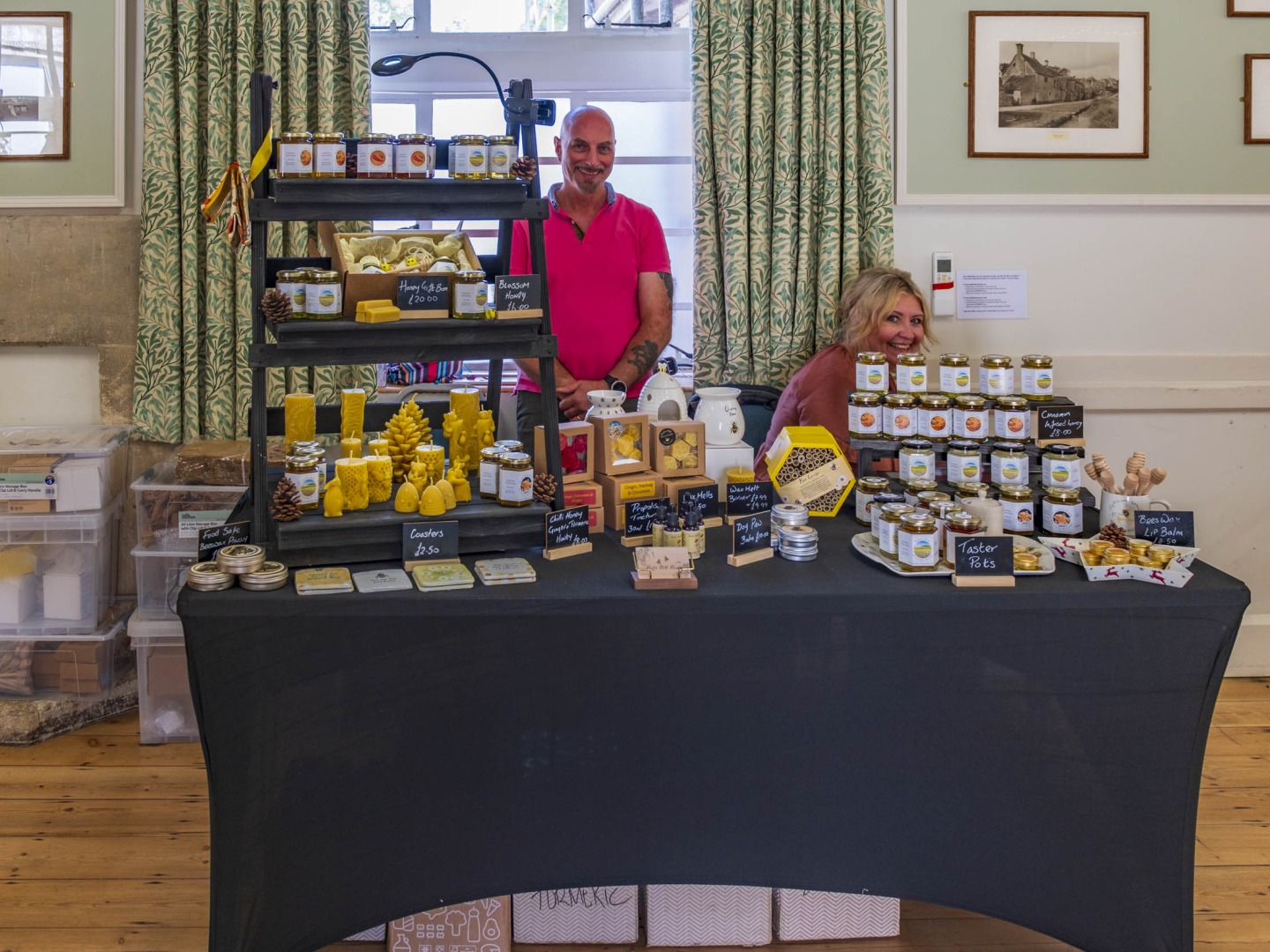
Over in Bourton, a residents’ campaign group ran a survey earlier this year that captured just how strongly local sentiment has hardened — not against visitors as people, but against the sheer volume and the sense that nobody’s really controlling it.
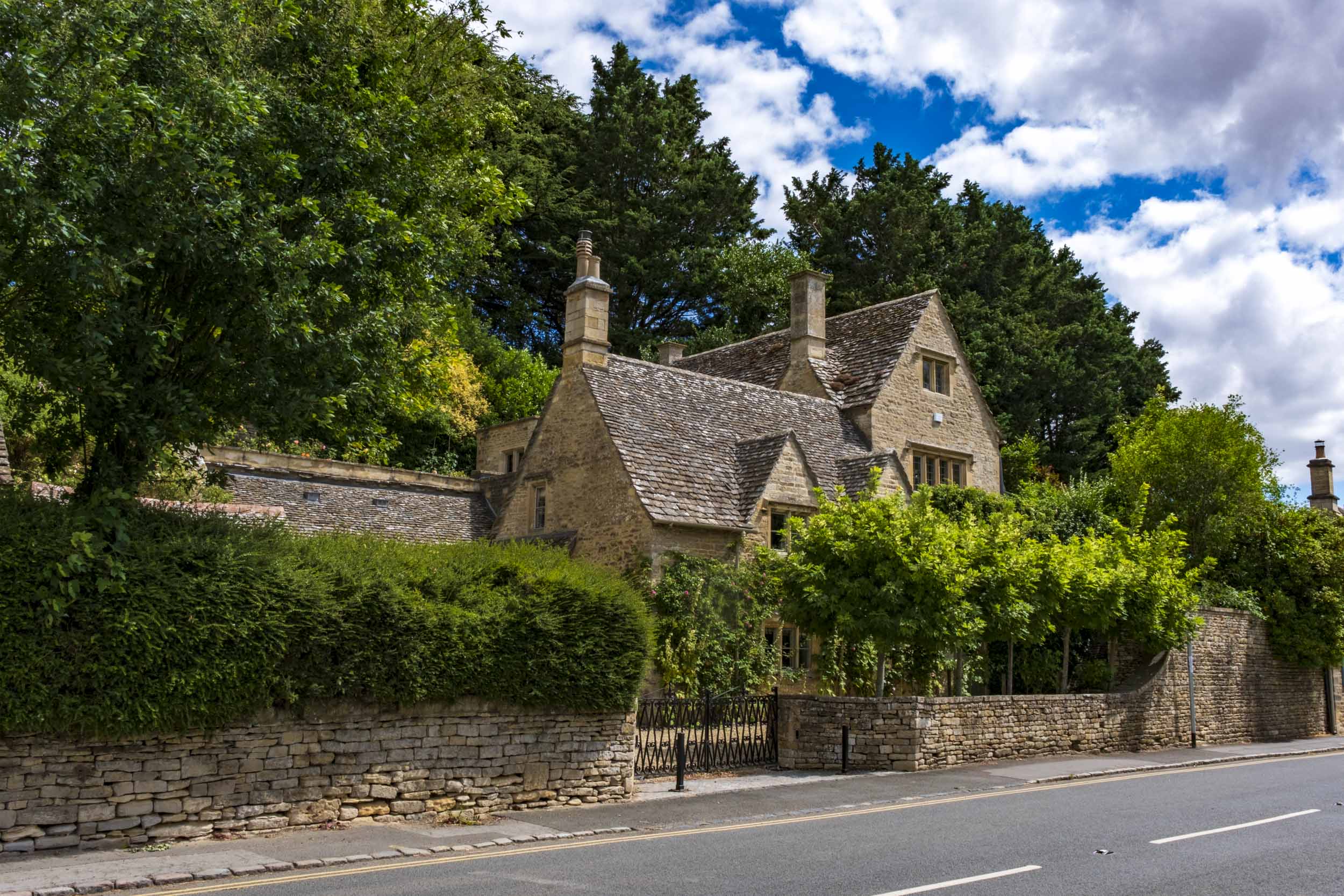
Castle Combe adds a different dimension to the same complaint. Residents there report drones flying over gardens and homes, a level of intrusion that goes well beyond crowded pavements and parking headaches.
“No drone zone” signs have gone up around the village, a small but telling sign of how far some visitors’ behaviour has drifted from ordinary courtesy. More than one long-term resident has described feeling like their home has become a film set rather than a community — which, given Castle Combe’s genuine filming history, carries a particular sting.
A complex issue not set in stone
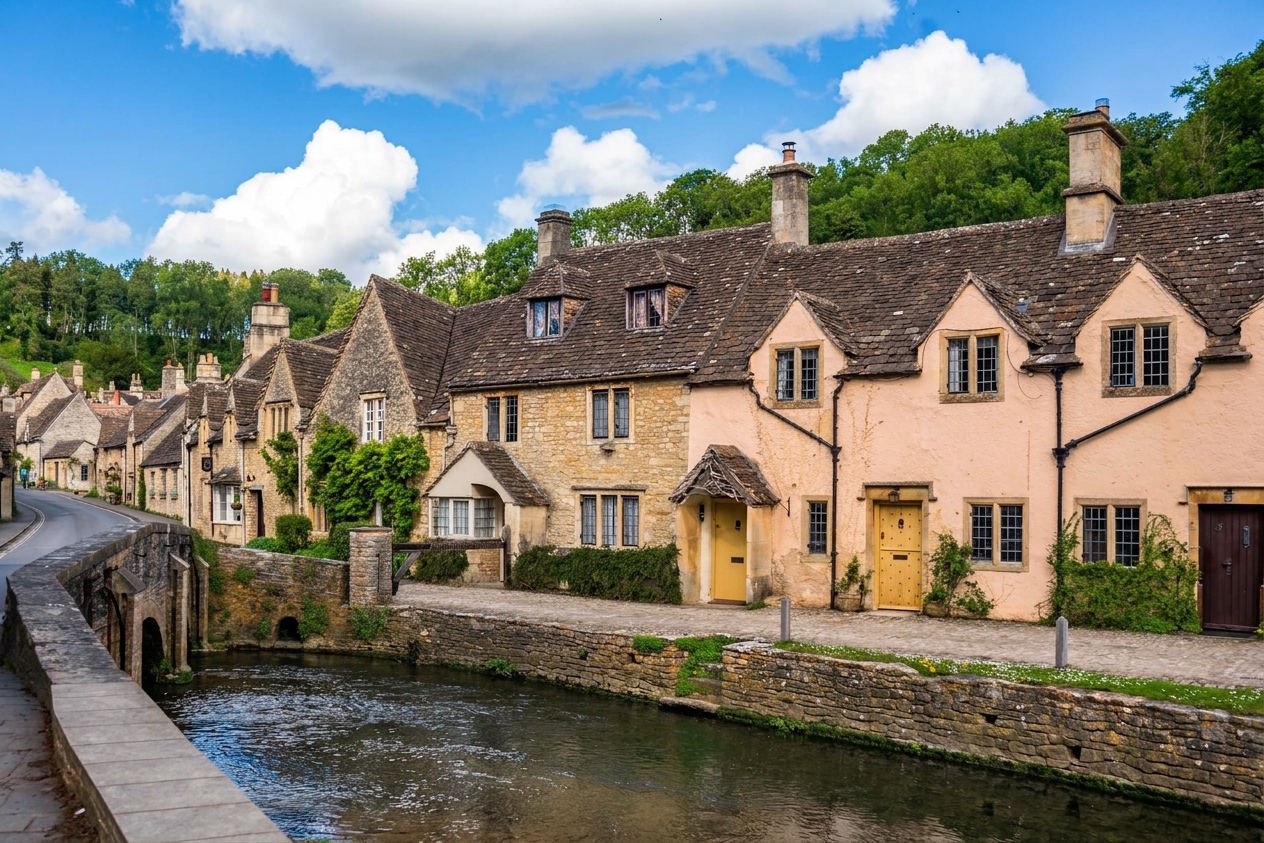
It would be unfair, though, to present this as villagers versus visitors with no complications. Local businesses in these same villages often take the opposite view, worried that any serious restriction on coach access or visitor numbers threatens trade that’s already running on thin margins after a difficult few years for hospitality.
Cafés, pubs, and gift shops in Bibury and Bourton depend heavily on the same visitors that residents want reduced. Any workable solution has to keep both sides happy. It must acknowledge that the crowding is genuinely unsustainable, and that tourism income genuinely matters to the people living there too.
The parking problem, specifically
Strip away the sentiment, and a lot of this comes down to something mundanely practical: there simply isn’t anywhere to put all these vehicles. Bourton’s situation worsened sharply after a privately owned coach car park stopped accepting coaches at the end of 2022, pushing vehicles onto streets that had no capacity to absorb them.
The village has since trialled routing coaches to a designated drop-off point, with buses moving on quickly to park at a nearby industrial estate rather than sitting in the centre.
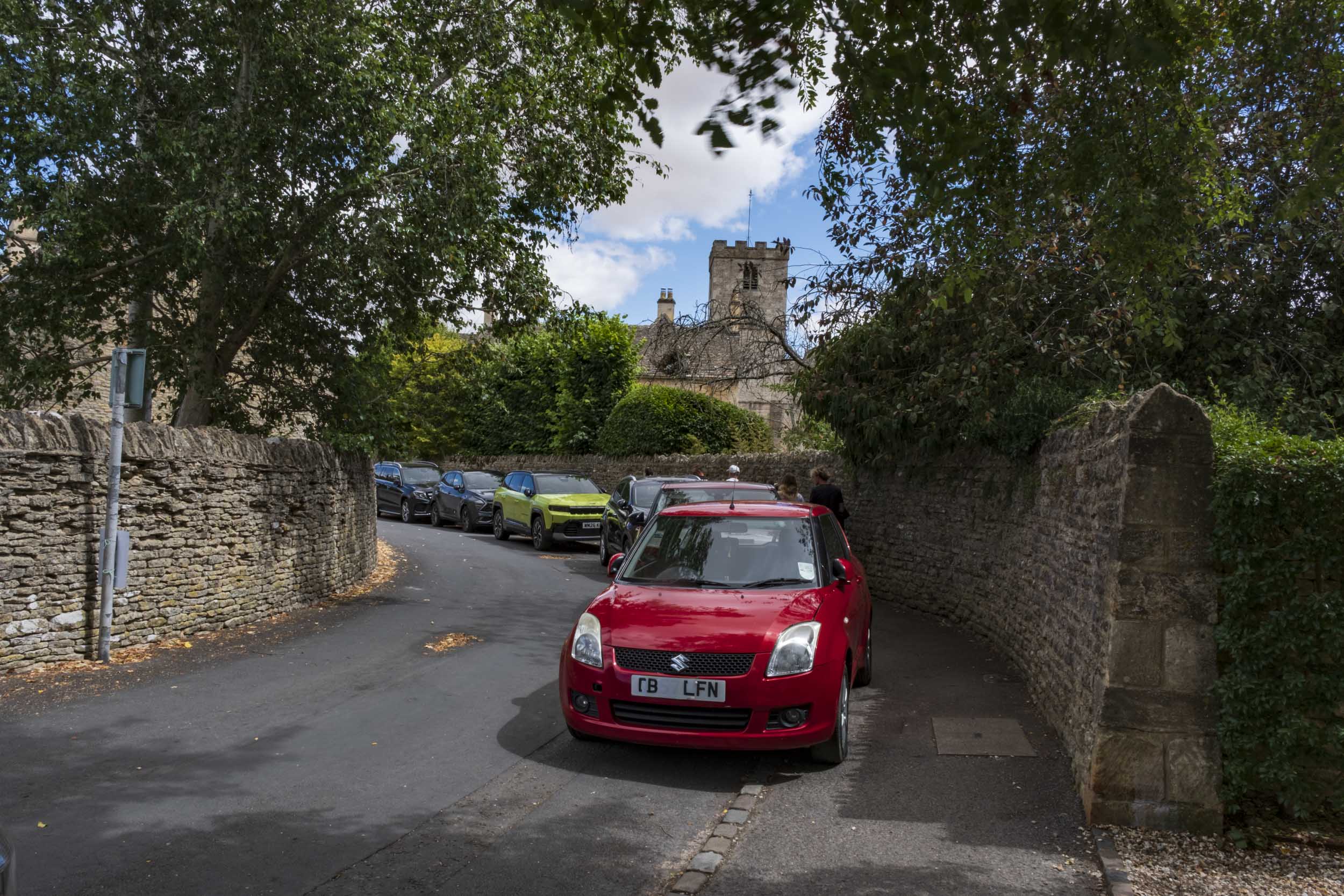
Not everyone’s convinced it’s the right fix — some residents have raised safety concerns about the drop-off arrangement — but it’s a genuine attempt to separate the drop-off function from long-stay parking, which is the crux of the issue. Alongside that, the council extended parking charges to run until 8pm, partly to free spaces for residents in the evening and partly to generate revenue that can fund further measures.
Consult, test, refine
Bibury’s approach follows a similar logic. A trial closed the coach bays that used to sit in the village centre, replacing them with new bus stops for safer drop-off and pick-up near the Trout Farm. The scheme currently under consultation goes further: extended yellow lines to stop opportunistic parking, a pay-and-display system with exemptions for residents, and raised kerbs intended to help pedestrianise parts of the centre.
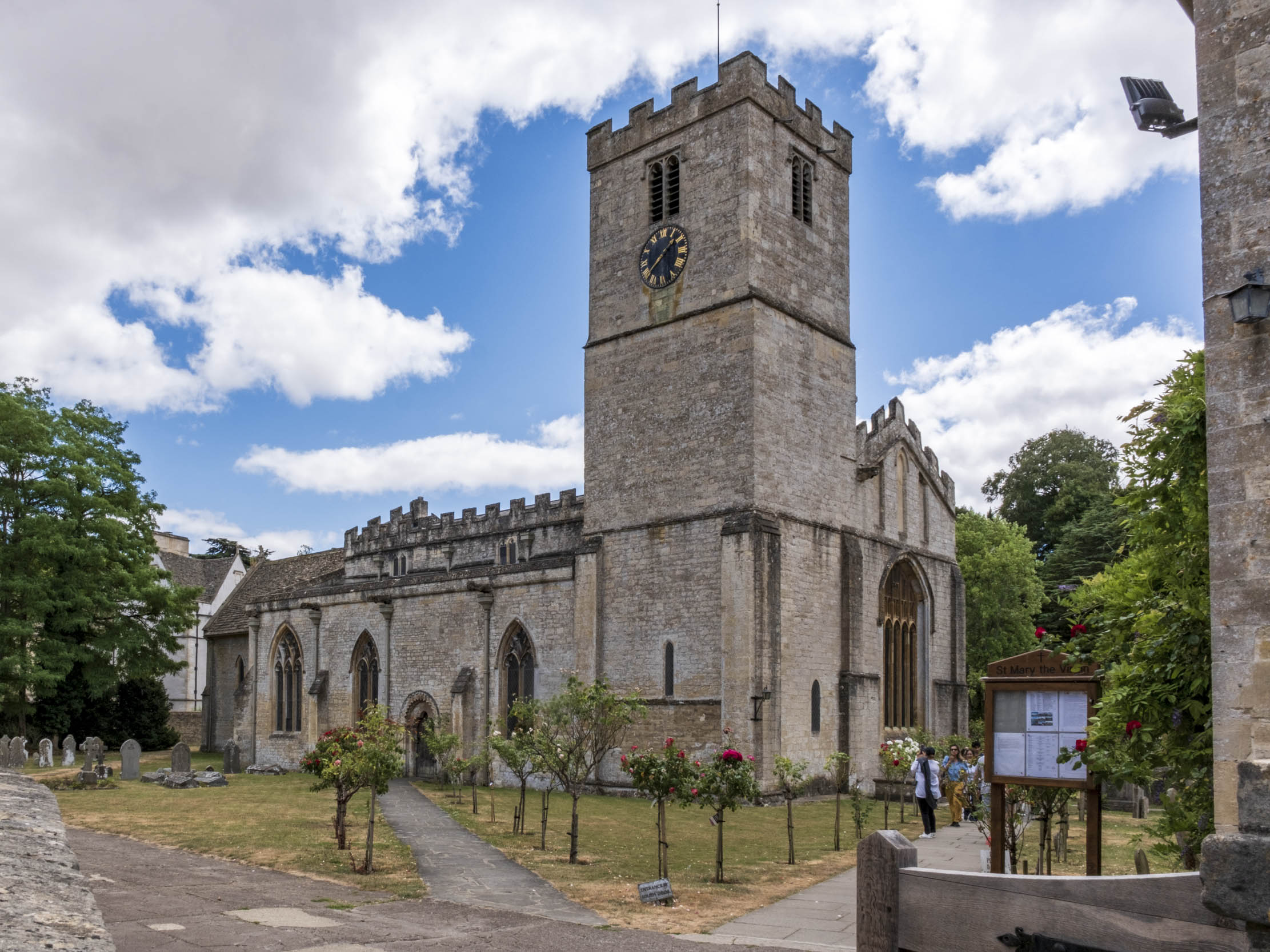
None of these individually solves over-tourism, but together they start to separate through-traffic from parked traffic, and visitors on foot from vehicles looking for somewhere to stop.
Where this might be heading
Across the wider district, the conversation has reportedly moved beyond individual villages patching individual car parks. Cotswold District Council and Gloucestershire County Council are now running joint workshops covering traffic-calming, improved public transport links, and tighter regulation of short-term holiday lets.
This last measure is aimed at the slower, structural side of over-tourism, where second homes and Airbnb listings hollow out permanent communities even outside peak season. A workshop in Bourton earlier this year reflected growing political appetite to treat this as a region-wide planning issue, rather than something each parish council has to solve alone.

Longer stays
There are commercial responses emerging too. Some hotels and guest houses are positioning group stays and longer visits as a lower-impact alternative to the day-trip model. Day trippers clog villages during the day before draining away entirely, leaving behind traffic and rubbish but comparatively little economic benefit for the time residents lose.
Encouraging visitors to stay overnight, spread their visit across a fuller day, or explore villages beyond the well-photographed handful could do more for the region’s sustainability than any single parking scheme.
Getting the shot
And what about those shots of Arlington Row? I waited and waited, but there was no let-up in the flow of visitors. Imagine living in one of those charming cottages, with tourists peering in to see what’s happening. I suspect many tourists think this is a sort of Disney set and would be surprised to find people actually living inside.
Photographers, day-trippers, coach parties, and residents are all descending on the same handful of streets. No single measure — a coach ban here, a pay-and-display scheme there — resolves that tension on its own. What is encouraging, though, is that the current initiatives, however incremental, are being built with residents, businesses, and operators at the same table rather than being imposed from above.
Whether that’s enough to protect what actually drew everyone here in the first place remains the real question hanging over the Cotswolds right now. Next time I go back to one of the picture-postcard villages, I’ll arrive even earlier (or better still, I’ll stay overnight and contribute to the economy), but even then, I suspect I won’t have Arlington Row to myself. That, more than any statistic, tells you everything.
All images in this article (except for the photograph taken in Castle Combe) were captured with my Fujifilm X-E5 and XF 16-50mm f/2.8-4.8 lens.
| Leica M10 snaps Castle Combe at Lacock Abbey | Mike’s choice: Building a lightweight Fujifilm system |
| Cotswolds visitor guide | Capturing overtourism in Florence |
Make a donation to help with our running costs
Did you know that Macfilos is run by five photography enthusiasts based in the UK, USA and Europe? We cover all the substantial costs of running the site, and we do not carry advertising because it spoils readers’ enjoyment. Any amount, however small, will be appreciated, and we will write to acknowledge your generosity.
Note the cottages’ interesting limestone roof tiles laid in ‘diminishing courses’, i.e., largest tiles at the eaves, gradually ‘diminishing’ in size with the smallest tiles laid at the ridge. A characteristic of English architecture when suitable limestone can be sourced from nearby quarries. The ‘diminishing courses’ are very picturesque but how many tourists actually notice the ‘roof tile patterns’ in their photographs?
Thanks, Dunk. Well, I didn’t. You learn something new every day. It’s an excuse for a return visit! Mike
This is what we call the”Ryanair Effect’. Travel has become so cheap and so possible with most people being able to avail of cheap flights and bus trips and with a large percentage having access to motor vehicles that everywhere is crowded these days except for extreme off season dates. If you go to visit an exhibition in the V&A there will probably be 5 or 6 people standing between you and the exhibits. Then there are the cameras. Everyone has a smartphone and a few have the sort of fancy items shown on Macfilos, but everyone is getting the same pictures with all of these devices. I recall being in Siena in Italy in the pre-dawn of digital in 2001 and seeing some nice reflections in a window and photographing them and then going to sit beside my wife on the steps of a church. By the time I got to the steps another person who had seen me photographing the reflections was doing the same thing and then another came along who did the same thing and then another and another……
I have given up travelling to tourist spots to do photography. In addition I don’t travel that much these days anyway. I have no problem with people getting into my photos and sometimes the ‘crowd effect’ is good, but sometimes times such as 6am on a summer morning can be good. Winter can be good too. However, if you want to capture original images, tourist destinations are not the place to do that.
Some might say that “tourism itself is nice if were not were for all of the other tourists.” Very often the best images can be got by just turning a corner or by talking to the locals, while the tourists are all getting the same ‘money shot’ on the main drag. A friend of mine won a World Press Photographer of the Year Award by doing just that – talking to the locals.
I’ll leave it at that, but there is more to photography than just turning up with a camera. A bit of homework and foot zoom can work wonders.
William
Dear Mike, We have a son who owns a house in that area which like most was built long before the age of the Motorcar meaning even he cannot park anywhere near to where he lives, and for the same reasons as my Wife Jo and I are both now decidedly disabled neither can we even visit. However it is not nearly so bad out of Season so may I sugest you try visiting again sometime between late October and early March when even Bibury can quite often be virtually empty, and still be so very photogenic. Don
Hello Don, yes, I’ll certainly bear that in mind. I was really there just to get some pictures to illustrate the story that I had almost finished… so I was hoping to see even more crowds! I sympathise with your predicament on visiting. It’s difficult to image living somewhere where the car has to be parked miles away. It must be especially difficult for older residents dealing with groceries and other routine jobs. Mike
Perhaps technology eventually helps solve over-tourism?
In 1976 I was privileged to tour the Church of the Holy Sepulchre in Jerusalem. It was in July, so there was no lack of crowds. Forty years later (2016), the interior of the church underwent a significant restoration process. The National Geographic Magazine staff were permitted to document this work. In December 2017, I was in Washington, D.C., and the National Geographic Museum offered a 3-D virtual tour of the church.
Having been there in person, I can say the the virtual tour was better! I sat in a chair with 3-D goggles on, and could tour the church, sans any other tourists, and explore it in detail, even entering portions not seen by tourists.
So my point is, with how each generation is more and more enthralled by technology, people will eventually be able to tour Cotswolds, and anywhere else interesting, without leaving home. This does not solve the problem of tourism income. Unless a way is found to compensate the homeowners and shopkeepers using proceeds from the distribution of the 3-D material.
Martin, I hadn’t thought of that possibility. But’s a logical development and, as you say, technology could provide a solution.
I experienced over-crowding in Santorini, Venice, the Vatican Museum and Prague. It absolutely ruins the experience. Popular tourist spots should limit the number of visitors. The Vatican museum issues timed admission tickets but way too many. Photographs are nearly impossible (even with recent removal tools) in many places.
This forces some tourism into the off-season, even winter.
Visitor limitation is obviously an option. But it’s probably easier in Venice, say, than in a village such as Bibury or Upper Slaughter.Mayne Martin’s solution (in this thread) of making everything virtual is the final answer!
We used to live in Gloucestershire, and places such as Bourton-on-the-Water were best avoided at busy times even ten years ago. I can only imagine how much worse it is today.
We now live on Anglesey, where the resident population is around 70,000 and life normally proceeds at a pleasantly slow pace. But the island also attracts around two million visitors a year and, at peak times such as the school summer holidays, the sheer weight of numbers creates significant problems. Honeypot locations such as Ynys Llanddwyn, much loved by photographers, can suffer complete gridlock on the small roads surrounding them.
Anglesey is also home to the village with the longest place name in the UK: “Llanfairpwllgwyngyllgogerychwyrndrobwllllantysiliogogogoch”. For many visitors, the attraction consists almost entirely of the railway station sign bearing that famous name. Yet still the coaches roll in, disgorging their passengers to photograph the sign before shepherding them into the large shop beside the coach park and then bussing them onwards to their next “special” place.
And the phenomenon of “too many tourists” seems to be spreading everywhere. I recently watched a video about tiger spotting in India which featured surprisingly few tigers, but a veritable flotilla of 4x4s jostling for position around them.
There is a rather sad paradox at work. A place attracts visitors because of its beauty, tranquillity or unique character; its popularity grows; and eventually the number of people coming to experience that special character begins to destroy the very thing that attracted them in the first place.
Perhaps it is simply human nature. As the Mills Brothers sang back in 1944: “You Always Hurt the One You Love.”
Thanks for your excellent assessment, Andrew. You are right. Heaven knows what would happen to Bibury if it was “Saint-Mary’s-Church-in-the-hollow-of-the-white-hazel-near-a-rapid-whirlpool-and-the-Trout-Farm-Car-Park.” The influencers would be there in their thousands.
Coincidentally Andrew, our grandson is currently visiting us in Bromley (definitely not a centre of tourism), we live about five minutes walk from the town centre. My wife has just sent me a picture of said grandson looking thoroughly bored watching Toy Story 5 in the local multiplex. From the picture it looks to me like Pixar might have finally worn the franchise to a frazzle.
My son and his wife live in Newborough, Anglesey on the opposite side of the crossroads that leads down to the beach that contains the Ynys Llanddwyn peninsular, a good walk to the right, along the beach.
As you know, you can also approach that peninsular from the Cobb car park and a leisurely walk through the woods to approach it from the other side. The town council have got this right, during the hottest part of the year they close the road in the centre of Newborough, and force any determined visitor (not the locals) from using it.
Of course, when the wind is blowing, which it usually is and the dunes are throwing sand into the eyes, and it is pi**ing with rain, the tourists stay away completely and shuffle off to Beaumaris, which is well set up for tourists.
Mind you, I suppose the residents of Beaumaris are not so happy.
Hi Stephen, … having lived on Anglesey for coming up 10 years now, Newborough is one place we avoid like the plague during Summer – its much more pleasant to visit in the Autumn and Spring when its actually possible to get there without traffic jams and park in the car park without queuing!
A few years ago, I spent a few nights at a guesthouse in Bourton-on-the-Water in the English Cotswolds, at on off-peak time, in an attempt to see the village during the quieter moments. One morning, around 10 am, a coach disgorged a large party of Asian visitors. I was intrigued to see the start of their tourism routine.
After leaving their transport, most of the tourists were rooted to a spot while they consulted their smartphones for instructions. Then they queued while their fellow-travelers each took photos of themselves standing in an ornate front porch of a typical Cotswold cottage. I guessed that they were all following a closely curated itinerary for their Cotswold visit. Fortunately, I was heading for the motor museum, in a former watermill, that did not seem to feature on the Asian visitors circuit, at least while I was there.
Mike, you illuminate a real problem. Most of the English Cotswold villages have lanes and tracks fashioned by horse-drawn carts and carriages, and pedestrians. The villages simply cannot cope with mass motorised tourism. Yet our country needs tourists, so we are told. Yet while influencers, in all areas of journalism, get rich promoting such destinations, the ‘honey-spots’ will gradually grind to a standstill, and the charm will be terminally tarnished.
Thanks, David. Yes, it is a real problem, and the issues in places like Bibury are a microcosm of the major disasters facing places like Florence and Venice. But, as I say, nothing is clear-cut. Many residents (especially, I suspect, those second-home owners who troop in at the weekend from London) would love to see tourists banned. On the other hand, the village traders need income and would be unable to subsist on the meagre pickings from the residents.
You are right that the roads were built for a different purpose, and that’s their charm. Any improvements to facilitate motorised access can only ruin the villages. I think park and ride might well be the only answer, but that means finding sufficient parking space within, say, three or four miles of the villages. It’s no easy task, and there are no easy answers.